Transcript
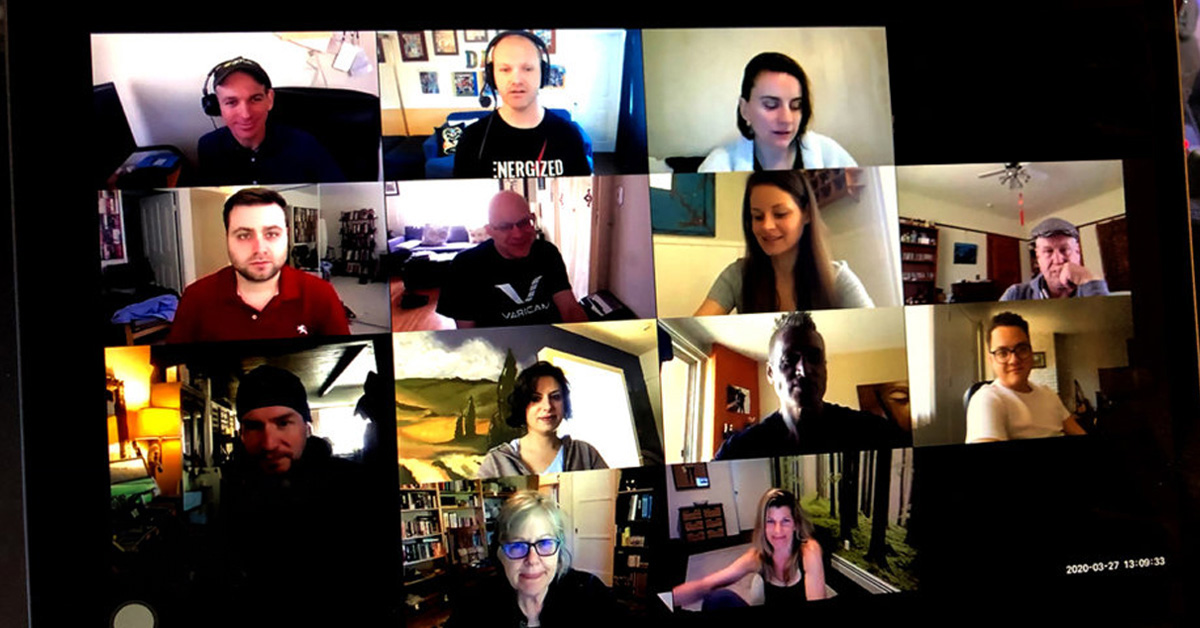
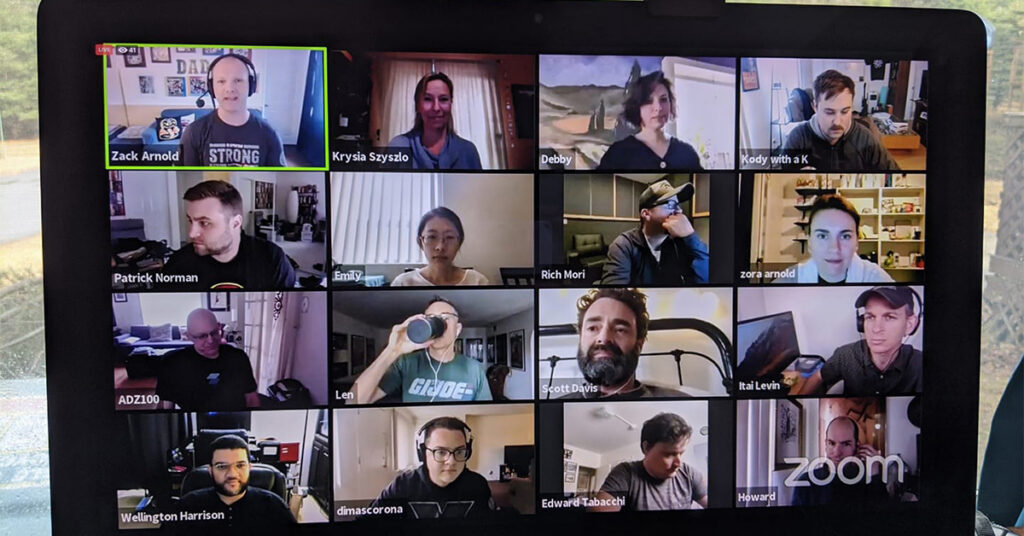
Zack Arnold: Hello everybody, and welcome to the latest episode of Black Mirror. Now, if you’re not a fan of Black Mirror, you’ve never caught the show before, so it’s a really exciting day. What you may not have heard, if you want to catch up on episodes on Netflix, it is no longer in the sci-fi section. Black Mirror is now contained in the documentary section. And welcome to the latest episode. So, for those of you that don’t know me, my name is Zack Arnold. I’m the creator of the Optimize Yourself program and podcast, and I want to introduce you to just a small section of my Optimizer coaching and mentorship community, so wave everybody, say hello, even though your mics are muted. So, the topic of conversation that we’re going to have on today’s community Q and A is going to be finances, because as you may or may not be aware, the financial world has completely collapsed around us, and I want to talk with everybody today about what their concerns are from a financial perspective, because as we learned in last week’s community Q&A call, where we basically started with, hey, I’m freaked out, I don’t know what’s going on. The topic of conversation was simply, How are you doing? What are you thinking about? What’s what are you anxious about, what are you afraid of, and what we found through conversing with many of the members of this community is that the fear of the virus, or the fear of getting sick, for many, and not for all, for those that find this to be a true concern, but for most people the concern is more, how am I going to find work, and how am I going to pay my bills, and how am I not going to be homeless? That was pretty much the overwhelming majority. So, we talked about it as a team, and we decided that the best way to use our time, our energy, and our attention today was to just do a powwow and talk about how can we better organize our money and our finances, so we can alleviate some of the anxiety that may or may not be there, so we can use our time wisely over the course of the next who knows how many weeks or months until we start to make the transition back into the world into what will become the new normal, so before we dive into just starting this conversation and me going into the community, I very briefly would like to introduce a special guest star to the call today, everybody. I would like to introduce you to Westley Silvestri. So, Westley, say hello, introduce yourself.
Westley Silvestri: How is everyone today? My name is Westley Silvestri. I am a professional real estate agent for over a decade here in Southern California, and just here to help out, answer any questions you may have about finances, real estate market, or anything off top of your head.
Zack Arnold: Now, the weird thing about having Westley on this call today is that he’s wearing what looks to be a collared shirt, and he looks to have showered. I’m not used to that, because I know Westley as an American Ninja Warrior, so he’s a three-time American Ninja Warrior, and anytime that you see me doing crazy, stupid stuff when I’m out training, doing things on Sundays with Tony Horton, or going to tracks and flipping tires, and doing all kinds of stuff. He’s the guy holding the camera that’s making me do all this stuff. So that’s how I know Westley. That’s the context of our relationship. He’s the guy that pushes me to be better physically, to be better mentally. And by the way, he’s the guy that created this t-shirt for me. So just gonna throw that out there. So, where I want to start is just engaging everybody here in the community. Anybody that wants to jump in and start this conversation, what questions do you have? What fears do you have? Like, where do we want to start this conversation around what the hell do I do about my money in this new universe that we are in? So, anybody raise your hand, let me know, and I will unmute you, and we’ll just start chatting.
Aaron: So, I think the number one question is, how do we pay for our bills when we’re not making any money?
Zack Arnold: Yeah, so I think that’s that’s obviously a, the biggest question is, where is the new money going to come in? However, I actually don’t think that that’s the best first question to answer. I think the best first question that we need to answer right now is not necessarily where am I going to find the next job that’s going to bring money in, obviously that’s a pressing concern. My feeling is that the first question is how long can I go without finding that work, because right now the reality is we don’t even know if the work is there. I mean, there are certainly certain types of jobs that are still available, but essentially our industry has been decimated in the last two weeks. I don’t know what the current numbers are, but in less than seven days it was 170,000 people in the entertainment sector lost their jobs like that. So the first question that I asked was, How long could I go if I don’t bring in a single dollar? How much time have I bought myself for any emergency savings that I have, or by drastically reducing and shrinking my existing expenses? How much time have I bought where I can realistically go without bringing in one single cent and not have to worry about literally not being able to buy food or being. Out on the street, so I do think that it’s really, really important to ask where the job’s coming from, but I actually think that first we need to think about how long can we go. So I know that I was getting an emphatic nod from our guest star over here. So did you have something you wanted to add to that, mr. Silvestri?
Westley Silvestri: Absolutely, I believe right now today everybody should be having, they should have their written budget down, every dollar that they are anticipating spending should be written down in a plan, because that way you know exactly what your money is doing for you and where is it going, as opposed to, oh, I could just go to Starbucks nine times this week. Well, guess what, in today’s day and age, you cannot, you got to make sure that you are down to the penny that you are only spending the absolute necessities, you pay your bills, you pay your mortgage, you pay your food, that’s it. There’s no going to movies, there’s no going out. And I would highly suggest, I did this the other day, because I have at least six months in reserve, so if I don’t sell one house for the next six months. I know that I’m good for the time being. I started selling everything, I started selling so much. Why my wife thought she was next. Okay, so it just makes me feel lighter. And to be honest, I got rid of so much junk that I haven’t used in two, three years. I feel better. I feel lighter, and it’s just, it’s been easier, so start there, get rid of stuff.
Zack Arnold: Yeah, so I would second that emphatically. And one of the things that we talk about in the program, in the coaching and mentorship program, I know a lot of you have already heard this from me, but when we’re talking, let’s take this out of the world we’re in right now. Let’s pretend that we live in a vacuum, and there has not been a global pandemic, and we can’t actually go out to movies, and we can go out to eat, and there are still those realities. What I ask people to do is to calculate what I call their sleep easy number, and what that means is how long can you go during the feast or famine cycle that we talk about as freelancers. So this is a skill that’s going to be incredibly useful, whether or not we’re talking about surviving a global pandemic. If you work 12 months a year for the Ford Motor Company or Microsoft or Google, you know that you always have money coming in. Well, guess what? None of the people on this call, I would assume, are in that position, and I’m assuming it’s the same for real estate, where some months you got a lot coming in, and then some months you have nothing coming in. So, what you need to be able to do is manage the amounts that you have coming in and know what’s the surplus. What I’ve done is I’ve created multiple bank accounts, and I go into this extensively in a recent podcast that I did using a system called Profit First. So, for anybody listening, or for anybody here that’s on the call that isn’t aware of this podcast, the guest’s name is Mike Michalowicz. He’s a New York Times bestselling author of multiple entrepreneurship books, and we talk about his Profit First system, where I break down all of my accounts into multiple accounts, and I know exactly how much needs to go into my main personal account to pay all of my basic living expenses. So, like Wes said, we’re talking about rent, we’re talking about car payments, we’re talking about groceries, like just basic things, none of the frills. So, what I did was, I knew what that number was, but then all of a sudden I went into massive freak out mode, like everybody else did, because I had these cash flow projection spreadsheets. What I’m going to do, if you guys are interested, I’m going to build a template of how I manage all of my money, and where I put everything. So, basically, I know the exact day that I’m broke. If you said to me, if I don’t bring in another dollar and I lower my living expenses to their bare minimum, I can tell you essentially to the day when I go broke. And I have a spreadsheet that does all that for me. So, when my mind, when everything started to kind of go crazy, my amygdala, the fear center of the brain, went in overload, and I thought, oh my god, I’m going to be homeless in a month, and I’m not going to be able to feed my kids, and I’m going to lose my house, and all these other things. I took two hours, I plugged in all the numbers in my spreadsheet, and I was like, oh, what am I so worried about? Like, I have a little bit of breathing room, I still need to be very concerned, but I wasn’t in freak out mode anymore. Just those two hours in that spreadsheet was better than if I’d taken 20 hits off of a joint. I was so much more relaxed just because I knew what my financial reality was. So, I would say step one for you, Aaron, for anybody else that’s on this call, and for anybody else that’s listening, you have to know what your sleep easy number is what’s the bare minimum that goes into my main account that is dispersed to all of my basic living expenses, and if I make more than that in a month, then what I will do is I create a separate account where I will pay myself my own salary to cover that amount in the lean months, so as an entrepreneur, when I’m not editing, I go through the same process as any other freelancer. I may have some people that are in this program, and I make excess of what I need. Other months, I make $0 and I’m okay with that, because I’m paying myself my own salary to cover that Sleep Easy number. What I also want you to think about is, you need to hunker down if you haven’t already, and spend. Some time making phone calls, doing research, and seeing which fat you can trim. With just five minutes of research, I found out that I can pause my car payments for two months. I went to First Entertainment Credit Union. I clicked two buttons that said skip a pay, and bam, poof, all kinds of money disappeared from my budget that I needed to pay in two clicks, just because I did a little bit of research, and there are a ton of things that are going on right now in the world. I can’t keep track of any of it, so I want you guys to do your own due diligence in your own research, but you may qualify for canceling your rent payments, you may qualify for canceling your mortgage payments, car payments, credit card payments, like this isn’t happening to you, this is happening to everybody, so they want to make sure that there isn’t complete and total anarchy. I mean, you know that things are bad when the Cheesecake Factory can’t pay the rent guns. You’re not the only ones, so do your research and think to yourself, step one is not how do I get more money in, it’s how do I stop from hemorrhaging money out. Spend the time to figure out how lean can I absolutely get right now, what’s my sleep easy number, and how many months can I fill my account with that sleep easy number, and if that number is two weeks, is a month, is two months, whatever it is, that’s going to dictate how hot the fire needs to be under your behind to find new work, so you have new income, so if you find you have a few months, well, then you probably don’t need to stock grocery shelves tomorrow and be on the front lines. If you find that things are tight, well, then you might have to look into other lines of work. I know that Aaron, in our private Slack community this morning, you provided a great resource for potential opportunities, whether it’s web design or copywriting, like there’s a whole bunch of stay-at-home jobs that are now potentially available, so I want to go back to you, Aaron, real quick, since you were the one that had started this conversation. What specifically have you done so far, other than looking for work to get yourself prepared for the situation that we’re in right now?
Aaron: Well, I was already sort of in a different situation, because I wasn’t working in my field, I was doing gig work, and just trying to survive, which I’m still doing, because it’s, it’s considered essential, central work, so I can still work, but it doesn’t mean I want to work, because I don’t want to be out there, you know, like anybody else. So, with that, I’m also looking at other work and stuff, and I have a number, but it’s not a sleep easy number, it’s just a number I know I need to come up with.
Zack Arnold: How about instead of a sleep easy number, it’s a not sleep on the sidewalk number,
Aaron: Exactly. No, that’s exactly what it is. So just trying to work through the resources and figure out if I can get some at home work rather than go out and do that work.
Zack Arnold: Sure, yeah, exactly. So that’s that’s where I’m at. It’s a little different, but I mean, I’ve lived the last eight years in a freelance status, so I kind of do understand how to manage and figure out how you know what I’m going to need and what I want if I don’t have something, how to, how to go out and get it. Basically, then I would say kudos to you, because you’re in the minority, understanding the ebb and flow of the gig economy. I saw an article that was posted earlier this week that said that four out of 10 people in America are not able to cover a $400 emergency expense, like that’s insanity to me. So those are people that really don’t understand how to manage the ebb and flow, and there was also a meme that I saw, and I’m definitely going to be sharing this in an article next week. Maybe you guys saw it, because I shared it. I’m usually not a meme sharer, I try to stay away from that, but this one, the hardest I’ve laughed in like three weeks. If anybody knows the ballad of Buster Scruggs, that moment with James Franco, where he’s hanging, the meme basically said, “Oh, you guys are all trying to figure out where to get your money and where to find jobs, and you think that all the jobs have disappeared. You know, don’t know how to pay your next paycheck. Well, welcome to the gig economy. And the meme says, “First time, we’re just like, this is just another week for all of us, like we’re used to feast or famine. So, I thought that was really, really, really funny. One person that I want to throw this to, I’m going to go back to the community here for a second. Want to make sure, yes, he is indeed still here. So, you had mentioned Aaron that it’s not like you were working, things were going really well, you’re super, super busy, and then the rug was pulled out from under you. You’re already in the process of spending what was probably some emergency savings, or just, you know, savings to keep you going during the lean times before things got really lean, and if you don’t mind me picking on you a little bit, Patrick, I know that you’re also in a unique situation because you had planned for this being more financially lean times and using your work chest because you’re working on your own project with the expectation that around this time you were going to go back to work, so talk a little bit more. First of all, just kind of introduce yourself to the people in the group and the people listening to your what you do for a living, and then your current circumstances, because I know we’ve had this conversation more than once.
Patrick: Hey everybody, Pat Norman, film and CV editor, moving to directing, and yeah, like Zack said, you know, I traditionally, when I’m on a show, you know, I sort of have my system. Days where I’m saving my freelance cushion, my war chest for the lean months, and so in 2018 I had a great year. I worked for a long time on an Amazon show, and at the same time I was working on my own side documentary that I produced, directed, and basically did everything myself on. So my plan was to get through that show, use some of the war chest to cover post production on the dock, so that I could just focus on that, and then when that was done, you know, premiere it, and then get back to work in television, and that’s essentially what I did. You know, that my war chest sustained me throughout that whole process, and my documentary was supposed to premiere like a week and a half ago, but you know, like all the other film festivals, mine was canceled, along with, you know, everybody’s, so I’m in a point where I was, I had wrapped up my project, I was ready to premiere, and then, you know, move on to finding more TV work, and now I’m sort of going, well, I’m done, but I can’t have my premiere, and there is no film and TV work, so I’m just trying to figure out, you know, how best to manage this, like, sort of everybody else is right now,
Zack Arnold: So what have you done so far, and what questions you have about what you could do, either additionally or alleviate any fears that you have, like kind of what, where are you right now with this whole process?
Patrick: You know, I did the sleep easy number, and that, that really helped, and I’ve been doing a lot of what we’ve said, which is going through, doing the research, finding out where I can cut costs, you know, I have a little bit of the war chest left over, so I’m trying to figure out how to maximize the time I could squeeze out of that, but yeah, beyond that, I’ve been mostly in the triage sort of mode, like everyone else has been in the last week.
Zack Arnold: Yeah, I mean, it’s funny that you say triage mode, because what I did immediately when all this started to happen, and I needed to get a better picture of my financial reality, I just took, I have a Google sheet where I manage all this, and I just duplicated it, and I just put at the end of it underscore triage, because that’s what it is. It’s all about how do I stop the bleeding, because there’s a whole bunch of bleeding and hemorrhaging, and before I was like, yeah, whatever, you know, if I had the extra expenses, yeah, maybe I should cut back on a few things here and there, but there’s really no worries, because I’m projecting what I have coming in over the next several months, and everything seems to be safe. You wink, gone right? I’m sure everybody, if not all of you, most of you went through the process. If you already have some form of budget where you have income fields, and all I did for an hour was just hit the delete button, 0000 That was a fun process. I’m going to be perfectly honest, that probably the biggest freak out mode I’ve had during all this was when I was replacing all of my projections in my spreadsheet with zeros, and I just looked at him like, you got to be effing kidding me right now, right? I’m sure we’ve all been through that process, where we.. for me, that was when I really started to realize, oh, wow, this is the new reality, but again, like I said, once I got a clear picture of I and my family are not going to be sleeping on the sidewalk tomorrow, that allowed me to get rid of some of that distraction and just hunker down and say, how can I make the most of the opportunity that I have here to be able to help others or to be able to help myself, so one of the objections that not necessarily objections, but fears or obstacles that multiple people have talked to me about in this program throughout the last couple of weeks is they’ve said I know that I need to be reorganizing my finances and I know I should probably get ready to do networking and I should be doing research and there’s all these amazing things that I should be doing, but I can’t, because I just can’t get my mind wrapped around what’s happening, and I can’t just hunker down and focus. And we just released a new blog article that talks a little bit more about this topic. It’s not actually even live, hasn’t been shared yet. We’re doing a little bit of refinement, but I’m going to call on Debbie here, because Debbie, as I introduced last week, is one of the newest members of my internal team. I’m now dubbing her the mindful editor, assuming that she’s going to let me dub her that. She’s also been on a couple of Tough Mudder races, obstacle races with me in the past. So, Debby, go ahead and introduce yourself to the community, and I want to talk a little bit more about how in this article you said, yeah, all the stuff that you want me to do, that’s great, I can’t do any of it right now. So, let’s talk a little bit more about what you and I have been working on the last week.
Debby: Yeah, awesome. Thank you for that introduction. Yeah, so I’ve been feeling, you know, the same way, like everyone else, when you guys talk about finances, it like freaks me out even more, and I think, oh my god, I have, like, I’m avoiding looking at my bank account, and I’m avoiding going into all my bills and trying to figure that out, because I just, I don’t want to see it. I don’t know, there’s something that scares me about that. So, for me, yeah, a lot of that I totally relate with people that have have issues with that, or you know, are scared to do that kind of thing. So, what I’ve been doing, I mean, a lot, I have a lot of practices in place that I try to use when I’m feeling anxious in these times, so meditation is one of them. I try to meditate every day. I do a lot of breathing exercises that really help relax me in these times, and then exercise really helps. Definitely, getting outside, moving my body. There’s a lot of yoga poses that I do at this time. Inversions are really good to do for to relax your body and relax the mind and try to stop that, you know, that frenzy that happens. So, yeah, those are those are some of the things that I do, and some of the suggestions that I, you know, would offer to other people to kind of, you know, ease their minds right now and try to calm the anxiety that we’re all dealing with.
Zack Arnold: So, let me ask you this question, Debby. Totally going to put you on the spot right now. First of all, I very much relate to all this, and you’ve actually received multiple comments in our private little group here, wherever it’s like, “Yep, me too. Same thing, I’m going to put this to the group for a second visual show of hands. How many of you are having a hard time psychologically, even getting in front of a spreadsheet, just out of fear of what you’re going to end up seeing? It’s more than a few of us, right? Like, this is not an uncommon issue. Have you actually, Debbie, been able to sit down and do the math and do the work, or do you still have that mental block and that fear of I just, I don’t want to look right now.
Debby: I have not done it. I’ve done little things, like I’ve, I found out that I could, or I’m trying to contact my mortgage company. I haven’t gotten through to them, because everyone else is trying to do the same thing, so I’m trying to see if I can stop some of my payments for a while, and I did stop. I found out I could stop my internet. I have a rental unit in Mammoth that I now can’t rent out because they’re not accepting renters anymore, they’re not allowing anyone to go there, so I was able to put a hold on my vacation hold on my internet there, so I don’t have to pay that service anymore. So I’ve done those little things, but I have not, like, actually gone in and, like, seen what I owe and gone into my bank account, like I’m just.. I’ve definitely been avoiding that.
Zack Arnold: If you don’t mind me going even a little bit deeper, because I know this is, you know, a lot of the stuff that you and I talk about are these psychological barriers and fears. What is it, because you’re obviously an incredibly bright person? What is it that’s stopping you right now from actually sitting down and saying, you know what, I’m just going to figure out the budget and see where things stand. What’s the, what’s the number one obstacle?
Debby: I don’t, I think I’m just procrastinating, like I’m finding this is what I do, like I find other things. Well, I’ll do it after I do this, and I’ll do it after I do this, and I’ll, you know, so I just sort of, I kind of, it keeps getting to the bottom of the list, so I feel like by probably Monday I’ll be ready to kind of get in there and look,
Zack Arnold: So the proctrastination
Debby: Part of my process, I guess. I just sort of,
Zack Arnold: I think we’ve got a, we’ve got a bit of a delay. This was a topic of conversation that we had last week, as well. We need to start a GoFundMe to get Debby better internet, that’s going to be at the top of our to-do list, because, like, everybody
Debby: Tomorrow.
Zack Arnold: Oh, good, great, because, like, everybody else on the planet, she’s now sharing Zoom calls and Zoom bandwidth, and I don’t know, however many of you, if I put it back to the group in my house, it’s now it’s gone basically back to the 70s and the 80s, and for actually, I think everybody here on the call is old enough, we all remember what it was like to fight for the landline, right? Everybody remembers, like, oh no, it’s my turn on the phone, get off the phone, somebody’s gonna call me, we’re back to that, except it’s, but I have a Zoom call in five minutes, no, but I need to be on Zoom, it’s just like, ah, so I spent like four hours yesterday dealing with a spectrum internet to getting a faster connection, and having you bet, it’s just the whole thing. So, it’s just like, oh my god, it’s like being 12 years old again and fighting with my siblings, so I can have the phone next. But yes, we’re, if your internet isn’t fixed by tomorrow, Debbie, we’re gonna do a GoFundMe, we’re gonna make sure that you get taken care of. But you brought up something really interesting that probably doesn’t belong in a conversation about managing your finances, but I actually think that it does, which is this idea that you’ve been using exercise and movement to alleviate the anxiety. My suspicion is the anxiety is what’s causing the procrastination, because you don’t want to go in and actually see what is my financial reality. So I’m gonna, I’m gonna put this back to our ninja warrior guest star here for a minute, who is, as you can already tell, is literally bouncing around the room, and has sent me multiple messages over the last two or three weeks about how he’s going stir crazy. So, Westley, let’s talk a little bit more about how you are using movement and exercise to not go nuts. Help alleviate some of the anxiety to take action.
Westley Silvestri: Can I, before we can, I go back to Debbie real quick,
Zack Arnold: Of course.
Westley Silvestri: Okay, so I truly believe that we fear more in our minds than we do in reality, and I also have this, this theory – it’s my band aid or cancer theory, which is it’s gonna hurt like hell to sit in front of a computer and figure out your finances, okay? But if you do it, you can just rip the band aid off, and it’s only gonna hurt for a second. If you don’t, if you do procrastinate, what does that do? It just gets in there and it turns into cancer. What happens with cancer? You got to cut it out, and you got to go to radiation, and you’re going to do so much worse than if you just sat down and just ripped it off. Just don’t be afraid with knowing what your situation is, financially or physically, for that matter. Now, when you talk about the physical and me bouncing around like crazy, I always think that if I can’t get out of my mind, that I got to get into my body, and so if I’m facing some traumatic issue or financial crisis, just go for a walk, clears my head. I can do it one of two ways. I can do it with nothing, no headphones, and just listen to nature, or I can put on a podcast, something that’s going to get my mind right, so that when I get back to it, I can attack it with a vengeance and just hit it as hard as I possibly can.
Zack Arnold: Yeah, and I can tell you for a fact that I know the Sunday mornings that Wes is dealing with something, because he will just destroy the peg boards and the ropes twice. Just all the anger and the madness comes out on all the ninja equipment. So I’ve seen it more than once, so I definitely know what he’s talking about. So I wanted to open it up. If people have other specific questions, I have all kinds of rabbit holes that I can dive down before I start to get into specifics and talk about all the crazy things that we can do. I just want to open it up, see if anybody else has any other concerns they want to talk about where they are right now. Anne, I see your hand, and Paul, did your hand also go up, or is that just an Aaron finger? Okay, so Ann, first of all, I’ve talked to you in forever, so I’m very excited to see you again. So you were unmuted, and you are now featured, and so happy to have you back. So, talk to me about what’s going on with you.
Ann Trulove: Yeah, well, it’s been a long climb out of the rabbit hole, so good to be back on solid ground again. Our circumstances, or my personal circumstances, have changed considerably. We’re looking into a refi, but our big problem right now is our credit score, and I’m wondering how one can either sort of improve it, or because the fact is, is that we have a huge amount of equity in our house, and we want to do refinance, which will help us with our bills, yeah, but the credit score is keeping us down, which you know I didn’t realize how catch 22 the entire world is sort of like if you can’t pay your credit card bill they charge you more interest to make it even harder for you to pay your credit card bill, and so on and so on and so on and so on, but here is my big problem. We need to bring up our credit, our credit rating, boost our credit rating, so we could get a refinance, or just make, make the most out of the physical, the non liquid assets we have. How do we do that?
Zack Arnold: Yeah, so that, that is an excellent question. First of all, I’m going to make it very, very clear that I am not an expert in answering this question at all, not a financial advisor by any means.
Ann Trulove: Yeah, you got a real estate guy there, though.
Zack Arnold: I do have a real estate guy for sure, and I want to.. I’m gonna move it over to him for a second. So, what I was gonna say is that I’m not an expert in this as a financial advisor, however, I am an expert in that. I have had to do this myself. This is a story that I have not talked about too much publicly, but given that you know everyone is dealing with some form of catastrophic circumstance here or there, I’ve always been very candid about my past, and my credit was destroyed about 10 years ago. So I’ve been down this path. Basically, what happened, the very short version of the story is that my wife and I bought our house in the San Fernando Valley six months before the real estate market crashed, so we bought our house at the very, very height of the market, and we had a decent amount of equity in it, and in those six months our house went up like 20% We’re like, holy crap, this is amazing. A year later we were underwater six figures, so all the equity disappeared. Our house was well underwater by like 100 $150,000 and I was at the point where I was unemployed, couldn’t find work again. I don’t want to go too deep into details, because this story could take forever, but this was when everybody was trying to get their loans modified. I reached out to the Bank of America. By the way, nobody ever used Bank of America. You were banned as a friend. If anybody here banks the Bank of America, I reached out to them and said, ‘Hey, my mortgage payments are current, but I’m concerned about what’s going on. Like, my interest rate was super high compared to new rates, and they said, ‘No problem, we have a modification program. All you need to do is stop paying your. Mortgage for 90 days, and you’ll qualify. I’m like, you got to be kidding me. I’m not going to stop paying my mortgage. I can still afford it, but I want help in modifying the circumstance. Oh, no, no, sir. We don’t take applications from people that are current. Please stop paying your loan payment for 90 days, and we’ll make sure to get your application processed. I asked again. I just want to confirm, Bank of America is asking me to stop paying my mortgage. Yes, sir, we’ll get you taken care of. Guess what happened on day 91 They started foreclosure proceedings on my house, so I was in a legal battle with Bank of America for four years, trying to save my home that was drastically underwater, and we eventually were able to just break even, set the keys on the front doorstep and walk away from it without having to pay any like fees or whatnot, but it was just like, here you go. So all the equity was gone, and that process completely destroyed my credit, like I was in the four hundreds, like nobody would touch me. So I’ve now at the point where I have excellent credit again, and I’ve more than doubled my credit score. The short answer I’m going to give you is, you can’t do it overnight. It is a long game to repair your credit score, but what I did was any debt that I had, and I had a fairly significant amount of debt, because I was in the process of also building my own business, so I had invested in a lot of equipment, so I had like six figures of equipment loans, and all this other debt for payroll, like it was financially, it was a pretty big mess. So, what I did was, I just consolidated all of my debt, and I just paid it off in big chunks by paying off like half of what I owed. But what that means is that you take a giant hit on your credit score. So, I said, you know what, screw it, for five years my credit is going to suck. I’m just going to have to learn how to live without any debt whatsoever. I have to live within my means, and to this day I still do that. It was an amazingly beneficial habit, but I just paid everything off as quickly as possible in lump sums, and I slowly was using credit, like for example, the number one strategy was that I paid for everything on a credit card, and then I paid off that bill in full each month, and I just saw it was a snowball effect where my credit score more than doubled over the course of a few years, so in order to be able to do this quickly and to help you with refinancing, I’m now going to turn this over to the expert, because I’m going to speak well out of my level of experience. So that’s my own personal experience. So, Wes, for somebody that wants to refinance, that’s having difficulties with credits, what can you recommend?
Westley Silvestri: First off, I’m not a lender, I’m just a real estate agent, so legally give you advice, but I can tell you from my personal experience, just like Zack. Let’s ask a couple of questions. First and foremost, How long have you had the loan?
Ann Trulove: Your mortgage, we bought 1000 2000
Westley Silvestri: So you’re more than halfway done, so I, and what’s your current rate on it?
Ann Trulove: Four point naught, it’s the original. The problem is, is that we got into a financial situation, it was a perfect storm of illness and family conflicts and stuff like that, so that the bill started to get late, and we had to go get on to Keep Your Home California, yada yada yada yada yada yada. We finally got back into a situation where we were starting to pay off our debts, you know, and making and make regular payments, and it was just.. I just retired, am I retired, but that during that course we, we got behind in some of our payments, so that our improving, our improving score got screwed again.
Westley Silvestri: So, what a lot of lenders are looking at is not necessarily the score, it’s the debt to income ratio that your ability to purchase and refile a home. So, what I would highly recommend is today I want you to line up every single one of your debts, cycle or car or whatever it is, and I want you to pay them off in lowest to highest, not interest rates, like if you have a credit card that only has $1,000 on it, pay off that credit card and move on to the next one, even if that credit card only has a 9% interest rate on it, because a lot of people will take the interest rate that’s the highest and pay that one down first. Gonna give you more motivation once you start chipping away, because all of a sudden you’re like, boom, I’ve paid that off, on to the next one, and get rid of it, cut it up. Have yourself a credit card cut-up party tonight, and just start snipping them up. Okay, but you have to stay on track, like a pirate can only find the gold with his map. So I want you to write it all out, smallest to largest, and then start chipping away. Put the medical expenses on there too. Do you have – do you have a car payment? Because what I’ve noticed with most of our clients, what keeps them from buying a, let’s just say, a $500,000 home versus a $700,000 home is a car. So many times people have had to pay off the car. So, do you have a car payment?
Ann Trulove: We have car payment, but Toyota, without our solicitation, put. Our car payments on hold, and then didn’t charge us in it, as Arc isn’t charging us any interest during the course of this shutdown.
Westley Silvestri: That’s not the issue. What, what is the car payment?
Ann Trulove: The car payment is $200 a month,
Westley Silvestri: And there’s only one car,
Ann Trulove: no, two cars, but the other one is paid off.
Westley Silvestri: The other one’s paid off. Fantastic. Okay, so at this time, do you need two cars?
Ann Trulove: Yes, we do
Westley Silvestri: Okay, and I’m just somehow you just want to eliminate some type of debt, so start selling things to pay the debt, which in return will up your credit score.
Ann Trulove: Okay,
Westley Silvestri: Goes down, credit goes up. It’s not a fast process. These people, who are like, “Oh, you can get your credit resolved in one day. It’s fake, it doesn’t happen, it’s a slow process, but it’s a process nonetheless. So, I would highly recommend paying debt down, credit goes up.
Ann Trulove: Okay.
Zack Arnold: The only other piece of advice that I would, if you haven’t already done this already, that yes, it’s still going to be a slow process. The one thing that I did that helped just kind of raise it a little bit quicker is that I did a full review of my credit report. In any small discrepancy, any little detail, I called him and I said wrong, this is wrong, this is wrong. That’s at least going to help you raise it a few points. So, it are you already like in like eerie detail with your credit report. Do you know exactly what all the issues are? Because there’s usually at least a few things you can call and say, can you remove this, this, and this. You might earn yourself, you know, 1020, 3050, points.
Ann Trulove: I’ve done it. I’ve done it a couple of times, but we were in a situation where we’re at right now where I can focus on that. I will do that.
Zack Arnold: I will say, and this may come off as weird, but for about a year I was more intimate with my credit report than I was with anybody else. I was checking it on a daily basis, making sure that everything was accurate, like Wes said. I had this very detailed roadmap of this is what I need to pay next, this is what comes after, this is what comes after, and the motivation that you build, you get to the point where you build the habit and the emotional feeling of I get so much more excited paying off debt than I do buying something that I thought would bring me pleasure, and then all of a sudden you’re like, wait, I don’t have any more debt to pay off, so what do I do with the money? Like, that’s it’s a cool feeling, but it takes a while to get there, but it’s all about these small increments. It’s no different than everything that we’ve learned about habit formation in this program. You don’t want to take on a big thing, you want to take on a tiny thing, get motivation, and let that snowball slowly start to get bigger as it rolls down the hill. So, I love this idea of if you have five cards, one of them has $300 left on it, get rid of it, right? You’re like, “Holy crap, I just paid off a card, and that immediately is going to be the, you know, the rising tide lifts all ships, that’s going to make a big difference. So, hopefully that was helpful. So, the next thing that I wanted to talk about, that’s been brought up in our private chat here, is this idea of we’ve now talked about triage. How do I figure out what my bare minimum is that I need to survive? How much time is this going to buy me? Like, what’s my runway for talking like Silicon Valley startup terms? What’s the runway before I reach the end? But then the next question becomes, I know all of that, what can is there anything that I can bring in? And I think the next most important conversation to have is about unemployment again. Not an expert, and holy crap, is this changing fast? I’m sure everybody has seen the news about all the new stimulus packages that are being offered, and people are going to get certain amounts of checks based on their income, but the most common question that I’m seeing in all of the various Facebook groups, at least in our industry and across many industries, is well, I’m not an employee, I don’t work full time, so I’m not usually eligible for unemployment, but they’re now opening that up. So I’m curious, who here has already gone down the I’m employ, I’m applying for unemployment rabbit hole. Has anybody already gone through this process? So we’ve got Debbie, we’ve got Julie, we’ve got Italy, Paul Howard. So is there anybody that wanted to talk a little bit through, help the rest of the group understand what the unemployment landscape looks like. Were you able to get it? Was it difficult? Were you self-employed? Like, what have you been able to navigate as far as getting yourself unemployment? Anybody want to jump in? Do you want to go into a little bit, Paul?
Paul Nielsen: I’d be happy to.
Zack Arnold: Sure. Okay. Well, what have you experienced so far in the world of applying for unemployment?
Paul Nielsen: Well, I know I’ve seen on Facebook editor groups, a lot of discussion of whether you, you have a corp, whether you’re eligible for unemployment. I have an S corp, and my structure is I’m the only person associated with the S corp, as an employee and as an executive. So I was wondering if I was eligible for unemployment, and I fired myself, and I was able to apply for it. There was a, you know, a phone interview trying for EDD, trying to figure out whether I was a legitimate S Corp, whether, you know, the structure was appropriate, but it worked out, so, you know, it is possible if you have your own corporation to. To get unemployment, I don’t know. The question is now, whether as existing on being on unemployment, receiving the payments, whether this new bill will extend that or not. And that’s kind of what I’m curious about, and haven’t figured out yet.
Zack Arnold: Got it. Okay, so I’m glad you brought this idea up of S Corp. This is a big, big question that I’ve seen come up multiple times in multiple groups. I actually had this conversation extensively with my accountant yesterday, because I wanted to make sure that I was speaking from a, let’s say, semi-educated perspective, because again, I’m just a guy with a podcast, all right, not a financial expert, and all these entities, that’s what mr. Google is for. However, I’ve gone down this rabbit hole for years, so one question that I have for the group before I go down this a little bit. How many of you are either DBA, LLC, or an S corp? So it looks like it’s about 30 to 40% How many of you just get paid as an individual W-2? So it’s a little bit more than half. How many of you understand the difference between I’m getting paid as a person, W-2, versus a DBA versus an LLC versus an S corp, so it’s about 5050 All right, so I’m not going to go too deep down this rabbit hole again, that’s what mr. Google is for. But the first question that I want to address is, what you were asking Paul, about whether or not you get to file for unemployment if you are your own S Corp, and like you said, you fired yourself, right? So I know for a fact that they have now opened up the regulations, so if you are an S Corp, you can file for unemployment as an individual. The question that I was wondering is, well, if I’m an S Corp and I fire myself, can I apply for unemployment based on what I have paid in as an employee, because for I don’t want to go too crazy into the details, but if you are your own corporation, that’s basically what an S corp is. You can pay yourself one of two ways. One is you can just transfer money from your business account to your personal account, that’s called owner’s compensation, or a shareholder contribution to yourself, or it’s a bonus, it’s called Schedule K, or k1 or something. Again, I could be getting the minute details wrong. The other option is that you can pay yourself a regular salary, which means that when you pay a salary and you’re paying yourself as an employee, you’re paying into Social Security and you’re paying into state disability and you’re paying into the unemployment insurance fund, which means that you yourself can basically file for unemployment against yourself, so if you’re doing your S corp properly, then you should be able to file for unemployment anytime, but no matter how you’re doing it right now, they’re severely relaxing the restrictions, so anybody, whether you’re DBA, LLC, S corp, personal, whatever it is, if you’re unemployed and you can’t find work, my understanding is I could be corrected for those that do more research, but from the reading that I’ve done, anybody can file for unemployment, and they’re also upping the weekly amount. It’s based on your income, but it used to be, I think, the maximum, no matter if you made, you know, 100,000 or $10 million a year, you get paid $450 a week, and anybody that lives in Los Angeles, that was working in the entertainment industry, knows that, that’s, you know, it’s barely enough to get by and even survive, but I think they’ve extended it by it’s either to 600 or an additional 600 Is there anybody off chance that actually knows the, the answer to how they’ve extended it? Howard, what are you saying?
Howard: It’s up to an additional 600
Zack Arnold: Meaning 1050 a week,
Howard: Potentially. Yeah,
Zack Arnold: got it. So, so that’s fairly substantial. So that it seems to make sense that if you can prove beyond the shadow of a doubt that for the foreseeable future you are not going to be able to find work, which I’m guessing is pretty much everybody here, that you can bring in an income of up to $1,000 a week just by filing for unemployment, so the first question is, How many of you can actually file for unemployment right now that would be eligible for it? I’m guessing it should be essentially everybody, right? So, Aaron, I’m curious, why are you saying maybe?
Aaron: I’m trying to figure out if I can, because I can do it like based on as a freelancer out of 1099 not at a corporation, and I think they’re recognizing 1099 but also I have a thing where I can actually work still, even though,
Zack Arnold: And I think that that’s one of the misnomers, is that if you’re able to find work, you can still get paid unemployment, you just need to be able to prove that you’re actively looking for work, which you are. So, there’s no reason that you shouldn’t be able to file for unemployment now, even if you’re 1099 But I’m assuming if you get paid 1099 you must have at least a DDA, correct?
Aaron: No, you don’t. No, and in the past, in the past, it’s been where you, you know, you didn’t qualify for unemployment as a 1099 worker, because you don’t, you don’t pay until you pay your taxes, and I don’t know, I think I pay for California, I pay California state taxes, obviously, I don’t know if that includes the unemployment, unemployment or not, maybe someone else knows.
Zack Arnold: Yes, at some point, if you’re paying taxes, they’re going to be dispersing that somewhere. I don’t know exactly how it works, not a tax professional, but my understanding is that even if you’re 1099 maybe not before, but now, you’re going to be eligible for unemployment.
Aaron: Yeah, I’m definitely going to look into it.
Zack Arnold: Yeah, I mean, I don’t know how easy it’s going to be. I mean, just to get my internet upgraded, I was on hold for two hours yesterday, so I don’t know what it’s going to be trying to get unemployment, but my guess is you’re eligible, and Itai, you’ve had your hand popping up, so what are your thoughts?
Itai Levin: I think one thing to take into consideration, if you’re doing the unemployment from, like, if you’re somebody who’s 1099 and not as full, especially now with like the whole 85 and whatnot. Is when you’re filing for employment, you’re supposed to say, well, this is how much I made in each photo, and basically who was my employer, and that’s when it becomes tricky, is like if you was a 1099 basically lists clients as employers, or you don’t have yourself to list as unemployed, because you’re not, you know, on S corp. That’s where I would imagine that becomes tricky. I myself, I now am on unemployment for my W 2o from last week and last year, and I actually opened the claim before this started, and like back in January, then I started a job, and I kept my unemployment open. I would just go a few weeks and just fill in the information that I was, that I walked those weeks, so I, you know, didn’t get any plan for those weeks, but I clip kept the claim open just in case, and then you know, because it was like I was just started on the job, and then sure enough, everything shut down, no work, so it was good. It was lucky that I kept that claim open, so I didn’t have to go through that process, and I was already, I already had something coming in from unemployment, but yeah, again, I don’t know how it goes for 1099 Before, you wouldn’t be able to do it. Now you can, but I don’t probably should look into how do you really report who your employer was for the last 12 months.
Zack Arnold: So I don’t know the answer to all that either. I would say that the for anybody that’s listening, just do the research. Things are changing so rapidly that what we could be talking about today could change by Monday. I don’t know. Basically, the headline of the story is large amounts of people are going to have a lot more opportunities than they did a couple of weeks ago to be able to file for unemployment, because this is now a universal issue. So, we’ve talked so far about this idea of I need to figure out my triage budget. I’d need to figure out what is either my sleep easy number or my not sleep on the sidewalk number, and we’ve talked about at least a couple of basic ways that we can start to bring in just enough income, whether it’s through unemployment or through selling things or a home equity loan, whatever it is. The next conversation that I was hoping to have, if everybody here is willing to hang out a little bit longer is what we can do about this for the future, because again, we’ve talked about this idea of I always see opportunity in every situation, and we can either say, “Oh my god, I can’t believe this is happening to all of us, this sucks, and I can’t believe it, or we can just accept our reality, and having Westley on the call with me here as my guest, we both understand what it means to accept the reality of it’s cold as hell. We’re crawling through mud and we’re going under barbed wire and we’re miserable, and oh, hey, somebody just happens to be spraying us in the face of the fire hose right now. You just, you learn to develop this muscle of accepting your reality and not saying, oh my god, this is so awful. This is so bad. You’re like, okay, this is it. What do I do now? So, I want to talk about what we can do next. So, the first thought is going back to this idea of the profit first system. I want to, would love to know from the group, how many of you here have one bank account? We’ve got 123, so like four of you, and we’ve got like 15 or 16 people, so 25% of the people on this call have one bank account. How many of you have two bank accounts? How many of you have more than two bank accounts? So, for those that said more than two, I’m just going to go rapid fire, rapid fire, Wes. How many do you have? How many? 10. Julie, how many bank accounts do you have?
Julie: Three.
Zack Arnold: Three. Who else has more than two? Patrick, how many do you have?
Patrick: Three.
Zack Arnold: Howard,
Howard: I think we have probably about eight to 10.
Zack Arnold: Eight to 10, Debby. Three.
Zack Arnold: All right.
Aaron: When you say bank accounts, you mean like different banks, or
Zack Arnold: Could be either different banks or just different accounts, where it’s
Aaron: Like four.
Zack Arnold: Okay, so four or five. So right now it sounds like the top end number is 10, which we have at West and May. Maybe I think that Howard was saying he’s got somewhere in that neighborhood, right. So I don’t know the exact count, but off the top of my head I think I have 19 bank accounts. The reason that I have so many bank accounts is I want to be able to see on a very granular level where my money belongs, and I think there’s no better time than now to reorganize your finances, so you have a much clearer picture of where your money is going and where it belongs. So, I’m curious, how many of you are thinking, are you flipping kidding me? 18 bank accounts, I’m just going to stick with my one account. This doesn’t interest me, as opposed to how many are thinking. How does all of this work? How many of you are thinking this? This would be worth looking into with all the extra free time that you have right now. The reason I’m asking is because I want to start putting together resources, so you guys can do this for yourselves. So, again, going to talk about it one more time. The Profit First podcast is the place to start, but what I want to at least get everybody started with is the concept of what this looks like. So, the way that I think about this, I’m a very visual person, as everybody on this call already knows, I like to talk in visual analogies, metaphors, and pictures. So the way that I picture my money is as a cascading champagne waterfall. Everybody here knows what, like a champagne waterfall looks like, right, where you have the glasses and then you pour it into one glass and all the champagne just comes down, and all the other various classes, right? Is there anybody here that’s like, “What the hell is a champagne waterfall? What is he talking about? I’m assuming everybody’s Wes. Yeah, right. You’re so full of it. So, the idea is, I think all the money, the champagne is the money, all the money coming in. It doesn’t matter what source it is. It doesn’t matter if it’s me editing, it doesn’t matter if it’s one of the members of the community paying a monthly fee. It doesn’t matter if it’s some random 12 cent residual check from some person that goes to Trello Essential Training on Lynda. Everything goes into one bank account, that’s my income account, that’s a business account, and from there I disperse it to a minimum of five other accounts just on the business side. So, a lot of people have been asking me, what banks do you use? How do you do profit first? How do you do without it costing a bunch of money? I want you guys to be able to do your own research, but I will talk about how I do my system. So, I have done so much research and had so many meetings with people at all the various banks, trying to get this down to being as simple as possible. And US Bank is where I currently bank with my business banking. The reason is you can open an unlimited amount of business checking accounts for free with no minimum balance. The key to making this work is no minimum balance, because you’re going to have multiple accounts that have $0 in them for the majority of the month. So, if you’re going to be paying five bucks a month per account and you have eight accounts, that’s a lot of monthly fees. So, I’ve negotiated with multiple banks, tried to get it down. Most of them say, why in the world can’t you just open one account like everybody else? And I said, oh no, I’m going to make this as difficult as possible for you, so I can make it as easy as possible for me. So, US Bank was the best that I could find. There are a few drawbacks here and there, but financially, I think I have between eight and 10 business accounts, and if we’re talking about the Champaign waterfall, all that comes into the income account, and then twice a month I disperse that based on various percentages to an operating expenses account. So, for all of you that have either an S corp or a DBA, you should be separating your expenses, so if you’re going to spend some time figuring out what is that sleep easy number. It shouldn’t just be here’s everything I pay in the month. What do I pay for my business? What do I pay personal? So I know the exact amount to the cent, what it takes me to run my business. All of that money by percentage of my income goes into an operating expenses account. Then I automatically pay what I predict to be my taxes, because I’m getting everything paid as gross, because I’m a corporation. So, for those that are still in the basics of finances, if you’re getting paid W-2, you know that you get a check and like 35% of it has already been eaten up. You’re like, somebody ate all my money before I even got it. As a business owner, that doesn’t happen. I get all the cash, and it’s my responsibility to manage it. So, I make sure to pay all of my taxes to an account that I can’t even see. I just hide the account, so it’s like the money isn’t even there. But then, at the end of the year, in December, when my accountant says, “Hey, you owe the government $35,000, I’m not like, “Oh my god, I just opened up my account. I’m like, “Oh, cool, because I had 35,724 bucks in there. It’s just sitting there waiting, but it’s hiding, so it’s not even like it’s real money that I’m allowed to spend. Then I also make sure that I have another account that’s my owner’s compensation, so I pay myself my own salary. The next one, which is the key one, this is the one that nobody ever thinks about. This is the name of this whole program, is what’s called the profit account. I take a very small percentage of all of my gross and I put it in my profit account, which allows me to have a little bit of money left over to actually enjoy all the hard work that I’ve been doing, instead of constantly spinning my wheels, thinking, am I ever going to make more money, so. I can be able to afford something. It might only be a couple 100 bucks, might be 500 bucks, but there’s a lot of satisfaction in putting money in there, not considering it’s money that you had to pay your expenses, but just say, oh, there’s 300 bucks in my profit account, I’m going to go take my family to a nice dinner. Right, it’s a real, it’s a great emotional win for this whole process. And then the last most important account, if you’re a freelancer, is you have to have a surplus account. What this means is that if you’re in the feast portion of working, you’re most likely making more than your bare minimum amount. You don’t just go spend that, you put it into your surplus account, and it just sits there. So, when you have a lean month, now you can continue to pay yourself your compensation. So, I have probably three or four more other accounts that are more highly specific. I’m not going to go too much into those, but the idea is all that comes into the income account gets dispersed to these others, and I link my owner’s compensation account on the business side digitally to my personal bank account, but on the personal side I actually have more than I do on the business side. So, the way that I break up my personal accounts is I have a fixed checking account, I have a variable checking account, and then I believe I have seven savings accounts, and these savings accounts are also connected to brokerage accounts, so I feel like I don’t need them short term. I can actually invest them however I want to, so all of my fixed expenses are automated. So basically, as long as I have one specific dollar amount in my fixed personal checking on the fifth of the month, and for you might be the first, for me it’s the fifth, because that’s when my wife gets paid every month as a teacher. I know that exact dollar amount, as long as that money’s in there, every single bill is paid automatically. I don’t pay my bills, my bills pay themselves, and this takes time, which is why this is the perfect time to do it, because what the hell else have we got to do right now? So, setting up the system now, so when something like this happens again, or you’re in another emergency situation, you’re ready for it. So, my suggestion would be that you go through and you figure out what are all of my fixed expenses that are going to be essentially the same thing every month: your rent, your car payment, your gas bill, your electric bill, and those are going to fluctuate a little bit. For the most part, you can probably estimate it within maybe 50 bucks, so all of these utilities, all these bills are taken care of automatically, and I make sure that amount is transferred into that account, and then I make sure that I have a variable account as well, that’s where I buy groceries, that’s where I take my kids out to dinner, but that budget is there, so I know this is the amount that goes in fixed every month. This is the amount that goes in personal. And as long as I don’t spend beyond this amount, I don’t have to go through and think, well, I’ve spent $37 on groceries today, and my budget is $39 and tomorrow I’m spending like I used to live that way. I used to spend hours and hours and hours every Saturday going through quick in and going through mint and looking at every single little subcategory, and life is just too short for that crap. So all I do is I say this is what’s in my variable expense account. My wife also has a variable expense account, and I tell her that the, and this is going to be one of those things that for anybody that has a spouse or significant other and you’re trying to share expenses, I tell her that as long as your money is in that variable account, I’ve paid all of our bills. If you were to take that amount every month, you were to withdraw it as cash, and you were to throw it in the fireplace, don’t care, because I’ve accounted for it. You’re not going to have any spending money, but I don’t need that money to pay our bills, because I’ve disbursed things everywhere else. So the amount of strain that that will take out of your relationship with a significant other is tremendous. That has a lot of value. So, if she’s going to come home with some fancy pair of shoes, which she never does, but I don’t care, it’s not like, why are you spending money on this? She has the complete freedom, because it’s her variable expense account, and I had the same freedom to spend from my variable expense account, because my fixed one is paying all of our most important bills, because I know all those numbers, I can backtrack it to what amount needs to come in from the top champagne glass to go to everything else, as long as I know what that number is, then I can sleep easy at night. So I realize that is a lot, and that’s kind of like vomiting all this information out of a fire hose, so to speak, but that’s kind of the basic, basic overview. So, do people have questions about this so far? Because I want to, if this is valuable, I want to create more blog posts, more training. I want to go into the nitty gritty of this, because I think it’s helpful. But just as a general overview, have already lost everybody, or is this like intriguing, and you want to know more? So, getting some thumbs up, and I have Debbie, is just raring and ready to go. So, questions, Debby,
Debby: My question is, I think you mentioned a surplus account, a profit account, and then a variable account, and those all sounded the same to me, like they were just like extra money that was going. That was like after everything had been paid, so what is the difference between all those? Do you need all those? Yeah,
Zack Arnold: Yeah, so there they are all different. So, on the business side, the basic accounts that I have, and like I said, I have a few extra, because I’m there are certain things that I prioritize that I want to put little amounts towards, so I’m not going to go into those, but the basics on the business side are starting with the income, then giving a percentage to basic operating expenses, and then the next tier is owner’s compensation, making sure that I can pay myself, and then making sure that I can have any surplus that doesn’t go to all these other accounts, and the additional one was the taxes that I had mentioned, but you’re asking about all these ones that all sound the same, so the cash surplus, let’s say that we have $10,000 that comes in for the month, just because it’s easy math, I set 20% of my gross into my tax account immediately based on all the calculations that I’ve done, that gets me pretty close to my, my tax amount that I need, so I personally just take 20% of my money, and I make it disappear into an account that I can’t even see. It’s hidden from me. So, now I have $8,000 left. So, let’s say that you need an additional 20% to pay all of your business expenses. This is different than your rent, and your gas bill, and your car payment. So, anything that could be classified and written off as a business expense, if you are an S corp, will go into that, so that’s another $2,000 that goes into a separate account. So now we’re down to $6,000 left. So in general, the amount recommended for your owner’s compensation is give or take about 50% So you bring in $10,000 in gross every month, you’re going to take 5000 of it, and you’re going to put it into your owner’s compensation account, and that’s going to get transferred to your personal fixed expenses account, right? Does all that make sense so far? So, if you do that and you’re not saving for anything else specifically, you have $1,000 left over. So, I put the $1,000 on the business end in a surplus account, which means that if you only make $9,000 next month instead of 10,000 then you only have $4,500 to pay yourself an owner’s compensation if you’re paying yourself 50% of gross, but what that’s bought you is two months of only making $9,000 because 500 of your surplus gets you to $5,000 in owner’s comp for one month. You have 500 leftover in surplus that covers the other $500 deficit for the next month that you transfer your owner’s compensation. So, does that part make sense so far?
Debby: Yes.
Zack Arnold: So, now you have that $5,000 that’s transferring into your fixed expenses, but let’s say that all of your fixed expenses, rent and car payments, and gas bill, electric bill, like all the basic stuff. Let’s assume that that’s $3,500 Clearly, you don’t live in Los Angeles if it’s $3,500 but again, simple math. So now you have 1500 left over, so you leave the 3500 in your fixed expenses, all of your bills automatically pay themselves, and I usually give myself about $100 of leeway. So, for about 28 days a month, my fixed expenses account has roughly 100 bucks, give or take a few dollars. It’s always empty because all of my bills are dispersed the exact same day, so I’ll have $5,000 on the fifth, and on the sixth I’ll have $100 in there, and until the next month I only have 100 bucks, but all of my bills are paid because they’re all paid on the same day, they all like all that money disappears in 24 hours, which from an emotional perspective never gives me the chance to spend it, so it’s just gone, so I only have that money available to me for one day, then it disappears, but I can sleep easy knowing that every single bill is paid for the next 30 days. So now that 1500 that’s left over goes to variable expenses, you can blow that on whatever you want it to be. You want to eat out, you want to buy shoes, whatever it is that variable expenses, that’s where I spend all of my personal money, if I want to spend, like, if I have a business expense that’s more variable, I build in a certain percentage in my operating expenses account, so I have something left over, so it’s usually about 10% So again, we have $10,000 coming in, gross. I’m going to put 20% of that into operating expenses, but I probably only have maybe $1,800 in operating expenses, a couple $100 a month that I can blow on business expenses if I want to. If you want to have another variable for business expenses, you can. I think that’s maybe a little bit extraneous, but from a behavioral habit formation perspective, if you find yourself that you keep overspending in your business expenses account, you might need to break that up between fixed and variable as well, but I haven’t found the need to do that. But on the personal side, I find that very helpful, especially with a spouse or significant other, if you’re sharing your expenses. So, does that clarify the difference between all these, and why they’re not just kind of the same? Thing,
Debby: Yes, yes, it does, and so when you’re paying everything automatically, you’re doing that through your bank.
Zack Arnold: Everything is done through the bank. The only thing that I do manually is twice a month, I go through and I disperse the percentages. I say, what do I have in my income account this morning? So, on the fifth and the 20th, I have it marked on my calendar that for one hour I dispersed all the various accounts, and I do the transfers. Other than that, I don’t do any financial management anymore, because I know my percentages are sound. So I really spend about two hours a month managing all my money for what it amounts to, like I said, 18 or 19 different bank accounts.
Debby: Okay, you are physically doing the transfers to each,
Zack Arnold: I am physically doing the percentage transfers. I’m not doing some of the, like, for example, the owner’s comp transfer. Those are things that I just have set automatically. I just make sure that I have the right amount in there, so when that transfer happens, that the money is going to be there. But other than that, all I do is I disperse from the top champagne glass to the other business expense accounts, and then everything else is automated. It’s really complicated to set up, but I believe in front loading the work. It’s the same thing as an editor, but anybody that’s been my assistant, they’re like, “Oh my god, I’m so tired of hearing front load the work, but it works when I’m doing an editor’s cut. I put everything into that editor’s cut, so then that way I get minimal notes from that point forwards, and I get better feedback. My finances are the same way. I’m going to front load all of the work, do all the complicated connections, calling. I called every single bill that I have, and I was on hold for 30 minutes to an hour, just so I could say, can you change my automatic billing date? And by the way, LA DWP doesn’t do it, very OCD, that pisses me off, because it’s like a different day every two months, like you’re screwing up my system. Other than that, I’ve pretty much gotten everybody on board to deduct things from this on the same day, but it took me months to be able to get this thing humming smoothly. I, a lot of it, I had to figure out on my own, and I had to experiment, and I think that I can hopefully eliminate a lot of the learning curve for you guys, but this is still going to take time. This is not going to happen in a few days, but right now, if you’re not working, like, what better time to kind of batten down the hatches and prepare yourself for the next emergency than to get all this organized? Now that’s kind of my feeling, and that’s also going back to our first conversation, going to help severely reduce your financial anxiety. So, Howard, you had your hand up. Did you want to say something?
Howard: Well, I just wanted to say, you know, this is a great time to start this, and you don’t have to like put all those systems in place overnight, because it does take six months to a year to kind of make that turn that kind of shift that far. But a great place to start is just even with tracking your expenses, like, you know, one of the first things that I did in reforming my own financial life was just keeping a daily log of everything, everything I spent, you know, no matter how small and simple it was to the biggest grant things I was spending on, they all went into a log, so that you can begin to just get your mind wrapped around what you are spending and how much is going out, that’s where you really have to start, and this would be a great time to do that, because that takes time to set up, and you know, we’ve got nothing but time so
Zack Arnold: Well, and it’s funny that you bring this up, because this actually brings up one of the topics that Debby, you wrote about in your new article, not necessarily about finances, but you talk about this idea of noting, and I think just mentally or physically noting and journaling what you’re spending can help alleviate some of the financial anxiety that you’re experiencing, so you take better control of how you’re managing all of it. So, would you, do you have any thoughts on that specifically? Debby
Debby: Yeah, I mean, for me, definitely, no note taking, just, you know, not only with finances, but with everything, is huge. I mean, it really helps you make sense of what’s going on. It helps you, helps you become much more aware of whatever it is you’re taking notes on, whether it’s your finances, or your habits, or your exercise routine, or your health, I mean, there’s so many aspects of life that we can, we can take notes on, and, and I just find it so helpful to really recognize your patterns, and you do, you, you notice things that you’re feeling anxious about, or certain habits that you have in your brain that just, you know, happen automatically, and you don’t notice them until you start taking them down, and you start, you know, like maybe, maybe, if it’s in your finances, you know, maybe when you’re anxious, you have a habit of, you know, ordering food a lot, or you know, buying specific types of things, you know, some people, you know, like to buy fancy clothes, or whatever it might be, you might not even notice that until you start kind of writing these things down, and just sort of just, it helps, just helps bring it into your awareness a lot.
Zack Arnold: Yes, I could not agree with this more. And anybody that’s in this program right now, I’m assuming already understands the power of a way. Awareness, awareness is always the first step that we’ve always gone through in this program, is awareness of how much am I moving, or how much am I sleeping, how much am I spending, how much am I actually doing outreach and networking, like we’ve had all these conversations, and I’ve been told by multiple people that have run through this that said, yeah, all the tips and techniques and calendaring, all that was cool, but it’s the awareness that I’m walking away with from this program that I didn’t have before that is so powerful, and noting and taking stock of your finances and your spending is a great way to take back just the tiniest little bit of control in a world where right now we feel like we are completely out of control. So, Scott, you have been very patiently sitting there with your digital hand up for a while now. What did you want to say?
Scott: Add a question, if you are getting both w2 and 1099 income, how do you deal with that in your system, in the profit first system?
Zack Arnold: Yeah, so the way that it works in the profit first system is, first of all, I do everything I possibly can to not get paid w2 because it makes it a lot messier, but if you’re getting paid with two, that money has to go into your personal account. It doesn’t have to, but it makes the paper trail gets really, really messy, and then your bookkeeper yells at you, and your accountant calls you a moron. It’s just.. it’s a whole thing. So, I have fought tooth and nail to do everything I can to be paid as an S corp, or what’s also more commonly called a loan out by everybody that I work for, and for the most part, most studios and businesses prefer it, because it’s easier for them, because they don’t have to pay any taxes or payroll, they’re just basically giving you like digital cash. So I just, I’m very, very insistent that unless I have no choice, I don’t want to be W-2. So that’s the first step. If you do add w2 that’s going to have to go into your personal accounts, and then you’re just going to have to figure out how do I manage what’s left over to deal with my business accounts, so it definitely makes things messier. But the easiest version is I just don’t accept w2 income anymore, unless I have no choice, but it gives you so much more flexibility over how to rearrange your finances for taxes. What you can deduct, especially now, a lot of the deductions have been taken away for W-2 employees, and even 1099 employees. Like, again, not a tax professional, but I know that it’s gotten a lot harder to do these things if you’re not an S corp. And don’t even get me started on AB five, I don’t understand any of that. Like, like that is so complicated that I’m not going to get into that giant mess at all. I’m hoping that stuff just goes away, because we’re realizing how badly any of that works. So, ideally, one of the side effects of this whole pandemic is they just are like, you know what, AB five, screw it, it’s we’ve got enough problems to deal with, let’s even forget that we’ve, we’ve created that. Whether or not that’s going to happen, I don’t know, but the shortest, easiest answer I can give you is don’t take W-2 income anymore unless you don’t have any choice, once you’ve gotten your entities all set up,
Scott: And you do, you think S Corp is the best way to go?
Zack Arnold: I do, yes, and again, don’t take my word for it, just a guy with a microphone and a live stream, right? So I’m not a professional, but I’ve talked about this stuff a lot with a lot of the professionals, and an LLC works really well for something that has a time period. So, an example would be when I created my documentary film, that bank account was an LLC because it had a beginning and an end, and I knew I would eventually close it. But for me, as my own CEO of an ongoing business, there are certain limitations to only doing it as an LLC. I don’t really know what all of them are, but I’ve been advised by multiple people that said you have a project, you set up an LLC, you have an ongoing business representing yourself, you do an S corp. They both cost roughly the same thing, and that is one of the drawbacks, is that you do have to pay a business tax to the Franchise Tax Board, at least in California, which is 800 bucks a year, but if you have a really good accountant and a good bookkeeper, they’re going to make that $800 back times three, just because they have so much more freedom with what they can do with their money or do with more money. So, yeah, my advice is go with an S corp, but my advice is to talk to another professional and get a second opinion as well.
Scott: Okay, okay. Thank you.
Zack Arnold: So, I want to start wrapping it up, because we are getting to the point where we’ve been jabbering on for like 90 minutes now. You guys all know I have a tendency to be verbose and stand on multiple soap boxes, so I apologize for that, as always. But I wanted to throw it back to our ninja guest one more time to see if you had any additional or final thoughts, just about financial organization. I know you said you’ve got 10 accounts, so anything you want to add before we sign off today?
Westley Silvestri: I think that that was, you know, for somebody looking at it with just one account, for you to say you have 19, that’s like a bombardment of things. And when it comes to finances, you know, years ago I used to kiss my finances, which is just keep it simple, stupid on the most minuscule thing. So I simply started with saving $1,000 wasn’t even in an account, it was in my sock drawer. Okay, so that if the radiator goes out or tire blows, it’s not a crisis. It’s just an inconvenience that’s not going to save the day if I come down with some horrible disease, but $1,000 is going to ease the pain if my refrigerator goes out, and then getting on a written budget, I cannot stress that enough, and then from there do what we talked to Anne about, which is writing down all of your debts from smallest to largest, and just chisel them away and just watch how it had it just motivates and stimulates you to do more and then from there work on saving three to six months of expenses in this case of emergency because you know you and I right now when I really freaking out but for anybody else you know 40% of America is their pants right now, so it’s always good to just store your nuts during the rainy season.
Zack Arnold: Yeah, I couldn’t agree with that more. And I think you’re a good yang to my yin, because I have a tendency to dive down the rabbit hole in the details and make things as complicated as possible. And I think you’re right, like just starting with something really simple and breaking it down to a few accounts, and the one that I didn’t even mention, that is probably by far the most important account to mention, given our current situation, is that I make sure that from my personal account, my personal expense account every month, I’m deducting a certain amount that goes into another account called emergency expenses, and the amount that’s in there is my sleep easy number times six, so that means that if I need to compress my finances in a hurry, which I did, like I streamlined my bills by about 40% in the last week. I trimmed 1000s of dollars of money that’s due by cutting extraneous things, as well as, like, I talked about pausing any bills that I could, like car payments or whatnot. So I’ve compressed my living expenses significantly to that number that I know is my minimum, and I took that number times six, and that’s how much that I have in an emergency account. So, when things get tight like this, it’s already sitting there, but it took me a long time to build that up. But that’s another one of those automations that happens on the fifth of every month. X number of dollars goes from personal bank account to unexpected or emergency saving expenses, and at this point that’s the only reason that I’m not totally freaking out, because that’s become a regular habit for me, and it’s money that I just don’t miss. So I’m very, very glad that you brought that up, because I totally overlooked what’s essentially the most important account, given everything that’s going on right now. So you’re, you’re, you’re always finding my weaknesses and turning them into strengths, whether it’s on the ninja course or it’s on a Zoom call. So, does anybody have any other final thoughts, ideas, words of encouragement, something that they wanted to add? Ann, you’ve got your hand up, let’s, let’s see what you both say, real quick,
Ann Trulove: Just a real quick thing in regards to unemployment or any state or federal aid, really surprisingly, if you contact your state representative or your senator who represents your district, believe it or not, they can help and sometimes be very helpful. I’ve done it a couple of times, you know they’re just your local offices, and they, you know, they get a lot, they’ve got a staff, and sometimes they can be a big help with unemployment, particularly. I’ve had problems with unemployment, and they’ve helped rectify the problem without me having to spend hours and hours dealing with it myself, so you know our political, you know our political representatives are there, and they can be of use, and you’d be surprised how few people know that,
Zack Arnold: That that is actually very, very good advice that I probably wouldn’t have considered otherwise. So I appreciate you sharing that. So, on that note, if anybody else doesn’t have any other final thoughts, suggestions, words of wisdom. Oh, we actually do. We have another hand up, so we’ll, we’ll close it with Howard. What have you got for us, Howard?
Howard: This chart just came out. It’s on Actors Equity, it’s on the DGA, the Writers Guild. IOTC has it up. It’s basically government support for creative professionals impacted by Covid 19.
Zack Arnold: Got, okay. So, what I will do, I’m going to make sure to link to this in the show notes, because this will be repurposed as a podcast episode for anybody that’s listening after the fact. There’s going to be a link in the show notes to this specific document. On that note, I do want to leave us at this point, and let you guys get back to your lives, but I want to bring it back to the group here one more time, and I want to thank everybody for attending once again. I know I’ve said it before, but just having all of these squares here, it makes a difference. There are people that are watching right now, knowing that yes, we are all stuck on our little boxes, both figuratively and literally, but we’re all still here, we’re all still making it work, and the fact that you guys took 90 minutes out of your weeks to share it with me in this group means the world to me. I cannot stress that enough. So, I wanted to thank all of you in the community here. I want to thank all of you that are on Facebook Live right now that are listening as well. For anybody that wants more information or wants to make sure you don’t miss. Any announcements or whatnot, just go to Optimize yourself.me/subscribe I’m actually giving away two of my most popular courses, my Deep Work Master Class, as well as my Move Yourself Activity Video Vault, 100% free, no trials, no credit cards, nothing. I’ll send you information for that. But on that note, I want to thank everybody for being here today. Thank everybody that is watching, and say to everyone, be safe, stay healthy, and be well.
Transcribed by https://otter.ai