


How to Organize & Prepare Your Finances As a Freelancer | Mastermind Q&A
Learn how to better manage your finances (especially if you're a freelancer) to prepare whether you're dealing with feast, famine, or a global pandemic.
Let's create things that matter. Together.
Working in the ‘Gig Economy’ where you spend your career jumping from one project to the next can provide the freedom of choice that so many in the creative world desperately crave…but the dark side of living the freelance life is the complete, total, and utter lack of job security. Now with the advent of the brand new AB5 legislation here in California, practically overnight it has become almost impossible to make your living as a freelancer. Without a sound financial system (enter ‘Profit First’) that keeps you equally prepared for both the feast and famine portions of your career (and there WILL be both), your lack of savings could be the deciding factor between saying yes or no to a job you would otherwise never consider.
Fast forward to a decade later where you’ve spent the last ten years “just finding the next gig” so you can pay your bills you find yourself wondering “How the heck did I get here?” And one of the main reasons could be as simple as not having your finances organized so you can confidently say NO to projects you don’t want to work on.
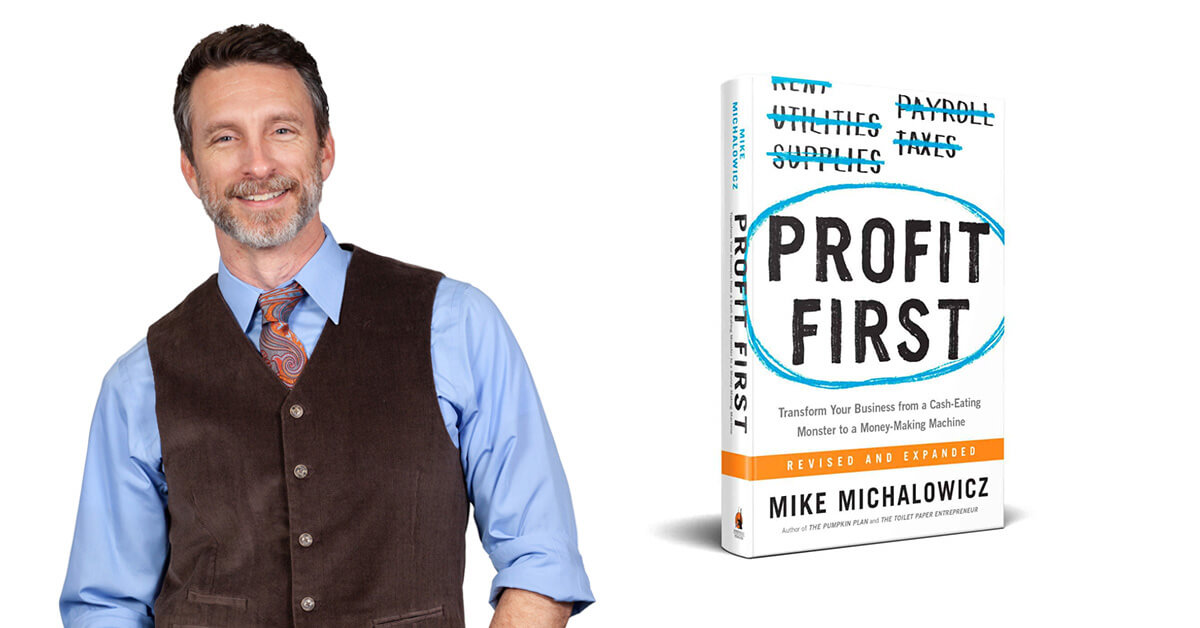
My guest today is Mike Michalowicz, founder of several multimillion dollar companies as well as an author of multiple bestselling books on entrepreneurship. Today we talk specifically about his book ‘Profit First,’ an incredibly simple yet powerful way to manage your finances as a small business owner (and yes, even as a freelancer you own a small business) that if done consistently can afford you the time and freedom you need to prioritize your career growth (and your well-being) as opposed to always feeling like you’re just chasing the next gig.
(Note: This episode doesn’t specifically talk about the AB5 legislation because this interview was recorded before it became law. But regardless, if you’re struggling to navigate the new world of being a freelancer versus becoming an employee, there is no system I recommend more highly than Mike’s ‘Profit First’ system)
Mike mi-KAL-o-wits is the author of Profit First, Surge, The Pumpkin Plan, and his newest release Clockwork. By his 35th birthday, Mike had founded and sold two companies – one to private equity and another to a Fortune 500. Today he is running his third multi-million dollar venture, Profit First Professionals.
Mike is a former small business columnist for The Wall Street Journal and the former business makeover specialist on MSNBC. Over the years, Mike has traveled the globe speaking with thousands of entrepreneurs, and is here today to share the best of what he has learned.
Zack Arnold: I’m here today with my. Mike Michalowicz, who’s the author of Clockwork, Surge, The Pumpkin Plan, and the books that we’re most likely going to talk in our conversation about today, The Toilet Paper Entrepreneur and Profit First. And I have to say, Mike, before we get started, that I want to mention your audiobooks are by far the most entertaining ones that I have ever listened to. You are quite the storyteller, and you have been in my ear for hours and hours and hours during my commute, so it is a pleasure to have you on my show today.
Mike Michalowicz: It’s this gonna be a lot of fun. Thanks so much for having me, Zack.
Zack Arnold: I’m telling you, even if people don’t care about entrepreneurship or business or anything else, just listen to your audio books, they’re just fun. You just tell good stories,
Mike Michalowicz: You know. I thanks for saying that. It’s funny, I, this is who I am, so I think the greatest compliment I got was from an old college buddy that discovered one of my books, but had no idea it was me, and he’s listened to, he’s like, I, I recognize this guy, like that, that those, those lame jokes, and just the way he’s telling stories, like I think I went to college with that guy, well, it was an old fraternity friend or brother of mine, that was the ultimate compliment that I feel that my style or who I am hasn’t changed much, and I feel I’m being integral to myself. I also realized, like, not everyone’s like totally into it’s like, oh, this is a storyteller guy, and these little jokey things. Some people, it turns off, but I think the people that that get it and connect with it, it just eases some difficult topics that we talk about, which is, you know, entrepreneurship.
Zack Arnold: Well, I think that you’re turning the right people away that aren’t interested in it, and those are the ones that are reading this, the dry, boring business books that say things like, oh, I don’t know that sales equals, you know, expenses minus profit, and this, and blah blah blah, like all these things, and you’re kind of turning all this on its head, which is one of the reasons I gravitated towards you, because your voice drew me in, because I’m the same way, where I like to look at things from a very, very different perspective, and kind of tell the real story behind the story that most of the people on the surface aren’t willing to talk about.
Mike Michalowicz: I love, I love that, because it’s immersive, too. You know, I think of some of the books I’ve read and enjoyed, but they’re presented almost like it’s a professor kind of lecturing to me, and it loses some of its credibility, like I read some of these concepts and these ideas, I’m like, these are amazing, but it’s not applicable to me. Other authors, though, kind of show it’s kind of the armor over the shoulder kind of mentality, and that’s what I’m trying to do, too, is show that I’m sharing what I know, but I’m also on this journey. It’s not gonna have it all perfected, and at least for me, it’s a more approachable style. It’s more digestible and feels more doable.
Zack Arnold: Yeah, I couldn’t agree more. I’m the same way, where if somebody is reading a book to me or writing an article and they’re on a podium, no thanks, I’m good. But if it’s somebody that’s reading the article or the book from the trenches, and they’re sitting next to me. Oh, I’ll listen all day long.
Mike Michalowicz: Yeah,
Zack Arnold: Right.
Mike Michalowicz: Especially if I’m sharing a beer with them.
Zack Arnold: Oh, yeah, absolutely. So, the reason that I wanted to talk with you today, and why this is so important to me, is I don’t have a lot of entrepreneurs or business people per se on this show. What I have are freelancers that are living in the gig economy by day, by trade, I’m a Hollywood film editor. I’m currently working on the TV show Cobra Kai, and I’ve worked on a lot of other big Hollywood shows, Hollywood shows in the past. And many of the people that come to my program, that come to this podcast, that read my articles, they’re in the gig economy, and one of the greatest struggles they have is I’m stuck where I am right now, I don’t really like my job. I keep saying yes to the wrong things, but I just can’t afford to move on and take lower budget things that I’m passionate about to make that transition. And my response is always, well, have you sat down and really figured out your finances? Have you planned them? Do you have what I call your sleep easy number, so you can say no to a bunch of jobs for months, and at first the concept makes sense to them, and they’re like, well, that’s great, but how do I do it? And I say, well, let me introduce you to a guy named Mike McCalla, who had a book called Profit First, because even though we’re not, and some of us are entrepreneurs, I myself am an entrepreneur, and some of my followers are as well, but most of them are still freelancers that don’t understand that they are a business, so I want to talk a little bit about that in general, and just talk about this idea of profit first, but I don’t want to get right into the numbers and the formulas, I want to get into where it really came from, as from you as a person in your story.
Mike Michalowicz: Oh, sure, sure. So, and to your point, Zack, we know we are all entrepreneurs, effectively, even if we don’t give ourselves that label, I mean, we, we have the steering wheel to our life’s outcome, and we need to hold on to it and steer, you know. For me, when it came to profit first, so I’ve been an entrepreneur my entire adult life. I grew businesses, but I was always surviving check by check, and I’d grown from the outside, you know, businesses that were perceived to be pretty significant. I had one, I grew to a couple million dollars and sold another micro to 7 million for a small business that has a nice growth trajectory, but the interesting thing I found is the more revenue I was generating my businesses, the more stress it was actually putting on my organization could. Have more obligation as a freelancer. The more you sell, the more you have to do. You deliver on your promise. It wasn’t taking any money out for myself. The money every time I came in seemed to go out just as quickly as it came in. So it’s constantly under stress, and the solution feels like I need to make more, and since I have no money left over, I can’t hire people. So it becomes this real quagmire. We get stuck. The solution I found is, and what I share in Profit First is the pay yourself first principle. I just applied it not just to our personal lives, that’s where we’re told to use that methodology, but to our business. It’s pay yourself first. And here’s what I found that I think is pretty fascinating is the established formula for profitability for a freelancer, actually for any kind of business, is you have to have your income, sales, you subtract out the expenses you incur, and what’s left over is your profitability. Problem is, in that formula itself, it’s logically makes sense, but behaviorally it’s flawed. We’re told that profit comes last, and it’s human nature, when something comes last, it’s the same as saying it’s insignificant. So all these businesses wait, all you know, wait till the end of the year, and they talk to their accountant and say, “Hey, was there any money left over? No. And, like, that, you know, “Oh, shucks” moment. Oh, okay. Well, maybe next year, you know, we’re usually a little more flowery in the choice of words, but we say, “Mommy next year be profitable, and we keep on delaying profitability. So, profit first, the core concept is it’s sales minus profit equals expenses. Every time there’s a transaction for your business, every time revenue comes in, you immediately take a predetermined percentage of that and literally hide the money away from your business and from yourself and let that money accumulate on the side, a small portion, but you keep doing this, and then we start building this profit muscle, because we’ve taken that cash first, then when it comes to year end, or I actually suggest we do this every quarter, every 90 days, that now there’s profit that comes out to the owner, which, as a final thought around this, is distinctly different than regular compensation. As a freelancer, you got to take regular pay to support yourself, but that it’s like, do you sleep well money, as you’re referring to, is this accumulating profit, and on a periodic basis, we want to take out a portion of it to celebrate, to reward ourselves, to realize the process or progress we’ve made, and additionally leave some of it in there, so it continues to accumulate, so we have more and more of a cushion as we move along.
Zack Arnold: Well, I got to be honest, that when I first heard about this concept, it was through our mutual friend Selena Sue, and I’d seen a couple of her emails, and like, oh, this sounds interesting, I don’t really get it, but I looked into it a little bit, and obviously everybody knows sales minus expenses equals profit, anybody that has done any basic business whatsoever understands if you have money coming in, you have money coming out, what’s left over is profit, and then I saw the sales minus profit equals expenses, and I swear to God, I stared at it for half an hour, and I said, I don’t get it, it, but how can I know what the profit is like? That’s my X variable. How do I know what that is if I don’t know what my expenses and my sales? I just could not wrap my head around it. And then the game changer for me was when I started reading your book, and if I could extract one sentence that encapsulates why this was such a game changer. It’s that profit first is a habit, so let’s talk about how this drives human behavior and habits, as opposed to spreadsheets.
Mike Michalowicz: Yeah, so this was interesting. So I was watching television years back, maybe a decade ago, and Suzy Orman was on. I’ve never really followed her, I don’t know much about Susie Orman, so she’s a financial expert, and she was doing this public presentation that they had recorded. Now we’re broadcasting on television, and she said to this audience around personal finances, the day you have more joy from your savings than you do from your spending is the day you’ll be rich. And that landed with me, the day we put more significance and get more joy and satisfaction of how much we’re saving, as opposed to spending, we’ll be rich, and what was interesting is, he didn’t say, you know, the day you start making more money, you’ll be rich, or any of that stuff. It was simply this emotional shift, and to me, that meant this concept of taking our profit first in our business. If we start taking our profit first and hide that money away. A few things happen. First of all, the business will start speaking to you and telling you what’s truly available to operate on, meaning say I had a deposit, say, of $5,000 for a freelance project, and I decided to take 10% of that away, and that’s to put to profit, so that’s $500 What I realized is actually, don’t have $5,000 to spend on the operation of my freelance business. I only have $4,500 So, your business starts to speak to you and tell you what you can work in with, what confines can you work within, and it just requires us to challenge this established notion or belief that profit comes last. It’s what I was called an axiom, that’s an axiom, is a term, just a known system or belief that works in generation after generation says, well, this is the way we do things. For example, there was a time that mankind believed the world was flat, we wouldn’t dare go out far in the ocean for the fear of falling off the edge of the planet. It’s such an established notion that it controlled all of how society. It behaved when it came to transportation and trade, and then one day Greek philosophers say, “Oh, it’s not flat round, and it sadly took another 2000 years, but then mankind started to accept this new notion around planet, and Christopher Columbus and other explorers exploited this to find new worlds. Well, this is true for our finances too. We’ve been told for millenniums that profit comes last. It’s a.. it’s even in our vernacular, it’s the year-end, or it’s the bottom line. All those things saying is the last consideration. But what I challenge people say is, when you put something last, how much significance is that? Like, would you ever say, ‘You know what, I gotta start putting my health last? Or, if you love your family, I put my family last. Now, never you say my family comes first, my health comes first, things are important come first. And in the established formula axiom, we’re told that sales and expenses come first. So most people say I need to sell more and I need to grow more. They don’t like to use the word expense, sell, grow, sell, grow. But what we’re doing is we’re simply selling to pay expenses. The more sales we get, just simply allows us to give more money to other people. So, what we’re going to do is flip the axiom and make it sales minus profit equals expenses, and take that profit first. What’s left over is what you truly have to operate your business, and what you take first gives you that security.
Zack Arnold: Well, the behavioral principle that I want to dive into even deeper, because I love talking about this stuff, and anybody that listens to the show on a regular basis, I’m sure has heard this term before, but it’s called Parkinson’s Law, and I’ve actually renamed this because people, it sounds so, you know, formal and whatever, I call this the mother-in-law principle. If you’re going to clean your house, right, you’re going to kind of dink around and do this or that, or the other thing. Well, yeah, it’ll probably take me a day. Oh my god, my mother-in-law is coming over in two hours. Guess what, you’re going to clean your house in two hours, or maybe one hour and 59 and a half minutes, right? So that’s the idea of Parkinson’s Law, and that very much applies to spending as well, and that’s where profit first is a habit, not so much an accounting procedure, right? So I want to kind of go back a little bit, if you’re willing to, and I want you to talk about the check for $388,000 and the piggy bank that ultimately changed your life and your behavior patterns around spending.
Mike Michalowicz: Yeah, and it was all rooted in Parkinson’s Law, to your point. So, I did get a check, it was one of many checks. I sold my second company to Robert Half International, they’re a Fortune 500 they own account temps, office temps, and all these different businesses. And I had this company that did computer crime investigation, and Robert Half is looking to expand their one of these revisions called Protivity, which was all around risk management, and they wanted to own a forensics business instead of creating themselves. They saw the success my company was having and acquired it, and that day is like it’s a glorious day when you get all that money. Anyone that looks to sell their business and aspires to have that, I wish it upon them, because it’s a great affirmation of the work you’ve done. But for me, and that was just one check of many, I mean, we sold it for millions, there was one big shift that happened for me that I’m ashamed about now, and I, I committed never to being that guy, but I became that guy, that guy that now I had this money, and money coming in, you know, more money I ever had in my life. I’m like, oh, I gotta live large now. So I bought, I bought a Dodge Viper, a Land Rover LR three, a BMW, all on the same day, like that’s like where my mindset was, and you can literally buy three cars in one day. I found out, and just spend it, spending large. Moved into an expensive town in New Jersey with the intention of buying the biggest house I could get. We were scouting my wife and I, and I also said, well, to keep up this new lifestyle that I deserve. Put a lot of ego into that word. I started another business as an angel investor. I was horrible at it. I should call myself the angel of death now. I was so bad at it. I lost all my money in these ventures. I was starting up these businesses, throwing money at startups, and just blowing the money away. It took only two years for me to evaporate all my wealth, and to your observation about the piggy bank, I came home to my family two years after selling my company to Robert Half International and becoming a self-made millionaire in my early 30s. I came home to my family to say that I’d lost the last penny, and I was ashamed, I was crying, I was embarrassed. My accountant called me that day and said, Mike, you gotta, you gotta declare bankruptcy, something. Actually, I never did. I felt that my creditors were not responsible for my own faults. So I came home to my family. It was Valentine’s Day, february 14, 2008 I’ll never forget it. My children, my wife had gathered, we’re gonna have dinner together that night, but it was freezing cold, sitting on the table, because I couldn’t bear to walk in the house. I was sitting outside in the road, on the road down the street, just thinking, how am I gonna share this with my family? And sat there for a half hour. I came in, I started to cry in front of my family even more. That’s why I told him I had lost everything. Well, I told him we’re gonna lose our house, which we did. Had to move into a rental that we was basically given to us by gracious, extremely gracious friends, and we lost our cars, we lost our possessions, like that, all that stuff went away. But I remember looking at my daughter that night, she was nine years old, and I told her, Mike, I can’t afford your horseback riding lessons, it costs like 20 bucks a session, you know, I don’t know any of our listeners here, if you’ve ever been broke, broke, but you know, there’s not a dime, there’s not a dime to even spend on that. And as I’m telling this to her, she gets up and she ran out of the room, I thought she was running away, and I just felt the stab. I also understood this trauma is bringing upon my family, like the solution is to run away, to go where no one knows who you are. The thing was, she was, she wasn’t running away, she was running to her bedroom to grab her little piggy bank, something she’d been saving to buy a horse one day, and she came running down to me with all the money she ever possessed in her entire life, and she put on the table and said, “Daddy, I’ll start providing for our family, and that moment that I can see it so vividly, that moment will be with me until my final breath on our planet. I’m convinced of it. That’s the last thought I’ll have. I’m sure it also woke me up to this fact. I had no real knowledge around profitability or profits. I thought it was so smart about money, because look what I had achieved. I was clueless, and just to wrap up that story, it wasn’t like the next morning I woke up and said, I’m gonna figure this out. Next morning I woke up depressed, and I went through two years of depression, just really struggling with this self-diagnosed. I never saw a therapist, which was a mistake, I do now, I didn’t then, and started to drink self-medicate to see myself through this, and it took me a good two years of really investigating what I did and did not know about entrepreneurship, and realizing I knew very little, and I committed myself. That’s actually the, that became the spark for me to become an author. I wrote Profit First from that, but I also wrote all these other books. I felt compelled to solve the misunderstandings I had around entrepreneurship and simplify the process, and that’s the day I became devoted to Prophet First, and being an author.
Zack Arnold: Well, I can speak from first-hand experience as well, right along with you, that there’s nothing like the deep, dark hole to help you re-examine your life and be inspired to get out of it, and then help others get out of that same hole. I mean, that’s essentially the same situation as me as well, and this is actually, I’ve talked a lot on this show about entrepreneurial burnout, and you know, depression, like I’ve gone deep down those, those rabbit holes on the show, the one that I’ve never talked about, that I’m going to share with now, that I think is important for so many people to hear, because you see somebody that’s working on the kind of shows that I am running, the business that I am, oh, they’ve got it all figured out, it’s all great, right? So I’ll get on these calls with my coaching members, and they’ll say, “But you don’t get it. I can’t just stop doing the jobs that I don’t like that are paying me. I have a wife, and I have kids, and I have a family, or I have a husband, right? I have a family to support. And I’ll say, “Well, let me tell you a little story. 10 years ago, I had just had my son, so it was my first child. He’s 10 years old now, so 10 years ago I just had my first son. It was during the housing crisis of 2009 so I had had a house that went from $200,000 in equity to being underwater in less than six months, ended up losing that house, and I was also in the process of building my first real brick and mortar business, and I had over $150,000 in equipment debt. I lost all of it, and I had to start from scratch. So, I’ve been in that place where you have to make really, really difficult choices, and it’s not just about where do I get the next paycheck, so I can tread water and not drown, but I really want to build a more fulfilling career. I want to make the better choices. I want to be more passionate about the projects that I work on, passionate about the people that I’m working for. And for a lot of people, it’s just, do I even watch or interact with the kind of work that I’m doing as a fan? Because that’s a really big thing in my industry, is that if you work on, like, let’s say, you know, the Housewives of Beverly Hills, and some of the people in my program do, they’re like, I would never ever watch this stuff. It’s hard to do it for 50 or 60 hours a week, just like if you’re running a business where you’re not interested in your customers or interested in your product, that’s miserable. But there are plenty of people that do it because they’re chasing after sales, but, like, we’re talking about sales are very different than profit.
Mike Michalowicz: Oh, yeah,
Zack Arnold: so you know, I like to talk to them about building the habit of starting to take some of that money and putting it away, so it, and it may take time, it might take months, or might even take a year or more, but you have to have that safety net, so you can say no to the things that you don’t want to do and start saying yes to the things you do want, even if you have to take half a step back financially, and that’s when I discovered Profit First, and just as a kind of an addendum to this, I’m assuming you’re familiar with Ramit Sethi as well, right?
Mike Michalowicz: Yeah, he’s a friend of mine, yeah,
Zack Arnold: Yeah. So Ramit was kind of one of the first entrepreneurs that I really latched on to. He’s now become a digital mentor of mine. He actually invited me to fly to New York City to speak live on a webinar with him about the. The business that I had built using some of his methods, so my financial system is kind of a combination of profit first as well as the IWT kind of automated finances, and the two just work together so perfectly and seamlessly.
Mike Michalowicz: So just a funny aside, I will teach you, be rich book is amazing. I just had breakfast with Ramith about three weeks ago.
Zack Arnold: Oh my god, small world.
Mike Michalowicz: Yeah, so next time you talk to him, I played a little prank on him. I sent him, I made a suggestion for his next book, so I gotta keep it secret for now. But next time you see him, Zack, definitely say, “Hey, I heard you have a new book coming out, and Mike Michalowicz sent you some details on it. So
Zack Arnold: I’m definitely gonna have to email him right after.
Mike Michalowicz: Totally, do yeah, tell him to send you a picture, because I actually sent him the book itself.
Zack Arnold: Nice. So, yeah, so what I want to do is, we’ve talked some about this idea of Parkinson’s Law, and for anybody that is listening that really isn’t familiar with it at all, it’s just like we talked about with the mother-in-law principle, that
Mike Michalowicz: Yeah,
Zack Arnold: They talk about with time, but the money will fill the space that you allow it, which is why the sales minus expenses equals profit never works, because I know that the first question that I had when I started to read Profit First is the same one that it’s probably the number one question you always get, which is, but you don’t get it, I’m not profitable yet, so how am I supposed to take profits that I don’t have? That’s right, that doesn’t, I can’t wrap my head around it’s a catch 22
Mike Michalowicz: Right? Right, so people say all the time, they’re like, I need to be profitable to take a profit, and I understand the logic, but you’ll never get there because of Parkinson’s Law. So, let’s explore Parkinson’s Law just a little bit further. So, he was a theorist, I believe, from the 1950s studying how a resource expands his availability, that our demand for it will actually increase. Now, his studies were predominantly around time, like your mother-in-law principle is perfect, like you know, if I’m giving a week to complete a project, it’ll probably take me a week. If I’m given two hours to complete that project, I’ll probably crank it through and get done in two hours. In fact, a lot of people say that they’re their best skills are when it comes to studying and preparing for tests, is when it comes to cramming. People say, I cram so well, well, that’s that’s human nature, actually. When there’s less time available to complete a task, we become more efficient and more focused on completing it successfully. So, most of us are actually good at cramming. Well, this study went out beyond just time and went to any resource. I wrote in Profit First, an example around toothpaste. You may notice that a new tube of toothpaste lasts three, maybe four weeks, but a new empty tube of toothpaste can be stretched, presumably for three or four weeks. We keep on twisting it and bending it, and we will become more frugal. It’s called forced frugality. When there’s less of a supply, you use less, but also become highly innovative in the twists and turns and squeezes, and cutting off the backside of the toothpaste tube to keep on extracting toothpaste. So, this is true for all these elements, and money is the same thing. We are wired as a human natural wiring, as more money flows into our business, we will spend more, and it’s easily justified. We just say, “Oh, I need that new equipment, I need to spend less. When we take our profit first, this business shows what’s truly available. We constrain the supply. We’re intentionally serving up a near empty tube of toothpaste. And then what we start to do, our natural response is to force frugality. We spend less money, but we also become highly innovative in its use, so to think that you need to be profitable first to take profit is a grand mistake. You start taking your profit immediately, starting immediately, and then your business will tell you to sustain that profitability. Here’s the confines of what we need to work within.
Zack Arnold: So then, if we’re going to take our profit first, what, what does that mean? Like, how again, the catch 22 of like, how do I know how much profit to be taking if I don’t have it yet? So, where do I start?
Mike Michalowicz: Yeah, so you start small, and then you let it grow. So, we say, start slow, let it grow, and what it is, is any business, I believe, any freelancer, any employee, anyone. If we take 1% of your income that comes into your pocket and hide it away from you. Chances are I’ll have no adverse effect, because it’s such a small amount. So, say I make, you know, $100,000 a year, that’s, you know, it’s a nice salary. I take 1% of that. I’m saying, take 1000 bucks, because if you can live your life off $100,000 I’m sure you can live the identical life off $99,000 a year, but we’ve taken the side that $1,000 and they’ve hidden it away. So, we start off at 1% and how we do some practice is every time a deposit comes in, maybe 100 bucks comes in. I’m saying, take a buck, if you can live off the $100 you can live off 99 bucks. And so, whenever money comes in, you take 1% of it and hide it away into this profit account. It’s an actual physical account at a bank. Make sure that it’s not easily accessible. You don’t want an ATM card for it. You don’t want online banking. You don’t want starter checks, any kind of checks for it. You want to kind of hide it away from yourself. Then once you start this 1% then very quickly, and we do this usually on a quarterly basis, sometimes even faster, we say, well, if you take 2% profit and 3% and maybe it takes us a year. Year or even a year and a half or two to get up to 15 or 20% profit, or maybe we stay at 10% but you will find the amount of profitability that you can easily sustain every time you take this little baby step forward in increasing profitability. It is forcing you to reflect on your business to be more frugal, to be more innovative in the use of what you have, so start slow, let the percentages grow. Yeah,
Zack Arnold: I love all of that, and I think that that’s a really good concept, and like we talked about, it’s a good habit to adopt, and for anybody that’s saying, well, I can’t take 1% well then clearly they have some serious financial management issues, but like you talk about in the book, figuring this out makes you realize, oh, wow, I need to do a much deeper assessment of how I’m actually spending my money, where it’s going, and what my habits are, and I know that that’s something that you work with in conferences and in your book, and you do coaching as well. So, let’s talk about how do we actually assess the health of either our business or just the way that we’re managing our finances, if we’re an entrepreneur, which, ie, by the way, you are a business, so how do we help where we are? How do we even know if this is going to work or not?
Mike Michalowicz: Yeah, so in the book I developed an assessment process. What I did is I evaluated what I call the fiscally elite businesses and freelancers, actually. So, which is like to your point, is a business too, or just usually a business of one person, but it’s a company. I ran an analysis and found what the fiscally elite businesses were doing, and this was an industry-agnostic study. I included every industry and found that the elite performers, and every market has it. Like, I’ve talked with manufacturers. I just returned from a speaking engagement to a group of manufacturers, you know, 1000s of people in this room, and they say, you, you know, I do my presentation on profit first, and I say, you know, I think you can achieve 20% profit, and you hear, like, at the guffaws, like, are you kidding me? You know nothing about manufacturing, you know, the margins are so razor thin, we barely make half of 1% on our transactions. I say, well, I did research around manufacturers, and there is a group of manufacturers that achieve 20% profitability, so it’s very doable if you want to include yourself in the fiscally elite. So, the first step to this process is this analysis is to look at what the fiscally elite are doing, and you can just pull it. I even have it for free download on my website, but you can just pull these numbers from what our research is, or if you prefer, you can just do some research around different industries in your space and see what kind of numbers the financially healthiest businesses are performing at. Then what we do is we look at your historical numbers and we do a comparative. Now when I talk with many freelancers, I say, how at the end of the year, how much profit have you had? Now this is in addition to owner’s compensation. Owner’s compensation is your normalized salary, so if you’re taking in distributions or a paycheck, or wherever you are, that’s your salary. I say, how much of a cash bonus do you did you issue at the end of the year, when the year was over and all the things were done? How much extra cash did your business give you?
Zack Arnold: And for most immediate responses,
Mike Michalowicz: Exactly, are you kidding me? Yeah, so that’s the exact response, like, are you freaking kidding, it’s zero, like, or I had to put money back into the business, so most people are starting off with 0% profitability. I also asked him, if we hired someone to replace your work, you know, we hired someone, what would you have to pay them, and not so surprisingly, for some to many freelancers I talk with, they say I’d actually, if I had to hire someone that they get paid more than I get paid, so we’re inadequately paying ourselves. And then I asked, when I say, well, taxes, did your business pay your taxes on your own behalf, or do you have to pay your taxes out of your, your distributions yourself? And everyone says, now I pay my own taxes. Well, we started our business in part for financial freedom, and financial freedom is not worrying about cash outlays, including or particularly taxes, so your business, and it doesn’t matter the formation of the company you have, if it’s an LLC or sole proprietorship, or even an S corp or C corp, your business can always pay your taxes. There’s different ways of doing it to make sure it’s within the confines of the law, but you can do it, so the business pays taxes. So, what we do is we look at these historical numbers, the profit, the owner’s compensation, the taxes, the operating expenses, compared to the fiscally elite, and that’s where we can go, because we know other businesses have done it. Now we don’t say, “Oh, you’ve never been profitable, let’s start taking 10% profit. Oh, you’ve inadequate paying yourself, let’s ramp up your pay, you never pay taxes, don’t worry about it, business start reserving money for that. Oh, and as a result, it balances out. We got to cut your operating expenses to the bone. We don’t start off that way. It’s too abrupt of a change. It’s like to me, it’s like taking a frozen mug out of the freezer and putting it in a red hot oven. That shift will shatter the glass, so we have to go through a slow warm up process. And so, what we do is now we have these targets of where we want to go. We start slow and let it grow, as we talked about earlier. So, you start off maybe your profit account at 1% If historically about 20% of your top line was going to your compensation, we’ll move up to 21 or 22 And if your historical compensation was, it was 80% of your income coming in was going to use pay, we might move that up. To 81 or we may choose to move down to 79% to give an extra percent to profit, and the reason that’s important, owner’s compensation is what you should live your lifestyle off of, that sets your lifestyle standard, profits the bonus above it. So we start making shifts that way, but small incremental shifts targeting these targets that we’ve defined, and it takes us a year, maybe two, to get there, and we start slowly, too. You know, they’ll open up all these different accounts at your bank. You can start off maybe just one here, and a few months later you start with another one, but we do have to get started. Just think about this conceptually. Never works. Doing so on a spreadsheet is a great failure. In fact, every business I’ve consulted with has tried to do some spreadsheet. I tell them, I say, you know what, you’re already doing this in a glorified spreadsheet called your accounting system. If you’re doing accounting, all your numbers are tracked, how much profitability you have, what’s going toward taxes, all that stuff’s tracked already. How’s that serving you? And most people say, well, it’s not, because I do bank balance accounting, I log into my bank account, see how much money I have, based upon what I see there, I take action. So, if that’s how you behave, aka, first I want you to know that’s normal, but if you behave that way, bank balance accounting, what we’ll do is we’re going to set up these accounts, profit, owner’s comp, and so forth, at your bank, allocate the money to it to intercept that money before we spend it, and then work within the confines of what’s truly available based upon these accounts.
Zack Arnold: Well, there’s two things that I want to pull out of this, there’s so many good things, but the two that I really want to pull out right now are this idea of accounting and also lifestyle, two very divergent directions that I want to go, but I want to put a pin in both of them to make sure that we hit them both. The first one I want to talk about, since you just brought up accounting, was a conversation that I had with my accountant after I had been introduced to you, and I started opening up all my accounts, she’s like, and she does a, does my bookkeeping. She’s not full time or anything, because I’m still, you know, a freelancer, so she works for me, maybe 510, hours a month. She’s like, what’s with all the bank accounts? Oh, yeah, like, well, let me explain to you, there’s this thing that I’m doing, it’s called Profit First. She hadn’t heard of it, and her immediate response was, well, you don’t need all these accounts, you know that I send you reports, and I send you your cash flow statement at the end of every month. I’m like, yes, I understand this isn’t about, you know, taxes or anything else. You’re doing a wonderful job. I need this because of my behavior. I need to learn how to better spend my money and not get stuck with the golden handcuffs, right? So, what I hear about from people so much, as well. You know, I started off living in a studio apartment, and I was sleeping on a mattress on the floor, and had, you know, paper plates and spoons, or whatever. And I was just, do I was just making indie films, and I was going out there, and it was awesome. We were making it off a credit card with our buddies, but then all of a sudden they started getting paid more, and they started getting money for their films, and it started getting easier for the money to come in, and then they woke up 10 years later and said, I work on crap that I don’t like, but I have the golden handcuffs of I have this lifestyle that has expanded beyond my means, and it just continues to do that, which again goes back to this idea of Parkinson’s Law. So, but as you said, if you just kind of take the frozen glass out of the freezer and put it into the oven, bam, it explodes, but if you very, very slowly say, you know what, I was living off of, you know, x amount of dollars, like you said, $100,000 a year, if you can just start to slowly put that amount away, your, your lifestyle will, it’s almost like you don’t even notice, and at first I’m like, well, there’s no way that this really works, and one of the things that I prided myself on, and I’m going to credit both you and Ramit for this, is that I meticulously knew exactly how many dollars I spent every month on groceries versus gas versus this versus that, but it took me flipping forever to manage that, and I would always get this pit in my stomach, because on Saturdays it was me with a spreadsheet in Quicken and my bank reports for two or three hours, and I will lose all this time with my family, and I started to learn about this concept of living a rich life with Ramise, and then learning how to create this, this Profit First program, and I said, wait a second, maybe I don’t need to be doing all of this, and maybe the reason that I never have any money left over is because I’m tracking meticulously how much I spend, but I’m allowing myself to spend all of it. So I just kind of said, all right, I’m going to blindly try this, and I started at, and I went from having one account, and like you said, some people did, they don’t, you know, need to set up the accounts at first, or whatever, maybe just set up one. I’m the opposite, I opened like 20 accounts,
Mike Michalowicz: So nice,
Zack Arnold: I went crazy, and I now have this fully automated financial system, where all the personal stuff is going to retirement accounts, or kids’ college funds, or saving for a trip that we’re going to have in two years, whatever it is. I don’t even think about any of it. The only number that I care about, like you said, going back to this bank balance accounting, I’m still looking at my expense account and saying, How much do I have to spend this month? Oh, great. The wonderful thing about it, though, is that that’s not all of my money. I already have the profit somewhere else where I can’t even see it. I already have the tax money somewhere else where I can’t even see it. I have the all the places where my money needs to be. It’s already there, but I can’t see it because it’s happening. Behind the scenes, so my expenses account has shrunk, but I’ve just learned how do I change my behaviors to make sure that I can spend that on whatever the heck I want to spend it on, and it’s the same for my wife. We never have to argue about why did you buy those shoes or what’s right,
Mike Michalowicz: Right?
Zack Arnold: I’m like, if you want to take the money that’s in your expense account and throw it into the fire to keep warm, I don’t care, because we don’t need it, because all the other money is everywhere else where it needs to be, and it’s automated, and the amount of stress that that has taken out of my life is immeasurable.
Mike Michalowicz: Yeah, I love hearing that. It was so funny, you talked about your account, and her response is common, it can be defended too. I mean, traditional accounting, as she shared with you, it’s like just read the cash flow statements, read the documents I’m sending. What I think accountants don’t realize is accountants as a general community are very logically based, that’s their expertise, that’s why they’re so good at numbers, but entrepreneurs are much more emotionally based. We are often the greatest salespeople, we have high energy, particularly enthusiastic about what we do. We were very convincing, often convincing ourselves first something to be true, and then we can convince others, because we believe it so vehemently, and that’s why we’re successful. The thing is, we’re not typically driven by looking at through spreadsheets and stuff like that, that actually is an energy drain. So, what most entrepreneurs do is we revert to this bank balance accounting. It’s a real simple system. You log into your bank account, and if you have money, you know you can spend it. If you don’t have money, you don’t. And so we’re circumventing the accounting. So Profit First is a system that we set up at your bank. These accounts we referred to earlier, profit, they all sit at your bank. And so now when I log into my bank, I immediately see what money has been pre-allocated to what purpose, so it puts this, these guard rails around my spending behavior. One of the challenges I tell accountants, I say, ‘Listen, I get that you don’t get why entrepreneurs need this, but look at your client base. Usually 80 90% of an accountant’s clients are not sustainably profitable. They’re not taking quarterly profit distributions out at the year end. They’re negligible to break even. That’s travesty in my opinion. The vast majority of businesses are not profitable, that the vast majority of business owners are in constant stress to survive, and that money is a constant worry, your example, Zack, that you don’t have to worry about money is what we all should aspire to do, and have, and so I implore upon accountants, I say, listen, I understand the logic of accounting, but you have the proof with your own client base it’s not working, I suspect that your accountant now can look and reflect back upon this, all these accounts you set up, look at the impact it’s having, look how much more profitable you, you are now than you were before doing the system, and that’s my hope that accountants will start seeing that this is a behavioral system, and not a not replacing accounting, but it’s really a cash management behavioral system that just serves with how entrepreneurs are naturally wired,
Zack Arnold: Well, being the very, very logical person that she is, which you, you hit the nail on the head. Let’s just say that she still doesn’t understand it, but she no longer questions it, right?
Mike Michalowicz: Yeah,
Zack Arnold: Okay, whatever, you need your eight accounts, that’s fine, but oh, wow, you’ve got a lot coming in, and I see that we’re not having trouble paying the quarterback anymore, right, so that it’s funny because bringing that up, that was actually kind of one of the biggest moments that I realized that this, it wasn’t just a matter of, oh, this works, this is more convenient, or this is helpful. It was like, oh my god, this is life changing. I had that moment, maybe like a month ago, when I hit the end of quarter two, and I always have a conversation with my accountant, and I, oh my god, I dreaded these phone calls, like every time he’s like, well, this is, you know, this is how much you should have set aside, because even though I’m kind of a permalance employee for a studio, so the way that it works in my business is you get hired by a studio for x number of months, and then even if you stay on the same television show, they’ll lay you off in between seasons, and they reckon, which is, it’s a big pain in the ass, but the point is that we don’t work 12 months a year, so you have to be a little bit more organized with how much you’re actually taking out and how much you’re saving for the lean months and whatnot, but whenever I was told this is how much you should have saved for your taxes, it’s like, ah, crap, I forgot to do that again, there wasn’t enough left over for it, so I just fingers crossed. Well, maybe if I don’t make any money, then I don’t have to pay any taxes, right? But then what happened on this call was he had said, well, you know, based on the numbers that you have so far projecting to the end of the year, this is how much you should have saved, and I’m like, oh, that’s fantastic, that’s what I saved. He’s like, ‘No, no, you don’t understand. This is what you need at the end of the year if you make an extra x number of dollars. I’m like, ‘Hold on a second, you’re telling me that I already have my full year’s tax payment ready to go next April and it’s July? He’s like, ‘Yeah, you’re in good shape, man. I was like, ‘Holy crap. So I mean, obviously I started to. Rebalance my allocations, because I was almost saving too much, but I already have next year’s taxes paid sitting in some random account somewhere that I don’t even see. I feel, because of this system, it was just invisibly going there. I’m like, holy crap, my taxes are paid next year, like big change compared to where I was a couple years ago.
Mike Michalowicz: So, I am in my book, I encourage people to email me, and I’m now getting well over 100 emails a day from readers, so I’m better, a better system to keep up with it. But one of my favorite parts of the year happens at the end of every quarter, so quarterlies are due in September, they’re going to be due again in January, and the emails I get, and I never expected this, but now I now I do, is that people are celebrating like you’re my taxes have been reserved, I’m ready to pay it, I got money left over, and the interesting thing is this is another behavioral response, you know, the profit first system does not skirt tax law, or something. It’s not a system to not pay taxes, but it is a system for the business to reserve taxes on your behalf. And there’s a behavioral trigger, it’s called loss aversion. When I pay the taxes out of my own pocket, why experience loss aversion? Because what means is I took in money, and now the government’s coming to me saying, hey, some of that money took in, sorry, that’s our money. It’s kind of like if you ever see a car you want, the nice shiny red sports car in the window of the shop, it looks nice, but we don’t go to extreme measures necessarily to gain it. Definitely not the same extreme measures we would go to once we possess it, because once we possess it, now that’s our baby, we will go to extraordinary measures to retain it, even if the dealership says, “Hey, you missed the payment, we’re going to reclaim the car. You know, we’ll work a second job now. We’ll start doing Uber at night to pay for my baby, and I’ll drop the insurance and never drive it again, just to reduce some costs and keep it locked up in my garage, because it’s my baby. So, we do these extreme things to possess something once we have it and feel extraordinary pain when there’s a threat of it going away from us or it is taken away from us, that’s called loss aversion. So, what profit first does is interesting. Is now that the business is reserving the money on our behalf and pays our tax bill, even though it’s the same dollar amount due, the fact that the business has reserved it and never went into our pocket, that shiny red baby was never ours. We’re like, oh, okay, that’s the Maya reserve for the government, it’s theirs, and we don’t feel that loss aversion.
Zack Arnold: Well, the other area where I saw this, and this is actually what spurred the email that I sent to you, which ended up getting you on the call here today, but I decided that I, for after years and years of driving what I call a sardine can with four wheels. I had a little tiny 2005 Toyota Prius, had over 170,000 miles on it. Like, my mom even told me, she’s like, ‘I’m so glad you got another car, because I was embarrassed to sit in yours. Like, it was just.. it was just nasty. I know, I know, but it was.. it was all about behavior. And I said, I know I want to get a nice car that’s going to last me 10 years, and that’s going to cost money, but instead of just being like, all right, I’m just going to jump in and splurge. I gave myself a year runway, and I started making monthly payments, because nice account, right?
Mike Michalowicz: Yeah,
Zack Arnold: So then by the time I had to get the car, I was already making the monthly payments, which meant that my budget overall around those monthly payments had already changed, and my behaviors were such that I was making sure that money was in an account, but when it went to the profit account, I had a healthy down payment, and as soon as I started making the monthly payments, it was like nothing had changed, because the exact same dollar amount just went from my profit account to my car payment, but it was just a seamless transition, except for when people are like, dude, how did you get the car? I’m like, well, let me explain to you this little thing called Profit First, and that’s what I ended up sending you, is the picture of me with my R, and realizing that it never would have happened had I not been better about my behavioral habits around where I put money, and that’s where all this comes into, and we could go down this rabbit hole forever, and guess what, you have an entire book that does that for people, but just very, very, very quickly, let’s just talk about the five foundational accounts, just to give people a taste to get them started.
Mike Michalowicz: These are you set them up for your business, and if you’re a sole proprietorship, you can set up with your own accounts personally. But the five foundational accounts are as follows. The first one’s called income, and these can all be checking accounts initially, maybe savings accounts for a couple of them, and I’ll share which ones. But the first one’s income, and the idea of this account is it’s a depository only account, so money will flow into your freelance business, and you put in the income account, but you never spend $1 out of here, that’s the key, we’re going to allocate money from here, but we’re not going to spend money, the next account is called profit, we talked about that profit, just as a reminder, it’s a reward above and beyond a salary, this is your bonus for doing what you do. It listen, you take it on risk by being a freelancer, because you’re at the whim of your clients. They can say, “Sorry, we’re done, and we’re not gonna work with you anymore, and you have to accept that there’s no way to remunerate around that. So, profit is a reward for taking on risk. Risk, the next account is called owner’s compensation. This is your normalized salary, so we allocate money in here, and this is what you live your lifestyle off of. Most entrepreneurs and freelancers live their lifestyle up to the last dollar that comes in. We compete on maximizing our lives, and the second we have a dip or a slow down, we’re in real trouble, because we can’t sustain the expenses we’ve incurred. If you work within the confines of your owner’s comp, you have the backup and buffer of a profit account that could save you in a dire situation. Then the next account is called tax. Tax, we talked about now taxes, where your business will reserve your taxes for you. And the fifth and final account is called operating expenses, that’s the money to cover the operations of your business, supplies you may need maybe some forms of insurance you have. You may even have your own private office, you know. Those elements are covered out of opex.
Zack Arnold: Now, the one that I want to add, and you may have a much better system, even for me, than what I have, but this is one that I add specifically for freelancers, and the reason being that you can have three or four months in a row where it’s just gangbusters, because usually the freelance rate is going to be above living expenses, but, like you said, like we’ve already talked about ad nauseam, that you can spend all that if you don’t have a better system for it. So, I’ve created what I’ve called a cash surplus account. So, the way that I do it is, any, and the other thing we haven’t talked about is that this is all based on allocation percentages, and the reason this is so important is I want to go back to something that you had said very quickly, which is, well, it’s great that you don’t have to worry about money anymore, Zack, and there are a lot of people thinking, well, yeah, of course he doesn’t have to worry about money yet, it’s Cobra Kai, right, people that are working on really small, low-budget stuff, they’re thinking, well, I couldn’t do this, it’s not about the amounts, it’s about the percentages, so you figure out what are the percentages that each of these needs, and I have a percentage, and my owner’s comp is usually between 50 and 55% of whatever the total gross income is, but generally on months where I’m editing a television show, if I do 50 to 55% owner’s comp, I’m putting way more in than I need to cover the living expenses that I’ve now shrunk and become accustomed to, so I take everything extra out of that owner’s comp and I put it into a cash surplus, and that becomes my buffer for the leaner months. And I don’t know if that’s a good system. If you could recommend a better one for freelancers.
Mike Michalowicz: Well, it’s a great system, because your highest income that you’ll make on any given month is not representative of every single month, so it’s human nature that as our income increases, we have a great month, right? Oh, this is my new standard of living, but things will go away, things will slow down. So we set up a thing, we call it the drip, the same idea, it’s a cash reserve, so money comes in and sits there, and then the money, it’s a buffer of extra money, it drips into that income account once we go into a dry period, so it kind of averages things out. Even my business, I own today, I own a accounting and bookkeeping membership organization, and it’s at the year end, right as we’re recording this right around now. Now we get the most renewals, we probably make about 70% of our income between September and December, so there’s a huge surge. So fourth quarter looks like, oh my gosh, we finally figured this out. We’ve nailed it from a cash basis, but I know in the new year, first quarter is usually the quietest time for us, and then it starts picking up a little bit. Second quarter, but third, and then really fourth quarter, so we need to do as the money comes in fourth quarter is to put a large portion of it in the side that we call the drip account, and then every month afterwards we take a sliver out, so say I take in $120,000 of income, it’s a good easy number, because I can divide up into 12 slices of $10,000 each, so I put that whole $120,000 in our drip account, and then 112 of that every month comes out into my income account, and now that’s my normalized monthly income, so I don’t. When money’s coming in fast, I don’t live up and beyond my means, and when things are quiet, I have a source of revenue, because it’s been normalized through that cash reserve. So it’s the exact same concept you’re sharing, just a different title we give it.
Zack Arnold: Yeah, the other one that I want to share too, that I think is important, for especially for online entrepreneurs that are doing the kind of stuff that we’re doing might work for freelancers as well, but in addition to this kind of cash surplus that I use, or the drip account for the income, I have the same thing for my expenses, which I call other expenses, because what used to happen to me is that, as you know, that there are a lot of services in the online space that offer yearly membership, so you can cut your costs, but that wasn’t part of my monthly expenses, so once a year it’d be like, oh crap, $1,000 for website hosting, oh right, right, right, right, right. So I would get hit with these charges, and there were 1000s of dollars worth of them, and because I set all of it up at the same time, they would massively hit me right around the end of August, and I would just dread it. I’m like, why am I not saving for this? Why don’t I have a system? This is so dumb. As soon as I incorporate a profit first, I said, all right, well, if I were to break this down monthly, what is it? Okay, well, it’s x number of dollars, so I put that in that account. So, again, going back to this idea of emotion and behavior, not necessarily numbers and spreadsheets. Now I look forward to those charges, and like, bring it on, WordPress. Engine, you put that $1,000 on my credit card, because guess what, I’ve got it, it’s free money, baby, like I get, I get, because it’s already there, it’s like, oh, this is free, because I’ve already set the money aside, and my behaviors have changed around it, so it’s those little things that get me super excited about this process.
Mike Michalowicz: Oh, totally, totally, and you know, it’s interesting with monthly payments, so for the business I have, I offer that to clients to make monthly payments or an annual, but they do annual. There’s a big savings, and if you run the percentages, you know it’s about 15 to 20% like a credit card rate to go monthly with us versus annual. So I’m like, I tell everyone, you got to do annual, and they said, I can’t afford the cash flow. And to your point, Zack, I say, well, why don’t you set up an account and start making monthly payments for yourself, but then give me the cash at the end of the year, once a year, and so that you’ve been making these monthly payments, but you drive the benefit of doing a one-time install. When we seek something out, like monthly payments from a vendor, that’s a great indicator that there’s an opportunity to make our monthly installments to ourselves in an account specifically to pay that vendor.
Zack Arnold: Yeah, exactly. So, I want to be very, very conscious of your time, because I know that Parkinson’s Law is coming into play on in. So, and I just want to mention, for everybody, even though we mentioned this off the record, we haven’t talked too much about this at all, but you also have a new book out that’s called Clockwork, that’s really about automating things. Yeah, I’ve never had somebody more punctual to a podcast ever. As soon as the numbers switched, I’m like, all right, I hope this guy shows up, because you know, sometimes you talk to authors, maybe they show up, maybe they’re five minutes late, three seconds after the number switched. Ding, hey, I’m here, let’s go. I’m like, oh, this guy’s awesome, I love, I very much respect that and appreciate that, and I’m going to respect it in return to make sure that you get out on time as promised, but before we go, I want to know where people can find you, you know, where they can find your book, where they can work with you, if they want to, like, just, you know, plug yourself.
Mike Michalowicz: Oh, thank you for offering that. So, yeah, so I’m an author of six books now. I have another new one coming out in 2020 All my books are available, free chapter downloads for them are available on my website. I also used to write for the Wall Street Journal, so those articles are available. And I actually did some TV work too. I worked for MSNBC for a while, so you can check out the fix the show I did. I was one of those guys that would go in and fix struggling businesses on a show called It’s Your Business. So to get all that stuff for free, go to Mike michalowicz.com but I’ll give you a shortcut for anyone listening in, because Michalowicz will take forever to spell and is impossible to remember. Go to Mike motorbike.com So, the story behind that is my nickname in high school was Mike Motorbike. I’ve never driven a motorcycle, by the way, but since it rhymed, that’s what I was assigned. So, go to Mike motorbike.com and all those resources are available for free,
Zack Arnold: And I gotta just follow that with one little final bit to let people know that nobody in this space offers more free stuff on their website than you. My God, like, you, you are so generous with your knowledge and your expertise and your experience. Like, you go on the just all the different resources pages, you’re like, ‘Jesus, this is an MBA for free, like this
Mike Michalowicz: Oh that’s very kind of you..
Zack Arnold: I can’t thank you enough for that. And I highly encourage people to go visit your website. This has been an absolute pleasure, and I cannot thank you enough for your time today. So, thank you so much for being here,
Mike Michalowicz: Zack. This has been a joy for me, so I thank you too. Thanks.
Transcribed by https://otter.ai
This episode was edited by Curtis Fritsch, and the show notes were prepared and published by Glen McNiel. The original music in the opening and closing of the show is courtesy of Joe Trapanese (who is quite possibly one of the most talented composers on the face of the planet).
Learn how to better manage your finances (especially if you're a freelancer) to prepare whether you're dealing with feast, famine, or a global pandemic.

Stop wasting time with bills and invoices and focus on your most important creative work by organizing and automating your personal and small business finances.

NYT Bestselling author of 'I Will Teach You to Be Rich' Ramit Sethi discusses personal finances and starting an online business with Zack Arnold, ACE.