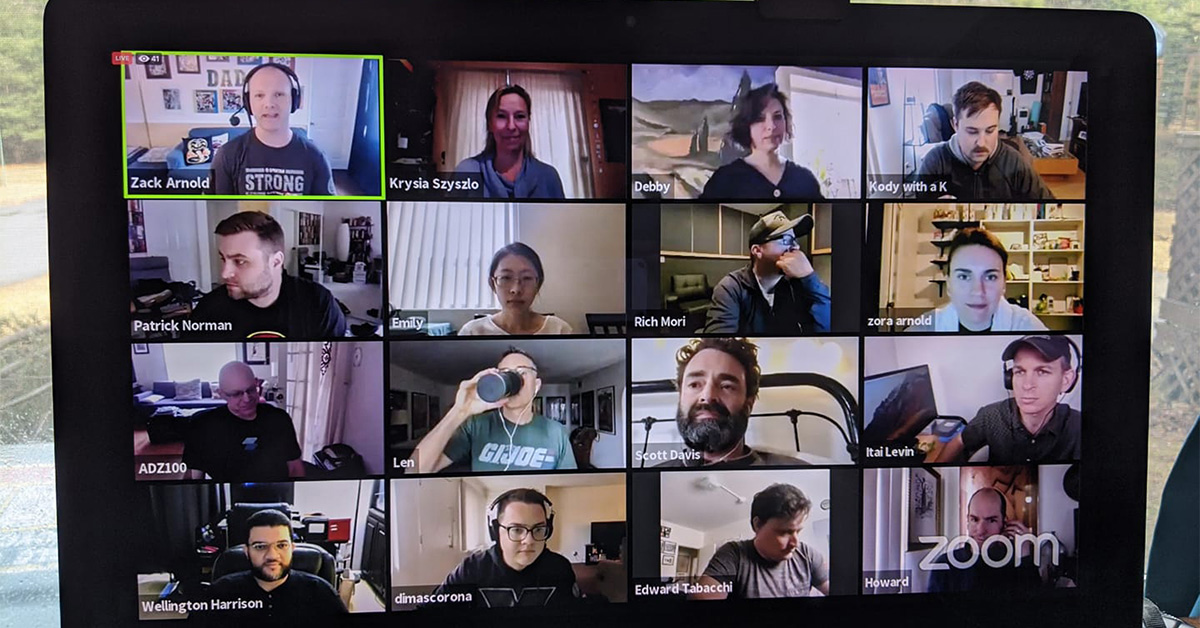
How To Reduce Anxiety and Take Back Control During COVID-19 | Mastermind Q&A


About Episode
Amidst the chaos and uncertainty, there is very little we can control right now. And the lack of control we’re all experiencing as a global community can quickly spiral downwards to anxiety, depression, and even paranoia.
So what can you do?
Fortunately there are still things we can control, and in this episode I do an “All Hands On Deck” call with members of my ‘Optimizer’ coaching & mentorship community to discuss how we can take simple steps to reduce the fear and anxiety consuming us all.
The first and most important thing we discuss as a group is how people are doing. It’s amazing how comforting it can be to hear the voices of others knowing the world hasn’t disappeared and we’re not alone in this. Beyond checking in on the group, we then dive into various strategies to better manage the things we can control, including:
-
How to better manage our relationship with the news and current events
-
Taking back control of our finances in turbulent times where so many of us have lost work for the foreseeable future
-
The importance of movement now more than ever while working from home
-
Now that you are your own boss, how can you prioritize your time? What should you be working on? What comes next?
-
How can you make the most of all of your free time and prepare for when the job market opens again?
- Simple breathing exercises to help calm your racing thoughts (especially if you’re struggling with sleep)
Transcript
Zack Arnold: Hello everybody, and welcome to the latest episode of The Twilight Zone Bandersnatch Edition, where everything has gone bat crazy, and we have no idea what is going on with the story lines right now. Oh my god, what is going on? So, for those of you that don’t know, my name is Zack Arnold. I’m the creator of the Optimize Yourself program and podcast, formerly Fitness and Post, for all of the editor and assistant editor and post-production nerds out there, just like me. And I am here today chatting with my coaching and mentorship program members. So, for everybody that’s here right now, I want to introduce you to the team. So, who I have in here are just a few of the many members of the Optimizer Coaching and Mentorship Community. So, even though you guys are all muted right now, I want you guys to wave your hands and say hello. The reason I’m doing this call today is I want everybody that’s in their little boxes on my call and everybody that’s in their little boxes all around the world to realize it’s not just you stuck inside a little box by yourself, we are all going through something that we have never experienced in our modern world, and I think the most important thing for us today is just to establish that there are still a community of people out there, and what I find so interesting is that I’ve been talking for years about cell phones and distractions and social media and all these other things. Over the course of the last 20 years, we have become so hyper connected that we’ve become incredibly disconnected, and there I’m sure everybody has heard the research studies, heard me talk about this stuff ad nauseum. I promise I left that soap box in the other room. I’m not going to be talking about it that long, but we become so disconnected and isolated that we have this hyper connectivity, but we’re, we’re depressed, we’re anxious, and I don’t know about everybody else, but you guys can raise your hands in the room if you agree. Hoof here feels immensely more connected to other people than you probably have in years, despite the fact that we’re not connected to anybody. Am I the only one experiencing that right now? It’s crazy, right? All of a sudden we are so connected to humanity and all these other people, yet we’re not connected to them at all. It is now findable by law for us to give somebody a hug in public, like that’s insanity, right? But we feel more connected than we ever have, and that’s what I want to build, is that community and that connection. So, the topic of today is very simple. How are you? So, what I want to do is, I want to talk with everybody in this group, just like this is one of our normal coaching calls, although I’m definitely not used to having like 20 squares in front of me instead of like five, but I just want to kind of go around the room, so to speak, for anyone that is interested or willing to volunteer, and I just want you to talk through what’s happened to you in the last week or so, your job situations. I mean, when I had scheduled this call, the question was, are you still working from home or not? For the love of God, I hope everybody already is, given everything that’s going on, but I actually know a few people that are still working from a facility, at least through the end of today, just to scramble and get everything ready to go. So, who here would like to volunteer and just kind of talk a little bit about where they are right now and what’s going on? Scott raised his hand first.
Scott: Hey, Zack.
Zack Arnold: So, Scott, for anybody that doesn’t know, Scott is a newfound celebrity in the post-production world, having been on my podcast recently, talking about outreach and networking, and Scott, I bet when you joined my program, or even when you agreed to do my panel, you never saw this coming, did you?
Scott: Oh no, not at all. I don’t think anyone did.
Zack Arnold: Yeah, no kidding. So, so tell me, what’s going on with you? How are you?
Scott: I’m okay right now. Thankfully, the job I was on, I was two weeks into a feature, and we got shut down, but they moved us to work from home, so that’s fantastic. And I’m really grateful to still be working, so I’m really busy working, but it’s incredibly difficult to concentrate, you know? I go, it’s really hard to shut out distractions, because I feel like I need to let distractions in, because I feel like I need to be on top of this really incredibly fast moving situation, and then when these distractions come in, some of them just like tip me over the edge, and I have complete meltdown. Like last night, I had a complete meltdown with the announcement of the shelter in place law, and it goes up and down. It’s literally, it feels like minute by minute, one minute I feel like, oh, this is cool, I got this, I can do this, this is actually going to be really nice, working from home, got some food, everything’s cool, got some income coming in to like, oh God, it’s gonna be a zombie apocalypse.
Zack Arnold: No, we’re not quite there yet, but I would assume, and maybe I’m assuming incorrectly, but just a show of hands, How many of you at least once have completely catastrophized this entire event, and you thought to yourself, “Oh yeah, zombies are going to come at least in a week or two, maybe a month max, right? We’ve all done that, we’ve all let our minds run wild, and we have let basically the fear center of our brain, which is called the amygdala, that is now running the show. The idea is that we need to figure out how do we give the amygdala a little bit less juice, a little bit less fuel, a little bit less control. So we’re going to talk about that a little bit later. I think that’s going to be something that’s very important for people right now, is just how do I manage the fear and the anxiety, because some of it can be managed, some of it is just our current situation. But I want to help you guys manage that better, but I’m at least happy to hear, Scott, that you are at least as of right now still gainfully employed and have less immediate fear about finances.
Scott: Yeah,
Zack Arnold: And maybe that’s going to change in the near future, but I know that you’re you’re one of the very fortunate few.
Scott: Yes,
Zack Arnold: the vast majority of us have just been decimated in the last,
Scott: Yes,
Zack Arnold: I mean it’s just every. Has just disappeared. It’s just gone. So, I’m happy to hear that, at least for now, you’re still employed. So, I would like to move on to somebody else who specifically wants to volunteer, that in the last week went from having months of stuff lined up to having nothing, like it’s just gone, yanked out from underneath them. So, we’ve got at least two, three, got four, so Howard, I’m going to pick on you for a second, because I haven’t talked to you since Monday, and I miss you. So, Howard, introduce yourself, tell us a little bit more about what you did, not what you’re doing per se, but what you did, and kind of what your circumstances have looked like over the last week or so.
Howard Leder-Morrow: Well, I am an editor, I was working on This Is Us, which was reaching the end of its season, and then I had taken a pilot to do, which started for we went for one day last week. They shot Thursday. I was getting out of the shower to go in and cut that first day of dailies, and they, we got an email that the plug was being pulled, which all week long I had been like, we’re not really doing this, guys, are we? This is really happening. I am also an actor, and I had been rehearsing a play, which was set to open last Friday night, and about seven hours before opening, before the curtain, we got a call that that was also being canceled. They had made, they then kind of tried to do contingency plans to open it this weekend, and a couple of us weighed in, and we’re just like, that’s not realistic, this is going to be much worse by next week than now, and that turned out to be correct. So I sort of, I guess I’m on instant hiatus, and I’ve got, you know, a lot of kind of side things that I’m working on. I’ve been a little bit distracted this week, we, my husband is also working from home now. He works at USC, and just getting us set up, we had to add a second computer, which has kind of sent me down the rabbit hole of updating all our technology, which was six or seven years outdated, you know. We just didn’t use it for work ever, so I’ve been kind of working and scrambling to do all that, but so I think that’ll keep me occupied for the next couple days, but then after that I’ll be like
Zack Arnold: Right, so I find it really funny, and most people aren’t going to have the context for this. I don’t know if you did this purposely, but you said I’m also an actor, was that, was that conscious, or was that subconscious?
Howard Leder-Morrow: I guess it was subconscious. I mean, from years of working in documentary, I’ve noticed one thing people do when they talk about themselves – I’m, I’m a successful dentist – is that they touch right here behind their ears. So, maybe it was, it was one of those tells of..
Zack Arnold: I just thought that was funny, because I know that’s one of the things that you and I are working on, is making the transition into becoming a full-time actor, as opposed to being an editor, so just the timing of that, I couldn’t have written better, yeah, so I’m, you know, successful editor working on This Is Us, I’m also an actor, right, so good timing, that was well done, so What are your thoughts about the fact that now you’ve had all of the the employment taken away, the pilot taking away, like what are the what are the thoughts that you’re thinking right now as far as the future, good or bad?
Howard Leder-Morrow: Well, there’s a lot of, like, we have four elderly parents, two of whom are in Florida, which I, you know, it’s just like it’s hard not to kind of spin out about that, and you know, as well as ourselves, you know, we, we’ve just, this week has been kind of just a kind of a slow contraction, pulling away. I mean, it’s funny, because in my 20s and 30s, I was the most apocalyptic person ever, like I was obsessed with yk by like 1991 or 1992 I was like I was an early adapter for yk anxiety, I had anthrax fears long before anybody knew about anthrax, but this I remained relatively calm about it. There’s some money anxiety, you know, having the having the source of income taken away was making me a little bit anxious. We fortunately received our showrunner gave us bonuses at the end of the year, which were quite generous, so that sort of took some of the sting out of that. I think, I think all in all, we’re just, we’re adapting. There’s just, you know, that sort of daily anxiety of, like, am I washing my hands enough, am I staying safe enough. You know what it, you know, it’s like when you’re trained to think of everything is contagious, you’re like just walking out the door feels pretty threatening, so
Zack Arnold: Yeah, I definitely think that we can all relate to that, and I think I mean I can’t predict the future better than anybody else right now, so I’m not going to claim that I have any knowledge whatsoever. I know what’s going on more than anybody else, I’m in the dark and I’m as freaked out as everyone else is, but I think what’s going to be interesting, because we’re going to lack social connection, is that in our minds we’re thinking, I cannot wait to hug people, I can’t wait to be in a crowd again, go to movies, go to the restaurant, but what’s going to happen is that as we start to settle into this new normal, I think we’re going to find it really difficult when the time comes for us. Be able to embrace again, and it’s there’s going to be this barrier, and I think that that’s going to last a long time. I don’t know how long the quarantine is going to last, more than anybody else would know, but I’m pretty sure that if you look at, I’m not going to get into politics or anything else, that’s not what this is about, but I’m going to pontificate a little bit, because anybody that’s in this group, they know that I have a tendency to pontificate, but if you look at what happened with 911 our world after 20 years never completely went back to what it was on september 10. For the most part, everything went back to normal, but there’s still that thought of it could happen again, or you get on an airplane, like it’s just there, right? It doesn’t go away, and I think the same thing is going to happen when it comes to social interaction, where we’re going to become a new normal, as far as the way that we interact, and as much as we all want to run and hug each other when the time comes, I think it’s going to take a while to get there. Just my own personal thoughts, I really hope I’m wrong, that’s just that, that’s my feeling. I think that could be where we end up. So I’m going to open it up to the group again, and I just want to know if anybody else out there has any additional thoughts that they would like to share, talking about where they are in their current circumstances, they have a question that they want to bring up. This is just an open-ended forum for anybody here to just chat. So, anybody want to volunteer and jump in? So, Cody, introduce yourself to the group here, if they may not know you, and introduce yourself to the audience as well.
Kody Davidson: Hello, everyone. My name is Kody, with a K, or Kody Davidson, if I, depending on how formal you want to be. I’m an editor, aspiring editor, current assistant editor. Luckily for me, I’ve been working from home for like over a month now, so my life didn’t change too much until, say, it was Tuesday morning that I got the call that because of the coronavirus, and it’s a self-funded indie feature, that there would be no more show. So today’s my last day on the show, and then I’m in the same boat as everybody else with no prospects coming up, because everyone’s freaking out. But that’s not the main reason I wanted to speak. The main reason I want to speak is that I was pretty much cut in a really close and potentially screwed, but if you are a creative professional, like most of us in the call here, and you bank with First Entertainment Credit Union, they’re currently offering a $5,000 0% interest loan with, and they’ve, because they’ve closed all the branches, everyone at the bank is basically in loan mode, so you can get it relatively quickly, and that’s going to been a thing that’s going to really help me, and I wanted everyone to know that that option is available, because I assume multiple people use the credit union.
Zack Arnold: Yes, and I appreciate you bringing that up. That actually reminds me, that’s a really good point. One thing I just discovered this morning is that you can pause loan payments to First Entertainment. So I paused both of my car loan payments, and yeah, so I, they basically, I don’t have to pay them for a minimum of two months, that may change, but my next car payment is not due until like the end of May or the beginning of June, and it’s like two clicks, it is super simple. You just go in, you click on the auto loan, and there’s a feature that says skip – it’s like skip a pay or something like that, but it’s right on the main page dashboard, like the button. You go to like two menus, click, click, done, no car payments, gone. So I just expunge like 10% of my monthly expenses in like five clicks, so if that, if that’s helpful to anybody that banks with First Entertainment Credit Union, I hope you can use it, and if you don’t bank at First Entertainment Credit Union, then you should call and scream at your bank and say, “As soon as all this madness is over, I’m leaving, unless you’re willing to do the same. So, my feeling is that the dominoes are going to start to fall, and a lot of other organizations are going to start doing similar things, so I would just look into whatever service you do have to see what options they have, that gives you negotiating power if you have loans with other organizations. So I appreciate you sharing that to Cody with a K. Everybody, best networking icebreaker ever. Love it. Alright, so anybody else has something specific that they would like to share, they want to, you know, just chat about how they’re doing, insights about how their situation has changed. Like, I just.. this is an open-ended conversation for everybody here. So, mr. Aaron Zuber.
Aaron Zuber: Hi. So, yeah, I don’t know. I’m usually a post-production supervisor, sometimes editor. I haven’t worked lately, so I was looking for work anyway, and I’m sure other people were looking for work, so now there’s obviously there’s a couple jobs being posted, but not much. I’m dealing with I’m isolated, actually, because my wife’s in New York, so I’m literally here by myself, talk to some friends, trying to communicate with people. Have this, I think this is great, just trying to understand what’s next, and how we’re all gonna make this work, like, is the world gonna freeze, you know, everybody’s rent and payments, and I hear mortgages are frozen, but they haven’t said anything about rent, and that’s pretty disturbing. Sometimes I feel like, okay, I’m good, and I’m contacting some people and. Arm calls, just seeing if they’re good, and careers, and friends, and all that, and other times I’m just like, okay, what do we do now?
Zack Arnold: So to go back to what you just said, you said mortgage payments are frozen,
Aaron Zuber: I heard they’re fro there, the government said that they’re not gonna have mortgage payments.
Zack Arnold: When did that come out?
Aaron Zuber: I think it was today.
Zack Arnold: God, it’s like you, if you don’t keep up every five minutes,
Aaron Zuber: Our wonderful, you know, administration of the federal levels of this.
Zack Arnold: Yes, by the way, politics free zone.
Aaron Zuber: Yes, just,
Zack Arnold: Just what, just want to make that clear, very, very politically free zone. But I’m glad that you brought that up. I wasn’t aware of that. I heard that they had done that in Italy, I think, like a few weeks ago, but I wasn’t aware that was happening here, so that’s very good news that I hadn’t heard about, but you’re right, the rent thing is interesting, so I don’t know how that’s going to work for renters versus people with mortgages, because it seems to me that the owners and the landlords, they can make a killing if they have their own control over whether or not they can still accept rent but not have to make their own mortgage payments, not going to go deep down that rabbit hole, but it’s certainly, certainly an interesting conversation. But I’m glad to hear that. So one thing that I wanted to mention, as long as we’re talking about this idea of the news, is that multiple people have reached out to me, either via Facebook, have talked about it in our other group coaching calls this week, where before all this happened, my process for like getting into a state of deep work and getting focused and shutting out all the noise is that I just disconnect from the world for long periods of time, and I really don’t check in, because frankly, before all this hit, there was no real value in my mind to a lot of the news that was going on, it was just noise, so what I did was I would just go days or even weeks where I really wouldn’t check in, and I was telling my coaching group this morning that when I was at work, I don’t know, must have been maybe in November, December, I don’t remember exactly when it was, but it was when I was still cutting Cobra Kai, and I walked into the bullpen and the PA was watching like something on C-SPAN or CNBC or something about Trump. I’m like, what are you doing? He’s like, what do you mean? What am I doing? Like, this is about the impeachment. My response was, wait, there’s an impeachment. That’s how disconnected I was. Is I didn’t even realize that our president was being impeached at the time, but now what I’ve realized is that we can’t put ourselves in that position, because things are changing so rapidly, but there’s a huge difference between I need to make sure I have the information necessary to take care of myself and my family versus I have to be connected to this 24/7 like I wrote about in the article that came out last week. The fear that I’ve had since day one was not about the virus, and I’m not being flippant about the virus, and then not being serious. Me personally, I’m not terribly concerned about it having a disastrous effect. I feel like I’m still fairly young, I have a pretty strong immune system, everybody else in my family is healthy. My fear was that the infection and the thing that was really going to cause the most trouble was going to be fear spreading so rapidly with how hyper connected we are, so when people say, “Well, what do you think about this virus thing? I would say it’s not the virus that I’m worried about, it’s the reaction, and here we are, like the reaction is what’s gotten us here, and yes, it’s very serious, but really, if you think about it, the reaction is what’s so scary, right? So, what I’m curious to know, and maybe this is going to be an odd question, but how many of you here are more worried about the actual virus than current events, economics, financial pressures, and whatnot? Okay, so now, how many of you are a lot more worried about bank accounts, finances, not being able to find work, and you’re just like, whatever, with the virus, you’re like, it’s it’s about the current circumstances, that’s what we’re afraid of. So, the first thing that I want to throw out there to everybody is that what we have to manage now. If I were going to create, like, a triage checklist, right, like I’m all about how can we focus on the most important thing at hand, everybody here has worked through at least a portion of the Go Far framework in the program, and our goals went from, well, I want to network with these five people by July, or I want to do this, or that, or the other thing, to I need to survive and not lose my mind. I think everybody’s macro goal is pretty similar at this point, right. How do I just get through this, and I think the first, most important step is you need to really understand how to manage your relationship with the outside world and with news. I think that that’s not me being flippant anymore, saying, “Well, I just think that I should probably consume less news, and I’m getting distracted, and my phone is dinging like it’s gone so far beyond that with the positions that we are in now, getting yourself hooked into the news and current events, and letting that mess with your brain can have serious detrimental effects on both your mental health, but also your physical health, because it is going to destroy your immune system if you let it. So, the first thing that I would say is that. And any piece of advice I can give to anybody that’s dealing with us, whether it’s on the Facebook live stream or it’s all of you guys that are here on my coaching call, you guys need to have a budget for how much time you spend on the news. This is something that I’ve already been working on for myself, where at first when I wrote my article, it was, well, I’m just going to disconnect from everything, but then, like 12 hours later, my wife started sending me links to new stuff. She’s like, “You have to look at this, you have to look at this. I’m like, “Crap, I’m not going to be able to just disconnect from all that’s irresponsible as a father, as a, you know, somebody that’s taking care of a household. So I realized that I need to set a budget, right? So the idea is that I make sure to check in on what’s going on in the morning, because things are changing so rapidly. Who knows where it’s going to be from the night before, and then I’ll check in sometime in the afternoon or the evening, but the rest of the day I am completely disconnected. I’m not checking like Facebook streams, I am going on Facebook to reply to comments and whatnot, and I have a feed blocker, so when I go on Facebook, my news feed disappears. All I can see are comments, so I’m able to still interact with people, but I don’t actually see the other feeds and all the news stories, and it just allows me to get to a place where I can focus on whatever it is that I want to be working on. And right now, what I’m working on is just being in triage mode and setting up this kind of stuff, so we have some sense of a community. But I guess what the question that I want to offer next, and I just realized that everybody here and on Facebook Live can say hello to my geriatric cat, who just went into the bathroom behind me. So that’s Keisha. Everybody basically, I have an old folks home for cats, that’s what my office is. So for anybody that’s thinking, “Oh my god, I can’t believe I’m working from home, like I have an 18 year old cat that you know is just barely making it, so that’s my roommate for the time being. So, the next question that I wanted to ask everybody here is, what are you doing? Like, what are you doing to keep busy? Because I think that’s a big thing, is that we now have no choice but to be at home, and I’ve had a lot of people that have said to me that I kind of don’t know what to do with my time. I always thought that I didn’t want to be micromanaged, and I was so tired of people telling me what to do, but now nobody’s telling me what to do, and I don’t know what to do with myself. So, I’m curious, if anybody else is experiencing that right now. That’s been a common thread that I’ve seen in a lot of the comments on Facebook. Is anybody that’s not working that just had their job pulled out from them, thinking I’m not really sure what to do with my time, and because I’m not focused on anything, I find myself devolving into the news black hole, and I see that Rich has got his hand up. So,
Rich: well, I was, yeah, I mean, he started off saying, “What are you doing right now to keep? Then kind of switched it up. I actually have work coming to me. I pick up a laptop and do some remote work, starting next week. How long that lasts, I don’t know. You know, because I stopped filming, and they were filming in Austria. They’re still working on it, but I have a short film I’ve been working on, and I just, after we talked this morning, I just said I gotta go work on that, and I came in here, and I was told that they’re closing shop here, and then they’re having fire sale equipment. I’m like, I just can’t buy the equipment right now, you know. So it’s just a weird position to be in, but I mean, I have this to work on, on top of other stuff, other tasks and stuff I’ve listed, like cleaning my apartment, all this other stuff. Keep busy, just keep away from the TV, I think. And then my gym, the CrossFit gym, the owner called me there, which is really cool, and they’re doing like a lot of Zoom stuff workouts, and I’m just not.. I told him I’m not guys and sit in my apartment and do and do that and break a sweat, I just never have been, and if I did, I’d be doing PX 90 and be ripped right now, but so we kind of discussed maybe get a handful of people going to a park and doing some workouts, you know, in when it when the rain clears next week or something. So that’s that’s what I’m got planned and lined up. So
Zack Arnold: Got it cool. Yes, obviously I’m going to be somebody that will endorse home workouts, will endorse P 90x or anything from Tony Horton. I’m definitely going to be a shameless evangelist for Tony Horton, of course, but yeah, that’s that’s a real challenge and concern that I’m actually very glad that you brought up. The reason that I think is really important is going back to this idea of how do I build like what’s what’s the most immediate and pressing needs that I have, what’s the action plan now? This is my new reality, like this has just been the great equalizer. It doesn’t matter how much or how little you make, what you do is your job, whether you were employed, whether you were unemployed. Everybody works from home now, that’s a great equalizer. And because of what’s going on, first, if you can help yourself disconnect from the news cycle, and by the way, Debbie had just mentioned, and I want to make sure to share this, that you have an article, you’re an author on Medium, and it’s called Why the News Isn’t Helping, but beyond creating this budget or this rationing of news information, so you don’t let it get into the amygdala and let that take over. I think the next most important thing that all of us have to focus on collectively is not becoming. Sedentary granted, I’ve been talking about this for years and years and years, but the stakes have completely changed, and we’re at the point where we can devolve very quickly from a mental health perspective if we’re not moving around enough. So, I’m curious, out of the people in this group, you can give me a show of hands, how many of you have found that with this change in scenery, being home has completely severed all access you have to the gym or to groups or whatever activities you have to keep you moving and keep you feeling good. How many have lost access to that, myself included? So, it looks like it’s about 5050 So, how many of you feel, let’s just say, okay, maybe they don’t feel great, but feel okay about the fact that you already had some form of routine to keep you moving on a regular basis in your what is now going to be your home office slash home, so it’s about 5050 or for some of the challenge, and some it is, and I know this has been a fairly big one that people have reached out to me about, for those that don’t know, I think everybody in this group already knows, and you guys may not have even seen the announcement, because you have access to this already, but for anybody that is listening that didn’t know or see the post, I’m giving lifetime access to both my four part deep work master class, which you guys know better as Module Six in the Focus Yourself program, but I’m just giving lifetime access to everybody for free in perpetuity, as well as my entire Move Yourself activity video vault, which has over 90 short videos for stretches, breathing exercises, things to help you just feel a little bit better, reduce anxiety, all that. I’m giving 100% free lifetime access, no credit cards, no trials, none of that BS, so for anybody that is interested in that, just go to Optimize yourself.me/survival, Guide. All you have to do is put in your email, so you have access to my membership community, and it’s yours forever. But what I want to do is talk a little bit more about this idea of movement, because I think this is this is the next thing on the list, once the budget is taken care of for the news, and we’re blocking as much access as we require to stay sane. Who here is putting together some sort of plan, whether it’s going to the park or doing px in your closet, or whatever it might be? Edward already got his hand up, I didn’t even finish. Love it. Talk about what your exercise routine has been lately.
Edward Tabacchi: Yeah, it’s kind of basically it’s been, I have a, I have a two year old at home, and so it’s basically just been chasing her around the house, and whenever she wants to go outside for a walk, so it’s, it’s, it’s sort of been, you know, not only dealing with the chaos outside, but the chaos inside, because she’s, she’s used to the schedule of being out of the house and doing stuff during the weeks, and now she’s been in the house for two weeks and she’s completely lost any kind of, you know, sense of engagement, is like completely bored at the moment, so and she’s like we’re going for walks like three, four times a day, and just trying to like keep her engaged and trying to like create a schedule where she’s, you know, we’ve got, you know, tele classes that we’re doing with her, but it’s pretty much like I’m spending like half my day just running around, chasing her, and or trying to get her like outside to kind of just burn off any kind of energy that she has.
Zack Arnold: So my assumption is that you’re not the only one dealing with the challenge right now. Is there anybody else in this group specifically? Actually, I think you might be the only one with kids in this group. Anybody else here have kids at home right now? Wow, that’s shocking. You are, you’re actually the only person in this current group that has has kids running around. This is probably, if not the number one, the number two thing that when I’ve reached out in the various Facebook groups and I said, what’s stopping you from being able to focus and like get back to feeling of being grounded, everybody said kids, right? Like, I had somebody. I just saw a comment a few minutes ago where a friend of mine said, ‘I’m basically spending my entire day making sure that my daughters don’t strangle each other. This to me seems like a fairly real distraction, like this is a real thing, right now. I, myself, am going through this. I am incredibly blessed, and that I have a 10 year old and an eight year old that, first of all, are very self-sufficient. I have been banging the drum for years that we need to give them free play time and force them to learn how to deal with their own boredom. So now that that’s happening, they’re already like they’ve been cooking for themselves and they’re building forts, and my son’s planning like a big show, and he’s got stages, like it’s a whole thing, but they’re also home all the time, so we have to learn how to manage the various distractions that we have in our environment, and this is something I’ve been managing for years, and I’ve made a few jokes here and there, where you know, for a lot of people, this is a huge shift, but social distancing and quarantine are just basically an Olympic sport for me, and I’ve been doing them since 2005 So, as far as like my normal daily routine, I’m pretty used to this, but I’m also used to having my own time until three or 330 when everybody comes home. So, what I’ve had to do is just have very honest, frank conversations with everybody in the house, saying I am. Understand, we’re all sharing the same space, but there’s still work that needs to be done, so we need to find some way to communicate, so we can respect each other’s space. So, one of the strategies that I’ve been using for years, that is now more important than ever, and it’s something that for the more veteran members of this program, you already know this technique, the new ones that haven’t gotten here yet, this will be new, and you’ll hear more about it in module six, and it’s also in the Deep Work Master Class that I offered for free, but it’s something that I call the tie on the door technique. So everybody here most likely remembers what it meant when you were in college, when somebody put a tie or a sock or something on the doorknob. Do we not? Show of hands, people understand what that means, right? We don’t need to go into it, but everybody kind of knows what that means, right? So, what you need to do is find your own version of the tie on the door. You need it really takes a real conversation, because I think now more than ever it’s so important that we get along with each other. We’re going to be perfect. Everybody see what Krysia has over here. I’m going to feature this for a second, so show us what you got.
Krysia: It’s an avid doorknob folder, like you get at a hotel, on one side it says, “Come on in, I’d love more notes. Ha ha,” and on the backside it says, “Do not disturb, I’m fixing it in post.”
Zack Arnold: Yes, I remember when they came out with that, I was just like, Damn it, why didn’t I think of that first, because it’s a genius idea, so it’s brilliant, and I think right now it’s really important that you have some form of system with the people that you are with, especially if you’re still working. I think if you’re not working and you’re still not generating income, things get a little bit muddier, but I think when it comes to current circumstances, if you do still have a job and you’re trying to work from home, you have to have an honest conversation with the people that are in your space, and you need to budget that time and say, “Listen, I want to be available, I want to make sure you know that I’m always here, but if the door is shut and I have something on the doorknob and I have like a little thing that says ‘do not disturb’ like I’m a hotel room, right? So I tell my family, when you see that, that means I’m in focus mode, and if it’s an emergency, you’re more than happy to come in, but don’t just come in because you want to ask me if I want a cookie, right? I mean, Edward, right now, is like, “Oh my god, yeah, I know exactly what that’s like. So, do I want to have one of your cookies? Sure, but when the “do not disturb” sign is not up anymore, so I think that’s a, that’s a just a very simple thing, to it’s not going to change the circumstances, but if it can just take the edge off just a little bit, I think that that can be helpful for people. So, I think that that’s a place to start, just to better manage the immediate circumstances. And I think another, another way to balance that is, if you want to find a way to move more during your day, and you want people to feel like they’re connected to you. One thing that I’m going to start doing is I’m going to take over with some of the classes that my kids have, like I’m going to start teaching my kids martial arts, because they can’t go to their karate class, and my daughter went to gymnastics, so she, I can find videos for, I can help her do what I can, but I think connecting with them on that level, and just all of us moving together. When that connection is there, it’s easier to say, hey, we did our thing, but can you please not bother me right now? Because then it doesn’t feel like you’re fighting over the space as much. I’m being present with them at a certain point, but they also know that I need to be present with my work. But I know everybody here is just like, dude, I’m here all by myself. I killed. I have kids running around. Is there anybody else that wants to share what’s going on with them right now, or just ask a question about what’s next? All right, Mr. Itai.
Itai Levin: Okay. When you talk earlier about, is anybody still bored or waiting to be told what to do, or anything like that? And I think the issue is a bit different. I had world line up till September that pretty much all went away. Now I have all these stuff that I’ve been planning on doing for months and months, and they’re all available for me to do at the same time, and it’s more like, well, How do I prioritize, especially when I don’t know, how long do I have exactly? Do I have four weeks, 12 weeks? How long is the period that I’m spreading all this stuff that I have the opportunity to do from home? Why now? I’ll get prioritized.
Zack Arnold: Got, okay. So I’m going to come back to that. I want to ask you a question really quickly. This is going to be a bigger picture question, but I promise I’m going to go right back to you, and we can help solve this problem, but the big word here that you bring up is uncertainty. So, I want to, I want to talk about that real quick. How many people right now, if I said to you, I guarantee that this is over in four weeks, and we all go back to normal, and jobs are available again? How many of you would basically see your anxiety and your panic disappear. For the most part, it’s almost everybody, right? Because you’re thinking, well, I mean, I can do a month, that’s not that big of a deal. And I mean, granted, if you need income coming in, that’s a real challenge, but for the most part, it’s the uncertainty that’s killing us. Is it not? It’s not knowing, is this going to be a week, is this going to be a month, is this eight. 15 months, like, for the love of God, if you try to follow the news, like it’s all over the map. So I think that one of the best strategies that I can give, and again, I will go back to this idea of helping you prioritize what’s next, because I know a lot of people are having this challenge, but I guess the big question is, How much control do we have over the uncertainty right now, give me a number, and it should be a pretty easy one to put up on the screen, right? 0% control. So, I think the important thing to do is ask ourselves, what can I control, what can I focus on, because focusing on doing something, anything, even if it is just spring cleaning, and by God, are we all going to have clean houses. Holy crap, but by the time this is over, you can say to yourself, I focused on something I could control that alleviated or minimized some of my anxiety and panic, but it’s also me putting time towards something that’s still valuable when things go back to normal, right? So I’ve been trying to help people through what’s.. how do I reprioritize things where I’m not just like spinning my wheels and doing my laundry three times a day, because I need to keep busy, but what can I actually be doing that I can do now is going to be distracting, but is also going to be incredibly valuable once things are over, and it helps get me ahead. So that’s a conversation that I’ve been having a lot with people, and I’m going to come back to you now, Etai. Let’s talk through this for a second, because you and I had this conversation a little bit earlier this week, and I would like to just get an idea of what, in general, you’re kind of bouncing back and forth, because we started with, like, big picture, all these things Monday, and now it’s Friday. So, having thought about our previous conversation, what are some of the things that are potentially on the table that you’re having trouble prioritizing?
Itai Levin: I think, like, this week was mostly like handling finance wise, getting prepared for as long as possible, kind of fan, so anything to do with that, anything to do with, like Ellen’s related to that, and then I did clear some time for like networking research that I did, I did clear some time for some tutorials, but so it’s not like I’m going through the day just like looking at news and not doing anything, but there was also like I haven’t bought myself to organize a proper schedule, and say, like, you know, this is when I did this, this is when I did that, kind of thing. It’s more like whatever I feel at the moment, because it’s kind of like complete, like lack of structure all at once, kind of thing.
Zack Arnold: All right, so I want to throw this out to the group, because I think this is going to be a really common challenge, and I think this is going to help you out. There’s a, there’s going to be this hierarchy of needs, these things that we’re probably going to need to take care of, and I know one of the first ones for me is just taking care of the finances, right? I think that’s a big one, where we all had maybe kind of a financial picture of where we are, but we know that for the most part, money was coming in, and we have a general idea of our budget, but there wasn’t this feeling of I know exactly to the cent what it’s going to take for me to continue living where I am, having power, having gas, and being able to feed myself. I think most people don’t know that number, I call it my sleep easy number, and I know that for a bunch of people in the program when they go through the process of going from one gig to the next, pretty much everybody here is in the gig economy, for the most part. You have to learn how to plan for the lean months, when so that way, when you’re working on jobs, you’re not just saying, “Oh, I’ve got all this money coming in that I can use. You know, what’s the minimum amount that I need, and how many months of that certain amount do I want to be in a side account, so I can pay myself a salary, right? So that’s a really, really important thing to do, regardless. But I think a lot of people are just in panic mode, saying, ‘crap, I didn’t have any of that set up, and I meant to do it, but I haven’t done it. But crap, now what do I do? How much money is coming in, right, or how much money isn’t coming in, and how much is going out at a very, very rapid pace, and it just feels like it’s all spiraling out of control, so I think one of the first things for people to focus on, and I dove in, and I did this, actually did it this morning, because I spent the last four or five days just, you know, in triage mode, getting set up to do this call, and helping other people in other calls, but finally this morning I said I need to do this, and it was amazing how much anxiety, at least for me, was lifted, and I’m fortunate enough to be in a position where I had set myself up not for global pandemic, but I had set myself up for if there were lean months coming, but still I catastrophized my finances, and my amygdala took over, and I said, “Oh my god, I don’t think I’m gonna have money coming in, I don’t know how long I can last. Spent two hours with a spreadsheet, and I was like, “Oh, I get it now. I see the picture, right? It’s.. I put a lot of zeros in places where I had numbers beforehand. That wasn’t easy. I mean, I literally was like 000 like it hurt to do it. But after I saw the final outcome of the numbers, I’m like, you know what? It’s.. it’s a lot better than I thought it was in my head. So I think that’s definitely.. One thing to keep people busy at first is to just get a better, clear picture of where their finances are, and just ruthlessly, mercilessly cut things that are not necessary. And boy, is it easy to prioritize in the middle of a global pandemic. Real quickly, we’re seeing what’s important and what isn’t. Are we not? Like, how many people prioritized and budgeted for ample amounts of toilet paper 10 days ago. Anyone, right? It’s now the hottest commodity on the global market. Well, Curtis, yeah. So Curtis is, he apparently has been hoarding all the toilet paper, so we appreciate that. But outside of that, we really haven’t prioritized a lot of these things, because we always figure at some point the next gig is going to come along, so I have some idea, but I don’t really have a clear idea, so I think that’s a big action step for anybody listening, or anybody on this call, to just figure out what is my sleep easy number, and maybe that’s a really poorly named name at the current time, because I don’t think there’s a sleep easy anything at the moment, but I think the first thing everybody is worried about is money, and it’s ironic, because a whole – at least people our age or a little bit younger – we’re not as worried about the virus, we’re concerned about it, and I’m sure everybody here has people that are in your life that you are legitimately concerned for, but as we already saw, everybody’s kind of more worried about is their income coming in or not, and I think having a clear picture of what your financial future looks like, knowing that there’s probably not a whole lot of income coming in, that can alleviate some of that anxiety. So, what other things, once we finished with your finances, Itai, do you think that we could prioritize next? And I want to throw this out to the group, see if anybody in the group has some suggestions or things that you’re doing, just to, you know, not spin your wheels, but feel like maybe you’re getting prepared for something, and the time is well spent when things go back to normal. So, I’ll, I’ll throw it out to the group to see if you have suggestions for Itai as well.
Aaron Zuber: So, there are tons of webinars going on that are, you know, that would normally be meetings that people are having to keep up with technology and keep up with the industry stuff, so I’m doing some of that, or trying to find out more about that stuff. I think Coursera and lynda.com offer some courses and take some courses and plan some of that, you know, put some of that time together for doing that kind of stuff, so you’re not just sitting around doing nothing, and you feel like you’re making strides to be, you know, to be more educated in the industry technology and different things.
Zack Arnold: Yeah, I would agree with this wholeheartedly. I mean, obviously I’m a little bit biased, but I think that self-improvement and gaining knowledge is going to become a huge boom over the next couple of months, because what else is there to do but learn and grow, or lose your mind? Those are kind of your options, right? And obviously, if you’re a parent and running around with kids, it’s going to be harder to prioritize this, but if you really are your own boss, and one of the jokes that I made in our call this morning is that everybody has instantly become a CEO. We all now manage our own business, and we are our own bosses. And for people that don’t know how to be their own boss and don’t know how to manage their own time and find the structure, it’s really hard to figure out what to do with that structure. And I think that one really good option is just doing self-learning, like I mean, I have my own queue of classes on lynda.com which is now becoming LinkedIn Learning, or other things, where I said I really, really want to learn this, or listen to this podcast, or read this book. Oh, the hell else do we have to do right?
Aaron Zuber: Also, something we talked about a while ago was basically things that you have on your back burner that you’ve been, you know, that you want to do, but you don’t feel like you have the time. Well, now you have the time.
Zack Arnold: Yeah,
Aaron Zuber: I brought a piano up from upstairs, electronic piano, and I might try and learn how to play the piano to do that.
Zack Arnold: Itai, you put your hand up, what you had a thought
Itai Levin: For me. The situation is I have, I don’t know how many dozens of online courses that have been on my backbone or too long loan for like months and years, so it’s not, it’s not a issue of like sitting around, it’s like what I’m going to do, it’s not an issue of like because in a normal situation where you know there’s a day job or there’s a client or level, whether you’re working from home or not working from home, that’s not the issue, as long as they’re a project that my source of income. I’m like, okay, this I’m putting that much amount of hours per day towards that, and then I know that I have, okay, maybe an hour a day to do like tutorials and network research, and you know, some of those other stuff, but if I, if like now, income is kind of like if somebody I know, you know, gets back to me and like asked me to do something for. Previous project, which happened, and I’m grateful for then. Okay, I’ll, I’m gonna do that, but other than that, it’s pretty much I have the whole week available, and I have like 20 tabs open on lynda.com or whatever, Coursera, or whichever, you know. So it’s kind of like, well, what, what do I kind of bio test both, and how much time they put to it, and how much time they’ll put in to see if I can find any kind of source, and then come right now.
Zack Arnold: Got it. So this brings up the conversations that we have had in, I believe it’s, I’ve moved it around a lot, I think it’s module five. Remember the domino exercise that we did really early in the program, where we’re figuring out how do we line up the dominoes such that the first one is our one thing, but it’s the smaller domino, and as we knock it over, it’s going to knock over larger ones, right? So, for anybody listening that’s familiar with the concept of the one thing, I have a podcast with the co-author of the book. I don’t remember the episode number offhand, but if you just go on to my website and in the search, either put in the one thing, or put in the author Jay Papazan, that episode will come up, but we talk about this concept of the dominoes, and there is this physics experiment that was done in the 80s, where if you have a domino and then you put one next to it that’s 50% larger, it will knock it over, and if you think about the exponential effect, and we’ve all learned about the exponential effect of the curve over the last few days, so we understand that concept by the 18th domino, I believe it’s the size of the Leaning Tower of Pisa. I don’t remember the exact numbers, but like by domino 31 your domino would be like to the moon or something in some ridiculous amount. So what we’re trying to do is figure out the first domino, so Etai, if we’re thinking about all the tabs that you have open in lynda.com right now, give me an example of the one. Let’s just, let’s narrow it down to three or four of them. So, three or four of you’re thinking, I could learn this, I could learn this, or I could learn this. What off the top of your head are you thinking?
Itai Levin: Not even going to like the details, but like big old subject matters, it’s more like, do I focus on stuff that I’ll specifically related to Avid? Do I focus on stuff that I’m motivated to After Effects skills? Do I focus on improving certain coding skills that I’ll relevant to certain assistant jobs, and so on and so forth, so it’s kind of like less like the specific I’m going to watch this tutorial today. What aspect of skill sets they focus on?
Zack Arnold: All right, so if I told you, if I were just to become your CEO right now, and I said, I, for the rest of the afternoon, you have to open the tab on Avid Skills and lynda.com and you have to learn that. What are the thoughts stopping you from doing that?
Itai Levin: You know, deciding where to start, and it’s, I mean, it’s not that I haven’t been just watching something and going for it, but it’s more the sense of, like, I don’t feel like there’s enough thought behind it. It’s more like, okay, I’m watching this now, and there’s also like this temptation of like improving on skills that will always like a someday fan, and kind of now it’s kind of like we want to watch it right now, but it’s not the priority, like I know it’s not, you know, the fans in the goal, but it’s it’s tempting because there’s enough time for it, so maybe it’s more like if I figure out, okay, I start with the domino that is going to have the biggest impact whenever work does come back, and I budget certain amount for it a day, and then if I make that budget for the day, or go over a little bit, even then I can budget a certain amount of time to just learn whatever I want to feel like learning today, that I was, that was kind of a someday kind of fan, and now it’s kind of like an opportunity to add some more knowledge that usually I just don’t get, you know, time to get around to at all, so like a new world kind of thing,
Zack Arnold: Got it all right. So this actually is a really, really good place to transition, I think, to one of the questions that I have coming in, because somebody had asked a question that’s very similar to where you are right now, and they said, would you encourage free work to hone our skills or keep networking with everyone, and I think it’s kind of this idea of what can I do to keep myself busy to learn and to grow, but that obviously is going to pay off later on. So I think this feeds into kind of helping to answer your question, and I will turn this back to the group, but just for our own edification and our own sanity, but also for people that are listening, what are some of the things that we think we can do? Because remember, this whole concept of the one thing is about what can I do such that it’s going to make everything else easier. One of the things that we talked about on our groups that we don’t feel like we can do, that are in the cant list for now, was I had had this brainstorm of, well, just see. Was like there’s no better time to reach out and network via email, because everybody’s stuck at home with an inbox, but then as I started to talk to people individually or in groups, we all kind of felt like, did now is not the time to be networking with people, it’s just too weird, right? So, if I throw it to the group just by a show of hands or shaking, you know, shaking your head or whatever it is, how many of you just feel weird sending outreach emails right now? It’s just weird, right? So, how many of you putting yourself in the position of the recipient, assume that there’s somebody that’s dying to have the position that you have right now? How many of you are in a head space to be able to respond to that and provide your guidance? We’re getting some kind of, right? I think that as time passes, it’s going to be easier to put ourselves in the head space where we want to help people with outreach that’s more career driven, that’s cold outreach. You want to build and maintain connections, but, like, to be honest, this would be kind of weird if somebody reached out to me and said, “Hey, I was wondering if you’d be willing to help me learn, what are all the skills necessary to become an assistant editor, and I’m just like, are you watching the news, like other things going on right now. However, I think one of the best opportunities that we have, and I’m stealing this blatantly from you, Scott Davis, because this was brilliant, the best opportunity we have right now is to reach out to people and say, how are you doing? People that you may have not talked to for a year, five years, 10 years. Now is the time to start putting together that spreadsheet and thinking, who are the people that I can connect with now, but not because I’m looking for them to look at my resume or watch my reel or do a shadowing, like how many people have shadowing opportunities set up in the near future. Nobody, right, but we have the opportunity to reconnect with people, and we have the best excuse in modern history to reach out. So, I think one of the things that we can do to really use our time wisely right now is just be human and reach out to people that we know. Any thoughts on that specifically? How many of you would feel comfortable using your time just reaching out to people that you know when you want to reconnect with? Anybody want to expand on that a little bit further? How about you, Len? We haven’t heard from you, Len, yet. You have all these great facial expressions. I just.. I miss you. For anybody that doesn’t know, Len was one of the assistant editors on Co-work. I was not my assistant, but was part of the team and I had you on my networking panel for the Editors Guild a couple of months ago, I was really looking forward to doing my next upcoming networking panel for them, I think it was either tomorrow or next week, don’t think that’s going to happen, but Len, what are your thoughts about just the networking process right now, because you and I have had a lot of conversations about networking,
Len: Oh boy, you know, look, I think from my perspective, if I received emails from people who are asking for help right now, I’d be happy to help, because it’s not like I got, I mean, you know, to your response of, have you read the news? Well, I’m kind of not checking in with the news every day, specific. Well, I’m checking in, but I’m not spending a whole lot of time with it, I would much rather have conversations about how can I help someone or what do I do here, and as far as reaching out to people and saying, hey, what’s up, yeah, I’ve been doing that, I think that’s important, I think you know now is a great time to be able to reach out to some people you haven’t talked to and hear what’s going on with them, and just check in. I mean, I’m, you know, I’m not one to email ever about work. I’m much more of a person who likes to just check in and see how people are doing and what’s going on in their lives. So, to me, this is a natural time, you know, just to ask the question, Are you okay? You know, because everybody’s going through this differently. Some people have a very stoic approach to it. Other people are are struggling, and the ones that are struggling could really use someone to talk to, you know. I think I’m watching around my group of friends, and everybody’s talking to each other way more than probably we’ve talked to each other in the last five to six years, which I think is fantastic. You know, hopefully things don’t go back to exactly the way they were. I like hearing people’s voices more, you know. A lot of relationships.. I don’t know about the group here, but a lot of relationships in my life over the last five years devolved to text messages back and forth, as opposed to actually hearing someone’s voice. And you know, I’m older, I like to hear people’s voices, I didn’t grow up in a generation of texting, so it’s, it’s been great, and I, you know, hopefully that’s helpful to me. Anyway, you know, anybody wants to talk, happy to get on a phone or a Zoom call or Facetime, you know, happy to do that.
Zack Arnold: Well, I very much appreciate your willingness to do that, and I think that I think there are some people that are in the head space where they can just sit down and chat and take the outreach messages and set up calls, but I also think there are other people, and I know from multiple conversations that I’ve had, where they’ve said, “Yes, I’m going to be there soon, I’m not there yet, right? Like, there are too many other more pressing issues to just be willing to have that cat. Casual conversation, I think that time will come soon, but one thing that I think is, is interesting that I wanted to bring up about how you know the way that we were communicating before, and how we want to go back to normal. I saw a meme that perfectly encapsulates my feelings about all this, which is, I don’t want to go back to normal because normal wasn’t working right, that’s kind of partly how we got here, is that we are so connected to our devices and our tech that we lost connection to each other as people, and I think that with the market correction and the global correction, and like the economy and everything else, again, not going to get into politics, but I think we’re now seeing a massive over correction in the way that we socialize, where we realized it really wasn’t working, and now that all the everything has changed so rapidly, we realize, wow, so we were really disconnected from humanity, despite all of our technology. I don’t want things to go back to normal, I really don’t, because it sucked. So I really hope that this is going to help us reconnect as human beings, and realize that maybe there’s a new normal that we want to create that is maybe halfway in between what was there before and what is now, but I don’t want us to just go back to normal, because I didn’t really like
Len: it. I’m with you on that. It’s just, it’s been great to hear people’s voices, and just to kind of talk to them. It’s weird, because, like you said at the beginning, there’s this idea that we’re distancing each other for safety right now, but I feel closer to a lot of people than I felt in a while, which is nice.
Zack Arnold: Isn’t that nuts, given the irony of we’re as far from people as we’ve ever been. So, so, Debby, you have your hand up before addressing whatever it is that you wanted to bring up, Debby. I just want everybody to know, like I said, in the beginning, you were on a podcast that I did, or that we did a few weeks ago, that was how to stay productive during hiatus. Couldn’t have timed that episode better if I had tried and had a time machine. I mean, my God, how timely was that? And even before all of this happened, you and I had talked internally about you helping to take over and expand the more balance yourself section of the Optimize Yourself program, and I dubbed you the Mindful Editor, because you deal a lot in mindfulness and happiness training. So, I just wanted to kind of let everybody know that you’re going to be more involved with the program, you’re going to be doing writing with me, you and I are going to do more Q and A podcasts, so I wanted to preface all that, so we can address whatever it is that that you wanted to bring up now.
Debby: Cool. Thank you. Thanks for that. Yeah, I just wanted to add on to what you were saying about connecting to people with people right now. As far as, like, I’ve been trying to set up group texts and reached out to people and kind of just have more of a community, even if it is, you know, through tech or, you know, whatever, but you know, I’ve been reaching out to my friends that I normally train with, and we just kind of have a group text going on, and just like daily check-ins, like, hey, how’s it going, it doesn’t have to be anything, you know, in depth, but just to like check in and know that each other are there, and then I’ve been doing this also with, you know, with networking, my editor friends, other people you know in the industry that I haven’t spoken with in a while, and just sort of trying to set up like group text, so it doesn’t feel so like you have to get into in-depth detail, but you’re just sort of reaching out, letting each other know you’re there, and you know, supporting each other. And then the other thing I’ve been noticing too is, you know, people are getting out a lot more, as much as we’re supposed to be social distancing, like the neighborhoods filled with people walking because they’re not really going to the store, they’re obviously not going to work, you know. There’s like people with dogs that I’ve never seen before in my neighborhood, so it’s, you know, just just get just knowing that those people are out there, and it feels like you.. it’s a weird feeling, like I’ve just never experienced this, like you kind of smile at the people out there, and you know we’re not like coming close to each other, but we’re, we’re still like you still kind of feel this connection, like okay, this is weird, we’re all going through this, but you know we’re all we’re all still doing it, and we’re all gonna, you know, try to support each other as best we can.
Zack Arnold: Yeah, I think that that’s an excellent point, and for all the editors out there that have spent their entire careers in dark rooms, that’s the sun. I can put a link in the comments to Wikipedia to explain more about it, but that’s the sun, right? And I’ve seen the same thing too, and it brings up this idea going back to the very first thing we talked about with the news, and kind of letting it consume our attention. Right now, this is our window to the world. Right, that’s my window to the world. I spent, I think it was either Friday or Monday, like I said, I’m here all the time. Anyway, I basically spend 16 hours a day in this space. I’m rarely not in it, and I thought to myself as I was looking at my. Phone, and seeing all these things happen, I was like, I’m just going to put down the phone, and I stared out the window, and I was like, oh, there’s somebody walking their dog, there’s a car going by, there’s my neighbor taking out their trash, like without my connection to my phone, I wouldn’t have known that anything is going on. So, does that mean we shouldn’t be uninformed? No, of course not. If I just had not paid attention, and I’d gone to the grocery store, I would have been like, what is going on right now. So I at least knew what was going on, but the point being that we have more than one window to the world, and this doesn’t necessarily need to be your main window to the world, because there are people walking their dogs, people out hiking, and like my wife and my kids went to a local park and took a walk, and like, why weren’t we doing this before, right? That’s my point, is that the old normal wasn’t working, and I think that we’re what I actually think is going to happen on a certain level is I think that us being home, having more control over our time, being able to go hiking, I think a lot, lot of people are going to get a lot more sleep once the anxiety starts to subside, I think there’s a part of us that isn’t going to want to go back to work, because we have so much more freedom of our time. Like, I’ve been getting eight hours of sleep, and it’s 3o’clock in the afternoon, and I can go take a walk like nobody’s looking for me, right? It’s my own time, and I think that there’s going to be this weird just kind of reaction or shock when it’s like, oh crap, I’m now commuting again, and people are texting me, and they need things all day. I think we’re going to see what it feels like to not have all these constant dings and messages and chimes and all these requests. I don’t know about you guys, but my email inbox is like empty compared to where it was two weeks ago. I think we’re going to miss some of this. So, Len, your hand went up. Did you have something to say?
Len: Just to add, you know, my wife said the other day, she’s like, I think that this is literally the universe’s way of telling everybody to slow the hell down.
Zack Arnold: I am so on that bandwagon right now,
Len: You know.
Zack Arnold: Yep, this, this is a massive over correction in our ability to socialize, no different than the correction in the market, and granted the cost for it, like I don’t, I would never wish this on anybody, but at the same time, and I’ve said this to a few other people in a few other groups, so I, it bears repeating, and I apologize if you’ve heard this already, but I’m a big believer in finding the opportunity in any situation, and I’ve spent almost a decade paying good amounts of money in traveling to put myself in god-awful situations, crawling under barbed wire through mud in the snow, getting sprayed in the face of the fire hose, because I would rather choose obstacles and prepare for them, so that when the obstacles choose me, I’m ready, and one of the things that I’ve learned is that you have to find the opportunity in every situation, so the opportunity, if I’m crawling through freezing cold mud and I’m shivering just thinking about this, like I still have PTSD over this experience, I remember it so vividly, freezing, shivering, going under barbed wire, getting sprayed with a fire hose, and it’s like, ooze, what’s the opportunity? The opportunity is, boy, is this going to make going to work on Monday look so much easier, right? Gonna complain less. It’s just.. it’s going to feel like a paid vacation. So, for me, my filter, the way that I’ve rewired my brain.. I may jump back to Debbie real quick on this as well, because I know you spend a lot of time looking into how the brain rewires itself for happiness and compassion, and whatever, but I’ve just rewired my brain to immediately ask the question, Where’s the opportunity? Right, it’s a storm, so what can I get out of it? And I think for me it’s just finding these ways to reconnect, reprioritize things that have been on the back burner than are now on the front burner, and just, you know, get the most out of this opportunity with all of the newfound time that you have. I think that one of the best ways to do that, if you’re not comfortable doing networking yet, I think that time will come, because I think we’re hunkering down for a while, and people will settle in. But if you’re not comfortable doing the networking, this is kind of going back to Etai a little bit. I think this is a great opportunity to prepare to do the networking, all we want to do all day long is watch Netflix and eat Oreos. Like, am I wrong? Who wants to watch Netflix all day and eat Oreos? Come on, it can’t just be me, you’re all liars, right? But there’s a really cool thing about our industry, we call that research, and the IRS even pays us for it, right? We get deductions for our entertainment expenses, because it’s considered research, so why not use the time to do more focused research, watch shows that you wanted to catch up anyway, but start to put together a plan to connect with the people that are working on those shows when you feel more comfortable doing it, so how many here could see themselves overcoming whatever barriers there are to at least spend your day watching Netflix in a focused, organized manner, knowing that you want to connect with people eventually, like pretty low barrier of entry, right? That to me is the tiny little domino that you can do that’ll start sending the rest of them over, so I kind of. Off on a tangent, a little bit, I want to go back to Debby, because I said that I was going to go back to you, but I want to talk a little bit more about this idea of ways that you can rewire your brain slowly to create this filter to find the positive as opposed to the negative. So, this is actually an article that you and I are workshopping behind the scenes right now, it’s going to come out next week, but just give us, give us a couple of quick tips on what we can do to just start to change the filter in our brain and start to see the opportunity in this situation.
Debby: Yeah, so a couple of things you can do that are really easy are just taking some time every day to kind of do some breathing exercises, just really focusing on on your breath coming in and out, for like, you know, even if it’s just five minutes, five to 10 minutes a day, there’s specific breathing techniques that can be done, which one, which is in your library, Zack, the box breathing technique, which is sort of just inhaling for four, holding for a count of four, exhaling for a count of four, holding at the bottom for a count of four, and just repeating that, and these things are just helpful to it. It increases our concentration, it increases our focus, and it, you know, it teaches the brain to kind of just focus on on what’s happening right now. Other things that I think are really useful right now are something called that the Stoics call voluntary discomfort and the Buddhists call renunciation, which is basically just sort of practicing some of the things that we’re, we’re comfortable with, such as like hot water, like maybe you can take a cold shower, and getting used to not having those comforts around, because that’s kind of the thing we’re in right now, right? Like, we all want to go to the store. I mean, for me, I’ve actually been in self quarantine, so I haven’t been able to go to the store to get groceries or anything, I’ve had to have deliveries, and so I can’t pick out the things that I like, so maybe there’s like some foods now that I don’t have anymore that I, you know, I normally eat every day. These are things that we don’t have, like you were saying earlier, Zack, we don’t have control over all these external things, so to be able to get used to not having them, and realizing, okay, well, that we’re still breathing, we’re still here, like we’re not like the world isn’t exploding, like we’re still okay without these comforts that we’re used to, and what it does is it teaches you to just be happy within yourself, you find that there is, you know, there is peace, there is contentment, you have it all within you. And so those are those are kind of the easy things that I do. There’s some yoga poses that you can do, some really good ones are just sort of like inversions, are really good right now, which is just getting your feet above your head, that’s good for your immune system. So, like, for you know, 10 minutes a day, five minutes a day, you could just put your feet up against the wall and just sort of, and just sort of relax. You can even do the breathing techniques while you’re doing that, you know, multitask it a little bit. So, those are those are just a few, I won’t overwhelm you with a million things, but yeah, those are those are some of the ones that I’m working on right now.
Zack Arnold: Yes, I would say that those are all fantastic strategies. I will add that doing inversions is especially helpful before sleep, because it helps relax your nervous system and it stimulates the parasympathetic nervous system. So, the sympathetic one is the fight or flight, which is your system kicking in because it’s getting chased by a lion, which I think is funny because that’s the analogy that a lot of people use, but we’re all globally getting chased by the same lion right now, so our sympathetic nervous systems are in overdrive, and you can manage and regulate that to a certain extent, and one of the best ways, if you’re having trouble calming your mind before sleep is to just go upside down, and if you don’t feel comfortable doing, you know, tripod headstand or some crazy thing like you said, you just stick your butt up against the wall, put your feet up against the wall, and just relax, and it for me that knocks me out. If I do that within five or 10 minutes, that’ll knock me out. And box breathing is another really good one, I actually used that last night, because, like, Scott had mentioned when the news came down about, you know, no school for the rest of the year, and the fact that we are now kind of basically imposing, you know, this – it’s not technically quarantine, but it certainly feels like it, like that really hit me. It just like it hit everybody else. I’m not immune to that. So, box breathing is what I used to put myself to sleep, so I’m going to put it to the group. I know that I have it in the video vault, but I know that probably not everybody has consumed every single moment of the move yourself activity video vault. Anybody here actually familiar with what box breathing is? I’m also going to put it out to the Facebook community. Anybody in Facebook that knows what box breathing is? Or is everybody just like, what the heck is box breathing? So it seems like it’s pretty uncommon, and there’s going to be a little bit of a delay, so I’m not going to see the comments yet right away, but I really want to know who’s watching right now is familiar with the technique of box breathing, because, like, we talked about at the beginning of this call, there are very, very few things that we can control right now, what I want to do is give people the opportunity to take back control of the things that we can, and one of the things that we can control is our breath, right? Nobody is going to take that away from us. So, I think box breathing is a really, really good technique to learn. So, I think actually, what I want to do, I just realized that it’s like already, how it got to be an hour and 20 minutes into this call. I don’t know, it’s insane. That happens to me a lot on these calls, so it’s, you know, just I’m very surprised at how quickly this went. So, what I’m thinking is that maybe we actually do a box breathing exercise collectively. It’s not anything, you know, religious or crazy. We’re not going to do ohms or anything like that, but I think learning how to do this is a really, really good technique right now, and I’m going to throw it to anybody. Yeah, so most people now that I’m getting comments are saying no idea what it is, no clue. So great. So I’m, I think maybe we’ll close this call doing this, and then I’ll have a couple of things to close it out. But the way that box breathing works, and this is actually technique that’s used by the Navy Seals as well, this is their top technique, or one of their top techniques, just to be able to manage your mind in unmanageable situations. Like, what was it that you called deliberate discomfort? What’s the term again, Debby?
Debby: Voluntary discomfort.
Zack Arnold: Voluntary discomfort, that should be my band name, because that’s that’s basically all every single day is like, how can I just make myself as uncomfortable as humanly possible, right? I think I’ve told multiple people in these groups that whenever I’m given two options to do something, my response is always, which one sucks worse, because I want the one that sucks more, that’s the one that I’m going to go after, because it helps with growth. So, voluntary discomfort, that’s my new band name, I take it, nobody else can have it, but we’re all dealing with involuntary discomfort right now, and I think box breathing is a good technique for us to close on. So, box breathing is basically, if you were to pick a number that you’re comfortable with, it’s going to be different for everybody based on your lung capacity, your experience of doing breathing exercises, but you pick a number like let’s use the number four, that’s a common place to start. So, what you would do is you would breathe in slowly for a count of four, hold for a count of four, exhale for a count of four, and then hold again for a count of four, and where it gets really interesting, and you really start to take control of your parasympathetic nervous system is when you up the amount of time that you’re holding your breath, so once you’ve done it for a while, I’ll go to the point where I will inhale for eight to 10 count, and I’ll hold for like a 20 count, and then as I breathe out, like it’s.. it’s like getting a shot of morphine. It is an amazing experience. And last night I was really having a hard time with the anxiety, and I did that for five minutes, and the next thing, and I’m like, “Oh crap, it’s 630 in the morning. When did that happen? Completely passed out. So, what I want you to do right now, I want you to pick a number between one and 10, and I want that number to represent your level of anxiety, fear, whatever it is. You don’t have to tell anybody, but I want you to pick a number, one to 10. What do I feel right now? Right here, what am I experiencing? All right, so everybody has a number, so now I want everybody here. Close your eyes, and what we’re going to do is we’re going to find a number that makes the most sense for us. If I were to do it at my own pace, I’m probably going to pick like a five or a six count, but I know that other people may or may not be comfortable with that. So I just want you to pick a number, and what you’re going to do is breathe in for that specific count, hold for that specific count, and then you’re going to exhale with that same number, and then hold again. And if this is uncomfortable in any way, you cannot hold your breath after the exhale. Sometimes breathing in, holding, exhaling, and then inhaling right away makes it a little bit more comfortable to go through this process, but I just want you to take the next. We’re going to do it for two minutes, that’s it. 120 seconds, you’re just going to go through this process of box breathing, and I’m just going to leave everybody to it, and I will come back to all of us in two minutes.
Zack Arnold: Go ahead finish up your final breath cycle, and then when you are all done, slowly open your eyes. Show of hands, how many people’s number went up, and how many had their number go down, and how many feel exactly the same way as you did before you did the breathing exercise. So, it looks like we may have found a very, very, very small way to take back control of something that nobody can take from us, which is our breath. So, the place to start, if you’re looking for something to do, is to take back control of your breath. That would be my first piece of advice. The next thing would be some of the other things we talked about, whether it’s disconnecting from the news, whether it’s figuring out how do I want to prioritize a skill that I could learn, people that I want to reach out to and reconnect with, just because I want to see how they’re doing, not because I’m asking for anything or bothering them, and then just diving into whatever it else you feel needs to be addressed. I’m not going anywhere. I don’t know about everybody else here, but I ain’t going anywhere anytime soon, so I could use the distraction. But at this point, I want to want to think about what we can talk about next. So, for everybody that’s in the group here, you can send me suggestions in any of our various Slack channels. You all know where to find me. If you’re on Facebook, whether you’re listening to this right now live or you’re listening to it later and you actually made it this far, or if you’re listening to this as a podcast on a later date, because I’m also going to release this as a podcast interview, send me your suggestions. I want to know what very specific topics we can talk about as a group, and we can just dive in. So, at this point, I realized that everybody is laughing at me, and the outside world doesn’t know why, but apparently I’ve just started a cult. I don’t know where that came from, but apparently I’ve just started a cult. So, there it is. Welcome, everybody. Welcome. This has been an absolute blast. I cannot thank you guys enough for being here. I thank everybody in the Facebook community for being here. This was a lot of fun, and, like I said, I don’t want to go back to the new normal, because I’m kind of like this. This is cool. So, for anybody that is out there right now, everybody that’s on the call as well, I just want to thank all of you for being in this community, I want to thank all of you for doing the things that you’re doing right now to help others, and I want everybody to be safe and stay healthy, and of course, be well. So, thank you very much for being with us today.
Transcribed by https://otter.ai
Episode Credits
This episode was edited by Curtis Fritsch, and the show notes were prepared and published by Glen McNiel. Special thanks to Krystle Penhall and Sarah Furie for helping to spread the love!
The original music in the opening and closing of the show is courtesy of Joe Trapanese (who is quite possibly one of the most talented composers on the face of the planet).