Transcript
Zack Arnold: I’m here today with Susan Vaill who’s a member of the American cinema editors. She is a television editor that works in both comedy and drama. She’s working on the upcoming show Space Force, which is for Netflix. She’s worked on. This is us, lodge 49 she spent eons and eons working on Grey’s Anatomy, all of which I’m sure we’re going to talk about today. But actually, the whole reason that we’re doing this show, to be perfectly honest, my ulterior motive is I want to hear all about this double mint gum card. Susan, it is a pleasure to have you here today.
Susan Vaill: Thank you so much. I’m very happy to speak with you.
Zack Arnold: So seriously, when you when you put this in your bio, I’m like, Oh, this is an interesting little tidbit. So let’s just start there a little bit. Tell me about being a twin and ending up in a dumb commercial, and everybody that’s like, less than 30 years old is like, what is he talking about?
Susan Vaill: I know, I know it’s funny, because my husband was like, I don’t think that’s a very interesting point of your bio. And I said, believe me, it is because it is something that I think those of us of a certain generation do do like to hear about. Yeah, I was born and raised in LA and I have an identical twin sister. And when we were born, my parents had no idea they were having twins. It was a complete, total shock. On the day we were born, they were like, You got two coming out, and I think they were a little unprepared, both, you know, financially and whatever. And so they saw an ad in the newspaper for, you know, twins desired for TV and motion picture roles, like, especially infant twins, because of child labor laws. And so when we were about six weeks old, we started doing some film, film and TV work. It was sporadic over the years, and occasionally would just wind up being like one TV, movie, one feature film every you know, it’s like every year, there seemed to be just maybe one project that would go through and like a commercial here and there. But the biggest and best known one we did was a double mink gun commercial. I think we were like nine or 10 years old, so I don’t want to say what year that was, but it was in the early ish to mid 80s, and it was not the one that everyone thought we were in, because there was one with these two girls riding bicycles around. And even my grandparents thought that was us. We wish that was us, because it was on 24/7 ours was a carnival themed commercial where we were making faces in a fun house mirror. And I have a whole philosophy about how people treat twins kind of as freaks that you can talk to. And maybe it was all formed by getting to be part of the Carnival themed double income commercial. But still, it was. It was a special thing that we got to do. And my sister was in like, a Kool Aid commercial. And a lot of times what would wind up happening was one of us would get cast and the other one would be the backup, you know, for the for child labor laws. But double mint was one of the few commercials that really put both twins front and center. So it was kind of rare and fun for us both to be in something at the same time.
Zack Arnold: Wow. Well, that’s, that’s a really cool start, and also a good segue, because you want to, you want to talk about freaks that you’re you want to talk to. Let’s talk about editing. Shall we?
Susan Vaill: I know we’re hobbits and dark rooms that nobody you know knows our what our work is, but, but you know we do
Zack Arnold: Exactly, so yeah, well, when you look at it from the perspective of the directors and the producers, we’re kind of the freaks that you really, really want to talk to, right?
Susan Vaill: Yes, yes. We know all the secrets Exactly.
Zack Arnold: We know where all the bodies are buried, right
Susan Vaill: Exactly.
Zack Arnold: So the reason that I have you on the show today kind of what precipitated you coming on here. They’re actually several things, but the main reason is this panel that you started doing for the editors guild began last November, and you’re going to be doing another one at the end of March, and it’s all about making this transition from the assistant chair to the editors chair. And this is something that I have spent probably the last two or three years working with people, either one on one or in small groups, coaching and mentoring them through the process of what it takes from a networking perspective, what it takes from a craft perspective. But there’s a whole nother part of the conversation that I’ve helped some people through, which is actually understanding how to navigate the changing of the roles on a more political level as well. So there’s a whole lot of different machinations to this, and I want to get into all of it, but really, I think the best place to start is just understanding a little bit more about your background, because I’m sure that your background heavily influences inspired why you decided to create this panel, and I know that this is something that’s important to you. So let’s start a little bit more. Let’s just start with understanding your origin story, so to speak. So how, like, how did you come into Oh, yes, how do you climb the ranks? Let’s just get to know a little bit
Susan Vaill: Yeah, yeah. And let me say first though, Zack, thank you for the mentorship that you’ve been doing and that process that you’re really looking at and trying to help people with and understand better. I just it’s so important, and it. It’s information a lot of people don’t have. And so I actually would like to take this moment to ask you, would someday be a guest on our panel, the leadership panel, sounds like you’d be an incredible part of it.
Zack Arnold: Are you kidding? Absolutely. Tell me when to show up.
Susan Vaill: Yes, we really want to do it, you know, multiple times a year. You know, probably like three or so times a year. So I’m gonna, I’m gonna call you for one of the next ones. Then
Zack Arnold: Absolutely, I’m there.
Susan Vaill: Okay, thank you. That’d be great. My origin story, that’s fine. I like that. I guess. You know, we touched on it a little bit. I had this experience of working as a child actress. It’s not something I really enjoyed. My sister was much more, I think, extroverted in that way, and a performer. But I remember being fascinated by being on studio lots and wondering what that thing was, that the grips would come up and wave in front of my face, and I would always ask, and they’d say, it’s measuring light. It’s like for a child to hear that. I thought, How in the world can you measure light? What is that? And so those tools and the behind the scenes nature of filmmaking was just something that interested me early on. It wasn’t until I went to college that I Well, let me take let me go back one step. My senior year of high school, I got to edit a documentary, and I watched a friend edit a music video at our at our school, and like an art in it our AP art class. And it’s first time I ever saw deck to deck editing with VHS and s VHS tapes. And so I tried my hand at it and made a little documentary about learning to rock climb and and it was just a great experience. I mean, so that was my first time really editing. And I was, I just kind of thought that was neat. I also think around that time I’d started noticing that when I would watch movies, I have this like, invisible instinct that would click in my head, and I felt like I could feel where scenes had been lifted. Or, I don’t know, I started to like, it’s something that I think I still use as an editor today, and we all do is like, where you can where you feel like that tug when you’re watching a movie, of like something happened there. And I think I know that they move that scene. And I remember recognizing that I had that instinct going when I was in the movie theater.
Zack Arnold: So you learn how to read the matrix very early.
Susan Vaill: I just realized I had a sensitivity to it, and I found that interesting. I don’t think I really knew much what editing was, but, but it was something was tugging at me. And I went to college, and I took my first film history class, and just my brain exploded. And it was so funny to be coming from LA and having never thought I would work in film, to suddenly be studying foreign film and the history of film and film theory and the you know, the female gaze and the hero’s journey and all that narrative and just to be so it was the first time I’ve ever been so excited about something writing papers. And I wrote a paper on Chinatown and on Truffaut films and feminist films, and it was just a film. And Louise, oh my God, The Color Purple, all these movies I just loved, loved doing it. And for a little while, I thought I might go into, you know, film teaching, film PhDs and critical studies and stuff. But I was lucky enough to live in Los Angeles, and I would come back to LA and my parents were very supportive of me just looking for internships in the industry. And I think I interned for a producer and just read scripts and books, and they were terrible, just terrible. But, you know, it was great way to see that spectrum of all the stuff that’s out there. And while I was in this internship that I was like, Is this what it is to work in the film industry? I saw in the trades that the, I think, I can’t remember which have to figure out which guild it was, or whether it was just the you know, you know status, or whatever, the academy they offered a seminar in editing, and it was just going to be a weekly evening seminar for over six weeks with, like, a famous Feature Editor showing clips and talking about editing. And I That sounds kind of interesting. I think I was 19 years old when I signed up for it. I think I was the youngest person there. It was filled with mostly professionals who would drink coffee and smoke cigarettes at the break, and I didn’t do either of those things. I felt incredibly shy and awkward, but I was so fascinated by what I was learning and seeing, I think, Oh, God, Dede Allen spoke, Sheldon. Sheldon. Sheldon Khan.
Zack Arnold: Sheldon Khan.
Susan Vaill: Sheldon Khan, thank you. I was about to say, Michael con, no Sheldon con, a number of great editors spoke. I still have the little folder, you know, that I kept because I was like, I think I’m seeing legends in front of me, and I’m just seeing what they were talking about. I can’t remember which editor it was. I believe was a female editor. I don’t think it was dee, dee Allen, but maybe it was because whoever it was was brought in to kind of Polish labamba, and she showed the opening sequence of La Bamba as it had been scripted, and then she showed her cut, and it was completely mind blowing to me. You know how she pivoted the film entirely and switched the focus of the story and and put us right? More in the beginning of the story with his death. The original introduction started with the brother riding his motorcycle around, talking about drugs in LA it was so like, not the story of Richie Valens and and she just was able to show how she made this mark on this movie that so many of us had seen. So that lit the flame in me, of like, I think editing is amazing. So eventually I came back after college, I went to film school at USC, knowing I wanted to explore all aspects of filmmaking, but really knowing editing was my first love. So while I focused on both writing and directing and editing, editing became what I jumped right into as soon as I left USC and I assistant edited and some documentaries I had partly got involved in the documentary track at USC, because I’d been told by mentored by some professors, that if I really wanted to be a great editor, starting in documentary was a terrific place, because you really learned how to be a storyteller and find the through line to the story really quickly. And so my documentary professors were amazing and helped me get work right away on some really great documentaries. And I’m just going to give you a little advanced preview that one of those documentaries directly led to me working on Space Force today. So that was some a job I had 20 years ago paid off in 2020 it’s kind of amazing.
Zack Arnold: Yeah, that’s a good thing for anybody listening to keep an eye out for it. Let’s say, Oh God, all the stuff I’m doing is not paying off and reaching out to people. It’s taken me a month or two months. Does it take decades for this stuff to pay off?
Susan Vaill: Yeah, and the shortcut to that, mean, just to synopsize that story, was that I was the assistant editor to a wonderful woman named Claire Scanlon, and we were doing an A and E documentary on circuses and and we worked on one or two other projects together, and loved working together, but then we kind of fell out of touch. And then I found out she was working on the office like so she’d moved from documentaries and reality to the office, and we we got back in touch, because we had a mutual friend at the office, Sarah Levy, who was their amazing camera operator, and it was just so great. And around that time we both were starting to direct a little bit, and so it was just really great to meet another woman editor who was also looking at directing on the show they’d been on for a while. Since then, Claire has taken off as a director, but it was around that time I also was leaving Grey’s Anatomy and really wanted to work in comedy, and so she’s again, just continued to mentor me and help connect me to people, to help me get find jobs on on half hour comedies, and she’s the one who recommended me for Space Force. And so there you go, the job I had in 2000 2001 got me this job that I’m completing right now in 2020 which is pretty amazing. So yeah, so that was my to back up. Was working in documentaries, but found that I really wanted to get back into scripted. So I worked on one documentary that was just very, very depressing and sad, and it was about child abuse, and it was, it was really intense, and I was kind of like, I just want to know that these are actors and that this isn’t really happening to them, and that that compelled me to go back to the editor’s Guild and call them up and say, How do I how do I get I done one scripted, you know, Showtime movie. And I was like, How do I get back on onto that track? And they said, Put your name on the available list. I said, Okay, so. And I was able, at that time, you were able to kind of see the available list and see other people that were on it. And I remember seeing people who had credits on shows that I watched and I loved, and I thought, How in the world will anyone hire me based on some documentaries that haven’t even aired yet, and one, you know, cable movie with Olivia Newton John in it. So I decided it was a really pivotal moment for me, because I decided that I was I had a lot more to offer than my resume and the words on the page of that resume, and I knew that I, you know, I have a positive personality, I’m bright and educated, and I whenever I’d been on a project, I’d always found that directors and producers really enjoyed talking with me, and that I always had something to contribute. So even though I didn’t have credit, the strong credits yet, I was like, I know I have something to contribute, and that’s just my perspective, my background, my personality. So let me put that into my resume somehow, because the credits aren’t enough. And so when I put that up on the available list, you know, there’s a special skills section where I think you’re supposed to write Pro Tools and Avid Media Composer and Adobe blah, blah, blah, blah. And instead, I wrote, girl wonder able to solve problems in a single bound blah, blah, blah, stuff like that. Just something that was creative, that injected a little of my personality into into that. And it was all true, because coming from documentary, you have to be your own tech support. So I actually wasn’t. Was Was savvier than I realized. You know, I’d never had tech support on any show. I had to, I had to, like, build the avids myself, practically myself. And so it was really, it was, it was truthful, but it was also my personality too. That statement that I put on that special skills list is what got me the phone call from the editor Victor Dubois, who I wound up assisting. Or two or three years, and he really kind of jump started my career for me, which was amazing. And eventually we did the Grey’s Anatomy pilot together. And it was on that that he, he really just started to, like, create the opportunity for me and and got them to give me an episode at the start of the second season. And then that’s, that’s where it all began.
Zack Arnold: I was gonna say, and look how that worked out for you.
Susan Vaill: That’s pretty good. Yeah, I’m still extremely grateful
Zack Arnold: And all because you decided that you wanted to stand out and be honest, authentic and unique in your union resume. I love it.
Susan Vaill: Thank you. I so to this day, that’s one of my pieces of advice that I always give, which is like, please, in some way inject some tiny bit of yourself and your personality into your resume. And some people say that’s unprofessional. And I’m like, I don’t think so, because it’s our industry. What we do as editors is very personal. You, we spend a lot of time in close quarters with with the writers and directors and producers we work with. And I think they’d want to know that you you know you have some interesting facets about you that you know make you a fun and interesting person to be around and to collaborate with.
Zack Arnold: Yeah, I couldn’t agree more. I think that it’s so easy to fall prey to so much of the advice that’s online when it comes to resumes or cover letters or applying for jobs, but all that advice is meant for people that are applying for the assistant regional vice president, manager of Google or Microsoft or whatever. And with this is a very, very personal industry. We’re in a service based industry, and come on, professional. We all go to work in our pajamas and T shirts and blue jeans like we’re not professional. If we wanted to be professional, we wouldn’t be doing what we’re doing. So, yes, inject your personality. Absolutely.
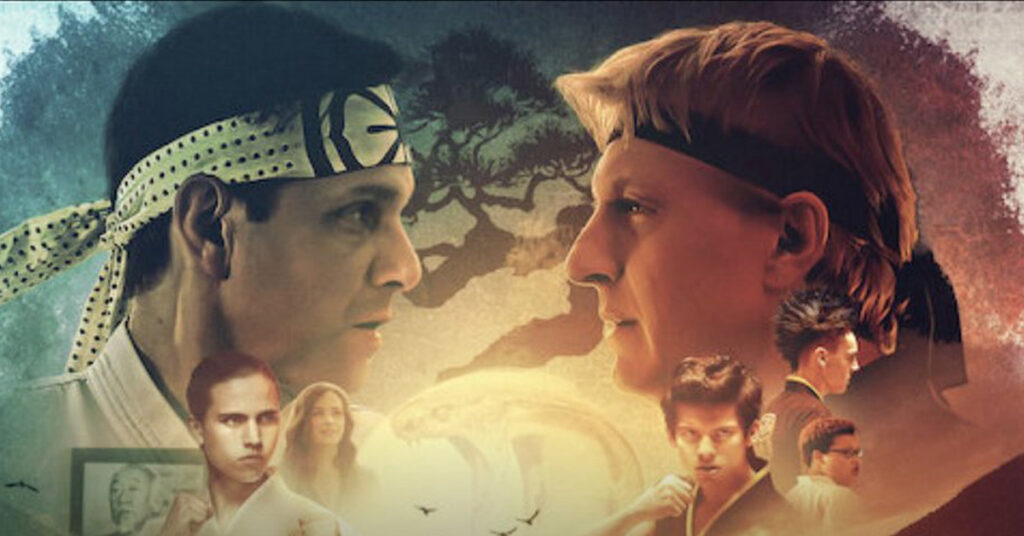
Susan Vaill: Zack, when I remember hearing when that you were on Cobra Kai and I was like, that could not be a more perfect job. That is like, the enthusiasm and the personal experience you have in training probably brought so much to that collaboration on a show that’s about martial arts and, you know, striving and competing, and it’s, it’s just a that, that’s, I was so happy.
Zack Arnold: Well, thank you. I appreciate that. Yeah, I mean, it was, it was a really, really good fit for me. And I have a whole podcast about how I pursued it. So I’m not going to go down that road.
Susan Vaill: I know. I want to listen to that one. I saw you interview the show runners, and I was like, Oh, I bet that’s gonna be great. And I look forward, I look forward to listening to that.
Zack Arnold: Really, it all this comes down to, I’d never heard of the show, and then all of a sudden somebody had passed it along to me, and I saw the trailer on YouTube, and then I, like everybody else, been binge watched the entire first season, and I said, there’s no show on TV. I don’t care what it pays there’s no show on TV that’s a better fit for me. Like, I am made for this show, and I made it my life’s mission to convince the showrunners and creators that it was made for me, which is what the whole podcast is about. But yeah, like, it’s, it’s such a good fit,
Susan Vaill: Yeah. How lucky for them that you pursued that, and, you know, were able to to bring your skills to their production. You know, very they are. They are very fortunate as well.
Zack Arnold: And I appreciate you saying that. But it just it goes to show that, like what something that I’ve talked about for years has been this idea of so many creative professionals that are dealing with constant burnout and depression and all these factors, like all the lifestyle factors and the stress and everything else about this industry. But what I’ve really come to find, after boiling it all down, is that it really just comes from a disconnect between what you’re passionate about and what you’re doing all day long with your life. And if you’re not really creatively engaged or fulfilled by the work that you’re doing, you’re just setting yourself up for failure and all these lifestyle issues and eventual burnout and depression and all these things. We won’t go down that rabbit hole too much. But I do think that that helps somewhat dovetail into the topic at hand today, which is this idea of really starting to switch positions between system editor and editor, because there’s a lot more wrapped up into it, rather than just, well, I have to learn new skills on Avid or this, that or the other. Then there’s so many other factors that go into it. So I guess the place that I want to start, which may feel like, you know, off the beaten trail question, but you had mentioned to me that it wasn’t just a matter of you wanted to put a panel together to help share some of the ideas about making this transition. This is really a passion for you.
Susan Vaill: Yeah.
Zack Arnold: What I’m curious about is, what are the stories in your past that have made this so important to get this message out and start this conversation?
Susan Vaill: That’s a great question. Thank you for asking. I think it comes because I, as you mentioned, I spent a bazillion million years on Grey’s Anatomy. I was there for from 2004 till 2015 in one one show. And during my time there, by the time I left, the editor taking over for me as lead editor had been the post pa our our first season, and it became very quickly recognized that especially. I set this, I set an example. I moved up from being an assistant editor to an editor pretty quickly there. I think a lot of people saw that that opportunity existed there, if you really wanted to pursue it. And so we had, I’m trying to think Phil Fowler, Vanessa Delgado, Kyle bond now, Travis Weaver, oh God, so that’s at least, that’s at least four. That’s at least four. Post pas that turned into assistant editors, and are, I think, all now editing, maybe Travis is just on the verge of of making that transition, and that’s pretty that’s at least four. Well, I mean, and then Joe matasek, of course, who was the one I first mentioned, and then a lot of our edit, Oh, David Greenspan, also, Justin Shin, so yeah, we now the numbers just keep exploding. So we really did have this almost, you know, creative factory that was happening where we were, we were bringing people up from they were coming in as a post PA, we were mentoring them about how to get into the Union, because they would usually have to go off and work, maybe on a reality job or a non union job to get their hours into the Union, and then they’d come back and come in and be assistant editors for us. And pretty you know, some of the editors were getting to chances to direct, and so when the editor would get bumped up to direct, usually their assistant would get bumped up to cut the episode. And it really was this cycle that was going on. However, what I also saw was happening was that at a certain point of the entire editorial staff, I was really the only one left that had had any substantial experience as an as a union assistant editor, prior to Grey’s Anatomy. Everybody else had, you know, maybe just dabbled somewhere to get their hours, to come in and come back, to get into the Union, but I was the only one who really worked for I was an assistant editor for four or five years before I came to graze. And I worked on, you know, an enormous Tom Cruise feature film. And I worked on, you know, a lot of cable movies and documentaries. And I’d had some experience with different editors and and I guess I saw that what they were really missing was the diversity of experience. Number one, every project is very different. Every editor is very different, and every workplace is very different, and some are much more sort of union aware than others. And grays mounted me had become a very collaborative place, but it was, I don’t want to, I don’t want to get too much into it. But, you know, we weren’t breaking for meals a lot. There was, you know, certainly some amounts of people working without reporting their hours exactly right? And I just, and I wound up being kind of almost deemed that the union expert, like everyone, would come to me if they had a question about their time card, a about what was, you know, the way to put down if you worked on a holiday? And I, I just really felt like, all all these kids here are going to go out in the world, and they’re talented editors with an incredible work work ethic, which you just learned on any Shondaland show. But I was like, there are some bad habits that I see being formed as well in terms of self care and in terms of knowing what your rights are. And I think just, you know, you work in one place for so long, we just become used to doing it a certain way, without realizing that that may not be exactly proper here and there. And I was part of that as well. And so it just, it really came became clear to me once I left there and I started working on other shows and just seeing different cultures and realizing that, you know, I want to make sure, for the the good of our our guild, like on the long term, that we start instilling good habits as early as we can, and that we support each other as union, brothers and sisters, as creative collaborators, you know, but also look at it from a realistic perspective to like, you know, we can’t sometimes, you know, be very serious and firm about every single rule, but, but like you really should deserve to know what your rights are and how you can be protected. And then, of course, also, like you should know that you, as an editor, are one of the titans in the room. And I felt like that was sometimes getting a little lost as well. When you’ve started in one place as a post PA and you become an editor there, you may not be walking into that room as an editor with the perspective of, if you’ve been cutting for 10 years somewhere else, knowing that you are one of the leaders and one of the major artistic collaborators on the table. And I just wanted to make sure that there was a chance for assistant editors to really acknowledge to themselves, once they were leaving assistant editor behind and becoming an editor, that they were embracing a perspective shift as well, and knowing just not just their rights, but owning their power and their strength in terms of what they have to offer to the people they’re working with. Again, this is also all for long term gains for all of us, so that it strengthens our our guild as a whole, and our representation in this industry.
Zack Arnold: Yeah, absolutely. What I’m curious about with the panel specific. Lillian, I think this will help answer a lot of larger questions as well, just beyond the panel, but for the people that attend this panel, what I’m curious about is, what is the most common question or questions that you seem to be getting from people that are making this transition? What are they really struggling with the most?
Susan Vaill: That’s interesting. We saved the question and answer to the very end. And the question that came up the most, and I’m going to incorporate it into our next workshop, was dealing with conflicts with your assistant editor. And I found that to be so surprising and yet delightful, because it’s a very real truth to our industry. It’s a close collaboration between editor and assistant. And when you have been an assistant for so long, obviously you’ve probably developed incredible set of skills, and then you based off, you know, the the off the skills you’ve you’ve demonstrated, you get to become an editor. And so then you pick your own assistant editor, and that’s something you’ve never done before. So that’s one of the first decisions you have to make as an editor. Is picking your choosing your assistant editor. Sometimes you actually inherit an assistant editor, and that’s its own kind of bag of problems sometimes. And so it wound up being an issue that was many, many people brought up at the workshop. And I think we’ll, we’ll talk about much more in depth at the next one, and the ones here out because, again, it’s, it’s one of the first decisions you make that shows the team who you are as an editor, by the person you’re choosing to be your closest ally, and then how to again, it’s a, it’s a leadership training thing about how to manage, how to be a manager, how to supervise, how to protect that person that you have now hired and that you are supervising, and how To manage any problems or issues that are coming up in a constructive way.
Zack Arnold: So in addition, then, it doesn’t surprise me, but it does surprise me that that was the most common question. I’ve certainly seen this happen before. I had an assistant editor for years and years that was working under me, and then she grew into her own position and started to transition to editor, and is now a full fledged editor and has done several seasons on her own, but the number one call I always get from her is, I’m dealing with this issue with my assistant, and I don’t know how to handle it. I can’t find somebody good, or whatever it is. So yes, always that questions that’s it’s really interesting that that’s what came up in the panel as well. In addition to managing an assistant, specifically, what are the most common areas or topics that you talk about in this panel, like, what are the the headlines? Let’s say that somebody is listening to this right now. They’re an assistant just on the verge of making the transition. What don’t they know that they don’t know?
Susan Vaill: Well, the first thing I we do at the workshop is we talk about that. It’s that the it’s a safe space, and that there’s no there’s no union rep we hosted at the editors guild, but there’s no union rep in the room. You know, no one’s gonna No one’s gonna get reported or flagged if they’re talking about working overtime without reporting it or anything. I mean, obviously we don’t want people to do that, but we really wanted people to know it was totally a safe space to talk with for real, talk about the way we work and the problems we face and so and that was great. That’s one reason why it’s not recorded at all. You know, they did an article talking about it after the fact. But we’re not recording it because we want people to be able to speak with, you know, anonymity or confidence, and to to hear from, you know, the veterans who are there to advise them. We’re speaking from our own war stories as well, and so anyway, so the main topics that we get into are the first one is about dealing with overtime, and it’s just something that assistant editors often are asked to do very often, later, often they’re put in the position where they have to do overtime that they’re not really able to get approval for or not allowed to report, and so then sometimes that carries over when they’re editors, that they either are doing a lot of unpaid overtime, partly because at the beginning, at your of your career, you feel like maybe I’m slow and I shouldn’t be billing for this time. You know it’s taking me. It takes me longer to do this than it takes a seasoned editor, so I shouldn’t put in for all my hours. So we talk about those issues and how to manage that, what’s appropriate to do, what feels right for you, and then also how you can protect your own assistant editor and not perpetuate that problem that maybe you had as an assistant. And then you feel like, are you? Do you have the right then to ask your own assistant because to do unpaid overtime, because you did tons of unpaid overtime. So it’s, it’s, we talk very realistically about that issue, and I think it’s an important one. And again, just protecting our rights, but also getting the job done and getting it done. You know, when you’re at that early stage in your career and you feel like, you know maybe you do need to do a few more passes than you might need to do later down the road. The next thing we talk about is time management. Sounds a lot like overtime, but it kind of dovetails nicely, because time management, and this is an area I think you’re going to agree with, as Zack you said, it also involves self care.
Zack Arnold: Oh yes, I have four soap boxes that are just getting worn. Up right now talking about time management and self care. It’s Christmas.
Susan Vaill: Exactly, and and that was a really, that was a really creative part of our first workshop. One of our panelists was Lizzie Calhoun, and she talked about organizing and procrastinating, which is basically a little bit of a reward system, where you, you know, you get to procrastinize a little bit. But she also, like, keeps meticulous logs of when she’s how long when she she would write down the time she would start a scene and the time she would finish it, and then she would write down, you know, so she would sort of keep herself organized, but also allow herself to to just put something off. And I talked about how, you know, I had had an episode recently with this huge sequence At the end that I was like, I should love the sequence. It’s so visual. I’m so excited about it, and, and yet, there was so much footage that it was just like this mountain I didn’t want to climb, and and I just kept waiting and waiting to cut it. And I finally, you know, and another editor friend of mine said the same thing, that sometimes that hardest scene is you just wait and wait and wait and wait, but then you cut it. You have to cut it with such speed and precision that actually it winds up coming out great, you know, the thing you’ve been dreading. So we just talked about how sometimes that can be the thing that happens, just talking about social media and dealing with that at work, and how to how to manage that, and then also ways to take breaks and make sure that you get to take those breaks.
Zack Arnold: Wait, what are breaks? Put a link in Wikipedia.
Susan Vaill: A break is when you you stop working for
Zack Arnold: Wait, you can’t stop working because then the show will never air. So, how is that possible?
Susan Vaill: I don’t get it. Well, you can have tricks like Lou Vu, who is also on our panel, he brings his dog to work. Well, you know, nobody wants to let the editor get up and go to the bathroom, but they’ll let the dog go outside to go to the so he gets to take his dog outside for a doggy break. And imagine that he gets a break himself. So there’s, there’s, there’s, there’s ways to get it done. And that’s, that’s another thing we talked about. And then the third major topic we talked about is called, is was finding your voice. And that also covered learning to work with show runners, learning to work with producers, learning to work with sometimes big, scary personalities, and developing your own voice so that you are an, you know, an equal or an important collaborator in the process as well, which sometimes can feel hard to that can be one of the harder shifts from being an assistant and going into being an editor, that suddenly you have this voice, a strong voice in the room, and how to use it, and how to understand what’s going on with the show runners and what they’re bringing into the room as well. We had our other our other panelists was monte de graph. And he’s a he’s a veteran has been around for for a little a little while longer than the rest of us on that panel, and he’s on the original Star Trek Next Generation. And he was amazing talking about this and just telling us about just different tough situations he’d been in and and really understanding where the show runner was coming from, when he was screaming and yelling, and realizing that this was a person that actually needed his compassion and not his fear and and that once he was able to look the guy in the eye and, and I’m paraphrasing his story imperfectly, but, but basically, it moved their relationship forward, once he was able to get This person to realize that they were on the same team and that he, on his point of view, could realize how much external pressure this show runner was, Runner was under, that he just he needed an ally, and he just needed to make the show runner see that he was that ally. And so he talked about flexing your courage muscle, which we just all thought was like the greatest phrase of the day, that that is such an important thing that we have to do in our job. A lot of editors, you know, they say, Oh, we work in these dark rooms. Well, there are a lot of editors that are introverted and maybe quieter and more maybe are more cerebral, and we’re sensitive, because we’re artists too, and so dealing with big personalities and anger in the creative process can be really difficult. So for me, it was so wonderful to hear Monty talk about that courage muscle, because, yeah, I need to use it myself as much as possible, sometimes on this job. So those were kind of the three main elements that we covered over time, time management and finding your voice. I feel like all of those really, you know, do have a strong contribution to being leaders on the show that you’re on, and because you’re you’re leading. You know, you’re supervising assistant editors. You’re working with a lot of people, either as their peer or sometimes as their supervisor. You know, you’re on a mixed stage. You’re a color correction you’re working with visual effects people. You know, people think our job is very solitary, but actually we interact and manage a lot with a lot of people, so we just kind of want editors to start thinking about how they can provide that leadership and streamlining in the best possible way that ends up making their lives happier.
Zack Arnold: Well, it sounds like there are a ton. Of good strategies within this panel itself, and I would have given anything to have something like this. When I was much younger in my career, I actually didn’t really make the transition from assistant to editor, per se, the way that most people do. I was an assistant for about five months out of college at a very small boutique trailer company, and I realized very quickly that I am a terrible assistant, and I have no interest in being an assistant. I did not see it as a task. I just wanted to cut. So I decided that I was going to sell the owner of the company on the fact that I’m worth more to them as an editor and an assistant. I ended up selling them on that exact concept. But it means that from that point, five months out of college, all the way through the rest of my career, all I did was cut, but I spent years cutting in the indie world, meaning that I was by myself. I was my own assistant editor and my own editor, and it was very much about just the craft. I was just an artist, and I just had to, you know, work on the show and maybe manage one person. So it was usually a director, and that director also was young and had no idea what they were doing. I think I’ve worked with like, seven or eight first time directors, so I’ve been been through that process. But it wasn’t until I went into the world of TV that I was like, whoa. There is so much more to know about the politics of being an editor than just I know my way around a timeline, and I can fix story problems, so like being in the room, quote, unquote, was just a giant smack in the face when I landed in television like this is completely different than the world, than I’m used to, so I would imagine that that’s where a lot of the conversations end up.
Susan Vaill: Yeah. Well, what I realized also was because I’d had the experience of working on some features, especially like a super, you know, top tier Tom Cruise movie, The Last Samurai i i had this front row seat to seeing editors who were just so huge. I mean, they were, they were so important, and the respect paid to them was just amazing to see. And it was a huge team. And we were even back still in the days of film, we had a whole room of film conformists, so we could have a conformed work print, even though we had tons of visual effects, and I’d never worked on such a big team, and there were, you know, it was, it was really an incredible eye opening experience, and I’m so grateful for it, because as an assistant editor, I was so creatively challenged On that the expectations of me were enormous. I learned a ton, and then I carried that experience forward with me when I became an editor, just remembering the respect with which the editors were treated, which to be truthful, I did not see editors in television being treated the same way.
Zack Arnold: I was gonna say, we’re having two very different conversations,
Susan Vaill: I know. So I’m so grateful that I have that experience, and it’s one reason why, on the on the next upcoming panel we’re going to do, and in fact, on all of them, I’m also trying to incorporate feature film editors, or at least editors who work in both features and television. The initial idea had been, oh, we’ll just focus this on TV, because assistants move up so much more quickly and TV. And we had a surprising number of new editors at the workshop panel who were coming from the feature world. So I’m it’s very important to me that we incorporate editors with feature experience on on the as the leaders of the panel, because I think they can speak from that, that position of authority, of respect that really needs to kind of become more common again. And I that’s another thing I feel like, you know, when I saw so many assistant editors in Grey’s Anatomy, only having experience on that one show and then becoming editors on that show, I was like, how they really need to be great if they could get out there in the world and see all shades of experience and representation that are out there. And so then, you know what you had asked me also, sort of the origin story for this workshop. At the end of my career at Grey’s Anatomy, I did get the chance to direct a couple of episodes. You know, I shadowed a lot. I was in the ABC diversity mentoring director program. I did a lot of my own shadowing to prepare for that. And still, you know, it’s like, it still is a shock every time you do it. And after I left grays, the DGA started a program for new directors, which was this one day huge workshop where they would have three veteran directors come in and take, take any director that was, you know, that was going to be a first time director on a prime time television or cable streaming show. It was became a mandatory orientation that was part of their their bargaining agreement with with the producers that they would start doing this. This orientation, our workshop, of course, is optional and voluntary, but, but I wound up knowing one of the directors, Rebecca Asher, who was one of the leaders of the leaders of this workshop, and talking with her about it, and it just, it sounded so great. And I, you know, I called up the DGA and I said, you know, it’s been a couple years since I directed, and I would love to take this as a refresher. And they were like, nope, nope. It’s only limited to people who are booked on a on a on an upcoming, you know, episode. And I thought, well, that’s okay, that’s that’s your prerogative, but it occurred to me this would be an incredibly useful thing to do for editors as well. And around that time, I was also going through the selection process for Ace American cinema editors, and it just really made me it gave me a chance to have some reflection on what I’d accomplished and what I still wanted to do and how I could give back. And so I just, I just started nursing this idea of, like, what if we did that kind of orientation workshop for editors, for new editors who are about to to make the leap, or have just made the leap, or still are feeling their way in their first couple, their first year on the job as an editor, and so that was the that was the inspiration for it. And I happened to bring the idea up at my my ace interview, and I could see, like a lot of members of the committee were, you know, people I really respected and admired, and they were just nodding their heads like, this, sounds like a great idea. And so that gave me, gave fuel to the fire that I it was something worth pursuing to see if I could try to try to make this happen. And then I happened to go to another networking event. Love networking events. I’m sure you do too. Zack,
Zack Arnold: Actually, I hate them more than life itself. I just learned how to stomach them. And now I now I teach other people how to stomach. That should just be the name of my new program, stomach and networking events.
Susan Vaill: I usually find them to be, yes, I usually dread going to them, but I leave them, usually feeling very excited and happy and exhilarated, you know. I mean, that’s so I think yes, from that perspective of, like, you know, here’s another one, but then I leave them, and things happen, you know, in my life, because of the connections I made there. And so one of them was a, there’s an alliance of women editors organization, and I, we do some brunches a couple times a year. And I, I met Molly Shock, who’s amazing woman, multi dominated for everything. And she is also one of the, I think she’s a board member of the editors guild, or I’m pretty sure she is, and she’s, she’s AC happened to meet her at this brunch, and we both live in the valley, and I gave her a ride home, and she was mentioning she was on, like, the membership committee. And I just brought up the idea. I said, you know, I have this idea, and I don’t even know what to do with it. I don’t know what the next steps would be. I just, I just think, I don’t know if this is too huge of a project to try to take on as an editor, and I’m also a parent, and, you know, I’m a wife. I got two jobs already, and so I just said, I’m afraid to do this all by myself, but I just think it’s an idea that would be really great and could be really helpful. And she thought it was fantastic. I mean, I just sort of pitched the idea in general, and she thought it was great. And she spent fully, like, nine months just reaching back to me, just saying, Hey, I know, because I was in the middle of some crazy jobs right then and and I think, you know, my kids were both starting new schools, and I was like, too much is happening in my life. So she was just very patient. And she would just circle back and be like, Hey, I’d love to revisit that idea. She brought it up to the membership committee, membership and outreach committee at MPEG, and they responded really positively. And she’s like, if you want to come in and talk about it, and and her just sort of gentle support and patient support made all the difference. And just me feeling affirmed and that I was going to have the help I was going to need to do it. And so finally, you know, we really set a date. I was like, I have this job. It’s finishing on this day. I think, you know, we should meet right after that job ends. And then we’ll set a date for the orientation, like, a few months later, and then that will give me that deadline in between then and the next thing to accomplish it. And of course, in the meantime, I had, you know, some thing happened in my, in just my family life, that I was like, this is taking some priority right now. She was like, no problem. We’ll push it back another month. So, you know, things happen when they happen. And once we got that first one done, it just was like, it was so exciting, and it went so well. And I feel like I have the format now, at least like the loose format to keep it going, and so and so many editors responded positively that they would love to be a part of it. So I’m just so excited to have this revolving door of panel of superhero editors talking to people and hopefully giving them constructive advice and guidance in their careers.
Zack Arnold: Well, that’s awesome. Good for you for taking this on and realizing that there’s a certain point where you can spend the rest of your career just cutting more stuff from a dark room, or you can actually get back to the other people that want to get where you want to get as well. So
Susan Vaill: Yeah, thank you.
Zack Arnold: I appreciate the fact you looked at it that way. I have one kind of final question or area that I wanted to dive into a little bit deeper. I don’t want to go down any crazy rabbit holes. Kind of one of the areas where I get so stuck talking about this transition, and frankly, it drives me crazy, is that the way that our business has changed and the way that it has evolved over the last 10 or 15 years. So the job of assistant editor is almost not even a training ground for being the job of an editor anymore. If you’re really a great assistant nowadays, that means that you’re an excellent data manager, very good at turnovers and organizing bins of dailies. But to really be a great editor, there’s almost no time to actually do that and get better at the craft and workshop scenes, because the job of the assistant editor has just become so overwhelming with information and managing that information and deadlines that keep shrinking. So is this an area that you talk about as well, where people can, and I know that they’ve already more kind of made the transition, but I would assume that one of the sticking points, and I’ve seen this multiple times with assistants that have just made the transition, is they realize, wow, so much of my job had nothing to do with what I’m doing now, and I almost feel underprepared because now I am completely 100% creative and cutting these scenes and keeping up the dailies, and it’s almost none of my skills transfer. So is this an area that you guys talk about at all?
Susan Vaill: Yeah, no, I It’s, it’s, that’s a really important area to cover. And I would say that like I’ve been, been lucky enough to do both one hour drama and half hour comedy, and I feel like I can see pretty clearly that assistants move up much faster and one hour drama than they do in half hour comedy. And the largest reason for that is that half hour comedy is very, very important part of the creative process is scripting dailies, where, you know, the assistant editor has to literally take the text of the script and stick all these dots all over it that tie to the daily, the line in the dailies. And that is the way, you know, especially comedy directors and producers love to go through takes really quickly, because they’ll have so many, you know, they’ll have nine takes of a single line, and they want to very quickly, like, you know, hear them all. And so that burden of scripting dailies for comedy assistant editors takes up all of their time and leaves very, very little time for creativity. Whereas I feel like in one hour drama, there’s a lot less scripting, the assistant editors get more relied upon for Creative Sound design and scoring. And so it just, you know, to me, from my perspective, I see their opportunities are larger for them to get moved up. And so that’s like, that’s kind of addresses what you’re saying that that technical data, you know management for is, is keeping assistant editors in comedy from moving forward. From my point of view,
Zack Arnold: And I see it happening to people in scripted drama all the time.
Susan Vaill: Okay, okay,
Zack Arnold: My assistants love me because I hate script sync. I absolutely hate it. I’m like, they’re like, oh my god, do I have to script sync for you? I’m like, No, not because I, I don’t, I don’t like it at all. I don’t fall to anybody that does use it or rely on it. It’s just not for me. But I can’t imagine how any of my assistants would have any room to grow into the creative side of the job if I were asking them to script sync, because there’s just, there are barely enough hours in the days. It is,
Susan Vaill: Yeah, no, it’s, it’s true. I mean, I find that it actually slows me down because I’m waiting so much longer for my dailies, you know, because they’ve got to script them all. But so that is something that we do talk about. Because I know, for me, it’s very much the idea of you’ve got to pay it forward. And it was the editors that went to bat for me, Brianna London, Victor Dubois and Edward Ellis, when we were all on Grey’s Anatomy together that first season, it was a three two. And I don’t if you know that means, that means, that means there’s three editors on one show and two assistants. They don’t,
Zack Arnold: I’ve been on one of those, yeah, they don’t do because it’s impossible. But I was not on a show like that.
Susan Vaill: But the best thing about the one good thing about it was that as an assistant, I got to assist three different editors in one season, and it was really eye opening and educational, just to see how, how they, not just, you know, were what kind of different editors they were in the in their workflow, but how they interacted differently with directors and producers. It was that that for me, was the best training ground to become an editor. Was that year of a three, two, you know, that that I was able to just like, literally, just slingshot in between three different editors rooms and see their process. And all of them went to bat for me to become an editor on that show, and it would have never happened without them vouching for me. So I personally made an effort with my assistants to mentor them as well, to give them scenes to cut to occasionally, you know, when I when we can actually do an act? Maybe they get to do a whole act make that happen. And then, you know, my last show on, this is us, my, I was able to get my assistant editor, a co editing credit with me on one episode. You know, really advocated for her to take over for me when, when I left that show. And so she, she is really thriving there. And I’m, I’m so thrilled for her. And so I think that’s part of what it takes, though, is like you have editors have to actively be aware that we need to mentor and we need to train and that it can’t just all be on the assistant editors to, like, ask for it, that, you know, editors themselves also have to really be proactive in making it happen, in in in just. Getting the next generation ready to do what we’re doing and ready to be our own peers. So I just think that’s part of what the workshop is about, is mentoring and sort of demonstrating how to mentor and how, you know, it’s, it’s never too late to be mentored either. And that’s, that’s one thing that I got out of the panel. Was like, when I’m a workshop leader of it, and, you know, yet hearing what my fellow panelists were saying was totally, you know, eye opening for me, and fantastic to hear about I, when I, when I left Grey’s Anatomy after editing there for 10 years. The first job I had was with an editor named Stuart bass, and I think he retired a year or two ago, and he’s, he’s just comedy legend, and he was, he just completely changed my mindset about lunch, which sounds like a small thing, but oh no, it’s a big thing. Oh, it’s a huge thing. Because I was coming from a show where, oh, they had lunch on set, and we’d go down and get it and take it back to our avids, and we’d sit meet at our avids. And I was always like, Oh, if I don’t really take lunch, then I get to go home sooner, which never really happened. And Stu was so just adamant that as a team, you know, both editors and our assistant editors, every day, we’d walk over to the commissary together, we’d sit down and we chat and talk about lives and homes and families and vacations and just everything. And it was just delightful. And I it was literally like, Oh, I feel like I’ve never done this before. To make it a real habit was and a real like it just it fostered this sense of loyalty. He and I were very collaborative on the show. We’d help each other out with scenes when we needed and it was really, I’m so grateful to a veteran editor who, for me, I was already, like, 10 years into my editing career at that point, really made me pivot in my own work habits and change them for the better. And so that’s another thing I want to pay forward as well. You know, make sure my own assistants take lunch and that we stop and we take a break and do all those things, because it’s, it’s very hard to create those habits, you know, you have to do them over and over again to make it a habit. You can’t just do it once in a while. So, yeah, so it’s things like that that I think, you know, we can still learn as older editors, you know, whatever, as well. We’re not too young to be learning stuff
Zack Arnold: Exactly. Yeah, I mean, and I think it’s such a good point that going back to where we started, where the the editor really has to learn leadership and management skills that maybe you don’t pick up as an assistant, yeah? And really, you have to be the change that you want to see at your office, right?
Susan Vaill: Yeah,
Zack Arnold: Like, for example, I mean, I’m obviously a huge advocate of taking breaks and not eating at your desk. I’ve been very, very vocal about that, but when I first started all this, it wasn’t very easy to be vocal. Five or six years later. Sure, everybody talks about it, but when I was first saying it, I was it was like heresy, like, how dare you say that? Right? When I started the season of Cobra Kai, it was my first day, and there was another team that I think it started maybe the day before even the day of, and they were new to the show, very seasoned, very experienced editor and experienced assistant. So they had been around the block and had been on very many shows. And when I walked in, we were getting ready to go out to lunch. And went by his door, and they were both sitting at his little table in his edit bay windowless room, just kind of, you know, hunched over the food and shoveling it in. Like, no, this, my friends, is not how we do it at Cobra Kai, guys are going to come outside, you’re going to see the sunshine, we’re going to get to know each other for the next hour. And they just kind of looked at me like, really, what? And then from that point on, they saw that it was not only acceptable but encouraged to get away for lunch, and people weren’t going to kind of, you know, give them a demerit for it. But it was, wasn’t for so, like, if they wanted to spend the day in their edit bay and they were busy, like there was no shame in that, yeah, but I wanted to make it very clear when I walked in that door that they knew that it was part of our culture, and it was important to actually step away and take time for themselves, and somehow the show still gets on television.
Susan Vaill: Yes, it does. No, that’s, that’s absolutely fantastic, I think it and the thing is, the sort of the model of television has changed so much today, there aren’t a lot of shows like Grey’s Anatomy where it’s, you’re going to be 10 years in one place. You know that was, that was an anomaly, even back then. Now we’re all very, very much more nomadic, and so we’re taking these habits and these workplace practices with us from job to job and exposing them, we’re like a good kind of virus, you know, we’re exposing them to more and more people and and create, you know? Yeah, I want to, I want to infect people with good habits as much as I can, you know. And also I need the, I still need the reminders myself, for sure, that is definitely true. I mean, just by the way, Zack I have I’m not sitting in it right this second, but right next to me is my sit tight, fantastic stool that I switched to. I rotate between standing the air on chair with my ergonomic back pillow and standing with the topo mat. Or my sit tight, and that all came from you
Zack Arnold: Walking advertisement right now. I didn’t pay her, by the way, for anybody listening,
Susan Vaill: And honestly, because I’ve had back issues my whole life, and you know, and it’s not only but it’s also it’s interesting, because it’s not only physically helpful, but it’s a great talking point, because people walk in my room and they’re just like, what is that? And I can’t tell you how many writers and directors have been like, can you give me the name of that thing again? And I might want to use that and, and it’s, it’s, I always like to see who, who dares to sit upon it, who has the courage to sit upon it, when we have to have a bunch of people crammed into my room?
Zack Arnold: Yes, it is an awesome conversation startup. Yeah, what’s that? Can I try it?
Susan Vaill: And actually, that’s something that I even talk about at the workshop, that it’s, it’s great to have, like, conversation starters, because a lot of a lot of writers are very introverted too, and small talk is tough for them also. And so I sort of fill up my room with little things that make it easy to just have something innocuous to talk about. And I think that’s also, you know, it makes everybody’s lives easier. So,
Zack Arnold: Yeah, that’s something we could certainly go a lot deeper into that, and people can learn about it on the panel. But what I’ll just close that thought very quickly by saying that one of the most important things that you want to focus on, and this is for all editors, not just people that are transitioning, but you may not be as aware of how important it is. If you’re just transitioning, you have to create a really comfortable, safe working space.
Susan Vaill: Yes,
Zack Arnold: There are so many directors and producers that will just hide in my edit bay and say, this is the one place. Well, don’t bother me, and I just feel calm. This is my Zen space. Don’t tell anybody I’m in here. If you can do that, you’re going to be hired until the end of time.
Susan Vaill: Yes, I learned this. I learned that on the pilot of Grey’s Anatomy, actually, because my editor threw me through the Shonda Rhimes and her producing partner in my avid bay with me to work on the music, because they were at odds with the director who and the and another show runner who just didn’t, didn’t love the idea of songs being in the Show and and he was like, I think that Shonda is right. I think this is a great idea. He’s like, go take them in your room and put, put all the best music you can find. And it was shonda’s first pilot. And so I just said, I was like, This is the room where we can try anything. It’s funny in the ME TOO era, you can’t really, I can’t really say that anymore, thanks to my catchphrase, this is the room where we try things. Now, I don’t feel like I can say that as much, but safe space, it’s, for sure, a safe space to make creative to make creative choices, and it’s okay to fail. I actually just saw my teenage cousin gave a talk on failure, and he he made fail into an acronym, which was first attempt in learning. And I just thought that was so great, because, yeah, editing bay is the room of second chances. You can, you can, you know, something might have failed, but you we can fix it here. And to be honest with you, that’s one reason why I found directing to be not very satisfying, because as a director, I felt like I would walk in with a vision and it would get chipped away and compromised and told no and not turn out and just i. It felt so diminished. I felt so diminished by the end of directing, to be honest, but as an editor, I feel victorious and heroic so often, and because somehow I can make miracles happen in here, and that’s why I totally have chosen to kind of double down as as an editor, because it’s creatively fulfilling. And, you know, just where we get things done. So
Zack Arnold: I love it. Well, clearly I’m a proponent of getting things done. If I could change my birth certificate I probably have, you know, getting things done somewhere in my name somewhere. So I feel like we’ve just barely gotten started, and I realized that I’ve I’ve poorly managed my time. So ironic and paradoxical, we’re 10 minutes over, just because it’s that much of a pleasure chatting with you. But for anybody that is interested in learning more. First of all, I implore you to get information about one of these upcoming panels. And I don’t know the exact dates, but according to when this is going to release, they should be releasing right around the time that you guys are enrolling for your latest panel at the end of March. But in general, if somebody listening today was inspired by everything you have to say and they want to either learn more about you, or they want to connect with you directly. How can they do so
Susan Vaill: They can email me, but I always, almost my first response to people on email is that, if you don’t hear from me, just keep trying. Keep trying. Because, you know, email just piles and goes away. You know, it disappears into the inbox. And so I really that’s an advice piece of advice I give to almost anyone that if I’m not able to meet up with them right away, I’m like, Just keep emailing me. Keep emailing me, and I’ll, I’ll, you know, we’ll find time. I try to make good use of my commutes by having these kind of networking phone calls with people who are looking for advice. You know, my morning drive. So my email is susanvaill@me.com, S, U, S, A, N, V, A, I, L, L, at me, M, e.com, and I’m happy to be contacted, but with the understanding that, you know, our jobs can be kind of can we can be in crazy mode at any given moment. So patience and perseverance are the most important thing. Just keep trying me, and I’ll get back to you.
Zack Arnold: I always I tremendous value, and I was willing to wait until the time was right, and today the time was right, so I’m very excited.
Susan Vaill: Well, let’s, let’s, let’s give a shout out. Thank you to Norman Holland, who kind of first introduced us at the Edit fest panel years ago, and really was a mentor to so many. So you know, it’s like in honor of someone like norm, Norm Holland, that I’m just continuing to try to do that work with other editors today.
Zack Arnold: Yep, he’s, he’s a big inspiration for why I continue to do what I do as well. So I’m right there with you. Yeah, well, on that note, cannot thank you enough for you. Being here today and sharing your expertise means a lot. I can’t wait for all the people that are going to listen to this and hopefully find your panel, and just want to thank you once again, your time was in your expertise were both very valuable to my audience today.
Susan Vaill: Thank you. The one other thing I want to say Zack is that the panel is limited to 30 participants, but we’re going to do it like every three months. So there’s one happening at the end of March, the next one will be in July or August. Probably do another one in November. So if at first you don’t succeed, try try again, patience and perseverance, and you’ll get to be a part of it.
Zack Arnold: Love it. All right. Thank you so much for being here today.
Susan Vaill: Okay, bye.
Transcribed by https://otter.ai