Transcript
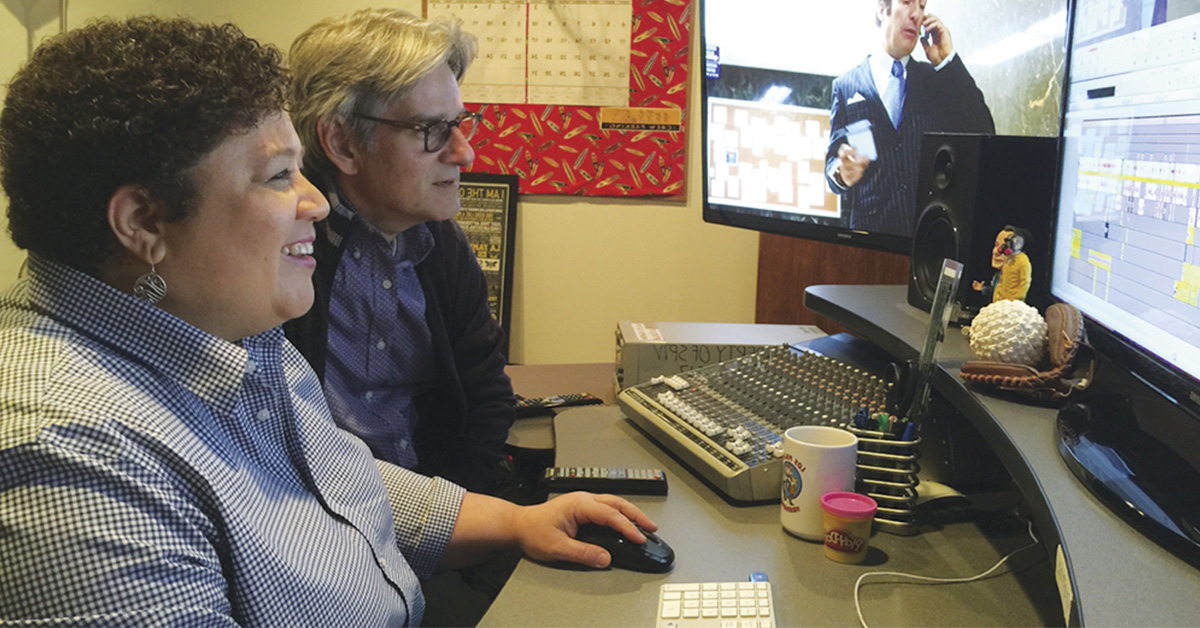
Zack Arnold: I’m here today with Kelley Dixon, member of American Cinema Editors and editor of little-known shows that you may or may not have heard of in the last few years if you have a pulse and an internet connection. Shows such as Breaking Bad, Better Call Saul, The Walking Dead, and many many others. And I will be a total total fanboy right now and tell you that of all the interviews I’ve wanted to do, this has been the top of my list for like a year. So I am so appreciative to have you with me today, Kelley.
Kelley Dixon: Wow! Thanks, Zack. I mean, I don’t even know what to say. I had no idea that you wanted to do this for a year. Wow! I feel terrible now that I I made you wait all this time. No,
Zack Arnold: No. Trust me. It usually takes me between three and six months to get just about anybody on these shows because, especially those that are in our industry, are so stinking busy that they’ll say, “Oh my God, I would love to be on your show. How are you in five months? I’m like, “Oh great, okay, yeah, we’ll make it work. And then I do. But this was one that I knew was going to be worth the wait, and hopefully I can make it live up to the hype on my end. I know that you can do it on your end because I’ve I’ve heard you speak many many times before, and for anybody that kind of lives and breathes the the panel circuit in LA, some of this might be repetitive, but I have listeners all over the planet, and I know that many of them have never heard your story, and I think it’s really really important that they understand your story because I think it’s really really inspiring. But the one thing that I’m going to say going into this, I’m going to make it a little interesting, and I’m not going to allow you to say that you got lucky.
Kelley Dixon: All right, I’ll try and see if I can work my way around that.
Zack Arnold: Because I’ve I’ve heard you speak before, and you are so incredibly humble about how you got where you are, and I appreciate that about you. But I I don’t think that luck plays quite as much into it as as I know that you like to say that it does. So I might I might hit the buzzer every now and then if I hear the word luck come up too many times. But other than that, we’re just going to riff. So where I was as
Kelley Dixon: I’m looking very furiously on my phone now for a thesaurus till I come up with other other words.
Zack Arnold: Fortunate Of grateful.
Kelley Dixon: That was my first one.
Zack Arnold: Job Fell from the sky. But what the the first thing that I really really want people to understand about you is your origin story because your origin story is fairly unique, and there are so many lessons that can be taken out of this for anybody. That wants to not only just become an editor in television because that’s very very niche, but just for somebody that wants to do creative work that feels like they’ve gone through the struggle for too long, they’re not right for it. Maybe they should just give up. Maybe they should do something else. Any time that I hear somebody say something like that, my first thought is, you need to talk to Kelley Dixon. So let’s talk a little bit about your origin story. Tell us about the the story that that so many have heard now.
Kelley Dixon: Well, that you know, edit this out if you need to. But what are you actually referring to? Because I just want to make sure that I can like, you know, summarize it well enough. What part? What I’m like now, because I’m sitting here going, what part? What origin story? What is that we mean?
Zack Arnold: Well, I think that, and I won’t edit it out, by the way. But I think that the the one thing that’s unique about your story, and there are a lot of things that are unique about it, but the one thing that stands out for so many when they talk about it, you kind of have to give the elevator pitch, is how much time you spent being an assistant before you had the rise to stardom and just the the level of diligence and perseverance that you had, so I think just kind of start from hey, I decided I want to get into the industry, and then here was my path, and it’s a very very unusual one.
Kelley Dixon: Okay, I’ll try and go fast on this too. Okay, so I went to college in Colorado. I went to Colorado State University, and I was majoring in journalism, and I really actually wanted to write advertising, and there was no advertising major at my school. There was journalism and there was business, so I sort of carved myself a major. I majored in journalism, but I also had a concentration in business, and and so you know that that’s what I did. And and when I came out to Los Angeles, I I had some cousins and an aunt out here, and they said, oh, you need. I hadn’t really never really thought about what I was going to do after college, and they said, oh, you must come out here. There’s so many opportunities, so I came out here and I figured, okay, I have a place to stay and stuff like that. And then I got out here and I started reading Ad Week, and I was very very excited to just get in a mail room. So I I came out here and I you know I was trying to look at all of the you know sort of classifieds and see if there was an opening in a mailroom. I really had no idea. I didn’t really have much guidance and I had no idea, and I couldn’t get in anywhere. So I started working in like a Xerox place. It was called Pit Printing, and it was on Sunset and over by the Cat and the Fiddle. I think it wasn’t that. No, yeah, the Cat and the Fiddle, which is now closed. I could never get in. I got a job there, and and then my cousin knew a guy, the guy who ran the mailroom at MGM, and I thought, well, you know, I really wasn’t planning on getting to the film industry because I figured the only people that got into the film industry were people whose parents were in the film industry. And as much as I liked movies and stuff, I just kind of figured there’s no way to break into that. I also had a first cousin who got in with the DGA trainee program, and she was well on her way at that point. I think she was working for Star Trek: The Next Generation, and she has done a bunch of movies. And she kind of encouraged me to take the DGA trainee test, and so I kind of did, but I was like, not really, you know. I just didn’t really know what an ad did, and you know, so I ended up getting this job as as a mailroom person at MGM, and I sort of ran around MGM delivering the mail to you know the top execs. Alan Ladd was like the top guy at that time, and I think John Goldwyn was over there at that point, and a bunch of post-production people. Like, gosh, I can’t remember all their names. Anyway, so I did that for six months, and I got to know a lot of like PAs, production assistants, and stuff. And so I figured, well, you know, that’s kind of a cool job. You get to like wear jeans to work, and you get to ride a bike around the studio a lot. And I had met a few PAs. I had a couple friends that were working on Cheers at the time. One of them is Pete Chacos, who is now a major multiple Emmy winner, and he does multicam. I think he he right now he works on The Big Bang Theory, but I knew him when he was a PA on Cheers, and so you know I thought, well, maybe that would be kind of cool. I guess you could be a production assistant. I just really had no idea, you know, about being an editor. I’d done a little bit of editing in college for, like, broadcast news kind of thing, but I never really-I mean-and I liked it, and I was pretty good at it, but it wasn’t. I never really did much narrative stuff. So anyway, I was delivering the mail.
Kelley Dixon: I was probably like, I don’t know, maybe six months into the job, and there was a woman on the eighth floor at MGM, and she worked for one of the TV execs, and she said, “Hey, do you want to be a production assistant?” I’m like, yeah, I’d love to do that. And she’s like, well, I have a friend of mine who works on 30 Something, and they’re looking for a PA. And I’m like, wow. I mean, I didn’t really know the show, but I knew that it was a hit. It had just finished its first season, and so I I went and interviewed over there, and I ended up getting the job, which was great. And so I went to work over at 30 something, which was over at the CBS Radford lot, and I was one of two PAs. We didn’t have like set PAs there. We had two PAs that pretty much worked for everybody, and so I worked for Marshall Herzkovitz and Edward Zwick, who were the executive producers of that show, and Scott Wynett was the supervising producer of that show at the time, and so I worked for that over there. And I started hanging out in editorial. At first, I thought that I really wanted to be in camera. I thought, oh, this is kind of cool. You know, you you get to be like right where everything is all the time. I thought this would be great to be on the camera crew, but at the time it was one of those things where most camera crews were only guys because the equipment that was still on film and the equipment was so heavy that they didn’t really like to hire girls, and most of the camera crew, like you know, like loaders or second assistants, were sons or nephews of the DP or the operator or the the focus puller first assistant. So I kind of, sort of, you know, kind of gave that up, and and then I started hanging around an editorial, which I thought was actually pretty cool because you know editorial actually started when production started, but they worked for months and months after production wrapped, and I hated looking for a job. So I was like, “Well, heck, this is great. I’m actually pretty good at you know editing, and you know, and the and the one thing I say this to assistants and like PAs, people, you know, interns or whatever apprentices now, I’m like you know there is no other job that I know of in I guess production and post as being an assistant editor because you get to be with above the line people for you know hours days months sometimes years at a time and you know, a lot of times, if you’re working for a really good crew, or you’re working for a good and an editor who appreciates it or lets you do this, you can you know rub elbows and talk to these people, and they get to know you way better than on any other, I guess, staff position on the show, because they’re sitting around waiting for the editor to finish, you know, whatever cut he’s trying to make. And if you’re pretty good, you know, at engaging and being actually, I guess, a sophisticated conversationalist, you know, you can talk to these people and they’ll get to know you way better than, you know, a lot of other people on the crew, so I actually thought that you know editing was actually a pretty good gig, and then the editors, a couple of the editors at 30 something, one was Victor Dubois and one was Marty Nicholson. They started like teaching me how to you know work the system. They started teaching me how to how to edit on at the time they were using an Etiflex. I’m subdating myself, but they’re using an Edaflex, and they taught me how to how to use it, and they gave me like these scenes to practice on, and so I would cut to scenes, and then they would give me notes, and you know it was sort of like this little sort of like mentorship that was going on, and then they also told me that I needed to learn film because this was being cut on videotape.
Kelley Dixon: I needed to learn film, and so I went to the head of post at the studio at the time, and I said, you know, I want to learn how to sing dailies, and so she had me get together with this guy that she had in film shipping, and he taught me how to sync dailies and how to work a rewind and all that kind of stuff. And then at the time, Ed Zwick was directing Glory, the movie Glory, and Steve Rosenblum was was editing. And when they came back into town, their editing rooms were right across the street from ours, and so I went over there and I asked their assistants if they would let me do their trims. So they would basically say, “Yeah, absolutely, and they would, you know, they said, “Okay, there’s seven bins out there in the hallway. You can start with those, you know. And so I learned how to do trims on 35 millimeter film. And one of the assistants is now the first assistant was Robert Frazen. He’s an editor now, and the other assistant was Brent White, and he’s now the editor as well. And. So you know, so I learned how to do that, and then it came time I was on 30 something for two seasons, season two and season three, and then it kind of came time for me to see if I could you know get sort of an apprentice job or something like that, and apprentices were sort of being phased out at the time, so it was kind of hard, and and it used to be, from what I understand, it used to be that you know big powerful people could call up the union and say, oh, I want to get this person in, and they would just let them in. Well, that that went away before I got there, so I think I was probably one of the early people that started to get in when they would start to do that 100 days, you know, you get non-union, 100 days of non-union work. So the the guys at at 30 Something, the executive producers, were writing a TV movie that they were going to do, and Peter Horton, one of the actors on 30 Something, was going to direct, and they got Victor Dubois to edit the the movie, and they asked him, would he be willing to take me on as an apprentice on the movie, so I could get my days? And so he said yes, and they paid me as an assistant editor. I got my 100 days doing that, and and after that, an editor at the time, he was an assistant, but he’s an Emmy editor, Emmy-winning editor now. Kevin Casey called, I guess, a friend. He called Michael Canoe. I think that was it. He called Michael Canoe because Michael Canoe was was working. He was going to work on Nightmare on Elm Street Part Six, and he called him, and and they needed another apprentice on that, so I got my first apprentice job officially on a union show on Nightmare on Elm Street Part Six. I can’t remember what year it was. I want to say it was ’92. I’m not sure. Maybe ’91. And then you know, after that, I just I started working in film and television, and I was always like one of these assistants that could do. You know, assistants at the time were very, very separated. There were film assistants, and there were video assistants, or digital assistants, or television assistants, or whatever you want to call them. People who weren’t in features, and I was actually a person who could go back and forth because I knew the digital systems, a couple of them, and I knew how to you know how to sync dailies and do cut lists and change lists and you know work on film. And I kind of really wanted. I wasn’t really like looking to move into being an editor so fast. What I really wanted was to be a first assistant in big features, and I just thought that that would be the most awesome thing, because then I would never really have to look for work.
Kelley Dixon: I would just be hooked up with a film editor, who would get the jobs, and they would just call me and say, you know, we’re just we’re gonna jet off to you know this country or that country, and work all over the world, and you know, do a film for two years, and you know, and it was going to be great, and it was, it would be like a long location movie or summer camp or something like that, and I would make a shit ton of money, and it would be amazing, and but I never, I never actually got there. I never actually got that job. I got close a couple of times, at least I thought I did, but I never actually got that. And you know now, I’m kind of glad that I didn’t because it would have sent me down a path that I certainly wouldn’t be on the path that I’m on today. And I think that the path I’m on today, I could not have asked for better. You know, I I just I’m you know incredibly ecstatic about where my career is right this minute. And if I had been one of those feature assistants, I might still be one. Actually, it’s very very hard to move up as a feature assistant. So that’s that show. Not to interrupt you. No, no, we
Zack Arnold: We definitely have we have more to go. We haven’t even come to the good part yet. But there there are several nuggets that I want to pull out of this already. The the first two things that really jump out at me is that number one, I didn’t even know, and I’ve heard your story several times, but I wasn’t even aware that you came into this business really having no interest or knowledge whatsoever of post production, which I find really fascinating. Because most people that I interview that are at really really high levels, they all have a very similar story, which is actually similar to mine as well. Which is, I grew up watching movies and I would shoot them with my eight millimeter camcorder or my VHS camcorder, and I was editing from tape to tape, and I didn’t even realize it was a job. And then I went to college, and like, oh wow, I can get paid for this. Like I hear that story over and over and over, and it is exactly the same as my own story. And yours is very different, which is that you’re just you really had no intention or interest whatsoever. In post production, but then you mentioned the word path, and that was one of the things I wanted to talk about because I have this this kind of manifesto that I wrote recently called the Ultimate Guide to Making It in Hollywood, and I try to break down in the most fundamental, simplest steps possible how you can make it in a highly competitive creative field, because so many people will listen to a story and say, “Oh well, I’m never going to get that job in the mailroom or meet that guy at MGM, or I’m not going to get lucky enough for this to happen.
Kelley Dixon: But you said that word.
Zack Arnold: I know I said it because I’m not talking about your story. I was talking in hyperbole about other people. But the the idea is that people just feel that oh, there’s no way I’m going to have the same story that person did. I can’t replicate it, but really there are these fundamental steps that anybody can follow. And the first of which is that you were trying to find the right path. You were trying to find the right ladder to climb that made sense with the kind of lifestyle that you wanted, with your own interests, with just something that worked as far as the type of job you would want. And it’s actually hilarious that you thought you were going to become a jet-setting career assistant because I would say that even though you maybe didn’t end up flying the world, you’ve you’ve done okay so far. So I find that very very interesting. But speaking of the path, I think the the next period of time is really one of the most interesting parts of your journey and why I wanted so many people to hear your story and be inspired by it. So now let’s continue on from this point of you know you’ve you’ve jumped in, you become an apprentice, and you know you’re you’re in the pipeline and you’re on your way up.
Kelley Dixon: I assisted on some smaller type of things, and then you know like the digital system started to come in, but you needed like a training course, right? And to get the training course, you needed money, and so I asked. Actually, no, a friend of mine offered. He said, “I will lend you 500 bucks to take the Lightworks training course, if you know, and you can pay me back when when you get a job, which was incredibly, you know, generous. You know, at the time, and and so I I went over to Light Works and I took I think was a week long class. Just and it was really you know I already knew how to be an assistant. I just needed to know kind of what buttons to push and how that system worked. And I hope it’s okay if I drop these names because I I just think it’s hilariously funny that my career I mean that that there are people now who you know have sort of blossomed to their own career and I knew them you know even back then so that my Lightworks teacher his last very very last. class was the one that he gave me, and then he went off to New York to assist Thelma Schoonmaker on Casino, and his name is Scott Brock, and and he’s still doing that, you know, which I think is pretty amazing. And
Zack Arnold: So he stole your career assistant job.
Kelley Dixon: I guess so. Maybe I was not in. I wasn’t ready to be that yet, you know. But that’s kind of what I wanted to be. Yeah. So I I did that, and then I worked on a few small. I think some television stuff, and you know, I got like my first Light Works jobs, which was really important because it’s like people, you know. I I was having trouble getting the big feature jobs on film, even though I could do it. But I could get the Lightworks jobs because people were really wanting those assistants. So then I ended up doing a couple of those. I ended up doing thing for HBO about Mike Tyson, and from there I went on my first big vacation, like I had not had a vacation like in years, and I went on a really big vacation to like Tahiti, and I actually sailed from Tahiti to Hawaii on a boat, and it was really amazing. But when I got back, it was like, okay, I need to, I guess, find another job, you know, and I wasn’t really sure. And then somebody came up to me and said, “Hey, you know, they’re looking for assistance at Lightworks to do tech support to show other assistants how to work machine or troubleshoot and stuff like that. And so I went over there and I worked there for two years, basically at Lightworks, showing assistants how to do cut lists and change lists, and you know, and just basically doing tech support, and I learned so much about computers. Like I was like, you know, I mean, we were working actually on DOS computers, which was, you know, all the Avid stuff was on Mac computers. But Macs, you know, you can’t really, you don’t really get behind, you know, the interface. Whereas on DOS computers, you know, DOS is the bottom, and then you put an interface on top of it. So I learned a lot. I learned how to build them. You know, I learned a lot. You know, along with learning even more and more about how the computers work with Cutlist and ChangeList, and then from there I started to get actual feature jobs. I would have assistants call. Me, one friend of mine called me and she said, “I’m getting ready to go to another feature, but I need somebody to take my place. You know, and so I went and did, and I finished up a feature for her. And from that, I got probably my biggest break was Goodwill Hunting. That was in 1997, and I was a huge, huge, huge Pietro Scalia fan and also a Joe Hutching fan because my feeling was that anybody who you know the guys who cut JFK were like editing gods, and I still feel like JFK is one of the best cut things I’ve ever seen. I am a huge fan of it. It is one of my very favorite movies. I just think that the editing is just so stellar, you know, just to let you know people know if they don’t know, it was actually edited on videotape. It was edited like you were saying. You know, your old school. You know, videotape to videotape. You know, it was edited like that. So I was a huge fan of that. And to actually work with Pietro Scalia, I was really, I felt really, really fortunate. I was like really excited about it. We actually worked in Gus Van Sant’s house in Portland, Oregon. My editing bench was right in his living room, and out my you know the front window I saw Mount Hood, and out the side window I saw Mount St. Helens all summer. It was pretty awesome, and I basically thought that that might be the one thing that I you know, was gonna, I guess, catapult me into being a feature assistant, and it didn’t. Unfortunately, it didn’t. But you know, I kind of consider myself lucky because from there, TV just started calling, and they kept calling, and from there, I was actually faking my way around Avid. I didn’t know it. I was getting very, very nervous about it. But to do an Avid course, they needed like three or $4,000 and I was like, I don’t want to pay this kind of money to learn this system, you know.
Kelley Dixon: And so I would go to other people’s cutting rooms, other assistants that I knew, and kind of hang out and kind of watch what they did. And so I kind of learned Avid on the fly, luckily. And then you know, like I said, TV kept calling, and and the system slowly went from Lightworks to Avid, and I just kept working and working. And now I think it’s probably about 15 years that I was an assistant editor, and that’s like way too long. I think that’s probably what you’re referring to as far as like, you know, my story. Because I was, I just, you know, it it took a long time for me to actually like, you know, reorient the goal because I was still shooting for trying to be a jet setting first assistant and making you know several $1,000 a week, and and I never got there. But I was working on a mini series in about 2005, and one of it was a mini series with like I think we had like four or five editors, and I think probably at least three or four assistants. We had a whole crew of people, and one of the editors was Lynn Willingham, and I was really, really, really excited to meet her because I was at the time a very late to the party X Files fan, and I was watching a lot of them in reruns, and I just thought she was just amazing editor. And her husband was editing my favorite show on television at the time, which was 24, and so I thought, wow, if I could meet both of them, that’s like an editing powerhouse. And all of a sudden, I’m on a miniseries with one of them. And I remember when I met Lynn Willingham, I said, wow, you know, hi, I’m Kelley Dixon. I’ve been a fan of yours for so long, and she looked at me like I was nuts. You know, she’s like, okay, and it’s funny because we laugh about that now. But you know, I I totally understand how she felt at the time because it is kind of weird being sort of singled out as a celebrity when you didn’t really get in this business and you don’t feel like you’re a celebrity, and that’s what I feel a lot. I get, I get a lot of people coming up to me, and I and it sounds very arrogant, and I don’t mean it to sound arrogant, but it’s very very odd to have people come up to you, and just say, “Wow, you know, I love you know your work and what you did, and I’m just kind of like, “All right, I mean, isn’t there somebody better that you can like you know look up. It’s weird. I don’t know. It’s just very strange, and it’s something that that I am not. I’m still not very used to, and and I hope that I don’t come off as ungracious. I don’t mean to. It’s just very strange.
Zack Arnold: Well, I would say that you’re without question probably the least arrogant person I’ve ever met in my life. Oh, that’s so. You definitely you do do not come off as arrogant whatsoever. But yes, I’ve I’ve definitely been in several conversations just with you where we’ve been at some event, and all of a sudden people came up and like fanboyed you, and I totally saw the face. You’re like, oh my god, what are you talking about? No, come on. Like I’ve totally. In that way, so I’m very strange. You know, not not to sound arrogant myself, but I’ve been in that position as well. Where if I go to certain events, then people are familiar with either my editing work or familiar with the podcast or the website, whatever it is. And it’s just the weirdest thing. It’s like, but I just sit in a dark room in front of a computer all day long. Like, what could possibly be cool or celebrated about that, but you know it’s kind of. But I think it’s it’s more about the quality of the work and the emotions that you can evoke in the person watching, because it’s not like you. There’s still a lot that I want to unpack in the story, but just as a bit of a tangent here, it’s not like you are just transitioning from an assistant to editing a run-of-the-mill TV show, like let’s say NCIS, and I don’t want to you know denigrate anybody that works on that show, but it’s a very run-of-the-mill formulaic show. But the type of work that you’ve done really kind of changed the game, and the type of material that we now say, “Wow, this stuff is amazing, and I hope that one day I can work on something as cool or as innovative as Breaking Bad or Better Call Saul. So I think that a lot of that is just because what you’ve done and the work that you’ve done and how you make people feel when they watch it that excites them. So I would guess that that’s part of it.
Kelley Dixon: But that sounds that’s cool. I appreciate you. I appreciate you saying that. Yeah, sure, of course. Otherwise, I’m kind of like I’m. I’m a little baffled sometimes. I think, I think one of the things too about it though is that I think part of it is also when you put yourself out there publicly, and you know I can say that I put myself out there professionally publicly because it’s kind of fun, you know. I just don’t expect people to buy it, you know what I mean. But but you know, you put yourself out there like, oh, and I did my own podcast on you know Breaking Bad. It was like it was fun to do it, so I did it, and you know, and I think what it does is it gives people a little bit of familiarity because you know you put your own personality into that stuff. It’s just that again, I I think it’s funny that or interesting that people buy it. Like you put something out there, but you’re like, okay, people aren’t going to really buy this, but they do. And so I think that a lot of it is, you know, that when you put yourself into some kind of public, I guess, setting or something where people can get familiar with you, you know, it’s not it’s not crazy to believe they will get familiar with you. It’s just that I don’t think I was really ready for it, and I I don’t think that I really expected it.
Zack Arnold: Yeah, I I can understand that, and you know that I can assure you that nobody is getting excited to meet you because they aspire to the lifestyle that you or I live. It’s like, oh my God! I hope that one day I can sit in front of a computer for 60 hours a week. Like, oh my God, that must be so cool. Like when you look at celebrities, you think, oh, they live in these mansions and they fly all over the world and they go to parties. Like nobody aspires to be an editor because of the lifestyle. It’s because they want to be involved in cool, creative work, and as nerdy as we are, our buzz or our drug of choice is the adrenaline rush that we get from the timeline. When we put all these random pieces together that don’t belong together, and we make something and we we create a new emotion that you shouldn’t have been feeling from these you know random disparate pieces, and all of a sudden you feel something like that’s exciting to us. That’s we we geek out on that, and I think when doing it at such a high level, that people just say, “Wow, like it’s so amazing that you’ve put this work together and done these things. But I think for you specifically, it also is the story, which I want to get back to. And one of the things that you said that I really, really want to hit on that I I think is really important is you had said in your very fun self-deprecating manner like I had been an assistant for 15 years and oh my god that is just too long
Kelley Dixon: Yeah
Zack Arnold: And there is no set number there isn’t like a handbook where you look at and it says after X number of years, you move up from assistant editor to editor. Some people do it in five months. I happened to be one of those that was never an assistant, but I went the indie route. I spent years, and so professionally, I’ve pretty much been an editor my whole career. But I spent over a decade working on stuff that nobody has ever heard of, either getting paid nothing or getting paid 500 bucks a week, 600 bucks a week as an editor, being my own assistant, logging my own footage. So when people look me up today and they see the credits, and then they look further back in the resume, they’re like, “How in the hell did you get to be where you are based on all these credits I’ve never heard of? So it’s really it took me almost as long. I just had a different path, but there is no set number, and I think that the two things that I want to to chat about, one of which is just this mindset that you must have had to continue going through, thinking, well, I know I’m going to get there eventually, so I’m wondering what kept you going, and then the other thing that I want to talk about after that. Is just how quick the transition was-not just from assistant editor to editor, but to like superstar editor. So let’s let’s.
Kelley Dixon: I don’t know if I can. Well, let’s know about the superstar.
Zack Arnold: First, I want to just I want to talk just a little bit about what the mindset was having spent so many years as an assistant, because I know assistants that’ll be in their third or fourth year, and like, oh, I am so over being an assistant, and I should have moved up by now, and this is ridiculous. And I just kind of laugh. I’m like, you have no idea. So
Kelley Dixon: I will tell you though that I get annoyed when I hear that. I mean, I hope I’m not outing myself too badly, and that people don’t all of a sudden start to hate me about it, but I-that really, to me, is a is very much a turnoff. And I think that when people say that, I mean, when people have that thought, just my own personal opinion is they should keep that to themselves, because I-I feel to me that comes off very arrogant, and I think mostly because there are so many editors who are working now, who have done so much work and have paid so many dues, and when people kind of, when young assistants or something kind of say, “Oh, you know, I give myself you know two years max, and I should be editing. I feel like that kind of comes off as saying I’m just as good as all these people who have been doing this for 20 years. Somebody said that to me. I’m not going to mention that. That’s one name I’m not going to mention, but somebody said that to me once at of all places the Ace Awards. I mean, we’re standing there at the Ace Awards, and you know I’m looking, I’m watching all of these editors that I have so much like I’m in awe of them, you know, and they’ve been doing this for longer than I’ve been alive, probably not longer than I’ve been alive, but definitely longer than I’ve been editing, and like they, you know, have never been honored before. Like they’ve never, you know, been nominated and stuff. And here I am, you know, probably at that point, I think I was on my fourth nomination for an ACE Award. I’ve never won, but I’ve been nominated. I’ve been very fortunate to be nominated, but I’m always like I always want to keep it very very much on the on the deal. I like to keep it very low key. I don’t like to talk about it. I don’t like to you know I don’t like to rub. I don’t like to advertise it. But I’m sitting there and I’m watching all these really famous editors that I look at as my mentors, whether they know it or not, and I’m listening to, you know, people tell me, oh, you know, I give myself two years and I’m to be editing, and it’s like, okay, you know what, you should keep that to yourself, especially right here in the because it just, to me, I don’t know, I don’t know how you feel, and maybe I’m in the minority on this, but I just feel like you know what-it’s really great to have ambitions and goals. But I think with that, that is a little quick. I think that that’s really quick, and you know what? It is. You know, people move up really fast, especially in television. You know, people move up super fast because there’s just too much television right now. There’s just too much, and the the talent pool has spread out. I was hoping actually that the talent pool in television was going to get very, very focused, almost like features, but with more people. But everybody was going to be very focused on less and more more sophisticated and and better stuff. Unfortunately, you know, if you you know have ever written a journal, you can get a showrunner deal now in Hollywood, and so they need a lot of these editors. And I, my feeling with a lot of people is that they kind of figure, well, we don’t really need really good editors. We just need like somebody to push the buttons because we’re actually going to like you just use them as a pair of hands, and my feeling is always well, you you kind of need a good pair of hands, you know. You don’t, you know, a bad pair of hands is you know just a bad pair of hands. They’re clunky and they don’t, you know. There’s a lot that comes with experience, you know. So people are moving up very very fast, in especially in television now, and some of them are exceptionally good, but I don’t find a lot of people that are exceptionally good. I do know a few, but I don’t know a lot of them.
Kelley Dixon: I I know that there’s a lot that are adequate, and there’s a lot that you know need a lot of work. But as far as like moving up so fast, I don’t really think that that’s that good of a thing. I think that there’s a lot to be said for having a really good mentor. There’s a lot to be said for working with an editor who you know can you know work with you on you know the basic things: character, story, narrative, metaphor, simile. You know all of those things that you. Need to work on, you know, shot selection. What makes things interesting? What does your eye? What does your heart say? You know, how long, you know, to stay in a shot. All of those things add up to, you know, what you end up using as your own personal style. And to jump into that, you know, I find a lot of younger assistants who are trying to move up so fast? You know, it’s almost like they’re putting together a puzzle, and they’re doing it very, very fast and stuff like that. But that doesn’t always make for a good narrative, you know. It just makes you fast at it.
Zack Arnold: Well, the the other the other piece that I think so many people miss when they’re thinking about moving up quickly, and for some people that you know that to the naked eye may seem young because they might be in their mid to late 20s. They might have been editing for 15 years now because that’s the nature of the world that we live in with technology. That like I started editing when I was nine or 10 years old. That was VHS to VHS, but now a six-year-old can be editing digitally with iMovie, which is not that terribly different than editing, you know, on Final Cut Pro or Premiere or Avid, because it’s non-linear editing. So I think that from the creative side, they’re thinking, “Well, I’ve been editing for years and years, but in my mind, even if you have the most amazing editing chops, and I hand you a scene as an assistant, and you blow me away, and it’s the best edited scene I’ve ever watched in my life. You still don’t have the experience that you need in the room managing people, managing schedules, managing emotions, managing raging, crazy personalities. So there’s so many more layers.
Kelley Dixon: Yeah, and managing and managing problems. Most of the shows that I’ve ever worked on, even as an assistant, a lot you’re solving a lot of problems that unfortunately are there. You know, Breaking Bad and Better Call Saul. Very, very fortunate to not. You know, I never experienced at the level and the percentage of problematic work that I have on other things. A lot of shows you end up like, you know, oh, you know, this just didn’t turn out right. How can you fix it, or you know? And I, I, it’s really a drag to have to fix things, you know, a lot. But I would say that most shows, you’re probably having to fix about I don’t know, 25% 30% That’s pretty good. If you have to fix like half-that’s a drag, but it exists, right? And you know those, you know, like like Lynn Willingham always told me. She goes, you know what? Bad film makes you a really good editor. When you’ve got bad film, you you definitely get to be a better editor because you’re just having to do a lot of fixing and having to learn a lot. But the thing is, is that what I find is that editors with less experience, you know, I mean, look, you could have been editing your own, you know, little movies for the last several years, but you’re not editing somebody else’s stuff, you know, and you’re not editing for somebody else who wants you to solve these problems, right? And that’s what I’m talking about. And you know, again, it’s I might be in the minority, but I just think that if you feel like you know you’ve been an assistant for two years and it’s time for you to move up, my feeling is keep that to yourself. I’m not, I’m all about having ambition and wanting to do that, but you don’t need to be very vocal, you know, about that. Especially, I guess you know. I would say probably choose your audience. Look at you know the the the company that you’re in, and you know just kind of be a little bit more respectful of the people who have come before you, and you know really have you know made this their life’s work, and they’ve been doing it forever. I mean you know I mean look I will say that like all these people, you know, older than me, some of them younger than me, are all mentors to me. And you know, it’s like, look, you know, Michael Khan, I guess, is a mentor to me. I’ve never met him. I’ve seen him, you know, many times. But you know, I’m not one of those people. I don’t go up to the editors at all. But you know, it’s you know, all of these people are mentors, and I want to treat them with the respect. There’s no way that I would like sit there and say, “Oh well, I can do that. You know, he’s been doing this for you know 50, 60 years, and I’m not about to go up and say, “Oh well, you know, two years and I’ll be editing those just like him. That’s crazy.
Zack Arnold: And I think the what you need to do if you are one of those people listening, or you know somebody that’s thinking I’m going to do it in two years and then I should be an editor, I just deserve it. You can think that all you want, but my advice to you would be to prove it, prove that you can do it, get in the chair and show them you are outstanding, which is going to transition us to where I want to go next. Wait, one
Kelley Dixon: Other thing that I will say too. I mean, I apologize. No, no, but the other thing that I will say as well is what I find a lot now, especially is I find that a lot of people that I talk to, whether it be editors, whether it be directors, whether it be. Writer producers, I find that I want them to be able to speak to me about the narrative. You know, I want to be able to converse about the narrative. You know, whatever the story is and where we’re at. Now, I’m I a lot of times find that unfortunately, and it doesn’t matter if they’re editors, directors, producers, writers, sometimes not all the time, definitely not all the time. You know, luckily, oh, I said that word, but in a different context. In a different context, it’s okay. But I find that when you can talk to these people about the material, and not about what was shot, but what the intention was, or is, or is aspires to be. That when you when you can get into conversations like that, it’s it’s one of those things where it kind of reorients where your work might go. Like let’s say you just you know you have a scene where the person is you know supposed to be projecting sort of I don’t know a confused sadness, and you know you cut it like that, and they kind of look at and they’re like yeah, I don’t know, you know I feel like in a way she should sort of be angry about the sadness, and you’re like, “Oh, okay. Well, when I read the script, you know, I kind of felt like this. And when they tone the script, and the director’s like, “Yeah, but you know, I talked to the actor, and then we had talks with the with the writer, and they kind of agree. And there’s something that’s coming up in two episodes, and when you can have conversations like that, then you’re like, okay, you know what? Let me go back and let me look at the scene and sort of find the subtext that you know most likely is there, but it wasn’t necessarily there, you know, because you know you were going by one piece of the puzzle, and so what I find is that, especially, you know, I talk a lot about with directors, producers, writers, and also assistant editors or people that I’m mentoring. I talk a lot about being with a character. You know, it’s way more interesting to be with the character, us as an audience, be with and connected to a character, rather than standing back and watching that character run around and do stuff because that part is not interesting. When you break the fourth wall down, even though it’s kind of weird because in television, but we can because we can be with characters and in the way that that we choose to show how a character discovers something or how a character feels about something or that character’s personal inner voice. You know, a lot of times we’re the only we as an audience are the only ones that are privy to this, and as an editor, you actually or we are actually the ones that get to decide how this information is disseminated. You know, I had something I was working on a couple of weeks ago where it was sort of a scary thing, and the director’s like, “Yeah, but the jump scare is just not working, and I’m like, “Well, yeah, the jump scare isn’t working because you’ve already revealed the scary part of this. You know, you’ve you’ve shown us, you know, the dog barking, right? Instead of us being surprised about the dog at the end, right? You’ve already shown the dog sort of loping along the fence line and sort of like the close-ups of the paws, you know, sort of you know pawing the ground and and the snarl of teeth. And I’m like, at that point, we know there’s a dog. We know the dog is back there, so there is no jump scare. And I said, if you want a jump scare, let’s look at how to reorient this and play this, so we are surprised that there’s a dog. Does any of that make sense? Am I making sense at all? I
Zack Arnold: Know. I think it makes complete sense, and I think this just proves even further why thinking that you can transition after two years is just something that you should be able to do because you can’t learn how to have a sophisticated conversation like that by being on Avid every single day, cutting a bunch of scenes for your editor, and thinking, “Well, clock says it’s two years; it’s my time.
Kelley Dixon: Yeah, and that’s kind of why I’m bringing this up because I’m finding that a lot of people, especially when I talk to younger assistants and you know younger editors, that they they aren’t really thinking about this. And even when I’m like trying to you know talk to my assistant or mentor people or something like that in my cutting room, or even talking to you know a director who you know I’m like okay you know there are. There’s a time here where we’re with your character, and then there’s a time when we’re with this other character. Do is that what you want? Are you wanting us to split to sort of split our allegiances here as an audience? What what is it that you know you want us as an audience to feel? How is this? You know, and and I’m what I find a lot of times is not a lot, hopefully, but is they kind of give you a blank look, you know, like or you know they they don’t really think of it like that. I’m gonna sort of out my assistant, who is a fantastic assistant. He’s really really super good, but he’s new to scripted and he’s learning. One of the things I gave him a scene to cut, and I gave it to him like a week, you know, prior or something. And I said, “You don’t need to have this done until Wednesday or whatever. So Wednesday comes around, and I said, “Hey, you know, let me take a look at what you got, you know, so I can give you some notes because I really don’t have time, you know, and I want you to go back and you know take a look at it. And so I can’t remember. I couldn’t remember what scene, like what scene number it was, like where it actually fell in the script. And I said, “Hey, so wait a minute. This is not a trick question, but before, before you show me this, what has just happened to this character? You know? And he’s like, “And I said, okay. I said I didn’t mean that as a trick question at all. I was just, you know, wanting to know, so I didn’t have to look it up in the script. But this is a teaching moment for you. I said next, I want you to always be able to know what happened to that character right before what you’re going to show me, because you need to know that as an editor anyway. You know what I mean to start editing this scene. You need to know what this character has been through, and also because in that particular scene, that character there was a lot of subtext, you know, and a lot of different pieces of, you know, that narrative puzzle that had to be, you know, brought into this situation. So it was like, and you know, I said, look, I’m not trying to out you at all, you know, and and and, but you know, in any other situation, when you’re talking to any other editor, you you know, besides me, and you’re presenting something, I want you to absolutely be able to tell that person what has just happened, you know, and that’s something that you know, because a lot of times I did it too when I was a younger editor, you know, or a younger assistant. It was just like, oh, how cool can I put together this puzzle? What kind of you know, what what kind of cool shots can I like? What kind of cool juxtaposition can I do? You know, I admit it. I was doing it on Breaking Bad, you know. But luckily, that’s there’s the word again, but different context, right? Luckily, I was also being mentored at the time, and I was able to, like, on that show, we had such a great amount of creativity. We had a great latitude for creativity that I could do that. But then when producers would come in, they’d be like, “Yeah, that’s cool, but why? You know, why are why would you do that? Let you know where one of the things that Vince Gilligan would always say, ‘Well, I don’t I don’t know where where we’re at. Where’s Walt’s head at? Not like where we’re at in the scene, but like where’s Walt’s head at? Where where am I?
Kelley Dixon: You know, this is sometimes he would get on me and say, Kelley, this is really cool, but it’s just a jumble of stuff. I need a little. You need to be a little bit more directed in here, and you know, I took that and and then I would you know rethink it and hopefully keep some of the cool juxtaposition, but also you know look at you know how how does this play with the rest of the narrative because that’s what’s really important here.
Zack Arnold: And I think one of the the tendencies that I see so many times from younger editors, and again I’m totally guilty of this myself, and I may still be guilty of it, like you were saying. You know, you’re you’re not so much where the characters or where the story is. The tendency in your head is, I want to show people how good I can edit this. Yeah, right. Yeah, it’s like how good can I make these cuts and can I impress them with my ability to edit a scene? But really, you have to take a much more Zen-like and visible approach, where sometimes the best version is going to be look at how good I am at editing, and luckily Breaking Bad has a lot of those examples with all the amazing montages and transitions. Like you do, really get the ability to show here’s what I can do with my craft. But at the same time, there’s so many more subtle things that are done on a show like that, or really in any type of show that’s going to be character-driven, where a lot of your work is going to be completely invisible, it’s going to be thankless. Nobody’s going to know why they’re so in love with a character at a very specific moment, other than the editor. They’re like, “Oh, I know why you feel that way right now. It’s because I did X, Y, and z5 minutes ago, and then two minutes ago, and I kind of led you down this invisible path to here, but nobody’s ever going to celebrate you for that unless they recognize it as a fellow craftsman.
Kelley Dixon: Yeah, that’s that’s totally it, and and that’s I think where putting in the work, putting in the time, and I you know look, I mean my friend Kabir, and you know Kabir, he kind of. Did the same thing you did, you know, where he was editing music videos and stuff like that. For you know, he was never an assistant, you know, but he was his own assistant. You know what I mean? So he did that as well, and you know, it’s like we all kind of come up in a different way. But I do think that there is a there there’s an advantage to you know working with an editor, a mentor, you know, for a while, rather than trying to be on this fast track to editing, because you know it’s like you want your pieces, you want the work that you do to have a soul and have a life, and be you know not just surfacey. You want it to be to have depth and to have subtext, and you know, I find that you know, even with my own work, I just kind of have to look at it and be like, “This is bullshit. You know, this is not right. What can I do here to like make you know us as an audience lean forward? What what you know? What I need to like find a way to interpret this material in I don’t have the shots, so what else can I do? And I just find that a lot of that is, you know, a lot of brain work and a lot of experience, and then just a lot of messing with, you know, film for a long time. When I was, I met Lynn Willingham on this mini series, and I really wanted to work with her, but she moved to another job that had an assistant already, and I just figured, okay, well, you know, whenever she calls, I’m gonna leave whatever I’m doing and go work with her. And she ended up calling about three or four months later. The assistant decided to leave and not stay on the job, and I was working with a really, really good friend of mine, a fantastic editor who’s not editing anymore on Grey’s Anatomy. I did about I don’t know three or four weeks on Grey’s Anatomy. I don’t remember what season it was. I think maybe season two or three. And Lynn Willingham called, and she said, “Hey, do you want to come and edit? And I mean, assist me, and I was like, man, I hate to leave my friend who’s a fantastic editor, but I was like, look, I know that I’m going to get to cut more with Lynn Willingham than I’m going to get to cut with my friend because he was a new editor, and I knew he’d be mad at me, and I hoped not for very long, and he he was mad at me for about two weeks, and then he understood, and I went over and worked with Lynn Willingham on Without a Trace for two seasons. The first season that we worked, I edited a lot of stuff. I edited a lot of scenes, and during the hiatus of the second season, I built my own Avid. I basically built a really great DOS computer, a Windows computer, and that was the callback to my days at Lightworks. I built a really great computer, and I and I put Avid for Windows on it, and I brought it to work. And I had my own Avid at my desk with two monitors, and we only had one assistant, Avid, for three assistants at Without a Trace, and so now I didn’t have to like wait in line. I could do all my work on my own Avid, and I started cutting more. And what I asked her before we even started the season, the second season that I worked, I believe was season five, I said, “How do you feel about me cutting half of each show, and she was like, “I’m good with that, and I’m like, “Okay.
Kelley Dixon: So I, you know, basically went in there and I was cutting, you know, half of every episode that we did, and she would obviously look at the stuff and approve it and or send me back with notes, and there were a lot of daring things that I would try, and she would be like, you know what? This is some of the best, coolest stuff that I’ve seen, but it’s not going to fly with these producers. So, go back and you know retool it and make it a little bit more conventional, which sucks. But I remember at one point she showed a scene. I wish I had saved this scene too because it was really good. She showed a scene to Jonathan Kaplan. Jonathan Kaplan at the time was a producing director on Without a Trace, and Jonathan Kaplan, as you’ll remember, he was the director of the Jodie Foster movie where she was raped and and was and she got an Oscar for that. Was it called? Do you remember what it was called? No, I’m blanking on it too. Blanking on it. I can’t believe it. Anyway, he’s an amazing director, and she showed it to him. And I didn’t know she showed it to him. She said, “I just want you to see what my assistant has done with this scene, although we can’t use it. I just want you to see it. And he actually came up to me, called me down to his office, which was in a whole nother part of the lot, and I went in there, and he said, “I just want you to know, I saw that scene that you did, and I thought it was one of the best things that I had ever seen. And I’m just like, “Wow! You know, it was really amazing. And you know, again, I wish I had saved it because it was pretty cool. But to get you know a compliment like that was amazing, especially. From you know a director that you know that you probably never would have the chance to work with you know on a regular basis, but I will say that the other thing about the reason that I tell that story is not the not the Kaplan part but cutting half the show is that you know and you’ll know this too Zack because you mentioned it you know a little while ago, that you know you need to like get your chops up to to be doing this. It’s not easy. It’s it’s easy to cut a scene or two every once in a while. It’s not easy to be responsible for a whole show. You know what I mean?
Zack Arnold: Well, especially on a deadline too, and do your system work.
Kelley Dixon: Yeah, and do your assistant work and all of that. So what I always tell people, especially if I’m mentoring an assistant, seriously, if you know, if I mean, and by seriously meaning I’m really, I really am working with that assistant to try and get them ready to start cutting, like to get them ready to be sharing half a show. My friend Juan Garza, who is an editor, who is one of my mentors, he always told me. He says, and I tell other people this too: cut a scene a day. Start by cutting a scene a day. You know, every day cut one scene, and then once you’ve got that down, start cutting two. When you know, if you can start cutting two two scenes a day for your editor, and you can, you know, and hopefully, you know, your editors with that, and get some notes and stuff like that. If you can keep up that pace, that’s pretty good, right? And then you can start talking to them about cutting an act, and hopefully you can work yourself up to cutting half a show. When I I worked on the pilot for luck, and that I can use that word because that’s like a that once again out of context. So I worked on the pilot for Luck, or the yeah the Luck pilot for Michael Mann. It was my second editing job, and I met an assistant there named Chris McCaleb, who was really super editor, but he didn’t think he was, and he also was he was doing a lot of of writing, directing, and producing for his own web series. I mean, this guy was like, I mean, he would come to work at like seven a.m. and leave work at like two a.m. and go shoot, you know, his stuff for an hour and then go to bed for three hours and come back to work. And I’m like, okay, I need to get you out of the Michael Mann, you know, place and get you into a regular television show because you need to have more time to go do this extracurricular stuff that you’re doing. So I tried to get him on a couple of things over the next couple of years, and then I found myself with a sort of an interim hiatus job for a couple of months, and I asked him to come on to that, it was a little, I believe, an ABC little ABC show, and he came on knowing that it was only going to be for like two or three months, and we worked really well together, and and I kept giving him scenes to cut, and he kept doing better and better and better, and then it turned out that the assistant that I had inherited on Breaking Bad, which was, I think, the second half of season five, so the last eight episodes of the show, he ended up retiring, and I was like, “Are you sure? It’s only you know eight more episodes. And he’s like, “Yeah, you know I don’t. I’m gonna enjoy the show as a fan. So I’m like, “Okay. So then I asked Chris, “Hey, do you want to you know come do the last eight episodes of Breaking Bad? And he came over and I said, “Here’s the deal. I’m going to share a credit with you on this, but I want you to always be editing. I want them to see you at the Abbott, always editing. And I said, “You know, I’m not going. I’m only going to be able to share one credit, unfortunately. But I want you to be editing. I want you to be editing a lot. And he did, and we worked really well together, and he was really great at taking direction. But he worked his ass off as an assistant too because his sound effects were incredible, his comp work was incredible, and he really worked very tirelessly. So I had absolutely no problem. And then by the end, I just said, you know, you’ve. I would start to ask him. I’d say, okay, start adding up. You know, when I give you a scene or two here and there, I want you to add up. You know, the time because I’m like, look, you know, if I’m going to give you half a credit, you better have edited half the show, right?
Kelley Dixon: And so, you know, like on the first episode we did together, it was like I think he edited like 12 minutes, and I’m like, eh, 12 minutes not going to cut it, you know. And then he upped it to 15 or 20 minutes. You know what I mean? And so, but the last two episodes, he had actually edited half. And I said, okay, you choose whichever show you want. You can have half of that one, and I’ll just you know take the credit for the rest of them. And and it worked out well. I mean, it worked out really well for him. He got he got an Emmy nomination out of it, and and I think an ace nomination as well out of it, but but he worked his butt off. And so what I would say, you know, to a lot of people, I have said it to many assistants, like you need to talk to your editor, tell them what your goals are, tell them what you like out of it, and see if they’re okay with that. And then talk to them about, you know, hey, I want. Cut a scene a day, and you know what? If you have an editor who’s not cool with this, hopefully you don’t. But oh, you know, hopefully you get editors that are cool with this. But if you have one that’s not cool with this, then you know what? What you really need to do is do it on your own, and you need to be very respectful of the material. Ask them if they mind if you cut some stuff. They don’t have to look at it, they you know, and you’ll keep it away from them and stuff like that. I just can’t imagine that there are editors who say no, but I know that that probably might happen.
Zack Arnold: Unfortunately, It’s actually very common. So
Kelley Dixon: Fucked up, that’s jacked. I really think. But whatever you need to do, what you need to do is you need to keep cutting, and you need to cut every day.