


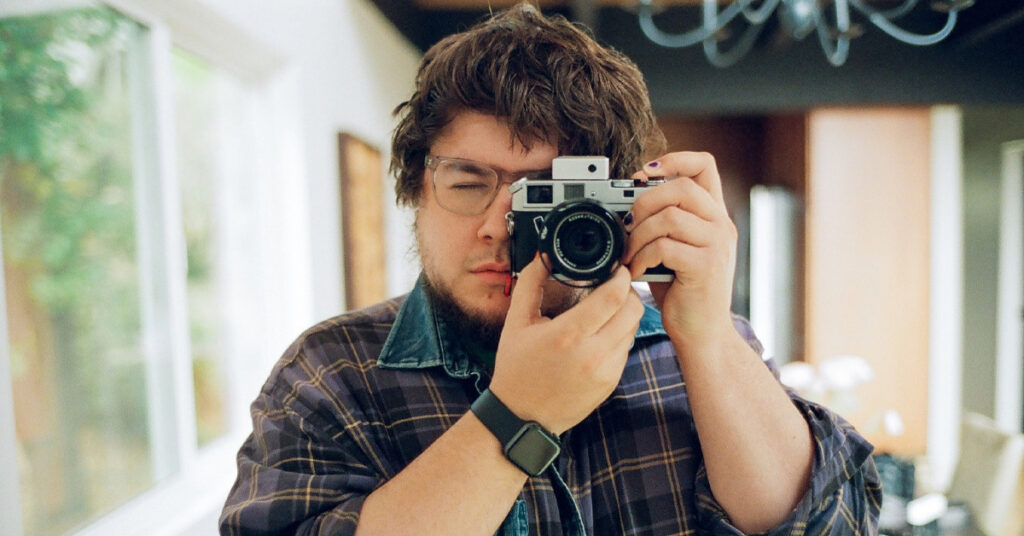
The Right Way to Network In Hollywood | with Chris Visser
Unlike doctors or lawyers, the path to having a successful career is not linear. The key is knowing how to build connections & forging your own unique path.
Let's create things that matter. Together.
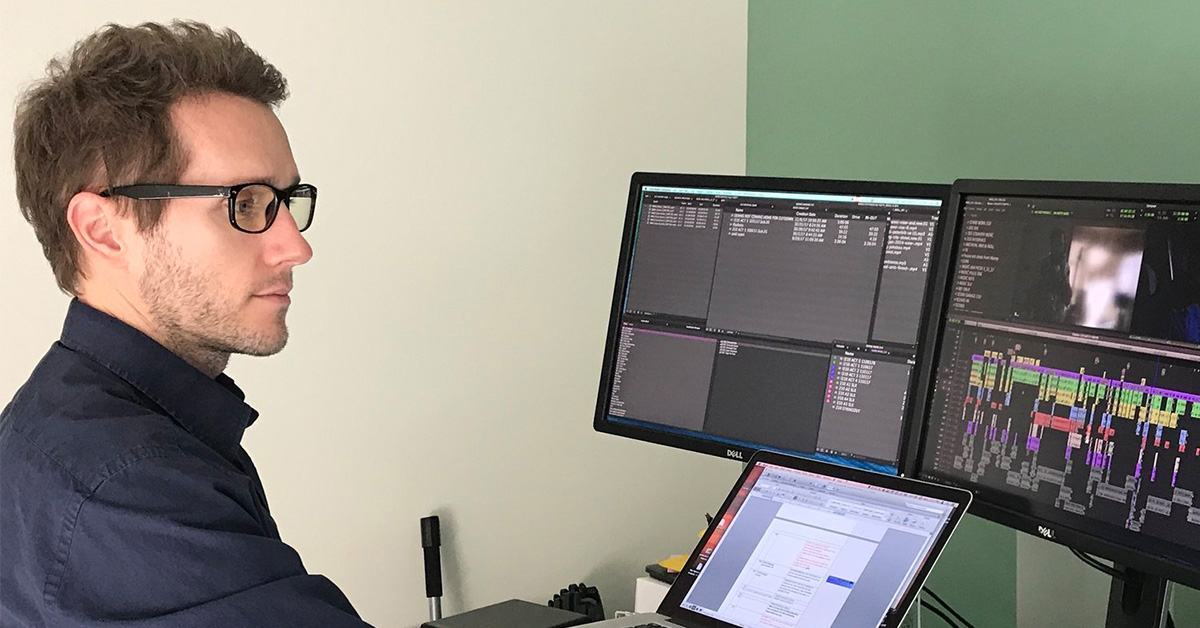
Today’s episode is part 1 of two-part case study (click here for part 2) that dives deep into the question that plagues so many trying to land their dream job in scripted entertainment:
To assist, or not to assist: That is the question!
In part 1 of this case study I chat with Chris Cavanagh, a television and film editor who specializes in long-form unscripted storytelling. He’s worked on numerous shows in the docuseries, true crime, and reality spaces, and two years ago he moved from New York City to Los Angeles to make the terrifying transition from unscripted to scripted.
Despite having an extensive resume of popular shows for top networks, Chris found it incredibly difficult to make the transition from unscripted to scripted because most in Hollywood unfairly believe that “People who do unscripted work can’t do scripted.” After working with Chris for 12 weeks in my one-on-one career coaching & mentorship program, Chris has officially made the transition into scripted television. He even landed the gig as my assistant editor on Cobra Kai, and he’s now moving onto one of the editorial teams for Star Trek: Discovery.
There is no set path we can follow to success in our industry, but it is possible to design your own unique path if you know the right questions to ask and the right steps to follow. My purpose for sharing this case study with you is to demonstrate how Chris designed his own path so you can then apply what you learn to your own journey.
Chris Cavanagh is a television and film editor/ assistant editor with a passion for long-form story-telling. His job is to help bring stories to life on screen. It’s not just what-he-does-for-work. He creates human emotion for a living. As an editor it is his responsibility to engage the viewer in every moment from start to finish.
He recently transitioned to scripted TV as an assistant editor for Season 2 of the hit show Cobra Kai to pursue his passion for editing scripted content.
He is excellent at collaborating and more importantly establishing trust, because working with people is one of the most satisfying facets of his career.
He specializes in drama because he loves exploring human motivation at its core and throughout every complex layer. Story shows us why people do something, or do not. And getting the story right is all about nailing the emotion.
When he is not editing, he is playing with his two kids, or he is cooking dinner with his wife, or he is attempting to complete one of the 7,942 daily tasks required to exist as both a professional and a parent in 21st century Los Angeles.
Zack Arnold: I’m here today with Chris Cavanagh, who’s a film and television editor, also currently an assistant editor working in Scripted. And, as a side note, was my assistant editor on Cobra Kai Season Two. So, Chris. It is a pleasure to finally get this conversation on the record, so thanks for coming in so early in the morning today, especially since you have kids, so I appreciate it.
Chris Cavanagh: Thank you for having me. It’s good to be here, and as somebody who’s listened to a lot of your podcasts, it’s mind-bending to be on the other side of one. So I’m happy to be here.
Zack Arnold: Well, you definitely earned it in then some. That is not an understatement. You definitely earned your way onto the podcast, and that’s partly what I want to talk about today, but what I really want to talk about, and our conversation may veer in several different directions, but you and I work together in both the introductory coaching program that I do the first 12 weeks, and you’re now in my advanced networking group, where there’s a group of people in the post production industry, and we’re all working together to advance your goals, whether it’s you want to work in scripted as an editor or you want to work in features, whatever it is, we’re all working specifically to build the right connections, build the right relationships. So that’s actually where I want to start, because I think it’s really important for people to understand how you and I got connected in the first place, because it’s kind of a little mini clinic on how to network with people, so how did we actually get to know each other in the first place?
Chris Cavanagh: Yeah, so we met on one of your fitness and post hikes in Griffith Park, and we went up the mountain and down the mountain, and met some other people, and it was the day that I met Natalie, who Natalie Bochan, your former assistant, who’s now an editor, who is helping you out, and that for me was all about getting to know more people here in Los Angeles. I moved to LA about three years ago from New York and made a big transition in life in general coming out here, and so that was that was how we met. It was about me trying to meet more people.
Zack Arnold: Yeah, and the point that I want to make here is that you weren’t saying to yourself, I need to go find an editor at a networking event and I need to hand him my business card and my resume and my demo reel on a website and say I would love to be considered for future opportunities. You said, hey, this guy’s doing a hike, so I’m going to go outside and I’m going to say hello, and I remember you being at two or three of those hikes, and I vaguely remember it now, because it was a while ago, but you just kind of kept showing up, and you were friendly, and you asked some questions, and we got to know each other a little bit, but it wasn’t like you were hiking next to me and really trying to push yourself for an opportunity, or talk about all of your accolades, or say, hey, look at me, I’m so great, you should pay attention to me. It was just about genuinely being a real person, and us connecting as people, and it took a little while, but obviously it got you to an area of the industry where you eventually wanted to get. So, I think that even though we’re going to be talking a lot about this transition that you’ve been making from being an editor in reality, and in docuseries, and I want you to talk about that a little bit. The idea is that you’re trying to figure out, or you were at the time when we were working the coaching program. One of the main things that we were focused on was transitioning from where you were to getting into the world of scripted, and how we can design the path to make that happen, and the question that so many people have when they get to the stage in your career where you are at, and again, you can expand upon where you started and what your career path was. So many people will say, well, at your age or your level of experience, you can’t be an assistant, that’s just the worst way to do it, and you’re going to look bad, and it’s never going to work for you, have to be an editor. And then other people say, well, you can’t make a transition into scripted and just be an editor right away. You have to be an assistant. Everybody thinks they have the right answer, and guess what? Nobody has the right answer, because everybody’s path is unique, and that’s what you and I worked on for so long, is trying to figure out what is the path going to look like for you, because your definition of success is different than somebody else’s. The life that you’re living is different than somebody else’s, your personal needs, your needs for your family, for everything else that’s going to be different than somebody else. And we spent a lot of time deliberating that, so I want to get to that point. But first, can you give us a little bit of background of what your life looked like professionally when you and I first found each other?
Chris Cavanagh: Yeah, absolutely, and I do think I’m uniquely qualified to speak to that, because I’ve seen the issue from both sides. I have seen it as I can’t take a step back. I have seen it from a point of it’s not going to work for me financially, and then I’ve eventually come around and say, well, this is actually the only way that I see it working. And so I do feel like I’ve gone through a complete evolution in that sense, so I can, I can see it from all sides. So, when we met where I was professionally again, I had just moved from New York, I think maybe it was six months later, I can’t really remember, but I had been cutting television documentaries and a little bit of reality for, I would say, a good eight nine years, something like that, and that was all going great. Before that, I was working in scripted. I had assisted on a couple of films, I had cut my own feature, and that had a couple of names in it. And how I went from working in scripted to then taking a big detour. Are into reality, and unscripted is sort of a major turning point in my life, where I was very happy working in scripted, but it became something that I couldn’t sustain financially anymore. I couldn’t live on the $100 a day that I was getting paid in New York to work on scripted stuff, and at that moment, sort of at that moment, where I made the transition, another big life event happened. Someone very close to me came down with a life-threatening disease, and that it’s not something I dwell on, but it’s something that really affected me in a way that I said, okay, look, like I have to have health insurance, I can’t live on this $100 a day, I can’t live on this pretend health insurance, and so friends of mine at the time were making TV documentaries and making livable wages, and they said, hey, come on over here, and you know, we’re doing this, and it’s, you know, it’s still storytelling and documentary, and I love storytelling, and I love documentary. It’s, you know, I love storytelling, is why I’m an editor. And around the same time, I met the person that I wanted to marry. I’m very fortunate that I met the person who is the person for me, and she wanted to go to law school, and so I helped out with supporting us while she went to law school, and we got married, and we had two kids, and then cut to 10 years later, here I am getting back to what I really want to do, so financial considerations have always been part of the equation for me.
Zack Arnold: Well, and somehow you obviously found a way to make it work, because I remember one of the very, very early conversations that we have, and I was just going back through my old session notes, and my lord, I didn’t realize how long ago was that you and I started working together, but it was August of 2017 Yeah, so it’s been like a year and a half since you and I started, and you were in my very, very first beta round before I even knew what I was doing, and to be honest, I’m still not sure I know what the hell I’m doing. I always feel like I’m winging it for anybody listening that’s like I have imposter syndrome, it’s like, well, me too, because I feel the same way, where it’s like really I’m doing this thing, but anyway, the point is that we started in August of 2017 you were one of the very, very first beta members, I think you were actually maybe member number two that signed up, and I remember there was a lot of hesitation and fear where at that time you didn’t come to me saying I am confidently sure that my path includes me becoming an assistant editor on script television. We spent a lot of time deliberating, is that the right choice or is that the wrong choice, and like I said in the beginning, there isn’t a right answer, there’s just the right answer for you. So let’s kind of do a flashback, so to speak, rewind the clock to August of 2017 and I know that might not be the easiest thing to do, because so much has changed since then, but come to me with all of the fears that you had about whether or not, you should make this transition to assisting, or if you should try to break through the wall and just become an editor and scripted right off the bat.
Chris Cavanagh: Yeah, absolutely. So I knew I wanted to be encrypted, I knew that I wanted to work on the kind of content that I connect with that I really enjoyed. So the passion was always there, to the desire was always there, but as we know in this industry, there’s just not a set path, and so I was trying to figure out how to do that, and we went through the entire process that we went through, working on things, refining my websites, working on outreach, working on networking, even when we finished that program, I still was not ready to say, okay, I’m ready to take a step back to be an assistant. The roadblocks that were in my way were financial, which was legitimate, you know, still is legitimate. I had to figure out a way to rearrange everything in my life and make some sacrifices to be able to live on a lot less money. And then there was absolutely a pride factor as well, where I would say, you know, I fought very hard back in New York to rise out of the in-house editor, assistant editor position that I was at a production company, and to go freelance, and to become an editor, and all of that push, and all of that drive, and saying no to things, and really pursuing that chair was really healthy for me in a way, and allowed me to establish myself in, in the beginning of my career, in that sense, but at the same time, some of that rigidity closed me off to other paths that might help me get there faster, that might help me get to the place that I wanted to be in a better way, so it’s interesting how the desire and the drive can be. There’s two sides to that coin.
Zack Arnold: The one that I really want to pull out here is the word pride, because when it comes to the financial part of it, this is very legitimate for a lot of people. If you’re 24 years old and you’ve got a one bedroom apartment and maybe you have a small car payment, you don’t have a mortgage, you don’t have. Kids like, my God, take whatever work fulfills you. It doesn’t matter if it pays you $1,000 a day or $100 a day. Do work that’s going to help you build your resume, that builds your network of connections. Like, just go out there and make the choices that are going to take you down the path you want to get to have a creatively fulfilling career. When you’re at the age that you and I are, and you know you’re on the the other side of 40 and I’m creeping up on 40 in a few months, so we’re not spring chickens anymore, and we have houses and we have kids. It’s much harder to say I’m going to pursue my dreams, because then you look at your bank account and then your wife looks at your bank account and you’re like, no, not going to happen. I mean, I’m in that position right now where I’ve had to very reluctantly turn down several very high-profile scripted TV opportunities, because I want to pursue my next dream, and what I believe to be the next phase of my life, which is show running and directing documentaries and documentary series. So I have to make sacrifices to make that happen. So it’s not like I kind of remember what it was like being in this position 15 years ago, I feel this right now. I know this pain. So, the financial part is very real, but the part that nobody wants to talk about, or that very few want to talk about, is the pride part. And that comes from our culture of people saying, well, once you’re an editor, you can’t go back, because then people are just going to look at you the wrong way, and they’re going to think less of you, and they’re going to disrespect you because you took that step backwards, so let’s just, you know, no holds barred, talk about the elephant in the room of how this affects your pride in the way that people view you in this industry, because that can sometimes be the hardest hurdle to get over.
Chris Cavanagh: Yeah, absolutely, and I think it’s so much easier for me now to see it from the other side now that I have busted through that, but there’s a lot of resistance, and a lot of that resistance is based upon fear, and the fear of this will hurt my chances to succeed, because of perception, and you know, I’m someone who has done a lot of on my own self development work, and just tried to get other people’s perspectives on on how to improve myself, how to keep myself healthy, and one of the most interesting things that I ever came across, I think it really applies to this situation that I’m in, and that a lot of people are in, and the saying is nobody cares, like nobody really cares about much more than what they have going on, so whether you are, you know, at a bar by yourself, whether you are taking a step back as an assistant, whatever it is that you’re doing, as long as you believe in it and you’re passionate about it, nobody else cares. They all they really see is your mood, is your positivity, is your belief in your direction. So, you know, in terms of how you’re going to be perceived, you have to ask yourself why you’re doing it in the first place, and you have to ask yourself, is this the best way to get to where I want to go. And when you and I were working together, we did a lot of really good work to shape me in that direction, but when we finished after the 12 week program, I still wasn’t there yet, I still needed a couple more months of perspective, and I talked to a couple of other editors, and I thought about it, and some, some of the people you know, you know, Joaquin, and then some other editors on some on some features, and you know, I finally came to the point, a couple months later, I said, you know, I just have to give this a try, because I don’t see a different way forward for myself, so why not give it a shot, and someone, some bigger name people that I talked to, I needed, you know, had your perspective, and I also needed, I needed additional perspective, and you know, some people just said, you know, just, just go ahead, just do it, just try it, like I know people who’ve done it at this age, older than you, and it worked out for them great. And just give it a shot, you know. What do you have to lose? And then I finally came back to you, and I said, “You know what I said, I’m ready to give this a try. And I first, I talked to my wife, and just said, “Hey, this is what this will mean financially. And it took us a couple of weeks to really work on the mechanics of that, and you know what that was going to mean on a week to week basis, on a month to month basis. You know, when you’re talking about editors specifically, you know the great thing about editors is most editors that you are going to meet are supporting themselves. You know, you, when it comes to writers and producers, you know it’s a little bit more vague in terms of are they completely supporting themselves, so on and so forth. A lot of them are, a lot of them have pulled themselves up from from way less than than I ever had, but when you meet an editor, you’re meeting someone who is supporting themselves for the most part, that’s that’s what I have found every time, and so you know, once we got through the mechanics of that, you know, and I got back to you, and I said, look, I’m ready to to step onto this path and to see where it leads, and you said that’s great, and I’ll help in any way that I can, and you know it wasn’t until you know six or seven months later that I had an opportunity for a tryout with you a little bit later, but that was that was sort of a roadmap of my process.
Zack Arnold: Yeah, well, first of all, I have to say that I’m incredibly offended that you needed other people’s brain. Perspectives, I’m not sure how I feel about that, because mine is the only perspective you should have ever listened to. I just want to make that very clear. The takeaway that I want to get from here, that I think is interesting, is the why. Right, the big moment that I felt that you had the transition was not necessarily, well, I want to do this or I want to do that, or, you know, I’ve done the finances, it was the confidence I just.. I saw the shift, where I don’t remember if it was a Slack message or a conversation or whatever it was, but there was always this hesitation all 12 weeks of our sessions, and even afterwards when you would follow up or ask a question or whatever. But then all of a sudden I could just sense it. It was this is what I’m doing, and once you made the commitment, that’s when everything changed, and I see that in my life as well. It’s actually one of the parallels that I’ve seen with American Ninja Warrior, where it’s kind of like, then I’m going to use this analogy, and you’ll find it funny in the audience might, but this is a mr. Miyagi analogy. It’s where you know if you can train karate, yes, right side road, you can train karate, no left side road, train karate, okay? Maybe guess so. In the middle of road gets squished like grape, right? It’s all about that level of commitment. With Ninja Warrior, for a long time, I was, oh, this looks kind of cool. Maybe I’ll try it, maybe I’ll exercise, maybe I’ll run a Spartan race. But the day that I said, this is what I’m doing, my entire life changed the way that I approached not just exercise and diet and sleep and everything else, but just who I was as a person changed, and I took on this identity, this outward identity that other people saw me as. You’re the guy training for American Ninja Warrior. I haven’t even been on the show, I haven’t even achieved what I ultimately wanted to achieve, but it’s completely changed my life just because I committed to it, and I could just sense that from you, where that commitment came. You’re like, I’m going to be an assistant editor in scripted. There was no more hesitation, and as soon as that happened, everything started to come together for you.
Chris Cavanagh: Yeah, and it really was about the what, why am I doing this? I’m doing this because eventually I want to be an editor in scripted television, and that path is out there for me, and I’ve got to keep moving forward on that path. And as someone who has switched over to being an assistant from being an editor, I can tell you that again the philosophy of nobody cares absolutely holds true. People want to see people in the business, people out of the business, people in your personal life or professional life, they want to see that you are engaged, that you’re positive. Nobody really cares if you are the executive producer of the Avengers. If you’re miserable, you know, nobody, nobody cares whatever you do. They just want to know that you feel like you are on your path, and that’s that. Has absolutely been the case for me personally and professionally, and my family is completely supportive. The people that I work with in Scripted have been completely supportive of my path. I’ve never felt, you know, judgment for taking a step back to go forward, you know. In fact, the people that I’ve met in Scripted have only tried to help move me forward, and that’s based on obviously on doing a good job, on being a good listener, on doing all the things that it takes to be a good assistant, but people really will support you if you’re coming from an authentic place, if you’re coming from a place where you’re adding value and you are contributing to the environment, in my experience, you’re going to find nothing but support on the other side.
Zack Arnold: Yeah, that level of authenticity is so key, because if you’re confident about the choice that you’ve made in the direction that you’re going, then people are going to admire that, because so few other people have that confidence in that level of authenticity. And I think that one of the things about your journey, and kind of your circumstance that was somewhat unique is that when you came to me originally and said, should I be an editor in scripted or should I be an assistant editor in scripted, it wasn’t an easy answer for me. Generally, I can look at somebody’s path, look at their resume, their body of experience, and say, you know what, I’m pretty confident you’re going to want to go in this direction. There are other people in our group networking program where I’m like, yep, this is definitely the direction you need to go with you. I wasn’t sure about that, because you had so much good experience as an editor, and it technically wasn’t scripted, but you were doing narrative material that was weaved within the unscripted material. So, if you had just been doing Survivor for 10 years, or you had been doing Amazing Race, or something, and say, well, and again, I want to make sure I’m not making it sound like, oh, they’re less of an editor. Those guys are amazing editors, and I would never want to do that kind of work, because it’s really involved, and there’s, there’s a, there’s a whole lot to it, but at the same time, it’s a very different language that they have to speak. So, if I were just to look at somebody that had done 15 years of competition shows, I’d say it’s not a one to one translation, where I can automatically tell you’d be a great fit to edit scripted material, but with your stuff it was close enough. I was like, I mean, you kind of could go right into editing. It’s a little tougher to figure it out. It just wasn’t a clear cut answer. So that was one of the tough things that I think for some people they’re in that same place. But then, for others, it’s kind of obvious where there are some people that have so much editing experience that I’d say I don’t think assisting is going to make sense for you. Then there are other people that really want to go right to editing, but you look at their body of work and you’re like, I just don’t see it. I think you’re going to have to suck it up, and you’re going to have to be an assistant editor for a couple years, but with you going back to where we started, it was this idea of you are confident about that choice, and an example would be that we had numerous conversations. I mean, we always have what I call like our little fireside chats in the morning. I always do that with my assistants, where we’ll sit down for 1520 minutes, just kind of talk about the world, figure out what is the day going to look like, what are all the demands upon us. You know, every once in a while, somebody comes in, and especially when you first started, people would say, “Oh, you know, hey, where’d you come from? What was your last show? And there’s a couple of ways you could have gone about it, and I’ve seen this before, where you kind of hang your head and you look down at the floor and say, “Well, you know, I did work in reality for a while, and you know, did this and that, and the other thing, but you know, now I’m on this show, right? But with you, there was just this confidence. Well, you know, I was in New York for 10 years, and I worked on a lot of unscripted and docu series work, and now I’ve made the decision that I want to jump into scripted, and this was the best way to do it, and I was like, “Damn, like that’s a confident answer.
Chris Cavanagh: And a lot of that came from our work together, frankly, in that it’s really important. One thing that you helped me a lot with, to say this is what I am, not what I am trying to be. So, so I did a lot of work to make sure that when I talk to people, I would say I am transitioning to scripted, my background is xyz, but this is what I am, this is what I’m doing, and never, it’s, I guess, it’s that whole karate, no karate, yes, karate, you know, in the middle gets squished, it’s not I’m trying, it’s not I’m hoping, it’s this is what I’m doing, I can describe the actual steps, like, yes, I’m an assistant right now, and I’m on the path to A, B, and C, so that’s that’s a very important mind shift set that I needed to internalize, and I feel a lot better having done that.
Zack Arnold: Yeah, that’s one of the core fundamental places to start for everybody, and I had to learn this myself. And I’m still using this to this day with the transition that I’m making. I talk about this a lot more in depth in a podcast that I did with my former assistant editor, Chris Visser. So, anybody listening with the first name Chris, that has experience. You already have a leg up on working with me someday, just by your name. But the point is that when he first approached me, I’d never met him before, approached me at Edit Fest, and he said, you know, I’m interested in getting into the scripted space, but right now I’m a colorist, and I said, Oh no, no, we’re gonna stop you right there, you’re a colorist that’s transitioning into scripted. He’s like, what do you mean? It’s like you need to make it very clear who you are and where you’re going, right? So, it’s about dressing for the job that you want, not the job that you have. And the word that I hear all the time, I hear this in almost every one of my introductory coaching calls, or the first few weeks, and I can’t remember if you and I went through this specifically, or not. Maybe you will remember, but I do a lot of these calls now, so they might be blurring together. But the word that I always hear is just. I’m just a reality editor. I’m just an assistant, and I get this over email all the time, where people introduce themselves to me, and I stop people right away. I’m like, never use the word just again, because you’re selling yourself short and you’re conveying a lack of confidence. Oh, I’m just an assistant. No, you’re not. You’re an assistant, and you might be the best assistant on the planet. So, don’t sell yourself short. And I think that once you made it, because I remember you and I doing some like mock networking, like live networking, that was definitely one of your, your areas of weakness, which frankly is everybody’s area of weakness in our industry, because we’re all introverts, and that’s why we choose to work in dark rooms by ourselves. But we had done kind of this mock networking thing, and I remember, like, approaching you, so to speak, and just kind of asking you who you are, like, “Hey, what do you do? And the first couple of times it was like, “Well, you know, I’m I’m a reality editor, kind of doing docuseries, and you know, just been working on this for a while, and I’m, I’m hoping that I can, you know, find a way into, I guess it would be maybe scripted. I was like, stop, no, no, start over. Like, so, do you remember that whole process?
Chris Cavanagh: Absolutely, and it is painful. It’s, it is, unfortunately, you know, it’s a bit like dating, and it is awkward, and you know, confidence is going to carry the day, and if you, if you can’t summon the confidence, it’s going to be harder and harder to make connections.
Zack Arnold: Yeah, and the confidence is the, the absolute key. I mean, the what you and I were working through, and you were on a much earlier, rougher version, but we essentially work through the Focus Yourself program step by step by step. The first part of that, it’s a three unit program. The first unit is clarity, which you and I work on. What is the actual goal? Why is it important to you? What are the obstacles in the way? But then the next step, which is the biggest one, is confidence. If you don’t have the confidence, knowing number one, that what you’re working towards is the right thing, you’re not going to be able to make it happen, but number two, you need to. Confident that the next action you’re taking or the next project you’re completing moves you forwards, because there’s nothing more demoralizing than working your ass off for 80 hours a week, and on Friday night looking back and saying, did I do anything? Like, am I in anywhere different spot than I was last Friday night? Like, what was the point of that? So, the important thing is really designing what does that path look like for you based on all the clarity that we created to know that, oh, when I do this thing on Thursday morning, it’s probably going to suck, and I don’t want to do it, but when I’m done with it, I’m going to say, yep, I’m one step closer to where I want,
Chris Cavanagh: Yeah, and it takes practice, it absolutely takes practice, nothing is going to come easy, you’re never going to walk in one door and out another and be fully formed, it’s hard work. There are no shortcuts, but you can actually, you know, improve on things. You can change things, you can take some of your, you know, abilities and you can amplify them. You can take things that you think are disabilities and turn them into advantages, but it is – it’s always work worth doing to practice reaching out to people, to practice making connections, and again connecting on an authentic level, and that can be difficult. It’s very difficult to connect authentically and positively when you lack confidence.
Zack Arnold: Yeah, confidence is the secret sauce to everything, and it’s not confidence that looks like arrogance, it’s not “I’m really good at what I do, and you need to know me. It’s just this assurance that you’re on the right path, and this is the networking event that I need to be at, or this is the scene that I need to be editing, or this is the job that I need to be doing. Even if I’m an assistant, I see the bigger picture, I see the vision. The vision is me in the chair editing a high-profile scripted series, but that’s not today, and I’m okay with that. I’m okay with the fact that today I’m in a chair, I’m the assistant editor on Cobra Kai, but I’m still moving forwards, and it’s getting me closer to the path. And I found that when you have that confidence and you have that clarity about where you’re going, you’re so much less stressed at work. I mean, there’s still, like, you know, the BS about deadlines and people’s expectations and politics and everything else, but that larger underlying anxiety and stress just goes away because you feel like, yep, this is what I need to be doing right now,
Chris Cavanagh: And it’s the confidence to hang back a little bit too. It’s when you, when you have that confidence, you don’t feel like you need to tell that person, or the person that you’re working with, or the person that you’re just meeting everything about yourself everywhere you’re hoping to go, all of your, you know, past what isn’t working for you. You can just get to know someone, and I think that’s been that’s been really helpful for me. Is that every every interaction that I go into, every new person that I work with, I’m trying to get to know a person first, you know, before you know I hear about what movie they’re working on, or what show they’re working on. It really is about getting to know the person, getting a lot of commonalities out there, and enjoying yourself, and sharing a laugh, sharing other things before it really gets into here’s what I’m doing, here’s what I’m trying to do, what’s working for me, what’s not working for me. I mean, it’s all of this. This is very much a, is a people profession, and the more you can improve your people skills, the better you will be.
Zack Arnold: People skills in post production. What are you crazy? We don’t have people skills. Yeah. No, I couldn’t have said it better, and I think that’s great, and if I could kind of, not a tangent, but just kind of as an aside, if this were a book, this would be one of those little gray shaded areas with like extra bonus tip. Anybody that’s going to networking events, what’s the first question going to be? Their first question is always, what are you working on right now? I dare you to go to a networking event next time, and do not allow yourself to ask that question, you need to find more creative ways to build relationships with people beyond wanting to know what they’re working on, because that’s the crutch. The crowd is, hey, nice to meet you. Yeah, what are you working on right now? What if instead you actually showed interest in them as a human being?
Chris Cavanagh: There’s a book that you turned me on to, called Give and Take by Adam Grant. Is it Adam Grant? Am I saying that right?
Zack Arnold: I think so, but I actually think you turned me on to that.
Chris Cavanagh: Oh, did
Zack Arnold: I remember correctly? Maybe, but yeah, go ahead.
Chris Cavanagh: So many you’ve turned me on to, so that I can’t recommend that book highly enough in terms of understanding the dynamic between, you know, there are people who take, there are people who give, and then there’s that in-between category, which is called matchers, I think. As it turns out, the people who give up their time, who give of their emotional energy, who give of their resources, always end up doing better in the long game. And Adam Grant, PhD, can say it a lot better than I can, but it is – it’s a way that feels good to connect with people, and it’s actually a very successful way to get where you want to go, so you know, giving up your time, asking questions, you know, finding out about what the other person, you know, who the other person is, before you’re trying to find out, you know, what they do and how they can help you, is really the only way to move forward, I think, in this business, because this, this business in particular is full of real. Smart, hardworking people, and people can smell immediately when you are coming on to them and trying to get something. I think that people don’t necessarily go into interactions trying to get something, but they don’t know what else to talk about, so it becomes very transactional. In a sense, people start like, “Oh, hey, here’s my card, this is what I’m working on. If you hear of anything you know, let me know, and I’ll let you know, and those types of interactions never produce lasting connections, and certainly in both sides of the business, in scripted and in unscripted, that I’ve worked in, it’s only those lasting connections, it’s only when you work with someone, when you meet someone that you genuinely like, that that relationship is likely to continue in a good way, and I think that anybody listening can think back on their own experiences and see that that is true about 99% of the time.
Zack Arnold: Yeah, if this had been a video podcast, you would have seen me physically cringe as you were describing the person that was handing out their business card and saying I would love to be considered, whether that’s in-person networking, whether that’s somebody sending an email with a resume attached, and you never talked to them before, please just stop doing that. Build relationships with people, play the long game, and be willing to be patient, because that’s where the money is. And I don’t say money is in the physical money, like that’s the money spot, that is the sweet spot. You build these relationships over time, and it’s like planting seeds. I grew up on a farm, so I like farming analogies. So, I, you know, forgive me in advance, but you plant the seeds in the spring, it’s not like you walk out the next day and you start to see stuff. You wait months, you have nothing there, it’s a field of dirt, and it’s a field of dirt, and it’s a field of dirt. And then, all of a sudden, you wake up three, four months later, and you’re like, oh my god, there’s a foot of grass out there, there’s a foot of hay, or there’s a foot of corn, or whatever it is, and then a month later it’s eight feet high. It goes like crazy, but the curve is not linear, and it works the same way when you’re building relationships. You have to plant a lot of seeds, and for a while they might not germinate, but then all of a sudden all of it starts to take over, and you’re in this position of, oh my god, I’m getting three job offers this week. What do I do right? But it takes a while to get there, and that’s kind of where we want to transition now, is I want to talk a little bit deeper about networking and the work that we have done in our advanced group, because this is a whole nother level, and this is brand new to me. So, once again, you’re one of my guinea pigs in another, another alpha experiment, but I feel like it’s gone incredibly well. When I walked into it, and I even told everybody that was in, and I said, I have no idea how this is going to work. I don’t know if it’s going to work at all, if it’s going to be worth your time or your money, but let’s figure it out. And I feel like I think it’s been like 13 or 14 weeks, and now it’s just going like gangbusters. So, what I would love is, from your perspective, rather than me trying to explain it and trying to sell it, because that’s not what I’m trying to do. Talk about from your perspective, the value that you’re seeing in this – you’ve graduated, so to speak, you’re out in the real world, and you’re figuring all this out, flapping your own wings, so to speak. So, I just want to talk about what that process has been like, and also what some of the things are that you’ve gotten out of this group program now that we’re working as multiple people, moving each other forward, rather than just the two of us.
Chris Cavanagh: Yeah, absolutely. So, in our new networking group, one of the things that we’ve been working a lot on, a lot is interviews, and we worked on connecting and interviews the first time that we worked together, but this has been sort of an ongoing and evolving thing for me, and I have had some interviews while we’ve been working together this second time that haven’t gone so well, and we’ve workshopped them, and I’ve gotten the benefit of listening to other people and how their interviews are going, and preparing for their upcoming interviews, and then being able to solidify, you know, some of that, some of that takeaway, and using it in, in my own, you know, new interviews and new upcoming approach, and it’s worked out successfully for me, in that I have been able to to work on the things that I still need to improve upon. I mean, it really is a getting better at this, you know, changing, basically changing careers is is a big shift, and so it requires a lot of attention to detail, and a lot of
Zack Arnold: The other thing I don’t mean to interrupt you, but I think that the other thing that I found, and this maybe I don’t think that I had this issue with you, but I certainly had it with a few other people that were in the private group, is they would say, well, after working together for the 10 to 12 weeks of the program, they would land their first job, or whatever the goal was, and I would say, well, I would love if you would continue the work, and we could do the advanced networking, and they would say, but I’m good, like I landed this gig, I’m like, no, no, this is about the much bigger picture, this isn’t just about I landed a job, it’s about how do you make sure that that job leads to the next right job, which leads to the next right job, and not only that, but in the networking group, and I didn’t even foresee this, but we’ve actually been helping each other through the issues and the politics of being in these jobs, so for example, most recently, and I’m super, super excited to talk about this, both you and Chris Terry, and here we are, this is. Third Chris on the show, so clearly there’s a prerequisite that your name must be Chris if you’re going to work with me, spelled differently.
Chris Cavanagh: My real name is Thomas, but I changed it to Chris,
Zack Arnold: Exactly. So I, there, I did a podcast, a case study earlier this year with Chris Terry, and I will put a link to that in the show notes if anybody wants to listen, but she was also making the transition from the reality world, very experienced doing reality shows, getting into the scripted world, and worked for months and months and months, trying to break through, trying to build relationships. Just didn’t seem to be getting anywhere. Then all of a sudden, an opportunity came up. While we were in the group, we were talking to her about how do you prep for the interview, and how are you going to get ready for this? And we all discovered, and I say this with all the love in the world, I’m sure she would agree that she just wasn’t ready for this interview, so we all banded together as a team to prepare her for this interview. She ended up walking in there, knocking him out of the park, having a job two days later, and then coming to the next call and saying, “Oh my god, this is so overwhelming. I have no idea what I’m doing. And once again, we band together as a team, and we find the best way to get her through it, and we’ve also done the same with you, and you learned a lot from her journey and applied it to yours, which leads us to the next step that I’m excited to announce, which is you now have your next job on a high-profile scripted show. So, let’s talk about that.
Chris Cavanagh: Sure, yeah, so, and a little bit of the process, and how to get there. So, I mean, I mean, it really is, you know, for lack of a better term, it’s a force multiplier, being able to work on my own things that aren’t going so well, because I mean, that’s what work is. You’re not working on the stuff that’s going great, it’s not a group where we sit around and, and just high five, you know, you were working on the stuff that that needs improvement, and so that is, you know, there’s natural difficulty built into that, but it’s so worth doing. I had an interview for a high-profile show that didn’t go great, so I was told afterwards I got a call from the producer afterwards that said, “Oh, you know, you are our second choice, such a close second, and the person that we hired actually speaks the language that this show is shot in, it’s not shot in English, but still, they, you know, they were so close to hiring me, so on and so forth, and so everything went really well, supposedly, but I still didn’t get the job, you know, and I still felt that, and I still felt like there was a lot that I could have done to assure them that I was the right person for the job, but I just wasn’t coming in with with a planned approach into the interview, and so that stung for a while, because that show would have really, I know I would have enjoyed it, I know I would have been good on it, I know it would have been good for me, and so we took that and we worked with, you know, how do I turn that around, how do I do things differently, how do I come into an interview and address the elephant in the room, and how do I say, you know, right away. Hey, even though I might not have all of this on my resume, X, Y, and Z, I’m still a great fit for this because of A, B, and C, and to really focus on the things that will make me a great fit, and and all of that prep went into to Chris Terry’s interview as well, and then I went into my next interview that came up, and I was just ready. I was ready to talk about five different things. I was ready to hit the elephant in the room first and talk about all the other reasons why I would be a great fit for the job. I had been put up by the editor, you know, it was his recommendation. I had to meet with the producer, and I was meeting with the producer, and you know, right away she hit me with the elephant, and I was ready to take down the elephant, and did, and then boom, it was over. She just said, “Okay, I’m going to send your resume to the studio, and it just needs to get approved, but everything should be fine after that. A week later, I got the call that I’d gotten the job, and so that felt really good to be able to again take something that was a weak point and turn it into a strength.
Zack Arnold: This is one of the areas that I love going into, is the psychology of interviews. It wasn’t really something that I even thought about that much when I was putting this group together. It was more, oh, I want to bring everybody together and we’re going to work on networking techniques and it’ll be fun, but then it got to the point where multiple people were on interviews, and like, oh, okay, now we’re gonna dive into the psychology of this, and I can’t go into it super, super deep, but I do kind of want to give the philosophy that I shared with both of you, the guy, and it was so amazing, where again, this idea of planting seeds and nothing happening for a while, to just see it happen to both of you the same week was just awesome, like I seriously, as soon as I got the Slack messages from both of you that you got jobs, I was like jumping up and down, it’s just it was like somebody told me, like I was gonna have another kid or something, so like when I tell you guys that I’m invested in your success, like I got so excited about that, and I’m still on a high because of it, but anyway, the point is that the fundamental thing that we talked about, just to give away kind of the biggest insight that we worked on, and we had to go much deeper than just the insight, but it was the fundamental paradigm shift that you don’t go into a job interview saying look at me, here’s why I’m so good at what I do, this is something that I actually talked about extensively in my previous interview with the. Work high creators, and how I got that job. Instead, you need to ask yourself the question, what is the number one problem that this person needs to solve, and how am I the best solution to their problem? If you go into a job interview with that mindset, you will blow people away, because everybody else that they meet is all about talking about themselves. Here’s who I am, here’s my experience, here’s what I’m good at, here’s why I would, quote unquote, be a good fit. They hear that from everybody, but if you walk in there and say I understand your problem and I’m the solution, holy cow, are they going to listen. And also, when we’re talking about the elephant in the room, that’s the part that everybody’s scared of. So, for you, the elephant was
Chris Cavanagh: Not enough experience,
Zack Arnold: Not enough experience walking into a very high-profile scripted show, and then looking at the piece of paper and saying, huh, you’ve done reality for 10 years, and I see you’ve done what, one other scripted show. You didn’t walk in thinking, oh my god, I hope they don’t see that, and I hope they think I’m okay. You’re like, no, I’m going to confidently go in and say, I know this is a problem, but here’s why it isn’t a problem, and here’s why it’s actually an asset to you. So, how did you do that?
Chris Cavanagh: What I did was I talked about the experience that we had working together. I talked very specifically about how, when I am working on a show, that it is essentially mix ready by the time editor’s cut is done, that we work super hard to make sure that the dialog is perfectly normalized, that all of the background sounds are in, that the hard sound effects are in, that everything is there even before you would expect it. I went in saying I can do the work and I can do it to a level that you know that exceeds your expectations, essentially. So, I set, you know, a very high expectation and understanding, really turning, turning around the perspective. What is this producer worried about? This producer is worried about, is worried that television is so fast that this assistant, who doesn’t have a lot of television experience, won’t be able to keep up. So I go right in and talk about how I’m used to working in a fast environment. My experience is a benefit, you know. I’ve done this before, I know what what I have to do, and I do it confidently, and that is essentially what gives her the reassurance that I am someone who will take responsibility for those parts of the process. I’m not just a good person who deserves the job only because I’m passionate about the series, which I am passionate about the series, and I took pains to, you know, explain that as well, but that I take responsibility for my job, and that, you know, it will be done the best that it possibly can be done, and that if there are pieces that I haven’t done before, that we will figure them out, that we will attack the workflow and get it done, and make her life easier. How my entire approach to going into an interview now is demonstrating to the person who’s in the position to hire, how am I going to make your life easier? This is how I’m going to make it, so that you don’t have to worry about what’s coming out of my department, because anybody that is looking to hire you, that’s kind of the big question in the back of their minds, is this person going to make my life easier, or is this person going to require me to stop down, change what I’m doing, slow down, and plug in the energy drain. Are they going to need me to help them constantly? Am I going to have to do their job for them? Am I going to have to make allowances for them, or are they going to just not have to not worry about that part of the environment? And so you really want to be on the latter side of that.
Zack Arnold: Yeah, I think that’s a fantastic insight. Are they going to make my life easier, or are they going to make my life harder? It is really that simple. And if I could kind of leave somebody with one final takeaway that wants a tidbit about how to nail an interview that goes even a little bit deeper than this idea of don’t talk about you, talk about your understanding of their problem and how you can be their solution. What you want to think about is what is the outcome that this person desires, right? You’re selling yourself, so this is no different than selling a product. So just think of yourself as a salesman, you’re the product, and you want to close the sale. If you can give them the outcome they want, that’s all they care about. So the example that I love from the sales world is that you don’t walk into a hardware store to buy a drill, you walk into a hardware store because you need a hole in the wall. The outcome is the hole in the wall, or the screw, or whatever the drill provides. But so many people are focused on saying, well, here are all the features that I have on my drill that are so much better, I just want a hole in the walls. Do you have all of the features to get me the hole in the wall that I desire? So, if I’m a producer, or if you’re an assistant that’s interviewing with an editor, or you’re an editor that’s interviewing with a director, or a showrunner, what’s the outcome that they desire? And if you can understand that outcome, and you can demonstrate to them why you’re the best person to get that design. Tired outcome, then it’s a slam dunk, and you walk onto the interview with them, saying, make sure you keep your calendar open, we want to, we want to make sure that you’re available, and here are the dates that you start, and can we lock it in now? Yeah, that’s because you’re not so focused on me, me, me, here’s why I’m great, because it’s not about that, it’s about you solving their problem and giving them the outcome that they desire.
Chris Cavanagh: Yeah, absolutely.
Zack Arnold: So I want to be very respectful of your time. I have one final question, and obviously the whole theme here is, in general, to assist or not to assist, that is the question. And your journey was very specific in that we decided together, and you ultimately decided on your own that going the assistant route makes the most sense. In part two of this podcast series, I talk with another editor that has extensive assistant work and editing work that made the opposite distinction and said I am done assisting, the only path for me is editing. So we’re going to go much deeper into that idea, looking at it from a very different perspective. But before we go to that second part of that interview, what I’d love to ask you, is if somebody were coming to you that heard this podcast, they approach you at a networking meetup, and this may actually happen, and they’re like, listen, I’m at a fork in the road with my own journey, I can’t figure out which direction to go. If you give one good piece of advice to somebody, where they should start, if they’re stuck in the fork of the road, they don’t know which way to go, what would you tell them?
Chris Cavanagh: I would, I would tell them to ask themselves why they want to do what they want to do, that will tell them, am I doing this because I want to do this, am I doing this because somebody else thinks that I should do this, am I doing this because it makes me happy, or because other people think it’s cool, or because other people think it’s prestigious. Ask yourself why you’re doing something in the first place, and that will tell you which path you should take, that will tell you which direction that you need to go to be satisfied, to be fulfilled. So start by asking yourself why you’re doing what you’re doing, and then, and then once you get an answer, ask yourself the question why again, and then you’ll get down to the fundamentals, and that will be a compass for you that tells you what direction to go in.
Zack Arnold: Yeah, I couldn’t have said it any better myself. You’re never going to go wrong asking yourself the deeper why. Anybody that wants to go much deeper into the why, I will actually put a link in the show notes to a podcast interview that I did with David Mead, who’s the co-author of the book Find Your Why, and is writing partners with Simon Sinek, who is essentially known as the world’s foremost expert on defining and finding your why. So, I’ll make sure that that link is in there. That’s also something that I work on extensively in the coaching program, and we go through that interview and go through all the various steps of that process. But unfortunately, we are out of time, and you have work, and I have work, and I want to make sure we can both not get fired today, because boy, would that be a crazy end of this story. So, could you let the audience know real quick if they wanted to see your work, or connect with you, or find you on social, or your website, or wherever? Where can people connect with you?
Chris Cavanagh: Yeah, my website is Chris cavanaugh.net and you can put a link to that in the show notes, and you can email me through my website. I’m happy to chat with whomever.
Zack Arnold: Awesome. Well, this has been a sincere pleasure. I wish you the best of luck as you embark on your next project. I’m very jealous that somebody else gets to work with you, and it’s not me, but that’s my fault. So, I can’t blame you for that. But I’m glad that you get to go out into the world and experience more shows and work with more people and build your own network, and that’s fantastic. So, it’s, it’s been a pleasure working with you so far, and I’m sure that it has just begun. So, thanks so much for being on the show today.
Chris Cavanagh: Thank you, Zack.
Transcribed by https://otter.ai
This episode was edited by Curtis Fritsch, and the show notes were prepared and published by Elyse Rintelman. The original music in the opening and closing of the show is courtesy of Joe Trapanese (who is quite possibly one of the most talented composers on the face of the planet).
Unlike doctors or lawyers, the path to having a successful career is not linear. The key is knowing how to build connections & forging your own unique path.
People don't buy what you do, they buy WHY you do it. Learn how to define and find your own unique why with 'Find Your Why' author David Mead.
Choosing between the assist editing route vs the editing route is not an easy choice. Learn why becoming an indie editor is the best route for Wellington Harrison in part 2 of this podcast interview.