


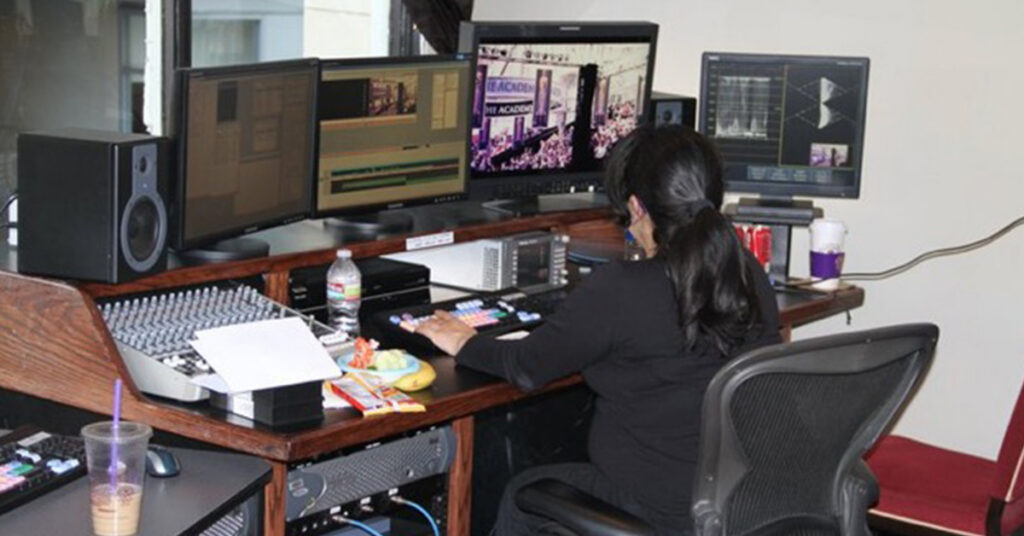
Transitioning From ‘Reality TV’ to Scripted Drama | with Monica Daniel
Learn how an accomplished reality TV editor successfully transitioned to working in scripted television.
Let's create things that matter. Together.

Making the transition from assistant to editor is never an easy one. There isn’t a roadmap that everyone can follow, everyone’s path is different. In today’s episode I chat with Minority Report editor Tyler Cook about the steps we believe are important for assistants to follow if they want to sit in the editor’s chair someday. This conversation applies to scripted, documentary, reality, marketing, you name it. This is not about technology, it’s about what it takes to get noticed.
Although he’s relatively young, Tyler’s success did not happen overnight. Tyler worked hard as a college student at the North Carolina School of the Arts, a small conservatory for the arts at the University of North Carolina, then transitioned to assisting on indie features and eventually made his way to scripted television.
I spoke with Tyler about his career path and how he was able to move through the ranks of intern, assistant editor and editor so quickly. Not only does he talk about essential skills an assistant editor needs to make it as an editor, but also how important it is to have a positive work ethic.
Zack Arnold: So I’m here today with Tyler Cook, an up-and-coming scripted editor who, coincidentally enough, actually has been working right down the hall from me over at Empire. Tyler has been working on the show on Fox or the first season of Minority Report. So welcome to the show, Tyler.
Tyler Cook: Oh, thank you so much. Glad to be here.
Zack Arnold: So the reason that you are on the show, and the reason I wanted to have you on, is basically because you talked me into being on the show.
Tyler Cook: Yeah,
Zack Arnold: Which I thought was pretty funny because you are actually the editor that hired Monica Daniel, and Monica Daniel’s episode about making the transition from reality to scripted is now officially the most popular podcast episode of the entire Fitness and Post series of over 5758 episodes, whatever, however many there are now. Whenever this show releases, it’s the number one episode that I have. And for anybody that’s listened to it, they know her basic story and transition from reality to scripted and all the things that she did. And I will put a link to that show in the show notes for this episode, so you can link to it and listen to that as well if you haven’t. But you’re the guy that she met, built a relationship with, and you eventually hired her for her first script, the job as an assistant. And I thought that this would be a really good episode to pair with that, so it’s not only seeing it from her side, but it’s seeing it from your side, and there are two things that I really want to distill out of this conversation. One, I would love for people to hear your story for how somebody that’s still pretty young in this industry has gotten to where you are. But number two, I want them to know what you are looking for in an assistant now that you’ve been down that road, and that’s something that I can very much contribute to because I have a very strict criteria for what I’m looking for in an assistant. But what I don’t have is the ranks to riches story, starting as an assistant and rising the ranks to editor. Because I never really was an assistant. I was never an assistant in scripted. I was never an assistant in features. I worked as an assistant for five months at a trailer company right out of college, and ever since I’ve been an editor, so that’s the one thing I can’t really say. Here are all the steps I follow to break out from being an assistant and break into editing. So that’s why I think your story is going to be so important for people. So you’ve been on the show Minority Report on Fox, which unfortunately will no longer be continuing on, and the show will run out. It’s it’s episode run and will most likely be canceled. Unfortunately,
Tyler Cook: Yeah, it’s bummer.
Zack Arnold: But that it’s it’s a bummer. But in this industry, once you’re in the pipeline, you’re in the pipeline. People know you, and you just kind of hop from show to show to show. So it’s it’s not like you worked at Boeing for 30 years and you got laid off, and you’re like, oh my god, what do I do with my life? It’s kind of the nature of the beast when you work in post production and especially in scripted TV. So for a week, it’s like, yeah, all right. Well, this show got canceled. All right, let’s find another one. Yep,
Tyler Cook: On to the next.
Zack Arnold: So yeah, so in that sense, it’s not terribly depressing. But I think that what’s so cool is that you have a really interesting story for how you rose in the ranks and got to such a high-profile show at such a young age, so let’s just kind of start from the beginning and kind of give the audience a little bit of background as to where you went to school, where you started, and kind of how you got to where you are now.
Tyler Cook: Yeah, sure. So I went to college at this arts conservatory that’s kind of attached to the UNC system, North Carolina. It’s called North Carolina School of the Arts. It’s that they do film and design and production for theater and acting and music and that sort of thing. So it’s a very small school. There’s probably like 1000 people all told for all four years. But and the film school is actually pretty up and coming. I think it’s only like 1015, years old. But in that time, a lot of interesting people have come out of it: David Gordon Green, Jody Hill, Craig Zobel, David McBride, a lot of those Eastbound Down HBO people, and also David has a huge independent film career and now big budget studio stuff as well. So I kind of came in in the sort of second, maybe third wave of of the people there, and it was a great school. I learned a ton, but one of the huge hugest assets of that program was the fact that all of those alumni were making their first independent films when I was like a freshman sophomore. And so what I did is I just every summer I just reached out to all alumni looking for for crew, and I was like, hey, I’ll work for free. I’ll intern with you guys. Just give me something to do. I’ll jump on, and and that kind of worked out for me pretty well because the first year out of school, I was I kind of started off as an editorial intern on this low budget film called Great World of Sound, which ended up going to Sundance, and that kind of got my career rolling in a in a huge way, because the next summer, a crew member from that film went to go make their own movie, and they needed an assisted editor. So they remembered me from my time and how hard I worked for them. They called me and asked me to come, and I did. So that my I think it was my second year at that point, I spent the summer in New Orleans working on. This small independent feature that was set after Hurricane Katrina, and they went in and filmed there like I think a month after the hurricane hit, and they’re from that area, and so they kind of told this really small story about you know the people who survived, and that also went to Sundance and the connections I made through that. The editor I worked for there. He was the first person to give me my job after I graduated, and it really is like one chain after another. I mean, it really, it really is the sort of thing that if you like, you kind of get a job and you work hard and you fight and you’re passionate and you kind of just announce yourself as being like, hey, I’m here to learn as much as possible to grow, and this is where I want to be eventually. Help me get there. What can I do for you? People really respond, and they kind of want to help you out. And I just made friends with everybody on the crew on every show that I worked on, and I kept in touch with them, and it kind of just led me up the ladder little by little. When I graduated from college, I called up this editor. His name’s Travis Sitard, and I just-I really was calling to get lunch because I was going to be in LA. So I was like, “Hey, I’m coming out to LA for a school trip. I’d love to grab lunch with you and and just see how everything’s going. And and he said, “Great, yeah, let’s do that. Also, I have a film starting in July. Do you want to come be my assistant? And I was like, “Well, yes, thank you. I wasn’t expecting a job, but here I am. And and it just kind of it kind of fell in my lap in a way.
Tyler Cook: In another way, it was because I was you know doing all of the things that Monica talked about in her podcast, just being a friend and and making a strong connection and and being excited about being with people that are in film and getting to know them, so I moved out to LA and I started working on this again. It was like probably like a $2 million indie feature called That Evening Sun. I starred Hal Holbrook, and it was this director Scott team. So it’s his first movie, and and it went really really well. Got into South by Southwest. It won the Audience Award. I played at a bunch of festivals and ended up getting a really small theatrical release. But that’s how I got my hours to get into the union and was through that film. I mean, it was a. I think I got all 100 days or whatever you needed at that time. It was a really great opportunity to work on a small film that was with really great talent and and incredible actors across the board, and I learned a ton. I just kind of went in there every day and just kind of took notes because it was it was a nice little masterclass on on how to make a movie and and how to be in post production because everything I’d been on at that point was very very small. But again, as one thing leads to another, as as as sort of as the theme with my story, Travis’s wife was a producer in television. She was on the post side of things, on the TV side. I had become friends with her through my relationship with Travis, and and she needed an assistant on 902 and zero at that time. It was like we were there going into their second season, and so it was. I had some downtime. I worked some some reality TV on the side, and and and just kind of strung together some work until they were starting up. But I started in on the second season of that, and that kind of got me into the CW world. And I made a lot of friends and connections through that. And a spot opened up on Vampire Diaries the next season, I was their first season, and so I kind of just hopped over there, and that’s sort of where where really my story starts in terms of becoming an editor. That’s you know I stayed on Vampire seasons one and season two as an assistant, and then season three and four I was I got bumped up, and I was the editor on that-that’s sort of what we’re talking about today-is-is that transition.
Zack Arnold: Well, there’s a lot to pull out of that story. The first thing that I really want to point out to people is that you didn’t. If we go back to where you’re talking about your education and where you went to school, I didn’t hear the words USC, UCLA, or NYU, and I think that’s really important for people to hear because people like to use that as an excuse. They’ll move out here and say, “Well, I just went to this tiny liberal arts college in X Y Z state, but I can’t compete. It’s like, well, that’s not really the case because not at all. So I think that your story is really, really inspiring in that sense because you came from a school that most likely nobody in this business has ever heard of. So I think that that that’s the first thing to really distill out of this is that you you can’t use where you went to school as an excuse because once you’re out here, you’re out here, and you make the best at whatever it is that you want to do. So that’s the first thing to pull out of there. The second thing that’s very unique about your story is that really you can trace where you are now and go back on basically one chain, link by link, and get yourself all the way to college. Essentially, is that correct?
Tyler Cook: That’s yeah, yes.
Zack Arnold: And that’s I don’t think I’ve ever heard a story that’s that linear. Like for me, I’ve got 20 different chains, all of which have no connection. Whatsoever, where I constantly had to start over and say, “Well, I worked on this project for a year, and I built all these connections, and none of these connections are going anywhere. So I need to start over. So I have a whole bunch of different chains with links as well that are all connected to each other, but multiple chains with no connections, and you have one linear line all the way from a project you did in college, all the way to being on a huge scripted show for Fox. So that’s very, very unusual. What I want to take from that is, I think that it would be very easy for somebody listening right now to say, “Yeah, but that’s never going to happen to me. Like, I mean, he just got lucky, right? Like, he he met somebody in college and met somebody else and met somebody else, and this guy just got lucky. And well, that’s never going to happen to me, so why should I try? And I’m not going to go extensively into the whole concept of networking and how to do it because I literally just beat this horse to death and then some between my episode with Monica and recently I had a two part episode that I did with Norman Holland, who was the former head of the editing track at USC and is still currently a professor at USC as well as an author and has been a feature film editor for 30 plus years now. So we go into this for 90 minutes about all the different steps, just in general, to try and make it in the industry. And we talk extensively about how to build your network and how to get out there and meet the right people. So I don’t want to go there so much today, but I just don’t want people to get discouraged and say, “Well, he met all these people from one job to the next to the next to the next. So I can’t do that. But what we can take from this, and what’s very important that somebody needs to get out of your story, is there is a reason that you have one linear chain, and that’s what I really want to get into today is the nitty gritty of why that chain went in one line and one link went to the next and went to the next. And you and I have only met once. I’ve never actually worked with you before, but based on the information that you sent, which essentially talked me into having you on the show and inspired me to bring you on, is because I can tell that there was a very, very specific method that you use, and you had very clear idea of where it is that you wanted to go, and the skill set that you used to get there. So that’s where I want to go today. If anybody wants the general ideas of how to network or how to break in or whatever, I’ve I now have three full episodes that go into that, and I’ll have links to every single one in the show notes. But today is about the nitty gritty. I’ve made it as an assistant. Now I want to move up. What do I do on a daily basis to make that happen? And the information you sent me and the way you did it, I think, is exactly what people need to hear. So that’s what I want to get into today.
Tyler Cook: Great. Let’s do it. Let’s do it. You know, I feel like the first and most important thing is, you know, show up excited and ready to be there. I mean, there’s, you know, I’ll mention Monica briefly because I think she’s a very easy example because she does she does do everything so well, which is like when you talk to her, there is not, no one can walk away from an experience with Monica saying that she is not passionate about being in film and television, and you just sense that from somebody because she just brings it out in everything she does. It’s just a part of who she is, and and that’s something that comes naturally to her. But but I think there’s other ways in which you can do that if it’s you’re not necessarily that outgoing or whatever. You can just show up by asking questions, you can show up by being like interested in knowing what the other people are doing, and also by just taking care of business on the smallest level, piece by piece by piece, and then building out from there. You know, I didn’t know. You know, every job I took, I didn’t know really what I was doing necessarily when I was like just starting out on my first job while like interning as an assistant, but I I just was interested and I asked questions. I asked like, how would you like this to be done? What can I do to make your life easier? Can what can I do to make your life happier? How can I let you focus on your work? And then it’s just kind of building up from there. And one of the first things I mentioned in my email to you is dailies. Like, how do you like your dailies organized, and how can I make sure I’m giving you what you need? That is the first thing you do as an assistant to like show an editor that you’re capable of taking on bigger and bigger responsibilities. If you can’t if you can’t organize dailies, you can’t do anything. It’s kind of like that old saying. It’s like if you’re a PA, learn how to make a really great cup of coffee. Like you just have to take care of the small stuff. I think that is like the first and foremost, the most important advice I can give to anybody is just like take care of the small things. Like that is that is the most important.
Zack Arnold: Yeah, and I want to go down this rabbit hole much deeper. But even before we do that, I want to go back to what you said first, which is asking questions. And this sounds like such an easy thing, but there are so many young assistants or new assistants that aren’t necessarily young, where they feel that what I need to do is walk in on day one and really prove that I know my stuff and I’m experienced and I know what I’m doing. Don’t do that if it’s not true. Yeah. Don’t go into a room and say, “Yep, I got it. No problem, sir. I’ll get it for you. And then sit in your room by yourself and say, “I have no idea how to do what he just asked me to do. And this is this was definitely the position that I was in for the few months that I was an assistant out of college. I spent all of college learning how to cut and how to do graphic design and learned After Effects and Final Cut and Avid, but I knew nothing about how to be an assistant. Absolutely nothing. I didn’t even know what an export was. And my first job, my first week, literally this was nine days after I graduated from college. I was in California working on a huge sales reel for a bunch of big 100 million dollar movies, putting together this presentation, and it was my third day on the job. And the editor I was working with was like, “All right, so I need you to stay late, and I need you to online this and conform it, and then I’m going to come in in the morning, and then we’ll have the conform. And I was like, “Oh my God, what is an online? What is he asking me to do right now? And if I just been like, “Yep, no problem, I would have been there till three in the morning, which I was anyway. But he would have come in the next day and said, “This isn’t what I asked for. But instead, I said, “Listen, you you kind of need to show me what it is you want exactly because I’m not totally clear. I’m very sorry. I’m totally new, really excited, really passionate, but I don’t really understand what you ask. So can you show me? He’s like, oh yeah, no problem. So we sat down for 15 minutes. He kind of gave me the basic outlay of what it meant to do a conform and overcut because he’d said overcut to me, and I’m like, what the heck does overcutting me? But he showed it to me. I’m like, oh, I understand that. So then I spent my third day on the job doing an all-nighter, overcutting a sales reel. But the next morning he came in. He’s like, “Oh yeah, this is great. And that was the difference between having a job and not having a job.
Tyler Cook: Exactly.
Zack Arnold: Because if it had been my third day on the job and he’d asked me to do something that was supposed to be within my skill set, and I said no problem, and then he was like, “This is complete garbage, I just would have been fired. It’s you’re really that disposable at that point in your career where they’re like, “Well, we interviewed 10 other people. We’re just going to get somebody else with more experience. But what is so important? One of the main reasons that I have moved up where I am in my career, and I’m sure the same is for you. I always ask questions almost to the point of driving people crazy because if I don’t completely understand what somebody’s asking for and I don’t know how to deliver exactly what they want, I will keep asking until I get there, and that is a huge mental barrier that a lot of people really need to get over. Is don’t try to prove to people that you know everything. Be open and honest, and say, “I want to learn, but I don’t understand what you’re asking for right now. But I want to do the best I can, so please show me. Yeah. So that is a huge, huge first step. Yeah.
Tyler Cook: And I also would add that there are so many. I feel like everyone comes in and learns a different kind of lingo for the same thing. So a lot of times, even now, someone will throw out a word to me, and I’m like, “Wait, what’s that? Can you explain that to me? Oh, okay, now I get it. Yeah, it’s this thing, but I just call it something else. Like, so if if I were to just again say what you said, which is like, oh yeah, I know what that is. I would frustrate the other person to no end, and I wouldn’t be working right now. But like asking the question, clarifying it, just kind of cutting it off at the head is just the best policy when it comes to anything you don’t understand in this business.
Zack Arnold: Yeah. So just if you’re if you’re new and you’re really thinking that I just you know I don’t want to show my weakness or show that I don’t know something. Just think to yourself, I need to leave my ego at the door. So when you walk in, leave your ego at the door. Be willing to learn. Be willing to fail, but fail in an environment where people know that you’re trying to learn. I think that’s a really good first step to making sure that you number one are going where you want to go, but number two, you have job security. Because if you’re giving people the false sense that you know what you’re doing and you don’t, that’s when the people are just not going to trust what you have to say, and you’re going to be expendable. Yeah,
Tyler Cook: And I will also kind of say like asking for help is showing like a vulnerability, which I think is a very important thing when you are connecting with another person on a personal level. If you can kind of should act, and I think it’s a strong move to be like, “Hey, I don’t know this. I want to learn. You are reaching across and saying, “Hey, help me out here. I want to connect with you. And I think that is what builds those relationships and makes them stronger ultimately, and I think it’s why you know it kind of goes back into the networking thing, which we don’t need to get into. But I think it is a huge factor.
Zack Arnold: Yeah, and the the next area that I want to go to is the idea of dailies, because I think there it’s one thing to say, well, you should do your dailies well. Well, yeah, okay. Well, how do you do dailies well? There’s no right answer to that because every single editor has all of their crazy idiosyncrasies, and they all do it differently. And if I have been asked to cut dailies for somebody else’s episode because they’re super buried and they just need a day to catch up, I’ll open their bin and I’m like, I have no idea where to find anything. Yeah, it’s not because they’re disorganized; it’s because they’re. Differently organized, so it’s not like you can go and take a class on Lynda.com and learn how to organize dailies. It’s a very personal thing where you have to be able to deliver a very specific way based on the way that the editor likes it. And you’d brought something up that just absolutely hit the nail on the head, which is something that I’ve been studying for a long time. Is the idea you’d brought up. How David Lee Roth Van Halen, in his contract writer, when he has an event, he always specified, “I want to make sure that there’s a bowl of M&Ms in my dressing room, and that bowl of M&Ms should only be brown. If there are other colored M&Ms, we are canceling the show. And anybody that doesn’t really understand that mindset is thinking, “Oh my God, what a diva! That is ridiculous, right? And that’s that’s what the majority of people say. And I’ve heard people tell that story, just say, “Oh yeah, he was crazy. He would ask for a bowl of brown M and M’s. It’s like, but you don’t understand why. Yeah. And once you understand the reason behind it, it’s brilliant. And the reason that he did that is because they had a very specific safety checklist that they gave to all of the roadies and all of the crew and everybody that built all these elaborate stages. And it’s the kind of situation where if somebody missed an important step, people could literally die. Whether it was being electrocuted, falling through a hole in the stage, whatever it is, I don’t really understand much about setting up a stage. But I’m sure you can put a picture in your head of an ’80s rock band and the kind of craziness that ensues. And his mentality was that if somebody didn’t see on the checklist that they wanted nothing but a bowl of brown M and M’s in their dressing room, they probably would have not gone through the rest of the checklist and they would have missed something else that was vitally important and was life threatening, and he canceled concerts where the bowl of brown M and M’s was not in his dressing room. Not because he gave a crap about M and M’s, it’s because he thought to himself, “Well, they could have missed that bolt, or they could have missed that pulley, or there could be some safety latch. And because of that, we’re out. We’re canceling. Yeah, and I think that’s a great way to look at dailies because you do need to be specific about it, about how you do it based on the editor. But it’s one of those things that a lot of assistants will just kind of take for granted because they want to move forward. So it’s like, ah, yeah, okay, no problem, I’ll do dailies. But again, it’s like the bowl of brown M and M’s. That’s the test that the editor has to make sure that you can do the job. Yeah,
Tyler Cook: Exactly. They want to know you’re paying attention and that you care about details because everything in this business is so detail oriented. You know, there’s a million decisions in every cut of a TV show, and you have to understand why each one of those are made. So little things are the big things, and you-if you can’t get the little things right, you’re kind of stuck in the first position, and you can’t get out of the gate. So I think you’re right, absolutely right. I think that’s a-it’s a huge-it’s a huge sort of test to see if like how your mind works, and if are you focusing in on the right things.
Zack Arnold: So if we’re talking about dailies kind of being the number one foundation and place to start, and I love the analogy that you used of you know if you want to be a great PA, make a great cup of coffee. I really think that’s a great analogy for being an assistant editor because that’s really where it all starts-the base foundation of what an assistant needs to provide, at least on a scripted show. I know that if we’re talking about reality or trailers or whatnot, it’s a little bit different. There are equivalents to dailies, but you might not be getting dailies. Like an example for me would be, I was an assistant in the trailer world, so my ability to organize and break down a feature film for an editor, so they could find all the various moments or scenes or markers, whatever it is, that’s kind of the equivalent to what it would be like doing dailies if you’re in the the trailer world or the marketing world, yeah. But once you kind of get past that first step of just focusing on dailies and getting those right, where do we go next?
Tyler Cook: You know, I think the next step for me it was was sound work. You know, I think that is sort of the next step up the ladder in terms of the type of work that an assistant is expected to do on a scripted TV show these days. You know, the editor will assemble the picture. My editor handled all of the score and the music, and the one thing he left for me was the sound work. You know, I think sound is such an important part of what makes film work. It tells the story, I think, just as much and sometimes more so than picture, but you know, as picture editors, we’re so we’re so we have so much coming in that some work has to be handed off, if or we’ll never make a schedule, and usually it ends up being the sound work. So for me, that was a hugely instrumental thing to kind of prove to the editor I was working for that I was a good storyteller, that I was competent in the way I could, you know, dole out information, and now I think the basics of that is like, okay, we’re in a cafe. Let’s throw some ambience in there. Let’s throw the, you know, some chatter, maybe some forks and some dishes and that sort of thing. But I told you the story in the email. Which I’ll tell you again now, which is, you know, there was a really specific moment for me that I remember being kind of critical in terms of how I was viewed as an assistant and whether or not I was ready to do more. And it was an episode of Vampire Diaries. I think it was like episode season two, episode 12. I actually looked it up today, and there was this moment where a character was exiting the room. It was a scary scene. She was locked in the house, and someone was chasing her. So she’s up in the attic, and she turns to the knob, and she opens the door slowly. Checks to make sure that no one’s there. Opens it a little further. Is it still clear? A little further, and then finally she starts walking down the the steps. Now, there’s so many things I could have done. He just said, you know, let’s put in some door sounds, and I said, okay, great, we’ll do. The best way to approach this from an assistant point of view, in my mind, is tell the story the best you can. We’ve all seen horror movies. We all know what what what a horror scene sounds like, and if you don’t, I think you need to like go find a horror movie and listen to it because there are like audio cues that kind of clue us into the tone, the emotion, you know, the mood of the scene. So what I did is I went ahead and I found four distinct door creaks that I could use to kind of amplify the tension of the scene, and I also found a really nice chunky door handle. So when she turns the door, it’s like a huge sound that’s announcing itself, and it kind of wait. It makes her stop. It makes the audience stop because it goes, wait, did we hear something? I don’t know. And then as the door creaks, the door creaks. It’s like the thing that you you as you watch a horror movie, you go, no, don’t make a sound. You’re going to be caught. You’re going to be caught. It’s what kind of brings the audience into the scene. So I really spent a lot of time just focusing on that door. I think I must have spent like 30 minutes finding the right door sounds, and like another 15 placing it just the way I needed to. I spent 40-five minutes on a door, which a lot of people might have just brushed by or not kind of spend as much time on because you know there’s a huge show ahead of us. We need to score the whole or we need to sound the whole thing. But I really made sure those moments kind of played and came to life. And my editor listened to it. I you know I gave it back to him.
Tyler Cook: I said, oh you know check it out. He came in the door through the door. He’s like those door. That those door sounds-they’re amazing. What did you do? I can’t even believe that. And and they stayed that way. He loved them so much. He made sure they made it through to the end to the final mix because it brought to life the scene beyond what I think even he was expecting.
Zack Arnold: Yeah, and I think that what really needs to be distilled from this portion of the story are a couple of things. One of which is, and I’m going to play the devil’s advocate here for a second. Somebody would say, whether it’s an editor or an assistant editor, well, according to the union guidelines, we’re only supposed to be doing picture, and we should not be doing sound work and be doing music work. Well, guess what? That may be what the union says, but that is drastically outdated, and nobody does that anymore. There’s no studio out there that’s like, well, according to the Editors Guild, we’re only expecting a picture edit, and we don’t really need to have sound or music in our rough cut deliveries. Doesn’t happen. So that’s the first thing that everybody needs to get over now. Because I still know a few people that are more old school. They’re like, oh, well, well, we should not be doing sound work. That’s for the sound team to do. Get over it. It’s not the way that it works anymore. The second thing that I’ll say that I’ve heard from other assistants that I’ve worked with that are on the opposite end of the spectrum is, well, I don’t really understand why I would have to do that kind of detail work because it’s all going to be redone anyway by a sound team. So we just kind of need to get enough in there that the scene works, and then you know we’ll have somebody do it right later on. Those are the two prevailing things that I’ve heard in the past, and I could not disagree with both of them more.
Tyler Cook: Me too.
Zack Arnold: And the number one thing that I absolutely just will pour over over and over and over before I deliver a cut is the quality of the sound. Me too. And yes, 90-8% of it is most likely going to get replaced, but the responses that you’re going to get from your first-year director, then your producers, then your showrunner, then the studio and the network, the quality of the sound will dictate so much of their notes, even though they don’t realize it, because people that don’t understand the editing process or really even the filmmaking process, because I’ll put out there that I don’t think a lot of studio network executives even understand the filmmaking process. They’ll start giving notes and not realize that a lot of them are probably based on bad sound work. Yeah. So, like, well, there. This just feels like kind of a choppy scene. The edits are kind of weird and choppy, and it just doesn’t have a lot of rhythm. But if you turn the sound off and watch it, it might feel smooth. But because your backgrounds are not even, and you can hear the the edits, and there’s maybe pops in the cuts because nothing’s been smoothed out, that’s the way they perceive it. And you’re going to be creating nothing but extra work for yourself from the day you hand in your editor’s cut until you lock picture, because you’re going to get so many. It’s based on sound, and one of the things that I’m told about my cuts over and over and over across the span of years now is everything just feels so polished. I don’t really understand what the difference is, and the two main differences are number one, I am an absolute Nazi about the quality of the sound, both the backgrounds and the hard sounds and the assistant that I have on Empire now is just absolutely immaculate about putting this together, and is absolutely indispensable when it comes to doing sound work because there’s literally just not enough hours in the day to do a good edit and do music and do good sound work. But on top of the sound work, the other thing that I’m really really fastidious about is making sure that my music is spotted correctly and edited correctly, because there’s nothing that just makes me quiver more than in a rough cut, an editor cutting a piece of music and just putting a long dissolve between the two things, and you can hear how bad the music edit is, and like, what are you doing? So I think that sound work is is absolutely vital, and you’re right. It for me, even I think even more than dailies, sound work is where I realize is this somebody that at some point is going to be able to step up and take my chair when the position arises. Yeah, because you can be an absolute Einstein at putting dailies together, but that skill set does not transition over to editing at all. Completely different skill set, different parts of the brain, and I know assistants that are great at doing dailies that couldn’t cut a scene to save their life. So those two things don’t translate. Yeah, you know we talked about why doing the dailies correct is so important, but it doesn’t really translate to being an editor specifically. But sound work does, because if you’re showing how meticulous you are about the quality of sound to tell story. Most likely, you’re going to do the same thing with your picture edits and with your music edits.
Tyler Cook: Exactly, and I and I couldn’t agree more with everything you just said because for me, when I turn over a cut, like what you’re really doing. I mean, film is there’s so many intangible, invisible things that can kind of get stuck under somebody’s crawl in terms of like something that’s if you’re getting pulled out of the moment continuously by bad sound or bad music edits or whatever, you’re distracting them from what they should be focusing on. And as storytellers and as editors, our goal is to let people get lost in the story and to make them get lost in the story. I think that is our number one job to make them forget about everything else and just let them focus and let the story work on them. And I think it’s a huge tool in our arsenal. And try and not using it, I think it would be would be a waste. And also would just be doing the show and ourselves a disservice.
Zack Arnold: Yeah, and I really can’t stress enough. I know we’ve already said it, but if if you’re an assistant and you have an editor that’s handing you a scene and saying, “Hey, do you mind doing a sound pass? If you if your response is kind of resentful and you’re like, “All right, I mean, I’ve got these people asking me for exports and I have paperwork to do. Fine, if you need sound work, fine. That right there, you are sending the signal that you are just not ready to be moved up, even though you may think you are. And I worked with an assistant where he basically would say over and over all day long, “Hey, do you have scenes to cut? Do you have scenes to cut? Do you have scenes to cut? But then his sound work was just total crap. Yeah, I’m like, why would I let you cut a scene if I don’t even like your sound work? You just rush through it. It doesn’t really work. It’s not properly mixed. Why would I give you a scene, right? Yeah. So I think that the where this can kind of veer next is something that you talked about, and again, I do talk about this really extensively in my two part show with Norman Holland. But I think your specific approach to it is really good to bring up, and that’s the idea of setting an intention and being very clear to people what it is that you want to do. So let’s go into that a little bit.
Tyler Cook: Okay, great. And then one other thing too to kind of couple in with that is I feel like when just to get to put a bow on that sound thing is also like you’re not just doing it to get the work done. You’re doing it to learn and to get feedback from the editor. And that’s I think as an assistant, one thing you should always do whenever you do any kind of work for them, whether it’s cutting a scene or doing sound work or scoring or whatever. Is say, hey, did you get a chance to listen to this? Do you have any feedback for me? Like, what worked? What didn’t work? What am I missing? That’s how you learn. That’s how you grow. That’s how you become better at what you do. And that kind of goes back to asking questions. But yeah, I’ll jump into setting your intention, which I think is definitely a huge part of why I am where I am right now. Which is, you know, I think a lot of people kind of just wait for it to maybe be handed to them, or like, oh, I’ve put in the time, so I guess now I can be an editor, sort of thing. But I think if that’s your mindset, you’re really never going to get to where you want to be. I think you have to you have to pick your moment, and I think it’s a part of like you know becoming friends with your editor, or at least becoming close enough to have a conversation with them and say, hey, I want to do a great job for you as an assistant. I’m I’m working my butt. Off here, but I also want to let you know that I’m aiming to be an editor, and anything that you can do to help me get there, I would very much appreciate it. I want to learn from you. I want to kind of kind of pick up any any knowledge I can from you, so that one day I can be where you are, because that’s ultimately my goal, and that’s how. And I just need your help to get there.
Zack Arnold: Yeah, this is a really really key point that I think a lot of people miss is, like you said, number one, it’s just kind of putting in your time, right? Like I punch the time card long enough, I show up and I make the donuts every day, and then someday somebody’s going to say, “All right, it’s your turn to get bumped up to editor. We don’t work at a factory. This is not the way that it works in this industry, and it’s all about you making it very clear that this is something that you want, but kind of one caveat to this, and I said this on shows before, and I will definitely say it again for new listeners that are saying, “Oh, I’m an assistant and I want to make the next step. If you haven’t done all of the other things first, your intention does not matter. Yeah, because if you go in on your first day and say, “Hey, so I just got hired as an assistant, but I really want to cut. So if you have any opportunities for me to cut stuff, you let me know. I’m not going to be responsive to that until you’ve proven that you can absolutely kick ass at the job you’ve been hired to do. And what I did, and again, I don’t have years and years of being an assistant to be able to give too much to this story. But what I can say is, in a much more compressed time frame, I did exactly this. I went in and I just completely kicked ass as an assistant editor. But every day, I made it clear to them, to the editors that I worked with, I said, “Listen, everything you needed is done. I also did this, this, and this, which you didn’t even ask me to do, but it’s going to make your life easier. Now, do you mind if I sit in with you for an hour? I’d like to just kind of sit behind you, see how you do what you do. And hey, if you ever need anything cut, even if it’s just to mess around, I’m more than happy to do it because I want to edit. I don’t want to be an assistant. I want to edit, but I will kick ass at this job as long as I have it. And where that led to, literally in in the span of less than five months, my trajectory from assistant to editor was that I had asked the the owner of the company, and I had also asked the one of the editors I was working with at the time. We were working on the marketing campaign for an IFC film, and I said, “Listen, do you mind if I take a drive home and I cut my own versions of the trailer and of spots? They’re like, yeah, sure, I guess. Like, nobody. It was like I had asked them if I could go on the on the moon. They thought I was nuts because I was working like 80 or 90 hours a week, and I barely had any time beyond just being awake and working. But that’s what I did. I started in the very few hours that I had to myself. I was cutting, and I was using the same material that was at work, so when I would sit behind the editor, you know, and he was trying to work something out, I could just be like, “Hey, you know, I I saw this one thing, or I was trying this. Let me show you what I tried. Maybe this will help you. And the freelance editor I was working with at the time started looking at some of the the test cuts that I was doing. He’s like, “Whoa, that’s actually a really good idea. I think I’m going to try that. And as I started building that relationship, within about three months, he came to me and said, “Listen, I had this side job. I’m editing this low-budget PBS show. It’s like a reality show, just kind of a you know, it’s called High Tech Home, where this guest goes around to rich people’s houses and talks about the cool technology in their house. Really kind of dry stuff to edit, but he had said to me, “Do you want to edit half the season with me?
Zack Arnold: Because my workload is kind of high. I’m like, “Ah, yeah. So only a few months after graduating school, I was now editing, not assisting on, but actually editing a show that was going to be nationally televised on PBS because I was doing spec work that coincided with what that editor was doing, and he could see the work, and he could say, “Wow, all right, well, you actually you’ve got some chops, and you can do this thing. But I was also really, really good at the assistant stuff, and you have to have the combination of both because just one or the other is not going to get you forwards.
Tyler Cook: No, and you hit on a huge point, which is like, you know, as much as we all are tired and overworked and we’re working really hard, you have to find a time-the time to put in extra work on your own because no one else is going to give it to you. No one’s going to build that into the schedule. Like, hey, Tyler, you know, we carved out two hours for you to cut the scene, so you know, have at it. It’s like, no, you have to do all of your work first, and that’s probably going to take up your 10-hour day. And then you can stay after for a couple hours and cut the scene on your own time. And it’s only for your learning. And the editor may change it. The editor may do whatever they want to do because it’s their show. But it’s not for them. It’s for you. And and that’s the important thing. You really do have to do that. Conversely, another part of your story that I really responded to was, you kicked ass, you got your work done, and then the next question was, what else can I do? I see so many assistants like finish their task, and then I’ll like walk in, and they’ll just be sitting there like checking. Internet or doing whatever, and of course we all need breaks. But like they’ve just obviously been there for a while. It’s like, well, why aren’t you asking for the next thing? Why aren’t you coming in and saying like, hey, I’m done with my duties. Do you need anything? Or if you don’t need anything, can I take a stab at the scene? Can I do some sound work? What can I do to like work with you?
Zack Arnold: Yeah, I think I think that that’s incredibly important to always go that extra mile and show that you’re willing to do more things for them. And generally, if you’re doing your job really well, the editor is going to say, “No, I’m good, man. You’re doing a great job, which then affords you the opportunity to either jump in and do more creative stuff or go home. I can think of a very specific story about five or six years ago, where I was running a small post production company at the time. This was right before I got the job on burn notice, and I ended up getting rid of the company because I really wanted to work on burn notice and cross over in a TV. But I had hired two interns right out of school for the summer because I just had a lot of menial work and it was a very young company and I literally had no money. I ended up losing a lot of money just having built the company and walking away from it. It was literally it was like having both ends of the spectrum. These interns worked on different days, so one was Monday, Wednesday, Friday. One was Tuesday, Thursday, and I had one of them that would sit on the computer all day long and just read stuff online. If I asked him to do a task, he did the task and he did a good job at it. But never once did he come in and say, “All right, I’m done. What else can I do today? It was he was waiting for me to give him things to do or try to enrich his life, so to speak, because he was an unpaid intern. So he was waiting for, all right, when is he going to come in and show me something or teach me something? And then the other guy that came on Tuesdays and Thursdays was the polar opposite. I couldn’t get rid of him. Every five minutes, it was all right. This is done. What else can I do? What else can I learn today? Can I sit with you? Can I do this? Can I do that? And I was like, Oh my God! Like this is the perfect microcosm of what to do and what not to do. And this one guy, I loved working with him so much that I just said, Hey, if you’re available, do you want to come and just do this? Because it was unpaid, I wasn’t telling him he had to do it, but I said, Listen, if you’re enjoying this, I love having you. Do you just want to fill in for the other guy? And he’s like, “Yeah, of course. So I just unfortunately ended up letting the other kid go because he just he had no initiative, and he ended up being my assistant editor on the Bannon Way, which is the web series that got me the job on burn notice. And then I ended up getting him a full time assistant editing job at a huge marketing company. And the last time I checked, he still has that job and has moved up. So because he showed the initiative, it ended up getting him years worth of employment, and it’s a huge step that so many people miss.
Tyler Cook: Yeah, it’s huge. That’s a great story.
Zack Arnold: So the next spot that I want to go to is I think one area where assistants kind of miss the big opportunity, and a lot of this is out of hesitation. And I will give the caveat right off the bat that this is not the kind of thing that’s going to work with any editor, because every editor has their own idiosyncrasies with the way that they like to work in their space. But you need to be willing to reach out and say, “Hey, can I sit in the room with you? Is this something that you would mind, or if you’re going to be sitting in the room with a director or producers, that is absolutely invaluable experience to get to just sit in a chair in the back corner of the room and listen to the conversations that happen between an editor and a director or a producer. Because as an assistant in the film days, this is just the way that it worked. The assistant and the editor sat at the same bench or in the same room, and they were working hand in hand. That doesn’t happen in the digital world anymore. We’re all closed off in our own rooms. But some of the best experience you can get is hearing the conversations about the problems that are happening in a scene and how an editor wants to approach it, or how a director or producer is asking them to approach it, but I don’t know of an editor that will usually-and maybe I’m wrong, maybe it’s just me-but that would go out of their way to say, “Hey, I’d really like you to come in and watch me edit this afternoon. Editors are not going to do that, so what you have to do is be willing to just pose that question, and it’s not the question that you’re going to be able to pose on day one, but if you have done great dailies, great sound work, you’ve cut some extra scenes, you’ve shown the initiative, and you built a relationship, I can’t imagine there’s an editor would be like, no, I’d really prefer you never come into my room. Yeah. So I think that that’s really really key, and that’s actually one of my tests. If I’m working in an office with assistants I’ve never worked with before, or if it’s even post PAs or post coordinators, if I know that there’s somebody that is interested in what I do, but they’re not coming in and knocking on the door and saying, “Hey, I’d love to just kind of see what you do, then that tells me that they don’t have the initiative that they need. But I will not reach out to. Them and say, hey, would you like to come in and work with me? And that’s not because I’m a bad person. Maybe it is. Maybe people think I’m a crotchety old man for doing that. But to me, it’s like I have small kids, and it’s my parenting philosophy is that I would rather let my kid fall off his bike and scrape his knee than be a helicopter parent and never let him fall off his bike because I think that learning to fail is something that’s really really important in the development of a child. And when you’re looking at the development of somebody at the early stages of their career to the later stages, they need to figure out that they need to make that initiative and not have it handed to them on a silver platter.
Tyler Cook: Yeah, you’re absolutely right. And I also think another thing that is sort of along the same lines is you know when you’re an editor I think a lot of the job is advocating for why you did something in the cut you know a director will come in say hey why why why did that happen and it’s up to you to be able to articulate what you wanted to accomplish what you meant to accomplish and that sort of thing and so there’s a lot of you know, I think it takes a lot of moxie to be able to sit up there and say those things and to defend yourself and to advocate for yourself and why you made those decisions. And I think that’s just another example of what we look for as editors in our assistants. We want assistants that will advocate for themselves, will do what they need to do to help themselves to get to where they want to be, because it’s a huge part of it. It’s that confidence that you’re ready to sit in the chair and to deal with these issues that come in every day.
Zack Arnold: Yeah, I think that’s an excellent point that I really hadn’t even thought of. But you’re right that there’s so much to being an editor that isn’t editing. I mean, I would argue that well over 50% of what we do for a living is not even editing anymore. It’s you know psychology and marriage counseling, and there are just so many things that an editor has to deal with on a daily basis. And I think that a lot of assistants, if they do good job on dailies and they do good sound work, and you’ve asked them to cut a few scenes and those scenes are good, they’re thinking, okay, I’m ready to be bumped up. I’m ready to be bumped up, and let’s say that the the conversation happens where a producer will come to me and say, “Hey, you know, we’ve got an opening for one episode. Somebody’s going on vacation. How would you feel about moving this assistant up? I’m not going to be thinking, “Hmm, are they good at cutting scenes? I’m going to be thinking, “Can they sit in a room with a showrunner and defend themselves, and that’s really something you can’t learn by taking a drive home and cutting dailies on the weekend. You have to be in the environment and see how that works. And one of two ways is that you are in the room, sitting in the back, watching the conversations between your editor and the director or the producer. Or I think the better way to develop that, and this is kind of tangential, but it’s taking on low or no paid work, but as an editor, yeah, because there’s no better way to learn how to edit and learn how to deal with politics than work on low budget projects, because just the amount of creativity and the amount of people that have less experience than they probably should. All of that starts to collide, and it’s a much more difficult environment to learn how to defend your choices because you’re dealing with people that don’t maybe even understand film editing and don’t aren’t even really that good at filmmaking. So you have to really learn how to strategically and psychologically talk to people, and that is such a huge part of editing. And if you just kind of go up the ranks, and you’re really not in that world, and you’re just an assistant, and you’re doing a good job on all these things, but you’ve never dealt with the political side, all of a sudden you can think, “Oh, well, I could cut an episode, and I know all the buttons to push, and I’m great at cutting music. But then all of a sudden, you’re sitting in the chair, and you have a director or a showrunner that are making obscene demands, and they don’t understand why you made your choices, and you become a deer in the headlights, and you’re like, “Oh my God, I’m so not ready for being here right now.
Tyler Cook: Yeah, no, I think I think that’s a huge, a really really good suggestion. And you know, for me, for me, it kind of came in in a couple different ways. I edited some small things on the side, some web series and short films to kind of get exactly that experience. But on Vampire Diaries itself, I had kind of two things that really helped me in that department. One was visual effect meetings. So we would bring the showrunners up. I would run the Avid, and the editor wouldn’t be in the room, and I would sit with the showrunners and really just hit play and just show them all the visual effects that had come in during that day, and they would of course have notes, have feedback, and sometimes they weren’t very nice. You know, I’d be like, “Oh, what? Why are they doing that? This terrible. You know, ah, this is awful. And and it is. It’s kind of that marriage counseling. You kind of have to talk them off the ledge a little bit because you know there isn’t a lot of time to make the fixes, so you have to actually be very smart and creative and be like, okay, so what’s bothering you? And like, so I can write down the note to give to the visual effects house. Like, what is it that you is really bumping you? Is it this? Is it this? Okay, what if we tried this? Would that work? And you just kind. And it’s just something that kind of developed naturally for me because I didn’t want to have to sit there till you know midnight or 1o’clock the day before we aired to like drop in visual effects. I wanted to get it right the first or second time, if possible. So I really kind of learned to be ask a lot of questions, kind of going back around and bringing it from the beginning to sort of see where their problems were to try to kind of cut off, you know, any worries or any problems at the pass. That was one, and the other way is, and I think this kind of transitions into the next stage of development as an assistant, which is when you cut scenes. My editor was very good, and I kind of give this advice to any assistant who’s cutting a scene for an editor? Try to find a way to get your editor to do this with you. Is I, you know, my editor would give me a scene. I would take a pass at it, and then he would come in and sit on the couch where the director would sit, and I would show him the scene as if I was presenting it. And then he kind of took that role of the director, and I took the role of the editor. And he asked me questions. He asked me all the questions. Why’d you do this? Well, that doesn’t work. Is there a solution? And it kind of just emulated that experience in a very safe way. It allowed for feedback. It allowed for learning. It allowed for critique, and it kind of built up that muscle because it is a muscle. You have to learn that skill.
Zack Arnold: Yeah, I’m really, really glad that you brought that up because that hadn’t even occurred to me. But that is something that I will do with my assistant all the time, and sometimes it drives her crazy. But I think she understands why I’m doing it. But I really will put her in the hot seat, and I’ll say, “Hey, I’m super busy today. Can you cut, you know, this scene or that scene? And she’s actually the one that helps me with the show notes, so I know for a fact she’s going to listen to the story and she’s going to smile and give me crap about it the next day. But anyway, what I will sometimes purposely do is I will give her a scene that I know is going to be really hard to cut because I will watch. I watch all the dailies, regardless of whether it’s a scene she cuts or I cut or I may cut a scene and still give it to her anyway. But I’ll give her a scene that I will watch the dailies and say, “Oh man, this is going to be a bear to cut. There are a lot of problems in the scene. It’s not going to come together very well, and you’re going to have to, you know, kind of pull out a lot of tricks in the the tool chest to make this one work. But I won’t say anything. I’ll just be like, “Hey, can you cut the scene? And then she’ll work on it for a few hours and come back and be like, “Yeah, so I worked on the scene, but man, it’s it’s a hard scene. I’m like, yeah, I know. It kind of looked like it was, and then I’ll go into her room and I’ll sit on the couch and I’ll say, all right, go ahead and show it to me, and then I’ll just rip it to shreds, and I’ll be like, well, this doesn’t work, and why did you do that, and why did you do this, and why did you do this? And there are times that she’ll get discouraged, but then she’ll do the notes, and the next day she’ll said scene and it’s way better. So yeah, you are kind of right, and those notes were good. And what what she’s come to realize is that is the training process to go to that next step and be in the hot seat and see what it feels like in a very controlled environment. Because I’ll be way nicer with her than a producer or a director or a showrunner will be with me, where they can just brutalize something you may have spent hours or days on. Like, yeah, so this doesn’t work at all. I need you to start over, and I need you to do this, that, or the other thing, and you’re like, okay, so that happened, but you’re putting them in that controlled environment. It’s it’s like a training process.
Tyler Cook: Yeah, yeah, it definitely is. And another thing that my editor did with me that I thought was invaluable was he sat there while I did changes. I mean, when he could, obviously, there’s times when you just have to go back in the room and keep working. But there were moments when he’d be like, “Okay, here’s the changes I want you to do. Do them, and and it kind of it freaks you out because you then have to like okay how do I you know it makes you question things in a whole different way how does trim mode work okay am I last doing this right am I doing this fast enough what’s going on I hope they’re not getting bored I you know and all of the sort of pressure that kind of comes with having somebody else in the room while you’re kind of figuring it out is a huge skill and it’s a huge thing that you have to learn as an editor because there’s a director who is sitting there behind you and you’re wasting you know his three days or his four days or however long he gets to make his cuts. So you have to be able to hear a note and apply it as quickly as possible.
Zack Arnold: Yeah, and what I will also do and she’ll attest to this because I do this to her all the time. She’ll I’ll say, hey. Well, can you do this or that? And she’ll start doing it, and maybe fumble around a little bit. I’m like, are you done yet? It’s like, what’s taking so long? Like, what are you doing? She’ll try again. I’m like, well, I can’t get this or that. I’m like, hold on a second. Let me show you a better way to do that. She’s like, all right. And then I’ll step up and I’ll show her like a different hot key or different thing. She’s like, whoa Right, so I may have been kind of pushing her a little bit and kind of goading her on in a friendly way, but then all of a sudden she’s now learned a new skill, and it’s the kind of skill you’re most likely never going to learn on Lynda.com. It’s just those little tips and those little tiny things that may make you five seconds faster in making an edit, but those five seconds. Can literally be the difference between getting hired on your next job and not getting hired on your next job, because a response that I will get all the time with people in the room that have never worked with me is the last week to do something, and then I’ll show it to them. I’m like, wait, you’re already done? But I don’t understand you already done. Like, yeah, I just did. Go watch it. Like, but how could you done that already? And they’ll say that over and over, and I’m like, you don’t even need to look at your phone. Like, I know you want to sit there and read your emails. Don’t even bother because I already have the changes ready. Because a lot of times I’ll anticipate what they’re looking for, and I’ll already be moving towards making that change. But a lot of that just comes from training myself in a room over and over and over, and trying to make the experience for that director or producer as pleasant as possible by getting them out of the room as quickly as possible, which is mutually beneficial because I don’t want them in there either. Yeah, but those are the kinds of things that if you’re doing a really good job on dailies and sound work and cutting your own scenes, you’re not building that skill set. So really, if you build that relationship with your editor and you’ve proven yourself, now the door is open to start getting that training as an editor, and there are some assistants that are just not going to work with an editor that is going to do that. So it’s this isn’t one of those universal things on the list of things to do to be an editor that is going to be available to everybody. But a lot of assistants don’t realize that opportunity is even there to cultivate in the first place.
Tyler Cook: Yeah, and I’m glad. I think the more people know to ask for, the more they will. And I really think it’s really up to them to kind of take the charge and kind of go after it. I mean, it’s it’s just it really does mean the difference between being an assistant for the rest of your life or or getting the bump when you want
Zack Arnold: It. Right. So we’re we’re running pretty close to the the end of time here, but I definitely want to bring up one last point, and this is something that I brought up on the past shows of a similar nature, and this is my philosophy and kind of the shameless plug for what this show is all about, what this program is all about. But I feel like the last thing that so many assistants do not focus on, and this can eventually be their demise and the reason why they’re not making it, is because they don’t focus on taking care of themselves, because when I look at the hours that I work and the time that I put in, it’s nothing compared to what a lot of assistant editors put in. And I know that you can very much attest to this firsthand with your experience on Minority Report and watching what Monica has gone through. And if you’re an assistant that is really diligent in doing all this work and putting in the time, but you’re not focusing on your health at all, and you’re getting taken to the emergency room because you’re collapsing at your desk. That’s not going to help you break into being an editor. So one thing you really, really need to focus on, and people will respond to, is if you respect yourself, you take care of yourself, and you have the energy to go in day after day after day and deliver what you need to deliver as an assistant editor, and still have the energy left over to take that material home and cut it at 11 p.m. on a Saturday night because that’s what it takes to make it to the next level.
Tyler Cook: Yeah, I agree. And you know, I was you know funny enough just wrapping this kind of hit a bow for you as well is like I I thought back on that year where I was I was transitioning I was becoming an editor it was also the year that I had you know with Vampire we had a gym kind of right next door to our office so I would like wait while I was waiting for the editor finish his last notes before my output I’d run to the gym and run on the treadmill for a few minutes or at least like you know, 20, get whatever I could in, and I was working really hard to eat well, to sleep well, to exercise. I lost 50 pounds that year the right way because I was taking care of myself, which gave me the energy to do all the things you needed to do when you were making the transition. Because sometimes you are not only are you doing all your assistant tasks, but I was also co-editing an episode and assisting on two other episodes at that same time because your your duties don’t change just because you’re you’re kind of getting this kind of mid-level bump. You still have to take care of the assistant stuff, and then you’re doing the editor stuff as well. And then you get to a certain point where okay, now you’re just editing. But I started off assisting, then I was assisting and co-editing, and then I was like editing one here, and then they were like, okay, well, you can have another one, but you’ll have to assist for a second, and then finally I got the full bump. So taking care of yourself and taking care of your body and your mind is just of the utmost importance.
Zack Arnold: Yeah, and it’s it’s not about oh I want to look good or I want to weigh a certain amount or have a certain waistline. It has nothing to do with that when it comes to this industry. No, it is all about being able to deliver under the demands that this industry puts on all of us because they’re inhuman demands. It’s not going to change overnight. It’s something that’s going to take a long time to change, and the only thing you can change is your reaction to it. And if you’re an assistant that’s working 8090, hours a week, and you’re fueling yourself with pizza and Chinese takeout every night because that’s what they’re bringing you, and you’re literally getting no movement or activity in your life whatsoever, you’re just not going to make it. And you’re going to be so exhausted and so low energy that that passion that you may have had is going to be gone. Which means that if the opportunity may end up coming up where you can get bumped up or you’re asked to do something that could move you forwards, you’re just not going to care because you’re going to be burned out. So that’s why I’m just such a huge proponent of really focusing on optimizing your own operating system because if you are working on the best systems or the best show on TV or whatever it is that you have, if you’re useless, none of that matters.
Tyler Cook: Yeah, you’re absolutely right. I mean, think about a computer you leave on all night that just you leave running. You get in the next day and it’s just really sluggish and slow. And if you’re if you’re always running and you’re never taking care of yourself. Then you’re just gonna, you’re just, your mind’s not gonna be as sharp as you need it to be.
Zack Arnold: Yep, and that is why Fitness and Post is here. So on that note, I think that we’ve given myself more than enough shameless self promotion, and I appreciate you helping me do that. No worries. But this has been an absolutely fantastic show, and I really hope that a lot of the assistants that are out there and feeling frustrated and scratching their heads and saying, “I just I don’t understand what I need to do to get noticed and move up.” I really hope that there are some actionable steps that they can walk away from in this episode and make some changes. And I really hope to start getting some emails in six months to a year from now of people saying, “Hey, I listen to your show and I’ve been doing this stuff for six months, and I just got my first editing gig.” Like that-that’s what this is all about. So I’m-I’m really super excited that you reached out to me and convinced me to record the show because I think it’s going to be really, really helpful for a lot of people out there that want to have the same story that you do.
Tyler Cook: I hope so. I’m really happy to do it. Thanks for having me.
This episode was edited by Curtis Fritsch, the show notes were prepared by Natalie Boschan, and this show is executive produced by Kanen Flowers. We are a member of the THAT STUDIO podcast network.
The music in the opening and closing of the show is courtesy of Dorian Cheah from his brilliant album ARA.
Learn how an accomplished reality TV editor successfully transitioned to working in scripted television.
Unlike doctors or lawyers, the path to having a successful career is not linear. The key is learning the proper steps to forge your own unique path.