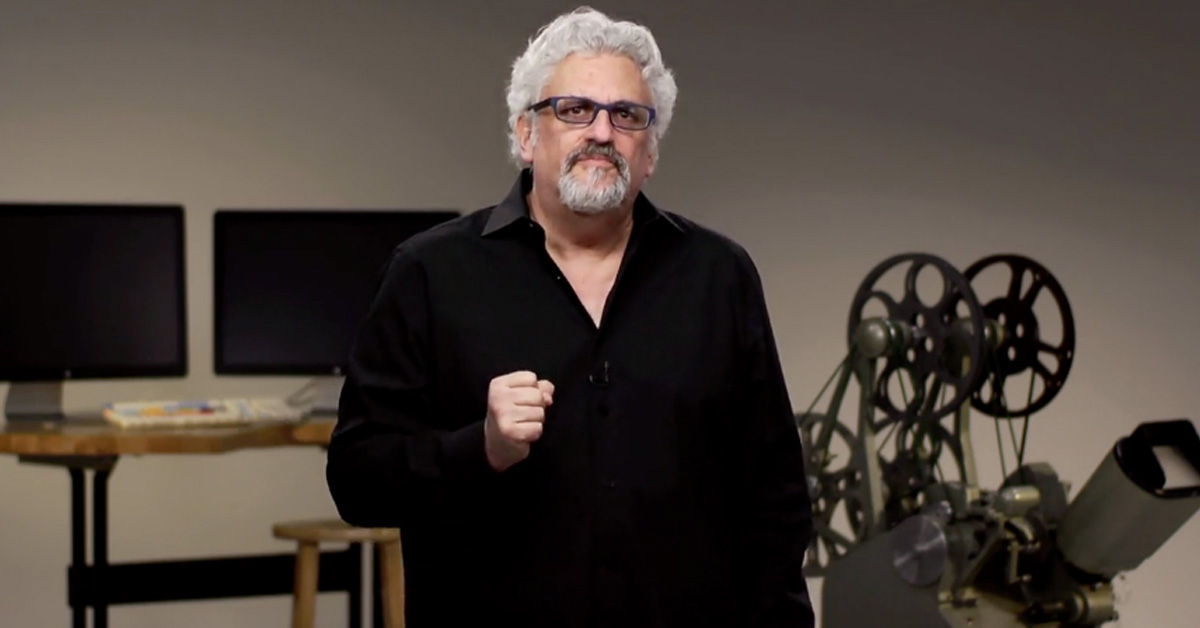
Making It In Hollywood as a “Creative” (What They Don’t Teach You In Film School) | with Norman Hollyn


About Episode
Author’s Note: ‘Tragedy’ doesn’t even begin to describe what it means for our industry to lose Norman Hollyn at the ridiculously young age of 66. He was quite possibly the kindest soul in Hollywood.
I’m asked so often by so many, “What’s the secret to really making it in Hollywood?” And the answer is SO simple: Provide value to others.
Norman proved through his actions, his never-ending kindness, and his generosity that the road to success is paved by simply providing value to others. It’s really that simple. He was a mentor and a friend who will be sorely missed.
The following is an in-depth interview I did with Norman when this program first began that is an absolute manifesto on what it really takes to build a fulfilling career in Hollywood. It has been listened to thousands of times on six continents, and of all my episodes it has received more positive feedback than any other…by far.
Rest In Peace Norman. Know that you left this world making a true impact on the lives of countless people, and your work will continue to make an impact for generations to come.
I will never be able to “lean forward” again without thinking of you. 🙂
Be well my friend.
Zack Arnold
“How can I break into Hollywood or advance in my creative career if there is no set path to follow?” is by far the most common question I receive via e-mail, when I speak at events, or when I teach at USC or online. Whenever someone sends me an email or Facebook message and asks, “Can I buy you coffee and pick your brain?” this is inevitably the big question they seek the answer to.
Unlike doctors or lawyers, the path to being a successful film editor, writer, visual effects artist, animator, actor, or any other creative career is not a linear path, but here’s the secret nobody tells you: There are very specific steps you can follow to be successful, but you have to be willing to put in the time and take action consistently. The key is not discovering the path and following it, the key is learning the proper steps to forge your own unique path.
In this episode I dive deep into what it really takes to break into or advance in the Hollywood post-production industry with none other than USC professor and former head of the editing track, Norman Hollyn. This is a two hour marathon episode so get comfortable. This was one of the most downloaded and shared 2-part episodes of my former podcast, but I thought it beneficial to combined it into a single episode and feature it as part of the Optimize Yourself program so new people just discovering this show wouldn’t have to dig for it because people have told me firsthand this interview was the difference between them landing a job or not landing it. The advice Norman gives is seriously that universal and that powerful, and it can be applied far beyond jobs in post-production.
Episode Highlights
- Develop your skill set and then build your network of people
- Consider looking for work and networking your full time job
- Use online resources, industry magazines, etc
- How to use Facebook and Twitter to help you make connections
- Put yourself out there and make yourself valuable to people
- Make sure you continue to hone your craft and advance your skill set
- Find out what you don’t know and get good feedback!
- Should you take free work?
- People skills and social skills are more important than you think
- Part of advancing in your career is being able to make choices
- Re-evaluating your goals is growth
- Being fiscally responsible will give you more choices and give you the freedom to take work that’s valuable to your career and not necessarily your bank account
- To be happy it’s important to acknowledge that third circle: Personal needs
- Write down your intentions and focus — no matter how many drafts it takes!
About Guest
Norman Hollyn has been described as a “media expert,” a reference to his experience in a wide variety of media types – in both the old and new media worlds. He is the co-producer and co-host of the videocast 2 Reel Guys.
He is a long-time film, television and music editor (HEATHERS, THE COTTON CLUB, SOPHIE’S CHOICE, Oliver Stone’s WILD PALMS), and is a Full Professor and Head of the Editing Track at the University of Southern California’s School of Cinematic Arts. He is an author of nearly 100 articles and his internationally translated book, THE FILM EDITING ROOM HANDBOOK, has just been published in a fourth edition. His previous book, THE LEAN FORWARD MOMENT, also from Peachpit Press/Pearson, has been attracting great reviews worldwide.
He has taught worldwide, including several workshops for the Royal Film Commission in Jordan, and schools in Shanghai and
Beijing, China. He has taught at the Sundance Film Festival, and consults and speaks at major corporations such as Dreamworks Pictures, Pixar Animation, Forbes and the Philadelphia Inquirer. He has worked as an expert witness in legal cases involving the aesthetics or history of editing, and is partner in an Internet development firm.
He can be reached at norman@normanhollyn.com.
Transcript
Zack Arnold: So I’m here today with Norman Hollyn, who really needs no introduction, therefore I’m not going to do an introduction. We’re just going to jump right in.
Norman Hollyn: Wait, so who am I?
Zack Arnold: Yes. Well,
Norman Hollyn: I wonder that myself all the time.
Zack Arnold: Yes. Well, you know, you’re somebody that’s very prominent in the educational world, and you’ve been the former editing track head at USC, and you’ve edited large prominent films for Oliver Stone, you did Heathers, I mean, you’ve done a lot of big iconic films, but the reason that I wanted to bring you on the show today is there are very common questions that I get that I’m sure you get as well, dealing with students and younger people, and I want to give them the roadmap and the place they can come to have those universal questions answered, and that question is, Where do I start? How do I break in? Because I feel like, and it’s not that I feel like this is the truth. There isn’t one roadmap that you can follow if you want to be an editor or a composer or a visual effects artist, whatever the job may be in post production, but especially in editing, it’s just this coveted spot that so many people say I want to do that, but I have no idea where to start, and when I’ve told my story in the past about how I did all these independent projects for years and did trailers and featurettes, and then suddenly, miraculously, overnight, I was on burn notice and started doing TV, that discourages people, because they say, well, that’s an amazing story, but it’s never going to happen to me, and what’s important is that I can take the strategies out of my story, so somebody can say, “Oh, wait, well, I’m not going to have his path, but I can travel the road the way that he did, and I want to distill it down into what I think are the core steps, and if anybody has listened to the past episode that I did with Monica Daniel, that talks about her transition from reality TV to scripted TV. I’m going to warn you in advance, this is not going to be terribly different. There are certainly going to be specific ideas and things we talk about that will be different, but at the end of the day, this is not reinventing the wheel. There’s really basic, simple core concepts that I feel lead to success. In this industry, and that’s what I want to talk about. So, it’s not here’s how to be an editor in scripted television, do x, y, and z. It’s here core concepts that I feel that you can follow. They’re going to lead you to success in whatever it is that you want to do. And I know that you are one of the greatest people to give perspective on this, because you deal with students all day, every day, and you know what they’re learning, and you also know what they’re not learning, so that’s why I feel that you’re going to be such a valuable voice in this.
Norman Hollyn: Well, I hope so. I hope so. One of the things that I will say is that if you ask 20 editors kind of what their path was to getting, you’ll get 20 different stories. So the reality is, is that everybody creates their own path, but there are some very definite things that can help versus hinder you. So, yeah, I think there’s a lot to talk about in terms of this, and it’s, I think, by the way, everybody stop right now, go back and listen to the podcast you did with Monica, and then come back.
Zack Arnold: Yeah, I mean, her story is so inspiring, and I’m such a cheerleader of hers, just to see where she came from and what she’s done to get to where she is in her career already, and where she’s most likely going to be in the next three to five years will be way further ahead if she continues on the track that she is. But you’re right, when you talk to 20 different editors, you’re going to get 20 different stories, and that’s what’s so frustrating and discouraging. And I went through that too, where I am extremely proactive and very ambitious. If anybody that knows me at all will know that I’m very ambitious, very intense. And one of the first things I did when I moved out to LA years ago is I just mailed people letters, I just sent them letters and said, hey, I’m a fan of your work, and I like to know how you do what you do, and all these different things.
Norman Hollyn: That is so quaint, that is so cute,
Zack Arnold: Right? And you know, I may not have to do that anymore. Now you can use Twitter, and you can use Facebook, and we’ll actually talk more about that. Yes.
Norman Hollyn: Well, one thing I want to mention about your story is because yours is one of the 20, if you put 20 people there that you’ve got, but I don’t think it’s a discouraging aspect that there are 20 different ways with 20 different people. I actually think that that’s really quite positive, in that you find your own way to basically say there’s only one way to do it, means the next step after that is going, oh, but I can’t do x, so, so I’ll never get a chance, whereas if you realize there’s x y z a b c d e, then certainly there are things that will work for you as well as things that won’t work for you, so I find it exciting to do that. The one thing that I sort of want to say at the outset, and I think you’re a good example of that, and certainly what Monica did is, you hear all the time that this is a business where luck, it’s all about luck, you got to be the right place at the right time, there has to be a job that just opened up, and all, and while that’s true, what I firmly, firmly believe is what you did, what Monica did, what I did. What almost every story has in common is everybody worked really hard to put themselves in a place where luck could work on them.
Zack Arnold: Yeah,
Norman Hollyn: And that’s, and that’s got to be conscious, and it has to be thought out ahead of time, I guess. At the same thing, but yeah, you can’t just, hey, I’ll wait for luck to work on me, that is nonsense.
Zack Arnold: Yeah, I could not agree with that more. And I actually did a podcast, it was a while ago now, it was probably a couple years ago before I started Fitness and Post, but Canaan, Alan Bell, and I all did a podcast all about the concept of what it means to be lucky, and how there really is no such thing, and I’m actually going to dig up a link to that, so I can make sure that other people can find it.
Norman Hollyn: Totally, do that. Saying that it’s about luck is probably one of the easiest ways to not do anything.
Zack Arnold: Well, not only that, but it’s such an easy excuse to give up and not do anything, because I believe that luck is when hard work meets opportunity, and that’s exactly basically what you just said. Where if somebody looks at quote unquote my overnight success, they say, “Oh, wow, he’s still really young and really doesn’t have that many TV credits, but he’s on Empire. Boy, what a lucky guy. He’s so lucky to be in that position. But if I put you in my position and walked you through every day of the last 15 years of my journey, from the first day that I sat in front of an avid to the fact that I’m now working on Empire, you’d say, “Oh, okay, so that was actually kind of tough, right? That was actually kind of hard. And now I get it, but all they see is the overnight success. But in one thing I want to say again, from the outset, is part of the reason I brought you on the show is that I knew you’re going to disagree with me, and you’ve already done that once, and I love that, because I said that having all these different paths is discouraging, and you’re saying it’s exciting, and you’re right. I think we’re both right to a certain extent. It’s just a matter of how you approach it, and that’s kind of the first thing that I want to get into, is I want to really distill this down into what is what are the core steps, right, like you. He has a different story. He has a different story. He has a different story, but what I really pride myself in being able to do is extract meaning out of things that have no meaning, which is essentially what we do as editors, is we have all this random crap that nobody knows how to put together, and then you find the meaning in it. And I enjoy doing that with everything, not just with editing.
Norman Hollyn: Yeah, I think that that’s great. I love what you just said. I love it, because one of the things that I often say in my editing classes, in fact, I even said it to a director the other, I’m about to start to edit a feature, and so the director and I were talking about this, and one thing I believe is that as editors we have to be conscious of the things that the audience is not conscious of, and I think the same is true for when we come to a how do I break in, how do I get the job that I want. You have to be conscious of the things that sort of appear unconscious or subconscious, ultimately. So, yeah, purpose, I think, is the most important aspect here that I think we should probably talk about,
Zack Arnold: Absolutely. And that is exactly the place that I wanted to start, is if you’re thinking, well, am I supposed to have my resume? Should I be sending it to people? Should I be making phone calls? Should I be going to events? Like, what are all these things I need to be doing? What you’ve done is, you’ve got yourself into tactical hell. You’re trying to figure out what are all these tactics that I need to be doing. Well, Zack Arnold said that he got his job on burn notice on Facebook, so I should be Facebook stalking everybody. Side note, don’t Facebook stalk people,
Norman Hollyn: Especially you, now,
Zack Arnold: Especially me, right? Yeah, but no, that’s actually not what I’m saying at all. But the first place that I feel that people really need to settle into and spend time, and this is what I tell every either still college student or recent graduate that will reach out to me. I’ll say, before you do anything, you need to start focusing on your intention. You need to actually figure out what is it that you want to do, and that freaks a lot of people out, because they say, “Well, I don’t know what I want to do, and the great news is you don’t have to have the answer, but you need to have an answer, and the reason that I say this is that if you decide that, oh, well, I want to be Zack Arnold, and I want to edit Empire five years from now, and you just graduated from college, it’s not going to happen, that’s not a realistic goal, but if you’re saying that’s where you want to be eventually, that’s great, but if you’re just saying I will do anything, I just want to edit what will most likely happen, and this comes from me speaking to a lot of people that I’ve seen this happen to, is they get a job, it doesn’t matter what it is, and they’re at the bottom, and they’re either in the vault or they’re logging tapes at night, or they’re, I guess, nobody digitizes anymore, I just really dated myself saying that, because I remember people that were like popping in tapes and digitizing, and nobody’s really doing that, but there are still loggers that are taking all the cards and organizing them and naming clips and all that, but you’re going to start somewhere, and you’re thinking, well, it’s just a starter job, it just, it gets me an A door, but what you have to realize is that if you’re really, really good at what you do, you’re going to start climbing a ladder, and if you start climbing a ladder that you don’t want to be on, when you get to the top of that ladder, you don’t want to jump off it either, but you’re not on the right one.
Norman Hollyn: Well, let’s, let’s actually step back for one second before we talk about the ladder. Let’s climbing that ladder, let’s talk about what wall we put the ladder against first.
Zack Arnold: Ooh, that’s even better analogy.
Norman Hollyn: Well, I’m just following your lead here, so that for me I think, and there were certain tricks that I think that can help everybody focus and do this, because I think your idea about focusing your mind, focusing your mindset is really, really very key here. So one of the things that I do when I talk that in my classes, or in other talks that I’ll give about looking for a job is one of the first things to do is to figure out where your skills are and where they’re not and what kind of things people are looking for, and what I like to do, I actually draw three circles, sort of overlap like a Venn diagram, and that one of the circles is the skills that you have, and I think this is the homework that you must do in order to prepare yourself for even putting a resume together, for putting a reel together. You can’t do that without doing this homework first. So you have a circle, which is the skills that you have, so go through every project you’ve ever worked on, and say, what did I do there? And there are things that I guarantee you, you did that you don’t even realize are skills. So assistant editors, oh, I sunk dailies. It’s like, yeah, okay, you sunk dailies, but from what cameras, and how many different cameras, and what were the problems in syncing those dailies? Oh God, there were no slates on it. Yes, so you sunk dailies on difficult projects. Okay, there’s a skill you have, and you go down through every single one of my students. Often work off of an ISA shared storage, because we, we do a lot of work. Work on Avid, and they just don’t think a second thing about, and I say, “Do you know how many people don’t do that in school? So, for you, that’s a skill you have you don’t even know you have. And I think the same is true for all students, or all people who haven’t even been students, but are looking to start. You have skills you don’t know, you speak Spanish, and the next person doesn’t. You have a background in sciences, and someone else doesn’t. Those are your skills. You were responsible in a previous job for on-time delivery of something that’s a skill. Working with people, that’s a skill. So, getting specific about what those skills are, are the first circle.
Zack Arnold: Yeah, and I think that’s a really, really great point that most people will come out of film school or come out of just high school and not having gone to college or whatever it is, wanting to get into the business, or they’re 45 years old and they decided, I hate being a lawyer and I want to get into film. So you’ve seen a couple of students like that. I’ve had a couple of students at USC that were mid to late 40s, worked, you know, medical field or some other field, and they’re like, I just want to be creative, I just hate what I’ve been doing for 20 years, and I want to have fun, and they’re like, well, I don’t have any skills, right? Or even students will come out of USC and feel like they don’t have certain skills, or whatever it is. I know that it’s very common for students coming out of the University of Michigan to think, well, I don’t have any skills, I haven’t been properly trained for working in the industry, and I will be the first to admit I thought the exact same thing, because to me, when I was in school, it was all about, well, show me how to use Avid, show me how to use Final Cut, like I want to learn how to press the buttons, and I want to know how do I import, how do I use After Effects, and that’s what’s going to get me work right,
Norman Hollyn: And that is the bogus part about this, that like skills are sometimes equated with software and hardware, and while that is part of it, the basic thing, and you’ve seen this certainly in the last 10 years, that what was a well-established, never going anywhere, piece of hardware in five years is gone. So, knowing a piece of hardware is the least of what it is. Knowing how to adapt to new hardware, new software, that’s a much bigger and more important skill in the 20-first century. We’ve got so the fact that you’ve transitioned from, I mean, like I did. I transitioned from 35 millimeter film to Light Works to EdiFlex to Avid to Final Cut, and done all of that. It’s not the tool, it’s that I’m flexible enough to go with whatever tool makes sense.
Zack Arnold: Yeah, and I think the biggest tool that I walked away with from the University of Michigan, and when I go back, and I’ll speak every one or two years, and just do like an assembly, and talk to people about what it’s like to get into the business, and they all say the same thing. Well, all I do is watch Potemkin, and, and write papers, and God, it’s like I just want to touch the equipment, and I say to them, listen, I went through the exact same thing, I had the same angst, I was very frustrated, I was an autodidact where I would just buy books and I would learn After Effects and learn Final Cut, and I knew them better than my professors by my senior year, because that’s all I did was learn the technology, because there were no courses for it. But what I discovered very, very quickly, and I feel like we’ve, we’ve veered kind of into the second level of this conversation, when just more about building a skill set, but that’s fine, we can always edit it, but what I found is that
Norman Hollyn: What’s that,
Zack Arnold: But when I got out into the world, I knew a thing or two about Final Cut Pro, which is obviously the old version, because that was what I’d spend most of my time on, and I knew Avid, okay, but I was working with other people that went to schools where they knew so much more about the technology, and I was like, oh my god, I just spent four years at the University of Michigan, and I feel like I’m so far behind, but then I found that I started to move ahead very, very quickly because of my knowledge of story and film theory, and that is a skill set that is taken.
Norman Hollyn: So glad you said that, because one of the things I just told a prospective student at USC today, when she came into to talk to me, was I am super proud that we have no classes whatsoever at USC that say how to use Final Cut, how to use Avid, how to use Adobe. All of our classes are story-centered. All of our classes are about, you might even call them soft skills, though I don’t call them that, the skills of I can tell your story better than the next person, and while that, while we certainly teach the tools, it’s got to be in service of something else, because that’s what every single studio head who’s spoken about this says, that what’s a value to them are people who know how to shape stories better than the next person, as opposed to someone who knows how to use the tool, use the tool better than the next person. So you’re absolutely right,
Zack Arnold: And there’s no question that’s a skill set. What I want to do is go backwards a little bit, because you and I always have this tendency to just jump in and get so. Overzealous, but
Norman Hollyn: And I haven’t done the other two circles yet, so
Zack Arnold: I know, right?
Norman Hollyn: Right,
Zack Arnold: So we need to go back to your, your circles, but kind of get back into the conversation about mindset and purpose and intention, and I think that’s where your next circles go. So, let’s go back to that,
Norman Hollyn: That’s where I want to head with this too, because I think that’s super important. So, the second circle that overlaps more or less with the first circle is the skills that an employer might be looking for, right. So, if they are looking for, they have a film in which half of it is in Spanish, they may be looking for someone who speaks Spanish, right. So, oh, wow, I speak Spanish, so that’s cool. So, there’s an overlap, and the reality is, is if you have those two circles and there’s just the teeniest, tiniest overlap, then you’re looking for the wrong jobs, because the first thing you want to do is to really figure out the path you want to go on, as you said, right, so you’re either looking for the wrong jobs, or you haven’t developed the skills to go for the jobs that you are looking for, and then here’s the third one, and I know you’ll love this one. Zack is the third circle, and this is something that my wife, who’s a career consultant, taught me. The third circle is what your own personal needs are, so if your personal needs are, I need to be home at 9o’clock because I have this family thing, and even to say 9o’clock is absurd, that that’s like early, right, but I need to have a job with a health plan because I have certain health issues, or I need to have a job in which I don’t travel a lot, because that’s, I don’t like traveling, or whatever it is. What your needs are, you have to take that into account, because if you are not happy in where you are moving, you will not do a good job. That job will not be for you. So, when you combine those three things, and by the way, I always suggest re-looking at those three things in a detailed way every six months or so, because your life changes.
Zack Arnold: Well, and what I really want to add to that, which is going to feed perfectly into where I wanted to go with this first part of the conversation, is you’re talking very much about needs that intersect with the job, which is health care or family or free time or my health is a priority, whatever it is, but I think what also absolutely has to belong in that circle goes back to the very first question, which is, what is your focus and attention for what you want to do, and if you’re saying, like, I think the easiest way for me to do this, rather than just kind of talk about it, is to give my own example. I didn’t know about the three circles, but when I think back to what I did when I first graduated, I pretty much did a very similar mindset, where even before I graduated, I said, “All right, what I really want to do is I want to edit feature films, I want to do storytelling, I want to do long form narrative, although I didn’t know that’s what it was called at the time, but now looking back, I wanted to be a long-form narrative editor and do feature films, so I was saying to myself, I’m not going to take a job as a logger assistant at MTV, because that’s not going to get me anywhere, I’m not going to take a job. There really wasn’t a lot of reality back then, which, once again, dating myself, people are like, oh my god, there’s a time without reality television. It actually wasn’t that long ago.
Norman Hollyn: Seems like a long time ago,
Zack Arnold: But I knew that what I wanted was to eventually work on major feature films, so I wasn’t even looking at jobs that didn’t get me towards that end, and that didn’t mean that unless the job was an assistant editor on a studio film, I wouldn’t even acknowledge it, but the perfect example is my first job was an assistant editor at a trailer house, and you would say, well, what does editing trailers have to do with long form features? Well, I’m learning how to tell a story, I’m learning how to do it in a much shorter period of time, which is actually a much harder skill set to develop, and I get to work with rough cuts of feature films all day long, and that to me was literally, I was Scrooge McDuck swimming in his money when I started seeing rough cuts of major feature films. I’m like, oh my god, I get to reverse engineer a movie and see how they put it together. This is so cool.
Norman Hollyn: A lot to learn there,
Zack Arnold: So much to learn from seeing rough cuts and then seeing them develop, I learned so much just by being an assistant editor, and then an editor doing trailers, because I watched the process of long form storytelling. So, was I in exactly the job that was the exact right ladder? No, but my intention was very, very clear that I wanted to develop the knowledge and skills to be able to work on long form projects, and because that intention was so clear, once you start to put it out there, things start to come to you, because you’re attracting that type of energy, and within two years of editing a trailer through a random connection of a connection, somebody was looking for somebody that could cut two sample scenes for a film that needed more financing, because they were, they had shot half the movie and ran out. Of money, but they also needed a trailer to go with it, so I said, Well, hey, I’m a professional trailer editor, I just did the campaign for Passion of the Christ, I’m this is what I do professionally for a living, and like, oh, that’s great, well, let us give you one scene, and we’ll kind of do it as a test, and if it works, then we’ll have you do the two main scenes of the film and do the trailer for us, and within a week, they said, “Oh my god, like this is perfect. This is exactly what we want. We love the scenes. We want you to cut the whole film. This is two years out of school, but because my intention was clear, that was the path that I was on. And had I decided to take a higher paying job, maybe even editing – like, perfect example would be there was a couple of PBS shows that I worked on on the side where I was just working on those to gain extra money. There were more opportunities to do that type of work, and I turned it down because it wasn’t on the correct path or on the right ladder for me to climb. But now that I had this feature film, I had to make the decision. Well, I have this really good paying trailer job, or I can make $500 a week flat fee to edit an independent feature, and I walked into my boss, and I said, “This is my 30 day notice, I’m out, this is what I want to do for a living, and I don’t want to wake up in 10 years having a mortgage and two young kids and working at a job that I hate.
Norman Hollyn: Right? So, you just said, by the way, you just said about four important things in my mind, right? So, three or four important things, and then one of which that I think would be really good to kind of highlight to focus on is how do you know what you want to do, and there’s a guy who I often bring into my class, my advanced editing class, to talk, because these are students about to leave school, a guy named Stephen Mead, and he knows nothing about film, but what he does know, he says, is basically how to get to anybody, because he is organized. He has something called the tornado technique, in which he helps people to identify who to go to, who to find who could be helpful to entrepreneurs or helpful to whatever, but key to there is to be specific. So he’ll ask the students, what do you want to do? I want to direct, that’s it, that’s all you want to tell me. Yeah, I want to direct. Well, what kinds of things do you want to direct? He’ll say to them, well, I guess feature films. What kind of feature films do you want to do? Do you want to do low-budget independent ones? Do you want to do like what’s the subject matter? What types of things? So the idea of at least for today getting some specificity in there helps you to focus your mind, and then when you combine that with what your skills are, then what I think is, is the next step, and I know this is what you did as sort of next steps, is to figure out where you, where you think you’d like to be in five years, let’s say, but that’s, but you can’t do anything with that, that’s still scary, that’s ridiculous. Five years, okay? I want to be editing studio feature films in five years, right? Well, okay, so where do you need to be in one year in order to get to that place in five years? Well, I guess I should be editing some low budget things, or maybe I should be assisting on something, or maybe I should be a post PA, and okay, but that’s still kind of hard. So, what do I need to be doing in six months in order to get to that one year, in order to get to that five years from now? And now you can deal with that. I need to meet 20 people who are assistant editors on films that I like, so that establishes, and by the way, you relook at this constantly. You look at it every six months, because any number of those steps might change. But where are you? So, okay, your choice was to, you were doing a system at a trailer house, that to me is an ideal thing for you, but it, but it doesn’t mean that someone else’s path, while they decided I want to be a post PA on something else, is wrong or incorrect for them, and it doesn’t mean that they won’t be able to marshal the energy in the direction to take that job and move it in the direction they want, but you have to know the direction you want, you just can’t let luck work on you.
Zack Arnold: Absolutely, and I think that one of the daunting things about that is the same thing that all college students go through, is, “Oh my god, I have to pick a major now, right? So, you’re thinking, “Oh my god, I have to pick a path, and I think it’s very important to reiterate again that it doesn’t have to be the path for 10 years, 15 years, or 30 years. Those days are gone. You don’t start at the bottom of a company in the mail room and then end up the CEO in 30 years. That world doesn’t exist anymore. So, the path is much more malleable, and I’ll continue with my story to explain how malleable it can be, because first of all, I was told when I was a trailer editor, and I was, I always make my. Intentions very clear to people that I work with. This is always there’s a little bit of a tangent, but whenever an assistant editor will come up to me and say, How do I break out from an assistant to being an editor, and I’m actually planning a whole show about this sometime in the future, but I always say, you have to be a great assistant first, and then you have to make it very clear to people you don’t want to be an assistant and you want to cut, because if you’re just a great assistant, and you don’t make your intentions clear. Nobody is ever going to take the initiative to move you up, but if you all you do is make your intention clear and you suck at what you do, nobody’s going to want to give you the opportunity, right? So, you have to make both of those things clear. But I always made my intention clear. I want to work on features, I want to cut long form, I don’t want to be a trailer editor for the next 15 years, and everybody told me the same thing. Well, short form people don’t break into long form, they’re two different skill sets, and you can’t do them. So then, when I started doing features, all of a sudden people were saying, oh wait, you do trailers and features, well, that’s a really unique skill set. So then I would end up doing all of the marketing work for all of the independent films that I was working on, so on my reel or on my resume I would say trailer and feature, and that would get people’s attention, and because of that I started moving up quickly, and then I hit what I thought was going to be pay dirt, where I’m like, yes, I have succeeded, I’ve done it, I’m there, and I know this is a story you’ve heard, and I’ve told it on other podcasts, but I don’t think I’ve actually told a lot in this one, but I was very, very close in the running to edit 500 days of summer, like really close, like to the point where I was meeting with studio heads to like get the workflow in order, and really felt like this was going to happen, and then all of a sudden they found Alan Bell, and Alan Bell is a close friend of mine, and the guy is a genius, and I’m going to make it very clear that he deserves this job, I don’t think I should have gotten it. Everything happened the way that it was supposed to, but that crushed me when I thought I was so close to actually achieving my dream and getting that job, and then somebody else got it, and it really, really hit me hard. But I started to think, all right, well, what is it that’s out there? What can I do now? How can I proceed forwards? And I started making the realization that there weren’t a lot of films being made anymore that I wanted to edit, because I was really into the 500 days of summer type films that were coming out five or 10 years ago. There’s this great resurgence of independent film, and like really good, decent budget independent films that you can make a living editing. Nowadays, you’re either editing something with a budget of $100,000 or $100 million so the middle ground is gone, and I started to see that coming, and I said, all right, even if I do find another feature job, I’m looking at all the things that are out there, most of which I probably can’t get anyway, but I kind of don’t want to do that, and I said, Well, what is it that I want to do? Well, what I do all day long when I have free time is I watch serialized TV shows. At the time, I loved 24 I was totally addicted to it. I was watching The Sopranos. I think Breaking Bad, maybe.. no, I don’t think Breaking Bad had come out yet, but I was just watching all of these great dramatic TV shows, and I said, I love doing character dramas, that’s what I want to do, and there aren’t a lot of movies out there. I want to work in television, and everybody started telling me the same thing. Well, nobody that works in features works in TV, and vice versa, they don’t cross over their different skill sets, and I said I don’t accept that. So I made my intention very clear that I wanted to work in television, and one of the first things I did is I started reaching out to people that could get me connections in television. One of them happened to be the co-producer of 24 and I sat down with him for a day and got to do a set visit and got to visit all the editors and talk to the assistants and just get a sense of here’s how a TV show works at a high network level, and I said, yes, this is exactly what I want, and it took me a while to get there, but it was setting my intention, which had already changed and veered off quite a bit from the intention I had set just a few years before, but once I had said it, I started moving towards it, and that’s why I want to make sure people understand that it’s not like you’re stuck on the one thing you choose, just don’t go out without having some form of focus or being specific, because then you’re going to get stuck somewhere where you’re climbing a ladder and saying, I just don’t want to be here at all, because I have so many friends that are now in a place where, like, they’re working at a trailer job where they and I worked together 10 years ago, they’re saying, God, I wish I had just quit and taken an independent feature like you did, because I would love to be doing what you’re doing now, but I played the long game, not the short game.
Norman Hollyn: Well, so there’s absolutely a couple of things in there, but one thing that I think that you just did is give your own personal spin, or the story into what, in essence, was exactly what I said is, you kind of figure out a five year thing, but then figure out a one year thing, and then a six month thing, and then revisit it periodically. Say what you’re doing, that’s that’s almost precisely what you did, and you figured out what you needed to do in order to get to that six month, which would lead you to a one year, which would lead you to the five year. And by the way, as a subset to that, I will say that anytime anybody says people don’t make this, people don’t do this, it’s impossible, that’s what you call bs, and you just kind of, sir, that’s not helpful, what is helpful is it is saying, in order to do this transition, what do you need to do in order to get there? So everything needs to be proactive, as opposed to cut off the knees, and that I do think that one of the things that that you’re talking about with your own story there is that at every step along the way you kept on reevaluating things and your own personal thing was, you were re, you were reevaluating the market, you were reevaluating what your own personal desires were in relationship to those markets, which, by the way, are those three circles, and then you were creating an action plan based on that, and all of those steps, I think are super important in order to move forward. You need to kind of be realistic. This is, this is what I mean when I was saying Stephen Mead’s tornado technique, where you decided it’s not just I want to edit something for a studio, it was I want to edit something that’s character driven, and then you go, okay, so what is that? And then you found the what is that, the answer to the what is it. So, by asking yourself some deep questions about those things, you really got to test what sort of things you would be comfortable doing and what sort of things you would not going to be comfortable doing that’s that third circle, and to me that’s super important.
Zack Arnold: Yeah, and when I look back at the path that I’ve had so far, this happens all the time, where they’ll look me up on IMDB and they’ll say, How in the world did you get on Empire? This doesn’t make any sense at all. I’ve only been on two TV shows, and they look at all the independent films, they’re like, ‘Wait a second, you worked on A Dennis the Menace Christmas, which was straight to DVD for Warner Brothers. You have a couple of indie films that never even got distribution, like, how does this work? But I was always, again, very intentional, that to me that was a learning process. It was me developing the skill set of being a storyteller, and I made a very conscious decision very early in my career where I said that the two general paths that I can see to get where I want are number one being an assistant for a decade and maybe working on bigger films and going the assistant route and then eventually you get discovered and get noticed or I can just cut and I that’s the decision I made very clearly is that I was just going to edit, but that meant that I didn’t get paid any money for a really, really, really long time. But to me it was the education that I was getting, and it was the networking that I was building, and it was the connections that I got because of that process, because I was proving to people that I could be an editor. Now I’m 35 years old, but I have 15 years of editing credits, and there are very few people that are my age that have a 15 year resume where all it says is editor, editor, editor, editor, editor, because most people, they get to my age and that’s where they start to make the transition from assistant to editing, and all I have are editing credits, even though most of them completely and totally suck. It doesn’t matter. I was cutting story, I was solving problems, and there’s nothing that makes you a better editor than editing crap. You want to be great at storytelling, edit horribly directed movies, that will make you a good editor. And I did that for years.
Norman Hollyn: So, here’s, I think, that that’s a real viable path. There’s other viable paths also, and let’s, and let’s also remember that the goal of the high-end dramatic storytelling is not the only goal out there. So, some people, and this happens all the time at USC, because we have a very strong documentary department, some people want to do narratives in a documentary form rather than in a fiction form. Other people are super, super interested in fashion video because that’s where they live as people, and I don’t actually put value judgments on any of that. The only value judgment I put on any of those things are when you say you’re interested in something, but that’s not really what you’re interested, because you’re too embarrassed or not aware enough to say no, I’m really interested in doing wedding and event videos, because no one here at school likes them, so I just think that you determine paths, you determine things, and you try them out, you know what, maybe you change your mind in 612, 1824, months, who cares, it’s like it’s okay to do that, I know that I’ve moved through so many different types of films and other projects that I’ve done in my life, so. So, and I think that’s made me, to a large degree, a better editor, because I’ve done many, many different things. So, I just think it needs some aspect of being self-aware, and as you put it, being brave. So, those are two large things, and when you figure out the plan, so to speak, when you kind of figure out the circles, then comes the reality of how do I get there. So I need to meet 20 assists and editors between now and six months from now, and after each of those meetings, I need to get two additional names and meet them for coffee or whatever you want to do, and by the way, implicit in what I just said also has to do with being realistic about who the people are who you should be meeting and who you can meet if you like the types of TV that Vince Gilligan does and his editors, you know, maybe you want to meet Kelly Dixon, but maybe you want to meet Kelly’s assistant first, if your path is going to be assistant in moving up, because those are the people who are doing the hiring, so really target those 20 people, those 30 people, and expand your circle in that way, which sort of leads into a discussion about how you maneuver through this in a social way.
Zack Arnold: Right, I will say that it’s a really good thing that I didn’t listen to you or this podcast 15 years ago, because your advice is spot on, which is that you need to be realistic about who to reach out to. I’m going to give you a short list of some of the people that I reached out to: Dodie Dorn, Walter Murch, Pietro Scalia, Hughes Winborn, Thelma Schoonmaker, and Coates. I know there’s a few others, but those are the big ones, and you really don’t get much bigger legends in our industry than those names. And just for a point of reference, because of the outreach that I did, and this was complete cold outreach, writing letters, writing – it wasn’t even emails, really, it was literally handwritten letters. I’ve been very good friends with Dodie Dorn for 13 years now. I’m in contact with Walter Murch, and have been in the past. I had lunch with Ann Coates, and I got to sit in for an afternoon in her edit suite. I did not hear back from Thelma or Pietro, but I very much still intend to make that connection eventually. But you’re right, you do have to have some sense of being realistic. It’s just something I’ve never been good at.
Norman Hollyn: Well, you know, I want to say that it doesn’t mean you don’t reach out to those people, because one of the things that I talk to my students about is determining what your network is, and at one point I was looking to change my agent, and one of the agents who I interviewed gave me a homework assignment and said, let’s say that I told you that so and so was directing a film, you go home now and come with a list of all the people who you know who could get you to that director, and what he was really trying to do is figure out how clever I was about building a network, so some of the valid answers there are, oh, you know what, my daughter plays in the same softball league as so and so’s son, you know, my dentist also treats so and so, so if your dentist treats Michael Kahn, and you want to meet Michael Kahn, maybe that’s an entree, but you know Michael’s going to kick you down to his assistant at a certain point, so whatever device you’d need to get to the people who could really relate to what you want and really relate to where you are, that’s what I’m talking about. So maybe you find out who the assistants are in Breaking Bad, and that’s who you go to, but maybe if you have a better access to Kelly Dixon, so you try there and let her kick you down to the assistant.
Zack Arnold: It’s actually funny that you brought up getting kicked down to Michael Khan’s assistant, because I forgot to add a name to the list of people I’ve reached out to and had lunch with. Billy Goldberg is another one of the people that I reached out to, was able to get to him, and I ended up spending an afternoon in his edit suite, and for those that don’t know, he did zero dirt 30 and won the Oscar for Argo, and he’s a pretty big name in editing, and these are the types of people that I had reached out to, but I also was reaching out to as many people as possible, and this we’ve now completely and firmly dove in, or dived, whatever the word is, I’m an editor, and I’m, you know, not so good with the grammar,
Norman Hollyn: Deep down
Zack Arnold: We’re now we’re firmly into number two. Number one of the skill sets we’re talking about that we’re distilling out of this process is setting an intention and purpose and finding your direction. The second skill set is you have to build a network of people, because there’s nothing that drives me more crazy than the people that say, oh, it’s all about. Luck and then it’s the same people that say it’s all about who you know. Well, guess what? Developing a network is a skill set no different than going on lynda.com and learning how to use Adobe Premiere. It’s just something that people don’t feel as a skill set. It’s just either given to them or it’s not given to them.
Norman Hollyn: It is such an important skill set. You’re absolutely right.
Zack Arnold: I drove across the country 2500 miles. Six days after I graduated from college, I had one college friend that had just moved two months before. I slept on his floor in his hallway for two weeks, and I had zero contacts, but I made it a full-time job to get to know people, so they knew me. Because if people don’t know who you are, you’re never going to make it,
Norman Hollyn: So what that leads to is I think it’s the absolute fact that if you graduate and you’re looking for work that is your job for a while, so it may not pay some of the bills, so maybe you have to do something else at the same time, but the people who are most successful at getting something that they like relatively, I won’t say easily or quickly, but that relative to other people are the ones who consider it a job looking for work, and that’s what they do. They start before they graduate, they start before they’re in desperate need, they spend four to five hours a day looking at all the websites, reading the Editors Guild magazine, the Ace magazine, looking for names of assistant editors, looking for all the names, scouring IMDB, saying I like these shows just like you did. You identified the shows you liked and the people who worked on them. So these are the kinds of things, so let’s say you like doing commercials, finding out who works on them, maybe a different set of resources, but that’s your job, so you’re going to spend five, six hours a day combing Post magazine and different online resources to find out who edited this and who was the assistant on it, and trying to figure out how to get in touch with them, so that’s your job. And if you can do that, and say, in six months I’m going to meet these 20 people, and then you work hard to meet those 20 people, and then once again ask for at least two references or two additional people to contact with each of those 20, you will build that network, that’s one of the important ways of doing it, in addition to all the stuff that I never had to do when I was coming up, because back then we editors stayed in our small rooms in our buildings, and if we were good at what we did, we gradually moved up. Those days are gone.
Zack Arnold: Oh yeah, absolutely. And what it’s funny that you brought up IMDB, because I just had all of these crazy mental flashbacks, because this isn’t something I do anymore, but IMDB was like a video game to me, where I was literally unemployed, and saying I don’t even know where my next job is coming from, and there were times where I wasn’t sure that I was going to be able to cover my basic living expenses, but I was spending $100 a year on IMDb Pro, and I would just make connections all day long. I would
Norman Hollyn: Probably, one of the best investments.
Zack Arnold: Oh, absolutely, but I would just research over and over. I would say, oh, there’s a project that’s, you know, available. I was, I subscribed to Below the Line, and I’ve subscribed to, like, three or four other job sites where they would just send you emails every day with all the films that were in production or pre-production, looking for crew, and it’s almost impossible to find editing work that way, just to, as an aside, because they’re really just looking for crew members, and it’s very hard to cold submit to try and get editing work, because usually that happens through a director or producer, and not these crew call services, but I was spending money on all of them, and I would just start cross-referencing everything and saying, “All right, well, I know this person, and this person’s on that show, and this person knows them, and oh, they’re connected to this project. And the great thing about IMDB Pro, and I don’t know if it still does this, I’m assuming it does, but you can click on any project, and it will give you a list of people that are connected and say you worked with this person in this project, or you worked with this person who worked with this person who worked on this project, and it now does the work for you, and I would just create all of these matrixes of like who are all the people that I can contact and reach out to, and it is a huge job, and it is just painstaking and a really thankless job until you make that one random connection that gets you to another random connection, and then the seed is planted, and all of a sudden the tree starts to grow. And when I was doing all of this, and again, it just pains me to say this, there was no Twitter and no Facebook. They hadn’t really come about yet. Yes, they were invented. I know for anybody out there, oh, they existed, but they weren’t in the mainstream, and nobody used them, so you couldn’t connect. It is so infinitely easier to reach out to people that you admire or you want to connect with than it was 10 years ago, because all you really had was email, and people’s email addresses aren’t public, but with Twitter and Facebook they kind of are, because you can just go. And find them and send them a message, and that’s how I found burn notice, is Facebook had come out and my wife had showed it to me, it’s like, oh, look, you can post a picture and all this, and I’m like, I would never use that, like, there’s no way, I swear, I will never ever be on Facebook, and anybody that knows me now knows how pretty ridiculous that is, because I’m a social media whore, but I said I was never going to be on Facebook, but then I started to think about it, and I said, “Wait a second, I’m not going to worry about doing this to post pictures of going out with my friends or, you know, sending stuff to my mom. I’m going to see if I can use this as a networking tool. And that was where I started to make the connections that started to break me into the bigger jobs, and that’s how I ended up getting the job on burn notice was through Facebook, but those are the tools that people really need to be looking at. But if you’re somebody that’s a recent graduate, saying, well, how is Twitter going to help me get a job, it’s probably not going to get you a job, but it’s going to build you a connection with one person. And let’s say you send somebody four or five Twitter messages, and all of a sudden you meet them in an event, and you walk up to them afterwards, and, like, hey, you know, my name is Chris, right? So, my name is Chris, and you know, I’ve been tweeting you, and you know, big admire your work, and they’re like, oh yeah, no, I think I remember seeing your face in a couple of tweets. Hey, how are you? Right, that connection is already made. Now you’re in their psyche, and they’re thinking, well, this isn’t just, you know, some guy that’s trying to get something from me, this is a relationship that I can build, and I can help them out. That’s where it starts to grow, but it’s a very, very long process, but it can very easily be done if you’re patient and you know how to do it the right way.
Norman Hollyn: So, you said something I think that’s really important, which is I don’t want anything from you, and listen, everybody knows that you make connections in this business, and you hope that they lead to something, right? You hope that they do. You end up work, but, like, I almost never get work from expected places. You get it from unexpected places, and that’s because two people who you knew separately meet, and someone says, ‘Hey, you know, I’m producing something, and I’m looking for an editor. Oh, I just was talking with Norman the other day, and so it’s the web, and I don’t mean that in the internet sort of way. It’s kind of the web of connections that you build. It’s actually one of the things that I think is one of the most valuable aspects of a film school, is it? It creates a group of people who you know you can trust, because honestly, making a movie is so bloody hard. Making any project like this is so bloody hard that what you want are people who you know you’re going to be able to work with, so you’re trying to build that trust, and if you work with them before, that’s the best way. So, working at film school, hey, I’m not an idiot, I got things done for you, and we really enjoyed working together. Yeah, that’s true. I did. They’re going to remember you, so in the absence of that, what you’re looking to do is figure out ways that you can become valuable without, hey, I’ll help you on A, B, and C, I’ll help you with something, and I’m not asking for anything in return. Oh, that person was valuable for me, whether that’s I’m looking for a one month apartment to stay somewhere, or you helped me with a bar mitzvah video, or you helped organize footage that came in, whatever it is, you become valuable to someone, and then they remember that, and if you have enough of those connections, if four people think that, and two of them meet, then you’ve got a job coming, you’ve got a job offer. So it really is extending the circle of people who know they can trust you, and that’s done in a million different ways, and you’ll figure out your own ways.
Zack Arnold: Yeah, the key component is that you have to put yourself out there first, or people aren’t going to know that that opportunity is available. Absolutely, my favorite story of all time, and this is a story that involves me, so maybe that’s why it’s my favorite story. I don’t know, but I just.. there’s something so inspirational about this story. It must have been two or three years ago now. I was at Lassie Pug, the Los Angeles Creative Pro user group, and Michael Horton does this great thing where he has this break where he asks people to come up if they want to talk about a project or they want to mention that they’re looking for work, whatever it is, he gets the announcement, yeah, the thank you, the announcements, and they go up and they’ll talk about whatever it is that’s going on, and what usually happens, and this to me is the wrong way to do it. Is people will stand up in there and say, ‘Hey, my name is Joe. You know, been, you know, having some trouble for a while, but I’m looking for work. So, if anybody out there has got any work, let me know, right? Nobody’s going to contact you or give you work because you’re not being specific, and it’s almost like standing on a stage in front. A bunch of women saying, hey, so I haven’t had a date for a while. If anybody’s out there looking for a date, I could really use one, like you reek of desperation. But if you are specific and you are intentional and you’re motivated, people will respond. So two years ago this young woman got up in front of the stage, she was Chinese, she was born and raised in China, in Shanghai, and she had just been out here for a couple of years, and she said, “You know, my name is.. I won’t use her name because I don’t have her permission to, but she said, “You know, I’m.. I’m new to Los Angeles. She had a very thick accent, you could understand her, but you could see that she wasn’t, like, you know, Chinese American, she’s Chinese. And she said, “I, you know, I’m very, very interested in learning to be an editor. I have experience, but I’m trying to figure out how to make it in the United States. I’m very interested in trailer editing, and there’s a company called Mark Woolen and Associates. They make really, really great trailers. If there’s anybody out there that knows anybody at Mark Woolen and Associates, I’m trying to get a hold of them because I want to work on their trailers. You can’t be more specific than that, and guess what, there was somebody in the audience that knew somebody that worked for Mark Wollon and Associates, and it was this guy. So I went up to her during the break, and I said, “Listen, I really admire that you were able to stand up in a group around a bunch of people that most likely have more experience than you. It’s very intimidating. You’re from another country, so I appreciate that. And guess what, I know somebody that works at Mark Wollen and Associates. I’d be happy to connect you via email. I connected them via email. I don’t even really know what happened from it, but because of that, she started emailing me, and she had sent me a couple of links to small things that she had done, and her work was impressive. So, guess what came my way shortly after I was asked to do a re-edit on a two hour concert film that was in Chinese, so guess who the first person was that I called and said I have a massive amount of footage that I need to organize and I don’t understand anything that anybody is saying. She put her intention out there, it connected with me, we found each other, and I have now thrown her 1000s of dollars of assistant work and editing work, because she does great work time after time, but she put herself out there, and she was very specific about her intention. I love her story, and I love telling it.
Norman Hollyn: I think that there’s so much of what you said in that story that overlaps what we’ve been talking about in terms of the specificity, this is Stephen Mead all over again. He takes one step further, where that he says I’m looking to be introduced to people like so and so over in Mark Wallen, or whatever, but that by and large it’s exactly what you’re talking about, and that not to be general about it, to take to be brave and to stand in front of people and say the things that you need, but also take ownership of the things that you do and be good at it. So all of these things are important, and she did it at a Lassie Pug meeting. So, in I guarantee you that of the listeners for your podcast here, many of them who don’t live in Los Angeles still live in places where there are like-minded people, there are user groups, there are people who they can connect to. If that’s not the case, there’s still Creative Cow newsletter, there’s still all of these boards in different places where if you become someone who helps without expectation of anything in return, people will know that they’ll remember you as that area expert, and when they need something, they will come to you. So, I think that there’s so much of this broadening your network, whether it’s in-person user groups, and I think that’s important, whether it’s online user groups, whether it’s Twitter. I’ve gotten jobs through Twitter, so those do exist, but it, but it has to do with once again helping people to feel comfortable with who you are and what you could bring to something, a project that they need something on.
Zack Arnold: Yeah, absolutely, and for anybody to say, oh, well, I don’t live in Los Angeles, and I don’t have the creative pro user group, and there just isn’t.. I just don’t have the community where I am. That excuse is no longer valid in the.. no longer valid. I mean, I right now in my quest for just constant personal development. I’m a personal development junkie. I belong to like three different worldwide groups, where I’m learning specific skill sets. One of them, for example, is productivity. I belong to a closed group of looks like a mastermind group of people that are really focused on how to enhance productivity and get more done in less time. I’ve never met any of them in person, and half of them are in Thailand, right? But we, you can do video conferences, you can go on Facebook. Like, I feel like I know these guys by first name, and if I met him in person, I would give him a giant hug. That’s networking, like it doesn’t have to just be going out in person, but if you have the opportunity, in person is still the best. And I think we’ve done a good job of this, but I want to make sure it’s not – we’re giving people the tactics of saying, well, you should be using. Facebook, Twitter, LinkedIn, and user groups like those are great, but it’s about the idea of putting yourself out there, planting seeds, and making sure people know that you exist, because if people don’t know you exist, it doesn’t matter how good your skill set is, they can’t hire you, which now will take us into the third component of all of this, which is developing your skill sets and honing your craft, because if you have the best intentions in the world and everybody important on the planet knows that you exist, but you suck at what you do, you’re not going to get hired. So, this is the third component of what’s so important, is making sure that you are honing that skill set, you’re sharpening your acts, and you’re really working on your craft, and this to me is one of those big questions that comes out of film school or any other trade. When you come into film, is what should I actually be doing? This is where you’re really going to shine on this show, and you’ve already completely stolen the show, but this one you’re really going to hit the nail on the head, because there are so many film school students that come out and they say, well, I’m trying to find a job as an editor, right? They say, well, you’re working on Empire, maybe I can find something, you know, a little bit less. And, like, you came out of school, you’re not going to be an editor, you need to understand that you’re most likely going to be a post PA, or you’re going to be an assistant editor first, and you’re going to be doing it for years. So, in your experience, the kids that are just about to graduate or that have graduated. What are the skill sets that, and this goes back to kind of our first conversation too, but what are the immediate skill sets that you really feel are going to help propel people forwards and get them out of the mindset of, oh, well, I’ve got my USC film degree, so I have to be an editor right out of college or right out of AFI, and that’s just not the way that it works. So, where do people start if they want to hone their craft, and what skills do they actually focus on that are very concrete?
Norman Hollyn: So, first, let me say that the advantage of those three overlapping circle approach is it forces you to identify what your skills are, and taking a personal inventory of what they are, is really, really important. And then the second circle is taking an inventory of what the employer needs in terms of skills. If you find, like I said, that there’s very little overlap, then one of the most important things that I think you can do, actually, I think this is important, no matter which way you look at it, matter what you’re doing, whether you’re there’s a lot of overlap or not, is you need to do a lot of interviews that are not about getting a job, you need to do a lot of informational interviews, you need to meet people, you know, like we said before, we start rolling. Hey, take me, you know, I’ll take you out for coffee, kind of thing, where you basically say to them, hey, listen, I’m just about to graduate from school, and by the way, you should absolutely do this before you graduate, just like it’s always easy to look for jobs when you’ve got a job, same thing that when you’re in school or when you’re doing something, it’s a lot easier to do that. So, I’m about to graduate. These are the kind of things that I like. You are in a position, let’s say you’re talking to an assistant editor, you are doing something that I would love to be doing in a couple of years. So, you’ve seen my resume, here it is. What are the things that I’m missing here that you think I need to know in order to be where you are in two three years, and it’s that sort of discussion that will give you the information that you need in order to identify holes in your skill set, that’s going to be different depending on what you’ll, what kind of jobs you’re looking for. It’s not always going to be about, oh, everybody needs to know After Effects, that’s almost like Ground Zero, of course they do, but that may not be as important in some places as others. So, you just do a ton of interviews and find out what’s missing in it, and then identify those skills and do them, fill them. You go, you mentioned lynda.com There’s lots of places where that you can fill. You can do a course at a community college locally to help fill some of that. You can volunteer to work for someone at a TV station that could maybe fill in some skills that you’re missing, but work at getting those skills, but you can’t do that until you know what skills you’re missing. So this is like no school, not even USC, not NYU, not AFI, UCLA, none of the top film schools can’t give you everything, nor should we. I think that one of our jobs at USC, like I said, is to help you understand storytelling and all of that, because the technical skills are easier to pick up on a certain level. So, I think that what you want to find out is how to, what you want to know is how to be realistic about what you know and don’t know, and then look to fill. Those skills,
Zack Arnold: Well, and I think that you hit the nail on the head when you said that it’s easier to pick up the technical skills. If I went to a trade school and I learned Avid and Final Cut and After Effects inside out, and I didn’t have the background and story, I couldn’t have graduated and said, “Oh, I’ve got this great technical background now, I’m going to start watching Eisenstein movies and writing papers on them. Nobody’s going to do that,
Norman Hollyn: Right? Plus, they should be ready to be employed in the year 2012
Zack Arnold: Exactly.
Norman Hollyn: So that you’re not really developing the skills that someone’s gonna need in two years from now, or one year from now, what you’ve developed are skills, yesterday’s skills. So, yes, absolutely, looking at Eisenstein, looking at just, just being around, playing, edit, edit, edit, edit. You said that’s absolutely right, but edit with someone who can give you good feedback.
Zack Arnold: Absolutely,
Norman Hollyn: Those are things that will help build your editing skills while you can build assistance skills at the same time.
Zack Arnold: And I think that another place that this can go, as well as, and this could easily be a full hour long podcast, and I have no intention of doing that to you, but it brings up the idea, and this is a very common question, Should I take free work? Right, and I took a lot of free work, some of which I shouldn’t have, most of which I’m very glad that I did, because I looked at as education. It’s something that my father just beat into me over and over again. Whenever something bad would happen to me, or I had an experience, or I made a stupid decision, and it didn’t come out well, he’s like, well, you know what, you just got a great education, and that is something that stuck with me. And I just looked at it as all right. Well, I just had three months of hell editing a really bad independent feature film with people that I didn’t like that didn’t pay me, but then I think, do you realize how much better I am at working in the room with people under high levels of stress and staying calm and being able to manage expectations, because I’ve been through horrible producer boot camp, right, because of that I’m able to manage a room of people so much more at the level I’m at now, because I’ve been through the weeds and I’ve dealt with really demanding people with really horrible expectations, and then I’ll sit in a room with, you know, a huge name, and it’s like, well, I’ve kind of been there, done that, so this doesn’t rattle me, and that’s a very hirable skill, but it’s not the kind of thing that people will look at. They’ll say, “Oh, well, they’re not paying me anything, and they don’t even have really nice computers, and they’re working on an old version of Final Cut Pro. Like, there is no opportunity here. But a huge part of making in this industry is having the social skills and the psychological skills to be able to manage people, and I started realizing that even these horrible, horrible experiences that I went through on these crappy projects, those were great educations, because I learned how to deal with difficult people, and that has made me that much more marketable, because everybody that I work with, they say, God, this has just been one of the most pleasant experiences I’ve ever had editing something, and I didn’t even like this episode, but this is just so much fun, and a lot of that comes from my ability to manage people because of the horrible experiences I’ve been through, which made the free work actually incredibly valuable.
Norman Hollyn: Pay off, right? Absolutely. I mean, there’s if you don’t learn on a job, some.. if you don’t learn something on a job than that job, it’s not the job is creating that problem, it’s you’ve got a problem because you’re not open to learning on it, but let’s also face it, that we spend a lot of our careers moving towards a place where we can have better choices for ourselves, and that’s going to change. When I was an assistant editor. I moved up to the place where I was able to choose the jobs and the people who I wanted to work with, but then when I made the move to music editor, I had to backtrack on some of that. I didn’t have as many choices. Then I got better at that, and I got to place where I could make choices. Then, when I moved into picture editing, once again, I had to take a step back. I moved from New York out to LA. I had to take a step back. So, at every point along the way, you have to kind of say, what sort of choices am I making, and that can I make this choice? Should I make the choice to take this, because it will be more valuable for me in the long run, in terms of people who I meet, rather than the immediate gain, and hopefully in another two years, four years, five years, you get to the point where you wouldn’t take that job anymore, because you have more choices. So I’m very reticent to kind of make a pronouncement that sounds like, hey guys, I know you’re just starting out, but you really have to, and then ABD, ABCD, it’s you will know when you’ve got choices and when you don’t, and if what’s important to you and your personal needs are you got that monthly rent check that you have to pay, then maybe you make some choice. Is that you wouldn’t make otherwise, but that hopefully you’re not trapped into those things, because every six months you’re looking at your goals again and saying, okay, now I had that terrible job with the terrible producer, what can I make of that, and where do I go in the next six months? So this is so malleable, it changes all the time. There’s no embarrassment in saying here I am, and I feel differently than I did six months ago. That’s growth, that’s good, that’s wonderful. So to be able to look at where you are in some clear way in your career at this moment in time to see where that might lead in six months, 12 months, and five years down the line, and to see what you need to do in order to get to those places and have people know that that’s where you want to work with that. To me, is how you develop skills, because you say I need to do x, y, and z. I know I’m doing a lot of numbers and letters, but I need to do this in order to push myself a little bit forward to the place where I have more choices, the place where I can kind of get what I want, and just be conscious of it, man. That’s, I think, one of the biggest things – just make, make decisions consciously rather than having them made for you,
Zack Arnold: Right? And as much as I know that you probably want to get off this, I have two more things that I want to get to, and then I promise I will let you leave, and I’ll let everybody go back to their life.
Norman Hollyn: Right. Well, when this is edited down, it’s just going to be 12 minutes of valuable information,
Zack Arnold: Exactly. And then I’ll just, I’ll make it a bonus download for the other hour and 54 minutes, or whatever it is. But the two things that I, that really came up in my mind right now. The first of which is something that I knew, but wasn’t really articulated to me until I had this conversation with Alan Bell. Is that kind of going back to the idea of free work, but whether or not you’re getting the education from it, he said that if you really want to be able to be in a position to make the choices, like you’re saying, choices are not something that are just going to come 15 or 20 years down the line, once you’ve made it, those choices can be made very early on if you’re very, very good about being conscious of your finances, and what Alan said is the reason that he had the freedom to have the career he did is that he saved as much money as he could, so he could take free work, and he’s a good example of it, but somebody that’s an even better example is going back again to my friendship with Dodie Dorm. Dodie was a very high-profile sound editor, sound mixer, sound supervisor, actually ran her own company, and then decided one day I don’t want to do this anymore, I want to edit, and she was working on films for James Cameron, like she did the sound work on the Abyss, which is some of the most amazing sound in the history of cinema. She couldn’t find work to save her life to edit because nobody thought she could do it, so she started working for free at the bottom, but because she was fiscally responsible, she had choices, and that is something that, if you, as soon as you get out into the world and you say, well, I’m gonna, you know, get this car, and I’m gonna, you know, rent a nice apartment, and have all these things. Guess what? Now you have to take that job at the reality company, or at MTV, or wherever. Even if what you want to do is scripted, because you just need the money, you’re not putting yourself in the position to say, you know what, I want to take eight months off, and I want to edit a feature film for 60 hours a week, and get paid nothing, which is something that I did. I took eight months of my life, and I literally didn’t get a penny, but I was saving every dollar that I earned while I was editing trailers, and I was making really good money editing trailers, but I stashed it all away, and I spent eight months editing a feature film for nothing that to this day still has no distribution, but guess who the producer of that film was, the producer that did 500 Days of Summer, so there’s that payoff, right? And the last story that I want to leave people,
Norman Hollyn: Well, let me, let me add another name to that list, so Sally Manke gave some advice at an edit fest several years ago, while she was still with us, where she said that the thing that enabled her to work on Reservoir Dogs was that she kept her monthly expenses down to such a low degree to such a low number that she had choices, which is exactly what you’re saying, and that that’s clearly she didn’t go to an expensive film school, but that those are the kinds of choices that you can make, and maybe that means you don’t go to Burning Man that year, but let you balance it against other things that you want. So, I think you’re exactly right. How do you create an atmosphere where you can then have choices?
Zack Arnold: Did the other thing that you said a few minutes back when, where I said I had two more things that I really want to bring up, is this idea of sometimes you have to take the step backwards to move forwards, or even make a lateral move, and I’m as type A and ambitious and intention driven as anybody that I know, and it was always about moving forwards, moving forwards, and I can’t take a step back. Person, I can’t take a letter of moving, push, push, push. That’s always been my personality. And as a tangent, just look at all the posts that I’ve written about burnout. Those two things are connected. But anyway, one of the decisions that I made, or that I came to, really wasn’t even by choice, is that after I had done four years of burn notice, I couldn’t find work that really surprised me, and I think maybe it’s because I got comfortable, and I stopped networking, and I was like, “Oh, I’m in TV now, and I work on a USA TV show, right? So everybody’s gonna want me, which obviously wasn’t the case, and I knew it wasn’t the case, but I just started to get relaxed and kind of stopped the networking for a while, and the only job that I could find was on a low-budget ABC medical drama called Black Box, and I really wrestled with this, because I knew that it didn’t take me towards my goal of doing the kinds of shows that I wanted to do, because it was a medical procedural. It really wasn’t the kind of show that I would ever watch. I would not be a fan of a show like that. I don’t watch those types of shows, and it’s not really something that I saw creatively challenging, but I looked at the people that were involved, and I said, you know what, this is probably just going to be a seven or an eight month job. It’s going to pay my regular wage, so I’m going to be able to support my family. I’ve got two young kids, so I do have to make decisions based on other people and not just what I really want to do, but I said, you know what, this is a good opportunity to meet new people, because I have one web of connections in the world of scripted television, and that’s people that work on bird notice. Those are the only connections that I had. They’re great connections, but that’s it. So, I said, you know what, let me just give this a year or seven months or whatever it was, and I’m just going to put my best foot forward, even though it’s not what I want to do, and maybe I can build a connection or two, and I could have gone into it saying, “Ah, this is just a paycheck, and I don’t really care, and I’m just gonna.. and there are a lot of people that do that when they’re on a show they don’t like, they just kind of phone it in. But where this all wraps up, when people kind of look the trajectory of my story of where I started and how I got here. Now, guess who the showrunner of Black Box was? Eileen Chicken. Guess who Eileen Checking is, the showrunner of Empire. So, when she left Black Box and went to Empire, I got a phone call, and she said, ‘Hey, guess what? You’re coming to Empire with me. And my response was, ‘What’s Empire? I had no idea what she was talking about. She’s like, ‘You have to come to the show. This is perfect for you. It has your skill set, it’s action, it’s comedy, it’s got music, you’ve worked on Glee, so like there it’s a very unique skill set to be able to work on a show like Empire, where you have to be genre agnostic, you can’t just have been in one box for 15 or 20 years and be able to take on a show like Empire, and because I had spent so many years being genre agnostic, I finally had something that was a fit, but it was because of all of those choices that I made over and over and over, sometimes lateral moves, sometimes steps backwards, that got me where I am, but people never see that, and that was that’s really why I wanted to do this podcast. It’s not about sharing my story, I’ve talked about this on panels and whatnot, but I really want to be able to distill it down into something that’s actionable for younger people, because there’s one thing that’s very frustrating for me, is when I’ll go to a panel or an event like Edit Fest, and some young person, really ambitious, really excited, will say, well, can you just, you know, kind of give me some answer to kind of help me understand how you do what you do, and how you got started, and the answer is, well, I just kind of do it, I’m sorry, right? And that answer drives me crazy, because there’s nothing that you can take away from it and learn, and it’s just to me, it’s kind of lazy that you can’t find a way to distill it and break it down in a way that somebody else can use it. And that’s what I want this to be, is I want somebody to say, oh my god, like I’m looking at the story, but I can do all of these things, right? So that’s really what this has been all about to everybody that’s never heard of me before. Oh, he’s an overnight success, and he works on Empire, but you don’t realize all of the very, very conscious choices and sacrifices that come to get to this point. What I want is for people to hear those and say, “Oh, I can do this too, right? Because there’s nothing special about me. I grew up on a farm in a tiny community in northern Wisconsin of 400 people. The nearest stoplight was literally 45 minutes away from my house.
Norman Hollyn: Well, that makes you special, Zack. I don’t know anyone else who grew up on a farm, so that is special.
Zack Arnold: But the point is, there’s no reason on earth that I should have been able to get where I am. But what I’m hoping is that people see the types of choices and the types of decisions that I made that other people have made through these stories, and could say I can do that right.
Norman Hollyn: Well, what you were talking about in my mind when you talked about black box, and you talked about the choices you made there has to do with that third circle I was talking about, what your personal needs were, so one of your personal needs was to be working and to have some income. Okay, nothing embarrassing about that at all. But the other personal need was to be working comfortably in a way that fed your creative soul to some degree, but also working with people who you like or. Working with working in a situation that was good for you on, and if we are to be healthy, and this fits in actually with a lot of the fitness and post philosophy, is if we are to be good at what we do and happy at what we do, I think we really need to acknowledge what that third circle is, the things that are important to us, what our needs are, not just our employers’ needs, what our needs are, and then make some of our decisions to go do something based on that, and then who knows where it’s going to lead. It usually leads to someplace good, but that at least to be able to say I want something where I can be home at 8o’clock or I can have a couple of hours in the morning, so I could go to my kids’ recital at school, or I can take care of whatever other issues are important to me. If those become priorities, and you’re aware of them, then you will be happier at what you do, you’ll be better at what you do, assuming you’re good, you’ll be better at what you do, and that the people who are employing you will see that, feel that, know that, and that’s like a lifelong connection. So I think that we ignore that third circle at our peril, and I think you very correctly have been making that a larger part of the three circles.
Zack Arnold: I don’t think I could have plugged fitness and post any better than that. I mean, I was, I was veering in that direction, but you, you took it without me even having to lead it. There is that. Yes, that is that is the intent of all of this, and I never really so distinctly said it in such a way. But yeah, it’s all about filling that third circle, and not filling that third circle is what’s gotten us into the epidemic that we’re in now of overworked hours and insane deadlines, and people burning out left and right, and people literally going to the hospital in ambulances because of the stress of this job. I mean, I know people that that’s happened to personally, and I’ve heard stories about people literally collapsing and dying at their desk because of the hours and the health conditions. It’s because people are not paying attention to that third circle, and that’s the final reason that I was so excited about being able to do this show and get it in front of young people, is I want them to understand now when they’re young that is the time to start developing the habits and the systems to make sure that this business does not break you down, because I’ll link to a blog post that I wrote. It’s called I Was a 25 Year Old Curmudgeon. It’s actually one of the first things I wrote when Fitness and Post started. I was 25 years old, and I was burned out, and I felt like I was 100 because of all the hours that I worked, and I was in martial arts for 10 years, and I practiced yoga, and I did weight lifting, and I played football and baseball. I was an athlete, and it took me two whole years of this industry before it literally just about killed me, because all I was focused on was the prize and getting the credits and getting the experience, and I took my health for granted, and it almost killed me, literally, and I want to get the idea into people at a very, very young age that this stuff needs to be a part of your routine and a part of your third circle for the long term, or you’re not going to end up getting to the goal that you want to get to anyway.
Norman Hollyn: Couldn’t have said it better. You can’t see me, but I’m putting my thumbs up,
Zack Arnold: And I think that in this business that’s what you call a good button,
Norman Hollyn: Because well, this was fun, button or not, this was great fun. Zack, thank you so much for asking me on. And I just had.. I always have a blast talking to you, but now, now I have a blast talking to you on your podcast too. So, thank you.
Zack Arnold: Well, thank you. I cannot thank you enough for kind of bringing me into this world of podcasting and education, and you’ve, you’ve really found a part of me that was dying to get out by sitting in a room for 80 hours a week and cutting dailies. You’ve just unearthed this whole other monster. So, anybody, anybody that’s like, where did this guy come from? You’re the one that created the monster, one that brought them out, so
Norman Hollyn: That’s that’s clearly what therapy is for.
Zack Arnold: Absolutely, all right. Well, this has been absolutely amazing. And for those that have listened all the way to the end, I commend you on your patience and your resilience and your perseverance. I want you to do one action step, and I want you to sit down, and I want you to write down your intention and your focus and what you think you want to go towards, and it can be erased, it can be scratched out, it can be deleted, whatever it is, but try to really focus an intention on something that you want to get, and you will be amazed once you start doing that. How things will start to happen, and you will get closer towards that goal,
Norman Hollyn: Right? And in fact, if I could say that, if you don’t erase and scratch out, then just like a good editor who thinks their first cut is the perfect one. You’re not a good editor, so make sure you scratch and change and re-evaluate what you’re doing, because it’s exactly what you need to do in order to be self-analytical enough to have a successful career.
Transcribed by https://otter.ai
Episode Credits
This episode was edited by Curtis Fritsch, and the show notes were prepared and published by Jakin Rintelman. Special thanks to Krystle Penhall and Sarah Furie for helping to spread the love!
The original music in the opening and closing of the show is courtesy of Joe Trapanese (who is quite possibly one of the most talented composers on the face of the planet).