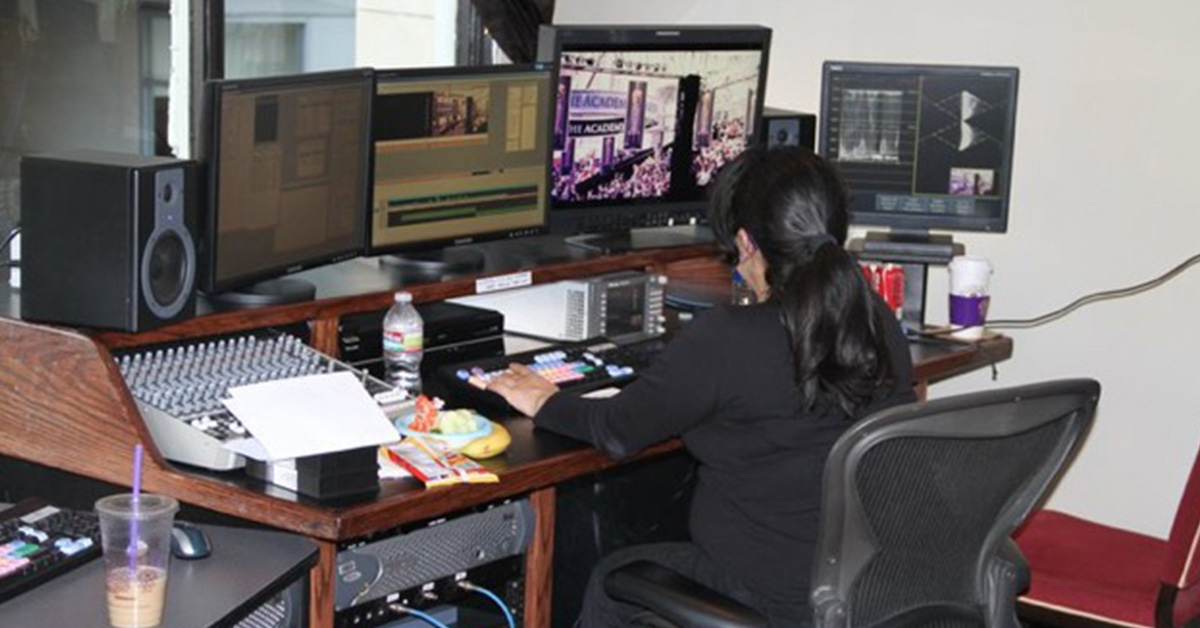
Transitioning From ‘Reality TV’ to Scripted Drama | with Monica Daniel


About Episode
‘Advance Yourself’ month continues where we’re diving into the weeds talking about taking practical, boots-on-the-ground action steps to move your career forwards, or more specifically in this episode how to transition from climbing one ladder to climbing a different one, even if that means taking one step back to take several forwards in the future.
My guest today is Monica Daniel who has become somewhat of a legend on my former show. This interview was recorded a couple years ago and is the #1 most downloaded episode of my previous podcast ‘Fitness In Post’ because it answered the most common question asked out of complete and utter desperation in all of Hollywood:
“How do I get out of reality television so I can work in scripted television instead?”
Monica and I walk through the practical steps she took to decide if the transition was right for her, and then more importantly what steps she took to meet the right people and make sure she was in the right place at the right time. While the transition isn’t terribly easy, the steps are pretty simple.
(Just to give you a quick head’s up, at the end of the episode we talk briefly about a bonus document summarizing her journey and that document is no longer available. But the good news is, it inspired me to create an Ultimate Guide that’s 10 times better, my brand new ‘Ultimate Guide to Making It In Hollywood as a Creative’)
Episode Highlights
- Monica’s background editing reality television
- How Monica first approached me at a networking event and why this was the RIGHT way to cold approach someone
- Some of the WRONG ways to cold approach someone
- How Monica was ashamed to share the type of reality work she did with those who work in scripted
- How focusing on her health was one of the key factors to making the transition
- The different “phases” of her career and how each one was important to leading Monica towards working in scripted
- The conversation that Monica struck up with an editor that built the relationship that got her the job interview
- How taking a free gig helped lead Monica to getting a fantastic recommendation for her scripted job
- How Monica’s various skills in reality helped her transition to scripted and helped sell her as a unique talent
- We break down the actionable steps anyone can take to make the transition to scripted (or any field for that matter)
Useful Links
About Guest
Monica Daniel has edited various genres of television that have been broadcast worldwide over the last decade. She is known for her “sh*tting sparkles” slogan from her award show red carpet work. She recently transitioned from editing reality television into a high level scripted network show, and our conversation today breaks down her journey and how you can walk away with actionable steps to make the same transition, regardless of your situation.
Transcript
Zack Arnold: I’m here today with Monica Daniel, who, as I mentioned before, you may know as somebody that shit sparkles on a regular basis, and I didn’t want to bleep that, even though I try to keep this clean, but it’s pretty essential to just the podcast in general, because that’s how people know you. So, also, for those of you that have been loyal, loyal listeners of this show since the very beginning, you know that Monica is a member of my very first beta group, before Fitness APOs even existed. So, Monica, it is a pleasure to have you back on the show with me today.
Monica Daniel: Hello, I think this is what, like, my third or fourth one I’ve been on since the beginning.
Zack Arnold: Yeah, you’ve, you’ve been around quite a bit. It’s been a while since I’ve had you on the show, but I’m really, really excited today about this show, because I feel like we’re gonna.. there’s no way to answer this question definitively, because there isn’t one answer and one path. But the most common question that I’m asked as somebody that works as an editor in scripted television at a fairly high level, is people coming up to me saying, How do I get out of reality and get into scripted, and there’s no right answer to that, and a lot of people will say, Well, you just can’t do it, it’s not going to happen, you have to start from square one, and there’s no way to make it work, and I feel like you were the perfect person to talk to about that, because you have defied the odds, defied the expectations, and you have crossed over. So, what I want to talk about is kind of what your journey has looked like over the last few years, because it’s not like one day you woke up and said I want to work in scripted and you made a phone call and you got there. You have a very clear journey that I think is very inspiring, from the point that you made this decision to all of the things that you did afterwards, and part of the reason we’re doing a podcast called Fitness and Post is because this program had a lot to do with it, but I also believe that wellness needs to be a big part of our lives, and you can’t be well if you’re working a job that you’re not passionate about, that you don’t love, and you decided I’m going to pursue my passion, and you’ve done that, and you’ve succeeded. So that’s kind of the focus of the show today. So, before we jump into the whole journey, for anybody that’s left in the Twitter sphere that doesn’t know who Monica Daniel is, and I know there are very, very few of you left, but for the ones that are left, just kind of give a brief overview of who you are, what you have been doing, because as at the time that we’re recording this show, you have not jumped into your first scripted show yet, but by the time the show airs, you will already be on it. So just talk about a little bit about your background, what you’ve done for your career thus far, and. And we’ll kind of jump into the journey and the transition from the reality side to the scripted side.
Monica Daniel: Okay, well, I’ve been, I’ve actually been, God, I haven’t been an assistant for probably about nine and a half years. I was kind of fast tracked as an assistant at the beginning of my career, almost a decade ago, and I have been editing all sorts of television for various networks that include like game shows, interview studio shows, lots of documentary clip shows, short packages for stuff like Comic Con or the red carpet shows, and that’s where the Shitting Sparkles comes from, is a lot of those red carpet shows, because they’re so glamorous lately. I’ve done a couple reality shows as well, and I’ve also cut a concert show recently. That was my last big job before the transition happened. So, I’ve worked in various different types of editing genres over the several, several years, and you know, the of course, when I started, I, I wanted to go into scripted like everyone else, but it took me probably about six years to start figuring out how to do it. I was a little slow on the uptake, just because I don’t think I was talking to the right people, and so I wasn’t getting the answers that would lead me in that direction, and so it’s about four years ago, I think I really started actively coming out of my shell, in addition to all, because I’ve been working steady for the last 10 years, I’ve never really had to look for work very hard at all, about four years ago I really started working on networking, improving that skill set, because I was a horrendous networker before, you know, it was, it was, I was very awkward, and I just started meeting people, and even though I didn’t know how to get into scripted, it like it was always in the back of my mind, I still want to do it, I still want to get in scripted, I have no idea how to get there, I just started going to mixers and meeting people in who worked in scripted and you know, I didn’t try to ask him a job, I didn’t try to ask him to shadow him right away, I was just hanging out, you know, I would just hang around, meet more people, and you know, over some, these mixers only happen once a month, and I didn’t get to go every month, but what ended up happening is through my tweets, my all my tweets I’ve been doing for the last four years, and just going to these mixers and meeting people, and just kind of hanging out. I, you know, just one day I realized I knew a lot of people in scripted, and it kind of, that that’s sort of what roughly led me to get the final opportunity to break into scripted is just one day I realized I know several, several people in scripted, just the same way I met you, Zack. I can’t even remember exactly how I met you, to be honest.
Zack Arnold: Oh, I remember exactly how I met you. I remember the exact I remember the exact spot, so yeah, this is this is a really good example of why networking is so important. I don’t remember the exact time, it was probably in that neighborhood,
Monica Daniel: It was Lossie Pug,
Zack Arnold: Yeah. Oh, it was, it absolutely was. It was three to four years ago, we were outside the Barnsdale Theater, it was before the event started, it was, I think, one where I spoke, and you came up to me, just this, you know, little person, you know, all like squirrely the way that you are. Hey, my name is Monica, and you know, I do like this reality stuff, and you know, I’ve, I’ve listened to you on the That Post Show podcast, and I feel like I know your whole story, and you know, just admire your work, and that was it. And you’re just super nice, and then you kind of hung out afterwards and talked to me a little bit more, and then you just decided that you were going to reach out, and maybe we were going to chat over Twitter or over email. You networked exactly the way that I recommend that people do it, which is you just strike up a very casual, no-pressure friendship, because, like you said, if somebody approaches me and they’re like, “Hey, I’m a big fan of yours. I have my demo reel. I really want to get into scripted. I hate reality. Can you show this to somebody, or can you look at it? Can you give me advice? And hey, if you ever know of anything that opens up, can you please keep me in mind? And the resounding answer is, “No, I don’t know you. I don’t have experience working with you. I don’t have the time to look at your reel. Maybe that makes me a bad person, but I know that I talk to anybody else and they feel the same way, like if I don’t know you, I’m not going to look at your reel, I’m not going to recommend you for work. We need to build a relationship first, and that’s exactly the way that you did it, and you and I ended up becoming good friends because of that, just because you decided that you were going to approach me that one time. So that’s exactly the way to get it started,
Monica Daniel: AAnd you know, it reminds me of another time before we were really friends, we were still just like, oh, we knew who each other were. I think through another one of my contacts, because I planted it’s not like one path led me to where I am, I planted a lot of seeds and let a lot of like tendrils out and. And they all kind of the right ones intersected, um, like enough of them intersected that I, someone was willing to give me a chance and give me a break and hire me as their, their assistant, and I remember, so at the same time I just introduced myself, I also have made contact with a lot of editors at Edit Fest, and assistants at Edit Fest, and I also applied for the ACE intern series, even though I had already been editing for like six or seven years at that time, and you know, of course, I got rejected because it’s meant for people right out of school, but that put me on the mailing list to do the ACE lecture series, where the whole point of the lecture series was everyone who didn’t get accepted as an ace intern to be in people’s cutting rooms, they got to go through these panels where it had several editors, several assistants, and everyone, like they had a worksheet where everyone’s contact information was, because the whole point was to start building those connections, and so through all that, that whole process, I actually lovely woman, I love Lori Jane Coleman, she used to head the ACE intern program, she invited me to her cutting room, I just shadowed her assistant, and I believe I asked you advice on, because I didn’t want to, you know, I’d been editing for so long, and I know the dynamics are different in a scripted cutting room. I think I asked you advice on how I should act properly and that type of environment. I remember that conversation with you.
Zack Arnold: I,
Monica Daniel: you probably don’t remember,
Zack Arnold: I don’t kind of remember it, maybe. But yeah, walk me through it, because I don’t know if I think I was specifically..
Monica Daniel: I think I was asking, you know, should I stand like things like, oh, should I just stand behind her? Like, I didn’t want to, like, upset her, because I just didn’t know the etiquette. The etiquette is a little different.
Zack Arnold: Oh, right. Yes. Okay. Now I remember the conversation, and I don’t remember exactly what I said, but I’m assuming it was something like, you don’t want to overwhelm them, but at the same time, if you just sit back and you’re a mouse in the corner, you’re not going to get as much out of it. So, it’s really about trying to be interactive while at the same time not getting in their face and just gently asking questions and showing interest, but doing it, and it’s still allowing them to kind of have their creative flow and not kind of get in the way of things. At least, that’s the way that I like to run a room when I have somebody else said it,
Monica Daniel: And I think that’s what that’s pretty much what you told me. I mean, kind of what I’ve been doing over the last four years, specifically, is you know, I just, I’ll ask different people the same question to see what their opinions are, and just to basically my form of doing research. I feel like I’ve done a lot of research, so now when things happen, I know who I can call, or I have the right type of, I know the right type of questions I need to ask to get that the answer that I’m not sure of, but it’s, it’s interesting, so I mean, how this all kind of relates to fitness is post, as well as, you know, I was, I was kind of tired of working where I was working, because I worked on very similar shows, and the thing is, a lot of the shows I worked on, not all of them, but a lot of them, they don’t really get you respect as an editor from certain people, and so I, a lot of times, I wouldn’t admit to the shows I work on, which is not good for your self-esteem. It’s not good for your head space, especially, you know, if it’s you’re getting treated like that from people you respect and you want to learn from. And you know, I’ve had people kind of blow me off once they find found out some of the stuff I’ve edited, and you know, it’s it’s fully paid work on big networks that aired worldwide, but it’s just, you know, people didn’t consider it, you know, they considered a lower level type of editing because it wasn’t scripted, which was unfortunate and kind of messed with my head a little bit, I think, so I wasn’t in the best head space, and there’s also like a lot of really jaded people in the industry, you know, if you look on Twitter, you always see editors who aren’t working in scripted, kind of lamenting that, you know, they want to work in scripted, but they don’t want to have to go back to assisting, which, you know, I did that as well, because I’m like, oh man, I don’t know what to do, and it took me a while to really understand what I needed to do, and accept that, and be okay with it. So, I mean, my whole process is, I was, I was kind of in a bad place, and if you’re in a bad place, it’s really hard to, you know, pursue something that’s going to challenge you in completely different ways, like me going into scripted, because it’s a whole nother world, and even though I was in this bad head place for a while before I started Fitness and Post. Actually, I was in the bad head space for a little bit. For some reason, there was something that kept me going, pursuing scripted, you know. I still networked, I still, when the opportunities came along, I would shadow people, and I mean, I want to make the point is. I wasn’t going to like everyone I knew in script, and be like, can I shadow you, can I shudder you, can I shadow you. So I had my ups and downs as far as how my morale when I was in a good head space or bad headspace, and through all of that, I still never stopped trying to learn about what it takes to get into scripted, and I mean, I’m not talking about just independent films, like I really wanted to work on like major studio television shows. I actually really like the idea, because if you have a bad episode, that’s okay, you’re working on the next one, you know, it’s.. and I like the fact that you’re not working on the same material for like a year, it’s like you work on it for like six weeks, and then you just move on to the next one, so you know it’s an air. It’s not reliant on like a single box office moment, you know it’s going to air on television, and you’ll just keep them going and keep moving on. And there’s a lot, I feel like there’s a lot more work as far as television goes, just because the amount of television shows and amount of people required on the post teams, so that was really appealing to me, and so despite all my ups and downs, I never really stopped trying to learn about how to get into scripted, you know, I still went to mixers, I still, you know, just tried to make friends with people, and I still tried to just learn about editing as much as possible, and I mean the really interesting thing to me, and my friend pointed this out to me, is there are actually a couple people who I highly respect, and you know, they work in scripted and they don’t work on the easiest jobs, and they actually discouraged me from pursuing it, because that, you know, they were brutally honest about the amount of work they had to do, what they had to deal with, and they’re like, why would you give up what you have, which is, I had, you know, I was working a really nice job for the last decade, practically, you know, pretty much exclusively eight hour days, you know, I was being benefited for a long time I was able to work on all types of shows that allowed me to come home and see my kids, and that was another hurdle, is you know, I have little kids, and for a long time when I had my children, I did not want to give up the time and kind of miss, miss seeing them, because they were, they were so little, so there were so many things that you know, I had what they called the golden handcuffs, and there were so many things that was just there were reasons to not pursue it, and so for a long time I was like, you know, I had to pretty much convince myself that I was happy editing what I was editing, and I had to look at the positives of what I was working on and try to find the fun in what I was doing, even though it wasn’t what I really wanted to be doing. I convinced myself I was, I was pretty persuasive to myself for a long time, but I never stopped researching about what it would take to get into scripted. I actually have only told one other person this. I knew I still wanted to get into it, because I’ve had several dreams over the last four years about actually getting a job in scripted, and I was so happy about it. It was the weirdest thing, so I would now dream about it
Zack Arnold: Between the one person that you told, now four other people know, because you’ve now told all my listeners, so that’s that’s exciting,
Monica Daniel: Four people,
Zack Arnold: Yes, all four of us, plus me, so six people now know all about your dreams,
Monica Daniel: So yeah, I mean, that just told me that I needed to, that that’s what I really wanted, and for a long time I still didn’t act on it, you know, I was just kept meeting people, and it’s funny, I was actually in a bad, it’s hard to, you know, pursue something when you know you’re just not feeling good about yourself. And so, when you first, so when you first approached me about fitness and post, I was in my bad head space. And then, you know, we did the first challenge group, and I was, I was so happy that it was getting off my butt. It was something to help guide me in that first challenge group, I really focused on like the competition side of it, and just like getting my health, improving my health, and it was actually detrimental to my wellness. I learned, I realized in retrospect, because I was so focused on the competition part of it, I was just like, so upset when I wasn’t able to, like, you know, be be at the top. There was, you know, I could not beat Dan because I had to go to work, and I did not have, like, a mountain next to my house to do hikes all the time. It was so it actually was really demoralizing to me, which was not good, but at least physically speaking, I was doing a lot better, and so after that, and especially with the second alumni challenge group, my focus was probably 85% on my wellness, I needed to make sure that I was mentally healthy and a good place kind. As if I’m, you know, physically healthy, it’s not gonna do me much good if I’m like mentally not in a good place. So I really focused on my wellness, and I think that helps me kind of have a more positive attitude and outlook on things. I was able to understand myself better and what I really wanted, and just have those moments where I could really kind of reflect on what I really want out of my career, what I want out of my life. So, in that challenge group, it’s that focus on the wellness really helped make things clear for me about what I wanted to do, and the only thing was trying to find an opportunity for that to happen, so that’s that’s kind of what led me to led me to kind of have kind of different outlook on what I was doing, and I discovered that my career has had phases, so my first phase is just when I was a green editor working on like clips, mostly clip shows at the time when I was a green editor and just trying to mimic other editors and just kind of learn how to edit, and then my second phase is when I was, I was actually getting pretty jaded and feel like it was hitting a ceiling in my career, and that was about four years ago, and that’s when I went to my first editor’s retreat, which really opened my eyes to like the vastness of the world of post production that is not just LA, because there’s a whole world out there, and that’s where I met a lot of my friends to this day. I keep in contact with from the retreat all around the world, and that’s where I first got on Twitter, which now I’m told I’m internet famous, which I think they’re making fun of me, but apparently people know me on Twitter.
Zack Arnold: No, you’re internet famous. You’re gonna have to get over it.
Monica Daniel: People still recognize me from Twitter, and I’m like, huh, hi. It’s a.. it’s quite odd, which I’m sure you know. You have way more followers than I do.
Zack Arnold: Yeah, followers doesn’t mean too much. Trust me, you’re much more popular than I am, at least more likable.
Monica Daniel: Oh, so the second phase was really about expanding beyond my little bubble of where I was working, because I worked with a lot of the same people for a long time, and so that was where I started networking, going to Lossie Pug, and really just starting to meet more people outside of my genre of editing, and the third phase started a couple months ago, the place where I’ve been getting most of my work for the last several years, they’re basically shutting down production in that division, and had nothing to do with me, but you know, there’s just less shows, they want to go out to third party, or they want their shows produced by third party production companies instead of in house, so there was less work to go around, so I just decided to take that time to really just kind of enjoy some time off, for the first time in 10 years. I have not enjoyed time off. I was always freaking about about the next job I was, I needed to get. If I had like a week off, I would freak out. So I was just deciding, you know, I’m just gonna take time off, and of course I started getting calls for more work, and I was like, oh, great, cool. I like said, I don’t really have to look hard for work, which I feel very fortunate about. Just for the summer alone, I had to, I turned down like four or five jobs because of the scripted show that was coming up. I got offered the scripted show, and I was like, no, I can’t, I’m sorry, guys. So it’s like I would have been okay if I didn’t go into scripted. I, I’m doing fine in reality and documentary, but you know, I decided to enjoy time, enjoy time with my kids. And then one day, this is how I got into scripted, and you know, my outlook, since I was focusing on wellness, you know, I was, I was in a better head space, I was just taking time for myself and to think about what I really wanted, and just enjoying time with my kids. I get a Facebook message, it’s which is funny, because you, you, you use Facebook to like get your jump in network television scripted. So mine started with Facebook as well. I got a Facebook message from a friend of mine who I had met two years ago at Edit Fest, he, we were.. I just had lunch with him. I had no idea who he was. We were talking about a show that I had watched, and I didn’t hear the beginning of the conversation, so I just started talking about the show, and the, like, the new.. the next episode they were doing, and then someone pointed out to me, they’re like, you know, he, he edits that show, right? I was like, oh, you do, oh cool. And then I just immediately started going into, like, story and about the characters this show, and that is how I met this editor, who, and I’ve known him for two years, who decided to hire me on this next show. So we kept in touch. He follows me on Twitter. I follow him. We’re Facebook friends, so he knows I know a lot of scripted assistants. So he Facebook messaged me, “Hey, you know, I’m starting this new job. It’s going to be big. Do you know any assistants that you could recommend? Because I need to look for a new assistant, because mine’s moving up, and I was like, “Oh yeah. You know, I’ll see who I can find. I’m like, all the ones I’d recommend are probably working, but you know, I’ll see if I could find anyone who’s not working that I could recommend. It’s like, okay, great. So then I kind of thought about it for an hour, and I was like, should I, should I just ask him to consider me? Should I do it? I literally questioned myself for an hour. I texted my husband, because to make this kind of step, like I want, I wanted my husband to be 100% okay within it as 100% support, because I could not be happy if my family is happy and not supporting me as well, because you know it’s, it’s not, you know, the job requires a lot of hours, and even though the work is not like, you know, manual labor, you know, it’s still hard work, it’s very mentally challenging, and so I needed his support, and his immediate response was like, “Go for it, do it, and I was like, “Okay, okay, what’s the worst he could do? Say no, and I’d just be back in the same spot I was, so it doesn’t matter, so I just like went for it, and this was my exact message to him. Hey, so what do I have to do to convince you to consider me for an interview, not the job, just the interview, and I like, you know, spit out all of the skills I’ve acquired that would be relevant to assisting, but because, because I’ve done a lot of research, I have a very strong idea of the skills assistance need in scripted, so I was like, oh, you know, I, in my online energy work, I know how to do exports, imports, I, you know, I constantly help my friends all the time with, you know, Avid tech support, you’re one of the people I help,
Zack Arnold: Oh, yes, you are my Avid tech support, you and Mariana, you guys are avid tech support, and you know me, anytime I can’t figure something out, I’m on Facebook, or I’m messaging using, why can’t I make this work, Monica, fix it, and then five minutes later you fix it,
Monica Daniel: So, and it’s always over the phone, I’m never like there, I’m just like, so what’s the issue, okay, try this, but you know, I was like, I can do this, I’m like, you know, because I’ve been editing for a long time, you know, I, you know, I’ll be able to deliver sound design if you would like that, that you know will be relevant to the scene, and do a good job that, if you want to pick up from there, or, or what, whatever you, however you like to work it, you know, I have lots of, I can do various types of effects directly in Avid stuff that people don’t realize you can do. These are all the skills I could bring to you. What do I have to do to have you convince me? And he, and this is still all in Facebook messages, he just responded. He’s like, ‘Hey, I’m actually really open to this idea, but what brought the change apart? Because you know he’s known me for a long time. There was no like trying to fluff up my skill set, you know. He knows me. He, we had a conversation a long time ago about how I wasn’t ready to give up my time or take time away from my children to work longer hours and scripted because you know it was working eight hour jobs, and so he knew all this about me, and I responded to him. I’m like, you know what, you’re right. When we had that conversation two years ago, I wasn’t ready, you know, I wasn’t ready for that. It wasn’t the right time for me, and with this type of work, I know that you need someone who’s going to be committed, because the deadlines are insane. There’s so much going on. You need someone who you are sure of will do their best to get the job done as best they can. You can’t have someone who’s wishy-washy. And I was like, so you’re right. Two years ago I wasn’t ready, but I am now. What do I need to do to convince you, and I felt I think that pretty much convinced him for the interview, so he, that the next day we had a lunch interview, we luckily we get along really well too, since we already knew each other, and even though he had known me for a couple years, and you know, we, the lunch interview was great, he did tell me, he’s like, you know, I will be interviewing several other assistants who have experience, and I was like, oh no, I totally understand, like, honestly. And I even told him, honestly, I’m surprised, like, I expected you to say no, because you know, people don’t like taking chances on someone who’s new, it’s it’s a risk, but I just want you to know, like, I will bust my ass, and I really want to do this. I’m just trying to figure out. I just need the opportunity, you know. In addition to that, I was actually telling him stories about that happened literally weeks before. So, I was telling stories about, actually told him a story about how I helped you and Natalie not too long before with a problem that you guys couldn’t solve, and I got Natalie like going in like less than five minutes. I got, I talked her through the problem, and she was able to, you know, leave work and go home, unless you made her stay, I don’t know,
Zack Arnold: Oh. I chain her to the desk. She’s not allowed to leave until dawn,
Monica Daniel: But she was able to get that one task done at least fairly quickly after I talked to her. I told him that story, I told him, you know, stuff that he wouldn’t hear on my resume. There was a story where I was actually the month before I was passed over for a reality show to work on, because I didn’t have, I only had like a couple reality shows on my resume, and they wanted someone with years of experience, so they’re like, no, no, we’re gonna bring in our guys, so cut to a couple weeks later, they’re like super behind, I was like the fourth or fifth editor, they were, they were adding on, because they were so crazy, like it was so bad, the one of the EPS was in the bays with us every day, just overseeing everything, is how behind they were. And so I came in for Saturday, just to help out. Halfway through that day, they’re like, can you work next week? I’m like, sure, come Monday, literally my second day, the EP is working with me in the room, and she was like, “Can you just, can you just like cut everything for us? And I just started laughing, because I was like, “This is literally my second day on this show. She’s like, “I know, where have you been?
Zack Arnold: And by the way, you didn’t want to hire me.
Monica Daniel: I didn’t point that out, but I was definitely thinking it.
Zack Arnold: Now I’m happy to point it out.
Monica Daniel: And the funny thing was, and the whole point was, I didn’t have a lot of experience in reality, but as soon as I jumped in, and I just kind of figured out what the show was about, like they didn’t want to let me go, like over their lead editor, I discovered, because of the way the pay worked out, because I came in later, and I had a very set rate, they had negotiated everyone else’s pay based on how much they wanted to pay them total, because it was that company had hourly rates, my rate was already set, they couldn’t make me go lower, so I was actually the most expensive editor they had, and they were making me stay the longest every day, because they wanted me to finish out the work for the shift, and they would send other people home, so that I mean, that I feel like that it was a good reflection, I think, on me, and so I was telling the editor these stories, and also there was like one time where the, they’re actually their lead editor, the guy they, they brought in, he was offering to stay to finish out the show, to lock the show and send to mix and all that, and both the supervising producer and executive producer were like, oh well, no, we’re gonna have, we’re gonna have Monica actually stay, and he was looking at me like, a, a, you know, I could stay free if you want to go home, and I was just looking between them, I’m like, you know what, it’s, it’s their call, because I didn’t want to burn that bridge with them, and so I, I stayed, and that shift was a 15 hour shift on the sixth day, so it was a really long shift, so I told him that story, just to demonstrate something that my resume couldn’t demonstrate for me, and he even told me he’s like, “Your resume says you’re not ready talking to you, I know you’re ready, and you know that he said, “My resume said I wasn’t ready because I didn’t have any studio scripted experience on my resume, even though I had all the skills required in the various jobs I’ve done, because I’ve done a lot of online editing, and so that’s where a lot of the deliverables comes in, and exports, and turnovers, and so telling him these, those stories about everything I’ve done, it just, it really helped sell me, and, and luckily, you acted as a reference for me, Zack, which I’m highly appreciative of.
Zack Arnold: Yeah, he didn’t seem to be worried about the syphilis or the leprosy at all. I warned him, I told him, but he’s like, “Yes, cool, whatever, I can handle it.
Monica Daniel: And I also had another, another person who I won’t say his name, but it’s someone we both know. He was a great reference for me, and I just want to say, if people tell you never work for free, I call, I call, because I did a side freebie gig on an independent film where I was literally just assembling scenes. I did probably about 2025, minutes of the film with, you know, hero takes implementing any director notes or ideas, just so the supervising editor had a place to start, and but I really wanted to practice assembling scripted scenes and see what it was like working with someone who, you know, he works on a lot of network television, so I really wanted to see what it was like working with him, because I heard great things about him, and I actually had met this editor several years before at another edit fest, which is kind of funny. It just happened to work out that way, that we connected randomly through different means, but I had already known him, and but through that freebie gig I got a fantastic recommendation from him, so like I said. If anyone ever says don’t work free, don’t work for free ever, I call bull because you just have to be selective about it and smart about it. To me, it was a calculated risk. It was worth the time I took to work for free to work with this editor.
Zack Arnold: Yeah, I definitely agree with that, and I want to let you continue till the end of the story, before I jump in, but as a sidebar, the only reason that I got where I am in my entire trajectory, if you trace back the very specific steps that got me to working on Empire, it’s because of free work that I did. So, do I think that you should pimp yourself out, and you should always be doing free work everywhere? Absolutely not, but to just make it a hard and fast rule that I don’t work for free, you’re doing yourself a tremendous disservice, because the context that you can build on the right kind of free work are worth way more than your full day rate. So, but that’s a tangent, I want you to finish your story, then I jump in, and I want to dissect all of this.
Monica Daniel: Oh, it’s, it’s kind of convoluted and complicated, so all this, all this happened on literally the second day. The first day he messaged me. The second day we had lunch, and he told me he was gonna, you know, meet with other people, but he was really happy he met with me. The third day I got offered the job. I lost my mind. I really lost my mind. I freaked out, and because I had wanted it so badly, and it literally happened over a period of three days, you know, me just one day trying to figure out, ah, what kind of reality job am I going to take next? To all of a sudden, three days later, holy crap, I’m going to be working on one of the most anticipated shows for the fall season,
Zack Arnold: Executive produced by Steven Spielberg. No less,
Monica Daniel: I get, we haven’t even said what the show was. I did publicly announce it. I, so I’m going to be working on Minority Report for Fox, executive produced by Steven Spielberg, and I will be working down the hall from you,
Zack Arnold: Which is the coolest part of my estimation. And by the time this airs, you, you have already been working on this show for, you know, God knows how long. At the time of recording, you haven’t quite started yet, but yeah, by the time this airs, you already be on Minority Report. But yeah, the weirdest part is that we’re gonna be on the same floor down the hall from each other, so that’s really bizarre.
Monica Daniel: Yeah, so I mean, and the thing with this story, you know, I wasn’t like, oh yeah, I got the job, I can’t wait to start date, it’s like, no, I immediately, you know, I had Lori Jane Coleman’s book about assistant editing, that’s kind of like the bible for people working in scripted television as assistants, and especially if you’re breaking in, so just to have, so I had an idea, I immediately texted some of my friends who are our scripted assistants on some huge TV shows and films that I just have to be friends with, and I was like, “Hey, you guys, I need a really big favor, I’ll buy you a beer, I need.. can you like help train me? Can I shadow you? Can you just give me your tips, please, and they both were just like, dude, whatever you need, I’m so happy for you, and they, they’ve been great, and they help. It’s like people really wanted to help me, want to help me, and do well, which is so humbling and nice, because you know, sometimes you get crapped on in this business, you know, I’ve, I’ve been crapped on recently by, by people. It’s like for no reason other, other than I don’t even know, but it helps to know that I actually do have people who support me, and they want me to do well, and they’re so excited for me. And so I immediately contacted them, and I, you know, shadowed them and was asking questions to see what I need, just whatever questions I had, and their advice on like the proper way to act, because you know, I’ve been editing, I’ve been the in the editor position with a really good rep, I’ve been like the top editor where I worked in the division of NBC Universal, where I worked, the last like several years, so you know, I needed to take my, my behavior down a notch to, you know, what’s proper for an assistant, a green rookie assistant editor, and scripted, and so you know, I was asking them questions about that, you know, just kind of changing my perspective and my mindset of, like, you know, where, where I’m at, which is, I think, an important thing, and I think, because I’ve, you know, I was in a better, I was taking time for myself, I was in a much more positive head space for a long time, and you’ll see people on Twitter, it’s like they’re, it’s like they whine about having to, you know, essentially, you know, eat crap as an assistant, not that they will, but it’s like they like being in that editor position, and it’s like I’m, I’m okay going down to assistant, and people who don’t understand the business, they’re like, “Why would you go down to assistant? Like, no, no, you don’t understand, this is actually, I think this is better for me, because this is a whole new world, it’s a little safer than. For me to figure out how this world works as an assistant, there’s so many different things that it’s like I don’t know that I don’t know, and where I’m at, it’s like I could recognize that and be okay with taking that step back without having my like ego get all upset, and I think that’s a hurdle a lot of editors who want to transition have to overcome is is their ego, you know, they’ve been the the big fancy pants editor for so long, why would they need to go back to a sustain? It’s like, well, sometimes it’s good to take a step back, so you kind of reapproach things with like a beginner’s mind, because you’re not going to cut it the same way you would cut a reality show, or you know, the dynamics are different working with, you know, directors, and then going working with writers and producers. It’s not the same as working with people in reality or documentaries, sometimes. And things are way more organized, oh my god, in scripted than all of the reality shows I worked on. Sometimes I just feel like people just like dump the bunch of footage on me, they’re like, “There you go. I’m like, so what is this? I don’t know. Yeah, all the names are just like random numbers. Can someone label it? Oh, they’re too busy right now. It’s like, great, thanks guys. It’s like that’s the kind of stuff you have to deal with in reality, you know. Unscripted things are much more organized. There’s a.. I feel like there’s much more discipline that’s expected, and I actually like that. I want to be held to a higher standard. For the longest time, I was the only one holding myself to a high standard, not other people. And it’s like, how am I going to get better if no one’s holding me to a higher standard and challenging me? I need that. And so I was the only one holding myself to that higher standard and challenging myself to get better, so it’s, it’s going to be a nice change of environment, and I’m okay with going back to a sustain, because I feel like it’ll, it’ll kind of remold me, and you know, I’ll be, I’ll be even a stronger editor, because the nice thing about having all my contacts in documentary and reality is, you know, during those hiatuses, or maybe after this first job, if I can’t find another one right away, because you know I’m competing with people who’ve been assisting for years with lots more contacts, I’ll be able to go back to editing non-union jobs until I could get that next scripted job. So I actually kind of like that, that I’ll be able to go back and forth if I need to, and work on a variety of things, as well, so you know it’s like I, I’ve constantly been training, and actually my after my editor told me he was gonna hire me almost immediately after the editors guild was having an assistant editing seminar where they were going to have a seminar and a workshop, and I was like, oh my god, this is great, and he, I didn’t get it in my email, but he got it, and he forwarded it to me. He’s like, ‘Hey, if you have a chance, you should, you know, see if you can sign up for this. And I immediately signed up, and I was like, ‘Yep, just signed up, got the workshop on this day, and this on this day. He was like, ‘Okay, great, you know, because he’s taking a chance on me, and I want to make sure that I want to inspire confidence in him that he made the right choice, so you know I’m letting him know everything I’m doing to prepare for this job, which, you know, training, being trained by my friends, reading the book, and doing these training by the editors guild, and you know, part of that, you know, all my friends supporting me, like three more people forwarded me that email about that assistant editing training seminar, and I’m like, oh my god, this is great. There are so much people supporting me and wanting me to succeed. It’s such a great feeling.
Zack Arnold: Well, as you know, I’ve been one of your biggest cheerleaders, and that’s because I’ve kind of watched this trajectory happen over the course of the last three or four years, and I don’t remember exactly when it was a we map, but it was around that one of your first mixers, I think, where you were approaching people, and what I want to do is kind of now that we’ve heard this whole story, I want to dissect what what is the core of the decisions that you made and how you took actionable steps to make this happen, because I’m a really big fan of what are the practical things I can pull from this to learn from your story and be able to apply it to my own, because I think at the surface somebody’s going to listen to this and say, oh well, some guy sent you a Facebook message and three days later you have a job, well, that’s never going to happen to me, and that’s just people making excuses, and what I’ve done over the last 15 years is I’ve tried to figure out what is the core component of being able to become successful in this field, but really in any field, because that’s really the question that people ask more than anything else. If you speak on a panel or you’re on Twitter doing post chat or whatever it is, or they approach you at some event like Edit Fest, and there’s always at least one person that says I’m just starting out. What is the number one tip that you can give me if I just want to make it? I want to make it, and I want to do it, and I’m passionate. How do I do it? And it’s a really hard question to answer, but what I’ve done is I’ve distilled it into two very distinct things, and you’ve done both of those, which is why I wanted to talk about this specific story. You, I always tell people that there are two very key components. If you want to make it in this business, or frankly, any industry, the first of which is that you have to be really, really good at what you do for a living, and the second is that people have to know that you exist, and if you have one or the other, you’re not going to make it, because there are a lot of people, especially in our industry, which is full of so many introverted people that chose this industry because you get to sit in a dark room by yourself and create without people bothering you, that they may be amazing at what they do, but if they don’t get out a network and they don’t have the social skills to build networks of people around them, they’re going to go nowhere, and I know people like that that just sit there and complain about, oh, well, I’m so good at what I do, and blah blah blah, but I’m not getting anywhere. Well, it’s because they’re not networking. And then you see the other side, which are the social butterflies that are going to all the mixers, and they’re going to all the events, and they’re meeting people, and they’re handing out their business card, and they’re really slick, and they’re really conversational. And then they give you something like a reel or a card or a link, and you do happen to go look at their work, and you’re like, you kind of suck, right? Like, I’m not going to hire that person either. So, the two key components, no matter what you’re trying to get into, doesn’t matter if it’s scripted, reality, music videos, basket weaving, business, like you have to be really good and focused on being a good craftsman at your chosen field, and people have to know that you exist, so they know that you’re good at what you do, and you’ve done both of those, and I want to go way back to something you said in the beginning that stuck out to me, which is that you planted a seed, and that’s one of the big mistakes that I think a lot of people make, is they say, well, I planted the seed and it didn’t grow, so it’s not my fault. I did what I was supposed to. You don’t plant a seed, you’re a farmer, and you plant an entire field of seeds. You plant them everywhere, and the odds are pretty good that most of them are going to die, right? They’re not going to sprout, they’re not going to come out of the ground, and they’re not going to grow into something larger.
Monica Daniel: And I’ve had several things drop.
Zack Arnold: Oh yeah, I mean, I, my God, I’ve sown entire fields of seeds on several continents, and most of them have not turned into anything, but I just keep throwing the seeds in the ground, waiting for something to pop. I mean, that’s the story of my life with my documentary film right now. Like, when you look at where I am in my career as an editor, I’ve made it pretty far, and I’m on a pretty good TV show that’s pretty high level. When it comes to being an independent documentary filmmaker, I am at the bottom rung of the ladder, and I am planting 10 seeds a day, most of which are dying on the vine, but I just keep planting them, waiting for that one that grow, and that’s the approach that you took, and part of the reason that you got where you are is you just kept planting the seeds, and you nurtured them, and some of them grew, and some of them sprouted, and became really strong plants, and other ones just died, and they just sat there, and they died, and that’s the game, that’s the way that it works, but again, the other component of it is not just the seeds that you planted, it’s the fact that everybody that met you and talked to you knew that you were really good at what you did, and there are some people that are going to be snobs, and they’re going to say, well, I don’t care how good your packages are for e red carpet specials, like whatever, like that’s not what I do for a living, but then there are the other people that recognize, well, that’s not what I do, but I see that you have taken the best out of what it is that you’re working on, and that’s the more important component. Like, for example, if I look at a young person’s work, or I look at their student work, I don’t say, “Well, this is really low budget. I say, “Given what you have in front of you, what somebody gave you, whether it was footage or whatever it is, what did you do with it, are you capable of taking something and making it better? So, I don’t care what you started with, I care what you ended with. And that’s another reason that I think you got where you are, is because you’re really good at what you do, and that those skills translate into whatever field you’re going to go into. So, I think those are really the two key components that people need to look at, not the idea that, oh, well, some editor that she met had a job opening and Facebooked her, and she’s got a job, like the people that are going to be the naysayers and say, ‘Oh, you got lucky, that’s what they’re going to focus on, but what you really need to focus on is the journey of years and years that you went through doing all of these things to finally land the job that you have, and I guarantee you, I’ll put it out there right now that when you get bumped up to editor, I’ll let you have another show, and we’ll talk all about that too, because that’s inevitable, and that’s going to happen. So, your journey isn’t over, you’re just now on the path that you want to be on, and climbing the right ladder.
Monica Daniel: Yeah, and it’s, it’s funny, because I kind of, without realizing what it would lead into, for, you know a lot of editors’ goals, you know, they want, they want to join American Cinema Editors, they want to join ACE, they want to be, have that at that, you know, acronym at the end of their name, and I want that too, but I knew that my credits were not appropriate for what they were looking for, so I was trying to figure out how. Could I get more involved with Ace, you know, just surround myself by all these fantastic storytellers, just so I could learn with them from them, you know, just meet them, just hang out, and I actually, I discovered the affiliate membership, and so I applied for the affiliate membership, which basically I don’t get to use the acronym yet. Only full active members get to use that, but I get all other privileges. I’ll be able to vote in the editing eddies, I’ll, you know, go to the mixers and special events for ACE members. I am technically an ACE member, and I just did that because I’m like, you know what, I’m gonna play the long game when I have, you know, this credits that I think will be deemed acceptable to apply for full active ACE membership. I don’t want to be like just a nameless stranger to them on the other end of a resume. I want them to know me, I want them to know who I am, because you know it’s, it’s hard going through the process. It’s a very lengthy process to be a full active member, and so I decided to just join Ace. And then one day, when I, when I think I might have a chance of being accepted as a full active member, it’ll be probably less stressful for me, that’s for sure, because they won’t just see me as like another strange stranger applicant, they’ll actually know me, and you know, I, that’s kind of what I do with, I’ve been doing with my careers, you know, I’m I’m going to play the long game now and see what happens, and that’s kind of how I ended up getting this scripted job, and also, you know, being an ACE member, you know, people look that, look at me now as you’re really serious about this career, and I’m like, oh, yes, I’m serious, I was always serious about this career, but that just kind of cements it for some people, and they, they realized how serious I am about my career, you know, I’m not just collecting a paycheck, you know, this is what I love to do.
Zack Arnold: You know, there’s a lot of sparkles that throw people off. I think that’s what it is. The sparkles are throwing everybody else.
Monica Daniel: That’s the other problem. A lot of people thought that’s all I did, even though I did that two months out of the months of the year. The rest of the year I was actually cutting documentaries, and you know I’ve had comments even recently of people like, yeah, well, that’s cool, you could do all those effects, I can’t do them, but I tell story, I’m like, that’s great, so do I.
Zack Arnold: The other piece that I want to pull out of this, other than just the general advice on quote unquote, how do you make it, I think the really key component to this, and this may sound like a shameless self-promotion for the podcast and the program, but I really firmly believe that you would not have made this transition if you were not in the right place with your health, and I think that’s a really big component of this, because you really found your self-confidence and found the energy and the perseverance to really make this transition, because you felt better, because you were treating yourself better because you were eating better, you were being more active, you were focusing on your wellness, and I don’t think you would have had the conviction to say to this editor, you know what, two years ago I wasn’t ready, but now I am. If you felt the same way that you did when I met you a year and a half ago, and we had our first meeting, I don’t think you would have been able to do that, so that’s really why I wanted to bring you on the show, more than anything, is I really feel that once you decided to treat yourself like you deserve to be treated and focus on your health, that’s when everything changed, and that’s really what I’m trying to emphasize with this program, is that if you become more empowered as an editor or an assistant, or whatever you do, or even more importantly, when you’re more empowered as a human being, because you have more energy and more focus and more drive, because you have the physical stamina and you have the mental clarity, because of what you’re eating and the activity that you’re doing, and the way you’re managing stress, your entire life starts to change, so that’s really what I’m trying to emphasize, is making these lifestyle changes can have a huge impact on the amount you get in your paycheck and the job you’re doing every day, so it’s not just, well, I want to lose a few pounds around the waist and want to be able to run a 5k it’s like those are just the small pieces that can get you to the point where your entire life can change as it has for you, because you focused on your health,
Monica Daniel: Yeah, and I mean focusing on the wellness, especially because even my husband tells me all the time, he’s like, “Dude, you are way too hard on yourself, and I think it’s just, I push myself so hard, you know, I had great examples, and parents, you know, they, they worked really hard, they’re very successful what they do, and you know, they started from pretty much nothing, and they’ve accomplished so much, and so I just feel like, man, how could I live up to them? Like, because they, you know, they give me a pretty comfortable childhood, how could I possibly pull off what they were able to pull off, and like, go through, and so I just, I push myself really hard. And I expect a lot more of myself than any, no one expects more of me than me. Like, people are kind of telling me it’s like, dude, you don’t need to do all that extra stuff. I’m like, yeah, but it’s better like this, and you know, the producers appreciate it at the end, but sometimes the other editors are like, damn it, you’re making me look bad. I’m like, I’m not doing anything to make you look bad. I am just doing my job,
Zack Arnold: And that’s one of my biggest pet peeves. I just have to interrupt, because that’s something that I get a lot to, where I’ve pretty much gotten that my whole life, and I’m not tooting my own horn. It’s just that’s the way that I am, as I’m a perfectionist, and I go as far as I can, and if somebody says, “Well, you’re making me look bad, no, you are making you look bad. Let’s just make that very clear. If you’re the one that’s sitting back doing the bare minimum, somebody else is going above and beyond. You’re the one that’s making you look bad, not me and not Monica. And if that makes people upset, so be it. But that’s just the way that it is.
Monica Daniel: Yeah, and I mean, you’re right, just pointing out that I think when you approached me about fitness and post, I probably wouldn’t have been in the right head space to with confidence and unapologetically say that you know to and admit that you know I wasn’t ready to make the transition two years ago, but now I am. I probably wouldn’t have had the courage to do that, and I just, where I am now, I just, I know what I want, and if they can’t see that, then you know it doesn’t work out. Not going to hold it against people who don’t want to, you know, take a chance on someone who’s essentially a rookie in scripted, you know, I know what I’m capable of, and I even said this to the editors, like, you know, I can do this, I can do, I know I can do this, and I learn quickly, I pick things up really fast, you know, I’ll have to learn some of the paperwork, I know that I’m, and I’ll do whatever I can, but I just, I told him I need someone to give me the chance, and he was like, yeah, it’s a catch 22 isn’t it, like he recognized it, and he’s like, you know, if someone gave me a chance, I want to give you that chance. I was able to inspire enough confidence in them to take a chance on me, and I think that’s just a lot of that is reflected, it’s how I view myself and how I present myself. I always try to be really positive, you know, if you’re gonna people don’t want to hang out with people who are like sulky or whiny, especially if we’re going to be spending a lot of hours together, working closely, and I’m sure you completely understand that you wouldn’t want to hire someone who’s sulky or whiny.
Zack Arnold: No, no, I make it very clear to people that if it’s a choice between highly experienced and whiny and negative, or completely raw with no experience, but positive and passionate, I will take the latter 100 times out of 100 and that’s always who I hire, because if you’re gonna whine about your position and say, “Oh, I’m better than this, and I don’t want to be here, and whatever, like, gone, you’re not even on my list, but if you’re somebody that says, “You know what, I don’t have a lot of experience, but I’m really passionate, and I just want to learn, bam, hired, done,
Monica Daniel: And yeah, that’s pretty much how, how I approached it, you know. I, and I went in pretty much expecting, oh, he’s not going to hire me, who would want to, you know, hire the rookie, but know what, I’m going to go for it anyway, and I’ll take it as a learning experience, you know. This is what it’s like to get interviewed for these jobs. There you go, and so you know I just went in kind of with the attitude is yeah of course I want the job and just to see what I could learn from the experience and he decided to hire me anyway
Zack Arnold: Go that’s that’s how it works so you’re you’re an overnight success right your 10 year overnight success so well I’m going to help you practice for this question, because I guarantee that you’re going to ask this in the future, and this is kind of a lightning round. You’re, you’re, you just spoke on a panel, you’ve got 60 seconds to know the next person comes up. Somebody says, “I’m so inspired by your story. I work in reality right now. How do I transition to scripted?
Monica Daniel: Start meeting more people who work in scripted. Don’t ask them for jobs, just hang out with them, start meeting them, and just be who you are. I mean, that’s that was my philosophy, that’s what I did.
Zack Arnold: And be awesome at what you do, that was the other thing that you did and focused on all the time, because had you not been awesome at what you do, nobody would have cared, and you’d still be doing what you’re doing all by yourself.
Monica Daniel: Well, you know, one thing I looked at is I’m like, man, I wasted all this time. You know, I could have been editing the scripted already if I just got my head out of my ass and figured this out sooner. But then I look back and I’m like, I am so strong in a lot of my skills that will help me as an assistant. It’s I have that advantage over people, because when I’ve, you know, I’ve met other assistants, and I realized that my visual effects skills far surpasses theirs.
Zack Arnold: Your visual effects skills far surpass most editors, including me. You embarrass me with your skills on the avid. I’m like, why is it that I’m in my position, and you’re. In the position that you’re in, you kick my ass on Avid. It’s embarrassing,
Monica Daniel: And I just.. I was just the shows I work on, it required me to figure it out. I actually took it beyond what.. what the producers expected, which is why they always hired me. They.. they pretty much.. they’re like, “Dude, there’s no one I’ve been told, you know, without you, there’s no award season, because I don’t think they’ve really found someone that has, they’ve been as happy with as, as me, and that’s not being, being an egotistical ass or anything, that’s that’s literally a quote from what people have told me several times, so they might be a little bummed if I actually, you know, have work for the for the next award season, and they can’t hire me, they’re gonna be like, “Oh man. Actually, a couple of them already told me. They’re like, “Wait, does that mean you can’t work award season? Like, that was their first thought.
Zack Arnold: Most likely you’re in scripted, you’re gonna be pretty booked.
Monica Daniel: Oh, I’m like, “We’ll see, we’ll see if the show gets picked up for the second half of the season. I don’t know
Zack Arnold: Exactly
Monica Daniel: If it does, then no. If it. if it doesn’t, then I might be available. I don’t know.
Zack Arnold: Well, I’m super, super happy that we could share this story, and people can really see firsthand that it can absolutely be done. You can transcend that gap, that just black hole that people think cannot be transcended between reality and script, that it can happen, and there’s a very clear way to do it, and I’m really happy that we could share your story today. So, thank you so much for being so candid and inspiring other people that I’m sure want to do the same thing.
Monica Daniel: Well, I just.. I would.. I always tell people, they’re like, “Oh, my.. it’s funny. People are like, “Oh, I’m not surprised at all. I was like, “Really? I was surprised, you know? I just.. I just think of us, you know, I’m just a working editor, I guess, assistant editor now, and scripted, but, uh, you know, I just work hard. I’ve.. I have to, you know, earn, earn my pay at every single job with every new producer. I have to earn their respect and my pay.
Transcribed by https://otter.ai
Episode Credits
This episode was edited by Curtis Fritsch, and the show notes were prepared and published by Jakin Rintelman. Special thanks to Krystle Penhall and Sarah Furie for helping to spread the love!
The original music in the opening and closing of the show is courtesy of Joe Trapanese (who is quite possibly one of the most talented composers on the face of the planet).