


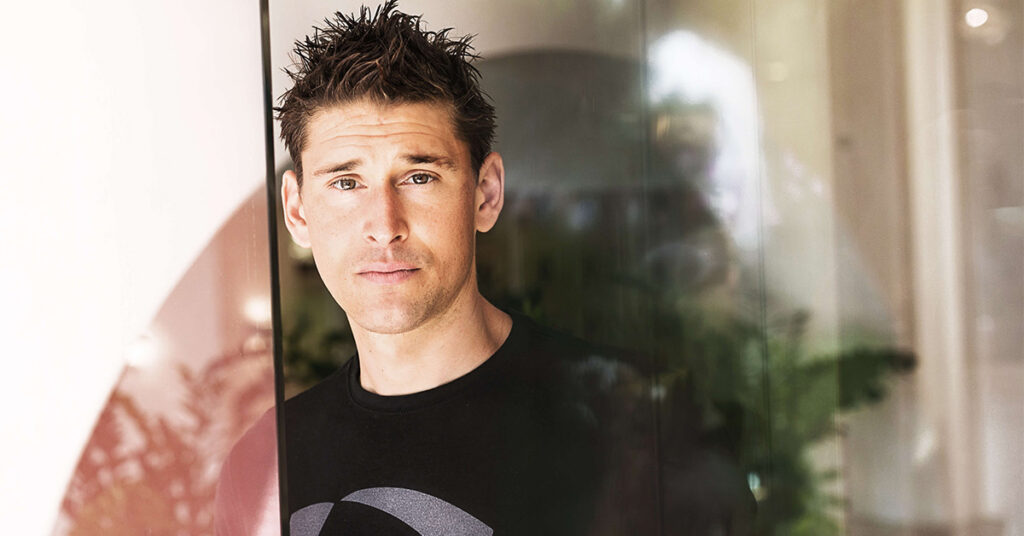
The Solution to Your Sedentary Lifestyle | with Ben Greenfield
Chronic sitting is killing you, but standing isn't the answer. Neither is exercise. This Ben Greenfield interview reveals the sedentary lifestyle solution.
Let's create things that matter. Together.
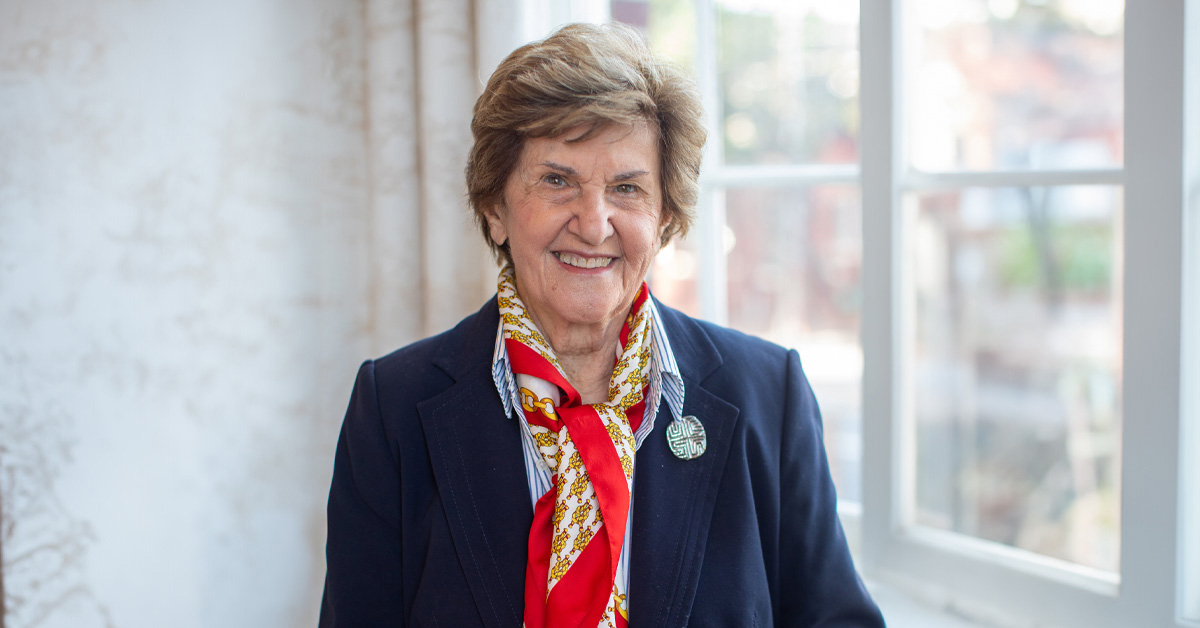
If you work in one position all day long, whether sitting, standing, or otherwise, it’s important to understand how gravity is negatively affecting your health when you are sedentary. We’ve all heard the phrase, “Sitting is the New Smoking,” but it goes much deeper than that.
My guest in this episode is Dr. Joan Vernikos, the former director of the Life Sciences Division at NASA and author of the book Sitting Kills, Moving Heals. She is one of the world’s foremost experts on stress from a physiological perspective. Having worked on the team that helped put men on the moon as well as helping John Glenn return safely to Earth, she knows as much as there is to be known about how the human body is affected by gravity, both positively and negatively.
If you have any intention of being healthy enough to play with your grandchildren someday, this episode is a must-listen and will blow your mind. Everything you thought you knew about exercise and movement will most likely change after learning what Dr. Joan has discovered in her 4 decades of research for NASA.
Zack Arnold: I’m here today with Dr. Joan Vernikos. Some people like to stalk celebrities, and I’ve decided that I would rather stalk NASA scientists because I’ve been trying to get you on the show for months. So, Dr. Joan, I’m so excited that we finally connected.
Dr. Joan Vernikos: I’m excited too.
Zack Arnold: So, to give my audience a little bit of background: You are the author of the book “Sitting Kills, Moving Heels: How Everyday Movement Will Prevent Pain, Illness, and Early Death, and Exercise Alone Won’t. But even more importantly, you are a former director of life sciences at NASA, so you know what you’re talking about when it comes to the science of the body and the brain and movement, and that’s really where I want to dig in today. So I’m very, very excited we can have this conversation. So before we start to jump right in and talk about all the details and science and research, like your book is full of so much amazing information that I’m first going to tell everybody listening to this: please go out, get this book, read it. It’s just it’s completely life changing and eye-opening as far as the differences between movement, exercise, what you can do every day when you think, oh, I just I can’t do anything. I don’t have time to exercise. I don’t have time to be active. Once you read this book, you’re like, oh, this is way easier than I thought. But before we go down that path, I want to just give people a background: who you are, what you do, and your history, both in the area of stress research and then working with NASA.
Dr. Joan Vernikos: Oh, it’s a long story. Okay, I actually was born and grew up in Alexandria, Egypt. My parents were Greek. My father was a doctor. My sister became a doctor. My father would have liked me to become a doctor too, but I chickened out the first time I saw a corpse in the in the anatomy room. Stupid, but there you are. And so my corpse went a different way. Went into into the research, into general science, pharmacy first of all, and then pharmacology, how drugs act on the body, and as part of that, how hormones act on the body. My graduate work basically was at the University of London on how hormones and how the brain is involved in regulating the response to stress. And from there, I ended up at Ohio State University teaching pharmacology to medical students, continuing my research on how the brain regulates the stress response, minding my own business, doing well in the academic community, a bright future. When NASA asked me if I would join a very small group, five people, in fact, five scientists in at Ames Research Center in California. Moffett Field is a naval air station, and NASA had some real estate property there where they decided to begin the research. Congress at least decided that NASA should do their research there. Houston did not exist. I mean, Houston existed as a town, but but the space center did not exist. The launch was conducted by the Navy and the Air Force. Not no NASA around. There was a NASA mostly dealing with astronomy and astrophysics, astrophysical sciences, but in the life sciences, as we were deciding to send humans up and trying to catch up with the Russians who put Gagarin, Yuri Gagarin up in space for orbit, and Kennedy’s dictum to to put humans on the moon by the end of the decade, which was the 60s, and was rather nobody believed it was going to happen. Nobody believed it was going to happen. My take is that the people that were hired then, because there was no existing body of experts, was that they were young, and they were creative, and they were enthusiastic, and they made it happen.
Zack Arnold: Well, I mean, you you you clearly saw an amazing transformation in our country’s history, and were a part of that transformation. And what’s so interesting to me is that you saw, like you said, from the life sciences perspective. I know very little about science, and you and I actually talked about this a little offline beforehand, where I want to, I’m really good at telling a story and connecting with people and helping them feel something. But when it comes to the world of science and the body, like that’s where the researchers and the scientists come in. And you were saying to me, “Oh, well, it’s so great because I’m, you know, just this person sitting in an office and I don’t have the ability to kind of get that information out there, so that’s that’s that’s really what we’re trying to do. One of the things that that I have found as I’ve gotten into this field is the idea that oh yeah, I read a blog post about sitting as the new smoking, and I read one research article, so yeah, I know all about it. You’re the pioneer of this entire field going back decades, so. So I really want to dig into that idea of the life sciences and how you’ve worked with and studied the physiology of some of the most famous astronauts in our history.
Dr. Joan Vernikos: Well, thank you for putting it that way. I neither I nor anyone else knew very much about what we were going to what we were looking at. We knew it was, you know, you take humans and put them on top of a rocket, and you imagine that that’s stressful. And I think that basically, the guy who put this little group together out at Ames Research Center decided he was going to have one guy working in metabolism, one guy working in biological rhythms. It was all guesswork-and somebody working in stress, and I was with somebody, so I was very lucky to be there at the right time when we knew we weren’t thinking about gravity. I mean, when when we sent astronauts in space to begin with, we were looking at the stress mostly. What was very interesting, to cut a very long story short, was that by Gemini Seven, which was about 1965, which was the first 14-day-can you imagine then-14 days in space of two astronauts-and we were able to actually study them during these 14 days, and in fact, even collected urine from them, and we could measure the stress hormones, cortisol. Everyone’s heard of cortisol and stress. I think by today, and much to my amazement, these characters, these first two astronauts, their cortisol just didn’t budge. In fact, they went down. And of course, we at first started saying, “Well, you know, did something wrong. It’s not possible that they’re not stressed. Not only they’re not stressed, but they’re actually less stressed than they were on the ground. And not only one of them, but both of them. And of course, when they returned, their ability to respond to stress was increased. The re-entry was stressful. The launch was stressful. But in between, zippo and I thought to myself, “Well, that’s the end of a beautiful career. What am I going to do at NASA? And we sat down and thought, “Well, what is it that you have or don’t have in the space environment that is different from Earth, and what should we be looking at? Well, radiation was one obvious observation, but all we could look at there is how much there is and how we can protect humans. But the main factor that seemed to jump up was the fact that as you orbit Earth, you reduce the influence of gravity. You still have gravity because the moon and the and Earth attract each other and stay in orbit around each other because of gravity and the sun, of course. And as the Earth spins, we experience gravity. We call it 1g as a reference point. When you’re up there orbiting, the free fall of flights-you know, like a free fall in an airplane-reduces the influence of gravity, and it’s this free fall that creates this weightlessness, we call it, or many call it zero gravity. It’s not zero; it is microgravity. The mathematicians and the audience will know 10 to the minus five, if you want to be specific. But it seems to be well below what the body, our body, senses as the pull of gravity on Earth. In other words, in space, you notice that people float around, or appear to be floating around. On the Moon, which has 1/6 of Earth’s gravity, they’re still upright. They don’t walk like we walk on Earth. They hop around, and that is because yes, there is gravity, but it is much less than it is on Earth. But it seems to be around the threshold. In other words, a little more gravity, and you be walking and standing just like you do on Earth. And that’s why, and I’m jumping now. When we think of Mars, and it has 1/3 Earth gravity, I think we will be closer to be able to be upright and mobile as we are on Earth. Slower, yes, but above the threshold that is needed to exert actions on the body.
Zack Arnold: Well, if there’s one thing that we need right now, it’s to slow down. So maybe Mars is the answer because the world just can’t seem to slow down, and everybody’s doing more and speeding up. But that’s a conversation for another time. But where I really wanted to go, which you’re already leading us there, is gravity. Gravity is really the heart of. Entire conversation and the heart of your entire book, because understanding gravity and knowing how it affects our body is really helpful in the context of space exploration. But it’s clearly much more important for this audience in the context of what does gravity actually do to my body on a daily basis when I’m sedentary. That’s the problem that I’m trying to help people solve. Is I don’t have time to do dedicated exercise and go to the gym and do all this crazy athletic training. I’m in front of a computer for 14 hours a day, so clearly I can’t do anything. So let’s explain and kind of go through the idea of what gravity is doing to the human body as we’re sitting, and how you learn so much about that by seeing the absence of gravity on the human body with astronauts.
Dr. Joan Vernikos: In fact, what we learned by sending astronauts in space was that we learned more about ourselves and our body from these flights and these astronauts than we ever learned back on Earth because we did not study gravity. Yes, we study gravity on plants, so it’s not like we didn’t know that gravity has an influence on living systems. You take a plant and you put it in Earth, and it grows up towards the sun and down the roots towards the center of the Earth. Well, when you stand up normally, gravity is pulling in one direction only to the center of the Earth. So, in fact, it is pulling through you to the center of the Earth. It’s pulling you down. If you did nothing, you would not be standing. You’d be crumpled on the floor because gravity would be pulling you down towards the center of the Earth. The fact that you stand up or that you sit down where you’re partially supported means that you’re doing something, and the fact that astronauts cannot stand and do not stand in the spacecraft means that there is less gravity, almost zero below threshold, below what’s needed to keep them, to keep their living systems ticking, and therefore things happen, things change, and that tells us how gravity influences our body, and in my view, here on Earth. And I must admit, I’m selfish. I want to understand how it affects me here on Earth a lot more than astronauts in space. But we learned about here on Earth by going into space. Okay, the first thing you realize or is happening, is that in space we call it weightlessness. You have no weight, but you have mass. In other words, your mass doesn’t change, but you have no weight, so you don’t have the weight, the body weight, the pounds, whatever you weigh, you have here on Earth. That’s number one. Number two is because you don’t have the pull of gravity on your body. You the blood rushes up towards the head, and the chest. What that does is distends the blood vessels in the neck that have sensors. They say, “Hey, I’ve got more volume. They don’t know, you know, that it’s only in the neck and not low lower down. So they say, I have more volume. I should get rid of it. So what you do is you pee, and you pass out extra volume. So relative to Earth, you become dehydrated. For space, you are adapted to space, and that we know because when we started looking at how we could study the absence of gravity on Earth, we looked at water. If you sit in water, you see exactly the same initial changes that you see in space, because water counteracts the influence of gravity, so you are basically weightless. So when you see a child going going into a swimming pool and peeing, that’s very normal. What it’s doing is acting. He’s acting. He or she is acting like an astronaut. The weightlessness, the buoyancy of the water produces a like a microgravity simulation, and we used that to begin with. But obviously, we can’t stay in water for days, and we had to resort to other ways. And I’ll come to that in a minute. Then, because you don’t have weight and mass, and you don’t work against weight and mass, so even when you exercise in space. It’s not like it is on on the ground because you’re not you’re not working against the force of gravity. You’re not working any weight training, any strength training that way. You have to find some sort of resistance activity to stimulate your muscles and your bones. So. What happens is both your muscles atrophy and your bones atrophy, and you continue on this cycle. The one thing brings something else. The circulation is affected. The blood normally here on Earth, when you stand up, is pulled to your feet. It is your heart and your circulation that pumps up the blood to the head. Otherwise, you’d pass out. So you have to have the circulation that pushes the blood up to the head and supplies the brain with oxygen and glucose, and that circulation isn’t needed in space because there’s no gravity to pull the blood to the feet. The blood’s already up in the head and the chest, so the heart gets lazy. It gets smaller.
Dr. Joan Vernikos: What we call cardiac output, the way it pumps every stroke the heart makes is weaker, and it pumps less blood out. So the circulation is is depressed, is slower. It’s it’s perfect for space, better compared to what it is on Earth, what it was, and what when they return it becomes, it is unneeded, unnecessary. So it’s weaker. This weaker circulation does what’s. If you look at the blood vessels and the blood flowing through the blood vessels, it exerts something called shear forces. So, as a fluid goes through a tube, it creates shear against the walls of the tube. Well, this is what happens normally in all our in our bodies as our circulation, as our blood goes around our our blood vessels. Well, that is much dampened in space, so there’s less shear force. Well, that’s fine, you say, except that this shear force is needed to stimulate the blood vessel wall to be tense and thicker and responsive, because all you do and what you hear me say over and over again is that we need gravity to keep a body tuned, and when you remove this tuning fork, that gravity is, if you if you want to liken it to a tuning fork, when you remove this ping of stimulation at regular intervals, then that system, whether it’s a piano or whether it’s a body, is less responsive. So we we talk about our ancestors, you know, running all day or climbing up trees and to to chase the or get away from the tiger and all that. I’m sure you’ve heard stories like that, and create images in your mind about this tiger that’s chasing you, and you’re climbing up the tree to escape the tiger. Well, if you didn’t, if you sat all day and didn’t move, you wouldn’t be able to get up and run away from the tiger. That’s where using gravity and gravity around us is such a critical. It is the tuning fork of life.
Zack Arnold: And as far as I’m concerned, this to me is everything. This was the giant realization that I had because if I’m listening to this for the first time and I don’t know anything about the subject, I’m like, well, okay, I get it, but I’m not an astronaut, and I have gravity around me 24/7. So, what do I have to worry about? But the key is realizing that when you’re sedentary and not moving, especially in a chair, the effects on your body, as you said, are almost identical to living in space and being weightlessness, correct?
Dr. Joan Vernikos: That’s exactly right. It’s maybe a function of time, how long it might take you, but that’s all. But what’s amazing about sitting is it doesn’t take very long, and that’s the scary part because there’s a group in Melbourne, Australia that’s done some lovely work looking at diabetes and blood sugar, and sugar as a fuel, and within 30 minutes of sitting, they see already increase in what we call triglycerides, the fatty components of the of the circulation. That increase in the blood. Well, this is healthy people who are sitting now. If you sit one hour or two hours, then you begin to get things that look like a pre-diabetic state. So I laugh because I tell people, look, when you go to the doctor and they’re going to draw blood, don’t sit in the waiting room, move about because it can happen very quickly. That what you’re seeing is just the effect of sitting in the waiting room. It happens so fast, and what they’re really looking at is something acutely that happened, and not necessarily how your body overall functions. This is just an aside to. Show you that ordinary things that we take for granted-the fact that so many people are now considered pre-diabetic, let alone diabetic-may be an error in how and when we draw the blood, and an error in how we view just that little exposure. And if you have a doctor that that is always late. Now you’re sitting longer in his waiting room than, say, if you just walked in and had your blood drawn. Small things like that bring home the important, the critical role that taking away this stimulus for a length of time has on the body.
Zack Arnold: Well, and the fact that we’re talking about right now, you shouldn’t be sitting in a waiting room because it can affect the levels of triglycerides in your blood if you’re being tested. Yeah, you’re talking about 30 minutes to an
Dr. Joan Vernikos: Hour. Right.
Zack Arnold: The audience, the audience that I have listening at the moment in my industry, we sit in one place, immobile for at least 12 hours a day, if not if if not more than that. So when people say, “Oh well, sitting for up to six hours a day can be detrimental to your health, and my joke is always, “That’s a half day for me and for my industry. Like six hours, I’d give anything to have a six-hour or eight-hour workday. Like 12 hours is the norm. So I’m really trying to impress upon people like this is not a small thing. Like this is huge, and the effects happen very, very quickly. And it’s not just the body because you’ve talked some about the body, and I want to go a little bit deeper into physiologically what is actually atrophying, what is happening. But more importantly, this is affecting your brain as well, so let’s go down that road a little bit more. Where we now we’ve now equated the weightlessness studies that you’ve done in space, having worked with astronauts, seeing what that happens to their body and how that’s almost equal to sitting and being sedentary. So, what are some of the very practical things that people may actually notice and see happening to their body when they’re sitting, and then how it affects their brain.
Dr. Joan Vernikos: The very first thing probably they will see is how it affects their brain. They don’t notice it, or they don’t relate it, shall we say, to the sitting. But when every time you stand up, the blood rushes to your feet. Okay, and this triggers all the blood vessels and your heart to pump harder and send the blood back up to your head. So what standing up does is sends the blood up to your head. When the blood goes up to your head, it takes with it the nutrition and the oxygen that the brain needs, because the brain doesn’t make sugar, it doesn’t make fats, it doesn’t make you know as fuel. It doesn’t make its own fuel. It relies on the rest of the body to supply it with fuel. But it’s not enough to create fuel or to burn fuel, what you have to do is send it up to the brain, not just up to the head, but up to the brain. And the brain is very well protected with something we call the blood-brain barrier, that only allows certain things to go into the brain. So even though the blood may increase in your head when you hang your head down. It doesn’t necessarily increase in the brain when you hang your head down. It’s counterintuitive, but there you are. It does increase if you stand up, and it increases every time you stand up, and it increases and it stimulates the circulation, the oxygen, and the fuel glucose to get up into the brain. So without it, you don’t nourish your brain. So very soon, very soon, you actually deplete your brain of oxygen and nourishment. Well, guess what happens? Things go hazy. Your cognition, your it’s a nice word, but your ability to your for your brain to work, it needs it needs these things. It needs oxygen. It needs glucose to function, to think, to recall. And it’s not just the oxygen in the air around you, which helps. If you happen to be in an office, and at least now we don’t have smoking, but we used to have a smoke-filled room, it it helps to have the oxygen around. But you really need to push it up there in the circulation across the blood-brain barrier into the brain to nourish the brain and keep it alert. So it’s a waste of time if you think that you’re breathing oxygen while you’re sitting in front of a computer. If you don’t actually physically get the blood. Into the brain, so terribly important happens very quickly, and also it phases out very quickly. It doesn’t just go up there and continue to stay there. It goes up into your brain. It is used, you know. The oxygen is used. You know how long it takes for the oxygen to be used and and the carbon dioxide to come out, the fuel is is used, and when you you know you’re it runs out and you’re still sitting. Well, guess what happens? Your brain starts working less and less and less efficient.
Zack Arnold: And this is really what I want to press upon my audience: is it’s so easy for people to say, “Well, but I don’t really want to get in shape that much. Like, I just, I just want to, you know, make sure that I stay kind of healthy, and I just want to be able to do a good job. And when I’m saying to them, what I’m trying to impress upon people is these things are not mutually exclusive. If you want to really be able to do a good job creatively, part of doing that, like you say, is fueling your brain. And one myth that I want to make sure that we dispel in this episode, and I know that you agree with this and you talk about this a lot in your book, is the idea that oh well, I exercise, I jog for 30 minutes in the morning, so that means I’m fine because I’m burning more calories than I’m taking in, but I’m not talking about caloric intake and outtake. I’m talking about maximizing creative brain function throughout the day. So let’s talk a little bit about just this mechanism of how this is something that needs to be happening constantly, and you can’t look at it as I’ve done something once, so I’m good.
Dr. Joan Vernikos: You know, I’m I’m jumping ahead, but let’s go ahead before we come back because I don’t want to miss this. And this is the realization. I mean, I know it’s simplistic, but I’ve come to. And the beauty of being retired from NASA is that I can step back and think more. You are, and that is that. Let’s go down to basics. The sun and the earth. The earth rotates around the sun, and the earth rotates around itself, and it creates generates gravity. And there is light, and there is dark. And at night, what do we do? I’m asking you a question. I’m going to make you work.
Zack Arnold: Well, we sleep.
Dr. Joan Vernikos: Bingo. How do we sleep? Preferably.
Zack Arnold: Well, hopefully, we’re sleeping lying down, which means that we have almost, you know, our bodies doing almost nothing.
Dr. Joan Vernikos: Yeah, and if we sleep sitting up, it’s not too good for us, is it?
Zack Arnold: No,
Dr. Joan Vernikos: For some reason. Okay, now when and when there is a sun rises, what do we have? We have light, and what do we do? We
Zack Arnold: Wake up.
Dr. Joan Vernikos: Bingo.
Zack Arnold: Hopefully.
Dr. Joan Vernikos: We yeah. We wake up and then
Zack Arnold: What do we do? We probably stand up, stretch out a little bit, go to the bathroom.
Dr. Joan Vernikos: Yeah, and then what do we do? Well, you you included it in there. You stand up, number
Zack Arnold: One,
Dr. Joan Vernikos: And after you stood up, hopefully, what do you do? You go to the bathroom. How do you go to the bathroom? You move. Do you move all day long, and then when it’s dark again, in the old days when we didn’t have light bulbs, you go back to bed and you go to sleep again, and then you do not move much. So there is this natural cycle that our body is designed to challenge gravity in coordination with light. So gravity and light work together. When there is light, we are awake. When we are awake, the body something tells the body wake up, stand up, and move. And throughout the day, as long as there is light, the body expects to move, so that when that tiger comes chasing, you can climb up that tree or whatever. So it is a natural cycle. Now, if we exercise, and I’m not here to to damn exercise. I think it’s wonderful, but we think of exercise once a day, and we’ve done it. And the body says, “Hey, you know, where’s the rest of it? Where’s the rest of the stimulation I need to be tuned to function, even to sleep properly? I have to move all day. It’s needed. So this period of being awake and moving is a crucial natural way the body uses gravity by challenging gravity, by allowing gravity to stimulate us every which way, and so that we are ready for all eventualities, so that we are strong, so that we can think, so that we can retain our mobility as we get older, so that everything functions in the body, so that the bones and the muscles are work properly, so that we. Can defend against infection, so that we our anti-inflammatory system, our immune system is functioning. Because when we don’t, when we sit a long time, our immune system is suppressed. How do we find this out? Well, I started out when I was was looking at gravity to begin with, I mean there were just so many astronauts we could study, so we decided that we needed a ground model. The ground model, I mentioned water, sitting in water was one of them, but that doesn’t last long enough. And the next one that the Germans and the the Russians had used was lying in bed continuously, and that means continuously. You don’t get out of bed. You do everything while you’re lying down in bed, and by lying down in bed, you can extend the number of days of gravity simulation, if you will, mimicking the reduction of gravity, not the absence, because we always have gravity. But when we lie down, as I said before, gravity pulls from the head to toe direction directly towards the earth. When you lie down, it pulls across your chest, so its influence is reduced. Well, guess what? When you’re lying down in bed, the results, the changes, are very similar to what happens in space. They’re not as extensive. They don’t happen as fast. They happen more slowly, but they are basically the same. So you lose your bone, you lose your muscle. Your insulin, your muscle is resistant to insulin, so it doesn’t go into the muscle to work, and so you have a like a diabetic state. You have signs of inflammation because your your system is not working right. Temperature regulation is altered. You in fact reduce your body temperature about one degree lower. If you exercise in space, you do not increase your temperature as much, and you do not get the benefits of the exercise. So we’ve had to design all kinds of complicated devices to mimic having something resembling gravity against which to create some activity. What we learned was that, in essence, exercise is less effective in space. So, although we exercise, it is not working nearly as well. Now let me come back to sitting, because sitting is an extension of standing. I mean, on your way on your way to space. Well, you start out, for instance, when you’re born, and you come from the weightlessness of the womb, you’re in fluid, and you’re like being in water. Yes, there is gravity all around your mother, but basically you’re almost weightless. So when you are born, you’ve never experienced gravity before.
Dr. Joan Vernikos: You experience gravity for the first time, and guess what happens when you experience gravity for the first time, you have to hold a baby and hold its head very carefully because the muscles in the neck have not developed to support the head up, and you have to hold it in a horizontal position more than in a vertical position because it hasn’t quite adapted to being vertical because it might pass out and might have problems, and so gradually the baby grows and becomes stronger by pushing against gravity. First, its hands, eventually trying to stand up, and it stands up with its feet wide apart, a little bit like returning astronauts when they return from space where they anchor themselves by standing with their feet wide apart and gradually bring their feet together. The baby brings its feet together until it can put one foot in front of the other and can walk. So what we see in a returning astronaut is very much like in a in a baby as it grows. In one of the symptoms in astronauts after flight is they lose their sense of balance and coordination, because in space there is no up or down, and so the maps in your brain that develop it as you were a child, so that you knew what your surroundings looked at, even though your eyes were shut. Okay, shut your eyes and touch your nose. Did you make it?
Zack Arnold: Yes, I did.
Dr. Joan Vernikos: You’re one of the lucky ones.
Zack Arnold: Yes, it’s funny. I’ve actually done this test with other people, and most people aren’t able to do it. Well,
Dr. Joan Vernikos: It’s supposed to be one of the tests for all. I hate to say that, but my doctor tested me. You know, last one day he said, “Tut you, shut your. I thought, “What nose is this about? Oh, he said, “It’s a it’s an early test of Alzheimer’s. I said, “Well, that’s interesting because what it tells you is that the the map in your brain that tells you where your nose is relative to you, your arm, and your nose, and its relationship, and how you can find it. We have a map that tells us about this, and it wears off if we say too much. When astronauts return, we had one astronaut called Rick Sheerford, a great strapping guy when he returned after just nine days in space, nine days, and we tested him on a little platform that swayed back and forth and sideways, eyes open, eyes shut, and I saw him going leaning forward and leaning forward, and I thought, my God, he’s going to fall flat on his face, and we all ran, ran to grab him, and he shook himself, opened his eyes, and said, “What happened? Well, he says, “What happened is he never felt, never had the sensation of falling. So just after nine days, he lost the sensation of falling in response to his surroundings moving. After he came back, and you know, a few days after the flight, he recovered. He recovered those maps. He had to regenerate those maps. So, the less we use gravity on the ground, the more we sit or lie down. These maps can become eroded; they can disappear. So when we stand up suddenly after being in bed or sitting for a long time, we may lose our balance and our coordination, lose our sense of where we are relative to our surroundings. Critical.
Zack Arnold: And to me, this was where the lightning bolt really hit me in the head is for so many years I was in the mindset of well I know that I’m supposed to exercise I know I’m supposed to get up and move around I know that I shouldn’t be sitting all day long, but I just I just want to be focused I just want to be in the work I have all these things to get done that’s something that I’ll do tomorrow and as soon as I realize wait you mean my brain is actually beginning to atrophy, which means I’m literally getting dumber. My cognitive function is going down just because I’m sitting. Like that terrified me because my brain and my ability to have creative thoughts and create things. That’s my entire life. That’s my livelihood. That’s how I provide for my family. And part of the reason that I’ve been successful in my specific career is because I’ve dedicated years of my life to figuring out how do I move more, how do I stay active even if I’m in front of the computer, and I will never ever be sedentary for more than 40 to 50 minutes at a time. And even in those 40 to 50 minutes, I’ve probably stood up and gotten down at least once because that’s one of the things you talk about is that if you just stand all day long and you’re still sedentary, you’re still not regulating the blood pressure. So there are so many different things that can be done, which is where I want to go now. Which is your theory and idea of neat movement. So can you talk about neat movement because this to me is such a fantastic solution that anybody can do. There’s no excuse for not being able to do neat movement. So, what is neat movement?
Dr. Joan Vernikos: Neat movement is non-exercise activity. All right, and non-exercise activity is what your parents and grandparents and great grandparents used to do in the course of a day without thinking twice about it, and that has disappeared with our sedentary lifestyle, virtually disappeared. And the other shocking truth that has come out of the research is that exercise once a day doesn’t help. Now that is an eye opener for most people, because I ask people in my audiences, “Do you exercise? and I get a lot of hands up now. Finally, that has gotten through. That exercise is good for you, and I’m not here to tell you that exercise is not good for you. But it’s not the first thing you need to do.
Zack Arnold: Yeah, and I want to-I don’t mean to interrupt you, but I do want to emphasize that as well. I’m not saying exercise is bad. Exercise is fantastic for you, and you should be doing it. But it’s not an excuse for being sedentary. So I just want to make sure that that’s out there, so you can continue. That
Dr. Joan Vernikos: Is extremely important because we’re talking about the foundation of movement, and this tuning process is not once a day exercise, and the research is gradually coming to this conclusion that, in fact, moderate activity, moderate exercise is better than high intensity exercise. Better at what? Better at maintaining health and a certain. Level of fitness that is makes you into a healthy living human being. Fitness it means different things to different people, and you have to realize that it comes down to to some very crude basics. Can you move? Okay, if you can move, and you can stand up, and you can sit down. You’re in reasonably good shape, but when you start losing your movement, you lose your independence. As simple as that. So you’re on your way to you know where. So it’s terribly important. The it’s not how many hours you sit that’s bad for you is how many uninterrupted hours you sit. Let me say that again because I think that is extremely crucial. It is not the six hours or the 12 hours that you sit that are bad for you. It is how many hours you sit without interruption, because if you stand up every 2030 minutes and you sit down again, and if you stretch when you stand up, or you go to the bathroom, to the restroom, or you you go to your printer or whatever you can create construct around your day so that you are encouraged or have to move, have to stand up, the better. It is interrupting sitting that is the key to health and fitness.
Zack Arnold: And I’m so glad that you brought this point up because when people read the phrase “sitting is the new smoking, they freak out. They get rid of their desk chair. They get a standing desk. They stand all day long. And I actually have an entire online learning course called Move Yourself that teaches people all the different habits that they can build into their life to be more active. And one of the very first things I say is, “There’s nothing wrong with sitting. Do not get into this brand new thought process of thinking. Oh my God, I’m bad because I’m sitting. There’s nothing wrong with sitting. It’s not doing anything to your body. It’s the duration with which you sit. So if you’re saying, “Well, I don’t want to get a standing desk. I don’t want a treadmill desk. I still want my sitting desk, great. You just need to learn to adapt the habits, systems, and exercises to make sure that you’re shortening the duration that you’re sitting, so I’m so glad that you emphasize that because that’s very important and key to people to understand. I
Dr. Joan Vernikos: Think what what you said is is terribly important. You can’t say it enough times. One of my last experiments at NASA was to ask the question if my subjects stood up every 30 minutes, or they stood up and exercised three miles an hour on the treadmill, and then went right back to bed again. How many times would you have to do that to prevent the effects of lying in bed continuously, which is like sitting, basically for unending hours? And when I got the results. I had this fancy statistician who called me, and he said, “You’re not going to like this. I said, “What’s the matter? He said, “Well, standing was better than walking on the treadmill. I said, “How could that be? On the cardiovascular system, glucose metabolism. I said, “How could that be? Something was wrong. We did some. You know, the first thing you say is, you know, what do we do? It’s wrong. But the results are there in plain view. And at that point, I said, “Well, what happens when you stand up? What is it you take away when you sit? Well, what you take away when you sit continuously is the change in posture. And when you stand up and you don’t sit. You also take away the change in posture. It’s in a different direction, but it’s still you’re taking away change. The body responds to change. The stimulation the body senses is one of change. It’s a change signal. So, you know, we breathe in and we breathe out. It’s the alternating. Almost everything in our body, and probably everything, has an alternating rhythm, an alternating frequency, and sitting and standing are part of that rhythm. If you stood all day, you’d get just as sick in different ways than sitting all day. In fact, apparently there there has been a group now in England that has been studying during hours of standing and the negative effects of hours of standing, like in cashiers who have to stand for eight hours a day, and they develop all kinds of things, not least problems with their legs, but also cognition, because your blood’s draining to your feet, and and on and on, and tremendous inflammation, and they eat because they think that by eating they’re going to increase their energy. Of course, it’s not going up in the brain, so it is just as bad as sitting. And there’s going to be more and more activity, more and more research done on the standing part. So we have to be sensible in finding cures. It’s not either this or that. What it is is something that changes in frequency and intensity, and if we think of that as a catching fork or as a tuning mechanism, as a stimulant that we do all day, and we use gravity as the stimulus, just as we use light and darkness as a stimulus, and probably one day when we know enough about it. Electromagnetic fields probably have a similar role. We have no idea, but it is this alternating stimulus, on and off, intermittent frequency, high frequency, low intensity stimulus, that keeps our body at the right level. Too much is not good. Too little is no good. The
Zack Arnold: Idea of stimulus and changing, like this, is the the heart of everything that I’m teaching in my program. And I actually have an entire podcast that I did with Josh Kirst, who is the head of ergonomics for Focal Upright Furniture, where we talk about the concept of ergonomics 2.0 in his catchphrase, which I have basically stolen from him with his permission, is that your best ergonomic position is always your next one. You have to constantly keep moving, and this is where it becomes really encouraging for me because just going from my own experience, and I know from talking to hundreds and 1000s of people in my industry, their mindset is the same as mine was, which is all right. I now understand that I shouldn’t be sitting all day long. Therefore, I’m going to start P90X and I’m going to do it for six days a week, and I’m going to get super strong. Oh, but wait, I’m a week into it. I’m exhausted. I’m so sore. I can barely stay awake. This is miserable. I’m going to go back to doing nothing, and but then you look at the opposite side of it because that’s the way that we’re we’re taught in this society all or nothing. I’m either exercising five days a week and I’m jogging and I’m going to the gym or I’m sedentary. There’s no in between, and there is an in between. Just nobody’s teaching how to do it, which is what I’ve kind of taken upon myself as finding that middle ground for people that just want to get started, and the non-exercise activity thermogenesis, the neat activity. This is where you can start. This is what anybody can do. So, what are maybe five to 10 very practical things that you can introduce into your day that fall under this category of neat movement that are going to counteract the effects of being sedentary even more than dedicating an hour every morning to exercise.
Dr. Joan Vernikos: Well, let me. I think the inner ear and our balance organ is kind of crucial to getting that signal back and forth, relate and relay it to the brain and to the rest of the body. So let’s consider as you sit. How do you sit? There are ways you can sit. You can be slouched. Okay. You can sit with the screen top of the screen higher than your eye level, which means that you’re leaning your head back and ending up with pain in your neck and your shoulders. How you sit is very important. So if you can sit upright and be conscious of how you sit, and your eye level, and your head over your shoulders, and your feet flat on the ground, and you’re sitting back in your chair. That’s a start to how you are treating your inner ear. Okay, if you are slumped forward and your head is being pulled by gravity forward, and you’re slouching and you’re you’re shutting down your respiration because you can’t breathe as well when you’re slumped over your chest. You are not helping yourself. So let’s start with the baseline. Now, what you add to that is change in posture, and change in posture is crucial. And you don’t have to do it every 10 minutes, all day. I mean, you can if you want to, but I measure the time course of the change, and then it’s about 20 minutes. In 20 minutes and 30 minutes, the changes you see induced by posture, by posture change, the the curve increases and decreases and comes back in about 20 to 30 minutes, so let’s take that as a clue. Stand up every 20 or 30 minutes. Structure your your environment to encourage you to move. So, if you drink a lot of water, I had I had a guy who said to me, “Oh, I can’t do this.” I work for a computer company. I can’t get up and start moving around. I said, “Okay, to drink water. He said, “Yeah. I said, “You go to the fountain. Well, we don’t have fountains anymore. Okay, but I have a bottle on my desk. Excellent. Take the bottle and put it on the desk next to you, so that when you want to drink, you stand up and you go there. You take the bottle. You drink and you sit down again. Bingo! You’ve already done one. Now you’ve been drinking water. It means you have to go to the restroom to to empty your bladder. Item two. You do that several times a day. You already have a head start. When you stand up, you may want to raise your arms and stretch over your head so that you use gravity to its fullest. Okay, that helps. Your printer move it further away so it’s not arm’s length; it’s two arms length, or 10 arms length, or five arms length. Your wax is removed from your immediate. I mean, structure structural. I’ve had stand-up meetings. Make sure that when you are called into a meeting, you don’t slump on a chair. You stand up. It’s their problem if they don’t. It’s lunchtime. Go for a walk. Take take a friend for a walk. When you have a structural meeting, stand-up meetings are much better and much shorter, because people want to go and sit again. So things like that are extremely important. People say, “Well, can you exercise under your desk? Well, if you want to exercise under desk or something, but you, I can’t. I can’t concentrate as well if I’m moving my legs as well. Yes, by all means, exercise once a day, exercise three times a a week, if you want to do strength training. Vary it, vary it. Terribly important. There are companies that have removed cubicles, and they removed couches and sofas. So if you have a meeting there, it’s on another floor, so people that work with you are not necessarily on the same floor as you. So if you want to interact with them, you have to go find them on another floor, and you have to take stairs, not an elevator. Steps going up and down steps are marvelous. Take every opportunity you have of going up and downstairs, as opposed to going up on an elevator. You feel better, and you exercise a lot of of your body.
Dr. Joan Vernikos: Plus, it’s also a balancing activity and a stimulating activity. Do your own House cleaning, yes. And if you want to do like in Africa and have a go and wash your clothes in the river, well, I like my washing machine. I really don’t want to give it up. But it there are ways in your daily life of introducing movement wherever and whenever you can. I have a new book, by the way, coming out this year called “Designed to Move.
Zack Arnold: Well, I’m going to be the number one marketing team for you. I’m going to make sure to read it first and spread it everywhere because that’s exactly what I’m trying to learn how to do and teach people to is design their environment and their life around movement. And I love how you talk about modifying your environment because that’s always my mindset when I start a new job. Because in my industry, we don’t have one job for 30 years and then retire. We go from job to job to job. Some people on a weekly basis. I do it probably three or four times a year. I’ll go from one show to the next or one movie to the next, and I’m always setting up different work environments. And my first thought, my first day is how do I organize this specific space so it can be dynamic and mobile, and I’m moving all day long. And you gave a bunch of good suggestions already. One that I always do that seems counterintuitive, and people actually ask me about is I take the little garbage can that should be under my desk, and I put it in the back corner of the room. And they’re like, “Why do you have a garbage can over there? I’m like, “Because anytime I throw something away, it makes me walk across the room. They’re like, “So? I’m like, “That means that 1015, 20 times a day, I just have to stand up and move over and throw something away. Those little things add up and make a huge difference, and it’s again not about calorie burn. People think, well, you’re not going to burn a lot of calories. I don’t care if I’m burning calories. I care about the fuel that I’m feeding my brain. That fuel being blood circulation and oxygen. So when it comes to 910, 11 o’clock at night, I can still be equally as creative, energetic, and focused as I am at nine a.m. when I start the day, because that’s really the struggle and the challenges. We it’s not just we’re data entry professionals and we’re just drones. We have to actually be highly creative and come up with original ideas and make 1000s upon 1000s of decisions. That requires. Brain fuel and just simply moving around is going to provide you with a lot of that necessary fuel. Yeah,
Dr. Joan Vernikos: Absolutely, and it is just moving all the time. I mean, even you’re moving your arms as well. It’s not just and how many people slump and in that watch TV or some or back on the computer for entertainment. All our entertainment is sedentary, and for heaven’s sake, go out and look, smell the roses. Don’t wait till you’re retired to smell the roses. They’re out there. Look at the birds. Look at nature. Have fun. Play. Playing, we forget. Playing is so fundamental to our our vigor and our health and our our excitement, our sense of of our love of life. And if we only do what we did as children, be a child again, play, you know, all the things we do for play, for fun, are gravity related? Did you know that? Think about it. Think about the things that really excite you: riding a sports car, a motorbike, swinging on a swing, skydiving, skiing, surfing. You name it. You name it. It all has to do with our relationship to gravity. We get our stimulation from and our excitement from the gravity around us. I I’ll tell you one of the things I I wake up my audiences with. I say, look, you know, I think of yourself as a pole dancer and think of the rod, the pole, as a virtual source of gravity. The way you rotate around that pole all day long is how you stimulate your body, your fitness, your health. Now you want to exercise once a day to strengthen maybe a muscle or two, by all means do it. But there’s so much you can do in the course of the day. Even cooking, I mean, you know, it doesn’t matter what you do. It’s wonderful. Just move, and it’ll keep you alive.
Zack Arnold: Well, and and I can certainly assure you that at the mention of pole dancing, something in my audience was stimulated. Yeah, I have a largely male audience, so just you know. But I agree with you completely that that play is also a huge part of all of it, and a couple of things that I always make sure of when I’m in a work environment. There’s always like I try to set up some little space where you can just like I have a place where I can do jump roping, and my my assistant now like we set up this little like mini gym where we have ab rollers and medicine balls, and people just stop for two minutes, mess around, and go back to their office, and they absolutely love it. And another thing is that we will encourage like we’ll have like a little Nerf basketball hoop, or you know like whatever it is, like shooting Nerf darts at each other, like those little breaks, especially in the afternoon, can make a huge difference. And the last thing I want to mention, because we’re running short on time, and I want to be respectful of your time, is that when it when it comes to the idea of exercise, especially intense exercise, and how that improves cognitive function and brain function. I also recently did an entire show with Dr. John Rady, who is the I’m sure you know of him because you guys are in the same space talking the book Spark, which talks all about the science of movement, exercise, and the brain. So I will link to that in the show notes as well. So clearly, I hope we’ve made it clear by now that we’re not saying exercise is a bad thing. The important thing is people understand exercise isn’t the only thing. That’s what I wanted the takeaway to be for people today. So this has just been an absolutely tremendous pleasure. I’m so glad that we were finally able to to make this happen, and I really hope that I can help you with your new book when it comes out, and we can help spread the word further.
Dr. Joan Vernikos: Thank you so much, and please let me know where I can listen to this podcast.
This episode was edited by Curtis Fritsch, and the show notes were prepared and published by Jakin Rintelman. Special thanks to Krystle Penhall and Sarah Furie for helping to spread the love!
The original music in the opening and closing of the show is courtesy of Joe Trapanese (who is quite possibly one of the most talented composers on the face of the planet).
Chronic sitting is killing you, but standing isn't the answer. Neither is exercise. This Ben Greenfield interview reveals the sedentary lifestyle solution.

Learn how daily movement and regular exercise can improve mood, memory, attention issues, and possibly even make you smarter.
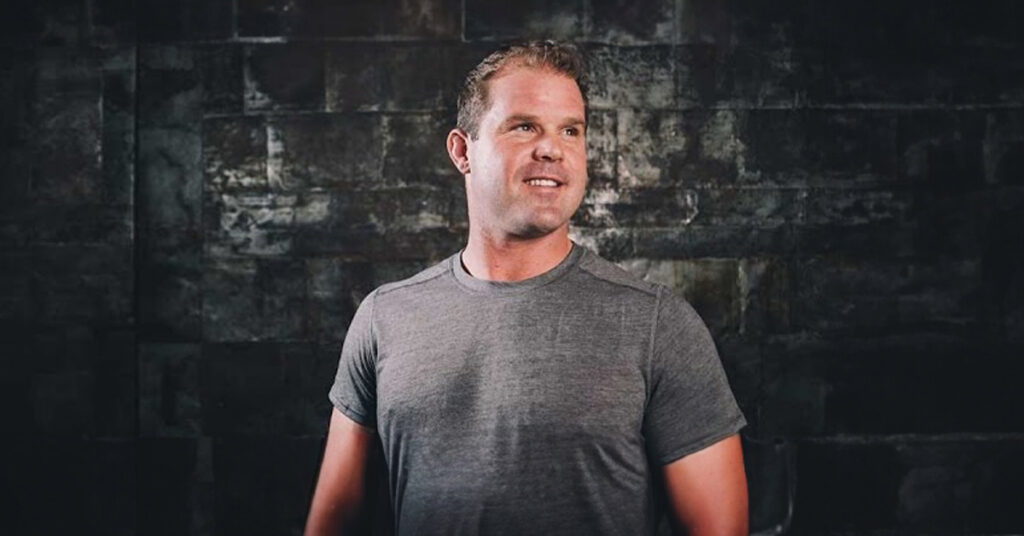
If you have any interest in leveling up your energy, your focus, your mental stamina (and possibly even saving your life), you'll want to listen to this conversation with my guest Dr. Kelly Starrett.