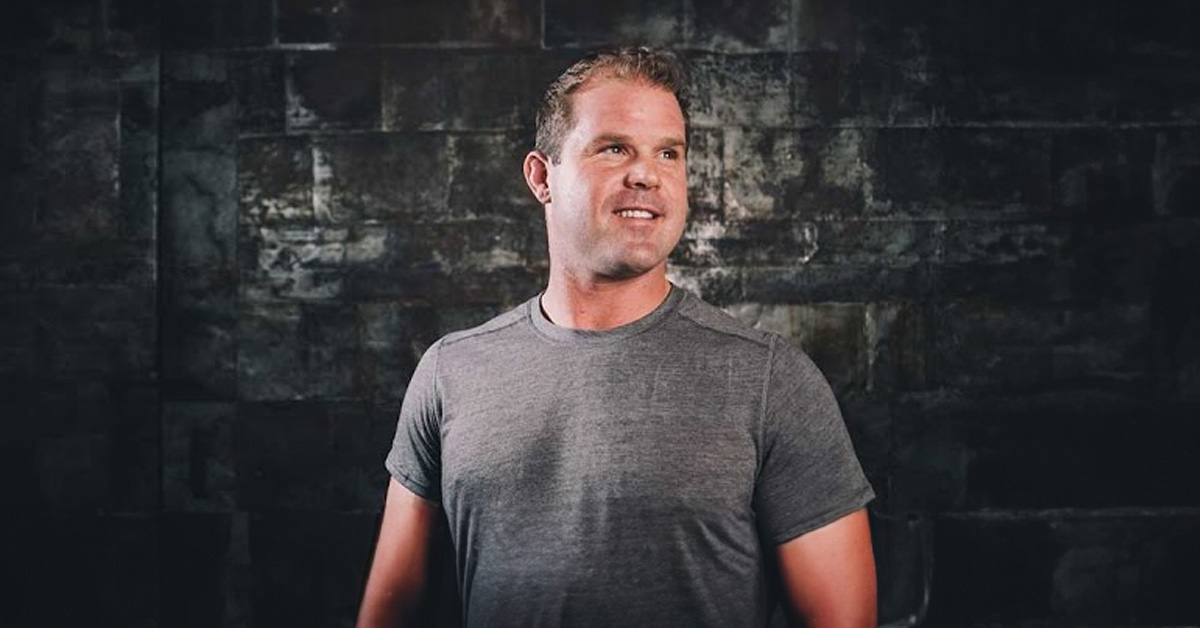
Deskbound – Standing Up To a Sitting World | with Dr. Kelly Starrett


About Episode
It’s no secret: Sitting all day just plain sucks. But when working an intensely creative job for long hours, what other options do you have? The good news is there are now TONS of options, and if you’re not sure where to start, this episode is your first step.
If you have any interest in leveling up your energy, your focus, your mental stamina (and possibly even saving your life), you’ll want to listen to this conversation with my guest Dr. Kelly Starrett, author of the New York Times bestseller ‘Becoming a Supple Leopard,’ which has revolutionized how coaches, athletes, and everyday humans approach movement and athletic performance. He is also author of the book ‘Deskbound: Standing Up to a Sitting World,‘ as well as the co-founder of San Francisco Crossfit and MobilityWOD.com where he shares his innovative approach to movement, mechanics, and mobility. He works with elite Army, Navy, Air Force, Marines, as well as players from the NFL, NHL, NBA, and Major League Baseball.
To put it simply, Kelly is as badass as it gets, and I consider one of my greater accomplishments in life getting this guy in front of a mic to chat with me for an hour (even if his wife did choose to do the dishes in the background for a few minutes).
In this episode we talk about Kelly’s book Deskbound and really dig deep into the science behind what’s happening to our bodies when we sit for too long, but more importantly we talk about ways you can change your environment to become more active and create what he calls a ‘movement rich space.’ If you have any interest in escaping your desk chair, this episode is the place to start.
Episode Highlights
- Why even professional athletes need lifestyle coaching
- Prioritizing your health by shaping your environment
- The adverse effects of living a sedentary lifestyle
- Prioritizing movement above just sitting or standing
- How sitting affects your physiology
- Focusing on problems in function rather than responding to pain
- Kelly’s guidelines for mobility and designing your environment to facilitate your health
- Leaning to perform basic physical maintenance on yourself
- Avoiding pointless trips to the chiropractor
- Contract/Relax exercise cycles
- The importance of consistent exercise over extreme workouts
- Enhancing your soft tissues with ten minutes of exercise a day
- Easy ways to stay metabolically active at your desk job
Useful Links
About Guest
Dr. Kelly Starrett, DPT, is the author of the New York Times bestseller Becoming a Supple Leopard, which has revolutionized how coaches, athletes, and everyday humans approach movement and athletic performance. Dr. Starrett is a co-founder of San Francisco CrossFit and MobilityWOD.com, where he shares his innovative approach to movement, mechanics, and mobility with coaches and athletes. He travels around the world teaching his wildly popular Movement & Mobility Course and works with elite Army, Navy, Air Force, Marines, and Coast Guard forces; athletes from the NFL, NBA, NHL, and MLB; and national and world-ranked strength and power athletes. He consults with Olympic teams and universities and is a featured speaker at strength and conditioning conferences worldwide. Dr. Starrett’s work is not limited to coaches and athletes; his methods apply equally well to children, desk jockeys, and anyone dealing with injury and chronic pain. He believes that every human being should know how to move and be able to perform basic maintenance on themselves.
Transcript
Zack Arnold: I’m here today with Dr. Kelly Starrett. He is the author of Desk Bound, Standing Up to Sitting World. He’s also the author of the New York Times bestseller, Becoming a Supple Leopard. He’s the co-founder of San Francisco CrossFit, the website MobilityWod. He’s worked with the lead army, navy, air force, marine, coast guards, athletes in the NFL. And be.. I’m, I’m just gonna stop now. Otherwise, there’s not going to be a show, because I only have 60 minutes, and if I talk about all your accolades, I may never actually hear your voice. So, Kelly, it is a pleasure to have you on my show today.
Dr. Kelly Starrett: Thank you so much, and I appreciate you, you know, spearheading this huge deal, I mean, you know, the errors of being a modern human. This is it.
Zack Arnold: Yes, exactly. That’s where I want to just go right away today. Is my audience is very different than the audience that you may be used to, or the world that you live in, because you’re dealing with CrossFit athletes and triathletes and people in professional sports that already have some knowledge or idea behind mobility, behind fitness, but at the same time they may not understand the detriment of being a mobile for most of their day, which is why you’re here today.
Dr. Kelly Starrett: Well, what’s interesting is that you make an assumption about the sort of understanding about how people conceptualize their, their day, their environment. Certainly, you described a group of people that work out very hard and train, and maybe even compete at a high level. But it turns out that first principles are first principles, and just because someone you know may play in the NFL does not mean that they actually don’t get enough movement during the day, that they eat right, that they sleep right, they manage their stress, they spend, you know, the rest of their day sitting, and it’s interesting, you know, we came to look, full disclosure here, it was not my dream as a child to lecture adults about ergonomics and posture, that was the worst dream you can have as a young man, and but ultimately we have to have a conversation about lifestyle and we have to have a conversation about habitus, which is a fancy word for, you know, how are you spending most of your day and what are you doing, and the problem is, you know, the information age has has democratized these this information for us in such a profound way, but it is overwhelming. It is a sea of chaos data, and what we’re seeing is that people, you know, are really confused. I’m gonna be paleo, I’ll eat this cinnamon, I, you know, I work out for 20 minutes, really hard, high intensity, and then, you know, cholesterol is a mess, you know, blood panels a mess. Mess sleeps, a mess, hair falls out, no sex drive, can’t focus. You know, I mean, it’s just all of the things that we’re seeing is we need to be able to apply some basic principles, and one of those foundational concepts at first is, you know, what are human beings designed to do? Who are we? What? How do we evolve into this body over the last two and a half million years, and what are the implications of the physiology on the environment? because the thing that makes us human is our ability to shape our environment to our need, and what we’re happening right now is that we’ve created all this, this, you know, load the this this construct about the way we live, and it’s shaping us, and what we have is these sort of a type one error around the physiology around how we operate, and subsequently we see errors in the system that get expressed, you know, because human beings will live for so long.
Zack Arnold: Well, I’m really, really glad that you corrected me immediately, which is part of the reason I brought this up, is this idea that, oh, well, if they’re NFL players, and for example, you have a story that I’d like you to talk about, where you dealt with an NCAA professional team, where you just have this assumption that, well, they’ve got it all figured out, they’re fit, and they’re quote unquote healthy, but that really isn’t the case, and even being a professional athlete is not enough to get you over the hump of dealing with being sedentary, so can you talk about that story where you dealt with that NCAA team?
Dr. Kelly Starrett: We came to this, the error around sitting so much and not moving. More importantly, this is not this is not a conversation about should I sit or should I not sit. This is a conversation about are you moving enough during the day, because you know we have plenty of research that shows that cashiers and people who worked industrial lines in industrial evolution were miserable, you know, standing on hard surfaces, you know, not moving, that’s a problem. And the fundamental idea is that we need to be in motion, and it’s small amounts of motion. Since I’ve been talking to you, I’ve, I’m sitting cross-legged, I’ve been squatting, you know, I’ve been in a lunge already, and you know the idea here is that you know when we were working with this high-level football team, and they were seeing a sequela, or a series of problems that all look very similar, you know, that we can’t get ahead of the short hip, we’re seeing guys are overextended all the time, it’s causing low back dysfunction, their calves are always tight, the quads are always stiff, and I said, well, hey, just do this for me, just take a look at what, how much of those time those guys are sitting, and they were sitting 12 to 14 hours a day, and you know, imagine sitting as a big guy in a little chair at university, and then the problem is now that we’re not just aggregating sitting time at work or at school, but the whole environment has shifted, and that we’re spending a lot of time in front of computer, in front of a screen, you know. The Henry J. Kaiser Foundation, Family Foundation, did a study, and they found out that kids between ages of like 12 and 18, might even 1118, were spending over nine hours a day in front of a screen, and just total screen time, and that some of that was work, school, smartphone, TV, Xbox, and it all aggregates into a lot of time when we’re just not moving, so we just, we had them try to do interventions where the guys were sitting less and moving more, and they got to finally got ahead of the environmental load, which is really what we want to consider, is that you know these – what we know from the movement science, the way we, we understand the complex phenomenon of skill acquisition, for example, is that movement, you know, is a is a pathway in the brain that the neuron, so you’re not wired for a single muscle or tissue, that’s not how your brain works. Your brain works based on movement, so the way you move your brain, your brain doesn’t think fire your deltoid, stabilize through your triceps, just that’s that’s nonsense. What your brain thinks is that we’re going to reach into this position, or or a squat is how you know these fundamental patterns are how the brain is wired, and if those neural pathways end up becoming reinforced because we use the same thing over and over again, so what ends up happening is that there’s a biological process called myelination, and you’re the Schwann cells in your brain basically come and myelinate, they lay down insulation over neural pathways that are constantly reinforced. It’s like the activity down the telephone wire brings in the guys who are like, oh, this is this must be important to us, because we do it all the time, and we reinforce that. And this is why patterns and habits are so difficult to break, and why we try to practice, practice, practice all the time, because what we know is that practice doesn’t make perfect, practice makes permanent. So, the positions that we adopt as a matter of course, in, you know, without consciousness, then become our defaults, and in the body adapts to that, because we’re such a wonderful adaptation machine. We are designed to basically, you know, smoke a cigarette, eat a little chocolate donut. Us run really fast, and we can do that. We are, we’re amazing, but what we’re not seeing is the fact that you know we understand this biological skill acquisition process, and we’re not making sense of how we’re spending our days. And then we wonder why we’re breathing very shallow all the time, and it has implications on our nervous system, has implications on our, you know, blood pH. There’s a whole lot of things that matter. What we can do is really simplify this for people by saying, hey, look, you need to move more, and we can remain agnostic how you do it, you know. And I think when people begin to understand the big patterns, suddenly it doesn’t feel like they’re going from.to.or connection to connection. What ends up happening is that they can figure out themselves, because we are very clever animals, how to incorporate these things into our individualized life.
Zack Arnold: Yeah, absolutely. The key here to me is like you said, it’s not just about sitting being bad and not sitting, it’s about moving, because when you talk about people that stand all day long, but they’re still mobile. They have all the same issues, except now they’re probably going to have sore legs and sore feet and sore lower back, but they’re not moving, they’re not getting the circulation, they’re not getting the lymphatic system movement. That’s right. So, talking about the idea of standing not being much better than sitting, let’s go a little bit into this idea of how their actual problems, as far as like injuries, and the fact that this is one of the most detrimental industries, and when I say industry, I don’t mean my industry of film editing, I mean any sedentary industry. People think, oh, well, what’s the big deal, I’m just sitting all day long, but it actually is much more severe than that.
Dr. Kelly Starrett: Well, what we want people to understand is that these are not emergency, if you sit down, you’re gonna, your head’s gonna explode, or your neck’s gonna fall off, you’re texting in a bad position. This is not how it works immediately, but the problem is how we’ve traditionally categorized dysfunction, right? Or poor function is, does this cause pain, yes or no? And the problem with pain in the body is that it’s, it’s what we call a lagging indicator, it tells me about a tissue strain or stress or some some tissue or position that isn’t sustainable, and my body finally can’t buffer it very well, and it throws up this pain signal, says, “Hey, time to change, time to move, and that pain is really a little prod by your body, just telling you that your biomechanics may not be in a great shape now. If you run and you’re getting pain, there may not be anything wrong with you, just maybe a terrible runner, and that your body’s telling you that you cannot slam your heel into the ground at two to three times body weight for the next 10 miles. Right, this is pretty simple, you know. And you know, it’s like grabbing a hot pan, you can grab that hot pan, but you’re going to get some feedback that you may be damaging some of your tissues, you know, you may not have burned your hand, but boy, it hurts the rehearsal grab pan, that’s what a lot of the musculoskeletal pain signals that we’re getting. Hey, maybe, or maybe your positions aren’t good, and the problem is with the pain is that, again, as a lagging indicator, it tells me about something after the fact, right. It’s not in real time, it’s saying, “Hey, you know, you may have been sitting hunched over your desktop for the last two hours, and now your neck hurts, right? And you know, now you have a stiff neck, and you’re like, “I’m so stiff, my neck hurts. And in the issue is that we are, we’re categorizing all of the detriments, all the down regulation of the extraordinary human function, which we’re capable, and we’re categorizing it as well. It may or may not cause pain, and the problem with that is that it’s not very nuanced. It’s either, you know, my check engine oil light is on, or it’s not on, right? And that’s that’s not good enough. And what we want people to understand instead is let’s focus on function, and that we know unequivocally is that when you sit down, it’s very difficult to stabilize your trunk as well as you can when you’re standing or moving, you know that when you sit down and the load on your diaphragm, you know the load on your organs, your pelvic floor doesn’t work very well when you don’t engage the musculature and the connective tissue of the hips. And how you know, how do we know we see a lot of pelvic floor dysfunction? And when you’re in an overextended or flexed position, we don’t see good function of the diaphragm, and we don’t see good functional pelvic floor. It turns out that in the United States, the adult diaper industry is a multi billion dollar industry. Well, what’s going on? What’s going on is then once again we can sort of take this 30,000 foot view and start to look around and say, hey, look, I’m not sure what it is, but diabetes is up, you know, 400% in the last 10 years. You know, hey, for the first time in the history of the world, there are more obese Americans than non-obese Americans, right? That we’ve unchecked childhood obesity, that you know, you know, we can just tick the box of sort of errors, right, that aren’t pain-based. That are about function based, and we can start to ask questions. Well, what’s going on here? Is it really just big soda that’s just crap? You know, I know a lot of, you know, heavy people who don’t drink any soda. Well, then what we’re the problem is once again is that we dive back in and we’re looking for a pill or a quick fix, and I don’t mean to menialize or trivialize, you know, the fact that people aren’t empowered to be able to take control of their lives. We haven’t given them the right tools, but once you start to simplify this, you know, hey, you have to sleep eight hours. If you don’t keep it over seven hours for me, please, because when you get less than six hours of sleep, we know you’re going to be immune compromised and pre-diabetic, you’re going to be insulin insensitive. Why? Because not sleeping is a massive stressor, and so suddenly we start to aggregate that, you know, add that to the fact that we’re not moving very much, to the fact that, you know, sugar and crap is just so accessible and so delicious, right, that we’re stressed out, that we don’t have a movement practice, and all of a sudden you created this perfect storm of movement, error, dysfunction in the human body, and you know, and this thing doesn’t happen overnight, this is a process of decades, so when it finally gets our attention, you know, we have been doing something for 1000s of days, and it’s difficult to back that burning semi trailer down the blind alley and put the fire out simultaneously.
Zack Arnold: Well, and the thing that really struck me really, really hard in your book was the following statement that the typical seated office worker has more musculoskeletal injuries than any other industry sector worker, which includes construction, the metal industry, and transportation workers, and the World Health Organization, now ranks physical activity as the fourth biggest preventable killer globally, which kills over 3.2 million people. Like that, to me, should be enough of an alarm bell. Like, it would be awesome if, when you sat down immediately. You like, you said, your head exploded, or you texted. It’s like, oh, well, people would pay attention, but because it’s so slow, people don’t realize the severity of this over the course of time.
Dr. Kelly Starrett: Well, that’s that’s it, you know. And what’s interesting is, we’re starting to see these sort of metadata trends, right? You know that, and now we can, we can start to realize that, holy moly, the solution is really simple. You know, how you know one of the keys to look at this is, you know, human beings, we’re designed to run and to walk long distances, like we do that better than any other animal. And I suggest that you look at, you know, the story of the human body by Liebensohn. You know, he’s a wonderful anthropologist out of Harvard, I would look at, you know, Ready to A Born to Run by Chris McDougal. These are really interesting books that have looked at, you know, our persistence running, persistence hunting, the way we’re just kind of supposed to be in kind of motion, and what you see is that the interventions that we know that make massive difference to people are free, that are easy. We just have to bring the consciousness to it, and then apply, apply the salve, apply the bandage for enough time that it actually makes a difference. And you know that, for example, you know, my wife and I now are, you know, start our nonprofit called Stand Up Kids, and to date we have about 35,000 public school kids standing in the last year, moving to moving desks, desks that have our dynamic workplaces with a movement rich environment, kids can sit on the ground, the desks have this thing called a fidget bar, which swings back and forth, and, and what we’ve seen is, I mean, that’s really important to get, you know, get kids moving, and I’ll talk about that in a second, but you know, we just started something called the Walking School Bus Program at our school, and you know, one of the problems we see a lot of parents, you know, choose to not walk their kids to school because they have work commitments, and instead what we did was we organized a couple bus routes where a few parents are the volunteers, and now we have about 40 or 50 kids on our school bus that walk the mile plus to school every day. One of those things is just, hey, we’ve got to program in more movement as a matter of a normal daily excursion. And here’s an example: my wife is two-time world champion. She’s she trained. She’s an endurance open ocean paddler. She’s badass. And you know, we own a gym. And when Juliet walks to school with our daughter, she easily hits her walking goal. When she does not walk to school with our daughter, in spite of exercising, she does not move around enough, even though she’s working in a standing desk or standing state, standing movie station. So, what’s interesting is that you know we have tracked this on our own children and seen that on days where we didn’t walk to school and it was raining, our kids didn’t move at all. They moved like 3000 steps in a day, and then days where they did walk to school, raining or not. They’re easily over that 10,000 mark, which is just, you know, a rough guideline or a base mark of saying, hey, you know, we need to move more, and I think that’s that’s what we want to remind people. One of the reasons that these fitness trackers are so great is that they bring consciousness to the pattern, or consciousness and awareness. You know, I wore a fitness tracker for like four days, and I was like, got it. When I, you know, drink a bunch of coffee in the afternoon, I don’t sleep right, and when I, when I don’t move enough during the day, it reflects in my total movement score. So, the goal here is to think about, you know, what does a 24 hour day cycle look like? How do I begin to just make decisions into something we call blocked behavior, and so a lot of times I think the problem is that we, you know, you walk into a grocery store and there are 40 brands of salt, you know, and you’re just like, what now you’re salt decision fatigue, and you just can’t make another decision, and when you get home it’s nice or exhausted, you’ve been crushing it all day long, we’re so productive, and then it feels good to flop down. So, the goal here for us, for example, is to make decisions in the rest of the day where I don’t have to make a decision. I’ve set the environment up, so if I come back from lunch, right, where I just went for a walk, and I come back to my desk, and there’s not an option to sit down, I’m going to stand up and stay standing, and you know, or be able to lean or perch, and the idea here is that you know if I know myself really well, and if there’s ice cream in the house, I’m not going to go to sleep until the ice cream is gone, and so what I do is don’t keep ice cream in the house, I block the behavior, I block the decision making, I make it so that you know every every meeting that I have, we don’t sit down, the it’s scheduled that I have to go walk, and so we just walk and talk during our meeting, and so that becomes a behavior that I don’t have to make a decision around, it’s a behavior that automatically gets sorted out for me.
Zack Arnold: Well, and that’s one of the, the four simple guidelines that you kind of outline, and I love this idea, you call it reducing optional sitting, which is kind of what you’ve already talked about, but then you talk about these three other guidelines, one of which is for every 30 minutes that you’re desk bound, you should move for at least a couple. You want to try and prioritize your position and your mechanics whenever you can, and try and be in the optimal position. And in my opinion, and this is based off a podcast I did with Josh Kerst, an ergonomist. You know that your best posture is always your next one, which means it’s you’re always moving, but then it’s about performing 10 to 15 minutes of daily maintenance, and this is really where we want to dig in, because you are the mobility guy. Like, you go online, you put in the word mobility, giant picture of Kelly Starr at comes up, and that’s actually how I found you initially was I did a Google search for how do I tape two lacrosse balls together, like that’s how silly it was. That’s how I found you initially, was two or three years ago. I’m like, I’ve heard about this double lacrosse ball thing, how do I do that? And I put it up, and there was your video on mobility wad, and bam, I was off to the races, learning about mobility and all the things that you teach. So let’s start digging into this idea, because
Dr. Kelly Starrett: I will just say that if you’ve ever seen a lacrosse ball rolled or taped together, that’s us, that is the mobility watt. It was one of my patients early on that said, ‘Hey, have you tried this lacrosse ball? I think it’s a little better, and he was dead spot on right. And you know what’s interesting about searching mobility, you know, is that you know suddenly we have substituted the word stretching for a greater word about soft tissue, you know, about rolling, about smashing, about, you know, voodoo flossing, and the real problem is still that we haven’t connected sort of our soft tissue work to a position, right, because remember we’re not wired for soft tissues, we’re wired for positions, and you know, pouring oil all over the car doesn’t really matter unless you pour it in the engine, and the idea here is that we can be a little bit more specific about improving people’s positions, and we can get there, you know, initiating a conversation about, you know, myofascial pain or common, you know, muscle skeletal issues is is easy, but what you’re seeing is that no greater phenomenon that when people begin, you give them better information, then they’ll start to make the decisions and do it themselves, and that is what’s so powerful, is that if you show people what to do, they are smart enough to either say this works or this doesn’t work, I feel better or I don’t. And the fact that physios and chiros and physicians, you know, stand in the way and say, hey, look, human beings are are fragile and people aren’t smart enough, and they’re going to get hurt, that’s nonsense. You know what, what is madness is that we’re going to continue to do the things we’re doing, and not see any change in the system. When we give, you know, so much of the technique and the information we give is what we call non-skilled care. You know, you should never ever have to take a day off from work, get a doctor’s note, to, you know, to find out that your quads are stiff, and that may be contributing to your knee pain. That is a terrible. Terrible use of everyone’s time, you know. You should be able to, you know, have some basic techniques that basically your mom knew, that you, her mom knew, and and be able to take a crack at fixing yourself, because when you do, suddenly that, you know, we’ve conjoined the human experience with, hey, sometimes I have to brush my teeth, you know, I have to eat vegetables. I have to, you know, mobilize my quads. I have to drink water. But these aren’t these aren’t disparate concepts, but they’re all one of the same. A little input to the body.
Zack Arnold: Yeah, and speaking of input to the body, and kind of going back to the idea of the lacrosse balls, like for example, right now standing at my desk, and like you said, you’ve been active throughout this conversation. I’ve been jumping on a trampoline with a microphone muted, I’ve been doing squats, I’ve been walking around, like when I record a podcast, that to me, that’s like one of my workouts for the day. I have a bowl next to my keyboard that has three lacrosse balls, I have Captains of Crush hand gripper, I have a rumble roller in the back of my room, a trigger point therapy roller, all of these things to create what you call a movement-rich environment, but if I were to give somebody a shopping list and say, “Here are all these things, create a movement-rich environment, they’d say, “Okay, great, so what do I do?
Dr. Kelly Starrett: That’s right, that’s right,
Zack Arnold: That’s that’s who you are. You are the mobility guy. So, let’s start talking about a little bit deeper dive into what does it actually mean to do mobility work, and how often do you need to do it? And where do I start?
Dr. Kelly Starrett: Well, what’s interesting is that you can start anywhere, you know, start on something that hurts, starting something that is stiff. How do I know? Well, we can give some people some basic soft tissue guidelines, and one of them is that tissues should be pain free to moderate compression, that means if I roll on a ball or I roll on a foam roller, I should experience no pain in that area, and if I do, I found a tissue that’s over stiff or over tensioned, and you know it’s an easy thing to do, find that thing, and then because you know we’re trying to address multiple systems at once, you know one of the easiest ways to desensitize an area or restore its functionality is to do what we call contract relax, so if you’re laying on a ball and you feel something stiff, just contract your muscle or contract that area or that position into the implement into the ball for five seconds, and then release, and then take a couple big breaths in there in the relax cycle, and then just repeat that, contract for five seconds, release, take two breaths until you’ve made a change in the soft tissue. And what’s going to happen is that if you’ve never done this before, you’re going to realize that your whole body is like stiff ass beef jerky, and that you have some work to do, and you know, and this is why we really advocate for people to spend 10 minutes a day working on their, on their tissue quality in their basic positions, and then get the rest of it tomorrow, because what we’d rather see, and we say this all the time, we’re like, hey, we’d rather you be consistent than be heroic, and what you don’t need is a 3040, minute, hour long mobility massage, you know, session, that’s not what you need, you need a little dose, and then you need a response, and we’ll get the rest of it tomorrow, because seven days in a row aggregates into 70 minutes of soft tissue movement prep positional quality, that is a massive, massive amount of time and change in a week, and when you start to extrapolate that over months, it’s really remarkable how much work you can get done, and what you can learn about yourself. What we see is that a lot of people’s proprioception, their bodies of, you know, innate system that basically tells them where they are in space and how much tension the system is under. It’s totally shut down, and one of the things that we see is that when we do some soft tissue work, we up regulate those, those proprioceptive systems, and so it makes a big difference when you know we begin to get people doing some soft tissue, we, you know, we get them to start working on their breathing. You know, one of the things that people are always worried about is, hey, this is painful, this must be hurting me, and what we say is, hey, look, you’re not going to hurt yourself as long as you can take a breath, because you’re still soft tissue, I mean, you can, you can definitely crush yourself and be over, overwork the tissues, but if you work for 10 or 15 minutes, that’s plenty of time, and if we split that in half, that’s only five or six minutes per side or per limb, right? So, what we find is that we can get enough of a dose in that time, we’re not going to over treat, and by cut, because we make sure that you can take a full breath while you’re doing it. We’re not going to go too deep, and we’re going to actually leverage our nervous system, because if you’re holding your breath while you’re rolling back and forth on a foam roller, you’re basically telling yourself this is a threat, let’s not relax, let’s not get our brain involved with this neuromuscular neuro mechanical system.
Zack Arnold: Well, and on top of that, when you have a stress breathing pattern, that’s also going to start raising your cortisol, which is just going to lead to an entire host of other health issues as well.
Dr. Kelly Starrett: Well, we probably wouldn’t see a cortisol spike of, you know, but the issue is that you’re not doing yourself any favors if we’re trying to relax, if we’re trying. To tell the tissues to be normal, and one of the things that we really like people to do is, hey, if you, if you have made the heroic effort to go to the gym, main man, kudos to you, you are already remarkable. And by the way, obesity rates and gym memberships have tracked perfectly in America over the last 10 years, it’s a one to one correlation, which is very interesting, so what we see is that we feel like people are really trying to do the right thing, they’re they’re trying to go to the gym, they’re trying to exercise, and what we, what we know is when you go to the gym, this last thing I want you to do is to get on the ground and roll around on a foam roller, that is not a good use of your gym time, you go to a class, get some instruction, jump into some Pilates, gentlemen, see yoga, get a kettlebell class, go to a cross with gym, go be instructed in training, right? Don’t just put your headphones on and walk around the graveyard, it is the traditional gym, and in that time, what we like to do is save all our soft tissue work or maintenance work for afterwards. After we train, in fact, one of the ways that we can help streamline people’s day is that we typically find that most people have about 10 minutes of downtime before they go to bed. That’s the time we’d like you to do your soft tissue work. And people can relate. If you’ve ever had a massage, when you stand up for the massage, how do you feel? You feel groggy, you feel tired, you feel relaxed. Well, it turns out that this soft tissue work with the breathing has a large parasympathetic response, which means it gets me out of my fight or flight response, and it gets me into the everything’s cool. Let’s, it’s restorative. I mean, this is why we’re supposed to meditate, this is why we, we sauna, this is why we get it. The ice, we’re trying to chill out. And one of the really powerful things that people can do for themselves is to try to back-end load their day with some soft tissue work, like 10 minutes of rolling around while you’re watching the TV, and all of a sudden, what you’re going to find is not only is that a good time, because you have 10 minutes, but also it improves your sleep quality, and now we’ve got a two for one deal, and that is really what we’re trying to do. We’re trying to make it so people can live their lives without having to follow a set of crazy rules and simplify, so they sleep better, they move better, they feel better. It’s easy.
Zack Arnold: Yeah, and I think that one of the barriers of entry that I’ve seen with the people that I work with in my industry is when you say the words mobility or flexibility, and you start talking about this type of work, or you start thinking about yoga, their first reaction is, oh, I’m really stiff, and I can’t even bend down to touch my toes, and I just, I don’t want to have to do six months of work to touch my toes. And I was at an event a few months ago, and one of the speakers there was Tim Adams, and I don’t know if you know Tim Adams or not, he’s the strength and conditioning coach for the Denver Broncos, or was at the time. I don’t know if he still is, but he did this really, really simple exercise where all you have to do is you check your hip mobility by rotating to your left and to your right and seeing how far you can twist without having to use any strain, and then he had us take our toe and push it into the ground, so we had our heels way up, our toes way down. You do that for like 30 seconds, and then all of a sudden your hip mobility was drastically increased, and you got this giant like aha moment from this audience of over 1000 people, and it kind of opened my eyes to saying, wait, this isn’t about working on this for six months, and then maybe I’m going to be more flexible. The reaction to this is immediate, if you know the right buttons to press.
Dr. Kelly Starrett: Well, that’s that’s exactly right. And you know one of the things that you know I don’t think we realize is that you know if you’re thinking that yoga is going to improve your range of motion, that’s a misuse of yoga. Yoga is a movement practice, it’s not a, you know, a mobilization practice, right? You don’t go, you don’t go get a massage, you know, or get a get some body work done, and be like, I’m gonna get stronger, you know, that’s that’s just misappropriation of yoga. Yoga is a, is a movement-based practice where we basically are touching all of the corners of functionality that humans are supposed to be in. The reason people become incrementally more adept during yoga is that they’re spending time in these end ranges of position that are vital that we don’t sometimes touch as modern human beings. And let me give you a really simple example. The typical person might get out of bed, sit at the edge of the bed, sit on the toilet, sit to the chair, get into the car, sit at work, come back home, sit on an exercise bike, sit on the couch. They have not taken their hip through a full range of motion once during the day. They didn’t squat all the way down, their knee didn’t come to their chest, they didn’t express full ankle range of motion in the day. They sort of sort of stayed in this mid range, and what I can tell you unequivocally is that your body is pretty cool about this concept of use it or lose it, and if you don’t ever go into a position, it’s shocking that we would be, we would be miffed if that position became compromised, and so you know we have, we had a bunch of super strong world champion power lifters who are trying to improve their squatting, and what I. Pointed out they were never actually taking the hip through full range of motion, you know, i.e. squatting to the ground, right, being in child’s pose. I mean, that’s what these things are, is that they’re showing they’re taking the body into, you know, its fullest expression, its fullest lexicon, and using it so that we could, you know, then use it when we need it, and you know what you saw there with that coach was understanding that movement, the movement practice ultimately is the next conversation, and that what he did was actually do something called coaching, that he coached better movement practice, and he coached better skilled movement, and you saw an up regulation in the function, knowing, so what we want people to understand is that, hey, walking is great, in fact, it’s vital, and should be a root of your daily activity. Some soft tissue work is important in there, but ultimately, you are an animal that’s a skill-based organism, and we’re going to have to teach you how to squat, how to pick something up, how to hip hinge, how to press over your head, and that’s why that these shapes are represented in all of our books, and why we recommend that people take a Pilates class, take a yoga class, take CrossFit class, go Power Lift. You’ve got to understand that you know there is a skill to be practiced, and to ignore the skill of human movement is to ignore the skill of teaching people how to cook, you know, I mean, you know that that’s it. Well, I have all these vegetables in my house, I mean, I’m good to go, right? No, you have to cook them and make them delicious and want to eat them, and right. And when I think that we can say the same thing about the skill of moving as a human,
Zack Arnold: Yeah, and I love that analogy of the idea of nutritious movement. This is something that I’ve read about a lot with Katie Bowman and with you as well. She’s the best. Oh my god, I’m a giant, giant fanboy of Katie Bowman. I absolutely love her work. But yeah, it’s this idea that you have to kind of look at movement as something you need throughout the day. You can’t just say, well, I’m gonna wait 14 hours and then I’m gonna have one gigantic meal with all my nutrients, like you can’t function that way, so movement is the,
Dr. Kelly Starrett: You can’t function as well that way, or you can function temporarily that way, right, and and that’s that’s this key, that’s you’ve just nailed it, it’s that one we should not be afraid to make movement skilled, and by the way, walking is a skilled movement, you know, and it’s easy if you walk with your feet turned out like a duck, you’re walking poorly, you know, you’re not expressing the way the ankle is supposed to work or the way your hip is supposed to work, but it’s easy, and the most important piece is that, you know, and people contribute to relate to this, if you’ve ever, you weren’t even in a high school sport, you know, the coach just doesn’t dump a bunch of balls out on the ground, be like, “Go for it, kids, you’ll learn the rules, right? It’s drills and drills and drills, and, and then, if you’re lucky, get to scrimmage a little at the end. And we’re not treating our movement practice the same way, unless you know you get into a yoga class and that yogi, she crushes you, right? She’s coming around and making little corrections, and you know, and she’s teaching you that this is the stable shoulder position. Ah, your breathing sucks there, and look at your head, and you’re like, oh, and the whole time you’re reinforcing skilled movement, which are based on the language of positions of the physiology of the human being.
Zack Arnold: And speaking of the language of positions, I want to talk about the position that we started with at the beginning of this podcast, which is sitting, because that’s what the majority of my listeners are doing for most of the day. So, understanding this concept of trying to mobilize the body, what are the most common adaptations that are happening when you’re sitting, and what are maybe like the top three places to start if you just have a lacrosse ball or a foam roller, and you’re in an office and you want to start mobilizing all of these areas that have adapted and are stuck.
Dr. Kelly Starrett: The first thing people should do is, you know, begin to stand more, and you know, we in the book, we look, look, if you’ve ever done yoga, it’s called Tadasana, is the expression of standing meditation, and it’s very skilled, and most people go and do it for a few minutes, and so we still try to put skill back into standing, try to help people understand how their body works, right? You don’t have to just be blind, you know. You know, driving is a skill, you know, it’s okay to make these things skilled, but they’re simple skills. And what one things that we’ll say is, hey, look, you know, if you’ve been sitting for the last 30 years, or 40 years, 50 years, or even 20 years, you know. Do you think you’re just going to be able to get off the couch and run a marathon? Why? Because I used to run as a kid. It doesn’t work this way. And so what we have people do is say, look, let’s get a dose and get a response, put ourselves on a shape ingredient. So what we want you to do is to stand an additional 20 minutes today and just see if you can get 30 minutes of standing by the end of the week each day, and then, and then hold it there for a while. How’d you feel? Hey, it was okay. The next week, let’s bump that up to 45 minutes, and the next week it’ll be an hour, and then we just added an extra hour of standing a day. So, the first thing is to get this dose of response to start to train the body, do. Just like we talked about, and having full range of motion, standing is, is, and is, is a tissue strain, especially if you’re spending the bulk of your hours not standing or not moving, you’re sitting, and so you know what we want people to do is not go all in, because that’s that’s a recipe for disaster, because we see that happen with diets, we see that with any behavior change that’s not going to be sustainable, and so first and foremost, let’s get people on a shaping gradient, moving more, staying more, and over the course of a month, you’ll be shocked, and by the way, New Zealand, Australia, all have even Canada have movement guidelines, Canada, their movement health guidelines for children is to sit less than two hours a day. Harvard basically defines sedentary lifestyle as sitting more than six hours a day, and there’s a technical definition where we fall basically below this sort of energy expenditure of the body, one and a half metabolic equivalents, that’s the technical term. And turns out that sitting, when we sit, we don’t sit actively, and we don’t sit well. We easily fall below that one and a half metabolic equivalent. So, once again, it’s not a conversation of sitting versus standing. This is a conversation of, you know, are you being metabolically active, and we can use that as a determinant about the quality of the shapes and positions we’re in. So, you know, but when you do find yourself having to sit, because there’s plenty of required sitting, there’s actually a lot that you can do. You know, one try to make you know we like to sit near the edge of the chair. If it’s, if you know, don’t have good, a good chair pan, you definitely, your knees should not be near the edge of the chair. You should have, you know, six inches between the back of your knees in the chair, you know, four to six inches. And the other thing is, you know, when you do that, we want your trunk to be working, you know, it’s okay to lean back and take a break, but I want you to be sitting up and tall, and our cue for office workers, pretend you’re sitting in your chair and you’re looking over your friend’s cubicle, or you’re looking over a fence, when you sit tall and try to look over a fence, you now put your head in a good position, your spine, your thoracic spine is stacked neatly over your of your lumbar spine. Your lumbar spine is in a good relationship with your pelvis, and that sitting position, when you’re looking over a fence, is a great cue to say now we’re having good posture. Posture, remember, is a fancy word that means position, and Ash is referring to the position, the spine, the Latin word for Latin root postures, position. So, there’s another thing you can do, and that is make sure that your chair is at the right height, so you have as much foot engagement, energy transfer through the hip to this to the pelvis, and what you can do is that you can just slide your chair back and forth, so you put your legs out in front of you, kind of push-pull, like you’re crab walking, and then crab walk side to side. Then raise and lower your chair, kind of like quarter inch at a time. What you’ll find is that there’s a position where you can scoot with power and authority, and when you’re too low you can’t scoot, and when you’re too high, you can’t scoot, and this has been a well-documented model, or a schema for setting a chair height that allows us to have the most hip engagement, and the more hip engagement I have, the better and more stable I can be through my spine, and so if you remember, hey, I’m gonna try to look over the fence, and I’m going to try to get my feet on the ground into a powerful position based on the chair height, suddenly you’ve just made that sitting situation a whole lot more tenable.
Zack Arnold: So now that we have a kind of a good idea of what we can do if we’re going to sit in the proper position, let’s say that we just start to over the course of the day we slouch a little more, we slouch a little more, and then 15 years later we have massive kyphosis in our spines, and we’re saying, yeah, exactly. So, you’re essentially a hunchback now. How do I start to reverse that? If I’m obviously I want to be doing the Pilates and the yoga, but if I just want to take those five minute breaks throughout the day, and I have a lacrosse ball or a foam roller, what are like the key places? Just the couple of the quick wins,
Dr. Kelly Starrett: There’s no such thing as a quick win, or a key place, because that’s to say that some part of your body is not important, and some other part of your body is important. You know, we like to conceptualize, you know, our model is based on spine first, so if we, you know, we see the central nervous system as the limiting factor, you know, as the rate limiter to, you know, human function, and you know they’re all these old sayings, these Chinese sayings, and things like, you know, you’re only as old as your spine, you know, and what I can tell you is that, you know, if you started, you know, start on your back and mold, you know, just start rolling through, you know, the tissues next to your next to your spine, if you got on a roller and just tried to extend and bend over the roller through your thoracic spine, you would see massive, massive change. So, what we do is, we know we see oftentimes that people have low, non-specific low back pain, and I’m like, what have you done for that? They’re like, nothing, you know. I took some ibuprofen, I hoped it got better, I just, you know, I stopped. Doing X movement, you know, but you know your back is also comprised of a tissue system, and it turns out the connective tissue of your back, the thoracol dorsal fascia, plus these powerful erectors and QL musculatures, you know, there’s a lot of input you can give to your spine to address common myofascial dysfunction just by laying on the ground and rolling around on a ball on your low back, it’s that simple. And I don’t think people realize, you know, that when they improve the efficiency of the system, we see that the system up regulates and they’ll get pain amelioration or pain attenuation in the background. You know, this is this is easy, and you know if you’re sitting in a chair, you know what? Can you do well? Put that lacrosse ball, or you know, ball underneath your hamstrings. You know, try to, you know, you’re sitting on a surface that was never intended to be a weight-bearing surface, right? When you’re sitting tall, looking over the fence, while you’re sitting in a chair, you’re basically sitting on your ischial tuberosity is predominantly, which are weight-bearing surfaces of your pelvis, you know, the aka your sit bones, but your most of us are sitting, we’re not sitting on our ischial tuberosities of our pelvis, we’re sitting on our hamstrings, we’re sitting on the backs of our legs, and what happens is, you know, if you take any tissue, put it under high compression at high temperature, you get lamination, and what we’re doing is a whole bunch of butt lamination, hamstring lamination, and not, you know, what a big surprise that those tissues, you know, become stiff and fibrotic, even though you know they’re designed to be, you know, like, like leopard springs, you know, so you know you can really start anywhere, and you know, roll on your feet, you know, get some work done. I think you’re gonna.. people are shocked the first time they roll around on their feet, they’re like, “this hurts, and you’re like, “yeah, your feet are a stiff hot mess. And the goal here again is just get a little input today, and begin a discussion with yourself. And we remain agnostic about where you want to enter, you know, that we can have technical terms, you start with feet, you start with pelvis, we say start anywhere.
Zack Arnold: Yeah, and I absolutely love that idea of starting anywhere. And, like I said, a little bit over two years ago, my start was, how do I tape two lacrosse balls together, and I stick them together, and I rolled them up and down my spine between my shoulder blades for the first time, and I thought somebody was stabbing me with a hot knife, and that’s vastly gone away, but every time I do it, and I feel discomfort, I always think of Kelly Starrette, and, like, yep, Kelly put me here right now. So,
Dr. Kelly Starrett: What’s my dream?
Zack Arnold: Absolutely. Well, you’ve achieved your dream, because every time I stick that double across ball between my shoulder blades, and, like, Kelly, so I want to be absolutely respectful of your time, this has been an absolute pleasure. If people want a resource where they can just really dive deep and learn everything about mobility, get videos, get prescriptions, get programs. How can they find out more about you?
Dr. Kelly Starrett: Well, mobility wad, w o d workout of the day, is our is our main home base, known even in there we have, we’ve been doing daily programming for people, so you don’t have to think about what you need to say or do, and we’ve been doing that for many, many years. We have over 2000 videos on the site. We have a whole, you know, an institute, or if you really want to be a nerd and have a, you know, primer for how your body works. We’ve got, you know, an online course there. We, you know, even in the ecosystem, we have something we call the mobile, the MWAB list, which is like an Angie’s List to try to find providers who kind of speak this language, so you can find a Cairo or a physical therapist, or you know, some kind of body worker there, and you know the main thing is even if you just wanted to get started, you can go to YouTube and just start, you know, engage in a conversation in our books, like Ready to run, or even in desk bound, we really try to create some basic templates and guidelines, so that you can just kind of plug and play, follow along. But what we find is that once you’ve initiated a conversation, you’ll be ready for the next conversation, and know what that conversation is. You don’t have to be an expert to start.
Transcribed by https://otter.ai
Episode Credits
This episode was edited by Curtis Fritsch, and the show notes were prepared and published by Jakin Rintelman. Special thanks to Krystle Penhall and Sarah Furie for helping to spread the love!
The original music in the opening and closing of the show is courtesy of Joe Trapanese (who is quite possibly one of the most talented composers on the face of the planet).