Transcript
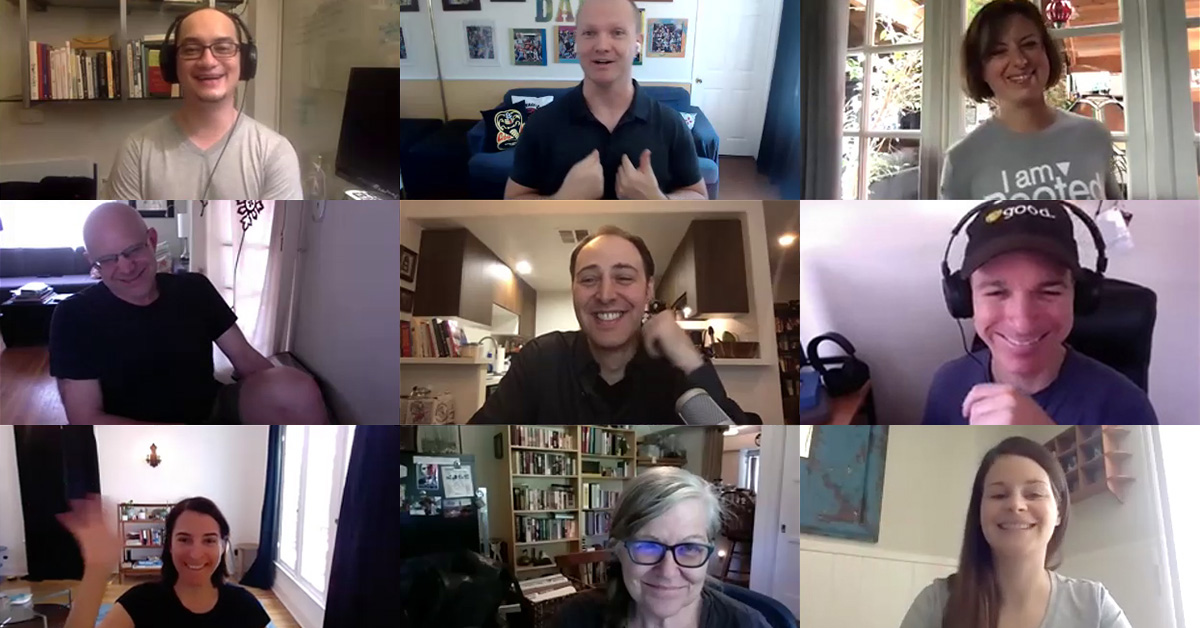
Zack Arnold: So I’m here today with Misha Tenenbaum, who is the CEO, founder of edit stock and edit mentor. And as you can see, I’m also here with my optimizer coaching membership community. It’s been a lot of fun. This is a Friday afternoon. We’ve been trying, I think, for at least 743 times to get this on Facebook Live. Unfortunately, for whatever technical reason, we have not been able to but we are forging ahead. We are being persistent, and we’re going to make this happen. So if you’re watching this after the fact, I appreciate you finding it. If you’re listening to it on the podcast, here we are once again. So the topic of conversation today is going to be, how do we start a side hustle? Start. A side business generate some form of additional income because of the realization that as creative professionals, we rely on other people’s projects and ideas to support ourselves. So I wanted to thank everybody for being here and also for persevering through all of the technical challenges that we’ve had today, including, by the way, the one I didn’t even mention, maybe to the group I did here, but to those listening or those that are watching. Five minutes before this call started my headset that I’ve used to record my podcast for years that also decided not to work, which means if you’re thinking, why does this sound so much different? It’s because I’m on my really crappy backup microphone. So I apologize for that in advance. So where I wanted to start today with the group that I have here, before I jump in with Misha, is I wanted to know, based on the conversations that we’ve already had over the last several weeks about what do we do during the pandemic, how do we get some stimulus? How do we get government programs? Is there any way to generate income? We’ve come down to this idea of providing value to other people, and seeing that there are these psychological barriers to actually be willing to ask for something in return, which is one of the biggest barriers to starting a business. So does anybody in the group have any thoughts about what we’ve talked about in the past, what we’re going to talk about today, that wanted to contribute? Before I dive into all this with Misha, we’ve got Aaron here. Aaron, what have you got for us.
Aaron: So I was helping my brother create some videos, because he teaches and he needed to put those out, and he didn’t really know how to get he knows some things. But I gave him some advice on production and editing. We did some zoom sessions where we sat there and sort of walked through the Edit, and then he edited something together. And he was like, this sucks. I’m like, Well, let me watch it. He goes, okay, yeah, it sucks. But, you know, you have so much breath in between your cuts. He’s like, what’s that mean? So I started, you know, massaging it for him, basically. And once we had gotten to a point, he was like, Oh, this is so much better. So, you know, he felt like he had to reshoot it, but he didn’t really have to reshoot it, he just had to edit it correctly. So with that, I’m sort of trying to do a little consulting with teachers and people who are making zoom videos, who have to make videos for their classes or whatever, be it on YouTube or whatever, and I’m just sort of in the midst of starting that venture.
Zack Arnold: All right, so let’s look at this as a real quick example before we jump in with Misha, one of the biggest questions that’s come up in these past conversations, and I’ve also had this conversation several times, individually, one on one with people, which is, how do I even find an idea like, Where do I even start? What are the questions that I ask? And I think one of the questions that we can ask Aaron right now, that Aaron, you can ask yourself, is, do I think that this challenge that was brought to me that I solved. Is this a unique problem that only this one person had? Or might there be other people in the world that are struggling with the exact same thing right now that I fixed? What do you what do you say to that?
Aaron: I say there’s many, many, many, many people out there right now struggling with this. And that’s, you know, I can’t if I got the business I think I can get, I’m going to be overwhelmed. So there are a lot of other people that could do this idea, and people who have knowledge better than I do, but I don’t think you really you just need to know the basics, right, of storytelling, editing and such as. They’re not putting together feature films or whatever. They’re trying to put together a little thing for their class that looks good enough to be what it needs to be. So I think, right now, I think there’s a limited time, but I think there’s a demand for this at this moment.
Zack Arnold: Interesting. All right, so I’ve, I’ve already heard a couple of potentially either limiting beliefs or myths about what it might take to start a business, and I just see Misha. He’s just like, talking, come on, I’m ready. Let me, let me answer it, right? So, so Misha, I’m going to turn this one to you. I definitely pointed out a couple of things that Aaron said, but I’m going to, I’m going to throw it over to you first about this idea of, oh, looks like I’ve solved somebody’s problem. There might be other people out there with that problem, but there’s, there’s, either there’s a bunch of people already solving this problem, or I’m not ready yet.
Aaron: People can help solve this problem. I can also solve this problem.
Zack Arnold: That’s what I’m saying. There are a whole lot of people that could be doing this right, right? So, so why you so? Misha, I’m gonna throw it over to you because I know that once I pull the string, it’s I’m not going to be able to stop. I’m very, very excited about this, so I’m going to throw it over to you and see where we want to start this conversation today.
Misha Tennenbaum: Just just about what Aaron was talking about, there’s a thing called Market segmentation, which is like, there are different groups of customers, and you live in Los Angeles, and most of the people that you know or talk to have goals. Or do work on TV shows and stuff, but the category a customer you were talking about doesn’t require that skill set. They might require something else, like if you know what teachers need to know, you know how they pay for things or how they set up their you know how to use Google classroom might be a valuable skill in that way. So segmentation is important, like you have to know who your customer is. You know you’re not competing with Zack to get that customer right now, and you have plenty of knowledge to get that customer.
Zack Arnold: That’s actually incorrect, because as soon as we’re done with this call, I’m going to find out who Aaron helped, and I’m going to swoop in and I’m going to try and take that business from him. I probably shouldn’t have said that, but yet, you’re right. It’s so interesting that you bring this up because I’ve gone through this exact same process, even for myself, where what we’ve talked about on essentially all of these calls is trying to find the opportunity in every situation. And I’ve been through this exact same process where six weeks, eight weeks ago, the mere thought that there was any value whatsoever to the fact that I’ve been on essentially over 1000 hours worth of zoom calls and I navigated one on one conversations and group conversations and large group conversations and presentations and webinar format to me that had no intrinsic value. And then all of a sudden, things changed in the world, and that value skyrocketed. And I pitched an idea to LinkedIn learning, and they said, Oh my god, stop everything you’re doing. We are shooting and we are producing and releasing this course as fast as humanly possible, because the number one search term we have is how to use Zoom. Bam. All of a sudden the market segmentation is people that are in the corporate community or in the educational community that are saying, my entire life is now virtual. I’m on Zoom. I have no idea how to mute all of my students, and I’ve got a bunch of kids that are sharing whiteboards when they shouldn’t be, and they’re doing all this stuff. I don’t know what to do. I can’t manage it. So I thought, huh, there might be an opportunity here where there’s a lot of people that need to solve this problem, and I’m in the position to provide value to solve that problem. So Aaron, that’s exactly what you’re doing, is you have somebody that’s fumbling around with video or audio or trying to put together a zoom call you can fix that. You could potentially find a lot of other people that have that same challenge. So I want to go back a little bit bigger picture. This is kind of a microcosm of what I’m hoping to dive into today. But before we dive too deep into the weeds, I want to go backwards a little. So Misha, you are the founder of edit stock. Anybody that’s in the post production industry at this point, especially on the educational side of things, edit stock is essentially a household name. But really, if we’re going to talk about starting a business from the ground up, and I’m just an assistant editor, or just an editor, and you know, how am I any different? Or who am I to think I can do this? I mean, Misha, do you even relate to that at all? Like you’re running your own thing? Like, what do you know about just being an assistant editor in a small, dark room that hasn’t
Misha Tennenbaum: like, Well, I mean, I was an assistant editor in a small, dark room for many years.
Zack Arnold: Oh, were you now? Oh, well, then that might be a value to understand your thought process. I would love to know a little bit more about where edit stock came from, where the first kernel the idea was, how it got started, and now how you’ve got this giant empire.
Misha Tennenbaum: I want to, I wish it was a giant empire. Empire. It is my own. It is giant. We’ll see. But I think that the the two ways to approach a business are, you know, what? What problems do people have? But another one is also just like, What things do I possess? It’s not like, if you own a lawn mower, maybe that’s what you can sell. And it’s not because you’re an expert, it’s because you have because you have a lawnmower. So when, when I made editstock, it was because avid asked me to present at the Super meet ama linking, which was a long time ago now, but that was the feature that they wanted to present, and they said
Zack Arnold: It still doesn’t work anyway right now, even though that was a long time ago. So I’m not going to go into that though. Continue,
Misha Tennenbaum: Right? You should still consolidate everything. So they I said, what project do you want me to use? And they said, whatever you want. And I it just came out of my mouth. I just said, I’m shooting a short film. Do you guys want to fund it? And there was no short film. There was no script. There was no idea of it. Even five minutes before that, there was nothing. It just sounded fun. And they were, they were like, well, how much do you need again? No planning, no budget, nothing. I said, $5,000 and he said, they said, Great. Okay. So now, you know, now I have this $5,000 it might have been six actually, and I don’t want to be a director, I don’t want to be a producer, I don’t want to do any of that stuff, but I’ve got this mission, you know, I’ve always liked public presenting, publicly presenting. So I hired some people, and the same thing happened. I think that happens many shorts. We spent too much. I spent. 10,000 so now and and the movie is called handicapped John, and I still sell it on Edit stock. What’s funny is that I didn’t, I didn’t want to lose that $4,000 because, again, I don’t care about becoming a director or producer. It’s like not at all my goal. I just didn’t want to lose $4,000 so I sold it to video Symphony for $4,000 and then I had this idea for edit stock, and was like, This is what it I’ve got this plan. There’s going to be other schools out there that are going to do this. And you would think that, like, I just jumped right into it, right? That’s like, how this story is, is going. I did nothing with the idea except tell people about it for like, two years, at least. And the thing that made me actually do it, I was working on this werewolf movie, and I was like, in the in a dark, dark place, very dark place. The movie had, like, one visual effects company had sued the producers, and the producers had sued the visual effects company, and I was combing through something like five or 600 visual effects shots trying to figure out which ones were paid for, which ones need to be paid for, which ones still work in the cut, which ones don’t fit. And at some point during that process, in the middle of the night, I got an email from a company called stockfilm dailies.com and it was started by a person who I’d been talking to about my idea, and I My first thought was they stole it, and then my second thought was shame that actually I didn’t do anything about it. And here I am just sitting on how many people do I have to tell about it before I just do it? And at that point, the as I describe it, the level of shame overwhelmed the level of what failure would feel like, you know, just I just couldn’t it could no longer not be made. And so I made it, and I did the same thing. I took $4,000 started the website, and then said to myself, this will definitely not work. I’m going to lose all my money, so I will never put in another dollar ever. And to this day, I have not put, I mean, I’ve reinvested profits, but I don’t put in, like, money for my personal bank account anymore. I put everything that edit stock makes into it. So yeah, so that busts one of these myths too. That’s like, you need money to start a business. You really dumb, not a lot.
Zack Arnold: Well, I think that one of the other ideas this brings up, and kudos to Aaron for floating this in the chat, and you and I are in the same wavelength where this demonstrates and this is a highly debated topic in many entrepreneur communities, but the value of an idea. Some people argue that there’s tremendous value to a brilliant idea. And there’s this concept of the million dollar idea. And then there’s another camp that says that all ideas are inherently worthless. The only thing that has worth is an idea that has been executed upon. That’s the camp that I sit in. I have ideas all day long. I’ve got a million and a half ideas. You want to see all my Evernote with all of my brilliant blog posts that I have not written or released. They’re worthless, but they’re ideas, right? And for a long time, you were sitting on a brilliant idea that had no worth because it had no execution.
Misha Tennenbaum: Yeah, that’s right. And actually, I wasn’t even the first person to make a company like edit stock. Several people had tried and done it in a different way. And I think that a lot of people here feel like, well, you know, I could make X, Y or Z, but a lot of people are already doing it. So for example, ace. I mean, how could I compete with ace, right? But ace actually sells a movie that you can re edit, but the movie is black and white. It’s from the 1950s and there’s one of them. So what I found through, and I recommend everyone do this, don’t be afraid to a lot of people have this feeling like, if I tell someone my idea, they’ll steal it. I actually think you should do the opposite. You should tell 100 people your idea, and those people, the reason I picked the number 100 is it’s large enough that you don’t know all the people, and you should find out from them exactly what they want. And what I found out was schools care about if they’re swearing in it. And so I gave it a rating, and schools care about or students don’t want to edit something that they feel like they can film themselves. So I started looking for film festivals. And, you know, features are too long, and they also want commercials and documentaries and music videos. And, you know, so it’s that we, I have the same idea as a lot of people. It’s just that mine manifested in a different way as all of yours would, because we’re all different people.
Zack Arnold: Well, you decided to take action on that idea, and you developed it. And like you talk to people about it, and I want to dive, I don’t want to dive too deep into the nuances of what edit stock is and how it works, but I think that’s going to factor into this idea of where can I provide value, and is there a problem to solve. So you and I did a deep dive into this in an old fitness and post episode, and I’ll make sure that we link to this in the show notes. Where we talked all about what edit stock is, how the product works, how it solves the chicken and the egg argument of, well, I need to put together a demo reel, but I need a job to have the material for a demo reel, but I need a demo reel to get the job. And I want to talk a little bit more about this. The it wasn’t just, oh, it would be cool for me to make a short film and sell the dailies, but where you saw the larger market and who this could really serve, take me through that thought process, because I think that for somebody that might have an idea they’re working through a lot of the challenges that you work through when you kind of hit that moment
Misha Tennenbaum: There, honestly, I did not do nearly as much market research as I should have, and I just sort of kept telling myself, there’s enough people, but now I think that’s like a pretty foolish way to do it. And with edit mentor, we didn’t do it that way. With edit stock, what I’ve learned is that the market is pretty much colleges. Colleges are about 70% of my revenue, and then maybe 10% are high schools, and 20% are individuals. And some of that is, I should probably raise my prices for individuals, almost definitely, I’m kind of getting a little off track of your question in my
Zack Arnold: Yeah, so I wanted to, and I don’t think you’re going too off track. That’s all very helpful. But I want to go back to this idea of you realizing, oh, it’s not just I can make a few $1,000 selling dealers, for my short, I’m solving a much larger problem that nobody else seems to be really good at solving.
Misha Tennenbaum: Okay, so the first three months of edit stock, I sold $100 worth of stuff, and the first year was $12,000 so hardly enough to leave my job, but I sort of steadily saw it grow a little bit. But the big change for me was I sold a short film to a college, and they said, How much is it? And I said, 50 bucks. And they were like, no, no for all our students. And I said, 50 bucks that. And they were like, how many do you have? You know? So then the next college that called I was like, it’s 100 bucks. And I just kept saying higher and higher and higher numbers until they said no. So I’ve sort of stopped at $400 but in I’m sure that there’s actually market for a larger number. And I just, I think it’s interesting. You know, like a lot of people will say, like, well, Netflix charges $10 a month, so my service must charge $10 a month or less, right? And it actually is completely not correlated to that at all. You know, you could totally have a service for multiple times that
Zack Arnold: Well. I mean, if you’re trying to compare apples to oranges, you solve completely different problems. The problem that Netflix solves for $10 a month is boredom. I need something to distract me from the world, and I need something to entertain me so I can be passive. That’s the problem that they solve. I’m not going to give them $100 a month for that. But you solve the problem with Yes, I go onto a website, I get materials. I’m not streaming entertainment, but I’m getting the content to stream that entertainment. So if I know that you could potentially fill the gap that I can’t seem to traverse, which is, how do I prove to people that I have the creative talent to do the job that can change your whole life? Why in the world would I think that has the same value of $10 a month? That there’s no logic to that?
Misha Tennenbaum: Sure, but I bet you a lot of people make that sort of false equivalency. I have a funny story too about trying to sell handicap John as a show because so I met with a producer. This is after I had made the short, and I’m looking for distribution. Actually, I think I had planned the shoot, but I hadn’t shot it yet. I was looking for distribution. And so the producer is like, well, you know, we can use my director. We can do it in this location or that location. And I’m like, I already have all that stuff planned. I need help with the distribution. And again, the producer is like, well, I can’t guarantee distribution. I can’t guarantee that you’ll make any money on this. And I just we had this awkward moment, because I literally said, then, what do I need you for? Because I don’t need you to spend the money. I need you to find the money. Like, that’s why, that’s why I’m hiring you. And it’s really, it’s funny because so I spoke to last year some students who were producing, students like graduating college to learn how to produce. And I was like, How many of you guys are making a movie? And a lot of them, you know, raise their hand. I’m like, You guys have budgets in mind. They all have budgets in mind. And I’m like, how are you going to make back the money? And no one has any idea, right? Which is probably a common feeling, but that’s your job. That’s the whole job. So what I said to them was like, Well, if I told you that, I would sell your movie on Edit stock if there was no swearing. You had diverse actors, you had multiple locations. You used props that were more practical props instead of visual effects. Would that change the way that you shot your project so that you could make money, which is, by the way, the whole point of the whole. Thing, you know, of course, they all, they all would. So I just think we all, like too many of us, have this idea like, Well, I’m just a hired gun to make your thing. And not enough of us think about this. Is all a business, you know, you’re all businesses, whether you kind of know it or not.
Zack Arnold: Yeah, that’s a big realization. This is something that I talk about in my live networking seminars, is that I basically lead the entire seminar with the following question. So I did one of these in January, before the whole world kind of decided to take a crap on itself. And I had like 100 people in front of me, all of them either editors, Assistant editors, whomever it was, and I wanted to get an idea of who’s in the audience today. So he said, How many of you are professional editors? All right, hands go up. How many of you are assistant editors? Awesome. How many of you are more on the production, producing side, coordination, the administrative a few more hands go up. Okay. How many of you are in sales? How many of you are trying to sell a product or a service? Crickets. Sorry. Let me one more time, how many of you are here to sell a product or service? I’m going to ask you guys a third time, how many of you sell a product or service? And all of a sudden, 100 light bulbs went off simultaneously, and there is a Oh. He means us. Oh, right, this realization that even as a creative professional, that’s a hired gun, that’s a technician, there is no such thing as I work for the same company full time for 35 years. I get my pension and I go retire to the golf course. You are constantly a CEO of a business, of one trying to sell yourself to the next person that wants to get your services and use your services to create their product. So the first step is realizing that whether or not you want to own and run a business, you own and run a business, there’s no other reality around it. You’re already doing that. Now it’s just the question of, does that business continue to provide technical and creative services to others, or can you also provide value in different ways to individuals or to other companies? Right? And that’s a big realization for people, so I’m glad that you brought that up
Misha Tennenbaum: I have another funny one that’s an example of how filmmakers are so awful at this every every year, in the summer, when schools are closed, I go recruiting new movies. So I’m opportunity knocking right? I am literally the opportunity knocking on your door. I’m the thing you wanted. You’re a filmmaker. You made a movie to get something out of it, presumably, sell it, get an agent, get a director, become a director for like, a you know, you wanted something when you made it, you didn’t just only make it for for the purposes of your art. And I would say that about 50% of the movies that I watch I search for the director or the producer or the writer, and I can’t find them. I mean, I literally cannot find them. I can’t find their contact information. I can’t find their websites. The movie doesn’t have a website. I can’t get a screener to the film. It’s like, it’s maddening, because here you are. You’ve done all the hard work, you invested the money, you shot the film, you got into a major film festival, and then when opportunity is looking for you. It can’t find you. Zack and I were talking about this, and I mentioned to him that something like 95% of businesses in the United States are a doctor, a lawyer, you know, a single person who is like their own entity. And all of those entities advertise or make websites or try to, you know, go out and get their services, but like editors, we’re all we just think it’s like, only word of mouth and like quiet between us, and that’s it,
Zack Arnold: Well, and what, where I think part of this comes from is the same concept that I was talking about years ago, when it was just about work, life, balance and better health. There is this inherent belief, and I’m hoping that this belief is starting to be eradicated, because I’m chipping away at it, 24 hours a day, seven days a week. But there’s this belief that I’m just an extension of my workstation. That’s it, right? I’m just a warm body that’s pumping away at these keys and I’m doing your notes and cutting your footage, but to really step away and say no, independently, I am an artist, and I’m a service provider and I’m a business, takes that, takes some confidence to be able to do that, and I think it’s it’s slowly becoming more accepted, but it’s just as easy to say, Well, I’m an extension of my workstation, not going to take care of myself, and also I’m an extension of my workstation. So why should I stand up for myself and believe that I’m a business? Why should I treat myself like a CEO would treat themselves, right,
Misha Tennenbaum: Right?
Zack Arnold: So where I want to go now again, we’re going to go backwards a little bit. I want to go back to this point of $12,000
Misha Tennenbaum: okay,
Zack Arnold: You’ve made your first $12,000 clearly, you’re not living off of this. There’s no Scrooge McDuck scene, at least not yet, where you’re swimming in your own money, right? So while. You were making this $12,000 and for the next year after that, what is it that you were actually doing? What did your life look like? Because, as you alluded to, so many people believe that I’m either a technician or I’m an entrepreneur. There’s no way I can do both. I’ve got to commit to being a business owner. I’ve got to dive head into the pool. This is my entire life. But it doesn’t have to be that way. So talk to me about the big piece in between, the idea and you’re an overnight success story,
Misha Tennenbaum: Right? So there’s no such thing. Well, at least I’m not an overnight success story. I’ll tell you that for sure. There are many years in between that edit stock’s been around six years. I did not start living on it until the third year the time in between. So when it started, I had one movie which was handicapped John, and I begged people for their movies. I mean, I couldn’t get, no one would distribute with me, and I couldn’t, no one would even if I guaranteed the money people wouldn’t distribute with me. It was really the biggest challenge was just getting another movie. The big break I had was I met a director named Ryan Spindel, who gave me a commercial, a little short commercial, that ended up selling a ton. It was just like a perfect fit. And I learned a lot from that commercial what those schools wanted like. Why are they buying that one, but not mine, you know? And after that, what? Then Ryan brought me his other projects, which are, like, amazing. And once I could point to one of them and say, I have a project on my site that got into Tribeca, I could get other Tribeca movies, but that took a while. I mean, it wasn’t quick. I also I don’t want to, I do believe anyone and everyone can start a business, but I just really don’t want to pretend like this is some easy process. There is going. There is just definite, guaranteed failure throughout and ups and downs. You know, you may start one and it may fail, and you may close it and start something else, but you just have to take them as like, lesson learned, and don’t beat yourself up.
Zack Arnold: Yeah, one thing that I talk about a lot. I’m sure I’ve mentioned it on the podcast. Anybody in my coaching program has heard me say this multiple times. But when people say, Well, what’s your secret? I say, there’s really only one thing, I fail faster than everybody else. I just fail really quickly. I have an idea. I try it out, it either succeeds or it fails. I’ve got Glenn over here. He’s been watching me fail for five years straight. He sees it all the time, every single day. Hey, what do you think of this idea? Yeah, no, that doesn’t work. This is broken. This doesn’t work. I just failed an hour ago. I tried to be Mr. Broadcast on Facebook Live. I could have said, Oh, this podcasting thing is just too hard. I’m trying to stream during a pandemic, and worked a few times, but you know what? It’s this stinks. I’m done right? I just failed again. And I’m going to learn from that and find out what was it that caused the streaming issue today? Why is it that we can’t be live? And I’m going to make sure that doesn’t happen again. I’m just going to do it as fast as possible. So it’s not about avoiding failure and saying, This has to be a good idea that succeeds. You got to try your idea and just allow yourself to fail as fast as humanly possible.
Misha Tennenbaum: Yeah, it will happen, for sure.
Zack Arnold: So how long between the idea and you saying, You know what, I’m out. I don’t need to assistant edit, I don’t need to edit. I don’t need to be a technician. I’m now going to be edit stock full time. You said it was about three years,
Misha Tennenbaum: Yeah, but the advantage it was incremental. The advantage that we all have, that I don’t know how much we all appreciate, is that we have time off between projects, and no one views that as a negative on our resume. If you took a hiatus of three, four months and told someone I was working on something, or I just took a vacation, or I just didn’t feel like it. That is a completely acceptable thing to say in our industry. But it’s like, not if you are, you know, in marketing or something, then it’s like, oh, well, then you got fired and you had whatever. So for edit stock, after the first year, I took one month off where I just said, like, I’m only going to do this for one month, and I was able to catch up on things. And then the second year, I just kept dreaming about it and wishing I could do it and I would do it. I ended up doing it for three months with no breaks. The third year, I was an assistant on projects, and it started to feel like, you know, the editors were being good to me, and they would give me scenes to cut, and instead of cutting them myself, I would give them to the other assistants and say, I’m going home to work on this side project that I’ve got going on. And that that was the point at which I knew my passion had changed to something else, and that the third year, it probably took me the majority of the year to convince myself that it was okay to change what you wanted, because, like for so many years, we have this beat into our head from the age of like 18, whatever you go to college for, that’s the thing you’re supposed to try to succeed at. You should be going to college. Right, when you’re, you know, as soon as possible, and you should stay in one place for as long as possible, because that’s how you climb the ladder. And that was my mentality all the way up until I sort of, you know, I mean, think about it, I was on a, I’m not, this is not, please don’t take it as braggadocious. But like, I was on a, you know, hit network show as an assistant, and it’s all union, and it’s everything that you kind of, that I kind of wanted, you know, I mean, it was scripted, and it’s like, on a good network, you just I, at some point had to admit to myself, like, I’m not I’m not having fun doing this anymore. It’s not fun.
Zack Arnold: I had the same transformational process, and I’m still kind of going through it, where I, for the most part, have jumped into this full time, but there’s still my toe is dabbling. So the joke that I have now is that Cobra Kai is my side hustle. That’s my side gig, right? And that really is the truth. But when people have asked me, and I had this conversation with the showrunners when we had wrapped the season, and by the way, for anybody that wants to follow up with a question afterwards and ask me, when season three is coming out, I don’t know. I have no idea. I wish I knew. I wish I could tell you. I have no clue. The point being that they were talking about their next project. That was they’re working on a new show, and then they’re talking about season four. If season four ends up being a thing, would I be interested? And I said my answer is going to be the same to you as it is to everybody else in this industry at this point that wants me to edit. I will edit anything that has the words Cobra and Chi in the title. That’s where I stand right now, if you don’t have the titles cobra or Kai, I’m going to politely decline, and I’m going to say that I’m not available. And they’re like, Awesome. Well, then we need to do Cobra Kai Miami, Cobra Kai Las Vegas, Cobra Kai New York, right? That was the joke. Anybody listening. That’s not happening, so you don’t need to spread it on the internet. I on the internet. But I’ve gotten to the point where, and like with you, I started getting these really amazing offers on high profile shows for Netflix, for these large streaming services, stuff that’s been advertised during the Super Bowl. And my immediate reaction was, yeah, but that means I’m going to have to tell the people in my coaching program I’m not available, and I can’t do podcasts, and I can’t write articles, and I can’t research all this stuff, like, well, that would suck. And it just occurred to me, oh, like my priorities have really shifted and changed, because this is all I think about now, and the thought of saying no to this program and what I was building was so much more painful than the thought of saying no to a high profile TV show. That’s what as soon as I knew my heart had shifted, that’s when the fear of, well, how am I going to make money doing this lesson? Because I wasn’t making a living at the time doing this 12 months a year. But like you said, it started with, I’m going to focus on the podcast for this one month hiatus, then I’m going to focus on it for three months. Then I’m going to see if I can do it for five months, and see if I can find a way to financially make it sustainable. Then it was eight months. So I’m going to do this for eight months a year, and then I’m going to go to Cobra Kai for four months. And then this was the year of saying plug is pulled, and this is before the plug was pulled on the entire planet, where I said, I just need a plan to prove to me that I can do this and I can support my family. And then all of a sudden, the rug was pulled out. It’s like, well, now it’s not a choice. Now I have to make it work, because I have no other options. But again, it just started with this small trickling here and there. And it sounds like it was the same for you, where it was dabbling here and trying a little bit there, and then all of a sudden, things shifted.
Misha Tennenbaum: And the goal, by the way, was not to make a million dollars. It wasn’t to, like, get rich. It actually had a lot more to do with personal freedom, like Reclaiming my time, because as an assistant, I just worked so hard for, like, so many years, and just really wanted to be in control of my time, and then also I like to be the leader of things. And that doesn’t mean that not wanting to be the leader is a bad thing. Actually, I think they’re both equally important. But it was just I didn’t like the feeling of being sort of a cog in the wheel. I liked being the wheel, you know, even if it’s a smaller wheel,
Zack Arnold: Yeah, and that’s a realization that I had as well, and I’ve talked about this in the context of editing, but also in the context of business. It makes sense, where I’m really good at collaborating with people. I’m horrible at working for people. I just don’t work well for others. I work really well with people. As soon as I work for them, there’s a whole lot of trouble. And I realized that’s not really conducive for what I do. And like, like you said, I want to be able to generate the ideas, and I want to be a part of the process of creating something from the ground up, as opposed to coming to a fairly late in the game where the groundwork is already laid. And again, like you said, it’s not better or worse. I’ve just discovered what works better for me personally and where I fit better. And I think one of the big realizations, and I’m going to throw this back to the group here in a second, is this idea that maybe I don’t want to start this giant enterprise and give up on my career. I just want more freedom to say no to certain projects. Dollars. And this is an idea that I know, Debbie, you specifically talked about, so I’m going to throw you on the hot seat for a second. And by the way, I find it ironic that your internet today is great and mine is crap. Find that That’s karma right here. Me making fun of your internet every single call that we do. I got my comeuppance today. But based on all the things that Misha and I have said so far, what’s resonating for you? Because you’re one of the people where we’ve gone deep into this topic.
Debby: Yeah, I mean, a lot of this, you know, I definitely relate to a lot of what you guys are saying. I know, for me, personally, I’m working with a lot of, like, limiting beliefs and, you know, ideas that I just I come up quickly against stumbling blocks and kind of don’t know where to go. I feel sort of, I get stuck really quickly when it comes to, you know, trying to do my own thing, trying to figure out where I might focus my efforts. I feel like maybe I’m someone that that likes a structure in place, you know, like I’m not. I’m like, I don’t, I don’t feel the need to have to do everything myself and figure it out all myself. Like, I kind of like there to be some sort of structure, just like, as an and also I feel like that helps me. It helps give me credential. Maybe like gives me like, if, if, if I can say that. Like, oh, I’m, you know, like someone taught me how to do this. So like, like, I have some I have better authority than if they like. I just made it up myself.
Zack Arnold: Got it so then, in a way, it would be a matter of, let’s, let’s use your your site, happiness and training, right? It’s the difference between you go to happiness and training.com is that actually the URL? Is it happiness and training.com? I can’t remember.
Debby: Yeah, medium, right now.
Zack Arnold: It’s not medium, but happiness and training is the name of the blog, correct? Yeah. So it’s the difference between. I’ll just use the happiness and training.com as the example. But people go to medium and do a search for it’s easier to say this way, but go to happiness and training.com this is built born, the idea from scratch is all Debbie’s right? Well, who’s she? Who does she think she is to talk to me about mindfulness, as opposed to, you go to like, you know, Sam Harris’s website, and here’s a trainer named Debbie that works as somebody that talks about happiness and meditation, that gives you more of a comfort level to provide the same level of services, Correct?
Debby: Yes, absolutely.
Zack Arnold: So does that mean that it’s either I start my own platform and I start my own blog from scratch and my own community and I do everything, or is there a world where you can continue to do the work that you love as an editor, but you take breaks and you find other people that you can work with, or the structure is still there? Or does that kind of make you feel like, well, I failed because I haven’t started my own thing? Started my own thing. I’m just kind of, I’m still working for somebody else.
Debby: No, I feel like, for me, that would be a great jumping off point, you know, where it would get me to kind of figure out my get my confidence up, figure out how to do things, but not have it be too much, that it’s overwhelming and I get stuck, you know, I’d like to have sort of like a place to go that I could ask questions or, you know, that it feels a little more accessible to me. And then, you know, and then, who knows, how things develop from there, then if eventually I, you know, maybe would get enough confidence and would want to do something on my own. But for me, I feel like that would be an easier kind of stepping stone for me to for me to do next.
Zack Arnold: So in a way, you what you’re doing is you’re eliminating the barrier of entry, right? There’s all these huge obstacles, but somebody is showing me the back door around it. But at the same time, the payoff may not be as large, but you at least get started, you build some momentum, and you get your feet wet, right? So I know that, going back to Misha, this is a conversation that you and I have had about, well, I just got to throw everything into it. It’s going to cost me a bunch of money. I’ve got to build my own thing. But is there any shame in saying I’m going to teach one course for LinkedIn learning, or lynda.com or I’m going to write one blog a month for this site to get started? Like, what are your thoughts on that
Misha Tennenbaum: I’m going to I’m going to write, I wrote down your question so that I can answer it, but I wanted to talk to Debbie if I could for a second, because
Zack Arnold: All means, my friends,
Misha Tennenbaum: I listen
Zack Arnold: Take the wheel.
Misha Tennenbaum: I listen to your last week’s call. I was just like, live in the Facebook chat or whatever, listening to it, and you were talking about mindfulness. And I actually, most of my life have been meditating without knowing what it was. When I was a little kid, I. Actually would enjoy sitting still and, like, kind of quietly thinking about, like my blood flow. And I thought I invented it actually, and then it was only much later that I actually have a lot of like advantages in the way that my emotions manifest, in that I’m I don’t really feel very anxious or I don’t really stress doesn’t get to me very much. But I married someone who does, and she’s taught me a lot about empathy and just about mindfulness in general. And I wanted to share with you a thought that I wished I could have shared with you last week, which is, I got this really great answer about, you know, I used to study chess a lot, like, with a coach, and do, like, books and videos and puzzles. And I asked the coach, like, what’s the best way? What’s the like, correct way to study? Should I be doing X, Y or Z? And he just said, like, just do whatever you want. Because wherever you put your attention. That’s where the ideas will go, like that’s where your ideas will come from. And I really feel, I feel like a lot of people want to outsource the tough answers to their questions to an expert, to someone who has done it before. And the truth is no one, no one is going to be able to just tell you that you really you just have to put your attention and your conviction into whatever it is, whatever direction you’re going, and like you’ll figure it out. You know, I when I look at this happiness blog, I think the writing is very good. I read like half of the first blog. I mean, the actual text, the writing, is very good. I don’t know what you’re selling here. I know what you’re saying you’re knowledgeable about, but I do you know, when I went to that page, I would have probably clicked on a product or service if there was one there just to investigate. So I bet you that before you start worrying about, like, marketing and all that stuff, like, where do you want it to go? You know, where do you want those thoughts to go? All that writing to go? Okay, to answer Zack.
Zack Arnold: Well, actually, I want to see if Debbie has any thoughts on that. I love it. I’m just Misha, I’m going to let you take over all my calls, because clearly I don’t know how to run these things anymore. None of them work. So what do you do on Monday at 8am nevermind. Go ahead, Debbie, I would love to know what your thoughts are on that, because I think there’s some really good insights there.
Debby: Yeah, no, I love that. I mean, you’re, you’re right, like, where there’s like, there’s like, a saying in mindfulness, like, where your attention goes, energy flows exactly and and that’s true, but I guess for me, I feel like my energy, like it’s not, I don’t feel like it’s flowing with other people, like a lot of my writing and my stuff, like, I don’t get a lot of feedback, so I don’t, I don’t know if I’m helping anyone, if I’m providing a service or a value. So that’s kind of what I’ve been working on, is just sort of trying, like, I’m really bad about asking for feedback. I’m really bad about like
Misha Tennenbaum: So this
Debby: Good answers from people,
Misha Tennenbaum: This article that I’m reading actually isn’t asking for any feedback, right? You’re you’re offering something to someone, and if they benefited from it or didn’t, you wouldn’t know either way. So I think what certainly one step would be just asking them, and one way to measure that is if they click on whatever thing you are trying to sell.
Debby: So do you mean just like directly in the article, asking like for feedback? Is that what you mean? Because I guess, like I do that I have a newsletter that I send out, and I typically end every newsletter would like you know, please let me know if you have questions or comments. I’d love to hear from you or something like that, and I pretty much get nothing.
Zack Arnold: If it makes you feel any better. Nobody answers my emails either. Nobody. Nobody answers those like two responses out of 1000s. So statistically, that that’s just the norm that has nothing to do with you. But I think that one of the really great points you’re bringing up Misha, is, instead of saying, Well, how do I ask and what’s the process and getting lost in all of it, like, Well, it’s simple, you just you start asking people. And I think that this kind of goes somewhat along the lines of, you talk to 100 people about your idea, and it I think that this kind of goes hand in hand with that, where you can start reaching out to people rather than sending a newsletter, what I’ve done multiple times, and anybody that’s still on my newsletter and is not pushed to unsubscribe, and there’s a lot of them, by the way, because again, I’m very persistent. But instead of sending a mass email, I’ll identify. It based on people’s behavior, who I think are going to give me the best answers, and I will reach out to hundreds of people individually, one on one. Some of those people are on this call. Other people are on other calls that I’ve done multiple people in this program. It wasn’t because I sent out one mass newsletter and said, Oh God, I hope they click the link. I hope they do it like I’m just going to I’m just going to I’m going to get all my passive income, and it’s going to come rolling in. It was me one on one over and over and over, either doing emails, sending a survey, going through those surveys, following up to people individually, or how many one on one calls have I done for free? Because, number one, I want to provide value to somebody first. But what I’m very open about is that by doing a call with you and helping you with your challenges, I know understand what your challenges are, and if 10 people have the same challenge, now, I have an opportunity to provide value to a lot of people, and they’re willing to pay something for it that doesn’t start with, you know, $1,000 online course from day one. That was something that Monica had mentioned last week. Well, there are people that are selling knowledge for $1,000 a course. I could never do that. First of all, you could, but that’s not where you want to start. Just figure out, what are the challenges that you feel you would be a good fit to solve. And I have a feeling there’s at least one or two people in creative industries that are dealing with anxiety and overwhelm and have a pessimistic overview, and would love simple strategies to just become more mindful, more happy, creative people, because it’s going to make their work better, and it’s going to make their lives better.
Misha Tennenbaum: And I think this is a good time to mention to all the people on the call who experience those feelings, just because I don’t necessarily have a lot of anxiety on a day to day basis,
Zack Arnold: Because you invented meditation, right?
Misha Tennenbaum: Because I invented I experienced a tremendous amount of self doubt all the time, including yesterday. I mean, there are, it’s not like everything is roses over here, and I’m like some expert just preaching to you guys. Edit mentor is a project of mine that is an order of magnitude larger than edit stock. I mean, we built an NLE in the browser. We built our own editing software in a browser like think about that. It took a year, took me five years, to come up with the idea build a prototype, to hire the right people, to make the right business partners, and we are a month or two away from launching, and every day I have this feeling, did I just waste all this time? Does anybody actually want this? Am I going down the right path? Was this a waste of money? I should quit right now. I mean, those are normal feelings, and I actually, I think it’s almost dangerous to try to not feel them. You’re a human being in a body, and we’re all like these walking around insecurities in a bubble that like, if you just poke it in the wrong place, we’re going to burst. You know that that’s every human being, but you just stick it out. Just walk through it, just continue down the path. And you know, when I’m looking at your your articles, like, if you know, one thought is like, maybe don’t ask for people to sign up at the newsletter at the bottom. Maybe I have them sign up at the top. You know, maybe have a link that says, You know what? What you’re trying to do maybe is give away the news or give away articles that make people feel a certain way. So maybe your path is advertising or Amazon links, or, you know, some other or maybe you’ll sell equipment or something. Maybe that’s how the revenue will come. Or maybe it’s affiliates, or maybe it’s, you know, but the thing that you enjoy, at least from the article, seems to be the writing. You know, I don’t know if that’s the goal product that you’re trying to make, but that’s what it seems to me. And if that’s the case, then you just have to figure out how to make money on on the writing.
Zack Arnold: Right? So one thing that I want to bring up here, that I think is really, really key is this idea of looking at the micro instead of getting overwhelmed by the macro. So the macro is, oh, my God, I really want to start either a side hustle or a business. And there’s so many steps, and maybe I’ve put money into it. God, this could take years. How am I going to balance it with my job? Or you could put all of your energy into I’m not getting quite as many people to provide feedback in one blog post, and I’d like to increase the number of subscribers I get on a post. How do I become an expert at that one thing? If I’ve got 1000 people that read a post and five of them subscribe, what are all the things that I need to understand to get 10 people to subscribe to the next post that’s your only reason for existing is figuring out that one micro problem. You figure out that one problem now you get a little bit more feedback. Oh, okay, I feel pretty good now if I use this new system and maybe I put an opt in after my opening pair. Paragraph, or maybe I even do a pop up, oh god. Everybody hates pop ups, yeah, but statistically, they work exactly now, all of a sudden, you get more people that are signing up for your website, and you’re turning the wrong people away. So if somebody says, Oh God, this pop up is so annoying, it’s not the technology of the pop up that’s annoying, it’s that they’re seeing a message that doesn’t help them. If you had something that said, all of your problems are solved by clicking this button, they’re not going to say, God, how annoying. They’re going to say, Ooh, I might want to check this out. Wait a second, a 90 minute, four part masterclass on how to be more focused working from home. That’s not annoying. That provides value to somebody
Misha Tennenbaum: Pre seen exactly,
Zack Arnold: Exactly. So if you stop worrying about the macro and just think, Well, I’m not getting enough feedback. Nobody’s joining my newsletter, I would do everything you can to solve that one micro problem first, then when you feel more comfortable that working, not maybe not being perfect, but being good enough, then you solve the next micro problem. That’s all I’ve been doing for six years, is I’m just thinking, what’s the next challenge that, if I figure this out, gets me a little bit further along, and then I don’t get so lost in the weeds of all the numbers and what I’m supposed to be doing, or what all the experts say this is the stage I should be at, or growth or revenue, or whatever it’s like, no, all I care about is fixing this one issue, like, when we get done with this call, I’m going to become the resident expert on making sure that Zoom goes to Facebook Live Without hitches. I never want to go through that experience again. So I’m going to become really good at that, because I’ve been dabbling so far. I’ve tried it out, and I’ve been lucky, and it’s worked. Now I’m going to find out why it didn’t work. Don’t cross me. Mark Zuckerberg, because I’m going to figure this out. The point being, I’m not thinking, how am I going to run a sustainable business for the next 10 years and feed my family? I’m thinking, How do I do a live Q and A next week without it failing? That’s now one of my main micro goals, is making sure that doesn’t happen again. So I just zero in on things. And I mean, I’ve got the proof right here with Glenn. He’s been with me along this journey. I mean, almost since the very beginning, he was around when fitness and post was in its infancy, and he saw all this behind the scenes, and I would just come to him and say, All right, so for the next month, all I’m trying to figure out is how to get people organized on my email list so I can put tags on, like, really basic stuff. But I want to understand how the whole machine works, so I get really good at that, then I get really good at the next thing, then I get really good at the next thing, but it becomes way less overwhelming. But I’m also thinking to myself, Well, does the micro serve the macro? Usually it does. Sometimes it doesn’t, and I get lost in the weeds, and I become another victim of shiny object syndrome, but I’ve gotten pretty good at avoiding that. But would it help you? Instead of thinking, I need a more successful blog and I need more readers, and I need to monetize, and I need to build a course, and I need to do coaching, and instead just thinking, How do I raise the the opt in percentage and get more feedback? Does that take some of the overwhelm off of you?
Misha Tennenbaum: Right?
Debby: Yeah, it takes some of the overwhelm off, but I don’t even know where to begin with solving that problem.
Zack Arnold: So there’s this amazing tool. It’s called Google. I would suggest that you start there, because I bet if you put in how to increase subscribe rate on a blog, you’re probably going to get at least three, four or five options, or maybe a million and a half. So I’m not saying you’re going to get all of your answers there, but there’s a place to start.
Misha Tennenbaum: I’m challenging
Zack Arnold: Whenever, whenever anybody says to me, but I don’t even know where to start. I don’t know how to do that, then the first step is always how to do XYZ in Google. That’s step one, always. And from there you start going down the rabbit hole, or if you’re in the position where you already know people, wink, wink, nudge nudge, that have solved this problem that can shorten your learning curve, then you don’t need Mr. Google to solve that problem, because you know people that have already done it. So why should you go down this rabbit hole for four years if you know somebody that has lived and breathed that rabbit hole forever, that can drastically shorten your learning curve. So now you have a problem that needs to be solved. You want to do something with a blog. You have a message that you want to get to people. You’re not really sure how to monetize it, but you need feedback to understand what works and what doesn’t. So what is of tremendous value to you right now is understanding how to get better feedback and get more of it. So is it a value to you to find somebody that can fill that knowledge gap?
Debby: Yes.
Zack Arnold: Wouldn’t you rather somebody just gives you the answer instead of you having to spend years dealing with it?
Debby: Yeah.
Zack Arnold: So now flip the script. Who is that person right now that has that gap that you can fill? We’ve got a hand up in our group to have a conversation later. We’ve already reached 230 but because of all the technical issues, we didn’t quite get to cover everything I wanted. So what? We’ll keep it brief, but I do want to keep it here for a moment, because I think this is a really. Important realization and part of the process where all of us are paying other people to shorten our learning curve. Provide us services, provide us tech, provide us ways, things that make our lives easier, right? But the point being, I guarantee Debbie, that there is somebody out there that’s thinking, this is exactly the challenge that I have, and I just wish there were somebody out here that could make it easy. Make it easier for me to figure this out. And you’re saying I can help people figure this thing out. I just wish there were somebody else out there that I could do it for you. Two need to find each other, and the best way to do it is to put your ideas out into the world. They do their own search, and they find you, and you’ve become better at getting them into your world and solving their challenges. So it all. It starts in small, incremental steps. So again, going back to Misha, to close it out here, you obviously didn’t have this giant catalog of movies overnight.
Misha Tennenbaum: Oh, took a while.
Zack Arnold: With one movie, got a few more. All of a sudden, you got one thing that was in Tribeca. Now you had some authority. People actually thought, Oh, this is kind of a real thing. So
Misha Tennenbaum: I could quote filmmakers numbers. That was another thing too, was I could say I can project what your sales will be. And I could tell them, because when I had one movie and $12,000 I was didn’t want to tell them also, just I mentioned this to you. I’m sorry to cut you off. I forgot to tell you that I think, because I think Debbie probably feels this problem too. When I first and I told Zack this, when I the first movies that I sold to people on Edit stock, I sort of wished that they would buy it and then never contact me again. And I wanted to sort of like, hide from them a little bit, you know, like they bought it and I’m like, Thanks, never talk to me again, you know, because I was, like, insecure about the product that I was offering to them. That goes away. That feeling goes away, the more people you talk to
Debby: Good to know.
Zack Arnold: So to close this out, today, is there anything else that’s just key, foundational knowledge or experience that you have gained that Misha, if somebody is listening today and they’re like, I think I’ve got an idea too. I think it’s there, but I don’t know. Just I don’t think that I’m ready. I’ll think, I don’t think this is worth pursuing, and it’s just easier for me to be an extension of my workstation. And I know I can live off of unemployment for the next few months, but the jobs are eventually going to come back. It’s just it’s too much? What? What’s a closing piece of advice can you give to somebody to inspire them to pursue their next idea?
Misha Tennenbaum: Set much shorter term goals and make them achievable. Like, set a goal. Like, what are you going to do in the next month? I mean, really, or the next literally? What are you going to do with the next month. Like, what’s the goal? You know, is it get 10 new subscribers? Is it write two new posts? Is it research my market or, like, I mean, you have a whole section, I’m sure, on goal setting, but
Zack Arnold: I believe I have an entire course and coaching program to answer that exact question. So yes, I dabble in this idea here and there.
Misha Tennenbaum: Yeah, so just don’t, don’t think, like, I have to build a business that’s going to make $100 million and is going to last until I die. Like, just think, you know, what can I do? Like, that would be a fun thing for the next few months.
Zack Arnold: Yeah, I’m all about that. So are there any other final, last thoughts, comments, musings from the group. Aaron, we’ve got your hand up, and then we’ll, we’ll close that out in a little bit.
Aaron: I just had a quick thought for Debbie. So since you’re writing these articles and people are going to the process of actually reading it, you definitely should say, please leave your comments. And I’m very interested in your comments in the article, because that’s where someone actually you connected with somebody. So obviously not everyone’s going to do it, but they’re probably more likely to do it within the article because they actually spent the time to read it. So they probably want to give you feedback on what they thought. So that would be my suggestion to you.
Zack Arnold: Yep, if you want to walk away with a takeaway, it’s that you just need to ask. It’s that simple, right? There’s no complicated process to it. And yes, there are many gurus that are selling 1000s of dollars worth of complicated processes to do surveys and asks and funnels and all this other stuff. Just find one person that seems interested and just start asking them. That’s where I started. It was just one email, then it was a phone call, then it was a lunch meeting. Now it’s 44 zoom calls in one week, and that’s all I did all week. Was free calls, talking to people that wanted to understand more about what I’m doing, and seeing if we were a good fit or not. An entire week of that, just that,
Aaron: Zack, you came to lazy pug, whatever, 10 years ago at this point on you.
Zack Arnold: That’s how it all started, and that I didn’t get paid for that. I didn’t ask for anything in return, but I wanted to talk about my story, and a few people came out of the woodwork that said, either I resonate with that, or that inspired me, or I want to learn more. And it all begins from that. It’s just one little seed of a kernel of one person, then two people, then five people, you know, and then all of a sudden you’ve got 17 people on your. Newsletter like me, it’s amazing. Any other final thoughts or musics?
Misha Tennenbaum: Can I share a very short little thing,
Zack Arnold: Absolutely,
Misha Tennenbaum: From the book creativity? Inc, yes. When Pixar before it became a studio that made animations, they actually sold a computer graphics system. That was the thing that they were selling, and the person who was in charge of it really wanted them to sell animations, but like he was in charge of selling a computer, and he asked his friends, what price should I set for my computer? And he got the advice, start really high, because then it’s easy to come down on price. And that’s what he did. And then for years, Pixar got saddled with this baggage of our computer is the most expensive one, even when they lowered their price. And the point of the story is, and this, what he describes in the book, is, you can’t outsource that question. You know. You have to know. You have to know it like go study the market. There are no easy, easy easy answers to that stuff.
Zack Arnold: Yeah, I would agree with that. I would say that the most valuable skill that I have, that I have developed over the last six years has nothing to do with coaching. It has nothing to do with running zoom calls. It’s certainly not streaming zoom calls to Facebook Live. That would not be one of my most important skills. It’s certainly not CSS or HTML coding. And Glenn is like, oh my god, don’t let him touch the website. Just stop. Don’t do it. I’ve broken so many things that he has fixed. The one skill, if I had to pick one that got me where I am today, that’s going to continue to get me where I want to go next. It’s my ability to reach out to people, have a one on one conversation, and ask them the right questions that helps me understand, how can I best serve you and provide you value? You learn to ask those questions. Well, you can build anything. It’s an incredibly valuable meta skill. And I spent years diving into the psychology of, how do I have those conversations, to within 10 minutes, getting to the meat of the conversation and understanding, what is it that you really need? And do I think that I can provide that need to you? And if I can’t, I’ll tell you that I can. I don’t think I’m a good fit, but I’m at the point where I get a pretty good sense of whether or not I’m going to find a good fit, and I really understand what what it is that they need, and then I figure out, how do I solve that problem for them? So I’m now in the business of solving other people’s problems. That’s all I do all day long. But I enjoy doing that. It’s fun, but I’m also no longer ashamed of asking people for money to do that in return, because it takes up about 60 hours of my week. So there’s no shame in that, which, again, is what we dove into a lot more last week, but I just want to make sure that that’s not something that will deter you going forward. So on that note, I want to thank everybody here that has stayed with me in the community, despite all of the bumpiness and the technical issues. And I’m glad this is on Zoom, because right now it’s like 95 degrees in my room at the moment, and I’m just dripping and sweat, and I’m glad you guys don’t have to experience that, but this has been immensely, immensely inspiring and helpful. Misha, I cannot thank you enough for being here. And something tells me we may have to do a take two, or we can actually do this properly and do it live with a worldwide community to ask us questions as well. So on that note, everybody that’s on the call, I want to thank you so much. I don’t have to thank Facebook Live today because they’re not here, because it doesn’t work, but I appreciate everybody being here, and I will talk to everybody soon.
Transcribed by https://otter.ai