Transcript
Zack Arnold: I’m here today with Richard Sanchez, who is a visual effects editor as well as an assistant editor that moves between features and television. And you are also the CO creator of master the workflows feature film assistant editor immersion program, which has become quite the phenomenon in our little niche industry of the world right now. So Richard, I’m so excited we’re finally able to get this conversation on the record today.
Richard Sanchez: Thank you. Been I’ve been looking forward to this for a long time.
Zack Arnold: Yes, this has been in the works behind the scenes many, many email threads ago, many months ago, where we decided we wanted to make this happen. And it just goes to show how insanely busy everybody is in this industry when all we need to do is get on the microphone for an hour, but finding the time for both of us to have the same hour available in any given period of the day is virtually impossible. Yeah. I mean, I think when we first started talking about this, well, for one, I was not a father yet, and there was an awful lot that happened between then and now. Well, the other thing that I think that is has happened, which is really the, the main reason that you came to me in the first place is that, in the process of you reaching out to where you are now, you’ve been working on a pretty cool project. If I’m if I’m so inclined to ask, yes,
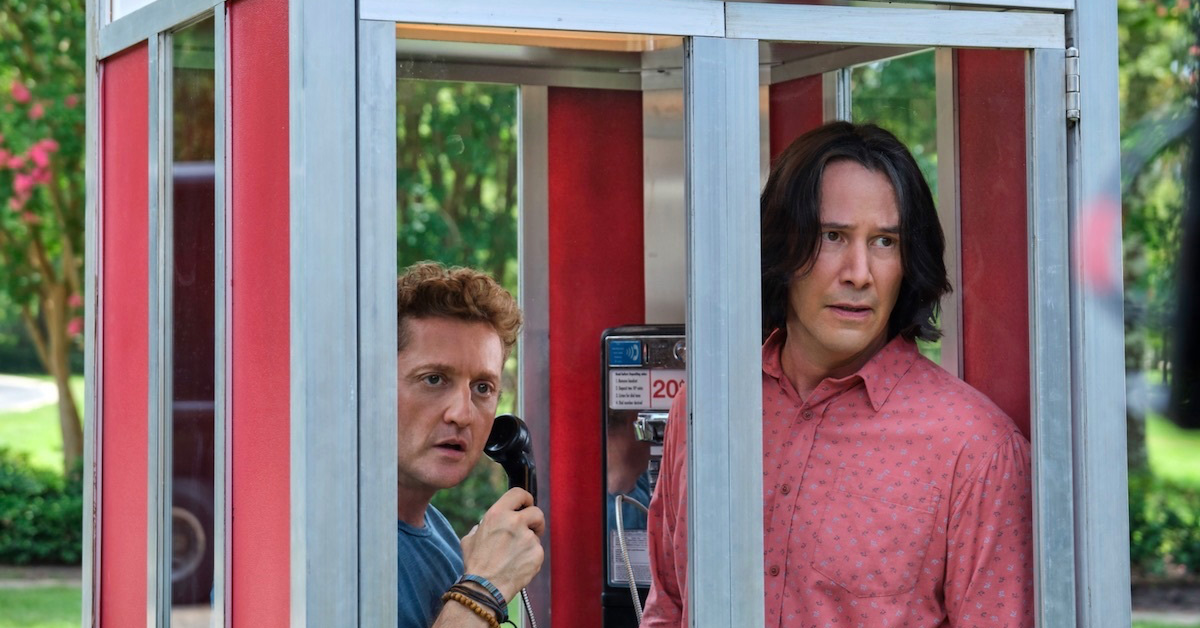
Richard Sanchez: Yes. You know, I’ve been working on a project that I’ve been a fan of since I was a little kid. I am VFX editing on Bill and Ted face the music.
Zack Arnold: Oh, dude, you have no idea, by the way, how about this movie I get? I seldom get very excited about new films that are coming out, especially remakes, but one of those like, Oh, I totally have to go see this in theater.
Richard Sanchez: Yeah. You know, it’s funny. This is maybe the third time in my entire career that I’ve worked on a show that I was a fan of before I worked on it, and it’s interesting, because it kind of opens up a whole new dynamic as to how one conducts oneself in that when you when you come on to a job, that maybe it’s, you know, it’s the first season of the show, there’s no expectation. There’s no nothing. So it might be good, it might not be. We’ve all done both, but in a project like this, I find the challenges I want to geek out on everybody, and you have to kind of step back and go, be professional. This is your job. Yes, professional
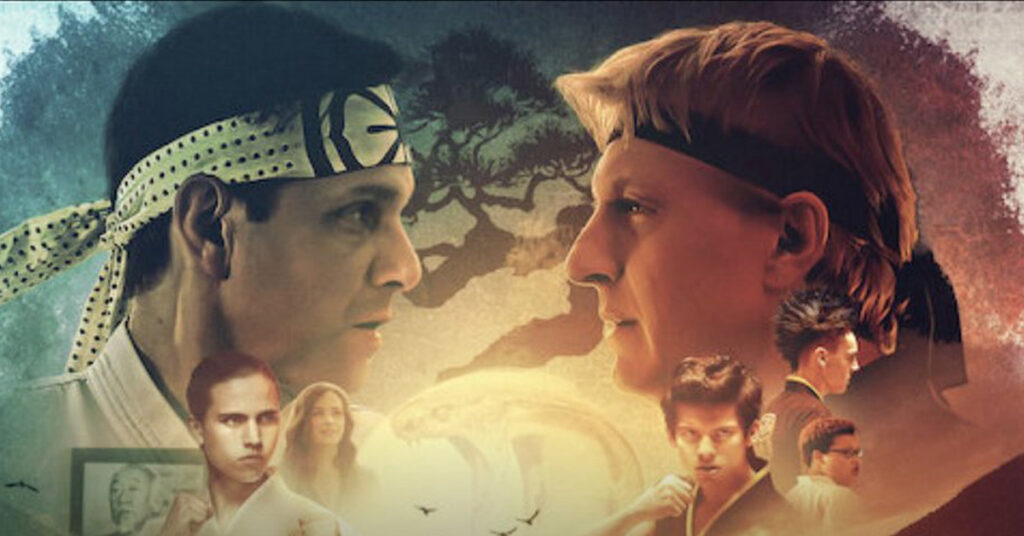
Zack Arnold: Situation twice now where yes, you’re correct, that even if you’re on something that becomes a global or national phenomenon, if you started at the beginning of it, when those characters and those story lines really didn’t mean anything, it didn’t have that weight. You grow with the project. But because you’ve kind of been behind the scenes, and you’ve watched how they make the sausage, so to speak, you don’t, you don’t get into it as much, and you might enjoy it, but it’s it’s different, because you’re not seeing it from the outside looking in. But twice now, I’ve been on projects with first Burn Notice, where I was a huge fan of the show, yeah, where I got on it, and then Cobra Kai, which is, like, a whole nother level of, like, geekdom. I mean, for for somebody that were to say, I grew up on Star Wars, and now I’m cutting it. That’s how I feel about Cobra Kai and the Karate Kid. It’s like, to this day, I still think to myself, oh my god, I’m editing Johnny, and I’m editing Daniel. It’s ridiculous, so I can only imagine the nerding out that you must do on a regular basis.
Richard Sanchez: Well, fun fact, with Karate Kid, this was just me as a little kid, because my only frame of reference was movies, because I was just kind of that kind of geek. I remember when I was young, and this is before everybody had, you know, TV screens in their car. I would get really grumpy when I’d have to go on long drives with my parents, and I would basically time out how long a drive was based on how long I could be watching a movie. And in particular, the one that sticks in my head was Karate Kid two, I was like San Luis Obispo, that’s Karate Kid two, twice.
Zack Arnold: How many karate kids is it for this next trip.
Richard Sanchez: Yeah, exactly. That’s the metric.
Zack Arnold: That’s an amazing unit of measurement, right there. Remember that one?
Richard Sanchez: Yeah.
Zack Arnold: Well, the what I really want to understand and talk about more is how you actually landed the gig. But before we get there, I want to start a little bit earlier. I want to understand just a little bit more about what your career journey looks like, in general, specifically the origin story, because we’re going to talk a lot about this process of moving forwards in your career, advancing finding specific strategies to really land the dream job that you want. But I want to know where things started, so just kind of walk me through your origin story.
Richard Sanchez: Yeah. So, I mean, the funny thing is, long before I had any interest. In editing at all. I wanted to be a score composer. I think the movie that really kind of the fuel that fire for me was Braveheart, and I was just obsessed with that James Horner score. And I was a musician at the time, and I took a music theory class in high school, and just absolutely hated it. And I realized, if I was going to continue taking music theory courses, I was going to hate music, and I didn’t want to hate music, so I thought it was better for me to abandon music theory studies and do something different so I could continue to like music. And that’s when I discovered theater. And through junior college, I was a theater major. I went to UC Irvine and studied theater. And ultimately, the way it hit me was I was always a big fan of computers and technology, and in my final quarter, because UCI is on the quarter system, as opposed to semester, I had to take a studio art class to complete my major, and I was dead set on taking black and white photography. And the girl I was dating at the time, said you should take an editing class. And my response to that was, Why? Why would I do that?
Zack Arnold: Yeah, I’m right.
Richard Sanchez: You know, was it a similar thing for you? For me, like I took my first class and I was like, Oh, my God, this is all I want to do with the rest of my life.
Zack Arnold: Yeah? What for me that moment was when I was nine. So yeah, it was a very similar story, and I’ve probably told it on this show at least a dozen times now, so I don’t want to go into it too deeply. But for those that don’t know my origin story, to very briefly go over it. I was nine years old. I had spent the entire weekend running around my house with my bigger brother, who had a VHS over the shoulder camcorder, nice. And we went through the whole process, and at the end, and we were doing it all in cameras, we were editing in, you know, you just say start and, you know, start and stop and try to get the edits as good as you can. And after two full days, he had me step up to the the eyepiece and watch it. And I was like, That’s it. Are you serious all this work? And it’s like nine minutes. What a week, which, to this day is how I feel about being on set. Can’t stand it. So two weeks later, he shows up with a VHS tape of exactly what he had shown me, but it had the score to The Good, the Bad and the Ugly on it,
Richard Sanchez: Nice
Zack Arnold: Just I looked at it, and I swear it was like experiencing porn for the first time. This is the coolest thing ever. And I was like, how did you do that? So he showed me how we had the two VHS decks set up, where the audio was running from a cassette deck and the video was running from the VHS deck. And he hit play and record on all three. I was like, Oh, my God, teach me. Yeah. And, you know, cut to 31 years later, and I’m still kind of doing the same thing, just with better technology. So yeah, I can relate to that feeling,
Richard Sanchez: Yeah and you know, yeah. From there, it was one of those things where, you know, I mean, I work out of college. I worked at Starbucks for God, like, five years, which was a surprisingly good place to meet people working in the field. But ultimately, got my start in reality television. Worked there for, I don’t know, two, three years at the time, I got my start on Final Cut. So, you know, got my start in reality TV, did the night gig back when we were on tape. I remember digitizing DVC Pro HD tapes and laying back to d5 and eventually made my way into scripted television. Learned the AVID And funny enough, I didn’t think I was ever going to get into features. I hit a point where, you know, I’d been doing it for several years. I was probably 34 at the time, and I kind of felt like I was getting to that point where, if it wasn’t going to happen soon, it was never going to happen. So I just said, Okay, I’m never going to work in features, but scripted television is cool. I like this. And then I had an opportunity to work on a tier one super low budget action movie, and it was one of those things where it’s like, okay, if you do this and you’re going to play the long game, you’re going to stay an assistant editor for a while. And by this time, most of my friends who had who I’d come up with as an assistant editor, in reality, they were all long editing. And it can be difficult when your long game is, I want to edit. You see all these people around you, and you go, God, they’re editing too. Like, what’s up? Is it me? But I think it’s really important that you look at yourself and look at what you want to do and say it’s like, that’s not my path. I want to do something different. And if that’s what you want, just stick with it. And the hard thing too, is that will always come with the financial hit, you know, you Yeah, you’ll make a ton more money editing reality than you will stay in an assistant a while. But, you know, that was just my path, so that’s kind of led me there. And, you know, from from there, it was just, you know, it was just the snowball effect. Did one super low budget action movie. And then from there, I got on my second feature, almost right away, with Larry Jordan, who later became my business partner with the master the workflow product, although that it wasn’t even on that film, that was the first film we worked on a super low budget film with, I mean, with all these great comedians that. That if you tried to get them in one movie, now, it would cost you $40 million I mean, it was a film called flock of dudes, and we had kumel Nanjiani, Eric Andre, Chris Delia, Hannibal, Buress, Brett Gellman. There was this great cameo by Jeff Ross. I mean, these great comedians at the time who were just kind of still coming into their own, themselves and, yeah, just just the snowball effect, you know, few years later and on. I mean, if you would have told me back then, one day you’ll be working on the sequel to Bill and Ted, I’d be like, yeah, that’s funny, but yeah, whatever,
Zack Arnold: Yeah, right. Like it’s gonna happen, right? Yeah. Well, I definitely want to understand how all that transpired. And I want to move ahead, but I want to go backwards first. So the the point of your story that I actually think might be the most important for the people listening are the one that you glossed over in maybe half a breath at most, which was so I started on reality. I was working in nights, then I moved to a script, to television and blah, blah, blah, and everybody listening was like, Wait a second. How did you do that? And I’m assuming this is something you now see all the time with the people that are coming to the master of the workflow program. And we can get into the details of the program later, but I’m assuming that most of the people that are coming to it are probably people in reality, that are saying, How do I make the transition descriptive? What do I need to know? So how did you make that transition?
Richard Sanchez: So my first scripted show, I was fortunate to work on a show that was a scripted show masquerading as a reality show, and there’s a surprisingly high number of shows like that. In fact, I’ve done two in my career. The first one was there was a show in the late 90s called Greg the bunny on Fox.
Zack Arnold: I remember that.
Richard Sanchez: And so this one was, it was a spin off of that called Warren the eight for MTV. And it’s a shame that the show didn’t get a second season. It didn’t get more attention because it was a funny show. And I don’t say that just because I worked on it. I mean, I still laugh about some of the stories. And funny enough, that’s where I met Sean Baker, who went on to go do tangerine and is now killing it with the Florida project and all his other projects, you know. But that was my first step into scripted. It was, it was a show done in the style of reality show, but it was with puppets and, you know, and so they needed someone who kind of understood reality, because that was the style of it, but it was very much a scripted show, but it was shot very loosely, and it was great in many senses too, because it really allowed me to get fun and creative with After Effects. I’ve actually always loved After Effects, and we didn’t have the budget to have a VFX house, so I was doing it all myself, and it was cool. You know, it’s like, you know, just utilizing all these techniques that I’ve learned over the years. You know, spent a lot of time learning after effects using video copilot.net which is free. And seriously, if anybody wants to learn after effects, go there. It’s amazing. I can’t say enough good things about it. And, yeah, and, funny enough, I did a show in the same style later this show called Real husbands of Hollywood with Kevin Hart. And so that was, it was kind of a hybrid style. And you know that one? Funny enough, I think I got the interview of all places from entertainment careers.net, like, one of those websites that never, has, never seems to have links. And then one day they just kind of do and so the one thing I always say, because I always get a little annoyed when, when people bring up, you know, luck, because I think, I think it’s, it can be a bit of a lazy thing to say, Oh, you just got lucky. And my rationale is, luck might get you an interview. It will not get you through the interview. You know, it’s like, you need to know what you’re talking about when you get in the interview. And when you get the job, you need to know how to do the work, you know. So there’s something to be said about luck being the start of a conversation, because I certainly would be lying to myself if I said that wasn’t kind of a lucky break. But also, you know, the whole notion of you make your own luck by just being bold. And you know, you find, you find those ads and another, another story I’ll share, too is one about not being overly proud. Because I once had the opportunity to work on a humongous film that I almost didn’t take because they wanted a graveyard shift, and I felt like I was at a point in my career where it’s just like, I can’t do graveyard. I’m just, I’m past that point in my career, I’m not going to do it. And fortunately, I had a friend who had more foresight than I did at the time, and he figured out what the show was, and he goes, Richard, you have to apply for that. And I was like, why? What is it? And it was suicide squad, which, you know. Again, you can say what you want about the film, because, you know, we all know how well it did, but I didn’t care. It was awesome. There was awesome people on it, and I was proud as hell to have been a part of it. And so that, you know, kind of one of those things where you see that gig and they’re always cryptic about the good jobs, you know, they never say the name, you know, you’re never going. See Chris Nolan going to be on my film. It’s gonna be, you know, some guy needs someone. Hey, can you do it? And, you know, that’s the tricky thing about it too, is, you know, you’re like, Okay, that sounds kind of cool. And, and the notion of, if you’re on a job at the time you go, you know, nobody wants to burn bridges, but you’re like, oh, this might be an opportunity. So, you know, there’s a bit of a leap of faith involved, and persistence.
Zack Arnold: So along this idea of luck, hard work, persistence, all these various ideas, and I’m glad that you used the word luck in the right context, because anybody that has listened to the show more than once knows how annoyed I get when my guests say, Well, I just got lucky. Oh my god, do I tear them a new one every single time I did this? Did it to Kelly Dixon, I’m like, You can’t call yourself lucky. Years and years of hard work and dedication and putting yourself in the right position and meeting the right people. And I believe in bad luck. I believe you cross the street, you get hit by a bus. Well, that sucks, man. Is that bad luck, but good luck. I believe that on such such a large scale, maybe there’s a few percentage points of luck, but for the most part, you get to create it yourself, and the only thing that I can guarantee is not putting yourself out there, not connecting with people, and not doing great work. Well, yeah, that’s going to lead you a lot of bad luck. I’m pretty confident about that. But the good luck part, you also have as much control over that? Oh, yeah. What I’m curious about now is I do want to hear a little bit more in depth about the story of how you made this leap to Bill and Ted. And the way that I want to frame this is you would basically come to me and said that based on having listened to one of my podcasts, and I want you to go into detail about who it was with, what was said, but you had said that I kind of had this realization that I’ve never really gone after things that I want to work on before, but I decided that I had to go after this. So tell me the entire story, from the very beginning the kernel of inspiration, all the way until landing your dream gig on Bill and Ted. How did all this transpire?
Richard Sanchez: Yeah, so, so I was listening to your podcast, and you were talking about pursuing Cobra Kai, which, you know, was one of those shows that I love, too. I mean, you know, I was born in 81 I watched the hell out of Karate Kid. It’s like, that’s the cool. How did, how did you make that happen? And I was just kind of thinking, I’m gonna make it happen. And it was actually kind of, kind of a combination of a couple of things. I was working on a project that, in truth, was kind of killing my soul, which happens from time to time, and
Zack Arnold: More often than not, I might add,
Richard Sanchez: yeah,
Zack Arnold: And that’s why they find me
Richard Sanchez: But and I say this, I say this as a means to offer some empathy to people too, and it’s sometimes the rough jobs, content wise, can be, you know, when I look back on what makes a job good, it’s always the people, you know. Sometimes the content is never, is never that interesting. But if you’re working with good people, that as an aside, you know, but I was working on a job that was kind of making me miserable. And by by just kind of reaching out to somebody, you know, to a friend, someone said I thought they heard Bill and Ted was looking for someone. And I go, I heard Bill and Ted was happening. I didn’t realize, oh, man, they’re going. So what ended up happening was the friend who told me about it actually got the studio wrong. He swore it was one studio. So I called up everybody I knew at the studio, and they were either not mentioning the project by name or just not mentioning projects at all. And I kind of didn’t want to be that, that eager beaver going, can I get on this one project? So it eventually turns out, I had another friend who was close with people at that studio, and they said, Oh no, that’s not one of ours. And I was like, ah, that means my my lead is a dead end, and I have no in and I moped for about a day or two, and then I was just kind of sitting around and I was thinking about that podcast, and again, like the phrase Fortune favors the bold just kind of stuck in my head as this refrain. And I said, Screw it. I’m going to make it happen anyway. And so I went on to IMDb, and I looked who was editing the project, and I was able to pull up the editor, but I wasn’t able to pull up any other information. So and like I’d looked up the director, he’s this great guy, Dean Paris, so he did Galaxy Quest. I loved Galaxy Quest, and so I was just trying to see, who do I know? Who knows this guy? And funny enough, at the time, I started using Bill and Ted gifs as, or, I suppose I pronounced that wrong gifts.
Zack Arnold: That’s I could do a whole podcast just on GIF versus GIF in the history of that won’t do that, but that that could be an interesting so
Richard Sanchez: That’s, it’s a divisive one, you know.
Zack Arnold: But anyway, carry on.
Richard Sanchez: So I started posting these, these graphics around as responses to everything in every Facebook message, just because one it kind of amused me. And then I kind of that. Then I had this idea of, ooh, what if one of my friends is actually working on the project in this, like. Super sneaky. You know, way of like, they’ll go, Oh, hey, that’s mine. Well, you know, it didn’t quite happen that way, but funny enough, I did that and somebody put a love emoji on one of my comments. And I said, Oh, are you on it? And this person wasn’t. But coincidentally, I said, by any chance you’re not on the project, are you? And she says, No, I’m not. I wish I were. And I’m like, Yeah, you know, because I looked up, I looked at the director, and I saw he’d cut that show good girls. And I reached out to everybody I knew who worked on good girls. Hey, do you still talk to Dean? I’m trying to get in contact with them. I already need someone. Still wasn’t happening. So, funny enough, just as as you know, the universe aligned, this person said, Oh no, but I just looked up on IMDb. This is the Assistant Editor, and I had looked up IMDb that morning. He was not listed that day, so within a matter of hours, I found out who the assistant editor was. So then I went through my list of friends, and I said, Who knows this guy? I just need to, I just need to reach out to him and see what happens. And so I found maybe three friends, three mutual friends via Facebook, and I went through those friends. And the problem with Facebook is, and we all do this, at least I do, and sometimes it’s a good thing, sometimes it’s a bad thing. I find I’ll add most people, if they’re in the post community, because I’m happy to help people. And I had friends of varying familiarity, some friends whom I felt close enough that I could ask a favor for, and other friends who I would talk to, but I don’t think I would feel comfortable asking for a favor. So I narrowed it down to one person, and I said, Hey, I don’t because it was a friend I’ve never worked with, but someone I respect a lot, and I talk about craft. So I just told my friend, look, I don’t want you to lie for me. Please don’t tell him we’ve worked together, because we haven’t. I want to start this I want to start this relationship honest. But would you just make an introduction, just an email? You don’t need to follow up. You don’t need to do anything. Just I just want to say hi. Maybe see if I can take this guy out to coffee and just see what’s up. So my friend says, Yeah, sure, I’ll do that. And she sends an email, and CC’s herself, sends an introduction email between the first assistant editor, Associate Editor, David Zimmerman, and myself. She just says, Hey, this is my friend, Richard. You know I respect him a lot. He you know him. And I talk shop all the time. And I decide at first I’m gonna not jump in and geek out and scare him away. And I give it about a day, and then I just decide, You know what, he didn’t respond. I’m just going to respond one more time and just kind of say, Hey, man, you know, I thought I heard you were looking for a visual effects editor. You know, that’s what I do. And, man, I love this film so much. I would love to be a part of it. But you know what, I’m sure you guys are fully staffed, you know, I’m, I’m sure, you know, you, you asked for, you needed a visual effects editor a week ago. I’m sure you got somebody, you know, just kind of one of those. I wanted to take the pressure off, because, in all, in all probability, I didn’t think this was gonna work. And so he still didn’t get back to me. And you know, that was a very expected response. I just imagined he was busy, which, yes, he was. And so life goes on, and about a week later I get a call from the post producer, and this guy, just out of nowhere, goes, Hey, Richard, I’m post producing, Bill and Ted. I’m like, did that work? And so it was kind of one of those things where, you know, there was a little bit of a little bit of canvassing, a little bit of reaching out to people, but I truly believe, you know, there’s something to be said about the one thing I always tried to do, and I’m a big fan of just cold introductions. And there’s, and I saw you did a podcast, a great podcast on the art of it, because it’s challenging, and it’s, I mean, it’s, it’s scary to put yourself out there and to tell you the truth, I’ve given that advice, and really never had a lot of great luck with it, but I’ve known people who have, so I treated it as a Well, Richard, statistically, you’re going to send This email out, and nothing’s gonna happen. But whatever, it cost me nothing. So I can, I can send an email. And, you know, again, by I always tell people to, like, no one wants to hear the whole like, even tongue in cheek, like, Hey, if you need somebody, you know. So I just decided I’m just gonna be a friend and see what happens. And and they needed somebody, and they were kind of in a bind. They’re like, we need somebody, like, in like two days. Can you start in two days? And I was working on a project at the time, and even though, even though I kind of was looking for my next project, I still didn’t want to leave. Them high and dry. So I was like, can I give them a week? And, and that’s exactly what happened, you know? And, I mean, yeah, it’s, it’s one of those things, you jump into the deep end, and it’s, it, oh, the pressure is definitely on in, in this sense too. It’s like, okay, now I really have responsibility, you know, after I came in and Hey everybody, I’m the perfect one for the job. No one knows this franchise more than me. You know, definitely the takeaway I had from that was just, just what’s the worst they could do? The worst anyone can do via email is ignore you, and even if you, even if you annoy them, they’re not going to remember you in two months. I mean, don’t badger them. Is, you know, kind of the rationale I took, yeah,
Zack Arnold: And I would say that there isn’t a takeaway. There are many, many great takeaways from the story. I mean, I’m just going to, like, you know, shooting fish in a barrel. I’m just going to start going one by one by one, because there’s so many good little nuggets in here that I think we can dig in a little bit deeper and really extract what the the essence is of the actions that you took. The first one, which I think you said is the most important at the beginning, was the decision to decide to pursue this. Because, like you said, the takeaway is, what’s the worst that can happen? Right? And I think that so many people get so wrapped up in their heads, oh my god, I’m going to bother them, or I’m going to annoy them, or they’re never going to respond, right? Well, they’re only going to do that stuff if you approach them as a salesman, if you approach them as somebody that truly just wants to provide value to their world and make their lives easier, why in the world would they not want to get to know you better? Absolutely, and that’s the way you approach them was, hey, I’m really good at what I do. By the way, I’m crazy, big fan of this franchise. Perfect Fit, right? So you’re coming at them knowing that you could provide them value, not Hey, I heard you guys already have your whole crew. But you know what? I would be even better, and here’s why. So you should replace your current Visual Effects Editor, because I’m the man, right? Like, Oh my God, that you want to talk about annoying and bothering people. I’ve seen that approach before. It does not work, but the fact that you decided to provide value to others, that was the approach that got you the email introduction, that eventually got the post producer to call, that got you the job, is you were in the right place at the right time by putting yourself there.
Richard Sanchez: And also, I do truly believe that there’s something to be said, because I often the other thing I try to do, and I make a real effort to do this, is when I watch a TV show or a movie that just really moves me, and I just go, that was awesome. I’m going to find that editor and just find them, find their email, find them on Facebook, and go, Hey, I just saw your episode. That was awesome. And sometimes they don’t get back to me. Sometimes I get a friendly, oh, that’s cool. Thank you. I really appreciate that. And it’s kind of one of those things where I take the notion of just, you know, make, make, make friends, build relationships. And it’s so easy to do that, but touching on this specifically, it was one of those things where I think there was something to be said too about i I see people do this time and time again, and it always, it’s never a good look, the it’s the tongue in cheek making a joke out of asking for a job. And my mentality was like, if I’m going to ask for a job, I’m going to be deliberate about it. I’m just going to be straight up, hey, I want to work for you. And you know, this is what I can bring to the table and, and if you don’t need me or whatever, that’s cool, you know, but yeah, this tug and tongue in cheek, like, Hey, if you’re looking for something, I also always feel like the notion of, if you’re ever looking for someone, kind of puts the onus on somebody you don’t know you’re going, Hey, I know you’re really busy and you’re working on a show that I like, But I want you to remember me if two months down the road you need someone, it’s like, no, you can’t put that on them.
Zack Arnold: Yeah, do me a favor. Can you vouch for me and pass me along to all of your superiors and get me a job, even though we really have no connection whatsoever, and all I’ve done is sent you one email and attached my resume.
Richard Sanchez: Bingo,
Zack Arnold: Oh God, don’t get me started. I could go on forever about horrible, horrible cold outreach. I get them multiple times a day. I got an email from somebody two or three weeks ago that sent a cold message to just the contact page of my website, and it was like two paragraphs of their life story, and it finished with, would you mind checking out my Vimeo reel and giving me notes? What? No, I’m not giving you notes. I have no idea who you are. I barely have time to put my kids to bed at night. I’m not giving you notes, right? Yeah, the worst approach is expecting for something to be given to you, you have to be willing to give first. So what I always tell people in my coaching and mentorship program, don’t think, how can they help me walk around in a room full of people or think is you’re going to be sending outreach emails. How can I help you?
Richard Sanchez: Yeah,
Zack Arnold: that approach your entire world is going to change.
Richard Sanchez: Oh, yeah. And, I mean, you know, to your point too, about helping people, it’s one of those things. Whenever I hear, you know, the common question of, like, you know, how do I network? I was like, honestly, the easiest way to network for me personally, is when you’re. In a Facebook form, and someone has a problem, they go, Hey, how do I fix this? If you got the answer, give the answer. You know, you build community, and over time, people recognize us. Hey, this guy knows what he’s talking about.
Zack Arnold: And I would say that you have, you have parlayed that not into a guy that gives value in Facebook forums and community groups, but you are basically a co founder of what is now the industry standard resource for anybody that wants to become an assistant in either TV or features.
Richard Sanchez: I appreciate the kind words, yes, yeah, the master of the workflow program that my my editor and friend Larry Jordan, put together. Yeah. We put that together to to get assistant editors up to speed on the feature film editorial workflow, and it’s been going great. People have been loving it.
Zack Arnold: Yeah? I mean, it’s really is at the point where people talk about it like it’s some certification program that they just have to do before they want to pursue the job of assistant editing and scripted. I hear it in my program all the time where people say, Yeah, I’m in the process of, you know, getting all my ducks in a row. And I’m working in reality right now, I’m going to scripted. And, of course, I’ve already done the master of the master the workflow. Course, like, it’s just assumed, like, you just have to do it. It’s like, well, if I have to be a doctor, I have to do my residency and my internship, and got to do master of the workflow. And I’m like, how did you guys do that? Five years ago, it didn’t exist, and now it’s an industry standard. Like, that’s brilliant. So I’m curious, how did it become the industry standard so quickly.
Richard Sanchez: You know, the funny thing is, when it started, it actually I was trying to solve a problem because I was building my database, and I was working with Larry on a film called naked for Netflix, and I had, recently, I spent a large part of my career hoping I would never have to learn FileMaker Pro, as
Zack Arnold: We all feel.
Richard Sanchez: And I decided one day I’m just going to dive into it. And I had such a hard time learning it, I entered so I eventually reached out to couple, you know, really good first assistant editors and some really good VFX editors, just until someone would give me the time of day. I just said, Hey, you know, I’m trying to learn this. Do you have, like, an old database that I could just look at? I just want to see how you organize shots. You know, I’m not going to use it. I just want to see how you do it. And I eventually found somebody who’s like, Here’s an old one. I haven’t used it. Use it in years, yeah, just have a look. And from there, I started building, you know, you build calculations, and you build these automated fields, and, you know, hey, I’m having this problem. I heard you’re really good file maker. Do you know? How do I solve this? And through that, I built some really good friendships with some really good people. But what I was doing is, at the time, I kind of, I kind of hit a point where I got a little, actually, not a little. I got a lot obsessive about building this database, and I said, I’m going to build the most comprehensive FileMaker database ever. And, you know, I’m going to help people who want to learn FileMaker and I’m going to make my FileMaker database a product. I’m going to sell it. And in that process, the biggest problem I had was, how do I prevent piracy, you know. And so, because it’s just a it’s just a file, you can just hand it out everywhere. And so I started writing a manual, and the manual was 16 pages, and it was really hard to follow. And so right around that time, we were finishing up bacon, and Larry goes, you know, like, that database is pretty cool, you know. Like, have you, like, we should do something, like a class, like to teach people how to do this. And it kind of hit me all at once. It was like the manual was way too difficult to follow. So if we just taught this class, and I can just include this database as part of that, of, hey, this is what I use, and you can have it and work with it and make it your own. And and let’s just take, let’s just take the process of, you know, teaching someone how to be a good feature assistant editor. And it was one of the because the other problem I always had is when you sit down to shadow someone, if you’re in dailies, you get to learn how to do dailies, but you don’t get to learn how to do turnovers. And if you’re in turnovers, you don’t get to learn how to learn how to do temp visual effects. So it was kind of one of those things where it’s like, Oh, I could just buy some screen capture software. I can find some footage to work with, and then we can just kind of record it and just simulate the experience of having someone sit over my shoulder for the whole process. That would be amazing. And, you know, we I try to approach it from the standpoint, you know, people get very dogmatic about their way of working. You know, this is the right way, and every other way is wrong. And I try to bring to it the sense of, this is not the right way, this is not the wrong way. This is the way I’ve done it. I’ve delivered many films this way. You can do this, and maybe you don’t have to do all of it. You can do some of it, if you like that. And, Oh, and here’s my database too. This makes my life easier. You also don’t have to use it, but, you know, might make your life easier too, and it’s kind of one of those things you find with FileMaker especially, people get very possessive about their databases. And I understand why. There’s a lot of time that goes into the databases. I find, for me, I’m not overly possessive about it, mainly because every show is different and the needs of every show are different. So basically, my database has never been the same way twice on any film, because I’ve always needed to track things a little differently per show. So there’s this kind of this idea of, if I give this away. I personally don’t feel like I’m losing anything or spilling some major secret, because on the next show, it’s going to be different anyway, and that’s fine. And my hope is that somebody will take it and not just take it and use it for what it is, but take it and reverse engineer it and figure out how they can build solutions on top of mine. And then maybe one day when I’m having a problem that I can’t figure out, one of my students is going to come up to me and go, Oh, I figured that out. Check this out. I’ll be like, Oh, my God, that’s great. You know, everybody wins,
Zack Arnold: Yeah. And I think that the in today’s day and age, the information, or the the database, so to speak, so little in value compared to having somebody show you how to apply the knowledge, and then be able to apply the knowledge to your own situation, which I think is where the value and master the workflow is. But what I also find so intriguing and fascinating is that this started as this database is cool. Let’s see if we can sell it and do a few tutorials on it. And now at this point, the database is like, Oh yeah, by the way, we have a database, right? Like it’s it’s such a small part of it, where I’ve had multiple people, especially those that work in TV, I asked them multiple times talk to me about master the workflow. I want to know if this thing really works, because I want to recommend it if it does. Like, to be perfectly frank, I’m never going to go through the entire course, because no reason for me to spend the hours doing it. But I trust the people that are in my program and my colleagues, and they all pretty much say the same thing. It totally prepared me for making the transition into scripted and understanding the whole workflow. Either the database thing, they say, Oh yeah, it was cool. I’m never going to need it. Or they say, it was really cool, but it’s kind of like an extra added thing where, yeah, this is, it’s, you know, neat, or something I might use someday, or I’m never going to use it in FileMaker, has no interest to me, but nobody has ever said, Yeah, because the database thing is in there, the program really wasn’t worth it to me, because I don’t need it. The program has so much value because it answers the quintessential question that everybody trying to get into scripted has, which is, what do I actually need to know to do the job. Because nobody will tell me. I feel like you guys finally opened up the curtain and said, Here’s everything you need to know to be prepared.
Richard Sanchez: Yeah well, you know, and it’s it, the fact of the matter is, too, you know, because I didn’t go to film school. I mean, I’ve kind of been of the mindset for a while that, I mean, there’s really not a lot of insider secrets anymore, you know, with great websites like Creative Cow and social media, which is humongous for that, that the real shame about, you know, Facebook is the shelf life of questions is so much shorter than old forums like that, like Creative Cow and Creative Cow is great because, you know, so much of that stuff comes up On searches, your Google searches and whatnot. So it lasts longer, but I see less and less traffic on it, which is a shame, because it’s, you know, it’s great, but yeah, those through those avenues, there’s so much information. It all changes so quickly, and new techniques abound every day. It was just kind of the one of those opportunities to kind of aggregate everything I learned, and go take this like, try it out, you know? Because, I mean, I certainly remember, I similar. Certainly remember my first, one of my first scripted interviews, and they asked me straight up a question that I actually knew, but I knew it by a different name, and because I gave them the look of the deer in the headlight, I didn’t get the job. And I knew in that moment I didn’t get the job. They looked at me. They said, Do you know script her? And I go, I don’t know scripter. And he, like, they kind of gave me that look. And, you know, like in a Warner Brothers cartoon, I blinked, and it sounded like a xylophone and and that the interview went away. And then I called up a friend, and I said, Hey, have you ever heard of scripter? He goes, Oh yeah, it’s script sync. I know what script sync is. Yeah, exactly.
Zack Arnold: Yeah, yeah. That’s hilarious. And I think that anybody listening to this has been in that situation at least once, where the nomenclature is so different and everybody has their own variables for how they say this or that or the other thing. But at the end of the day, the job is pretty similar. Whether you’re scripted in TV, whether in features, there are nuances, but yeah, at the end of the day, it’s just all about naming.
Richard Sanchez: And actually, on that point, I would love to share if there’s another thing I’d love to share with everybody listening. Here is the value of this phrase that I didn’t know at the time, and I wish I did, which is, if someone asks you, do you know something? Never tell them, No. I often say, now I think I know what you’re talking about, perhaps by a different name. Could you tell me what you mean when you say that? Because the fact of the matter is, if you do know it by another name, you’re still in the game. But if you tell them you don’t know you’re out,
Zack Arnold: That phrase could be worth 10s of 1000s of dollars, my friends, that is an excellent, excellent turn of phrase to. Save yourself from being turned away in an interview. That’s brilliant. So what I’m curious about now is going back a little bit to where you said, I’ve got this database, and I think I want to sell it. Oh, you know what would actually be cool. Let’s kind of, let’s walk everybody through the actual process of what it’s like to be an assistant editor and features and kind of give them this bullet point list. I’m assuming that when you first put together your table of contents and your schedule for shooting, that everything came out exactly the way that you’d plan in the beginning, in the exact amount of time, correct?
Richard Sanchez: Yes, because it always goes that way.
Zack Arnold: Of course it does.
Richard Sanchez: Yes. You can sense the sarcasm in my voice. You know
Zack Arnold: As a fellow content creator, I’m right there with you, my friend and I would love to know a little bit more about the journey to get this thing to the finish line.
Richard Sanchez: Yes. So, you know, it was kind of one of those things where I wanted, I wanted to treat it as a casual experience, you know, I didn’t want it to be just a very dry academic, something you stare at, you know, blank faced. So I wrote out a basic table of contents, and I was like, Okay, these are, these are the processes I want to cover. These are the phrases I want to cover. And then I just, kind of, I kind of just got the data in and said, Let’s do it, you know. And actually, the biggest problem we had in the beginning was we needed footage, because I remember we’re like, you know, we’re working on this film for Netflix. That would be cool if Netflix gave us footage, but that’s never gonna happen. No, studio is just gonna go, oh yeah, take our content and use it for something else. So what was a life saver for us was, you know, I had certainly seen Misha tannenbaum’s His podcast that he’d done with movie Ola and whatnot for a while. You know, he’s done all sorts of great, all sorts of great podcasts on being a visual effects editor and whatnot, and he has the company edit stock. So I just reached out to him. I didn’t know him, and I just said, Hey, you know, I’ve seen what you’ve done with edit stock. I think it’s really cool. This is a class that I have in mind, and I want to do this. Would you be willing to license it to us? And at first day, and, you know, he just, it was just a very business relationship. Just okay, you know, I’ll do this, and I’ll do this, and it’ll cost this much, and over time, I think we earned his trust by seeing what we were doing. Because one of the big problems too we had was, you look at so many of these tutorials online, you know? And it’s always these. You take a quick time and you import it, and the quick time gets turned into MXF, and it’s like, that’s cool, but that’s not the way a dailies lab delivers you footage, never and so, and so those little nuances are the important things. So that when someone hands you an avid bin, an ale and a bunch of MXF files, you know how to bring it in. And so the first step was I got all this footage. It was shot, I think, was shot on a red cam, and that’s great if you’re working in Premiere. But what I did was I brought it into resolve, and I said, I’m going to treat this like it’s a dailies house. So I’m going to transcode all of this footage, and I’m going to make MXF media. I’m going to make myself ales with CDL values, and I’m going to get avid bins and just make it all and as I was doing it, I made a few mistakes, and at first I was like, Wait, should I fix those mistakes? And then I said, No, I’m going to keep those mistakes in there, because we certainly get mistakes from the labs, you know, in editorials. So I was like, I’m going to intentionally keep those in and put the onus on the students to go there are mistakes here, and I’m not going to tell you where they are. You need to find them, and there’ll be different ways of mitigating them, but it’s important that you don’t go, there’s a mistake. I can’t do anything. No, there’s a mistake. Now you need to figure it out.
Zack Arnold: Yeah, I’m right in the same camp with you. Or whenever I’m shooting my materials, or I’m shooting something for LinkedIn, learning, whatever it is, any kind of a tutorial, if I hit a snag, and it’s a matter of, oh, wait, this was not if it was just like a stupid mistake, like I stepped over my words, or I clicked the wrong button, but if I did the action that I was intending to do and it was wrong, that’s not a cut. That’s all right. So I made this mistake. Let’s let me, let’s I want to help you understand why I made this choice. Now let’s figure it out together. Then you almost feel like the teachers in the room with you when you make the same dumb mistake yourself, and it gives them more this feeling of trust, like, oh, this person is just figuring it out the way that I am. So I love that. That’s your approach to all this,
Richard Sanchez: Yeah, and especially, you know, I think there’s, there’s something, there’s something to be said about, you know, knowing that people who you work with and you look up to and respect are very fallible people. You know, I have, like, a distinct number of I probably have two first assistant editors that I keep in my mind that are sort of my beacons of, you know, when I’m having a rough day and I feel like I’m just gonna lose it and scream at someone, you know, I have to step back and go, first of all, screaming at somebody who’s not gonna help anything. And I’ll give a shout out to my buddy Sam Restivo. He’s the first assistant editor on Robin Hood, and he was amazing. He’s kind of one of those guys like Sam. Just be like Sam. Just be like Sam, you know, but, but I think it, but it’s important too, because, you know, like, we all have those days and we’re humans, it’s okay to make a mistake. But I think there’s this, there’s this idea in this, in this field. Because there’s so much pressure, the deadlines are so tight, there’s so much money on the line, and it’s such a competitive field. You know, there’s always somebody waiting the wings who wants the same job you have that it’s hard to go. I can’t make a single mistake, because if I do, I’m gonna get fired, and then if I get fired, I’m never gonna work again. And it’s like, slow down. It’s okay. All you got to do is fix it.
Zack Arnold: We just create entertainment for a living. We’re not curing cancer, although the studio executives want to prove otherwise and treat us as such. But don’t get me started on all of that.
Richard Sanchez: I saw a great comic A while ago, and it looked like it was a far side comic, but it was these surgeons, and they’re working on somebody, and they say it’s okay. It’s not like we work in television.
Zack Arnold: Yeah, exactly, and that’s what that’s exactly the story that I tell all the time. But we just get so wrapped up in what we’re doing and the stress of all of it. It’s like the end of the day, we’re making television. We’re making movies. We’re making stuff that people are going to consume while they’re on their couch consuming other bad things. So we make visual popcorn for a living. Let’s get over ourselves and enjoy the process just a little bit more. Yeah. So the the next question that I have for you is, given that you’ve built a community of what I presume is hundreds of people that have said, I want to learn how to break into scripted. I want to learn the scripted workflow, whether it’s features or TV. What I’m wondering is, in the community that you have, because I know this is an aspect of it, what do you find are the most common challenges or roadblocks that people are constantly hitting up against, not necessarily as far as workflow or tech, but as far as the politics of the industry and making a transition from reality or some other medium, trying to get into the scripted World?
Richard Sanchez: I mean, any way you look at it, the same problem exists for everybody, which is, you know, hey, I have I finished your course, but I have no experience and no credits. How do I get someone to take my email? That’s a common thing. And honestly, time and time again, I just keep on telling people go to these networking events be nice. I mean, I can’t even tell you how important be kind is. Just be kind, getting getting to know people working on the kind of shows that you want to work on, making friends. And then one day, hey, you know, I think we need someone. And you took that course, right? You know a little bit about what we need to do, yeah? Okay, yeah, I could probably get you in as a second. And, I mean, I have a really good friend who, she took our course. She was awesome. I mean, she ended up doing, I think she did the pilot for The Dark Tower for Amazon, which unfortunately, didn’t get picked up. But I remember when she told me that, I was like, Are you kidding me? I’m jealous of you. You know, just, I mean, it’s, it’s one of those things, is, it is, it’s somewhat of a, it’s a persistence game. The first job is always the hardest job. I mean, there’s no way around that. You know, the first, the first job is always your hardest job, and especially the one thing I always tell people, and it’s not a means to discourage people, but it’s a rather a means to get people thinking realistically. Is, and this just comes from my standpoint of having started in reality transitioned over to scripted work, is for me, my first scripted job was not preceded by my second scripted job, and my first union job was not preceded by my second union job. And if you get stuck in that mentality like, Oh, I’m not I’m not moving upward, I’m moving laterally, which means I’m doing something wrong? No, that’s just kind of how it goes. You know, you just, but you meet people, you build your network, and again, if you’re kind enough to enough people, I promise you things are going to work out.
Zack Arnold: Yeah, I mean, I couldn’t say it better myself. I think that’s, that’s the best advice that you can give anybody in any field whatsoever, is that you’re never going to go wrong by being nice to other people. There’s going to open plenty of doors for sure.
Richard Sanchez: Yeah, yeah.
Zack Arnold: On that note, I don’t think I can ask a better question to finish in a better place than we just did. I don’t know how to get better advice than that. The only other thing that I could think to say maybe an area where I don’t disagree with you, but I maybe want to add one little one little point here is that I don’t think the first job is the hardest.
Richard Sanchez: Oh, really,
Zack Arnold: I think the second job is the hardest. I hear this from people over and over and over again, and it’s also an experience that I had, and I think that what you said and pointed to is so important for people to understand that when they say, I’m in reality. I’ve been doing reality for years. Oh my god. I finally, finally got in the door and I landed scripted I’m now a scripted assistant editor. Slow your roll there, buddy. Yeah, you get you got one scripted job. Getting the second one might be even harder, and it’s okay if you need to pay the bills and go back to what you’re doing before, it’s not a step backwards, it’s not even a lateral step. You’re still moving forwards. But guess what? You have to survive. You need to pay your bills, you need to maintain your lifestyle. There is no harm whatsoever in going back and forth. And I think this is a big revelation that I see in my program all the time where I explain my transition, and I’ve made four trans. Transitions from various mediums, from trailers to indie features to Studio features to scripted TV. Like different job, like, I’ve jumped all over the place. Like, transition is basically my middle name in this this career. But every single time, there’s this invisible portion of my resume that people don’t see, where I spend years bouncing back and forth between the two until one of them really settles in. So for example, I spent years cutting really low budget indie sales trailers for movies that had total budgets of, like, $200,000 and these small independent companies would come to me and say, we have five movies. We’re going to a sales conference in Berlin. Can you cut these five trailers in two weeks? I’m like, hell yeah, I will. They’d give me some money. I would cut them, and then that would fund me for the next two months to work on whatever I needed to to build up my craft or build up my resume. Nobody sees that on IMDb, and I think it’s so important to understand it’s okay to jump back and forth while you’re making the transition, and sometimes it’s going to take years for it to stay.
Richard Sanchez: And you know, and to your point, I also kind of think there’s a value in that having worked in multiple fields and having multiple contacts across these different these different areas of post is I like to think about it as you know, especially with the direction that our economy is going over the past couple of weeks. I think about it as a diversified investment portfolio, and if you have a multitude of people you can reach out to. You’re kind of in a uniquely good place. I mean, it’s, I’m always impressed by these people who I’ve worked with the same team for 20 years, and that’s really cool, and that’s amazing. But by the same time, if that is the team you’ve been locked into for a very long time, if that team starts to wane. You might wane with it, and all the transition. And as difficult as that is, there’s something to be said about, oh, man, this avenue is kind of gone dry for a little while. Why don’t I give that guy a call and just kind of see what’s up? And yeah, like you say, I mean, there’s to your point. Also about the second job. There’s once you have a taste for something you like, you know, it’s just normal human nature to go, this is all I’m ever going to do ever again. And that’d be cool, but, yeah, it may not work out that way. And just keeping your head in the game and being realistic and again, being kind, you know, there’s nothing worse than people who have done it a little bit, and then they get cocky, and they get arrogant, and then you’re that guy on the film that nobody wants to be around. And it’s never that never ends good for anybody.
Zack Arnold: Yeah, you definitely don’t need to be that guy. May, maybe it goes against everything you see in the movies and the TV shows, thinking, oh yeah, once I am successful, I get to be a prick. No, you don’t. Yeah, nice to everybody. I don’t care how big you are or where you are in the call sheet or anything else. Be nice. I’ve seen number ones on call sheets that have never gotten work again because they treated the crew like crap. Word gets around. People want to work with other nice people. The least you can do, especially with how small our niche of the industry is it is so important to be nice, because everybody knows everybody, and at some point you’re going to meet somebody that remember that you were an ass or whatever it was, and it’s going to get back to somebody else, it’s going to cost you a lot of money. So just be nice to people for the love like that. That’s really that. That’s the golden rule. So,
Richard Sanchez: Yeah, absolutely. And I mean, and it becomes all the more difficult, too. I mean, I feel like everybody has that celebrity story where, oh, I met him, he was an a hole. And it’s so hard to discern the difference between being generally an unpleasant person and having a bad day. And therein lies the real challenge, because we all have bad days and, you know, and just someone says, Hey, man, how you doing? And you’re like, just, it’s never worth it. Just be just be cool.
Zack Arnold: Couldn’t agree more. Well as two fellow craftsmen and editors whose life is all about timing, we have reached our time here, and I want to be very respectful of yours, but before we go, I want to make sure that anybody listening can find you, can reach out to you specifically and more importantly, or just as importantly, I should say, can find out more information about how they can enroll in master the workflow. So tell us how anybody can get a hold of you or learn more about the program.
Richard Sanchez: So honestly, the best way to get a hold of me is Facebook. I know I’m not on any of the newer, hipper social media services. I have a Twitter account, but I never use it. Same thing with with Instagram. Facebook is honestly a great way to get a hold of me. And as far as master the workflow goes, check out www, dot master the workflow.com, the thing with it is, you want to get on the waiting list. So some people are a little unclear about it, but the way we do it is we open up enrollment at intervals. And the reason we do that is I want to make sure that when people sign up for our class, if they have questions, that they can get to me directly, and I can respond to them quickly. Because the concern is that if we have open enrollment all the time, and we have a massive influx. Of people, it turns into a situation where I have 50 questions and I can’t possibly answer them all, because I’m also a working Visual Effects Editor. So we’ll open it, we open it up at intervals, and students can come on in and and we can get you up and running.
Zack Arnold: Yep, and I’ve I can very much relate to all of that. I’ve made the mistake of opening my courses in a little bit more of an evergreen format, because I wanted everybody to have access, and all of a sudden I was getting pummeled with Facebook questions and comments and emails. I was like, crap. I’m in the middle of an editor’s cut. I can’t help these people. Oh, this is why people do enrollment periods. I get it now. So now basically just treat it like it’s college courses, and I do it by the the semester calendar, so that way I know that there are certain weeks where my entire focus and dedication is enrolling people, helping them, getting them on board, and then after that, I can disappear into the ether for months in the dark and then do it all over again. So Well, this has been an absolute pleasure. I’m so glad we were able to make it happen, and I appreciate you providing the tremendous advice and support and inspiration that you did. So thank you so much for coming on the show today. Richard,
Richard Sanchez: Absolutely. Thank you so much. Zack, I really appreciate it.
Transcribed by https://otter.ai