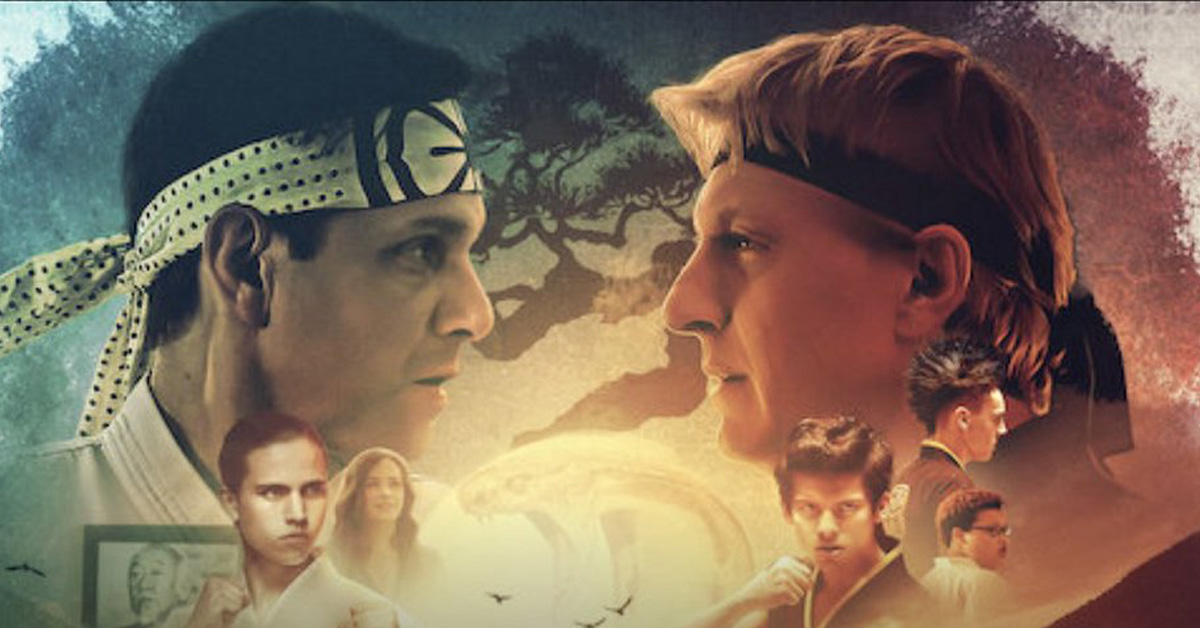
How I Landed My Dream Job Editing ‘Cobra Kai’ | with Jon Hurwitz, Josh Heald, and Hayden Schlossberg


About Episode
Have you ever wondered what it takes to get the attention of high profile producers and show runners so you can build a relationship with them and possibly work on their shows someday?
Have you ever wanted be a fly on the wall in the edit suite of a high profile tv show to see what it’s really like working in the trenches?
And if you do land the job working with your dream creators, have you ever wondered what steps you can take to not only do a great job but also build relationships for life so you are always invited to work on future projects?
All these questions are answered (and a lot more) in my interview with Cobra Kai creators Jon Hurwitz, Josh Heald, and Hayden Schlossberg.
In this episode we have a candid no-topics-off-limits conversation about the realities of editing and collaborating on a show like Cobra Kai (which I edit, by the way). We discuss how in the world the Karate Kid saga ended up becoming a hit series on YouTube of all places (then of course become a global phenomenon on Netflix), the psychology I used to land myself my dream job editing this show not having any previous relationships with Jon, Josh, or Hayden, and we also dive deep into the creative process on the show including managing the tight schedule, why they insisted on sending hundreds of pages of notes for every cut (and how I prioritized that work with the other obligations in my life…love you guys BTW), and ultimately what show runners and producers are looking for in potential talent they might hire for future projects.
If you want to work in scripted television or features someday, this discussion is a masterclass on the psychology of networking and building relationships with high profile producers.
Episode Highlights
- How John, Josh, and Hayden pivoted from Harold and Kumar and American Pie to furthering the Karate Kid saga
- Why now is the perfect time for Cobra Kai to exist
- “Knowing what you want” as healthy alternative to perfectionism
- Learning who to trust when being given feedback on your work
- Adapting to the storytelling language of your showrunners in the edit bay
- How you should be interviewing your interviewer
- Adjusting to the unique flow of your creative relationship with new executives
- Finding the BEST story instead of clinging to ideas just because they’re yours
- Knowing when it’s healthy for you to throw your creative instincts into the mix
- Why you should be watching Cobra Kai Season 2!
Useful Links
About Guest
Josh Heald, Jon Hurwitz, and Hayden Schlossberg have been close friends since they were teenagers. Their first collaboration together is YouTube Premium’s runaway hit COBRA KAI, the Karate Kid spinoff series that picks up decades after the original film ends. Heald, Hurwitz, and Schlossberg are the creators and showrunners of the series. They wrote and directed the bulk of the first and second seasons.
Josh Heald is best known for creating and writing the cult classic, Hot Tub Time Machine – for which he earned the inaugural Comedy Award for Best Screenplay – and the sequel, Hot Tub Time Machine 2. He has produced and developed pilots across many networks and platforms.
Jon Hurwitz & Hayden Schlossberg are the writing/directing/producing team behind New Line Cinema’s Harold & Kumar franchise. They penned Harold & Kumar Go to White Castle, which garnered a legion of fans and was launched to immediate cult status. Two sequels followed: 2008’s Harold & Kumar Escape from Guantanamo Bay, which became Hurwitz & Schlossberg’s feature directorial debut, and 2011’s A Very Harold & Kumar 3D Christmas. In 2012, they wrote and directed American Reunion for Universal Pictures, and worked again for the studio in 2018, producing the hit comedy Blockers.
Transcript
Zack Arnold: So I’m here today with John, Josh, and Hayden, the three minds behind the Cobra Kai series, and who are also basically tenants in my edit suite, so to speak, and they lived on my couch for I think it was at least two or three months out of the five months that I worked on the show, and I’m so excited to have you guys on the mic today to talk about the inside process of working on Cobra Kai and working in the business in general. So, thank you so much for taking the time to be with me today.
Hayden Schlossberg: Oh, it’s thank you, it’s exciting to talk to you and everybody who knows you, so we hopefully will give your listeners a little bit of insight into the guy they’re listening to.
Zack Arnold: Well, I know that I get questions all the time about, like, how did you end up on this show, and what’s it like working on it? Like, for other shows, people are kind of interested, but obviously just all the pop culture buzz around this one is at a different level, especially for people that are total geeks and fans of the Karate Kid series, so to speak. I just, so it’s for a super, super brief version of the my origin story for coming on to the show. And then we’ll jump into you guys, but since people ask me this so often, the super quick version is that I had heard about the fact that they were going to be remaking, so to speak, or continuing the Karate Kids saga, and then I heard that it was going to be on YouTube, and I said, “Oh, that’s gonna suck. Like, how dare they do that? Who do they think they are, right? And then I happened upon the trailer for season one. I was like, “Oh, this doesn’t look like a total piece of crap. Maybe I need to look into this
Josh Heald: Yeah, we were just trying to exceed that bar,
Zack Arnold: Right? And so you did just enough, and like, oh, you know what, maybe I’ll just watch the first one, like still, like they shouldn’t be doing this, and screw them. But all right, fine, I watch, I’ll watch the first one. And then, of course, five straight hours later, I binge-watched the whole season, and not only did I absolutely love it, but I said I have to work on this show, no question. Like, this is made for me. Basically, Karate Kid was my Star Wars growing up, and I wrote an extensive article about the film online, and I’ll put a link to that in the show notes. And I reached out through a mutual connection that we had, and I basically talked my way into the room with you guys, and walked out of the interview, making it clear that you had no choice but to hire me.
Jon Hurwitz: Yeah, it was your passion for the project was very clear from the beginning. You came highly recommended. You did everything in the room that was, you know, we knew that you’d be part of the team by the end of that meeting. And I think, did you end up meeting Ralph Macchio that day, or was it Billy Zabka?
Zack Arnold: I did. No, it was Ralph Macchio, and they’re like, “Oh, by the way, Ralph is here. Do you want to say hello? And I’m like, “Okay, right. So I was like, “Oh my god, are you kidding me? I was like thrust into that world immediately, and I remember leaving thinking, “Okay, this is going to be at Sony, and anybody that listens to the show knows how much I talk about the commute being a huge factor in me choosing jobs, and I’ve turned down jobs because of the commute, and because I live in the valley. Going to Sony is like murder, and I’m like, any other job I would have walked out saying I’m sorry, I don’t think I could do this, but I’m like, all right, just gonna bite the bullet and live in my car for five months, and my god, was that a good decision. So
Josh Heald: We moved you into that freezing, freezing cold office,
Zack Arnold: Yeah, right.
Josh Heald: Post production suite.
Zack Arnold: Oh my god, that was crazy. So, what I want to, like I said, really get deep into the process, but I think it’s really important for people that may not be as familiar with your story or the origin of the series. I do want to give a very, very brief overview, because when you think about, all right, here are these guys that have worked on Harold and Kumar and Hot Tub Time Machine and American Pie. Oh, I’ve got a great idea. Let’s take those guys and let’s redo, and you know, add on to the saga of The Karate Kid, which is just this canon that is so highly revered. Oh, and I know, let’s put it on YouTube, like none of that adds up, and you guys somehow took this impossible formula and not only made it work, but it is so successful, and even ended up being the number one drama rated on Rotten Tomatoes. So, clearly, you’ve done something right. So, just very briefly, How did all this actually become a thing?
Jon Hurwitz: Well, you know, the three of us, we’ve all been friends for over 20 years. Hayden and I went to high school together and talked about, you know, making movies and TV shows way back then, and then freshman year in college I met Josh, and immediately we connected over film and TV, and you know, we love comedy first and foremost, and you know we’re guys who like to joke around a lot, and you know we saw that as our way into the business, but even as far as back then, we were in love with the Karate Kid movies, and we talked about them at length early in our friendship, and you know, Hayden, the three of us were, you know, moved out to LA soon after college, and you know, got our careers started, and you know, while we’d be writing during the days, every night we’d, you know, hang out together and just sort of watch movies and TV, and even back then we were watching, you know, the Karate Kid special edition, and we saw, you know, an interview with Billy Zabka in there, where, you know, we all thought Billy Zabka were like 80s asshole, yeah, we used to call him back,
Hayden Schlossberg: Yeah, I think the thing is, like, like a lot of fans of the Karate Kid, we grew up watching it a bunch, and really relating to the Daniel story and the underdog story, and that relationship with Mr. Miyagi is such a big part of that movie, and that sucked us in, but then as we got older, you know, we more and more enjoyed the Cobra Kais and Billy Zabka, and you know, they’re just very colorful villains, you know, in, you know, we always talked about, like, they were, they had multicolored jackets, and they rode bikes, and they were a karate gang, and there was just something for us that was funny about that. And
Josh Heald: I mean, to answer the question, I mean, like, the, you know, we had these other careers, and we never lost sight of our love for Karate Kid, it was the same as you, is our Star Wars, and when the idea, you know, came originally, it was a movie idea, you know, years and years ago, and the idea didn’t seem, you know, commercially viable in 2004 but in the world of 2017 2018 2019 when streaming and premium cable is doing what it’s doing for shows like Will and Grace, you know, Fuller House, things like that. It felt a lot more possible that a show like this could get made, and we hunted down the rights, and we kind of started chipping away at, you know, who, and who are the people who can say yes to us to make that happen, and it was Will Smith’s company, Sony, and eventually Billy Zabka and Ralph Macchio,
Hayden Schlossberg: It all basically started with just the premise of what happened to that bully from your high school. You know, how a lot of times those, those assholes that you hated, you know, they grow up and you know their lives aren’t so great, and the idea of taking Johnny Lawrence and turning him into an underdog was, um, you know, was just a fun concept for us, and so it starts with having the idea, and then we happen to be, you know, professional writers with agents, and we just, you know, from there, you know, made the right phone calls,
Jon Hurwitz: But I think the one thing, you know, you brought up, you know, our background, like, you know, we made all hard R-rated comedies before this, you know, I think that you know there’s an art to that, you know, we, I think we learned funny about storytelling, and then getting audience reaction through, through all of that, but you know, first and foremost, we were fans of The Karate Kid, and you know, the three of us, you know, we had seen enough parodies of The Karate Kid the last 30 years that we never had any interest in coming in and just doing like the jokey version of Karate Kid story, we thought just our end to going through the Cobra Kai lens in itself was comedic in a sense, but the more dramatically we, the more we leaned into the drama of it, we’d be a consistent with the Karate Kid tone, but B comedy would flow from it in a very real place that’s connected with character.
Zack Arnold: Well, and tone is a really interesting part of this conversation, because I think what sucked me in first, because, like I said, being very honest, I was like, “Come on, this is going to suck, like there’s no way you can make this good. And then I saw the lens that you were telling us, you’re like, “Oh, I want to know what happened to Johnny. Like, that’s that’s interesting. If it had just been, let’s make another sequel, I might not have been that interested, because frankly, there are some Karate Kid sequels that have come out that are like, yeah, those don’t really belong, right? We’re not going to consider those officially part of the canon. And I was kind of thinking, all right, well, this is going to be the YouTube version of that, but then I saw the lens that it was through, and I’m like, oh, that’s interesting, but tone is such a delicate thing with this series, and I hadn’t even realized how much the tone had shifted until I had seen season one, and then I came to the beginning of season two, and I rewatched all season one again, and then I rewatched the first two Karate Kids, and I was like, whoa, like, these are so different, and then what really made me realize it was sitting down and watching season one with my son, because once I had the lens of I’m sitting with a nine year old boy and he’s like, “Dad, what’s the thing that they drew on the billboard? I’m like, “Oh man, this is so different than the original series, right?
Josh Heald: But there are things like, you know, there were things in the first movie that were risqué for the day, you know, Johnny is rolling a blunt in the bathroom, it was a joint, there’s the one guy doesn’t smoke weed in the world, but we had to, tonally, we had to update from 1984 to where we are now, in terms of what are teenagers doing, what are pranks, what is real to the universe that feels like you’re telling an honest story. You know, we’re not reaching, we’re not going for a hard R joke, but we are also not trying to make this, you know, G-rated. The other thing was because you’re coming through the Johnny Lawrence side of the story, as opposed to Daniel La Russo side of the story, and because Johnny is where we landed with him, and at the top of our series, it gives you just a little bit of a, an edgier perspective, but only as an umbrella, we came into this from the very beginning with this is Better Call Saul, this is, you know, not going for it’s not a retelling of the movie, it’s not just a, you know, the movie paused and picked up, and here we are. We wanted to come in with that really kind of deep, emotionally wrought kind of character, and use the comedy come from this guy who’s just been through so much in the 30 years since, and that kind of gave us a job.
Hayden Schlossberg: I think. Yeah, and just, just kind of alluded to it, I think the reason why fans of The Karate Kid can get into this show, you know, even though there’s a little bit of a different tone, is because we just stayed true to the character, and, like Josh said, if you’re, if you’re now focusing on Johnny, and you’re in his world as an adult, it’s there’s just going to, with that, be the kind of weird adult things that would be in his world. I always said at the time, it’s like if we were to do a movie that was just focused on R2D2 C3PO, it would be a more comedic, like buddy comedy, you know, and it wouldn’t betray the Star Wars universe, because you kind of our you know you’re staying true to the character even though maybe the tone might be a little bit more light than you know some of the other Star Wars stories so you know for us it was just like okay this in is is you’re you’re changing the tone a little bit but you’re earning it you’re not betraying the universe that people love
Zack Arnold: Well and when you say that you earn it I think there’s no question that you earn it, and then some, and I think this will help me dive even a little bit deeper into the process. I’m always a big fan of really like, if I’m going to break something down and ask myself, how, why does this work so well, how does it work so well? I really like to distill things down to the essence of their moving parts, and you guys can disagree with me on this, but having worked with you intimately on this, the second season of the series, if I had to pick out the one thing, the most distinct reason that I believe that you guys have been so successful with this, where I think so many other people might fail, is your level of attention to detail. I have never worked with anybody, especially a group of people that kind of work as like one gigantic mind, right? So, there’s three of you, you each have your own kind of opinions, and we’ll get different notes here and there every once in a while. I mean, obviously that never happened where you guys disagreed in the room, but the point is, yeah, I figured I’d get a laugh, but one of the things that was so uniform between the three of you was your level of attention to detail, and you would not stop until something was right, and this was boiled down to you’re talking about some graphic that goes on a screen for three seconds, and you’re doing meetings talking about what is the texture behind the logo need to look like, I’m like, holy crap, do these guys care, because usually in the world of TV, especially with the calendar that we were given, which was not really allowing for room to be perfectionists, you guys didn’t care about the calendar or the deadline, something had to be done until it was done right, which I think is one of the biggest reasons that this is successful, as you, what every single little tiny detail had to be right before you could move forward, so talk a little bit about your process and how attention to detail is so important, because so few people understand this.
Jon Hurwitz: Yeah, I think that’s just something that we’ve all naturally had from the beginning of our careers. I mean, we come from the world of film, where you have a little bit more time to do things, but you know, when we, you know, none of the three of us went to film school, so we didn’t know how long things are supposed to take. All we’ve knew how to do is to have a vision for what you want to do and work really hard to make sure that it comes out well. And when it’s, you know, when you see something that you, as an audience member, are going to bump on in any way, or you think is just not the best version of it, it’s frustrating for us. We want to put our best foot forward out there with everything that we do, and that starts with the writing phase of it, and it carries all the way through the very end of post production. And I think it starts with really knowing what you want to some degree, and also knowing what you don’t want when you see something and you’re like, okay, well, that’s a nightmare if I saw that. Would like, you know, cheapen the show in some way, or make it feel like it’s the bottom line is every review, every frame important on the show.
Josh Heald: Yeah, we view it all, every frame is valuable. We care about all the frames are our babies, and we care about all of them, but also you’re talking about like the graphic that’s on screen for three seconds, or this computer screen, or or that person looking at their phone, especially, and you know, the 2018 2019 world, a lot of stories are told, and a lot of teenager stories are told with the missed call, or you know, who’s who’s on Instagram, and what happened, and what was the thing that was posted that made somebody emotional, and when the screen becomes a piece of exposition or a piece of story that you’re asking the audience to look at, it just has to look right, and, and I think there’s this expectation with these truncated post schedules that have happened more and more on it’s not just our show, it’s, you know, everyone’s being asked to go faster and do it sooner, you know, like you said, we, we care about the schedule, but we care more about the, the final product, because at some point this show is going to live on a platform, you know, or wherever it lives eventually, you know, years down the line, it’s going to be around, and no one’s going to say they had x amount of weeks to make that, they’re going to say this is the show, and we just want it to be, you know, as full as possible.
Zack Arnold: Well, yeah, it’s not like anybody’s gonna watch it in five years and be like, “Oh, yeah, well, this, this wasn’t great, but I heard that they had a tight hand. We’ll forget that, right?
Josh Heald: That’s exactly it, you know.
Hayden Schlossberg: Julie had a really, really difficult obstacle in that process. So, when you factor it all in, it’s really a good week
Josh Heald: I mean, we’ve been at, we’ve been like that our whole careers, you know, from the very beginning, when you write your first screenplay, you know, it’s well, you have eight weeks or you have 12 weeks, and you’re never going to get, you know, a pat on the back for getting it in on time, if it’s, if it falls short of being awesome, we’d rather make people a little bit uneasy with us for a couple of hours, a couple of days, a couple of weeks, and eventually be, you know, so thrilled with the final product, and that, that goes into what we do with television as well.
Zack Arnold: Well, I’m glad you brought up the word uneasy, because I think that’s definitely a part of the process that a lot of people go through, and I think that one of the keys here, and I, a lot of people don’t appreciate this, or they take it the wrong way, but you’re not afraid to ask for something if you’re not getting what you want, and I am assuming that you guys will be, have been on both sides of this argument, but when you get notes, so I’m talking about it from from my perspective right now, if I get notes and you’re like, this didn’t work or that didn’t work, or we have to change this, it’s easy to take things personally, because in our jobs we’re not just data wranglers, we’re not, you know, entering information into a spreadsheet. The choices that I make when I’m editing something, that’s what I believe is the best version of the show, being a fan of the show and of the series, like, oh, this is the best version of this training montage, or this is the best version of this scene, where this character meets up with this character, and then all of a sudden you guys will all over it, and I’m like, “Oh, okay. But then at the end of the day, I’m like, “Yeah, but this is about all of us making what we believe is the best show. It’s not just my version, but it’s so easy to get wrapped up in that and really take it personally. And I’m sure as writers, you get the same thing from YouTube or Sony or whoever else.
Jon Hurwitz: So, first of all, Zack, I just want to say that, like, you’ve been the least gone of pretty much any editor we’ve ever worked with, so just so you know
Josh Heald: The other people feel, yeah,
Zack Arnold: Nice. Well, I’ll take that.
Jon Hurwitz: I’m saying you get done probably the least. I mean, there you know, there’s some people at your level in terms of getting on, but at the end of the day, like, you know, like you, when we write something and we give notes, or and we get notes from from people you know, I think part of it is the some maturity that comes with having worked for long enough in our careers. I remember early in our careers we’re just like screw them, like about everybody, and then like you know eventually you start to realize like every single person who’s reading your thing is or watching your thing is an audience member, and they’re just telling you what they think would help you know.
Josh Heald: They’re not against the no one’s an adversary. People giving notes are not like, you know, we’re not your adversary, and we’re not each other’s adversary. I mean, when we are on set and we’re making the show, you know, the three of us will have vociferous discussions about, you know, the point of a scene, or the coverage, or exactly how it’s going to look at the end, or what the music is going to sound like, and it takes us a while to reach that hive mind status. Sometimes, sometimes we just have it, sometimes it’s, you know, the best voice wins out and convinces the others in the room, but when we hit the, you know, it’s, but then we bring that with us to notes from the studio to editing to all the way, because we’re trying to, we’re trying to find that, you know, intent that we set out to make.
Hayden Schlossberg: Everybody needs to go when it comes to notes on every level, everybody needs to go in with the attitude that we’re all trying to help, you know, now, but that’s also to. Dependent on the person giving notes on the other side, you know, because there is the executive that’s just throwing notes out for literally no reason other than they need to justify their reason for being there, or you know, they, they themselves get territorial if if you’re not doing their notes, so it’s, it’s a two-way street, you know, but you have to go in. How I always viewed it was this is as a writer, is this is somebody in the audience that I’m talking to, and that happens to have a job where they read in a bunch of scripts and watch a bunch of shows, and this is their informed opinion, all you know, being a part of the company that’s giving us the money to make this our dream, so when you look at it from that point of view, it’s like, okay, you know, you want, we happen to be working on stuff where it’s like, we want the audience to like this, this is a member of the audience that happens to be on thing, so I go in with that attitude now, sometimes you get the notes where it’s just like, okay, they don’t get
Josh Heald: Right, and then, because of that, you never – we never feel beholden to, because this is an employer or a financer, then we owe it to them to address this note in some way, because sometimes addressing the note is as simple as that’s not the intent of this scene, you know, creatively we disagree, we understand what you’re saying, but
Jon Hurwitz: You owe them an answer. Yeah, you owe them a response. I think that’s the point. Like, our thing is it’s all a conversation amongst us when we’re debating stuff. It’s a conversation when we’re working with you. It’s a conversation when we’re working with a studio. It’s a conversation. They say we think that you know you should address this, and then we explain our intent here is this, and the long game is this. And then usually they say okay, that’s then then we’re on the same page, and that’s fine. Now we understand what you’re doing. Other times you know they’ll have a note and there’s a note behind that note, and you’re like, okay, well, there’s something that’s not working for enough people.
Josh Heald: Every now and then it’s a great note, and you take it, you go, oh, we didn’t realize that, and you address the note,
Jon Hurwitz: But you, but Zack, you know, us, I mean, like, at the end of the day, we’re all human beings who have the time pressure of what we’re doing, so, and we’re, you know, comedic by nature, so there’s a lot of joking around and complaining and bitching and moaning in, in very elaborate, over-the-top way
Hayden Schlossberg: Yeah, so you get to have that human moment of saying, you know, these people are idiots, and, you know, you know, screw them, you know, like no one’s ever like received a notes email that the subject said notes, and you’re like, oh, good, it’s here,
Zack Arnold: Thank God
Josh Heald: It’s kind of like getting like, you know, like, like, even doctor’s appointment, it’s like, I got to do this, but you’re not thrilled about it.
Jon Hurwitz: Yeah, but, but you know, I think that’s fun for the three of us, is because we’ve all been friends forever, we get to enjoy the frustrating parts together, and we enjoy arguing, and we enjoy complaining,
Josh Heald: And when there’s a bad note, it’s fun to fantasize about, like, okay, like we started a fire somewhere, like you know, in one of these executive suites, like, would we be the ones who got blamed for?
Zack Arnold: Sure, yeah, no, I can understand all that, and I think one of the things to go back to the beginning of kind of this conversation, where you’re talking about how obviously there are these notes with everybody that has the best intentions, sometimes there’s a note behind the note, but then there’s just those notes where you’re like, oh my god, really, did you even watch it? Do you understand it at all? You’re clearly just trying to justify your job. I don’t even call those notes, I call those thumbprints. It’s like, oh, that’s just somebody trying to get their thumbprint on this thing, right? They want to be able to go home and watch this with their girlfriend or their spouse, and say, “See that right there. Yeah, that was me. I did that. It’s like, yeah, it was one. It was one note that nobody needed to address, but we did it.
Hayden Schlossberg: When you get a note like that, it dilutes your other notes. If a person is giving a note like that, and there’s also a good note. Those good notes get diluted by the thumbprint note, and you start to question whether that good note is good. So it’s a two-way street, you know. It’s, we are, we are thoughtfully responding to these notes, and that thoughtfulness can be either, you know, okay, I’m encouraged that everybody on the other side of this note really gets it, or that thoughtfulness can be, you know, how can we not? The question is, when you have those like what you called like thumbprint moments, you know, you, you just have to stand true to your beliefs, and, and know that that’s you have to go on with the attitude of that’s what they’re hiring you for, that’s what you’re doing, you know, you’re
Jon Hurwitz: They’re hiring us to see the thumbprint note, and basically say, you know, we respect your opinion on this thing, but here’s why we did this, and persevere, and just turn out the professor, yeah,
Hayden Schlossberg: And if it, and then if you’re met with resistance, like, you know, the nightmare situation where an executive is like, no, no, you’re gonna do this, then then you know we haven’t been in that, so it, those things are, you know, not unheard of, you know, and maybe for some people they’ve dealt with them more, you know, if that were the case with, like, you know, Karate Kid or Cobra Kai, then then we’re just like, okay, well, then you’re gonna need somebody else, you know, like
Jon Hurwitz: We would leave,
Hayden Schlossberg: We would leave,
Jon Hurwitz: The only, the only time. In our career, where I think we’ve ever, like, you know, had a note that we despise, we were just like, they asked us to do another pass on a script, and we’re like, you know, you could find somebody else, because we’re not interested in writing that version.
Zack Arnold: Well, and I think that when it comes to you, you’re saying, well, we’ve never really been in that position, especially with this show, that’s something that you have to earn, and the way that you earn that is by executing as many of their notes as you can, while still either making lateral moves, at worst, where you’re thinking, you know what, it’s not any worse than it was, this is fine, it stays at the same level, or you’re like, oh god, I thought that was a really stupid note, but now we did it, they’re right, it’s better,
Josh Heald: And I also tend to think when there’s a bad note, I just, I put it through a filter of they’re just testing my resolve to continue to say no to these bad notes, and so I do, and then nothing happens, and I’m like, okay, it was a test, and we move on.
Zack Arnold: Well, and the reason that I bring all that up is that we’re obviously talking about this through the filter of you guys are the writers and directors and show runners, and there’s the studio, but all of this can be a block applied to the person that’s in the editor’s chair too, because there are going to be times where you’re going to look at the work that I presented, and there was definitely a learning curve for me on this show where it wasn’t a learning curve of how do I edit a scene or how do I tell jokes or how do I do a montage, it was how do I tell it in your language, and I think that’s one of the pieces that so many editors miss, and I want you guys to go into that a little bit more, but you come into it thinking, well, I need to figure out what they want right away, and I’m really, I would do it this way, but they might not, and I’m really scared, so How should I approach it? Am I approach, and I’m just, I’m saying this because you’re, you had had mentioned that, you know, working with me, I got, you know, maybe the one of the least amount of notes, or was I had figured it out fairly quickly, and I want to help the audience crawl into my brain to know how I got there, so it can help them. Is that I didn’t think to myself, how can I make you guys happy? I thought, all right, well, I wasn’t there for season one, so I don’t know what your notes are going to be like. I don’t understand your process, so all I’m going to do with my first episode, having seen the first season, knowing the tone, knowing the music choices, and really dissecting the way that you put it together, I’m making what I believe is the best version that I would make, and that’s it. I don’t really care what I think you might do here or there, because I haven’t worked with you yet. So once I gave you episode two and I got an onslaught of notes, I’m like, oh, it wasn’t me thinking, oh, dating like this or that, it was all right, I get it now, now I know their language, I see where I made my mistakes, and then as the season progressed, I got less and less notes, because I was still making my version within the filter of this is the way that I know that you guys see this now,
Jon Hurwitz: Exactly, I would say that you know, if you’re coming into an established series like ours, having an intimate knowledge of the show is the first building block in knowing how to do the job, like you were a proper fan of the show, you had seen it at least once all the way through, and perhaps more than once,
Zack Arnold: Three times, actually, just for a point of reference
Jon Hurwitz: Yes, so I would just say that, you know, I would say, like, if you were coming in on a show like ours, it’s like watch the show and try to, you know, watch it and enjoy it the way a fan would, and try to, you know, as a professional, see the patterns and the kinds of things that we like to do, and then if you’re a true fan of the show, and we try to hire people who genuinely would like our show, yeah, do the version of the show that you think would work, that feels like an episode of our show that you would want to see, and then you know our hope and our expectation is that when we gave you that onslaught of notes that your reaction to it wasn’t like, well, that’s not the show, it would hopefully be, oh, okay, like
Josh Heald: It’s this other thing, I thought it was this one thing they do, but it’s this other thing they do, and
Jon Hurwitz: Yeah,
Josh Heald: Not coming out of like complete left field,
Jon Hurwitz: Yeah, that it feels it’s that our notes are consistent with what our show is, but a different approach to certain kinds of scenes or different kinds of, you know, moments.
Zack Arnold: Well, and the other thing that it did for me was that it set an expectation, so going forward, because I, if I’m working with new people, I don’t know what to expect, I’m just going to do what I believe is the best version, and then once I get the first set of notes, and I work with them in the room for the first time, then it sets an expectation for the future, and I think so many people, they forget to set that realistic expectation when they think, oh, well, you know what, this one episode I had a whole bunch of notes, and I was supposed to deliver producer Scott in two days, and it took me five, but that was just a one-time thing, so I’m still going to set for the next episode this expectation that I’m going to get minimal notes, and it’ll only take me two days to get through it. It’s like, no, you have to reset your expectations based on the people that you’re working with, and plan your time and your energy accordingly. Otherwise, the whole season, you’re just going to bang your head against the wall, saying, “Oh my god, I just keep getting notes, whereas my response is, well, yeah, you already know that, that’s part of the playing field, so just plan accordingly, because
Josh Heald: As much as we, as much as we hate getting notes, we give a hell of a lot of notes, I mean, we, you know, one of our processes that, you know, we’ve, with very few exceptions, during the first two seasons, when we get a, an editor’s cut. But rather than immediately jump in the room, we love to be as specific as possible, and you can speak to this also, down to the types of coverage in a moment, in terms of what can we say right now to, you know, make this editor’s cut plus one, so we can sit in the room and not spend, you know, all day looking at takes and looking at things, we’d rather say, okay, there’s something about this moment where that doesn’t feel like the right take, or that doesn’t feel like the right coverage, and see, like, give, give the broader note for a micro scene before we then sit together and say, okay, now you know from that set of notes what our intent is with where we’re going to eventually end up with this scene, it still doesn’t mean that we’re never going to look at takes or we’re not going to say, like, okay, that was actually wrong, you were, you were on the right track, and we veered off, but it starts the conversation in a very detailed way that we can then move forward in conversation and have a shared language.
Zack Arnold: Well, and I think that the other expectation that a lot of editors fall into is they think, all right, well, I got a bunch of notes from the producers or the directors, or both, in your case, and I sent them the producer’s cut, gave them all their notes, so you know, few tweaks, and we’re probably there because I did their notes, it’s like, no, that’s just that’s the first part of the process, that’s the beginning of the process, and having directed my own stuff as well, I need that first pass, like you said, to just get it to a baseline. It’s like, okay, now it’s all basically working. Now let’s take this version and make it better, versus well, there are so many things that are so distracting that it’s taking me out of it that I can’t even give the good notes, because I got to get the, I have to get this other stuff out of the way first,
Hayden Schlossberg: Yeah. It’s tricky, also with the early episodes that you worked on, because we were shooting at the time, and you know, we, again, you know, we come from the film world, which the feature film world, where you know, you write, then produce, then edit, you know, you know, it’s just always easier when you’re there in person. I feel like by the end it was just, it was that much simpler, because we could just walk over in the office and talk about things, but you know, it’s just, it’s a process, the entire thing is a process, it’s the same thing, you know, for you and for us, it’s like you’re, you should be expecting notes that comes with the job, and it’s, it should be a collaborative effort to make this thing great, and sometimes the minds don’t meld, and you need to find somebody new, and you know that that happens on this project with us. You know, there were some people that we started with that we didn’t finish with. It wasn’t because, you know, we didn’t like them as people. It was just like the early stages, like, you know, the minds weren’t melding in the right way, and sometimes you just crunch with time, and you just, you know, it, you need somebody who gets, you know, to point, you know, B or C a little bit faster. One of the things we really loved about working with you is just, you know, you were very quick with everything, you know, regardless of how, what percentage of notes, you know, were there, there was never like, oh my god, you’re waiting on something that’s that’s always helpful too. Everybody appreciates that.
Zack Arnold: Well, definitely, time management is one of my strong suits. As anybody that listens on a regular basis knows, I’m very OCD when it comes to time management and energy management, and you know the expectation is, oh, we’re supposed to be in there for 12 to 14 hours a day and do the overtime and get the work done. It’s like, but then that just makes you less efficient and less good at your job, and you have less good ideas. And I mean, for the most part, I was out the door by like 8o’clock every night, because I knew I needed to be in there fresh, so I could be fast and process the volume of notes that were there, and make sure that you guys got them in a timely manner, but I think that a lot of people, and I won’t veer too off, too far off in this direction, because I talk about it so much in other shows, but they veer in the direction of I just have to work harder, and it’s more just about working smarter and really prioritizing what are the things that I need to work on for you specifically, what are the things that I can leave until later, and then also just being very honest with the production team, not necessarily even with just you, but just like the producers and whatnot, say, “Listen, this is the volume of work, the realistic expectation is this is how long it’s going to take, and if you can set the right expectations and then exceed those expectations, that’s really what gets you hired at future jobs for either the same people or referrals to different people.
Josh Heald: Yeah, right. Makes sense. Yep.
Zack Arnold: So, what I want to talk about now is still kind of on this idea of setting expectations and finding the right fit. I don’t know if I’ve talked to you guys about this part of kind of my, my process of getting the job, but I was interviewing you guys, and when I say that I was interviewing you. I didn’t really know anything about you, and most of the TV series that I go on to work on are via referral, so it’s either a showrunner that I already know or a director that I know who refers me to somebody else, and they can give me a background, because I was going to you guys basically as a fan of the show, I had no idea what I was getting into, so and this is a step that. I think so many people miss is they figure, well, if I go to the interview for something, I just have to impress them, but instead I was making sure that not only was I a good fit for you, but were you guys a good fit for me, and the biggest thing that I had to know, and this will go a little bit more into our idea of the process and notes and whatnot, but but it was for me, I’m a big believer that the best idea always wins, and I was able to discern through the conversation we had in the interview that you guys felt the same way, but there are a lot of people in this industry where it’s not the best idea wins, it’s the ideas from the most important people on the project. So, talk to me about this idea, and this is what I loved about you guys, is that if the janitor walked by and said that’s better, we’re like, oh yeah, the janitor is better.
Jon Hurwitz: There’s no dumber way to make product than say, okay, well, that person is the most senior, and therefore theirs is automatically the best. I mean, I think one thing that I think we pride ourselves in is being a good arbiter as to what the audience is going to enjoy most in our, in our projects, and we love it when we’re surprised to see something that is, you know, from anybody that, that comes in, and this is at any part of production, whether you’re in the right, in the writer’s room, and a writer comes up with an awesome idea, like we’re able to look at each other immediately and be like, even though we’ve been talking about the show for, you know, a few weeks on our own, somebody could come in and have some new idea, and I mean, I think we’re good at knowing, oh, that idea is great, that idea is going to be good for our show, and then you run with that, and that’s now part of the building blocks, and the same thing goes at every, every element of every moment of the process, it doesn’t matter where it comes from, the bet, the audience, this goes back to what we’re talking about earlier. It’s like the audience doesn’t know what it took to get on screen.
Josh Heald: Everything is problem solving, and not that everything’s a problem, but the process of writing a script is problem solving. It’s okay, we know that the story is going to this place. Now we have an idea of where it’s going, and we might have a lot of micro beats in how we’re going to get there, but it’s still a quote unquote problem to solve that you know we have deep discussions with our entire writers room about. You get on set, suddenly everything can change. What you wrote, you know, might just be unfeasible, you know, bet whether it’s location dependent or weather dependent, that’s another problem that’s often not going to be completely just 100% up to the executive producer or the director to solve, like you’re relying on, you know, a lot of departments to get you through that moment that day, you know, up the elevator doesn’t work, okay, we’re gonna have to find a solution around that, post production, same thing, that could be coming from, you know, someone as a PA, could have a great idea for, you know, a graphic that can get us, you know, moving past the the iPhone graphic conversation, and it’s not to say, like, oh, you know, you’re you’re not part of this conversation, it’s like, great, that’s the answer, good, let’s move on.
Hayden Schlossberg: I think, you know, it’s helpful that there’s three of us, and so before we even, you know, you know, talk to anybody about our ideas or our thoughts, we’ve already had our own, like, kind of best idea wins amongst the three of us, so you know that’s you’re just already going into it, you know, with that kind of collaboration, and then I think there’s also, is this coming from a place of ego or is it coming from a place of wanting to make something that an audience is going to love, because when we, you know, have an idea for something, and then somebody else says, oh no, that idea isn’t good, like, you know, sometimes you know that they’re in the wrong, but other times, you know, we’re just like, well, wait, wait, why is my idea not good, like, I want it to be good, you know. Oh, wait, this song is cheesy. I thought we thought it’d be badass.
Josh Heald: We want it to resonate. We’re always thinking with the audience in mind, what’s the best audience experience? And once we’re doing that, it’s, you know, it’s not like we’re, you know, we’re falling on any story. We’re not.. it’s not a monastic type of, you know, thing where we don’t care about our own opinions, and it’s just the world and everybody else, but we really do want, we care about our own opinions, because we connect those opinions with what we think an audience is going to get the most out of this show over the longest period of time.
Jon Hurwitz: The best moment is when someone else presents you with something that’s awesome. Yeah, that’s the best. I’d love it if we didn’t have to do anything. Yeah, be great, other than be like, wow, that’s great. Yeah, so that’s the fantasy. So, you know, the more people that are able to contribute things that you look at, and you’re like, oh, that’s awesome, they’re just.. they made our jobs easier.
Josh Heald: Yeah, I mean, you know, without getting, you know, without getting into spoilers, you know, there’s a sequence in one of the episodes this season that was, you know, giving us trouble, and. and you took a stab at that moment without us giving a heck of a lot of notes and just having footage and a general sense of where we were going and you knocked it out of the park and we didn’t make any
Hayden Schlossberg: With it with this song that we probably never would have you know yeah done with
Josh Heald: Song and a cutting pattern and everything that was your vision. That helped us get to where we were going, and that was it.
Zack Arnold: Well, it’s funny, I’m glad you brought that up, because I actually, that’s where I was going to go next, and by the time that this releases, the show will already be out, so there won’t be too many spoilers, but I didn’t want to go into the sequence itself, but for anybody that’s listening that has seen the show, we’re actually talking about the opening Girl Power Training Montage in episode 209 but I want to make sure that I reiterate this point again, because I think it really is kind of one of the secrets, so to speak, of how I’m able to develop these relationships with producers and directors is that I didn’t, I wasn’t trepidatious about, all right, well, I know you’re having challenges right now with the sequence, and you had been working with a different editor, and I talked to that other editor, and he was aware that I was working on it. So, the first step, what, and I think that this is a really good microcosm for editors specifically, because we’re put in this position a lot. Or when you would approach me to say, ‘Hey, we’re looking for a different view. The first thing I said to you was, ‘Well, is this other editor okay with it? Because I want to have a conversation with him to make sure that everybody’s honest with each other. We know that we’re all coming from the same place of let’s just make this better. So that was where I started, but then what I didn’t do was get trepidatious and worried, like, all right, well, they already didn’t like this version, so how do I get them what I really think that they’re going to enjoy, and I don’t want to screw it up, and I don’t want to give them another bad version. I didn’t have any of those thoughts in my head. All I thought was, what do I think is the best version of this? What do I think this needs to be? And I even remember after cutting it, and I came to you guys, and I’m like, two things are going to happen when you watch this: you’re either going to effing love it or you’re going to hate it, because this is really different than a lot of the other stuff that was on the show, and I was prepared for you guys to say, you know what, you just wasted two days, your life
Josh Heald: Was funny because we didn’t know what what we wanted from that sequence, and when we were working with the other editor, we couldn’t really give him a lot to work with in terms of what was on our mind. We didn’t know if it was a needle drop, we didn’t know if it was score, we didn’t know exactly what order we were, we were telling the story in terms of the coverage.
Hayden Schlossberg: I think I do think you found what the original intent.
Josh Heald: Yeah, you have
Jon Hurwitz: To see what we weren’t, because I know that I know that I came in and spoke with you, Zack, about this, that I gave you like five really quick. Just like the key to this is it needs to be a girl power montage. We want these two characters to be on equal footing, you want them to be facing off. We want this to be kick ass. We want high, we want the audience to be pumped up by the end of this thing. And those were like the general types of things that I was saying to you, and that’s very broad. It’s not telling you any of the specifics of what song.
Josh Heald: We’re not saying cut out of this sequence here on this, you know, downbeat, go here. It wasn’t,
Jon Hurwitz: But our intention from script phase was what I just said. There was that we wanted this to be something that, like, you know, it’s going to be isolated on YouTube, and people are going to be watching this over and over again and get pumped up in some kind of a way.
Josh Heald: And the thing we kept going back to, just touchdown wise, it’s Rocky versus Drago and Rocky Four, where you know Rocky’s training out in the tundra, and he’s got a log over his head, and he’s running up in the snow, and he’s pulling a sled with his teeth, and Drago is in the gym, and he’s, you know, getting juiced up on steroids, and their doctors are monitoring him, and it’s it’s a training montage between two athletes who hate each other at that moment, and they’re both adrenalized, and we as an audience, are adrenalized,
Hayden Schlossberg: But on the one hand, it’s like an homage to the type of montage that, you know, guys, middle-aged guys, you know, watch when they were kids in the 80s, and then on the other hand, we’re saying, like, okay, well, this is like two teenage girls, like, you know, being competitive, and I think, you know,
Josh Heald: We have to find the thing, what bridge is that, and that song, that song that you know we would have, we didn’t know that song, but once we saw that song in there, that was one of the big pieces of that bridge,
Jon Hurwitz: And we’re lucky that was on your playlist.
Josh Heald: Yeah,
Zack Arnold: Yeah, right. No, that I listened to that song all the time, so it immediately came to my mind. Right, exactly. Well, the again, the takeaway that I want other fellow editors or writers or anybody to understand from this is, first of all, to go backwards a little bit. I had a cheat code when it came to putting this together, because I had the benefit of you guys, number one, already knowing what you didn’t want, which obviously the first editor, and even you guys in the room, didn’t really know that, because you had to find it first. But secondly, if you look at what it was on paper, it evolved to becoming what it was, but if I had done a first editor’s cut based on what was scripted, I would have done something very differently as well. So I think that I had the benefit of coming in with all that knowledge up front, but the other benefit that I had, which I created, was that I never asked somebody, well, tell me what you want, like what? What do you think the best music choices for this? Because I think so many people are looking for the easy version, like, well, if you tell me what you want, then I can just give it to you. But I never asked those questions. I don’t say, well, how long do you want it to be, and what should the first and the second and the third act look like, and what’s your preferred piece of music? I, that’s not the way I approach it. I always ask. Same question, which is, when this is finished, what is the effect that it has on the audience? Are they excited? Are they sad? Are they happy? Like, are they pumped up, right? And what is the foundational story that it tells? So that’s kind of the script analysis stage that so many people miss, which is, well, it’s about these characters saying this thing, these things to each other, and it’s like, yeah, but what if it’s really about this one character feeling this one thing, which means that the whole scene, all the dialog, should be off camera, and it should be this person’s face, because that’s really what the scene is about. So, I need to know what is the scene, or the sequence, or whatever it is about, and what does the audience feel? It’s my job to figure out how long does it need to be. What’s the music choice that does that? Because if I had asked you guys to fill out the music choice, it would be a very different thing.
Jon Hurwitz: Yeah, well, you know, it goes back to, you know, your conversation we had earlier about attention to detail. I think the thing that I think the three of us have a good sense of is how we want an audience to be reacting to moments. What is important in a scene? What are the things that you need to take away when we’re right, and it comes from being writers first. I think that every line in a script has intent. There’s nothing there that’s just for the purpose of filling up the page. It’s all there to whether it’s emotionally understanding what a character is saying, it could be a joke, it could be pushing the story forward, and the same thing goes for, you know, the finished product. You know it’s making sure that you know that we’re getting across the story that we’re trying to tell, that nothing is left on the floor where you leave a scene and the intention of the scene was, oh, we’re supposed to know at the end of the scene that Hawk feels this way, and meanwhile we were focused on all this other stuff, and you just didn’t get that we didn’t hit that moment enough. So we’re always about like making sure that you’re hitting every single moment that needs to be hit within a scene and have the overall feeling that you need to have at the end of it, which is an approach that you had early on. I remember us talking while you were editing your first episode, that you know, when giving notes, your preference was, and our preference was, we’ll just tell you our reaction to these things, and what we were hoping to get out of the scene, as opposed to, okay, take five frames off of this and do that, that’s for later on, it’s just having a having a mutual understanding of what our agenda is, and then trying to, you know, achieve that agenda together,
Josh Heald: But we want to let you do your job. I mean, it’s the same approach we have during production, you know. We, when we rehearse a scene, and you know, we’re conferring with our director of photography, we want them to understand and ask us questions about, you know, what we want to be getting out of the scene. It’s an intimate, you know, conversation between two people. That conversation, while we’re shooting that scene, shouldn’t continuously be well. Okay? Where do you want me to put the camera next? Well, you know, you, you understand what the scene is. I want you to join this this process, and now you get it. And this should be more fluid. Same thing with editing, like, you know, we don’t want to sit in a room, and have somebody say, like, all right. Well, which piece of coverage should we go to next? Like, if you, if everyone understands the intent behind what was written or what was shot, and where we’re trying to end when we get to the end of a scene, we want to see what that looks like through the lens of somebody who is either filming that, or putting that together editorially.
Zack Arnold: Yeah, I think that’s a great analogy. I use the director of photography analogy all the time when I talk to people about how do you really build a relationship with other creators, directors, producers, and it’s the.. I always say, well, listen, if you were on set, you’re as a director, you’re not going to say, well, you know, I want you to put this light over here and let’s do a Kino flow over here, and this other light, like you don’t do that. You say, I want the scene to feel sad, like I want this to be a colder scene, or you know, I want this to be an intimate look into this character, versus I want them to feel very distant and isolated. It’s the DPS job to figure out it’s a wide shot versus a close-up versus it’s on a crane versus the sitting on the floor, like, but I feel like so many people fall into the trap, especially with how condensed schedules are. Just give me the cheats, just tell me, just tell me what to do, guys. Like, come on, just tell, I don’t want to have to think about it, just tell me what to do, right?
Josh Heald: Yeah, now we want people to get on the ride with us and be, you know, be participating in that ride, not, you know, we should, we will be, we ultimately be driving this, you know, vehicle, but, but we want, you know, we want the things to be working in tandem,
Hayden Schlossberg: And it’s difficult on our side, because there is this urge that you have as a creator to just be like, okay, well, this is in my head, so this is what you should do, you know, and I think you know it’s that fine line between trying to convey to you or to the DP, you know, this is what we’re thinking, you know, then but then from that point on it’s kind of like the ideas in your head and so it’s like you know that’s where it becomes a shared thing and so. For us, it’s, it’s just, it’s that element of collaboration that you know just always needs to be there. You need to tell people exactly what’s on your mind, but you know, listen to the feedback,
Zack Arnold: All right. So we’re winding down, and I obviously want to be very cognizant of your time, because you guys have about 8 million things you’re trying to juggle at the moment. Favorite moment in the edit suite, season two, and doesn’t have to be in one of my edit suites, but
Hayden Schlossberg: Well, that one moment that we just talked about, the start of 209 is definitely one of those things, you know, one of those moments.
Jon Hurwitz: I would say also just sort of watching 210 in general, like, you know, once it was sort of gone through like one round of notes, and just being like, wow, this is kick ass. This is, this is awesome. But you know, I think, as a side note, I would say for me is early on, once we had like the first couple episodes in shape that we felt really good about, that’s when you start bringing in the music team, so like the composers and music supervisor come to the office, and they’re watching the episodes with us, and they’re sort of like the first audience that’s seeing a version of it that’s like kind of finished, in a sense. I mean, it doesn’t have all of the sound levels where it has it, doesn’t have the final music, but you know, we usually feel like we presented, we put something together that we think is an enjoyable watch, so when you’re in there and you have professionals who you, whose opinion you respect, and who you enjoy, and they’re watching the show with all of us, who you know, the editor and us, who’ve been, you know, laboring over this for a period of time, and they’re laughing when you want them to laugh, and they’re shocked when you want them to be shocked, and they just have a smile on their face throughout, you start to feel like, okay, like this is working on an audience.
Zack Arnold: Yeah, I would definitely say that the 210 definitely had many highlights, and we could probably do an entire part two of an episode just talking about the machinations of how 210 became the beast that it was, and got split between two editors, and jumping back and forth between edit rooms, and I mean, dear Lord, that we could write a novel about how 210 ever got to the finish line, but don’t think we’ll have the time for that today. But the final question that I want to ask you, which is a question that I’ve gotten more than once from people, and I think hearing it directly from the three of you would be helpful. I basically landed my dream job, as far as at least being an editor is concerned, where I was working on a show that I love, like, did I remember somebody asking me a while ago, saying, like, how amazing would it be to get the job on Star Wars, and I was like, I’d probably turn it down, like, what, like, yeah, it’s just long hours and seven day weeks, and I never see my kids, and I wouldn’t do it. Then I thought, oh, but hold on a second, I was offered my Star Wars, and it was Cobra Kai, so I feel like I got that dream job, but there are 1000s of people in my side of the industry, maybe not even in the industry yet, that would kill, kill, kill me to get my chair to be able to work on the show. So if somebody is listening to this and they’re saying, what do I have to do, and this is more a bigger question than like a literal logistical one for the show, but if you were going to give like a basic breakdown of a couple of criteria, saying, “Hey, if you think you have what it takes to work for us on a show similar to this, here’s what we’re looking for. What’s kind of the cheat sheet if somebody wants to get in the door working with guys like you?
Hayden Schlossberg: Well, I mean, you’re talking, there’s different things, I mean, you had obviously, you know, an agent, and you’re able to reach out to us. I just know it’s understanding what team you want to be a part of, you know. When people, when people ask us, like, how did we get in this business as writers, you know? When we wrote our first screenplay, we were like, okay, well, if we could get this to anybody, who would it be? And it was the Fairly Brothers, because at the time they had just finished their Something About Mary, and they were doing the types of movies that we wanted to do, just these big laugh out loud, you know, it’s, you know, the Zucker brothers in the 80s, and then, like, the Fairleigh brothers were kind of like that in the 90s, and it’s like, okay. Well, how do you get in touch with them? And you know, we didn’t have an agent at the time, so we just saw on IMDB they had the same assistant director. You know,
Jon Hurwitz: We didn’t even know what an assistant director was at the time, but I called the Directors Guild, and I asked for contact information for JB Rogers, who was their assistant director, and they just gave me his phone number. I was a college student, they just gave me his phone number, and I ended up calling and convincing him to read a screenplay, and then, you know, it got passed around from there. It’s, but, you know, yeah,
Josh Heald: Specifically, what I’d be looking for, it’s that kind of passion, and that’s exactly it. Yeah, in terms of, we want, we either want to see on if you’re an editor or a direct photography or a production designer, or you, we want to see some, either on a resume or on a reel, or something that feels like, okay, there are elements of that that fit into our show, but if there’s not, we need to hear, because, because we came into this. Without having the reels that would suggest that this show is going to look this way, so we need to hear the passion and the okay, look, I’ve worked solely in sketch comedy on Comedy Central for the past eight years, but I get this, and here’s why, and here’s my approach to it, so it’s a mixture of experience and passion.
Hayden Schlossberg: No, yeah, I’m just saying, with the passion, you know, is all about, you know, knowledge about the type of show that you’re working on. So that’s why I say, like, you know, we, we knew that, you know, when we were reaching out to somebody who was in the Fairly Brothers world, we could speak that language if you put us in the, in the room with them, and I would say, you know, with this show, like Cobra Kai, you know, you know, you had worked on, you know, a lot of shows that, you know, we had heard of, and that were big shows, that wasn’t necessarily a no-brainer, you know, to work on Cobra Kai, but when you sat down, it was like, okay, well, here’s somebody who loves this show and gets it and understands
Jon Hurwitz: Right, but I would say, like, I’ll give you another example, like our composers, Zack and Leo. These are not guys who have, like, very, very long resumes, where they’ve been composing for a bunch of television shows over the years, and we’ve all worked in the film business with composers who had done a ton of work before the movies that they had, so we worked with very experienced composers in the past. When we started our composer search, we immediately got an aggressive onslaught from Zack and Leo’s reps with a personal letter from them that explained their passion for the for the Karate Kid and the what they, the little that they had read about what this show was going to be. They hadn’t even read a script yet, but they compiled a list of they a bunch of tracks that they had already done, 80s style
Josh Heald: Rock synth kind of vibe that it was their impression of what they hoped the show was going to be, without reading a single script and without really having much to go on, besides a trades announcement that the show was picked up,
Jon Hurwitz: They sent us a playlist already, like they, and you listed the music. They saw music that they had done over the course of their careers, some of it on specs, some of it they recorded some stuff, you know, inspired by just the announcement of the thing, and we all looked at each other like this is awesome. We love this music.
Josh Heald: It was kind of the sound that was in it’s kind of like with the 209 opening montage. It was kind of the idea that was in our head that you hear it and you go, yes, that’s that’s what I’m looking.
Hayden Schlossberg: The words I hear when we’re talking, it’s like, you know, aggression, you know, being aggressive, but about something that you’re passionate about. So, okay, figure out what it is that you’re passionate about. What is the show? If you’re an editor, what is the type of show you’d want to work on, and then once you know that it’s okay. How do you be aggressive about that?
Josh Heald: What do you bring to the table?
Hayden Schlossberg: Emails, you need to get the phone call.
Josh Heald: Are you bringing to the table like, well, I’ve worked on these other three shows that are just like that, and you know I would fit in seamlessly, because you know it would be a no-brainer to hire me. Or is it more of a conversation that you need to, you know, find what’s the way of pitching why you’re so perfect for that.
Jon Hurwitz: You have to be self-aware enough to be like, okay, my resume doesn’t equal, I automatically get hired for Cobra Kai. So what about my resume is good in my, in the, for the experience, but what about me and my understanding of the show is going to kind of have that close the deal,
Zack Arnold: Yeah. And then that’s exactly what I did, was when I went into getting that interview set up, my thought was they’re going to look at my resume and what questions are they going to have, I need to have answers to those questions, and I knew that looking at my resume, the question that was immediately answered was, oh, okay, this guy has obviously done legit stuff in television, we don’t have to worry about, is he a pro or not? Can he handle working on, you know, high stress deadlines? Like, we can see he’s worked on big shows, so I don’t need to talk about that in the interview. But the questions they’re going to have are, does he understand our show, and does he understand us? So, I don’t even know if I told you guys this before, but I listened to hours and hours of podcast interviews that you guys had done were the show, so I understood your take on it already, so I could use that language in the interview, so you felt like we were the same language.
Jon Hurwitz: Smart.
Hayden Schlossberg: I don’t know. Now I feel like you cheated, and
Jon Hurwitz: Honestly, that’s that’s the best thing. It’s the same approach we had when trying to get Ralph Macchio on our show, is that we didn’t know Ralph Macchio, we, we had a vision for what we wanted the show to be. We, we knew that our resume was R-rated comedy. Why is Ralph Macchio, who said no, The Karate Kid, you know, reboots for 30 years or sequels for 30 years, why is he suddenly gonna say yes to us? He’ll see that we’re all professionals, that we know how to make things, but we’ve never made television, and we’ve never, you know, done something that wasn’t a hard R rated to comedy
Hayden Schlossberg: You know, you know, you know that you have this moment to talk to the people that, that, that are hiring you, and you need to know, maximize that time with with conversation that’s going to help you get the job, not just a reiteration. Of what your resumes,
Josh Heald: And it should be a well-researched conversation, whether there are, you know, interviews with the person to listen to, or watch, or read, or it’s just you try to give yourself as much of an understanding of what the thinking on the other side of that table is. It’s the same thing. It doesn’t get any easier for us at this point in our careers when we go and set up another new project. It’s always trying to figure out, okay, what does the person who we want to, you know, set up this project with, or collaborate with? What are they looking to do? What are they looking to finance? What networks are they looking to work with? What if it is a network? What types of shows are on right now? Where are they looking to be next year? The more we can understand about what’s happening on the other side of the table enables us to first a) decide, is this even a project worth discussing, and b) how can we tailor this conversation in a way that makes it immediately more palatable to the other side.
Zack Arnold: Yeah, I couldn’t agree more with all of that, and it’s, it’s the same process for me, where I’m not, I’m not thinking to myself in an interview or trying to land a job. How can I impress them with all my skills? It’s what are the questions that they have, and what needs do they have that need to be filled? Can I fill those needs, and if so, here’s how. So, those are the questions that I tried to answer, and apparently it worked well, because six months later I have season two of Cobra Kai on the resume, and I’m doing a podcast with you, and I’m super, super excited that it all worked out exactly the way that I had planned. So fantastic. So, on that note, I mean, I’m.. I feel like we’re just getting warmed up, and I could talk about this stuff forever, but you guys have a show to market and release, so I want to let you get back to it, but I very, very much appreciate the three of you taking the time out of your day, because I know you’ve got much bigger podcasts and much bigger TV shows and live events to really publicize this thing all over the country in the world. So it means a lot to me that you were here today. So thank you guys so much for being on the show and educating my audience today.
Josh Heald: Thank you Zack. It’s always a pleasure.
Hayden Schlossberg: Thank you,
Episode Credits
This episode was edited by Curtis Fritsch, and the show notes were prepared and published by Elyse Rintelman. The original music in the opening and closing of the show is courtesy of Joe Trapanese (who is quite possibly one of the most talented composers on the face of the planet).