



How to Build ‘Rich Relationships’ (Especially For Introverts) | with Selena Soo
In our conversation, Selena shares how we can build genuine, lasting relationships without burnout or feeling transactional.
Let's create things that matter. Together.
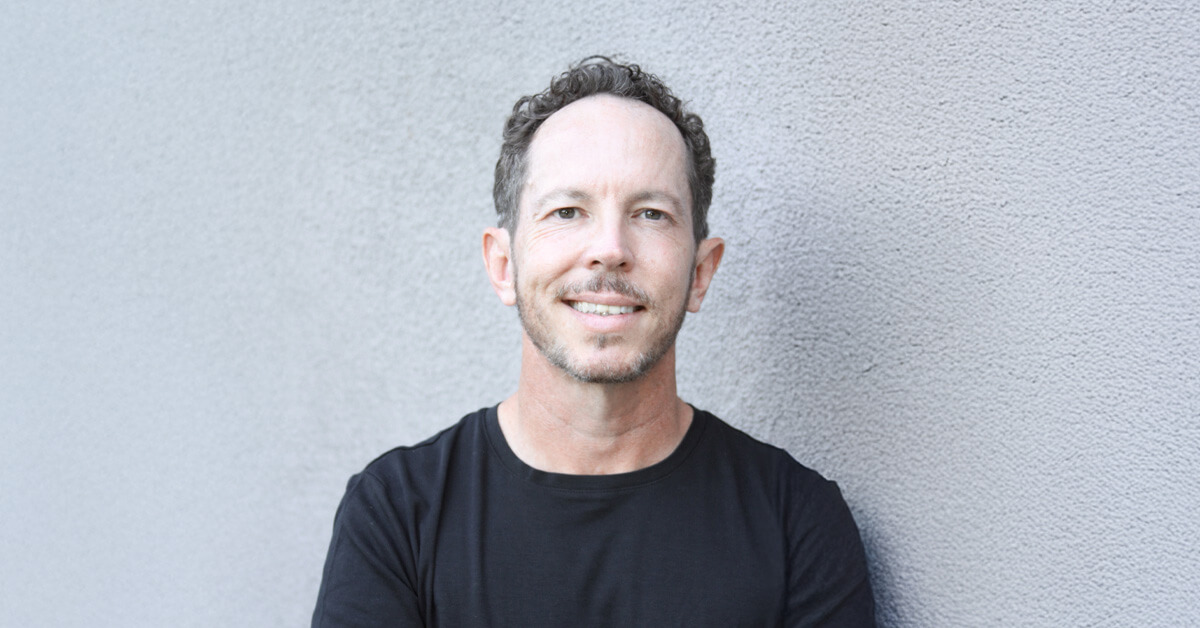
When your creative career feels like it’s in crisis, how do you decide what to do next?
In this episode, I talk with Matt Nix, longtime friend and prolific writer, director, and showrunner behind Burn Notice, The Gifted, Turner & Hooch, and True Lies. We explore what it means to navigate creative careers in a down market—whether to stay the course, pivot entirely, and how to stand out in an overcrowded industry. Matt shares how he stays busy in one of the toughest industry climates, and how building real relationships, not transactions, is key to surviving and thriving.
Matt Nix graduated from UCLA with a degree in Political Science. He started off writing and directing several award-winning short films, which led to a career writing feature film scripts. As a screenwriter, he worked at most of the major studios writing movies before turning his attention to television. He is best known as the creator, writer, and executive producer of the USA Network hit series Burn Notice which ran from 2007 to 2014, spending several of those years as the highest rated show on basic cable. He created and ran The Good Guys for Fox and Complications for USA, co-created and co-ran The Comedians for FX, and developed and co-ran APB for Fox. He completed two seasons of the Marvel/X-men show The Gifted which he created and ran for Fox. He also created and ran the Turner & Hooch series for Disney+ and produced the pilot for TRUE LIES.
Zack Arnold: So Matt, there are three reasons that I decided that I wanted you to be a guest at my Summit all about navigating the future of entertainment. Number one, I knew you’d say yes. Low-hanging fruit. We’ve known each other for a long time, so I figured I’d reach out to Matt, send him a text, “Dude, want to be at my Summit?” You’re like, “Sure, send me the link.” So I knew it was low-hanging fruit. Number two is that I firmly believe, and we’ve talked about this off the record before, that when, if ever, you decide to transition out of your writing, directing, showrunning career, I think you will be a fantastic teacher, mentor, and even a fantastic coach. The third reason is because, in our conversations, you always tell the unvarnished fucking truth, and this summit is about being very clear with people about the realities that we in the entertainment and media industries are all facing right now. And you’re in the weeds figuring all this out, just like everybody else is. So I thought for those three reasons, why not bring you back? You’ve been on the podcast before, but why not let you be one of the voices that’s figuring out how we navigate this shitstorm together? So I wanted to appreciate you being here.
Matt Nix: Fantastic.
Zack Arnold: This is where I actually want to begin. You and I keep up periodically via text, and I think it was maybe a few months ago I had reached out just to check in, and you said, “I’m one of the more fortunate. I have five active pilots, a pitch, two spec pilots, and two spec features.” And my response was, “But of course, Matt Nix is doing all of these things in the middle of this economic downturn.” So just tell me and tell everybody else a little bit more about what it is you’re up to right now, but then, more importantly, what does this landscape really look like?
Matt Nix: Well, jumping right into the brutal, unvarnished truth. I am doing a lot, although the reality is, I was running shows for basically 16 years straight from the beginning of Burn Notice and kind of never stopped. So at the moment, it’s kind of the longest I’ve been without running a show. I was on a deal at 20th for many of those years. I was running True Lies, the strike happened, True Lies was canceled, and since then, I’ve been developing and selling stuff.
Just to go over my currently active projects, I’m doing a show called State Patrol at Fox, which is still technically alive. I’m doing the Baywatch reboot for Fox right now. I’m doing a show about drug-smuggling surfers for Apple TV International. I’m doing an adaptation of a sci-fi Western movie. It’s a pretty loose adaptation, inspired by or set in the same world as a movie called Outland with Sean Connery from the early 80s. My version is a space Western about a mining community on Mars. And then I’m also co-writing a show about a female-driven detective show that takes place in Maine for Universal and Peacock. And then I’m also going out with a pitch with Jeff Davis, the creator of Criminal Minds, which is sort of a supernatural Criminal Minds.
So I’m doing a lot. Now, sometimes people will ask me, “Does this speak to a rebirth of the entertainment industry? Are things looking up?” The short answer is, I don’t know, maybe, but my situation is not an indication of that. Because I was a showrunner on a deal, and there are no deals anymore. Unless you’re on a hit show and they have to give you a deal, all of those deals basically all went away. Or rather, everybody got downgraded a notch. The saying among showrunners is “even is the new bump.” If you manage to stay on a deal, that’s a huge thing because nobody’s on a deal right now.
Basically, if you were someone like me who had been on a deal, running shows regularly, I hadn’t had a big hit since Burn Notice. I just had shows that went a year or two. So then my deal ends. Now, because I have that status as a showrunner, the one thing that I’m able to leverage is non-exclusivity. Where a lot of writers would be held to, “You’re doing this thing for us, you’re not allowed to do anything else,” I have the clout to be able to say, “No, I’m going to do multiple things at once.” In order to keep body and soul together, I’ve just been selling constantly, always developing new things. It’s kind of an absurd situation because I don’t know how it works if multiple shows end up going.
When I look at all of those shows, that first one, State Patrol for Fox, I finished that right after the strike. I’ve been getting calls from agents about staffing for State Patrol for years. They go to a meeting with Fox, and Fox is like, “We’re really excited about the show State Patrol. We think we’re going to pick it up.” I’m like, “That’s been true for almost two years. Why don’t you call me when they actually do pick it up?” The thing that I’m doing for Warner Brothers is a job that I actually got over three years ago. The original version was killed by the strike, it got converted to a blind script deal that turned into Outland, and every point along those lines involved a renegotiation. I got paid out on that project a year and a half ago, so right now I’m just finishing that project for no incremental money.
The other unfortunate piece is that right now, if a development executive is looking to develop a project, suddenly all the people like me are available. We didn’t used to be. We were on overall deals; you couldn’t have us. The fact that I am partnering with Jeff Davis, creator of Criminal Minds, formerly on a mega-deal at Paramount, is absurd. A few years ago, there was no way that could happen. We’re teaming up to create a show because both of us have other things going on, and it’s easier to sell one more thing if it’s like, “Well, there are two showrunners on this. One of us is probably going to be available.” But when I think about the knock-on effects as you go down the ladder, it’s really unfortunate because you’ve got writers like me out there, and I’m just trying to get every job to survive. And bluntly, if you’re starting out, you don’t want to be up against me. That’s not a good thing for you because I’ve probably known that executive for 20 years. I have a lot of experience pitching; I kind of know what they want.
What looks like thriving for me is surviving. And Baywatch is looking good in terms of going. Initially, Baywatch was with another writer, and then they wanted to take it in a new direction and they called me in mid-January as I was literally sitting in my house with no power, warding off looters after the Altadena fires. They were like, “Hey, we need somebody to take Baywatch in a new direction. Would you be up for it?” And I’m looking at the remains of my underinsured guest house, and I’m like, “Yes, I would love that. Sounds fantastic.” I think there is a sense of things picking up a little bit, although the reality is, I think part of that is just executives waking up and realizing, “Oh, if we don’t actually make shows, they’ll just fire us.” Standing frozen in place like a deer being attacked by a lion is probably not the best strategy at this point for anybody.
Zack Arnold: I want to go back for a second to what you said about “even is the new bump.” I’ve been working with my students and advising them that just before the strikes, I was working with so many people that were at what I would call the “one phone call away” stage. Somebody just needs to give them the phone call to say, “This is your shot.” In this day and age, that never would have happened because the competition is so fierce. I’ve been saying to my students that if you want to find opportunities right now, you go to the place where somebody says, “Wait, they’re available and they’re willing to do this thing? Okay, now we’re willing to talk to them.” Anybody that’s in the mindset of “I’m going to use this as an opportunity to move my career forwards,” by and large, the competition is so ridiculously fierce that if you can just stay where you were—and I’ve said this to multiple clients, when they have landed jobs, and they say, “Well, I just really wanted to move forwards, and this is a lateral move,” I would say a lateral move right now is a tremendous victory.
Matt Nix: Absolutely. Right now, with the prospect of Baywatch going, I’m getting calls from everybody that I ever worked with. The thing that I was saying when talking to somebody about hiring writers is, okay, well, there are certain categories of writers that I might need that are specific to Baywatch, where I might be looking for a couple of new people. But the reality is, and I say this without exaggeration, I could staff all of Baywatch, writer-wise, with people whose weddings I was in or who were in my wedding. So sometimes it’s like, okay, what constituted a great contact in the heyday, when it was hard to find people who were available, is such a different landscape now. The people that I was like, “Oh, that person will never be available again,” those people are hungry for work and willing to do whatever.
I’m sure you could go out on the market right now for writers and say, “Hey, who wants to be a consulting producer? I only have money for a supervising producer level writer.” Which executive producer would like to be a consulting producer and work a four-day-a-week schedule for this money? You’ll have people lined up around the block.
The other thing that I tell people is thinking in terms of—and it’s a hard transition for people—you need to stop thinking in terms of “what jobs can I get” and start thinking in terms of “what job can I get.” You’re thinking, “I’m going to build up a resume, and then I’m going to have this great resume, and I’ll give it to people, and then they’re going to hire me.” I try to impart to them that it was almost never true, certainly in the world of writers, that you would look at a resume at all. Even in the heyday, you don’t know if someone’s crazy. You don’t know why they’re available. You’re bringing someone into a very high-pressure work environment where if they don’t work out, the consequences are huge. Why would you rely on a resume?
I was talking to someone the other day, and I was like, “Okay, so you want to write half-hour prestige comedy. You’re never going to get the job that you want by writing great samples and having people read your great samples. It is simply not going to happen.” Because in the current market, if someone reads the world’s best sample and they’re basically like, “This person is a genius, I would love to hire this person,” they then have to turn around and say, “Now I have to tell one of my best friends that they are not going to be able to send their children back to school because I’m not hiring them. I’m going to hire this person who wrote a really good script.” That is a very hard conversation to have, and it is a conversation that usually doesn’t happen.
So the thing that I say to them is, you should be reaching out right now to the person fourth down on the ladder on the writing staff of The Bear. That person is in no position to hire you and will not be for years. However, The Bear is a great credit. If that person is a good writer, in three or four years, that person is going to be developing something. If you’ve reached out to someone early and you’ve been the first person to say, “I love your work, I believe in you,” and you’ve got a script and you want first eyes on it, I’ll turn it around. You want someone to proof your script, I’m there. And you build up that relationship with someone, ideally, authentically. You can’t really do that cynically; people will see through it. But if it’s someone that you really like, you should be thinking in terms of building real relationships over multiple years, so that when that job comes along, they’re not looking at resumes because they’re looking at you.
The other thing that I say to writers is, they need to show me that they can write my thing, not that they can write their thing. I get that your own precious, unique voice is wonderful, but truthfully, at this point, especially, show me you can write my thing. And then in a few years, after you’ve got the status, you can create your own show. Great, awesome time to do an Orthodox Jewish private eye in upstate New York who happens to have your exact background. But for right now, I need to know if you’re great at writing lifeguards who are not Orthodox Jews.
Zack Arnold: So many things to go into. I definitely want to spend more time talking about how we reach out and connect with people and build relationships. I also want to talk about what I believe you are one of the best at: the way that you can pitch and sell a story idea. But I want to go back for a second to this idea that you have more samples, and every two weeks you’re spitting out this genre, then that genre, which begs the question, how in the world are you doing that, especially given the technology available to all of us nowadays, which I would assume is very much not a part of what you’re doing.
Matt Nix: Well, bear in mind that if you’ve been working on something for years, and they’re like, “We’d like another draft,” I’m not writing a brand new script every two weeks; I’m writing a draft every two weeks. One of the things that I learned as a showrunner is you just build this muscle of, “Yeah, no, it sucks. You got to get it done. Oh, you’re blocked? Too bad, do it anyway.” If I just sit down and I’m like, “Yeah, no, you don’t have an idea for this scene. Fucking have an idea for this scene.” Early on as a showrunner, I realized the only way to survive is if you can’t write an episode of your own show overnight in a pinch, you’re fucked. I hate doing it, but I can. On Burn Notice, I was like, “Oh, this one didn’t come out very well. I’m going to have to rewrite it from scratch.” And I wrote it in 16 hours—52 pages in 16 hours. Why? Not because I wanted to, because I had to.
To address the elephant in the room, one thing about AI that I don’t think people appreciate is that people think of it as a page generator. The reality is that if you have a problem generating pages fast enough, you already lost. I can write a page of script about as fast as I can type. The bottleneck is not how fast I can write it; it’s how fast they can read it.
That said, the one thing that I have found with AI is, years ago, I did a movie for Burn Notice, the Sam Axe movie, and that was in Colombia. And I was like, “Oh, the future of television is international. I’m going to learn Spanish.” So I am now seven years into my Spanish Duolingo streak, and I did all of my meetings in Spanish at MIP Cancun. I am effectively bilingual as a producer and writer. However, one of the things I found is, I wrote a spec that was a bilingual sci-fi show, a first-contact story that takes place in rural Mexico. In terms of the research and all of the things that I needed to do to figure out how to do this, for that, AI is super useful. A process that probably would have taken me weeks—the bottleneck there would have been, what are the specific saints that people would be most familiar with outside of Guadalajara? What is someone having a first-contact experience and interpreting it through a religious lens, what would they be thinking? There, AI has really sped up the process.
Similarly, working on a project about a mine on Mars. The physics of how much further could someone jump on Mars, given the lighter gravity? How long would someone last if exposed to the Martian atmosphere? Those things are important, so I’m just running through all of those things very quickly, and that has really sped me up because, in my case, the bottleneck would be the research.
Zack Arnold: I’ve got a couple of follow-ups here. I had a conversation with Sean Cushing, who’s the co-owner of Cantina Creative, and they do visual effects for Avatar and Marvel movies. When we started talking about AI, he’s like, “Well, it’s simple. We’re not allowed to use it.” There is not a single pixel that we are allowed to render and export if AI has been used. So I’m curious, number one, have there been any rules or regulations brought to you as far as writing and whether or not you can use AI? And number two, given that you have this fast track to research and brainstorming, what do you think this does to the entry-level jobs of people trying to break in at the bottom rung of the writing ladder?
Matt Nix: It’s a very good question. In terms of rules, to be honest, it hasn’t really come up because if you’re writing a spec, nobody cares. And the horse is entirely out of the barn in terms of research. If you Google something now, the first response you get is an AI response. So, it hasn’t come up for me because I haven’t really been on a thing where I’ve needed to use it. I’m not generating pages with AI because that’s not, I don’t need that, and it’s more trouble than it’s worth for me. AI tends to go far down a rabbit hole. It’ll write a four-page scene when I need a one-page scene.
So the reality is, for me, if they said don’t use it, what they mean is, don’t use it for something that could result in us getting sued for copyright infringement. They don’t mean don’t use Google search because AI might touch Google search.
Zack Arnold: So it’s really just more about what ends up being on the page. It doesn’t sound like there’s some formal regulation saying the final content cannot be AI-driven.
Matt Nix: I’ve heard about places that do that. I know in the Dick Wolf camp, there’s simply a fatwa against AI. Since I’m talking to you and we’re talking about brutal honesty, there was an interesting thing on The Wire years ago about people drinking alcohol from paper bags. It’s basically a cop saying we allow people to drink alcohol from paper bags on the street because it allows us to technically say that we do not know what is in the paper bag. For society to flow freely, we need to allow people that can’t afford to drink in bars to drink in empty lots. So we respect this fiction that paper bags are just impossible to know what’s inside.
That’s what’s going to happen with AI in Hollywood. It’s like, “Yeah, you can’t use AI” actually means “if you use AI, it’s on you.” We have made a rule against it so we can’t get sued if it happens that you use AI. That’s what’s really going on.
So with regard to new writers coming up, I think the reality is that they are going to be used. They’re just going to. And the blunt fact is, for a long time at the low levels of writing, there was some utility if you were someone who could fill a page, who could write a script that was baseline coherent. I can give you an outline, and you can generate a script. I’ve done this as an experiment. I’m like, “You are the writer Matt Nix.” It has been trained on like 100 scripts I’ve written. And how is it? It’s not great, but it’s better than scripts I’ve gotten from junior writers, for sure.
That particular skill of “I can fill up words based on an outline you give me” has gone from $120,000 a year to $20 a month. That’s a big difference that’s going to be hard to sustain. It’s going to be hard for everybody to be like, “No, no, I could pay $20 a month for this. I prefer to pay $120,000 a year.”
All of that said, what do I actually think is going to happen in writing? The thing that AI can’t do and will never do because it is a computer, is it is never going to think something is funny. It is never going to think something is sad. That is not to say that it cannot write something funny or sad; it can. But the understanding of what is funny and how is it funny—it needs human judgment. Funny is not this fungible quality that just goes from place to place. Similarly for sad or any emotional reaction.
I was talking to my son about this. A particular kind of sad scene that has been written 50,000 times in soap operas, maybe that is better done by AI now. It’s a formula. But if you sit down and you’re like, “I’m going to write something about a particular kind of sadness, which is the sadness of having a happy experience and knowing that it’s going to end,” well, AI has not had that experience. That is not something that it is trained on. It doesn’t have a pattern for that kind of sadness. So that’s left for you to invent. I think there’s going to be a premium on more specificity, more humanity.
And then the last thing is understanding the structure of stories. If I were talking to a young writer now, I would say that a much more important skill now is pitching story. Can you pitch a story that’s compelling? Can you tell me a story that grabs my attention? It’s much harder for AI to grab your attention and tell you a great story, or it won’t necessarily do the kind of story you want. If you ask it for a Baywatch story and say, “Make it really gripping,” it will reliably go in a direction that is super gruesome because it knows how to grab your attention: shocking violence. It’s not tonally Baywatch at all. The particular kind of gripping that is “fun in paradise” is hard for it to grab.
Zack Arnold: Yeah, absolutely. And what I’ve been arguing is that AI is going to replace the careers of the mediocre. If what you do is also very specialized and repeatable, like if you’re a rotoscoper, you need a much more diversified skill set. But what I think is the reason that I’m not worried about AI as a craftsperson is our ability to understand nuance and our ability to understand the note underneath the note. Imagine if you take the craftspeople out, and now it’s the executives. They can create a prompt and create a show. They don’t know what to ask for because they ask us for what they want, and we’re like, “Well, that’s possibly the worst note ever, but I see what you’re getting at. Let me see if I can figure this out.” AI can’t do any of that. It’s my ability to know this needs to be one frame shorter, or I need to see the other person’s face when they’re listening. It’s that nuance that makes me feel like my job and most craftspeople’s jobs, if they’re good at those things, we have nothing to worry about.
Matt Nix: Yeah, I totally agree. I mean, when I talk to editors, I’m always like, “Do not give me what I asked for; give me what I want.” I may ask you for the opposite of what I want by accident, and your job is to figure that out. I’m like, “Don’t make me look stupid by doing something that I asked for that’s terrible.”
I had a conversation with some executives recently where I was like, “You keep saying about these characters ‘more dramatic, deeper,’ and you keep describing what you want as more essentially ‘sadder,’ more tragic backstory, because you want to like the characters more.” But what I said to them was, “The things that you respond to most are when the characters are funny. When you say ‘more tragic,’ do you mean funnier?” And they were like, “Maybe we do.” I was like, “Can I just try that?” And I did, and they were like, “Yes, that’s what we meant.” But you ask an AI, “Give me more tragic,” it’s just going to give you more tragic. And eventually, everybody has six dead children, and it has written the saddest story on Earth, and that isn’t what anybody wanted.
I will say, though, one thing that I spoke at an AI conference a while back and I was saying, a useful analogy is, in World War I, we had 50 guys in a trench with repeating rifles. And then one day, a machine gun came along that could shoot as many bullets as the 50 guys. On that day, they did not say, “Okay, 49 guys, you guys go home.” No, they gave everybody machine guns. The technology changed the capacity.
I do think that one thing you’ll see is, for example, in writing, once AI really takes off, it may be that people expect six drafts where they used to expect two, or ten drafts. It may just be like, there are certain aspects of it, so I wouldn’t say that there’s nothing to worry about. It may suck. It may be things that we may not like, but it won’t be exactly the same job.
Zack Arnold: When I set this up as “we were going to speak the unvarnished truth,” I did not expect talking about brown-bagging malt liquor and World War I trench warfare, but both of these analogies hold really true. The three areas that I want to focus on for the remainder of the conversation are how we forge the next act of our careers, how we build relationships, and then how we can better pitch our story ideas. There’s something that you said much earlier, which is, it’s no longer about “I’m going to get a bunch of jobs”; it’s now “I’m going to get a job,” which means we’re going to have to be much more generalized. Most of my clients now, the goal is, “I just need one show a year, and I figure out how to fill the gaps.” So how would you, in today’s day and age, start to figure out what the next act looks like?
Matt Nix: How would I specifically talk about editors?
Zack Arnold: No, anybody that’s doing any kind of a creative craft. There are going to be a very small percentage of people that are just going to go from show to show. So how would we address the fact that there’s just less work to go around?
Matt Nix: I think my recommendation to people is always they really need to start thinking about creating actual creative partnerships with human beings. There’s a transactional aspect to a lot of people’s job hunting. I have a lot of friends when I have a show that is about to go. I understand the hustle; I don’t think it’s evil. But it’s not very effective because people are approaching me at the point where hundreds of people are approaching me. I’m like, “Great, I’ll put you in the good stack,” which is the stack of people I know and generally like. But are we in an actual, dynamic, creative partnership?
Sometimes I want to say to people, as a piece of coaching, “Oh, you forgot I’m also a person.” You’re thinking of me as just a giver of jobs, but you forgot that it would mean something to me if you liked something I did and knew something specific about it. When you got Burn Notice, one thing that I appreciated was that you’d clearly watched a shit ton of Burn Notice.
Zack Arnold: All of it twice. I watched three seasons of it twice. My life for two weeks.
Matt Nix: You were a fan. What is the most guaranteed route to becoming an editor on a television show? It is editing a children’s video or a charity video for me. I used to make these films with my kids called Action Boys, and I talked to Steve, my editor, and I’d be like, “Hey, I got to get this edited.” And he would select the junior editor’s assistant who he was wanting to promote next. By the way, I was paying them something, but it meant a lot to me. Suddenly, I have this creative partnership with someone.
Now, I realized that a lot of people would be like, “That’s exploitation.” And my response to that is, do you want to know what I’m doing if I don’t do that? I’m reaching out to someone on Fiverr who lives in Omaha. Speaking as a writer, especially when I was starting out, I was like, “Fucking exploit me. Yes, no problem.” All I want is to be exploited by five people so that three of them can blow me off, but the two that work, I get a job. And that’s a great hit rate. What if one of those, I discovered I didn’t want to work with them? Also a great lesson.
So all of that is to say, the thing that I would focus on more than anything right now is finding those true creative partnerships and reaching out to people and thinking in terms of what value I can actually create for this person. And then how are you prepared for that moment? In that transactional mode, a lot of people are like, “Okay, well, if I do this thing, when does it pay off?” And the answer is, I don’t fucking know. Maybe it doesn’t. That’s why you’re going to do 10 things, and one of them is going to pay off.
My son, Charlie, he was super interested in lighting setups. He created his “second brain,” which is a database of his favorite shots from Shotdeck and the lighting setups. He just created this tool for himself. What opportunities come out of that? Well, initially, he would show that to cinematographers, and I think three times they said, “Don’t pay me, just give me that.” Then he was at Cine Gear over the weekend, and who came up to the booth? The creator of Shotdeck. And Charlie was like, “Oh, check this out.” And the guy was like, “We should talk.” So now, Charlie is in a correspondence with one of his favorite cinematographers, but he put in the work initially. So when he met the guy, he was able to be instantly in an authentic, creative relationship.
Zack Arnold: Don’t forget the brain-picking. There must be brain-picking.
Matt Nix: Yes, exactly. And then I will sit across from you and dance around whether you have a job to give me for 45 minutes, and then leave and you’ll never hear from me again because there was no job. A great example: I met someone once who knew Burn Notice backwards and forwards. I met him in a cafe, and I was like, “Hey, would you be down to proofread my script?” And he’s like, “Yeah, 100%.” He comes back, has fantastic notes, really thoughtful, and suddenly we have an authentic creative relationship. And I hired him. Then I got him another job until I had a job to give him, and then I gave him that job.
Zack Arnold: You and I are very much on the same page. I could talk about this for at least another 90 minutes. I actually have another entire interview this day of the summit with Selena Soo going into this in depth. But one of the areas where I think you are so uniquely valuable is your ability to pitch an idea and pitch a story. It’s not just “I have to learn a logline.” We have to know how to pitch ourselves. Even if we’ve built these genuine relationships, we still have to be able to sell ourselves. So where do we begin?
Matt Nix: By way of example, I’ll tell you about an old assistant of mine. He was a computer science major at Duke and a writer. There was a show called Next that was about AI. He had written this very long email introducing himself. He was a very junior guy. He was demographically not who they would be looking to hire. There were all sorts of reasons to not hire this guy. And I read this letter, and I was like, “Okay.”
How do you grab someone’s attention in any context? You do it with conflict or mystery or fun. If you were at a dinner party trying to hit on somebody and they ask you what you do, would you list your jobs in order chronologically and then say that you’re a go-getter and a self-starter? I hope not, because no one gives a single fuck.
I’m going to tell you what you should do. It is going to feel risky. He had buried something late in the letter. The cover page of this script was code for some kind of computer program. He’s a computer scientist; he recognized the computer code. He knew what it was for. Parts of the code were redacted. I basically helped him redraft his letter into a three-line letter. It essentially boiled down to, “I am a writer. I was a computer science major at Duke. The code that you have on the cover page of your script is for a virus called this.” He knew the name of the virus. “There are portions of the code that have been redacted, I assume, because nobody wants someone to be able to program this virus. Don’t worry, even if it wasn’t redacted, it wouldn’t work because these six numbers are wrong. If this is interesting to you, please read my resume and my script.” Hired.
That comes in. It’s a three-line email. Now it’s not a guarantee; you still got to have the resume and the script. But in terms of attracting someone’s attention and pitching, that’s a pitch. That’s, “Listen to me.”
My youngest son is going to Bowdoin. I was like, “Okay, we have got to take a risk and grab them.” The opening line of his essay was basically, “In my junior year, I was assigned the job of training the meanest horse at Thatcher, who spent a year trying to kill me.” Are you reading the next sentence? Like, you are. Okay, that is grabby.
What I find a lot with people presenting themselves is they want the resume to speak for them. I’m like, “It’s not going to speak for you. It is backup information. You have to speak for yourself.” It’s a creative task. We’re in a creative industry, so you should be able to have a good line, a good pitch. A good friend of Charlie’s who is working as my assistant now, he has a stammer. And my son observes there’s no better wingman at a bar than a charming guy with a stammer because it’s disarming. He knows how to work it. He knows how to acknowledge his stammer, and suddenly everybody’s leaning in, and everybody’s friends with the guy with the stammer. Why? Because he took responsibility for it and he made it part of his pitch.
Zack Arnold: I love this taking ownership of it because I feel this idea that we must have this persona that we’ve got it all figured out, we’re the best in the room. I found that most of my success has just come from being very honest and very vulnerable. The pitch, it’s not only about having a hook, but it’s about not making it about you and making it about the other person. “I am here to solve your problems.”
Essentially, the pitch for Burn Notice was, “I know your show better than you do. So let’s talk about the end of episode 311.” And that’s the reason I got hired because you could have gotten somebody on all the major shows, but none of them had the knowledge and the learning curve to edit that kind of show. It wasn’t “I’m a really good editor. I love your show.” You don’t give a shit. You don’t hire me because you want me to achieve my hopes and dreams. I was there to solve your problems.
Same thing with Cobra Kai. I said, “The reason you hire me is because The Karate Kid was my Star Wars. I grew up in the 80s, and your playlist on the show was my playlist growing up. Not only that, but I noticed that in your pilot, you had one close-up of Johnny grabbing the steering wheel. I know that you stole that from a Rocky IV montage.” Boom, hired. Because I could solve their problems.
Matt Nix: Yes. And that with a specific thing. It’s a thing that I do when I pitch on projects. I will actively seek to solve a problem. I’ll give you a specific example. I was pitching on Turner & Hooch for Disney. I could have gone in and said, “Dogs, I just love dogs so much.” But when I was pitching on Turner & Hooch, I was like, “I’m going to tell you the basis of my pitch, and if you don’t like this, ask me to leave. Whether you hire me or not, you should definitely do this.” And I just said, “You guys think this is about a cop and a dog. Let me tell you why it’s not. You could get away with that in a movie, but people forget that police dogs are scary. Their job is to bite people. Real police deal with scary problems that don’t fit on Disney+.”
“This show needs to be about a federal marshal, and here’s why. Federal marshals seek fugitives for federal crimes: bank robbery, fraud. There are no victims because all of the crimes happened a long time ago. So you’re going to be able to put this on Disney+ because this dog is going to be able to do the things that dogs do well, which is protect the good guys and seek and track the bad guys. Tracking is a really good thing for a Disney+ show; biting is not.” I was like, “If you don’t like federal marshal, you don’t want me. And if you do like federal marshal, use it. I don’t care if you get a better pitch, but make sure it’s a federal marshal.” Have I created value in that situation? Yes. Also, I just slid all my chips into the center. That’s a big move. It’s something you’re going to remember.
Zack Arnold: It’s so funny because that’s essentially what I did in my meeting for Cobra Kai. I said, in a very kind way, “If you hire me, I’m going to make your show better than it is.” I didn’t have the chutzpah to say that about Burn Notice, but I believed it. You were the number one show on cable at the time, and I’m like, “This show is awesome. I can make it better.” The biggest challenge that I have with you is that we could go on forever. So in just because I know that you’re very good at summarizing, is there anything else for those that are just confounded by the state of the industry that we haven’t talked about that you want to leave us with today?
Matt Nix: I think the biggest thing would be this. In stressful times, there can be a tendency for people to try to become more strategic and suppress their kind of natural creative instincts in favor of some external strategy because they feel scared. And I think the reality is that at this point, this is the time when you need to be more pure, more creative, more enthusiastic. When all of your instincts are telling you, “None of that stuff matters. I just need a job, I’ll do anything,” the person who runs into a meeting screaming, “I just need a job, I’ll do anything,” never, ever gets the job.
This is the point, I think, for a writer, where it’s like, are you writing not the script that you think is going to get you the job? Are you the person who, in troubled times, is writing six specs because you’re just like, “Fuck it, I’m going to do great stuff”? Are you the editor who’s working on your own amazing thing and can come in and convey excitement rather than fear? When you’re in the apocalypse, everybody’s first instinct is to grab a crossbow and ride around in a dune buggy shooting people. But if you look at real disasters, who survives? It’s not the people in the fucking dune buggies with the crossbows. It’s the people who form authentic communities and take care of each other and remember what’s really important.
Zack Arnold: It’s the helpers. That’s what I’m trying to do right now, to be one of those helpers. It’s the whole purpose of putting this together. I could not have said it better. Almost immediately, my students will say, “I’m kind of at the point where I need to do anything.” And I said, “Do the exact opposite of that. You be the one circle peg that fits in the one circle hole where they say, ‘We must hire you.’” The worst possible career trap is to never start with “I’ll do anything,” because then you end up working with a career coach 15 years later and saying, “How the hell did this become my life?” So this has been just a tremendous conversation. Can’t thank you enough for your time and your expertise.
Matt Nix: Thank you.
Edited by: Curtis Fritsch
Produced by: Debby Germino
Published by: Vim Pangantihon
Music by: Thomas Cepeda
In our conversation, Selena shares how we can build genuine, lasting relationships without burnout or feeling transactional.