Transcript
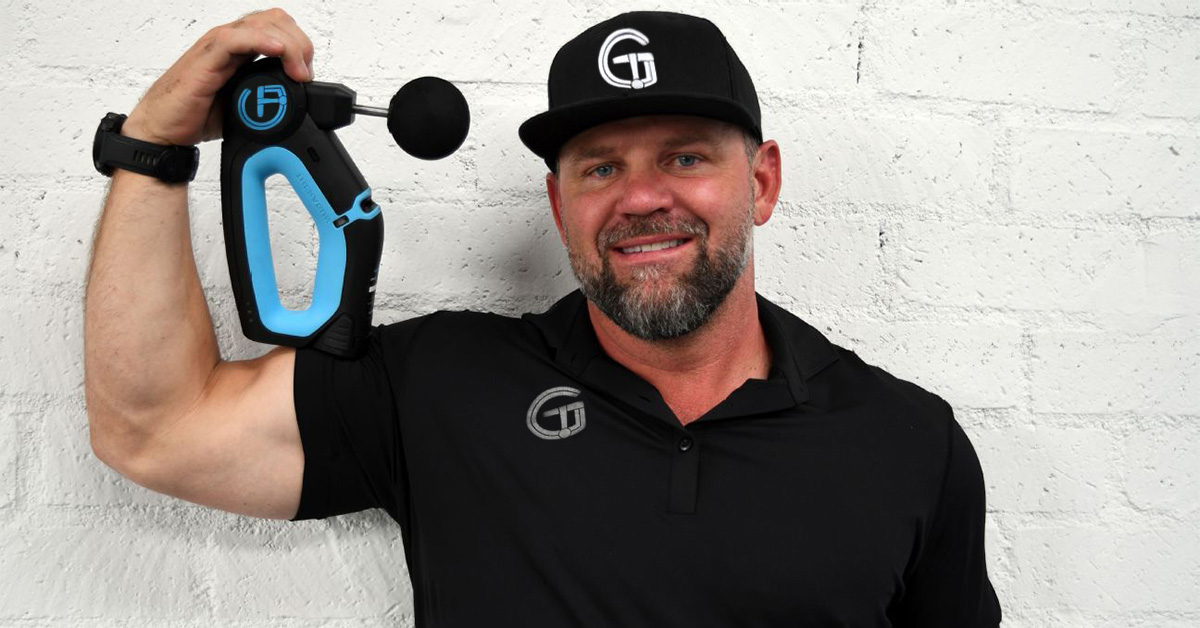
Zack Arnold: I’m here today with Dr. Jason Wersland, who’s a Doctor of Chiropractic, and he’s also the founder and the head of performance development at Thera Gun, so Dr. J, as you are also known, or Dr. Jason, it is by far a huge pleasure for me to have you on the show today.
Jason Wersland: Thanks. That’s a, that’s a big welcome.
Zack Arnold: Well, it is a big welcome, and I’m gonna explain to my audience why, because I don’t often have what may appear to them to be the manufacturer of a power tool on my podcast, but I’m going to let they’re going to understand at the end of this hour why you’re here. But what I want to share with them, and also share with you, is the way that this journey started is at the beginning of the year I decided that I was going to go from being a 38 year old film editor with a dad bod to choosing to train for American Ninja Warrior, and that has been less than a painless and smooth, elegant experience for me. Recovery has been a huge part of the process, and I started seeing these things on my Instagram feed that looked like these handheld jigsaws, but they had like lacrosse balls on the end of them, and like, there were all these videos, and like, what in the heck is this thing? And I started to dive down the rabbit hole, and I realized that there’s been this huge explosion of all these tools, which are called percussive massage therapy devices, and they have all these different names. So I just started to reach out and be like, “Hey, I wonder if this is something that would make a difference for my training, being old guy trying to figure out this ninja stuff, and I reached out to you guys, and you were so kind to not only respond to me, which other companies haven’t even done, but you said, “Hey, if you’re local, come by, check this thing on a person, try it out, and meet the guy that invented it, and, like, “Yes, please. So I did that. I headed out to Santa Monica. I was lucky enough that you guys are just an hour’s drive away, and you’re not like in, you know, Silicon Valley or Austin, or anything like that. And my hesitation was thinking, what if this guy is just a guy that makes this power tool device? How am I going to actually talk about this thing and make it interesting? Because I need stories that I need an emotional connection behind something to really get behind it, and all I can say, I’m not going to give away anything from the conversation that you and I had, but it was one of those very, very rare conversations where I walked out of that conversation after just one hour, feeling like, because I’d spoken to you and gotten to know you better, I was now, by default, a better human being.
Jason Wersland: Oh, wow.
Zack Arnold: So that meeting really had an impact on me. We’ll also talk about the impact that the Theragun has had on me, but before we really start to talk shop and get into the nitty gritty of talking about this thing called the Theragun, I want to just understand the origin story of you going way back to, you know, what you used to do and what you’re interested in what got you into chiropractic, and then ultimately what got you to deciding to make this device.
Jason Wersland: Yeah, you know, it’s funny you asked that question, because I feel like the further I get into this mission with Thera Gun, I realized how much the past of my, in my life, really kind of just like with everyone else, I think it’s nothing special to. Me, but I think it’s an, it’s a really cool experience to recognize how so many little things played a part in your life, to have the blessing to be able to bless so many lives, you know, I mean,
Zack Arnold: Well, and I think that there’s no question that you, you know, whether indirectly or directly, are definitely blessing a lot of people’s lives, and I certainly want to talk about that through the equipment, and you know, through the Theragun, and whatnot, but I think, like you said, it’s so much more important, at least for me, the stories that I like to tell, I want to understand the origin story, I don’t want to just know, well, this is a guy that designed this really cool device, all great ideas, I think really start from, man, I have my own problem, and I have to figure out how to solve it. So, let’s start there. Where did this thing come from?
Jason Wersland: When I was in 2007 I lived in Los Angeles. I was, and I’ll kind of bounce around a little bit to try and answer some of your questions, but I lived in Los Angeles. I was just finishing chiropractic school. I had one more exam or something. It was something to do with physical therapy. I had to get to the school to take. Jumped on my motorcycle at 6:30am in the morning on October 17, 2007 and I’m cruising through, and you know, like motorcycle guys do in LA, motorcycle riders, you split traffic, so I started splitting traffic as the traffic slowed down, and a guy missed his turn, cranked and turned right in front of me, and I T-boned the side of his Volkswagen Passat, and I lost. So from that accident, a still continuing chain of events happened, and it started with me being injured from the accident, I got thrown from the bike and caused a lot of soft tissue damage in my neck, and ultimately, within about 45 days of that injury, I had a nine millimeter disc bulge herniate my neck, which caused a lot of nerve pain, muscle cramps, decreased blood flow, all the things that come from that, it was scary, I think, is the best word, because I would be going to school, and I want my whole perspective was treating patients and fixing them, and now suddenly I was a patient, and I started experiencing some of these things that now, looking back on it, patients experience, people experience, and you go through these all these roller coaster feelings, like hopelessness, and my hand was numb, and I was a chiropractor, and how was I going to use that? You know, having that happen to you 45 days plus, where you’re not sleeping, and you don’t want to eat, and you, it’s just really strange. And anyone that’s listening to this, that’s experienced this, will know, it’ll just make sense, because if you know, you know. I just started reflecting through those days on my life, and I started to become more and more desperate, and I’d heard somewhere along in my life that necessity was the mother of invention, and it didn’t make more sense to me than at this time in my life, in 2000 2000 Christmas of 2007 and then January of 2008 and in February of 2008 I, you know, you asked me a minute ago, like, what my life was, and what kind of brought me here, and without getting too deep into it, you know, I grew up with a bunch of brothers, and we had a farm, and you know, there was stuff everywhere, tools from the 40s, and you could just make stuff, so you just pick up things and start putting stuff together, and you know, not knowing back then that this, that’s little kind of thought processes and skill, really, in a weird way, kind of paid off. I’d grown up with tools, power tools, my dad worked, you know, we always work, got up early on the weekends, and that’s just kind of what you did, and it all kind of came together, and so one night I’m sitting in my apartment, and I was frustrated, I was tired, I was done, kind of, and I just started thinking, you know what, I gotta, I need something to fix this. About two weeks prior to that, my brother, I reached out to my brother, one of them, who’s a chiropractor, and he’d had a water skiing accident about two years before my accident, and I remembered him using something that vibrated, and that’s kind of where this thought triggered a vibration. So he said, “Hey, I used this thing, and I had it in my office, drove to my office, grabbed it, took it apart like he did, he showed me how to use it, and I used it, and it was amazing. The pain went away, but it didn’t go away very long. It would go away for moments, and then after a minute, I’d realize I had to use this product on me longer. That process of using the vibration and how it would desensitize my pain, I was like, “Hey, wait a second. I tried drugs, I was recommended surgery, and I felt like I was young enough. I didn’t need it, and so I made something. I mean, I just went and got the tools out of my truck and garage, and sat there and tried to make something that I could use on myself that had the strength and the power on the torque to be able to get in deep where I needed to, but had a bigger amplitude, because I felt like the vibrating tool that I was using at the time was too. Irritating my skin, and I couldn’t hold it for very long on my arm, and just wasn’t working, so I just, in my head, I kept thinking, I know I need, I need something that just punches my arm, and so I made it, and it started, I started using it, and I was fascinated, the harder it hit me, the bigger the amplitude, the longer the pain would go away, and I was just, I’d use it, and then I’d sit back and breathe, and I’d get goose bumps, and I’d use it for a few minutes, and I got to where I could shower, and then I got to where I could eat, and then I would use it for a few minutes before I took a nap to try and catch up on some sleep. I actually bought this adapter for my car to use it in the car on the way to work, so that’s how it started, and that was in January, February of 2008 I really used it every day, I mean several times a day to deal with my pain and to release the muscle cramps, and I would look forward to getting home to use it and just put it up in my armpit, and the time that it was on me, the pain was gone, and I just, I knew that, so I got better, July of 2008 I got better. I got to the point where I couldn’t move. I was close to 100% I was starting to gain some of my muscle back. About three or four months later, a patient comes in. Patient was a bus driver in Los Angeles who’d been in an unfortunate head-on collision with another bus in the parking lot, and had similar injuries that I did. So, imagine I’m had I just experienced this, and I’m still lingering from like the oh my god feeling of, wow, that thing really did work. And now I’m reading a patient’s paperwork that’s literally describing me. Similar age insurance was terrible. I knew he was only going to get about 12 visits, and there’s no way I could fix him in 12 visits. I knew the guy didn’t have the money to pay for the services, so I’m like thinking, man, I’m stuck. What do I do with this guy? So I brought him and his wife in. I sat him down. I said, “Listen, I’m going to tell you guys about something. I need you to understand, like the biggest part of this is the pain, and you need to deal with the pain. You’re in pain 20-four hours a day. If you take out the 15 minutes of the year with me, that’s 23 and a half hours a day, or more, and I can’t win that battle. So I’m going to need you to take this home and see if we can get you out of pain, so when you come and see me, we can do good therapy, and we’ll speed your healing up. Long story short, it did it, it worked, and, and I realized, wow, this worked for me and him, and then I started using it on some of my patients, and then I used it on some people in the clinic, and then I used it on some pro athletes, and then it just slowly started to take off from there. I’m sorry to ramble so much about such a long answer to your question, but
Zack Arnold: Know this, this, this is what I’m looking for. I don’t want concise answers, I want stories, I want emotion, I want to really understand why this is so important, so that you definitely are no longer allowed to apologize for rambling, because I love that I didn’t even realize that we had this in common, but I too grew up on a farm, I didn’t have a bunch of brothers, but I also grew up on a farm, so I can completely relate to, oh, just grab this and put this together and play with this, yeah, but in my mind right now I’m picturing this prototype being a jigsaw with duct tape wrapped around a lacrosse ball, like I have all these visions for my prototype. So explain to me in a little bit more, what was this prototype that it was good enough you could actually hand it to a patient?
Jason Wersland: Well, it took some work. I’ll tell you that. I took a, a variable speed jigsaw. The amplitude was almost three quarters of an inch. It was a pretty big revolution. And I took some pieces from a saws, all that actually would receive the chuck better. If I’m sure you know what that is.
Zack Arnold: Yes, I know I can picture this completely right now.
Jason Wersland: I’m sitting there with this on my lap, and I have one, my right arm up over my head, so I’m trying to do this with one hand and using my legs, and because every time I drop my arm, the pain was just like someone was stabbing me, and so I’d have to keep my arm up and take my breath, and then so I’m trying to put this thing together, I’d use.. I didn’t have any duct tape, which is hilarious, because I grew up with that crap. My dad, that’s a joke, but I had some plumber’s tape, and so I was just wrapping that really tight around the end of it. I had golf balls, because I had golf, it just instinctively that was too hard. I needed something that really had the impact, but like not a solid rock hard impact. I needed something that would get in there, but at the point of contact I needed something softer, because of where I was driving, I was shoving it up in my armpit, so I didn’t want to like take something. So I took a wooden dowel, kind of sanded down the end, stuck it in, taped it in, and then I wrapped a bunch of paper towel over the top of it, and covered that with that same tape. So yeah, there you go. How about that for a picture in your head?
Zack Arnold: Well, what I’m not picturing right now is the prototype. What I’m picturing is the look on the face of your patient when you said, ‘Here, take this home and use it. That’s what I’m picturing right now.
Jason Wersland: You should have seen his wife.
Zack Arnold: So, is this license? What in the hell are you giving me? Right now,
Jason Wersland: Yeah, so, so from there, from from that point, the paper towel and all that, it would wear through the paper towel really quick, it would slide off, I would get lost in the euphoria of the feeling I was having, and then all of a sudden I realized I’m jabbing myself with a wooden dowel, and I actually caused some blood under there a couple times, so one night I’m laying there, I’ve just been using it online, not in the armpit, but kind of around the muscles of my shoulder and my arm, and I was looking at my golf bag, and I was like, “Wait a minute, I have some foam balls over there. So, like, three or four days into this, I remembered that I had those foam golf balls, grabbed a foam wall, shoved a pin in the end of it to get a little counter hole, and then I stuck it on the thing, then I started using Elmer’s glue, then I got super glue, and I burned through probably 20 of those golf balls, just because I would use the pressure and just shove it up my armpit, but it was like the perfect density. So that was a discovery that I had, which was the fun thing about this is people say you invented this. I don’t think I invented it, I think I created this out of a need that a lot of people have, and I just happened to be the guy that kind of followed through with it to this point, with man, a whole nother podcast full of challenges, but so, but by the time the dude got it, my patient, it had been, I cleaned it up pretty good, I had the wooden dowel was now a piece of metal that I had a guy make for me, and that metal had a flatter ahead that I could now fit those little golf balls on the end, and it’s funny that I talk about it like that, because that’s been one of the pain points in the whole process, is finding the right attachments and the right attachment process, the right attachment density, the engineering of those things, it’s not easy, it really is a difficult thing, especially when, like, coming from my perspective as a chiropractor, it’s got to be right. So that’s a whole nother story. But that’s that. By the time I handed it to that patient was pretty cleaned up.
Zack Arnold: Well, still, I mean, you’re your hand on the guy, even though you know it’s pretty cleaned up, it’s still a former jigsaw with a piece of metal and some weird attachment and some golf balls, and I know that even I, who’s very open to experimentation, would be like, you gotta be kidding me, really? Like, this is what’s my pain.
Jason Wersland: Yeah. Well, I put it on. I said, let me show you, and I showed him, and he was like, I’ll do it. This is makes sense to me. I get it. It was, it was that kind of realization that I have to mention while I’m thinking about this, but Zack gets that look on his face that never goes away, and it never goes away in my mind, because I remember it from him, but I see it every time I use this on someone. You know, people laugh about it, and I joke now when I go to shows or to events or something at the CrossFit Games, and someone’s never had it before, I’ll tell someone, “Stand in front of them and turn your phone on, you’re gonna love this, and even the person that’s receiving the treatment knows that I set them up that way, and they still make faces that are like, you know, the best relief faces you’ve ever seen, so it’s.. I don’t.. you’re asking, you were talking about some really fun things, because people don’t talk about these things with me, but I wish I could remember the guy’s name. I need to find that out, because I’ve told the story so many times. I feel like I owe him some sort of, some sort of credit, but he felt that he knew what it was, and it was just literally a matter of kind of explaining him the basics, which are the same thing I say to people now. So,
Zack Arnold: Well, what’s funny is that it was those videos that got me in touch with you that eventually got you on this podcast today, because I remember watching a few of those that could have been on Instagram or wherever it was, it was just some random pop up. I’m like, what is this, and like, oh, okay, I want to learn more about this, because I know how I have felt the last eight months doing this training that my body is not used to, and I wasn’t experiencing sharp pains, like I hadn’t been in an accident, so I don’t want to give anybody the idea that I was experiencing the level of discomfort that you were, or your patient was, or anybody that has been in a severe accident, but just on a day-to-day level, I just felt like I was 100 years old, like I was just like, oh my god, everything hurts, and I discovered these things called bicep tendons that I didn’t even know I had, and like, why does this hurt so bad? Oh, that’s a bicep tendon. Didn’t know that was part of my body. That’s nice. I discovered my scapula, and like, all these areas from doing all this climbing and jumping and lashing from bar to bar that I’ve never done in my life, and it just didn’t matter what I did. Like, I had, like, I’ve got the whole kit, I’ve got foam rollers, multiple thicknesses, you know, densities. I’ve got lacrosse balls, I’ve got double lacrosse balls taped together, because I’m a huge Dr. Kelly Starr at fan, and he kind of started that whole craze. I’ve got resistance bands, all of that stuff is great, but it requires a lot of effort, and it requires a ton of patience, because if you’re just going to start putting a lacrosse ball in, like, for example, my hip flexors. That was a month of my life, was I was just married to a lacrosse ball, digging into my hip flexors, and it helps and it works, but there’s no real immediate relief. It’s just immediate sharp pain, saying, “Oh boy, I got a lot of work to do, and I just consistently show up every day and do a little bit of work. Few minutes here, a few minutes there, and you slowly see this progression, but with the gun it’s a whole different level. I remember when, because I had never used it when I came into you, I was just curious about how it worked, and you guys were nice enough to invite me over, and you’re like, just get on the table, like, okay, get me out here, like I’m gonna do a two-minute sweep, and I wish that you’d done the camera thing with me, because it really was just this feeling of, like, oh my god, what is this? Oh my god, this is the thing I’ve been looking for forever, right? So it was just that same amazing experience, and you’d said to me, like, describe what it feels like right now, after I had that, you know, maybe three to five minutes where you just gently went over all these different areas, and like a path from head to toe, and I said, just, it feels like I got out of a 90 minute massage, and I just lost 15 pounds. It was unbelievable. But here’s, here’s the thing that I really want my audience to understand, and I haven’t even told you this yet, since I started training this year. One of the things that I’ve been doing on a weekly basis is parkour, and I have no business being in a parkour class. I’m surrounded by a bunch of teenagers that are jumping off walls and the Shang and climbing stuff, and I came in there the first month or two, and it was just embarrassing. But I’m a big believer in just failing forward and failing spectacularly, because that’s how you learn and get better. But the process has been very, very painful. Recovery has been very difficult, and I’d gone to a parkour class just the week before I had seen you, and I was just lagging, and I was tired, and my lower back was tight, and I had a hard time just getting my arms above my head to reach the bars, because my shoulders were so tight, and I even have video of just me looking worn out, like I was just like, I’m done, I’m gassed out, I don’t have the energy, so I had the proof of what I felt like and moved like the week before. Then I saw you and I started using the Theragun, and I did this 20 minute head to toe sweep on like all the key areas that I would need head to toe for parkour class, and I went to my class, and again I was running around, feeling like I had instantly ripped off a 20 pound weight vest, and all of a sudden it got to be like 830 or 9o’clock which was two hours into my class, and I said, Why am I not exhausted yet? I don’t get it, like usually by now I’m gassed out, I can barely move, why do I feel so good, and like, oh, it’s the gun, that’s what’s the difference. I done everything the same, same recovery ritual, same food. I’m very, very habitual. It’s the only thing that changed, but it was not a little tiny, like, oh yeah, this is making 1% difference. It was night and day, and I repeated that same experience just a few days ago, same thing all over again, so definitely was not a fluke. I’ve seen the difference.
Jason Wersland: That’s really cool. It’s, it, you know, I think you know a lot of these people I work on, ironically, are patients, they’re people that I treat. So I’m not a name dropper, but then there’s also the legal side that I can’t really mention. But one of the words that comes to me from people unprovoked is it’s a game changer. Someone the other day actually said this changed my paradigm, and it’s to me that’s kind of like a measuring statement to what it does, because you’re right, it’s not like one or 2% it’s like a lot, and of course I say that, I created it, like you know what I mean. So to hear people like you unsolicited, just share that kind of stuff. I, it’s that kind of stuff that keeps me going, because it’s true. It’s right. You can’t look. Kelly said this to me, I think I told you this, but.. and I thought this was such an amazing statement. But Kelly and I were talking about these things that he’s teaching things and has been teaching things that are kind of cutting edge, or I would say leading edge, and sometimes when you’re out there it’s easier for people to be critical or skeptical, and so I felt like asking him for some advice on some things was applicable because of what he’s done. So we were having this conversation about, yeah, you know, I have a lot of naysayers, or I have people that, you know, they want proof or science, and I was telling him, like, you know, I have cerebral palsy people that are using this. Tell her it doesn’t work. You don’t have people with MS that are using it because it works. Tell them it doesn’t work. Tell them you need to study before you can use this. It doesn’t make sense. So Kelly said, is a funny story, but he goes, if you’re sitting over there and we’re at a camp and you’re over there trying to make a campfire, and every time you light a match, the wind blows it out, and you can’t light a match, no matter how much lighter fluid you have on that thing or not. And I walk over with a torch, and I light your fire in 30 seconds or less, and I turn the torch off. Do you care about the science? It just lit your fire. His attitude was so encouraging, and I’ve thanked him for it. Yeah, I am a physician, I am a doctor, I’m a chiropractor, and there’s some things that chiropractors do that some people question, even me. There’s guys I see do things that sometimes makes me wonder what they’re doing, but I also know that I can’t tell you scientifically. Be the energy that I feel from someone when I’m working on them, I feel it. I can almost tell you what it feels like for each particular person. I don’t need science to tell me what I’m feeling. So, there’s that element of me that’s kind of like I work in this space where I’m not.. I can’t describe it all the time, but I’ll tell you this exact same thing that happened to you happens to almost every person that you use this on. It’s the same feeling, and it, what it is, is it’s science. We have blood, we have vessels, we have nervous systems, we have muscles, we have bones, we have joints, proprioception, all these things that isn’t prejudice. We all have it. It doesn’t care where you are, what you said, what you ate, what god you believe in, what color your skin is. It doesn’t matter what sex, race, or anything you are. This works, and I’ve seen it work around the world, and it’s this message. I feel like it’s my responsibility to make sure people know what this is, because the opioid addiction issue is bad. I almost lost a brother from it, and so I understand it. How it affects people, and being in the business that I’m in, also the same thing, but it’s understanding that you have another option. There’s a way to relieve this pain you’re experiencing, whether sitting at a desk too long, and you’re on your shoulders hurt, and your neck’s killing you, and your low back aches, or you just got done with a surgery, and now you have rehab. It has a way of helping you relieve the pain and increase your range of motion, and that’s what we’re all trying to do anyway.
Zack Arnold: And I’m really, really glad that you brought that up, because I think it’s really easy to go online to the website, or to Instagram, and see your post, or whatever it is, and think, oh, this is for CrossFitters, this is for athletes, this isn’t really for me. I don’t need one of these, and that was the biggest reason that I came to you, is because first of all, for me, being a, you know, an athlete, and maybe in my own mind, I don’t think anybody else ever accused me of being an athlete, but in my own mind, maybe I’m an athlete now, but I was thinking, for my needs, I definitely could use this for the training I’m doing, but I spent years trying to share information and knowledge and expertise and habit formation strategies about how to move less or how to move more in front of your workstation and have a more active, more dynamic work environment, because I live and breathe film editing for a living, and I’m in front of a computer in a small dark room for 60 hours a week and I know that for me and for everybody else, 1000s of people all over the world that have reached out and that I’ve talked to and read the blog or listen to the podcast, we again, like you said, there’s no prejudice, we all have the same pains in the same places because we, our bodies all live in the same casted position in front of this computer, sitting, and I thought, “Wait a second, this isn’t just about the fact that I want to be able to go to parkour class and not feel 100 years old. There’s a much, much bigger picture here, and I think that this could be an essential tool that essentially just sits on your desk or under your couch, or wherever you’re going to want to hide it, by the way, because everybody’s going to want to steal it from you, as a side note, but this is the kind of thing that in you can just use to make your quality of life a little bit better in front of your workstation, but also help make you more focused and more creative, and the reason that I say that is another example of my personal use of it is maybe a week ago I was really knee deep in just writing a bunch of scripts for the next online course that I’m building, and I’m not immune to the problems of sitting or working in front of a workstation like anybody else. And then the upper traps on the right side is one of my magic spots, where by the end of the day, as I start to just naturally hunch over, it gets really, really, really tight, and it starts to just feel like the steel rod, and I’ve dealt with this for, you know, a decade and a half, and I’ve learned all kinds of stretches, but then I thought, “Oh, wait a second, I’ve got the Thera gun, let’s see if this thing can do anything about this. So I went, and I spent less than three minutes, and I just ran it up and down the traps, and for anybody that doesn’t really know the muscular turrets, basically, you know, like the side of your neck, and kind of up and down between your shoulder and your neck, sweeping back and forth, and I just hit that little spot right on the right side. And after three minutes, I stood up and moved my neck, and not only had it dissipated, it was actually gone. And I don’t mean, like, oh, I don’t feel anymore. The knot was gone, the range of motion was completely back where it was supposed to be, and I’ve never been able to do that with a lacrosse ball. I’ve certainly never been able to do that with Advil, but it was just gone, and I went back to work, and it was as if I hadn’t been in front of the computer at all. And that’s where it hit me that, like you said, other people use this word, and I’m going to use it for anybody stuck in front of a computer. This is a game changer, no question about it.
Jason Wersland: I was with you. Just said something I wanted to tell you. Anyone that’s watched Jackass over the years, the guy named Danger, that they just abuse to feel bad for that guy. He came by office and we sat down and had an hour long conversation. Can you imagine the conversation? This guy. I, because I’ve watched Jack ass, and I’m looking at this dude, thinking that poor guy, especially as a chiropractor, there’s no one on this planet that I could.. it didn’t make sense to me that someone could do the things he does, and he’s still alive. So now I’m sitting here in front of this guy, he’s had 26 surgeries, I mean, he went through the list of things in his body. My point is, we’re sitting there, he’s asking why it felt so good, because I treated him, and we’re having a conversation, so I was trying to explain it to him, and as people ask me questions, I try and go as deep as I can without trying to sound like a know-it-all, so I said, you know, it’s like a percussion from the Theragun, really inhibits your body from splinting, it can’t, it can’t like engage, and he said we mean like flex, and I said yeah, I guess so. So he walks over to me, puts his arm in a really strong bicep flex, and he goes, put it on my arm, and I was like, oh, wow, I’ve never done this before. So I didn’t know how I was gonna react, so I put it on his arm really hard, and he takes it out of my hand, and then he puts it on his arm really hard, harder than I did, and he’s like, oh my god, I can’t even feel that, like, is he couldn’t.. what it did is it took away the sensation that his brain was having from that flexion, or its approximation of the Golgi tendon, so the vibration of the percussion he got right away interrupted or inhibited the signal to the brain that these Golgi tendon was approximating, or meaning coming closer together. So he now opened his arm up, flex it out. He’s like, “Oh my god, this feels so good. So there’s so much science that I learn because there’s no one I can ask about this stuff. And even when we try to do studies, it’s not something that that they have references for. So you just talked about the knot in your shoulder, I’ve watched that happen so many times, from pro athletes to my mom having a cramp in her foot, just sitting there, work in that area, letting the percussion work, and then suddenly the body just releases it. It’s a pretty.. and you’re right, it does feel good.
Zack Arnold: Yeah, it was.. it’s really something that I’d never experienced just that acutely, because it’s a spot that I’ve known about for at least a decade, and every once in a while it comes back. It used to be chronic, and I didn’t know anything about how to get rid of it. Then, of course, I learned how to use lacrosse balls and resistance bands, and all these different configurations to loosen it up and open it up, but I’ve never just had it go away. It was as simple as somebody standing next to me snapping in my ears, and it was gone. I was like, “You got to be kidding me. I couldn’t even find it. I tried again, like I was moving my neck around, and I was poking my thumb around, and my shoulders, and my neck. I’m like, “Where did it go? Like, I don’t even know where to find it right now. And it took less than three minutes to get it there. I mean, it’s unbelievable. So, what I want to.. what I want to talk about a little bit deeper. We’ve kind of gone there a little bit, and I want to keep it, you know, relatively general, because you know, I don’t want to lose too many people getting with getting into the weeds with crazy technical terms, but when it comes to actually understanding what this percussive device does, I at least explain a little bit just about like how muscle fascia works and sticks together, and I’m going to start with an analogy that I learned from Dr. Kelly Starr at, because I’m a huge geek of mobility wad, and watch, you know, as many of his videos that I can, and try to implement them, but I think the best analogy I’ve ever heard, and maybe you can beat it, is that when you have something that’s really tight and knotted, if you picture the muscles kind of like a band, like you have a bunch of pencils that are wrapped together with a rubber band, and a lot of times, what you’re doing, you’re shearing the muscle, you’re using a foam roller, using a lacrosse ball, it’s almost like you’re holding that bundle of pencils, and you’re just rolling it back and forth, and you can kind of get this visual sense of how all these pencils start to kind of roll together smoothly back and forth, rather than being stuck. So, going off of that analogy, is there a similar way to explain what’s happening with this percussive device to the muscles and to the tendons and just to the skin and everything that’s going on?
Jason Wersland: Yeah, there’s a few things that are happening, as there is with Kelly’s analogy, you have force and you have heat, you have, I mean, which is immeasurable sometimes, but it’s it’s part of it, you have intention, you know. What are you trying to do? Because that really does control kind of your emotions. But percussion therapy is our bodies speak in frequencies, and that’s how it understands what’s going on, whether it’s a really, really low frequency or a high frequency. And so, as we’re talking and people are listening to us. There’s a vibration current that goes through the air, hits a part of your eardrum, and then it translates into the nervous system, and you, your brain translates out as language. And so you have one part that’s, you know, in charge of voice speaking, and the other parts in charge of hearing, and they work together dynamically, and but it’s understanding that frequency. The heart beats at a certain rate, the blood pumps at a certain rate, you’re creating a frequency within your body, and it’s all this movement. So, understanding frequency and knowing that high frequencies and low frequencies and medium frequencies have different outcomes or different effects on the nervous system. So, if I took some. Thing with really small amplitude, which is the distance you have one revolution, and it can be measured in nanometers all the way up to inches, and again, I don’t want to lose anyone, but this will make sense. If I took something really small, there’s a lady that created a thing called the Buzzy Bee, it’s about the size of a mouse pad, sorry, a computer mouse, and you rest it on an on a child for 15 to 20 seconds. It vibrates at a really high frequency, but a really low amplitude, and it numbs the skin just enough that they can poke that child with a pin for a shot, and it doesn’t hurt the child. The child doesn’t feel the pin prick, so they’re using frequency with an amplitude, because it’s measurable, but it’s in nanometers to affect the nervous system in a certain way for an outcome. So that same type of science applies to what Theragun provides, which is an amplitude with a frequency. Now, the torque, the third part of that is mostly for the power to allow it to work on you without you having to do all the work, so it’s intended that you let the gun work and not you, so you’re not feeling the vibration into your hands, but the frequency and amplitude of the Theragun works on a couple different things, and I went, took a little detour to kind of give a little setting a context, but our body responds to the stimulus, whatever the stimulus is relative to that stimulus. So, you’re sitting on a chair, your body accommodates to that chair, you’re experiencing a good feeling, your body will slowly accommodate to that feeling. So, our bodies are used to certain stimulus coming in, and if I’m using the gun in the proper way, you’re just resting this on the skin. The skin is feeling something, so the skin has a translates its information to the brain at 285 miles an hour. Remember that number, the muscles and joints translate their information through the nervous system to the brain at 55 miles an hour, so now that aching and pain you are feeling from doing whatever exercise you were doing, you put the theragon on your skin, now you are suddenly, and this is only one aspect, you’re suddenly speaking to the brain in a really through the nervous system at its highest frequency, meaning it’s going into the brain at a really rapid rate, but it also comes out of the brain at the same rate. The theragon is hitting your skin so quickly that it can’t keep up with that relay, so after a minute it starts to relax that area, but it’s not so high that it numbs it like the buzzy bean, because you don’t want to numb it, you just want to affect it in a positive way. So, the first thing it’s doing is it’s speaking to your nervous system through a frequency on your skin. Now, you add the constant pressure, or the constant presence of the therri gun on your skin, it starts to cause what’s called mechanotransduction, and in English terms, that’s mechanical heat, mechanical meaning this thing’s hitting you, it’s not fire or electrical, it’s a, it’s a mechanical movement, and the transduction is the heat that it causes deep inside the skin, so now you’re suddenly causing localized mechanical transduction at the same time this this frequency is hitting your body with an amplitude that inhibits your body’s ability to flex, so your every aspect of what this is providing is relief. So, understanding what to do after you get the relief is the trick. You’re supposed to move, and that’s I say, you use this – it’s like a corpse. If you don’t move, get up and move around, challenge your body, put the stress on it, because that’s what we’re meant to do. So, I know that was a really long answer, but I summarize it by saying the frequency and amplitude work together through our neuromuscular system, tricking the nervous system and giving you relief. I mean, that’s kind of the easiest way to say it,
Zack Arnold: And I think that that’s a great explanation, and what I’m curious about to go even further is the assumption would be that when you watch it, especially when you see all these cool like videos where it goes from regular motion to slow motion, then all sudden you just see like it looks almost like water going into a pond, and these long ripples in the skin, and I don’t even know if you’ve seen it, but there’s a couple of guys that basically did kind of a parody video where they take the Theragun to their face in super slow motion and make all these, like, pretty awesome. If you haven’t seen it, look it up. Somebody sent it to me a couple days ago. It’s amazing. You’ll love it. So, you know, they’re just like making all these grimacing faces, and like, their cheeks are all.. it’s amazing. I’m gonna put a link to it in the show notes for this episode, but what I’m wondering, knowing that it’s physically making an impact, you’re talking all about the nervous system and skin response. Is it physically also doing something to the muscle tissue itself by the impact, or is this really so much more about just getting the muscle to release? So, like saying, well, if a massage therapist goes in and uses their thumb or their elbow to dig into a piece. Tissue and remove the knots. Does this have any of that effect, or is it just the nervous system response?
Jason Wersland: No, no, it definitely works on the muscles as well. The our actin and myosin fibers that are that contract and relax when the body has to move and flex, they are this.. this is.. I kind of got sidetracked a second ago. Where.. how our body responds to the stimulus that when you provide vibration or percussion onto a muscle, it is, it is trying to meet that resistance by contracting and relaxing at as close the same rate as it can. As you’re doing that, the muscle is contracting and relaxing, and that’s why you get such an amazing recovery feeling, and it also causes a chemical reaction inside the muscle. So, I hope that answered your question. To be specific, when you put this on the muscle, it’s not just nervous system, it’s also muscular. The muscular part of that is it’s releasing toxins by flexing and contracting, so it’s a clean, pure running muscle.
Zack Arnold: Well, and I’m glad that you brought up the word toxins, because that’s exactly what I was going to go to next. Is what it’s not – it’s not just about the nervous system response, and it’s not just about the response of the muscle, or you know, needing it, or like the physical contact, but there’s also a fairly huge benefit to the lymphatic system as well, from what I can tell, because I’ve learned a fair amount about the lymphatic system. Just because sitting all day long is basically the most, you know, toxic situation you can be in, where you’re sitting down all day long, you have no circulation in your body, the lymphatic system shuts down, and for people that aren’t familiar with the lymphatic system. Basically, in one sentence, it’s the sewer system for your body. It’s like all the channels that are getting all the crap out that you put into it, whether it’s, you know, food choices or not moving or just breathing in the air. In Los Angeles, whatever it is, the lymphatic system is the sewer system getting it out. And what I’ve learned best to kind of keep that moving, and feel like you know it’s all flowing. Getting out of my system is either getting up often and kind of doing calf raises up and down, or I like to do bouncing a lot, where I’ll just kind of gently bounce on my feet, and like it’s almost like my arms go limp. I think somebody called it like the Muppet, the Muppet jumping or something, at one point making fun of me because it looks kind of goofy, but you can just kind of feel a little bit lighter, like, oh, I feel like I’m just kind of getting all the crap out of my system, but the feeling that I have when I use the Thera gun is that times 50, so what’s going on on the lymphatic system level because of all this vibration,
Jason Wersland: I think the easiest way to say it is, it kind of, it resets everything, it allows things to move and kind of find its natural state. There’s a guy that I, that I’ve spoken with from Canada, that has shared with me that vibration and percussion will reset at a cellular level. So now, if you can imagine all of the components of a cell inside that, it’s got the nucleus and the mitochondria and ATPs generate all that stuff that’s happening inside a cell. Imagine coming in and someone cleaning it up, like a house cleaner. Just walk in, and this is, and now it’s cleaned up. So, if you’ve got a kink and a hose in your garden, instead of setting everything down, walking back, and manually kind of untwisting or unkinking that hose, the natural instinct is to just kind of shake the hose or like move it from where you’re standing, and that’s what you’re kind of doing with when you’re providing percussion through your skin, because it’s affecting your lymphatic system, whether you like it or not. It’s in there, it’s part of that complex, it causes warmth to the lymphatic system, which are just a bunch of tubes in our body that push this stuff around, which allows it to move more freely, and it’s also helping it move it in a more effective and efficient way.
Zack Arnold: Okay, yeah, to me that that makes sense, and hopefully does for my audience, and to kind of go back to something we talked about earlier, where you can talk all you want all day about science and the body and all these little things that it’s doing, but if you had a scientific report that came out and said there’s no scientific, you know, definitive value that proves that the Therguin is doing x, y, or z, I’d be like, I don’t care about the report, because I know how I feel when I use it, so shut up, like I don’t need science to explain to me what’s going on. I like to understand, but this was just one of those products where it was so immediate and the relief was so profound that I’m like, I don’t really care what’s going on. Number one, it’s super, super easy to use. I mean, you don’t have to be a trained professional to pick one of these things up, you just take it, and I’m sure that there are, you know, perfections that I could create in my technique, or use the right head in certain areas and other heads in other areas, but there’s really almost no learning curve, and I think one of the other things that I really want to make sure to touch upon that I don’t think most people would understand if we didn’t bring it up is your level of attention to detail. Sale, and this was one of the biggest reasons that I was so excited to have an interview with you, because, like I said, when I walked into this meeting, I’m like, how am I going to talk to a guy for an hour about a percussive massage? What am I going to talk about? But you have such a clear eye for attention to detail, where it’s not just about, well, it’s got the torque and it’s got the amplitude, but you were down to just the level of exactly where the thumb goes and the minimal amount of balance and pressure on this one finger, and this plastic needs to be here, but it changes the way that your hand responds to that, like there are just so many little details that you understand that I don’t think people would appreciate when they look at this device, so just kind of give me, you know, a couple of minutes to help people understand the level of attention to detail that you’ve put into this product.
Jason Wersland: Thanks for asking about that. Actually, because, because those are things that happen from hours and hours of really trying to understand the body and how I’ve used it, and our body has a little – our brain has a – has a thing inside of it that’s a mapping of our body, it’s called a homunculus. If your listeners Google it, it’s h e homunculus, h e m u c u l s, or something. If you get close enough, the Google pulled up, it’s.. you’ll see a picture of what your brain sees. Your body, your hands are huge, because our hands are really important to us. Our hands are our eyes, so if you think about this fire, if you had a bunch of things in your pocket, a Hershey’s Kiss and a paper clip and a staple and a coin, and you know, a bunch of different, they’ll lighter, and you reached in and I asked you to pull one of those out, you wouldn’t have to pull them all out, set them on a table in front of you, and then pick that one, you would reach in and your hands can see what’s in there, so understanding how important our hands are to our body is is part of what comes with being a chiropractor, and it was just kind of the way I understood, because when I close my eyes and I touch someone really lightly, I can feel their energy, I can feel surface differences, 10 different qualities of muscle tissue. So, knowing that in my head, starting with that first product we talked about, from 2007 that thing was so far away from an intuitive tool that I, it didn’t feel right in my hand. Power tools are great, but most of the time you’re using a power tool with force and a lot of muscle, so whether it’s a drill or a hammer, a jigsaw or a saw, you’re gripping and you’re working. The it’s it’s counterintuitive with this product because it does look like a power tool, but when you to your point, if you start breaking down some of the little things where my hand touches that it needed to communicate to my hand, I needed to amplify the communication in some areas, and I needed to deaden the communication in other areas. So, if you look at it, there’s a part where your finger goes inside the grip area that your index finger would rest on, right behind the gear box that’s flat, and you would think that that would be round, like that your finger would fit nice snug inside that space, but if that was comfortable to my finger, then your nervous system would accommodate to that, just like it does to your watch, or your socks, or your necklace, your earrings. After a second, it doesn’t, it’s not invasive, it’s not dangerous, so the body stops receiving that information. Well, guess what? I need that there. So I needed something really blunt against my index finger. That’s the first place. Another one that I thought of, and we worked on this a lot more than it looks like, is an on-off switch to turn it on when I needed it and turn it off when I’m done. I don’t have to unplug, reset, recharge, re-stick, relick, replug, unwind. None of that. It was just on, off, set it down. I’m down. So those two things were massive improvements from my first version now to my sixth version. And there’s another one that, that I, that was the pain point we talked about a minute ago, were the attachments, how those went on and off the g1 that I made, man, that was such a difficult process, you know. A lot of people would receive them and they would work and they wouldn’t work, and then I’d have phone calls and try and help them understand. And when we finally made the change to what it is in g2 it was like it was such a big shift in productivity and the efficiency of being able to switch those in and out, and they were small enough, I could just throw them in my pocket, you know, they didn’t have any sort of metal thing sticking out of them, so as a therapist, whether I’m on the on a track, on a basketball court, soccer field, or in a boxing ring, or whatever, it’s right there, I could just grab them and swap them out, you mentioned a couple of different materials on the gun, there’s a, there’s a color on the top of a kind of a neoprene plastic, and then there’s the blue on the inside, obviously, that the blue was intended because it’s our color, but they’re a little bit different consistency when you film in your hand, and then the plastic piece that goes through there, where my thumb rests, it was all made to be able to hold and manifest under. Receive information from the patient. Everything’s act that I just mentioned to you only works if you hold the gun the proper way. And when I say that, I mean hold. I don’t mean grip, I don’t mean choke. I mean you literally just let it rest and fold in your hand, and you’re floating it over your patients or yourself or your mom or your girlfriend or whatever. So, it’s important you know, you talked about the different designs. I think the three takeaways would be your body has a homunculus that helps under, helps you understand your hands or your eyes. If I’m going to put something between me and my patient, it better work, and it better help, it better not deaden or dampen that information. And number three, if you use this right, it’s really, it’s really cool to feel that feeling. A therapist that I work with from all over the world that had had it for a few weeks, we talked, and they realized after I talked to them for a few minutes these little details, and then it suddenly becomes something so much more important for them. It’s like your iPhone, you know, like someone shows you a new app, but then suddenly, if possible, that phone is that much more important to you.
Zack Arnold: Well, and that’s a huge debate. That’s funny, you bring up the iPhones, like if the, if Apple decides they’re gonna move the power button half a centimeter down, people like, but this doesn’t feel right, this isn’t where my thumb’s supposed to go, like that’s that’s kind of the idea of how important those those little design tweaks are, and just to speak to what you’re saying about the ease of it, it really like it’s so intuitive. Where on switch exactly where it needs to be, super easy to push, it turns on immediately, there’s no warming up, there’s no cooling off period, there’s on and there’s off, it has two speeds, that’s it. And as far as like the the amount of pressure, you’re correct, and that you basically are letting it do the work, and I’m just balancing it right, but it also gives me enough feedback that if I want to push a little bit harder, that I can feel where it almost is like, oh wait, this thing’s kind of getting out of control and getting out of my hand, maybe I shouldn’t have pushed so hard, so it’s almost like that unique design is guiding me towards the right level of pressure, the right areas of the body, because different tissues are going to be harder or softer, so I am glad that you would explain that to me before we even used it, and before I tried it, because I had a much deeper appreciation for that level of attention to detail, and the reason that I bring that up is because there’s this feeling that this Theragun is kind of like this overnight sensation that just came out, and a year ago, percussive therapy people were like, what are you talking about now? You go online, you put in massage gun, there’s like five different versions, and a lot of them kind of look like jigsaws with lacrosse balls on the end of them. So, I don’t want you to like speak disparagingly about other companies, that’s not what I’m here to do, or have you to do. But what are some of your thoughts about the fact that you’ve been doing this for a decade, you’ve perfected this, and now all of a sudden there’s a whole bunch of knock-offs that are saying we do the exact same thing.
Jason Wersland: First of all, good for them. I mean, it’s.. it’s not, you know, just because I created this and we’re selling it doesn’t mean someone else can’t. So people come to me and say, “Oh, I could do that. I still do it, you know. But, but also come back to me in a year and tell me how much more perfected you have it, you know that it is, it looks like something you could make, and that’s that’s kind of the trick of it, I think, is still the other day I was down in San Diego working with some people and I, a guy with kid was there and and he started using it, he messed his back up really bad and we were in this clinic, and I was doing kind of a demonstration, and he came over and grabbed it, and I was watching him, and he was using it for a minute. He didn’t want to put it down, so I was saying, “Hey, use it on your feet, and “Hey, use it on your shoulder. So I just kind of talking him through like different areas and ways to use it as he was discovering these different ways to hold it, and he would look up, like, “Wow, that’s so cool, and it’s really fun to experience that kind of a thing, but the my point is, when we got done, he stands up and he goes, “Hey, dude, I gotta tell you, my friend made one of these, or at least he thought he did, and it was like a jigsaw with, like, a lacrosse ball in the end. This is so different. I’m gonna tell him, I think it looks like something you could make, because it came from something that we’ve all seen, but keeping it looking like a power tool was by choice, because power tools were ergonomic, they were simple, they were lightweight, they were super durable. So, why would I change any of that? I had a choice in 2012 to go to something that looked really, really medical was going to be like stainless steel, and I just gone through this design process, and I just thought, no man, because that’s going to get dirty, and it’s going to see every scratch and ding, and these are athletes using these for the most part, and it’s people at their home, it’s my dad, it’s my mom, you know, taking it out before she gets on her bike to go for a ride, and drops, I just started, all these things started coming back to me. I thought, you know, what, I’ve got to leave it as a power tool. So that’s kind of its origins, and we try to stay true to that, but also knowing that, like, it’s a hand tool, it’s a tool for your body, so it, of course, it’s going to look like a power tool, and if you want to make one before you start. Are using that on your body, like, find out what you’re doing, like, how much pressure there is. What’s the impact? What’s your amplitude? What’s your frequency? Are you really getting the most effect you can out of that? And the most part, these people that are selling them, they’re just selling them because it feels good. They don’t understand the science behind this. They couldn’t hand it to a girl that has spina bifida, and explain to her how to use it. So, those are things I pride myself on, because I’ve been in this space. I’ve been doing this for 12 years now. I’ve seen a lot of things, from the top pro athletes in the world to some of the most sick people, whether it’s kids with cystic fibrosis, or, you know, someone that’s got plantar fasciitis, I worked on this old military guy who had frozen shoulder for 20 years, and within 15 minutes we had one of his shoulders moving at almost a 90% range, which is insane, but it works, but I knew how to use it, I’d had experience, and you know, I don’t, I’m not a hater, I don’t, I’m not mad at these guys that are building it, because it took that same sort of ingenuity for me to do what I did. But I think with the background of the science, my experience, and some of the people that I worked on, some of the people I work with, you know, in the neurology world, in the performance world, and understanding the languages of those things, you know, working with guys like Kelly Starr and trainers from Canada, Matt Jordan, and you know, guys from London. It’s just having these guys from different parts of the world just confirms the fact that we’re all the same, our bodies are made the same, and it’s this science that works, and it’s really understanding the details of that science. It’s not just a jigsaw with a ball on the end, I know it looks like that, but it’s not
Zack Arnold: Well, and the reason that I bring that up is because as soon as I posted the first pictures of me, kind of, you know, opening the box and just saying, “Hey, I’m trying this new thing out, the first responses I got were, “Oh yeah, I’ve looked that up and I’ve seen cheaper brands online, and, like, “Oh God, like, of course, there are other things out there that are probably cheaper, that probably don’t work as well, but when I seek something out, I seek it out from the source. I figure out who was it that first designed this and who makes the best. So I’m not thinking what’s the cheapest way that I can relieve my pain, I’m thinking what’s the best way to do it from the people that have done this that know exactly what they’re doing. So, yes, if somebody goes online and they use Dr. Google, and they say, “Oh, I heard about the Steri gun on the podcast. Let me put massage gun in. Oh man, this thing’s expensive compared to all these other things. Oh, look, this one also looks like a jigsaw with a lacrosse ball. I’m gonna get that one instead. Like you said, it might feel a little better, but I feel like the amount of attention to detail that you’ve put into this, not just from a product design standpoint, but from a user experience standpoint, and also the results that somebody gets, like for you saying, you know, giving it to somebody with spina bifida, or you know, multiple sclerosis, or whatever it is, those things make a much bigger difference than just, oh, you know what, we could probably save 100 bucks per unit if we just changed the amplitude just a little bit, or made the, you know, the cap on this a little bit smaller, or use cheaper materials. Yeah, then we could sell more. And I think maybe my favorite thing from when we met is when you said to me, point blank, and if you don’t want people knowing this, like, you know, I don’t have to share it, but you’re like, I don’t even know how many of these I sell, I just don’t care. Like, I just want to get them in front of people and have it make a difference in their lives.
Jason Wersland: It’s the truth. It’s the truth. Someone came and grabbed my phone today here in the office. He’s my stepson, but he’s in charge of shipping, and somehow his phone got locked out of our app, and he said, “Hey, can I use your phone? I handed my phone, and he, he opened the app, and he goes, “You haven’t opened this for like ever, don’t you look like I said, I don’t look. It’s not that I’m trying to be noble, it just isn’t important to me right now. That’s not why I do this. Speaking with you is important to me, you know. Helping, you know, a stay-at-home mom with three kids or one, and they’re just there, they’re in pain, and they never have time for themselves, and to be able to help them understand how to use this, like that’s what drives me. I mean, I, I still get emotional about certain things, and because I’m in this, I mean, this is this is who I’ve what I’ve been doing for 1011, 12 years. I mean, I’ve wanted to be a chiropractor, I’ve been in the body my whole life, so there’s there’s a lot behind this, and it’s not just sales, it’s not, you know, I have people now that work with me that manage that stuff, and I luckily don’t have to be on it all the time, and I’m not super comfortable about talking about a lot of stuff about where my focus is, because I get so passionate about trying to help people, sometimes I come across a little different, but you know, you said a second ago the about these guys that are selling these products. One of the things that I’m learning is the first thing that people do when they get is they go, “Wow, this is amazing. How do I use it? It’s intuitive that it feels good, and it’s intuitive that you would move. It around at a certain speed and a certain pressure, but do you know the direction of the muscles that you’re using it on? Do you know what going cross fiber does to the nervous system? Do you know what pushing the energy to your head and not away from your head? Do you know what that does? Working on the origin insertion of a muscle and not doing the muscle belly. Do you know what you’re getting from that? There’s a lot of that kind of thing, that kind of stuff that I feel responsible to make sure everyone understands, because it’s not like I have the rights to all that information. So I want to share it with people, and that’s really what these kinds of things do for us, Zack, is get us to be able to help people understand, you know, if a lady is driving in the road, car down the car and down the road, and she’s listening to this podcast. If you jumped on the website, I think the impression sometimes is this is just an athletic or sports device, but every time I put this on someone’s feet or their elbows or their shoulders, no matter who you are, it’s. it really doesn’t matter what your job is, it feels good. So, it’s little things like that, little details like that, that I think these people, you know, creating these and trying to sell them as a different version of this is little misleading.
Zack Arnold: Yeah, I couldn’t agree with that more. And I think that what you alluded to is something I wanted to mention, as well, is it’s not just the device, there’s this whole Theragun community, and there’s a whole bunch of education available as well. So, it’s not like, here’s this device, you’ve just made this investment in this power tool, good luck with that, right? You can go on the website, everything is broken down very clearly for a beginner, like, if you don’t know anything about the body, or where to put this, it’s categorized in such a way that anybody can look at and be like, oh, all right, I understand how I can use this for my pain. So the fact that you have that to me is just another one of those reasons that to me this felt like the right person, this felt like the right product, this is in perfect alignment with what I do, and I hope that at the beginning of the conversation, when people were thinking, man, like he met a guy that makes a percussive massage device, and an hour later, after meeting with him, his life was better. I’m hoping now, after listening to this for an hour, people get it, because there’s, there’s, you have a much larger mission, you have a much deeper why for what you’re doing than just I manufacture a product and I want to make money, and that’s what I’m looking for, is people that are creating products or creating education, or whatever it is, where they have a much deeper reason behind it, and it’s much more about the impact than it is about the bottom line. So that’s why I was so inspired to meet with you, and then decided that it just had to get you on the show. So I really hope for anybody that’s listening, you were inspired to try the best, as opposed to the cheapest, and you really give this thing a try and realize that it is in.. I mean, there’s no question in my mind, and I don’t say this lightly, it’s a game changer. And just so everybody understands, I’m not an affiliate, you’re not a sponsor. If I sell 100,000 Thera guns from this podcast, which, by the way, I’m not going to, so I just want to warn you, but if I did, I’d get nothing from it. This has nothing to do with selling products, being an affiliate. This is about finding something that I’m passionate about, that I know is going to make a difference in the lives of people that do what I do for a living, and anybody else listening. So, on that note, I just cannot thank you enough for taking the time out of your day, knowing how busy you are, and knowing how many things you have going on, the fact that you sat with me and gave me 100% of your time, your energy, and your attention means the world to me. So, thank you so much.
Jason Wersland: Thank you. And I got to say this, Zack, it’s, you know, one of the many blessings that I get from having used this and created this product. I get to meet people like you, and it’s cool, humbling, and a blessing. I appreciate it. I don’t mean that lightly. You’re focused on detail, and being able to present this to people who we may or may not normally have been reached out, reach out to, is just a.. it’s a huge, cool blessing. So, I appreciate it.
Zack Arnold: Well, it is by far, and beyond just my pleasure to be able to do that to you. So, you’re more than welcome.
Jason Wersland: Thank you much.
Transcribed by https://otter.ai