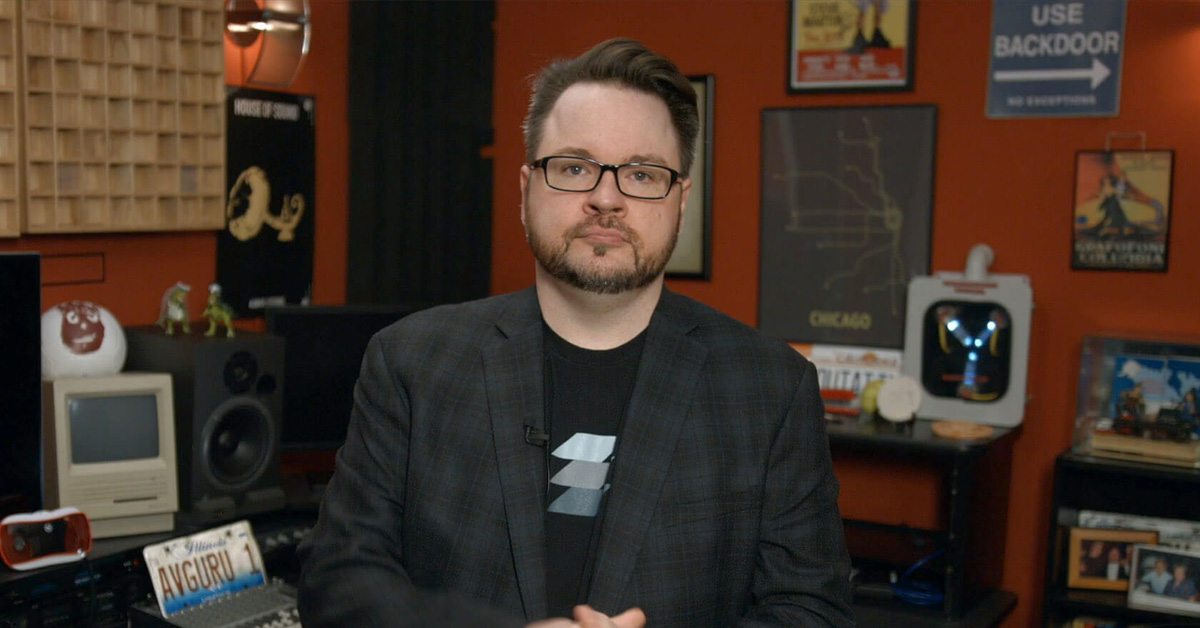
Optimizing Your Remote Post-Production Workflow (and Maintaining Your Sanity) | with Michael Kammes


About Episode
As we all begin to settle into what is becoming our “new normal,” one of the most common challenges we face is the inevitability of having to work from home…and ONLY from home…for the foreseeable future. For some like me who have practiced social distancing as an Olympic sport for the last fifteen years, it’s just another week. But for those who’s lives have been turned upside down amidst current events, this transition can be rough.
If you work in the post-production industry specifically, your livelihood literally depends on whether your not you are able to manage large amounts of data, share it with a team, and most importantly collaborate with those who hired you to help them realize their vision. And if you can’t pivot quickly (or if your employer can’t), that might mean you’re out of work for a long time.
In this episode I have an in-depth and candid conversation with workflow expert and tech guru Michael Kammes about all things remote workflow. We talk about the simplest ‘Band-Aid’ solutions just to stop the bleeding, some of the middle-of-the-road options to set up a more viable work-from-home workstation, and we also dive deep into the nuances of the bigger (i.e. more expensive) options available to larger teams, businesses, and studios.
Most importantly, we also address the lesser focused on topic of protecting your mental health and sanity during this transition. It’s not just about managing media and assets, this is also about managing your well-being.
Episode Highlights
- TIP: Whatever application you’re using – make sure it’s the same version on both sides for compatibility.
- If working with different pools of media, that both sides have copies of the media. Transferring or syncing media can take a ton of time.
- Adopt a real-time collaboration tool and turn the video ON. Not only is this some of the only social engagement you’ll have in a work-day, but you need to be able to see each other’s response.
- Peer-to-Peer solutions (similar to torrents) like Resilio sync are a lot quicker to keep files in sync rather than syncing up to something like Dropbox and back down. Instead it syncs directly.
- File management is more important than ever. (If you were hit by a bus, can someone come behind you and figure out what you were working on?)
- Zack and Michael’s best tips on locking your active bins in a remote collaborative environment. Such as “Avid on Demand”.
- The challenges and benefits of using remote desktop software like Team Viewer to work on your office computer as if you were sitting in front of it.
- Why the old standards and security concerns of cloud storage and remote file sharing are overdue for an update.
- What does “Post-Production in the Cloud” really mean?
- Coming soon: Camera to Cloud instead of local storage.
- How much it costs to work in the cloud.
- What are the best remote collaboration options to review? Frame.io, Evercast, BeBop etc…
- Michael’s adjustment to working from home and some key takeaways from his experience.
- The importance of maintaining a schedule to separate work time/space from personal.
- How to deal with the social isolation and the depression that may come with it.
Useful Links
About Guest
Michael Kammes has designed and built thousands of production and post-production systems, workflows, and facility integrations during his nearly 20 years as a technology advisor in the media and entertainment industry. He is a frequent keynote speaker on trends, products, and workflows in production and post technology and his “5 THINGS” podcast draws an audience of industry insiders from around the world.
Michael currently serves as the Director of Business Development at cloud solutions provider BeBop Technology in Los Angeles.
In addition to the technical side of media creation, Michael’s creative work includes the roles of Dialogue Editor, SFX Editor, ADR Recordist & Editor, Re-Recording Mixer, and Supervising Sound Editor.
Transcript
Zack Arnold: Hello, everybody. My name is Zack Arnold. I am the creator of the Optimize Yourself program and podcast, and I want to welcome you to the latest episode of The Matrix, where apparently we are playing with a whole lot of. Versions of the way that we live our lives, and today we’re going to use whatever buggy version that we have here to talk about the fact that we are stuck in this alternate universe trying to figure out how to work from home. So, my guest today is the world-renowned guru workflow expert, Mr. Michael Kammes, who has been on the show twice. This is now your third time. I rarely have people on the show more than once, and this is your third visit. So, Michael, it’s a pleasure to have you here today.
Michael Kammes: Thank you. Do I get like a jacket, like you get at the Masters when you win? Do I get a green jacket to wear as a 3rd timer?
Zack Arnold: I’m going to work on that.
Michael Kammes: Okay, I’ve got to Optimize Yourself T-shirt.
Zack Arnold: Yeah, I’ve got a couple other things in the, in the pipeline right now, but we’re going to, we’re going to do our best to make sure that we can make that happen.
Michael Kammes: Well, one of the things I’m looking forward to talking about today, Zack, is obviously you’re working on Zoom issues, everyone’s working on Zoom issues, and how are we working remotely, whether it’s taking the content and technology that’s sitting at your facility or it’s putting it up in the cloud and working there, or maybe just having islands of media all around and exchanging project files and such, and I’m sure we’re going to tackle all of that today, because there is no shortage of questions, there’s no shortage of duct tape and bumper sticker band aids to get things working,
Zack Arnold: Yeah, no question, so where I want to start today is I want to better understand what you’re doing right now, and all of the questions you’re just getting tons and tons of questions, right? So you’ve been working for Bebop Technology, I’ll have you give a little bit more background to that. I also want to make everybody well aware that this is not going to be another webinar for tech workflows on Bebop technology. This is just about how do humans manage this workflow. There is going to be tech talk. I mean, we can’t have Michael Thomas on the show without talking about tech, but this is going to be a much more holistic, well-rounded view of just how to work from home, specifically if you’re in the post-production context. But I do know that the kind of person you are is that you are concerned about whether or not you feel like you know there’s this opportunity here and I want to get the technology out here, I’m giving you all the permission in the world to make sure that you can sell your product if it’s the right fit for this audience, and if it isn’t, I know you’re going to be able to provide tremendous value to everybody else that has questions as well. So, without further ado, what I’d love to know first is just, what are the most common challenges that you find you’re solving ever since the world went
Michael Kammes: Well, you know, in post production our schedules are so tight in terms of editorial and what editorials and doing before, before finishing, and then audio, and all those steps, and it’s the domino effect. If one date slips, everything else slips. And in post, we’ve become so attuned to these schedules and so efficient at our jobs that we can’t have anything slow us down. That’s why, when folks say, “Hey, I don’t want to work on a PC, because I know the Mac, if I move to a PC, that’s going to make me slower, and I won’t crate as fast. I get it. And so, when we get into these paradigms where we’re not just doing something like changing your chair or changing the color of your markers, we’re now saying go home, work from home with technology that only exists here at the office. Go home. So, we’re in a process of major upheaval, and folks are looking for the easiest way to make that transition, while still keeping the workflows that they know, because we can only adapt to one or two things changing at a time.
Zack Arnold: So, do you find you’re getting a lot of questions from people that it’s like really high-level stuff, like, I want to figure out how do I connect this remote local storage system to this and that, and I want to work on the cloud, or they just like, I have no idea what to do, and I’ve never even brought a hard drive home and linked remotely. So, what kind of, what, what is the spectrum of people that are reaching out with questions right now?
Michael Kammes: Well, luckily, I think a lot of folks who are in charge of some of these technical workflows are on social media, all right, and they’re seeing all the outreach because there are a ton of folks in the community, some doing it because they believe in community, so I’m doing it to sell a product, but there are always folks out there who are sharing information, whether it’s here’s how to do it on the cheap, here’s how to do it at an enterprise level. There are resources and guides. Unfortunately, you kind of have to wade through that, but the lot of the questions we are getting, or that I’m usually getting, are first and foremost, How do I get to my machine and all the goodness that’s in the building I usually work in, because contracts don’t let that content move. Or, okay, we don’t have an infrastructure like that, we don’t have a massive IT and router infrastructure. So, how can I take things home and then work with other editors and other creatives in real time, that those are the two main things I’m getting.
Zack Arnold: Got it. Well, one thing that I find interesting, because I’ve had many conversations as well with people that have reached out to me, and as you know, I had an article, an extensive article that I written for Frame IO that detailed like all the bullet points and all the various tiers of you’re the one stop shop and you’ve never. Really, work from home before, or you have a small team, and you need to collaborate with an assistant, or maybe a producer, or you work on a, you know, huge enterprise team level. Here are all the various options. A lot of people have reached out, asking what happened to that article. All I can tell you is that Frame IO is going to be doing some enhancements, and they’re actually building an entire workflow series. So, for those that found the article and found it helpful, it is coming back in some way, shape, or form. For those of you that are editors, you know what it feels like when you cut something and you work on it, it’s your baby, and somebody says, “Fit, we’re going to do some of our own polishes, which is fine, no hard feelings whatsoever, but it’s outside of my control as a guest poster. But I can all but guarantee that whatever they release is going to be much bigger and much better than the initial version that I wrote, and I think the biggest reason they did it is I wrote it before everything fell apart. So they said we want to talk about remote workflows, and it’s funny because if I were to go back through the email conversations, it would be almost hilarious at this point, where they said, you know, we’re thinking that remote workflows are going to become more common, and they’re going to become more pressing, and some people might be asked to work from home in the near future. We want to provide a resource, so I wrote it in that context, and then in the span of 10 days, 80% of the what I wrote in the tone of it was completely irrelevant and made no sense. But the way that I broke that down was simply, you’re the one stop shop, and you’ve got to do it all your own, but you need to have some ability to collaborate, and then again, you’re the smaller team that needs to collaborate with an assistant, or other editors, or producers, or whatever it is. So, I kind of just want to start with the basics, while we start to gather questions, but let’s just start with I’m essentially a one stop shop, or I maybe have one other team member, and I just want to be able to work from home, collaborate with other people, sync small files, whatever it is. Like, what’s the basic kind of, you know, starting the work from home workflow one on one?
Michael Kammes: Well, first, let’s assume that you have a machine at home you can use, right, whether it be a laptop or desktop. We can’t go back to reel to reel right now, right? We can’t go back to 16 or 35 so you have to have a computer to edit. So, let’s, let’s go on the basic assumption. You and whoever you’re collaborating with have a machine. Some of the things you have to make sure of is a whatever application you’re using, make sure it’s the same version on both sides. I know that sounds like, why are you starting with that, Michael? But if you’re collaborating with someone and you’re actively exchanging project files or media, there are many applications that are very sensitive to odd versions. If you work with Adobe, you know exactly what I’m talking about. So, making sure that you’ve standardized on your different software versions, so things are compatible. That’s number one. Number two is to make sure that if you are working with different pools of media, meaning you have a local drive or maybe a home NAS, like I do, that both sides have copies of the media. We don’t have a ton of internet bandwidth here in the US, unfortunately, so that means syncing 2k 4k 8k 50k files, and I mean the raster, not not the size, that that can take up a lot of time to get from place to place, especially if you’re doing the old FTP method, or where you push it up to Back Blaze or Wasabi or Dropbox, then have it sync somewhere else. So I’m a big fan of starting off with copies of the media, and then you’re syncing the projects, and then recreating the renders on both sides. I think that’s very important. What I also think is very important, especially since we’re all working from home, is that you adopt Teams, or you adopt Skype, or you adopt Zoom, so you can have real-time communication, not just via email, but more importantly, turn the camera on. Right? I know those of us who do a lot of voice conferencing are used to look – we’re using Teams, we’re using Zoom, but no one needs to see my face. This is some of the only socialization you’re going to get. So, get up in the morning, shower like you normally would, brush your teeth, run a brush through your hair, and get on camera, so you can react to what people are saying and how they’re emoting without just relying on the black and white of email.
Zack Arnold: Virtual hug, right now, everybody out there, virtual hug, virtual high five. This is as close as we’re gonna give it. Just don’t touch your camera, don’t touch it, you can get close to it, social distance that camera. So, going into this idea of we’ve got a fairly small team, low budget, even before all this happened, I think it was fairly common where you have one team member may be working from home or another assistant somewhere differently, where yeah, they have multiple drives and they do their best, quote unquote, do their best to keep the media on both of their hard drives in sync. What are some of the most basic ways, either with free software or really, really cheap software, to both help people pass projects back and forth, and also try to keep their drives in sync without spending exorbitant amounts of money.
Michael Kammes: Well, 20 or so years ago, there was this thing that came out called Napster that. Does that age me? Anyway, Napster really put the concept of peer to peer file sharing out in the mainstream. It also, the peer to peer networking, where content is shared between users, as opposed or multiple users, as opposed to up to a website and then down, like FTP. It kind of gave that a bad connotation, and then when you had companies like Limewire, again, my showing my age, and Torrents, those are based on peer to peer networking as well, and so it gave the concept of peer to peer file sharing a really bad name, right? Studios thought you were using it to steal their content, and some people were, but also it was great to get massive amounts of files to sync between multiple people, that same technology, peer to peer, is common in tools like Resilio Sync. Zack, I think we’ve talked, spoken about that before, and that’s an application that runs Resident on your machine and on someone else’s machine, and it looks at the storage on both sides and says, what do I need to sync to keep the two in sync, and it automatically does that without having to go to a third party, like an FTP or a website, so that number one, that’s going to get your content back and forth a lot quicker than doing something via Dropbox or pushing to Amazon or whatnot. I think there always, there also has to be something that editors hate, and I get this file management, I know, I know, all of us just want to grab the files and put it in the timeline and be an artist, I get it, but you’ve got to organize it, so when someone else is using it, they know what you mean, so using tools like Post Haste, which I love, which automatically builds folder structures for all your projects and all your media, so there’s a common folder nomenclature and naming nomenclature, so everyone who uses it know where things are.
Zack Arnold: All right, so I could go down this rabbit hole for hours, but this is something that nobody is talking about. It’s all about Evercast and Bebop, and all these other technologies, which, by the way, they’re all fantastic, but I’m talking at the core foundational level. If you want to be good at working remotely, and you want to collaborate with others. Dear Lord, you got to be organized. And no time was it ever more important than now to understand what I call the hit by the bus theory. If you get hit by a bus tomorrow, can somebody else go into your project, go into your folders, go into your bins, go into your timelines, and understand what you’re working on. If you don’t have that, and it’s just everything is well. Well, yeah, I just passed you my latest cut. It’s in the bin that I saved. Oh, well, is it untitled dot 01 dash oh four.new.oh one, or.oh two, or.oh three? Like that’s not going to work. We can’t just bounce down the hall and point to somebody’s monitor and say, oh yeah, it’s that one. Now more than ever, organization is so key, and I want to go back to this idea of syncing media back and forth, because if we’re talking about, like you had mentioned, Rosilio sync, this is, as you know, and I’ve been very candid with you, both privately and publicly, will be candid with people that are listening today as well. I am not a tech person, I just make really, really good friends with tech people, so I sound smart. So, you’re the guy that always makes me sound smart. So, when it comes to something like even Resilio Sync, I’m like, oh, it’s like Dropbox, and you’re like, no, it’s not like Dropbox. Let me explain this to you, right? So, the my basic understanding, and I’ll have you explain it a little bit better for people that do speak tech, is that with Resilio Sync or something similar to it. I have a hard drive at my house, my assistant has a hard drive at their house, and it’s looking at both of them, and if I throw a file on my drive, it shows up on theirs. If they throw a file on their drive, it shows up on mine, but I don’t have cloud-based media, which means if they delete a bunch of stuff accidentally, mine gets deleted as well, whereas with Google Drive or Dropbox, it exists somewhere else as a backup. Is that kind of a good, rudimentary way to explain it?
Michael Kammes: That’s a good, rudimentary way of describing it. There are rules you can set, so if someone deletes something on one end, it won’t delete on the other, but most people just decide to do the organization by folders, and that this folder you can delete stuff in it all day long, and it won’t affect mine, and vice versa on both sides.
Zack Arnold: Got it. So, basically, you kind of have what I would consider like transfer bins or transfer folders, where here’s this like my Avid workflow. Even if I’m local, this workflow works fantastically remote too, but even locally, what I will do to ensure that I never have some errant sequence that I’ve duplicated or copied to make sure that everybody I’m collaborating with has the only version of it. We create what are called transfer bins, so I will have a bin that’s just called transfer bin Chris for my assistant, transfer bin Zack for myself, and if I have something I want him to work on, timeline goes in that bin, closes that bin, goes into the folder, and he knows that’s where to find it, and whether or not we’re sharing a wall or we’re across the world. I’ve done this where this transfer bin system works, so we never end up working on the same sequence at once. And again, if you’re working with Avid specifically, it’s pretty hard to do that in a local team environment, but it’s very easy for us to work, and what. We believe is the same timeline if we’re remote, if we don’t use transfer bit, so that’s one way that I’ve gotten around it.
Michael Kammes: And there are a couple things to tweak. Obviously, Avid has been doing this for decades, in terms of, you know, green unlock, red lock. Obviously, Adobe has had team projects for a while, they had shared projects, which is being revamped for the new production panel that was announced, which will be out. I can’t say when, but soonish. And then we have obviously folks who are using Resolve that have a Linux server between them that can do the product sharing as well. So, and then we have Funnel Cat 10, which has Post Lab, so as an ancillary tool you can get. So, there are different ways to do exactly what you’re talking about, Zack, which is keeping the media somewhat separate from the project and making sure that no one is stepping on the stuff you’re working on.
Zack Arnold: So, one question that I’ve had that has come in already, and this is, I think, going to be a big one that’s similar to the conversation that we’re talking to now, but it’s basically it’s talking about this idea of what is the best way to mimic the lock and sharing workflow that you have with an Avid Unity or an ISIS or a Nexus or whatever it is. My recommendation is just the transfer bin system, but that’s still pretty rudimentary. What’s the closest that we can get right now to being able to lock our bins and keep people out of our stuff if we are not connected to the same shared storage system?
Michael Kammes: Well, you’d have to win the lottery for one, and that’s because the pricing for something like that, if we’re looking in a strictly Avid environment, is cost prohibitive for the most part. I won’t get off on a long rant, but actually, Avid has five different ways of editing remotely. There’s actually a ton of different ways. There’s the aforementioned pools of media, and then sharing bins. There is using Avid Interplay, now updated and renamed as Media Essentially UX, which has a stack of servers at your office, and it streams proxies of media to your local machine at home, which runs a full version of Media Composer, that’s six figures for looking at doing Media Composer Cloud VM, that requires you to have a stack of servers in your facility, and then it via it runs a VM at your facility, and you remote into that. That’s not six figures, but close to it. When you buy all the hardware, we have things like Avid Edit On Demand, which is brand new, which is you get to use Avid Media Composer, you get to use Nexus Storage, and you do all that in the cloud, everything’s virtualized, and then you connect to it from your home machine, but that still runs several $1,000 per month per user, and then you got a rent storage on top of it, so there’s there’s several different options,
Zack Arnold: Got it? So the odds are extremely slim that anybody that’s listening to this today is going to see that as a viable option,
Michael Kammes: The Avid Edit on demand, the studios are quite interested in reason being is that it’s while it’s very expensive, it is something that can be turned on within a few days or a week. All the other solutions require hefty amounts of expenditure of cash people to get into your building and build stuff. So right now the Avid on demand is really the easy way to do it, however, what I’m seeing more and more of is folks saying, okay, how could we just sit at home and tunnel in to where the computers are at the office and use them like I’m in front of it? That’s a fantastic idea, but the problem is that what kind of OS do a majority of folks here in town use well.
Zack Arnold: I’m assuming that they use Mac.
Michael Kammes: They use Mac. The problem with that is there aren’t any really good screen sharing protocols on Mac OS that give you your 2390 820-430-5060, that give you that full frame rater close to it, that give you sync audio and video. You kind of need that when you’re editing, and color fidelity there. There are more, as I call them, pedestrian protocols like Team Viewer, or Go To My PC, or Apple Remote Desktop, and those are for industrial usage. You know, it has to install an app, or maybe you’re at home on a weekend and realize I fat fingered a lower third, I got a remote in and change that. It’s good for that, but it’s not good for the creative process. So, because of that, creatives who are using Mac find themselves in a very difficult situation, because the only solutions they can really use to give you that creative experience are PC based. And not to get off on another tangent here, but over the years, you know, I’ve been working with technology that’s more and more Windows centric, much to my chagrin, because I’m a Mac OS fan, and I find that a big limiter with creatives is that I have to use a Mac, I can’t use a PC, but this past week and a half, two weeks, creatives who have had to go home and they’ve had to use extended desktop with Windows-based robust protocols, I actually put a poll out on Twitter saying, has it been okay? And by and large, people have said, yeah, you know, it sucked, babe, for the first day, but yeah, Avid is the same inside each app, Premier is the same inside each app, so we see a lot of these limiters or objections to new tech. Technology kind of melting away as we find what the MVP or minimum viable product is with some of these remote protocols.
Zack Arnold: Well, I can tell you firsthand that if I had to edit 12 hours a day using some team viewer that had latency in the timeline, I’d probably lose my mind. However, given a global pandemic, if it’s the difference between me having a job and not having a job. I would figure it out. So, I think that’s the adjustment that people are making. So, if we’re just a normal environment and somebody said, “Hey, we’re going to need you to work from home, but you’re not allowed to take your drives home for security purposes, here’s Team Viewer. I will put up a stink. I would say, “Come on, guys, like this doesn’t work, like it’s slow and there’s latency, and it’s not allowing me to edit at the speed that my brain moves or thinks I can’t do it, but in this situation I’ll make, I’ll make the, I’ll make the exception. Right,
Michael Kammes: There are some alternatives. If you’re on a Mac, you can. There’s a great company in the UK, and I swear this name is real, I’m not making it up. The company is called Amulet Hotkey, I know it sounds like a bad guy in a movie or something, you know, Indiana Jones has to go get, right, but Amulet Hotkey is a company that takes a card from a company called Teradici. Teradici makes a protocol called PC over IP, military uses it, massive encryption, fantastic, the best one out there. Amulet Hotkey takes the hardware Teradici makes, put it in its own enclosure, and you hook it up to the HDMI or DVI out or display port out on your Mac, and it gives you that PC over IP quality. But on a Mac, the problem is, is that it’s several $1,000 per card, so a lot of the, a lot of facility owners are saying we don’t know how long this is going to last. Why am I going to invest 3000 $4,000 on a card and then a receiver when this may all blow over in three weeks? So there’s that barrier of entry, and I think a lot of folks right now are saying, what’s the minimum thing I can do, and that’s the sorry, you can’t use Mac anymore. We have to install Boot Camp on your Mac, and you have to use a Windows-based protocol to do this remote editing. And something else to add, you brought up something very important, which is a lot of these facilities say you can’t have media leave the building, and I have to be very careful how I phrase this. A lot of that is based on older standards, we, I know we’ve talked about earlier, back in 2011 and the tsunami and earthquake, and that kind of was the nail in the coffin of tape-based workflows. A lot of the holdover back then was because these are the standards that the studios know, it’s in their contracts, it’s what’s signed, it’s legally binding, that’s our safe zone, that’s our security blanket. Now that we have to work remote, we’re still relying on those contracts that we’ve re-upped every year that we never went through and changed those, so you have these old world stigmas of you can’t have things at the cloud, and it’s, it quite frankly, is hindering a lot of these newer workflows, faster workflows, efficient workflows, decentralized post production, because of these old standards, and without revealing too much, those standards are about to be revamped. They were slated to be revamped, the governing body, you know, Q last year, Q, Q this year, but because that’s delayed, we’re now in this pandemic, and in this situation, where we have to adhere to these older security rules that are shooting ourselves in the foot, so it’s really poor timing across a multitude of angles.
Zack Arnold: Well, I know that when it comes to this specific conversation, you do have to be very, very careful from a political perspective about what you say, given everything that’s going on, but I don’t, I don’t care, so I’m going to just blatantly say it. For years we’ve been told, oh, well, you can’t work from home, it just can’t be done. I’m sorry, right? And there are multitude of reasons. Security is a big one, being able to manage media is a big one, all these various things that we’re talking about. But essentially, what this global pandemic has done is it’s called everybody else’s bull. Let’s just come out and say it. We now know that for the most part there are ways for people to work from home. We just have not invested the time or built the infrastructure to make it viable, but I don’t think there’s any question that, like what happened with the tsunami and tape-based workflows, this is the inflection point where our new normal, whatever that becomes, is going to heavily involve remote workflows, so I’m not going to get into any politics whatsoever. This is a political free zone, but what we know best case scenario is that we’re probably going to be hunkered down for a while. What we don’t know is how long we’re going to go back and forth from the point where we have to be more careful, where there’s a little bit more of an outbreak versus, okay, things have subsided. We can go back to normal for a while, but it’s going to take a long time before we’re comfortable just going out and doing everything and not talking about what’s going on in the world right now. It’s going to be a long time before this disappears. So, what that means is we now are at a place where we have to make this transition and everybody has to take this series. Like, so I feel like all the past excuses, like you said, whether it was the paradigms at the studios that had their security protocols, whatever it is, one of the lines that I had in my original line for Frame IO that I was a little bit projecting, but now is no longer a projection. The decision that we’re making, which is very literal, is, is this about the security cost, or is this about the human cost? Which one would I rather pay? And things have changed, so my hope is that this is not going to be, let’s just get team viewer for a couple of weeks and wording it through it, and then everybody’s going to go back to the way that we were doing. I think this is going to be a fundamental shift in so many people finally doing more work from home on a regular basis, which has many, many benefits. It’s going to have some drawbacks, as we’re going to learn, but it is very, very possible
Michael Kammes: To kind of add a little bit to that, because there may be a lot of people here who are not in the 30 mile radius of Hollyweird or in New York, and who may not understand, but why can’t you just do it at home? A lot of what happens in Hollywood and feature film and television is based off contracts, you as a post-production facility, you have a contract with a production company or the studio, whoever is handing you that content to work on. Here’s a great example: trailer houses. Right, trailer houses are cutting down content that someone else shot, someone else owns. They, in order to get that contract, say we adhere to your terms. We adhere to the fact that we won’t put this on the cloud. We won’t send people home with it. We have security that’s really good. Trust us, and we’re a trusted partner network. We’re part of the trusted partner network, and so to get these contracts, these post-production facilities say, okay, we adhere to this, so that old standard of what is okay and what is normal and what the studios agree to trickles down, and then everyone is beholden to that. So, until we remedy that situation up top that says no, we can’t, we can’t let this stuff out, we’re going to be constantly chasing these older standards.
Zack Arnold: Well, as we’re, as we’re seeing, like it’s happened rapidly over the course of days, not even weeks, like over a matter of days. Multiple trailer houses have just either had to shut down or massively downsize because they need some person, and I have people in my coaching and mentorship program that say, yeah, I’ve – they were basically going in the office every single day just to manage the media and take care of everything, because there was nobody else that could go in and do that until finally the hammer came down and said nobody non-essential gets to go in, and of course I’m sure trailer companies and movie studios are like, but we’re essential, no, we’re not.
Michael Kammes: Can I tell you a great anecdote, and I probably can’t say that the name, but I’ll work around it. We have a when I say we bebop, we’ve had a client that’s been with us for a year or so, and they had a couple users in the past week. They’ve gone from four or five users to over 30, from 10 terabytes of cloud storage to 30 terabytes, and they are a premium channel on cable and dish they have gone to air from someone who is running master control from their living room, so when I hear, “Oh, we have to have someone there, no, you don’t. Things can be accessible remotely, things can go home with you, and there are other workflows, and I completely understand that your day-to-day workflow as an engineer or as a or as management is spent on the things that you have to do to get through on a day to day basis, but there has to be some time provision to look at these new workflows and say how can we be ready for the next oops or how can we be ready for this changing work environment, and the company I’m referring to, did, and they’re able to continue working with very little downtime.
Zack Arnold: Yeah, this is not going away anytime soon. This is a problem that we’re going to need to solve for the long term in a major way, because this is not a matter of everybody take your drives home for a couple of weeks and share your projects on Dropbox and Google Drive, and we’ll, we’ll, we’ll muddle our way through it, and then we’re going to be fine. Stuff is just not going to go to air, even once we start getting footage again. Things are not going to go to air if we can’t work on this stuff remotely. I’ve been pushing for this for over a decade now. 10 years ago, yeah, internet bandwidth wasn’t really there. We couldn’t transfer large file sizes. It was a pain in the butt, but being an extreme introvert who has been practicing social distancing as an Olympic sport for 15 years. I have been dying for this moment, not under these circumstances, of course, but I’ve been dying for the moment when we realized all of this can actually be done. I’ve done like eight feature films from home, one of them was collaborating real time with a team in China, and I’m not bringing that up because it has any relevance to what’s going on now, but I was working on a film that was shot and produced in Beijing. I was the only person working on the film that wasn’t in China. Me and the director were here in Los Angeles from my home. I was working with the visual effects team, I was working with Chinese assistant editors, and this was, I think, seven or eight years ago, so I knew that it could be done, but then. I get into the world of TV. Oh, well, it just can’t be done. We all need to be in the same space, and we all need to collaborate. I get that, that’s convenient. I get that show runners and producers want to be able to go down the hall and knock on people’s doors, but from a technological perspective, we have no other choice but to make this work. So, we’ve talked a little bit about the patchwork stuff, and I’m sure we could go down a rabbit hole for hours just on these patchwork solutions and these software syncing and all that, but now I want to talk a little bit bigger picture. This is either going to be where we go next or this is going to be for people that have the money to invest. Where do I go now? And that’s going into the cloud. I also want to make sure we talk about collaboration, because collaboration is a huge part of this conversation, but you can’t worry about collaborating until you can actually work, and you can create the content remotely. So, if we’re no longer talking about syncing drives, and we want to go to this terrifying place that’s called post production in the cloud, you’re the guy to talk about what post production in the cloud really means. So, let’s talk about it just on a basic, rudimentary level, and how this paradigm is different than what we’re used to.
Michael Kammes: Sure, and again, we talked about this ahead of time. No sales pitch, so I’m just going to tell you the tech you need to know. Decentralized post-production means you’re not stuck or saddled with the hardware that you have on your desktop, or sitting next to you at home, or even in the office, it means you’re using publicly available hardware and software, GPU storage in what we call CSPs, or cloud service providers. So, the Microsoft Azures of the world, the Googles, the Amazons, they have data centers all around the world, and the great thing about that is they have low-cost hardware you can rent and software you can run, and if you know what you’re doing, you can spin up a version of Premiere in the cloud and have as much storage as you want, you can have as much horsepower as you want, you can get your buddy to also be there, and you can share projects and stuff, but a lot of that isn’t common video IT knowledge, right, that’s not something that everyone is familiar with, and so it’s, it’s almost like when a video person decides to do post audio, they’re like, “Oh, black art, same thing. So, there is this ability to spin up virtual machines in the cloud that run, that give you a desktop, that give you storage, that give you all the horsepower storage you could ever need, so you’re actively controlling a mouse that is, or you’re controlling your local mouse that’s moving a cursor 400 miles away, and as long as it’s done in a fast or low latency way, the human eye, human brain, it doesn’t bother you. Now, if you’re trying to control a machine overseas, yeah, that you’re gonna feel that. I can’t break the laws of physics, but if you’re doing it from, you know, 500,000 1500 miles away, that works fine. And so I think a lot of companies, especially VFX folks, have started to embrace the fact that we don’t need to buy all this expensive gear and have it depreciate, and then we’re settled with it. We can just use machines in the cloud until we don’t need them anymore, and then we spin them down, and your cost becomes much more in line with what you’re spending
Zack Arnold: Now. Speaking as a technophobe that doesn’t really understand all this stuff, you’ve had to explain this to me like I’m five years old, like three times, so I’m just going to be very, very clear about that. Most people are probably like, “Oh, I totally get it. It took me a while to figure this out, and I’m still wrapping my head around it, but my assumption was, and I think I even expressed this to you at some point. Oh, well, then Bebop must have some central warehouse somewhere that’s just a whole bunch of drives, and you’re giving me the ability to rent your drives, and you’re syncing everybody else remotely via workstations, and you’re just like, oh my god, seriously. So explain to me why that’s not the way that this works, because that’s the way I pictured it.
Michael Kammes: Sure, when you’re working in the cloud, your local computer, whether it be a $50,000 cheese grater, whether it be $1,000 laptop, it is just a window, it is just a window into the virtual machine in the cloud where everything resides, you don’t have a local repository of media, you don’t have an OS drive running that version of a Media Composer or that version of Premiere next to you. Your computer is simply a window. Think of Team Viewer, right? We’ll go lowest common denominator here. Think of Team Viewer. Team Viewer allows you to see into another system. When you’re doing cloud computing, you’re using something like Team Viewer to look into another system that’s sitting in the cloud, and because everything is in the cloud, the media, the applications, the horsepower, you can get more horsepower, you can get less horsepower. It means you can edit anywhere, and it feels like you’re editing locally, and that’s what I saw as the future, as to why I changed, you know, careers to some extent a year and a half ago.
Zack Arnold: So, apparently, you got some insider information. Clearly, you made the right transition at the right time.
Michael Kammes: If you, if we look at editing systems, right back, you know, 2530 years ago, everything was hardware based, it was physical cards in your. Shooter that gave you that horsepower, and then then Apple came up with Final Cut Pro. Well, bought Final Cut Pro, and then said, “Hey, you can run this on one of our expensive laptops, and we kind of saw this transition from being hardware-based to being software-based, and the more things are software-based, the more they can run on just about any system within reason, so I kind of saw that as being the future. Working in the cloud is something that every other vertical has adopted. The medical community has been doing it all right. Anyone who runs Office is using it in the cloud because they usually work downwind of it and business it. I get the cloud that makes complete sense, but post production again, since we’re I don’t want to say stuck, but rooted in this tradition and being the most efficient we can be. A lot of these newer cloud workflows aren’t used, and again, that’s still downwind of the old standards and the old rules. So I’m hopeful that that workflows like this, although they were never designed for a pandemic, as you pointed out earlier, will allow folks to see that the forest for the trees, and that this is something you can do, and will be more popular moving forward.
Zack Arnold: So, a couple of follow-ups that I have for that, one of which is my own, one of which is a question that just came in, talking about this idea of devices. I think one of the things that was the big turning point for me, when you explained this to me again, like I was five years old, I was like, oh, I get it now, oh, cloud, not remote, right? Like, so when it all started to come together was this idea that I’m thinking, if I want to edit 2k if I want to edit 4k the bottleneck was always I got to put all this money into a really crazy expensive computer to make that happen, and now it sounds like the only limitation I have to being able to do this at whatever quality I want is whether or not I have a decent internet connection, but it sounds like because I’m using somebody else’s hardware, so to speak, I could basically edit 8k or 4k or whatever from a little tiny laptop, as long as I have a good enough internet connection to keep up with the signal that’s coming to me is that correct,
Michael Kammes: For the most part. Yeah, and I want to put an asterisk next to that and say editing it or doing VFX. Totally, if you’re trying to do a color grade, if you’re trying to do a color pass, colorists traditionally need to see full raster, they need to see 10 bit, 12 bit, or better color. And right now, because our internet bandwidth in the US is so restricted, getting high fidelity, can I use that term? I feel like I’m in an 80s commercial, like a Memorex commercial, or high fidelity
Zack Arnold: Memorex. Oh my god, did you just.. you totally dated both of us.
Michael Kammes: I just.. just, yes. The, you need that color fidelity, and because the pipes in the internet, are not as fast as we like. There have to be compromises. So, commonly we’re seeing eight bit viewing, which colorists are going to say, “No, I’ll see banding. Hey, completely get it. So, there are some considerations. There are expensive proprietary hardware solutions that can give you 10 bit video, but use their own compression schema, and the color is a little bit different, so it can be done, but we’re not quite there yet. We’re looking at creative editorial predators, assemblies, assistants, that kind of work before we see color and audio.
Zack Arnold: Got it? Okay, so assuming that we’re talking to people that are mostly not needing the highest, highest end of the signal, and it’s more the creative professionals that are doing the work, working offline, passing things back and forth. The next question that I had for you, that I’m now getting from several people, is, well, that’s great if it’s all virtual, but my media is here, it’s on a drive, so if I’ve got 10 terabytes of stuff sitting here on a drive, what does it get up there? Like, what’s the process to actually make this work, like, does everybody need to upload their drive? Does one person do it? How long does it take? Like, how do we actually make this happen?
Michael Kammes: Well, that’s it’s like traffic in the morning, right? You can only go as fast as the traffic will allow, and if you’re using a an internet connection that’s more 1999 than 2019 or 2020 you got to deal with that. I can’t change the laws of physics. I can’t make things upload faster. You can upload from multiple places. You can invest in a.. I shouldn’t call it invest.. you can pay for a fatter internet connection. You can do something like Amazon Snowball, right, where they deliver a crate of drives to your house, and you load it up, and then they take it somewhere and levitate it to the cloud, that unfortunately is where we’re at right now, and I think there’s a lot of promise around g when that finally rolls out and when it finally meets the promise that we’ve had with it, but that is the bottleneck, and there’s there’s unfortunately nothing I can do at this point, so I think there’s been a move in the industry. You mentioned Frame IO earlier. You may have noticed that Frame IO brought in Michael Cioni from Wide Iron, right, informally Plaster City, and their initiative is C to C, or Camera to Cloud. Why should that content be shot and then just go on hard drives until it gets to the editor and. Then you have to upload it. Why not beam it directly from the camera up to the cloud? I know there’s a lot of reality, excuse me, unscripted. Sometimes they don’t like the term reality. A lot of unscripted houses will do that. They’ll be maybe in a foreign country and they don’t have internet connection, so they’ll strap on a device on the side of the camera and it uploads proxies. Those proxies can be edited immediately until the content on the slow boat gets back to post where they can reconform to high res, so there are folks doing it. I think there has to be an analysis of our proxies right for me, and if you’re accustomed to offline editing, you already know that. So, do we want to do offline, and what is the cost and wait time of saying I’m going to do everything native and uploading to the cloud.
Zack Arnold: So, let’s talk then about the amount of time here, because I know that if I were at home and I have a couple of terabytes of media, well, it’s probably either my own project or I’m working for a smaller client. Everybody’s just going to have to be patient with the way that things are going right now. May take a couple of days to upload to a cloud, we all get it. This is our new normal, but if we’re talking about, let’s say, 3040, 50 terabytes, there is no internet connection on the planet where we’re going to be able to just drag and drop into a folder and say, well, when it’s uploaded, we can start cutting. So, going back to this idea of Amazon Snowball, which I knew of the concept, but I didn’t know that that’s what it was called, it sounds like the fastest option available to us is Amazon gives us a whole bunch of drives, we transfer our stuff onto those drives, and then they take it wherever, and they upload it, so it’s not just about what does my internet bandwidth look like here. How does what does this do for our bottleneck if we have a large amount of media and we need to get this distributed amongst 50 editors as quickly as possible. What’s the absolute fastest way to make that happen? If money is not an issue,
Michael Kammes: Well, you’re going to your cable company and you’re saying, look, I want a better connection, and you’re paying the price for it. What I, what I always envision there, there being is storefronts. I don’t know why Amazon and Azure and Google don’t have storefronts where you can barter time and say I’m going to bring in my 12 terabyte hard drive, which you can get for 200 bucks. I just want to upload this. Can I use your internet and charge me per hour? I would think that that would be a fantastic service. I don’t know why that’s not being done, but I think that would certainly be something that would be a viable business model, at least until we get throughput.
Zack Arnold: All right, so we’ve talked about this idea of media management. There are several options, obviously. If somebody’s looking at the cloud-based workflow, I’m going to be the first to recommend Bebop, because I know that you’re going to be hesitant to, but I want to make sure that I’m selling the service that you’re providing.
Michael Kammes: You know what, you didn’t ask Zack.
Zack Arnold: Yes, what haven’t I asked? I’m sure there are 100 questions that are really good that I haven’t asked.
Michael Kammes: People want to know how much it costs to work in the cloud.
Zack Arnold: Okay, let’s talk about that.
Michael Kammes: Yeah, and then then I want to talk about this, because this is more important than that, so cloud costs. Everyone asked, what it costs if you’re going to use an edit machine in the cloud, a powerful machine with, you know, 16 cores and 16 gigs of GPU, you know, something that is, is, you know, 10,000 $15,000 machine that you’d buy an open market that usually runs about $2.50 an hour. It’s not a heck of a lot of money, but then when you start pairing that with storage that can give you hundreds of megabytes a second, which wasabi and Backblaze and Glacier and blobs can’t do. Once you tie that in, and then you say, “Oh, I need a server to run 24/7 for security. Oh, I need a process to actually upload the media. I need a pro, I need a process to make sure the media doesn’t get corrupted. I need to have Active Directory, so everyone can log in. I need to have a proxy server, so no one downloads something they shouldn’t. When you put all that together, you’re looking at usually between seven and $800 a month for that, plus the $300 a month for storage, give or take. So, if the average person, and I’m not talking Bebop, although Bebop, obviously, is a portion of this, you’re looking at almost $1,000 a month for you to edit in the cloud, have fast, you know, a terabyte or two of fast block storage, all the security servers in place, all the licenses to connect, plus your Adobe license, that’s going to cost about $1,000 and that for a lot of smaller companies or freelancers is difficult, because that means you, mr. or mrs. Freelancer, has to go to the company that’s hiring you, and you have to say, well, I can edit remotely, but you have to go in the cloud, that’s that’s not a realistic conversation to have until now, and then if you start looking at proprietary solutions, like, you know, Avid, Avid has their own edit on demand, and that’s going to be three to four times more, that’s going to be three to $5,000 per user per month, plus storage, so it’s not a frame IO 50. $15 a month, it’s not Dropbox, $10 a month, it is something that requires a little bit more investment, but mark my words, Zack, the big cloud providers, right now, there’s three of them, or four, really, they’re threatened, they’re seeing companies like Wasabi and Backblaze saying, hey, we’re not going to charge egress fees, we’re charging a 10th of what you charge, and other companies are building their own private data centers, and you’re going to start to see this virtual monopoly. Say, we have to lower our prices because people are taking our business, and when that happens, like any other business, prices are going to drop, and you’re going to see a lot more adoption, because it’s going to be much more cost-effective than renting machines and storage from a rental facility.
Zack Arnold: Well, and it seems to me this is very similar to the conversation we’ve been having over the last 10 or 15 years, where when you said I have an Avid, well, that was enough for somebody to hire you, because an Avid was over $100,000 Oh my god, you have access to an Avid, I must hire you. Well, nowadays saying I have Avid, well, congratulations, you have a laptop and an internet connection, habits free, whatever, you’re spending 30 bucks a month on Adobe Premiere. So, I think that the democratization of the tools has helped us focus more on the skills of the individual person, but I think that you’re right in that, right now, thinking, well, cloud-based workflows, why would I ever spend that kind of money? But it’s similar to somebody saying, well, there’s no way that I’m going to spend $100,000 on an Avid. Well, we don’t have to anymore, because the technology really got us to where we are now with our actual workstations, and it seems like our virtual workstations will as well. And if I were going to price all this out, and it wasn’t a matter of just me, but if I had five other team members, and I know we all need to work remotely, and that means all of us have to buy high-quality workstations, as opposed to, well, I’ve got a 2011 iMac right now, and I’m now infamous for having
Michael Kammes: Fixed, right?
Zack Arnold: Yes, I was gonna say I’m infamous for having a crappy 2011 iMac that I just spent 200 bucks to fix, because I was too cheap to get a new one, but I can edit something super high quality, super powerful via the cloud with Bebop, just by having a window into your workstation, which means that the majority of people already have a workstation, they have a computer, but if I wanted to do something really high quality, high profile, everybody’s going to have to upgrade their workstations, which is a lot of cost, then there’s whatever security infrastructure, I would much rather just pay a monthly fee, as long as I need that infrastructure, and then walk away and stop paying it when I’m done. Ridiculous. Yes, exactly.
Michael Kammes: You have to wait when you do an export, right now. Right? I know a lot of folks like the export. You can go out, have a cup of coffee, small
Zack Arnold: Push up break, burpees.
Michael Kammes: Yeah, there you go. But for those of us who maybe not be as motivated, we don’t have that time to wait for renders, and if you got to get this, this notion of one person to one machine out of your mind, because the cloud erases that. You can have one machine rendering while you edit on another. Just, just think about that for a second. Think about how much more you could get done if you didn’t have to wait for that damn progress bar to finish, and as soon as you realize that the cloud enables that, you realize you no longer have to worry about transcoding, you don’t have to worry about rendering, and that to me was kind of my a couple years ago when I got into this was my aha moment, it was the this changes everything.
Zack Arnold: Well, and like we’ve talked about already, we’re seeing the inflection point where we have no choice but to prove that to everyone. So, the next area that I want to go, that I think has been a huge topic of conversation, beyond I just need to get my team set up, actually creating content. Well, crap, now we actually have to collaborate, and I need to be able to sit down with a director or a producer and show them what I’m working on, and we have, I have so many people that have reached out to me in the last week and a half that have said, “Oh my god, how can I use Zoom, right? Because I’ve been on Zoom for like three years, I was using it when nobody had ever really heard of it, and I’ve probably done like 700 plus calls on it at this point, so multiple people, including my wife, who’s a third-grade teacher, she’s like, ‘You have to teach me how to use Zoom immediately. You think it’s hard managing a Zoom call with two adults, try managing a Zoom call with 46/3 graders. I’ve learned so many new features in Zoom in the last five days. It’s like everybody’s drawing on the whiteboard while I’m trying to teach. How do I stop that? I’m like, ‘Oh, I don’t know, let me look that up. Like, so many weird features, but the point is that collaboration is becoming a huge challenge for people, and some are just taking their laptops and using Zoom, pointing it at their client monitor, you know, it’s better than nothing. Other people are, of course, using something like Frame IO, and then the higher end of this is, of course, the thing that I’ve been talking about for months and months and months now, and I’ve done an entire podcast about is Evercast. So, let’s talk about the process of collaboration, assuming our team is at the point where we can actually do the work and we can share what we’re doing with other people.
Michael Kammes: Well, I’m going to give you some nickel words: one is synchronous, the other is asynchronous. Right, synchronous is real time. This is where I plan my timeline, use Zack, or watching. It in real time, or you know, within a half a second or second of real time, so you can collaborate in real time, and just don’t snap your fingers as to when to cut, just don’t, don’t do that. We then have asynchronous, and asynchronous is the old Vimeo, or YouTube, or Frame IO, to some extent, where you’re uploading content, you then wait for the processing you wait for someone to watch it, make notes, and then you incorporate those notes, and both have their purposes, like for example, if someone’s in a different time zone or overseas, oh, unless you’re getting up really early or going to bed really late, you know that that may not work, so there are pros and cons to both, I personally like synchronous review and approve, because I can hear the inflection of people’s voice. I don’t have to worry about subjective reading of objective black and white text in an email. I like that, but getting video in real time, synchronous to someone else, and still enabling a decent color gamut deal, or color quality, dealing with latency issues, dealing with AV sync, dealing with frame rates. That’s tough. That’s where things like Zoom and Microsoft Teams, and any one of the other free or low-cost conferencing systems don’t work, because they’re meant for this. They’re meant for talking heads. They’re not meant for full frame rate video, that’s why we have video conferencing, right? So when you start looking at these tools that get you in the ballpark, okay, the Zoom, the Teams, et cetera, we then start looking into more higher end solutions like Clearview Flex by Soho Net, fantastic, a little more expensive than Zoom. We look at Evercast, which I, I, and I don’t think Roger knows this. I went in, and as I was watching, I did this because I thought, yeah, yeah, this is not gonna.. no, it’s gorgeous, it’s gorgeous, but it is something that is going to be not for the average person working on their home project with one other collaborator, so there is this sliding scale, and I think we’re going to start to see, not to use the term again, but what the MVP is, what the minimum viable product is. Can you get something out and delivered when the other, when the producer isn’t seeing 30 frames a second, when the ah, there’s a little lip flap in the audio? Can we get away with that? For example, a lot of editors have a confidence monitor, right? So, not only so they can check color, but so how I can see how it reproduces faithfully on a monitor. A lot of folks are going home and editing right now, and they don’t have that. They don’t have the technology that they had in their edit bay, and they’re still being asked to do the same level of quality and still get it out. So, I think we’ll start to see is if things are going to air, and for the most part they’re okay. Then maybe we need to rethink all the doodads and widgets that I have here to get my job done. Are those still needed? And although I’m very excited about us getting past this pandemic, I’m obviously very curious to see what technology is going to look like on the other side downwind of that.
Zack Arnold: Well, I can tell you, just not even having anything to do with current circumstances, but I ditched my confidence – I didn’t even know it was called a confidence monitor, it’s so fancy. But I ditched my confidence monitor years ago because it blocked eye contact, and I said I want to be able to collaborate with somebody face to face, make eye contact, and get a sense of what they’re feeling when they’re expressing this isn’t working, or I want this to do this or that instead. And instead of having to always like do that, I want to just be able to talk to them like real people, and I just have it set it up so my larger monitor, which is their monitor, the client monitor, is in front of me, and I can just kind of do that, and I can watch it and feel like the audience member, but I didn’t need the confidence monitor, but when it comes to this virtual space, obviously I think what’s going to happen is what we would have as our confidence monitor is going to become like our webcam, and that’s where we talk, that’s where like our human interaction is going to happen, right. So, going into, I don’t want to go into Evercast too much yet, but I will say that I had the same experience where I first came into contact with Evercast at the American Cinema Editors Tech Fest last year, and Jenny McCormick, who runs American Cinema Editors, and is an amazing human being, and you know, makes everything in the world go round in the editing world. She said, ‘You have to go see this thing on Evercast. All right, okay, like I’m not, you know, me, Michael, I’m just not a tech guy, I just don’t care, right? I just want to do my work and go home, so I’m like, all right, fine, I’ll watch it. I’m like, what is this thing? Oh, okay. Remote collaboration, sure, sure, sure, sure. Okay, yep. Oh my god, this is a game changer. Whole, like, this is what I’ve wanted for a decade. So, for anybody, and I’ve been talking about Evercast over and over and over for the last two weeks with all the people that are reaching out, it’s basically what you and I are doing now. It’s just like Zoom, but it’s like Zoom and Frame IO, and your NLE all had a baby together. So we’re on a conference call where I can see the director, the producer live, but I can hit the play button, and it then goes to feature whatever is coming out of my system, whatever is in my timeline, but I can all. Also, instead of showing the video feed, I can do a screen mirror, and I can say, “Here’s what my timeline looks like, or “Here’s what this settings window looks like. So, it’s not just about the video feed. You can collaborate with other people on your team. If they’re saying, “Oh, well, I’m having an issue with this, can you take a look at what I’m doing real quick? And you know, show me what I’m doing wrong. So, I think Evercast is incredibly powerful, but like you said, there is this barrier of entry financially, which my hope and my belief is that that’s going to change considerably, and they’re going to be able to find a solution that helps more the one stop shop or the smaller teams, but they’re still trying to figure it out, and everything is expensive before it gets cheap. I mean, I’m going to date myself, but I remember what an HD 720 P television was, $6,000 right? And now you can, you can’t even give them away.
Michael Kammes: Your phone is more expensive than your TV,
Zack Arnold: Exactly. So, the it hasn’t always been that way for people that are younger, but I think that when it comes to Evercast, we’re going to get to the point fairly soon where that’s going to be a much more viable financial solution for everybody. I can attest to it firsthand. I’m not just recommending it because I like them. I used it on Cobra Kai this season. It was bulletproof. It was fantastic. I mean, we would.. and the other thing that I want to make sure that people understand is that you can stream to somebody’s phone, basically they just go into a web browser like they’re in Google Chrome on their phone, and they can watch what’s coming out of your timeline, like that’s magic, that’s wizardry. Like, I don’t even understand any of that, but it’s so, so powerful for remote collaboration. But even for local collaboration, if you have a producer that’s in the next building and they have a meeting in five minutes, they can say, “Hey, can I jump on Evercast really quickly and just look at this one scene and give you an approval, so you guys can lock, and you can output, so it’s about way more than just creating this remote session 1000s of miles away. It takes so much pressure out of having you get all the same people in the same room at once.
Michael Kammes: You mentioned collaboration, and about a year and a half ago, I went from working in an office, not nine to five, but a typical traditional office, and I had to start working from home, and I am, I experienced for many months on end what everyone now who is had a not a desk job, but went to a facility, I had, I, I want to tell you what I went through to make that transition from I’m used to seeing people, I’m used to interacting with people on a daily basis, to working remote, and what I had to do to keep things on the up and up, but I didn’t want to steal your thunder, because that’s kind of, that’s kind of your bag.
Zack Arnold: Yes, no, we’re definitely transitioning to an area where I feel like I have more to say, and I would understand it more than the tech stuff, but there was one more tech thing that I wanted to dive into, just a little bit deeper, based on some of the questions that I’m getting.
Michael Kammes: I love girls and ones, man. Yeah,
Zack Arnold: I know you do. I don’t get any of it. So, when it comes to this idea of remote collaboration, let’s assume the person listening right now cannot afford Evercast, and they’re not working for a studio or a production company that can afford to get it for them. What’s the best solution, just for now, that’s a band aid that’s just going to help me survive the next couple of weeks, whether it’s Zoom or something else. Like, I know it’s going to be far from perfect, but if I have to get something out and I don’t want to lose my job because somebody else might be able to do this, what are my options for remote collaboration
Michael Kammes: To define that? If you’re talking about having your video output shared to someone in almost real time to then discuss, then we’re looking at something like Zoom, we’re looking at something like Skype, and dealing with the frame rate issues. If that quality is not good enough, then we start looking at the I need to send it to YouTube, or I need to send it to a hidden YouTube channel, or unlisted, and deal with that 10 to 15 second delay, and but that is really difficult back and forth. You’re not going to tell someone to cut and then you wait 10 seconds, right? So I think we’re going to be dealing with the zooms of the world and those types of solutions, I, you can go with purpose-built streaming devices. I know Black Magic has the web presenter. I’m not thrilled with it, because it’s only 720 Maybe I’m a snob. There’s, you know, Elgato. In fact, I have a 4k Blackmagic camera going to an Elgato 4k cam link, and I’m sending that to you in real time, so that can be used as a device too. It just comes down to budget and what the other party is willing to tolerate in terms of quality.
Zack Arnold: Yeah, I can tell you that if I were in a position right now where I were on a project and we couldn’t afford Evercast, I would just be very, very clear, and I would speak very strongly to whomever it is that I was working with, whether directors or producers, we’re just going to have to get used to me uploading what I have to a frame IO or to a Vimeo, or whatever it is, and you giving me your notes and me getting your notes and feedback and processing that. I just, I’ve done the delayed workflows before, even last year on Cobra Kai, we had, I think, was it called Slingbox, is that the right term? Yeah, yeah, so we had Slingbox. Box, and it was the exact problem where we’re streaming my feed from my edit bay, and it’s going to Atlanta with the producers, but they had to set up an entire room just so they could go there, so they weren’t using their devices anywhere, they had to be in another physical space. But what happened all the time, and by the way, in order to collaborate, I had to have my phone on speaker with an intercom, which meant that I couldn’t have sound coming out of my own system, which means that I was listening and monitoring through a phone through an intercom system that was 2200 miles away, and they would, and I would explain to them, guys, I want to let you know there’s going to be a delay. Oh, yeah, no, no, we totally get it, we totally get it. I’d play back, oh stop, no, no, stop, we need, I did, guys, you’re gonna have to wait a few seconds, there’s a delay. Oh, right, right, right. That I would do it again. Okay, stop right there. No, we just said stops. I know, I know, you did. Just give it a second, right? And Evercast, it’s less than a second, like I would hit it and it would basically stop almost real time. So there’s latency, but it’s very, very low latency. But I cannot do the 10 or 15 second delay. Have tried it over and over and over. I would just tell everybody, sorry guys, there’s not going to be real-time collaboration given our current circumstances. You’re just going to have to chill out, give me all your notes and frame IO, Vimeo, whatever it is. That would be my solution personally if I were in that situation right now.
Michael Kammes: Bebop does have a solution, we call it OTS over the shoulder, and it actually comes with our platform, so if you’re editing in the cloud already, you can share your screen with another Bebop user, and they see full frame rate too. So it’s a great feature, but it’s not something you would just use Bebop for. It’s more like a cherry on the Sunday of Bebop, as opposed to being the entire Sunday.
Zack Arnold: Got it? I wasn’t even aware of that. So basically, you have kind of your own version of Evercast in a way built right into your package.
Michael Kammes: It’s an advanced screen share that allows full quality and full frame rate to be used on the Bebop platform, so an editor can share their computer GUI screen with someone else on the platform, and there’s audio conferencing back and forth. So it’s something that we added, and folks love it. It’s great for producers, but it’s not something that would be the only reason you’d go and use Bebop.
Zack Arnold: Got it. Okay. Well, that’s good to know. I wasn’t even aware that you guys had that as a feature. So, for people that are thinking, well, now I’m going to have to get Bebop, and now I’m going to have to get Brasilio Sync, and now I’m going to have to get Evercast link in piles on and on and on. You realize that a lot of these things you’re going to be able to consolidate into maybe one or two tools, so now now we’re going to do the segue that you so eloquently did for me, and I actually ruined, but that’s into looking into what I believe is the most important part of this transition into our new normal, well beyond the tech, well beyond the tools is wellbeing, like I’ve already alluded to and made the joke, basically for me social distancing and quarantine has been a professional sport for my entire adult life. So, other than my family being here, nothing about my day-to-day life has really changed. I’m fine going weeks without human contact. The funny thing is that when all this happened, I immediately craved it, because I knew I couldn’t have it. That’s the rebel in me. Well, you’re not going to take that away from me. I want to be an extrovert now, how dare you, right? But I know that for a lot of people that are used to collaborating, being down the hall, chit chatting, grabbing lunch, this is a huge wake-up call. This is like getting hit with a tidal wave of I don’t have the option to do this collaboration, and I know that you, you indeed are more of an extrovert, and we’ve had these conversations about even the dynamic between you and your wife, where it’s very different. Won’t go into any of that unless you want to, but just talk to me about the transition that you made from Kiko to working from home, and how it affected you as somebody who is more extroverted, likes going to networking events. I can’t even imagine that’s a thing, but actually enjoys going to networking events with large amounts of people. Talk to me about this transition to all of a sudden working from home, and what you experienced.
Michael Kammes: Well, I, I joke with my wife that if there were, if we had a family crest, right, one of the quadrants of the crest would be some symbol for efficiency. I like being efficient, I don’t know why. So, I would get up in the morning when I started working from home, and realize I don’t have to shower, I’m working from home, I can shower later. And what I realized is, when I started eliminating these things, because they may not be needed, it got my body and got my mind out of the this is work time, so I had to, and it took many months to do this, is I got to get up at the same time every morning, I have to eat breakfast, if I’m eating breakfast, I have to shower, I have to walk the dog, I have to walk into my office here, and also the five things set, I have to walk in here ready to work. I can’t have those distractions that would otherwise take me out of the work mindset. I have to have lunch at certain times, I have to keep a calendar, I have to schedule things, so I have to keep in that work mindset. That was difficult. What I also had to learn is that, and I’ve realized this in the past couple of weeks, is that my wife is now working from home, and we have a very small house, so we’re working within 10 feet of each other. So what some of the things we had to come up with are. Are we’re coworkers now, so if my music is too loud, you got to tell me if I need to work my shower schedule around you, because you’re, because you’re working, so it there almost had to be this, I don’t say new language, but this new way of during the work day were coworkers, and it really helped not to get mad about certain things, I think we’ve also realized that because I am an extrovert and I do like going out and talking to people, that I’m probably going to go lean on her cubicle and talk to her like I would at the office, but that I can’t always do that. I’ve had to incorporate things for more exercise, like I walk the dog more, I take her on longer walks, I play softball, and I can’t play softball anymore, because no one can join a team or play, so I have to go and hit off a tee or practice pitching, so there were things I had to do that I didn’t do before just to keep my sanity.
Zack Arnold: Well, I can tell you that the biggest shock for me has been an entire family fighting over Zoom. Well, you can’t be on a Zoom call, I need to be on a Zoom call, like, I have two kids that are 10 and seven. My wife is a third-grade teacher, so she’s now been directed. She has to teach her classes on Zoom, which means that now both of my kids have to get their classes on Zoom. And the first week was just a disastrous nightmare on our calendar of all these Zoom calls, and I’m like, ‘Holy crap, like, how are we gonna even be able to do any of this bandwidth hold up? And I’ve been using Zoom for years, and I’ve never had any issues with it whatsoever. And now everybody on the planet has discovered Zoom, so I’m having trouble connecting to calls, and it spins for five minutes, and it’s just like, get off my lawn, right? But when it comes to this communication and this collaboration within your household, that is a real issue. I have done multiple surveys on Facebook and via email, and just asking people, what is so difficult now that you’re working from home, and people are not saying, well, it’s the lack of cloud-based storage, they’re saying it’s my kid sitting on my lap and my cat sitting on my keyboard, and you know, just this thing you talked about, like I feel like I’m always at work, and me having done this for well over a decade, I’ve done it on and off, basically since 2005 so 15 years. I’ve learned that one of the most important things you have to do, like you said, you need a schedule, you have to have a mental divide between work time and personal time, otherwise you’ll be on TV, you know, watching television with your family, or whatever it is. Oh, but I just need to do this one thing, and well, I can do it. It’s down the hall, as opposed to if I’m editing at a studio. Oh, I just.. I thought of this great idea for the scene. Now I’ll do it tomorrow, because I’m not going to drive an hour to go back to Sony. Right? So, I think this.. this idea that you have to separate your personal space from your workspace is essential. And if you work in a 400 square foot studio apartment, like, more power to you. I actually did work from home in a studio apartment that small at one point, and it’s not easy, but it’s not so much the physical separation, it’s the mental separation, where you are willing to say to yourself and also communicate to the people that you’re working with, I am not available right now. That’s actually been a big question that I’ve gotten from multiple people, is they said, my greatest fear is that because I’m home, my boss knows that I’m home, and they can text me, and they can call me anytime to do something, and I don’t know how to respond to them, because I can’t say sorry, I’m not available, we’re all available, nobody’s going anywhere, so that’s a huge, huge barrier, and my belief is that whether you’re figuring out Zoom calls, or who showers when or whose music is louder than whose, whatever it is, we need to learn how to better communicate as human beings what we really need if we are going to weather the storm and also transition into this new normal, because how we communicate and collaborate, I think, has been a much bigger issue than the tech side of things so far. I don’t know what you’ve seen, but I’ve definitely seen that side of it.
Michael Kammes: No, I would certainly agree, and I think to that end, as humans, the way we communicate text is the worst way, because in your mind it’s objective, but to someone else it’s completely subjective in terms of tone. That’s why, if you have a video chat, you can see facial expressions. In fact, a couple days ago, actually, I was having a conversation with a co-worker, and I was stressed, and I just went like this, and he said, “Don’t shake your head at me, that’s something that wouldn’t have been conveyed via text or maybe even via a voice call, and being able to have that kind of I can read your body language helps communication that much more. So next time you’re on a call, turn on your webcam, get everyone to turn on the webcam, turn on voice, have that human connection, because if you are an extrovert, or maybe just not as much of an introvert, you’re going to crave that, like you said, and being able to have that interactivity, I think, is going to help you keep your sanity.
Zack Arnold: Yeah, I couldn’t agree with all that more, and I think that the hesitation is, well, I gotta turn on my video camera. Well, then I gotta shower, shave, I gotta brush my teeth, and oh God, I thought I was gonna have to do this stuff anymore, but, like you said, and like I’ve alluded to as well, this is a great way to teach your brain the habit of disconnecting or connecting, right, so. I still 15 years later, if I work to my own devices and I don’t have family in the house, I’ll be like, it’s been three days since I’ve showered. Yikes, like, I just.. I get so much into my head, and it’s a little embarrassing to say, but I think people can relate. I get so deep into my head and my thoughts and the creative work that I’m doing that the rest of it falls away, but I make sure that I have certain routines and rituals, and for me, it’s not so much about starting the day. It’s very difficult for me, even now, to start the day at a certain time without waking up and wanting to go into work mode, but I become really good at disconnecting. So I basically just have a very brief shutdown ritual, and what I physically do at the end of the day, right in this workstation, because I live in this room and have forever. I just do this, and I’m out. And then I walk out the door, and that tells my brain that’s your door. That’s my switch. And once that happens, the door shuts, and I’m with my family. I’m cooking dinner, we’re watching TV. My phone is off, or at least I have my phone. I do not disturb, because I, the way our system is set up, my phone is actually my Apple remote, which is kind of annoying. I’m hoping to work around that, but the point being that I disconnect from everything from the outside, and if somebody, like even a showrunner or a producer, they send me a text or a Slack message, I’m not going to get it, and they’re going to get me the next morning, going to say, ‘Hey, I texted you last night, yeah, I know I wasn’t working, sorry, like I’m available to you now. What is it that you need? But we have to be okay with setting those boundaries. Otherwise, now the fact that we really don’t have this boundary of I’m not at the office because everybody’s at the office, we’re going to devolve very rapidly into increased anxiety, and another topic that I wanted to hit before we were done, exactly, which is something that you and I have talked about at length ad nauseum on two past podcasts is depression, and I think depression is going to become a much more common topic now that we are all at home. We don’t have this personal interaction, and most likely people are moving around a lot less. So, let’s talk a little bit about the deeper, darker side of the mental health ramifications of this new normal that we live in right now.
Michael Kammes: Okay, well, I can tell you that as someone who has wrestled with depression since my teenage years and have a long history in the family of having it, you know, it morphs over the years as you get older and chemicals change and stressors change, it morphs, and as we talk about on the podcast, it got – I don’t say unbearable, because that seems very cryptic, and whatnot, but it took going to a specialist, and I don’t want to get off on a rant on medicine here in the US, but traditionally here in the US, you have a GP, right, that, oh, you have a flu, here’s antibiotics, you broke your arm, okay, let’s put in a cast, and then you have someone you talk to for therapy, and that’s more, you know, tell me, tell me about your mother, you know, that kind of more traditional realm. And what it took was me going to an integrated medical facility, and I don’t mean someone who lights incense and chance, no, but someone who says, look, we’re skilled in looking at not only your body chemistry in your head and in the rest of your body, but also how do you, how are you picturing things, and how do you visualize things, and it wasn’t until I went to an integrated medical facility that said, we see, Michael, that you have one doctor that’s treating you for your body and one that’s treating you for your head, but they’re not doing it at the same time. So, if we do it at the same time, I can’t tell you that within a month, within a couple of weeks, I felt like I don’t want to feel like a changed man, because that seems very, very cheesy, but I got rewired. I honestly got rewired for nothing more than talking to a doctor who understood everything, and I can’t stress that enough to try and find someone, a doctor that is skilled in both the both the arts of the head and the arts of the body to correct chemical imbalances you may have, and how you can then react to that emotionally and mentally. I can’t stress that enough. It’s been one of the biggest changes in my adult life.
Zack Arnold: Well, obviously, I’ve been banging this drum for years and years and years and years, because I’ve been working with an integrative medical team for almost 15 years now, from the point where I realized that there was something majorly wrong about the way that I was wired, and I couldn’t function anymore. A lot of that coming from working from home, being by myself, not having outside contact, and not having enough people that could actually say something is wrong right now. I can tell that something isn’t working properly, and as an introvert, it’s so much easier to just take the depression and like, let it sit inwards, whereas
Michael Kammes: It’s comfortable. Yeah, it’s familiar.
Zack Arnold: It’s very.. it’s just.. it’s the comfort blanket of depression, right? It’s the excuse for all of my issues and problems, but it took longer for me to really recognize it, because I was so introverted, and I still am. But because I was so introverted, that I really needed the one person that was living with me to say, this is not you, and something.. Is seriously wrong, and we need to get it looked at, but going the integrative approach has completely changed the way that I look at how I can manage my own symptoms, take care of myself, and really look at it from a point of what do I need to maintain wellness, as opposed to just avoid or treat certain sicknesses, and again, I’ve talked about this ad nauseum, I actually left the soap box in the other room, so I don’t want to drag it in right now, but one thing I can say for you specifically, after you and I had this conversation about going the integrative medicine route, and I saw you, I don’t remember exactly when it was, it must have been a month or two later,
Michael Kammes: it was Lassie Pug
Zack Arnold: Lexi Pug, yes, it
Zack Arnold: Yes it was Lassie Pug, and I can definitively say it was like, who is this guy, totally different person, and now, like, you’re expressing the same thing, and I know you’re reticent to say a changed man, but that’s exactly the experience that I saw, and I think that now more than ever, we’re learning that we really need to take control of our own health. We’re not just going to be able to count on somebody to take care of us when things go bad, especially given that they’re not even going to have the time for that, because they’ve got much more pressing issues. So, for anybody that’s just relied on, well, I guess I’m doing okay, and you know, I’m going to wait until I get really sick to check in on what’s going on. We don’t really have that option right now, because we’re all in self-preservation mode, and I want to make sure that people know that there are resources out there, even given our current pandemic, so the integrative specialist that I had referred you to, that I’ve gone to for 15 years, is a place called the Akasha Center in Santa Monica, California, and the good news is they’ve opened up telehealth conferencing, which means that you no longer have to worry about, well, I can only talk to them if I’m local, and getting to Santa Monica is a pain, or I live in North Carolina, right. So there are resources, even now, and I think one of the fears is that because people are so cloistered and we’re spending all this time reading the news and we’re working by ourselves and we don’t have the outside world to have lunch with, or whatever it is, we’re just going to slowly, without realizing it, be the frog in boiling water until we don’t realize, oh, wow, like, my mental health is really, really deteriorated, but I can’t do anything about it, because the doctors are too busy treating people that have COVID 19, right? I want to make sure people know there are still options out there, but I would say, instead of waiting for that moment, you need to do whatever you can to prevent that from happening, and the place that I always start, no surprise whatsoever, coming from the guy that formerly created Fitness and Post. You got to move, that is the first thing that I kicked into high gear when I realized that I’m going to be here for a while. I need to make sure that I become even more diligent about moving myself inside my office during the day, because I can’t go to the gym anymore. I can’t go meet up with my American Ninja Warrior buddies and go swing on stuff for hours, so I need to move more. And I found myself when this first started to happen, it was just like I was going into the shell, like it was just fear and anxiety and reading the news and what’s going on, and our world is turning upside down. I jumped on the rowing machine for half an hour, I was like, oh, all right, this isn’t so bad, I can figure this out. Just the chemical change in your brain can change the way your entire perspective looks of this ordeal. So, you have to do whatever you can to move. So, I know that was something that you had mentioned as well, is that you found when you were working from home more, you find yourself just moving around less. And now that you don’t have, like, the softball games, for example, what are you doing to keep yourself moving?
Michael Kammes: Walking the dog longer walks with the dog, which I’m not sure she likes, because she has very tiny legs and she likes to stop and sniff. So, longer walks is basically what we’re doing, what I’m doing now. And then practicing, you know, softball. I’m pretty competitive, if you can say that about softball. So, you know, I go out and take cuts off a tee, and I’ll go and throw a few buckets and practice pitching, that kind of thing. I also found that, you know, usually when you’re depressed, you don’t talk about it a lot. You don’t want people to think you’re damaged goods, and so it wasn’t something I talked to a lot of people about. But what I started doing with my wife is that we get like Hello Fresh, and the dinners delivered to you, or you cook them, and I don’t say forced us, because that sounds like we didn’t want to do it, but it caused us to work together to cook at night to interpret how the directions and how the other person, they’re there, how fast they’re chopping, and how fast they’re cooking, and it was a good diversion from dwelling on man. Nothing is going right. I don’t find joy in life. Nothing is it. It gave me something else to focus on, instead of the well, what can I just heat up in the refrigerator and have dinner? So I got me eating healthier, and I’m not saying I don’t eat pizza, I love pizza, but I wasn’t worrying about, you know, getting a canned dinner or a frozen meal, and it got me to pivot to something else to focus on, and I got to still learn more about my life, which is fantastic. So I think there’s more than just the, hey, I don’t have to go to the store benefit of something as simple as a prepared meal or. Or the ingredients, but it can certainly help change things, and to pivot a little bit from that, I know that when it comes to mental health, a lot of folks, it becomes a downward spiral, you get depressed, and then you get depressed because you’re not doing more, then you get mad that you’re not doing more, and why am I such a worthless human being, and it goes lower, lower, lower, lower, and that becomes the new normal, and because that’s what you know, you don’t step outside of it to make a change, because you have fear of the unknown, you have fear of of what may happen, or what if you fail, like for me it’s fear of failure, what if I try to step outside myself and fix this, and it failed, and I’ve seen doctors for the past decade, and nothing’s changed, it’s just going to get worse, I had to hit that point, like I think a lot of people do with losing weight, which is you get to just a point of such self-loathing where the dam is going to break. Something has to be that catalyst to push you over to say I’m, and I’m just giving away free will, you know, and I’m not trying to get spiritual or religious, but you hit that breaking point where something has to change and it forces you to go outside your comfort zone, and it takes forever to get there, but once you get there, you’ve got to continue going, because that’s the only way things are going to get better, is to go outside your comfort zone, and, and hit that, I won’t say rock bottom, but hit that point where the only way forward is through, and not just wait.
Zack Arnold: Yes. Well, helping people step outside their comfort zone and push through that is definitely my specialty, and my entire business model, as a matter of fact. So, yeah, if all I can say is that, you know, if you’re going through hell, you just keep going. I love that quote. You can’t say, and dwell, and, oh, I’m stuck here. This is all this is horrible, and I can’t deal with it. You just keep going, but you find a direction to move towards it, knowing that there is something better out there. But you can’t just sit and hope that it gets better, because you reach a point of diminishing returns, where you, the only way to dig yourself out of the hole is with a shovel. Not going to work, you’re just going to keep digging downwards. You have to reach out to somebody else, and you have to be willing to share that with others, and I think that the fear for so many years has been, well, I don’t want anybody to know that I’m damaged goods, because they’re not going to hire me. Well, guessed
Michael Kammes: Zack, I wasted years thinking, oh, you know, I have to wait for that epiphany moment where things just change, or I have to wait for one day. I’m gonna wake up, and hey, things are better, and that day never comes.
Zack Arnold: No, that day will never come, and you’re going to have to reach out to somebody else to help you get the support to get out of that hole. Two questions that people have had specifically about integrative doctors or medical specialists. I’m going to do a shameless plug right now. I feel no shame whatsoever recommending them, this would be the Akasha Center for Integrative Medicine, that’s aka S H A center.com They’re the place in Santa Monica. They have literally saved my life more than once, and every single member of my immediate family. This is not an exaggeration whatsoever. They have completely changed the lives of so many people that I know, yourself included. So that’s the place to go. You can let them give them my name, name drop all you want, don’t care. But then the other question to follow up with that, that multiple people have asked, well, is do they take insurance? And this is where the conversation gets complicated. This is going to be a matter of what is it that you really want to invest in. When do you want to spend money on your health? Do you want to spend it now or do you want to spend it later when you’re sick? That’s the way that I’ve always looked at it. People drop $1,000 at the drop of a hat because they want to have 12 terabytes of storage to super fast, but wait, I have to spend $300 to go see a doctor. Well, that’s ludicrous. My copay is $25 at my GP. Well, you get what you pay for. Not going to go down this rabbit hole anymore and beat this drum, because I have multiple podcasts for anybody that is listening to this live. You can just go on my website, Optimize yourself.me You can do a search for either Akasha Center or Integrative Medicine, and I have multiple podcasts with the person that founded that center. Again, life changing. Where I want to end now, because it’s already been like an hour and a half, and I feel like we just got started. But I love this stuff. Is there anything that you feel that I have missed, any vital information, either about mental health, about staying productive working from home, or about the tech side of workflows that people need to know on just a base fundamental level that you feel we haven’t covered.
Michael Kammes: I think we were pretty thorough. I think anything else I’d jump into it would be a soap box and a rant, and I don’t think we need to go there, but I think we’ve covered a good amount of remote workflows. I think we’ve talked about more, shall we say, enterprise workflows. I think we’ve talked about kind of bleeding edge in terms of the cloud, so there’s a lot of avenues there for remote editing, but again, it all comes down to what are the old standards that we’re still adhering to, and we can’t – that has to fundamentally change, so everything else downwind of it can evolve and grow, and until that happens, we’re going to be stuck and. And hopefully this inflection point of working from home, because of this, and the quarantines will force folks to say we are going to pivot, and we’re going to do it faster than we would have thought we were going to do, and we’ll see if this works, and I’m, I think it will.
Zack Arnold: Well, obviously, I’m a big fan of evolution, and a big fan of growth, and helping people get unstuck. That is indeed my specialty nowadays. So, I’m a big fan of everybody doing all that. I’m going to allow you to do one more shameless plug: if people want to either find you or they want to ask more questions about remote workflows, or specifically they want to institute a cloud-based workflow, where can we send people?
Michael Kammes: You can go to michaelkammes.com that’s K A M M E S. You can also use that same name on any social media network, and I’ll pop up the company I work for now is a company that I went to because I love their tech, not because I wanted a job, but because I love their tech so much I went to them and said I want to work for you. That’s how much I believe the tech. That’s the company Bebop Technology, Bebop, just like jazz, and that’s virtualizing post production in the cloud.
Zack Arnold: Awesome. Well, this has been an absolute pleasure. I appreciate you taking 90 minutes out of your life to talk tech and workflows, as I know you’ve already been inundated with these multiple times over the last couple of weeks, but I’m assuming, and I hope that it has been helpful to everybody listening, and we can help push this inflection point a little bit further along and a little bit faster now that things are changing in our world so rapidly on every possible level. So this has been an absolute pleasure, and I really, really appreciate you being with me today.
Michael Kammes: Thanks for the opportunity, Zack. I love talking to you, man. Take care.
Transcribed by https://otter.ai
Episode Credits
This episode was edited by Curtis Fritsch, and the show notes were prepared and published by Glen McNiel.
The original music in the opening and closing of the show is courtesy of Joe Trapanese (who is quite possibly one of the most talented composers on the face of the planet).