



How to Accomplish Your ‘One Thing’ Every Day | with Jay Papasan
Learn the power of developing laser-sharp focus and determining your 'One Thing' with best-selling author Jay Papasan.
Let's create things that matter. Together.
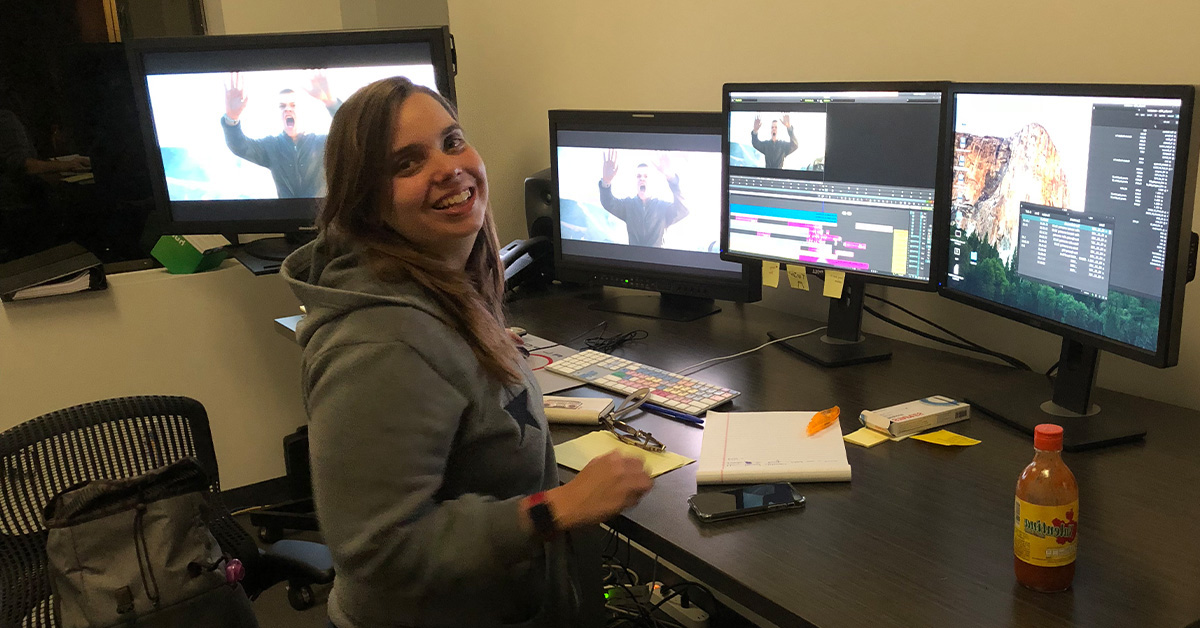
Moni Salazar is a Mexican assistant editor (and now editor) for feature films who has been KILLING IT since she moved to Los Angeles. In fact her first feature film as an editor, Honey Boy, is about to screen at Sundance! As an assistant editor she has also worked on such films as Netflix’s All Day and a Night, The Beach Bum, and Zoe. In addition to the many hours she spends in dark rooms, she is also the Vice President of Blue Collar Post Collective.
Moni approached me last year because she found it nearly impossible to focus on creative tasks. She was constantly distracted by little things that kept her from doing the creative work that she loved, so much so at one point she didn’t get her Visa application done in time…and she was forced to move back to Mexico! We worked together one-on-one for the next 12 weeks to help her clarify her goals and find the most important ‘One Thing’ in her life that she had to accomplish every day in order to get focused, avoid constantly procrastinating, and get her life organized!
My purpose for sharing this case study is to help explain the process that Moni and I worked through and the steps she took to get her life more organized and establish daily habits to help her increase her focus and productivity while actually creating more time in her day to relax. That way you can use some of these same ideas and techniques to move yourself forwards this year, whether or not you’re interested in working with me one-on-one in my coaching program.
Mónica Salazar is a Mexican editor and assistant editor for feature films. She enjoys crafting stories on a daily basis, and is usually found hidden in the darkness of an editing room with a cup of coffee serving as her safety blanket. Her editing credits include Honey Boy set to premiere at Sundance in 2019, and the Los Angeles Emmy award winning documentary Montage: Great Film Composers and the Piano. Mónica has also worked as an assistant editor for various films, including Netflix’s All Day and a Night, The Beach Bum, and Zoe.
Monica also serves as the Vice President of Los Angeles for Blue Collar Post Collective, an accessible and focused grassroots non-profit organization that supports emerging talent in post production.
Mónica takes pride in her taco-expertise and has found the best pastor tacos in LA.
Zack Arnold: I’m here today with Moni Salazar, who is both an editor and an assistant working in features, and she is also the vice president of an organization that’s called the Blue Collar Post Collective, and for those of you that don’t work in the entertainment industry or in post production, you probably never heard of it. For those of you that do work in the industry, I surely hope that you’ve heard of it, because it is a wonderful organization that is basically the place to network now for our industry, both in Los Angeles, New York, London, basically all over the world, and they help people raise money to get them into different events and different, you know, all kinds of learning opportunities. So, the work that you were doing, both as a professional and in the world of Blue Collar Post Collective, is very inspiring, and I’m very, very happy that you and I can record this show together today, so thanks so much for being on the call.
Monica Salazar: Thank you so much for having me. I’m honored.
Zack Arnold: So, for a bit of background, the idea behind this conversation is still going to be very much like an informal podcast interview, but this is also what I would consider a case study, because you and I have spent a lot of time working together over the last year and not working together as editors or assistants, but you’ve been working through my brand new coaching program and working through my Focus Yourself program. So, what I want to do today is basically provide an inside look into how this process works, for a couple of reasons. The first reason would be that this is a case study that I want to provide to my current and my future students, so they really can see with a broad overview how this whole process works to help somebody that starts with an idea, or I don’t want to say a goal, because I feel like a goal really needs to be defined, but they have things that they want to accomplish, they have a dream, but they’re not really sure how to get there, it feels big, it feels insurmountable, and I want them to see how you and I work together to really get you where it was that you wanted to be, and kind of talk through all the dirty little details, and obviously you don’t have to share anything too personal that you don’t want to share, but I was really inspired by all the work that you did, and I want to make sure that other people are inspired by that as well, and for those that are not able to participate in either a coaching program with me one on one or they’re unable to participate in the Focus Yourself program, I want them to have some tools and get something out of this, so that way everybody feels like, oh, I can do something with this, maybe I’m not able to have the finances to invest it, or maybe don’t have the time to invest, but they can still get something 100% for free today, just from you and I talking, you sharing your story. So, does that sound good?
Monica Salazar: That sounds amazing.
Zack Arnold: Awesome. Well, before we kind of get into the nitty gritty, and we talk all about the framework and all the work that you and I did specifically, I just want to make sure that people know a little bit more about you. So, just talk to me a little bit, just kind of give me the elevator pitch about who you are, what you’re doing, what you’re trying to accomplish.
Monica Salazar: So I am an editor and assistant editor right now in feature films, and pretty much my background is that seven and a half years ago I arrived to LA to I transferred to university wanting to be an editor. I knew from when I came to school that’s what I wanted to do. I transferred from Mexico, so I was one of the few international transfer students in my school, and then graduated and interned, worked really, really hard, and then got paired with a fantastic editor who’s now my mentor, and he has really been very supportive in this entire journey. So I was assistant editing for him, and when an opportunity came along, he put me up for a feature film that I just finished editing, and it’s not going to be opening at Sundance in January, so that’s exciting.
Zack Arnold: Wow, your film got into Sundance.
Monica Salazar: Yes, main competition.
Zack Arnold: Look at you. I haven’t even gotten to film into Sundance. Fantastic, I’m so happy to hear that’s the first time hearing about that. That’s awesome.
Monica Salazar: Oh, by the way, we got into Sundance.
Zack Arnold: That’s pretty awesome. Well, to back up a little bit, where is it that you went to school? I know this, but I want to make sure the audience understands as well, so they get a very clear picture of your journey.
Monica Salazar: I don’t know how I managed to convince USC to accept me here.
Zack Arnold: Well, I think there’s a little bit more to it than that. That’s why I wanted to bring it up, because I feel like you’re definitely one of those people, and I say this in the best way possible, that doesn’t really give themselves all the credit they deserve. They just assume that it’s all luck, and, oh, it just happened, and I just can’t believe they did it. But you work extremely hard, and you push, and you are very intense. Yes, and I know that it’s, it’ll be funny for me to say this, because this is what you and I worked on, but you’re a very focused person, and I know that you felt like when we started, you like, you’re even, you’re laughing at me now, like, are you crazy? But I think that on a macro level, you’re a very focused, driven person, but the problem that you came to me with, and I want you to go into this in more detail, but the basics were that you just felt like you were scattered all over the place, and you kind of just didn’t know how to put all the pieces together. And well, what I want to dig into a little bit more is where you were when you and I started, and why you came to me in the first place.
Monica Salazar: It’s funny because I’m literally looking at my little notes that I have on my desk that says organize, focus, and discipline, which were my three, my three words. So, when I started the program, I was feeling very, very scattered, like you said, and it’s just like if a fly pass, I’m just going to turn and look at the fly, and then I’m just going to start thinking of what happens to flies and their lifespan, and then that takes me to think about something else, and something else, and I was, I turn around, look at my computer, and the Word doc is empty, so I was having a lot of problem actually just getting stuff done, and that’s what I came to you in the program, and I also had a problem of saying yes to everything, and that was one of the biggest, biggest things that I’ve been working on, because I do want to say yes to everything, but then, like, we talked, and you taught me I need to be a little more aware of what I’m doing to myself when I, when I say yes all the time.
Zack Arnold: Yeah, I remember that was something that you and I discovered in all of about 15 minutes into our first call, even before you signed up for the program. You and I just kind of got on the phone to chat, and you had some questions, and you were interested, and after about 15 minutes, you were like, oh, okay, I have never occurred to me before, and you’re like, all right, you and I really need to work together, because that just.. I can’t.. it was just like this huge realization that they came about minute 15 into our first call.
Monica Salazar: Yeah, no, and I was like, oh, that’s a word.
Zack Arnold: It is, it’s a word, and it’s a very powerful word, and when you learn to deliver it correctly, and at the right time in the right situation, it can be very beneficial for all parties.
Monica Salazar: Yeah,
Zack Arnold: So there’s a difference between just being selfish and saying no to everybody versus really choosing the opportunities that are the right fit for both you and that you are the right fit for those other people, because you want to say yes to everybody, and you want to commit, but sometimes that can actually be detrimental to the other people just as much as it is to you in the long run, so
Monica Salazar: Which is funny, because like the week after that call, Visser asked me if I wanted to be in the Blue Color Post Collective Committee, and I, and my answer was like yes, and then I was like, wait, I have to think about this. What does this entail? What are my responsibilities? Like, I just learned with Zack that I have to make an informed decision, and I’m gonna make an informed decision, because I don’t wanna. I don’t wanna harm blue collar, because I love blue collar. And Chris was just like, oh man, Zack got into you, he said they were nervous because they were like, Moony sin, and they’re like, “Oh, wait, no, maybe, maybe she’s not, but I wasn’t.
Zack Arnold: “Yes, no, you were in, and you definitely made the right decision, for sure. But the thought process was the important part. The outcome was not nearly as important as the process, in my opinion, of just forcing yourself to learn that yes is not a default answer in all situations, and if you’re going to really protect yourself and your sanity and your well-being, but also make sure that you can fulfill whatever responsibilities or obligations others are asking of you, there is a process that you have to go through. So, what I told you was that the new default answer for things that really sound great is, wow, this sounds like a fantastic opportunity. Let me think about it a little bit and make sure that this makes sense, right? So it’s not just no immediately, but if there are things that you’re really excited about, even the best opportunities in the world, when they come to me, I’ll be like, that sounds fantastic, I’ll give back to you, right? Like, I’m just never going to drop a yes, because I need to make sure that it makes sense for me, makes sense for my health, makes sense for my family, makes sense for what other obligations I already have. So that was kind of where you and I just started square one before we really even officially started working together at all. That was kind of like our, our like our original test run, so to speak. But what I want to talk about now, which I think is going to be a really, really interesting case study within the case study is what you and I actually chose to work on, which might sound kind of interesting to some, because you think that you and I worked on editing or networking or career development, or whatever it is, but where you and I actually. Spent the bulk of our time for probably six of the 12 weeks that we worked together was your visa application. So, what I want to talk about is what life was like when, well, first of all, just kind of explain for those that don’t understand the process at all, just what it entails to actually get a work visa. So, if you’re not a citizen in the United States, so you can actually be in the United States and work, and you know, be here for a living, so just kind of explain the basics behind that. But then I want you to talk about what it was like doing your visa applications before.
Monica Salazar: Yeah, so the visa application, I am on a very particular visa, and it’s a really, really long process of I’m on a talent-based visa, and what that means is that you have to prove to the government that you are talented enough to stay here and keep working, and it entails getting recommendation letters, but it cannot be recommendation letters from your neighbor, it has to be like someone established in the industry, so just sending those emails to people was nerve-wracking for me, and I remember talking about this to you, because you were like, they’re just emails, just draft them and send them, and I was like, it’s taking me, it takes me weeks to just draft an email, because I’m so nervous, so throughout this process we were so organized, you taught me how to, how to focus on the right things at the right time, on the right steps that were just going to keep moving me forward, because three years ago, and I remember you were very surprised when I told you this, I have to do this full process every three years, and three years ago, I was so scattered, and I was in such a low point of my life, in which nothing felt like I didn’t have the grasp of things, so I wasn’t in LA. I had to leave LA because I couldn’t afford my rent. If I didn’t have a job, I wasn’t allowed to work because my visa was allowed to expire. You have, like, a 60 day period, and in those 60 day period, in that 60 day period, I, I tried to get everything to my lawyer, but to the point that I submitted everything to her, but she hadn’t written down the case, which also takes a while, and I had to go back to Mexico. I said I put, I set myself back months because I had to go back to my home country because my, my permit was expired. I did submit the paperwork, but, but I had to make the waiting in Mexico, and that was both a blessing in disguise, and, and it was just, it was beautiful, because I got to spend time with my family, but it really taught me what it means to not live in LA, and to not have the not be in the land where I literally can say this is my dream job, and people will be like, oh, I know someone who could introduce you to this other person who knows the cousin of the blah blah blah in Mexico. It was like, oh, this is my dream, and without them realizing, they all made it sound like, oh, that’s never gonna happen. So I learned in those months that I was over there that this is where I really belong. So when I came to you, I was like, I don’t, I don’t want that to happen to me again. I don’t want to put things in risk, so I have to bring my A game. I’m working a full-time job while I’m doing this, so I have to start really early. So I just, I was, and you were surprised that that was my goal.
Zack Arnold: Well, I was, I mean, my assumption was that if you were coming to me and you were somebody that was an assistant and you wanted to work in features or TV or whatever it was, I just assumed that you and I would be working together on something career-related, which actually the bulk of the coaching work that I do now is helping people network and build up their reel and their portfolio and get out there and you know really start to shape their career and take it in the right direction rather than just kind of saying, “Oh, take whatever job comes my way and hope it works out. So that’s really where I actually spend most of my time, and I assume that’s what you and I were going to do. But when we really sat down and started going through the framework that I’ve set up, and we’ll talk about each of those steps. But when we started with the first step, which is really defining a very clear goal that you and I were going to work on together, you came to me and said, I want to finish my visa application, and I was like, oh, okay, I guess we can do that. I don’t know how to fill out a visa application. You’re like, no, no, like, you, you understood how to fill it out, you knew all the work that had to be done, you just didn’t know how to do it. Now, and when I say didn’t know how to do it, meaning like you understood the process. You didn’t know how to get it done. You didn’t know how to prioritize it, or say, well, this is the schedule I need to set for myself, and this is how many hours a week I need to plan, and this is where I should put my energy first, versus this is something that I can do in a month, and I don’t need to stress out about it right now. So that’s really what you and I did. Was we set the goal of saying we are going to have this visa application done by a very specific date,
Monica Salazar: And the interesting thing was that because my goal was so different, I really, I feel like I really learned, like, oh, this is how I, I set my goals and how I understand my obstacles and how I focus on those things to make them work, like it’s interesting, because it was so.. it was such a, like, a very straightforward process that made me really like learn the things that I needed to learn, so that was.. that was great.
Zack Arnold: Well, we, we’ve talked about the, the first step a little bit, which is the goal step and the framework that I use, and for anybody that’s listened to the show before, or obviously any of the current students that might be listening to this as a case study, you know all about the five step go far framework, and this is a framework that was originally developed by a person named Christopher Rush, who also happens to be the first quadriplegic to become a licensed scuba diver way back in the day, and I did a documentary film about his story and about his motivational program, and now I’ve taken the five step go far framework, and I have now fleshed it out and built it into a whole program, which is what we’re talking about here. So, the first step of those five steps is goals, so G for goals, then the next step, which I think is probably the most beneficial of all of them, but it’s also by far the most painful, the most arduous, and just the one that everybody hates, but when they’re done, they’re like, oh my god, I’m so glad I did that. Is the second step, which is the obstacle step, and I really felt like that’s where you had a lot of these kind of eye-opening moments. So, can you talk a little bit about once we set your goal and said this is going to be the date that I must submit my visa application, what are all the obstacles that are going to stand in my way? Let’s talk a little bit about that.
Monica Salazar: Yeah, I mean, I’m just going to make a quick reference. I know you talk about this in your audit, you have a specific podcast for this, but also something that was very important when setting up my goal was understanding the why.
Zack Arnold: Yes. Oh my god. Thank you for bringing that up. I can’t believe I forgot that step. That’s the other huge importance. Yeah, and guys know that. So, yes, please go ahead.
Monica Salazar: But you have a full podcast on that, and like, it’s several of them, as a matter of fact. Yeah, that’s true. And it’s like there’s there’s a lot of research, just like, go pause this, go listen to that, understand your why. Why is your goal important, and make sure that your goal is very solid, that way you won’t regret it, or like, you won’t stop, you won’t, that way you won’t fail. And for me, my, my why was that I didn’t want to set my career back. I didn’t want to have to go to Mexico and wait and not move my career forward, because I knew that it was gonna really strain my relationship with people in here if they knew that I wasn’t reliable. So I wanted to teach people that, like, I wanted to show people, like, oh, yes, I have to deal with the visa thing, but it’s not a big deal, I’m reliable, I don’t have to go back to Mexico for five months again, I’m not going to disappear on you, and I had an editor who we’ve been working together, I didn’t want to leave him hanging, so that was my why, and that was for me a very strong why, because my career, I’m very career driven right now, so that was really important for me, and then the obstacles came, and you’re right, that was a very hard moment, because you have to just sit down and understand what is what is that you’re putting yourself, I’m putting myself up to up to failure, I’m setting myself up to failure with my own obstacles, like I create my own obstacles, and but many of them were just like exhaustion, and like getting home from work, and I just like I just want to watch TV, and like I have so much to do, so like instead of having so much to do, I don’t even know where to start, so then I just don’t start, and that was one of my biggest obstacles that we worked throughout, and also I was very afraid of schedules.
Zack Arnold: Yeah, I remember you being terrified at the thought of time blocking. Like, well, no, there’s just no way I can like set up my calendar in advance and like know what I’m going to be tomorrow night, or like, oh my god, even four days from now, like, are you crazy? I could never do that.
Monica Salazar: I’m a free spirit zack. Don’t put me on a lead. That was my idea at the beginning. I was like, what do you mean? Time walking.
Zack Arnold: Well, the funny thing is that most people, I’m very much the same way, where, when you’re a highly creative person and your base, your livelihood is based on when you can generate good ideas and execute on those ideas. It does feel very confining and restrictive to have a schedule or have a calendar, and I was always the same way for years, where I really could only do the work, quote unquote, when the inspiration struck me, and then I realized that was not very good for my health or my life. Livelihood or my sanity, and I heard this amazing quote, and it’s been attributed to a couple of people. The most common is Ernest Hemingway, and from the research that I’ve done, it may have actually not been Ernest Hemingway, but we will say that it is for now. But the quote is that I only write when inspiration strikes, and inspiration just happens to strike at 8am every morning.
Monica Salazar: Yeah, yeah, totally,
Zack Arnold: And the idea what I started to learn was that if I just put myself in a position where I had to get a specific thing done in a specific, in a specific amount of time, that I couldn’t just wait until I felt like it. It’s like, all right, well, I need to learn, how do I get myself into that space where I can focus on this one specific task at this specific time, and I realized that it was ultimately having a schedule that set my creativity free. So, it’s very counterintuitive, but I realized that being the free spirit and the creative and not wanting to schedule anything, it was being scheduled that really kind of set me free. So, then those things got done, then I could be the free spirit again.
Monica Salazar: I think the first time after I started with my scheduling and working on my time blocks, the first time the following meeting that we had, I came to you and I was like, oh, I did great, I crossed off like all the things from my time block and moved on to the next one because I had like extra time, and it had never happened to me that I, that I wrote that many emails, and I got everything drafted, and everything reached out to my lawyer, everything. And the one and a half hour that I have for a time block, I just, I went to a Panera, bought a coffee, and sat, and did it.
Zack Arnold: It’s an amazing feeling, isn’t it.
Monica Salazar: Yeah, it was really empowering. I remember it was a very beginning, and it was just you telling me, like, set time aside and you’re going to be mentally prepared because you already know that’s what you’re going to be doing. And it really was, it was like a key. It just opened things, and it was from what I could tell, it was pretty effortless, like you didn’t come back and say, “Well, I did it and got everything done, but man, it was just exhausting and stressful, and I mean, you just came back, you’re like, “Huh, that was pretty easy. Yeah, I was like, “Oh, I think we’re into something, we’re into something here. Yeah, it was, it was pretty good, it was a pretty good moment, realizing that, and also I have to say, because people might think that I was only working on, on, on this, and not I lost my weekends or anything. When I started the program, I was living in Miami temporarily for another movie. I was keeping up with my schedule of things to do, and I was still training for a 10k around them, and I was going because I was, I had never been in Florida, I was driving to Orlando every other weekend, so like I did not lose my weekends because I blocked things over the week, so throughout the week in that way I was free to go and enjoy myself over over the weekend, and that was also pretty, I think that was fundamental, that I didn’t feel like I was being held back because I had this big deadline.
Zack Arnold: Yeah, absolutely, and I think that the reason that you felt that way, like you said, is you’re very clearly organizing all the things that you need to get done during the week, so you have that freedom, and that’s actually part of the fourth step, which is the act step. So it’s all about defining your actions, when you’re going to do the action, what the action is that you’re going to take. But I kind of want to reverse engineer this now, because it’s easy to say, oh, well, yeah, well, time blocking, sure, that’s great, but I don’t really understand if I’ve set up a time block, how do I even know that I’m doing the right thing? So we skipped over what I think is a very, very fundamental part of this program, which is the focus step. I mean, that’s what the program is named after, is focus yourself, right? And so to just to kind of recap real quick, we had spent a couple of weeks going through and defining what is the very specific goal, and specificity is the key. So, it wasn’t just I want to finish my visa application, there was a lot more specificity to it. Then we really sat down and figured out what are all the obstacles that got in the way in the past when I tried to do this before, and we devised a plan to overcome those, but then we sat down, and we figured out what is the one thing, what is my one thing that I must focus on, so that I can complete the goal, right? So that’s where we started to define what it was that you actually needed to do, and what actions needed to be taken during those time blocks. So I know that this was one of those areas where you really found a lot of clarity, as well. So, talk to me a little bit about the process of the focus step, or the focus step, where we really try to define your one thing.
Monica Salazar: The one thing I think that was it, defining the one thing, like one of the main things that we did was like understanding everything, like putting a. Everything together, what needs to be done, and just focusing that, like, what is the one thing that just, it’s gonna set everything to start, like, if I do this first, that’s just gonna make me eventually do the second step, and, and it just, like, you explained, it becomes like a domino, so I figured out my one thing was setting up a routine, and that just my thing was I want to have my weekends free, I want to, I want to, I want to have enough time to get a good night’s sleep, because that’s important, so like that became my second thing, so like my first thing is, is, is setting up a routine, and if I achieve that, then that means that I’m probably, that I’m gonna be able to have a good night’s sleep, and, and just understanding the priorities, and sticking up, sticking to them. I don’t know if I explained that right.
Zack Arnold: Yeah, I think so. I mean, to go through it a little bit more in detail, for anybody that’s brand new to this and hasn’t listened to the podcast that I did about the one thing, or haven’t talked about Focus before, if they haven’t heard any of that. The idea is that we just kind of create this giant bucket of everything, right? So we said, all right, you need to do a visa application, and because we weren’t talking about something that I’m familiar with. It was also helpful for me to say to you, tell me every single step, everything from the littlest tiny thing to the biggest, most important step. Just lay it all out for me. And you sent me this giant list. I was like, oh my god, this is what it tastes for that visa. You have to do this every three years. Like, this is insanity. The level of bureaucracy was just, it was mind blowing. So, I just, that alone is an accomplishment. Like, you should win an award just for continuing to be able to stay in America for the amount of work that you put in. Anyway, the point is,
Monica Salazar: It doesn’t work that way.
Zack Arnold: No, it does. It certainly does not. And we’re not going to get into immigration policy for this podcast at all.
Monica Salazar: Let’s not do that,
Zack Arnold: But needless to say, it is a huge undertaking. And the first step was you and I just did a brain dump, and we said, let’s talk about every single thing that needs to be done, but then, like you said already, we thought about it as dominoes, and we just had to figure out what’s the first domino that I have to knock over knowing my unique way of working, and the way that my brain functions, and knowing that things that are important to me are being able to get sleep every night, having my weekends free to myself, kind of setting these parameters to work around. We started to break this down into a series of dominoes, and the biggest key when you’re figuring out your one thing is figuring out what’s the first domino, but the biggest mistake that people make is they think what’s the most important domino, I must do that one first, and that’s why so many people get frustrated, they get overwhelmed, or they even give up, because they’re trying to push over this gigantic domino, and they don’t have the strength or the endurance to be able to do it, but when you look at dominoes, and this is something I talk about both in the course and also in the podcast that I did with the author of the book, The One Thing, they did a mathematical study where they found that a domino will knock over another domino that’s up to 50% larger than the previous, so basically if you have this little tiny domino that’s the size of a regular real one, which I don’t know, is probably two or three inches tall. If you were to set up a domino after it, that’s 50% larger than the last, so this is exponential growth. I believe it’s by the 17th or the 18th domino, it would be the height of the Eiffel Tower, and knocking over that first little tiny domino knocks over domino number 18, which is the size of the Eiffel Tower. So, the key is you’re just trying to find that one little tiny action that you can already do, such that when you knock it over, it knocks over something a little bit bigger and a little bit bigger. And after you and I worked together, we found out that for you it was just about setting up a routine. If you had a routine and you had accountability to stick to it, then the work got easier. So, it wasn’t about, well, the most important thing that I have to do are these five letters of recommendation that I need to get from people, because that was one of your really big sticking points. It was just, oh, well, if I just set up a routine and I do one or two little tiny simple parts of the process, I’ve got enough momentum now. My focus is on this specifically, and then all of a sudden everything else became more effortless.
Monica Salazar: Yeah, and I remember making the mistake of thinking, oh no, one thing is sending out the emails asking people, and that wasn’t going to be strong enough to like one of the things that you mentioned, like it’s, it’s not a domino, it’s not a, it’s not a checklist thing, it’s more about what you, as the person, is going to be the one thing that is going to keep you moving, so that’s how the routine came to be like the thing, because just sending an email was. And really going to start the domino effect on me,
Zack Arnold: Right, and the key here too is that let’s, I mean, I doubt that there would be, but let’s say that there’s somebody else listening and they’re saying, “Oh, I have a visa application that I need to fill out, right, we’re not saying that to fill out a visa application, your one thing must be setting up a routine, it’s unique to every single person, so we had to figure out what it was for you, and when we also talked about, well, if the one thing is setting up a routine, as you already mentioned briefly, and I want to go into this a little bit more. Your second thing was sleep, so again, you and I were, I was thinking we were going to get together and talk about how are we going to, you know, move your career forwards and get you to be, you know, an editor, working in features, working in scripted, doing all these other things, and we did nothing that was career related for the entire 12 weeks that we worked together, but by default the things that we did do together got you where you wanted to get with your career, because we realized that you can’t focus on moving your career forwards without getting that visa application done, and you also couldn’t get the visa application done without a routine, but also focusing on sleep, because you found specifically you were just not able to focus on those tasks, and they just seemed overwhelming if you hadn’t gotten good sleep the night before,
Monica Salazar: And also, like, the one big thing that I learned for focus, and I think this is something everyone, but my generation, is going to have to learn a lot. Is just putting your phone upside down in airplane mode, or anything, taking off your Apple Watch, taking off your Fitbit, when you have to focus, and I still do it. I am like, okay, I have to focus, I have to do a turnover, I have to do whatever, I just take everything. I know this is a little bit different from my one thing, but it’s also, it was very important for me, like just getting rid of the outside noise, so that it can just be me and my goal, and be, and yeah, just focus,
Zack Arnold: Yeah. And that’s a scary thing, the first few times you do it, because we’ve become so addicted to all the notifications and the technology, and getting your likes every five minutes on Facebook, or you know, whatever it is you kids nowadays are doing, but you know that that’s a huge thing for everybody. That was actually a discovery that I’d made throughout my own journey, was that I was also, and it’s funny, I was just talking to an editor that I’ve been working with recently, and he was saying, yeah, you know, like, I’ll watch a few takes, and then I’ll go on Facebook, then I’ll watch a few more takes, and I’ll go on Twitter, and then all of a sudden I’m done watching all the footage, and I forgot where everything is, because all I’m doing is going back and forth every five minutes, and he had said, when I start this next job, I am not going to sign in to Facebook or Twitter at work, and he’s like, my God, after a week I’m getting so much more done, and I can retain the material that I’m watching, and I’m just.. it’s so much more effortless, and it’s like, well, duh, like spending all day long with all these distractions, and you’re allowing your brain to get into a state of creative flow, and like you said at the beginning of even the podcast, you’re like, yep, I was getting something done, oh, there’s a fly kind of fly that was. Let me Google that. Right, you’re down a rabbit hole for 45 minutes watching YouTube videos about the history of flies and whatever it is, and you were telling me that that was kind of one of the biggest things for you, is that you just kind of let your mind wander and just kind of that girl on the field that’s watching the butterfly go around her head, right?
Monica Salazar: Yeah, I remember you asking me, do you think you have some level of add, and I was like, I don’t, I’m not sure, I just.. I really think it is.. I really think knowing myself, I really think it is.. I’m not paying attention, and my mother said this to me constantly as a kid, she’s like, you’re not listening, you’re not paying attention, and it’s.. it’s a thing that I just, I have to train myself to do. It
Zack Arnold: Well, I know that you had mentioned in a bit, believe it was the beginning of the show, and I want to make sure that we go back to this. You talked about at the very beginning that you had these three words that are sitting on a post-it or a note or something on your computer. So, for the audience that might not remember, what were those three words again,
Monica Salazar: Organized, focused, and disciplined,
Zack Arnold: And where did those words come from?
Monica Salazar: Those were the three things that I wanted to turn into. That is my act part of the workshop, that
Zack Arnold: Was actually part of the process that we went through in the fifth step, which is the review process. During the review process, that’s kind of where you learn how to maintain consistency, because this whole framework is based on three concepts: it’s about clarity, confidence, and consistency. So, in the first phase of it, you’re learning about clarity, which is I want to be clear on what my goals are, but I also need to be very clear on the obstacles that are standing in my way. Great, now that I had that clarity. I need confidence that I’m actually taking the right actions every single day and moving myself forwards, rather than just spinning on the hamster wheel and being busy all day long and going to bed thinking, God, that I even do anything today, right? So it’s about finding that confidence, which we did in the focus and the act steps, but then in the review step it’s about making sure that you maintain. Consistency in part of that process, and I’ve kind of rejiggered the program a little bit since you and I worked on it together, based on feedback, but when you and I worked on it together, the part of the review process was really thinking to yourself, what kind of person is going to be required to achieve the goals that I want to achieve, and it was about figuring out what words most define who I am as a person, but the future version of me. So, it’s not who I am now, it’s who do I want to be. So, talk to me a little bit more about that.
Monica Salazar: Well, yeah, I mean, I never thought of me, of myself as an organized and focused person and disciplined, and there was only one other time before in life, when I could remember being this committed to something, and getting things done, and being impassing myself, and having deadlines, and that was when I was applying for college. After that, I was never as organized, focused, or disciplined as I had to become for my visa application, or just forward, and those three words were just terrifying, because I was like, oh, I’m not organized, and I kept telling myself, I’m not, I’m not organized, I’m not a focus, I’m not disciplined, I don’t have discipline to write, I don’t have the discipline to be this other thing or this other that and with you it was it was like well I want to become a disciplined person I want to become someone that sets a goal and if she has to train for whatever it is she’s going to do it and that was that was how it was I was like this is the version of me that I want to be, and sometimes it’s sometimes I lose it, sometimes I am lost in my ways, like it happens to everyone, but the cool thing is that I still have my reminder on my phone, everyone, everyone can have different ways of reminding themselves of those three magic words, I have a reminder that pops up on my phone every single, every single day, and I have it on my desk, and I used to have it on a post-it in my computer.
Zack Arnold: Well, you and I finished working together, I guess it was about five or six months ago now, so you’re you’re in, you’re one of the first people to run through the fully fleshed out version of this program I’d done around before you of beta testers that really it was just kind of fly by the seat of my pants and kind of figure it out as I go, and then I had a lot more structure when I started working with you, so you’re now one of the first people that’s kind of been out into the world for a longer period of time, having gone through this program, so everything we talked about so far is stuff that I kind of already knew, because we had worked together, and now we’ve worked through a very, very rudimentary version of kind of the five step framework, and some of the steps that you took, but what I’m curious to know, because you and I haven’t kept up that much, just because you’ve been so busy on your latest project, How has the system worked for you in the work that we’ve done? How has it helped you over the course of the last six months since you and I haven’t been working together?
Monica Salazar: It was very much put to test, and I learned so much about myself. One of them being, like we mentioned before, that sleep is very important. I just got up working on a project that was amazing, and I loved every minute of it, and it was a beautiful learning experience, but at the same time my routine was crumbled because I was at work for really long hours. At the beginning, I was like, yes, I have my routine, I’m going to the gym in the morning, and all this other stuff, and I remember talking to you at the beginning, and you were like, you’re gonna have to be realistic at some point too, there’s a big chance you’re not going to have the energy to be at the gym the following morning if you were working up until midnight or things like that, and and it was really put to test and I will admit I got burnt out, so now I’m trying to recover, I’m trying to set up my routine, and when we wrapped, I was like, oh yes, I’m so, I’m so glad we wrapped, we did it, we’re amazing team, and I was like, I cannot wait to go back to my routine, I need to set my routine up because it’s important, and I really learned that me, Monica Salazar, me, I need a routine.
Zack Arnold: Well, the interesting thing there was that you’d kind of realize that, oh, I’m somebody that doesn’t like calendars and don’t want the routine, you know, like I just.. I’m a free spirit, and then soon as you had it for a little bit and it was taken away from you, you’re like, oh my god, all I want is a routine,
Monica Salazar: Give me my routine back.
Zack Arnold: Well, the thing that I find interesting about that, and you can tell me if this is not the case, but my intent for this. Whole program, whether it’s the just the online course version, whether it’s the one on one coaching version, whatever form somebody decides that they want to take, or even somebody that’s just kind of listening to this and getting the little tidbits out of it, that they can. The very first part of the first week, the first thing that I say to you is that for the next 12 weeks, I’m not going to give you fish so I can feed you for a day, right. The idea is that I want to teach you how to fish, so you can feed yourself for life, because I feel like there’s so many routines and programs and things out there where they feed you so much information, but then as soon as you’re done with it, you’re thinking, okay, but now I’m just going to go back to the way my life was before, because I’m done with this thing, but nothing really, really changes, and you go back to being the old version of yourself. So, I didn’t want it to be about feeding information. I wanted to make sure that I was giving people strategies and frameworks that they could use in any situation, and I’m still trying to figure out if I’ve been successful with that or not, because it’s easy for people to stick with the work during those 12 weeks when they’re accountable to me and accountable to the program, but do you feel like you’re still able to apply the things that you’ve learned to other things other than obviously just filling out a visa application?
Monica Salazar: Yeah, absolutely, it’s more of a matter of being organized, focused, and disciplined to do it, which I wrapped, and I immediately was like, okay, what am I doing now? And I do believe I have the skills to keep going, and it’s just.. it’s great, because, like, like, we talked, it was.. it was something that just switched when we were.. when we were having these conversations, it was just like, oh, look, it’s a time block, it’s an hour and a half to do what I need to be doing, and that’s it, and once you realize it’s a thing that switches in your brain, that once you have it, you really want to have it back, if you lose it for temporarily, like we said, it happens to all of us. You really want to go back, and the cool thing is that you, we know we know the framework set up a clear goal with a good why, and be aware of what are your obstacles, focus on on that, and act on it, and once you learn the framework, that is the key to like to to get things done, and I do feel like I do have the skills after going through the process with you.
Zack Arnold: Well, I’m very, very happy to hear that, and what I’m curious about now, is what’s next for you.
Monica Salazar: I am gonna go to Park City in January for a weekend, and I’m gonna, I’m gonna try to network and keep pushing my career forward. I am like, like, you know, I’m very focused on my career right now. I’m very happy of just taking a step back and assisting with the editor I usually work with. It was beautiful to wrap on editing, and then I arrived at work the first, my first week, and we watched the movie, and they’re like, okay, we need to restructure things, and they go back and look at the cards, and like, they’re restructuring things, and I was like, “See ya, I’m gonna go work on VFX, because my brain right now cannot do one more restructure of a movie for a little while, so it’s great. So right now I’m assisting, and I’m gonna.. my next goal is just now start editing, and I need a vacation. I also, I’m very lucky, I’m not complaining, but I need some time to rest and fully recover, which the holidays are coming, so
Zack Arnold: They are indeed. Yes, so people are probably gonna be listening to this in January, but just so they have it as a reference. We are recording right up, right up against the beginning of the holiday season, which is that when I think everybody feels like they need a vacation. I know that, even for me, like, you know, mr. Frameworks and all this other stuff. Like, after a year of doing Ninja Warrior training and working on TV series, I’m just like, “Man, I just.. I need some time off, man. I’m just kind of wiped out. And the analogy that I use is, if the.. and this could be a little bit of a very visual analogy for some people, but this is essentially how I feel, is that if every year we’re a marathon and I’m like on mile 25 and a half of 26.2 I feel like I’m I’m close to the finish line and I can see it, but tied to my body that I’m dragging behind me is a dead corpse, that’s how I feel like I’m just dragging this dead corpse behind me, like we’re gonna make it, and I can see the finish line, like it’s just like the scene from The Walking Dead that I picture, like you know, the zombies just tied to me, dragging. It’s just I’m just trying to get to the finish line and start the new year. So, for anybody that’s like, “Oh, well, you know, he’s got it all figured out, whatever, it’s like, “No, I’m figuring this out, like. Everybody else, and you know, I set ambitious goals, but they wiped me out too. So I can definitely relate to anybody that, as of listening to this, it will be the new year, but you know, if you’re having trouble getting to the end of the holidays, you are not alone, for sure. So one other quick question that I had for you, and this is something that we talked about that I talk a lot more about in my program now with other people is that I try to get people to think about setting two separate goals, one of which is a professional goal, but I feel like if you’re just driving towards a professional goal, that it’s so easy to lose sight of your health. So I also try, once they’ve kind of learned the framework, I’m a big believer that for whether it’s for an entire year or for three months chunks at a time, you set a big macro goal that’s a personal goal and a macro goal that’s a professional goal. So, you’ve talked about the professional goal, but I know that you and I were also talking about how do we, you know, set up a routine for you for marathon training or running or whatever. So, have you thought about what you want your personal goal to be to make sure that you maintain your health while you’re pursuing your professional one.
Monica Salazar: I have to sign up for a half marathon. Yes, I, that is my goal. I’ve told you about this before. I, that was my goal for 2017 and running a half marathon, and I was keeping track, and it was the hottest day in California, that one day that I was running it, and I was, I was staying behind just to keep, to stay knowing my body, because anyways, mile 11, I found my friend collapsed, so I crossed the finish line into the emergency room, so now my goal for it was going to be my goal for January, but because of the movie I had to be very aware of what was possible and what was not, so I’m shifting things, but my goal is to do a half marathon and I have to train for it, and right now I’m so out of shape, but that is a goal, that is a personal goal.
Zack Arnold: Well, what I love about that is that you learn to say no, but you said no to yourself, and that’s a big one for a lot of people, where they don’t realize that is that sometimes a lot of people have trouble saying yes to things, and they can never get started, but then there’s the opposite side, and there are people like you and me, where they just try to do everything, and that can equally lead to things like burnout and exhaustion, because you say yes to not only the outside expectations, but you say yes to the internal expectations, and you said no to yourself, which I think was a good step. Obviously, it’d be great to train for a half marathon, but trying to do that while editing your first feature film, like that’s a lot to ask yourself.
Monica Salazar: Yeah, and we talked about that, because the thing is that this, this feature wasn’t, it was never even talked about in the entire time. It all happened so fast. I’m so lucky, I’m not.. life happens, and that is something that we discussed too. Like, you have a goal, but sometimes this thing came up, and it was like, well, because we were talking, what was going to be my next goal, and I was saying, well, I want to, I want to strengthen my editing skills, because I want to be an editor, and then suddenly I was like, oh, FYI, I suck, I might be cutting a feature now, so, and we were like, well, there goes I have marathon, there goes the trying to be a better editor now. Here, like something happened. Let’s just dive in. Like, let’s take the opportunity, and life happens. Like, opportunities are going to come your way, that those are the ones that you really cannot say now. If you really.. if my main focus is my career, so I had to reassess. And it was.. it was great, it was great that I had you when I, when all those things happened, because I was able to go through all these like crazy thought processes of like, but I was expecting to do this because it’s a goal that I had to fit, like that I failed out in 2017 and it was my goal for 2018 and it’s going to take me a step back, but it was like it’s a no-brainer. This is something that is gonna make your career so, yeah.
Zack Arnold: Well, just as an FYI, one possible way for you to train for your half marathon is to run a three mile Spartan race. I’m just gonna plant that seed for you.
Monica Salazar: I know you keep you every time there, there’s something going on, but they do seem very fun.
Zack Arnold: They are, they’re very fun. I actually just ran another one a few weeks ago, and I had a newbie that had never done anything like it before, and just the gigantic smile on his face, like he was beaming when he crossed that fence. Oh my god, that was the most amazing experience ever. And he really struggled. He had a hard time during the race, and he was not in shape, and now he just can’t stop talking about, oh, when’s the next one? I have to run another one, like it was. It was kind of a life-changing experience for him. I’m going to be running another one with people in late January, so if you wanted to sign up and give this thing a try,
Monica Salazar: And it sounds like it’s around the time of Sundance. When is that late January thing?
Zack Arnold: Um. I think it’s the 26th I’d have to look at a calendar, but is that when you’re going to be a Sunday?
Monica Salazar: Yeah, like I every time I see you post that something, and I was like, ah, I have this one thing, I have this other thing, but yeah, I will run one with you guys, because the pictures always look so fun.
Zack Arnold: Yeah, it’s a lot of fun, and it’s a life-changing experience when you do it that first time, and most people just think it’s about getting dirty and going in the mud, or whatever it is, but there’s a lot more to it than that, and I see it in the first timer’s faces every single time, so
Monica Salazar: I mean, I was a person who would never run, I could not, I thought I couldn’t run, and I mean, I don’t run it’s.. it’s like it’s slow, it’s slower pace, and I’m learning, but it.. when I realized that I actually enjoy it, and that I enjoy the discipline of having to train, because you cannot just show up to a race and pretend to be running at 10k the first time I crossed the finish line for my first 10k was so addicting, it was like, oh my god, I want to just keep doing this, because it’s, it’s really empowering.
Zack Arnold: Well, no, in the, the empowering part is realizing that you could do something that you told yourself forever that you just can’t do. I’m not a person that can do that, right? Like, I’m not a person that could ever run a 10k and then all of a sudden you shatter all these ideas and limiting beliefs about yourself, and you’re like, oh,
Monica Salazar: I mean, I was literally told by someone, like, you cannot do that, and I was like, why not, and they’re like, because you cannot do it, and I was like, like, that is for other people, that is for like athletes, and I was like, it’s a 10k it’s not like I’m not planning on running like this super marathons, I’m like I’m training, that’s why, so that I can do it, and they were like, but you cannot do that, and I was like, I’m training to do it, and it was like a mentality switch of like, yes, I can, that’s why I’m training for it, because I will be able to do it.
Zack Arnold: Yep, and that’s the process that I love so much, is helping people go through and have that switch happen, where they realize, like, oh, this is actually something that I can do. I told myself my whole life, I can’t do this, like, for you it was, oh, I’m just, I’m somebody that can’t focus, that’s just, I’m just not, I’m not good at focusing, I’m not good at prioritizing, I’m not good at scheduling, like I don’t, I’m just not a person that uses routines, right? But then you realize, like, oh, that’s just a bunch of limiting beliefs and a bunch of bs that I’ve been telling myself this whole life, or that other people have been telling me. Well, that doesn’t mean anything, right? Like, the world, I’m sure, would be telling me, like, dude, you’re just about 40 years old, you have two kids, and you work behind a computer. Like, you are not the kind of person that should be running on American Ninja Warrior. Like, that’s just stupid. Like, why would you do that? That nobody should be doing that, right?
Monica Salazar: I’ll be there with signs, because I know you can do it.
Zack Arnold: Well, I appreciate that. But the point is that I just.. I’m.. I decide that I want to write my story the way that I want to write it,
Monica Salazar: Exactly,
Zack Arnold: You know, and that’s really what this process is about. It’s just rewriting your own story and designing the path that makes the most sense for you, but removing all those barriers and limitations and limiting beliefs that you think are stopping you, and you realize, like, oh, this is just a bunch of bs, and if I really put in the effort and the time and get myself organized, I can overcome all this stuff,
Monica Salazar: And one of the things is that, and this is something that I’m learning now that I am growing up, is that we don’t realize how many limiting beliefs we have just because they weren’t ingrained on us, in us as children, or as really young, like I’m not the athlete, I’m not the athlete from my group of friends, but one, like the athlete is like, I don’t like running, like the athlete sees me and she’s like, “Wow, you’re doing it, and she was always the one in great shape, and she can still run them, but she’s like, “I just, I don’t like it, and it’s cool to see that there’s all these limiting beliefs that I set up myself, like when I was a kid, without realizing, like, oh no, she’s the smart one, or she is the athlete one, I’m not, and and just realizing how we program ourselves from very young to believe certain things and certain qualities of ourselves until you realize that it’s actually on you to make like you are going to be those qualities until you realize that it’s up to you to change them, like you said, write your own history.
Zack Arnold: Yep, that’s the whole idea of, I couldn’t have said it any better than myself. It’s just really about deciding to rewrite your own story and overcoming those beliefs, and you know, do a do a little time blocking in the process, so
Monica Salazar: Yes,
Zack Arnold: We could go on forever, but I know that you’ve got things to do, so I want to make sure to be respectful of your time, but I really appreciate you being so candid and being so honest and kind of sharing your struggles and letting people understand how this process works for those that either might be interested. It in doing it with me, or just for those that are unable to do it, but got something out of this, and were inspired even by just this conversation, that was my intent today. So I really, really appreciate you taking the time and allowing people to get a little glimpse of your journey.
Monica Salazar: Hey, it’s my pleasure. I’ve been listening to the podcast for years, so when you asked me, I was like, “Oh, I can’t believe I’m gonna be one sex guest.
Zack Arnold: You’re gonna be on the podcast
Monica Salazar: Of honor. Thank you so much, Zack. I appreciate it.
Zack Arnold: Yup, and thank you for participating and putting everything in that you did. I could not have done it without you.
Monica Salazar: Thanks.
Transcribed by https://otter.ai
This episode was edited by Curtis Fritsch, and the show notes were prepared and published by Elyse Rintelman. The original music in the opening and closing of the show is courtesy of Joe Trapanese (who is quite possibly one of the most talented composers on the face of the planet).
Learn the power of developing laser-sharp focus and determining your 'One Thing' with best-selling author Jay Papasan.