


How to Build ‘Rich Relationships’ (Especially For Introverts) | with Selena Soo
In our conversation, Selena shares how we can build genuine, lasting relationships without burnout or feeling transactional.
Let's create things that matter. Together.
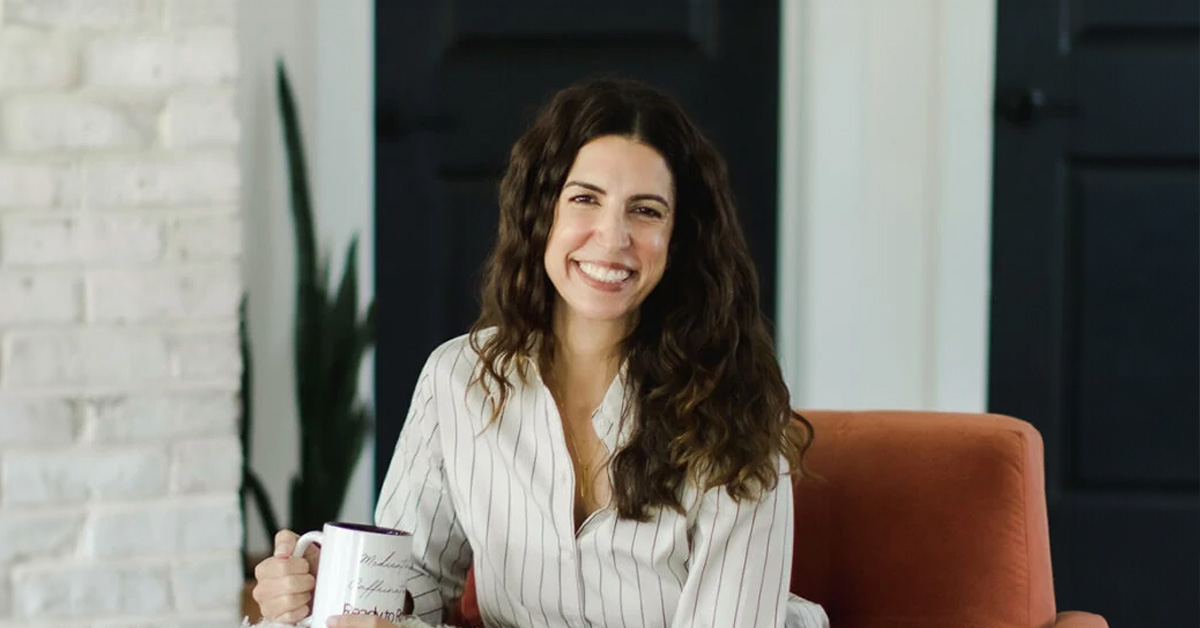
What if the rejection you fear is less about what’s happening now and more about what your nervous system learned long ago?
Kristen Carder is the host of the popular I Have ADHD podcast which has over nine million downloads across mor e than a hundred and twenty countries. She’s a multi-certified, trauma-informed coach who has supported thousands of adults with ADHD inside her group program, FOCUSED. She just released her first book You’re Not in Trouble: The ADHD Guide to Building Healthy, Connected Relationships.
In today’s conversation, Kristen and I talk about why ADHD is a disorder of regulation, not a deficit of attention — and how that one reframe can change your approach to the world and your relationships. She’ll help us overcome our fear of reaching out and the rejection that comes with connecting (or not connecting) with others, and she’ll show us why asking for what we need isn’t a burden we put on people — it’s an invitation to connect on a more meaningful level.
If you’ve ever written the message that could change your career and then left it sitting in your drafts for weeks — or if you’ve gone quiet on somebody else you love and couldn’t explain why — this one’s for you. You’re not broken, and you’re not too much. You were just never taught how to manage relationships with ADHD.
Kristen Carder is the host of the I Have ADHD podcast and a multi-certified coach who has supported thousands of people with ADHD worldwide. Since beginning her work in 2012, Kristen has become a trusted voice in the ADHD community. She is the founder of FOCUSED, a global coaching program for adults with ADHD. Her work specializes in trauma-informed, evidence-based approaches to executive functioning, emotional regulation, and healthy relationships. Kristen lives outside Philadelphia with her husband and their three sons.
Kristen’s Website
Kristen’s Books: You’re Not in Trouble
Kristen’s Instagram | LinkedIn | Youtube | Facebook
Kristen Carder: I just am so pleased that ADHD is a part of the conversation now in a way that it wasn’t. even 5 years ago. And I know people roll their eyes, and they’re like, oh, it’s everywhere on TikTok, and everybody has ADHD. And it is a double-edged sword, and I will give you that. However, it’s just so wonderful that it’s something that we’re finally talking about, and really coming to an understanding of adult ADHD, whereas we just did not have The research and the help and support and all of that, you know, for years and years for adults, so it’s just so wonderful to have that. As a part of the conversation now.
Zack Arnold: Yeah, I couldn’t agree more, and I would say this is just the best place to literally jump right in. You couldn’t have done a better job of introducing my show for me. Cool. So where I actually wanted to start was, you have a podcast that you shared, I think it was a couple of months ago, where you were talking about setting big goals, and how setting goals and following through with them is very difficult for people with ADHD. and you started to get very personal about… first, your dream of, I want to write a book someday, then you decided to write a book, then it becomes a thing. And we ADHDers, like, we love our dopamine. We love our instant gratification. And you talked about how hard it is to write a book in isolation, where maybe you get feedback from an editor or a copywriter, but you don’t have that gratification. So, I’m going to… I’m going to make sure that that’s no longer a problem for you. So I would like to share with both you and my audience that your book is wonderful, your book is wonderfully helpful, and it is desperately needed. So I just, I wanted to thank you for all of the effort and all of the things that you’ve pushed through to birth your book, baby, out into the world.
Kristen Carder: I appreciate that so much, my heart… is exploding. And I will take that dopamine and put it in my dopamine storage container for, like, the next couple days, weeks, months, because I need it. I appreciate it so much.
Zack Arnold: Yeah, you’re more than welcome. So, for those of you that might not have ADHD, which could be a good amount of those that are watching and listening, a little ADHD disclaimer. Probably gonna be a lot of tangents today. I’m an over-thinker, and I love my structure, and I have my agenda. There’s probably gonna be some tangents. I’ll let you chime in here, but my over-under on you and I interrupting each other out of excitement, I’m putting it at 5. Would you take the over or the under?
Kristen Carder: I’m gonna take the under, because I… I’m gonna work so hard at not doing it, so let’s… we’ll find out at the end. Everyone, maybe we could turn it into a drinking game or something.
Zack Arnold: Yeah, it’s funny, I was actually gonna suggest the same idea. Of all the skills that I’ve had to really be conscious of, both as a podcaster, as a communicator, and frankly, as a husband and a father, is slow down, and don’t interrupt people and let them finish. So, I just know that when I get overly excited, and I can get overzealous if I happen to interrupt you unintentionally, it’s just because I’m excited, so…
Kristen Carder: Dude, I speak ADHD. Interrupting is my love language, and you’re a fast talker. So, I don’t think we’re gonna have a problem, because the, my tendency to interrupt comes with my husband’s very deliberate and mechanical and slow way of speaking, which is why I married him, and also… what makes me, like, tick like this in some ways, where I’m just like, get to the point!
Zack Arnold: Just get, just get to it! Yeah, that’s what my brain is saying, too. And it’s so funny you call me a fast talker, because this is me very deliberately slowing down my speech about half the speed of my thinking, so… Just let it go. And oddly enough, I came from the Midwest, and I don’t have an accent. I don’t think I do anymore, but anytime I go back to Wisconsin and I’m with my wife, she’s like, oh my god, your accent came out? I have a feeling my ADHD might come out today, so we’ll see.
Kristen Carder: I love it. I hope so.
Zack Arnold: So, we’re gonna come right out of the gate with the most difficult question. Are you caffeinated, medicated, regulated, and ready to roll?
Kristen Carder: 100%, all of the above, ready to roll. Let’s go… let’s…
Zack Arnold: Alright.
Kristen Carder: Go.
Zack Arnold: I love the way that you open your shows this way, it just kind of sets the tone, right? So, in all seriousness, where I actually wanted to start is that there are now a lot of books about ADHD. There are TikTok influencers that are helping us self-diagnose. Like, everybody’s so ADD, right? And to quote your agent, she said, we don’t need another book about ADHD. But, I desperately believe that we need an ADHD book about relationships. And of all the things that you talk about on your podcast, you’re a coach, you work with ADHDers all the time, why did you choose relationships to dedicate multiple years of your life to write about?
Kristen Carder: Hmm. A couple reasons. Number one, I come by this relationship work very honestly. I did not come to the world with a lot of relational privilege. I have, come from a very dysfunctional family. And also grew up in Christian fundamentalism, and have kind of been in that world where there are a lot of unhealthy relational dynamics. And so, in the last 6 years of doing therapy and coaching and really unraveling all of that in myself. I notice how… Even though I had treated my ADHD and done so much work on my productivity and improvement and money management, et cetera, et cetera, et cetera, and I had all of these kind of gold stars, you know, like work, gold star, money, gold star, productivity, gold star, my relationships were still a shitshow. And I was still feeling like a child, and I was still feeling, like, so insecure, and so unsettled, and unsteady, and just not able to connect and truly feel like a grown-up. And so I have had to work so hard to build those skills. In addition to that, I lead a coaching community. And in my coaching community, the topic that comes up most often is not time management or productivity, it’s relationships. And so what I was seeing over and over, and I’ve served over 5,000 adults with ADHD in the last 6 years, what I have seen over and over in my coaching program is relationships are maybe the strongest pain point for adults with ADHD. And I thought I was the only one. I thought I, you know, like, oh, it’s just my specific family history, it’s just my specific dysfunction, it’s just my specific trauma, et cetera, whatever. And then after having so many conversations with adults with ADHD, realizing it’s not just me. This is a pervasive experience in the adult ADHD community where we are struggling. in our relationships. And I know we’re going to get into all of it, but one of the things that I want to say on the outset is that at the very beginning of the writing process, my research assistant, Jacoba Lilius, shout out Jacoba, and I developed a survey. Because I wanted to make sure that this was not just my own anecdotal experience, that this just wasn’t, you know, like, oh, maybe I just attract people like this into my sphere, and that’s why I’m hearing so many relational stories. But we surveyed 2,165 people with ADHD. And… everyone is struggling in their relationships. That’s what we found. People are struggling in their relationships, and their childhood experiences in relationships are a big reason why. And so, it was very sad. And also validating, and also, when you ask about, like. the dopamine of writing the book, and like, how do you do this when writing a book has so little dopamine involved? I was thinking about all of those people who filled out the survey who need help in their relationships, because my goodness. we’re struggling.
Zack Arnold: The statistic that I found the most staggering from that survey that you mentioned of 2,165 people is that 5%, I’m gonna say that again, 5% actually felt understood by their parents, and 95% felt unseen. That is staggering.
Kristen Carder: So… So, so sad. And we wonder why, now in adulthood, we have this community of ADHDers walking around feeling like. unvalidated, misunderstood, not able to communicate in ways that they truly feel seen and heard. And is it because we’re miscommunicating, or is it because we’re replaying out these relationships that we’ve had since childhood? I’m not the one to answer that question, but I do pose that question to all of us. But yes, I mean, it is… that one gets me every single time, and the other one that gets me is… 3% of people had parents that Consistently helped them to regulate their emotions as kids.
Zack Arnold: Mmm.
Kristen Carder: 3%. 97% of us were not taught how to regulate. We’re not, held in co-regulation, and now we wonder why we’re exploding on our partner, why we’re… why we’re yelling at our kid, why we can’t handle feedback from our boss. It’s like, it is just so connected to our childhood experiences.
Zack Arnold: Something tells me that a good amount of these survey respondents were either Gen X or elder millennials. This is very much a generational problem. Not that I’m saying it’s not everywhere, but this is very generational, or I’d be… I’d be really surprised, and maybe this is just me tooting my and my wife’s horns, I’d be really surprised if my kids said, oh, we didn’t learn how to manage our emotions, we don’t understand that, because it was never done for us, so we want to do it for them.
Kristen Carder: I totally agree with you, and I am just running to the survey right now, because I actually have that data, and we should just find out.
Zack Arnold: Tangent number one, by the way, but yes, let’s dive right in, please.
Kristen Carder: The 30% of people who filled out the survey were 35 to 44. 35% were 45 to 54.
Zack Arnold: Yeah, so the majority were over 35, yeah, so this doesn’t surprise me at all. It’s very generational. Yeah. So yes, having said all of that, I want to really spend a good amount of our time going into specifically rejection sensitivity in people with ADHD. Understanding people-pleasing, understanding, just kind of this need to want to be friends with everybody without feeling needy. But, because I’m so overzealous, I want to take a step backwards for a second. Because I would… I’d be surprised if every single person that’s listening to this is saying, yes, I understand ADHD, I have received a formal diagnosis. So I don’t want to spend too much time on it, but I just want to build just a little bit of basic scaffolding. But build the scaffolding through the lens of how it affects relationships. And the first one, you and I share the same affinity and hatred for the term ADHD. So let’s talk about how this is probably the worst name ever, and why it doesn’t really work and what it should be instead.
Kristen Carder: Yeah, it’s an absolutely terrible name, and I think there’s really consensus among experts that it is truly a terrible name. However, they haven’t been able to come to an agreement on what to rename it, and so the name stands. So, ADHD stands for Attention Deficit Hyperactivity Disorder. One of the main reasons why that’s a terrible name is because not everybody with ADHD is hyperactive. And so that is kind of an issue with the name. And… It gives the feeling that we have a deficit in attention, whereas it’s not necessarily that we have less attention, it’s that we struggle to regulate our attention. And, I do, like, speak about in the book how, ADHD is a disorder of self-regulation, and those are Dr. Russell Barkley’s words, those are not my words, but ADHD is a disorder of self-regulation. We struggle to regulate our attention, our behavior, and our emotions. And so, if I were ever asked what it should be named, it would be something around a disorder of regulation, a regulatory disorder, because that’s truly what we’re dealing with.
Zack Arnold: Yeah, I’ve always said it should be called Attention Surplus Regulation Disorder.
Kristen Carder: I love that.
Zack Arnold: Right? Because there’s just too much of it, and we can’t figure out what to do with it, and on top of it, and this is something I talked a lot about with Susan Cain. The vast majority of people that are more creative or more artistic than the, you know, general population have a tendency to be very highly sensitive, and sensitivity is through the roof for people with ADHD. Like, I cannot tell you the amount of times I was told growing up, oh, God, you’re just too sensitive. just suck it up, you need thicker skin. And it’s just… it’s so frustrating, and it’s taken me years and years to not only accept that, oh, that’s the way that I’m wired, but that’s actually a positive as opposed to a negative. Like, how do I get the most out of the sensitivity, rather than I have to hide it and I need to tamp it down?
Kristen Carder: Yes, absolutely.
Zack Arnold: So, what the next thing I want to get into, just a little bit, again, like, I could spend 4 hours just on, let’s define ADHD, because, you know, that’s the overthinker ADHD-er. But one of the things that I think would be really helpful for people to understand, even in the context of relationships, is this idea of our brain has a switchboard.
Kristen Carder: Switchboard…
Zack Arnold: doesn’t really understand how to regulate and understand and process things. So talk just a little bit about the switchboard and what that has to do with our emotions.
Kristen Carder: So, it’s interesting because in the brain of a neurotypical, we’ve got all of these mechanisms, and when I think about a switchboard, what I’m thinking of is, like, again, I said I grew up in Christian fundamentalism, so I’m thinking about, like, the sound guy at the back of the church, with all of the knobs and levers that are, like. just determining how high, how low, the volume of each instrument. And that really is just… if you think about emotional regulation, and in a neurotypical person, our… the brain is beautifully built to be able to, turn up the volume on what’s most important, and turn down the volume on what, you know, is just, like, not… not as much of a priority. However, in an ADHD brain, our sort of broken. It is jacked up. And so what often happens is the volume goes from 0 to 100 on a certain emotion, and then it gets stuck. at that high volume. And if you’ve ever been to a concert, or in church, or whatever the case may be, where the sound is just off, or you have that screeching noise, right? The sound of feedback, and you’re just like, it’s like, oh my goodness, this is so overwhelming, uncomfortable, it’s cringe, that’s pretty much the description of someone with an ADHD brain who’s struggling to regulate those emotions. And so, what often happens is the volume is either turned way, way up on some of those emotions, or… Or, we struggle to access our emotions, and so we’re really flat, we’re numb, we’re avoidant, we’re really checked out, and so for some of us who are more of, like, the, inattentive types, this might relate to those types of folks, where the volume is actually… it’s not… it’s not turned up, it’s actually turned way down, and so I’m, like, checked out of my emotions, and I can’t access emotions, they’re going to help me connect with you. So I see that you’re really amped, and I can’t really get there and match you in that space. But most of the time, we’re talking about the volume being turned way, way up, and then having trouble regulating. And regulating is truly a technique that is taught. It is not something that is innate. And when you think about the fact that ADHD travels in families, and how heritable it is, it makes so much sense. My parents didn’t know how to regulate, and their parents didn’t know how to regulate, and we have generations upon generations of families where dysregulation is just normal. I mean, it’s just very, very normal. It’s not healthy. But it is quite normal, which is one of the reasons why we struggle to be diagnosed, because in our family, it’s like, well, that’s just how all of us are. Like, we’re all loud, we’re all chaotic, we’re all, you know, screaming at each other, speaking over each other, exploding at each other, like, that’s just the norm in the family, rather than, oh, there’s a… there’s an issue of regulation here.
Zack Arnold: It’s so funny, because when you talk about, like, it’s just normal for people to be chaotic and loud and noisy. polar opposite with my family. Nothing but very shy, introverted, we don’t express our emotions. Like, everybody in my family, it’s all the same way, and it never, never occurred to me that that was actually a thing that could relate to ADHD. My father, I guarantee, he’s passed now, but I guarantee, he was ADHD, just never diagnosed, didn’t understand it in his generation.
Kristen Carder: Mr. history.
Zack Arnold: since been diagnosed. I’m also… I know that I have two other siblings, most likely, have been either formally diagnosed or informally, kind of agree that this is probably something we all have. But it was the opposite, and you just helped me make a really interesting connection, which is that I’ve always talked about my experience of ADHD through the lens of how I go after goals, and how I’m really, you know, just obsessive about my passions, that I have two speeds. My speeds are either 150 miles an hour or reverse, and you just helped me make the connection, I’m the same way with my emotions. That never occurred to me before. And if you don’t believe me, ask my wife. Because it’s either, like, I don’t know what you’re feeling, I don’t know what you’re thinking, or, like, oh my god, you’re being so dramatic! Like, no, I’m not!
Kristen Carder: Yes, yes, I believe you, I won’t even need to check in with her, and I think that, you know. Emotional dysregulation is not currently a part of the diagnostic criteria, which is wild. But now that we are starting to talk about it more in the conversations around ADHD, I think we are getting this, like, we get to see each… ourselves in each other, and be able to relate in a way that was like, oh, I just thought that I was broken, or I thought that this was just the norm for my family, or etc, etc, but being able to understand, I am either completely hypo-aroused, where I’m just, like, shut off. I’m completely disengaged, avoidant, or I am completely hyper-aroused, where it’s just like, I’m all in, I’m frenetic, I’m chaotic. And there’s really not much in between. Regulation is what allows us to be in the in-between space. That’s our window of tolerance. Self-regulation, self-soothing, processing those emotions is what allows us to be in that midline zone, and that’s the skill that so many of us are missing.
Zack Arnold: So, the next area that I want to go into that dovetails off of this perfectly could not only be a podcast episode, it could be an entire podcast. Like, years and years and years of topics, and probably there somebody is that’s already done this. But I think it’s really important if we’re going to dig a little bit deeper into rejection sensitivity and everything else that I want to get to. having a really baseline-level understanding of attachment styles, because when I learned about attachments styles a few years ago. It was just like, oh my god, so much of my life and my relationships make sense when it didn’t make sense before. So let’s just very briefly go into attachment styles.
Kristen Carder: I completely agree. I only just mentioned attachment styles very briefly in the book, because the books have already been written on attachment styles. But attachment styles are really determined in our early, early, early years, in the ways that our caregivers interacted with us. And so… Ideally, we would all have a secure attachment. Which means that we’re able to connect, we’re able to receive feedback without completely melting, we’re able to feel secure with or without the person present, so a secure attachment cell is what we are all craving, and it can be obtained in adulthood, you know, with hard work and therapy, but for a lot of us. who grew up as ADHDers, especially if there’s dysfunction in our family and some family trauma, we’re dealing with different types of attachment, meaning, avoidant or anxious or disorganized attachment. Avoidant and anxious are really, like, the most common ones, and those are… Really, worked out in us when we’re given inconsistent care in our… And by care, I don’t mean necessarily feeding, you know, roof over our heads. A lot of us are confused in our adulthood because we say, like, I always had food on the table, I always had clothes on my back, I always went to school, I always had the things that everybody else had, but I just don’t realize I don’t understand why I can’t connect with people. I’m super avoidant. Why am I so avoidant? And then you dig a little deeper and you understand, oh, my parents were never really emotionally present with me. Whenever I had a tantrum in childhood, I was spanked, or I was told to go to my room and figure it out. You know, come back when you’re calm. Come back when you can handle it, right? And so, I was really left alone in my emotional experience. Well, if that is taught at a young age. Then, of course, when I’m an adult and I’m experiencing overwhelming emotions, what am I gonna do? I’m gonna go be alone. I’m gonna go to my room. I’m gonna avoid everybody. I’m gonna not respond to your texts. You know, if I’m upset with you, I’m not gonna come to you, because I was never safe to do that. And so, I think a lot of us ADHDers are anxiously attached. or avoidantly attached, or a mixture of both, like your girl right here, even though I work really hard to be secure in my adulthood. My default mode is an anxious avoidant attachment, and I don’t fault myself for that at all, but it kind of is my burden to bear and my responsibility to work through in therapy with my coach, with my husband, you know, all the important people in my life, but that is my default mode. And I can see myself go into it now. And I’m like, oh, girl, girl, girl, hello. Like, I can see what you’re doing, let’s come on back. Because… the anxious side of me says, do you like me? Do you like me? Are we okay? I just want to make you happy? Do I need… is there anything I need to apologize for? Right? Like, it’s that, like, absolute… neurotic need to people-please in order to be in good graces with my friend Zack, like, are you… are you… I was a minute late to this podcast, I’m so sorry you’re mad at me, right? And then there’s the avoidant part of me that says. I don’t… I don’t give a frick about this, I’m just gonna… I’m just gonna check out. I don’t even care. Even though I do care. I will tell myself, I don’t even care. And I’ve done that, I can remember, especially, like, in school, I don’t even care, I don’t even care. And I so did care, but it’s such a coping mechanism.
Zack Arnold: Man, yeah, there’s so much to unpack when it comes to the attachment side of things, and what I find interesting is that you and I are exactly the opposite. And, you know, you go much, much deeper into therapy, of which I’ve done, and, you know, both reading therapy and otherwise, often the opposite attachment styles attract, which is why one person in the relationship is just always checking in. How you doing? Do you still love me? Are we okay? Can you spend time with me? And the other person’s like, just, just, just give me some space. Like, I don’t want to talk about this right now. And it’s really interesting how those two attachment styles find each other. So I just find it interesting that you and I are also opposite attachment styles. The reason I wanted to bring this up is not to make today’s episode about it, but I wanted people that are really struggling with the feeling of rejection to know that it goes really deep and really far back, and the better you understand your past and you build more self-awareness of these things, it’s like having an operating manual for your emotions. You’re like, oh, that’s why I felt this way when they emailed this, or when somebody, politely declined my podcast request and I thought the world was over. Oh, this makes sense now. So I just, I wanted this to throw this in there as if somebody wants to investigate it, this is a really, really helpful thing that helped me a lot. So, having said that, there’s a line of yours that I literally just heard on the way back from taking my daughter to school this morning as I was getting ready for this podcast. It literally… well, didn’t literally stop me in my tracks, because that would have meant I would have had to hit the brakes in the middle of the road. But it literally was, like, one of those, like, thud moments in my chest, and I had to hit the pause button and think. You were talking about writing your book, and how challenging it is, especially with ADHD, and, you know, the task management, and the overwhelm, like, there’s so many things. And you realize that maybe I don’t need to put so much… so much pressure on myself, and I’m doing this wrong, and this is what you said that blew me away. This is just how it feels to do the thing that you’re meant to do. And that hit me hard. And the reason I want to bring this up is because I would presume, and I would hope that the people that I attract to this event are those that want to make things that matter, those that are creatives, those that are artists. And that comes with a tremendous, tremendous, overwhelming fear of rejection. And rejection is just part of the process. So, this is why I wanted to really go deep into understanding rejection sensitivity dysphoria, and why it’s so hard for people that have ADHD, or even that don’t, that are just highly creative. It is so hard to put ourselves out there, and so hard to put ourselves out there connecting with other people that can help us.
Kristen Carder: Hmm… You know, it’s so interesting that you say that, because even doing a podcast interview like this, which I am so honored to be here, so… just feeling so grateful, and so glad that I’m doing this, and I know that when we hit stop. And we wave goodbye. I’m gonna have a huge vulnerability hangover. I’m gonna be wondering, did I say the right thing? Did I do the right thing? Did I misrepresent myself, or ADHD, or the science, or the research in any way? And that vulnerability hangover is just… The cost? Of being able to be seen. And I think that for those of us who are in the visibility space, whether that is with your creative endeavor, or yourself, whatever the case may be, being seen Can be so. Hard, and this applies to our relationships as well, because… If you think about, especially if you are a person with ADHD, and you think about your childhood experience of being seen, so often that experience came with correction. Rejection, isolation, punishment, you’re doing it wrong, you are wrong, what is wrong with you, all of the things. And… I mean, there is so much research to show that kids with ADHD receive far more corrective feedback than their peers, not just at school, but also at home. And by corrective feedback, I mean you’re doing it wrong! And…
Zack Arnold: Sit still! Why can’t you, why can’t you just listen?
Kristen Carder: Why can’t you go faster? Why can’t you slow down? Right? It’s like, it’s all of these, like, dichotomy things, like, one thing… I’m either too much or I’m not enough. Or I’m too much and not enough at the same time. And it’s like, I don’t feel like I can do anything right. And so I would invite the listener I’m so glad you’re here, and I would invite you to just think through, what was it like for me when I was seen in childhood? Was I understood? Was I celebrated? What… were my gifts really, really valued? Or, did I constantly receive corrective feedback? Was I constantly rejected by my parents, my siblings, my peers? Was I constantly put in timeout, moved my desk into the hallway, like, you gotta get out of here because you are too disruptive, stop talking, etc. Because, again. our childhood relationships form or deform our current relationships, okay? So that’s a quote from David Rico, who wrote the book, How to Be an Adult in Relationships. And… I have carried that with me for years. Our childhood experiences form or deform our ability to have relationship now. That is important, because for those of us who were chronically rejected. Chronically, misunderstood. Chronically invalidated. Chronically told we are doing it wrong. The way that our nervous system reacts now, in my opinion, is not… pathological. It is not a pathology, it’s not like, oh, you have an ADHD brain, so you are sensitive to rejection. But rather, you have an ADHD brain, and you grew up in an environment where you were consistently corrected and rejected, and so, of course, your nervous system adapted to that perceived danger. Because we know, biologically, if we are exiled from the herd. our bodies perceive that as actual danger, because, you know, our ancestors, if they were rejected from the herd, it was danger to them. They were… they would die. And so, why does it feel like if I send this email, I might die? It’s like. oh, there is a correlation here between that. And so understanding and just having so much compassion for our experiences of rejection. And some of you might be like, I wasn’t overtly rejected. Okay, but were you celebrated? Were you seen? Were you understood? Were you valued, or were you just kind of dismissed? Right? Because there is a difference between truly being seen and held as a child, and just kind of being tolerated. And I think that a lot of us are working with nervous systems that were either simply just tolerated as kids, or persistently rejected.
Zack Arnold: And one of the things that I appreciated that you really went into in several different respects is nature versus nurture. And in this case, it’s… we are genetically predisposed and wired to be more sensitive to rejection. But that doesn’t mean we’re going to be, it’s the combination of the nature and the nurture, where if you have this genetic neurological predisposition, but you’re in a household where you feel like you’re seen, you’re heard, they’re, you know, giving you emotional regulation, well, then it might not trigger that part of your genetics. But if you couple these two things together, it’s a wild cocktail.
Kristen Carder: Yeah. Right, we talked about the statistics, right, of the survey, and if you believe that, like, 2,165 people is kind of like a nice little snapshot of adults with ADHD, you know, if you were in the 3%, that received emotional regulation as a kid, or if you were in the 5% that felt really understood as a kid, amazing. Amazing! Maybe this is not something that you struggle with. For the rest of us, though, who either received that attunement and co-regulation, either sporadically, inconsistently, or not at all, we’re gonna struggle. We’re really, really going to struggle.
Zack Arnold: Quick side note, I’m immensely impressed that you got 2,165 people with ADHD to complete and send a survey. That ain’t easy.
Kristen Carder: Thank you, and I wish that I could have included so much more, so many people wrote their heartfelt stories and experiences, and what that showed me… I mean, I could just… I could publish a book just on that. But what it showed me is. There are so many of us that just want to be heard. We want our stories to be honored. We want to feel seen. We want to be validated. And that is what I feel like my mission is with this book, is while I couldn’t share all of the stories, still giving people a place to feel seen and heard and understood.
Zack Arnold: Yeah, and for anybody that’s been following along with all these other conversations, it’s not a coincidence that this has been discussed in almost every single conversation. Because it is a core human need to feel seen, feel heard, feel valued. And if anybody wants to go deep into, well, what does that actually look like, and how do I do it for other people, talk to the world’s expert, Will Guidara, all about this. But this has just been a common thread, and not because I’m making it a common thread, everybody’s saying the same things, which means I must be onto something. So I want to go back into a little bit more depth with this rejection sensitivity and couple it with something that you mentioned about this idea of, like, well, why am I… why do I feel like I’m gonna die if I send this email and I don’t get a response? I go back to something you said earlier, which I can really relate to, which is that when you started coaching, it really wasn’t about relationships, but that was the thing that kept coming up. And what’s been so interesting for me is I’ve had a similar experience, where I started coaching years ago, and it was all about, how do we set goals? One of the things that I’ve recognized in myself, and I think it’s part of the pattern recognition of ADHD, I’m really good at seeing potential in other people. Like, to me, it’s just obvious, and people can’t see their own potential, and I love helping them realize that potential. And for me, it was all about, how do I set goals, and how do I, you know, organize all of my projects? It was really about productivity, Mr. GTD, right? And what would happen is that once my students started to get really focused and organized, they would all say the same thing. they would say, can you help me write an outreach email? I’m like, what? Like, well, now that I know what I want to do, I want to reach out to this person or that person and ask them questions and maybe get a mentor, but I don’t know what to say, and I’m like. I mean, I was gonna teach Trello this week, but I guess we could talk about emails. And little did I know that years later, it would lead me to being the outreach email guy. And what I found was that, yes, people struggle to know what to say, how do I structure it? But by far, the biggest hesitation is what I call the inner game of outreach. They are terrified of sending a message to somebody else, asking them for something, and the fear of they’re not going to respond, or they’re going to say no. Like, the fear of that rejection is overwhelming. And I went into a lot of the research and science behind this already with Vanessa Bonds, but where I want you to come in is this idea of there’s the actual rejection, and then there are the rejection stories.
Kristen Carder: Yeah. Oh, so good. What a setup, Zack. What a setup. Obsessed. What I notice when we… are so fearful. of, for example, sending that email. Is… We are coming in with this nervous system, this body, this brain-body combo that has suffered So much rejection over time. And so many of us keep a running list. of the ways that we’ve effed up, we’ve messed up, we… and we have been rejected. And we kind of, like, have that on our mantle as, like, here are the different, like, the 7 different ways that I always think about when I’m trying to fall asleep at night, of the ways that I’ve been rejected. Yes. There is such a thing as real rejection, and every human, every human, not just ADHD humans, although we are more sensitive to it, but every human experiences real rejection. However… What our brains do, as people who have been chronically rejected, is now a very typical interaction. That would not… it would be innocu… innocuous to, you know, maybe a typical person. Now we are bringing our rejection experiences into that very… like, meaningless interaction. And so what we do is, our brains fill in the blank, So we have fear. And we have uncertainty, and with that uncertainty, our brain wants to give an answer. And the answer that our brains so often give is rejection. They don’t like you. you’re a nobody, imposter syndrome, what are you even thinking? They’re gonna reject you. And it’s not even usually that explicit, they’re going to reject you, but it will be like, they don’t like you, you’re not… you’re wasting their time. What are you even doing? Right? And so, when I teach people to… overcome rejection sensitivity. It’s really important that we distinguish between an actual rejection, which does happen from time to time, but it’s not as common as what we call a rejection story, which is when there is uncertainty, my brain fills in the blank. And so, so much of our work as humans, and when I say work, I mean actual, painful work as people with ADHD, is learning how to soothe those rejection stories. Hey. We actually don’t have all of the information yet. And I can understand why you’re freaking out right now, because, gosh, you’ve been through it. But we don’t have all of the information, and so we’re actually not going to freak out until we do. And so what we’re gonna do is we’re gonna go ahead and send this email. And then we’re gonna take a deep breath, and we’re gonna reach out to your bestie. And we’re gonna say, I just sent a really scary email. Tell me 5 things that are good about me right now, please. And your bestie’s gonna… or whatever the man version of that is, but, like, that would be my female version of, like, tell me, I’m great. Please, and go. And then we’re gonna use our ADHD brain to our advantage, and we’re gonna go distract ourselves. Because what I would typically want to do is just sit in this loop. Of, they hate you, you’re stupid, why did you even bother? I can’t believe you sent that email, you should be super embarrassed. But I sent the email because I think I might have something to offer, and they get to decide, because they’re an adult. Right? And so I’m just gonna go, I’m gonna do some co-regulation with a pet, or a partner, or a friend, and then I’m gonna distract myself, I’m gonna use my ADHD brain to my advantage, and I’m just gonna get moving so that I can get this buzziness out of me. And then, I’m gonna continue to self-soothe. I think that, that is circling back to emotional regulation. A skill that we are so deficient at is just self-soothing. And there’s so much that goes into that, and I could talk about it for a long time, but a lot of it is our own inner critic pre-rejecting us. So that we don’t put ourselves out there and let anybody out in the world reject us, right? And so our inner critic really tries to keep us small, and it… it’s… Self-protective, but it’s not helpful.
Zack Arnold: I’ve built both of my career paths off of the back of cold outreach to strangers, knowing that the answer is always no if you don’t ask, but there’s also a tremendous amount of terror that comes with them. I’ve shared this with a few of my students, they don’t believe me, and this is going to be embarrassing to share, but I think it’s really important for our audience to know that this is very real. I have zero evidence to back this up. I want to make sure everybody knows this. I have zero evidence, and if you’re thinking, oh, maybe… maybe Zack knows something about Adam that we don’t know about, and he’s different than his public persona. I have zero evidence of this. But every time I’ve sent Adam an email. My brain says, this is the one. Nope, this is the one, because now he’s gonna respond, and he’s gonna say, stop emailing me. It’s absurd. It’s absolute absurdity. He’s such an overly generous human being, and all of the evidence points to, he’s going to respond. But if it’s been more than 12 hours, nope. I blew it. It’s over, fuck this one up, right? Like, it just never goes away.
Kristen Carder: Yes! I’m curious what your self-soothing, or like, how do you handle it? Is it copious amounts of alcohol? Because that’s what it was for me for a long time until I needed to never drink alcohol again. But that was kind of a tool that I used in my self-soothing, was just like, I’m gonna send this email, or I’m gonna make this pitch, or I’m gonna go on this podcast, and then I’m gonna go home from work, and I’m just gonna drink so that I don’t have to feel anything. And I wonder how many people with ADHD, or how many people listening can relate to that. I don’t drink anymore because of that, because it was a tool, but it was not… helpful long-term. But I’m just wondering what your coping mechanisms are when you… when you are doing that.
Zack Arnold: Yeah, so to clarify my unhealthy coping mechanisms, because I’m still learning how do I regulate the immense amounts of anxiety that come from all of this, and given that I built this entire conference through cold outreach emails to strangers that I greatly admire, I’ve lived in a state of abject terror for 6 months. But the two ways that I find that I regulate or cope, number one is very high-level intensity exercise. Like, my coping mechanism the last few months was I decided I’m not just gonna go hiking outside and be in nature, I’m gonna climb the highest peak in the United States. Which, again, ADHD-obsessive thing, so I just climbed Mount Whitney about a month ago.
Kristen Carder: I love it!
Zack Arnold: So that would be one example, and the other one? Crunchy snacks. Like, the crunchy snacks, man, like, that’s the one that gets me through, and the ADHD brain loves the crunch. And unfortunately, my waistline also loves the crunch, so, you know, but that’s… that’s how I regulate a lot of this.
Kristen Carder: Relatable.
Zack Arnold: I’ve spent years teaching people cold outreach, helping them get out of their own heads, realize that people want to be helpful to them, and I still have the exact same issues. I’ve just learned how to be able to talk myself off the ledge and say, you have no evidence to support the story that’s in your mind right now. You have evidence to support why you’re creating this story, from all the rejections in your past, but there’s no evidence to support what you’re thinking and what you’re feeling. So just you know, let it happen as it does, and then a day later, two days later, you get a kind response. I’m like, oh, okay. But next time, I’m gonna fuck it up. This time, I didn’t fuck it up, but next time I will.
Kristen Carder: I just wanna add…
Zack Arnold: I’m feeling it. Oh, go ahead, please.
Kristen Carder: I was… that’s number one for interruptions. I just want to add to this conversation that sometimes I am sure, not yet with Adam, but I am sure that you reach out and people do ignore you, or say no, or, you know, reject you altogether. And that part is also really important to note for all of us. Sometimes we create a rejection story, and we can self-soothe that, and distract, and do all of the healthy coping mechanisms. And yet, it may result in a rejection, and then the question is, how do I take care of myself then? And I think a big part of the rejection conversation is about self-trust. Do I trust me to be nice to me? When I’m experiencing a rejection, and how do I trust myself to support myself enough to handle this rejection? And I think that that is a really important piece, too, because I know a lot of my clients would say, no, I’m a total asshole to myself when I get rejected. I make it worse! I’m saying, see? I told you, you shouldn’t have da-da-da-da, right? And so, a lot of this is, like, bringing in the self-compassion and the self-talk of, like, talking to yourself like someone you don’t hate, maybe? Like, can I just offer that? And having the self-trust of, like, even if I am rejected, I’m going to take care of myself.
Zack Arnold: Yeah, I love that, and the tool that I have found works the best for me, that I’ve shared with so many of my students, is journaling. Just you, a pen, paper, and thoughts, and working through those emotions. And the great thing is that I have an entire hour-long podcast with Tara Schuster, who literally wrote the journal about how to journal through your feelings and your fears of rejection and otherwise. So we’ve got a whole other deep-dive black hole that you guys can dig into. My overthinking brain is already saying, there’s no way I can possibly wrap this up in 11 minutes, but I’m going to do my best. So where I would like to go next is a little bit deeper into this idea of it’s not just about attachment, it’s not just about fear of rejection, but this people-pleasing sense of, you know, I want everybody to like me at the same time, I don’t want to ask anybody for everything, and I never want to be needy. And this, of all the stories, the one that popped off for me is that you were so afraid of being needy that it almost killed you.
Kristen Carder: Yeah. That’s the truth. That’s the truth. And… sometimes I think, like, dang, girl, you know, your story is probably more severe than everyone else’s. But I don’t know that that’s true. You know, how far would we take our desire to appear Needless. How far would we take that? So, for me, I experienced a medical emergency, and I refused medical care over and over and over and over and over and over, until… I literally… could not resist it anymore, and then was rushed to the hospital, and had emergency surgery, and found out that I had lost 2 liters of blood, which is a lot, if you think of a 2-liter Coke. Like, that’s quite a bit of blood. And… looking back on that, it wasn’t necessarily about my physical needs. It was more about, I didn’t want to interrupt my husband at work. Because his job is really important to him, and I love my husband, and I don’t want to inconvenience him. I didn’t want to make my sister take me to the hospital, because it… I mean, I had two little kids there at the time. I just didn’t know how to ask her to do that. And I just felt so insecure in these relationships that I could not speak my needs. And I do see this, anecdotally. in the work that I do with my clients, where when I ask, So, what do you need? They are shocked by the question, and don’t have an answer. And that really led me, you know, this was over years, led me to realize how we have severed ourselves from our needs. If you think about an ADHD child, or a neurodivergent child, an autistic child. They’re high-needs kids. I’m… I’m parenting a very high-needs kid, and he is a mini-me. And I think that… The universe, the Lord just laughs, you know, when you get to experience parenting a mini version of yourself, because on one hand, you see how hard it is to parent a kid like you, and on the other hand, you see how still lovable and beautiful, and how much you can give your kid that maybe you weren’t given. So, I think that one of the things that we can do to improve our relationships is understanding what needs are. We all have the need for attention, acceptance. affection, my ADHD brain is not gonna remember all 5 of them. Attention.
Zack Arnold: Okay, you don’t need to.
Kristen Carder: Okay. And allowing, I know that’s one. We all have these needs, and yet, when we don’t recognize them, understand them, and know who to go to to ask for our needs to be met, they… they kind of go underground, and then they’re running the show from behind the scenes. And then we’re exploding about the dishwasher being loaded in the wrong way, or we’re exploding because our partner forgot to bring milk home, and it’s like… Or we’re exploding because they’re not texting back, and we’re feeling abandoned. You know, I’ve been married for 22 years, and still, if my husband delays texting me back, I’m like, it’s over. He hates me. He’s abandoning me. I knew it. I knew it, you know? It’s just so, so pervasive in our brains and bodies that when we don’t understand our needs, we don’t know how to ask for them to be met, and we don’t know who is safe to go to and say, like, okay, I’ve identified these 3 people in my life. I can go to you and ask you anything. It’s not everybody in my life. It’s not everybody, and that’s a key theme throughout the book. Not everybody can hold all of you. You might be a little bit of a lot, and that’s great! Like, that’s amazing! And not everyone is going to be able to hold that, but can you identify who is? Can you identify who your safe people are? Can you identify who sees you, understands you, accepts you for who you are, even when you are a mess, even when you’re late, even when you are forgetful? People who hold you with understanding and not contempt. Those are the types of people that we want to be drawn to and give our time and energy to, and those are the people that we go to to ask for our needs to be met.
Zack Arnold: And to add to all of that, which I think is wonderful, another core thesis of this entire conference and all the work that I do, is that everything that we’ve ever wanted out of life is on the other side of asking for it. And it’s not just a matter of asking people for what you need and taking, taking, taking. You even say that needs are an invitation to connection, and to the kind of intimacy where you don’t have to bleed internally before somebody notices not only that you are hurting or that you need help, and we truly want to be useful to other people, but we assume other people don’t want to be useful to us. Which, again, I went deep into this with Vanessa Bohns. But I just, I want to emphasize here in another context, that when you feel needy, you asking people for something, that creates a real human bond, because we can help each other, and people overlook that all the time.
Kristen Carder: It’s so true. And think about when someone that you love is reaching out for help. My, best friend a couple weeks ago was like, hey, I’m going on a trip, can you come over, whatever, and, like, make sure the dogs are good, make sure the fridge is good, like, she had this whole list, and I was like, oh my gosh! I feel so special. Like, I was so… happy that she asked. And it… I do feel like, for the most part, that’s how safe people respond. However. All of us can think about going to our parents, or our caregivers, or our teachers, or our coaches, and saying, like, hey, I need this, and them saying, oh my god… So annoying! Maybe not in those exact words, but the essence of that. So not all of us were explicitly told, you’re too needy. Some of us were, but not all of us were, but some of it was an implicit vibe that we were getting consistently, that I’m asking for too much. I… I’m too needy, I’m too dramatic, I… I need too much help. I have an IEP, or a 504, and I need extra help in class, and an extra help with my homework. My mom has to sit here with me, and she’s mad about it. It’s like, all of this culminates into us as adults being like, I am finally a grown-up, and I’m never going to ask for anything from anybody. And that is the Perfect way to stay disconnected.
Zack Arnold: I don’t know if this is gonna be a really good segue or a really horrible one, but with the last few minutes that we have, I think when it comes to asking for things, there’s a new character in this conversation that might make this a little bit easier for people to start. We can’t have today’s conversation without talking about the robots. And I have a lot of feelings about where the robots belong in human connection. P.S. That’s all I’m talking about in all of my conversations for 15 hours for this conference, if you didn’t already know. But, I think that when in the realm of accommodations, and accommodation specifically for people that are neurodivergent. I think there’s a lot of value in being able to ask for something, starting with the conversation with the robot, specifically because we struggle with self-awareness. So, again, we can only cover this for a couple of minutes, we could easily do a 90-minute conversation just on this, but you’ve called AI your neurodivergent translator. What does that mean? How could you use it or suggest others use it that are struggling with human connection.
Kristen Carder: I just, like, disclaimer here, I just don’t know if it is good or bad, but.
Zack Arnold: Nobody does, we’re all figuring it out.
Kristen Carder: Right now, where we are in 2026, I appreciate being able to use it as a tool. And one of the ways that I’ve used it as a tool is… yes, I am 100% ADHD. I don’t know that I would ever be diagnosable for autism, but I definitely have some tendencies. I’ve got just a tiny touch. of the tism. And one of the things that’s very hard for me is interpreting tone and conversations. And… not being a complete jerk in my response. And so, a lot of times, I will copy an email into chat and say. what… what’s the essence of this email? Give me the 5 bullet points. Or I will, copy, like, a task list and put it in and say, what are the top priorities here? I will… totally unload in an email and just, like, spill out absolutely everything I want to say, and then I will tell chat This is actually a professional email. out everything that makes me sound like a jerk, right? So, those are the ways that I find it most helpful. A lot of people use it to, create priority lists, to thought download, to create task lists, to create grocery lists, like, those kinds of things. I have such a supportive husband that I rely on him for that. I’m so lucky to be able to rely on an actual human. Not everybody has that. But as far as, like, interpreting tone and translating things. AI has been very helpful. Do I know if it’s always right? No. I don’t. I don’t know if it’s always right. But when it does break things down for me, I… usually I’m like, oh, that makes sense. Okay. Or when I totally thought download an email, and it’s kind of ragey, and I say, make this professional. I had that, experience with the school recently, where I was just so mad, and I wrote an email to the principal, and I was mad, and then I was like, this is to the school principal, like, make it sound… like. the intention of the email, but take out the emotion. It was amazing. Amazing. So…
Zack Arnold: The short answer is, you just need to market Greg GPT for all.
Kristen Carder: He would be so pleased. He would be so pleased.
Zack Arnold: He probably be pretty overwhelmed as well, but… Yeah, and again, I could dive into this super, super deep. Anybody that wants to know my feelings about should the robots be writing our outreach, well, stay tuned. I mean, I’ve had that conversation extensively with multiple guests, but I do believe, and I realize this is a very complicated subject for all of us, because we’re trying to figure out where the robots do and don’t belong in our lives. But I’ve been working a lot with students that have ADHD, some with dyslexia. having accommodations and really having kind of a thought partner that provides outside perspective, whether it’s interpreting tone, or literally looking for typos, or mismatched words, or whatever, like, anything that’s gonna make somebody’s life easier and remove the bad friction in their lives, I’m all about. If it’s about making things easier that should be hard? Not so much. But for accommodations for the neurodivergent, I think there’s a lot of opportunities to embrace, what the robots can do for them. So I’m gonna throw it right back at you, that I’m now overthinking the fact that we are one minute late. And I feel horrible about the fact that I’m running over time, because I do my best to keep my time. But where I wanted to end was knowing how meaningful and how passionate this pursuit is for you to help people with ADHD, specifically help them manage relationships. Is there anything that we haven’t covered that you’re gonna regret not saying or sharing before we wrap today?
Kristen Carder: Gosh! Wow, my body just panicked with that question. You know, I think we covered so much. I am so grateful to be able to have this conversation. Thank you so much for your invite. I think that… what needs to be said is that no matter where you are in your relationship journey as a person with ADHD, there’s always room for improvement, and it’s never too late. And I think that That is the key, maybe, like, final bow? on the whole thing is just understanding that there’s always improvements that can be made, and that there are always safe people out there that you can find to be in relationship with. You might need some new people, and I do talk about that a lot, that, like. Sometimes we are kind of trapped in these relationships that are chronically unhealthy, and you might need some new people, but there are safe, healthy people that are out there that will be willing to be connected, and it’s never too late to try to work on your relationships and find new people.
Zack Arnold: I couldn’t have said it better. Your book is now literally the handbook on how can I have healthier relationships, connections, specifically with some of these challenges. I’m gonna make sure that wherever people either view this or listen to this between now and the end of time, there will be links to your books, to your website, etc. But the final question that I always have for my guests is, how can people connect with you?
Kristen Carder: Well, thank you. You can go to my website, ihaveadhd.com. You can find everything there. I do host the I Have ADHD podcast, so if you love podcasts, you can check that out wherever you listen to your podcasts, but ihaveadhd.com is a great place to find my book. podcasts, coaching resources, etc. It’s got everything there, and I like to hang out on Instagram, so if you like social media, come hang out with me on Instagram.
Zack Arnold: Once again, thank you so much for being here today. I know you’ve got plenty of other things that you got going on, birthing your book, baby, but I’m very glad that I could share your work with my audience today. Thank you.
Kristen Carder: Thanks, Zack.
Edited by: Curtis Fritsch
Published by: Vim Pangantihon
Music by: Thomas Cepeda
In our conversation, Selena shares how we can build genuine, lasting relationships without burnout or feeling transactional.
Allison’s novel began as a personal healing, revealing how creativity demands vulnerability but empowers sensitive and introverts with unexpected courage.