Transcript
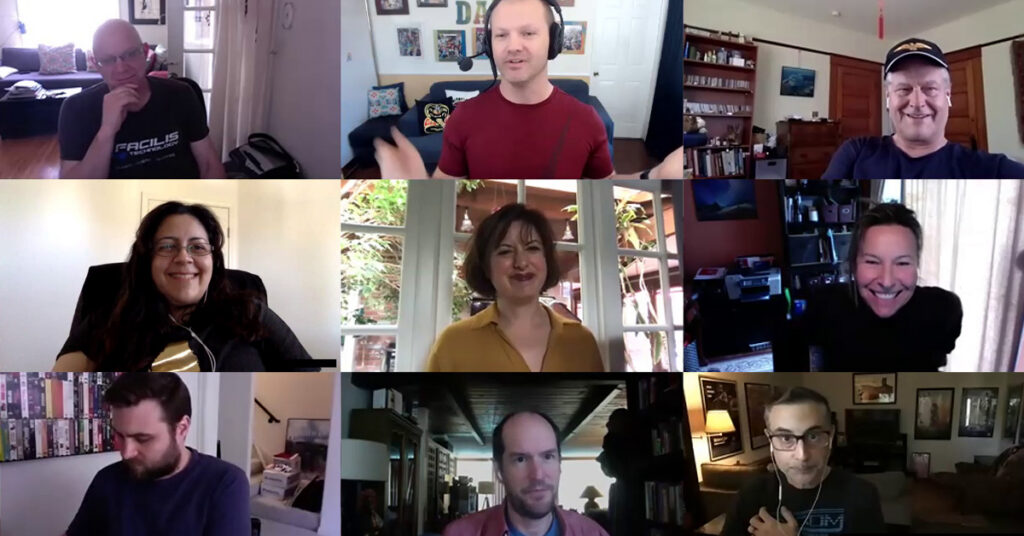
Zack Arnold: Once again, my name is Zack Arnold. I am creator of the Optimize yourself program and podcast, also been a film and television editor for Dear Lord, almost 20 years now, and I’ve been a parent for a little over 10 of those years. I’ve got a 10 year old, and I’ve got an eight year old, and I have a few guests on the show today and a whole community of people behind them as well. And we’re going to be talking about a very strenuous, stressful, difficult conversation amidst the world of this pandemic that we live in, which is, how do we balance being a parent when it’s bad enough? Now just wait until we have to go back to work, whether it’s in the office, whether it’s from home, this is going to be quite the challenge for all of us. So what I would love to do is, I would love to be able to have a very open, honest conversation. Conversation about this, and let me introduce my panelists. We are going to be chatting today with Barry Winter, Monica Daniel, Natalie Boschan, as well as Yvette Amirian. So I’m going to start with you, Barry, talk to me a little bit more about who you are, what you do in the industry, and we’re going to go around talk to our panelists, get to know them a little bit better, and then we’re going to dive right into this conversation.
Bari Winter: I’m Barry winter, and I am an assistant editor on scripted shows. I’m attempting to make the leap to editor, and some of the shows that I’ve worked on is the middle recently, season two of Doom Patrol, dead to me, season one and Bluff City Law. Those are my some of my recents. Excellent.
Zack Arnold: So now that we have that we had that short introduction about what you do for a living, talk to me a little bit more about your situation as a parent.
Bari Winter: Yeah, well, I have one daughter. She’s seven years old, and I went back to work when she was five months old, and it’s always been a little challenging the whole time, but we’ve made it work. My husband’s also in the industry as well. He does post sound, and so we just, you know, we try and juggle it together. We have an amazing babysitter that we’ve had with us for a long time, and hopefully when this pandemic is over, we can have her back more on a regular basis. So, you know, it’s always been just a challenge, but we always, you know, come up to the plate and just handle it,
Zack Arnold: And we’re going to figure out ways that all of us can better handle it as we go forwards and force through this together. So that is a wonderful introduction for you. The next member of my panel that I want to introduce, she may require no introduction because she has been a longtime guest of this show, many, many, many, many, many times over, and that would be Miss Monica. Daniel, so Monica, it’s a pleasure to have you back again. For those that may not know about you, your story, your situation, let’s introduce you to the people that are listening and that are watching today. Tell us a little bit more about what you do and also your situation. As a working parent,
Monica Daniel: All right, I am an editor, and I also work as an assistant editor to fill in the gaps between editing gigs. Most recently, I edited on DCS legends of tomorrow for CW on scripted television. I’ve also had years of experience working on non union shows, for documentaries, game shows, interview talk shows, kind of you, name it. I pretty much cut all of it. I have two children, a nine year old girl and a soon to be 11 year old boy who is also on the autism spectrum. In last year, I separated from my husband, so now I am a single parent who is co parenting. Our situation before was we couldn’t really afford a nanny, and you know, my kids also want to be able to see their friends. So I found after school cares that the kids could go to directly after class, and my kids went to different schools, and now they will go to different schools because my son’s going to middle school next year. And so I would use my lunch hour, which, by Union standards, they cannot take that away from me. I would use my lunch hour every day and go pick up my son from his school and drop him off at the same after school care as my daughter at her school and then their dad, who works all the way in Santa Monica, would have to pick them up by six o’clock because most daycares, unless they’re on a studio lot, still don’t care about the hours that we work in post production or in the industry at all. If I leave at 7pm I’m happy because that feels really early to me. Average was eight, and that was me working a job where I got to go home on time. And so now, with the co parenting situation, with the way covid hit, I was actually wrapping up on my show. So now I’ve actually been unemployed at home with the kids during my hiatus, my extended hiatus this whole time, so I’ve been doing most of it by myself. Their dad does come over almost every day, spend time with them, but a lot of that’s falling on me, and I’m not working. So when I go back to work, we’re going to have to have some long discussions about, basically, distribution of our contribution to taking care of the kids, because he does not live with us, and he also works really far away, but he’s right now not going into the office. He’s he’s working from home, but, you know, he works in a completely different industry that has different demands. And so that’s going to be a long discussion I’m going to have to have in a delicate situation, since you know, we are now separated and in the process of divorcing, but we are not divorced yet.
Zack Arnold: So no no real topics or challenges to speak up on today’s episode. So it sounds like you’ve got this all figured out. Excellent. So glad to hear it. So that was an excellent introduction. I appreciate it. I want to move on and make sure we get the introduction to all of our panelists. To all of our panelists first. Then we’re going to dive right into the subject. The next panelist on our list. Coming back here to the group view of our community, Q and A members that are here. I appreciate having all of you here. The next member, dear Lord, have I just had to deal with this person for how many years now? Natalie, my God, we’ve known each other since. Like 2004 maybe. But Natalie and I, we first met each other when I spoke at my alma mater, University of Michigan, two years after graduation. But Natalie, you and I have known each other for a long time. You are my longtime assistant. You are one of the brainchilds and geniuses behind the entire Trello for video, post production workflow. And we’re here today to talk a little bit more about parenting. So talk to us a little bit more. Us a little bit more. Just brief introduction who you are as an editor and a professional, and also who you are as a parent.
Natalie Boschan: I am cutting now. I’ve been cutting since I think 2017 I got my first editing gig on shooter, and so I’ve been cutting ever since I did shooter. I just wrapped up on Star Girl, LA’s finest Season Two did LA’s fine as season one. And so yeah, and, you know, Zack and I have known each other. Yeah, I since 2004 when he came to speak. And I was like, a go getter freshman, and I was like, I’m gonna go talk to this guy. He’s gonna give me notes on my really terrible short film that I was doing. So yes, as they brought in my laptop, Zack gave me notes, and then I just kept bugging him ever since then, eventually he gave me a job. So
Zack Arnold: Great networking tip, by the way, just bug them incessantly until they have no other choice. Well done.
Natalie Boschan: Yeah. I mean, I bugged other people. Zack just worked out. So, you know, your whole like planting of the seeds. I didn’t just bug you. Although I did bug you the most, I would say
Zack Arnold: Definitely, definitely means
Natalie Boschan: That’s my professional life up until now, parenting. I have a two year old son. He’s great, but he’s a two year old. So two year olds do what two year olds do. He needs lots of attention, lots of you know me being around and so the sort of like parenting moment my husband and I are having is that he actually, he has a meeting at 1230 that I think just got scheduled, either today or yesterday or something, and but my son hasn’t gone down yet because I was running errands and I was late because the exterminator was late, so I had to go. I had to start my thing late. So I wasn’t supposed to be rushing in to get this, to this, but I am. And so anyway, so my husband’s taking over, putting him down for a nap and maybe missing his meeting. I’ve been off my show since May 1 or may 8, so I, you know, I’ve taken over, obviously, all the home stuff. I’m doing, the stay at home mom thing right now. But so he’s been very gracious with whenever I have something that has to do with work, to kind of give me the time, because someone has to be with my son all the time. He’s not very self sufficient right now, and so that’s our big challenge. Is just we always have to be around him. You know, maybe he can be left alone for 20 minutes in his playpen, but mostly he has to have care. And luckily, he sleeps for like, two three hours in the middle of the day, so I get a nice little chunk of time there. But otherwise, yeah, it’s pretty involved.
Zack Arnold: All right? So then you’re, you’re in the same situation as Monica, where you’ve got it all figured out, and you have all the answers for all the parents that are going to be listening and watching today that have yet to figure it out. So I’m so glad to have you, yeah, expert that has figured all these things out. That’s fantastic.
Natalie Boschan: I think when you asked me to do this like I don’t think I have any answers, but I can talk about it. Well,
Zack Arnold: that’s, that’s the good news about this. Nobody needs to have any of the answers. In order to find the answers, we need to have the difficult conversations to figure out what needs to be addressed, which is what today is about. But before we dive too deeply into it, I want to make sure that I don’t forget about my last panelist. Last but not least, we have Yvette. Amirian, Yvette, it is a pleasure to have you here today. You and I have spent so many ungodly amounts of hours on Zoom together, but now we finally have you in a public forum, and I’m so glad to have you as part of this conversation. Introduce yourself to the group at large, what you do as an editor and who you are as a parent.
Yvette Amirian: Hi. My name is Yvette. I’m an editor, and I feel very fortunate to have met Zack at some point in my career, we’ve become good friends, and I’ve benefited greatly from your program and your friendship, and I appreciate you having me on. Feel like I’m in the same boat. I don’t know that I’m an expert, but I certainly love talking about this subject, because I think it’s important. I’m an editor. I bounce between scripted and documentary. The last project I did was a documentary feature for Amazon, which should be coming out little later this year. My last week on it was like the first week of May, so I was working from home at some point in the middle of the quarantine. But now I’m done. I have two kids. I have a nine year old named Zack, and
Zack Arnold: Well done, by the way, good choice.
Yvette Amirian: The name Zack talking about my child, that’s that’s what that’s referring to. And Alexander Zack is not he’s gonna be nine next week, and Alexander just turned one, so they’re eight years apart. I’m married. My husband does not work in the industry. We’ve been together since we were like in high school, so he’s kind of seen me through, you know, he knows what this business is about. He’s been with me through the long haul from the very, very beginning. So I feel fortunate that I, you know, have a partner who understands the long hours and everything, but that doesn’t mean that it’s easy to navigate at all babysitting situation. We do have, we do have a nanny. We’re not utilizing her right now. She’s sort of helping us with like, errands and things like that when I can’t get out with the kids, which is really helpful. We’re both from LA, so we have our parents here, but you know, we’re kind. Of trying to stay strict with the quarantining. So we’re utilizing them very, very, very sparsely, just really an emergency or kind of dire situations. But I feel fortunate to have them in my life too. So close by,
Zack Arnold: Excellent. I’m very happy to have you here. Happy to have everybody else here. Now I’m going to address the giant elephant in the room. Why does this panelist only have moms. What is up with that? Why aren’t there dads equally represented on this podcast? Because I don’t skirt around the the obvious issue, which is that this is probably going to be harder for the moms than it is for the dads. That doesn’t mean it’s not going to be incredibly difficult for the dads. Doesn’t mean there aren’t single dads out there. But if we’re going to start this conversation, I want to start at the heart, at the root, of the conversation, where I think this is going to be the most challenging, even if maybe that wasn’t the popular choice. That’s how I want to start this conversation. But knowing that, I want to go back to the entire group, and I want everybody that’s on this call right now to raise their hand if they have children. So you can see we have a have a little bit of the male representation as well here. So where I would like to start is, I would like to identify with each of you what you think the most pressing need fear might be once we go back to work. We’ve already seen what this looks like, where we’re kind of sort of back to work, doing this thing or that thing, but we’re not in the throes of what I would call the pre pandemic expectations. We’re all still trying to figure out. When is work going to come back? Do we think it’s going to be 12 hour days? Is it going to be 16 hour days? Are there going to be less people? Are they going to bring in more people? Is there going to be more money? Less money? Nobody really knows the answer to any of these questions, but what I want to just start identifying and talking about, because I don’t think that I have all the answers to this. I’m not sure I have any of them, but I want to talk through the problems, and I want to know once things start to go back to the place where the expectation is, I am a consummate professional, I have to show up, and I have to be an assistant editor or an editor, and by the way, it’s, it’s, it’s by design that I have somebody in the the panel today that’s a highly skilled assistant editor that’s just about ready to transition. We have somebody that’s just transitioned from assistant to editor, that has a few really solid credits as an editor, but bounces back and forth. We have somebody that transitioned about three years ago, that’s consistently editing, and we have somebody that’s been editing for a long time. So this represents different stages of the journey. All of you have slightly different ages of kids as well. It’s given the connection and the network that I have. But this was the best cross section I could give for people that are working in our industry. And I want to talk through one person at a time. What is the thing that you’re the most afraid of when we have to go back to work? And let’s just start to workshop it so and if somebody is like, Oh yeah, that was mine too, you guys can jump in and jump back and forth. And I want each person to be able to be able to bring up one of them, if it’s already been talked about, you can bring up whatever the next biggest one is. But just amongst the four of you, Barry, Monica, Natalie and Yvette, who wants to volunteer first, to dive in and just share what’s the thing you’re the most afraid of once we go back to work and we have real jobs for 5060, 90 hours a week, again, all right, Natalie’s just jumping right into the fire, putting yourself in the hot seat.
Natalie Boschan: So I mean, it’s probably pretty obvious. It’s like, what to do with my kid. Before this all hit, we were we were looking at daycares. He’s totally into going to daycare. We would tour day cares, and he’d be like, see you, Mom, I’m gonna go play with other kids. So I was really happy to be able to send him to do that social stuff and learn things that professionals can teach him that I don’t know anything about parenting. I learned everything about parenting, like on the job, I had changed one diaper before I had a baby, and all I do is listen to podcasts and read books about parenting. And so
Zack Arnold: I remember those days, by the way, I remember I’ve seen the whole journey. I’ve seen you all the way from freshman in college to trying to be an assistant editor to trying to make it as an editor to trying to be a parent. Every day, I found this new book. Every day I found this new book, and I’ve got this, and I’m gonna learn this, and I’m just sitting
Natalie Boschan: there like, Uh huh, yep, I know,
Zack Arnold: Yeah. I love that you’re reading and learning all this stuff. It’s fantastic. Let me know how that works out for you. So now look at you
Natalie Boschan: About it being like, why did you tell me how the heart of this is he’s like, I did.
Zack Arnold: The reason we don’t talk about it is that it would be the end of the human race as we know it. Our species would die out. If parents were honest to new, new and incoming parents about what it means to be parents, because you’d be like, Oh no. So we do our best to warn you, but at the same time, it’s like, there, there’s really no way to have this conversation. You just kind of need to live through it. So welcome.
Natalie Boschan: Yeah. So anyways, that’s my that’s what I do, is I just, I just delve into, like, books and podcasts and just learn about parenting, because I didn’t know much about it beforehand anyway. So I was excited to send him to daycare, but I don’t know if I can do that. Was also excited to spend less money on childcare because I had a nanny when I was working full time, because my husband also works a full on, like, 50 hour a week job. And so when we both do the thing, we’re like, we get home for bedtime and for dinner, you know, we’re like, and we try to each spend a little bit of time with him, and then we both go back to work once he’s in bed, like, both of us go to our separate rooms and start, like, doing whatever work from home that we have to do because we came home early because we take care of our child. So that’s sort of our pre pandemic life. And so now. Now I think I have to go and get a nanny again, because I just don’t know how I send him to daycare, because it’s just kind of like children pick up diseases, as if they were born to do that, like I was literally sick from September until, like, till quarantine. Basically, I was sick during quarantine because he just, like, coughs and sneezes on me constantly. And he’s not even in daycare. He just goes to, like, gym class or something like that. So if I send him to daycare like it’s just diseases all the time, he’s hit like, I only hang out with two other two of my friends have two little girls about his age. Those are the only two children he sees, and we’re the only like us three are the only kids any of our kids see. They both have hand Foot Mouth Disease. Right now, he’s fine, but they both have hand Foot Mouth. And we’re both like, we don’t go anywhere. How did they get Hand, foot, mouth? And it’s like, because they get diseases, that’s what they do. But then I hear a story. I forgot who? I forgot I was talking to you, but someone else, like their nanny, has covid, and now they can’t use their nanny anymore. So it’s just like, even if I get a nanny, she could totally or he could totally get covid, and then I’m totally screwed. Like, then what do I do? So I mean, we’re probably working from home anyways, but I can’t work from home with a two year old, like, I can’t get anything done. So, I mean, I guess I get a nanny and, like, assume that risk. What else am I gonna do?
Zack Arnold: Well, let’s keep talking about this, because clearly childcare is going to be an issue. So Yvette, your hand just shut up.
Yvette Amirian: I’m laughing because I I relate to everything you’re saying, Natalie, and it’s like, for me, I feel like I was just sort of getting I waited a really long time, right? Like, I had the first one when I was, I was young. I was like, 27 I think, when he was born, and then I waited like, eight years to have the second one. Because I I really, like, as soon as I had the first one, I was like, okay, gosh, this is, like, a lot more work than I anticipated it was going to be, right? Going to be, right? And I always knew I wanted more, but I waited a really long time, and now it’s sort of like I’m back, like I have to move all the way back to doing it all over again, which, like I felt like I was just sort of getting accustomed to, like being back at work and kind of figuring out what I want my schedule to look like. The last show that I was on, I’d actually asked them to be able to cut from home part time, which they had agreed. Which they had agreed to. So it felt like things were sort of getting into place, but the only way that I was able to do that was because I had the nanny here full time watching him, and my older one was at school, and so now I’m feeling the same things like, Okay, well, what is school going to look like next year? It sounds like they’re going to be back on campus, but there’s not going to be after school care. So how are we going to navigate that between the two of us, or between grandparents, or, like, even, you know, maybe a nanny picking them up or whatever, and two definitely is, like, a game changer, especially when they’re so far apart in age. Monica, you mentioned like, they weren’t at the same school last year, but now they are going to be like, That makes a huge difference. I have so many friends who would always complain, like, Oh, this one’s in Glendale, and this one’s in, and now they’re going to be at the same school. It really makes a big difference, because you can just to, like, the one flu pick up, but that’s definitely something that I’m nervous about, like, just for me, like, that’s always the most anxiety inducing part, right? Like, the week to week figure, who’s picking him up and who’s taking them where, and does he have a place to stay? Like, I’m the one who that falls on. I’m the one who’s scheduling it, even if he’s the one doing the pickup, I’m the one who’s navigating between the three or four people that are involved. I feel like that, you know, is like, one of my mom’s responsibilities. So that’s definitely one thing. And then one thing I’ve shared with Zack too is, like, I’m sure all of us, I know I have kind of felt a little bit of, I don’t know what the right terminology is, like, bias against the fact that I’m a parent, or, like, you know, weariness about the fact that I’m a parent, or that I have kids, like, when they hear I have kids, so then this question runs through my mind, like, oh, like, is it going to be? Like, well, she’s gonna be working from home, and how’s she gonna handle that with a baby at home or with the child at home? Like, how is that gonna work? But I know for me, like, when I have the childcare in place, which I obviously I would have to if I was working from home, there’s no other way to do it. I’m super focused when I’m working from home. I love working from home. It works really well for me. I think it eases a lot of anxiety and, you know, just less commute and less travel time. So I think there’s a lot of benefits to that, and I’m kind of hopeful that that becomes a regular thing. It’s just a matter of when it actually happens, when we have the money coming in, then to be able to, like you said, hire someone you know to be here to take care of those.
Zack Arnold: One of the things I wanted to just mention here, I want to put a pin in this idea of asking the question, are they going to be willing to hire me, knowing that I’m working from home, I want to go down that rabbit hole. I just want to go down it next. But I think that’s a really, really big one, so I’m sticking a pin in it, making sure that we cover that. But I wanted to go to both Barry and Monica first to just stay on this idea of just the most fundamental basic need, that as a parent, somebody’s got to be watching my kid at some point, right? Like, I can’t just, I mean, well, yeah, maybe if they grew up in the 80s, then we just use the TV as the baby Kidder, and they become latchkey kids, and then they remake television shows, and, you know, then they make Stranger Things, and that, that’s their life. So I’m not saying that’s a bad thing, but in today’s day and age, we probably don’t want to just sit them in front of the TV for 14 hours a day. So Barry and Monica and or Monica, whichever one of you wants to jump in next just when it comes to the basic needs of child care, what are some of the concerns that you have once you actually have to go back to work because it’s hard enough now? So what about one? The expectation is you’re at somebody’s beck and call for 60 plus hours a week. Barry, go ahead.
Bari Winter: I’m worried, because, let’s say school comes back and it’s, you know, they’re doing distance learning again. At home, she needs some hand holding to do the zooms and make sure that she does her work. She just finished first grade, and I’m sure she will get better at this, but she really needs someone to hold her hand and say, This is how you do it, and just guide her through it. So I would need you know. So like, if both my husband and I are working right now, we’re both in between, he goes back to work in August, so thank goodness one of us will be working. But I’m concerned about who’s going to educate her, who’s going to handle this at home, if I’m not here because, you know our babysitter, she’s a bit older, she’s in her 60s, and she didn’t learn the way that they’re learning now, I didn’t either. I’m sure most of us didn’t. I
Zack Arnold: Can’t even teach my kids math anymore. Like, seriously, don’t get me started on that conversation.
Bari Winter: How many
Zack Arnold: Pictures do I have to draw to figure out? Nine minus six? Really, I don’t know. It’s just three. Okay. Sorry, that’s for another topic of conversation, and
Bari Winter: I totally agree with you on that, but I’ve learned a lot about math and all the stuff that she’s learning so I can follow it now,
Natalie Boschan: Yeah.
Bari Winter: And I was like, I was very surprised. It’s like, how it’s changed my thinking about it. So I’m mostly concerned about how she’s going to get educated if we’re both working from home, which gets noisy sometimes because, you know, sound picture, and you know, he was working in this office and I was working in the bedroom. We made half the bedroom into an office, so that was the only way to deal with that. Yeah. So that’s my biggest concern. And then if they are in school part time, you know someone’s going to have to be there to pick her up from school, because there isn’t going to be any after school care. But even in before pandemic, she would be in school all day. I would drop her off in the morning. She would have been school all day. I had her in the after school program, and then my sitter would pick her up, and then I wouldn’t be home until 730 at the earliest. But you know, different shows of different needs. When I was on the middle I was home Seven 730 pretty consistently, because I was a half hour sitcom. And then you know, some of the other the hour long shows. You know, I wouldn’t be home until later. Luckily, on Bluff City Law, they were cutting that in Encino, so my commute was cut in half. I’m in Woodland Hills, so my commute was cut in half because going to Burbank, it would take maybe an hour. So going to Encino was 20 minutes. I was like, This is great, but that only went one season. So there you go. So it’s, you know, she was in school after care, babysitter, until we got home. And sometimes it’d be really late, and we’d miss bedtime, and she’d already be asleep, and so those were the days I didn’t love,
Zack Arnold: Right? So really, it goes beyond just having somebody to take care of them. It’s also about making sure that their brains don’t rot and they’re actually properly educated if we’re not around. So we can already see there’s very needs. Where for Natalie, I just want to make sure my kid doesn’t stick a knife inside a light socket right now, right? But for you, you don’t have to worry about that kind of stuff with older kids and the you know, Yvette, you’re kind of in the middle where you have both. But it’s a matter of, I want to make sure it’s not just that they’re safe, but I want to make sure that they’re educated and enriched, especially if we’re not going to be going back to school in any meaningful way that the way it was pre pandemic, and I don’t know what it looks like in private schools. I have a pretty good idea. Pretty good idea of what things look like in the public schools, because my wife is a public school teacher for LAUSD, very involved in this process and the expectation that August 18, everybody’s kids are going back to school five days a week, I wouldn’t rest your laurels on that happening. Don’t take my word for it, but I’ll be shocked if that happens. I think they’re going to have to find some middle ground. They’re still figuring it out. But if, if, again, this is something political, I will not go into, but looking at the science and the numbers of where we are going right now, as far as the virus, it’s not getting any better. It’s actually getting worse. So the odds of us just saying, well, let’s put our kids back in school for five days a week. I don’t think it’s going to happen, and I think it’s going to happen, and I think we’re going to come up with alternatives, whether it’s we do have one day a week where they’re at school, one day a week at home. I don’t know. I have none of the answers. I just think that we need to prepare for it not being what what we think is going to be best case scenario. So moving on to Monica. I know that you covered a little bit a little bit of this in your introduction, but just talk to me a little bit more about your basic fears and worries about, what do I do with child care, if it’s hard enough now, what do I do when I’m working 60 to 100 hours a week?
Monica Daniel: Well, I mean, your initial question was like, What was your biggest fear? And it didn’t really have to do with child care, but I fear for my own health, because we’re similar in the way that I will run myself into the ground to figure it out and make it work at the expense of my own health. So that’s one of my biggest concerns. And as far as child care, I mean, my kids are older, so in even this summer, I I have a whole list of tasks that they have to do, including like those brain quest workbooks. They I’ve always made them do them. So in order to earn iPad or video game time, they have to do a certain amount of pages. They have to read for 30 minutes every day. They have to do two different activities. For PE I give them a whole to do list that will actually fill their day, and that’s their normal summer. In addition to I made them go to summer school. Now that LASD is offering summer school, and you
Zack Arnold: Mean, you’re talking about zoom, summer school,
Monica Daniel: Zoom,
Zack Arnold: Just to clarify for people that don’t know, send them to school like just go
Monica Daniel: Zoom summer school, which now I have to wake up at 7am to get them up so they could do 8am zoom, summer school. So I kind of set them on their tasks, and so if I’m working from home, I can work while they’re doing schoolwork. My daughter’s pretty self sufficient. My son actually, because he’s autistic, he’s at the level where he requires a one on one aid in school to keep them focused, to keep them emotionally balanced, in case he comes becomes overwhelmed, which he tends to do when he’s learning something new, if he doesn’t understand it right away. He thinks he’s super dumb. He has self esteem issues just because he knows he’s different. And he thinks that’s the reason why he sometimes can’t do things, when really is the reason is because he’s a 10 year old boy, and not because he’s autistic, but he can’t tell the difference,
Zack Arnold: Right? And you’re just, just for the for the record, your child is brilliant, by the way, he’s incredibly bright, but I can
Monica Daniel: Actually, they’re both really bright. Well,
Zack Arnold: Of course, they’re both, right, but because you’re taught, I wasn’t singling just him out, yeah, no, we can understand the frustration he’s having, given that he’s both incredibly bright, he’s also a 10 year old. He’s also autistic. There’s a lot of stuff to unpackage there during this period of his life. So
Monica Daniel: Whereas my daughter, I could set her up, I set her up on her desk in her room. She knows what she needs to do, and she’s fine. I need to keep my son near me, like in the kitchen, on the kitchen table, because I have to monitor his moods, like if he’s start about to have a freak out or an anxiety attack, or, you know, it’s something if he starts crying because he can’t figure out a math problem. Know that that is a common occurrence for him. So he needs someone there to help him and to keep him from spiraling downward. And so that’s a big concern for me. Someone has to be there to do it, and it essentially has to be me, until they could go back to school. And the district actually pays for an aid for him. And in addition, he’s going to middle school. Autistic kids don’t handle change well, so this is going to be a big change for him. His middle school is about I forget. I know Robin knows where this is. He’s going to Portola, which is about 10 to 11 miles from where I live, which it’s up the 101, in traffic, having to pass the four or five interchange. So if he does go to school, and then I have nowhere where he could stay afterwards, I usually have them stay in the after school care, the free after school care program there Youth Services, until I’m able to get away from work so I could pick him up, you know, I I’ll need that for him, and I, if they don’t have that, I’m going to have to try to work something out for this with the school too, because He has all these special considerations, and it’s tricky, and so I’ll have to deal with that. You know, they’re in two different grade levels. They’re both doing honors and advanced studies because they’re so smart. And in addition, you know, I if I’m working, I’m going to have a lot of work to do, and that work will change depending if I’m able to get an editing job, or if I’m going to go back to assistant editing to start. You know, it’s just one of those things. You never know where you’re going to get that second editing job. And I think what’s going to end up happening is, because stuff that doesn’t have an immediate deadline, I’m going to end up staying up late till midnight every night to make up the time I lost during the day, trying to take care the kids needs. And I’ve already had this conversation with, actually, with people from my show. I was like, the checking in on me and like, looking at what are the scenarios, I was like, I need to work remotely if you want me to come into the office, possibly to rotate out teams, like two or three days a week. I have to know in advance, because now I have to tell the kids dad that he has to be with them all day, because sometimes, unofficially, I may have, the kids may have become my little princess editors. They have been well known at every show I’ve worked on and I’ve they’re actually very well behaved. But you know, that’s not they’re trying to minimize people in offices and so, you know, that’s not really something I can do anymore. So it’s like, I need to work from home and and I even pointed out I’m like, anyone with kids is going to be in the same situation I am because I am concerned about the discrimin I’ve been discriminated against before as a parent in my career, which is not something I’ve ever. Really talked about publicly, but, you know, it’s a real thing. So I wanted to point out it’s like, it’s not just me, you know, it’s the editor I work with has three kids. The one of the other editors has two kids, and he’s a single dad. It’s a huge concern. You know, it’s like, we need to be able to work remotely. We need to be able to keep our family safe. We can’t be working unpredictable hours because of the way we’re going to have to kind of Tetris our daily schedules around taking care of our children.
Zack Arnold: Well, one of the one of the topics that I have just kind of very slowly planted the seed, and the seed’s going to grow, and I’m going to start throwing gasoline on it and use a flamethrower on it, is this idea that what was happening pre pandemic? Well, we’re desperately trying to get back to this idea of normal. Normal wasn’t working, wasn’t working before. It’s certainly not going to work to take the things that we believed about normal before and just ascribe it to a post pandemic world. This is across the board. It’s not just for parents. It’s for everybody, but especially for parents, this idea of we are just at the beck and call of the producers, the directors, the showrunners, and we just need to be available. I just don’t think that’s realistic anymore. And the idea that we can maintain the same schedules, which, by the way, with no virus, we were barely, barely able to maintain their calendars and their schedules before we were working time that was unpaid because, oh, there’s just not a budget right now. And we’re still doing it anyway, because we want to meet these deadlines, that system is going to completely break down when we go back to work. And one of my biggest concerns is that if we aren’t conscious of that, coming back to one of the things you said, Monica, which I think is at the core of this conversation, is that before it was, and this is something I’ve been on a soapbox about for years and years and years, and years and years, and in fact, I’m standing on it right now. But this idea that we are burning ourselves out, working ourselves to death, but before it was all for the sake of the job, well now it’s literally going to kill us. It’s literally going to kill us if we weaken our immune systems and we show up at work for the sake of creating content. It’s that simple. So we need to talk about what is the new way of working, such that we can get the work done, but in a more realistic way, without feeling like every time I show up, I’m putting myself at huge risk because I’m working even more hours for less pay than before, because work from home, workflows are currently less efficient and less effective than the than the norm, and I think that’s going to change over the coming six months to a year. I think we’re going to get better at this really, really quickly, and I’m going to help make sure that we all get better at this, but we have to recognize the way we were working before wasn’t healthy, but now it literally can kill us. So I want to come back to either Yvette or Barry or Natalie to just talk about your level of concern, just about your own health, and then you bringing that into your house, if it was that you were either asked to go back to an office or you’re still working from home, but burning yourself out so much that just going to the grocery store could compromise you. So Yvette, your hand came up again. I think
Yvette Amirian: Monica said something really important, this idea of putting ourselves last. And I think that’s something that moms specifically tend to do across the board, not just in our industry, obviously, but for me, I really do, like, even just go before I go into an office, pre pandemic, like, I have to make sure everything, like, all my ducks are in a row, because I don’t want to come back to, like, a disastrous house and, like, a million things to do, like, and it takes a lot of work. Like, it takes a lot of effort. So like I said, I think the idea of being able to work from home is not only going to be a necessity, but I think could be really beneficial for parents. So I hope that there’s this shift in the way that producers, directors, production companies are looking at it. Because I think for me, pre pandemic, it was always viewed as, viewed as like, Oh no, we can’t possibly, like, trust that you’re going to get the work done right? Like, there’s this idea of, like, well, what are you doing while you’re there? How many hours are you putting in? But for me, it’s always been, I’ve always been more efficient when I’m allowed or able to work from home. So I think it could be a really, really incredible thing, but I think it’s also, like you said, an absolute necessity for parents. I don’t know how I feel about going into an office. I actually teach part time at USC. I teach a couple classes in the evening. So right now, we’re teaching everything online next semester, and there was a big discussion about how that’s going to work, and all the editing classes are going to be taught online for the time being. So I know, like, industry wide, it doesn’t seem like there’s, I don’t see a lot of people who are comfortable, like, with the idea of going back into an office space, like my husband, for example, goes to an office, but it’s literally just him in one room and his brother in another room. You know, it’s not, it’s not like a populated space. So something like that I could potentially be comfortable with, but that’s not usually what our workspaces look like. And I know for me, like my immune system was always complete. You know, Natalie said it like they’re like disease bearing. They are, like
Zack Arnold: Walking petri dishes with
Yvette Amirian: Biological terrorists. They are,
Zack Arnold: Oh, my god, that’s amazing.
Yvette Amirian: They bring, like, a bunch of stuff. It’s true, like they just do, I mean, that’s, I mean, their immune systems are awful. They’re they’re little, and they’re developing all that. And unfortunately, while we are in high stress environments, we’re the first people who get, you know. Everyone in the house gets affected by it. So for me, I hate, like, the months between October and February. It’s like, oh my god. Like, I just know everyone’s gonna be sick every week, and I hate it, and I dread it, but I know it’s like a thing. I also, to be fair, like, I worry that, like, us being in houses so much and not being like all these other things, like our immune systems are going to be really, really awful because we’re not being exposed to other things. So there is a downside to that too, right? And in some variation, it’s important for them to be able to go back to school environments, because it’s not good for them socially either.
Zack Arnold: Yeah, it’s not safe inside. It’s not safe outside, not wearing a mask, but it’s not safe if you’re not wearing a mask, it’s like, come on, can somebody just give me one useful piece of information right now, like you’re killing me. Well, one thing, one thing that I wanted to pull out of here that I think is really important, and I’m going to direct this one right at Natalie, because, dear Lord, if we had this conversation ad nauseum 100 times, pre pandemic, there was this thing called the theater of work. And Natalie, you and I have talked about this so many times we’ve had many, many a session, whether it was talking logically about it or just screaming about it because we were so angry. I think one of the positives that I hope comes out of this, and it may not, but one of the positives that I hope comes out of this is the elimination of the theater of work. So Natalie, let’s talk. Let’s share this private conversation that you and I have had many times over the years.
Natalie Boschan: Yeah, it’s super frustrating. Producers, they just want to see that you’re working. Like, Oh, they’re here, they’re working, and you’re like, even if they know you’re just waiting for notes, like, they know you’re just sitting there waiting, like, well, you’re here just in case something comes in, like, and we got to do it or right now. And what happens if we don’t do it right now? What happens if we do it when I get in in 20 minutes like, why does it have to be right now? Do they know if it’s a, you know, the studio, does? They sit there, write their notes and they send and they go, good, I’ve done my job. And they’re like, if it comes in 20 minutes later, then when it was going to come in, what does it matter? It doesn’t matter. They don’t care. They’re not thinking about it. They got other things to do. So like, yeah, it gets really frustrating to know that they just want you there, just to know that you’re there, just to know that, just in case you’ll be you’ll be there. And I’m like, I don’t, I don’t like working under the just in case, I’ll work under it. If it’s like, okay, we need this episode needs to get out tomorrow, or else it will not air like you need to be here. Like that. I get like, we’re at a deadline. This has to happen. You have to be here waiting to start, like, immediately. Like, okay, fine, get it. But if it’s just like a normal day to day thing, there’s no, there’s no need for that. There’s no need for any of that. It’s just like, what Monica was saying is, like, the whole like, we and what you were saying about the like, being just able to make deadlines and being just it like, because, because we’re waiting for producers, because we’re waiting for a director to send notes, because we’re waiting for this dad and the other thing. And so when you’re a parent, it just gets, like, exponentially worse, because you’re trying to schedule your own kids stuff, especially if they’re little, and if they’re little, whatever you schedule kind of just blows up a lot of times, because you’re like, Oh, I got this all worked out, and then it just blows up in your face, because something happens or whatever. And even if you do have a set schedule, which is really hard to do when you have a small child, because, like, every day is different, and like, then all of a sudden you’ve got a set schedule, it works for three months and they completely change. And like, you have to do it a completely different way, especially if they’re, like, moving nap schedules and all this stuff. Like, you can never just set it and forget it. It’s not like being a parent. You can never just set things and be like, Okay, that’s just gonna go and I’m gonna go back to work. Like, no, that’s not what’s gonna happen. It’s always gonna be in your mind. There’s always gonna be something that comes up. So there’s that because, I mean, I particular, I had my nanny was constantly texting me throughout the day, constantly about this, about that, and, like, I think part of it is, like, she thinks she knows that, like, I had specific guidelines for stuff. But I don’t think she could tell. Like, I think she just thought I was a super specific person, so that I needed to be involved in every detail. Like, no, no, I care about these specific things that I gave you in between. I don’t care. I don’t care what he has. Like, feed him fruit. Don’t care what it is, just a fruit. I don’t I don’t care. You don’t need to test me about it. We can’t just have all of this, like, let’s just have the editor waiting around for X, Y or Z, even if we are working from home. Like Monica said, like, you need to know when something’s happening, because it’s like, well, I could be doing this thing with my kid, or, like, I need to do this thing for my kid, or I need to schedule this thing with my kid. I need to know when the notes are coming in. I need to know when I’m going to be working, when I’m going to be sitting around, like, I just got really tired of that, because I had, I had about two months of working from home, and a lot of that time was mostly like visual effects, like visual effects coming in. I had to look at them, and visual effects came in, like four, but like four to about seven in my house is just chaotic. So I got to make dinner, then after dinner, we got to get ready for bed, and then we got to put go down for bed. And so I’m not really available at all between those hours. And so I was being told, well, make sure you get it in right afterwards or as soon as you can. I was like, you’re not getting notes from me until after an 8pm bottom line is, it’s not happening. I can’t get you anything if you have an absolute emergency. I can figure that out. But like, notes on VFX that they’re not going to work on until tomorrow. I’m not doing it. So that got really frustrating to me.Me, yeah, and so, and then when you’re talking about theater work, of actually being in the office to do work, thankfully, at least anyone that I’ve been talking to has been saying, like, okay, my agent will be like, Can you do a remote workflow? Like, that’s an important thing. So, like, yeah, I can do a remote workflow. Like, that’s something that, like, employers are looking for, like, can you set up remotely? Like, yep, I think that they’re coming to terms with the fact that post is just going to have to have to be remote. They have so many problems with production that post is the ease. Like post, it’s easy, not, you know, it’s way easier for us to work remote than, you know, a grip. So I think, thankfully, I’m glad that that is probably going to be unless we have to come in one or two days a week, I don’t know, you know, for a meeting or whatever, but I hope it’s just like they’re working remote, and that’s not the problem we’re dealing with. We have to figure out how to get these actors on screen.
Zack Arnold: Well, what I find interesting about this, and by the way, as an aside, the next time they ask you if you’re familiar with remote post workflows. You say, Oh, not M, not only am I familiar with them, I helped build one of them. So yes, but what’s interesting here is that you’re speaking to this entire problem as the editor, which as you should right? And what I’m hoping happens is that people get better at setting boundaries, and we realize what has been my vision for two decades. All that matters is what you want and when you want it.
Natalie Boschan: Yeah, and
Zack Arnold: Ask me how many hours a day I’m sitting in my office doing it, whether it takes me four hours or 16, leave me the F alone to do my job. You know I’m good at what I do. You know I’m going to deliver it on time. Leave me alone. However, that’s way different when you’re an assistant. So as an assistant, you really are kind of at the beck and call of both the editor and the producer simultaneously. So Barry, I would like to direct the conversation to you, because it’s harder to set boundaries and say, You know what? Can’t do this until seven, or I can’t do this until four, because you’re kind of an extension of the entire post production team. So what are your thoughts about this idea of, even if I am from home, how do I set expectations and figure out a schedule and I kind of always do have to be available. So like, what are your fears or thoughts about that,
Bari Winter: Gosh, that they’re gonna want me all the time, you know? And like, I still have to feed my child. I still have to entertain her. Sometimes she’s an only child too. So, you know, there’s that. So I have to be entertainer as well, or my husband has to be entertainer. So, you know, she’s seen some of the Kids Next Door, and one or two, like, best friends who we’ve, you know, talked to about, like, how much have you been quarantining? How many people have you seen like, we’ve been very. Specific with those questions, but yeah, I actually feel like I don’t the boundaries are, like, all over the place.
Zack Arnold: I feel like my biggest fear is that there are going to be no boundaries. If that’s the default setting, it’s that there will be none. Because I think that coming from it, from a producer, director, show runner standpoint, just thinking through their thought process crawling into their brain. It’s not well, you guys have all the freedom in the world. You need to take care of your kids. That’s fine, but in return, if I need something, it’s Saturday at 4pm I’m going to kind of need you to do it Saturday at 4pm because you can do it whenever you want. You said you want your freedom, but I still need to get the work done. So can we agree that if you’re going to be able to manage your own schedule. I get what I want when I want. That’s my biggest fear. I think that’s coming, and I’m already starting to hear that from people that are editing from home. What we need to do is we need to learn to set boundaries. I don’t know what those boundaries look like yet, but I My belief is that that is where all of this is going to start, because if we don’t set that boundary, then it’s just going to erode and disappear. Because frankly, we didn’t have a lot of boundaries before all of this. I mean, one of the biggest reasons that people come to me in this program, several of the people on this call, is because they really suck at setting boundaries, and they really suck at saying no, and they want to learn, how can I confidently say no? These are the things that I need in order to deliver the value that you want me to deliver to you. And I’m not sure how we’re going to manage all this, because it’s uncharted territory, but I know that setting some form of boundary is going to be a key skill. So Monica, I want to come on over to you, because you’re right on the cusp of you’re not sure yet if you’re going to be cutting or assisting. I would guess you’re going to be cutting. I think you’re, you’re I haven’t, but we don’t know.
Monica Daniel: I have an assistant job that I can go back to if the show ever starts shooting again. I’ve already had discussions with the editor. Of course, he hopes that he’ll have to replace me so I could be editing. But he’s like, that job is there for you, so I have that at least. And it’s funny about the boundaries, because I kind of set my own. I see Facebook threads all the time. Of you know, people getting taken advantage of with being expected to bring, like, their laptops in and caps on box rentals. And I always say, Look, if they’re not, if they cap the box rental week 10, I’m never bringing my laptop in again. I only bring it in when they’re paying for it. But, I mean, that’s just me. I just refuse, you know, I’m not afraid of being unemployed. I figure I’ll figure something out, because we were at the end of our season when all this happened. So my last couple weeks, I was working remotely, trying to figure out, oh my god, the kids online learning and their teachers didn’t even know what they were doing at the time, and then trying to get work done remotely in a not very efficient way. Basically, my end of day was signified by I would send out an email, and everyone will see seed on it, the post producer, the visual effects editors, because it was just me and the visual effects editor and editorial at that point, you know anyone who was still working, and that was, that was my end of day, and I kept track of how many hours I worked. So if I was not able to put my 10 hours in, because that is what they were paying me for, then that’s when I might work a little later in the day, because I had to take three hours to help my kids with something. But if, if I got all my work done for the day, I sent that email out, and then at 10 o’clock they asked me to do something. It’s like, that’s overtime, guys, I always ask, that’s overtime. Can I do this tomorrow morning, first thing tomorrow, and pretty much 100% of the time is, yeah, just do it tomorrow. First thing
Zack Arnold: Shocking how that works, isn’t it? All of a sudden, when they have
Monica Daniel: No it’s like, I’m very reasonable about it. I’m like, Hey, got all my work done. I, you know, showed I communicated. They saw I was working. And it’s just like, it shouldn’t be any different than if I was at the office, because I’m usually communicating by email, then because the producers are either off at the mix or in color or in 5 million meetings anyway, so it’s, it’s something where I just had to have no fear about it and just be like, Hey, um, what’s the priority? Do you want to pay me for the overtime, or do you want to just have me do it tomorrow? And it was always tomorrow, and usually they were willing to pay for the overtime because they told me too late and they needed it right away. And then it’s like, well, that was, that was their fault. That wasn’t me. It’s not something I did. And I would just, you know, charge it on my time card. But you know, it was, I didn’t actually really have to do that all that much because we were we were wrapping I when I was in the office, I was leaving early every day so I didn’t have enough work to fill 10 hours. But I mean, I set those boundaries even when I was in the office during the regular year. I know people struggle with that. It’s like, oh, I have to stay late to do an output. Blah, blah, blah. I was like, Well, what time did you get in? Well this time, why didn’t you come in later? You know, is the often thing, it’s like, because I had dailies this morning, because the editor needed me here at nine. Like, you guys dropped this output on me at the last minute. Like, this isn’t my fault. They would just pay it. They would pay the overtime.
Zack Arnold: I find that 95% of the time when you reverse engineer how you got into that situation. It’s always poor communication and poor planning. It’s not a matter of, oh my god, this just materialized, and we’re all completely gobsmacked. You go down the chain, you’re like, well, this person knew about at this point, and this person knew this and knew this, why didn’t we all just have a conversation and figure out there’s a much better way to go about this, and communication is going to be a huge thing that starts to break down because people don’t understand how to communicate as a team remotely. So I think this is going to get even worse unless we develop the skill of communicating remotely and setting these digital boundaries.
Monica Daniel: It’s funny because I already talked to the post producer, and I even pointed him to your website. I was like, Look, we can’t have because it was, you know, no one was used to communicating remotely. When I was repping the season, I was like, it was, it was really difficult. I never knew what was going on, what was needed. Like, I had to, like, pull it out of people, because they didn’t realize, Oh, I’m in the complete dark at home. I have no idea what’s going on with them and what they need from me. And I was like, We need someone like the coordinator to maintain a central calendar where we can move stuff, we can communicate. We can’t have stuff in email chains. It’s just going to get lost. And I was like, we should use something like Trello. And I even told him, like, whether I’m editing or I’m the Assistant Editor, if I’m editing, I’m making my assistant editor communicate with me through Trello, so we can track everything, and we’re not just texting each other all day. It’s just like we could just do what we need, and Trello will track it for us, and we could see what we need to do. And if I’m the Assistant Editor, I’m going to pitch it to my editor really hard, and I can’t imagine him saying no, because he actually really loves workflows as well. He’s one of those editors who like helped develop and design the Assistant Editor workflow on the show. So I’m sure he would be really open to it, if not Trello something similar, so he’s not constantly having to check his phone for text because he has three kids that he needs to take care of and worry about. And that way we could just kind of do what we need to do, see what we need needs to be done. He’s all about efficiency and just getting things done as easily as possible. So this is stuff I’ve already started thinking about. Have already brought up to my producer, and because I want my boundaries, I think, I think I’m getting to the age where I’m just like, Nope, I’m not putting out with this crap anymore. I’m not 25 trying to, you know, impress. I don’t care. I’m willing to, I’m willing to walk away,
Zack Arnold: Which I think is the perfect segue to the really big part of this conversation, which is, are people going to discriminate me, because I’m not the single 25 year old that’s going to be at their beck and call. 24 hours a day, seven days a week, available via text, whatever output you need. I’ve got it if I’m a producer and I’ve got some young, hungry kid that’s probably going to do unpaid overtime and be available. 24/7 why in the world would I want to deal with somebody that has kids that I think just fear and then, and I love that answer, because you’re that confident that you can bring a lot more value than that person, but you have to be able to communicate how much more value you bring so they can balance out the fact that it’s going to make the process more challenging. But I actually argue that it isn’t going to be that more challenging if we learn how to better communicate and we can bring these workflows to the table. So Natalie, I’m going to bring this back to you. I’m just I’m flashing back to some of the conversations the you and I had Empire season one, thinking about, how do we build some kind of workflow where you and I don’t have to be in the office anymore and we don’t need to print out paper and there’s no binders. I told you it was going to take a while, and it certainly is not the circumstances I was waiting for, but I think that, I think you and I helped build something that can be of a lot of value to people to communicate right now, because I think lack of communication is not just going to cause bottlenecks and issues. I think lack of communication literally going to make people suffer poor health because they’re working too long, they’re not getting their deadlines communicated properly, and that can weaken their immune systems, and they can get sicker. So I really think this the communication and setting boundaries. If we’re going to talk about two things that we can extract, extract from this as things that we can improve upon. I think this, these are the places to start, but I also want to talk about this, this much bigger elephant in the room, which is, why would I even hire a parent at this point if I don’t have to deal with this from some young kid? So I’m in the position where, whether it’s because of the circumstances or otherwise, I’m transitioning out of being an editor and doing what I’m doing here full time, I’m not that concerned about this, but how. Legitimately concerned are either the four of you, or I’m actually going to bring this to the group show of hands. How many of you are legitimately concerned that you might get passed over? Because it’s going to be more complicated to deal with people that have kids right now. Okay, so this is a problem. Demus, no, hand went up. Oh, wait, no, you’re still that 25 year old kid. That’s going to work. 24/7 so
Natalie Boschan: I don’t tell people I have a child, I try not. I mean, I had an interview, and they’re like, What are you even doing? And I’m like, Well, I can’t lie. But like, under normal sort I don’t I leave it out of any interview. I like, try my hardest not to say anything about having a kid. I let that come out later. If I find out they have kids. Like, if the show owners have kids, or someone high up has kids, and I’ll say it, but I don’t say it,
Zack Arnold: Which I think is sad. I think the fact that our culture is such that there’s a fear about doing that is very, very sad. That’s what that’s why we’re having this conversation. So Yvette, go ahead.
Yvette Amirian: No, I agree. I never say I have kids unless it comes up naturally in some way. And that was actually a piece of advice that I got from another editor, friend of mine who happened to have kids, but it’s true. And by and large, I feel like still, a lot of the shows that I work on, it’s, I’m still really commonly, like, one of, if not the only, moms in in the post, you know, in the post space, maybe, maybe there’s dads, but, you know, certainly moms. I think it’s much more rare, and I think that is sad, and I don’t know, I think that’s, I mean, you and I have spoken about that, right? Like that. That’s always something that’s on my mind, because I agree. I have felt that discrimination and that that bias of you know, even if it’s not like it’s the way that people like say things or ask things, whether it’s when you’re interviewing or once you’re on the job. So that’s always something that’s on my mind. So I feel like I’ve always kind of tried really hard to, like, hide the facts until it comes up, like, after I’m already on the show, then it becomes like, oh, good kids. Like, it’s not, you know, it’s not something that comes up really early on.
Natalie Boschan: Yeah. And I do think that, like, if you’re a mom saying you have kids is different than if you’re a dad saying your kids, because everyone knows the expectation is on the mom to do the scheduling, the this, the managing, and it is but they don’t want your attention diverted from the job to be doing that stuff. And it like and it is diverted, but it’s not diverted in such a way that your work suffers. It’s right, it’s going back to the theater of work. Are you working on what I want you to be working on, or are you working on your personal thing? Well, if I’m waiting on notes, I’m working on my personal stuff. I was doing that before I had kids. You don’t want to tell that to the producer. You don’t want them to know like in their heads, like, well, they might not be working on my stuff. They might be working on their finding their kid a doctor appointment. And I don’t feel comfortable with that. This is my show. I have, like, since I’ve become a parent, have luckily not had to. I’ve worked for people who have more kids than me, who are much more involved, like I’ve luckily been work. I’ve worked for a lot of family oriented shows, or my two shows been family oriented, which has been good. But I don’t, I don’t know. I don’t think it’s gonna be that way forever. But, yeah, I just I know that as a woman, you’re not going to be I think as a dad, if you go to say kids like, Oh, that’s nice, good for you for being a dad a woman, it’s like,
Zack Arnold: And then that’s exactly, and I’m going to get you to Monica in a second, so I see your hand, but that’s the reason I started this call by saying, I know dads have kids. I get it. You’re not being singled out. This is not a mom only conversation, but what you just said is, why this panel has four moms and not two moms and two dads? Because we just need to be brutally honest. I can go right into an interview holding pictures of my kids. Hey guys, I’m a dad. Editor. Good for you. What sports do they play? Right? Totally different conversation when it’s a woman. So we just need to get that out there. We need to be very clear about that right lot of biases coming out in the world right now. Not gonna open that can of worms, but we might as well talk about all of them. And that’s one.
Natalie Boschan: It comes from men and women. Like, if you’re working for a producer who’s a woman without kids, and I’m guilty of it too, like, but I didn’t know what it was like to be a mom and working, and like, I could empathize, and I could say that’s got to be hard, but I didn’t know. And so as much, even if you have a producer that can empathize, like, they don’t know, and like, they’re probably very into their work and like, if they have if that’s their central thing, like, they don’t know why it’s not your central thing all of the time, while you’re sort of, like, split a little bit, and they don’t understand that. Like, even if I am split, like, there’s still room for both. For both, I’ve just, I’ve made room for both things in my life right now. And so it’s not that just men discriminate. It’s women do it as well to each other. If they’re also not a mom, they don’t get it. And it’s fine. It’s I did. I’m saying, like I was an I did not get it either. I obviously I did not. And so now I but, like, that’s just, that’s just the way it is. Unless you’re a parent, you don’t know what it’s like to be a parent. It’s such a life changing, like, different thing to be a parent that it’s like, good or bad. It’s not like, it’s like, oh my god, it’s changing my life and everything. I mean, it’s great, I love my son, but I’m not, like, saying, like, if you’re not a parent, like, how could you ever like, it’s just that it’s so it’s so drastically different. There’s not. Thing I can even, like, equate it to, to be like, Oh, it’s like, if you did this, that’s what it’s like being a parent. Like, I can’t describe it any way to anybody who’s not, who doesn’t have to take care of another human, even a dog, like a dog at least, like, it’s not even the same. So it’s like, yeah, so that’s the problem too. Is it’s like, they don’t see how you can have room. Parenting must be so hard. You’re like, it’s hard, but like, there is room, like you just make it work. Like you make
Zack Arnold: You figure it out. Figure it out.
Natalie Boschan: Yeah, you always figure it out. But like, so it’s either like, how could you do parenting and work? Or it’s like, why aren’t you working? It’s very complicated.
Zack Arnold: Yes, agreed.
Yvette Amirian: I had a friend, not in the industry, but she has three kids, and I remember when she had the first one, it was like, What did I used to do with all this time? The second one, it was like, What did I used to just, like, exponentially, it was like, What did I used to do with all this time? Like, we do make it work, and especially when you love something as much as you do. Like, I love editing, and I want to continue doing it. I don’t want to give it up just because I’m a parent or, you know, or vice versa. Like, I don’t want to have somebody else raise my kids just so that I can go edit. I need to be able to do both, so that I could be a complete, fulfilled, happy, you know, person, and I deserve to be, and we all do. So, you know, hopefully with groups like this and conversations like this, it can become more normalized, and we can do it with boundaries and
Zack Arnold: Exactly so I want to make sure I don’t negate Monica, then I’m going to open it up for questions, either to people on Facebook Live or to the community of both moms and dads that we have here right on the Zoom call. But Monica, you had a thought you wanted to share.
Monica Daniel: Yes. So I’ve worked with a lot of wonderful editors and scripted all of who knew me before. So there was no hiding that I had children because they were on my Facebook feed, and I just post about my kids shenanigans all day long. So for the most part, I’ve had good experience with people not worrying about it because they knew I could do my job and deal with any issues that come up with my kids, and they’ve always been very understanding. But you know, I’ve also gone on several job interviews when I’m in between jobs, and I had an editor specifically ask if I had kids and how do I take care of them? Because that person was trying to figure out, Is this going to be a problem? Think that’s illegal. It is illegal, but where’s the consequence for that editor? They’re just not going to hire me, and why would I want to work with them anyway? Now at this point, it doesn’t matter that it’s illegal. It happened at a cafe table during a random job, informal job interview. And I’m sure that happens all the time. He, you know, he tried to be subtle about it, but, I mean, we’re editors. We read subtlety all the time. That’s what we do. And you know, I’ve, I didn’t get that job, which is fine. I was me and one other person being considered, and I came with the highest recommendations, and did that contribute to it? Yes, no, maybe. How is that something I could ever prove it’s not, but maybe something in his head that, you know, put me to the like, no, let me go with the other person who doesn’t have kids, and that’s, it’s a real thing. I don’t care what people say, No, that’s a leak. It’s no people can do it all the time. Editors in our union do it to the assistant editors they’re trying to hire producers can do that to editors. It’s, it’s one of those things, and that’s part of the problem this, you know, just these, these internal biases that you will never, ever be able to prove
Zack Arnold: Well, brings up the the topic of conversation, or the the word that we’ve heard many times, as you already said, these, these implicit biases, right? Not even realizing that you might be doing it, but you’re doing it anyway. I don’t know what the answer is to that question. I mean, if, if you ever want to identify who that person is, like we’re at a mixture, and you want to point a finger, like, I’ll go slash his tires for you, because that’s a bunch of BS. I don’t have the answer to that one all the I think I’m naive in that. I just, I can’t imagine ever disqualifying somebody for that reason or any other reason, that it never even occurs to me that people see the world through that lens. But I know that that’s probably, if not, somewhat common, relatively common. I don’t know how to manage that. I’ve just, I’m gobsmacked that people would even be willing to do that. So Yvette, what are you thinking? And then I want to start bringing opening it up to
Yvette Amirian: It’s just funny when I think about it, because all of us, who are parents, know, like, when you’re a parent, like you become so much better at multitasking and doing a billion things at once, like we are in some ways more fault, right? So it’s like the fact that it’s like, well, how can this person possibly do it? It’s like, come to my house one day, witness the madness, the magic, you know, and then ask me if you think I’m capable of doing it. So it’s funny to me, like it really is.
Monica Daniel: Anyone who knows me or has worked with me knows that my quality of work has nothing to do with me being a parent. It comes from who I am. So it’s never a concern. It’s, it’s for people who don’t know me yet, and but for people who do know me, they’re just like, Can I meet them? You know, they don’t care. So it’s, it’s just one of those things, you know. It’s a concern, if with people who know me, yeah, we’re going to do what we can to accommodate you and keep you on because of all the value our production. But for someone who doesn’t know me, if they can go with someone else, who’s single, no kids, I guess, comparable work experience, they’re going to go with the other person.
Zack Arnold: Well, I want to open it up now to the community. We have a we’ve got a few dads in the group. We have a few just fresh out of college kids too. So we have a few ends of the spectrum here. But of the of the dads that are in the group that are listening, do you guys have anything that you want to add, questions, that you want to ask, things that we brought up, where you wish you could have jumped in? I want to make sure that that you guys have a voice as well. You’ve been so great in the background. But I know for a fact that Edward has kids. I know Chris does, because Chris has been my assistant for the last two seasons on Cobra Kai and Edward, your kids have been on our coaching calls, on your lap. So between the two of you, one of you want to jump in, and whether it’s something you want to add to a thought, bring up a new thought. What are what are you thinking right now? Chris,
Chris Cavanagh: Yeah, so, I mean, a couple things having, you know, I can relate to so much of this. And you know, you’ll notice, like I did not raise my hand when asked if I thought I would be passed over. I understand that being who I am, being a white male who’s some with some industry experience, I’m probably not going to be passed over. And so I recognize that that’s not so much, you know, a threat for me as it is for other people. And what I’m really interested in, you know, Monica and Natalie and Barry and then, somewhat differently to you Yvette, is, you know, navigating the space of like myself, transitioning from assistant editor to editor in the space. And you know, you bet you might be reaching for, you know, a passion project up and above and beyond. You know when, when you’ve got parenting, when you’ve got pandemic, when you’ve got all of these things, and then you are an assistant editor who’s trying to make that leap. You are, you’re, you’re extending yourself further. And I know myself in my own process, like, I’m signing my kid up for Little League Baseball, in addition to being a parent, in addition to being an AE, in addition to cutting as much as possible, like, was one of these things that just almost broke the camel’s back. And so I’m wondering if you’ve had, you know, similar experiences, or how you’ve navigated that with your with life, or with your significant other, and like, the tension that causes and creates, because I have a very supportive spouse, but there’s always a limit, right? You always bump into something as you’re trying to, you know better yourself or improve and so I’m just curious about, you know, that sort of third space that you’ve experienced as a parent, as a parent specifically,
Zack Arnold: Yvette, go ahead.
Yvette Amirian: I think this is so important, because I think one of the things people don’t talk about is like, it’s like, okay, I have my job and I have my kids, but there’s also like, the spouse, the partner, the marriage, and, you know, all that suffers. And I know for me, like, we’ve had a lot of issues along the way, and we’ve worked through them, thankfully, but that’s something that people often forget about. And I think for us, like the dynamic, he’s the one who’s always like, Let’s sign him up for this, and let’s sign up for this. And I’m like, I don’t have, like, the brain room. Like, if you want to do it, you can, you can do it. So I sort of, like, left a lot of that to him. So we really delineate, like, who does what in the household. I really take care of more of the house stuff. He takes more of the finance stuff. Like, we really have clear boundaries with that stuff. And I think that that’s helped us, and I think especially to, like, when he was in preschool, and we were just sort of starting to become, like, friends with all the other parents and socializing, I really for me, like I stretched myself then, like, every single birthday party and everything, a single school event. And I eventually, I was like, I have to stop. I can’t do every single thing like, I have to start to say no to something. So I think that’s really important. You can’t go to every single birthday party and you can’t do every single event. Your kid can’t be involved in every single thing like that. For me, was a very clear boundary that I have to draw when I saw it was piloting up
Zack Arnold: Monica. Go ahead.
Monica Daniel: Well, for me, and it’s been like this for years, the kids cannot sign up for an activity that takes place during the week school is their activity. That’s it. And the only activities they could sign up for what we could squeeze in on the weekends. So they can’t commit to any kind of teams, anything that would demand too much time, because I just don’t have that time. And so they have recreational activities that they are only allowed to do on the weekend, but we anything during the week is completely out that isn’t available at the school. Is how it’s been in the past. There’s just no time. And their dad, you know, at the time, worked all the way in San Monica, he had no time, so it just wasn’t going to happen. And it’s unfortunate. I’d love them to be able to participate, able to participate in more things during the week, so we didn’t have to cram Saturday mornings. But that’s just our reality.
Zack Arnold: Your hand up, Barry,
Bari Winter: Yeah, it’s the same here with me, similar to Monica, that, you know, we just don’t schedule anything for her during the week outside of like the after school program and some. Times the school offers like enrichments, I’ll sign her up with that, because it’s at the school. She doesn’t have to go anywhere, so, but yeah, our weekends are full with activities, and it’s been nice with the pandemic, canceling all of it and moving some of it online, which has been fun. Like, I’ve shared a drawing class with her, which was great, but you can’t do swim, and they’re just opening up again, but I don’t want to, you know, have her over scheduled, and she was at one point, and so we just don’t do that anymore.
Zack Arnold: Yeah, and this is a conversation that I can interject in as well, where I’m very fortunate to have a wife that is a teacher, which is the perfect schedule for also being a parent, because by 233 o’clock in the afternoon, she gets to be the parent for the rest of the day. And I’ve reaped a lot of benefits of that, but one of the conversations we’ve had over and over and over, which I think is important to bring up when it comes to setting boundaries, better communication, all these themes that keep coming up, and frankly, these two themes are going to make a huge difference whether or not you have parents at all. So if you’re thinking, Well, I’m not even a parent, how do I get value out of this? In this post pandemic world, you’re going to have to learn how to better communicate remotely, especially your needs, and you’re going to have to set boundaries so you’re not available. 24/7, but when it comes to this idea of family activities before the pandemic, I would always set very specific rules. And I would say, Listen, I want our kids to be involved as much as they can be up to a certain limit. And I would generally say they can have three activities. Well, we have more time on this Thursday night or this Tuesday or whatever it is or Friday. And I would say you can’t think about that one time block. Think about the activities that come with it. Think about the prep that comes with it, the driving that comes with it, and the result of running around for 14 hours a day getting home and saying, I’ve got nothing left for my spouse, I’ve got nothing left for my kids. That’s a real cost. So what I would do is we would just sit down, we’d have a really lengthy conversation, and just say we have seven days a week in 24 hours inside each of those days. That is the one equalizer that everybody on the planet has. Everything else is unique based on your schedules, your circumstances, what you were born into. Everybody has 24 hours a day and seven days a week. And if you sit down and figure out, what does this actually look like based on what I can bring to the table, what you can bring to the table, where are we going to be at this time of week when they need to be here? Where is your mind? What do you your other responsibilities? When you’re forced to put it on the calendar, you’re like, maybe we can’t do this one thing, but you have to visually understand, wow, we’re really, really setting expectations that we’re never going to meet as parents. And I think that communication is necessary between spouses and between editors and directors and editors and producers. Like I get that you want to have your cut down by Friday. Let’s just talk about why that’s never going to happen. And I’ve had this conversation before. Chris will attest to this, where my first week on Cobra Kai, season two, the associate producer who was brand new to the show, like all of us were, because the season two post department was a brand new group. And we got the first draft of the calendar, and I looked at it, and I just laughed out loud. I’m like, No, this is never going to happen. And the post producer came in and I said, Listen, I just want to make one thing very clear, I can’t meet a single deadline on this calendar. As long as you’re cool with that, then we’re going to be fine. She’s like, okay, yes, we’re gonna have to figure this out. I know it’s we’ve got problems. We’re working on it together, and since then, we’ve been able to make it work. But I set the precedent that this is not manageable, and I think the precedent, or the the expectation that’s often said as well. This is what the calendar says. I’m going to have to figure out a way to make it work. And we don’t set those boundaries. And before we were just barely getting by doing that, we’re not going to be able to do that anymore. So I think setting these boundaries and knowing realistically, what is it that we can do, whether it’s you, Chris, trying to figure out Little League, or whatever else it might be in this, this new world we need to just look at once, all of it is in the same bucket of seven days a week, what fits and what does it and by the way, you know what else needs to be in there, sleep and rest and breaks and walking like these are all things that are incredibly vitally important if we want to be creative professionals. But I’m hoping that the theater of work dies a slow, painful, miserable, horrible death. I’m over it. I’ve been over it for 20 years. And if there’s one thing that’s going to be in the nail in the coffin, I’m hoping it’s working from home. So then even if we do start to go back into the office, it’s a more relaxed understanding that the work gets done when it gets done. Obviously, like you said, Natalie earlier, if there’s a deadline, we need to be in the room and it’s a cram session. I totally get that, but it can’t be a 24/7 standard for the show across the board, but I wanted to put you on the hot seat just for a second, Edward, you’re a really devout father. You put a lot of energy into it. I know it’s a big part of your life. So do you have any thoughts about some of the conversations that we’ve had today as it applies to the next stage of your journey?
Edward Tabacchi: Yeah, it’s definitely been sort of interesting to sort of hear everyone, sort of like trying to figure out, like, how to, like balance everything. And especially having, you know, a two year old to I’ve been very fortunate that my wife’s full time stay at home mom right now, and so we’ve been sort of having the conversations, especially since pandemic hit, of just like, oh well, when she does go back to school. When she does go to, like, preschool, it’s like she can start working full time. So then it’s gonna be, you know, are we gonna have to start balancing a lot of that stuff more? So it’s like, trying to get prepared to start, like, Okay, now is gonna be even more critical to really, like, balance our time and all stuff, you know? And before, it’s like, I was always just sort of, like, working. I always had the mentality of, like, oh, it’s like, hey, my wife’s home. And, you know, she didn’t do all this stuff come home for bedtime. But, you know, having spent the better part of four months since my show got off in February, just 24/7 at home with a kid, and sort of spending this time with her, it’s just sort of like, you know, I like spending time with her. I like being the dad. I like having all this stuff. So it’s like, once that we sort of go back to work, and knowing the hours that we do, it’s like, I’m gonna have to really work hard to, like, find and maintain that balance. And it’s sort of like, especially now that I want to make that transition in descriptive it’s like, how am I going to be able to, you know, be able to strike that balance of between work and life, but also, you know, make the impression of, like, yeah, you know, I’m willing to put in all the work and the hours to do so that way I can work on that, that side of the industry. So it’s sort of going to be interesting to sort of see how I can sort of like balance all that stuff,
Zack Arnold: Which is essentially what Chris was saying, where it’s not just a matter of, how do I do the same job that I was doing post pandemic as a parent, it’s how to actually make the transition, which was felt nearly impossible even before all this started. And I think that one of the fears that I’ve heard a lot, and we’ll jump back to you, Natalie in a second. But a fear that I’ve heard from people a lot is now that we’re not working in offices, how do I build a relationship with an editor so they can refer me and they can put me in the chair and I can get the job now it’s just about what I see on the screen or what I see on Slack or Trello or email, and I feel that’s another huge step forwards that people are going to have to take, which is really learning, how do I reach out and build a remote connection? Because we all know, everybody on this call knows that if you want to get first in the assistant’s chair, but then in the editor’s chair, it’s all referrals and relationships. I don’t think anybody got their current job that’s working in our area of the business, because they went online and found a job posting. It’s all referrals. So if now we’re just a little tiny head in a rectangle, or we’re a little avatar on Slack or Trello, how do we make that happen? I mean, I think that’s a conversation for another call, because we’re already almost 90 minutes into this one, so I want to wrap this one up, but I think that that’s going to be a huge thing going forward. It’s not just for parents, but for everybody. If I’m making the transition, how do I get in front of the right people and prove that I can do the job when I can actually be in the same room, and build that comfort and that trust that I would be building? So I’m I’m kind of planting that seed for another conversation, because we’re not going to get into it. But Natalie, with a few minutes we have left, I wanted it to make sure you had your you could share your thought, because you had your hand up. And I love, by the way, that Edward is just on the call and his kids, like, right in front of his camera. Like, perfect. Your timing is perfect.
Natalie Boschan: Yeah. I mean, so one of the things that I’ve been on my sort of like parenting podcast, is that you sort of is it’s a little bit of self care. So like reminding you about self care as well as a parent, because you sort of tend to forget that, especially as you have more and more kids. But what I love to sell, I listen to this podcast called unruffled, with Janet Lansbury, and she has these great, sort of, this great way of looking at parenting. It’s, it’s about, it’s not about like, having to change the work. It’s about changing your perception of the work. So your perception of the work is that, like, you know, right now, like my kid is doing these things, I have to be there for everything that my kid is doing. I have to be there for the baseball practice and the games and the this. And then it’s like, of course, like, when they’re older, you know, you have to be able to pick and choose what you can be there for. But she, you know, she’s a parenting expert and a child psychology expert, and she says, like, we don’t have to be there as much as we think we need to be there. Like, there’s definitely, like, there’s stuff that you want to be there for. You want like, I understand that whole like, you know, if you don’t make it all for bedtime one night, it feels very you know, it feels heartbreaking to you for a night, and you really want to make up for it the next day, and you feel guilt. And so what she tries to do is sort of alleviate that guilt and saying that, like our kids, they don’t need us as much as we think they need us, like when we were growing up, like we didn’t have our parents attention as much as we give to our kids. Like, we sort of like, figured it out, right? Like, when we were older, we went and found neighbors to go play with. When we’re younger, we find, like, a toy, and then you sort of like, figure out how to play with it, especially if you have siblings. The siblings get together, make their own sort of games or whatever. And she, she called it like, from our our parents generation, or her parents generation. She’s older. She’s 50, benign neglect, as in, like, that’s just how parenting was, like you let the kids play, do kid things, like you don’t get on the floor and play with your kids, which is what we do now, to be involved and to help with their development. But she’s saying, like, there’s a middle ground, like you don’t have to, like kids can survive, and kids can figure things out. More than we think, more than maybe we give them credit for. So as much as we want to keep putting it on ourselves, like we have to be there, we have to, we have to have to. There’s so much that they can do, and there’s so much that they can figure out that, like we can start taking that time for us. We can start taking back some of our time and using some of that time too, if you’re an assistant trying to move up to cuts. Scenes. So if we’re all remote, and you’re working for an editor who’s maybe new, and you say, hey, I can cut scenes, you know, maybe when the kids go to bed and you haven’t put in, you know, a whole full 10 hour day, or if you want to do that outside of your 10 hours, because it is extra on the assistant. And I know there’s a different I know that that is a whole nother conversation,
Zack Arnold: A whole nother conversation. Don’t get me started on that one. That soapbox is in the other room, right? Yeah. How do you go off on that one? But, yeah,
Natalie Boschan: How do you try to make the transition while not having to pull those extra hours like that totally but in the if you do have to cut those scenes and stuff, you can do it after the kids go to bed and it’s tiring. And I got, I had a person tell me, like I said, you know, you’ve got to get your I had a assistant. You got to get your work done. You know, she was spending a lot of time on the scenes during the day. And I said, Look, I get it. You want to cut the scenes? You want to be in the editing chair? I see that. But the thing is, it’s like, you got to do it outside of your other assistant work. It can’t be, I can’t be waiting on sound work because you’re cutting scenes all day. That’s just not how it works. And she’s like, well, I don’t want to cut scenes seven o’clock. I’m like, I want to see seven o’clock either, but I can’t do it. So, like, it’s just one of those things that, like, if you start sort of looking at your parenting duties, it’s like, okay, well, maybe my kids can handle this on their own a little bit, and I can start taking some time for me to focus on my career and to focus on the things that I need to do, because it’s temporary. If you do have to really grind it out to be, you know, to move up to the editing. It is temporary. You don’t have to continue to do it, because when you’re an editor, you do get that freedom. You do get a look. You do get that freedom back. You do get that sort of cloud of like, I am the editor. I can, I can set these boundaries. I have more power in the room than maybe you think. You do make when you first get there, like when you’re on an interview. So I’m always surprised by this. When I go into interview, I’m still surprised by to go in interviews, they’re like, hey, the top producer is working for like, these very top, high ranking production companies that are going to be interviewing you. I’m like, me. Why? Why am I talking to these people? These people are very important. Why are they talking to me? It’s like, because you’re the editor, you’re ahead, you’re department head, you are an important piece of the puzzle. And so you matter, right? So you need to, like, so then you have to go into it knowing that, like, it is temporary. It’s not a great temper, it’s not a great transition. Thing we got, we’ll do that later. But what we have now is that, like, try to cut those scenes, try to show that like you’re and then your editor can vouch for you, because that’s the way to do it. Like, then the editor sees, like, oh, you can do this. And if it’s an editor who’s not afraid of, you know, someone who’s surfing them, which they shouldn’t be, you know, then they’ll help you out. And hopefully, hopefully they will help you if, you know, if you’re working for a good editor, which sometimes you do, I don’t know if you work for a really good editor or not.
Zack Arnold: I don’t know why that was directed at me, but anyway, Monica, you had your hand up,
Monica Daniel: You know, going through kind of a little bit of a career change and trying to work my way back up to editing after editing for so long. And I used to work eight hour days, and then my days went to 10 to 12 to 14 hour days, depending on my show. My kids are old enough, and I had to go through difficult times where my daughter was would tell me, it was like, Mama, I don’t like your current job because all the extra hours I had to work, what I found is really helpful. It’s I explained if I have to work late, or if you know, as I have to stay late to cut extra scenes, I’ll tell the kids about my day. I’ll explain to them, like, why and what I’m doing, and they get really excited. And even for my own health, I started doing aerial yoga, but that means I have to, like, leave and not hang out with them in certain times in the weekend, or if they barely see me, it’s like, oh no. This is why this is important for me to go. It’s really good for me. It’s healthy. And so now my kids have the attitude. It’s like, okay, yeah, no, you need to go do your aerial yoga. You go, I’ll see you when you get back. And they’re like, they’re fine, but it’s like, I communicate with them. I explain to them, like, why this time away from them? It’s, like, really important. There’s some things I need to do, but knowing that I’m going to be back and I’ll schedule activities with them, or things with them, and if, for some reason, I have to stay late and I’m not able to make up make it, I will call them and I will explain to them, and I will talk to them. I mean, kids just want to know they’re loved. And you got to remember in their little mind, you’re their whole world. So it’s like me communicating with them is, you know, it’s helped them a lot to understand, like, why I need to be away for a little bit, why I need to take this extra time to cut scenes or or work a little longer, and that really helps them understand and not feel like they’re being neglected and unloved. And I always, you know, I don’t take side projects or stop taking them because it’s like, unless I have to work overtime, the weekends are for my family. It’s like, nope, nope. I’m with them when I’m when I take my daughter gymnastics, I watch her the full hour. When I take her to dance, I watch her the full hour because it’s so important to her, and I give her my focus and my attention, just like I would give my work. And I think for people trying to transition, that’s going to be where communication will be key even more so now, because the editors are going to be in their little. Home. The assistants will be in their little home. The editors have a lot they’re thinking about. They’re not thinking about your career path. You got to think about your career path and remind them, hey, by the way, remember, you were going to hopefully help me along with this. You know, it’s people are going to have to be really proactive about that. And you know, if there’s, like, notes, calls with producers or whatnot, like the assistants. If the editor doesn’t invite the assistants, the assistants need to be like, Hey, can I be on that call too? Just even if you’re not doing anything, if you’re just taking notes, if you’re there present, the producer knows you’re present. You need any little like connection you can make. You need to take that step. And it’s, I mean, I’ve was always in the room with my editor and the producers, and, you know, they got used to seeing me there and asking my opinions about cuts and about story. And so it’s, it’s going to take a different forum, but it’s going to be on people to take that initiative themselves. Other people aren’t going to take it for you, unless they’re being really like, Go get her about helping you. It’s like you have to help that along.
Zack Arnold: Something I’ve been talking about for years that I think is going to be so important with everything that’s going on now, we have been taught, we’ve been conditioned that the Holy Grail is this thing called work life balance. I think work life balance is a bunch of crap. I don’t think it exists. I think what we need to work towards instead is work life presence. I think the aerial Yoga is the perfect example. If we’re talking about balance, and you were to put hours on a calendar and you’re going to do a mathematical balancing scale, you’re taking time away from your kids so you can do something for yourself, but you’ve alluded to and you’re even if your kids have discovered the quality of you as a person, as a mom, during the times when you are with them is so far superior because you took that time away. That, to me, is work, life presence. You are completely present with your kids. You are there with them, maybe not for the number of hours that’s equal to when you’re balancing with where you are for with work, but when you’re at work, you’re also equally present. And that’s what I’ve been trying to figure out for years is not. How do I balance the amount of hours and find this elusive balance that everybody wants? How can I just develop the skills to be equally present when I’m with my kids is when I’m with my showrunners? Is with them, when with directors, producers, writers, with my ninja buddies. Wherever I am, that’s where I am. We have a saying when we’re doing our ninja training, whenever we were up against a really difficult obstacle and people start to get nervous, we ask two questions. Nervous, we ask two questions, where are you here? What time is it now? It helps develop this idea of being present with what you’re doing. And I think the the yoga is such a good example. You go to do your yoga, you’re not with your kids, but you’re such a better mom for it. And that’s again, why I think we need to set these boundaries with the people that we’re going to be working with and communicate with them. Listen, you give me this time to do this thing, and you don’t suck away in my life. 24/7 I’m going to be so much better for you when I am available. Those are the things we need to get better communicating to people. So on that note, I just wanted to thank everybody that is here on the call. I want to thank my panelists, specifically Barry, Monica, Yvette Natalie, and I want to thank everybody else that showed up. I want to thank everybody that has been watching via Facebook Live. I want to thank everybody that is on the call here, stay safe, healthy, sane, and, of course, be well.