


A 16-Year Showrunner On Why Your “Strategic” Move Is The Wrong One | with Matt Nix
Matt shares insights on building meaningful relationships, rethinking how you pitch work, and staying creatively alive when you want to shut down.
Let's create things that matter. Together.
What if AI isn’t destroying creativity—but forcing us to become braver together?
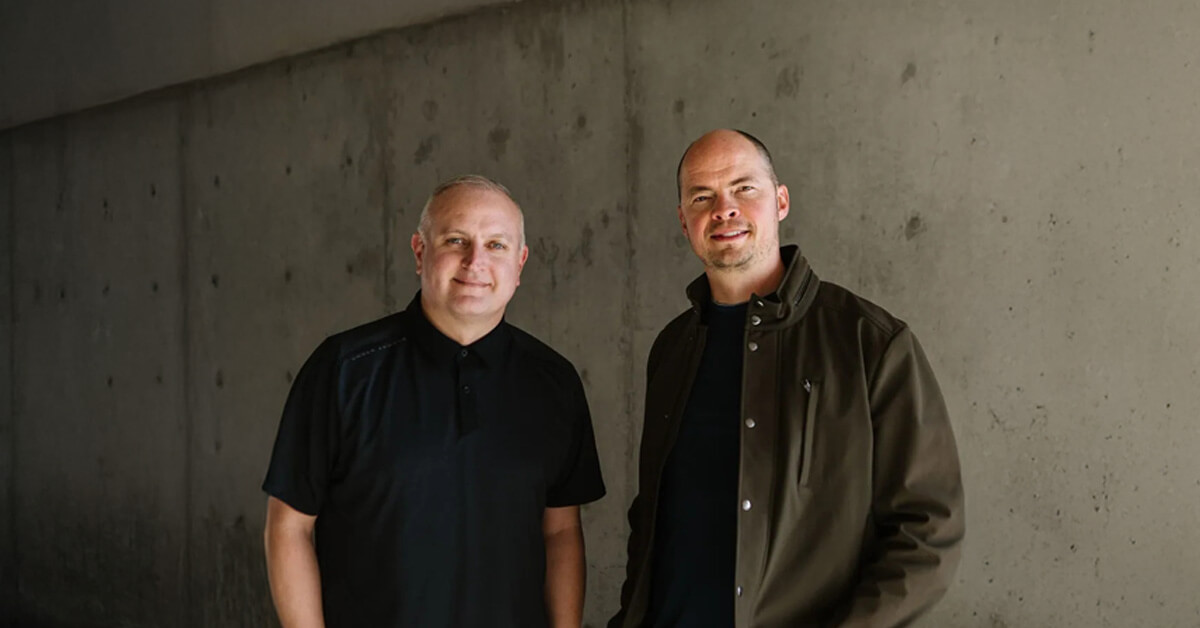
In this episode, I’m joined by Chris Deaver and Ian Clawson to explore the seismic shift happening in the creative world. We talk about why fear isn’t a strategy, and how the future belongs to those who embrace co-creation and work “brave together.” AI is exposing surface-level work, pushing us toward deeper human creativity, better taste, and more meaningful storytelling. We also discuss the rise of fluid, fractional careers, and why adaptability and trust are now essential skills for creatives navigating constant change.
Ian Clawson helps leaders build cultures people love as a co-founder of BraveCore. He is co-author of Brave Together: Lead by Design, Spark Creativity, and Shape the Future with the Power of Co-Creation (McGraw-Hill) and is co-host of the Lead with a Question podcast. An advisor to startups and accelerator programs, he has contributed to culture shaping and organizational growth through leadership coaching. A regular contributor to Fast Company, his work has also been featured in The Wall Street Journal, Forbes, INC, The Next Big Idea Club, USA Today, The NY Post, Big Think, Influencive & Disrupt Magazine. Ian is also co-founder of StoryCircle, a development studio focused on cocreation, world building & original storytelling acting as a lead writer and story architect. He has a past life in the field of sales and marketing with a copywriter skillset and a passion for connecting products to consumers. Ian earned a degree at BYU-Hawaii in International Cultural Studies where he developed a high interest in World Philosophy and Communication Theory.
Chris Deaver is cofounder of BraveCore, a leadership consultancy that helps leaders be more creative and creatives be better leaders. He’s influenced Fortune 500s from the inside, including Apple and Disney, creating breakthrough content like Different Together and Collaboration by Design, and inspiring teams shaping iProducts and Star Wars experiences. His clients also include other Fortune 500 companies, such as Amazon, Google, Microsoft, Coca-Cola, LinkedIn, Nike, and Lockheed Martin. He is the co-author of Brave Together: Lead By Design, Spark Creativity, and Shape the Future with the Power of Co-Creation that was published in December of 2023.
Chris and Ian’s Book | Website | Newsletter
Zack Arnold: The reason that I wanted to bring you two specifically, and why I’m so excited about this, is you live at a really interesting and unique intersection. You’re at the intersections of all these Venn diagrams, including creativity, collaboration, understanding the studio side of the business, and also how to live and design a life built on intention and purpose. All of that is coming together to better understand how we use technology to express our best creative selves.
A little bit of this might be repetitive for those that have listened to our previous interview, but by and large, I’m going to assume most people will not have listened to it yet. So just give us the general two-to-three-minute version of the work that you guys do, how you consult with major studios, and what you bring to the table as far as creativity and collaboration, just so we better understand who we’re talking to today. I’ll start with you, Chris, and then I’ll let you take it, Ian.
Chris Deaver: Yeah, I’m still thinking about that Venn diagram. That’s a good way to describe it—convergence. And more and more in the world we’re in, there’s more of this kind of convergence. A quick snapshot of the bio: I did work at Apple, Disney, and various tech companies. The main point is that we have an affinity towards creatives. We are creatives ourselves, and we love to build things. We’re in a time that is very exciting for building together.
At the highest level, our work is about recognizing this baseline of fear that’s in our lives, subconscious and conscious. Let’s take AI. It is the elephant, but I don’t know if it fits in a room. It’s very big. It’s looming. It’s more like that giant ship, and we’re not sure what it’s going to do. Is it going to land? Is it going to destroy us? A lot of people are feeling, “What is this going to mean for me, my career, my organization?” Breaking out of fear is about being brave, and we all need to be brave. That’s a good thing, but it has its limits. We can work harder, smarter, hack, hustle, optimize, but that can all get us so far. We have to be brave together to really lean into the future and lean into this wave of co-creation that is all about how you win the future. Well, co-creation is the key.
Ian Clawson: Awesome, Chris. One of the mantras we started out with, Zack, was we set out to help leaders be better creatives and creatives to be better leaders. Usually, those two parties are at odds—ideas and execution. We’re in a world where it’s hybrid. We need to be able to synthesize, to combine forces, wisdom, and resources. In the age of AI, this is an incredible time we’re in.
In terms of what Chris just laid out with fear and being brave, we usually have these pauses between episodic events that happened in society, and now they’re happening weekly, monthly, daily. Left is right, up is down. We couldn’t be more happy to be at this intersection of creativity and leadership principles. But it started with us in our own professions, keeping our heads straight but also having this nagging feeling that our creative identity needed more exploration. So we started diving into that side of our identity a few years back, more openly with vulnerability and courage. The output is the book that we wrote, Brave Together, and the journeys we’ve had with client work and the people we get to intersect with.
Zack Arnold: I appreciate both of you giving us a little bit of that overview, and not just, “Here’s what we do, here are our job titles,” because that’s where a lot of people go. Both of you immediately went to, “Here’s why we do what we do.” And that’s what I love about these conversations, is that you start with the why. You answer the question with your why.
You said a really interesting thing, Chris, that I’m guessing at least a few people raised some eyebrows at. “We’re in a really exciting time.” Really? I’m not sure I’d use the word exciting as much as terrifying, overwhelming, what the hell is going to happen next. Speaking of your book, I’m going to go to a line that you had. The book came out in 2024, so I would presume you wrote it in 2024, maybe even 2023. You said, “Now that AI can do what knowledge workers have done in the past, the world is at a tipping point. The future belongs to the brave ones who can unleash the power of co-creation.” The world has changed in the last year or two. Do you still totally stand by this? And if so, tell me why the future belongs to the brave ones, because I’m kind of terrified for all of us right now.
Chris Deaver: No, absolutely. I feel none of us could pretend that it’s not crazy out there. We’re all feeling it, and emotions are contagious. It’s like we’re not in the canoe, gliding along. It’s like river rafting, and it’s not just river rafting; it’s like the guide, the mini Arnold Schwarzenegger that’s bragging he’s done this a thousand times, just got catapulted over the top of us. We’re trying to hold on as this raft is going over us. We’re all in this moment of everything feeling like it’s shaking.
But the good news in that is if we track back, phones and the internet were massive disruptors. If we had just decided, “I’m just going to skip out on that because it’s going to be too painful for my job,” that would have had a negative impact on our lives. These things have created potential for supercharging. AI may have positive or negative effects, but what we do know is this is opportunistic, and it’s a layer that’s being added into a lot of other things that has potential, I say, especially for creatives, because if you look at it as another tool.
One example of this: we’re at BYU talking to a friend who’s worked at Disney, DreamWorks, Digital Domain. He runs the program there, and it went from zero to winning Emmys most years. They get recruiting from Pixar, etc. Two years ago, we’re talking to him, and he’s like, “We’re leaning into the tools.” And why? Because yes, AI is getting really good at it. It can scrape your stuff, it can copy and paste, and essentially become the worst nightmare of an artist, right? We saw the Ghibli effect that was everywhere. But then the question becomes, what can we create that is special and that relates to a story in our heads? What’s the narrative that we’re building? If it’s shared and co-creative, what we’ve seen over the course of time, throughout all of history, is that teams build great things. That’s co-creation.
Ian Clawson: Zack, I think the unsettling feeling that everyone is having is we’ve gone from tech where the computer introduced word processing, which changed the work dynamic completely, but now you add AI as a layer over that, and it’s work processing. The reality is a lot of us in our roles have been these tools that AI is becoming, and so that feels really awkward. I think AI is exposing our creative identities. People that are just playing on the surface and checking the box, clocking in, clocking out—it’s not enough. We’ve got to be critical thinkers, we’ve got to be tastemakers, we’ve got to lean into that creative identity. That’s the hard change. I think for a lot of your listeners, they’ve been in this creative space, so they just go all in and use it as a tool. What are the possibilities of what can be created then?
Zack Arnold: Just to add to what you said, I had written over two years ago—and I got a lot of flack for it, but I still stand by it—as soon as ChatGPT came out, I wrote that AI is going to kill the careers of the mediocre. If you wrote okay social media copy for Facebook ads, gone. If you wrote okay listicles for a blog, your career is over. But if you really understand how to connect the dots and identify patterns and synthesize ideas—i.e., create them—and then you add the layer of co-creating together, and now you add artificial intelligence on top of it, that’s the part that I’m excited and not terrified about.
So let’s talk about not just creative collaboration, but how does the “brave together” framework and co-creating work when one of your co-creating partners is a robot?
Chris Deaver: Great question. It is a fascinating moment, and it’s generative, so it gets smarter, more attuned to your preferences or your style. There are studies with doctors, potentially even managers, where people feel more empathy from the bot, from the AI. Does that say more about these people in these roles than about the AI? I don’t know. Do we need to become more human in the way we dial in, the way we are empathetic and compassionate?
Steve Jobs would say, “The convergence of the humanities and technology.” But are we truly amplifying that? Excellence above all. These things will shave off what isn’t that great because they won’t survive the scrutiny of the quality test. The simple step is just to start testing. You’re saying, “Start with ChatGPT.” I call him Chad. Just fire off a question, keep testing. Yes, this is an aggregation of the data that’s out there, but there are possibilities where, if you’re infusing different prompts, you can start to create original things that have not been done before. What that means in terms of IP or protection, that’s a whole other conversation. But can you start to create truly original things in that context? Absolutely.
If you step back and you say, “Okay, what is happening in the marketplace today that’s doing this?” There are organic movements. Look at the Minecraft movie. Now, granted, that’s a game, but it’s very collaborative, very co-creative. One of the writers, a friend of mine, his approach has always been to co-create. He has a co-writer. They write together. They have a broader team. This could have just gone out and flopped. I don’t know to what extent they use these AI tools, but if we’re talking about the context of co-creating with others, with a proper team, and then you supplant the technology, it’s a convincing point about the power of co-creation in today’s world.
Ian Clawson: There are two words that come to mind here that help with this mindset. One is the word “artificial.” We need to continue to remember the deep meaning of artificial intelligence. At best, what we have is machine learning that is replicating our humanity, a current snapshot, but it’s artificial. It’s not intelligent. So we fear this thing that lives and breathes, but that’s just one thing to keep in mind. The other is “generative.” We loosely use the terms “AI helped me create this artwork” or “AI helped me create this article.” No, it generates things. It scours external sources. Machine learning is at the best it’s ever been, and that’s why we’re surprised by it, but it’s still combing through what humanity has done. So if we want AI to be better, we as humans must get better. That’s the creative piece that’s very attractive for the time we’re in.
Zack Arnold: I’ve always wondered, how would we react to this if the Terminator franchise didn’t exist? I feel like that science fiction planted the seeds in our brain that this artificial intelligence is so scary. One of my guests, Maxim, said, “It’s not artificial intelligence, AI is just algorithmic imitation.” Boom, that makes so much sense.
But to go back to something you said, Chris, about co-creating new things, here’s the challenge: are we creating it, or is it creating it? If we’re talking about the Studio Ghibli phenomenon, yes, you can say, “Well, I gave it the prompt,” but the look came from a lifetime of work of both one man’s brain and an entire studio behind that brain. Given all of your experience with Disney and Pixar, I could say, “Make me a short that looks just like Toy Story 3.” So how do we find the line between co-creation with AI versus just stealing from all the information from other people’s co-creation?
Chris Deaver: This is interesting because this isn’t going to get any easier; it’s going to get harder because the technology is going to continue to improve. You could have entire gaming systems that could be AI-generated. You could create a version that’s custom. Going back to your point about this dystopian future, we know that the most powerful person on earth is the storyteller, and the most powerful stories are the shared stories about the future that are actually true.
If we go back and we ask ourselves, what stories weren’t true? Y2K was quite a story that scared the hell out of a lot of people, but it was fake in the sense that what we anticipated as the end of things never happened. Naval says about AI, “People are complaining about the bots, but they’re already here.” So maybe the better question is, what are we doing with these tools that are already in place to create great things? If the answer to that is, “I’m just scared all the time,” we can live in fear for the next 10 years, and that’s a horrible way to do it.
When we see people who are succeeding, teams that are building, and yes, to your point, what is that world going to be like where you can produce these things that fast? I get excited about it. The pace of change is so fast that the functions and the assumptions we had about even IP protections are going to have to evolve. If we stick with the pre-existing frame and assume the future has to fit within that frame, that’s not necessarily true. There’s a lot of things about AI, there’s so much unknown. When we get into the space of the unknown, we’re in the river rapids, and we’re freaking out that we’re going to die. But in reality, what’s going to happen is, yeah, maybe you get thrown out, but you get pulled back in. And if you work as a team, you’re going to face those rapids together, and it’s going to be a thrilling experience.
Zack Arnold: One thing to add, I love this idea of the raging rapids, but I feel like a lot of people are saying, “I never signed up for this ride at all. I wasn’t even supposed to be in the water.” It’s not a matter of “there’s so much change, and it’s a little scary, but we’re ready to embrace it.” It’s, “We were just doing things a certain way, and we just want to keep doing them our certain way.” I’ve been saying, why in the world are we fighting so hard to go back to normal when normal wasn’t fucking working? The uncertainty right now is scary, but this is our chance to build something that was better than the shitshow that was the entertainment industry pre-COVID. That’s where I think AI and our collaboration as humans, coming back to co-collaborating, says we’ve got a blank slate right now. But right now, yeah, it’s kind of a messy shitstorm.
Ian Clawson: Totally. I think most people are scared that AI is going to replace storytelling, but I think AI is going to reward the great storytellers moving forward. We’ve all seen it; if it’s watered down, if it feels like we’ve seen it before, there is not that much thinking or creativity baked into it other than generating things that are just populating the internet. Most of us that are tastemakers can discern between these shallow things. But the people that will be rewarded are the storytellers. You have to harness that and use this as a tool co-creatively. We wrote an article recently, a newsletter, on how to put the soul back into writing. We need to see it in terms of how it can enhance our work and combine ideas, and that’s where you’re going to see these novel, original ideas emerge.
Zack Arnold: I agree with all that, but there’s also a double-edged sword. I want to come back to something you’d written, Chris. You said that AI won’t eliminate all of our work; it will just eliminate the boring work, the stuff that we don’t enjoy. Here’s the double-edged sword: what if the work that we do is kind of the mediocre work? What if it’s the boring work, but that’s kind of what I enjoy? I honestly believe that there are a lot of people that enjoy being a part of the process but not necessarily being integral to the storytelling. They don’t need to be central. And like you said, we have been the machines. So then how do we now embrace the tools so that we can be a part of this new machine?
Chris Deaver: I saw this meme of a building, and the chat prompt said, “Upgrade this building.” It’s highlighting the limitations. AI cannot do that right now. We can ask ourselves, what are the limitations of it? What are my strengths? And what does the future need? Find that overlap.
The future is definitely one in which we’re going to have to get the reps in with AI, get the reps in and build that muscle memory because it will make you better at what you do. It’ll make you better as a creator, but not depending on it for everything. It’s figuring out where those spaces I can continue to create and build, and where are those things that it can do. It’s not an either/or answer. The synthesis is this is going to produce some original things, and trusting that that can happen. But there are also some cautions about not buying into fake things and steering clear of the derivative. But that’s true of art in general.
Ian Clawson: I feel like we’re at this point where we graduated from college and we thought we were done, but this is a whole new school of hard knocks. As humanity, we’ve got to dig deeper right now. The surface-level playbooks and rules we’ve become accustomed to—everything’s shifting. The game’s changed, the rules have changed. We need to place a more firm anchor on where we stand, what we believe, how we think, and the kind of work that we are curious about.
People that are displaced have relied on their hard skills. In recent years, we’ve heard soft skills emerge. Actually, both are needed at this time. And we’d argue that there’s even a greater need for deep skills—the stuff that goes right to the core of our humanity, our character, integrity, our principles and values. If you don’t have an anchor or foothold with your own set of first principles, how are you going to navigate this current time we’re in?
Zack Arnold: That’s exactly why I wanted to have this conversation with you guys. I’m going to piggyback off a conversation I had with another guest, where he said that fire isn’t inherently dangerous. It can burn down an entire city, but you can also use it to heat your home. I have incredibly sharp knives in my kitchen. I’m making the choice to use them to make food, rather than stabbing my neighbors.
Where I also feel hopeful is that, by and large, most humans are good people, and I think we’re going to figure out how to use this, even if there needs to be regulations around copyright and IP. But we should never have our ideas blatantly stolen. But knowing that it can be a dangerous technology, I want to count on the fact that we’re going to make the right choices. Let’s say that we’re going to co-create and sit down and write a movie together and bring AI into it. How much of this do we need to tell people? Do I say, “This clip was made with AI”? It’s a really slippery slope. What are you guys seeing in your conversations?
Chris Deaver: That’s a great question. The answers are not as clear; it’s a bit blurry. Sometimes it’s obvious, but other times, I think we’re getting into that world where you can’t always tell the difference. Just like with film, you’re like, “I don’t know if that was special effects or if it’s real.” I think that will continue to evolve. It’s a question of how we navigate as we go.
I think for now, what I’d say is, you continue to create, keep building things with others. An artist used AI to win an art award. We could parse out the question of where that originality sits. There’s also “vibe coding.” People are creating games. There’ll probably be “vibe movie making” not far out from now.
Zack Arnold: I’m 100 years old and not on social media. I don’t even know what “vibe anything” means. What does it mean to “vibe code”?
Chris Deaver: You’re just putting in prompts, and it’s building out code. Instead of having an entire team of coders, you’re prompting it. I think in that case, with film or whatever creative endeavor, you know, as Steve Jobs would say, “Creativity is just connecting things.” If these iconic elements, these symbols in the Joseph Campbell sense, the mythology, pre-exist, and we’re just organizing them, then how are you going to best organize these things in creative ways that express the best in humanity and the best originality that inspires people? If you stick with that, you’re probably going to be in a good space.
Ian Clawson: On LinkedIn, for example, in my feed, it’s quote after quote, and everyone’s claiming that it’s their quote. It’s pretty ironic. But I think those that are well-read and growing can spot the differences. We point out in Brave Together that one of the meta principles is “create context.” Everyone’s focused on creating content, but that’s what the Information Age was all about—a time where everyone’s trying to find meaning through information. There were the arbiters and safe gatekeepers of silos and consultancies.
But now we’re in the “contextual age,” as we point out in the book, a place where we can create meaning. If things are going to be superficial or trivial and just in the content realm, well, that’s in the realm of memes. There’s a place for that. But what we’re really after is creating meaning and context, and I think that’s what will give people the edge moving forward.
Zack Arnold: I’ve been saying for years that information is no longer the solution; information is the problem. I remember watching my kids during COVID, and I was just sitting there as an observer. They didn’t want to sit and watch movies; they were watching YouTube shorts. This is right when Mr. Beast took off. I spent most of their childhoods showing them all the stuff that I loved as a kid, like Raiders of the Lost Ark and Back to the Future. And then I thought to myself, “What the hell is my son going to show his kids?” And I think he’s going to show them Back to the Future and Raiders of the Lost Ark and Star Wars, because you’re not going to say, “Oh my God, this TikTok video from 15 years ago, I want to watch this with you.”
Content has gotten such a bad name, and I think the content itself is not the problem; like you said, it’s the quality and the context of it. One of the things that I’m trying to do is bring these two separate worlds together. We’ve got creative professionals, but now you have creators, and the creator economy is eating Hollywood’s lunch. There are these two separate worlds. The creatives are like, “Oh God, I hate the word ‘content’,” and the creators are like, “Oh God, those elitist Hollywood creatives.” How do we bring together the creatives that have decades of storytelling experience with the creators that understand how to build businesses but, by and large, are not very good storytellers?
Chris Deaver: Empathy is definitely that bridge. For creatives to recognize they’re not the aonly creative ones. We’re all creators, and the best expression of that is being co-creators. If creatives can recognize that with these tools, creativity is becoming democratized, creators are everywhere. For creators, recognizing that creatives are an engine. They’ve expressed originality; they’re a great example of how to do something different that makes our hearts sing. Part of that may be honoring some content that had a lot of meaning.
Ian Clawson: Back to the Future, Indiana Jones. Cobra Kai.
Zack Arnold: Ooh, I like the plug for Cobra Kai, by the way. Nicely done.
Chris Deaver: On the creator side, I think creatives recognizing, “Hey, there may be a lot of meaning you can bake into these mini-experiences.” My daughter started making bracelets and crocheting. I’m like, “How did you do this?” And she’s like, “Oh, I watched YouTube Kids.” So she’s picked it up, and now she’s out as an entrepreneur, she’s 12, selling these bracelets, making a thousand dollars. That’s legit. She’s learned how to make her craft excellent. If creatives can also see that for creators to be excellent at something, that quality bar is high, we can help them raise that. The people sharing those videos, they could have hoarded that knowledge. They didn’t have to post those videos. Because they did, that carried over and it scaled. They’re influencing the world.
Ian Clawson: The trend we’ve seen with personal brands, I think that’s going to morph into something else. We’ve also seen a trend in the workplace for fractional roles. I think what we’re going to see is fractional teams. This brain trust concept that we’ve experienced, I think we’re going to see this aggregate and this free agency of fractional brain trusts. Imagine getting to participate in projects or work that matters, but you get to be a part of a team that’s working on this project, and then you also get to toggle with this other team that’s working on this project. We don’t need to be these personal brands that form our own islands and empires. The personal brand era is really a chance to be creative. Imagine what you could do when you actually combine forces in teams.
Zack Arnold: I don’t know if you realized it, but you just pulled the string. As soon as you said fractional, my brain just went, “Ding!” I’ve been writing for a long time that I believe the future is fractional. With the proliferation of AI and the globalization of our workforce, it’s going to be immensely difficult for us to make a living doing one thing for one company. We have to fractionate and provide different roles for multiple teams. The scary part about that is, like you said earlier, we thought we graduated from college and we were done. Nope. There’s a whole new set of skills and tools—time management, networking, and otherwise—that we’re not equipped for. But I also think there are so many opportunities where you don’t have to work for one company on one project over and over. My team is fractional. Everybody’s part-time. Up until about six months ago, I was a fractional CEO at my own damn company because I was editing Cobra Kai, recording podcasts, and doing coaching calls. I just think that’s the future for creatives.
Ian Clawson: Love it, Zack. So good.
Chris Deaver: Yeah, the emotion for people is probably either excitement or a sense of, “Hey, okay, this is new.” Any new experience, any new skill takes effort. And it’s also very different. Maybe it felt more incremental before, versus something that’s revolutionary. Maybe they’re going through the wilderness, and you’ve got to use a bow to hunt. You figured that out. And now it’s like, “Oh, now you’re told, ‘I got to build a boat now to get across this ocean in front of me.’” I think people are probably feeling that sense of, “I’ve never done this before. This is really hard.”
The typical answer is “it’s either/or, I’m in or I’m out. Robots are going to take over.” But the reality is, maybe it’s a more nuanced future, a more synthesized version. Maybe those Terminator bots are actually reprogrammed, and they’re planting seeds or building cars. And then we’re saying, “Hey, what’s the more high-quality version of work we prefer that still has value?” and “What is fulfilling?” We see traditional societies over time, the story arc is they always end up getting into the arts. What we’re seeing here feels like the entire course of history coming to a close. And we’re at a time where there are a lot of geopolitical and market forces on top of all this AI stuff that feels very dislodging. But again, going back to Ian’s point about being grounded in principles, it’s that question of what won’t change.
Ian Clawson: That’s a good premise to start with.
Zack Arnold: That’s one of the questions that I constantly ask myself. What can I predict isn’t going to change? One of my hypotheses is that humans have needed stories since the beginning of evolution. We need stories to help us make sense of our humanity. One of the opportunities that I see coming from all this is that it comes back to your expertise on collaboration. The reason that I don’t feel that my storytelling skills are going to become obsolete is because nobody knows how to communicate what they want. If you give the producers the “edit bot,” and there are now editing tools out there that are saying, “Edit this scene like this for me,” the problem is, you need people that know how to communicate their ideas. As soon as you see the notes that you get from an executive, you’re like, “We’re fine,” because we’re the only ones that know how to interpret people that have no idea what they’re doing.
Chris Deaver: Yeah. You have things like Marvel did with Secret Invasion, and they did the whole intro with AI. Granted, it was still early stage, but it was horrific. It looked bad. Powerful people at Comic-Con apologized. What you said is, what are the things it can’t do? I’ve seen many posts with trailers and things, and you can feel the deadness in it. There’s not life infused into that. It’s not to say it can’t be, but that’s the question where we, in our humanity, we know what feeling like a human feels like more than any bot will ever. That is our corner on the market, our differentiator.
On top of that, we know what it feels like to be in a deep relationship with other human beings. No bots can ever do that. So what is the true power of differentiation? That is the ultimate differentiation. If we tap into that, you’ll tap into the stories that really unlock our souls, that make us continue to digest the meaning after we get out of the movie. It anchors our future. We’re inspired by them.
Ian Clawson: Yeah. Right now we have a canvas. The uncertainty is a canvas. What can we create together in terms of meaning? How are we going to move forward? It’s all up for grabs, but we get to hold the pen, each of us. Mindset is a big deal. We all know people that are fixed-minded. Then you know the trend of growth mindset. But to your point, Zack, the speed of change, we’re not ready for it. You could be as growth-minded as you want, but you’re still going to feel this push off the cliff every day. So the era we’re in, we actually need to adopt a “fluid mindset.” We need to have the belief systems that we hold dear, but we keep our ideas loosely with an openness to learn and a healthy amount of skepticism, but not to be untrusting in everything that’s happening. There was an era where people could get ahead with being tech-savvy, but now we’ve got to become “trust-savvy.” We’ve got to be more trusting of each other and extend trust to others and AI in ways that we’re not comfortable with.
Zack Arnold: I completely agree with this idea of approaching it with trust. I just wanted to point out the hilarity of we’ve gone from being in a canoe to the rapids raging to being pushed off a cliff. See how fast that happened in the course of less than an hour? And it wasn’t just pushed off a cliff; you’re getting pushed off a cliff every day.
I want to come back to one thing that I think is so important, which is what you said, Chris, about empathy. This is where the Dunning-Kruger effect might be in full force, but when it comes to how AI or AGI works, this is what I keep coming back to. In order for there to be consciousness, I would assume we have to say, “Here is what consciousness is,” and let’s program it. We want you to be empathetic. Here’s what empathy is. We want you to be a conscious being. Here’s what consciousness is. We have no fucking idea. That’s kind of the pursuit and the meaning of life. If you said to somebody, “Describe empathy,” you can’t actually describe what it is; you describe what it feels like. So how do we expect machines to do that if we’re the ones creating them, and we don’t know ourselves?
Chris Deaver: And as products and services start to look and feel more like art, an expression of our creative meaning. Let’s just go with painting. Is there a way to differentiate? What is it about those paintings? We’ve all had the tools to do this for thousands of years, so there’s probably millions of paintings. But what matters in terms of the higher quality? You look at a Rembrandt or a Michelangelo. What is it about those? Well, they tap into our soul. The amount of quality effort and intuition into a sense of principled guidance to building something that can last generations, I think that stays true.
Take Rick Rubin, for example. The Creative Act—one of the greatest books. The guy is totally analog. He doesn’t actually compose the music. He doesn’t know how it all works. Basically, what he knows is what feels right, the tastemaking of it. If we think about vibe coding, vibe creation, whatever that looks like, it’s the combo between the empathy prompt, the human reality prompt, and the best expression of it, coupled with technology. Well, that goes back to the Steve Jobs thing: the convergence of humanity and technology being the best expression of the future. Walk around Apple Park, and this is the experience you have. You’re like, “Okay, there’s a lot of technology here, but it feels very human to me.”
Ian Clawson: Superintelligence, I don’t think is possible unless we are modeling empathy at a larger and higher rate than we currently are. There’s a depth needed in our humanity for superintelligence to even mirror what our humanity is doing. We’ve had our intention on optimizing ourselves in terms of personal growth or as creatives or as leaders.
Zack Arnold: Guilty as charged, by the way. Former name of my former brand. It is no more. Guilty as charged. Continue.
Ian Clawson: The future is going to require us to optimize our relationships. With that lens, AI included, that’s where we’re going to really get to create the meaning that we’re all yearning for.
Chris Deaver: I would add to that our relationship with truth and with love. In that Interstellar sense, love transcends space and time. Those things that stay true. To be able to parse out not just what is fake in the sense of “I don’t want to be tricked,” but fake in the sense of it’s not as high value. When we sit in an orchestra or an opera, the voice lands in your soul faster and stronger than reading any document. There’s something there that is soul.
Being guided by principles, or powered by principles. The elusive perpetual motion machine can be achieved in this sense. Those connections between what we’re expressing are deep relationships with others. The technology is expressing the best of that. So if you ask, “What are the practical steps to going about this?” Start iterating. Don’t be afraid of the tools. Start iterating with them. Start iterating with others.
Ian Clawson: Integrate your relationships. Get better at it. We all have room to improve there.
Zack Arnold: There is probably no better way to conclude than that because that’s going to be the perfect segue to one of our days in this summit that’s literally all about how we make meaningful connections and build these relationships. So I would say that, other than the fact that I feel like I’ve just barely gotten started, this is a wonderful place to conclude today’s conversation. I just wanted to thank you both immensely for bringing such great ideas and, for me, even more optimism about the future, as long as I’m willing to roll up my sleeves. Chris, Ian, if there’s anything that we haven’t talked about yet, now is the time.
Chris Deaver: I really appreciate the time, Zack. I’d just say again that the shared future is exciting. I grew up, we grew up in the 80s, Gen X. It’s always a dystopian future. “Be home by dark.” But if we can make that shift, and all these other generations who I think have a deeper sense of optimism about what things can be, and therefore maybe even more pain when it doesn’t look or feel like that. If we can, as Ian said, trust each other, trust in what we’re doing, and then trust the technology to the extent that we need to to shape that shared future, it’s going to be brighter than ever. I’m excited for it.
Ian Clawson: Zack, thanks for a very meaty conversation. I feel like we’re aligned on a lot of fronts. I’ve also shared the sentiment that we could talk for another four hours, and it will feel like one hour. Now, you make me want to go back and watch the Back to the Future trilogy, so thank you for that.
Zack Arnold: It’s never going to not be worth your time. It holds up very, very well. So for anybody that is new to you, your work, or your book, if we were going to send them to one place to get started, where should I send them?
Chris Deaver: At braveleap.com, we’ve got artifacts there, we got the book, quick links. The book is the best way to dive into a lot of these themes. We felt like, speaking of Back to the Future, you’re coming off the DeLorean, 30 years in the future, and you really want to share what you’re finding. We’ve had that feeling. There are bits of the future all around us; it’s just about combining those.
Zack Arnold: Alright, braveleap.com, you heard it here. I really encourage anybody that is here watching us today to definitely dive deeper into your resources because Brave Together alone will just change your mindset about what it means to co-create with others, and I think that the future of our humanity literally depends on it right now. I just want to thank you both for all the work that you do and for being here.
Chris Deaver: Thank you, Zack.
Ian Clawson: Thanks, Zack.
Edited by: Curtis Fritsch
Produced by: Debby Germino
Published by: Vim Pangantihon
Music by: Thomas Cepeda
Matt shares insights on building meaningful relationships, rethinking how you pitch work, and staying creatively alive when you want to shut down.