


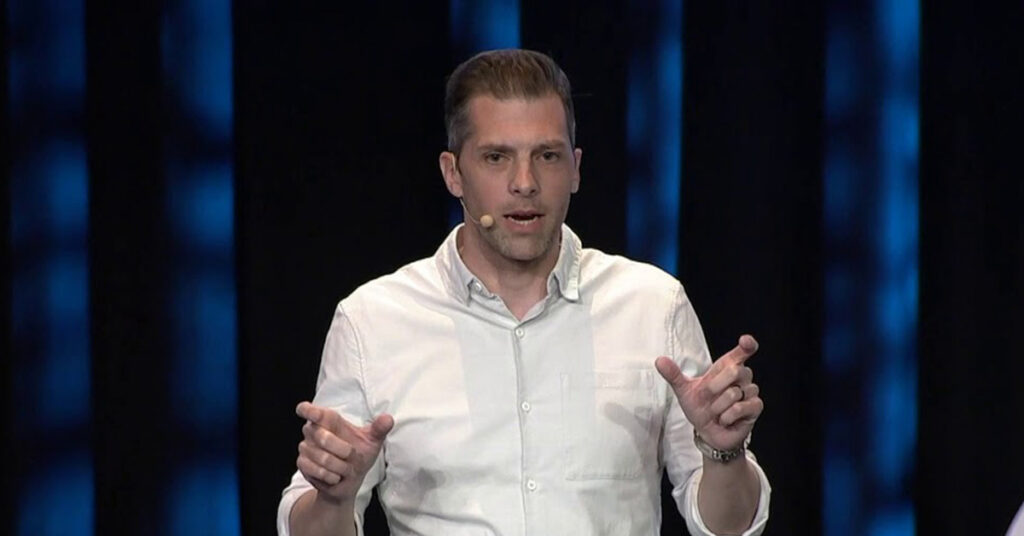
Feeling Lost? It’s Time to ‘Find Your Why’ | with David Mead
People don't buy what you do, they buy WHY you do it. Learn how to define and find your own unique why with 'Find Your Why' author David Mead.
Let's create things that matter. Together.
It’s amazing how global pandemics, worldwide protesting and riots, and the general upheaval of society as we know it can make you think. It certainly helps to lend perspective on what’s really important in life and the choices we’ve made that led us to where we are right now at this moment.
One of the most important realizations I’ve had is that because of travel restrictions and both of my parents being in the highest risk category for the COVID virus, I have no way of seeing them in person again until there’s either a reliable vaccine or we reach herd immunity. At this point that could be months or even years.
For a long time now I’ve wanted to sit down and do an interview with my father to ask him the big questions about life that we seldom (if ever) really discuss. So for this Father’s Day, I decided it was time to prioritize this conversation, even if it meant having to suffer through the perils of recording on Zoom as opposed to chatting face-to-face.
This episode is a very special and personal one that I recorded for me, not for social media shares, not for search engine optimization, and not to grow an email list. This one is for me. But my hope is that listening to today’s conversation inspires you to reach out to your parents (if you’re fortunate enough they are still alive), or your siblings, or those who helped shape the person you are today so you can have an honest conversation just like this one.
I’ve created a series of 20 specific questions I’m calling “20 Questions to Ask Your Father On Father’s Day” (which can of course be repurposed to suit your needs). These questions were inspired by a similar exercise from high performance coach Brendon Burchard in this Facebook post.
If you’d like to use the same questions I asked in this interview, here they are:
YOUR BACKGROUND
YOUR CAREER
YOUR FAMILY
YOUR LIFE
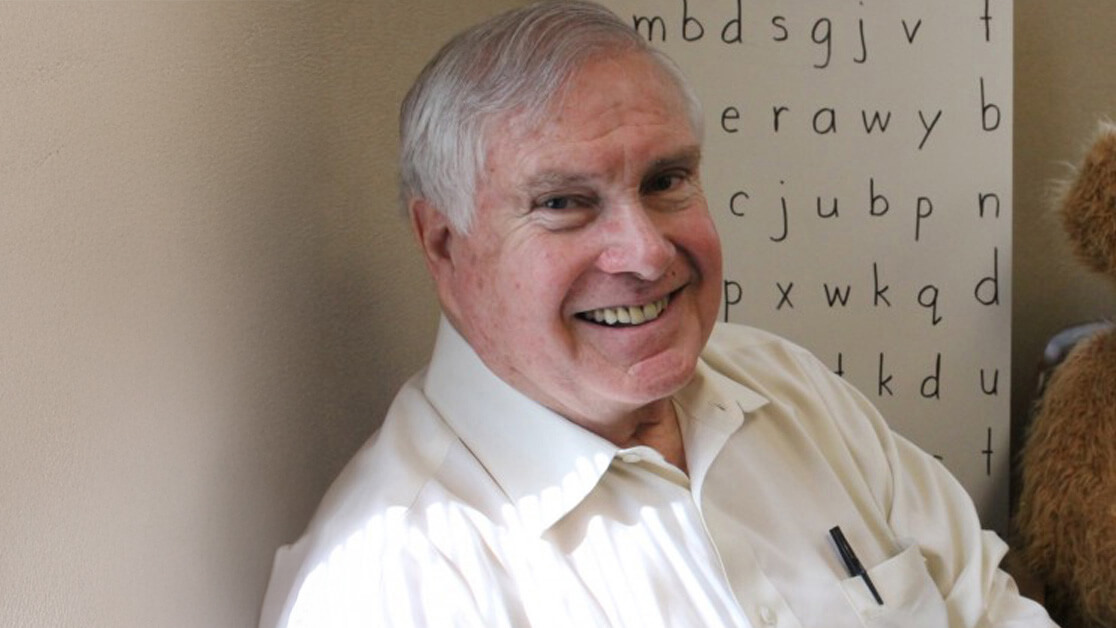
Al Arnold has been working with struggling readers for fifty years as an elementary classroom teacher, elementary principal, and instructor at the university graduate level in a program for certifying reading teachers and reading specialists.
He has always been engaged in studying the science of reading and struggling readers and applying it in his work. The elementary school where he was the principal received an award from the Education Trust in Washington D.C. for improvement in reading achievement.
In 2007 he established a reading clinic to implement and further refine the techniques and curriculum he has learned and developed to remediate struggling readers.
Zack Arnold: I am here today with Al Arnold. And no, it’s not a coincidence that he just happens to have the same last name as mine. We are talking today to my dad. So dad, welcome to the podcast.
Al Arnold: Thank you very much.
Zack Arnold: So this this interview has been roughly 40 years in the making, and certainly, actually a lot more than 40 years in the making, once we jump into the questions. The purpose of this interview to be perfectly honest with my audience, this one isn’t about my audience today, this one is just going to be about us, and this is me being perfectly selfish, wanting to get this interview in the can. I’m hoping that my audience sees this as an exercise that they can do with their dad for Father’s Day, or otherwise they can do it with their mom. So this is going to be a little bit off the beaten path of the way that I usually do things. Generally, I like to come to my conversations completely unprepared, with no questions, and just talk and have a general theme or idea, but just have a conversation. But today I have 20 very specific questions. And these 20 questions are questions that I have collected. Together based off of an exercise that inspired me several years ago, when I began the shift and the transformation and my life from one path to a very, very different one. An early mentor was a coach and a teacher. His name is Brendan Burchard, and he had this exercise that he shared one day on Facebook. There was the 32 questions that everybody should ask their dad. And I said, Oh, this sounds like a great idea. And I bookmarked it. And one of the things that I inherited from you in spades is my ability to procrastinate. So I’ve had this bookmarked for like, three years now, where I’ve wanted to do this exercise. And as I’m sure you can relate to there’s always something else that comes up that always gets in the way, and when the world starts to fall apart and there’s global pandemics and there’s riots and there’s burning in the streets, you start to look at things through a slightly different lens and realize what’s truly important. This is something that’s been important to me for a long time, and I decided I just needed to clear my calendar, and I needed to make this happen. So the idea is that I have these 20 Questions. I’m going to share all 20 of these questions in a PDF file that my audience can use if they want to be able to ask the same questions of somebody as well. And it’s broken down into four categories. So we have things that are just general about your life and your background and growing up. We have some questions specifically about your career. We have questions specifically about family life, and we just have questions about life in general, the big picture, and the meaning of life and all that good stuff. So this one, this could be a heavy conversation, but I know that you and I are no stranger to heavy conversations, so we’re just gonna go ahead and we’re gonna jump in and we’re gonna get started, and I’m probably gonna be done talking for the next 90 minutes to two hours, and now it’s gonna be all you. So I’m gonna talk a lot less than I usually. Do on these podcasts, because I really want you and your story to be the star of this one. So we’re literally just going to start with the beginning. And Question one is, when were you born? Where and what memories come to mind when you think about growing up as a young child.
Al Arnold: I was born in 1941 in Edgerton, Wisconsin.
Zack Arnold: I’m assuming that there are, there are some memories that come to mind when you think about growing up as a child that go beyond just being born in Edgerton in 1941 Yes, so what are some of the what are some of the fonder memories that you have of growing up as a child in Edgerton?
Al Arnold: The major memory I have of growing up from the time that I have a memory is certainly being a farm kid. I knew I was on a farm, and I thought everybody was on a farm, and that was life, but it was a very poor rural farm. We certainly didn’t have very much back in the day, when we didn’t have telephones or radios or televisions, and one of my, one of my earliest memories, is actually the exciting day of bringing some electricity to our home. The first time we had had electricity. And I was, I was no longer a young a little kid I was actually, was actually pretty good sized kid when they finally brought telephone service to us, I remember some some milestones. I remember the purchase of a tractor so that we could do some work on the farm with the tractor instead of Colonel and Queen the two horses that we had that did everything. I remember. I really didn’t know much. I didn’t know much about the war. I was a young lad during the during the Second World War, but I was too young to really understand or know much about the war. But I do remember, I do remember that our tractor had iron wheels. There weren’t any, wasn’t any such thing as a rubber tires that had iron lugs, iron wheels on it. And I remember being told that the reason we had the iron wheels on our tractor is because there was no rubber available, because it was needed for the war effort. So I did understand that there was a war going on, and that’s why we didn’t have rubber tires on our tractor.
Zack Arnold: So as a quick follow up to that, before we go to the next question, just so people have some semblance of a picture of Edgerton and what it looks like, it’s it’s going to be quite foreign for a lot of the people that are listening to this. So Edgerton was, was the big city compared to where you actually grew up on a farm in a place called newville. So just give me a very brief picture for somebody that that doesn’t really understand this environment. Just go ahead and paint that for me.
Al Arnold: Okay, but when I talk about being born and growing up in Edgerton. We that was our address. Our home address was Edgerton, Wisconsin, but Edgerton was about five miles away, and it was a town of a number of hundreds of people, and we didn’t get there very often because we lived. Are out in the real country, about five miles away from Edgerton. And when things things were really exciting and happened, we sometimes got into Edgerton to buy some groceries or to buy some things. So so it was a big treat. It was a big day when we got to go into the big city of Edgerton, of a few 100 people, and buy the groceries. And that was kind of a, was kind of a Friday night thing, I guess, I guess it was what you did on Friday night, is you, you drove into town to buy the groceries. And what happened was, my mother had collected the eggs for the week from all of the chickens, and she drove with all of her eggs into the grocery store and the eggs that she’d collected for the week, why she traded in for the groceries. And back in those days, she could take the eggs she had saved for the for the week and take it in and trade him in, and she would come home with groceries and some money. So she had more than enough. She had more than enough money from eggs to so she didn’t have to pay for the groceries and came back with some money.
Zack Arnold: Well, it’s probably no no coincidence then that the story I often tell about my upbringing is fairly similar. It’s not Edgerton or newville. But when I explain to people in the big city of Los Angeles where I grew up, and I say a small town, they say, Oh yeah, I grew up in a small town too. It’s only like, 30 or 40,000 people, and like, Huh, well, that town was 65 miles away from where I grew up. And for us on Fridays and Saturdays, you went to the big town of Ladysmith, which was all of 3000 people. And the closest stoplight from our farm, where you are at this moment, where I grew up, I believe the closest stoplight is either Thorpe or Ladysmith. So we’re talking a minimum of 15 to 20 miles just to see a red light, to see a subway eatery. So just to paint the picture, it’s very, very similar the story I tell, and it’s probably no coincidence that that’s where, where you ended up, but there’s a lot of stuff that happened in between there, and we’re going to get to all of that. So the
Al Arnold: The next step and that that hasn’t changed,
Zack Arnold: No, not at all.
Al Arnold: It’s, it’s, it’s still 21 miles to the to the nearest stoplight.
Zack Arnold: And that’s the one nice thing about growing up there, is that every time I go back, it’s exactly the same as it was when I left after high school. And most people can’t say that, most people will go back to where they grew up, and it’s completely different, and all the buildings are different, and this is bought out, and it’s grown and it’s expanded, and Nope, I basically grew up in a time capsule. I get to drive back there and it looks exactly the same as when I left. So I guess that’s in my case, selfishly, that’s a good thing for the sake of growth and prosperity. Maybe not such a good thing. But anyway, so the the next question, the next in this, this list of these 20 Questions, is going back to your childhood, thinking about who you have become today, and what it is that you do, and what you’re the most passionate about, what are the most formative memories or experiences that you have as either a child or a teenager that you think formed you to become the person that you are today, doing what you do?
Al Arnold: Well, that’s a tough question. There are a lot of things that influence. One of the things that influenced the direction my life took was I had some beer. I actually was fairly sickly. I had a lot of allergies, severe allergies. I eczema and asthma, and we lived on a farm, and that was kind of tough, because our living was made with farm animals, and I was allergic to all of the farm animals, so I couldn’t be in the barn where I was allergic to cows, and I couldn’t be near the horses because I was allergic to horses. And so it was found out in allergy testing that the only animal that I wasn’t allergic to was sheep. So my parents decided that if I was going to be on the farm and be productive, I was going to have to have sheep, so they put me in the sheep business, and I went into the sheep business when I was 10 years old. And my father gave me my own barn and building to take care of the sheep in and started me out with the flock of sheep, and basically made me 100% responsible for everything that happened, that everything was done with the sheep. And so I was, I was literally in business as a sheep man when I was 10 years old, and was involved in 4h and showing sheep at 4h fairs and so forth, and making whatever money and spending money I had with my own responsibilities. I remember being taught responsibility when I went into the sheep business. Why I was had to get my own checking account. So they opened a checking account. For me, and when I went to town to buy something for the sheep or for for my enterprise, why people look at me kind of funny. At 10 years old, I could hardly reach up over the counter to hand them a check. But I knew people in town, and they knew me, so as long, as long as people knew who I was, why my check was good. I was business with my my sheet business, my own checking account at 10 years old. And the the other thing that I remember that has stuck in my mind and has influenced me significantly my entire life is that my father said to me, he said, and he was very, very proud of this. He said, he said I could go into any store in town and tell them I didn’t have any money with me, and buy something and tell people that I would pay them later, and that would be fine. Everybody knew who I was, and everybody trusted me, and everybody knew that you could count on His Word. And he said, that’s the most important thing in life, he said. He said, I wouldn’t actually do it, he said, but I’m very proud that I could, that I could ask, ask for somebody to give me something without paying for it, and they would, because they know who, who I am. They know my reputation, and everybody trusts me.
Zack Arnold: Well, I would certainly say that that lesson has trickled down for sure. I don’t know if I can walk into any store in Los Angeles and have the same experience a little bit different playing field, but that lesson of your word, meaning everything, and following through with commitments has definitely trickled down to me and now trickling down to your grandchildren as well. You may have already stolen the answer to my next question, but I’m going to ask it anyway if, if you’ve already answered this, then you can answer it with the next thing down the line. But what is the most important lesson that you learned from your father? Is it this one, or is there another one you can think of that could go along go alongside of it?
Al Arnold: Probably it might be a theme in variations, but it really is the same thing, that the only thing that matters in life is your reputation, and basically how you treat people, that you treat people right, you’re always honest, and it will be returned. So, so it is a variation on your whole life. Is really your reputation that you establish, and what kind of person you are and how you treat people.
Zack Arnold: Well, this is, this is not going to be in the the official, formal questions, but given everything that’s going on in the world right now, I do want to have a quick follow up, and I want to define the people that deserve this respect, because you grew up in Wisconsin, very red, very conservative state. I did as well. And there, there are certain beliefs, you know, both sides of the the issue right now, but there’s a very deep and clear lesson that I learned from you, that I’m sure you learned from your parents, about which of the people it is that we’re supposed to respect and treat as equals.
Al Arnold: For the most part, it’s everybody. I mean, I certainly treat everybody with respect, and in some cases, I treat a lot of people of respect who someone could argue don’t deserve that respect, and in some cases, that influences them and makes a difference, and others, it doesn’t make any difference, but it’s, it’s, I really don’t stop and think, do I treat this person with respect because they deserve it? Or or don’t treat them. I just treat everybody with respect and and hope they reciprocate, and if they don’t, why that’s their problem. But at least I did my part, and I treated everybody right
Zack Arnold: Well. This might be jumping ahead in my questions a little bit, but there’s, there’s a story that you and I have been talking about that’s very timely to everything going on, that it’s one thing to say that you’re going to treat everybody equally and with respect. It’s another to follow through with it, and it’s even another to follow through with it when it’s not the popular and is maybe even a dangerous way to do so. So talk to me and talk to my audience about the story of both what you did in Jacksonville, Florida when you were in the Navy, as well as the first school that not the first school, but one of the schools that you began that has a lot to do with all the political issues around equality right now,
Al Arnold: That’s a very interesting question relating to my growing up. Because I grew up in about the whitest society that would be possible. It wasn’t that I was taught anything, or saw anything about people of a different religion or a different race or different creed or anything. Everybody was the same. Everybody was a pure white farmer in Edgerton, Wisconsin, and I don’t think, I don’t think I even knew what a. A black person was until I was quite old, and we lived, I guess, about 3040, miles from a town called Beloit bloyt, Wisconsin, that did have some black people in it. And I remember, for some reason, we drove to bloyd one day and I saw some, some black children out, and I was just like, What is this? I had no idea what it was. I had been so ingrained in me that you treat everybody the same, you treat everybody right, that it never, never occurred to me that it was just interesting and exciting you see somebody that looked different than I was and but I just thought that’s that’s just my business. A great day, I found out there’s other people in the world, they don’t all look like me, and so so I carried on with the idea that everybody should be treated the same, no matter what their color or creed, and continued that as a young man after high school, I went into the service. I was in the Navy. And I was actually on an aircraft carrier, CBA 64 the constellation. And we were stationed in Florida, pulled into Jacksonville, Florida, and this would have been about 1961 and went into town on liberty and went into a restaurant, and walked into the restaurant, and I had never I didn’t know such a thing existed, and I couldn’t believe it. The restaurant was like a mirror image. It was split down the center, and the two sides were identical, with one counter on one side and one on the other. And it had a sign up between the two sections where it said white section and black section. And I thought, well, I couldn’t believe this is the dumbest thing I’ve ever seen. I never heard of such a thing. Certainly had a lot of black sailors on the ship with me, and wasn’t aware that they actually made people sit in different parts in the restaurant. I thought, Well, I I don’t really think this is makes any sense at all. I’m not gonna have anything to do with this. So I actually, actually went over and said, it doesn’t make any difference what color I am. I actually went over. I went around the on the side and said, for the blacks, and sat over there just to show him I thought that was a dumb idea, and I wasn’t going to have anything to do with it. And then a little bit later in my life, after I got out of the service. I was actually a school teacher and a school principal in a private actually a religious school, and I was principal of a religious school in Warren, Ohio, and the church that I went to and the school that we had in Warren, Ohio was all white. Wasn’t a black person in it. Everybody was as white as I was. Didn’t think too much about it. But then I found out that there was a black church in Youngstown, Ohio, and I forget, maybe 30 miles away or something. And I thought, well, this is dumb. We’re supposed to be. We’re supposed to be religious people. Yeah, everything that we taught and learned as part of a church, and being part of a religion, separating the black people and the white people, didn’t make any sense to me. So I went to work and started working with the black church and the school in Youngstown, and actually gave a number of talks, or you might even call them sermons, on on more in the morning for church and talk to people in both places and to forgetting about segregation. And we actually, actually built a new school halfway between Warren and Youngstown and integrated, integrated the two schools. And so I was actually became principal of a school halfway between Youngstown and Warren that was into which was, which was a big deal at the time, and integrated the school and was a principal of a school it was roughly half white kids and white black kids,
Zack Arnold: Needless to say, without going into too much detail, because I want to make sure we stick with some of these questions, but I would imagine that neither of these decisions, whether it was sitting in the colored section of a segregated restaurant in Florida or starting a school where it integrates both both races. At the time, I would guess that neither of these were popular options or even necessarily safe decisions to make.
Al Arnold: Well, I was I was pretty naive. No, it’s not true. I wasn’t pretty naive. I was very nice. You. I thought, well, I thought, well, this just, this just makes sense. Any, anybody that’s a decent person, and we were talking about church going people, Christian people, and we, I thought, Well, gee, it just makes sense. Who, who could, who could complain about this? And so to my surprise, some of those good church going folk on both sides, both the white the black. I found out they didn’t think that was such a good thing to do, and they weren’t too happy with me. In fact, some folks are quite unhappy with me for integrating the white church and the black church and and starting integrated school. So yeah, I was, I was, I kind of got a I got an early education about just because it makes sense and it’s right by some people just aren’t going to go along with it.
Zack Arnold: Well, what I do find interesting, and again, this is kind of a one additional follow up, but you and I have spent years and years, possibly most of my life, and I don’t even remember how early back this goes, but this idea of scripts running in our head and guiding a lot of the decisions that we make. And I would say that an ongoing theme of everything I’ve learned from you through example, over and over and over is I’m going to choose the really difficult but unpopular opinion and try to make some major change or shift, no matter what the consequences. So I’ve seen this, journey with you even much, because I wasn’t even born and all this was happening, but I’ve certainly seen this pattern over and over and over of well, this is kind of dumb the way that we’re doing it now, and it’s not really right, and it’s not really fair. So even if it’s not popular, I’m going to try and do something to change this. So would you say that that’s a fair assessment, that that would be a popular script running through your head.
Al Arnold: I guess that’s a good way to to put it. And it also comes down to just, just do the right thing. You know, it’s I don’t stop. I don’t even stop. And think about, well, this may not be popular, this may be this may cause some problems, and so forth, although, if I think about it. I know that it’s true, but I don’t even think about it in terms of stirring things up or being a rabble rouser. I just think about it’s it’s the right thing to do. So if it’s the right thing to do, you just do it.
Zack Arnold: And as we start to unravel and talk about your background and all the other things we’re going to talk about going forwards, it becomes much clearer what what the formative experiences were that led to seeing the world through that prism and all the decisions you make after this is a conversation that I had in depth about my own formative experiences, a very similar interview where I was asked some of these questions that I want to make sure anybody listening, if you want to go through a similar process, I will put a link in the show notes. It’s an episode with an author named David Mead who wrote the book. Find your why and really identifying what these formative experiences are that drive you to make the decisions that you do that wrote these scripts can be incredibly helpful. And the reason I say that is that when I look at one of the most dominant scripts that I use subconsciously all the time is exactly the same thing. It’s the reason I’m doing this podcast now is there are things that need to be said that are not part of the popular opinion or part of the culture of what I do as an industry. But if we’re going to make things right, these things need to be talked about. And that’s exactly what’s happening on a cultural and a global level right now we’re finally, I think people are realizing, you know, maybe it’s time we actually start talking about this and listening to the right people and doing something because it just isn’t right. But you know, it starts with one person that gets that message. And I guess what really blows my mind is that, like you didn’t grow up with social media, you didn’t even grow up with television, like you said in the early beginnings, you didn’t even have radio, so it just seems like such a foreign concept that you wouldn’t even know what a black person is during the most formative years of your life, and then your first response is, oh, that’s cool, as opposed to ooh, that’s somebody different for me, and I need to stay away from them or treat them differently. Like that fascinates me, the way that just the human brain works, and the just the formative years, and how that can happen, which, to me, just tells me it’s all about none of these things are genetic. It’s all about what what you’re taught and what you’re brought up to believe. So I mean, I could go down that rabbit hole forever, but I want to do, want to keep going and transition back to where this whole conversation thread started, but from a slightly different lens. What is the most important lesson that you learned from your mom?
Al Arnold: Oh, boy. Well, my mother and my father were really very different. I think probably the most important lesson I learned from my mother was the seriousness of work. She for decades and decades and decades that I can remember, she got up at five o’clock every morning and worked all day long and had everything done in the house and breakfast. Started so that she could go out to the barn and do the milking and come back in and have breakfast on the table. I was at home. I was at home for 20 years growing up and never, once, never, once in 20 years, did she failed to not have breakfast on the table at eight o’clock in the morning, and what we used to call dinner, we always had dinner at noon and at five o’clock at night. We had supper before we went out and milked the cows. So for 20 years we had we had breakfast at eight o’clock, dinner at 12 o’clock and supper at five. And never once did she miss having a full meal ready on time for 20 years ever. So she was, she was an unbelievably, unbelievably hard worker, unbelievably reliable, and just did it was you just did it, because that’s, that’s what your job was. So you did your job.
Zack Arnold: So really, the if we were to extract the lesson, it just sounds like it’s a matter of consistency, following through, sticking with your word, which is very similar to a lot of what you learned from your father as well.
Al Arnold: Obviously, it is related, but somehow it was different. My mother, my mother worried about all of the things that were required on the schedule, that had to be done on time. And my father, my father didn’t worry about it. He just, he just did what needed to be done, but he he didn’t. He didn’t worry nearly as much about the rigor and the requirement of doing the work that needed to be done like my mother did.
Zack Arnold: So which one do you think you’re closer to?
Al Arnold: Which 1am I more alike?
Zack Arnold: Not in general, just specifically when it comes to this idea of one of them was really worried about always following through in the calendar and the requirements and the commitments really drove them. And the other one was like, I’ll get it done. Between the two of those, which one do you relate to more?
Al Arnold: That’s a very interesting question, and I could sit and contemplate on it for a long time, and I’m not sure I’d be able to answer it even after thinking about it for a long time. But the truth be known, I suspect that the most honest answer is I came out being about halfway between, and I probably, I probably took about half from each so I didn’t really go one way or the other. I kind of, I kind of took from both sides and the combination of the two, and probably halfway in between.
Zack Arnold: Yeah, as an observer of just shortly over 40 years, I would concur with that. I would put you right about smack dab in the middle of that spectrum where it’s not quite one extreme to the other, but there are certainly pieces of both in there. So the next question along the lines of both your mom and your dad, let’s say that both of your parents were still alive today, and I could sit them down in the living room and they could have a conversation with my kids, their great grandchildren. What do you think they’d want to share with them?
Al Arnold: That’s an interesting question. I can’t think neither one of them were talkers. We, we lived pretty much a silent life. And I can, I can remember, like I said, we never missed a meal, three meals a day for 20 years, and I can remember it was very, very common to go through a meal and having a very enjoyable, a comfortable, pleasant meal together. And nobody ever talked we were not talkers. They were not talkers. And so I didn’t become one. And so, in fact, it’s interesting. I had a chat with my two siblings, my brother and my sister, just within the last week, and my brother mentioned that that’s, that’s the way we were, that we really, we really don’t feel the necessity of carrying on a conversation or holding up our end of the conversation or talking. And he talked about sometimes now with his kids, sometimes their family gets together and they’ll have an enjoyable time together, and a bunch of them, you know, big family, maybe four or five, six or seven of them will get together and sit in a living room or wherever, and they’ll just sit and enjoy each other and sit with each other for half an hour, an hour, and not feel obligated to talk. And they just enjoy sitting with each other. And nobody talks, and nobody’s uncomfortable or thinks they they have to say something. They just enjoy being together, and that’s pretty much the way I was raised. So
Zack Arnold: So you can imagine the the shock and awe that I had when I married into a Jewish family. That’s not a part of their repertoire. So I’m told by everybody in my wife’s family, your husband. Is so quiet. He’s so quiet. Well, if they listen to this interview now, they’re gonna, they’re gonna understand where that comes from, because that’s that’s certainly a lot more of the the life that I remember growing up was not a whole lot of conversation. You just you wake up, or your father wakes you up by screaming up the stairs and telling you it’s time to go to work. And you put on your work clothes, and you do the work and that’s it, but somehow, even without all the extra talking, you still still learn a lot of good lessons about life so interesting, despite the fact that they’re not talkers. I’m assuming that if they had the opportunity to sit down and meet with my kids, they would probably say something. So any idea what both of them might be willing to share, even if it was just one sentence a piece
Al Arnold: Probably, probably would be putting into a sentence. The things that I have already mentioned, the sentence from my father was the most important thing in the world is the way you treat everybody. You treat you treat everybody in the world exactly the way you’d like to be treated yourself, and that’s the kind of person you are. And there is nothing more important in life than how you treat people. Probably, probably my mother’s message would be something about why you have to be responsible and and whatever your responsibilities are, you you do what you’re responsible for doing, do the do the work that needs to be done, and make sure, make sure you do whatever has to be done and take care of it.
Zack Arnold: Well, between those two, that’s a that’s a pretty powerful combination, I think, for becoming successful and just about any field or with any relationship across the board. So at this point, we’re going to make a little bit of a transition. We’re going to go from talking more less about family, background, upbringing, growing up, and we want, I want, to transition a little bit more to the career side of things and becoming an adult and going out into the world. So we’ve kind of gone back and forth to the point where the audience knows that you were in the Navy in your early 20s. You talked a little bit about that, but once you got out of the Navy, what path did you begin on in life when you first became an adult, got out of the Navy, and why did you choose that path?
Unknown Speaker: The path that I chose, kind of chose me. I guess the path I chose when I got out of the Navy was being lost, and I had no idea. I had no idea what I could do, or what I wanted to do, or what I wanted to become. And it was, it was kind of by chance, that I started going to college and thought, thought I would check out being a teacher, I wasn’t didn’t have the passion for being a teacher, and didn’t know all my life that I wanted to be one, but I had been exposed to it. My older sister was a teacher. Aunt was a teacher. My mother had been a teacher, and so there was some educators in the family, and so I actually started to college, not knowing for sure where I was going, and just because it was something I was familiar with, I did get into education. And it really, it really wasn’t until I had been in education and connected to schools and teaching for a while that it really, it really hooked me, and I decided that I was a teacher, and that’s what I was going to do with my life and and basically, I’ve had a few side trips here and there out of the education world, but for the most part, I have put in pretty close to, pretty close to 60 years as a teacher. And I I have considered myself nothing but a teacher for many, many, many decades, and I have done just about every phase of it, from being a classroom teacher, taught every grade, from kindergarten through 12th grade. And have about 40 years of classroom teaching. I’ve been a elementary principal and a middle school principal and a high school principal, and I’ve taught education at the university level, and I still spend, I still spend, probably, oh, probably somewhere around 5060, hours a week teaching yet. So I am a teacher. I’ve always been a teacher, and I guess at this point I will always be a teacher.
Zack Arnold: Yeah, I don’t. I don’t see that changing fundamentally at this point. And one of the things to add to that you that you failed to mention, is you weren’t just an elementary school principal, a middle school principal and high school principal. You were my elementary school principal and my middle school principal and my high school. Principal. So I was the principal’s kid. I could talk for hours about that
Al Arnold: Probably feels a little differently now than it did then.
Zack Arnold: Certainly, yes, it certainly does now, and they’re looking back, you know, in hindsight, with my rose colored glasses, I can see all of the wonderful, amazing life lessons that came from it, but during not so much, but that’s not the subject of this conversation. But yes, I I could talk about that for hours, and I may have with a therapist already, who knows. But what I what I want to talk a little bit more about now and then, I want to go way back to the beginning again, is when you say you’re a teacher. Now, I would say that this is partly because of your overly humble nature. I think you’re underselling yourself. What I want people to understand is that you are known as one of your industry niches, foremost experts, not just being a general teacher, but talk to me and talk to the audience specifically about what you are, literally one of the best in the world at doing,
Al Arnold: Gosh, I hope to pick, I hope I picked the one you’re thinking about.
Zack Arnold: Well, it doesn’t have anything to do with sheep. If you’re wondering,
Al Arnold: I hope you’re thinking about reading,
Zack Arnold: Yes,
Al Arnold: Because and there, there’s an interesting story goes with this. From the time I was a young teacher, and I started out as an elementary classroom teacher, and I thought I was pretty good the kids like me and the parents like me, and I was having fun and enjoying and I thought, Gosh, I’m doing pretty good. I’m a good teacher. And I began at the time I was teaching fifth grade, and I noticed that every year the fourth grade teachers would send me new fifth graders for the next year. Usually in those days, it was about 30 new students. And I noticed that every year they sent me about 1012, kids that were really, really very poor students and were not able to read at a fifth grade. In fact, many of them read like a second, third grade level, or maybe a fourth grade level at best. And then they had me, then they had me for a whole year of the wonderful teacher, and they had a great year, and they loved me, and I loved them, and we had fun. And I began to notice, after a few years of that, that when they left me, they left me two and three and four years below grade level in reading, and I began to think, if I’m such a good teacher, how come these kids aren’t getting better? How come? How come I’m not able to teach them reading so I catch them up and reading. And that began to bother me. And so I started asking other people and principals and university people and so forth, and what am I doing wrong, and what do I need to do differently? How come? How come I can’t get my kids caught up in reading. And the first thing I found out was that nobody else knew, either, people at the university, people in administration, it was happening to kids everywhere, and people said things and tried things and tried to sell things, but for the most part, it wasn’t working for anybody. And so I literally, I literally, went on a worldwide quest, begging people to talk to me if they thought they knew anything about helping kids who were poor and reading. And it really took a number of years, and I started doing some things and getting some results, and got a little bit better at it, but it really, it really took decades before all the things that I discovered and all the things that I tried started to work, and I learned a few things here and a few things there, and A number of things I discovered on my own, and I have gone from being the teacher that didn’t do the kids who are struggling readers any good at all, to being the person who can do what some people think nothing short of a miracle, and taking kids who are struggling readers and really helping them and changing their lives and making them into good readers. So I have a reputation for dealing with what we call hard cases. These are kids who are, in some cases, fourth, fifth, sixth, seventh grade, and they really never learned to read. In some cases, in middle school, they’re still reading at a kindergarten level or just not reading at all. And I have been able to take hard cases that are three, four and five years below grade level and reading and actually get them caught up to an above grade level and reading it. Which, for the most part, is what you would consider not too much short of a miracle. And it’s very hard work, and it takes some time, and there’s a lot of tricks to it, but it’s probably, it’s probably one of the most influential and one of the most important things that I’ve done in my life, and still continuing to do it about 50 hours a week
Zack Arnold: Well, and there’s no doubt that from from me seeing this whole journey progress and getting you from doing in the one room schoolhouse to doing in a larger school houses, to the day coming when you and I sat down and I taught you how to do tutoring via zoom calls, which you’re now doing, which means that you can essentially tutor anybody in reading anywhere in the world they have an internet connection. I’ve seen firsthand the it really is with some of these kids a miracle. And I just, I want to emphasize one other point before we move on, because I think this is a really, really important one that’s going to help us answer the next questions. When you say struggling readers again, I think maybe you’re underselling both the severity of what some people are coming to you with and the abilities that you have to overcome that where it’s not just a matter of I’m behind grade level. We’re talking about not just one diagnosed type of dyslexia. We’re often talking about two different types of dyslexia which most people aren’t even aware exist, and certainly anybody that knows they both exist would say, Well, anybody that has both of them simultaneously, they’re a lost cause. And on top of that, people that have autism and other learning disabilities, and somehow you run them through your little system, and they just come out being readers.
Al Arnold: I have said this many times. It is so simple, once you really understand how it works. To me, it’s so simple. And everybody thinks it’s so complex that they try to come up to these complex things. And so what looks like the most complex thing in the world, when you really boil it down and you figure it out, it really is very simple, but everybody’s looking for something that’s so complex that they think nobody else can see it. But yeah, you were right about it being a very complex situation, because the things you mentioned can be different types of dyslexia, and it could be autism, and quite commonly, it also involves ADHD and ADD at the same time. And of course, the other thing that happens if a kid is in school for six years and he’s reading at a first grade reading level, he’s got some he’s got some self concept problems, and in many cases, has developed an attitude and decided that nobody’s going to teach him and and that he’s given up on the world. And in fact, it’s ironic that you should mention what it leads to, because if you look at the prison populations, it is documented and has been tested that the vast majority, the vast majority, I’m not talking 30, 40% I’m talking like 70% the 70% of the people who are incarcerated in prison in this country have significant reading problems, and the vast majority of them are dyslexic, and that’s another population that could be fixed.
Zack Arnold: So all of that having been said, talking about what it is that you do, who the people are that you serve, what is it that you love the most, about what you do and why?
Al Arnold: Oh, that’s that’s a simple what I love is what you see. It’s like you, like you said, it’s you change people’s lives. You have kids who have given up on themselves, they’re angry, and they have nothing to live for. And you see them come out of their shell and become happy and and enjoy life and enjoy learning and enjoy reading. You literally save kids lives and you see him, see him become a real person, a happy person, contributing member to society when they had absolutely no hope.
Zack Arnold: I think that what often gets lost in the thought about teaching and is something that I know that you do. It’s something that I do with my coaching and mentorship as well. And once again, no coincidence whatsoever where all this came from. It took me a lot of digging in years to really figure out what is this machine inside that’s subconsciously driving me to make these choices that I don’t understand. And I realized that machine is on the other end of my microphone right now, but I think that what a lot of people miss when it comes to teaching and what really makes a great teacher, and the service that you sell and the service that I sell, it’s not teaching vowels and sight words and paragraphs and reading comprehension, those are all the pieces of it. But what you really provide, and is the number one key that I think comes with any great teaching, is you give people confidence.
Al Arnold: It’s not the material, it’s not the curriculum. It’s a concept I call connecting with the student. It’s connecting with the student. They know you care about them. You do literally care about them, and you become part of their life, but most important part of their life. So you are absolutely right. It’s I’ve had this I’ve had this experience because in my teaching, I’ve decided that I should reach more people, and I ought to have other people that work for me and tutor for me and do the same thing that I do. And for some reason, when I do this, it doesn’t seem to work. They don’t get the same results I do. I thought, why? Actually, I mean, I give them the material, they have the same syllabus, they use the same material. They they use everything that I use, and it doesn’t happen. And I thought, what’s what’s wrong? And and the answer is, it’s not. It’s a good curriculum, it’s good material, and you have to have that to make it work. But more important, more important than the curriculum, is the connecting with the student. You got to really, really connect with the student, and that’s what changes kids lives.
Zack Arnold: So given the impact that you see, giving these students confidence and really connecting to them. Beyond that, what do you think it is that makes you successful at what you do, versus all the other people that are doing this,
Al Arnold: Well beyond the just the connecting and the personal relationships that are developed and the trust and so forth, I have done my homework like I said, this is, this has been 2030, years that I’ve been working on this, and I’ve left no stone unturned. And I think there are some thinking outside the box, kind of things that I couldn’t have learned from any experts because none of the experts knew them. So it really, it really is a matter of being a keen observer and seeing something that’s working and changing. It’s not like I came up with this great system 1520, years ago and adopted it and I’ve been doing it for 15 or 20 years. I literally, I literally, see something different, something new, probably every week, and change a little bit or tweak something a little bit. When I see something that works, why I add it to the routine or change it a little bit? So it really is a matter of being a very keen observer and being open minded and not not being stuck to any mindset or any curriculum or any system, and always being alert and on on the lookout for something that’s working. I can change a little bit or tweak a little bit, and it’s going to make things better. Make a difference.
Zack Arnold: Doesn’t sound terribly dissimilar from perhaps going back to this idea of scripts, the script that I run all day every day, which is, how can I take this thing and get just a little bit better at this, get just a little bit better at that, and be aware and observe and iterate and, dare I say, optimize. So once again, I’m learning a lot about where all of these scripts are coming from that drive this machine that’s inside my brain all day long. Makes a lot of sense. So kind of the the final question that I have, in general, about work and careers is that we’ve talked a lot about teaching. So for anybody that’s listening to just this interview that doesn’t know you they can picture a very linear path where you went to school to learn education. You’ve been through all these various areas in teaching, and now you’re doing the reading tutor and instruction via zoom, makes a lot of sense. There’s a whole lot of gaps in there that have absolutely nothing to do with teaching, where you have gone off the beaten path and you have pursued your own endeavors, whether it be taking a hand at being a stock broker or running a direct marketing company, or starting a farm that has sheep and beef cattle, or being a strawberry farmer, or just a regular vegetable blueberry farmer, like there’s so many things that you have done outside this realm of teaching. And I say all of that, not necessarily to talk about all of those, but this next question, I think, will include all of that beyond just the teaching. So the question is a two part question, what do you believe about yourself that helps you endure difficult times, and what is the most difficult experience, or experiences that you remember that taught you those lessons?
Al Arnold: Oh, that’s a hard question. I guess the reason I have dabbled is. In so many things is by because I like to think that I’m creative and really interested in everything, and want to dabble some things and try some things. So it was never a matter of wanting to be a farmer instead of being a teacher or wanting to start a business instead of being a teacher, it was, it was always, I was, I’ve always been a teacher, but I was out of the classroom and out of the school building for some period of time. But I always knew. I always knew whatever I was dabbling in and what I’m interested in, I was always a teacher, and that has not changed. I am in the process of looking into stocking my pond with bluegills, so I’ll be able to get bluegills. I’m actually planting some strawberries this week to try a new variety of strawberries. Actually, I just got a couple of lambs, and then developing, developing my own breed of sheep, basically, and in the process of construct or designing and building a tree house, and I’m actually looking at possibility of building a house on top of the two silos on the farm. Now that’s that’s not because I don’t think I’m a teacher. I want to do something besides be a teacher, but the creativity and the interest and the excitement and everything in life is always there. And really, really being interested in all those things is not because I don’t want to be a teacher, or I don’t want to put all my time and energy into being a teacher, but I’m just just like to think that there are so many exciting, creative things that are worthwhile in life, and I’m just interested in them and want to be involved in them.
Zack Arnold: I for anybody that’s this listening that started picturing the farm boy that goes out to be in the Navy and then become a teacher, and has been a teacher for 50 years, and they hear you talking about building houses on top of silos and creating your own breed of sheep, they’re like, wait, what’s going on? And I just smiled. I’m like, yep, sounds about right. Sounds pretty much like a typical day in the Arnold household. So I’m definitely, definitely used to all those ideas. So I love the way that you frame that. I think that it’s really important for people to hear I have multiple clients that just cannot figure out what is the path that I’m supposed to be on in life, and I need you to tell me what’s the one thing that I meant to do. And the realization they often come to is that there isn’t one thing, there’s a whole bunch of things that they’re interested it’s not what you’re doing, it’s why you’re doing it that’s consistent. So the why is the most important part, once again, going to this, this bigger picture of why, and I will direct people to the show notes again for that same episode that I did with David Mead. It’s a fundamental part of my coaching and mentorship program. But once you identify why you make the choices that you do, the what becomes so simple? And I think that it’s okay to say, Well, I am a teacher at heart, but I’m also going to create my own breed of sheep, and I’m also going to cross pollinate strawberries and like, there it’s, it’s okay to do all those things, as long as you really believe why you’re doing it, and you can, you can see that one clear path. However, I don’t think we answered the question yet. I think this is a really important question to answer. So now that we’ve, we’ve given a little bit more backstory to all of that, knowing all of the things you’ve been involved with and have tried out over the years. What is it at your core that you believe about yourself that helps you endure the difficult times, the ideas that fail, or just any of the less pleasant parts of your life that you can remember? And what experiences do you think encapsulate those things that you believe about yourself. I know what I would say, but I want to hear what you would say about this.
Al Arnold: Gosh, that’s hard to put into words. It never occurred to me to think about it or figure out why it’s just, it’s just the way it is. I am so interested in everything. I think it boils down to some kind of innate confidence. I mean, it would never occur to me there’d be something come up that I wouldn’t be able to do. It’s a matter of I decided I want to do it. I mean, if I decided I wanted to be a brain surgeon, or I decided I wanted to be a rocket scientist, or I decided I wanted to do anything, it would never, it would never occur to me that I couldn’t do it. It’s a matter of, what do I want to do? What am I interested in? I’m not held back by restraints about, do you have the ability, or would you be able to do this? By whatever it is, I it’s a matter of, that’s what. I’d like to do what I’m interested in doing, what I want to do with my time in my life. It’s not a matter of, Am I, well, I have the ability to do it. I just always know that I could. I can do anything I want to do. It’s just a matter of deciding what I want to do.
Zack Arnold: So if I, if I were to boil that down to maybe a sentence or a phrase, and it was this idea of what you really believe about yourself at your core, it would essentially be, I’m capable of doing anything that I set my mind to.
Al Arnold: I couldn’t have said it any better.
Zack Arnold: Well, you have. You’ve only said it about 400 times. So that’s why it was easy for me to put together, because I’ve only been hearing that my entire life. So I’m again, I get to the core of all this and where it really comes from, and how we can identify these patterns and our thoughts and our behaviors that shape us and use the use those patterns to our advantage. So it’s easy for me to say that sentence, because you may not be able to think of what it is off the top of your head, but I’ve heard that over and over and over and over, like I don’t know how many other fathers did this with their kids in the early to mid 80s, but basically, the movie Back to the Future became standard curriculum on life with you. How many times have you quoted lines in that movie, not because they’re funny or it’s a movie, but because it’s the way you should look at life?
Al Arnold: Yep,
Zack Arnold: and that’s one of them, right?
Al Arnold: Yes.
Zack Arnold: And it’s also this idea, what’s the other quote that you’ve probably used from Back to the Future 87 million times with me and your students?
Al Arnold: Oh, oh yeah, where we’re going there are no roads.
Zack Arnold: All about paving your own path and not being afraid to step forwards and go ahead. Right?
Al Arnold: In fact, I do a mantra at the end of every single I teach all of the kids that I tutor. I teach them one lesson a week. And the last thing that we do with every kid, every lesson I ever teach, is the last thing I say to them is, what is the most important thing I have taught you? And they have all learned, and they all say, on cue, I am very, very, very smart, and there is nothing in this world that I cannot do that is said by every student, and that includes the students that start out reading at a kindergarten level when they’re in seventh grade. That’s the last thing they say at every lesson I ever teach,
Zack Arnold: And why do you think and I’m so glad you said that, because that was going to be my next question. Anyways, I wanted to make sure people were aware of that. Why do you think that works better than the best curriculum you can get at Kumon learning school or all these other test prep dyslexia specialists? Why does that make the difference?
Al Arnold: The big difference in life, or you have, you have to believe. And so I’m not sure the best way to teach people to believe, but I do my best at it, and that’s part of it. But the reason, the reason the kids that I get get better is because they believe me, and then they after a while, they begin to believe in themselves, and they get better because they believe that they can get better.
Zack Arnold: I’m assuming you’re familiar with the psychological concept of faking it till you make it correct.
Al Arnold: Yes,
Zack Arnold: And there’s a lot of science, and you can probably speak to this more than I could, because I think I don’t know anything about reading specifically, but when it comes to brain development and neuroscience and personal development, I think you and I probably have a lot of the same books on our bookshelves, but there’s a fair amount of science that speaks to how efficacious it is to fake it until you make it, because you can literally take something that you don’t believe in yourself, and do it over and over and over, and then all of a sudden you realize I actually believe this now, and you’re seeing that firsthand.
Al Arnold: That’s exactly what happens. You start, you say it long enough, and we started experiencing it long enough, and after a while, it becomes real, and you believe it, and it becomes part of you.
Zack Arnold: Well, I would say that we’re probably through the first half of this conversation. The next half of it is going to be talking a little bit more about family, being a parent, lessons of being a parent, stuff like that, and then just general life stuff. But I know that you have other students and other people that are waiting for you, so we’re going to schedule a part two, very, very much in the near future. And hopefully by the time somebody is listening to part one, part two will already be available, and they can just continue listening to this conversation. But for some reason, I’m not able to make that happen in time. I will leave us at part one. But what I want to make sure is, for anybody that’s listening to this right now that’s thinking, You know what, I have a child that is struggling with reading, and I’ve been told there’s no hope, or I believe that there’s no hope, or I just can’t find the resources. I want to reiterate that even though you’re on this little, tiny farm in the middle of nowhere in northern Wisconsin, there’s this thing called the internet and this thing called Zoom, and you even worked with people that have children in California, and. And all over the country. So talking
Al Arnold: Actually all over the world. I’ve had students in Japan and China and Nicaragua. So yeah, we actually had New Zealand.
Zack Arnold: I didn’t know you were teaching Mandarin. So you can teach reading in Mandarin, that
Al Arnold: Mandarin. But I’ve, I’ve had English speaking clients in probably about six different countries.
Zack Arnold: Wow, I wasn’t even aware of that. I didn’t know that you had gone international. So good for you. Well, for anybody that’s listening, that both was just inspired in general by listening to this conversation, but more specifically, that actually has a child that might be struggling with reading. Tell me a little bit more about just the Arnold Reading Clinic, what you do, how it works, and where they can find you and contact you.
Al Arnold: Actually, they can get me. They can get to me on the internet by just my email. They can reach me at Arnold school, all one word, arnoldschool@yahoo.com, or he can find me at my website and get information about what I do on the website. And the website is Arnold Reading Clinic, all one word, arnoldreadingclinic.com,
Zack Arnold: Fantastic. Well, I will, I’ll bid you adieu for this time. And then as soon as we get off this recording, I’m going to schedule another one so we can get the second half of this in the can. But this is something that I’ve wanted to do for a long time, and like I said, it’s no coincidence that I’m doing it around Father’s Day, and I think it’s it’s an important conversation to learn more about the people that helped form who you are, and ultimately, just thank you for the person that you are. So I appreciate you for being a huge driving force and helping me become the person that I have. So
Al Arnold: Just remember, what’s the most important thing I have taught you? You are very, very, very smart, and there is nothing in this world that you cannot do.
Zack Arnold: And where I’m going, there are no roads
Al Arnold: Where you’re going, there are no roads
Zack Arnold: Exactly. Well, I appreciate you taking the time today and looking forward to doing part two.
Al Arnold: Thank you.
Zack Arnold: So I’m here once again with my guest, Al Arnold, and for those of you that missed part one, no, it is not a coincidence. Al Arnold is indeed my dad. So once again, glad to have you back to finish up the interview that we weren’t able to get through in part one. So I’m excited about this,
Al Arnold: Glad to be back.
Zack Arnold: So my hope is that if you’re listening to this right now, it means you’ve already listened to part one. But if, for some reason, you haven’t, or it’s been a while, I just want to remind you that the purpose of this call, this is a little bit different than some of the past podcasts that I’ve done. This is what I call 20 Questions to Ask your father on Father’s Day. And in the first part, we went through the first 10. And this is inspired by a list of 32 questions that I found in a similar format from somebody in the personal development and leadership space. His name is Brendan Burchard. In the link to the show notes, I will put a link to those original 32 questions, but I’m always about optimizing things and streamlining them and making them more efficient. And I thought, Well, why do I need to do 32 if I can do 20, which is probably a script that I learned from from you, perhaps trying to find a way to do things a little bit faster and a little bit better. So this is not going to be the usual free flowing conversation. It will be a little bit more structured the first half in part one, you and I talked some about your background growing up, and then we talked a lot about your career and things that really drive you your deeper whys and whatnot. Not and this one is going to be a little bit different, probably not too different, but it’s going to be a little bit more of a look at family life and then just your view about life in general. So there’s, there’s going to be, I’m sure, a lot of good, fun stories, and also some deeper introspective stuff as well. But I’m hoping that listening to this conversation between you and I will inspire other people to have these conversations with either their dads or their moms or whoever else. And for those that actually want the list of the exact 20 questions, I will have that available in the show notes for this episode as well. So on that note, we’re going to dive in, and we’re just going to keep chatting and getting these questions on the record. So we finished up with career talking about the Reading Clinic and teaching kids to read and whatnot. We’re gonna we’re gonna jump into our time machine, which is somewhat apropos, giving that we ended up talking a lot about Back to the Future in our first part. But the time machine we’re going to jump back into is to the point where you first met your spouse. Ie my mother, so talk to me a little bit more about how you met mom, when you guys met, and how is it that you knew that she was going to be the one?
Al Arnold: Well, that’s a very good question. It was, it wasn’t anything that anybody orchestrated. It was just an absolutely chance meeting, and it was one of those things. And I’m I’m sure that if you talk to her, you get the same answer that somehow she just knew, without any I could have been a mass murderer for all she knew. When she decided I was the one, after spending probably about a minute and a half with me in a chance meeting, my conviction came a little bit more slowly. It probably took me many minutes instead of a couple of minutes. But it was, it was one of those, I guess, the the classic saying it was one of those love at first sight things so and hasn’t changed too much in 40 some years.
Zack Arnold: So when was that and what was the setting?
Al Arnold: Actually, it was a concert. I was a school principal at the time, and it was a meeting for school people. School people from around Wisconsin came to Appleton, Wisconsin for for a meeting. So it was actually a conference for school people.
Zack Arnold: So how long was it between the time that you guys met, and the time that I was actually born.
Al Arnold: I don’t know it wasn’t too long, just off the top of my head, I’m gonna guess something, over a year. But it was, it was, it was relatively soon.
Zack Arnold: So one of the next question this is going to be, to give a little bit more context, and this is not technically going to be in the 20 Questions list, but I think I’ve told the story probably about 150 to 200 times over the course of my many, many years. Whenever somebody asks me, Do you have brothers and sisters, I always look at them and I say, Well, it’s complicated, and it’s the it’s gotten a lot easier to tell that story over the years, because my situation is a lot more common than it was when I was growing up. But I always tell people that, well, you’ve seen the Brady Bunch, right? Well, just imagine the Brady Bunch, but then they have another that’s me. So to give a little bit more context, when the two of you met, you weren’t these, these young kids right out of college that met and started your life together. You both had to, you know, had two lives before you met, had two families. So even though this isn’t officially part of the list here, I’d just love to have a little bit more context talking about what things look like up until the point you guys met.
Al Arnold: Well, I think that. I think the term for that is Yours, Mine and Ours, and that was certainly a Yours, Mine and Ours. We both had families, and we both had two children that came into the marriage. So it’s we not only brought ourselves together, we brought two, two other families together.
Zack Arnold: So the reason that I asked that is because the the next question on this list has to do with parenting. And I wanted to give the context that when I was born, neither of you were new parents. That was the reason that I wanted it to throw that in there. But the the next question, oh, go ahead,
Al Arnold: I think what we were called is old parents,
Zack Arnold: at least back in the day. So I don’t know the the exact math, but I believe mom was 37 and you were 39 or somewhere in that range when you had me,
Al Arnold: You’re you got it almost on the head. In fact, there was some question, and some people, including medical people, advised her that she was too old, too old to have a child,
Zack Arnold: Which certainly sounds funny nowadays, but I can remember how self conscious I was in elementary school about how much older my parents were, which now that I look back, seems absurd because I see the age of some of the parents now that my kids are in elementary. Equal, and Robin and I are sometimes some of the younger parents there. But when I think back to what would have been the early to mid 80s, I was very self conscious of the fact that you guys seem, quote, unquote, so much older, because things were very different back then.
Al Arnold: They were
Zack Arnold: so having said all of that, whether it has to do with me or whether it has to do with going back to when both of you had your first marriages. The next official question on the list, which I’m really interested in, is, were you scared to become a parent? What were your thoughts when you were you’re getting ready to finally become a dad?
Al Arnold: I wasn’t scared. I was just terribly naive. I thought, you know, this is everybody does it all the time. It’s you go through it, and everything is going to be fine. And so I really wasn’t scared and I wasn’t worried. I should have been, if I had any sense, I would have been concerned about how difficult it was going to be and how many problems it caused. But I wasn’t. I wasn’t smart enough to be worried, but I should have been, because it is very, very difficult.
Zack Arnold: So having said all that, knowing that you were too naive to realize what was coming, let’s say that we’re talking about you getting ready to become my parent. So you’re in your late 30s, and at the time, you had two girls that were, I don’t know the exact age, but I guess it would have been maybe like 13 and 1513, and 16, somewhere in that range. I’m assuming you weren’t nearly as naive about being a parent then, because you had done it once. So if you could jump into your time machine and talk to you when you were going to have your first child, what are all the things that you had no idea were coming that you should have been scared of?
Al Arnold: Well, the answer to that is going to be the same thing. I was naive. I just did it and thought everything was going to be fine. And look back, back in the early days, of course, in my life, why? The one of the major concerns was just financial. I mean, things, things were very, very tight and didn’t have very much money, and really to the point of had to worry, had to worry about paying rent and putting food on the table. So financial concerns were very major, and just the constraints of being there, I was also naive about being a good parent. I learned a lot the hard way, if I were going to start over again now and have another have a third family, I think I’d be pretty good at it. So I may, I may, I may, I may, think about starting over again, because I have learned so much and done so many things wrong and done such a poor job and screwed so many things up. I think, I think I’ve learned enough I could do a pretty good job this time.
Zack Arnold: Well, maybe it’s naive to say this now, because in 30 years, it’ll change, but I will put it out there. I think you guys might be a little bit old just to start, to start another family. I’m just just just gonna put that out there. But that’s what people told you in the 70s, so maybe I’m wrong, right?
Al Arnold: I’ve heard that before,
Zack Arnold: Well, without going, uh, without going into too many specifics and getting too personal and too detailed, but I would love to know what some of the the lessons maybe you have taken away from some of the things that you alluded to, that you’ve you’ve screwed up as a parent over the years. So we don’t need to go into all the the details, because everybody’s human. Everybody makes mistakes. But if there were lessons that perhaps you wanted to impart to me as a father and a parent, what what are, what are some of the things that maybe you can help shorten my learning curve because you’ve already made the mistake, so now I don’t have to,
Al Arnold: I think, I think this is very applicable in your case. As as you and I are both very aware. We are both very driven for career and our jobs and our responsibilities, and I have always been very, very guilty of putting so much emphasis and so much energy and time into my career and my job and the things like that that I I look back and think that I really did cheat kids because I was too too caught up in and too worried about and spending too much time and too much energy on my things that I had to do for me, because I thought it was important, because it was My job, it was my career, and not not putting family and kids at the top of the priority list instead of after my career and my job and those obligations.
Zack Arnold: Well, I can look at it from from both sides, because having both been in the house with you and growing up with you from the moment I was born until the moment I left for college, I certainly saw how driven and how hard working you were, and there were absolutely sacrifices that had to be made and things that were missed. And I know how how you can basically just put the blinders on and the whole world disappears when you’re in the middle of a project. And I of course, inherited that same mental and creative wiring. So. But I’m wondering if there’s also a flip side to it, where there was a lot of benefit to seeing that. I’m not saying that it was perfect, but work life balance is a thing that, I mean, it’s really the foundation of everything that I’m teaching people on this podcast and in my program and in this industry now, is this idea of trying to be more present and not be so focused on your work, but I think on the flip side, there’s a lot to be said for you having modeled that and that, having a lot to do with where it is that I’ve ended up so far, and where it is that I continue to go. So I don’t know if it’s all bad, but I think the year you’re looking from it, from the lens of there are a lot of things that you feel like you missed because you were so focused and driven. So what do you think some of those things might have been that you missed because you were so intent on doing whatever the next project was?
Al Arnold: It’s general but for the most part, it’s just time. In my case, I was spending an ordinate amount of time on business and work and responsibility and the time with family and the emphasis on family and the kids and so forth, had to suffer some, and it definitely suffered some, and in some cases, probably suffered a lot. And that was probably, that was probably one of the go the one when I do it next time, when I do it for my next family, that will be one of the major changes I will make.
Zack Arnold: Well, if, if it makes you feel any better, even though you know whether or not you had that, that opportunity at the moment to try it again or not, my I’ve certainly learned some of those lessons I’ve taken both the good ones about being very driven and very focused on my work, but realizing that there are other things to focus on as well. So if you had to live vicariously through me, know that a lot of those those lessons have been learned, but there is one story that I think would be both entertaining but also very apropos of this conversation that just give a glimpse into what it was that I learned about work ethic growing up. So there are a whole lot of circumstances that are going to go into this one story, but talk to me a little bit about what the process looks for me of being potty trained.
Al Arnold: Oh, man, you’re bringing you’re bringing back old memories this. This is a very, very good story for for combining career and work in order to have a living wage and a paying job, at one time, I had to take a job where I had to go to work in Chicago, which was over 100 miles from where we lived, and I literally had to drive to work in Chicago every day, and this was a time when there wasn’t any care for you. So I actually drove to work every day in Chicago and took you with me in the car. And this was at a time when you weren’t potty trained. And so I was in the product. We had the potty chair in the back of the car, and in the process of trying to potty train you, and I was in sales, so I literally, I literally had to go into sophisticated businesses and talk to top executives, give my sales pitch, and have you with me. And the first sales pitch that I remember about you with me. It was early morning, and there was a very fancy executive office with a great big window, and it was early morning and the window was covered with dew, and while I was trying to make a high powered sales pitch of the guy, you were over drawn and wiping your hands and drawing pictures over and messing up his window that was covered with dew. And the other one that you referred to the asked about, I was in the process of potty training you, and wasn’t having any great success, but I was working on it. And I forget, I forget what city it was, but it was a city near Chicago, one of the Chicago suburbs, and was driving around in my next appointment, and it was time, it was time to catch the potty training, and I was actually in the town square, and I actually stopped in the town square and got the potty chair out of the car and set it out On the sidewalk in the town square so you literally, you literally had your first successful potty training in the town square in one of the suburbs of Chicago.
Zack Arnold: Anytime anybody complains about the complexities and the difficulties of potty training their kids, I say there’s no doubt I’m right there with you, but it could be more complicated and more difficult than you think, and then I tell a little bit of the story, just as if we’re going along the lines of, you know, memories growing up and being I vaguely, vaguely remember the long drives to Chicago, but I certainly remember the many, many summer vacations where other kids were going to summer camps and plum. And outside doing whatever. And I was driving back and forth an hour an hour each way, so two hours a day in the car going to West Dallas and helping you stuff envelopes and collate magazines and staple brochures. And then that transformed once while you move to the farm into entire summers of building barbed wire fences and framing pole sheds. So I I had very unique summer vacation experiences that I feel a lot of kids may not be able to relate to unless they were they were farm kids as well, but certainly the drives back and forth to West Dallas. I don’t know many kids at all that have those stories of their summer vacations, and they were seven or eight years old.
Al Arnold: That certainly relates to the culture of my upbringing, that what you do is you learn to work, you get up, you get up in the morning, and you go to work, and you work all day till the day is over, and then you quit work, not any clocks. You don’t start work at eight o’clock in the morning and stop at four. You get up and you work. And the way I was brought up, that’s that’s what I can from, from the time I was eight, nine years old, I can remember I got up at six o’clock in the morning and I worked all day long. And when it got dark, so you couldn’t work outside anymore, you came in and you went to bed, and it did. I didn’t stop to think about making a conscious choice of the Hey, this is good for a kid to learn. It was just the way it was. And so it wasn’t like I thought it through and had a plan. I just did what was part of my my genetics and part of my upbringing, and figured what you what you’re going to do. In fact, this goes back. This goes back to my father’s teaching to me, because I remember one day during one of the long days when I had lots and lots of work to do, and I suspect I wasn’t more than 11 or 12 years old, and being 11 years 12 years old and having to do hard, dirty work that I didn’t like. I was muttering and complaining and I was unhappy with the work I was doing. And my father stopped and sat me down and said, Let me, let me explain something to you. He said, what you’re going to do in your life is going to work. And said, unless you’re a very unusual situation, you’re going to spend your whole life working. It’s what you’re going to do. And if you don’t learn to enjoy your work, you’re going to waste your life. He said, You don’t have to do this. You don’t have to be a farmer. If you don’t want to, you don’t have to clean barns. He said, But what you have to do is you have to find something to do where you enjoy your work, because that’s you’re going to be your life. So you’ve got to learn to enjoy your work. And I thought, What a silly old man. And it took, it took roughly 20 years for that to sink in, but one day, and I think, I think I was probably in my 30s, occurred to me that he was absolutely right, and I was spending an awful lot of time doing things that I wasn’t enjoying that much. And so I said, he’s absolutely right. You have to structure your life so you enjoy your work and you’re doing things that are worthwhile, and you feel good about what you’re doing, and because if you don’t, you waste your life.
Zack Arnold: Well, I can tell you that I talk to people all day, every day now that have also had that realization, and they come to me because they don’t know how. How is it that I figure this out? It’s too late. I can’t make the transition into something I enjoy, I’m too old, or I make too much money, and I can’t support my family. If I make this change so that this I would say that this is rampant in our culture, that the the idea of being driven and successful is driven towards culture’s definition of success, which is monetary possessions or a certain amount of income or a certain image or perception of what success should be. And I’ve one of the and you’ve told me this several times before, you imparted the same lesson on me, but fortunately, I learned it way faster than you did. So I figured this out by, like, maybe college, so I knew that by the time I decided I was going to choose a profession, it wasn’t going to be based on what I should be doing or what should make the most money, or what culture thinks is acceptable being a doctor or a lawyer or an accountant or all these professional services that provide security. I chose to go down a very unusual road of deciding that I wanted to work in the film industry, which for some people, it doesn’t seem unusual, but it certainly was unusual to a small farming community in northern Wisconsin and was not even looked very well upon by some of the community that thought, Well, who do you think you are to leave this community and go off and work? And how? We would in Los Angeles and do all this creative, artsy stuff, but it’s because I knew that I had to choose something if I’m going to do it all day every day, I’ve got to love it. And now, not only have I found things to do that I love, but I’m now helping others rediscover that path so they can pursue fulfilling careers. So that one little conversation led to you making that realization, which has now led to the entire path that I have followed. So that was, that was a pretty transformative conversation.
Al Arnold: I actually have forgotten a little bit about that timeline for deciding you were going to be an editor in Hollywood. It actually, it actually happened when you were in the fifth grade, and that’s where I was your principal, so I was aware of what was going on school, and they had a tech ed class, and it was with Mr. Gunderson. And so you went into tech ed for a quarter, and he had a very, very primitive editing studio in the corner. And you got in there and worked with that editing equipment for nine weeks, and you came out of there, and you actually said to me, specifically, you said, I absolutely love this. I decided. I decided what I’m going to do with my life. I’m going to go to Hollywood and I’m going to be an editor. You said that fifth grade.
Zack Arnold: Wow, I honestly don’t remember that conversation at all, but the timeline, it does stack up. Are you sure it was fifth grade? Because that seems really early.
Al Arnold: It was middle. Well, it could
Zack Arnold: have been Middle School. Remember, you were my principal for a long time. So
Al Arnold: It was middle it was middle school because they had junior high tech ed.
Zack Arnold: Yeah, I think you’re right. It was middle school because I can remember it was either seventh or eighth grade, where it was the first time that I had been in that that tech ed space. And for anybody that’s listening, they know editing technology. So when I say that it was all linear VHS to VHS with video toasters, they’re the people listening to this. Know what that means. But I can remember it was either seventh or eighth grade, the very first video project that I ever did, and by ninth grade I can, I mean, I was already doing highlight reels for the football team. And every single project that we had to hand in, I would beg my teachers, I would say, Can I do a video instead of writing something? Some of them wouldn’t let me get away with it, but some of them did let me get away with it, but it was all things about anything I could create that was video based, that I could take all the pieces that were out of order and put them back into some semblance of an order. But I didn’t know that I had such a clear perception of the fact that I could actually do it for a living. My memory was that I really enjoyed doing this, but it never seemed like something you could actually do for a living and get paid for. But it sounds like maybe I had more clarity about that than I thought at a young age. I honestly have no memory of that conversation at all.
Al Arnold: I don’t think you knew anything about how hard it was going to be, or the path, or what the financial rewards would be or not be, but you just decided that’s what you love doing, and that’s what you were going to do? Yeah, in fact, you you actually use the term, this is what I’m going to spend my life doing.
Zack Arnold: Well, I was I was right, and tell about the ripe old age of 38 or 39 and then I decided that I’ve done what I need to do on that path, and now I want to help other people find that same path. But I I I didn’t realize how early I had learned the lesson about learning to to choose something to do that you love. So that’s that’s interesting. Well, as long as we’re on the subject of all these various memories, that brings us to the the next official question on the list, which is, what is the proudest memory that you have of being a parent?
Al Arnold: Oh, man, that’s that’s not a fair question, because, especially if you’re talking about five kids, you think of a proud moment with one of the kids, why you’re gonna forget four others that are just as important. But I think, I think the proudest moment as a parent is is now, when the world is such a mess and things are so difficult for everybody. And look back and think about all the mistakes I made and all the things I don’t have done wrong, and look at the five children that I have, and they are all very good people. They all work hard and have good jobs. They all have wonderful families, and so that really the overall success that all of my children are good people. They’re killing people. They have good families. They work hard. Couldn’t be anything more important?
Zack Arnold: Well, I would, I would second that. I would say that that’s a that’s, that’s both a very diplomatic answer. Yeah, so you don’t get yourself in trouble. But I also think that that could be that that’s the best answer possible. So on the fly, not having any preparation or reading the questions I see you, knock that one out of the park.
Al Arnold: I like to do. I like to I like to do things right and get a good score.
Zack Arnold: Yeah, I know you’re a high achiever. I know, right?
Al Arnold: I’m kind of wired that way. I’m kind of wired that way. I like to be at the top of the client.
Zack Arnold: Yes, I’m well aware of that. You’ve you’ve drilled that into my brain more than once, that’s for sure. So along those lines, still sticking to somewhat the same conversation. What are the three words that you would say best describe your approach to being a parent? I can think of at least one of them, for sure. But I’m not going to put words into your mouth, but there’s a word that jumped out of my mind immediately when I read this question.
Al Arnold: That’s a That’s a tough one, and I’m having common I’m having trouble coming up with one word, not to mention three. But the first thing I’m thinking about is responsible, responsibility, and certainly I think about discipline.
Zack Arnold: That was my word that that was a giant neon letters. As soon as I read the question, I saw discipline.
Al Arnold: I was, I was afraid you might remember this.
Zack Arnold: Oh yes, that word popped off the page for me. So discipline, responsibility
Al Arnold: And caring, love.
Zack Arnold: Once again, I would say that those are, those are all great options, and those, those all very clearly personify. I think that the if I were to take a maybe breaking the rules here, but taking some of that and packaging up into a compound word or two words that are officially not one word, it would be tough love. Would you agree with that.
Al Arnold: I like that. Yeah, I’ve heard that term that that was a term that was invented long before after I had raised you, but because I remember when that got invented. But yeah, that really does cover it.
Zack Arnold: So I would say that that’s probably the the approach that I’ve taken. There’s maybe not, not, not quite as intense the discipline as I grew up with, at least not yet that may change, definitely the responsibility, but the tough love is a big one where, I mean, I went through this experience twice, just before having this call with you, where my son, Elliot, he’s in the process of putting together a little video project for applying for A middle school, and he had put together a treatment, a little summary of the project, and was all excited about it. And I said, this looks great, but here are all the challenges and the complications that you’re not thinking about. And he got really frustrated because he just wanted me to praise Him and say, good job. And I’m like, but I’m not going to do that, because you’re not going to learn from that. I need to also give you honest feedback, even if it’s not what you want to hear, because it’s number one, going to teach you how to process negative feedback or challenging feedback from other people. But number two, you have to you’re just going to have to learn how to deal with challenges as they come along. And he got so frustrated with me, but I’m okay with that, because I know that big picture, even though it might create conflict. Now, I think it’s going to be worth it for his critical thinking abilities and his ability to endure difficulties going forward. So I’ve certainly inherited that tough love.
Al Arnold: Well, he will appreciate it when he’s 35 that’s about how long it takes, yes.
Zack Arnold: So I’m continually thinking that I’m like, Just got to wait until he’s 35 just got to wait until he’s 35 and all of it will be worth it. And I can only imagine how many millions of times you had to recite that to yourself when I was growing up, because I certainly didn’t make it easy on you, that’s for sure. But I had the same realization, which is one of the reasons that we are doing this right now. I also had the same experience with Evelyn right before the call, where she and I were playing a board game, a strategy game, and she at this point, I think she’s learned and is old enough, but I think when the kids were younger, and even my wife, to a certain extent, would just expect that I would let them win. Do I strike you as the kind of parent that’s just going to let my kids win at something?
Al Arnold: Not exactly,
Zack Arnold: no. But my belief is that if I can show them what it feels like to lose but continually iterating get better and fail forwards, that to me, is a greater lesson than just giving them the immediate gratification of feeling like they won. But I know that there are some people that disagree with that philosophy
Al Arnold: you have learned. Well, grasshopper,
Zack Arnold: well, tell, tell that to my wife, because every once in a while we debate this, this conversation, why can’t you just let them win? Well, because that’s not going to serve them in the long run, but short term, they feel good. It’s like, well, I try to find the middle ground where maybe I’m not going to be as hard on them as possible, but if they’re going to win, I want them to earn it. And I actually, I saw this happen. Maybe you can remember a story similar to this, but I’ve been playing Monopoly with Elliot for years, and I know that that’s something that we used to play as well, and I never let him win, and then all of a sudden he just started legitimately winning, and like, I can’t beat my kid at Monopoly, but I think that the pain. Off is that he knows that I’m not letting him win, so there’s a lot more satisfaction when he actually beats me, like I’ve just thrown my hands up. I’m like, I can’t beat this kid a monopoly anymore, because he knows all my strategies, because I taught him all of my strategies, but he gets a lot more satisfaction out of it than if he thought that I was letting him win. So I’m doing the same thing with Evelyn right now, with this new, new board game that I’m teaching her. And so it’s, it’s a longer road, it’s a tougher one, and that the tough love can be difficult on both sides, because as a parent, I just want my kids to feel good all the time too. But I know that that’s that’s not really going to be worth it, big picture. So that, having been said talking about grandkids and whatnot, the next question on the list is, in regards to both their career choices and also their life choices, what is the most important thing do you think that my children should focus on as they continue to grow up? And some of this you may have already answered, but if I were to sit you down on the couch right now and have a deep, introspective conversation with either my grandkids, or your other grandkids, what? What’s the most important thing you would say that all of them should focus on?
Al Arnold: It’s very, very hard if you’re going to focus in the area, down to one thing. I think, I think it’s a combination of things. And I don’t know if there’s one word that covers the combination, but it comes under the heading of enjoying life and life is worthwhile. There’s a lot goes if they decide that what they what they really enjoy doing, is doing something that’s not good or waste of time. Why? That doesn’t make sense. So, so it’s got to be a combination of enjoying things that are worthwhile and going the right direction. But you’ve got to you’ve got to get yourself in a situation where you enjoy your life, you appreciate life. You’re just having a good time life, and if at the same time that what you enjoy doing is something that’s a good thing for you and for other people and worthwhile, and it’s a good thing for for all the people you come in contact with. Why? Then? Then so much the better. But if you’re not enjoying your life, you’re doing something wrong, and you got to change the course of your life, because that’s it all comes under that heading, life, life is fleeting, and if you don’t enjoy your life, it’s you’re going to waste it. So whatever you have to do to enjoy your life, that comes first.
Zack Arnold: So as an extension of that, what three words would you say best describe who you have tried to be in life and how it is that you want to be remembered
Al Arnold: Caring? I don’t know the word for it. It’s a phrase I want to make a difference is there, is there a one word that’s that that covers I want to change things. I want the world to be a better place. I want people to be better. Because of me, I wanted to feel I want to feel like I’ve made a difference.
Zack Arnold: I don’t know if there is a single word for that,
Al Arnold: Make a difference. I got it down to three,
Zack Arnold: All right, so that, so I would say that that would maybe be in place of the second word, so caring somebody that wants to make a difference or make a positive impact on others. That would be the second, even though it’s a phrase and not a word, what will be the third?
Al Arnold: Almost feel guilty saying this, but I can’t get away from it. I think of the word responsibility, which is really very close to the other two, but I need to, I need to feel like I’m a responsible person, whether it’s what I do during the pandemic or how I treat people, or whether I do things that are are just because something somebody else needs, but I really, I really want to feel, according to my values, that I am responsible,
Zack Arnold: So caring, responsible, and somebody who wants to make a difference and make a positive impact,
Al Arnold: That’s the best I can do.
Zack Arnold: That’s the best you can do. It’s all we can do, right?
Al Arnold: That’s right.
Zack Arnold: So what would you say are the three best decisions you have ever made in your life?
Al Arnold: You’re gonna get me in trouble. Well, number one, at the very, very top of the list has to come under. There’s a lot of sub heads, but it has to come under the heading of teaching. I am a teacher. I’ve been a teacher. I will always be a teacher. And all of the other things that you just had me talk about, from the responsibility of making a difference and enjoying life, are all subheads under teaching. So to me, to me, the most important thing in the world that a person can do is to be a good teacher. And if you’re a good teacher, you. And you enjoy being a good teacher, you’re going to enjoy your life, and you’re going to be responsible, and you’re going to make a difference, and you’re going to influence a lot of other people and change the world. So in my mind, in my mind, and I realize this is selfish, I know, I know medical people and researchers and are wonderful people, and they make a fantastic difference. But I really feel very, very comfortable that I have done the best thing that I could do for myself and for for humanity and being a good teacher. I don’t feel like, well, if I’d have been a if I’d have been a brain surgeon, or if I’d been a physicist, or if I’d have been a whatever I could have done more for the world. I don’t feel that way at all. I don’t feel there’s another thing in the world that I could have done it’s been as important or made as much difference.
Zack Arnold: So decision number one is making the decision to dedicate your life to teaching how about the other two decisions?
Al Arnold: I forgot I had two more.
Zack Arnold: Well, you started with the good one, you started with the lead. So that’s good but if you had to pick two other decisions, could could be anything. We’ve, we’ve, we’ve hit the big one. But two other decisions, what would you think of
Al Arnold: Well, I’m, I really think, and this is really something that’s come later in life, but I think, I think the decision that the rural life and being involved in a sparse population, or in living on a farm and being a far away from the hustle and bustle of the city and people in high populations, I’m very, very happy and comfortable and and thanks To zoom, I can have, I can have a little bit of both worlds. I can keep out in the country and live on a gravel road and have my nearest neighbor be a mile away and the nearest stoplight being 20 miles away, and still do the things that I love to do, and work with kids all day long, every day
Zack Arnold: Well, along those lines, if
Al Arnold: I, if I got, if I gotten two, I still have one to go.
Zack Arnold: You’ve got one to go, but just as one to throw on there, if I were to to answer this question for you. I mean, there, there are whole there are millions of decisions that you’ve made throughout your life that I’m not even aware of.
Al Arnold: Oh, I’ll let you answer it for me, as long as I’ve got veto power. No, I’m having trouble. I’m having trouble coming up with the third one. But if you can come, if you can come up with a good one, I’ll take.
Zack Arnold: Well, unfortunately for you, I’m not going to help you with the third one. I’m doubling down on the second. So if I, if I were to, there are many, many decisions you’ve made before that I was born, many that you made after I was born that I wouldn’t be aware of. But if I were to point to one, one fork in the road where a decision is yes or no, and that one led to the path of my life has taken, had the most formative was the most formative decision as far as who I am. It was decision to move to the farm like there’s no question that that was of all the decisions made, micro decisions, macro decisions, by far the most formative one is the fact that at 10 years old, I was uprooted from a suburban community in southern Wisconsin, going to an upscale private school, and basically from a Friday until a Monday morning, thrown into a completely different universe. It was a four hour drive I might have. I might as well have needed a passport like it was. It was like being transported into a foreign country that I had never seen or had been aware of. And it was that one moment that changed the trajectory of everything that happened in my life, who I became. So if I were to double down on one of your decisions like you already mentioned, it would be making the choice to do the rural life, which at the time, as I’ve now heard in hindsight, which was quite the conversation and quite the decision. But I would say that looking back, it was definitely a good one, at least as far as the investment in me is concerned. I don’t know about the financial investment side of it, but as far as the investment in my education, I would say the most formative thing would be the fact that that we moved to the farm to northern Wisconsin, for sure. But that doesn’t help you, because you still have one more decision.
Al Arnold: Oh, man, this is hard.
Zack Arnold: What do you think I was going to make this easy on you?
Al Arnold: Yeah, I got to come up with a word. Not sure this comes under if I were going to give it a word, the word that comes closest is love, which comes under caring. But I guess, I guess the decision that falls under a word is, and this is. This has been a long, long time. This is. This isn’t something, hopefully it’s been there somewhat my entire life, but it’s a word that has really, really become paramount, and so I’m going to, I’m going to pick as my third word, and you can put a lot of subheads under it, but I’m going to put the word love. And a lot of other things are very important in terms of, I think that’s an easy question, unless you make me get specific about the decisions, because I would like to think that every decision, every decision that I make about what I’m going to do comes under that heading. If you don’t have love, it’s going to, it’s going to affect what I do the rest of today. It’s going to affect how, how I treat my wife this afternoon. It’s going to affect, it’s going to affect caring about the birds and caring about the rabbits and caring about everything. But I can’t, I can’t do better and give you specific decisions, because all decisions, every general decision, is based on that. So you give me, you give me a decision, and it’ll work,
Zack Arnold: All right. So what you’ve done, once again, as the super high achiever, is you didn’t just choose a decision. You chose a meta decision that applies to all of your decisions. So you can’t just be the a student. You got to be the a plus student.
Al Arnold: That’s right,
Zack Arnold: Right? So the so if we’re to summarize, then the three best decisions ever you’ve ever made are, number one, choosing to dedicate your life to teaching. Number two, choosing the rural life. And number three, the decision, which is the meta decision of applying love to all future decisions.
Al Arnold: It did it.
Zack Arnold: Wow. Well done. So the next question on here, I think we’ve probably already covered if you feel like we’ve covered this, we can move on. But if something new sparks it, or you just want to summarize it, that’s fine. But I do feel like we have already covered this, but I want to address it, because it because it is part of these questions, what are you the most proud of in life in general? We’ve talked about proudest moment as a parent. You know, the decision of being a teacher, making an impact. But what are you the most proud of in life in general?
Al Arnold: Yeah, that’s easy, and I think we have covered it quite thoroughly. The proudest thing is that I have, and I am still making a significant difference in the lives of children every single day, their lives, their lives are completely changed from from the influence that I will able to have on them, so that that is the D most important thing that I’m able to do something that’s really changing the lives and the course of the lives of children.
Zack Arnold: So along those lines, again, this may be some summary, because we’ve gone off the beaten path a little bit here and there. We don’t need to get too deep into the details here. Actually, I did a podcast with your spouse, did a podcast with my mom a while ago, and I may do a follow up that’s kind of a mirror image of this one. But what message would you have for specifically your spouse that you would want her to think about as far as the lessons learned in life or the lessons that you’ve learned from her either throughout your 40 plus year journey, everything you’ve dealt with the last few years? What are some messages that you would want to share with her about life?
Al Arnold: Well, that’s, I don’t really know that I have any message. I don’t, I don’t think there’s any messages that I have about life that she hasn’t seen, heard, I’m afraid. But that’s also that’s also going to come under that if you let me get away with the word for the general heading of love, that’s going to come on, that’s the only thing that matters, the only thing that really matters. Everything else will fall into place. We got all kinds of other decisions and all kinds of other things and all kinds of other problems and just things to do, but everything, everything has to come under the heading of love. And if we’ve got that, everything is going to be fine, everything is going to be wonderful.
Zack Arnold: So I would say that that is a, I think, once again, to summarize it, I think that’s a really strong way to look at it. I like to dive in a little bit deeper into this specifically, and this might dovetail into what’s going to be the final question, but over the last five or six years, there have obviously been a lot of very acute challenges dealing with with my mom, with your wife. So I have a podcast that I did with her a long time ago, but it’s been a while. I will link to it in the show notes, but if I wanted to summarize it very, very quickly, for somebody who that doesn’t know the story, and I’m not even sure I’m going to get the timeline right at this point, but it would have been either 2014 or 2015 she was diagnosed with lymphoma, with a very, very acute form of lymphoma that’s incurable, and I got The phone call from my physician and out in LA who had talked to her oncologist. And it’s, again, it won’t go into all the details, but basically, he had talked to the oncologist and had looked at the lab work, and he called me, and he and I are close friends, so it wasn’t just like a very sterile call from a physician, it was like a call from a friend. That said you need to get on a plane and you need to fly out as soon as possible, like this is, this is serious stuff, and you need to get out there as fast as you can, because the things don’t look good. So it was basically get on a plane by the end of the day, just so you don’t, you don’t, you don’t miss your last opportunity, and that was about six years ago, and we were told the best case after mom had recovered from the worst of it, that if everything like we’re talking miracle, like the we’re talking the spectrum of we have, realistically, this is how much time you have. If it’s a miracle, you’ve got 18 months. That was six years ago, and we all know that we’ve been living the this miracle space of borrowed time for years upon years now, and she’s in amazing health. I frankly, think that she has more energy and is more vibrant than she was than I remember her being when I was a kid. So what are some of the lessons that maybe you have learned having all of this amazing new borrowed time that we never thought we were going to get five or six years ago
Al Arnold: Would be anything new. It’s going to all come back under the heading of love. But to add a little bit to this story about getting an amazing 18 months, I’m sure you’ve heard this story before, but it wasn’t a matter of being given 18 months. This all happened very suddenly. I mean, she went from being okay to being in the emergency room at the hospital in a matter of three days. And got to do the report that she was very, very sick, and they didn’t know what it was, but the doctor said, I think I think it’s cancer. I think it’s lymphoma. And it was Friday afternoon, and the doctor came and sat down with me and said, We have to wait for lab results to come back on Monday before we know what we’re dealing with, he said, but I don’t think she’s going to live until Monday, so it isn’t going to make any difference what the lab results are on Monday, because she said, he said, I don’t think she’s going to live three more days. He said, If you want to make the decision, we can put her on chemo today, which I think is a good chance of what she needs to have, but I don’t know if it’s the right thing to do or not, but you need to make that decision. That was a tough and I had to make it all but she was in a situation where she couldn’t be part of the decision. I mean, she was so sick, she wasn’t part of any decisions. So I remember Friday afternoon, and remember that decision, and I said, Go ahead, let’s let’s go for it. And apparently it was the right decision, because she made it to Monday, and she’s now made it to six years later.
Zack Arnold: Goes back to the meta decision of making every future decision all based on the three words that we talked about, and specifically the one word right? Yep, I would say a great segue from that story to the final question on this list of 20 Questions, which I think could be a tough one, but I think is going to be a good one. And again, some of it might be a summary, some of it might not be, but I think it’s a good way to close the conversation. What is it that you are the most thankful for in your life?
Al Arnold: Family, love, caring, feeling good about making a difference, that is, it is pretty much all repeat, but all of the, all of the things, all of the things that I’ve already mentioned that are very important to me are what, what’s made life worthwhile and what makes me very happy. So I guess that is a way of summary, but I can’t do I can’t do a better job on adding anything to that, that it all comes under those things that are really, really make a difference and are important. And they all come under the headings of love and caring and making a difference, being happy with what you’re doing and partying that to as many other people.
Zack Arnold: So that’s the end of the 20 Questions. But because you’ve taught me to not just do my assignment, but to also do extra credit, and I always, always, always go for that extra little piece and optimize whatever I can, I have a 21st question. Are there any questions that I haven’t asked you that you would like to answer?
Al Arnold: Actually, I don’t think so. You really, you really covered the waterfront, and in some cases, covered it more thoroughly than you should have, because it was gave me some tough questions to answer, which is really. Good so I won’t complain about the tough questions. But no, I think I feel like there’s, there’s no, as they say, there is no stone left unturned. I think you’ve turned every stone may been good ones.
Zack Arnold: I would say that we’ve, we’ve definitely gotten to the the core and the heart of who you are, what you’re made, of how that’s driven your decisions, what your deeper Whys are, which, again, I think is a huge part of why I wanted to have this conversation for the sake of my audience, so they can better understand what really drives somebody to make the decisions that they do, to choose the path that they choose. And then, like I also alluded to at the very beginning of this, I put myself first for for this interview. This wasn’t about my audience. This is about me and wanting to have this conversation and have it on the record. And you know, when the time comes, if you’re not able to share the words in person with my kids when they need to hear it the most, I’m going to have this available to me to do that, if for whatever circumstance I need it. So this, this, it means a lot to me that we were able to do this and get it on the record. And I hope that I’ve inspired other people that are listening to this to maybe take the time to block out two or three hours and have what’s very worthwhile, but can also be a difficult conversation to have and get on the record, because I think it’s, I think this is an important, important thing to do, which is why I wanted to to get us to do it, and do it specifically for Father’s Day. And this, this has meant a lot to me, and obviously all the the lessons that you have imparted on me for my entire life, whether it was the the potty training in the town square or the summers of barbed wire fences and collating and putting on labels and building pole sheds and all the other madness that I endured. You know, they’re like you said. It’ll take until 35 years old, or maybe 40 years old on a podcast, but it was worth it.
Al Arnold: And much love to you. Love you very much. Thank you for everything.
Zack Arnold: Yep, I love you as well. So Happy Father’s Day.
Al Arnold: Thank you, and to you Father.
Transcribed by https://otter.ai
This episode was edited by Curtis Fritsch, and the show notes were prepared by Zack Arnold and published by Glen McNiel.
The original music in the opening and closing of the show is courtesy of Joe Trapanese (who is quite possibly one of the most talented composers on the face of the planet).
People don't buy what you do, they buy WHY you do it. Learn how to define and find your own unique why with 'Find Your Why' author David Mead.
Have you ever wanted to pursue a passion your whole life that’s well outside your comfort zone…but felt like you missed your opportunity and now you’re “too old?”