Transcript
[0:00] Zack Arnold: My name is Zack Arnold. I'm a Hollywood film and television editor, a documentary director, father of two, an American Ninja Warrior in training and the creator of optimize yourself. For over 10 years now I have obsessively searched for every possible way to optimize my own creative and athletic performance. And now I'm here to shorten your learning curve. Whether you're a creative professional who edits, writes or directs, you're an entrepreneur, or even if you're a weekend warrior, I strongly believe you can be successful without sacrificing your health or your sanity in the process. You ready? Let's design the optimized version of you. Hello, and welcome to the optimize yourself podcast. If you're a brand new optimizer, I welcome you and I sincerely hope that you enjoy today's conversation. If you were inspired to take action after listening today, why not tell a friend about the show and help Spread the Love. And if you're a longtime listener and optimizer O.G., welcome back. Whether you're brand new or you're seasoned vet, if you have just 10 seconds today, it would mean the world to me if you click the subscribe button in your podcast app of choice, because the more people that subscribe, the more that iTunes and the other platforms can recognize this show. And thus the more people that you and I can inspire, to step outside their comfort zones to reach their greatest potential. Have you ever wanted to pursue a passion your whole life that is well outside your comfort zone, but you felt like you missed your opportunity, and now you're just too old? Or maybe you always dreamed of running a marathon or you wanted to earn your black belt in martial arts, but somehow life always seemed to get in the way? Well, if any of this sounds familiar, today's guest Ginny McCall. She's got some sage advice to share with you. It is never too late to get stronger. Ginny is an actress she's been on shows such as palms and outcast. She's a former ballet dancer and at age 68, she is added competing on American Ninja Warrior to her long list of accomplishments. She's also the mother of two, her daughter being Jessie Graff, who is the record breaking female athletes and stunt woman that's also on American Ninja Warrior who has served as her inspiration. In today's interview, you're going to hear how Ginny went from being at the top of her acting career during the 80s working on Broadway and acting in national commercials, all while being a mom, by the way, to then getting divorced, aging out of all the good roles and ultimately having to leave New York City to start all over again as a single mom. Ginny is a master at understanding how to summon the right mindset to overcome any adversity both on the ninja course and also in real life. In today's world, knowing how to find opportunity amidst endless challenges, well, that's as important as ever. She's also an absolute machine when it comes to being consistent and she demonstrates the difference. combination and perseverance are going to take you a heck of a lot further than natural ability or talent. If you are feeling stuck, uninspired, or that you were just frankly too old to get back in shape, genie is going to help you break out of the molds that you have trapped yourself in and encourage you to push beyond what you ever believed were your limits. And by the way, the second you are done listening to this interview, this is just part one. In part two, I interview her daughter and American Ninja Warrior legend Jessie Graff. What a pair seriously listening to these two episodes together will change your world. If today's interview inspires you to get up and start moving again, but you have spent so many years stuck in your desk chair and you are so out of shape that you're not even sure where to start. Well then you're in luck, because I have over 50 pages of tips, tricks, strategies, and my favorite tools to share with you and my ultimate guide to building a more active workstation. This Ultimate Guide is a collection of Over a decade of my own research and experimentation that summarizes how I stay active, focused and energetic all day long, Despite living in front of a computer for the past 20 years. This includes my favorite recommendations for standing desks, ergonomic desk chairs and mice, tools and equipment that I keep within arm's reach all day long to alleviate and eliminate wrist, forearm, shoulder neck and lower back pains. Seriously, this is a manifesto on how to not let your desk chair slowly kill you. To download your free Ultimate Guide, visit optimize yourself.me slash workstation Ultimate Guide. All right. Without further ado, my conversation with American Ninja Warrior Ginny McCall made possible today by our amazing sponsors ever cast and airgo driven who are going to be featured a little bit later in today's interview. To access the show notes for this in all previous episodes, as well as to subscribe so you don't miss the next inspirational interview, please visit optimize yourself.me slash podcast.
I'm here today with Ginny McCall who is an actress, a dancer who's formerly on Broadway and a competitive athlete in the sports of both ninja and swimming. She appeared last year alongside Diane Keaton in the movie Palms. She was a commercial star during the golden age of TV commercials, Mr. Clean included, by the way, I want to make sure to mention that very important. And at the age of 68, you simultaneously have both been featured in AARP. And you also compete on American Ninja Warrior. Those two things don't usually go together. So first of all, I gotta say, You have no idea how excited I am to finally have made this happen.
[5:41] Ginny MacColl: Oh, thank you so much, and what a great. I have nothing more to add to that. You've just told my whole life history. Excellent. Well,
[5:48] Zack Arnold: then this is going to be a really short conversation.
[5:51] Ginny MacColl: Right now. That was great. Thank you so much. And I'm delighted to be here with you and your audience.
[5:56] Zack Arnold: So I always love to come out of the gate with a really difficult question. First, okay 68 in American Ninja Warrior, aren't you a little old? Isn't it crazy to be doing stuff like, what's going on? Really like What in the world?
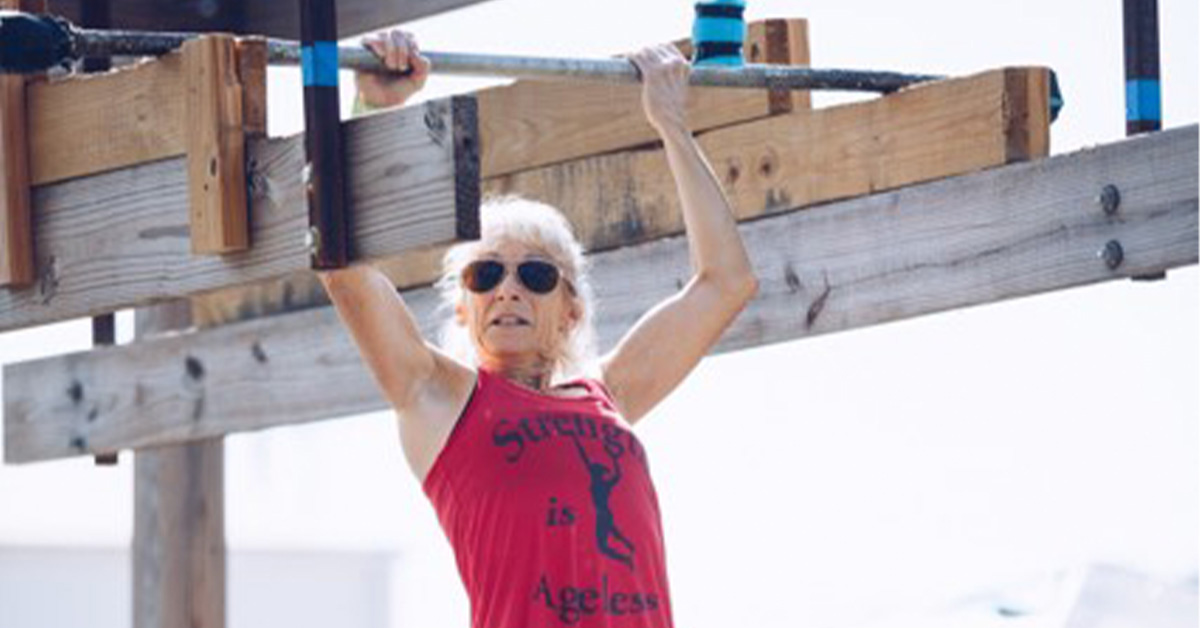
[6:10] Ginny MacColl: You know, a lot of people say that to me. And I know people that are my age they are they look at me strangely when I'm on the set, ready to go on competition and they'll say something like you're competing. And it's like, Huh, yep, I am. I'm like, how do they know I'm older? And I guess the gray hair must give it away but, and then the 40 year olds come and they say, you know, I wish my mom I wish my dad would do this with me. And then the 20 year olds are like, T I didn't really realize that you know, when you hit your 50s and 60s, you can do anything anymore. So, so I like to break those molds and let people know that you can start and you can do this. And you can get stronger as you age. And that's my big motto right? There is strength is ageless. Whether you're young or you're in 60s or 70s, it's never too late to get stronger. And the health benefits are phenomenal.
[7:10] Zack Arnold: Well, I'm a big fan of people that like to do things like you just said, of breaking the mold, saying, well, this isn't supposed to be possible, the world and culture says I shouldn't be doing it. Don't care, I'm gonna figure out how to do it anyway. So my next assumption is that if you're 68 years old running around on the American Ninja Warrior course, you clearly must have been an athlete your entire life because there's no other possible way that you could be doing this. So I'm sure that you are, you know, Olympic level athletes and professional athletes. So tell us all about all of your athletic accolades.
[7:42] Ginny MacColl: You are so funny because I you know, that I have, I started strength training when I was 63. And I got my first pull up when I was 64. It took me an entire year because, well, let me just say this women of my generation did not lift weights. I you know, was the product of the 50s 60s. And I don't think women even competed in weightlifting until the 70s. It was just not thought of as feminine. And so to get too bulky, it was like, you won't find a husband. So that was, you know, just the thinking of the day and it still to this day people feel that way. It's like, Well, why don't want to get too bulky. Whereas now, I think people are thinking that healthy, is beautiful, healthiest, strong. And it just, it just exudes your health, I think. So you can get started. You know, as late as I did. I did not do sports to answer your question. But I was a dancer, and I moved to New York to become a dancer. It's very different. I didn't have the upper body strength that you need. But I had the discipline, that discipline to keep going and keep focused in what I wanted to achieve. So like everybody said, Oh, you can't go to I grew up in Tennessee. They said you can't Go to New York and make a living. And, you know, everybody always says those kind of things. You can't do this. And I knew it would take me three to five years. And they worked. And you just, it's the persistence and the keeping at it. I got a divorce at one point after my, you know, kids were like, let's see the six and eight, and had to move out of the city, which was absolutely devastating to me. And I moved to the country. I'm like, I have to start all over again. And they're like, wait, you you can't know. by country, I mean, the Poconos of Pennsylvania which was about two hours out, so it was very rural and, and beautiful, but surrounded by Woods and people said, You can't just live there. And it was difficult, but I feel like it's like it's almost like a challenge. It's like another obstacle in front of you like what what do you mean, I can't do it. Certainly, I can do this. Somehow. I can adapt. I can find it. It's like looking at the obstacles and go well, I can't do this. I've never done it before. So Hmm, how can I strategize in order to do it best in my way to get through it? And, and I feel like I've been faced with that many, many times. So when I saw my daughter on American Ninja Warrior, I was just astounded at her grace and strength and health. She's so healthy looking. I said, Jesse, I want to get stronger. And she said, we'll do pull ups. Well, that was a joke. So there I got my little pull up bar and my little closet and I'm like, moving away and trying to trying to, you know, lift 120 pounds, which was impossible, pretty much impossible. I finally just got this little handles where you kind of go up and down and I sent a video to Jess. I said, Look what I did. And she said, Oh, that's not really a pull up. You have to go all the way down and all the way up. So I went to a personal trainer, and that's when I started getting stronger. I didn't want to do it wrong, I didn't want to lift weights and her elbows and shoulders and all those things that go wrong when you don't know what you're doing. And so I feel that I never did sports and I didn't learn, like many of the Ninja people have gymnastics and rock climbing and, and track tons of those kinds of things that are just intuitive to them. So when they swing, they just remember their gymnastics training and do it naturally. For me, I had to learn how to do a swing and it just never made sense. I mean, I have to go down to bare basics. So it's taken me a lot longer. But again, I've found many health benefits along the way.
[11:45] Zack Arnold: So you mentioned and I did this just proves one of the reasons why just I gravitated to immediately and we'll talk more about the story of how you and I met but the level of humility I love because you just nonchalantly say oh yeah, well, you know, I was watching my daughter Jessie competing decided I want to do pull up so your daughter's I'm assuming just some random competitor Ninja Warrior was maybe on at once here. They're like
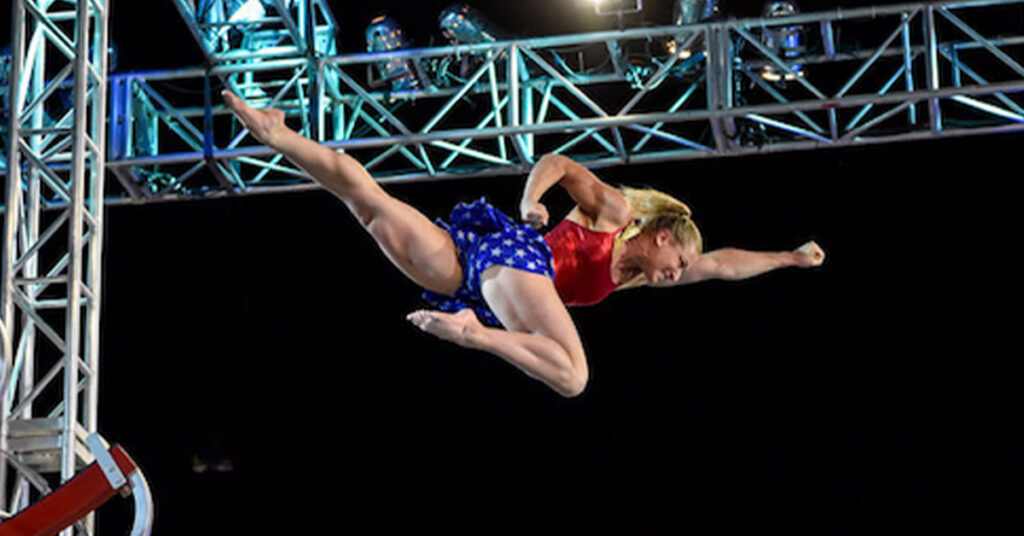
[12:07] Ginny MacColl: it's Jessie Graff. Okay, sorry. She's gotten farther than any other female on American Ninja Warrior. And she just has everything. I mean, it just she's the whole package, she has the, the outfit that just is so unique to her. She has this niche. She, she actually went to college and had went for engineering, she wanted to be an astronaut. So even that with the rope swing, she sees if it's, it's meant all the obstacles are meant for you to fall. So they're not necessarily in the rope going straight to the platform. They may be the platform may be at an angle. So you have to figure out how to get to that angle. And so she has that, that mind, that engineering mind that works through the obstacles. So yeah, she blossomed doing the show and I don't know She, she blows me away as being so not only strong, but just smart.
[13:05] Zack Arnold: I do love how you just kind of threw that away though, like, you know the face of the entire sport on all the posters. Oh yeah, you know my daughter Jessie she helped me do a pullup. So go okay. So I love that. So there are many things that I want to dive deeper into this idea of discipline, focus, consistency, following through so many of these things. I can also attest to this that firsthand engineering mindset and that focus that Jesse has. I had the pleasure last year while he was actually the first time that you and I met was testing last year at ninja warrior and just chatting with her for five or 10 minutes. And she just looked at the obstacle and was dissecting like every little tiny piece and I was just like, wow, like you want to talk about the next level of focus and intensity. Like it was just it blew my mind and I can obviously see where she got it from. But I think that the first part that I want to, I want to give people a little bit more perspective on for anybody that's not familiar with you that hasn't watched videos of you competing or training or hasn't seen you in person doing this. I think it's easy to think oh well 68 year old former dancer and actor That's amazing. She She got her first pull up good for her and she got on American Ninja Warrior. Anybody that has seen videos of you or followed you on Instagram knows that if you went up against me in a competition, my ass, I see you doing stuff that I can't do. So it's not a matter of good on you for doing what most 68 year old women can do. You're up against actual athletes, and you're doing just as well or even better than them in some context. So I just want to I want people to understand like there's a video that I found. It's a picture of you with a full on sledgehammer hitting a tire. I'm like, that's an image you don't see every day.
[14:49] Ginny MacColl: No, that's the fun part about it is that they're most of the obstacles when you accomplish it. When you're able to do it is such an sense of Oh, just say it again, accomplishment. He looked at this thing and you go, Oh, I don't know, I've never done that. I don't know if I could do it, and then you finally get it. And it's like, well, I thought it was impossible. But I did it. If I can do it, you can do it.
[15:16] Zack Arnold: Exactly. And if we if we look back on that mentality, and when you were telling your story, I think that the most common word you use was can't. Everybody telling you you can't do this. You can't do that. And obviously your responses to Well, maybe I can't do it yet, but I can do it. Right. Say that a lot. Yeah, exactly. Yeah. So I want to really dissect and break down this mindset. I knew and I talked about this a little bit more, and I'll tell tell the story maybe a little bit later of how you and I met specifically. But I think the number one lesson that I've learned over the last two and a half years of me deciding to jump into this world because I too, wasn't an athlete growing up. I played a little football and little baseball did some martial arts but I was not an athlete. always been a computer. always been a movie nerd, that's always been my thing. And the lesson that I've learned having jumped into this, that when I started as at the age of 38, now the age of 40, I've got kids got beyond a full time job. Not a whole lot of time to do all this. But what I've learned is how often I tell myself, I can't do something. It's just this voice over note, well, you can't do that. What do you mean? Are you crazy, you can't do this. And I'm continually forced into situations where I have to prove myself wrong. And one of the first just kind of the biggest aha moments, and it took maybe almost six months to a year to get here. But all of a sudden, I asked myself the question, wait a second. What else am I telling myself that I can't do? Because I just realized I've been foolish my whole life. And it just became this whole new world of instead of thinking I can't do these things, it was what else am I telling myself? I can't do that I can take on next. And I know that you've experienced something very, very similar.
[16:58] Ginny MacColl: You are so right. We We spend the whole day if you should count out how many times you say that during the day, I can't do that. That recipe has too many ingredients, I can't do this, oh, I'd never be able to do that. We, we do that constantly to ourselves. It's that little negative voice it sits there and, and we have to get rid of all that we have to stop it and, you know not not say we can't, because we can, we all can do it. It's just Can you commit to it, you know, decide that you're going to do it and then follow through with it. And having a goal is the major thing, I think in it all and it has to be an attainable goal. So when I started doing obstacles, I took baby steps and I you know, first of all, there's a fear of falling in, you're gonna fall all the time. So it's like, the first thing I want to know is how I'm gonna, it's like going down a ski slope, right? You want to sit down in the snow and do the snow plow and sit down. You want to know how to fall correctly so you don't go barreling down the hill and it's the same thing with the obstacles. Want to know that you can land if you're hanging high that you can land down and be on your toes and come down, right where you're not going to hurt your wrist. So you have to have that understanding of how to get out of your situation, if you know things go wrong. And to fall, you have to learn how to fall correctly. But I also like with the floating steps, which are the angled steps that they have on American Ninja Warrior and it used to be their first obstacle. They've changed it since but what we did is we brought them in closer, not that you know, the standard of distance, and I first looked at it and I went, you know, it's an angle, I'm gonna break my ankle if I jump on that thing. So So I tried just jumping on it and down and jumping on it and down and then took one to the next step and, and so I take baby steps, it takes me much longer to accomplish the obstacle, but I break it down and go very slowly until I can work my way up to moving the steps out further and you know, going with more confidence, because once you decide to do it, you got to have a commitment. You can't like in the middle of the air go ups. I don't think I can do this. That's not gonna work. But when I first stood in front of that audience of American Ninja Warrior, and you know, it's your turn, and you walk up those steps in there, all those people and the lights and it's in the middle of the night and the water is there, and the obstacle looks so different than you ever expected when you right up there. And that's when it goes, Oh, no, why did I decide I could do this. I shouldn't be up here. And that's you can't let that jump into you. You have to fight those negative thoughts all the time. And it's funny, that a lot of it is just nervousness and we we have discussions a lot of times what is nervous and and what is excitement because sometimes You can change your mindset to think this is exciting. Instead of like, ooh, you know, I can't do this. And I think they did some kind of a thing with Olympians where they took a poll and they Olympians when they look to about ready to compete, they said, they were excited. But when you took a person like you and me that are getting up to go into a regional meet, we look at it is I'm so nervous. I'm so nervous. It's more of a negative connotation. So I tried to like take my breath, and focus on exactly what I'm trying to accomplish in that moment, and try to focus on that not on all the other things that happen.
[20:43] Zack Arnold: Yeah. And one of the the experiences that I had, and I haven't even gotten to the level where you are yet where you've actually been on the show. I've only only been a tester so far. And I had that same experience where I had been watching the show on TV for years. And you say, Oh, that's really cool. That looks like fun, but you don't really understand the scale of it when you watch it on TV, and I had no idea what I was getting into. I had been doing backyard training and you know, going to gyms, I've done tons of Spartan races and tough monitors. And so that was the scale that I was used to that I got into the course. And I ran the first two obstacles as a tester. And I remember just standing up there, like you said, thinking, what have I done? Why am I standing here right now? What have I been thinking? And this is huge, right? Like the one that I remember specifically, and I actually watched you do it first was walk the plank. So that was the one for anybody that doesn't know it's basically a giant seesaw where you're on one end of the seesaw on the bottom and you're walking up to the middle of it and then it obviously tips and before gravity is taken out from under you and you go on the water you've got to jump and you got to grab a bar and then swing down another bar and jump and let's say like, it's just the whole thing. And I was coming to that Testing Day feeling pretty confident. And then I got up there and like you got to be kidding. Like this. It's so high up there. And when I watch it on TV and like, that just looks so small on TV, people don't really because you watch these athletes do you're like, Oh, that looks like fun. That doesn't look like it would be that hard. But the lesson that I learned that day was just to kind of double off of what you said was commitment. Right? You think I'm not strong enough to do this, or I don't have the forearm strength or I'm not fast enough. What I learned is that it's so little about the physical part. And it's so much more about the mental part. And like you said, when you're doing a Shea or swing, you're walking up the the plank and it goes out from under you, you can say, Oh, hold on a second, I just want to do this to 50% speed. You're either in it or you're wet. Like it's just either of those two things. And bringing that lesson off of the course into life has completely changed the way that I do things where I've learned that the commitment to something is so much more important than the the level of strength or the level of experience. It's the difference between I am going to do this or I'm not going to do it as a To me, maybe I'll try a guess. Right. And then that makes all the difference in the world. And it sounds like the the Ninja Warrior course for you is just another version of you doing that same thing your entire life.
[23:11] Ginny MacColl: It is. And you also, I think all the training that you do leading up to something like that, like, I wouldn't go to testing if I've never, you know, done any kind of sports or gotten any kind of strength, but all the training that you've done, when you run to try to catch something, and I'm learning something every day of how to look at an obstacle, and figure it out ahead of time, like, oh, right there, it bounces. I'm gonna have to be aware of that. And so you really want to look at it very carefully, decide what you're going to do. And then like you said, we have to commit, but the strength that you've gained along the way of doing things like it I may not have ever been on those loading steps on American Ninja Warrior before, but I've tried to be on steps that are like it So that you can go in like, well, I've done this before. So I should be able to do this.
[24:04] Zack Arnold: They also do a really good job of making you think that you're well prepared. And then they design something that's new, like come on, like a year of training and this like, I have no idea what to even do with this. So you watch the season, you think, Oh, yeah, the quad steps or this or that or the other thing, and then you come back the next season, you're like, give me a break. Like really,
[24:22] Ginny MacColl: and those athletes make it look easy. Like those steps, the very first steps, the quintuple steps. They make it, they just like leap from one to the other. And you go, Well, I think I could do that. And then you get out there and it's like, well, that's a lot farther and boy, they're steeper too.
[24:43] Zack Arnold: It's a whole different world as far as scale and the mental side and the physical side. Absolutely.
[24:49] Ginny MacColl: They say that. They say that the mental is like 80%
[24:53] Zack Arnold: Oh, is it only 80 I would have said like 90% because I learned that real fast. So it's like yeah, physically feel like my training. He's gone well, but mentally, I was not even close to being ready. Which actually, is the perfect segue to the story of how you and I really kind of, you know, had our getting to know each other party, so to speak, is I had spent the entire year thinking about failing on walk the plank, like I decided to at the age of 38. I've got two kids and overweight, I spent all my time in front of a computer, screw it, I'm going to become an American Ninja Warrior, trained for a year and a half, get the opportunity to test go on walk the plank, splash done, right? And then that was it didn't have another opportunity. You think you're gonna go there and get to play around and test stuff out? No, like you, you maybe get an opportunity maybe to win. There's so many people that you lose that opportunity. So that image is in my brain all year just like it is with any athlete, where maybe you know, it's a game or an event or whatever it is and you fail at something. And you're just thinking about that moment over and over and over. The time finally comes to redeem myself. Get on the course you were there. Well, where it was just drizzling a little bit. first morning a testing, were all lined up. Okay, everybody, we're going to go to the first obstacle. We're all there getting ready to go. I think I was maybe five or six in line to do the floating steps. The first guy runs across slips on a little drizzle, Alright guys, we're gonna have to just, you know, close things down for a few minutes, make sure that it's safe, wipe things down. And then torrential downpour for the next least six to eight hours. And you and I are just staring 10 feet away from the obstacles that we spent an entire year on. And it's just like holding candy in front of a five year old like just the carrot on the stick. You're like oh my god a whole year. And I can physically touch the obstacle and I can't go on it. And then in the end, what i what i want to take out of this is the idea of finding opportunity in every situation because that day could have sucked. I mean, it was cold. It was windy. It was rainy. Not only that, but just to add fuel to the fire. That was also the day that we found out firsthand. on set. Hey guys, no more American Ninja Warrior were shut down because of the coronavirus. And of the two and a half years that I spent training for American Ninja Warrior. That day is my favorite ninja memory. Because you and I spent the whole afternoon just chatting about life and I had so much fun. Yes. And I could have been so disappointed about that day. And there was still some disappointment about having spent so much time training and being 35 seconds away from getting to run the obstacle again and redeem myself. But we find the opportunity in every situation. And you've had to find ways to do that more than once as well. So I want to go back in time, there are a couple of places I want to go much deeper into your story. The first of which that you already alluded to a little bit is this idea of having to go through a very painful divorce and you become a single mom with kids that are six and eight. So take me back to that time because you had been a dancer We're really going well for your career. And now all of a sudden, you're thinking, well, I guess I gotta sell advertising for radio. I don't know what to do. So So talk to me about going back in that period of time, which is rather difficult. And what the mindsets were that help you get through it.
[28:15] Ginny MacColl: Well, I want you to keep in mind that sometimes, those awful things, the worst things that happen to you lead to the greatest opportunities, which is what you just said to. And I think overall it did, but I was at the top of my career in New York City. And I, you know, had the kids I was married, we had a house in the country that we would escape New York City, which I think a lot of people have been escaping the city. These days. I was doing commercials. I've been on Broadway I did the show Pippin and 1973 through 76. So being the understudy to a lead in a Broadway show was the most exciting thing ever and And I got to go on for two weeks straight. And I would walk down Broadway going, I'm playing a lead in a Broadway show. It mean, it can't get any better than this. It was just a terrific time. And then I started doing TV commercials. And this was during the 80s. There were no DVRs. So people actually watch these. And they were classics. They're on YouTube right now you can see a bunch of them and, and there's so much fun to watch. All those things, we're doing good. And then it started. I hit like 45 and my audition went down. I was just not the right age anymore. They started sending me on gas x and Hemorrhoids and depends. But besides that, the amount of additions went down terrifically so I was not working as much so that the monetary was going down at the same time as now we had a divorce at hand. We couldn't stay in the city and do the private schools. So I moved out to the house in the country, which is in the Poconos. And it was on the lake. It was a beautiful lake. It was a beautiful place, but it was very remote. And we were like surrounded with 400 acres. And people didn't stay there in the wintertime. So I soon found that it was very difficult living, and it was hard to find a job now, never having done anything besides acting and dancing. I'm like, What do I do? So here we are in this house, and now I have the kids, I'm getting them into school, and it's like, I ran down and I went, What am I doing? Nobody would hire me with two kids, you know, thinking that I would not show up many times. So I went to the bookstore and I just cried. I said you have to hire me. And they hired me at 515 an hour. You know, that didn't take me very long. That didn't help. So I had to start Teaching dance. And that's when Jesse took all my classes. And I taught tons of classes I could bring the kids with me. It was usually after school, obviously for the kids to teach kids and adults as well. So that started coming into play but it was the weather that was so crazy. We had blizzards we were like, stuck back in this house. With no one around for like a week at a time sometimes without power. So we didn't have TV. Well, cable we had TV but not cable. We didn't have cell phones. We didn't have computers. So the kids played outside all the time. They made teepees in the woods. It was a different kind of lifestyle from for them a lot happened around the lake in the in the summertime, but in the wintertime, you know, it was hard to make a living. It was hard to get through a day, really with all the things that needed to be done. There are a couple of Stories like my back story, which I love to tell. And that was when you know, the bat was in the house and I told the kids get into this bedroom, I'm putting a towel underneath it. And if I start screaming, don't worry about it. I'm fine. I've got to get this back. You went down, got the badminton rackets and I'm wailing and everything, trying to get the bat not getting in my hair, you know, and I was getting nowhere. It was like expending energy, screaming my head off. And I went, Okay. I have to figure this out. I'm not going to sleep here with a bat in the house with kids here. I have to get this back. And so I took a moment. And I was able to hurt them into the kitchen Psalm a little upside down tiny little thing in the quarter
was able to whack and get them out of there and it was there. That kind of a situation was like, there's nobody else here to take care of it. You have to do it and you have to find out a way to do it. And that was a continuous situation like with the blizzard, we would, we would I would take Jessie and I pushed her out the window and she would tunnel through the snow and then we would start to shovel the snow off the roof because the roots were falling in at that time. I don't know if you remember that, but there was so much snow. So there were these, you know, how do you deal with keeping the fire going? We take the the water from the lake. And my other favorite story is my son got really ill at one of these blizzards with the electricity out and he needed medicine and nobody could get back to my house nor could anybody get out. So I found a friend to bring the medicine to the closest house and I cross country skied to that person to get the medicine at cross country ski pack. And again, it was like well, I can't do anything to help you there in my gotta leave them like that or figure out a way how am I going to get that medicine to them? There has to be a way and so No, it was just that kind of thing. And, and with the kids, it was bringing them up to find the fun and everything we would find games that we could do in play, like, what are you going to do? If a bear comes into the kitchen? How are we going to get out of the house? Or about hurricane comes? What are we going to do? Where do we go? And we would come up with these, you know, different scenarios of having to figure life out.
[34:27] Zack Arnold: My sincerest apologies for the interruption in the middle of this interview. But if you are a content creator, or you work in the entertainment industry, not only is the following promo, not an interruption, but listening has the potential to change your life. Because collaborating with ever cast is that powerful. Here's a brief excerpt from a recent interview that I did with ever cast co founders, Brad Thomas, an award winning editor, Roger Barton, living this
[34:50] Roger: lifestyle of a feature film editor has really had an impact on me. So I was really looking for something to push back against all of these lifestyle infringement that are imposed. Done us both by schedules and expectations. When you guys demoed whatever cast for me that first time my jaw hit the floor, I'm like, Oh my god, this is what I've been waiting for. for a decade.
[35:12] Zack Arnold: I also had the same reaction when I first saw ever cast two words came to mind game changer. Our goal, honestly,
[35:18] Roger: is to become the zoom for creatives, whatever it is, you're streaming, whether it's editorial, visual effects, Pro Tools for music composition, LIVE SHOT cameras, it's consistent audio and video, lip sync, always stays in sync, whether you're in a live session where you're getting that feedback immediately, or you can't get it immediately. So you record the session and you can share those clips with people on the production team where there's no room for any confusion. It's like this is exactly what the director wants. This is exactly what the producer wants. What matters most to me is it makes the entire process more efficient, which then translates to us as creatives who spend way too much time in front of computers. We get to shut it down and we get to go spend time with our friends and family.
[35:58] Zack Arnold: The biggest complaint and I'm sure you guys have heard this many, many times. This looks amazing. I just can't afford it.
[36:03] Roger: Tesla had to release the Model S before they released the model three. So by the end of the year, we are going to be releasing a sub $200 version a month of efficacy for the freelancer, indie creatives. Anyone who is a professional video creator outside of Hollywood, I think what we've learned over the last few months is that this technology can translate to better lives for all of us that give us more flexibility and control while still maintaining the creativity, the creative momentum and the quality of work.
[36:34] Zack Arnold: I cannot stress this enough ever cast is changing the way that we collaborate. If you value your craft your well being and spending quality time with the ones you love, ever cast now makes that possible for you and me to listen to the full interview and learn about the amazing potential that ever cast has to change the way that you work and live. Visit optimize yourself.me slash ever cast. Now back to today's interview. Well, it's certainly no mystery Then knowing that some of the games that were played growing up or Hey, kids, if a bear comes in the house, how are we going to escape it? The natural progression of Jesse ending up as an American Ninja Warrior makes a lot more sense to me.
[37:14] Ginny MacColl: When she used to play the floor is lava a lot, jus. So that
[37:18] Zack Arnold: was one of the realizations that I had recently. And I'm sure that I was the last person to realize that you guys talk about it all the time. But it just occurred to me I'm like, Oh, my God, American Ninja Warrior is just the floor is lava for adults. That's all it is. Right? It's that simple. It's just we want to keep playing this game and just make it bigger and harder. And you know, more difficult, but it's basically the floor is lava for, you know, adults.
[37:40] Ginny MacColl: So we got that. Now let's make it harder. What do we do to make it harder? Let's jump higher further.
[37:45] Zack Arnold: Exactly. Yeah. So the one of the more serious parts of the story that I really want to extract that I think is so important for people to understand, is when you said, I guess I'm just going to have to figure this out. Right? You're in a situation where you don't really have other options. You don't want to be in the situation. You don't want to have to deal with the batch or getting the the medicine and the snowstorm and cross country skiing. But you know, you don't really have options. You can't choose the more comfortable, simpler option. This is reality. I'm going to have to figure something out. I'm thinking that given present circumstances, this might be a useful mindset for other people to adopt. What do you think?
[38:22] Ginny MacColl: Yeah, for sure. In fact, I just had a conversation with Jesse the other day about how we needed to be sure you have your plan B, always have a plan B. And so I have a box that's always packed and ready in case we needed to like leave in a hurry with, you know, the hurricanes that he had here in North Carolina. But yeah, you have to have a I like to have plans. I like to have goals to goals are huge with me every day I have to have a goal that I have to accomplish. I don't feel I don't feel good if I don't.
[38:53] Zack Arnold: Yeah, I'm exactly the same way. And I think that that's something that's a lot harder for people to focus on right now. A lot of the people that I talked to it's like, well, what, what's the point? Why? Why focus on career advancement? Or, you know, why focus on getting strong and fit if I can't go to the gym? Or what's the point of even training for American Ninja Warrior, if they're not going to be shooting for another year, whatever it is, like we don't know the circumstances. But it just seems so much harder to stay focused and motivated, when basically the entire world is shut inside. And it's like, what's the point? So how do you set goals and stay motivated, if you're being told you got to stay home and you can't go to the gym, you can't compete.
[39:31] Ginny MacColl: I actually have gotten myself in a nice little pattern and found things. I take a online class I mean, look at how many people have adapted to it with the zoom and Skype classes, whatever. But I take online exercise classes in the morning every morning at nine. I mean, I plan it the night before because I don't want to give myself an excuse not to do it. If I if I have one excuse not to do it then that gives me an excuse not to do another one. So I I tried to be the Very, very, you know, patterned about it. So I think about what is the class I'm going to take, okay? It's going to be strength training great. And I, you know what I'm going to get dressed and come up and sit there with my online class for an hour. So I always do that. But there are lots of other things that you can do like I, I work out going up and down a bridge ramp, it's the ramp underneath the bridge that's very steep to Oak Island. So there's this huge bridge that goes over to Oak Island, and there's a ramp underneath it, and I run up and down it. So I posted it on Instagram and I got some comments about how to come down correctly too. So that was great. Hey, I'm on I'm a hiker, you should do it. It is exact or somebody said try it. Doing lunges backwards. So now I have more ways of doing it. And I think my legs are getting stronger. They have to be I counted. 28 kind of running leaps up, steps up. Then coming down slower, of course, and I did it 10 times today. And that is, I think going to help me get up that worked wall. So that's really a nice feeling like I'm going to come out stronger but this I don't have any any you know, Ninja gym near me but those kind of finding those things and what you can do to help yourself when there's nothing else around is is a great thing. I happen to be lucky that I have a friend who also was on American Ninja Warrior, a older gentleman who's built some obstacles in his front yard. And so I am able to actually work with them and we're taking them and finding new ways to use the same obstacles that we have. And that's been fun as well. So, you know, there's a lot of other things that you can do when it comes to you know, exercise there's biking, running or jogging or walking. But for me, it's a passion now it's become I've seen what the health benefits are. And if you don't mind me zigzagging into the health benefit that I actually experienced was I had osteopenia, which is the step before osteoporosis. And it's, it's quite common as you age that you lose lose your bone mass. In fact, Americans lose it like one to 2% of their bone mass per year as you get older. And so, after lifting weights for two years, I had the bone density test and I had reversed it. It went from osteopenia to normal. It changed significantly. And when I found that out, I went I've got a shout this out to people. Why wait till you have osteoporosis or osteopenia. A lot of these things you don't know what's happening. I mean, you don't feel that you're losing bone mass, maybe muscle you can see but bone mass you don't know necessarily. And if you if you do this, it's it's just You have to do the work, you have to do it in order to be healthy as you age. And so the strengthening that the bones get so what happens with is the exercise produces testosterone, which converts to estrogen and their estrogen receptors in your bones. And that's what makes the bones stronger. joggin would do it. I mean, there are many different ways to do that, whether it's you know, push ups, just lifting your own body or pull ups, or using weights. And all those things are, they're just essential. You got to start doing it. Now. You just have to, don't wait. And you can do it as late like with resistance bands, you can do that as late as 90. I've seen plenty of people that have done that kind of thing. So the statistics are awful. It's like 20 million American women have osteoporosis. So one in two women over 50 will get a fracture from osteoporosis and they're like 300,000 hip fractures a year. I mean, it's just stunning. So if you can fix it, why wouldn't you?
And so that's the message I want to get out there. I'm trying to do it right now with the same thing. Exercise is great for your arteries. It keeps, you know, when you think of the aerobics and the moving, and the jogging and the fast walking, which is what I suggest to people who don't, you know, why should I No, there's nothing to do. There's walking, there's jogging, there's, you know, doing the combination of both getting your heart rate up, getting the circulation going, I have some blockage in my carotid artery. And they don't want to do anything with it until it gets to a certain place because it's dangerous to do any kind of things like that. So I sitting there going, Well, I guess there's nothing I can do about it. And then I went, wait a minute. If I reverse the bone density, then why can't I reverse the clock? So I started reading more and more about it that you know, obvious Get the exercise. So now I've changed my diet. And I'm, you know, why not? Maybe I can do that too. Maybe I can fix that. But again, if you think about these things now, and you think about the diet and the simple things that you can do to change to not get the cholesterol up. And the exercise is huge in that because that builds your HDL, the good stuff, and the cholesterol and fights the bad stuff. So if you could do these things, you have a much better life going forward.
[45:33] Zack Arnold: I could not agree more with all of that. I could frankly talk about this for four hours, but I have a different soapbox that I need to stand on if we're going to have that conversation for four hours. Let that in the other room. And I mean, everything you said is absolutely spot on. But here's the reality that I've learned from years and years of shouting the stuff from the rooftops people already know a lot of this stuff they don't know all of it, right. But if you and I were to talk about well Did you know that exercising and moving more, and eating more vegetables and less cookies would make you healthier? I had no idea. That's what it takes to be healthy. I'm shocked, right? That's not I mean, when when we get into the nuances, you're absolutely right. There are a lot of people that just accept Well, I've got osteoporosis, I guess I have to drink more milk and take my calcium pills and fingers crossed, I get healthier. And once again, it's this theme of Well, you're telling me I can't I'm going to show you that I can. But I find that the the magic that I see over and over and over with people that are successful, is consistency. Right? You don't have access to more information that other 68 year old women don't or other 45 year old men don't. We all have access to the same information. It's those that take action. But even more importantly, it's those that take action consistently. And it is my life's work to understand and deconstruct how people maintain consistency. So I want to Go back to a very specific point in your journey, which you already talked about, which is the journey from zero to one pull up. I can't imagine most people, if you told them in advance, we're going to get you to do one pull up. And it's going to take more than a year that they'd say, sounds great. Sign me up. Everybody wants immediate results. They want to enjoy the process. They want to look better in 90 days. Give me total life transformation. But if it's after day 100 I don't have time for that. Right? How do you get yourself from zero pull up to one pull up? How do you get the mindset to keep doing it every day failing every day until you finally succeed?
[47:38] Ginny MacColl: Well, it's a process and as I told you, before, I went to a personal trainer because I knew I would hurt myself. I wouldn't know what I was doing. And I still don't know what I'm doing. A lot of the times I'm like, Huh, what what is that? But that was the most important thing because I realized that you know, I'm not going to be able to do a pull up until I get my arms Stronger my back my chest, you have to work on the whole body. So I went to him and I said, This is my goal. Five pull ups. That's what I want to do. I thought that was an attainable goal. But what happened is when you start feeling the strength that you're gaining and and then what people will say to you like, Oh, you look like you're getting pretty toned. And just like, you know, perk up and feel real good about that. I mean, who wants to stop when you're starting to like, look good in in strength. So it took seven months to reach that point where I could see literally see a difference. And unfortunately, most people stopped their, their training program at six months. They could only pick it out. Now. I'm just kidding. I'm just kidding. But it's different for everybody. I had no upper body strength. I had nothing. So that takes a while to do but I just I kept up at it because it made me feel good. And I could see the changes. But it took a while to see that and it was also a very creative kinds of things that we did. We took the sledgehammer against the tire, we pulled the sled I mean these, these things like that. No, I've never done in my life it was, it was kind of fun and challenging. So after seven months, seeing that kind of change, it was really exciting to just stick with it. But I think it's having a goal that is attainable. It's not like I have to do 20 push ups pull ups. It's it's each one. It's also having somebody there keeping you accountable that that was big for me, but it's a purpose. And then the other thing is a lot of people decide they want to but very few people commit so you have to Have a commitment to it. Whatever it is, because there's tons of different things that you can get into with it. There's bike riding or kayaking or paddleboarding or tennis. There's, there's so many things, you just have to find the right one or go to classes, go to CrossFit. Go to, you know, and work your way up. And don't expect don't compare yourself to others. And don't expect that you're going to get it in a month or two and know that it may take seven or eight months to get that goal that you want. And then being consistent, I think, forms a habit. Like I said earlier, I don't want to skip a day taking the classes because that just gives you an excuse to not go to the another one. So I try to plan ahead and know Okay, I'm going to wear this I'm going to take this class, and I'm going to be gone doing that for an hour and then I can get other things done. Usually for me, it's in the morning. When I was doing radio, after that whole process and in the Poconos, I devised like a 20 minute program I did every single day that was just like crunches and stretches and 2323 push ups.
And so it was just something that you did, you don't even think about it, you just do it. It's a habit like brushing your teeth, or you don't even think about what side of the bed you're going to sleep on. When you go to bed. It's just do it. It's just part of your life. And I guess then you just have to build on that because it may be that you walk 20 minutes, three times a week, and then you build it up. So you're walking faster, and then you get your heart rate up. You may jog a little bit, start fast walking, do it five days a week. And then you just like I said, you just build on that and get stronger and then maybe there are other things that you want to add to it. And like me, if it's me or my kids, we like to make it fun, somehow. So, I find one great thing is finding a buddy finding a workout buddy. It's so much more fun to do obstacles when you can watch somebody else. Oh, that's a great idea. I should try that. Or what were you doing? What made you get that that I didn't get? So and walking, you know, sitting there chatting with somebody else's, is a wonderful way to do it. But I think that if you, you can plan it day by day, but you also can like, look and see what Where do you want to be in a year? Where do you want to be in two years. And I think when you map that out in your head, and then you now you've started a plan, and now you have to do it, you have to commit to it. And I think those are those little steps that you take in the beginning, whether it's three times a week, 20 minutes each time, lead to big changes, and it's really going to decide the quality of the rest of your life. So keep that get moving and then Keep at it, does that answer your question at
[53:02] Zack Arnold: all like it does, and then send me a little bit of a plan, you've done all of my work for me, which I very much appreciate. If I were to break that down very simply, the first one is accountability. Gotta have people that you're doing it with, you're accountable to whether it's a friend, whether it's a workout, buddy, whether it's a personal trainer, that's huge, right? The next one that I think was so important, is this idea of setting small but attainable goals. Cuz if it's a matter of I've never done a pull up. So my next goal is I'm going to get up the worthwhile on American Ninja Warrior. There's a lot in between those two things, right? But you're setting these small goals with just one pull up, then five pull ups, then Illa Shay then a longer lashay, then I'm going to do cliffhangers that I'm going to do walk the plank, right but it's these small progressions. And I think the other thing to extract them here that's so important has been a huge lesson for me is that if you don't enjoy the process, you're never going to get to the result. The process itself has to be fun. But I mean ninja training like you can either look at it as well and Another day of nothing but failure, or man, another day of nothing but failure, how much fun was that? Right? And that once you take that approach, it makes it so much easier to stay consistent. Because you're not just focused on the fact that you haven't reached a goal. You're looking at the process, and it's so much fun, right. But there's one further layer that I think is really important to talk about if you're willing to to dive into one more concept before we go. And I think that you also have to have a much deeper why. So I'm assuming that there's a deeper layer beyond, I want to be in good shape. I want to avoid breaking hip, I've got osteopenia and I want to reverse bone density. But I'm guessing there's a deeper why that's the undercurrent of everything that is driven you towards instead of saying I can't, I'm just going to have to figure it out until the point where I can what's the deeper why for you?
[54:52] Ginny MacColl: Wow, that's a pretty heavy question. The deeper why you know, some of it Just evolves. I always said, you know, acting and dancing was just like a trunk of a tree and it just evolves. They're branches that you take in life that you may not have expected to be there but it's like, Huh, American Ninja Warrior. Well, that that's a fun, that's interesting and, and you take these little different branches, and that's sort of how that's turned out. But once I get a hold of something, I want to be the best at it. I don't want people to go Oh, she's great for 68 No, I want to be as good as some of the 20 and 30 year olds. I mean, there's no reason I can't write. I mean, I I think I just I want to excel at it. I want to be I don't have to be the ninja the Jessie the best of the best, but I want to be at a strong level. I used to always say to her, I wanted I wish I kept dancing to be the very best of the best, like a Olympian go to the Olympics, but I never did because I like acting, dancing, you know, different levels and layers that I that I took, what would it take to to be the very best at something? And so, you know, it may be something else it may not be the dancing it may not be the acting or maybe it'll become the acting because that as you know, I started back to acting and when I retired as a granny but it was
[56:34] Zack Arnold: a there was a 20 year lapse in my acting there. Anybody that wants to see a 68 year old be a cheerleader and do the splits, check out palms great movie.
[56:43] Ginny MacColl: It was a fun movie, the great cast, but it's like just, I don't know. It's like those little attainable goals and and if you keep at it, I think it's the persistence. If you're a dancer and you're an actress, you're used to rejection and you know in Ninja, you have a lot of fun. And I think a lot of it is just that you can take all that rejection, but you're focused on where you're going. Maybe that's what it is, is like you have a like we were saying a goal a purpose you have. Okay, now that I've started this Ninja Warrior, I don't want to just, you know, be a failure at the first obstacle. I want to get through the three obstacles and maybe the next time or obstacles. So it's my, my goal keeps going out a little bit further. I got one pull up. So my new goal was three, and then it became five and then it maybe became eight, maybe 10. Now I'm up to 15. Then gold keeps going out further, but it's a very hard question to answer because I think I just have a absurd determination to keep at it now. I fell in love American Ninja Warrior on the first obstacle, and I was devastated. devastated. I thought I'd let everybody down by family Jesse Seniors, it just slipped in happen and boom, there I was, boom, boom, boom in the water. And it took me a long time because it's one thing to fail in front of, you know, your friends or in a regional but in front of everybody was pretty awful. But you know, you'll learn from those and you go, Well, I'm enjoying doing it, I'm gonna get out, I could just sit back and do something else. But now I kind of conquer those steps. And that's why I started testing was because then I would get on the obstacle goals and get a little bit more used to be in front of the producers and, and I'm not going to let that obstacle beat me. And so I want to just keep keep planning, I want to see if I can get stronger. I didn't know I could get stronger. So maybe I can continue to get stronger. And then just keep going there until something tells me it's time to move on to the Next thing, but my determination it will take a pretty far I mean, when you think about it is going from Tennessee to New York City when I was 20 I think that's a huge step and a huge determination to this is what I'd like to do, and I'm going to do it and, and the same thing happens throughout life is okay, this is the best area for me to be in. And I'm going to pursue that. And it took you know, I've been down here in North Carolina for I don't know, five years. It took me three years before I was able to get my first job in acting again. So nothing, you know, success takes a lot of time. And there are a lot of faults along the way. But it's the lessons you learn along the way. And that keeps you going like I'm enjoying what I'm doing if I if I start to not enjoy it, and then you know, maybe I have to rethink it. Maybe there's something else out there for me. But at this point, you know, let me see how far I can go. Let me like test the limits. Maybe there are no limits. Maybe I'll be hanging my fingertips in stage three, who knows what's
[1:00:12] Zack Arnold: possible. I love all of that. And I think that's one of the coolest things that I always like to look at is the the ripple effect of those kinds of decisions. And the fact that you're setting these goals, you're so determined to reach them. Clearly. It is very obvious how Jessie became the person that she is now and how she succeeded. And you look at the effects that both you've had on the world and the effect that she has had on the world, and the multitude of people that are changing their direction in life because they saw her or the little girls that are saying, I want to be her. I feel empowered, I feel strong, right? Like, a lot of that just comes from you, as a 20 year old or 25 year old or a 30 year old, saying, well, got to figure out how to get the medicine guess I'm gonna have to learn how to cross country ski all the way around, y'all. Schools in front of me, I'm gonna have to figure it out. Right? Right, just that one mentality has had a ripple effect on so many people in such a positive way.
[1:01:08] Ginny MacColl: Number 111 family came up to me about Jesse, and they were saying, Hey, you know, I just want you to know that my daughter was watching her on TV and went, turned to him and said, Do you think I could do that? And he said, Sure, you know, I mean, there it is in front of me. We didn't know we don't. We don't know the limits of what we can do. And we've listened to all these things that people tell us a lot of times, whether it's on advertising, or it's in hallmark, you know, you're you're gone after age 30 year downhill. You know, you listen to these things, like your women don't lift the weights. But, you know, there's things out there that you can do, you certainly can do them and maybe they aren't necessarily right all the time. So, you know, see how far you can go. Have fun with it. You know, Dream your dreams follow through with those dreams. They're, they're important to have.
[1:02:06] Zack Arnold: Well, if ever there was a time to use the mentality of this is my reality and I guess I have to figure it out. We're in the perfect position, right? Nothing but time to figure all that out. So, right so that having been said, I don't want to take up any more of your time want to be respectful of Oh, but my goodness, was this a lot of fun. I knew it would be for all the time that I wanted to make it happen. This was everything I hoped it would be and more I cannot thank you enough for being with me today. Ginny, if people are inspired by you, they want to find you on Instagram or website or they want to reach out and ask you questions. What's the best way for people to find you?
[1:02:41] Ginny MacColl: Um, it's just my name, but it's spelled I mean, both gone by names. Yeah, it's and Ginny is gi n NY. And McCall is M A c c o LL. So that's on Facebook and I'm on Instagram, and I would love to know if anybody got inspired enough to get up and start moving. I would love to hear about it. I try to respond to everybody but it makes me feel so great. And it inspires me in turn, when somebody says, You made me feel that I need to and I can do this. And then I go, oh, wow, I can do this some more. I've got a I've got to talk to more people. I've got to do more and show more. So if people say if she can do it at age 68 I can do it.
[1:03:35] Zack Arnold: No, you're already talking to one person that can say all that to you. Because every time that I feel like I don't want to do something don't want to do workout can't do this. Alright, fine. What's Ginny have to Alright, so now I'll go back to training I've ever so yeah, so so I'm definitely on that list. But this has been an absolute pleasure. I cannot thank you enough for being here with me today.
[1:03:53] Ginny MacColl: You're welcome and to all your audience as well. Thank you for listening.
[1:04:02] Zack Arnold: Thank you for listening to this episode of The optimize yourself podcast to access the show notes for this and all previous episodes as well as to subscribe so you don't miss future interviews just like this one. Please visit optimize yourself that means slash podcast. As a reminder, this is just part one of a two part episode. Don't forget to check out my interview with Ginny's daughter and American Ninja Warrior legend Jessie Graff in the next episode, and a special thanks to our sponsors ever cast and arrow driven for making today's interview possible to learn more about how to collaborate remotely without missing a frame. And to get your real time demo of ever cast in action visit optimizer shelf.me slash ever cast and to learn more about Ergo driven and my favorite product for standing workstations, the total Matt stick around, they're coming up next. If today's interview inspires you to get up and start moving again, but you have spent so many years stuck in your desk chair and you are so out of shape, you're not even sure where to start. Well, then you're in luck, because I have over 50 pages of tips, tricks, strategies, and my favorite tools to share with you and my ultimate guide to building a more active workstation. This Ultimate Guide is a collection of over a decade of my own research and experimentation that summarizes how I stay active, focused and energetic all day long, Despite living in front of a computer for the past 20 years. This includes my favorite recommendations for standing desks, ergonomic desk chairs and mice, tools and equipment that I keep within arm's reach all day long to alleviate and eliminate wrist, forearm, shoulder neck and lower back pains. Seriously, this is a manifesto on how to not let your desk chair slowly kill you to download your free Ultimate Guide, visit optimize yourself.me slash workstation Ultimate Guide. Thank you for listening, stay safe, healthy, insane and be well This episode was made possible for you by you guessed it airgo driven the creators of the Toko mat, my number one recommended product if you're interested in moving more and not having sore feet, your height adjustable or standing workstation. Almost every new person that I mean in this industry starts our conversation with, Hey, I got a topo map because of you, it's changed my life. Thank you. Listen, standing desks are only great if you're actually standing well, otherwise, you're just fighting fatigue and chronic pain. Not like any other anti fatigue mat. The Toko is scientifically proven to help you move more throughout your day, which helps reduce discomfort and also increases your focus and your productivity. I'm literally standing on one as I read this, and I don't go to a single job without it. And if you're smaller and concerned, the total map might be too big, or you simply don't have the floorspace. Well, there's a Toko mini for that. To learn more visit, optimize yourself.me slash toboe that's t o p o