From Rehab to Running Ultra Marathons | with Wes Plate


About Episode
Wes Plate is no stranger to adversity. On the surface it may appear that he is incredibly successful having founded the software company Automatic Duck, as well as worked for companies such as Adobe and Pinnacle, not to mention years of editing commercials and main title sequences for network television shows. On top of all that Wes is currently a product designer for a little tiny tech startup you may have heard of called Apple.
Beyond Wes’ professional success is his personal achievements. If you scan through Wes’ Facebook or Instagram profiles you’ll see numerous pictures of him holding medals for marathons and ultra-marathons like they’re no big thing. But the story that you won’t see on Wes’ social media pages or on his website’s about page are the years of living with obesity, eating garbage, and worst of all living with alcoholism that not only almost cost him his family but also his life.
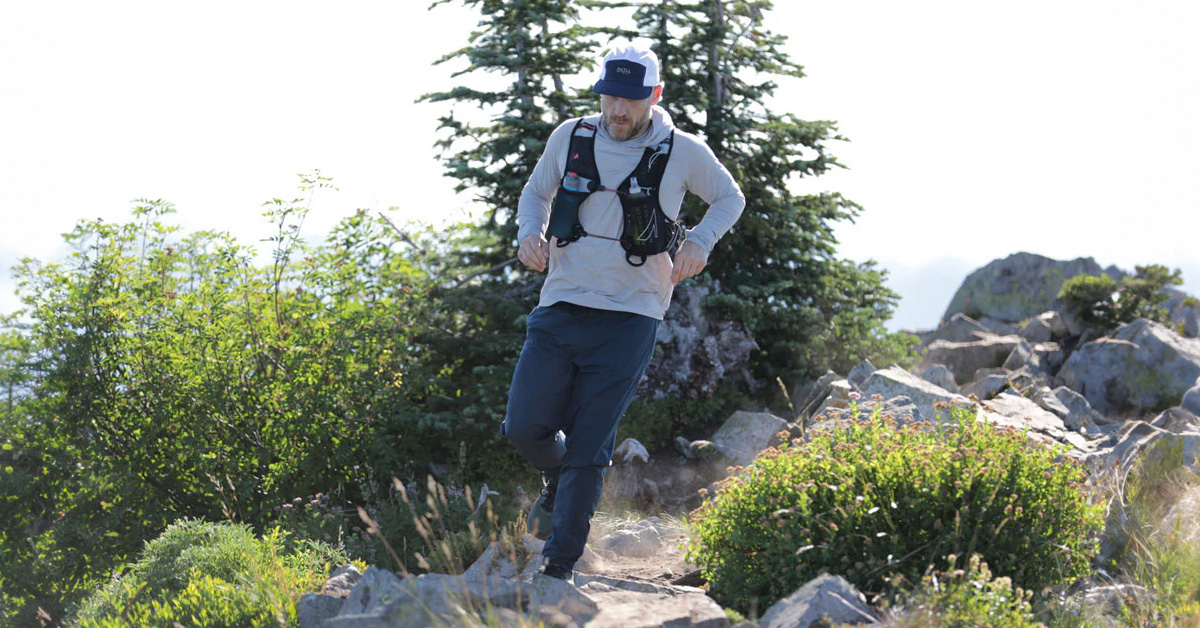
In this episode we discuss how Wes went from a high school athlete to being hospitalized for alcohol abuse in his early 30’s, to then running his first Ultra Marathon (50K) with many half-marathons in between. His amazing journey will inspire you to find the strength to achieve your own health and wellness goals, regardless of the obstacles in your way.
Episode Highlights
- Wes’ early career as an offline editor at an advertising agency
- Why Wes started Automatic Duck and how they became the “Switzerland” of the app world
- How going between different apps has changed in the last 15 years (…it hasn’t)
- Wes discusses how some of the bad habits he developed early in his career helped lead him down a path to alcoholism
- The turning point in Wes’ life: Christmas of 2007
- Why he decided it was time to go to rehab
- How a combination of tracking his weight and quitting alcohol motivated him to lose 40 lbs right after rehab
- We discuss how breaking your goal into much smaller pieces (GO FAR framework) can help you succeed
- We discuss overcoming mental barriers and how positive change can happen if you believe in yourself and your abilities
- We discuss Wes’ “why” and the goal of becoming a responsible father and better role model
Useful Links
About Guest
Wes Plate worked in Seattle as an offline editor at Pinnacle as well as freelance in the late 90s and early 2000s.
In 2001 he co-founded Automatic Duck, a software company that became well-known for making timeline translation plug-ins for Avid, FCP and AE users. Today he works at Apple as a Product Designer in the Pro Apps group.
Wes also edits with select clients on commercials, main title sequences and other short form projects.
Transcript
Zack Arnold: I am here today with Wes Plait, and if his story today does not inspire you, then I highly advise you to go see your physician and check to make sure that you have a pulse, because Wes’ story is pretty amazing. So, Wes, thank you so much for being on the show.
Wes Plate: It’s an honor, Zack. Thanks for inviting me.
Zack Arnold: So, you and I have met a couple of times. We’ve had lunch together. We’ve chatted. You were actually in one of my very early test challenge groups for fitness and post, so we’ve kind of gotten to know a little bit each other more through cyberspace than in real space. Anybody that’s been in the post production industry for more than a few years, you may not have heard of Wes, but I pretty much guarantee that you’ve probably used a product that he has created called Automatic Duck. So let’s just talk a little bit first about kind of who you are, what you do in the industry, what your background is, and then we’ll get to what’s so cool about the most recent part of your journey.
Wes Plate: Sure, I started out as a editor back in the mid ’90s. I was editing on Avid, and I was an offline editor, which was a distinction that was common back then. I think that’s less so these days. But I was an avid offline editor that was frequently doing complex effects jobs that required me to sort of have rough, maybe some rough green screens or various things. the The challenge I often had was that my advertising agency clients would kind of put up a bit of a fit if they saw a really rough chroma key, and I would explain, you know, this is just Avid offline, you know, this is AVR 77 or whatever the video quality was back then, and Avid doesn’t key very well, so don’t worry, we’re going to finish this all in a really expensive room, and it’s all going to look really good, and they’re like, okay, that’s fine, but we don’t like the chroma key. It looks really bad. So I would very frequently need to take my effects work that I was doing just for my offline cut, send it over to After Effects so that I could get something that looked a lot better. And then the agency people would always then buy off on my cut, and then the work would get redone later on, but I was always tripping over this this roadblock of getting from my Avid into After Effects, and yet doing it in an efficient manner because it was it wasn’t very efficient. It took a long time and a lot of rebuilding from scratch and taking a lot of notes about what I had done, and I got myself a pretty good workflow in the end, but it was still time-consuming. So I had this idea that if there was a plugin for After Effects that could read an avid OMF file, like it could do it could that little piece of magic could do all the work that I had spent hours on. So I went to my dad, who at the time was the only programmer I knew, and I said, “I’ve got this idea. I don’t know if it’s possible, but I think it might be. And this was in like 9899, time frame that I went to him to discuss this idea, and then kind of life got in the way. Very various things happened. Finally, by the end of 2000, I think it was October of 2000, we really got started on the project in earnest. We created a plugin for After Effects that would read an Avid timeline through this file format called OMF, and then in 2001, NAB we did our very first trade show, and we had a company that we called Automatic Duck, and it was just the start of what became a like a well now it’s going on 14 years, but a very long journey of us creating tools that helped video editors and other digital artists get their work between different programs that didn’t all by themselves talk well to each other. So we were sort of this Switzerland of helping all these different apps that didn’t necessarily get along to help them get along in a way that users could work with them, and so that was that’s kind of how Automatic Duck happened. It came out of my use out of my life as an actual video editor, needing something that didn’t exist, and we were just sort of at the right place at the right time for that.
Zack Arnold: So clearly, nowadays all of the programs that are in the the world of editing and post production, they all talk together perfectly, so there’s no need for any type of automatic doc translation program. Would that be correct?
Wes Plate: God, I wish,
Zack Arnold: Right? Because you think about what life looked like 15 years ago. We thought it was so complicated, but if you got into a time machine and came to today, you’d be like, “Are you flipping kidding me? With all the formats and the deliverables and the number of cameras, and the number of codecs, and the number of NLEs-like everything is just exponentially multiplied. So this is easily one of the largest pain points for so many people, especially those that wear multiple hats. It’s not a pain point for me because all I do is cut for 60 hours a week. That’s it. I’m in an avid timeline and I edit, but I’m very specialized, and that’s now a very unique place to be in this industry. So it seems to me that this is just something that now that you have all this experience for years, would be even more useful today rather than less useful.
Wes Plate: Yeah, I think you’re right. Certainly, there has been some things that have worked. Some of these apps have started to get some better integrations. Built in, for example, Premiere Pro has the ability to import an AAF file from an Avid in a much better, more robust way than it used to in the past, and that has been a higher priority for Adobe lately than it had been. So, I mean, there’s there is that kind of improvement in the industry, but at the same time, there’s also huge gaps. You know that other NLEs you can’t get to. Well, you know we we recently came out with a new plugin that went from Final Cut 10 to After Effects because I was starting to use Final Cut 10, and I had that same sort of stumble. Like, hey, I need to get to After Effects, so that thing didn’t exist, and so Automatic Duck has filled that one. But you know, there’s every time somebody comes up with a new NLE or a new compositing system or a new digital audio workstation, there’s always some new gap, and they’re all. It’s like, yeah, you can’t have one standard that seems to work for everybody. It is kind of maddening that that a company like ours needs to still exist in in today.
Zack Arnold: You’d think so, right? It’s like can’t we all just get along? Like, come on! Like, there’s got to be an answer. But it just we complicate things further as opposed to making them simpler. So it’s it’s kind of nuts. So I’m I’m very appreciative that you’re able to help fill some of those gaps and have been doing it for for so long. But obviously, the reason that I’m bringing you on today is not so much to talk about technology because there are plenty of other podcasts that do that, but I want to talk specifically about health and wellness because you have a really inspiring story. But what I want to do is start from the beginning, and obviously, based on the conversation that we’ve had so far, you’re somebody that’s obviously very much into the technology world, into the post-production world. So, tell me, when you started Automatic Duck 15 years ago, what did your life look like from a health perspective?
Wes Plate: Boy, so I got to set that time machine and go back. You know, I was so I was a younger man back then. How old was I? I’m not even good at doing math. I can’t figure out how old I am right now. Well, anyway, I was somewhere in my mid to late 20s. I can’t remember 27, maybe. You know, the thing I remember most strongly about my health at that time was that I was getting more and more unhealthy, while yet somehow being aware of it, at least enough to wish that it wasn’t happening, while at the same time making decisions and making choices that took me further down the path. You know, I can remember, you know, working as an editor. The only way I could possibly take a break without feeling like a real jerk was if I went out to have a cigarette. That seemed like the industry approved. Oh, you can have a cigarette. Okay, you can take a break then. No big deal. But if it was like I just need to get out of the room from you, crazy client, you know that was frowned upon. So I was smoking cigarettes at the at the post facility. Not a lot, but just enough to get out of the room once in a while. After work, I would go drink with my boss and and other fellow artists, so there was a lot of alcohol involved in my life. I can also remember as Automatic Duck was starting, you know, working well late into the night, and then you know it’s 2o’clock in the morning. My brain is just really going, going, going because we’ve been thinking so hard all day, but I’ve got all these great ideas, and I can’t go to sleep, so I would drink myself to sleep. So that was even yet more alcohol on top of everything else, and so I was just starting to get heavier and heavier as I was increasing my caloric intake and just being generally not moving around a lot. Now, at the same time, I can remember having some thoughts like this isn’t going in the right direction because when I was in high school I was a track as a sprinter in track I also did cross country I wasn’t very good at cross country but it was something that I did to get me through the that season as I got ready for track I really enjoyed sprinting so in high school I was in pretty decent shape but then once I actually even in college I was in pretty decent shape, but once I turned 21 and I had easy access to going to Costco and buying huge cases of beer, I started to run a lot less and exercise a lot less, and my weight went up. So when I was you know then professional, you know doing all this alcohol infused lifestyle and and just generally being not a lot of exercise. I I wished I was able to do more exercise, and so once in a while I would try to go for a run, try to recapture that spirit of my youth, but it was hard because I was so heavy, and so it just wasn’t it was a non starter so many times because I just couldn’t get any momentum, and I could just you know it just and it just was just snowballing on itself, just getting worse and worse and worse. And I think it was it in 2007. That’s when I think I got to my heaviest point. I was like 240 pounds. I don’t think I got to 245, but I know. I was definitely over 240, and I was just a very big person. And I actually had lost a bunch of weight when I got married in 2000 and well, maybe it was 2000. So right around the time Mott of Mac Duck started, I actually had lost some weight in just because of the wedding.
Wes Plate: I didn’t want to look awful in the wedding pictures, but then a lot of that went right back on as as soon as as that little diet stopped. So I was definitely in this cycle of just so much bad stuff going in and not enough exercise and and you know good things happening. And but I can also remember really wishing it was different. But it was so hard to get out of that rut.
Zack Arnold: So really, what you’ve done is you’ve painted a very clear picture that you are somebody that, at one point in your life, you had fairly good health when you were younger. Then all of a sudden, you hit that point where you feel like you’re invincible. You’re 21, you’re 22. You’ve just gotten out of school. You feel like nothing’s going to change me. I’m on top of the world. I can hit the beer. I can work until 3o’clock in the morning. Caffeine is going to keep me going, whatever it is. And all of a sudden, you wake up one day and you’re like, “How the hell did I get to be 240 pounds? And I think this is a really good lesson for people that are listening because I know that I have a fair amount of listeners that are in our age demographic, but there are also a lot of listeners that are younger, and I would give anything to have a time machine and go back to when I just graduated school and start hearing stories like these because I’ve never had an issue with weight. I mean, I’ve been heavy, and I’m actually a little bit heavier now than I would like to be, but I’ve never been over 200 pounds, so I’ve never been obese. But my struggle, which I’ve made very public, has always been depression and anxiety. And I thought I was bulletproof when I came out of college, and it only took two or three years of working in this industry to basically break me down to suicidal depression and not understanding how that happened. So I think hearing your story and where you started, and knowing that you weren’t just quote unquote the fat kid that got picked on, that’s a really good thing for people to hear because you started in a good place, went to a really really bad place, and then came out of that, which we’ll go to next. But I think that’s a good lesson to take out of this so far is that you went down this path based on choices that you made when you were so relatively young.
Wes Plate: Yeah, and I think that was always in the back of my mind was this idea that how can I get back to that place where I used to be, and certainly I had that desire to get back to it. I didn’t have the the ability to overcome my my dependencies and my addictions at the time, so it was a real struggle, and I wasn’t able to do it. But eventually, I got there.
Zack Arnold: Yeah, and the other thing that I want to mention too that I think is this is one of the things that makes me literally makes my blood boil when I think about this is when you said that well the only approved break in post production is the smoke break and my head just wants to explode literally that I can’t even emphasize how frustrated that makes me because it’s so backwards where you’re just perpetuating the bad health by saying, “Well, yeah, okay, well, he’s not a smoke break, so that’s fine. But I feel guilty because I want to take a 15-minute break to walk around the block, and it’s like, “Well, that’s not efficient. You should be in front of your workstation pounding away at the keyboard, mr. Keyboard Monkey. Right? I literally felt that way today. Right? Like I’m buried in dailies. I’m doing studio network notes on a previous cut. I’m juggling all this stuff. We can’t move our calendar because I’m literally in dailies on a show that’s going to air in like a month. And I’m thinking I need to get out of this room. I’m going to go crazy if I’m stuck in this 12 by 12 dark room for another 10 minutes. But there’s this pit in my stomach saying, “Oh my God! I hope somebody doesn’t knock on my door and see that I’m not there at 5o’clock in the afternoon, and that mindset just has to change. And the fact that you felt the same way, but the solution was well, as long as I’m smoking, then it’s okay, right? But that’s common. Like that’s not an uncommon way to think.
Wes Plate: Yeah, it’s crazy that that’s the way that that was. Yeah, there was the way then, and it is now still that way. It is is unbelievable. So yes, keep keep railing against that one.
Zack Arnold: Yeah, and that that’s something that I really want to rally everybody that’s listening to this show to help me change because I can’t do it by myself. But if we have more and more people just kind of say enough is enough. If I want to leave at 6o’clock because I’m done, I’m not going to feel guilty about it. If I want to walk away for 15 minutes and get some air, and I’m not going to smoke a cigarette, I’m going to be okay with that too. And if one person does it, and then another person does it, and then another person does it, then guess what? Producers are just going to have to accept the fact that editors need to get out and see sunshine like everybody else in the world, and then they can stop making jokes about how we’re all white, even though we’re all very white and pasty, myself included. All right. So the what one thing that really struck me about your story-not what you’ve mentioned so far, but is the way that you and I met and the way that our friendship developed-is I didn’t know anything about. Your past being heavier, and I remember you were in the the challenge group with me, and we had lunch together, and you were just kind of talking about your story, and you were kind of struggling with sticking with the fitness stuff, but you’re trying to do some more running and do 5k and a 10k, but then you randomly posted a picture on Facebook, and this was maybe six months to a year ago of your old driver’s license, not to me, just in public, and I happened to find it, and I just about, and I said, “Oh my God, where in the world did this guy come from? Because it was the picture of you at 240 pounds, and I didn’t even recognize you. So that was when the light switch kind of went on in my head, where I said, “All right, this guy has figured something out, and I want to know what it is that was going on in his head that got him to where he is today, meaning a year ago, and now where you are tonight, as opposed to where you were then, is another completely different journey. So let’s go back to where you were at 240 pounds. You were drinking and you were smoking and literally drinking yourself to sleep and working until two, 3o’clock in the morning, not able to slow your brain down. What was the turning point? What was the psychological trigger that made you say something’s got to change? Because there, there was obviously the nagging thoughts of like, oh, I know I can do better. I know I should exercise. But whenever I speak to people or I read books about people’s journeys, there’s always a specific trigger or event. So was there one for you where all of a sudden it was like, all right, this is it. I’ve got to change.
Wes Plate: Yeah, unfortunately, there was a bit of a dramatic evening that unfortunately I can’t. I don’t even remember. But what I can, what I do know about it is that it was, I believe it was the day after Christmas, or maybe it was Christmas, 2007, and by this time in my life, the drinking thing had been significant and and like professionally on. Like I was hardcore for quite some time, and it was matching up perfectly with problems in my marriage, and so any frustrations that I happen to have with my wife, they were they were so much easier for me to elaborate upon when I was really drunk, and so I would get drunk, I’d get angry, and she would get the brunt of it. And so one night, like again, it was either I think it was the 26th of December 2007, I got myself into an amazing state. She found me. This is for what she told me. I was on the back deck, screaming at the barbecue. Something about the band was in the barbecue, and I needed to do something. From there, my anger went into the the kitchen where I kicked and did something to the refrigerator, so which actually caused it to break. We had to buy a refrigerator. I was in. I was like just not myself. I was really just totally out there and and just out of control. She was scared, and so the next thing that the thing that I’m aware of is actually the next morning waking up at my parents’ house, so my wife had called my dad to say, you know, you got to come get him. He’s he’s out of control, and I’m scared. My dad came and got me. I was driven to his house where I woke up the next morning. Now, this, you know, in the way that we’re telling this tale tonight, you know, this is kind of a big dramatic thing that maybe seems to come out of nowhere. But there had been, as you might imagine, a lot of things that sort of hinted this was coming. There were company Christmas parties where I would get completely wasted on, you know, my eight martini or eight vodka martinis, or whatever crazy things I was drinking, and you know sometimes I would be found throwing up in the bathroom, and so there there was definitely an escalation. And so this particular night, it just it had just gotten out of control. So the next day we sat down as a family. I was I kind of realized that I had finally really screwed up big time, and so we had a big sit down as a family. And I told them, I am going to go to to rehab. I understand that this is out of control. I need help. I can’t stop. And so I made an appointment to go to a treatment facility in the Seattle area. And actually, the very next day, the the 27th of December is when I checked in. So I was almost forced by circumstance to get myself checked into a rehabilitation hospital. Although it was something that I had seen coming for a while, I actually have memories of like driving at night and listening to the radio, and there’d be these commercials for this one facility that’d come on the radio, and I always felt like the the advertisement guy was talking to me. Like he’s not just talking to the world in general. He’s saying, “Wes, you have a drinking problem. You need to come here. You need to get help. And so I would I would just get so mad at those ads. And various things like that. Just I just always knew this was coming. So when it finally did happen, I I made this appointment. So the facility that I went to is a bit well. It’s well known in the Seattle area, and it’s not a 12 step program.
Wes Plate: It’s a 10 day, very intensive program that features this sort of it’s a situation it’s a system where they they basically fill you with alcohol, make you really really sick, and to the point where you just you know getting sick all over the place, and then they use that that very sick feeling as an aversion, so that they, so that you do not want to participate participate in any alcohol anymore. So yeah, so
Zack Arnold: That’s basically that’s aversion therapy. Aversion therapy, also known as clockwork orange therapy. Yeah, so where they they literally tape your eyes open and make you look at people killing each other. Is that that’s basically how it works, right? The way it does in the movies.
Wes Plate: Pretty much exactly like that. I it was it’s a 10 day program, and I knew at the very beginning that by the end of day 10, I wouldn’t remember day one because I just I just knew that it was going to be a pretty intense thing. So I started to take notes at the very beginning, and I started writing a blog about the experience that was originally just going to be just for me, so I could remember. A few days in, I decided that my dad would would probably like to hear what’s happening to me inside this hospital, so I shared the link with him. And then towards the towards later in the stay, I even realized that other patients would probably like to hear some of the stuff that I’m experiencing and writing about. So the blog became increasingly public, and you know today I don’t hide it from anybody. It’s it’s out there, and it’s been seven something years. The whole journey through this this treatment thing was just you know quite dramatic. We don’t need to dwell on all the details of of how that worked there, but I got out of the hospital you know 10 days later, or maybe there’s a couple. There was a couple days of detox in there. So anyway, a couple weeks later, let’s just say, I got out. I’m I’m I’m lucky to say that their system worked very well for me. They claim a pretty high success rate, and I’m one of the people who it has worked well for. I know that before I went into treatment, back when drinking was my most important thing in my life, I would often drink. Let’s like on the way home from somewhere I was driving to, or I would even get off work and be like, you know, I’m not ready to go deal with home life yet. I think I’ll go drive around for a couple of hours, but of course that meant driving around with some beers for a couple of hours. So I had I had this whole drinking and driving thing down, and it was it was something that it wasn’t even a question to me of like is this safe or is it legal? That wasn’t doesn’t even matter. It was just something that I did. It was just ingrained in me. But that kind of came into focus as I left the hospital because I was driving home and I stopped at a 711 to get something to drink, and I walked in. I went to the water section, bought myself a bottle of water, walked out, paid, and left. And as I got into my car, I realized, whoa! I didn’t even look at the beer section. Like it didn’t even occur to me, and that was that was a major step in my in my life because I was I was a changed person from what I had been just a couple weeks before that, but that that marked the beginning of a new phase in my life. And as we said, I was pretty heavy when I went into the hospital. I don’t remember how much weight I lost during it. I’m sure there must have been some, but I I pretty quickly started to track my weight. I’m not sure when. Somewhere in my life during this time, I’m pretty sure it happened before I went to the hospital. I had started tracking my weight as a means to try to lose it. I can. I think about that sometimes when I think about you because I know that in the fitness and post challenge group that was the one of the big things that we started off was, well, hey, let’s just let’s measure what’s happening in our lives, and so I was measuring myself and and tracking on a website that I believe is now defunct, but it was called Science Diet back then. It was created a graph automatically, which to me was magic, so that if you were doing well with your your eating and your weight, you could watch this graph dive, but I was tracking things back then. So when I got out of the hospital, I was well in a position to be tracking my weight. So I’m out of the hospital. I’m no longer drinking alcohol, and I don’t even want to, thankfully.
Wes Plate: But I I do remember having a severe need for something sweet, some sugar, because I had, I had taken a whole bunch of of sugars out of my diet, like really quickly, and so back then I was drink, I was eating a a Ben and Jerry’s pint of ice cream every single night, and yet I was still losing weight, and my chart was showing it. And eventually, the ice cream slowed down. But within I don’t remember exactly now, but was because I can’t access science diet anymore. But within like six months, I had lost like 40 pounds. Maybe it was a little bit longer, but I fairly quickly dropped 40 pounds from the 240 that I had been at my heaviest, and that was primarily just from reducing my intake by no longer drinking so much alcohol or not drinking any alcohol. So the alcohol was such a huge, enormous injection of calories that once I took that out, I just naturally just lost tons and tons of weight. And I wasn’t doing any exercise, or maybe I was doing some, but it wasn’t of any of anything worth talking about now. But it was just that reduction in intake that made such a huge difference. So that you know, years later, you know, I think it was 2011. I can remember it was when I actually got myself a Wi-Fi enable scale that made it much easier to do all this stuff. I was, you know, I was in a much better position as I was much, much, much lighter. That’s kind of the major first thing for me, and a huge amount of weight loss just came from making that first step towards getting healthy, which for me was the very important thing to stop to stop drinking.
Zack Arnold: Well, the the most exciting thing about this conversation is that you and I are going to be billionaires because we’ve just discovered the best diet program ever, which is eat a pint of Ben and Jerry’s every night for six months and lose 40 pounds. We’re going to make millions of dollars off of this program. What can go wrong? Right. I mean, but really, what what that shows, all kidding aside, is just the amazing impact that drinking alcohol regularly can have just on your weight. There’s so many other things that it can affect and snowball as far as cognitive function, and obviously the drinking and the driving is just like that can just spiral way out of control and ruin your life and ruin other people’s lives. But just narrowing it down just to pure caloric intake and the immense effect that it had on your body to the point where you were eating a pint of ice cream every night and still losing 40 pounds. If that doesn’t give a wake up call at least to a few people, I just I don’t know what will because that to me is just a profound.
Wes Plate: I think at the time it kind of blew my mind. Like what what secret magic have I discovered? This is not. This should not happen this way. But at the same time, at the time, I wasn’t really questioning it. It was kind of one of these things where it’s like, “Hey, I feel like I need a pint of ice cream tonight. I’m going to grant myself that because it’s a lot healthier than the alternative that I was doing a couple months ago. So let’s just work through this, and then eventually I’ll get to the point where I don’t need that ice cream every night, and yeah. In fact, some I still love Ben and Jerry’s ice cream. Don’t get me wrong, but I cannot eat a whole pint now. Yeah, it’s like even if I wanted to, I couldn’t do it.
Zack Arnold: So you you basically went through your own version of aversion therapy, basically with the with the Ben and Jerry’s. But what I do want to point out, which you’ve already kind of pointed out is just the importance of quantification. And yes, this is was the cornerstone of the challenge groups that I was running, and for the courses that I’m building now, which will be much more self sufficient and be able to to last longer and have a longer shelf life than the challenge groups. The biggest thing that I would always say is what you measure, you can improve upon. Because if you don’t have a baseline, you don’t, and you don’t have an understanding of what you’re doing now, you have no idea how to make changes that will positively affect it. And like you said, one of the the things you pointed out that I think was so profound, and most people may not pick up on it, is that part of the reason that you are motivated to lose the weight is because you like watching the little bar graph or the little graph go down, right? It’s a really really simple thing, but that’s called a habit loop, where the cue is you weigh yourself, the you know you you see the line go down, and then that’s the reward. So now you’re going to continue doing the routines, whether it be the exercise, the changing of the eating habits, whatever it is. That’s the routine that you put into the habit loop, and then your reward is, oh, cool, my graph is going down. Right? It’s really, really small, and it’s not the kind of thing that anybody would think would lead to lasting change. But having that quantification can literally be the difference between not going anywhere or making profound changes in your life. And even the ice cream, again, is you’re not eliminating the the habit out of your life of doing like you were doing the drinking before. So something would cue you to say, “I need to take a drink. The routine would be the drink, and then the reward would be you feel the release of anxiety, you feel less pressure, you can deal with your family, you can deal with work stress, and you kept the habit loop, but you changed the routine, and instead of doing the alcohol, you did the ice cream, and obviously now you’ve eradicated that. My guess is there might still be something that’s in that place, but it’s obviously immensely healthier, and that’s kind of where I want to go to next because I really believe that when you dissect this journey, and this is. A journey that you and I had even talked about, so I had no level of preparation whatsoever. I frankly didn’t even know most of this, so I’m even more impressed than I was an hour ago when we started. I think now you still have a very very similar habit loop, but now the alcohol that became the ice cream has now become athletics, and you’ve kind of gone back to where everything started in high school, so now I want to jump to a couple of days ago, and then I want to fill the gap between right after you got out of rehab to how you got where you are now. But let’s tell the audience what was it that you just finished doing a couple of days ago?
Wes Plate: Yeah, on Saturday, October 3, I completed my first ultra marathon and ran a 50-kilometer race up north of Seattle called the Baker Lake 50k, and I finished it. And it wasn’t easy. My time was six hours and 13 minutes, which for my first 50k is is not terrible. And it was a remarkable thing. I can’t believe I can actually say to you and to your audience, like I am now an ultra marathon runner.
Zack Arnold: Yeah. So for anybody that’s listening right now, thinking, eh, I just don’t know if I can get up and exercise or do this and that. It’s too hard. Like your excuse is no longer valid. Like seriously, this guy was practically rolled into rehab, 240 pounds, and you just ran a 50k in six hours. Like that’s astounding. So I really wanted to bring that up to people that really feel like I just can’t do it, or it’s too much, or it’s too overwhelming. If I had said to you in 2007, a week after you got out of rehab, “Hey Wes, I want you to run a 50k, what would your response have
Wes Plate: Been? Well, my first response would have been the same one that everyone else says to me, which is, “How long is 50k? And then somebody would have said, “Oh, it’s 31.1 miles, and I would have said, “You’re crazy.
Zack Arnold: Yeah, exactly. So that’s that’s what people do when they look at these goals. They say, “I’m 240 pounds, and there’s this guy that was on this podcast. He just ran a 50k, but that’s not me. I can’t do that. But what I’m trying to help people understand is that you absolutely can do it, but you have to break your goal into much smaller pieces, right? And this all comes from the Go Far framework that I have learned through the the documentary film that I worked on called Go Far and through the program itself. But step one, when you create a goal, is that you have to take your ultimate goal and break it down into a series of much smaller ones. So let’s go back to this point where you no longer were drinking alcohol, and you said, “I want to start moving forwards. Let’s go through some of the baby steps, some of the changes that got you from that point to being able to run a 50k.
Wes Plate: Yeah, so so we’ve already talked about how I got down to about 200 pounds in 2011. I let’s see. So I started losing more weight in 2011, and in the beginning of two. So right around that time, beginning in 2012, I started to. I was now down to like I can’t remember. I could I could probably check on a graph somewhere, but I was now down to like 180 around in there. I lost some more weight, and I was starting to get interested in exercising because I could tell that my body movements were easier to accomplish. It was just easier to move, and so I started just doing some some simple jogging. By early 2012, I I was working at Adobe Systems, and so Automatic Duck had licensed some technology to Adobe. I went to work for them, and a very good friend of mine who I’ve been friends with since the mid 90s. He also works at Adobe. He showed me his. Actually, I think what I. How did he show it to me? I have to go back in time. He, I had seen a GPS track like on Facebook or something of a jog he had done, and I thought, oh, that’s pretty cool. I like seeing where he ran on a map and GPS. And Zack, you’ve already mentioned I’m a technology guy, so I kind of got interested in this shiny object that he’s talking about and this GPS thing. So I said, “How did you do that? So he told me about his Garmin GPS watch, and that he had then uploaded the GPS information to this website called Strava, which is a like a social network for exercising, running, and biking. And I was like, to me, that was very interesting, and just this this technological piece of of tracking the run in in a way that to me was really beautiful, and seeing it on the map was intriguing. And so I decided that for if nothing else, this is going to be a carrot that I can hold out in front of me as I run. This is going to be the little thing that’s going to motivate me because I like these kinds of technological solutions and and ways to make make my life more interesting. So I bought myself a Garmin watch and I started to do a little bit of running, and it was all very very low key. I mean, I think I was running maybe a mile. Maybe two. I can remember this 112 mile stretch that I would, or it’s one mile out and one mile back. That I would, you know, run to a telephone pole and then walk two telephone poles and then walk tele then run to the next telephone pole and then walk a little bit more. So I started off just barely running at all, and then over time increased it and increased it, but this this whole idea of tracking it made it so interesting to me, and gave me just so much more motivation. And it was a real slow thing. I mean, I I didn’t have much in the way of goals except that I just wanted to get I wanted to be able to run and have it not hurt, and I wanted it to actually be fun. And so I was just kind of going slowly, adding, adding miles over months. I mean, this is it was such a slow progression that I was running just 5k’s, which is three miles, and feeling like feeling really really good about that accomplishment, and not necessarily looking too much beyond that. And I was-I had worked my way up to in the summer of 2014. I had worked my way up to running like five miles, and I was feeling I was like king of the world that I could run five miles. I couldn’t believe the achievement that that was.
Wes Plate: And then one day, I was-I happened to be traveling in Portland, Oregon, and I went for a five-mile run, but I, I don’t know if I was too ambitious about a turn that I took or if I took a wrong turn, but I ended up running a seven-mile loop, and I did it successfully, and I didn’t feel really that bad, but I posted the the link to the Strava GPS track of that run to Facebook, and a very good friend of mine saw that in September of 2014, and she said, “Hey, if you can run seven miles, you can run a half marathon, and I’ve got a half marathon coming up in November. Maybe you can run it with me. And you know, kind of thinking back to it now, my memory was that I kind of jumped on it. Like, yes, I need that kind of motivation. Now, I probably I had to have been scared because, I mean, seven miles was a long way for me to go, and to tack on six more miles to go 13 for half marathon. That, in retrospect, that seems kind of crazy. But I took the motivation and started to train specifically with a goal in mind. So up until that point, I had just been sort of running, just going two, three miles, four miles, five miles, just kind of whatever felt right. But starting with that that email conversation with my friend, that set me on a clear path. So I found let’s say I went to HalHigden.com, which is a very popular site for marathon and half marathon training plans. Printed out a plan to get me to a half marathon by whatever date it was in November of 2014. Worked my way to the point where I flew down to Berkeley with my friend and and ran the Berkeley Half Marathon in last November, which crap that wasn’t even a year ago. So, and that was that was an amazing experience. Actually, it wasn’t super successful. I didn’t know anything about proper nutrition. I didn’t know anything about hydration. So, and so I went. I got up that morning. I did not eat any breakfast. I ran the race. Did not fuel during the race with any of the various caloric things that they have now-the gels and the goose. I didn’t eat any of that. Had a little bit of water at the various water stations, but not a lot. And so, needless to say, at mile 11, I just totally hit a wall and ran out of energy. And I also had been, of course, it was a race environment, so I had run too quickly the first part of the race. But it was a it was a neat learning experience. I mean, I still managed to finish. It was very difficult to get those last two miles in. Afterwards, I can remember I was crying. Just I was just so full of emotion. Like I can’t believe I just ran a half marathon. I can’t believe it. Just a couple of months ago, I ran seven miles, and that was the farthest I could ever go. It was pretty. It was a really special experience, but it was also a learning experience because I knew that I could have done better if I would have known more about how to properly give my body the fuel that it needed, and so let’s see. Actually, you know that was right around the same time as we had completed your fitness and post challenge group,
Zack Arnold: Which, by the way, I didn’t even mention. But I, as you were recalling the story, it all came back to me. You won that challenge group, and now we know how you did it because it was based largely on activity and you know sticking with specific goals and now I can see how you got so many steps and so much activity because you were running half marathons.
Wes Plate: Well, I was yeah I was training for that half marathon, and then so it was yeah it was just a remarkable experience. But it it taught me that hey you know that not only was that fun. But I could do better if I learned and did things right. I also the challenge experience, the challenge group experience. The thing I remember telling you that it was the most useful thing for that to me, or that I took away from it so immediately was a sense of confidence because I didn’t really have any confidence going into your group about my fitness level, like how I stacked up against others, or you know where did I fit. But through your challenge group, I got this confidence that wow, you know, I I am fit. I can I can stand up against other people who are also fit. I don’t have to be scared of people who know what they’re doing. So last so right after that half marathon, and with the with the confidence of your your class, I joined a fitness group here in town that does like a morning five a.m. boot camp thing, and that was great because I started to meet new people. I met some people there who liked running and who also liked trail running, which is also something that I had expressed interest in. I didn’t know much about, but they were like, “Oh, you like trail running? Come running with us! So I started running some trails with some people, and so I think it was by was it December? I can’t. I don’t know the dates anymore. But it wasn’t too long after that I ran my first half marathon on a trail, which is a completely different experience than running a road half marathon, and then I think it was within than six months. I did three more half marathons. So by July of 2015, I had gotten four. I’m sorry, five half marathons under my belt. Three of them on the trail, two of them on the road, and was just feeling like really, really, just good. I was feeling confident and proud of myself, and and excited about what I was experiencing, and yet constantly being challenged to do more. And so along the way, I had my you know all these new people who I’m hanging out with. They are not only running half marathons, but they’re running marathons. I have some friends that in November they do back-to-back marathons, where they do one Seattle marathon on Saturday, then on the very next day they do another Seattle marathon. In July, a bunch of these friends ran a 50-mile race, and I was just so inspired, and I wanted to do that too. So that’s when sometime over the summer, I can’t remember exactly when, but I had finally committed and put down my money for this Baker Lake 50k, which just happened, and so then I started to train specifically for that again, using some sort of plan, not trying to go 31 miles all at once, but just taking it easy, and you know, one day it’s two miles, and then four miles, and then six miles, and then on the weekend I have to do a long eight-mile run. Now, you know, of course, I’m to the point where a half marathon is is something that I’m used to. So those those numbers didn’t scare me, but I did have to eventually build that up and build that up. So yeah, you make the comment that anybody can do it, and it’s true, but you do have to sort of take it, like you say, and you have to break down the goal. So it was really helpful for me, and I felt I found that by having a plan and sticking to some sort of schedule, that it was it was easy to add those miles on. It’s still these these sorts of distances are not easy. My experience on Saturday at the race was the first the first half, the first 15 miles was was it felt really good. I was running with this guy who he and I have trained together a bunch, and we’re running probably a little bit faster than we should have, but it just felt so good.
Wes Plate: We were running with other people, and one of the things that’s really fun about a trail run is that, at least in my experience, they tend to be more social than road races. So you know, we’re talking to the to the girls who are running up ahead of us, and talking to the people behind us, and we’re just you know we’re just talking and running. But when I got to the aid station at Mile 15, I stopped to to change. I wanted to change my shirt. I wanted to change my socks, and I ended up changing my shoes just because why not? And got some food in me and some some stuff. But my legs started to cramp up, which was a new experience. I hadn’t had that before. But then, unfortunately, the whole second half of the race, the the last 15 miles, my legs just were cramping and hurting so bad, and then it just became sort of it was just a mental thing to just push past it to keep going. Part part of it was I thought to myself, well, on Tuesday night I’m talking to Zack, and I can go on the podcast and tell him that I finished the race, or I can go on the podcast and tell tell him that I didn’t finish. So I’m going to keep on going. So this conversation we’re having right now was definitely a motivating factor.
Zack Arnold: Well, I’m I’m glad that I could be a contributor to to giving you that level of accountability and making you that much more miserable. Yeah, but it’s the story. Well, it’s it. And it’s it’s a really really inspiring story, and I think that one of the things that it certainly brings up that I think is a mental barrier for so many people, especially when they’re in the place right now where you were seven eight years ago, is saying, “Well, my body’s just not capable of these things. And what people really need to understand, and it’s it’s one thing to to know the information and see the science, and it’s another to have to experience it. But your body is capable of 100 times more than you think that it is. What’s stopping you from doing the things that you think you can’t do is your mind. It’s all mental. And in your mind, you were thinking, “Well, I’m at mile 15, and I’m only halfway done, and I’m already in pain, and I’m already cramping. And you’re thinking, “Well, my body just can’t do it. Like my legs can’t do it. My legs hurt. I can’t deal with the pain. But once you kind of dialed into the mental side of it, you were able to get through. And I’m guessing my assumption would be that as soon as you hit mile 31, and as soon as you hit the finish line, that was it. Your body just gave out and was done, and said, “I can’t do another 10th of a mile. Would that be a fairly accurate assessment?
Wes Plate: It was pretty close to that. I got. I actually have. I was surprised at the finish line by my parents, which was a really nice, special thing for someone to be there for me. My dad shot some video of me coming across the finish line, and I was looking at it, and I looked strong. I mean, I was coming in quick. I was pushing it. I came into the finish, and then, you know, I can remember then when they came over to greet me, and I’m like talking to people that I could then barely stand, and so I actually went and found a place to sit down, and my legs were shaking, and I was shaking, and it was, I I later did try to get up and move around a little bit, but I was moving so slow. Yeah, my body at after mile 31, when I crossed that finish line, it was like, yeah, we’re gonna stop now.
Zack Arnold: And the amazing thing is that it really wasn’t. I mean, yes, it was your body, and your body was tired. But if you had said, “Well, I know that it’s 36 miles, your body would have gone to 36.1 miles, and it would have collapsed if you were doing a double marathon. You would have gotten to whatever it is, 52 point whatever, 54, whatever the number is. I’m not good at math, that’s why I’m an editor. But whatever that number is, you would have gotten to that point, and then you would have collapsed. So really, is so much more mental than it is physical. Absolutely,
Wes Plate: Because you you have that you have that in your head that this is the finish line, so I can be done now.
Zack Arnold: Exactly. So that that’s really what I want to get to is that it’s all about you telling yourself what the finish line is, and it being so much a mental game. Where if you’re saying my finish line, and this is the the more common mentality, and just kind of the the fitness space or the exercise space, just the common societal mentality is well, in 90 days, my waist has to be at this size, and I want to lose this many pounds, and I want to see this on the scale. But if they’re not getting immediate results and rewards, it’s like, well, I can never do that. That it’s just I’m not capable of it. Right? There’s just something about me that’s different, and I’m just failing, and I can’t get there. But it’s all about finding the mental barriers that you need to get over, and you knew that I had to get to 31 miles, and your body-you could have done double, right? With the shape that you’re in, you could have done double the mileage, but your mile set at 31, I’m done. So your body collapsed, and it was finished, right? But it’s all about the mental barrier, and I think that the other thing that I really want to get into, and I know that we’re we’re getting close to the end, but if the show goes long, I’m totally fine with that. But I think that the other component of this that I really want to dial into is we’ve talked about how you got to this place because you had a specific goal and it was based on accountability. Because up until you started getting into the half marathons, you were just kind of dabbling and saying, “Oh, I’m starting to feel better. My body’s starting to feel like it’s moving easier. I’m enjoying this, right? I like the carrot of seeing the the graphs and the little things of me running around town, but it was the accountability factor that got you to take it to the next level. So that’s one of the major components of trying to find lifestyle changes that fit, as opposed to I’m going to do this crash course diet or exercise program. It’s finding that long-term thing that’s going to make it stick. But the thing that does that is the accountability. But the other component that I want to talk about a little bit and really drill down even deeper is that if you don’t have a why, you’re not going to stick to it either. And if your why is you want a thinner waistline and you want the number on the scale to be down, there’s a 96% chance that you’re going to fail. But your why, I’m guessing, was much different based on your past experience. So when you started dabbling or you started to push into these races, what is the deeper why where you woke up and said, “This is why I’m choosing to do this today”
Wes Plate: Oh, well, I’m not. I haven’t really thought about that, Zack. Well, I can, you know, early on, my why was the waistline. You know, I had I had lost a bunch of weight. I wanted to lose more. I can remember sort of starving myself and watching the the the scale recording dip down. You know, watching the graph go down. And feeling really good about that, it’s like, oh, I may not have eaten today, but I lost weight, and that’s even more important. And I know, you know, I realize now that that’s not healthy. But at the time, I was thinking that way. And of course, the downside to that was that any time that I would eat, my my weight would then go back up a few pounds, and I would feel terrible about myself. Since I’ve been so much more active and had this much more proactive plan for just overall health. You know, my weight kind of fluctuates, but at the same time, it it’s generally in the same, like within the five pounds of of itself. Just because I’m just, I just find I’m so much more healthy, and I’m eating healthier. Everything about that, what I’m trying to do, I’m not even necessarily having to try to want it, I want to be healthy. Somehow, it’s just my brain is just as something else, different switches on or something. But I think that once once I had decided I wanted to do these longer runs, I just I really felt a compulsion that I needed to do it, and and I don’t know that I can explain it in any way that makes more sense than just I. I felt a drive, and the more I looked into the racing, these very long runs, it just felt like oh, that’s the thing that I need to do. Like it just felt so comfortable, and so I just sort of continued on the path to to seeking that because it felt I was being drawn towards it.
Zack Arnold: Well, let me try and drill down even one level deeper, and I might be putting words into your mouth. And if I am, you can stop me and say that I’m totally wrong. But I’m gonna I’m gonna try and drill down one level even deeper because this is really one of the core components of what I try to do in the challenge groups and what I’m really going to be doing in the courses that I’m going to create for people in the industry to instill these habits is you talk back to your your story that you had in 2007 where it was the it was Christmas or it was the day after Christmas and you you know scared your wife and you scared your family but one component that you haven’t talked about yet at all that I know exists in your life is that you have a daughter.
Wes Plate: Yes, that’s right. I do.
Zack Arnold: So I’m guessing, and again, if I’m putting words in your mouth, you can stop me. But I’m guessing that after having been through that in 2007 and seeing the person that you were, there’s a component of this that is I have to be a responsible father and I have to be a role model, and you may not have sat down and said, “All right, I’m going to plan out the next seven years of my life, and one of my goals is that I would like to be a more responsible father and a better role model to my daughter. Right, but I’m guessing that that is one of the strongest and you know a very driving force in the decisions that you’re making, even if you haven’t consciously made it, because I would guess that there’s a part of you that’s saying, “Well, whatever it was that happened in 2007, I don’t want anybody in my family, especially my daughter, to ever go through that again.
Wes Plate: Yeah, she is a major source of inspiration for me now, and you’re right. I do so much, or when I do these things today. Part of it is so that I can show her through example what is possible. You know, physically fitness-wise, or setting your mind to something, having a goal. I want her to see a healthy lifestyle that is not only not only healthy and and that’s a reward, but it is also fun outside of the the health rewards of it. And you know, just because I know that so many times people, you know, they like to poo poo health things as oh, well, that’s that’s not very fun. Well, actually, it can be a lot of fun. And so, yeah, I want her to see. I wanted her to see all the good stuff that I’m getting out of it, and I want to inspire her. And yeah, I never want her to have to go through the pain that that I had to go through in the past. So I’m hopefully my having lived that can hopefully shy her away from it. Yeah, I want I want to create for her, or I want to show her a better way.
Zack Arnold: Yeah, and I think that it’s so important for people to be willing to really sit down and ask themselves those harder questions, and that was that’s one of the things that really got me to the point where I am and where I continue to go is I stopped thinking about the short term gains and ooh I want this or ooh I want that. It was what is my really really deep why, and this is something that I learned about partly from a lot of psychological study and research that I’ve done, but also from Tony Horton, who everybody thinks is just the crazy fitness guy that does P90X and does all the goofy jokes and whatnot. But he’s he’s a brilliant man, and he really knows what he’s doing. He just does it in a very fun, lighthearted, digestible form, which I think, to his detriment, makes it harder for some people to take him seriously, which I think is-it’s unfortunate for him in that sense. But he’s also immensely successful with these programs. But when you really start to talk to the guy, or you read his book, you realize that he goes much, much deeper into the psychology of why people are successful or not successful with their exercise programs, with their diets, with their life. Style changes, and it’s not because of the choice of the diet. It’s not because of the amount of calories they eat. It’s not because they do a certain number of jumping jacks. It’s because they find their purpose. They find their why. And once you can establish that, everything else starts to click into place. And this, I had given this example, I think, just on the previous show or the one before that. But I’ve become a morning person. I’ve never been a morning person my entire life. But I now wake up pretty regularly around 5:30 a.m. with or without an alarm clock. Feel great. Wake up. Do exercise. Get tons of stuff done even before my daughter wakes up and my day starts. But the thing that got me to do it after not being a morning person my whole life was saying I want to be able to wake up, and I want to be able to give my son a hug before my wife takes him to school. That was it. So any time that I feel like I’m going to sleep in, or like, oh God, I’m so tired, I just want to hit this snooze button, I think to myself, my son is not going to be five years old for that much longer. And when he wakes up in the morning, I want to be there to give him a hug to say goodbye, and that’s it. But is such a powerful motivator, and I think it’s important for anybody listening saying, “Well, I just don’t know where to get started. I don’t know what program to choose. I don’t want to do a diet. Don’t worry about any of that. Just find your why, find your purpose, and then all of a sudden your decisions will start to be shaped by that subconscious why that you’re starting to put into your brain. So if people are listening, saying, “Oh my God, where he was in 2007, that’s kind of where I am now. But how in the world am I going to run a 50k race? Start with your why. Just find your reason to get started, and then things will start to fall into place. And I think it’s great that we got to be able to kind of drill down and do it, and even help you discover what that why was that maybe you weren’t even consciously thinking about. But there’s no question in my mind, and hopefully not in yours either, that a lot of your why had nothing to do with scales or graphs or races or anything else.
Wes Plate: Yeah, and it’s it’s in my daughter is 12 years old now. She’s in seventh grade, and she’s in this accelerated growing up program where she wants to be 21 tomorrow, and so you know I’m I’m conscious of how every moment I’m with her is a moment that I’m never gonna have again, and it’s so and it’s just going by so fast. So first of all, I’m jealous of your five year old at such a wonderful age, and you have time still, but you know, even my daughter, you know, we still have time left together. It’s just, it’s happening so fast. So anything that I can do, to to be there for her and to create a situation where we are happy and and she’s growing up healthy, and I can motivate her and inspire her as her father, you know, that’s the life that I want.
Zack Arnold: Yeah, exactly. And like another perfect example of how one can apply this to just an everyday thing. Like for example, I recently sent out a survey to everybody on my mailing list and online that’s interested in fitness and post, and I said, “What? What’s your greatest challenge working in post production and trying to stay healthy? And one of the more unanimous responses was, “How the heck do I stop snacking? Like all the food they provide is such crap, and there’s junk everywhere, and everybody’s having Red Bull and you know soda and M and M’s. Like I don’t know how to stop. What’s the trick, right? And everybody thinks that it’s some specific diet program or it’s deprivation or it’s willpower. My why, the reason that I don’t have chips all day long or I don’t have a candy bar or whatever it is, is because when I do and I get home, I’m cranky with my kids and I’m impatient with them, and my blood sugar has plummeted, and I don’t treat them nicely, and they don’t deserve that. They’re kids; they’re three and they’re five, and they don’t deserve to be treated the way that I can get when I eat crap and I’m really exhausted and I’m just at the end of my rope, and what gets me there faster than anything is eating junk. So I’m not using willpower and not saying, “Oh, I really want the cookie, but I just can’t eat the cookie. I’m saying, “All right, I want the cookie, but let’s think about in my mind in a few hours what are the consequences of that. I’m going to eat the cookie. I’m going to go home. I’m going to see my kids, and I’m not going to be a good dad. That makes it so much easier to not grab that cookie just because I’ve created the why, and it’s not using some crazy technology. It’s not using deprivation diets. It’s just finding the why, and that’s what drives so many of my decisions. So that’s really what I want people to take away from your story. And there are so many things they can take away from your story, but I think the part of it is just establishing the bigger reason why you want to make the changes that you do, and that’s going to drive all the tiny habits and decisions that you make all day long.
Wes Plate: Yeah, well, it’s I I’m so blessed to be able to have gone through the journey that I have, and I always hope that whether it’s my drinking, which you know, then I was able to get out of. If that can inspire someone, or if it’s my journey to this new thing of endurance running, you know, I feel so blessed that I can have an impact in other folks, and I’m just I can’t believe that of all the people in the world, Zack that. I have inspired you to get me on your show. I mean, it’s a real honor, and I’m really grateful that you’ve invited me. This is really quite cool.
Zack Arnold: Oh yeah, I mean, there’s no question that the the inspiration is like 98% one way right now. It’s all coming from your microphone to my ears. So I’m listening to your story and I’m saying, man, I didn’t do the Spartan World Championships this year, and now I feel really guilty about it because that’s only like 15 miles. Yes, it’s you know was at 10,000 feet elevation, and there’s 25 or 30 obstacles, and there’s barbed wire and such. But now I listen to your story, and I’m like, why I could have done that, right? So yes, your story is really inspiring, and now I hope you know that the journey you’ve been through, whether you know it was difficult, impossible, not impossible. Other people are going to listen to it, and it can make actual changes in their lives, and then it can start to snowball for others. So that’s that’s really why I wanted to do this more than anything. So I’m glad that we were able to to share this time together and get your story out there.
Wes Plate: Yeah. Well, thanks again.
Episode Credits
This episode was edited by Curtis Fritsch, and the show notes were prepared and published by Jakin Rintelman. Special thanks to Krystle Penhall and Sarah Furie for helping to spread the love!
The original music in the opening and closing of the show is courtesy of Joe Trapanese (who is quite possibly one of the most talented composers on the face of the planet).