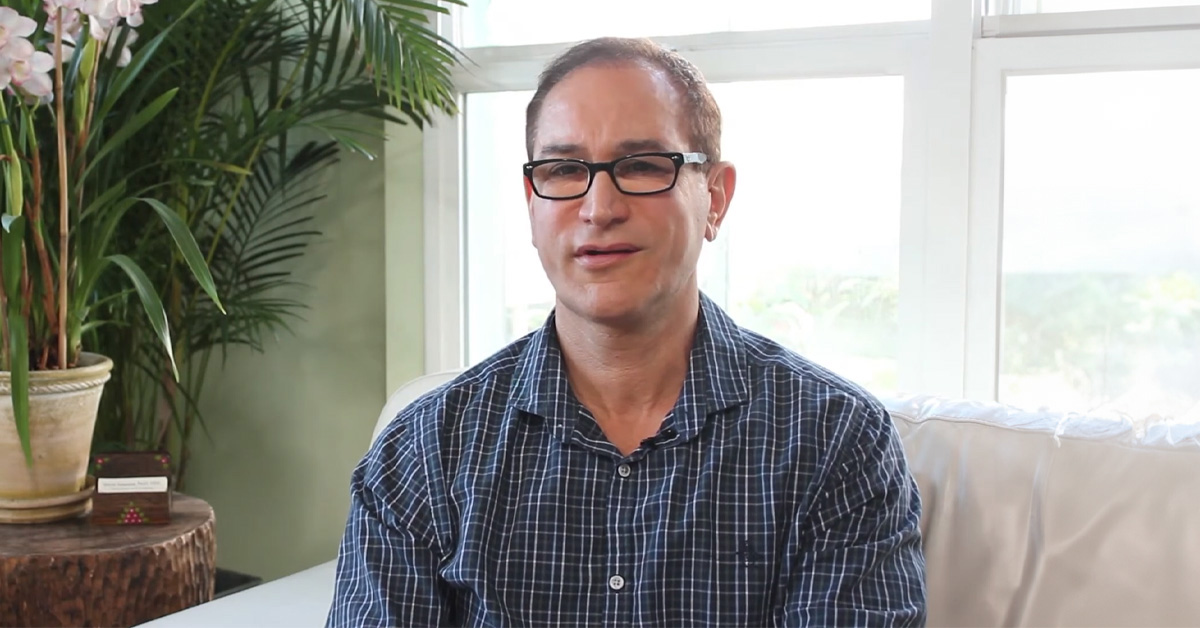
How to Rewrite Your Own Story | with Dr. Steven Isaacman


About Episode
The term “Psychoanalysis” comes with plenty of baggage, not the least of which is images of Freud asking someone about their relationship with their mother, or on the opposite end of the spectrum someone lying down on a couch expressing their innermost fears and desires only to have a practitioner passively responding with, “and how did that make you feel?” Ugh….shoot me.
But despite some of the negative stigmas surrounding therapy and mental health in our society today, there’s a lot more to the science and art of psychoanalysis than you may know, and in this episode I dive deep into the therapy rabbit hole with Dr. Steven Isaacman who specializes in working with creative professionals who deal with mental health issues (myself included).
This interview is a very candid look at the process of psychoanalysis using my own experiences as an example for others, and you’ll learn just as I did how powerful the scripts are we have in our mind that drive most of our behaviors. More importantly, as a creative professional you’ll understand how to rewrite your own script and your own story to drive your attitudes, perceptions, and behaviors in a very different direction if you’re willing to put in the hard work necessary to understand yourself.
Episode Highlights
- Dr. Isaacman’s career path and early experience in marital therapy
- What’s the difference between therapy and psychoanalysis?
- Purging the negative stigma surrounding therapy and psychoanalysis
- The importance of communicating importance through metaphor
- Growing comfortable with your most emotionally raw self
- Rewriting the hindering scripts that dominate your life
- It’s okay to not be prepared with a topic list when you come to therapy
- How preparedness can be an obstacle to psychological cleansing
- Learning to stop being ashamed of your unconscious self
- Knowing that we will always be in the process of growth and development
- Embracing the beautiful potential of failure
About Guest
Dr Isaacman is a licensed marriage and family therapist and a certified psychoanalyst in private practice since 1992 with an office in West Hollywood, CA. While he works with a broad variety of patients, he is particularly interested in working with curious and creative individuals, many of whom work in the entertainment industry.
Dr Isaacman believes that the patient/therapist relationship can open possibilities for rich fulfillment in both personal and professional realms. Some people are eventually grateful for the symptom that brought them in, as learning about oneself can be profoundly joyous, even while being difficult.
Transcript
Zack Arnold: I’m here today with Dr. Steven Isaacman, and I cannot thank you enough for being on the show with me, giving me an hour of your time this early in the morning before you have to talk to people all day long. That says something. So I really, really appreciate you being here.
Dr. Steven Isaacman: Well, thank you. It’s a pleasure to to be with you as well.
Zack Arnold: Well, I want to give people a little bit of background first before we start, as a full disclaimer, we’re going to talk about some pretty deep concepts today, and I want to make sure that people understand this is a process that I myself have gone through for months. You and I have worked together on a very, very personal level, and I really want to kind of remove the stigma behind what therapy is, what psychoanalysis is, and I want people to realize that they have a lot more control over the stories that they may be rewriting in their own heads and kind of rewriting their own story going forwards. And I’m really, really excited to talk about all that. And the other thing I’m really excited about is that I get to flip the tables on you today, and you get to do all the talking, so that’s very exciting for me. But before we kind of dive in and talk about all the nitty gritty, I think it’s important for my audience to just understand a little bit more about you personally, why you’re interested in this subject, and what your background is.
Dr. Steven Isaacman: Well, I became a licensed marriage and family therapist in California in 1992, and I worked with whatever information I had in my graduate school program, but I was encountering people that I felt stuck with and puzzled by, and this led me to seek further training. And I started taking psychoanalytic courses in the late ’90s, and light bulbs started going off for me very quickly, and I realized this was like the tip of the iceberg in the Titanic. That there’s just a little bit that people are aware of, and most of what’s really going on that’s so important is out of people’s purview, and what an interesting thing! And how much more helpful can I be to people, and including to myself, by learning about that? So I continued my studies and became a psychoanalyst, and now this informs how I work. Psychoanalysis is traditionally when people come four times a week, but even when I see somebody once a week or twice a week, I have this body of knowledge that informs how I am with someone.
Zack Arnold: Well, and I guess even before diving too much further into this, I would like to clarify what is the difference between therapy and psychoanalysis, because for somebody that’s never been through this process before, and I, when I first encountered my, you know, first run-in with attention issues, anxiety, and suicidal depression back when I was in my mid 20s, I didn’t know about any of this, and I’m like, therapy? You mean I’m just gonna sit on a couch and talk? Like, what in the world could that possibly do? So, explain a little bit the difference between these two types of therapies.
Dr. Steven Isaacman: That’s a really good question. I would say that the aim of therapy is to cure, and the aim of analysis is to understand. And cure is trying to focus on symptom reduction, kind of like managed care. Let’s quickly patch things up as best as we can and get somebody functioning better. Now that’s all well and good, but it may not be as durable as somebody needs it to be if the root of the problem isn’t gotten to. And so the idea of analysis is if one can understand the root of things and how one has come to get into the difficulties that they’re in, they may have a lot more facility over changing things they want to change in an enduring way.
Zack Arnold: And I think that that’s a really great way to break it down, and my audience knows that I love really simple, stupid analogies. And the analogy, and you know that as well, because I probably have brought up many of them to you. But I love the analogy of this idea where you have a leaky roof in your house, and I use this analogy all the time when I talk about my approach to health and wellness. Where when you have this leak in your roof. The first thing that you do is you get a bucket and you get towels and you make sure that you don’t get water all over the floor. And then you know you don’t want you don’t want the problem to spread further. But if you really want to fix something, get on the roof and fix the hole. Like that. That’s the difference. And having been on both ends of this, where I did just have this very acute problem of why am I dealing with suicidal depression? Why am I burned out? How do I get through this? That was more the therapy process, learning how to just understand what was going on at the time, how to manage my way through it. And at the time when I got through it, I’m like, awesome! I’m cured. I’m done. Like I fixed it, right? But then I realized that that really wasn’t something that was lasting for more than a few years at a time, and I would just kind of go through these same cycles, same behavioral cycles, making the same types of choices completely unconsciously. These weren’t conscious choices, but I was making the same series of choices, had the same habits, and all of a sudden it led me to my latest bout of massive burnout and depression, which led me to you, and this was the first time, and I believe this was like at the very beginning of this year that you and I had worked together some. And when I sat down with you, I remember saying in either one of our first sessions, and I said, “Okay, so I don’t really get this. Like, I want homework, and I like coaching, and like I want weekly assignments, and like I just want to work through this. And you just kind of gave me this stare, and you’re like, “That’s not really what we do here. So my response was, “All right, well, can you kind of give me a really basic, rudimentary understanding of what psychoanalysis is and how it’s different than what I’m used to, and you gave me one of the best analogies I’ve ever heard. So, can you walk me through the analogy that kind of helps someone understand how this process works?
Dr. Steven Isaacman: Well, one analogy that comes to my mind, and you being a film editor, I remember you wanting to organize things and be efficient. And I said, “Let me be the editor, and you just bring me dailies. The idea being that I trust your unconscious to tell me without planning or plotting, inadvertently, what’s going on with you. You are unconscious to tell me my unconscious to listen and translate, and together we discover the root of things. And by looking at that, what may be able to change that.
Zack Arnold: Well, and I remember when you explained that analogy to me, it was just like a light bulb went off in my head, and I was like, “Oh, okay, I get it. Now I totally I have to, and it was didn’t mean that it was going to be easy, but understanding it was simple. So big difference between simple and easy. But conceptually, I was like, “All right, I’m going to have to put myself in a very different role than I’m used to. Where, as you said, and I’m sure anybody listening to this that knows me personally, especially my assistants, when you said I was very organized and I wanted to make it very efficient, I guarantee they laughed out of that. They’re like, “Oh my God, that is so Zack. But once I understood that I had to let all that go and just produce the dailies, like you said, and be comfortable that I was working with an editor that understood how to help me pare down my story, find the right moments that were important, and start rewriting that story. I got a lot more comfortable. Another analogy that you give me that I’d like you to to go into a little bit more in depth that also really helped me understand this process was the little boy on the ground playing with blocks. So, do you mind walking through that analogy as well?
Dr. Steven Isaacman: We were talking about rye, which is resources for infant educators, which is a philosophy of how to raise infants and toddlers. That is autonomy building, where a parent or a caregiver, rather than getting right in there and showing their child how to build something with blocks, they put the child down with blocks and wait and see what is naturally generated, because somebody will want to build a tower with blocks, and somebody will want to organize the blocks by color, and there’s an infinite number of things somebody could do, which will reveal something about who they are as an individual, and that is at risk of being interfered with if the caregiver intervenes too quickly and says this is how it’s done. Which is also why I wouldn’t give you homework because I don’t know what kind of homework you would need, but we might find that out together.
Zack Arnold: Yeah, but I really, really want homework and action steps, and I want to feel like I’m doing something, and I want to feel like I’ve done what I was supposed to and what I’ve been told. And next week it’s going to get better because I did the homework. Like that’s the way that some people are wired, and that was a really, really big revelation for me. And once I accepted that, I just wasn’t in a position where that was going to be the case, where I had levels of achievement and I had you know pass or failure, and it was just more accepting what I was dealing with. Like that’s scary, and I’m assuming you probably have dealt with other people that find this process to be very, very intimidating.
Dr. Steven Isaacman: Very scary, very intimidating. And when you use words like acceptance and trust, what I would add to that is provisional acceptance and provisional trust. My hope is that I mean, why would you trust me, a stranger, just telling you this? I think the trust needs to be just enough to have an experience with me week after week after week and grow to trust. Hopefully, because you’ve had an experience, not just because I said trust me.
Zack Arnold: Yeah, and well, the one of the the pieces of trust that you had built in right away, which was very nice for you, is that you were referred by my physician, Doctor de Mello, and any of my longtime listeners know that I basically see him as like family. So if he said, and I think I had even said this analogy to you, where I’m very skeptical of treatments or supplements or whatever it is, and anytime somebody gives me advice, I have to read five different sources before I’ll even you know have it in my house. But when it comes to Doctor de Mello, if he said, “Well, the best treatment for you is to jump off a bridge, I would jump off the bridge and then I would look at the results when I landed at the bottom. Like that’s how much I trust him. So walking in, I was like, “Well, he highly, highly recommended you. So that trust factor, as far as knowing you were a professional, was there, but it was very clear I didn’t trust the process. So, as an individual, I was comfortable being in the room with you, but there was very little trust of the process, even though I had done more traditional therapy in the past. So, what are some ways to kind of help people get over either the fear of this process, or also the stigma that’s associated with you know Sigmund Freud and laying on the couch and tell me your deepest, darkest feelings. Like, how do we help people get over all of this?
Dr. Steven Isaacman: There’s a concept called the beginner’s mind. It’s a Buddhist idea, which basically means I don’t know what’s going to happen. I never had this day before. It is trying to be an empty slate and open to a fresh experience. Now that is very hard for most people to do. I maybe even all people to do. But in particular, people who have had different kinds of trauma, the last thing they want to do is say, “Let’s see what happens. And rather, they’re more likely to predict what will happen. The problem with those predictions is it’s based on what has already happened in a traumatic way. So it’s an expectation of danger, and then a gearing up and a stiffening up and a pushing out of new ideas based on an attempt to protect, but the protection can be so much that it blocks out help. So my aim is to be with somebody wherever they are. You and I had this tailwind that you’re talking about, because I came through a trusted family member. I may not have that with somebody else, and my aim then is to be with them while they’re afraid, not to try to talk them out of it or anything, but to empathize. Because I think what people want foundationally is to feel understood, and if somebody can feel understood in the moment, the predicament, and I can be tolerant and respectful of how much they don’t trust me, how scared they are about starting, maybe they can come back next week, and maybe we can build something little by little by little. That’s how I would begin.
Zack Arnold: Yeah, and I think that’s a great way to look at it, where you don’t feel like you’re making this commitment for 32 weeks in a row, and it’s this giant process, and you know, it’s like going on this 90-day diet where you’re depriving yourself of all these things, and I just have to make it through. It’s more, you know, 60 minutes at a time. Let’s just see what happens. See where it goes from there. And that was the approach that I took because, like I said, and I like the way you put it, where we had this tailwind of trust. But I still had not scheduled more than a week at a time when I first started. And especially given that, just from a logistical standpoint, the only time I had to do it was Saturday mornings, and you’re in West Hollywood, and I’m in Woodland Hills, and anybody in Los Angeles is like, “Are you nuts? Like you were doing that every week? Anybody outside Los Angeles would look at a map and be like, “Oh, I don’t get it. What’s the big deal? But anybody in LA is like, “Whoa, that’s that’s nuts. But I I gave it one week at a time, and I remember thinking, and I was just like, “Well, you know, this this is costing me money, and it’s like my Saturday mornings, and I’m I’m just gonna go this week, and we’re just gonna see what happens. But then, and I even remember a couple of times, like I when I first started, it was like I had prepared in my mind. Here’s the agenda of all the things that I think probably need to be talked about today, and I would try to maintain this agenda, and very quickly it would derail. But then I remember you kind of gently mentioning to me that you don’t really need to come prepared, and all of a sudden I came in one day and I felt. Very unprepared. I was like, you know, I thought about it on the drive over here, and I have no idea what to talk about. And I had this fear of, oh my god, did I just drive all the way over here on a Saturday, and we’re going to stare at a wall together? And then for the next hour, I just went off, and it was probably the most productive session that I ever had. So, explain to me a little bit what’s happening in the conscious versus the subconscious mind when I have an experience like that, where consciously I think I don’t know what I’m supposed to be saying and I’m not prepared. But then all of a sudden I just go off, and it’s almost like I’m in this creative flow, and I don’t even remember what I said, but it just comes out. What’s going on with my brain,
Dr. Steven Isaacman: The baby with the blocks is not waking up in the morning and deciding what he’s going to do with the blocks. You know, there’s there’s no preparation. There’s just an encounter with the situation, and in the best possible environment and situation, the baby encounters the blocks, and something spontaneously happens as an interaction of what’s inside the person and what’s outside. In this case, the blocks. And I think that that preparedness is from the adult defensive, protective, predictive, controlling, mistrustful place. And when that can be let go, then what is also natural and other things that may need to be talked about and are more foundational and more important in a in a novel way, in a way that couldn’t be thought about on purpose, have a chance to come out. And it can be that there’s a. I think what you’re describing is a delightful surprise, because in a moment like that or in a session like that, one discovers how the process works, not because anybody explained it to you, but because you experienced it.
Zack Arnold: Well, and help me then a little bit further understand what even is the subconscious mind? Because I realize I’m talking about these two things, but in a sense, I didn’t even really understand what these things were, other than just kind of like the the popular notion of it. But I know this is a really big thing in psychoanalysis specifically, and I want to dive a little bit deeper into the subconscious mind and how these scripts are imprinted, and the idea of memetics. So let’s let’s dive a little bit deeper into just the actual science of how all this works.
Dr. Steven Isaacman: Okay. Well, one way to think about this is as a newborn, and maybe even as a fetus, one is having experiences. Of course, all kinds of experiences. The baby version of the experiences that you and I and every person has every day, with things to do and feelings, external feelings, internal feelings. The difference with a fetus and a newborn, and even an infant, before there is language, before there’s walking, all of these experiences are only sensations. There’s no language. There’s no way to understand what’s going on. To think about a problem, and it can be very terrifying to be a baby. Now, in the optimal situation, there is an environment, a caregiver who can modulate for the baby well enough-not perfectly, but well enough-so that the absolute helplessness of the infant is not so much known to him. And in cases where that kind of provision is not available, that helplessness becomes known and becomes terrifying. And a problem like a chill, or a loud noise, or hunger, or gas, or any of these problems-they are not understood as different problems and thought about. They are just persecutors in in the baby’s mind. The baby has a mind somewhat like a psychotic. It’s not logical thinking yet. So what would be in the unconscious is quote memories, and I’m putting it in quotes because they’re not really memories that can be remembered and thought about, but there things that have happened that are registered, but not put into words. One one word therapist uses: they’re not mentalized yet, but they inform everything that happens after. But people don’t know what’s in there consciously, and nobody comes into the office saying, “Let me tell you about, you know, my infancy. You know how it was on a Tuesday when I was an infant. There’s an expression: “The unconscious is only available through its derivatives. So we have to see what is here now, and create a. Look backwards and say, what does that suggest about the beginnings, and how might this have gone this way or that way? And the therapist hopefully is able to postulate with the co-writer, the patient, perhaps it was this, and I’m really putting it that way because I’m not some authority. I wasn’t there, but I may have an inkling or a hunch. And if I offer it to you, it will register either as I don’t think so, or it will resonate and stimulate more conversation. And together we put words to those original experiences that are having profound effects, maybe even causing the problem that brought you into the office.
Zack Arnold: Yeah, and I think that’s a really, really great way to explain it. And going back to this analogy again for all of us that are storytellers and work in the filmmaking industry, talking about this idea of the patient creating the dailies, I never, actually, even to go one step further or to go backwards for a second, a lot of people had this notion that therapy is well, I’m just going to sit and talk for an hour, and you’re going to say, mm-hmm, mm-hmm, yep, that’s very interesting. How did that make you feel? Uh-huh, uh-huh. Like that’s kind of what you see made fun of on television, and what I really appreciated about this process is that you weren’t leading me, you weren’t ignoring me, you weren’t just kind of you know patronizing me. You were really like a collaborative filmmaker helping me understand first of all how did we write this first draft? Like, what are the origins of the different scenes that we have in here. Let’s talk about. But it wasn’t a matter of you need to tell me about this thing, and that’s one of the things that’s really uncomfortable about it is that it’s my job to figure out where to go. So sometimes you’ll be at the end of the train of thought and you’ll just be smiling at me, and I’m like, so that weather yesterday, huh? And you’re like, what am I supposed to talk about? But that’s really part of that that process of being patient and realizing that there are these stories and all of these connections or all of these individual ideas, thoughts, experiences, emotions that are within me as a person or within the patient, and you’re just helping to kind of connect some of the dots. But I have to find the dots first. You’re not finding the dots for me, and that’s really what the process of creativity is on a much more fundamental level. Is that one person can stare at three objects on a desk and see three objects, and another person can see those three objects together in a completely different arrangement, or you know, welding them together, or taping them together, or building something. That’s the process of creativity, and you and I basically do that, but with my thoughts and experiences.
Dr. Steven Isaacman: Yes. Another way to put this is, I can’t do my job without your help, and you can’t do your job without my help. We each have a role, and I need to use my authority, which is my confidence in myself because of my own training and my own analysis, but not be an authoritarian. And there’s an important distinction between that.
Zack Arnold: So explain then a little bit further what you would mean by being an authoritarian. Like if if you were doing it in that way, what would that look like?
Dr. Steven Isaacman: Well, an authoritarian is an is a know-it-all, is a person who knows what somebody should do. They think they know who somebody should be in a relationship with. They know all kinds of things that somebody else ought to do, which is arrogant, and in my mind, wrong-minded. Now, somebody who is afraid of authoritarianism may abdicate altogether their authority and not be confident enough to intervene as needed and as would be helpful. So, I need to find that third option where I’m not just sitting going “aha, aha, what do you think? What do you feel? Which is bland and useless, in my opinion, but also not telling you what to do. But instead, trying to understand who you are and trying to create the conditions where together you can be the little boy with the blocks, and we can see how you roll.
Zack Arnold: And that’s really why the process is kind of terrifying at first, and even really that never completely goes away because it just you really have to open yourself up and be vulnerable to the things that you may not even remember consciously, but all of a sudden, you start thinking about one thing, and because you’ve opened yourself with this vulnerability, all of a sudden, oh wait! But that happened because of that one other thing. But oh, hold on a second! I haven’t thought about this for 20-five years, but this other thing happened. So whoa, okay, now. Now this is starting to make sense, like so that that’s kind of what’s happening, and I’m assuming that this is the kind of thing that you see all day, every day, where like just these random epiphanies eventually come up because you’re creating all these random connections. Is that a fairly common process?
Dr. Steven Isaacman: Absolutely. And as you and I are talking, I’m thinking about we didn’t script this. Neither one of us planned what we were going to say, but I think this interview is a little piece of DNA of what what we are also describing as a therapy session, in the sense that your associations to what I say are generating ideas for me, and in fact, this idea that something came to mind from 25 years ago that you haven’t thought about is a perfect example of how the unconscious works. That things are stored and things are available by association, by a trigger, by a song, by a smell, by something. Something triggers something, and a file is opened that you didn’t even know you had anymore because the hard drive never gets erased. Now that is one of the disappointments, perhaps, about psychoanalysis, is that one is not cured, one is in recovery forever. Now that’s sort of a mixed bag. One can be so disappointed that this is not going to be over and done with. On the other hand, it may be very reassuring and calming that this is just the state of human existence that we are always in process and trying to do the best we can, and trying to learn from our experience, and hoping we do better today than we did yesterday because of an awareness-not a harsh and punitive critical awareness, but also not no awareness, a helpful awareness, like a good parent,
Zack Arnold: And that awareness is so powerful. And I’ve talked about awareness in the past when I’ve done podcasts about yoga, about meditation, about integrative medicine, and how once you develop that awareness of how you’re treating yourself and looking at wellness versus not being sick, all these differences. Like awareness is really the most powerful tool that you can have, and I, you already kind of said it, and I think I may have even, but I want to reiterate this again, that when I first started this process years ago, like I said, I was recovered, I was done, I fixed the problem, and I’m fine, and then I had these repeating behaviors and thoughts and patterns that I was going through, but I had gone through this process again, or I would try medication again, or I would sleep for three months and start exercising. And every time, the mindset was, “Oh, thank God, I’m done with that. Like I figured it out, right? The the thing that you and I talked about was I cracked the code. That was it. I’m done now. And it took a little while to really dig in and understand that, but on the old version of my website, that was a little piece of copy that I had in the paragraph about me. Is that I cracked the code, and I didn’t realize how much that one sentence was paralyzing me as a human being, because it made me feel like an imposter. This idea of imposter syndrome-that what business do I have of getting on a microphone and talking like I’m an expert or writing a blog post or teaching a course if I’ve cracked the code I’m not allowed to be tired anymore I’m not allowed to eat crappy foods I’m not allowed to feel disorganized or feel like I can’t focus on something and it was one line of copy on my website, and it crippled me. And realizing just that one thing completely changed the way that I look at myself, my job, me as a parent, me running a business going forwards. And that’s what this process did. Was coming out of it with you this time, it was very different. Where you know it’s it’s not a matter of yes, I’ve figured it out again, and I’m recovered again every single day. I’m now recovering. I haven’t cracked the code, but I’m I’m always on the journey trying to figure out how to crack the code, knowing that I’m never going to. But just that simple mindset of I’m recovering versus I’m recovered colors the way that I look at every single decision I make during the day differently. Where an example would be a year ago, I would say, “Oh man, I’m a little bit behind today, and I really need to write this script or this blog post, or I have an extra scene to cut. Well, that’s all right. Usually I go to bed at 10, but I can go to bed at 11 or 1130 just this one time, right? Sounds kind of like somebody that might have an addiction, and I’m a workaholic and I have that addiction. But now, on a daily level, because I have this reframe of I’m recovering, not recovered, it’s much easier to make the decision of no, I’m not going to write. This thing until 1130 or 12 because I know what that looks like two months down the road. So it’s it almost it’s almost like we’re getting into my own little personal therapy session here. You might have to invoice me afterwards.
Dr. Steven Isaacman: Well, I think the things we’re talking about are not unique to you; they’re universal. And what you just described was a good example of authoritarian. That’s you were authoritarian when you had cracked the code, and you switched that to authority, which is you are becoming more a master of yourself by having let go of the authoritarianism. But you don’t know that until you know it. The difference is abstract until you can feel it.
Zack Arnold: Yeah, and it’s it’s it is hard to kind of put in words the difference because if you were to look at my calendar or look at the things I’m during the day or just observe me, if you looked at a video from a year ago versus a video of today, you’d say looks pretty much the same. I mean, you go to bed a little bit earlier. You wake up a little bit earlier, but you’re eating the same stuff. You’re exercising similar. You’re still going to work, still raising the kids. But the mindset shift is so profound for me. Where, and I think one of the biggest things that I have allowed for, and this we may end up going even deeper into another session here, but I’ve really allowed more space for failure, and I think that that’s something that, especially in creative fields, which is why I want to bring this up, is that there are so many people that are afraid of just trying something and not allowing themselves to fail. And the only way to write a great script, or to edit a great scene, or you know, shoot great footage, or direct, or whatever it is that you might be doing, either in filmmaking or whatever creative endeavor you do. You have to fail a lot to find something that works. And you, I’m, I’m going to make an assumption, so you can correct me if I’m wrong. But given that you’re smack dab in the heart of West Hollywood, I’m going to guess that you spend a lot of time with creative people in the filmmaking industry, yeah. So talk me through this idea of imposter syndrome and failure, and how common it really is to those that do creative work.
Dr. Steven Isaacman: Well, this is a very important misperception. So under the heading, let’s go back to authoritarian versus authority. Authoritarian is. associated with perfectionism, and if you’re not perfect, you are a failure. You didn’t fail; you are a failure. And having a failure is one thing, but being a failure is another thing altogether. And that is a really important distinction. Everyone in the world has losses. Life is full of losses on a routine basis. If one feels like a loser every time they have a loss, one depresses oneself and cannot live fully. I guess what I’m saying is one another way to think about what is this process trying to achieve is a capacity to mourn, and a capacity to mourn that you’re not Superman, that you don’t get everything right, that you lived not as richly in the past than you do now, because you know more now than then. And if one can mourn with grace, then one can move forward. If one is persecuted by that, then one can get stuck in time and continue to have more and more losses because of the stuckness,
Zack Arnold: That stuckness is where I really wanted to go next. So it’s like the perfect segue, because it goes into this idea that I’ve been mentioning several times now about scripts, where we repeat these behaviors over and over, and we’re not really conscious of them. And for me, you know, that script was well, I’ve got to work, work, work, work, work, work, work. But I and it took a long time to get through this, and I’m going to apologize to my parents if they’re listening. They’re like, “Oh my God, it’s all our fault, and it really isn’t. But I realize that most people think that they’re you know afraid of failure, and at a certain level, I was afraid of success. I was afraid of this actually working, and that sounds absurd. Like, how could I be afraid of being successful? But that was because of certain scripts and behaviors and experiences that I had had growing up. So, how do these scripts affect us going forwards when we can psychologically and consciously say, “Well, that’s dumb. I’m not afraid of success, but what’s what’s driving us underneath? Like, how do these past behaviors or experiences have this kind of power?
Dr. Steven Isaacman: Well, there’s a lot of reasons why somebody would be afraid of success, but you’re right. If you just look at it at face value, afraid of success, why? That’s ridiculous. Somebody might be afraid of success because they love their parents so much, and they will not let themselves go further than their parents went. That’s one reason. Another fear of success is the the more successful one gets, the more recognition one has, the more public one is, the more one is at risk of envious attacks by others. So those are just a couple of reasons why somebody might be afraid of success and sabotage their success so that they don’t have to deal with those problems.
Zack Arnold: Yeah, and that certainly is the category that I belonged in. I think where in my mind the thought, and this is still something I I have to deal with, and I’ve gotten much better at it. But the thought in my mind is always, well, let’s say that this really becomes what I want it to be, and I can help a lot more people that work in creative jobs and want to, you know, work through their their mental issues, or they want to improve their health, or they want to improve their productivity, whatever it is. But then somebody comes along and they say, “What business do you have to tell me? Like, who do you think you are? Right. That’s the thought that’s in my mind, and I didn’t realize how much that the fear of that was really crippling my ability to build and grow this program.
Dr. Steven Isaacman: If you were back in the authoritarian perfectionism, and somebody says, “Who do you think you are? It really gets to you because you’re you’re not sure if you’re Superman or if you’re a fraud. You’re one of the two. But I think where you are now, who do you think you are? You’re a person on a journey who’s further along than he used to be, who does not have the answer but has some tools and a capacity to share them. That’s who you think you are.
Zack Arnold: Yeah, and the the journey is the is was really the crux of all of this, and that was what even led me to you in the first place was this idea of the hero’s journey, and once I discovered the hero’s journey, and this is from the work of Joseph Campbell, and I can put a link in the show notes to anybody that’s like, “Ooh, this sounds intriguing, because we can talk more about it. But just changing this from you said the authoritarian to the journey, and me realizing, “Oh, I’m still on the journey. Let’s say that we’re going through a jungle that’s never been walked through before, I’m in the same jungle as everybody else, but I just happen to have found a machete along the way, and I’m tearing up the you know all the the stuff in front of me. You’re right behind me, like I can touch you. You are so close to me in the exact same journey. I just happen to have picked up this tool, and I’m just two steps ahead of you, and that reframe changed everything for me. So talk a little bit more about Joseph, and we can we’ll do this super super briefly. But just this idea of what the hero’s journey really is, because it doesn’t just apply to me because I have a podcast and a website. This applies universally to the human experience.
Dr. Steven Isaacman: I think so because you know, life is like a Rorschach ink blot. It it doesn’t have inherently any meaning. It has the meaning that one creates, that one attributes, and everybody who was born has the burden responsibility of creating their own meaning, and when one is able to find ways of creating what is meaningful for them, and this is where authoritarianism doesn’t work because different things are meaningful to different people, and that’s why the idea of rye and the parent who says to themselves, I want to see who my child reveals himself to be, not tell him what to be. When one is able to create one’s own personal meaning, it is rich and and comforting and interesting, and then you have something to share from authority, not authoritarianism.
Zack Arnold: And the other thing that I want to bring up about the hero’s journey as well, that really, really applies to this audience specifically, is anybody that tells stories and considers themselves a storyteller. Guess what? Every single movie made ever is basically the hero’s journey. Like you, in even beyond movies, just stories like folklore, like myths. All these things are based around the hero’s journey, and you know anybody that has studied the structure of story and you know the basic three act structure, and you have the first act with the introduction, but then you have the challenge that comes along, and it’s like, wow, can I overcome this? All right, great. Now I’m gonna, you know, what’s the big question? All right, now Act Two is I have to go through this arduous journey and see if I can answer this question, and then Act Three is the resolution of all of it. So everybody listening, I would assume, or most people would have a basic understanding of story structure, but it’s when you apply your own experience where you are now and say. Where am I in the three act structure? And I’m not talking about time. I’m not saying if a movie is 100 minutes and you’re 30 years old, you’re at minute 30. It has nothing to do with that. But it’s realizing, well, what part of the journey am I in? And for me personally, I realize, oh, I right now, at least as far as me trying to build this program, as far as that’s concerned, I’m in the beginning of Act Two where somebody says, “You now know the journey, but we’re going to make it really, really hard. And the audience is like, “Oh man, this is going to be really exciting. But the hero is saying, “I just can’t do this. There’s no way I can do this. And the audience is saying, “Well, I already saw the trailer. I know you can do it. Like we know you make it through, but the character doesn’t know that, so tell me a little bit more about what you’ve seen. Obviously, I don’t want you to reveal anything personal about other patients, but just more in general, what you see with people that work in these creative industries going through their own hero’s journey.
Dr. Steven Isaacman: Well, again, everything that you’re saying is sending off light bulbs in my mind from a psychoanalytic point of view, the change that is needed, or a change that is needed, is moving from black and white thinking, which is I will succeed or I won’t succeed, to let’s see, let’s see what I can do. That third realm of possibility, and I think people in your industry have a particularly challenging time because of this. Because most people, one job ends and you’re looking for work, and there’s sort of a built-in insecurity. Will I work again? Will the industry consider me relevant? And it is very easy to have a fallow period be seized on in the frightened mind as proof that this is the end. Now, to be able to take a step out of that and say, “Oh, I’m telling a story. I’m making a prediction. I really don’t know that. That is again going back to a baby. This is a suffering. I don’t know if this will ever end. But I also can now, with adult awareness and consciousness, remember my body of work. Remember the skills that I have inside me. Remember the network of people I know, not as a guarantee that I will get to where I hope to, but to calm myself down enough to do the work today.
Zack Arnold: Yeah, and I think that’s that’s a very very important distinction to make. Is you know, am I going to do it? Is going to be yes? Is it going to be no? And realizing that, like you said, it’s not black and white. It’s just these endless, infinite shades of gray, and that you know that that’s really one of the realizations that I had going through this process. And for me, I think that one of the the biggest hurdles that I had, and you know, we could go for hours. And as a matter of fact, we did go for hours and hours. You know, digging into where this was coming from on a deeper level, as far as my experience growing up. Just as everybody has their own unique experience growing up, and I won’t go into that. But I think just on a more superficial level, looking at this shorter time frame, one of the the biggest things for me was setting expectations, and one of my-I don’t want to say the word failure because you’ve you know made it clear that we don’t want to say that we are a failure. But I think that one of the the detriments, one of the reasons I’ve led myself down this path over and over, the the recurring pattern that I finally discovered, is that when setting an expectation, I was always setting an unrealistic expectation for myself.
Dr. Steven Isaacman: But you didn’t know that at the time.
Zack Arnold: But again, that was based on years and years and years of experience, either doing it myself or watching other people in my life doing it to themselves, but not consciously saying, “Oh yeah, well, duh, like of course this makes sense. But going through this process, just that one little thing, and it what? And again, if you had said to me, “Well, you realize, Zack, you are setting unrealistic expectations, I’d be like, “No, I’m not. And the reason I know that is because people have told me that my whole life. Like, well, that’s not really realistic, and I wasn’t setting unrealistic expectations. But one of the fears that I still have to this day, and I’m sure there are so many people that would be listening to this thinking the same thing is that setting a realistic expectation to me is well, you know, I’m going to get a decent job and it’s going to pay the bills and I’m going to go home and take care of my family and everything’s going to just be okay. It’s going to be realistic. And then the other end of that is I’m Steve Jobs and I’m going to change the world, and I’m going to completely reframe how we function as a species. And he firmly believed that, and he did it. But there are also many, many, many, many, many people that are entrepreneurs, filmmakers, whoever they might be, that are saying the same thing. Will not end up becoming the next Steve Jobs or the next Steven Spielberg, but I also don’t want to just be mr. Well, I know I can’t do that, so I’m just going to be realistic. So, how do you find the balance between I’m just going to get a decent job and pay the bills and you know barely survive the rest of my life, or I’m going to be Steve Jobs. How do you find the middle ground?
Dr. Steven Isaacman: Well, I think you find it by looking at how you define the term you’re using. Realistic. The way you’re using realistic right now, it’s resigned, and resigned is depressing. Now, the other poll is: I am going to be Steve Jobs. I know it. That is manic, and people have problems with one pole or the other and bouncing back and forth until they find a new paradigm, which is what we’re talking about. Which is, I don’t know. I feel motivated. I feel interested. I’m going to try this and see what happens. I may have some successes. I may have some failures. Maybe from the failures, I can tweak my agenda and try differently. It’s not about resigning to a bland, ordinary existence or making sure you’re the next Steve Jobs. It’s some other realm of active participation, and maybe to put it succinctly, to try to have high hopes and low expectations.
Zack Arnold: Yeah, i think that’s a really, really good way to put it, and that’s kind of the way that I’ve reframed it. Is that this is going to be like one of those horrible platitudes that you’d like see on a meme from a life coach on some Facebook page, but this idea that you know if if you shoot for the moon and you fail, you fall amongst the stars, right? You’re still you’re still not on the ground, and that’s kind of a ridiculous platitude, but it also kind of isn’t, where you know you you want to shoot for something, but you’re okay with where you will land if you don’t get there, and this is something I’ve always talked about since the very beginning of this program, that if somebody says I’ve been inspired to run a marathon, I’ve been on the couch for years, and I’m going to run a marathon tomorrow, and they don’t end up running a marathon, but they do a 5K, that 5K is still way better than sitting on the couch, and it’s going to change their whole life, so you know being able to reframe it as well. I am a failure because I didn’t complete this marathon versus well, I failed at completing the marathon, but I’ve still been successful based on where I started and where I am now. So that having been said, where I kind of want to leave this, and you’ve kind of said this already, but I just want to make sure to close this loop before we’re done today. I was going to say done for our session today. I’m like, wait a second, we’re not doing a session. We’re recording a podcast, so there’s me going into my unconscious. But we’ve talked all about now how we’re creating these dailies in the room and how it helps us to discover the scripts that either we have written for ourselves throughout our life, or perhaps the scripts that have been implanted by experience with others, by what we’ve been told our whole lives, and we’ve talked a little bit about how to rewrite them. But you know, super succinctly, if we just wanted to say this is where you get started, if you’ve if you’ve really committed to saying I want to figure out what these scripts are, and I want to rewrite them. Where do I start to do that?
Dr. Steven Isaacman: Well, I mean, look, I’m biased, but I think finding someone to talk to is a good idea, because it’s really hard to get out of one’s way. And in fact, part of becoming a psychoanalyst is one has one’s own analysis just because of that idea that we can’t be our own analyst. We and every one of us has blind spots and we need help. Now that requires a letting go of a certain amount of control and a letting go of a certain Superman idea that you don’t need any help. Which, by the way, those ideas that you don’t need any help may be a byproduct of not having as much help as you needed early on.
Zack Arnold: Well, that I think that’s a profound way to put it in realizing. Of course, I was basically setting you up to plug yourself and plug your services, so I’m glad you picked up on that. But I really want people to have a much better understanding of how efficacious this this process really can be, like it can make a huge difference. Where you know, for me, I’m always about ROI. It’s like, all right, well, if I’m going to spend $2,000 on an educational program, is the knowledge that I receive from this program going to allow me to get a return on that $2,000 in X number of months or X number of years, or if I put this money into the stock market or an IRA or whatever it is, like what what does the chart look like over time? And I had a very hard time accepting that. All right, well I’m going to pay you money, but I can’t measure this. Like I can’t say, well, I’m going to go for 12. Sessions or whatever it was, and you know, over the course of the next 12 to 20-four to 30-six weeks, do I feel like I’ve gotten an adequate return on that investment? And you can’t really do that with this process, but there is no doubt for me that I’ve gotten a return and then some. Just again, like I’ve already said, through developing this awareness and having this reframe, which has helped me to rewrite my own story, which is really what this is all about-is rewriting your own story. So, for anybody that’s listening that got into this thinking, “Oh my God, we’re going to listen to a therapist talk today, and we’re going to talk about Freud and your mother, and like, I really, really hope that this encourages you more to get over the stigma of therapy or psychoanalysis, and just kind of jump into it, thinking I’ve got an open mind, I have a beginner’s mind, and we’re just going to see where this takes me because I know that this can help me rewrite my own story. So, on that note, I want to thank you so so much for taking the time to chat with me today and giving me my own little session. And like I said, you can invoice me. But this has been tremendously beneficial to me, and I hope it has been for my audience as well. So I really appreciate you coming on today.
Dr. Steven Isaacman: Thank you for inviting me. I enjoyed it as well.
Episode Credits
This episode was edited by Curtis Fritsch, and the show notes were prepared and published by Jakin Rintelman. Special thanks to Krystle Penhall and Sarah Furie for helping to spread the love!
The original music in the opening and closing of the show is courtesy of Joe Trapanese (who is quite possibly one of the most talented composers on the face of the planet).