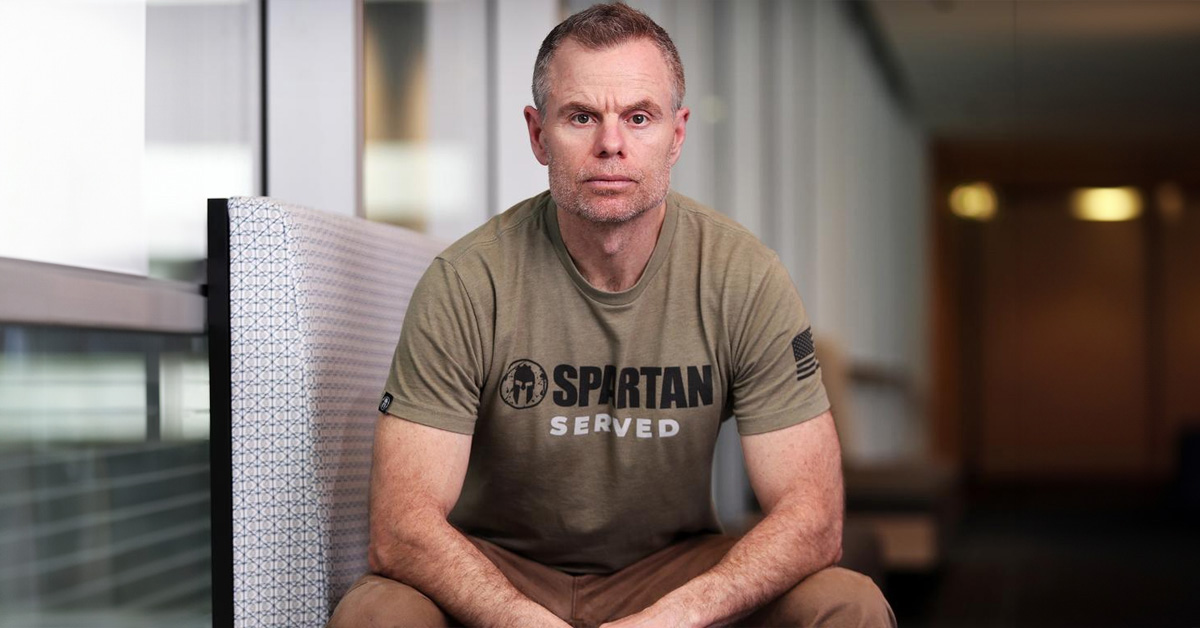
How to Develop ‘Obstacle Immunity’ | with Spartan Race founder Joe de Sena


About Episode
Grit. Determination. Perseverance. Are these qualities you can build, or are you just born with them? In today’s episode I interview the founder and CEO of The Spartan Race Joe De Sena. We discuss his background starting several businesses (including being a pool boy for the mob as well as making women’s clothing), why and how he started the Spartan Race, and most importantly, how to build obstacle immunity and apply it to anything in your life to become more successful.
Even if you have no interest in obstacle course racing, this interview can and will inspire you to make changes in your life to better yourself and perhaps push you out of your comfort zone.
If it doesn’t challenge you, it doesn’t change you.
Useful Links
About Guest
Joe De Sena is the founder and CEO of Spartan Race, Inc. De Sena has been an entrepreneur since his pre-teens. From selling fireworks at age 8, to starting a t-shirt business in high school, to building a multimillion-dollar pool business in college, to creating a Wall Street trading firm, De Sena is a living definition of “entrepreneur.” De Sena is the New York Times bestselling author of SPARTAN UP! A Take-No-Prisoners Guide to Overcoming Obstacles and Achieving Peak Performance in Life and SPARTAN FIT! 30 Days. Transform Your Mind. Transform Your Body. Commit to Grit. He is also the host of the Spartan Up! Podcast, available on iTunes, Stitcher and YouTube. For information about a Spartan Race in your area, visit www.spartan.com.
Transcript
Joe De Sena: All right, let’s do it.
Zack Arnold: Well, first of all, I just wanted to make sure and thank you very, very much for doing this. This has been a goal of mine for a long time to to get on the show with you. So this this really means a lot. But like you say, you got to start telling people what you want to do, and then you just make happen. So
Joe De Sena: It is amazing, right? Yeah, I was just thinking about it this morning. Well, I do it to myself. I I’ve gotten to the point where I don’t necessarily have to tell other people. I just got to just got to say it in my mind, right? Yeah, and you’re and you’re committed.
Zack Arnold: Exactly. Yeah, and that’s exactly the way that I’ve done it. Where you know, for years now, I’ve had all these goals and aspirations for either the documentary film that I’m making or for this program now, and I just start telling people this is what’s going to happen. It’s not well. I’m kind of trying to do this, and maybe someday it’ll happen. It’s like, nope. This is what’s going to happen. I don’t know when. I don’t know how it’s going to happen. I don’t even know what the steps are, but I just know this is where it’s going to end up. And people just kind of look at you funny, and they’re like, “Okay, well, you mean business, you know? So that’s that’s kind of the the story of my whole life and why I’m recording a podcast at four a.m. on a Monday.
Joe De Sena: I think I’m honored to be on the podcast. I um I’ve had some really weird stuff going on in my life with some folks. I’ve been questioning humanity the last few days and wondering, am I the only person that operates this way? So I’m glad to hear there’s two of
Zack Arnold: Us. Yeah, no, I’m not quite sure that I’m at your level. Like, I I don’t eat rocks for dinner, and I don’t feed rocks to my children for dinner, so I’m not quite there. But we’re we’re definitely cut from the same cloth. I just might not be cut from steel cloth.
Joe De Sena: That’s funny. That’s funny. Listen, I even slip and have a Haagen-Dazs vanilla ice cream every once in a while. So
Zack Arnold: Well, you kind of have to, you know, like part of it is that you just have to indulge every once in a while. But the other part of it is that you don’t appreciate all of the work that you’ve done with your health until you slip and realize how absolutely awful you feel afterwards.
Joe De Sena: That’s right.
Zack Arnold: You know, that’s kind of a badge of courage for me. Is that if I do slip and I’m literally like on the toilet for a day or I can’t even function, I’m like, this means I’m doing something right because one pizza has just knocked me on my ass.
Joe De Sena: I just had that conversation yesterday with somebody, so I agree. The
Zack Arnold: Idea, the the reason that I really wanted to have you on the show today is not to talk about the Spartan race specifically, because anybody that goes back into my past episodes, they can learn all about the different types of races, the types of obstacles. They can hear my stories about going under barbed wire and crawling up ropes and doing all this other crazy stuff. So I’m not here today to talk about the what, the when, the where, or the how of the Spartan race. Today is all about the why. I want to understand the theory behind the Spartan race, where it came from, who is this person that created it? Because in the world of endurance racing, you’re kind of a deity. I mean, you’re literally like a legend in the world of endurance racing and obstacle racing. But in my world of post production and filmmaking and TV production, nobody really knows who you are, and people are kind of starting to hear about the Spartan race, mostly because I won’t shut up about it. But I really am trying to crossbreed these two worlds and help people understand that just because you’re in front of a computer all day doesn’t mean that you can’t still be healthy and be active and do things like this. So I want to go all the way back to the beginning of your days being a pool boy for the mob, and take that all the way to your move to Pittsfield, Vermont, and just understanding what the journey was that kind of forged you to the person that you are.
Joe De Sena: Yeah, sure. Well, first of all, I’m a legend, but I’m a legend in my own mind. I’m not much of a legend. Way back when parents get divorced, I don’t know, nine or 10 years old, but I I think back a lot about that childhood now because I have children, and so you try to figure out how do you get the good qualities out of yourself to them, and and and not the bad qualities? And so then you think about your environment and the place you grew up, and can you do you have to recreate that to give them the good stuff? And for better or worse, I grew up in this crazy neighborhood in Queens. For whatever reason, 90% of organized crime found themselves living in this neighborhood, and it was a lot bigger than it is now. Most of those guys are dead or in jail, and my dad was doing very well, but I still had a spark to go earn and make money. So at a very young age, I started selling fireworks. I had this ambition. I would ride around on my bicycle and buy a pack of firecrackers for 10 cents and sell it for 13 cents, and started to understand margins and supply and demand before I was 10 years old. And around I don’t know 12 years old, my dad started to go broke because he lost a big contract he had at Kennedy Airport, and he’d over leveraged himself. And I quickly found myself looking for some work, and my neighbor was the head of of one of the families, and he took me in and he said, “Look, why don’t you clean my pool, pay you $35 a week? I didn’t know what I was doing, but he looked out for me. He he only had daughters, and and I was like, I guess his son. And so before you know it, he gave me, you know. Few more customers and a few more guys, and they were amazing customers because they taught me so much. I I not only cleaned the pool. This is going to sound silly, but there’s a metaphor here that people can apply to life. I not only cleaned the pool, which was what they were paying me for, but I straightened up the lawn furniture. I took care of that. I straightened up the shed, these are things I weren’t. I was not getting paid for, but they would make comments and and kind of teach me, like, “Hey, kid, if I’m going to let you in the backyard, you know, take care of all these things. And I quickly learned that I became invaluable by taking one extra step, and and before you know it, I was acquiring all these customers that 30 and 40 year old businesses were losing, and I’m scratching my head saying, “Is it is it that simple? Is it just because I’m taking one extra step, five extra minutes, that I’m getting all these customers? I ultimately, my parents got divorced. My mother moved me to Ithaca, New York, five hours away. So I used to travel back and forth to continue to run that business and spend the summers with my dad running that business. Then go back to Ithaca High School. So, so the lesson there was right take the extra step. So, so now I’m in Ithaca and I’m graduating high school, and I’m thinking I’m not going to college. Like I’ve got a booming business. I’m I’ve got access to 750 customers, mostly organized. I could walk in anybody’s house, open the refrigerator, sleep on the couch. Like I’m that trusted, and so I’m not. I’m not going to school. I’m. I’m done with high school. And a kid comes up to me just before graduation, a month or so before, and he says, “Hey, do you want to go to Cornell, which is located in Ebega, and I said, “Not really. I’m. I’ve got this business. And he said, “Well, my dad’s a professor. I think he can get us in. And we and I thought, “Oh, that’s interesting. I might as well, before I pack it in and go to Queens and don’t get a degree, let me just let me just check this thing out, Cornell. I wasn’t very a great student, and you know, I had my business, and that’s what I was focused on.
Joe De Sena: So anyway, we apply and neither of us get accepted. And he says to me, “You know, my dad said we can go extramural. We could take up to three classes, non-matriculated, which means we won’t be officially part of the school. But should we ever become officially part of any school, we can then transfer those credits. And if we do really well, there’s no reason why we couldn’t reapply, and they would let us in. Apparently, pretty much any college allows this, but but it’s an untold little secret. So the regular students, the kids that got accepted, were taking five classes. We would take three. My problem was I didn’t know how to study. I didn’t have good grades. So I said to my friend, “Look, I’m going to go back and run my business this summer. I’m going to sign up for a couple classes at St. John’s University. I’m going to learn how to study before I go to Cornell and attempt to do very well and reapply. He said to me, “I’m going to go to Vegas. I want to party all summer because if we’re going to buckle down in September, I want to get all the partying out of me. And so we went in two different directions, and that was another giant lesson in my life. Right? I I delayed gratification. I said, let me put the work in early. Let me take that extra step. There’ll be plenty of partying later. I don’t need to party now. So I took two classes at St. John’s. I learned a ton. I did very well. I got my pool business done for the season. Went back to Cornell, crushed it. We both went to school, and I re-applied with great grades. He didn’t have such great grades, and neither of us got accepted again. So anybody that knows the cookie test or the marshmallow test would say, “Well, there you go, Joe. You delayed gratification. You went to school that summer. He went and partied, but yet you didn’t get the second cookie. Well, so I did it again. He decided to go to UNLV. He went to Vegas for good. I stayed, and I said I’m I’m gonna I’m gonna stick this out and I did a second semester and applied again and they denied me and so went back that second summer ran my my business came back and tried a third semester at this point I am 18 credits 15 or 18 credits behind right because I’ve only been able to take nine credits a semester. Everybody else is taking 15, so I’m getting a little antsy. I’m kind of losing my patience and starting to think that the marshmallow or the cookie is not going to come by waiting and working hard. Anyway, I’m into my fourth semester now, and I decide I’m broken. They got me. I’m just gonna go run my business. I don’t need to go to school. If I do go to school, maybe I get into NYU or something in New York. My mother, who was a yoga teacher, meditation freak into vegan foods, way ahead of her time in the ’70s, who I would never have guessed had any connections. My dad would have had the quote unquote connections, says to me. “I teach yoga to a woman at Cornell. Before you pack it in, let me just see if maybe she’ll meet with you. So I sit down with this woman, and her name is Anita Racine, Professor Racine, who I still stay in touch with now. And I tell her my story, and she says, “Do you like textiles? Do you like clothing?” And I said, “Well, you know, I also on the side I sell some T-shirts and things along with my business. She goes, “I have 90 women in this department that’s studying textiles, and only one man. And I said, “You know, I love textiles. I said I’d love to be part of that program. So ultimately, she accepted me, went to Cornell, kept running the business, paid for my college completely, so I had no debt when I came out. And then there are a bunch of other things that occurred that have just changed my life along the way. All, all from from those little lessons I just described.
Zack Arnold: My favorite part of that story is that Joe Desenna, the guy that runs the Spartan race and has run all these endurance races, didn’t get a degree in exercise physiology, or kinesiology, or a degree in eating nails, he gets this degree in making clothing, which I think is so fantastic. But because that just means that you saw a goal and you removed your ego. And I would imagine that as a boy that grew up in Queens, New York, you probably had a couple of tough conversations with your buddies saying, “Oh yeah, I’m going to Cornell University making clothes, right?
Joe De Sena: I mean, I couldn’t tell people, right? Because here I was studying women’s fashion over the last 100 years and hemlines and design, and but I tell you what, if I had to do it all over again, I would because it was an amazing degree during during that period of time. If you remember, in the in the late ’80s, that was the first industry to go overseas. So the big discussion was quotas and and offshore labor and all the things that ultimately the rest of the country fell fell into. Which you know everything ultimately moved overseas. So it really was a business degree, but it gave me the added bonus of watching an old movie today and telling you exactly when the that movie took place because I know women’s hemlines really well,
Zack Arnold: And because of that, you have some really really good gear. I mean, all these different obstacle course racing companies have their own line of gear now, but you know your gear is top top notch, and obviously now everybody knows why. It’s because you learned how to make dresses in college. So
Joe De Sena: It’s going to sound like a plug, but the sweatshirt we make called the Ultra Hoodie is actually a sweatshirt I started to design at Cornell in 1988. It is whatever 25 years in the making.
Zack Arnold: Yeah, now is that the one that’s the zip up?
Joe De Sena: It’s not the zip up. It’s a pullover. It weighs I don’t know five or six pounds. You could use it if you were going to war. This sweatshirt is. It sounds like I’m plugging, and I’m feel free to buy it and return it. I’m. You’ve never felt a sweatshirt like it.
Zack Arnold: Well, I’m gonna have to try that one because I pretty much live in my zip up hoodie. I mean, I just wear that to work every day, and literally, people kind of don’t recognize me when I’m not wearing it, so I love that thing. What I’d like to do now is transition from a guy that went to college at Cornell learning how to make dresses to the guy that completed the Badwater Ultra Marathon, the Lake Placid Ironman, and the 100 Mile Trail Run in Vermont, and he did it in one week for a grand total of about 380 miles of endurance racing. So how in the world does that happen?
Joe De Sena: You know, this is going to sound silly, but that wasn’t even as hard at all as running a business in Queens and going to Cornell at the same time, right? Like you look at those things and you say, “Wow, how did you do that? We ran the the Vermont 100 jumped on a plane, shot out to Vegas, ran across Death Valley, 135 miles, and in in 135 degree heat, my shirt melted, and then and then wrapped it up with an Ironman, and it sounds amazing, and it was extremely hard. But when you’re running a business with 700 customers and trying to go to college and 18 credits, but like I don’t know. It’s there’s nothing like running a business. You know, you’re running a business.
Zack Arnold: I’m running. I’m actually running two businesses and working 60 hours a week at a full time job. So I definitely understand this analogy.
Joe De Sena: People want to talk to me about Badwater and these races, and I think it’s kind of a vacation. It sounds silly. I’m not. I’m not bragging or anything. I’m just when you’re running a business, you don’t get any. You don’t get to breathe and feel alive and zone out. You’re constantly under attack. When you go to do an Ironman, your mind gets to drift. You get to relax. Yeah, you’re breathing hard, but like you don’t have to make payroll at the end of the race.
Zack Arnold: Yeah, I can relate to all of that, and that’s that’s kind of part of the the philosophy of why I do the Spartan races and why I got into obstacle course racing, and as you, I’m sure, get every day, people kind of think I’m nuts when I talk about it. But there was a day a couple of months ago. It’s actually the day that you and I met in person, where I had woken up at five or six in the morning and I went to one of the Spartan races, and then as soon as I was done, I went home, took a shower, and then went to work on a Sunday, and I edited for 14 hours until one in the morning. And the easiest part of my day was the Spartan race. You know, like that-that’s the whole idea behind why I do these. So I really want to segue then into why it is that you design the Spartan race, and then talking about frame of reference and obstacle immunity, because this isn’t a. Getting dirty and saying, “Oh, I crawl under barbed wire. There’s so much more to it, and that’s why I’m so passionate about sharing it with people.
Joe De Sena: Yeah, I mean, you nailed it, right? So, so if you now that I describe my history and and you describe what you do every day, you get it, obviously, and you get it because it’s so hard just to get through a regular life when you’re trying to be productive, and so the idea with the race was when I started doing these, I’ll finish the story. I graduated Cornell, and then I’ll be able to answer your question. I graduated Cornell. I met a guy at Cornell who stayed in touch with me while I was in Queens building the business. He begged me to go to Wall Street. I thought it was ridiculous. He eventually convinced me four years out of Cornell to take a job on Wall Street. I did. I ended up building my own business on Wall Street, and I did knock on wood very well. To calm myself down during those Wall Street days, I did over a decade on Wall Street, where I sat at a desk and just typed. Like when you edit, I needed a way to feel alive, like I did when I was physically running that pool and construction company, I was able to get a release because I was sweating every day. Couldn’t get a release on the trading desk, just like you probably don’t get at editing. I stumbled upon long distance ultra endurance events like the Bad Water, the Iron Man, Eco Challenge. I have a very exciting personality, so I would excite people into doing some of these events with me, and everybody I touched, just like when my mother would do it with yoga or meditation or vegan foods, got excited about it and started to come do these races with me and started eating healthy and doing Bikram yoga. And I would touch these lives, and people would transform. And I scratched my head and think, is it that unique? They never heard of yoga before. They didn’t know how to eat, and then I realized I had a huge advantage. My mother was this guiding light with all this stuff, and not everybody had a mom like that. So, when I ultimately left Wall Street and landed in Vermont, I found myself in a situation where I had more time on my hands and could actually get in the race business and do it in a formal basis and convert people by the hundreds or 1000s or even now millions. And in doing so, I could not only get people healthy, but I could start putting them up against these obstacles in life: barbed wire, fire obstacles at the races, barbed wire firewalls, etc. Which would be metaphors for life. So, like, if you can get through the race, just like when I did an Ironman, you might not complain when somebody is telling you that they don’t like the person you’re sitting next to in the office, or they should have got a bigger bonus, or all the things that ruin your day become less significant because it hurts under bar play. It sucks when you’re hanging on a wall and you can’t get over it, and you start to put everything in perspective and say, “Come on, is it really that bad? You make a lot of money. Who cares? The person next to you makes a little more. Who cares? The coffee wasn’t the perfect temperature. The car didn’t start, etc. So it became this great tool to teach people the term you describe, which is a proper frame of reference, right? Like yesterday, I was breathing heavy, racing with this woman up a mountain, and we were talking about something. And I said, “Well, I got both my legs and both my arms. There are people out there without legs and arms, so I can’t really complain. And it just puts everything in perspective. So I hope that answered the question.
Zack Arnold: Yeah, no, that that absolutely answers it, and I’ve definitely beaten this horse to death over and over on several of my podcasts before, just about this idea of frame of reference. And I actually use this on my kids all the time, and I think I drive my son crazy because he’s five years old. He’s still, you know, little tiny kid, and he’ll just kind of whine and complain about something. And I remember specifically a couple of days ago, we were walking up the steps, and it was like after a basketball game or something. He’s like, “Oh, oh God, I’m just so tired. I’m like, “Well, at least your legs work, and you’re able to walk up the steps. So there’s always that, right? Because maybe your legs don’t work, and maybe you can’t get up the steps. So that’s something that I’m already trying to help my children understand. That it’s you really have to try and focus on what you have versus what you think you don’t have, or things that you want. You’re literally rewiring your brain, and really a good example of that for my audience and for my industry is that I’m on a super high-profile, i.e. high-stress job on network television show, and the stress is just immense, and the deadlines are crazy, and people are running around like chickens with their head cut off. And there was a time I remember two or three weeks ago where we were just kind of at the height of insanity, and the person that runs our department was just like, “Oh my god, I cannot deal with this anymore. I’m going to go nuts. My head’s going to explode. And somebody had said, “You know, like we had a conversation. Like, are you going to come back for season two because we’ve been renewed for a second season? I was like, well, yeah, of course. They’re like, what? Are you crazy? I’m like, this is fun, guys. Like, I love my job. I love what I do. Yeah, it’s stressful, but it’s not hard. And they’re looking at me like, are you nuts? And I’m like, dude, this is easy compared to running, you know, a half marathon in the mountains. With 4000 foot elevation gain, and you know, like hours and hours in the heat, like this is nothing.
Joe De Sena: Not only that, it occurred to me a few days ago that person that you just described might not be equipped because maybe they’re not eating healthy and not exercising, right? Maybe they’re smoking cigarettes or drinking a little too much alcohol, and their body and mind is just not equipped to deal with the stress the same as yours, right? And the other the other great frame of reference point. Have you seen the movie The Good Lie?
Zack Arnold: No, I haven’t.
Joe De Sena: You must see it. It’s with Reese Witherspoon. It’s a Ron Howard film, and I caught it on an airplane coming back from China a week ago. It caught me completely off guard. So basically, in Sudan, back in the late 80s, early 90s, there was this North-South war that rendered 100 children orphans. And in the movie, anyway, the the children are all you know 568, 10 years old, and they find themselves without parents instantly from these different villages, and they start to walk without shoes because they don’t have shoes, and they walk some more, and they walk some more, and they don’t have Camelbacks, they don’t have backpacks. There’s no water stations. These kids walk 1100 miles to try to get to safety, and they ultimately end up in a United Nations refugee camp. 100,000 kids, and the United States opens up its borders to people that want to adopt some of these kids, and so the story follows a few kids that go from that refugee camp to United States, and you realize how why a lot of the world doesn’t like us when you see the Sudanese kids juxtaposed to Reese Witherspoon, and which is us. It’s a real eye opener, so I I definitely recommend it.
Zack Arnold: All right. Well, I’m definitely going to have to put that at the top of my list because those are the kinds of movies that I really gravitate towards, where it’s just all about overcoming adversity and doing things that nobody thinks you can do. Like there was another instance going back to my job and trying to find you know this this synergy between these two ideas. Somebody had come in and said, “Listen, we have just an impossible task. The studio wants X, Y, and Z. You have to do it in this amount of time. We know that you’re not going to be able to do it, but just kind of placate them. Let’s say we tried. And I said to them, “Wait, did somebody just say that I can’t do something? Like, yeah, it’ll never happen. I’m like, “All right, give me three hours; it’s going to be done. As soon as somebody says I can’t do something, that’s when the light turns on, and that’s when you know I just hit a flow state. I mean, a lot of that is just the way that I was born. I mean, my parents have told me a story about when I was in Montessori school at two years old. They had a parent-teacher conference, and somebody said, “We think there’s something wrong with your son because he’s incredibly competitive and he’s very very intense and he’s having trouble making friends, and I just I look at that and I’m like, well, it all kind of makes sense because you know environment has a lot to do with it, but some of it is just the way that I’m wired and I was built. You know, I’m just intense. Like everybody that I’ve ever met, I always end up hearing, man, you’re just really intense, and I’m like, yep, I really don’t see any other way to live life. Like that’s just the way that I do it, you know.
Joe De Sena: I think Branson should build an aircraft that takes everybody that’s non productive and puts them on another planet. So I agree with you.
Zack Arnold: Oh yeah, I don’t. I don’t know if I completely agree with that, but I certainly understand where you’re coming from. So, but going back to what you were saying about the Sudanese children and you know, telling the woman like, “Hey, I can, you know, I can run up this mountain because I still have my legs and I still have my arms. That’s something that I wanted to touch on as well. And this may sound like a shameless plug, and maybe it even is. But I wanted to talk a little bit about my documentary film, Go Far, because I have always told people that Christopher Rush is the ultimate Spartan, and you look at him, and have you had a chance to see the trailer?
Joe De Sena: I love it.
Zack Arnold: Yeah, great. Okay, so then you you know the the basics behind where I’m coming from. But this
Joe De Sena: Is I didn’t know you edited. It’s the trailer is awesome.
Zack Arnold: Well, I actually I didn’t edit the trailer. I produced and directed the film. One thing that I hear in all the the podcasts that you’re doing, and I’m definitely gonna plug the podcast later. But I love that you’re asking everybody how long did you do what you’re doing before you actually got anything out of it? Meaning you started making profit or whatever it was. I’m on year seven and a half, and I still haven’t crossed that threshold. So that explains how dedicated I am to this mission. Because you want to talk about the cookie test, I’ve had so many cookies thrown in front of me to just be like, oh yeah, I kind of succeeded in you know now I’ve I’ve done it and people are congratulating me and I can move on, but I’m not I haven’t achieved my goal yet I haven’t achieved what I set out to do with a film so I just keep pushing keep pushing keep push and I think in the next six to 12 months the cookie’s finally going to come but you know I’m I’m seven and a half years in right now and I know that you can relate to that.
Joe De Sena: There’s very few people that can relate to that, and I was I’m going to sound like we’re really on the same wavelength. But I was thinking about it this morning. Like it’s very hard to talk to a employee, especially an employee that’s not in a flow state, right? That’s not eating well and super healthier, where they can understand that we’ve had so many. And building businesses for 30 years, and I’m sure you went through it with the movie you just described. We don’t have funding. I’ve never had like excess funding to hire people at proper rates. Right? You’re always trying to make it work, and invariably, many of the people that are working for you are upset. They want more. Like even when people are paid well, they want more in general. We all want more, right? And and I don’t think people really understand what we not only eat less; we may not eat at all.
Zack Arnold: Yeah, been there,
Joe De Sena: Right? Seven and a half years. That’s impressive.
Zack Arnold: Like you said, I can totally relate to the idea of hiring people. Where my philosophy is that I will always give people something, right? I don’t. I have very little. The way that I made this film over seven years was basically $25 at a time, going online, going on Twitter, going on Facebook, emailing friends and family, and saying I’m making this film. I don’t even know how much it’s going to take to do it, but right now, just for the next month, I’m going to need $5,000, and that’s going to help me travel and shoot interviews or do whatever the task was at hand, and I just did it in these tiny, tiny baby steps, knowing what the ultimate mission was. And I’m still doing that to this day. I’m still trying to raise funds, and I’m still trying to get the film out there and get people to find it and raise money to build a curriculum. And there’s so many different things that I want to do with it. But at the end of the day, it’s all about what do I need to do when I wake up this morning, and what needs to be achieved by the time I go to bed tonight, and that’s the same thing that you’re saying when you’re running these marathons. Is you’re you’re not saying, well, geez, I have to run 135 miles today. It’s well, I just got to get to that tree over there, or I just got to get over the hill, and I got to make it another half mile. And it’s all about that frame of reference that kind of keeps you going and doesn’t overwhelm you.
Joe De Sena: I agree. You got to just get to the next tree.
Zack Arnold: Yeah, exactly. That that’s really what it’s all about. Is for me, it’s like, well, you know, this morning I just have to get through this podcast, and then I have to get myself to work, and I have to make it through the day, and that’s it. Because if I look at what I actually have to do over the course of the next month, it’ll just crush me.
Joe De Sena: That’s another lesson for people, by the way. Is how many people have you come across? I know I’ve come across unbelievable number that kind of get stuck because they don’t they don’t want to go down any particular road until they find the right one. And my life has been I’m just going to start moving forward, and that’ll get me on some road in some direction, and until I find something else, and and it just works, right? Because otherwise you’re stuck and you’re not doing anything.
Zack Arnold: Yeah, exactly, and that’s that’s actually the very first step of the fitness and post program is that you have to set a goal and have a destination. Like I was just in Florida this weekend doing a speech at a conference, and I had said to them, “I’m like, listen, when you get in your car, you don’t just start driving in circles. What you do is you put a destination into your GPS or your navigation system, and it tells you where to go. So you have that ultimate destination. But if you use the Waze app, you may have 15 different directions that you end up going, and you had no clue that that’s the way that you were going to get to your destination. But it just kind of made sense when you got there. So you know where you’re going if you picture it and you believe where you’re going, you just have to be confident you’re going to get there. Even though the route that you take and the roads that you take and the directions and the number of miles, all of that’s going to change, and you just have to be okay with it. But if you know what the destination is and you put it out into the world, like you say, you know you’re just going to get there. It’s just a question of how.
Joe De Sena: Correct.
Zack Arnold: You know. So the the other reason that I brought up Christopher Rush and go far is because I want people to understand specifically about the Spartan race that it’s not just meatheads and professional athletes and these crazy CrossFitters. Like I would say, the vast majority, and I’m sure you know the demographics way better than I do, but I’ve been to a lot of these races and I see the people that are in them. Those guys are kind of the minority. Like it’s it’s real people that are just saying I need to get off the couch and do something with my life, and there are handicapped people and disabled people that are missing limbs and that really quote unquote have no business being out on the field. So talk to me not about the the elite heat. Talk to me about the vast majority of the people that come to you and say this is my first Spartan race, and I’m doing it for X, Y, and Z because I really want people to understand that this is approachable to anybody.
Joe De Sena: I would say we’re 95% couch potato. I mean, I had a 696 pound guy come out and do a Spartan race. It took him seven hours, where everybody else finished an hour and change. But yeah, it’s it’s people that really want to just change their life. It’s a little more exciting than a marathon or a 10k or a bike ride. It’s something visceral happens when they see the videos and the pictures and they get roped in, and then they do become healthy. So you do start to see those fit-looking people, but they are the minority. The bulk of them, as you say, are unhealthy on their way, hopefully, to being healthy. So definitely, if you’re listening to this, don’t be afraid. Don’t think that you’re gonna, you know, the pictures you see might be very fit-looking people because they are the elite heat. But they’re they’re 5% if not less, of a 10,000 person field in any particular race.
Zack Arnold: Well, and not only that, but. When you’re talking about the elite heat and you’re looking at guys like Ben Greenfield and Hunter McIntyre and Isaiah Vidal, like all these big names in obstacle course racing, you’re never even going to see those guys. Like I never see those guys out on the course unless I’m seeking them out. I’m running around people that look like they belong in the same place that I do, which is not at an obstacle course race, you know. But you just see this look in people’s eyes and you see the struggle, and I just I wish that there was some way that you could like X-ray their their brain or see like a brain scan of them doing it because you can just see the look in people’s faces as their brains get rewired, and your tagline is “You’ll know at the finish line. So what is it that people know at the finish line? Because I’m sure you just hear this over and over and over and over at every single race.
Joe De Sena: Yeah, it’s hard to describe until you’ve been there. You know when you did the first one, it’s an amazing feeling of accomplishment. There’s something that happened along the way in that race, or the training to the race, or a combination of both, where you were broken. You could not take another step. You were done. You just wanted to quit, and somehow you pushed forward, and you made it to the finish line, and that reward is incredible. All the endorphins get released into the brain. You’ll never do it again. And then five minutes later, you find yourself in this situation where you’re like, “I got to do another one of these, and it’s completely contrary to what you were saying to yourself 45 minutes earlier, somewhere out there on the course, it’s an amazing thing that occurs. You know, there’s this term “future memory, and that’s where the brain arguably releases some endorphins again to give you a taste at the next starting line of what you’re going to feel at the finish line. And so, that success of getting across the finish line and feeling those things actually breeds more success, and it’s not just at a race; it’s at the next challenging editing session or business development of making a seven and a half year long documentary. Right?
Zack Arnold: Yeah, exactly. It’s it’s the same thing where the finish line is one thing for the obstacle course race, but when it comes to running a business or making a film, like there really kind of is no finish line unless you decide that you’re done. So it really is all about you. Even get that feeling with the individual obstacles, right? The one that I remember being really intimidated by when I first started was the monkey bars. I actually started doing the the tough mudder first. I hadn’t even heard of the Spartan race, and it was just kind of one of those on a whim things where my sister had done a tough mudder and said, “Oh, you should try this thing. It’s really, really fun. And that was my first introduction to obstacle course racing, and I had the same experience where, as I was doing it, I was like, “What is this? This is nuts! Like these people are crazy! And then you get done with it, and you’re tired, and you’re sore, and you’re scraped up, and it’s like, oh my god, are you kidding me? I’m never doing one of those again. And then you wake up the next morning, and you go online, you say, where’s the next one that I can register for? I just want to register, right? And for me, the the thing that was really intimidating was the monkey bars because I had spent years being sedentary, and I have a background in martial arts and yoga and meditation and weightlifting, so I had all the building blocks. They had just all been covered in fat and laziness for several years. Well, not really laziness, just being dedicated to my industry, which promotes being sedentary and having no activity. But it wasn’t until I got to the Spartan race that I really started to get it because it’s designed very differently, and the obstacles are designed not to be fun, not to say, “Ooh, I want to run around in the mud in a gorilla suit and a pink tutu. It’s more I feel like I am a professional athlete for two hours or three hours or five hours, and you do the individual obstacles and you get that same endorphin rush where you look at the monkey bars and you say, “Oh my God, I don’t know if I can make it through these, and if I’m not going to make it through, I’m going to have to do that stinking 30 burpee penalty, which I’m sure everybody loves you for, but then you make it through and you just feel bulletproof. You literally feel absolutely bulletproof, and you just-it’s this really primal experience that you have, and that’s really addicting.
Joe De Sena: That’s um-that’s a great word. Yeah, I agree. You come across the finish line, you feel bulletproof. Yeah, it’s
Zack Arnold: Crazy. I mean, like I remember, there was one obstacle that I still like have not recovered from because I I hurt my knee when I did it. This was at the the Malibu Sprint in in December, and it really wasn’t even that hard of an obstacle. It was just kind of one of those annoying ones. It’s everything is in the the mountains and it’s all trails, so it’s not like these big running pathways like a marathon. But you guys had taken bungee cords and strung them across trees, and it was kind of like running through a spider web, right? And everybody’s trying to go slow. Like, do I step over? Do I crawl under? And there was maybe I don’t know, 12 to 18 inches of clearance between the bottom bungee cords and the ground. And the ground was rough, and there were rocks. And I just said, screw this! I am not playing this game, and I’m not going to sit here and lollygag my way through it. So I just rolled. I literally just rolled as fast as I could down the hill under the bungee cords. Didn’t touch one of them. I did it in like 15 seconds, and the guy that was with me, it took him over a minute or two minutes because he was getting tangled up. And you just jump up, and you literally, you just. Feel like Tarzan. You’re sitting there pounding your chest. It’s just so. It’s such a like you said. It’s a release, right? It’s just such a way to kind of get that energy out of your system and realize that this is what the human body was kind of designed to do.
Joe De Sena: I don’t think kind of. I think I think it was designed to do this, and I think we lose it, right? I think kids have it instinctually, naturally, and then we lose it over the years.
Zack Arnold: Yeah, and that’s kind of something that I wanted to segue into next is something that I know has come up in the past in other podcasts I’ve listened to, and I’m sure you deal with that on a daily basis. Is this perception of safety or not safety, right? Whether or not the obstacle course racing world is safe, and oh my God, you’re forcing people to crawl under barbed wire and you know dunk your head under cold water and you know all about safety and somebody could get hurt. But talk to me a little bit about the safety of that versus the safety of not doing something and being sedentary because I know you talk about that a lot.
Joe De Sena: Yeah, I mean I I have this battle at home. I had the battle last night. We you know our children work out twice a day and people think that I’m extremely intense. And is it safe? And my response to my mother-in-law, my wife last night was: Is it healthy, right? Sit and play video games and watch TV. Think about when we were young before video games. We we spent all day, any moment we had free outside playing football, skitching behind cars, and this-I mean, we were crazy. So I can’t imagine working out and stretching for a couple hours a day is not safe. As far as the race goes, there are injuries. Most of those injuries occur. They’re sprained ankles and sprained wrists and things because people are inactive, and so this is jumping off the couch right onto the monkey bars. And I think if people spent a little more time doing some bear crawls and some burpees and some pull-ups and some things and some yoga, right, get flexible, they probably become somewhat injury-proof. Now, on a percentage basis, there’s not that many injuries. Kind of like when an airplane goes down, everybody gets worried about air travel. But when you look at the numbers, it’s it’s like getting struck by lightning. There’s very few people on a percentage basis that get injured at these races. However, that there because there’s 10,000 people, there could be a few 100 that sprain ankles or or wrists, and that and that does scare up some individuals, but I don’t know. I think I think the risk is greater, like you say, of not getting out there and doing something and and finding yourself becoming more and more lethargic until you’re eventually, in an extreme example, laying on a hospital bed.
Zack Arnold: Yeah, and you’re talking about a few 100 people that are getting sprained ankles, or you know, maybe even breaking a limb or whatnot, but you kind of put that against the number of people that are dying from heart disease, cancer, and diabetes. And to me, it’s kind of like a no-brainer to compare the two.
Joe De Sena: Here’s a great story that I can only laugh about because my dad would laugh about it if he was alive. My mom, obviously, as I described earlier, got us into health food and really put pressure on my sister and I. My dad wouldn’t buy into it. My dad was a workaholic that just ate junk. We grew up in an Italian household, so it was just bread, pizza, pasta, donuts-just garbage. And when I was out of the house and running my own business, or even up in Vermont, when I visited him, I’d say, “Dad, you got to eat healthier. This food’s gonna kill you. Diabetes, he just he was thin, but he just ate garbage. And for 20 years, they said the food’s gonna kill you. The food’s gonna kill you. He was in a hospital a year ago. He was being released from the hospital, standard stuff because of his diabetes and his heart condition and such from all the junk food, and he was eating a roast beef sandwich in the hospital bed on his way out, and he choked on the roast beef sandwich, and he died. You don’t want to laugh about death, but it’s funny, and he would laugh if he was alive. That I said the food was going to kill him, and it killed him. I’d rather the barbed wire would have killed him, right? And I’m sure he would have rather that. So, like like you say, this is a good danger, right?
Zack Arnold: Well, and it’s it’s a protected danger too, because it’s not like you’re throwing people out into the woods and saying survive for 48 hours. Oh wait, you actually do that too. That’s the death race. That’s a totally different level of of endurance and that kind of thing. But when it comes to the Spartan race, like yeah, it’s hard. But I’m sure even you would admit that it’s, and I’ve heard you say this before that it’s really way way easier than kind of the vision that you had in your mind.
Joe De Sena: Oh, it’s much it’s much easier. Hey, listen, here’s the amazing thing. Like, not to take anything away from it, but if you’re going to do an hour workout at 50 minutes, you start to get tired. If you’re going to do a five hour workout, four hours and a half, you know, you’re going to get tired. So, so even though it’s not 100 mile run, it’s hard work doing a Spartan race, but it’s not going to kill you. It’s not going to kill you. If you want to be killed, get out there and do something for multi days where it’s self support and you have no food. You’ll really feel what it’s like to be hungry, tired, cold, and. You’ll stop complaining.
Zack Arnold: Well, and not only that, but the next day at work when you get that phone call from that asshole customer, you’re like, “Whatever, dude. Seriously, come on. You know. And at the end of the day, at least for my audience, that’s really what I’m trying to impart on them because it it is a high stress environment, and there are crazy deadlines, and the environments that we work in are not conducive to health, which is exactly what I’m trying to change, and I’m trying to teach the people in my industry and show them by example that you can actually be healthy and be active, and still live in front of a computer and do what we do all day long. And they’re finally starting to see that it can be done. One thing that I’ll get a lot from people that don’t know me as an editor if I’m doing a fitness presentation is they’ll say, “Yeah, but you don’t you don’t really understand this industry. Like you don’t know how hard it is for us to to do this stuff. I’m like, well, the funny thing is that I’ve actually been doing this for 15 years, and I’m doing it for 60 hours a week right now. And then they just kind of shut up and they they just kind of look at you’re like, oh, right. And it’s that thing that clicks in their head where they realize maybe I can do this and I need to make a change, right?
Zack Arnold: Yeah. what I want to talk about now is your book, and I know that we’ve talked about some of the stuff that’s in it. But you did an interview recently with a guy named Stephen Pressfield who wrote The Warrior Ethos, and he said this is a great quote that I loved. He said, “You don’t choose a book; the book chooses you. So explain how that kind of applies to your journey with writing your book, because I know it wasn’t just like, oh, well, I have this obstacle course race, and now I need to write a book to market the obstacle course race. I know that the journey was much longer for you.
Joe De Sena: Yeah, I mean, I think it’s everything we touched today so far. I think I’m just fascinated with this idea that all I had to do was clean the shed for these organized crime guys to make a difference, and all of a sudden get more customers. And it for 35 years it stuck in my head that you don’t have to do much more to stand out, whether it’s editing or whatever your place in life is. And how do I motivate people and lay out a couple of these concepts so that everybody could be inspired and clean the shed and do a couple of extra things in life to get ahead, right? You have hired, I have hired lots and lots of people. I recently hired an Olympian, and this will tie into the book. I recently hired an Olympian to come in and train the kids. He was an Olympic wrestler, and I’m pretty enamored with wrestling. I mean, it’s tough sport. Those kids, people work very, very hard on the mats, right? Wrestlers. This guy was here in Pittsfield, Vermont, and it’s pretty cold and it’s snowy for three days. And he told me, “I don’t know. It’s pretty cold. I got to walk a quarter mile from the house I’m staying into your house. He only had to work a couple hours a day to train the kids. He’s complaining two days into it that it’s too cold, I said, Brendan, you were in the Olympics. His response was, “Yeah, but that’s a summer sport, and it’s an indoor. You know, I do everything indoors. I’m not, and that frustrates the hell out of me because I was making an assumption, as anybody would, that if you’ve made it to the Olympics and you were on a wrestling mat for 20 years, you could handle anything, and clearly I was wrong. So the book for me was to say, guys, it’s great that you’re good at whatever you’re good at, but it’s you got to be more than that, right? You got to take the extra step. You can’t complain. You got to have the proper frame of reference. And so I just wanted to get all these concepts down on paper so that other people could take advantage of them. That makes sense.
Zack Arnold: Yeah, it absolutely makes sense. And for me, this thing was an absolute page turner. And I remember when you would first announce-I don’t know if it was on the website or an email newsletter. I don’t remember how I’d heard about it. Whatever I was doing, I just stopped doing it. I don’t want-I went onto Amazon and I hit the pre-order button. And then every other day, it was all right. Was the book here yet? Is the book here yet? Is the book here yet? And I knocked it out in like two days. And I’m not really a reader. I don’t really have a lot of time to read. I read mostly just to learn information, like read nonfiction to learn more about diet or fitness or productivity, whatever it is, just to try and get better at all the things that I’m doing. But this to me was just like it’s like here’s the handbook if you want to learn how to overcome adversity. Like this is kind of the place where you start, and I could see that it wasn’t just I’m going to throw something together that’s advertisement for the race. Like this is a manifesto for everything that I believed and thought of for the last 15 or 20 years.
Joe De Sena: That’s great. I appreciate it. I didn’t know if anybody read it. Now I know somebody did.
Zack Arnold: Well, yes, I absolutely read it cover to cover, and I’ve been through it a couple of times, and I’ve also basically just completely devoured your podcast, which is the next thing that I want to talk about. I want to make sure to plug your podcast, and I’m not reaching probably a 20th of the the listeners that you already have on your show, but I’m doing what I can. But talk about your mission for what this podcast is about, because it’s not just another ancillary thing to help market your your race business. This is about something much larger. So, what is the actual mission of your podcast and how you’re going about
Joe De Sena: It? I just it’s that same thing we’re talking about. I want to know: Are my theories correct? Why is somebody successful? What what are they? How do they? The extra step. How do they stay motivated? What you know? What can we learn from them? So, you know, from a Richard Branson to the guy who shot Bin Laden to to a guy I haven’t released yet, who who hands down is my best interview ever. And it may it may be it may turn out to be the best interview. This guy I interviewed. I got to tell you the story. He’s from Lebanon, and he’s a billionaire, and he’s out in L.A. I didn’t know anything about him. It was just I needed to fill some time, and he’s talking with an accent. And so I say, you know, where are you from? Israel? And he says, no, Lebanon. He goes into this story. This will explain the whole podcast. In the 1960s, his dad was very wealthy in Lebanon, and they were building all kinds of buildings. They had a construction company. His dad dies. He’s nine years old. His uncle takes over. His uncle starts screaming at him that he shouldn’t be carrying books. He should be carrying bricks. Books make you soft. But the kid would just love to read. And this is the guy I’m interviewing years years earlier. And he’s reading books like crazy. By the time he’s early 20s, he’s running the company. He’s got 1700 people working for him in Lebanon doing construction. So you and I might think we were successful, and what we’ve done this is pretty impressive, right? In Lebanon in the 60s or 70s, running 1700 men at 20 something years old. He gets kidnapped by the Syrians who are starting to make their way into Lebanon. Things are getting shaky over there. They hang him upside down. They beat him for 96 hours. He’s bleeding. He’s near death. He hasn’t eaten. And one of the guys that works for him negotiates his escape. They put him on a plane to Geneva with the vow that he’s never going to come back, and they could have all his properties, business, everything. He collapses on the plane. He’s put into a hospital in Geneva, and he ends up sitting next to someone related to the Shah of Iran. becomes friendly with this person. I don’t know if it’s the Shah’s wife, who it is. They invite him to Iran. They said, “That’s ridiculous. We invite you. We we would welcome your you know what you can do. Before long, six seven years, he’s got 900 people working from in Iran. He’s doing all kinds of construction, building hotels, lake palaces, and his housekeeper calls him one day. Must be late 70s now. Says, “Don’t come home. They’ve kidnapped all your friends. They’ve ransacked the house. He hangs up the phone later to hear on TV or in the news that they’ve shot about 20 of his close friends in Iran, out in the street, killed him. He gets a burka, you know the the outfit the women wear, and and 14 days on horseback escapes Iran, gets on a plane with any remaining money he has, flies to L.A. pretty much broke, never to go back to the Middle East, never, never to see his family, and ends up becoming a billionaire. Ends up buying real estate in in L.A. and and builds himself up. But but the amazing thing about the story is he’s extremely forgiving. He tries to help people every single day, and we all talk about picking ourselves up, right? Maybe we got scratched in the barbed wire, but we continued forward anyway. We got through 30 burpees. Pretty unbelievable that this guy was able to pick himself up twice going through that, and that’s what the podcast is about, right? How do you move forward when you’ve dealt with that kind of adversity?
Zack Arnold: Well, and what I love about the podcast is two things. Number one, you very clearly have set out an absolutely insane goal, and you’ve made it very clear to everybody listening. You said, “I’m going to do 500 of these, and I’m going to figure this out. It’s not. I’m going to do a few, and I’m going to find this person and that person. I’m going to do 500 podcasts, and I’m going to figure this out. And for anybody that does not know the production process behind a podcast, they’re a pain in the ass. Like these things are not easy, and they’re not cheap. So to just set out to do 500 of them, like that’s a lofty goal.
Joe De Sena: Well, you only say that if you don’t know how difficult they are.
Zack Arnold: Yeah, exactly. I’m sure that if you look back on it now, you’re like, wait, it takes how much work to do a podcast? Like, come on, you know. So, and you’re doing video podcasts too, so that makes it even harder. I don’t need a video camera. I don’t need lights. All I need is a microphone and Skype,
Joe De Sena: And we’re doing them on location. Yeah, and you’re
Zack Arnold: Doing them on location, and that was the other thing that amazed me because, like, I’m not in Vermont right now interviewing you. I’m sitting in my office, right? I’m at home, and you’re on set. You know, going to all these places all over the world doing these interviews, and like that’s most people say that’s crazy, right? But I’ve only I think you’ve only released maybe 14 or 15 of them, and I’ve listened to all of them, and I can already see the similarities. And you’re hearing the same things from people that have totally different stories, and things just start to click. And you’re like, I get it, you know. And for somebody like me, it’s validating all the things that I’m doing when I’m looking at the hours that I’m putting in and the choices that I’m making, and you know the cookies that I’m turning down because man, have I turned down a lot of good looking cookies in the last 10 years? But when you know where you want to get, it makes it easier to do that. But now I know that there are other people out there that are wired the same way. And I remember it was like a week or two ago I was listening to, and this is so apropos. Literally, it was like it was written this. But I was listening to the one that you did with Angela Duckworth about building grit, and for those that haven’t listened, she’s somebody that literally has made her life’s work understanding grit and determination and how people either create it or are just built that way and what that means about them as a person. And it was just on my rotation, and like I, you know have a playlist on my phone, and I had just done like a 30 or 45 minute high intensity workout doing kettlebells and jump ropes and get my heart rate up high, and I always try to take a walk outside afterwards just to kind of wind down because they always say that you’re not supposed to do high intensity work and then sit on the couch because it can be it’s really bad for your heart to actually have to go through that and not wind down, so we’ll take a 15 or 20-minute walk. And it was by Los Angeles standards, it was cold. By my standards, I grew up in northern Wisconsin, so it wasn’t cold at all. But it was probably 50, and it was pouring rain, like pouring rain, which never happens in LA. And I was wearing a tank top and shorts, and I was just walking through this cold rain at you know 11 o’clock at night, listening to this podcast about grit, you know, and it was just awesome and just validated that what I what I was doing wasn’t actually nuts because I’m sure people driving by were like, “Why is there a guy in a tank top and shorts walking when it’s 50 degrees and it’s raining?
Joe De Sena: That’s a great visual.
Zack Arnold: It was. It’s like 11 or 12 o’clock at night because that’s the only time that I have to exercise, and it’s not the optimal time based on all the science that says what time of day you should. Well, you know what? I can’t exercise any other time, but it was just so cool to like listen to this story about how grit is built, and I’m sitting there freezing my ass off, walking through the pouring rain with like the rain dripping off my eyebrows, and you know I’ve literally felt like I was in like the the Rocky Four montage. So it was really cool. Before we go, I want to make sure that everybody knows exactly where to go if they want to read the book, if they want to listen to your podcast, if they want to sign up for a race. So if we’ve inspired somebody to decide that it is time to get up off the couch or get out from behind the desk and do something. Tell them all the different ways that they can find you.
Joe De Sena: Yeah, so they can go to Spartan.com, which is easiest, and and poke around the website and find the races all over the world. Spartan Up the Book is the book. You can go to SpartanUpPodcast.com and go right to the video podcast, or or on iTunes also. But I’m not too savvy with all that stuff.
Zack Arnold: So, so that having been said, I’m I’m gonna let you go and let you go about your your work. And like you said, your your job is to wake up the world and save humanity. And yeah, you’re gonna have to be able to to go back to being able to doing that. So, one burpee at a time.
Episode Credits
This episode was edited by Curtis Fritsch, and the show notes were prepared and published by Jakin Rintelman. Special thanks to Krystle Penhall and Sarah Furie for helping to spread the love!
The original music in the opening and closing of the show is courtesy of Joe Trapanese (who is quite possibly one of the most talented composers on the face of the planet).