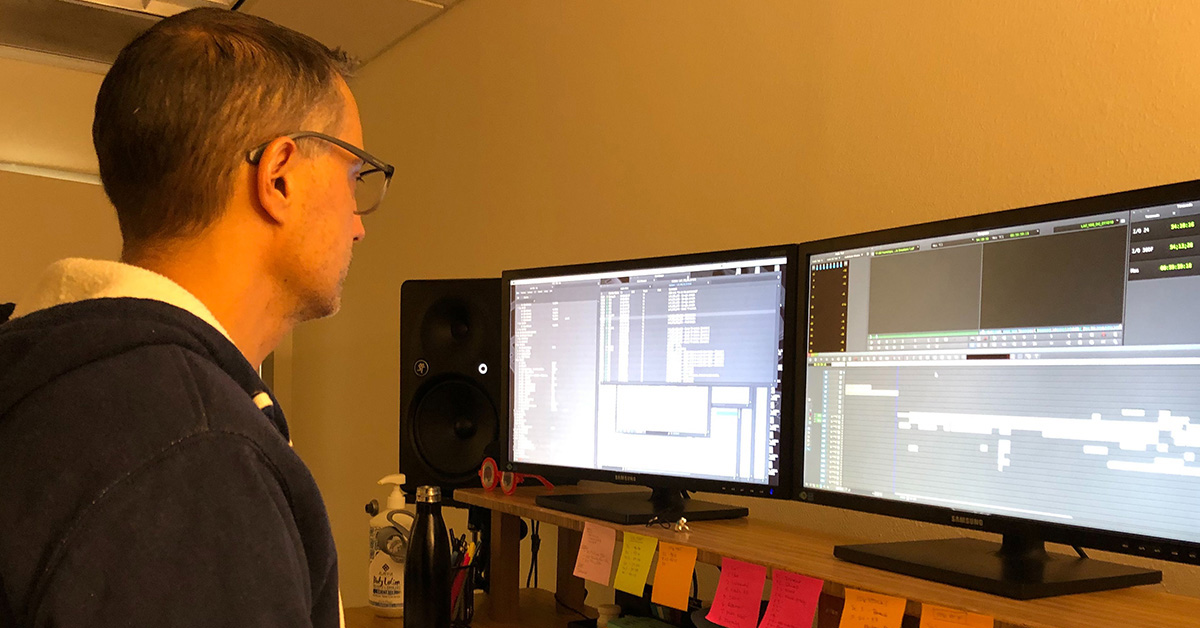
[CASE STUDY] Transitioning to Scripted Television | with Len Ciccotello


About Episode
Len Ciccotello is an editor literally at the top of his specific craft: Video content marketing. This includes documentary shorts, long-form behind-the-scenes making-of documentaries, and all of the many cool bonus features you’ll find on Blu-Ray discs or even now on iTunes. He’s worked on such films as Bohemian Rhapsody, Avatar, Ready Player One, The Post, Deadpool, Argo, and several films in the X-Men Franchise, just to name a small few.
Len came to me last year telling me he was ready to make a big transition in his career to editing scripted television and features…except he had no idea where to start. He’s driven, motivated, organized, and focused, but without a roadmap none of that mattered. He had no path and no idea where to focus his energy.
Should he network? Quit his job first, or wait until he had a gig? Does he need to edit more scripted and build a reel? Become an assistant first? Jump right into editing? There were so many paths to choose, so over 12 weeks Len and I worked together one-on-one to design his unique path to success. And in fact he did so well that we had to cancel our last two sessions because he landed a job on his first scripted show by week 10!
My purpose for sharing this case study is to help explain the process that Len and I worked through and the steps he took to make this transition happen and take a huge step forwards in his career, that way you can use some of the same ideas and techniques to move yourself forwards this year, whether or not you’re interested in one-on-one coaching. If after listening to this interview you want to learn more and apply for ‘Optimize Yourself Elite,’ enrollment is currently open but time slots are extremely limited since this program is extremely time-intensive for me.
Episode Highlights
- What to do when you’re stranded on the wrong career ladder
- Len’s 18-year career in video content marketing
- Being willing to step out of your comfort zone when you’re not being challenged anymore
- How to be patient with the chess game of healthy progress
- Generating the motivation to get things done by establishing ‘why’ you want to complete them
- The common pitfalls the occur when writing out your goals
- Focusing on the things you can control rather than hoping for what you can’t
Transcript
Zack Arnold: I’m here today with Len Ciccotello, who is a self-proclaimed recovering content editor, and he is now currently working as an assistant editor in Scripted Television, and you are also a member of my Optimize Yourself Elite Coaching Program, which we’re going to talk about today. So, Len, it is a pleasure to have you on the show today.
Len Ciccotello: Thank you. It’s great to be here.
Zack Arnold: So, I’m excited to chat with you specifically, because I cannot think of somebody else, and I’ve worked with quite a few people over the last year and a half, and everybody puts in the effort, does the work. It’s been a fantastic experience. I can’t say one bad thing about anybody that I work with so far, but you just dove in. I mean, you took every single little tiny morsel of every lesson of every worksheet, and you just gave it 120% and I really, really admire the fact that you really gave everything that you had to this program, and we’re now seeing the results of it. So, what I want to do in this conversation today is just kind of break down your journey from before you even came to me. And, as an aside, and I’m sure you’ll talk about this a little bit more, you and I have actually known each other offhand for God, it’s probably been at least a decade now, but we didn’t know each other that well, and we both worked at the same company, company called Mob Scene, that does content work, which is like you said, you’re a recovering content editor, and a very successful one at that. So, I won’t give too much away, I’ll let you tell the story, but basically we knew each other for a long time, then you, you know, just you met with me one day because you were having lunch with another editor in my office, and we chatted, and then we started working together. So, what I want to do before we go into the nitty gritty is just kind of give people a little bit of background about you and your career, and kind of what brought you from where you were a decade ago to working with me now.
Len Ciccotello: You know, I was always interested in film, I didn’t know what I wanted to do in film, and in college I had a great professor in my senior year that just kind of pushed me into the editing world. He’s just like, you know, I don’t see you as a director, I don’t see you as an actor, I don’t see you in doing any of that stuff. He’s just like, you just like you like puzzles. He could tell that I was just somebody who liked to solve problems, and so he just introduced me to editing. I edited a bunch of student films that last year of school, and really dug it. I just had had a lot of fun doing it, but had no idea what to do. I mean, my school was a small college in Jersey at the time, was called Glassboro State, now it’s called Rowan University, and the film program there is pretty big now, but it was kind of small. I mean, I think I had like 63 kids in my class, and from there, when I graduated, that same professor, guy by the name of Dean Johnson, was kind enough to reach out to an old company he used to work for in New York. He was an assistant editor for a guy by the name of Hank Corwin, who some people might know, editor cut the big short recently, just advice, but he worked for Hank at his commercial company in New York as an assistant, and made a call and said, this kid’s great, would you take him on as an intern, and that was the first time where I, as an adult, had to sort of insert myself into something, because I called, I called that office and talked to that receptionist for like, it had to be two months, just about every day, trying to get through to get an appointment to come in to meet with Chris Walsh, who was the producer running the shop, because she was so busy, they were just, they were busy all the time, and they didn’t have time for this, you know, 22 year old to come in and sit down, and when I sat down with Chris, the first thing she said to me is, ‘You’re the most persistent kid I’ve ever met, which is probably the reason that you’re here right now, because if you hadn’t kept calling, I probably would have never brought you in, but I got a taste for it. I, you know, I spent seven years at Lost Planet in New York, loved it as an assistant, I worked myself up from being just like a basically an office PA to an office manager to jumping into assistant editing, and I worked with Hank, Hank Gorwin, and I worked with another editor by the name of Noah Hertzog and another guy by the name of Adam Schwartz, and I loved it. They were terrific. It was a great time to sort of Avid was just this old lamb dad. Was just going to get started in the commercial world, and I learned all of it, and I soaked it in, and I was the kid that slept on the couch and never went home, and just really kind of dug in, which is was setting me up for later in life. I had no idea. Flash forward a couple of years, Hank moved me out to Los Angeles because he had a company out here as well, they had an LA office, and they were there, was some partner changing happening, and they needed someone out in the LA office to just kind of help with the assistance, and the goal was to ultimately start cutting full time, but you know, I knew that there was a full staff of editors out here, and it probably wasn’t going to work out, but again, I wasn’t. It was a way to get to Los Angeles, and I really wanted to do that. Move me out here, and within about a year, I was just like, this isn’t working. And at that time, my ex-wife actually came across – it was on a job, she was working in production, came across a guy by the name of Eric Matthews, who did commercials and documentaries and stuff, but also started working in content he had just done behind the scenes on the Matrix movies, or Matrix, the first movie, and from there they were looking for somebody to kind of cut Spider Man, the behind the scenes on the Sam Raimi Spider Man movie, and I didn’t, you know, know anything about marketing or content or anything like that, but I knew comic books, because I’ve been a lifelong comic book fan. So I met with Eric and his partner, and that just kind of jumped me out of Lost Planet and started me down the content road, which would be a long road. I mean, I spent that was 2000 I think, I spent almost 18 years working in content off and on. I had a company in there for a short time called Monkey Feeds the Robot with a great partner, Alan Griswold. But I decided after four years I didn’t want to be an entrepreneur. It just wasn’t for me. I liked being in the Bay, I liked being creative. I didn’t like lawyers and accountants, and being in studio meetings all day, and pitching, and pitching, and pitching, and pitching, and Alan loved that stuff, and he’s terrific at it. So he took the company over, and it’s called Monkey Do now, and he’s doing great still. But then I found Mob Scene, which is the company that you and I met at, Tom Green, who’s the owner there, was was over at Fox when I was at Monkey, and him and I had clicked, and he was looking for an editor, and I just kind of fell in there, and you know, I was not good when I started. I was terrible, even after four years of being on my own, cutting content freelance for a while. I was a terrible editor, but that group of guys that were there, they really taught me stuff, and I was happy to work with them, and to learn from them, and it was a great experience. I mean, that I was akin to my first few years at Lost Planet as an assistant, was my first few years of mob scene, learning to cut from all the editors around me, and really paying attention to the work that they were doing, and getting better, and the projects were terrific. I mean, I was fortunate enough to work on some really great movies, Avatar and Ready Player One, and just before I left, I worked on Bohemian Rhapsody, so it was a, you know, it was a great experience over the years.
Zack Arnold: Well, and I think the one thing that should be pointed out is that you basically were at the top of the game when it comes to content marketing. There’s not a whole lot of content marketing out there anymore. It’s something that’s really kind of gone the way of the dinosaur over the last decade, as DVDs have gone away and blu rays have gone away. So, there’s not a lot of companies doing it, but when you look at the movies and the studios that are still doing it, that are doing the top level content mob scene is pretty much the go to place, and you were the go to editor, so that, and I’m using this to set up the transition to where we’re going to go with the next part of your story, and where we’re going to go with the work that you and I did, but it’s not like you were just some guy that was kind of flailing, saying I can’t really find my way, and I’ve done some marketing, done some content, like you were just about the guy when it came to editing content, long form marketing.
Len Ciccotello: No, thank you, that’s really kind. You know, there was a lot of great guys there. I just, I had a passion for it, I really did. I mean, I every project that I got, I really gave it my all, and there’s some great producers that I worked with there, and they, I liked the collaborative nature of that place. It was terrific on that level. I love getting in a room with a producer like Greg Temkin or Chris Miller, and just kind of banging out the idea of what this is going to be, and you know, I was fortunate in that, that I ended up in sort of the more longer form stuff, which is really what I was gunning for. I really wanted to cut stuff that wasn’t just five minute pieces, and Tom was very agreeable to that. And so, you know, when that kind of started, and Fox started asking for longer and longer and longer, I got to do, you know, a lot of great anywhere from 60 to 90 minute. Pieces on stuff, and it was really fun. I mean, the trouble with content, though, is especially after the period of time that I’d been doing it, was that you can only tell the story so many ways, you know. It did, there’s no surprise, the movie gets made like it’s not, it’s not super deep on that level, and after cutting, you know, oh man, you know, it had to be a few 100 pieces over the years, it just was starting to get a little to the point where I’m like, creatively, this isn’t as challenging as I’d like it to be, because I always like to find a challenge in what I’m doing in the movies, sometimes you found a challenge in the movie itself, like working on Avatar, there was a lot of challenges just in the way that they put that film together, so finding a way that worked to tell the story, because it was the production itself kind of happened on top of itself, post and editorial happening at the same time, which is kind of weird, because some of what editorial needed to do would prepare them for shooting again. I’m sorry, production and editorial happening simultaneously, so and they were scoring at the same time. It’s just a weird way of making a movie, so to take that and to figure out a way to distill it, that was fun. That was challenging, and the same, you know, sometimes you get a fun project, like Queen would come in the door with the Bohemian Rhapsody. It’s like, I’ve never cut with Queen Music before, this is awesome, like to be able to cut a bunch of stuff for a disc that you know, you where you’re actually able to, the bands involved, and you’re able to utilize that music, that stuff doesn’t come along all that often, though. So, in between, there was a lot of, okay, yeah, this is a standard making of, and that’s all the studio wants, and that’s really all we can do. I got to the point where I can tell that story, and I can tell it well, and I was proud of the work that I did there, but I wanted something new.
Zack Arnold: So, then let’s fast forward to the first conversation that you and I had once we kind of rekindled and reconnected after so many years, and kind of give, give our listeners an idea of what the plan was and why you decided to work with me.
Len Ciccotello: Well, I want to take a quick step back, real quick, because this is a nothing – everything happens for a reason, kind of thing. And it’s like, you know, I always – I’m a firm believer that the universe gives you what you’re looking for, kind of thing, not to get too woo woo, but I’m a believer in that. And one day I was working at walking out to coffee over at Mob Scene, and I happened to be walking through. If there’s a building across the street, I happen to be walking through the building, and I hear my name, and I turn around, and it’s our mutual friend Natalie, and she’s just walking through the building, and she happened to be there because she was working on Star at the time, and we stood and talked for a few minutes and I had no idea what she had been doing and I hadn’t seen her since she had left the company and she told me that you know she had been working with you on shooter and there was some stuff going on that you guys had been very busy and thought that was great and she’s like let’s have lunch so we had lunch and we caught up and she was telling me about working in television, and that was really kind of the seeds got planted for me, for that might be where I wanted to be next, and so to flash forward to what you were saying, Natalie and I had been talking, because I had continued to reach out to her and say, like, you know, I’m still thinking about this, I don’t know where to start. Can you give me some pointers and such? And she had been fantastic, just kind of sending me emails, pointing me in the right direction, telling me what I need to do first, just kind of giving me some steps and suggestions as to how to proceed doing this. And she said, you know, why don’t you come in to shoot her? I’ll be there. She’s like, Zack will be there. You haven’t seen Zack in a while, and I’m like, oh, that’d be great. I haven’t seen Zack since Bob see. It’s been a while. And when I showed up that day, I wasn’t expecting to have the conversation that you and I ended up having, but it was really great to see you. And so, you know, when I saw you, when we started talking, and I told you what I was trying to do, and you just, you know, you was like, have you been listening to the podcast, and I had, and you’re like, well, you know, there’s a coaching aspect to what I do too, and that struck a chord with me, because my wife had worked with a professional coach for a very long time, and had seen some pretty fantastic results from it, and that coach was very specific to the type of work that she was doing, and I’m like, you know, this is something that could get interesting, and I want results, and I want to keep pushing and challenging myself. And you had sent me some information, and I went to the website, and I was looking at stuff, and kind of reading through things. And when we talked, it just sparked something inside me that said, “This has got.. I got to do this. This is a direction that I got to go. I didn’t want to miss an opportunity to improve and to push myself into the next part of my career, and I felt like we didn’t just see each other by chance that day, like that was supposed to be where I, you know, I listen when something is presented to me, I pay attention, so it was, yeah, that launched us into our. Coaching endeavor,
Zack Arnold: Well, and the reason that you had come to me specifically, and I’ll paraphrase, and I’ll let you kind of go into a little bit more detail, is it when I had been mentioning the program, and like you said, you know, you weren’t expecting to have that conversation, but I kind of have this tendency to not both with people, and I really, really don’t like small talk, I’m like, oh, hey, here’s Len, and what are you doing here? And you know what? What are you talking to Natalie about? Oh, all right. Well, I guess we’re gonna have to find a way to move your life forwards, then. Like, that’s that’s basically where I go in a conversation in two minutes, because that’s really what I’m always zeroing in on. And when we were talking, even that first time, when you just dropped by my office for 10 minutes, the theme of it was like, I really feel like this is the direction that I want to go. I just have no idea how to go about it, right? So, that is, that would that be a pretty accurate representation?
Len Ciccotello: Yeah, I didn’t. I mean, you know, where Natalie was great, where she was giving me some suggestions in terms of resources to read and such, in terms of moving the needle forward with my being able to make that transition from one career path to another, I didn’t know the steps, I didn’t know where to start, and that’s really what I keyed in on with you, is that, oh, this program will help you find that direction, and we will work on very measurable steps, which was terrific, and it really, that, that to this day, I use a lot of the stuff that you taught me during that period of time.
Zack Arnold: Well, one thing that I want to clarify, and this is a conversation I have with people all the time in this industry, is that I didn’t help you find the direction or find the path, because the frustrating thing about our industry, and a lot of creative industries, is that there is no path, right. We’re not doctors, we’re not lawyers, and we really have no sense of, all right, well, I have to go to medical school for three years and be an intern, do, to do, to do, to do, and then all of a sudden I’m a doctor, right? You just put in the work, you spend the money, and you get there, like it’s a very clearly defined path. So, what you and I didn’t do is find the direction, I helped you design the path that you wanted to take to get where you wanted to get,
Len Ciccotello: Sure, yeah, there was a, but what I’ll say too is that it has a lot to do with patients, I think that we had a conversation very early on, and I loved when you said it, she’s like, okay, there’s two people here, the only one that can help you is you, you know, and I’m like, right, and what that signified to me was that I was going to, a, I was going to have to put the work in, but that this wasn’t, you know, this wasn’t a magic bullet either, like there was a part of it that you’re just going to have to be patient, because what you’re putting the work in for now may not show up for a few months to a year, or sometimes a little longer, you know, that, like, you say, there’s no, you have to wait, you know, in our business, it’s all about finding the job, finding the editor to work with, finding the group of people to work with, something along those lines, it’s about relationships, there’s a lot of relationship building that’s very important and genuine too, I mean, I met, so we’ll get into that, but because of a lot of the stuff we discussed, I met so many great people along the way that are just really nice and still stay in touch and ask me how I’m doing and check in with me and vice versa, but yeah, you, it is no, there is no magic bullet, you, you have to put the work in and you have to design this and you have to follow, you really have to stick to the course and not get discouraged, that’s important.
Zack Arnold: Yeah, and it’s as I’m sure anybody who’s listened before will know that this should probably become a drinking game when I say this, but it’s all about playing a game of chess and not playing a game of checkers, and I just talked to so many people, young, old, in between transitioning careers, doesn’t matter what it is, and they’re just looking for that one quick win, so they can feel like they’re making some form of progress, because that’s something you feel like, oh, I just, I landed this one gig, or I did this, or got paid that, or whatever it is, but the question is, is that really part of the much bigger picture about where it is that you actually want to be, but if you’re willing to play a game of chess, and be patient and take the right steps. It may take three months, six months, a year, or even longer. I mean, right now I’m playing like a decade-long game of chess with all the moves that I’m making now in the health and wellness field, and everything that I’m doing here, knowing that it’s going to eventually pay off, but I’m not going to get this quick fix. It’s something that’s going to take a long time, and one of the analogies that I always tell all of my students, you’ve already kind of given away my first session with the whole only two people on the call thing, so I appreciate that.
Len Ciccotello: Sorry,
Zack Arnold: I’m totally giving you a hard time, but the other thing that I tell everybody at the very beginning of the process is that there’s two ways that this can go. Number one, I can give you a fish and feed you for a day, and that just means here’s information, here’s knowledge, like here, here’s here’s my advice for what you can do. And hey, let’s get on a call every week, and I’m going to say, How’s it going? How was your week? Did you get everything done on your to-do list? Like, that’s a life coach. I hate life coaching. That’s not what this is about. I instead said that I want to teach you how to fish. So you can feed yourself for life, so you and I did was walk through a system. It was step by step, very systematic, very formulaic, where you can just kind of plug in whatever the information is, whatever the direction is you want to go, fill out all the various steps, and then you come out the other side, and it’s like, oh, I’m now going where I want to go, and I have a path that makes sense, and I know it’s going to take a little bit of time, but it’s clear. So, did you, did you get that sense? Because that was my intention.
Len Ciccotello: Yes, I absolutely got that sense. I mean, the thing that I really liked, the Go Far framework, I think that was a great way to start for me. I love a system. We’ve talked about this before. We kind of can geek out about this for a long time. I’m someone who likes a framework. I really need something. Natalie had suggested that I read The Four Tendencies by Gretchen Rubin, and I’m an upholder, so I – I’m someone who works really well in a system. I just, I like them, I can focus on them, I can move forward using them, and when you presented that, and we started working through it, I was like, okay, this is good. So, you know, where initially I thought, wow, we’re just going to jump into the meat of this. This was like, no, no, no, we’re taking it back to the very beginning. We’re going to figure out why you’re doing this, and then we’re going to work you through that, and then you’re going to come back to this, and you’re going to reevaluate that whole framework really worked well in my brain, in terms of making me understand first of all the whole point why I’m taking this journey to begin with, but then as I’m going, sort of reaffirming the reason why I’m taking this journey, working in this business in general, it’s taxing, even on the content side of things. There’s a lot of long hours, there’s a lot of challenges along the way, in terms of meeting deadlines. There’s, you know, you’ll always work with challenging people, no matter what business you’re in, and understanding why you’re doing all this really makes a difference, I think, so. Yeah, that got.. I dug right into that. I was very excited when I saw that those first six weeks would be very focused like that.
Zack Arnold: Yeah, and some people are like, “Oh, God, there’s homework and there’s a framework and there’s.. I find that even the people that are a little resistant to it at first, they’re like, “Oh, okay, I get it now. It kind of felt like busy work at first, but now it totally makes sense. They’ll have like this big aha moment, and then all of a sudden they just had this total resurgence of energy. It’s like, man, I want to wake up in the morning now, and I want to get this stuff done, and I’ve been putting it off forever and procrastinating, but I just don’t understand why it was so easy. I said, it’s because you know why you’re doing it, you know where it’s leading, like procrastination happens because you just don’t know if all the things that you think you’re supposed to be doing are even worth the time once you actually have clearly defined, oh, here are all the things that need to get done, but here’s how they connect to the bigger picture, and here’s why this is important to me. Then it’s easy to get up and get things done and move forward.
Len Ciccotello: Yeah, no, I think that was an important conversation that we had early on, too, because when I, you know, when you first.. I will say that when I first opened up the modules and started looking at them, like, wait, this is going to take me like an hour, an hour and a half to do this. Where do I have time for this? And you know, you had talked to me about scheduling, and we didn’t get into really sort of calendaring in the, in the granular stuff, until later, but there was just something that clicked with me in some of our conversations about if you put this on the calendar and you, you will make time for this, and suddenly every week I had my hour and a half to two hours that I could sit down and find to watch through the videos, do the paperwork, to kind of understand, to look at everything and read back through it, you know, before our meeting, so that I knew exactly what we were going to talk about. I don’t feel like any time was wasted, and when you’re talking about an hour, you know, in the case of the coaching session, in an hour session, we’re talking about an hour, that’s not a lot of time, really, like you want to make sure you’re to me, anyway, I want to accomplish something during that time, and I never walked away from any of our sessions feeling like we didn’t accomplish stuff, like I felt very good every time about, okay, yep, we talked about this, we did this, we did that, and those, and I walked away with very actionable steps for the next week to incorporate into what I was doing,
Zack Arnold: Yes, actionable steps, as you know, is the key. That’s my thing, is that I’m not afraid to give people work to do, and you know, give them accountability along the way, because it’s one thing to say, oh, I want to do all this and that, and the other thing, but when you don’t have a plan and you don’t have accountability, so you can follow through, it’s kind of like you’re wasting your dreams away, so to speak, or you’re just moving in the wrong direction and spinning your wheels, so what I want to do now, we’re about halfway through, and I said that this was a case study, and I want to make sure that we’re actually providing some actionable steps for somebody that’s listening that may not be able to go through the program or use the Focus Yourself course in and of itself, but still walk away with a few tidbits, so I want to just. Give a very, very brief overview of kind of how the structure works and the framework works, and then I just want to talk about a few of the steps that you and I took, and see, using your example, if other people can say, “Oh, I could actually apply that to myself today. So the very, very kind of brief soapbox pitch that I give people when I talk about what it really takes to accomplish something difficult and meaningful is that when you break it all down, yes, there are many different steps and many different paths, and for each career path it’s different, and every goal, whether it’s losing weight or wanting to be a scripted editor, like obviously many, many different steps, but after studying this obsessively for the last 15 years and doing 200 podcast interviews and all this other stuff. I basically distilled it down to three really, really simple things you need. You need clarity, you need confidence, and you need consistency – three words. And I know that you’re now very, very familiar with.. and the first step is clarity. You have to be very, very clear about what it is that you actually want to accomplish, why you want to accomplish it, and what are all of the things that have either stopped you in the past or that you predict will stop you in the future. So, when we look at the Go Far framework, which is a five-step framework, and again, anybody that’s listening to the show has heard all about this, and this is based on a framework created by Christopher Rush, who was the first quadriplegic to become a licensed scuba diver, whom I did a documentary film about, which is available on all major platforms, if you’re interested in checking it out, but when we talk about identifying your goals and then identifying your obstacles, that’s all part of finding clarity. So, what I’m interested in right now is helping people understand how to set a clear goal, because you came in and said, well, I want to transition from content editing to being a scripted editor, which means probably becoming a scripted assistant editor first, but let’s talk about how we kind of refined that from something general, like, oh, this sounds good, to, oh, wow, I know exactly what I’m waking up to accomplish every morning,
Len Ciccotello: You know, initially I probably didn’t give it much thought, I knew that I wanted a career change. My struggle with that was, my, you know, we talked about limiting beliefs and everything else, and then my struggle with that was, you know, my age was a big deal to me, more than anything else. I think that was the thing that kept slapping me in the face as an obstacle, which you quickly pointed out was a limiting belief, and not really an obstacle, but in terms of the clarity of finding it was about finding my why, figuring out why I was doing this, and that took some time. I mean, I had to sit down, and I probably, that lesson was the two lessons that were really hard, the obstacles was hard, but the figuring it out and kind of granularly getting down to asking myself why repeatedly, okay, why do I want to do this, why do I, okay, I want to be in an editor in scripted television because I enjoy telling stories, okay, but why, and I just kind of kept going from there, and really what it came down to was I wanted a career that was going to be long lasting, so that I could support myself and my wife and have a future, and you know, when we really broke that down, I think it actually, I mean, look, I’m an emotional guy, I’m not afraid to admit that it actually kind of made me cry when I got to the point where I realized that it was really all about her, was about Amelia and wanting a better life for both of us long term, and that was that was a major breakthrough on my part, understanding that.
Zack Arnold: Well, if it makes you feel any better, usually when people go through the why discovery process or identifying their obstacles, there’s generally a tier or two, and that’s when I know I’ve succeeded. So people are like, yeah, no, I think this is why I’m like, yeah, no, we’re definitely not there yet. And then we just keep pushing, and we keep pushing, and then all of a sudden the lip starts to quiver, and they start to get emotional, like, all right, I think we found it while you’re doing this now, and just this giant breakthrough moment, like, oh my god, I get it now, and once they get that out of their system, and it clicks, then they just take off like a rocket, and they just start getting stuff done and getting organized, because they have this emotional connection to what they’re doing. It’s not just about, well, I like movies, so I really like watching. Well, I saw Breaking Bad, and I said, I just, I want to do that. It’s like, yeah, but that’s not going to get you through five years of 60 plus hour weeks, while you’re trying to make the transition to what you want to do. There has to be something more, or else you’re going to quit, or you’re going to burn out, or both.
Len Ciccotello: Right. Yeah. No, I agree.
Zack Arnold: The other thing that I want to talk about, as far as clarity, as well, which is something that you and I really dug deep into, and we alluded to this a little bit, but is the idea of being systematic, so one transition that you and I went through in defining your goal, and this is something that I’ve done with multiple people now, is where people make the mistake of saying, well, I need to set a specific goal, right? There are these things called smart goals, they need to be specific and measurable and actionable and relevant and time sensitive, and just all. This other bureaucratic corporate jargon, right, and I said, all right, well, if you’re going to set a smart goal, you’re going to say, I want to be an assistant editor in scripted television by, I guess, January would be good, that’s what I want to be an assistant editor by, right, yep, so what was the fallacy that we learned about doing that?
Len Ciccotello: Well, with this, there’s no, you know, when the job, when the call comes, you have no idea when that’s going to happen, and you still have to work if your goal is that you want to switch from the career you’re in to a different career. The last thing you want to do is check out of what you’re doing. You have to go in every day and make small changes that are leading you in that direction. I found for me that having the sort of the larger, okay, yeah, we January was sort of a, an arbitrary date that we had assigned to this, but it started with, okay, what are the actionable small things that I could do every day that lead me in that direction, and understand that, you know, you know that January date might come and go, but you’re still taking action in the background, you’re still moving the needle forward, even in little small chunks.
Zack Arnold: Well, and I think the other big thing to really hone in on here is that when you set that arbitrary date, it just feels like it’s creeping up on you, and if all of a sudden opportunity, yeah, the pressure is like, oh my god, I really want.. I wanted to have this job by January, but it’s not happening.
Len Ciccotello: No, you gotta let that go. You gotta let
Zack Arnold: Exactly.. yeah. So, what you and I did was we crafted a goal where it felt like you were in control of that goal and your actions were moving you towards that without opportunity having to present itself.
Len Ciccotello: Yeah,
Zack Arnold: All just a matter of simple wording and verbiage, and you and I, I think, workshopped like two weeks straight just how to write a one sentence goal, but once we got it, you’re like, oh, I get it now, right? And it was basically this idea of it’s not about I want to be an assistant editor and scripted television by january 1, it’s I’m going to be prepared to accept an opportunity on that date.
Len Ciccotello: Yes, exactly.
Zack Arnold: So, if the opportunity isn’t there, well, you can create those opportunities through networking and through getting in front of the right people and putting up websites and all these other things, but eventually you just kind of have to sit back and hope that basically your hard work meets opportunity, and that’s what people call luck, right? But the idea was that we were putting you in the power position to say, oh well, if I do this, this, this, and this, that is going to make me prepared to take on the opportunity when it comes along. And I do have to be very frank, we failed massively because your opportunity came along months before January. We totally screwed the pooch. I mean, what happened was, you and I didn’t even finish the coaching sessions because you got your first opportunity as a scripted assistant. I think it was like week nine, and you’re like, yeah, I’m going to be starting a job on Monday, and I don’t know if I’m going to be able to do the coaching sessions, and so I still owe you coaching.
Len Ciccotello: That’s all good. Yeah, no,
Zack Arnold: Right?
Len Ciccotello: It again, like I said, I think a lot of what we discussed, a lot of the framework of what we put together, a lot of the understanding and knowledge that I walked away from those nine weeks with prepared me for that moment to be ready for it, to be ready to accept it. You know, I learned quite a bit during our conversations that goes deeper than even just the framework of I want to be in. I have to stress this, because I don’t want people to think that it’s just that this, for me, was just about becoming an assistant editor for scripted television. There was a whole life change that I was focused on making, and the framework for this literally has applied to every other aspect of my life. If you could have told me what I guess this was when we started talking was back in June. If you could have told me back in June that my daily regimen would be me getting up at 515 every morning, working out for 30 to 40 minutes, you know, meditating every day, just the things that have happened since I started working with you, these habits and systems that I’ve put in place in my life that came out of understanding why I’m doing this to begin with, the whole reason why it’s changed me dramatically in that period of time. I’m healthier than I’ve ever been, I’m stronger than I’ve ever been, I’m more focused than I’ve ever been, and I was pretty focused before. I mean, like,
Zack Arnold: Oh yeah, you, you were focused and driven before, so now I’m kind of scared,
Len Ciccotello: You know, and I have more energy, like the thing that I’ve talked to a lot of assistant editors along the way, and the one thing that I got from a lot of them was that it’s the job, there’s long hours, you know, and I’m thinking to myself, how am I going to be able to sustain, I’m older than most of these people are, and I’m not, you know, in terrible shape, but I’m not in the best shape, and long hours is going to mean I’m going to need to have more energy, so what are you going to do about it? So this all comes back to, like, okay, I’m gonna, I’m gonna hit the gym, I’m gonna be a regular, you know, I’m gonna, I can’t believe I’m saying this, I’m. Somebody who works out five days a week, like that’s not something that I did. It just wasn’t part of me, and now it’s just part of who I am, so that I have the energy to do this job and do it well and do it effectively.
Zack Arnold: What I love that you said, too, I didn’t mean to interrupt. This to me is so important that I want to make sure and bring this out. You didn’t say I started exercising five days a week. You said I’m somebody who exercises, and that’s something that I talked about extensively with James Clear in another podcast, which is available in the program, and also available to anybody that wants to listen. He’s basically the Lebron James of habit formation and human behavior. We talk all about identity-based habits, which is a part of this program, is not just saying I’m going to do these things, it’s how do I become a person that does these things. So, you’re now somebody who exercises, and you tied that to your performance at your job, because your performance at your job determines the success in your job. All coming back to the deeper why of the success at your job leads to a more fulfilling relationship with your wife. Right.
Len Ciccotello: Absolutely,
Zack Arnold: Everything just ties back into that, and it’s all about figuring out how to stack the dominoes in the right order, which is something that we talked about extensively, and how to order those dominoes, and I want to kind of go back into the framework, because we talked all about the first part, which is finding clarity, which is part of, and part of that is figuring out what are the goals that you want to set, how do I define the goals. Why do I want to accomplish these goals? And what are the obstacles, but the bigger part for me, the meatiest part of all this, is where you start to develop the confidence, and to me it’s easy to overcome procrastination if you’re confident that the next action you’re taking is the right action that’s going to move you forwards. And what I found really, really interesting about your journey, specifically, and how it was – it almost came together too perfectly. But when we work through the focus part of the Go Far framework, the key to that is figuring out what’s the one thing that I have to do every single day, such that it will lead me forwards and make everything else that I need to do easier or unnecessary, and the assumption would be, oh, well, I need to work on my reel, and I need to go out and network with people all the time, and I need to send emails, but yours was very different, and you couldn’t have picked a better one that fits perfectly into what happened to you in the best way possible. So, talk to me about what we decided your one thing needed to be, and how everything kind of clicked into place very, very quickly.
Len Ciccotello: If I’m off base here, just let me know. But the first thing that came to my mind is that I was very emotionally connected to the company that I was working at. I’d been there a long time. I loved all the people that I worked with, and the reason for leaving had nothing to do with the company and had everything to do with wanting a change, but I knew that I had to emotionally separate from mob scene to be able to do this. I knew that I had to start taking small actions that would allow me to do that, and part of it was that I needed to start packing up my room, which seems silly, but every day I would take a couple of things home with me, and that was sort of a daily practice for a couple of months there to just kind of start to say this space isn’t going to be mine anymore. I’m moving into a new career, a different part of my career, a new path, and I had to begin the process of letting go, and so it did. That was hard for me. It was a lot harder than I thought it was going to be, and I know it’s a little unusual, you know. I, there were other things that I definitely like, refresh myself on Avid, and definitely have a reel together, and definitely do you know there’s like 16 work on your resume, and how are you structuring your resume, but for me getting over that emotional hurdle of sort of teaching myself that I’m not going to be walking through the doors of this company every day soon, and I got to be okay with that. So, that by the time that call did come, I was like, okay, this is what’s this is what’s got to happen. I had to have a long conversation with our boss and let him know what was going on, and where my head was, and that it wasn’t that I was, you know, trying to abandon the place, because I, it’s a place that I do love, I love the people there. So, yeah, that was that, that was different.
Zack Arnold: And had I scripted this to be fiction, I probably couldn’t have done it as well as it ended up working out, which is that you decided that my one thing has to be that I need to physically and emotionally prepare myself to leave Mopsine, which, like you said, meant packing up pictures or whatever it is, but also having the very difficult conversations and making your intentions known to the people around you, so they could prepare, and I remember asking you several times, and having this conversation more than once, saying, listen, if something does come along, is the expectation that you’re going to take it at the beginning of the year in January? Is it that you need to give two weeks notice? Like, what expectations are you setting up? And you’re like, no, if I get a job, like, and I tell them I’m leaving at the end of the day, they’re fine with it. So you would release that emotional fear, anxiety of, oh my god, I’m going to let them down, I’m going to leave them in the lurch. Like you were so prepared that all of a sudden the opportunity came where you and I got in a call and you’re like, so I just got a job opportunity and I gave my notice and I’m packing up and I’m leaving today. I couldn’t have written it better than that.
Len Ciccotello: They were, look, the company, they’re very classy people, and the conversations that I had, I just.. I was honest, you know, I can’t.. I don’t know any other way to be, that’s just who I am. So, I felt like there are plenty of methodologies and ways to part with a company that you’re working for, but for me, for the investment that I had in the company, for the investment I had in the people, the only way to do it was to be 100% honest with them, and tell them what I was trying to do, and I talked to individuals, and we sat and had conversations, and in the case of a couple of them, we had a, we hugged it out at the end, because we worked together for so long, but they were really gracious in that they supported me in this, and they were like, you know, you just let us know, and you know, I was hoping to have more than a day to give them notice, as you expressed early on, and other people had told me, you don’t often get that, sometimes you know a month out, sometimes you know the day before, you just have to kind of roll with it, and they were wonderful, they really rolled with it, and they were like, go do your thing, we got this, and it again, nothing happens, everything happens for a reason. So literally, it was at the end of a project I was handing in my final cuts on something, and the call came the day after I handed in those cuts, so I hadn’t started anything new, which probably made it a little easier, but yeah,
Zack Arnold: I’m going to disagree with you, though, because that was one of the conversations that we had. The reason you weren’t starting anything new is because you’d made your intentions known. They wanted you to jump on the next Avatar films and do all these other things, but because you were so clear and so confident about the fact that this is the direction you wanted to go, the reason you didn’t have a whole bunch of new stuff on your plate, is because you created that, that was your intention. It doesn’t seem like it. It seems like, oh, it’s so great that that didn’t happen, but you made that happen.
Len Ciccotello: Yeah, that’s true. And I think that the.. there wasn’t, you know, I think when we had talked, I typically knew. I mean, you know, usually I was fortunate in a sense that I often would know what I was doing six eight months, maybe a year in advance. I kind of knew what the schedule was going to be for the films that were coming in that I was going to be working on, and at this point, literally, as that job finished, it was the first time in forever that I had no idea what was specifically coming next, and that’s it. Just, it really worked out well. I’m not going to complain. It, it worked out fantastically. And they were, by the, you know, on the last day, the boss sent a very, very, very nice email, and I was grateful for how supportive they were during that process. And they continue to be really good friends.
Zack Arnold: Yeah, I mean, there’s no question that it could not have worked out better than it did, and we talked about how we got you there, as far as very clearly focusing on what’s the one thing that you need to be doing, but then there are many other actions that we took. An act is the fourth of the five steps of the framework, and an area that you and I spent a lot of time, and we probably would have spent two or three weeks more time doing this had we needed to, but we didn’t need to, but it was really honing in on the art and the science of networking and reaching out to people, because we realized that once you emotionally separated yourself from this company and the people that you worked with, and that you loved working with, and had all these great relationships, but knew you wanted to move forwards, once that was taken care of, you had to do something else that wasn’t just the only thing you were going to do, so the next most important action you had to take was reaching out to people and building relationships, because, like other editors like myself, you’re very introverted, and networking isn’t one of your best skills. So we spent weeks workshopping the networking process to really break it down to a science where you didn’t have to worry about the fact that you were an introvert, or it was hard, or it was uncomfortable. You just had to follow certain steps, and it was like, oh well, I can do this, right?
Len Ciccotello: Yeah.
Zack Arnold: So, let’s talk a little bit about some of the actions that we took as far as networking is concerned.
Len Ciccotello: Well, we broke this down into a couple of different things, because there’s networking in person, and then there’s networking via email, and the thing I struggle with, or, and you know, I don’t, I’m still not great at it, but writing an email is often one of the things that I can spin for days on, just kind of going, this is right, am I being too forward, and you know, it was great to hear some of your suggestions in terms of how to formulate emails, introducing yourself, adding value to the conversation without laundry listing your existence to the person that’s reading it, where people are at the top. Time, when they’re reading an email that was made me stop and think, that was one thing you had said to me, is just like, remember where people are when they’re reading this, and I was like, what are you talking about, they’re at work, they’re busy, they don’t have time, so keep it brief, right? Okay, because you and I both have received emails over the years where literally it’s just a brain dump of everything that a person’s thinking, and you’re just like, wow, this is like three pages long, I don’t have the time for this right now, and it just goes into the bottom of the inbox, and you may revisit it, you may not. So I really took that to heart and understood how to start off an email, how to really, you know, honestly add value to the conversation, reaching out to people that I admired or liked, talking about the things that I admired about their work, and then, you know, leaving it at that, not necessarily not trying to turn it into a let’s meet or let’s have coffee, because that’s like that’s a challenging thing for people. People who are busy don’t necessarily have all the time in the world to sit and have coffee with you, nor, you know, honestly, even if they did, they probably have, you know, 7580 of those requests sitting in their inbox right now. So be mindful of that.
Zack Arnold: Yes, for anybody listening, you want some free advice? Never ever finish your first outreach email with I’d love to take you out to coffee and pick your brain.
Len Ciccotello: Yeah, yeah, that’s that was important. And you know, for me, that was never the way I operated in general. I tried very hard to always just make it about a conversation that’s happening back and forth, hopefully organically between two people, but I really refined that during our conversations about this, and that gave me more confidence to write emails that were succinct, that had place in mind, like I don’t want to disrupt you, I know you’re busy, and really at the end of it asking a question or asking permission to ask a question or two, and allowing that to continue the dialog, you know, and from that I was able to meet with some really fun people, terrific editors that took the time to get on the phone with me, or even, you know, a few of them were even like, let’s just meet, you know, let’s sit down and talk, and that became my full-time job for a bit there, like you know, besides working at Mom Scene, I was finding time to go have sit with people for 30 minutes, 40 minutes, whatever they could give me, going to people, that’s let me stress this, if you’re going to ask, if you get to the point where you’re having a conversation with somebody in person, go to them, don’t don’t ask them to come to you. I’ve seen that happen a bunch of times, and that doesn’t bode well. People are, you know, especially the editors. If you’re reaching out to an editor, just someone in general that you admire and you want to speak to, be respectful of their time and space, and go to them.
Zack Arnold: Yeah. Hey, I would love to know all this free advice that you could give me. It’s taken you three decades to amass all this advice. What I want to do is download it from you in about an hour to save me all the time and effort, but I’d really prefer if you could do it on my schedule and drive to me.
Len Ciccotello: Yeah, no,
Zack Arnold: Like no, don’t do that. and it seems funny, I’ve had people that have done that, where they’ve reached out, and I’ve been kind enough to respond and say, you know what, sure, like I’m available here now, I’ve got a slow period, my schedules are like, okay, well, I live in Los Feliz, and the best time for me is Friday at one. I’m like, are you flipping kidding me?
Len Ciccotello: Yeah, it doesn’t
Zack Arnold: Drive like an hour and a half across town for somebody I’ve never met on your schedule. Uh, no, delete.
Len Ciccotello: Yeah, yeah, that’s that’s an unfortunate misstep.
Zack Arnold: Well, anyway, I digress a little bit and get out my networking soap box. But the point that I want people to take away from this is that when you’re in a creative industry, so many people just get hyper focused on the work. I need to do better work, and I need to build a better portfolio website, and I need to get better at cutting scenes, or doing graphic design, or composing music, whatever the craft might be, and it’s all about I just need my work to be awesome. So that’s where they put all the time and effort to develop and perfect their craft, right? But they never spend any time actually practicing and perfecting the craft of networking, because the best portfolio website in the world is useless if people aren’t actually looking at it, and it’s not the right people that have the opportunities that you want, so why spend 100% of your time workshopping how to become an expert at your craft when you should be spending half that time workshopping how to become an expert at networking, connecting with people in building lasting relationships, which is what we focus so much of our time on.
Len Ciccotello: Yeah, and I got a key in on the connecting with people, like that’s the important part of all this for me. And I, you know, I, in general, I like people, I like that. I genuinely like to get to know people and. The connecting part is really important. You don’t, you know, don’t build hollow networking relationships with people. Be genuine, be yourself, be thoughtful in your exchanges with people, because you know we all work, especially in this creative business, we all work doing the same thing. We all have a lot of the same goals and interests, and there are possibilities for connecting with people. You just have to pay attention and listen, listen, listen, listen. That’s an important part of all of this, I think, and that’s something you and I talked a lot about, is just listening to people, which was the part about when you go someplace and you’re actually meeting with somebody, having a conversation with them, listening to what they say, not not just thinking of the next thing you want to say.
Zack Arnold: Well, not only that too, but I think that the trap that so many people fall into, if they’re lucky enough to be able to pick somebody’s brain over coffee or lunch, and they are in person, and I’ve seen this mistake made multiple times, is you think, all right, well, I’m going to be going to sit down with somebody, so I’m saying this from my perspective now. I’m going to go meet with somebody that reached out to me, and you know they’re probably going to want to know about my journey and how I made it to become an editor and scripted, or what it’s like working on Cobra Kai or Empire, or whatever it is. So, yeah, I’m happy to share those stories, and then you show up, and all they do is talk about themselves, talk about all the things that they’ve accomplished, and you realize, oh, all they really wanted to do was get in front of me and impress me, because they think I’m going to hire them because of that, like, but that’s not how you build a relationship, and that’s not how you get jobs.
Len Ciccotello: No, no, no, you have to, yeah, you should be spending the majority of your time in front of somebody, listening to what they have to say, asking questions that are meaningful, that, and you know, do some research before you go to the meeting. Don’t just show up there with, like, oh, I saw three credits you had on IMDB. Like, take a minute and actually research the person you’re going to sit down with, so that you have talking points to have with them, like places that you’re genuinely interested in knowing, how did you do this? You know, you and I, there was one particular email that you and I probably workshopped three or four times, because I’m like, I really like this guy, I like his style, I like the work that he does. I don’t want to sound like a blithering idiot when I send this email, because I, you know, genuinely I was effusive in my approach to him, and you know, you were just like, okay, let’s let’s dial this back a little bit, and do a couple of things here, and we worked on that for a bit, and again, that’s that the skill sets that you walk away from the coaching with I think are incredibly valuable long term. I still, you know, again, like I said, this is daily practice for me now. Do I do everything that we discussed every day? I wish I could. Some days I’m 100% other days I’m closer to 80. You know, it really depends, but I got so much value out of this, and it really has helped propel me in a direction that I know will be where I want to help get me where I want to be, so
Zack Arnold: No, and that’s the whole idea, and I frankly couldn’t have closed it better. I wanted to spend a little bit more time going into the consistency part and talking about the review process and the nuts and bolts of, you know, making sure you’re doing the same actions every week, but we’re out of time, and frankly, I couldn’t have closed the interview better than I just did with that free endorsement. So I appreciate that, but my hope is that for anybody that’s listening, that’s thinking, “Oh, this really sounds like it’s a good fit for me, I want you to reach out. I’m looking for individuals that I can work with and help them through whatever the transition may be, whether it’s in their career, could be health related as well, but I love walking people through this process, or if you’re listening to this and just saying, you know what, this sounds great, but I’m not in a place in my life where I either have the time or have the money, my hope is that you at least got something out of this specific conversation, you had a few aha moments, and realized, oh, these are things that maybe I can incorporate into my life, so that’s why I wanted to make sure to share the story with people today. So, Len, I know you’re a super busy guy that’s now working as an assistant editor in scripted television, so I don’t want to keep you from your day job, because I know that things are crazy. So, on that note, if anybody wanted to see some of the stuff that you’re up to, do you have like a website or anything where they can just kind of learn more about you?
Len Ciccotello: I don’t actually, you know, it’s one of those things where, because of the business that we’re in, there’s not much that we can put out there without permission. So a lot of my stuff is under lock and key. However, you know, if anybody wants to reach out, they’re always, you know, my I’ll give my email if you want to reach out. I’m Len 918 at gmail.com I don’t know that I have anything interesting to say specifically, but you’re certainly welcome to reach out.
Zack Arnold: Oh, I think you’d be surprised. Yeah, you have an interesting thing to say or two. You did just fill an hour of a podcast, so
Len Ciccotello: I appreciate.
Zack Arnold: Well, I very, very much appreciate, and I hope you have a fantastic. Rest of your week as a scripted assistant editor.
Len Ciccotello: Thank you, Zack. Good talking to you.
Transcribed by https://otter.ai
Episode Credits
This episode was edited by Curtis Fritsch, and the show notes were prepared and published by Elyse Rintelman. The original music in the opening and closing of the show is courtesy of Joe Trapanese (who is quite possibly one of the most talented composers on the face of the planet).