


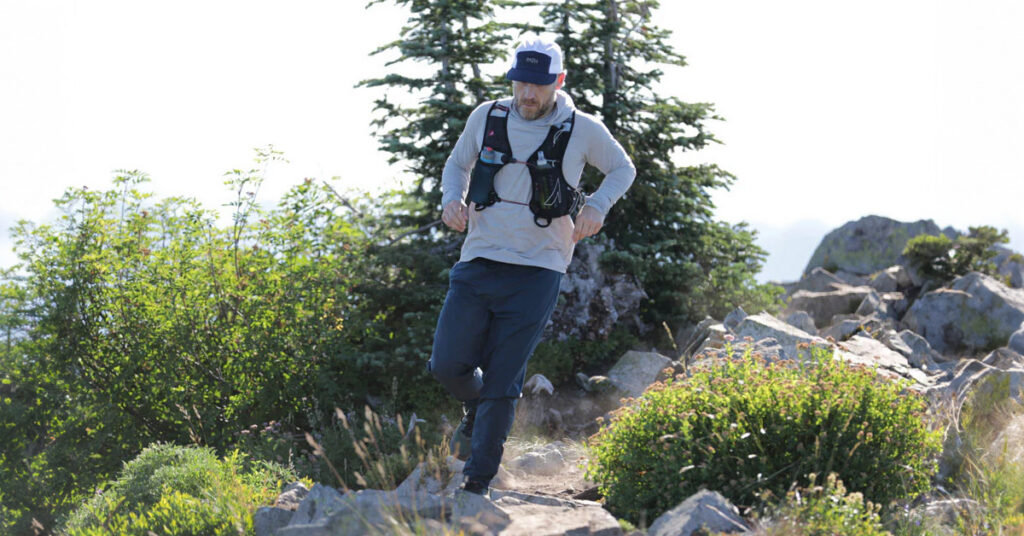
From Rehab to Running Ultra Marathons | with Wes Plate
Wes Plate, co-founder of Automatic Duck, shares his story of overcoming alcohol abuse and becoming an ultra-marathon runner.
Let's create things that matter. Together.
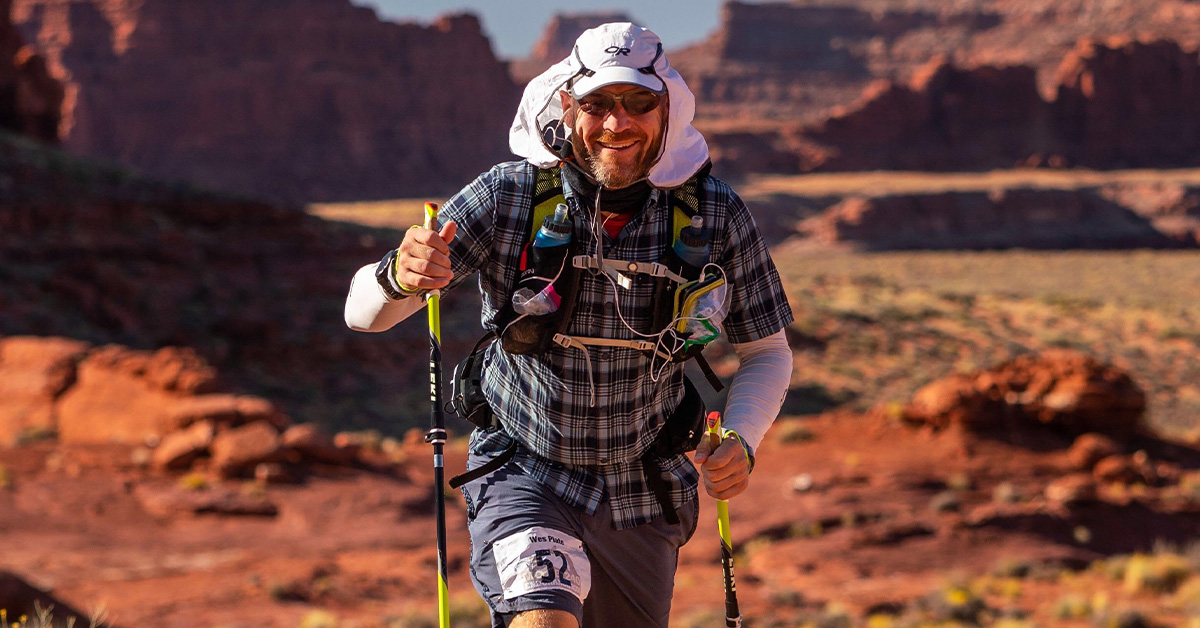
“It’s all about how you get to the starting line. That’s the real story.”
– Wes Plate
There aren’t many of us working 12 + hours a day in a dark room in post-production that think about running 240-mile ultra-marathons. We have enough to worry about on a daily basis, whether it’s building an at home work station (and fumbling with complicated WFH workflows) or learning new skills to weather the market during this pandemic, or chasing after our kids while simultaneously home-schooling them (and desperately trying to keep them off screens all day long). The last thing on our minds is training for an ultra endurance marathon.
Today’s guest, Wes Plate, didn’t start out with such a lofty goal either. Wes is a former editor turned software developer for Apple who works on the team developing Final Cut Pro X, so he’s no stranger to working long hours. He was a self-proclaimed workaholic and an alcoholic who hit rock bottom in 2007, weighing 240 pounds. After checking himself into rehab (after hitting rock bottom at a family Christmas party), he knew he had to get his life back in order.
In today’s conversation, you’ll hear the challenges and hard lessons that Wes learned on his journey from being a depressed, overworked alcoholic to a lean and happy Ultramarathoner. He shares the secrets and strategies he uses to overcome injuries and obstacles that life presents along the way. And he speaks in-depth about the mindsets that have led to his transformation into a happy and healthy father, professional, and athlete.
If you’ve ever felt stuck in a rut and hopeless to get back on track, Wes’ story will provide inspiration and motivation to get you off the couch and onto your own starting line – however you choose to define it.
Wes Plate worked in Seattle as an offline editor in the late 90s and early 2000s.
In 2001 he co-founded Automatic Duck, a software company that became well-known for making timeline translation plug-ins for Avid, FCP and AE users. Today he works at Apple as a Product Designer in the Pro Apps group working on Final Cut Pro.
Wes doesn’t edit professionally any more, but does have a YouTube channel where he shares videos of his epic running adventures.
Wes Plate’s Website, Wes Plate on Instagram, Wes Plate on YouTube, Wes Plate on Twitter, Wes Plate on Linkedin
Zack Arnold: I’m here today with Wes plate, who is a product designer for apple up in Silicon Valley. And you are also an ultra marathon runner, and you also have the dubious distinction of being a returning guest on my podcast. So Mr. Wes Plate, it is a pleasure to chat with you once again.
Wes Plate: Hey, Zack, it’s really good to be back. Thanks for inviting me.
Zack Arnold: Yeah, man, this is going to be fun. So I’m going to give a little disclaimer for anybody that’s been with me for a long time that remembers way back in the day when I did this crazy thing called fitness and post you and I talked about some of the stuff that you had been doing at the time to get in shape, to just start the whole marathon process. So for those that have listened to that, you might get a little bit of repetition in today’s interview. For those of you that haven’t listened to it, if you want to go back and listen to it, get all the details. That’s fantastic. I’m going to kind of assume you’re probably not going to do that. So you and I are going to talk about a lot of the same stuff today. To tee up what it is that you are doing now, and there’s a there’s a whole lot of stuff that we can talk about here. So really, the best place, I think, to start is just going to be the beginning. Who are you? What do you do for a living? Like, what? What kind of stuff keeps you busy? Then we’re going to really backtrack and understand your whole origin story and why you’re actually here on the microphone today.
Wes Plate: Yeah. Well, so yeah, as you say, I currently work as a product designer. I work on the team that makes Final Cut Pro at Apple, and my background actually takes me from editing. I started editing in the 90s, making TV commercials, and I back in those days, I needed some software that didn’t exist. And my dad was a programmer, and he and I ended up creating a software company together to build this tool that I needed. And then we ended up creating a company out of it that lasted a long time and that transitioned me from video editing into software, and did that for a lot of years. And during that time, I traveled around the world visiting customers. I was our main sales and support person for our company. Went to a lot of drinking engagements with people after work, even back when I was editing. Of course, there’s a lot of drinking involved. And as I got older and got more world weary. I was part of that weariness came from a lot of drinking, and my habits were becoming unhealthy. By 2007 it had really become kind of out of control. My drinking was something that I was using to mask some unhappiness and some some deep sadness from childhood that I don’t think I had really uncovered it until that point, but I Christmas time 2007 was I kind of had a rock bottom moment, and I ended up checking myself into a treatment Hospital in Seattle for alcohol recovery, and spent 10 days at this hospital getting a medical solution, you might call it for this alcohol addiction. And during the time that I was being unhealthy, I had, I kind of had memories of being an active person from high school, I used to be a sprinter and in track, and I did cross country, although I wasn’t very good at it, but I used to be quite an active person. But as I got older and got more into my drinking and my depression, I got heavier and heavier and heavier, and that activity became harder and harder and harder. I think a lot of people kind of go through cycles, like, maybe they’re really unhealthy for a while, but then they’re like, you know, what’s I’m gonna get I’m gonna get better. So I would like say I’m gonna drink less and I’m gonna be more active. But I I failed every single time, partly because it was just so difficult. I was heavy and it was hard to move. So eventually I just, I kind of got to a point where, like I said, I guess this is who I am. This is what I am. Activity isn’t the part of me anymore, but that certain that shift started happening when I got out of the hospital in 2008 after this recovery from alcohol addiction, I started to lose weight precipitously, like it was falling off. And I remember at the time, I had this real sweet tooth, like I really craved sugar, and at night, I would eat, like an entire pint of Ben and Jerry’s ice cream. And that was even while doing so I was still losing weight. It was as though I had this huge, like, appetite for calories when I was drinking and
Zack Arnold: You tapped into the multi billion dollar diet, by the way,
Wes Plate: Yeah,
Zack Arnold: Height of Ben and Jerry’s and losing weight. Like, why are you working at Apple on Final Cut? Like, you should be selling that diet, my friend,
Wes Plate: Yeah, it’s it was an amazing diet, and I realized how many calories I had cut out of my, out of my, you know, my intake just by stopping drinking. But as I lost weight, I started to get more interested in being more active, and by 2012 a friend of mine introduced me, reintroduced me to running, and he did so through technology. It was like the most tech way he could do it, because he showed me his Garmin GPS watch, and he showed me how he’d go for a run. And then he would upload his route to Strava, the website, and, and I was like, That is super cool. Like I can see you do a physical activity in the world, and then it draws a map online, and other people like it. I don’t know to me that was, like, this little shiny object that I could chase after. I love a tech geek. And so that kind of thing was an excuse for me.
Zack Arnold: And nowadays that just seems like whatever, but eight years ago, like, holy cow. Was that amazing technology. So I really be the shiny object.
Wes Plate: Yeah, and it was a huge motivator for me to get out there and just move. And of course, at the beginning it was tough. I would start out just, I remember, I’d get on the street and I’d walk to the next telephone pole, and then when I got there, I got there, I would run to the next telephone pole, and I would just alternate telephone poles, running and walking. Eventually I would start to run two telephone poles, then walk and run it. I would say, in that first year, I was just running, you know, just here and there. I mean, hardly even I could hardly even say I was running back then. But I was moving, getting myself acclimated. And I ran a 5k and then I think it was 2014 is when I actually started to run a bit more, kind of got more into it, but I ran a few 5k in 2014 and then it was in the summer I accidentally ran too far. One day I ran seven miles when I intended to run five. And a friend of mine noticed it, and she said, Hey, if you can run seven miles, you can run a half marathon, why don’t you run this half marathon with me later this year? And so I was like, Okay, let’s that’s like, all the incentive I need is someone to ask me to do it. So I trained. I got a The HAL had been half marathon training online, and then in November of 2014 I ran the Berkeley half and my first half marathon. And I really enjoyed it. It was hard. I didn’t, didn’t know everything that I needed to know about fueling my body and hydrating. And so when I got to mile 11, I think I just like, hit the wall, and I just stopped. But then I, you know, forced myself to finish. It was pretty, I feel like was a really memorable or an emotional moment when I finished. It was, it felt really special. And then that was, that was kind of the bug that got me to be like, Well, what’s, what’s beyond that? Because I’ve gone from 5k to half marathon, and I enjoyed it, and it felt like I had really accomplished something when I ran a 5k I’m not sure I feel like I really accomplished anything, not major anyway. I mean, at the time, I was happy to do it, but I then thought, well, let me do a half marathon again, but this time, train better, or know what I’m doing. And so I started to do more half marathons. I did a Ragnar Relay, so 2015 I started to kind of turn things up a notch. And also around that time, I met some other running buddies from my town. We were working out together. In fact, you know what it was I I got myself into shape so that partly I could do fitness and post, because I wanted to join fitness and post, but I also wanted to not be a complete loser. So after I did fitness and post that I felt like, you know, I’m in good enough shape now to, like, be kind of public with my with my body. So I went to a local boot camp and joined a boot camp and started to continue on from there. And I met some guys there who ran ultra marathons. So as I started learning about that, this idea of running farther than a marathon and also doing it on trails and mountains and stuff that seemed to really appeal to me. I could feel the universe calling me in that direction. I don’t remember how it was decided, but somewhere we decided that the baker Lake 50k in October of 2015 was going to be the my first ultra marathon. And this some other friends did that race too. So we trained through the summer together, and I finished that race in six hours and 13 minutes. And every time, every time I did one of these longer and longer races, I was in the process of learning something new and also learning what I didn’t know. So when I ran that first half marathon, I didn’t know anything about fueling my body. I didn’t eat breakfast that morning. I didn’t eat any calories before or during the race, and so that kind of helped explain why at mile 11, I didn’t have any juice left, and I I struggled the rest of the way in. Well, in the in my first ultra marathon, I learned that I didn’t know anything about hydration. I learned I knew that you’re supposed to drink water and replace the sweat that’s coming out in terms of fluids, I didn’t know about electrolytes. And so I had been drinking water, just clear water, for the first half the race. And so when I got to this aid station on mile 15, all of a sudden my legs started to really seriously cramp up. And I think one of the aid station volunteers said, Hey, have you been eating enough salt? And I’m like, you know, like, what do you what are you talking about? And so they gave me some salt tablets, and I drank some, some kind of electrolyte drink at the aid station. And then for the next 15 miles, essentially the next three and a half hours of that race, I was hobbling back to the finish line, you know, in so much pain. But. Yet it felt, in a way, so good, like, look at me, I’m so tough, I’m gonna power through. So I finished my first ultra marathon, and at the time, it really felt, you know, amazing. And it was, I could barely walk afterwards, but it got me starting to think about, well, now that I’m ultra marathon runner, what’s next? You know, some of the guys that I ran with had run 100 milers, and so that felt, didn’t feel crazy, because I was just around that sort of attitude. And I actually got injured. A friend of mine did talk me into running a my first 100 at the beginning of 2016 so at the end of 2015 I ran this 50k That’s 31 miles. And my friend said, Hey, six months later, why don’t you do your first 100? And I’m like, Yeah, let’s do it. And I just dove in seven days a week, just I went too hard and I injured myself. And so that was kind of another thing that I hadn’t quite learned yet, which is that rest days are super important, as much as, like, sweat and like really powering. You know, after your body that’s important to stress it, but then you need to take a break and recover and let your body get back to itself. And, you know, of course, but I had to learn myself about how important rest and recovery was. So anyway, I spent a lot of time in 2016 getting myself back in shape, and then in 2017 I started to come back. I ran my first 50 miler in 2017 and that was really hard. I remember when I got to the last aid station with seven miles left to go, I was exhausted having run, I guess. What is it? Math, 43 miles at that point, and my mom and dad were there. I was crying at the finish line. It was the first time I had a crew. My girlfriend was there to, like to take care of me at aid stations. And it was the first time where I ran one of these races where it was big enough, where there was, like a community around me. It wasn’t just me running, but I was with people who are helping me get it done. And that was a really neat experience. One of the neatest things about the ultra running community is how everyone’s so supportive. I mean, even other runners, we’re not really competing against each other. We’re all there to help each other out. But my having my own crew there and my family there also brought just a whole new level of it, because I could see in my in their eyes, and especially my parents eyes, like this happiness and pride or something. And that was something that I think that I think that I really needed. So, yeah, so just kind of kept going. And then in 2018 I did the 100 miler, my first 100 miler, in September of 18. It was another one of the things where three, my buddies, we all ran it together. So we trained lots, lots of hours on our feet, traveled to Oregon for this race, and it became just a whole big adventure. And that’s part of another thing about this sort of community, is a lot of these races, people travel to them, so it becomes a vacation. It’s a way to see a part of the world that you might not otherwise see. And again, having crew there, I even had some friends surprise me at the race, so I didn’t even know they were going to be there, and I got to an aid station feeling kind of low, and all of a sudden they’re these friends who I didn’t expect, and that was a really neat experience. But along the way, there was some sort of thing that was that I was chasing after, and that was that I had read or heard from ultramarathon runners that like, let’s say, in 100 miler, you know you’re going on going. It gets super, super hard. You press through, you hit this wall. Somehow you burst through the wall, and on the other side there’s glorious angels. And you, you see something, and you, you become enlightened. And so I thought, Oh, well, that’s, that’s an experience I’d like to have. Thank you very much. And when I finished that, my first 100 mile race, that didn’t happen, I didn’t feel enlightened.
Zack Arnold: I bet you felt your quads, though, and your calves and your ankles.
Wes Plate: I felt, I did feel a lot, although it’s it is amazing how, when you think back to how badly I felt after my first 50k when I could barely walk, I couldn’t even hardly stand. I mean, now it’s, of course, a few years later, and I’ve trained, but I was in much better shape after the 100 miler than after that first 50k but yeah, man, I was so I was wiped out. I was exhausted, I think the last six miles. I mean, I walked most of it. I was just so, so so tired. I didn’t necessarily, like I said, I didn’t have that aha moment. So at some point, I guess, I decided that it just needed to go farther. I mean, if 100 miles isn’t going to give me that experience, then maybe if I went further than 100 miles, then I could find out whatever it is that I need to learn about myself. So I had, of course, like I said, I had been in this community with people who ran 100 miles and that didn’t miles, and that didn’t seem crazy. So in that same community are people who run farther than 100 miles. So I’m starting to hear about these 200 mile races. And not only are there 200 mile races, but there are three of them produced by the same company that are a month apart in the summer, one in August, one in September, the third knocked. Over, and there are a lot of people who run all three of those races. And so suddenly, okay, I’m thinking, okay, yeah, so what if I do a 200 because that’s not nearly as crazy as doing all three 200 so I made the decision at some point. There were things. There’s a lot of factors moving into it, but I realized, yes, I know I can feel it. It’s, there’s a voice in my head saying, you’re gonna do this. I pushed it off long enough. And finally, registration opened up on January 1 of 2019 so that day, I think I maybe waited eight hours or something. I signed up for the Moab 240 so a 200 and it was, they actually say it’s a 238 mile loop that starts and ends in Moab, Utah. I think it’s actually longer than that, now that I’ve since done it, but I I made the commitment. I was going to run the Moab 240 so in the year 2019 then now it’s all about training for that race. I ran a 50k I ran in April, right after NAB. I drove from NAB in Las Vegas to Virgin Utah, and I ran the Zion 100 mile and this is the first time where I’m running 100 mile race, not because that is the goal, but no, this is just a training race, because I guess
Zack Arnold: it’s just another day, right? I’m just gonna go run 100 miles today. Might as well
Wes Plate: Exactly. I mean, I’m in I’m in Zion. I may as well just explore it, see it. So it became a huge it was just a big year. It was fun. It was really hard. But also you happen to is that I am, when I did my first 100 miler, I did have a little bit of thinking to try to capture the moment. So I had my phone with me, and I shot a bunch of video before the race. I tried to shoot video during the race, but after, at some point, I got too tired, and I I remember during my first 100 miler, all my brain would think about is one foot in front of the other. I would think to myself, You know what? I really want to shoot some video. I need to capture this moment. But my the other part of my brain said, Nope. If you’re not putting your feet one from the other, that’s I’m not not participating in that activity. So I finished that race and made a video of it, but I was disappointed that didn’t have enough coverage. So I but I learned that my old life of making videos and my new life of running, we’re starting to feel like, hey, they should become better friends. So I set out during the year 2019 not only to do all this training and running, but also to start documenting it and making videos of my races. So I made a design 100 it was the first time I ran with a GoPro, and I really set out to document the race. And I did that for the other races in the year, and it was just it made it fun for me too. I mean, all this training is super hard work, but having that again, like a technological sort of shiny object, something for me to chase after as I’m doing all this other stuff was for me, something that helped me out quite a lot. Yeah. And then I got to the point where, at was it October 11 or whatever? At 7am I found myself in the starting line of the Moab 240 and began a four day journey around this, this two and this single loop out in the desert of Utah. And guess what? I survived. So I don’t know that that kind of gives you a little bit of the how we got from there to here.
Zack Arnold: So that’s it, like, just, just, just a 240 mile race over four days. I I was really hoping to be more inspired. I mean, I really, I thought we had something to talk about. I guess I was wrong. I’m tired just listening to your story. Like, just the sheer amount of time required to do this like at the I think what, what most people are thinking about is the experience of the race, like, I can’t imagine running a marathon or two marathons or 100 miles. That’s That’s insane. That’s crazy. The piece that nobody sees is the amount of running you have to do to be prepared to run that amount of time once. So how much time in any given week or any given month are you actually on your feet running? To put yourself in a position where you can run that far, because you can’t run 240 miles a week. So you know you can run 240 miles. That’s not how this process works. So what? What does the and I don’t want to go too deep into the training regimen because the mindset and that’s more important to me. But just out of sheer curiosity, how many hours a week do you actually run?
Wes Plate: I would say it’s probably around 12 hours a week of actually, just that’s the time I’m actually running, so not even the time to get to where I’m going to get to and get back and forth. I mean, there are some weeks where I’m running 50 miles in the week. Some weeks that get I might be 60 or 70, but 70 is a pretty big week. And if you figure that I’m running on average, four miles an hour, maybe almost, maybe five miles an hour, and I’m easily spending a. I’m 12 hours just a week on my feet, so it is a huge time commitment, especially on the weekends, where on Saturday, a lot of times, that entire day is pretty much devoted to running, easily six hours of the day and the and then, plus just all the time commit to of thinking about it like I’m going to go run six hours on Saturday. Where am I going to do that? Well, I’m not just gonna go run around town, you know, I gotta, and I can’t just go to the park that has a has a three mile loop and just run that loop, you know, 15 times. It doesn’t work that way. So I I get maybe it’s just because the way that I think about it is I need to go do something interesting, so I plan the route that I’m going to run, make sure that it’s also a useful run. If it’s just flat. That’s not useful for me if I’m training for hills. So I need to make sure that I’m including that. So yeah, it’s we talk. I think that’s a I hear people talking about how the race is that’s just like the way you celebrate the journey. It’s all about how you got to the starting line, that that’s the real story. That’s where all the real blood, sweat and tears are. And it’s not even just the running too. It’s the it is the nutrition. So what are the things that I’m going to eat for that race? Well, I need to be pre practicing that all year. I did a run in July of last summer where I ran a section of the Pacific Crest Trail up here in Washington State, and it was a 73 mile, 72 mile section, and I started at noon on a Friday and set out. And everything about the run was practice and let’s try things out. So I had to go pro with me. I had all my everything I was going to eat for the next two days. On my back, I had a water filter so that I could practice getting water from the mountain. And I practiced sleeping on the trail because I knew that in Moab, there was going to be a high likelihood I was going to sleep on the ground in the middle of the race. So I practiced that I slept for three hours in the night. And yeah, so everything about it’s all practice, and it’s not just shoes, and not just, you know, running, it’s everything that goes into it.
Zack Arnold: So to really frame this, not that you haven’t provided this information already, but I just want to reframe this a little bit. Everything that you’ve talked about is super ultra endurance athlete mind blowing. But just to remind people, we’re talking to a guy that spends all day long in front of a computer that’s a total editing video nerd like me and everybody else listening. So I really want to put that into context. And I now, now that we’ve shown how far you’ve come, I want to rewind all the way back to the beginning, because what’s the most interesting to me is the beginning of the journey. I mean, once you get I think that where you and I talked last time you had maybe just finished your first 50 miler,
Wes Plate: I think it was the first,
Zack Arnold: it was the first 50k and was like, that’s mind blowing. And now running a 50k you’re like, do that three times a week, dude. Whatever. Right. Not even a thing anymore. But, but that that story was amazing, but for me, it’s where you started. So I really want to go back to and you alluded to this moment very briefly. I want to dive into it in more detail. You mentioned rock bottom. Talk to me a little bit more about rock bottom, where you were, as far as your weight, where you were, as far as your relationship with your family, with your health. And I really want to give a picture of that guy is the one that’s now running 240 miles, and doing it with a smile on his face.
Wes Plate: So at my heaviest, I weighed 240 pounds, maybe a couple pounds over that, but I weighed just over 240 all I was doing with at that time, I think was working. I remember feeling very workaholic ish, but I also felt proud of it, because I had the business that I had created with my father, and it was becoming successful. I was proud of it, but I also had a daughter. I mean, in 2007 my daughter was almost five years old, so she was young and I was but I was just unhappy. I was sad. I was depressed. While I had success at work, I wasn’t having success at home. My my wife at the time, she and I have since divorced, but that the time, we were fighting a lot. I loved my daughter, and she and I had had a great relationship. Then we still do. But it was, there was a lot of unhappiness, and work was a thing that I would retreat to, in a way, like I love going to work, in some ways, because it took me away from the unhappiness at home. But yet, work was also stressful. So I would then finish the day exhausted and stressed. I didn’t really want to go home necessarily, because there was going to be stress waiting for me there too. So drinking was a way that I could sort of escape from, even if I was in a place, I could become detached from it, but I was engaging in behaviors that weren’t very healthy. I was also taking that drink away from home, so I drink by myself often while driving. So I could remember taking my jeep out into the mountains with a six pack of beer and just drive on jeeping. Roads, drinking beer, avoiding going home, and then numbing myself to, you know, to having to do it, and just numbing myself in general. I’m just, I’m kind of smiling to myself right now because last two weeks ago, I went back to those same mountains, and I’ve decided I’m going to run them. I’m going to reclaim those Jeep trails for a different version of me, but I would drinking became a way for me to escape the unhappiness, because I couldn’t fix it. I couldn’t I didn’t have another way. I guess I didn’t know another way. So yeah, there. There was that was becoming just increasingly a problem where I just, I was angry as my anger grew and the drinking couldn’t necessarily make the numbness complete, I would start to lash out. Family events were another thing that caused me a lot of stress. So the holidays always increased. That Thanksgiving, I can remember that year I got pretty sick just because of the amount of alcohol I drank. But Christmas of 2007 was the was the rock bottom thing. And I don’t even, I don’t remember what happened that night. So I think it was the Christmas night, the 25th something happened. This, what I’m told is that I was on the back deck yelling at the barbecue, trying to cook something, or I was at the barbecue yelling. Also, I had kicked the refrigerator and broke it, and it no longer worked. So in some fit of rage, I went I was just nuts. But I learned all this the next morning, I woke up at my parents house, and my dad had been called by my wife because she was scared. I was freaking out. My dad came and got me. My dad said that on the way home, he had to pull over so I could throw up. And, you know, while it was dramatic, it wasn’t surprising. I don’t think, for really any of us, I had had a few blow ups in the months leading up to it. Now that I’m saying all this, I remember there was the Chris our company Christmas party, I made a huge ask of myself and got sick in the bathroom at a pretty nice restaurant. And so, yeah, it was just I was on this downward spiral. Was getting worse and worse and worse. And finally, after this huge blow up at the house, my dad had to come rescue the family from me. They’re like, you know, Wes, you’re gonna you need to make a real change. Now it was almost an intervention. It wasn’t truly one, but they did sit me down and they’re like, what’s next? We need to make a plan. And I had been aware of a recovery hospital in the Seattle area. They advertised on the radio a lot up here, and so I was aware of it, and I called their phone number and said, You know, I needed help. And they said, Okay, come in on the 27th we’ll get you in. And that felt like an inevitability. In a way. It felt inevitable that I was going to end up there. I can remember, as I was driving around drunk in my jeep, I would be listening to the radio, and I would hear commercials for this place, and some of them sounded like he was talking to me. And so I kind of knew, in a way, that I was going to get there. So eventually, eventually I just, I couldn’t hide from it any longer. Already, it caught up to me. The particular place is a bit of a dramatic recovery hospital. They they sort of shock you into recovery. There’s a lot if you’re there for alcohol treatment, they will make you consume an enormous amount of alcohol, and that amount gradually gets bigger and bigger and bigger during your stay. And it’s all about making you very, very sick, very uncomfortable, so that your body starts to associate sick with with the alcohol intake. At some point during the treatment, something just switches off. And your brain, I can almost remember when it happened. I was like, Oh my God, I don’t even want alcohol anymore. Like, it’s not even a thing that I crave. Yeah, it was dramatic, but that’s kind of the way I do things is I just, I decided to do a thing, and I go for the hardest version of it. Let’s see if that works first.
Zack Arnold: It certainly sounds like it worked out as far as the running is concerned, yeah, finding the possible, the hardest possible version of what it looks like to run. Well, I could go around the block, I could run a few miles a week, or I could run 240 miles over four straight days. So I can tell you have an all or nothing personality, which is probably why you and I relate to each other, although that’s definitely not my world. Running is so not my thing, definitely not anything that I’ve gotten. The voice in my head is, oh, I think I could do that. I like my Spartan Races, you know, I think I’m a badass when I talk about the half marathon Spartans, and then I talk to guys like you, and I’m just such a wuss. But what interests me now going back to this period where you started to make this transition, I love digging deeper into the mindset and the psychology. So one interesting thing that you said near the beginning of the conversation was I felt like as I was becoming an adult. And I was starting to work more. It was always I was an athlete, and I’m going to get back to it. And then eventually you just succumb. And you said, That’s not me anymore. I’m just a fat guy that drinks, that sits in front of a computer. That’s who I am now, that guy goes through this treatment and the moment that I think is the most important. Like, if there’s one takeaway that anybody listening today takes away from it, it’s not that you ran 240 miles. It’s not that you went through all these amazing things. It was when you started to walk and you said, I’m going to go from this telephone pole to this telephone pole. Imagine going back and talking to that guy now and whispering into his ear and saying, What would you think about running 240 miles over four days? How do you think he would have responded back then?
Wes Plate: Man, that version of Wes would wouldn’t have believed it. It would I would have said, No, I can’t do that. I can barely get to that telephone pole. How am I going to get to a million telephone poles, and how am I going to not walk between all of them? I mean, it’s I never would have believed that if that, if I could have gone back and told myself, I do sometimes wonder if I could recapture that feeling of not knowing what it’s like to do a hard thing. Because now that I do the hard things, they feel so they feel quite natural like that is the next thing I’m going to do so it doesn’t feel crazy anymore. I wish I could co talk to myself also, just to experience what is it like to do crazy, to see something as being crazy. Sort of an aside to that, I guess. But yeah, I would, if so. If I had gone back and told myself that that’s what my future held, I would never have believed it seems impossible. Because, like you said I’m a bit of a normal ish guy. I mean, I’m not a super athlete. I’m I started out very heavy and drinking, I mean, and a lot of us are good at that, and I just, yeah, I don’t know I feel so normal. I don’t feel like I’m anything special. And I know that I’m doing a hard thing, but I’m also training really hard, as we’ve talked about so and I’ve worked hard to get there,
Zack Arnold: Imagine for a second going back to the same moment you lean in and you say to your younger self, you’re going to run 240 miles someday, and your younger self says, I can’t do that. How angry would you be right now, if you had listened,
Wes Plate: That’s a great question. Oh my god, I would have to go back there again and really be upset and really yelled at myself. I’d be so upset, because it’s not just the fact that I’ve done this crazy thing. It’s all the things that along the way that made the journey so incredible. I’ve experienced so many interesting races. I met so many super cool people. I have friends in my life now who I never want. I would never want to be without in my life, I would have lost out on an amazing life if I had listened to that negative talk back then, for sure,
Zack Arnold: And I would guess that there are at least a few people, especially given present circumstances right now that are very frustrated, either with their health or their career or their marriage, and they’re reliving the documentary The Shining, like so many other people are right now. But I feel like there’s, there’s a lot of people, and I talk to people all over the world now on a daily basis. I basically live on Zoom. And there’s, a lot of I can’ts, I can’t do this, or I can’t do that. And it just it really like I if I were to go through, if we were to switch sides of the microphone here, and I were to be talking about my American Ninja Warrior journey, and I go back to the guy that was sitting on the couch, endless bowl of popcorn that he was chasing with Oreos, watching American Ninja Warrior on TV like not the I’m not proud of that image, but that’s really where it started, with the bowl sitting on my fat stomach, saying, huh? I wonder. And then the thought was, well, I can’t do that. I would be so angry if I had listened to that stupid voice, because similar to you, I mean, I haven’t even really achieved any of the goals that I’ve set, like, the big long term goal of getting on the show, hitting a buzzer. Like, those are all still off in the distance, right? So you and I back in 2016 you just finished the first 50k did like the 240 miles wasn’t even on the roadmap yet. That’s kind of where I am. Is like that first 50k where been on the ninja course, have tested a couple of things haven’t gotten on the show. But as you’ve already alluded to, there are so many things in my life that are different because of the process, because of the friends, all of the positive side effects of making this one decision to say, not going to listen to that voice that keeps saying, I can’t. I’m going to see if I can, and what I discovered, and I want you to talk about maybe some of these moments. I’ll give you some examples for me, and I want you to see if you’ve had a similar experience. But at first it was, I’m going to do this thing, but it was still, yeah, but I mean, come on, I can’t do that. I can’t do this. Like I will go to a parkour gym, or I will work out with Tony. Horton, like the freaking creator P 90x and they say, All right, I want you to go up this pegboard, then I want you to go across this iron beam, then I want you to come down a rope. Then I want you to go back and do it all and do 10 push ups or 10 pull ups at the end. Come on. I can’t do that. But then, as I started to do these things, and they were in small increments, like you said, it was one telephone pole to the next all of a sudden you have this moment of, wait a second, I just did that thing. Well, what else have I been telling myself I can’t do? And that voice I hear over and over and over and like you said, now you just find the hard stuff, because I realized that the script that was in my head was saying, can’t do that thing now. The new script is, well, I can’t do it right now. I can’t do it yet, but let’s just, let’s see how long it takes to be able to get there. Then you get there, then you find the next thing. So do you have any pointed memories of really being sure? Obviously, running 240 miles is a big one. But on a more microcosmic level, saying can’t do that, and then all of a sudden you realize, oh, wait a second, what else kid did I think that I couldn’t do that I can do now.
Wes Plate: The goal isn’t so much. I’m going to win a thing. I’m never going to win any of these things that I’m doing. I’m lucky to finish these things. I feel like the goal is isn’t so much that like, I’m gonna get on top of that mountain and I’m gonna win. It’s more like I’m going to attempt to do a really hard thing, and it’s getting to that, the ability to even begin the attempt, that is where the real magic happens. Because that’s everything is unknown. When you start on this journey, you don’t know anything about what you’re going to hit. You don’t know what’s going to go well, and you also don’t know what’s going to go wrong. And the thing is, there’s gonna be a lot more things that go wrong than things that go well. And so it’s a way to learn about yourself and learn about the activity that you’re engaging in, that you’re beginning. You’re starting the journey with that everything, every step along the way is a slight change, making you different in a way that you haven’t even begun to imagine yet. Because of all the things that I’ve gone through in my attempts to finish these longer and longer races. Every step along the way is some new adventure that I could never have predicted that was I was going to be engaging in, whether that be just, you know, running in a race, that causes me to think about, oh, how am I going to have my crew help me in this big race? Well, it’d be nice if I had a vehicle that was big enough for that. Oh, well, what kind of vehicle would that be? Oh, if I had a sprinter van, that’d be pretty nice. Oh, well, actually, maybe a Ford Transit van is better than a sprinter. Next thing I know, I’m buying a Ford Transit van that becomes the weekend race vehicle that then fast forward a year after that, I’m kind of in a situation where I can’t afford rent anymore. Where am I going to live? Oh, I have a Ford Transit van that happens to have a bed in it, and I find myself, you know, oddly homeless, living in a van, but yet living my best life and and having a nice safety net of a van to live in for a short time because of decisions that had nothing to do with the van, I made the decision I needed something for the race. And you know now the van is like my favorite thing. I love sleeping in the van, even though I have a home because the but it’s just I never would have expected that journey, and that’s, that’s an example of a thing that has become quite important to me, that I never would have expected. And then, like I said, the people that I’ve met along the way and the relationships that have come out of it, I at some point during my journey, I was getting divorced, and I had to think about what’s next for me, and I was looking at the time, kind of looking for a new job opportunities, certainly looking for new relationship opportunities, even looking for new friend opportunities. I just needed somebody to help me out and be my friend. And I decided to say yes a lot more if somebody said, Hey, do you want to do a thing? I I decided my default answer was going to be yes, because what, what could go what could be the worst thing that could happen from it? Generally, when I say yes to things, bad things don’t happen. Usually, I’m surprised about the good things that happen. So I would counsel the old version of me to say yes. A lot more saying no got me into an unhappy spiral of drinking and overweight unhealthiness, you know, saying no to getting out and being active, saying no to healthy choices, saying no to my family, saying no to people who love me, because no, I’m going to go drink and be by myself.
Zack Arnold: Well, clearly, there are a whole lot of amazing benefits that has come from this. None of them so far has been used. Saying, Yeah, but look at the metal I’ve got up on my wall or on my mantle, right? That has so little to do with it. And I think it’s hard for people at first, especially if we’re talking to the guy that was 240 pounds, just got out of rehab and is like, I’m going to run to that next telephone pole. You tell him he’s going to run 240 miles. That goal is so far out there. There’s no way you can ever pursue it, but you took the right approach, which is, it’s the next telephone pole, it’s around the block, it’s a 5k it’s a half marathon. What else can I do? Marathon, ultra marathon, and then from there, it just grows and grows and grows. But I feel like so many people take this all or nothing mentality of, nope, I’m overweight, I’m unhealthy. I got to do one, one of these 90 day programs, and if it doesn’t change my life in 90 days, I’m a failure, right? So it’s all about that end result. And I have found that the key is that you just have to find something where you get so much more out of the process, that the process changes you. It changes everything around you. And then the goal, like you said, once you actually get to the race or get to the event, it’s like, this is the party, right? I’ve prepared so much for the party that now I get to enjoy it. The training is the hard part, not the race. Most people are afraid of the race. It’s like, you train Well, the race is the fun part, but all the side effects from putting yourself in these uncomfortable positions for 1215, 20 hours a week, like the dividends that it yields are just astronomical.
Wes Plate: I was thinking about your story. You know, you haven’t gotten on the show yet, but you’ve done those other cool things. I watched your your training videos you’ve posted on Facebook, of you doing impossible things on your with your hands and monkey bar type things. But I also think about how you were. You’re working out with Tony Horton. Dude, that’s really freaking cool. I’m not you. I’m not I don’t have your ambitions to go on the show, but I would, almost as an outsider, say, Man, you could stop now and you have an incredible story yourself. It just reminds me of I got to meet one of my running heroes through somebody who inspired me in a way, to do Moab 240 I’m super inspired by him. He’s my Tony Horton. Well, he and I became friends through Instagram, which felt impossible to me. And then it turns out he was at Moab 240 helping at out at aid stations. And, you know, I got to see him and meet him in person, and have him know who I am. And that was another thing that felt like, Oh my gosh. I never would have expected that to be a part of my journey, that I get to meet the people who inspired me. I’m thrilled that my story inspires people, and that my the things that I these activities that I do, are inspiring. I think that’s amazing, just because I know that there are people who have inspired me. I love that I can be a part of somebody else’s journey and help help encourage them along the way. Because all of this is hard, man, regular life is hard. Just getting through the day these days is hard. Anything that we can do to encourage each other to just say, no, just keep going. Don’t stop yet. But I’m not there yet. I’m never I don’t know if I’m ever going to get to where I want to get. Well, you know, by the time you get to where you think you wanted to get the world a different place, anyway, you’re going to get to a different version of that goal that you don’t that’s better than you expected. You had some plan? You have some plan to get on the show? Well, maybe you’ll get there. Maybe you won’t, but wherever you get is going to be super cool, and it’s going to be better than whatever your original plan was. Part of it is because of the journey changes you along the way, and you learn new things, and you end up, you might end up much better finished platform than you ever would have imagined. I just think that’s part of what’s so amazing about the journey we’re on, is we have a goal, but since the world is still turning everything’s in motion, and we and we’re going to end up slightly differently than we expected, and it’s going to be better than we expected, because we didn’t even know what to expect. We didn’t know what was possible.
Zack Arnold: What I think is so interesting about that, and this just occurred to me for the first time. This sounds and feels so much like the creative process, where you start a project, you have a vision of what you think it’s going to be, and you guide it towards that vision. And if you’re so stuck in that you get very frustrated, but if you’re like, you know what, this end product isn’t even remotely what I had in my mind at the beginning. It’s actually better because I allowed other people to collaborate and share their ideas and their visions. So yeah, there’s a part of me that kind of misses what I thought the initial kernel of it was, but ultimately, this is so much better to me. That’s what this journey feels like. And I think that one of the realizations that I had, I think, in my first year, was everything in my life just started to, I don’t want to say, fall into place, but things just started to click, and I started to create these new relationships and feel better. And I realized it was all just because of one decision. And it’s the same thing that you said. I said yes to something. I said yes to a crazy, bad idea that I had in my head looking at a television show, and I. Said, I think I can do that. Not like, Oh, that would be cool. Because I was saying that shit for years, oh, wouldn’t that be cool. But then all of a sudden I was like, No, I think I can do this. And I will never forget the moment I sat down with my wife. It was during Christmas vacation, and I sat her down in the room that I’m recording this from now that you can see right on the couch, and like, I’ve got a crazy idea. And this is my wife. She’s known me for a long time. She was like, Okay, well, that’s nothing new. She’s used to me coming to her with crazy ideas. And I said, I think I want to be an American Ninja Warrior straight face. Just look at me. She’s like, Yeah, that didn’t surprise me, but, but you realize how much things you’re going to have to change the training. I’m going to be good. She’s like, Yeah, I know it’s like, you could totally do that. Like, that’s it. She’s like, Yeah, just do it. It was that one moment where I said yes to something, everything that fell into place. Since it just blew my mind. I was like, Wait a second, all these things that are happening in my life are because of one decision that I made, and I’ve missed training sessions, and, you know, all the plans that I had about I’m going to do five days a week, or I’m going to be this weight by this day, or whatever it is, all of it’s gone to crap over and over and over, but all of the positive changes that have happened all lead back to that one decision. So the thing that I’ve learned, and that I would love you to talk about this a little bit more, and you’ve alluded to it some, but I think the best lesson that I’ve learned that’s really a meta lesson that has gone so far beyond the actual training, is how important it is that you react to failure as if it’s just another piece of information. So the strategy that I’ve shared with so many people in my coaching program, when they’re like, how have you gotten to the point where you are in your career, balancing the training, or how did you transition from editing to doing, podcasting and coaching so quickly? I said, the only difference between me and everybody else is that I fail a lot faster than you do. I fail fast. I fail hard, I learn I get back up and I do it again. And I bet you got your share of failures where you could have easily said, Well, this was dumb. I’m not doing this anymore.
Wes Plate: Well, you know, there’s, there is failures that you learn from, and you said a thing about the creative process that really struck a nerve with me, which I can remember so many times in my edits, where I end up with two shots juxtaposed that just by happy accident, really look quite neat and work out well for me, I’m like, Oh, I never would have made that cut intentionally. But then happy accident worked out quite well for for this project. I think about that in life, too, there’s so many happy accidents that happen along the way that even even though you think you know what you’re working towards, you end up slightly differently because of these happy accidents. So your life, you’re right. Life is is a creative process that we’re all, we’re all journeying towards, but you’re right about failures. I think about the time I got injured, beginning of 2016 being overconfident, thinking I’m gonna run 100 mile race six, less than six months after my first 50k through that, I met podiatrists who taught me about shoes. I met a sports therapist who taught me about KT tape, the special kind of tape that you put on muscles and joints. I learned about mechanics of my feet. I learned that actually, my feet have a certain kind of mechanics that don’t work well for certain kind of shoes. And so just like you say, it’s all information at the time, it was incredibly frustrating. I wasn’t capable at the time of saying, Oh, I’m learning all this new information. This is going to be super helpful for me later. No, I was like depressed and frustrated and wondering, Am I ever going to get running again? I’m not getting to my goal. I’m super frustrated, but, but now, of course, I can look back and say, Oh, it was all helpful, but I think about examples like that of vomiting because I ate the wrong kind of food in a training race. Or, actually, I think it wasn’t so much the wrong kind of food as it was. I learned that there are expiration dates on some foods. So as I after I vomited eating this thing on a training run. I looked at the packet, and I said, Oh, this six, you know, it expired six months prior to that. And I’m like, Oh, I guess I can’t just let this on the shelf forever. An ankle injury that almost takes you out is a little bit different than vomiting because you ate an expired thing. One thing is a lot more distressful and makes you think you’re never gonna get to where you want to get. But I have gone through enough of these things in my life. Now where i i When I’m struggling, I can say now that this isn’t forever. I will get some day to a place where I can look back and I’ll be able to appreciate the journey that’s not easy to do when you’re in the middle of it. But so far in my life, I have always gotten to the other side of some struggle, and I’ve been able to look back on it and see how it there was some pass through where I learned from it. There will come a day where I will not get through. There will be one thing in at the end of my life that I won’t be able to get through. Hopefully it’s just old age. But until then, every struggle that I’ve been through, and then I will go through, they will I will always get to the other side of that. And I and I am learning now that there’s, there is learning that you enjoy along the way.
Zack Arnold: Yeah, I love that approach. I went through a very similar experience. I think it was maybe last year. I don’t remember when it was, but I was just starting to hit my stride, and the training was really starting to come together. I was starting to hit a whole bunch of personal bests, and then all of a sudden, tore the labrum in my left shoulder. No, and I it’s not the kind of thing where it’s just tears, and you hear it tear, and it’s like, Oh, that hurts. It’s just this gradual grinding down to the point where it’s like, Wait a second. I can’t open my car door anymore. There’s something wrong. I can’t pull my pants up with my left arm. This can’t be right, because I was just swinging on a bunch of bars two days ago. So had them look at it, found out it was a torn labrum, and saw two or three different specialists, physical therapists, saw a chiropractor that was that specialized in sports medicine, and then I thought saw an orthopedist. All of them told me the exact same thing. They all said that for your age and for your condition and for all the things that you’ve been doing with Ninja and swinging and hanging on stuff and pull ups and everything else, it makes sense that you’d have this injury if you just wanted to get back to being a normal, quote, unquote dad, Father, you want to be able to pull your pants up and put dishes back on the shelf and open your car door? Probably don’t need surgery, right? You’re going to, if you did, you know, two to three months worth of rehab and physical therapy, you’re going to get back to normal. But unfortunately, you’re never going to be able to do anything ninja related again, unless you get major surgery that’s going to take you off from nine months to a year? And I said, yeah, no, I don’t think so. I don’t think that’s going to happen. What that took me down was the rabbit hole of learning everything I possibly could about how the shoulder works, like you said, with learning about ankles and mobility and all this other stuff. Never thought I was going to learn how the shoulder works, right? That was never on my roadmap, but that became an obstacle, and I had to get over that obstacle. Wasn’t willing to do surgery, and I knew that if I was wrong, surgery was still going to be an option. But ultimately, my thought was, let’s see if I can do it without the surgery. Spent three months just diving into the therapy and the stretches and everything that I could do, and then all of a sudden, went back to my first ninja workout, total train wreck. Couldn’t even do a single pull up. But then I said, You know what? That was a mess. Next week, I’m gonna go do one pull up. Then I’m gonna see if I can get in two pull ups, and then let’s see if I can do two pull ups. But it doesn’t hurt. And then I hit a place, maybe like a month in, where I was able to beat the records I had gotten before the injury, and I was doing it pain free, went back to to those specialists, and they’re like, Wait, I don’t understand your ninja training. Like, yes, not only my ninja training, but I’m actually doing better than I was before the injury. And they’re like, you’re not supposed to be doing that. I’m like, Oh, I know, but I was able to figure it out, like, all right, guess we were wrong. But again, like being able to take that meta lesson. Now, anytime I come up against something where it’s like, oh, well, that can’t be done, or That’s stupid, or you have to do it this way, it’s like, well, you might be right. I want to, I want to make sure that I listen. But at the end of the day, I’m not going to take it as gospel,
Wes Plate: Right?
Zack Arnold: And I’m going to going to get the most out of even a bad situation. And at the time, I went through a very deep depression for like, two months. Like, like, What a dumb idea was this. Like, I’m going to be a ninja warrior at 40 years old. Like, come on, this was so stupid. And I felt like the whole world was saying, told you so, because I couldn’t even open a car door. But again, like you said, it’s all about pushing through it, and the thought that always goes through my mind, and I’ve shared this with many people when they’re going through something, as I ask them the question, do you want this to be the end of the story, or do you want this to be one of the best parts of the story? And how much better is the story going to be with this in it? So I would tell my ninja friends, like, are you going to stop training? I’m like, No, are you kidding? Do you have any idea how much better my audition video is going to be? When I talk about my injury, they’re like, oh, that’s an interesting way to look at it,
Wes Plate: Right,
Zack Arnold: Right? So it’s just, it’s all about how you can reframe the adversity, which brings us to where we are right now, which is everybody’s trapped on almost a global scale. Some people are going out to bars and certainly not going to have that conversation. But I feel like everybody’s in this position where they have one of two choices, either it is what it is, nothing I can do about it, or how much better Could your story be where five years from now, you’re on a panel, you’re on a podcast interview, and somebody says, What was the turning point? And you say, it was when I decided that I was going to take back control during the coronavirus pandemic, right? So if, if you were, we’ve already talked about you going back in time and talking to your former self, but now you’re talking to somebody right now that feels like they’re stuck. They’re like, I please, like, maybe I can do the one telephone pole of the next, but it’s. Just seems crazy. I could never be I could never do what Wes is doing. What advice would you give that person that’s listening right now? Because there’s at least one person that’s like, Oh my God, that’s me.
Wes Plate: Well, the goals don’t have to be dramatic and and huge just to start, just to get you out the door, your story you’re just telling. I was impressed with how even though you weren’t, you knew you couldn’t do a pull up, you still went into the gym. You set a baseline for yourself. You’re like at this moment, this is what I’m capable of, and everything you did after that was improvement and improvements encouraging. So I’m thinking of somebody who maybe, right now, they, they can’t go very far on a run, maybe, certainly they maybe not a run, they can barely walk, I don’t know. And maybe you don’t even have a big, lofty goal to do a large marathon, that’s fine. Just get out and move. And next time, move a little bit farther. Now, the first time you’re going to go out and experience your neighborhood, I don’t go out for, you know, 10 miles. Let’s go out for, let’s say, a half a mile. Let’s go out for a 10 minute walk and then turn around and come back, and then the next day, do that same thing again and see how how much easier it is. And at first, it’s going to take a few few attempts before things start to feel easy. But I I think it can be really encouraging to at least just start because, you know at the beginning it’s gonna everything you do is gonna be rough, but, but as long as you continue to be persistent, it will improve, and then improvement is encouraging. I’ve been running during the pandemic. I have a treadmill here. I also get to some trails that I’m allowed to run on, and also running streets in my in the town that I moved into just in January. So I am in a relatively new community, and I’m running the streets partly to kind of get to know the place, but I’m using a website called City strides.com that is like a aggregator of my workout and keeps a map of showing every street that I’ve run in town. It and his website is to help promote the idea that you could run every street in your town. Like it keeps a running total. I think I’m at nine and a half percent of this huge town I live in. You know,
Zack Arnold: it’s like a Pac Man game, basically,
Wes Plate: Yeah, right. So, like, it’s kind of a fun little thing. Like, I don’t like running on streets, but if I’m gonna do it, I’m gonna, I’m gonna motivate myself with a shiny object. And this time, it’s, can I run every single street? And so on Sunday, when I’m gonna go out for an hour and a half long recovery run, after my big Saturday run, I’m going to devise a route where I’m going to go run, you know, 10 miles of a town on streets that I’ve never run before. And then so for me, if I was in, if I was in, if I was going to go outside, you know, and explore things, I might do something like that. What can I do every street? Can I do every alley? It’s just those small goals that I think add up over time. And as you go for a walk, you’ll see a corner market that you didn’t know existed. And so you go inside and you find, you know, an ice cream treat that you weren’t going to otherwise have. And so you treat yourself to that ice cream treat, because you just went for a walk for, you know, 30 minutes, and that’s it. That’s a happy piece of joy that you wouldn’t have otherwise had. And later on, when you’re telling the story of how you got an American Ninja Warrior, you can be like and during the virus, I went for a walk and I had an ice cream treat. You know, it’s all part of the same tale.
Zack Arnold: I love it. My favorite part of that is when you said, I’m you said, I’m gonna go on a 90 minute recovery run. Like, really, like, 90 minutes is a recovery run like, What world do you live in? My friend, my God, that’s hilarious. Well, I want to be very respectful of your time, seeing as we’re two editors, and we both work in that world, we should be pretty good with our time management. You would think our timing should be excellent, or I’m a little bit over time, but it’s more than, more than worth it for anybody that’s listening, that was inspired by this, or that wants to find some of these videos or photos or just the journey that you have documented. No doubt people are going to want to experience more of this. How can they find that stuff?
Wes Plate: My website, wesplate.com, is sort of a central location where I’ve got a page that lists my running history as well as my running plans. I’ve got links to my running videos, links to Strava. I’ve got that’s kind of a good central place. And my I also my, if you want to know more about the recovery process I went through when I was at the hospital in Seattle, I have a blog. Wes@shick.blogspot.com that details my my journey through that and but yeah, I would say my website also has links to, you know, my Instagram and my Twitter. So that’s a good place to go.
Zack Arnold: Got it? So the place to start is wesplate.com that’s right, fantastic. I love it. Well, this has been an absolute pleasure, as I knew it would be so glad to finally catch up with you once again. I really wish you were local so you could get me out on the trails. If there’s one thing I need, it’s more running. It’s my it’s the one thing that I just I can’t, can’t get up the motivation to do I love all the super high intensity training, the short bursts, the swinging on stuff, the push ups, the pull ups. I know I need more trail running in my life. And it’s a shame that we can’t do that together in LA. So
Wes Plate: Also, I’m gonna set myself a personal goal when that when we’re allowed to travel again, I’ll find myself in LA, and I’ll take you up on a trail. We’ll do something together,
Zack Arnold: And you’ll destroy me in like an hour, you’re gonna be like, Wow, this this guy needs some help on the trail. So
Wes Plate: I’ll enjoy that
Zack Arnold: Cool, awesome. Well, this has been a tremendous pleasure. I can’t thank you enough for being here today.
Wes Plate: Thanks for inviting me.
Transcribed by https://otter.ai
This episode was edited by Curtis Fritsch, and the show notes were prepared by Debby Germino and published by Glen McNiel.
The original music in the opening and closing of the show is courtesy of Joe Trapanese (who is quite possibly one of the most talented composers on the face of the planet).
Wes Plate, co-founder of Automatic Duck, shares his story of overcoming alcohol abuse and becoming an ultra-marathon runner.