


Is AI Going To Atrophy Your Ability To Think? | with Nick Milo
Nick Milo explores how to think clearly in an idea-flooded world, building systems to connect insights and turn knowledge into meaningful creative work.
Let's create things that matter. Together.
How do you know when to keep going—and when it’s time to walk away from your creative career?
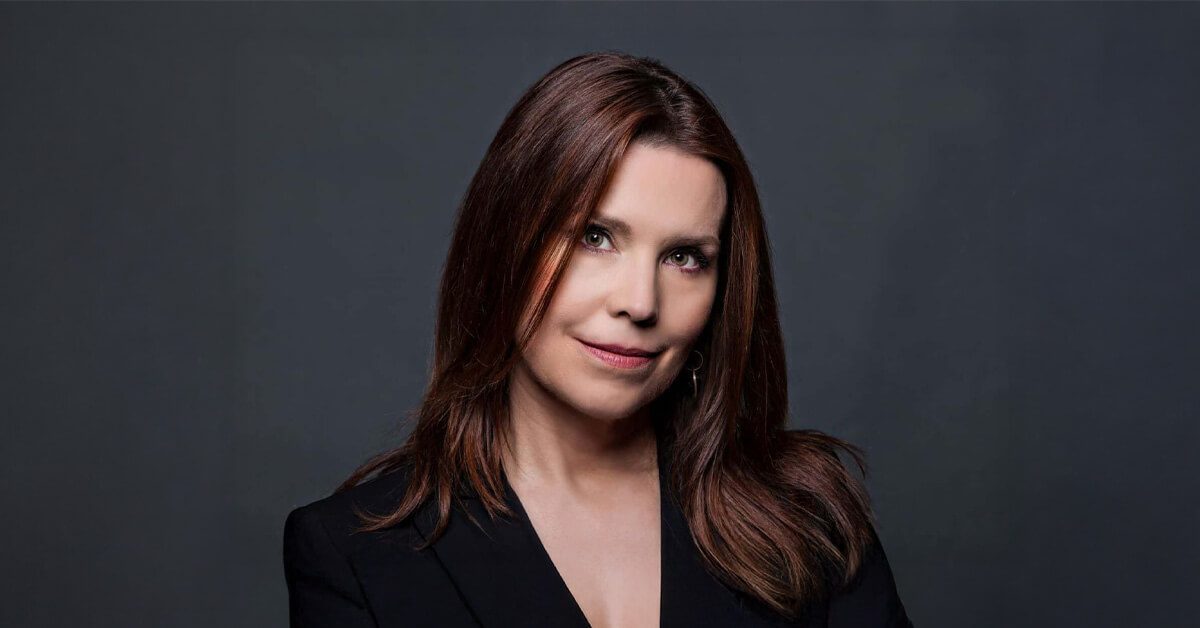
In this episode, I’m joined by Annie Duke, former world champion poker player and bestselling author of Thinking in Bets and Quit. We dive into the tough, career-defining decisions creatives are facing right now—whether to stay the course or choose a different path entirely. Annie shares how to navigate uncertainty, avoid getting stuck in the wrong decisions, and build the clarity needed to move forward with confidence. If your career feels like it’s been shaken or even taken from you, this conversation will help you rethink how to choose your next move.
Annie Duke is an author, speaker, and consultant in the decision-making space, as well as Special Partner focused on Decision Science at First Round Capital Partners, a seed stage venture fund. Annie’s latest book, Quit: The Power of Knowing When to Walk Away, was released in 2022 from Portfolio, a Penguin Random House imprint. Her previous book, Thinking in Bets, is a national bestseller. As a former professional poker player, she has won more than $4 million in tournament poker. During her career, Annie won a World Series of Poker bracelet and is the only woman to have won the World Series of Poker Tournament of Champions and the NBC National Poker Heads-Up Championship. She retired from the game in 2012. Prior to becoming a professional poker player, Annie was awarded a National Science Foundation Fellowship to study Cognitive Psychology at the University of Pennsylvania.
Annie is the co-founder of The Alliance for Decision Education, a non-profit whose mission is to improve lives by empowering students through decision skills education. She is a member of the National Board of After-School All-Stars and the Board of Directors of the Franklin Institute and serves on the board of the Renew Democracy Initiative.
Zack Arnold: So Annie, I want to begin by first saying that I must have done something right, because the last time that you and I talked, I met some bar, some expectation, because you said, “I guess I’ll do this a second time.” So I just wanted to start by thanking you for being with me the second time. I’m really, really excited for the insights you’re going to bring to me and my audience at the summit today.
Annie Duke: Well, I feel like to be fair, that’s more my bar, because you asked me back.
Zack Arnold: Yes, we can certainly fail mutually. And I would say that you not only met but you vastly exceeded my expectations in our previous conversation. But then it begs the question, and I had a very similar conversation with Christina Wallace, who’s a part of day one of this summit, but I had the same problem with interviewing Christina that I had with you, which is, we didn’t talk that long ago. It was only two, two-and-a-half years ago, so I could very easily just send somebody a link to our conversation, but I would argue that we’re going to have a completely different conversation in a different universe than we did just two years ago. Shall we try?
Annie Duke: Well, you know what I find for myself is a few things. One is that I teach. By the way, if people want to take a class from me, go to Maven.com. It’s actually really cool for your audience. It’s an amazing site. They have creators who are just doing classes, whether it’s on AI or go-to-market or sales or product or whatever. My class is on decision-making. That little ad aside, it’s interesting when I’m working with students that the way that I talk about things and the way that I frame things does evolve. Very often, I’ll find that the way that I was talking about even the same topic a few years ago will be different than the way that I’m talking about it now.
But then the second thing is that I keep going, and so I’m in the middle of writing another book that’s a totally different topic. The thinking that comes from what I’m doing in terms of my writing at the time will also seep into the way that I’m framing things from the past. And the work that I do with my clients will change the way that I’m thinking about things. So I feel like I could be talking about the exact same topic, and if you talked to me a few years ago, I’m probably thinking about it differently. I probably have different examples, and I’m probably framing it differently. I hope. We’ll see.
Zack Arnold: Well, here’s what I think has changed from my end. When you and I had this conversation about better understanding the psychology of quitting, do we grit it out, do we stick with it, how do we learn better frameworks for decision making? The world in which we had that conversation was such that all of the people that I worked with were coming out of the pandemic, out of the great resignation, and all of us had this moment to pause and reflect on our life’s choices. So this was a very voluntary conversation: “Is this the life that I want to lead? Do I want to stick with the work that I’m doing, or do I want to choose to quit and go in a different direction?”
I think the difference in the context of why I wanted to talk to you today is because that choice has been removed, and the industry and the world have quit on us. Technology is changing so fast that our entire paths are disappearing. There’s so much uncertainty about where we might go next. So it feels like such a luxury to send them a link to when we were talking two years ago, and they’d say, “The frameworks sound good, but I can’t apply any of this because there is no choice.” So how do we start this conversation about asking whether or not we should stick with something or quit, specifically in our career paths, when now we’re forced to make these kinds of decisions?
Annie Duke: Yeah. So, gosh, there’s so many places to go with this. It’s such a good question. Let me think about how to tee this up. One of the things that I’ve been hearing a lot from people is, “Oh, the world is so uncertain now. How am I supposed to make a decision in this very, very uncertain world?” And my response—and I’m really not being snarky, I’m being serious—is, “The world was always uncertain. You just can’t ignore it now.”
If you think about before the pandemic, people kind of thought things were the way they were and they were going to stay the way they were. We’re really good in those moments of over-indexing on the certainty, that somehow you have this ability to know what’s going to happen tomorrow or the next year. At that time, I was trying to get people to understand, “No, you actually do have to think about your path and how things are going to change,” because things do change, and after you start things, you do learn new things, and we tend to not be very reactive to them.
Let me just use that as a setup to where we are now. We’re always making decisions under uncertainty. There’s always going to be luck, things that are out of your control. You can’t control tariffs. You can’t do anything about AI. You can make decisions around AI, but the existence and the advancement of AI, that’s not something that you’re controlling. And then there’s going to be things that you don’t know. Our knowledge of the world is actually quite limited. What that means is that after you start things, no matter what it is, you will learn new things. You may learn new information, which gives you that feeling of, “I wish I had known then what I know now. I might have made a different choice.” And sometimes there’s just going to be bad luck.
In a time where we feel like things are more certain than they are, we tend to be very non-reactive to those signals. But then when things are very uncertain, we tend to get stuck for a different reason, which is that we get paralyzed. We recognize that the future is very hard to predict. All of a sudden we sort of have to face that reality. It’s almost like—did you ever read the original Wizard of Oz?
Zack Arnold: It’s funny because I was just going to reference pulling back the curtain to see the Wizard in my follow-up to this. So continue.
Annie Duke: In the original books, the Emerald City was not green; it was stone-colored. But to go into it, you had to put on green glasses. Someone pulled the glasses off of all our faces right now. So what that means is that we sort of understand, in a way that we don’t necessarily before, because we suffer from a few biases. One is “illusion of control,” where we think we have much more control over the future than we do—except now, where uncertainty is dialed up to 11 and the green glasses are off and we can’t really ignore it. That actually causes people to get paralyzed, and they find it very difficult to make decisions. I would love for people to see that as actually an opportunity.
Zack Arnold: That is why I invited you to the summit. I would not have guessed—I’m not a betting man, no pun intended—but I wouldn’t have bet that less than 10 minutes in, we would have had a mic-drop moment. But I want to repeat this for everybody: “The world was always uncertain. We just can’t ignore it anymore.” And I have been seeing for years the opportunity in this, and people see that as sacrilege. “How can you be so optimistic?” It makes me look like I have no empathy. I have the opposite; I have too much empathy. But I’m always looking for the opportunities amidst crisis. This is the opportunity that I’ve been seeing, that I’ve been screaming from the rooftops. At least now we see the game that we’re playing because we had this illusion that there was a path, that there was certainty. At least now we know that it’s all bullshit. We now have the green glasses off. I love that analogy. Now we at least know what the game is.
Annie Duke: This particular type of dislocation has repeated over time. You mentioned the Industrial Revolution, that was a big dislocation. You had the first computer revolution, where you had word processing all of a sudden. You have radio, you have washing machines—all of these things can be very disruptive. We carry around phones; think about the poor person who was building phone booths. Or the person, I remember when I lived in New York, there was “Aaron the King of Pagers.” He did not do well with the change of technology. You have a company like Blockbuster. Did they survive streaming? No.
Let me lean on poker a little bit here. Poker is a game of decision-making under conditions of uncertainty. I don’t get to see your cards, and I don’t know what cards are to come. We can really see there’s a bunch of stuff I don’t know. And then there’s luck, which is the random deal of the cards. Over the long run, if you’re playing poker and I’m playing poker, we’re going to get dealt the same cards. So we’re all kind of dealt the same hand, and we’re all making these decisions under extreme uncertainty. The question is, who’s embracing that more? The people who are able to operate better in that system are going to do better. Some of that has to do with a total and utter willingness to fold your cards in spots where other people wouldn’t, but also an understanding of when you’re supposed to change tactics.
So you’re ending up doing two things at once. And I would love for people to start thinking about it this way: what do I know and what don’t I know, all at the same time? People think that the game of poker is a game of trying to reduce uncertainty, meaning that I’m supposed to know more than you. No. We’re all leaning into the uncertainty and trying to understand, what do I know? How narrow can I get that range of cards that you can have, but understanding never too far? When I’m playing against somebody new, what would be called my “confidence intervals” are wider. I allow for more possibilities for the hands that you might be holding than someone whom I might know better, which is actually going to give me a much better edge.
Zack Arnold: This is absolutely making sense. What I want to make sure that we do is bring it back to how this actually applies to—and I know that you’re getting there—I love that we’re setting the table, but I want to bring it back to, “That’s great. I don’t play poker.”
Annie Duke: So now we’re going to bring it to regular life. When someone is new, my confidence intervals are wider, meaning that I’m holding more possibilities in my head. That’s the situation we’re in right now. As uncertainty goes up, you have to set your confidence intervals wider. That’s all you’re doing. And that shouldn’t be scary to people. Instead of saying, “I don’t know,” which is what people feel like now, you should instead say, “I know less.”
What happens is that when we’re pre-pandemic, people are like, “I know everything exactly.” That’s bad because it’s not true. Now, people are like, “I don’t know anything at all,” but that’s also bad because it’s not true. What you ought to think about is that when things feel more stable, my confidence intervals can be narrower. And a confidence interval is just what’s the lower bound and what’s the upper bound of the thing that I’m trying to predict. When there’s more uncertainty, you have to set your confidence intervals wider, and what that’s supposed to do is appropriately represent what you know and what you don’t know. Every decision that we make is a forecast of the future. We have to try to get a more realistic vision of the future, and that means that when things feel very certain, we probably need to set our confidence intervals wider. And when things feel very uncertain, we need to not throw our hands up and say, “I don’t know, it’s too hard right now.” That’s where the opportunity is because you can be like a poker player and say, “If I’m willing to embrace the uncertainty and actually think about what the possible worlds are that can unfold, my ability to navigate the possible futures is going to be better.”
Zack Arnold: I love all this. But before we break this down deeper, you’ve piqued my curiosity. What kind of a dog do you have?
Annie Duke: I’m going to answer that in a second, but I love that you asked that question because when you actually approach the world in this way and say, “Here’s my best guess, here’s the lower bound, here’s the upper bound,” implied in that is a question or two. It starts to get your curiosity going. One of the problems that we have in making decisions is that we have very limited information, and we don’t actually go seek out the information. But when you start to think about the world in this way, it will get you to ask questions.
One of the questions you might ask is, “What is the breed of your dog?” And the breed of my dog is a mini Bernedoodle.
Zack Arnold: I don’t even know what that is.
Annie Duke: A Bernedoodle is a Bernese Mountain Dog bred with a Standard Poodle. They tend to run between about 70 and 110 pounds. A mini Bernedoodle is a Bernese Mountain Dog bred with a Toy Poodle. So Otis, my dog, his mom was 80 pounds and his dad was 13 pounds and looked like Martin Scorsese. My dog weighs 40 pounds.
Zack Arnold: This was the heuristic that went through my mind as soon as you said, “How much do you think my dog weighs?” What I thought was, “What kind of a dog person do I think Annie is?” I was trying to read what kind of a dog I think you would want. I was thinking she talks about hiking, she likes going outside, she probably doesn’t have a toy dog. My thought was she’s probably a Golden Retriever-type dog person. That’s where I got the 85 pounds.
Annie Duke: So this is actually a great thing that you just said. We have a tendency to over-index on things that we think we know. Here’s how we want to approach these types of things, and I think this can be very helpful in the times that we’re living in right now. What is the answer if I think about a situation similar to the one that I’m considering? This is going to get you to what’s called a “base rate,” or the average that something occurs.
So let’s imagine that I’m Zack Arnold, and I’m trying to guess the weight of Annie Duke’s dog. I would quickly go over to Google, and I would say, “What’s the average weight of a dog?” And I would go find out what that is. And then I would say, “Okay, let me start there. And do I think that on average, Annie Duke’s dog, given what I know about her, is going to be more or less than this average dog?” But you should never go too far away unless there’s a huge dislocation. Obviously, if you know that I have a Great Dane, you can now take the average size of a Great Dane.
This becomes relevant to what’s happening today. Any base rate is going to have some sort of cause. Let’s imagine that I was trying to predict the chances that I develop lung cancer in my lifetime. If I go and look at stats from the 1960s, I’m going to have a base rate. But if I think about what the causal drivers of lung cancer are, I’m going to be like, “Oh, smoking.” A lot of people smoked in the 1960s, so I should almost throw that out because there’s been this very big dislocation. The causal mechanisms of the thing are just broken now.
Likewise, if I wanted to know what the probability that a Category 3 or higher hurricane makes landfall in the US this fall, I don’t really want to use data from 25 years ago. The ocean was cooler. If that’s the only data that I have, then I have to say, “Wait, the ocean has warmed up,” and I should guess pretty far away from the base rate then. This is something that actually becomes really helpful in these times because then you can start to think about what’s going to happen to my job. What has job retention been? Historically, in my field, what are the dislocations? Obviously, AI is a very big dislocation right now. What does that mean for how long it might take me to go find something else? And then you can start to think about how long it takes to retrain if I want to actually go into a different field. Once you start to think about those causal drivers, it opens up a world for you to figure out what you think the future is really going to look like and create a really good plan to deal with that.
Zack Arnold: I want to bring it down to something really practical. I think one of the biggest questions on everybody’s mind comes back to the fundamental question, “Do I stick it out, or do I quit?” Let me frame this for you for this industry specifically. There are so many people where it’s, “Should I still stick it out, or do I give up on all of my skills, on all of my expertise, on years of this career path? And do I, quote, ‘start over’?” The big question of “should I stick it or should I quit” is not just for one job; it’s for an entire career path and an entire identity. But there’s this giant black chasm of things that we don’t know that we don’t know. So how do we fundamentally use your frameworks to ask, “Do I stick with this career path and this identity, or do I quit?”
Annie Duke: Okay, your career is not your identity. When people are in a career that they really don’t like, why don’t they leave? There’s no doubt that you have had some situation in your past where you were in a relationship that wasn’t making you happy and you didn’t leave, or a job that wasn’t making you happy and you didn’t leave. This is happening to us all the time.
One of the reasons is the “sunk cost fallacy,” which is, “I’ve put so much time and energy into this thing, if I leave, I’ve wasted all of that time.” And of course, you haven’t wasted all of that time. But if what you’ve already put into something causes you to stick to something that is not allowing you to achieve your goal—let’s say your broad goal is happiness—then you’re wasting everything you’re putting in from that moment forward. Not only that, it’s not allowing you to change to put all that effort into something new that might be great for you. So you get a double hit.
The other thing besides sunk cost that tends to really get us stuck is this identity piece. Let’s think about identity as this combination of what we call “internal and external validity.” Internal validity is how you view yourself in terms of your own narrative. When we quit things, it’s a challenge to that because then there’s this moment of, “Wait, but did I choose badly in the first place? What does this mean in terms of the way that I think about myself?” Then there’s external validity, the way we imagine other people will view us. “They’re going to think that I’m a wimp, or I don’t have enough grit.” It’s interesting because I think that all of us can think about people who have left jobs or relationships that weren’t working for them, and I don’t think any of us think, “Oh, what a wimp.” We’re all like, “Oh, that was really courageous.”
So what happens is that in situations where we’re not forced to walk away, we don’t walk away until we don’t have a choice. We stay in the startup until there’s no money. I was talking to someone the other day who said, “No, actually, I just quit something that I think was right on time.” I was like, “Really, tell me about that.” They said, “Yeah, I was thinking back in September that I was really unhappy. So I spent six months trying everything and exhausting all of my options. So then, after I had exhausted all of my options, I quit.” And I was like, “If you exhausted all your options, that means you had no choice but to quit.” If you had said to yourself in September, “What are the circumstances under which you would stay in this job?” and you had seen those signals in September, you stuck around six months longer for the identity piece, so you could tell people you exhausted all your options.
What I would say to people right now is, start preparing. You’re in a job, you don’t know what the technology is going to look like. First of all, try to take some of these guesses. What are the different worlds that might occur for what I’m doing? And then start planning across that range. Should I be saving money because I could be forced out? How do I start training myself for a different career while I’m still doing the job that I’m in? How do I expand the options that I have? And right now is the time to start thinking deeply about how to expand your options. That’s where the opportunity is. If you’re thinking about that sooner than other people, you’re going to be better prepared.
Zack Arnold: I think that’s a great place to start for my audience. That was a great conversation to have two years ago. So now the question becomes, you’re no longer in the place where you can plan. The savings have run out. You’ve spent two years trying to figure out if your skills are even relevant anymore. Now I feel like the decision-making changes.
Annie Duke: Well, that’s why I’m saying that part of what’s going to be in that set is, “My skills are no longer relevant.” So at that point, you have to think about how to make your skills relevant. You may need to learn new skills. What’s my best guess over the next three to five years of skills that are going to be in demand and durable? And what are the things that I’d like to try? I really recommend that while you have the job that you have, you start upskilling in other things. This is called a “hedge.” It will cost you something—time, your evenings—but it’s going to help you to expand your options.
What are the skills that I can go acquire that work across the widest range of possibilities, so that I can expand the options available to me instead of just accepting that the world is narrowing my options?
Zack Arnold: I want to get into that in a second, this idea of where we hedge our bets. But I want to come back to one more thing, very specifically speaking about the identity piece. I want to pull a short quote from your book: “When you quit, you’re closing a mental account, and we know that we don’t like to close those accounts, especially when they’re in the losses. If you abandon a belief, that is the moment that you admit you are mistaken.” This next sentence, this is the one that hits home: “If you set out on a course of action, and you change your mind, that’s when you go from ‘failing’ to ‘I have failed.’” They’re two very different things. Let’s go a little bit deeper into the emotional reasons that we are hanging on to this identity.
Annie Duke: Yeah, okay. So I think I followed that point with saying, “Yes, you go from failing to having failed, but it’s only on one account, and it’s not really true.” We think about closing a mental account, and if I start a job, I open up a mental account for that job. If I buy a stock, I open up an account for that stock. If I start running a marathon, I open up an account for that marathon. So we can think about as a marathon runner, if I stop the race before 26.2 miles, I have failed. If I sell a stock for less than I bought it for, I’m closing that account in the losses, and I feel like I failed.
We can see that that’s kind of absurd, though. These benchmarks that we have are really arbitrary. We forget that how our life turns out is the sum of all the decisions we make, not just one. It’s the portfolio of your decisions, but we don’t think about it that way. The actual failure is to stick to something that isn’t working for you because when you do that, you’re not gaining ground, and you can’t switch to things that will.
There’s this quote from Danny Kahneman that I love: “Nothing is as important as it feels when you’re thinking about it.” When we’re thinking about something, it feels so outsized, and that is when you are going to be super irrational and emotional. So how do we solve for that? We have to stop being in the moment. It’s good to get out of the moment, and when you do, you say, “Imagine it’s a year from now.” It’s called “mental time travel.”
So I’m holding on to a stock. I don’t want to sell it because I want to get my money back. That’s sunk cost, and everybody will think I’m an idiot. That’s identity. But what if you stopped and said, “Imagine it’s a month from now, and I’m still holding this stock. How do I think I’m going to feel about that?” I can take it even further and say, “Let’s imagine that the stock continues to go down. Why do I think that is? What are the early signals that those things are true that I’m probably going to ignore? Am I ignoring them right now?” This just stops you from being in the moment and gets you into this mental space where you’re in the future, looking back, and it allows you to get a much clearer vision of the right thing to do. So this is a really good tool for handling that emotional piece.
Zack Arnold: It’s so funny you brought this up. In one of the interviews that I did for day five of the summit with Kalika Sharma, I did this exercise at the very end where I said, “Imagine that you from five years from now comes back to where you are now. What are the things that she’s going to tell you?” And that brings up, and this is going to be a little bit of shameless self-promotion, you highly encourage people to have somebody in your life that you consider a “quitting coach.”
Annie Duke: Yeah. So when you’re doing any of these exercises and you’re saying, “Imagine it’s a year from now,” how do we get to better views of that? One of the things that we can do is go look for things like base rates. Or go ask people who have gone through dislocations and say, “Can you help me with this exercise?”
One of the things I love to do is to say, “Okay, imagine it’s a year from now and things have turned out great for me. Why do I think that is?” and actually figure out what those scenarios are. That’s called a “backcast.” Then do the “pre-mortem”: imagine things have gone really poorly. Why do I think that those have occurred? Write down what the early signals are that I’m going to end up on some of these good paths and some of these bad paths. If I see those signals, what would I do about it?
Do that exercise on your own. Go get other people to do it for you. Don’t give them your answers. It’s really great if they’re mentors, people who’ve gone through this before. Go figure out how to find other viewpoints that are going to help you to understand what this world really looks like. Then, having done that, find someone to hold you to it. Create an accountability coach so that you’re actually reacting to what the world is telling you a lot better and following through on the plans that you’re making to deal with those different scenarios.
Zack Arnold: You actually ended up becoming my quitting coach for debating whether or not, because of a major shoulder injury, I wanted to continue gritting through American Ninja Warrior. At the time, I chose to pause and not quit. This is one that I had to put on pause. But what I want to do is another one of these very brief sessions. My saying when everything gets really hard is, “I’m going to quit tomorrow.” I’ve been saying I’m going to quit tomorrow for about seven or eight years. But things have gotten very real over the course of the last six months. All the things that are happening in the industry, enrollment is going down, income is getting lower. I decided, you know what, I could just close things down, but I said I’m going to go all in on this. How can I have the confidence that I’m making the right decision to go all in on this despite how challenging it is?
Annie Duke: Okay. Can I just say something? I hate that “I’m going to quit tomorrow.” Because there’s always a tomorrow. And what happens is, you know, I talk to you about whether I should quit my job, and they’re like, “I’ve hated it for five years.” It’s always because “I’m going to quit tomorrow,” because we put so much value on sticking to things.
Here’s what I would suggest that you do. I would ask myself, “How long am I okay with things being the way that they are?”
Zack Arnold: If we take the bank account of the numbers out of it, I love everything that I’m doing. I would do this the rest of my career. When we bring the bank account into it, there is going to be a point that comes relatively soon.
Annie Duke: So give me a date.
Zack Arnold: Definitely before the end of the year.
Annie Duke: Are we saying December 31st?
Zack Arnold: I would say that it’s nebulous, but it’s somewhere in the middle between where we are now and the end of the year.
Annie Duke: So let’s call it September 15th. Great. Imagine it’s September 15th, and you have decided that you should continue with the podcast. Please listen, what’s happened?
Zack Arnold: The podcast audience has grown, I’ve found a new audience in broader creative fields, enrollment has gone up in the next semester of our academy, I’ve built a new relationship with a public speaking career.
Annie Duke: I’m going to ask you to do this one offline, but what I want you to do is actually write down what enrollment would have to be. Actually write that down. You can give me a lower bound for that. What’s the lowest enrollment that you could see that would tell you that it’s still worth pursuing? Same thing with the speaking career. Be specific and write those things down.
That creates some benchmarks. If you’re above the benchmarks, you’re good. If you’re below the benchmarks, you’re not. Fair? Great. Now tell me, in order to achieve that good version of the world, what are the inputs? What are the things that you have to do?
Zack Arnold: Like, specific to-do list items?
Annie Duke: Let’s imagine it this way. Let’s talk about our friend who exhausted all options. I asked him, “What did you need to see happen?” And they were like, “I needed to go find a marketing mentor, and I needed to go find this.” They started thinking about what would be the inputs to creating the good version of the world.
Zack Arnold: I would say it’s literally what we’re doing right now. It’s having conversations with people like you, collecting and coalescing those conversations so people that desperately need them know how they can take action. They learn from all these strategies, and they say, “Hey, I’m looking for a quitting coach or a career coach.” So what we’re doing right now is me going all in on the inputs that are going to lead to what I hope to be the output in September.
Annie Duke: And then I would challenge you to sit down and say, “What are the other things I could do besides that?” So now we’ve got that. You’re going to commit to doing those things, and you’re going to say, “If I fall below these benchmarks on September 15th, and I have done all of these things, then I must change.” If your choice right now is, “Do I basically make this the only thing?” and you’re telling me you need to have this figured out by September 15th, set those benchmarks, figure out what the inputs are, and then if you get there, full steam ahead. But what I want you to do is on September 15th, after you’ve made the decision, do this exercise again because you have to do it on repeat.
The second thing that I would do is something called “monkeys and pedestals.”
Zack Arnold: I’m so glad you got here. I was going to get here, but I didn’t want to go down this road because we didn’t have time.
Annie Duke: Okay, we’re going to get here because I’ve got six minutes. So “monkeys and pedestals” is from Astro Teller, who’s over at X, the innovation hub for Google. He talks about this idea: let’s imagine you’re trying to train a monkey to juggle flaming torches while standing on a pedestal in the town square. Where are you supposed to start? Most people say the monkey first, but in practice, most people do the pedestal first. This is true for large public works projects, but it’s also true for anybody who’s ever been in a meeting where people say, “What’s the low-hanging fruit?” The monkey is the thing that you don’t know if you can accomplish. It’s the bottleneck.
So the other thing that I would suggest that you do is to say, “What are the monkeys in all of this? If I’m actually going to be successful by the 15th, what are the things that are the real bottlenecks to success? And how can I actually attack those and figure out whether those are solvable as quickly as possible?” If you approach things that way, you can get to answers much more quickly, and you’re much more likely to walk away when you find out that you can’t solve the hard thing first.
Zack Arnold: I think that’s a great place for us to close our final loop, which was, how do we hedge these bets? And I’m going to leave you with my version. The way that I’m hedging it is I’m focusing on what are the things that stay the same, rather than what are all the things that are changing. What are the skills that are going to equip all of us going into this future, the things that never change? We need to be really good at building relationships with humans, telling our own stories, and using the mental heuristics that you and I talked about so that we can make better decisions. None of that changes with AI and technology. I feel that the monkey that is juggling the flaming torches are, “Are there skills that people are going to be willing to invest in when nobody knows what skills to invest in, when nobody has any money to invest in their skills?” So what I’m doubling down on is the skills that stay the same, not all the skills that are changing.
Annie Duke: I totally love that. There are some things that are durable, and investing in those things that you know are going to be durable, that’s actually a very good example of using base rates really well. If I look over time at all of these dislocations, what are the things that have stayed the same over that time? Let me actually really invest in those things.
Another example of how to hedge would be if we take Blockbuster. The way for them to hedge would have been to acquire Netflix, which they had the opportunity to do. And say, “Look, I’m not exactly sure where the future is going to go, but we’ve got enough capital to buy this company. If streaming becomes big, I own Netflix. Yay me. If it doesn’t become big, whatever.” Why didn’t they do it? For the identity reason. Because they’re Blockbuster. They have physical stores. They’re not a streaming company.
So what you, Zack Arnold, ought to be thinking about is not just what are the durable skills, but if I think about what might be different, can I skill up in that thing, too? It will cost you time, but it might actually end up being something that saves you.
Zack Arnold: I think I can speak for everybody that is attending right now that my brain hurts in all of the best ways possible. You’re really making me think and also rethink a lot of things. I really wish I could just keep pulling these threads, but I want to be very conscious of your time, so I just wanted to thank you for being here again. I want to make sure that people are aware of both how they can find you, but also this other initiative that you’re working on, the Alliance for Decision Education.
Annie Duke: Alright. You can just find me on annieduke.com. I also have a Substack called Thinking in Bets. The Alliance for Decision Education, we really believe that the most important thing you can teach children is how to make better decisions. And we don’t do that. We teach them trigonometry and calculus. If you look at how somebody’s life turns out, it’s luck and the quality of their decisions, and we’re not teaching kids these really fundamental decision skills. The Alliance for Decision Education is what’s called a “field builder.” We’re trying to build this field in the same way that social-emotional learning or STEM is a field that got built. The field we’re trying to build is decision education, in order to make sure that every single child from kindergarten until 12th grade is getting decision skills education so that they can be better decision-makers. That’s the skill you need in a world where everything is changing.
Zack Arnold: Here, here. I am all in with you. I don’t know how much I can move the needle, but I can promise you I will try to move the needle.
Annie Duke: Field building is getting a lot of people to move the needle a little, and then the needle moves a lot.
Zack Arnold: Well, I’m going to do everything that I possibly can because I’m wholeheartedly in and believe that decision-making and critical thinking skills are what’s going to set people apart. So on that note, thank you once again. This was wonderful.
Annie Duke: Awesome. Thank you, Zack. I’m so happy to see you again.
Edited by: Curtis Fritsch
Produced by: Debby Germino
Published by: Vim Pangantihon
Music by: Thomas Cepeda
Nick Milo explores how to think clearly in an idea-flooded world, building systems to connect insights and turn knowledge into meaningful creative work.