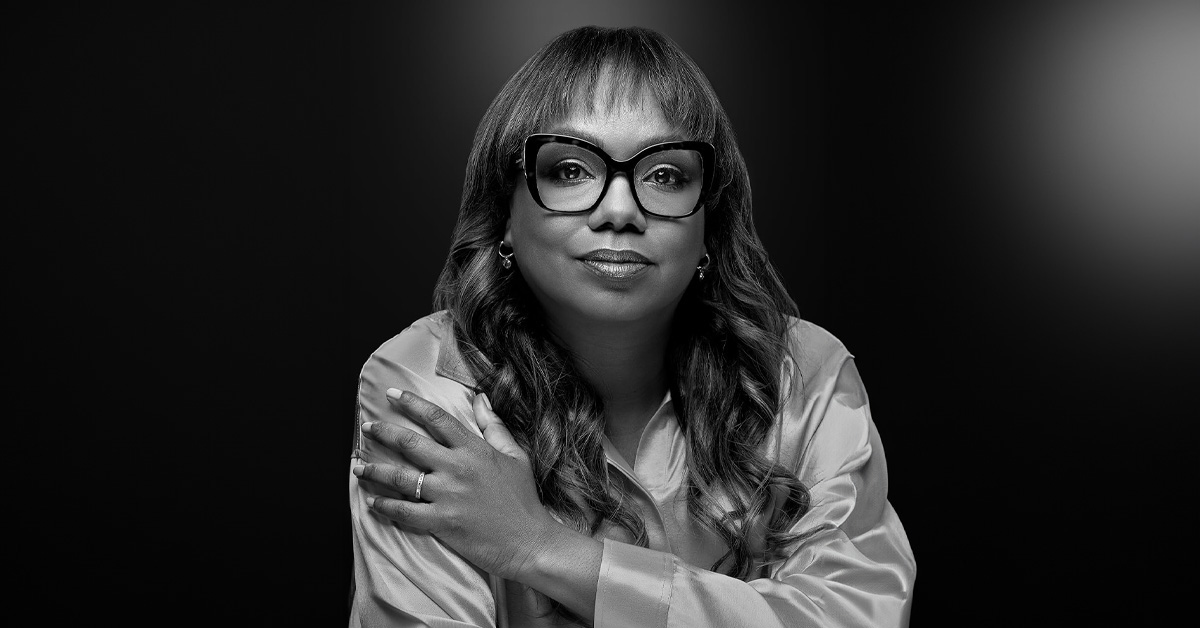
Writing Your Own (Unique) Path to the Top | with Wendy Calhoun


About Episode
#AdvanceYourself month continues where we’re diving into the weeds talking about taking practical, boots-on-the-ground action steps to move your creative career forwards, or more specifically to this episode, how to transition from climbing one ladder to climbing a different one, even if that means taking one step back to take several forwards in the future.
I’m incredibly excited for this episode because it’s with Wendy Calhoun who happens to not only be an incredibly decorated and accomplished writer and producer in Hollywood (here are her IMDB credits), but she’s also the very first person to hire me as a professional editor in Los Angeles.
Wendy has worked on such gigantic network TV shows as Empire, Nashville, Justified, and Revenge, to name a few. She is also no stranger to adversity given she has climbed her way to the top in an incredibly competitive area of Hollywood – writing, executive producing, and now show running with upcoming projects such as No Place Safe for FX and Our Kind of People for Fox. And while great strides have been made in the past several years, let’s not beat around the bush. Making it as an accomplished writer/producer as either a female or an African-American is tough, but doing it as both is infinitely tougher. But regardless of the obstacles that stood in her way, Wendy forged ahead, changed her career path several times, overcame numerous obstacles (including a massive case of imposter syndrome), and defied the odds.
In this episode we deconstruct Wendy’s unusual path to climb the ladder to the top to understand the basic fundamental steps that you can take to achieve the same levels of success, regardless of your circumstances.
Episode Highlights
- Wendy’s early theatrical writing and how it shaped her life
- Processing your career goals when the path isn’t clear
- How Wendy and Zack came to know each other
- Turning your creative passions into practice
- Defining yourself by your desired vocation regardless of how you’re getting paid
- How writing for info-shows led Wendy to hits “Nashville” and “Empire”
- Learning to overclock the intensity and productivity of the writers room
- Writing complicated, compelling, and honest female characters
- How producing Empire was “like a rainbow” for Wendy
- The importance of nurturing and giving opportunities to women and people of color in entertainment
- How Wendy plans to revolutionize inclusive production practices as a producer to tell the greatest stories
- Advice for up-and-coming writers and the importance of reaching your ten thousand hours of mastery
Useful Links
About Guest
Wendy Calhoun is a series creator developing content at multiple broadcast and cable studios. She’s currently writing and Executive Producing FX’s NO PLACE SAFE, a miniseries about the Atlanta child murders, to star Emmy winner Regina King. Her past credits include Co-Executive Producing and writing the historic first season of Fox’s hit series EMPIRE. In addition, she’s written and produced for ABC’S NASHVILLE, FX’s JUSTIFIED, ABC’s REVENGE, and NBC’s LIFE.
Last summer, Calhoun wrote and directed the virtual reality short, LEFT BEHIND, sponsored by Google and honored as “Best in VR” at Digital Hollywood 2016. She received a 2010 Peabody Award and WGA Best New Series Nomination for JUSTIFIED. She received her second WGA Best New Series Nomination in 2012 for NASHVILLE.
Born and raised in Dallas, Texas, Calhoun studied film and television at New York University’s Tisch School of the Arts.
Transcript
Zack Arnold: I’m here today with Wendy Calhoun, and this is going to be a very, very interesting conversation because Wendy is the very first person that ever hired me as an editor in Los Angeles, and we have known each other for and God, I don’t, I don’t even want to say the number, I really don’t, but we’ve known each other for like 15 years, and this is going to be a different type of conversation for us because number one, it’s recorded, and number two, there aren’t several glasses of wine involved. But regardless, I just I cannot thank you enough for taking the time to record this for my audience so we can share some of your wisdom.
Wendy Calhoun: Oh, it’s my pleasure.
Zack Arnold: Well, the the reason that I really wanted to have you on today, we talked a little bit beforehand in the bio about how you’ve become very successful on the writing and producing side of things in television. But there’s this just this sense of there’s no path. I have no idea how to get there, and there’s no guarantees. And I can get a master’s degree for $100,000 as a writer or as an editor or a director, but I could be getting people coffee the rest of my life, and I think that you’re the perfect example of somebody that just followed the right steps to get where you are, even though there was no discernible reason that it should have just been given to you. So let’s let’s start just by helping the audience understand your your career path a little bit, like your origin story.
Wendy Calhoun: Sure, absolutely. I’m I’m really into all different kinds of philosophies. I read them all the time and apply them to my work all the time. And the one that’s resonating with me the most right now is it’s not what you do, it’s why you do it. And I think that that’s a good place to start with this conversation. I’ve always felt like I just had something to say, and that drive to have my voice in the world has gotten me through all the uncertainty of every step. So I really just guess I’ll start there. But for me, it was improv. Actually, as a middle schooler, I would go to improv competitions, and improv is simply writing on your feet, right, while you perform, and I found it really just so fulfilling. I loved it. I loved the challenge of it, and started writing plays when I was in high school. And the first play I wrote was produced, which is kind of amazing. I was a sophomore at the Performing Arts High School in Dallas, Texas. At that time, it was called the Arts Magnet at Booker T. Washington, and I just-I don’t know-something happened magical the opening night of that play. It was all fantasy, by the way. Everything I wrote in it was fantasy. I hadn’t had any of the experiences of anything I was really writing about, except I kind of knew the main character. You know, that main first main character is always kind of a piece of you. You know, it’s part of me. And I watched people saying my words on stage, and I was just blown away by it. I thought it was so fulfilling. And then my father, who at the time I was I was doing a lot of performing myself, I was acting quite a bit, and my father would never really come to see me act in any of my plays, but he came to see the play that I wrote, and afterwards he came up to me and he said, “That was really good. You should do that. And I think every time I’ve ever gotten a pass or a rejection, I just think about my father. You know what? You’re good. Just do it. Don’t worry about it. Dad said you were good years ago when you didn’t know what you were doing. You just kept going. So from there, I kept writing plays. I wrote more and more plays. Some of them were produced in professional theaters in Dallas, actually, while I was still a high schooler. And then I went to New York University and studied writing there, and also study filmmaking, and really, your question about a path was there a certain path for me to follow? There was none. There really was none, and I kind of liked that. I’m one of those people that likes to forge my own path, so I wasn’t worried about that too much. I ended up cold calling alumni from NYU at the time, I thought when I was getting ready to graduate that I would go into development and maybe run my own network someday. That was a big idea I had in my head, but I kept writing, you know. And and actually, the writing was like just me having fun, you know. It was never like I have to do this because one day I’m gonna make money at this and it’s you know it’s gonna be so great. It was really just like I need to express myself, and for whatever reason I’m obsessed with putting ideas on a page, and I hear dialog all the time, and I just want to write. So I kept writing, and and as I was went out to Hollywood trying to go down this development path that I thought I wanted. I would use my vacation time when I was an assistant to put up my plays. And at one point, I had somebody. And again, this is not me on the path saying I want to be a TV writer. That really wasn’t part of it. It was just I. I’m a creative person, and I need.
Wendy Calhoun: I need to express myself. And I thought, if I have to get a check, well, I should get a check as an executive, right? I mean, that’s a normal way, because I was-I think I was kind of scared of the idea of like being a full-time writer. Like, I kind of didn’t know that that really was an occupation. I think at first. So I’m-I’m just going on and on here. Zack, are you still there?
Zack Arnold: Oh yeah, no, I’m I’m absolutely here. I I love the story, and I just I I want to I love stream of consciousness. I love not having a whole bunch of rehearsed questions, and like even so far, things that really resonate with me, and I’m sure resonate with the audience, are that you didn’t say in college, all right, I need to come up with a successful career now, and I like writing, so I want to successfully make money being a writer in Hollywood. That had there was no thought like that. It was more, I had this thing inside. I got to get it out. I almost can’t control it. And for me, it’s storytelling. It’s putting words on the paper and it’s having people express those words. But even though somebody else is saying them, it’s my voice, and I’m saying something important to the world. And that’s what drove you. When you say it’s why you do something, you know, not what you’re doing or even how you’re doing it, that’s what’s so important to me as well, and that’s what I’m trying to help other people that are listening find because it is so hard. Like if you’re trying to be an editor or a writer, very very similar lack of path for both of those careers, but if you can fundamentally find why you’re doing that thing when you run up against hurdles and people say, “Well, you know, you’re not the right fit for this, or “Why don’t you get a real job? Like you’re never going to make a living doing this one thing. You keep thinking, but this is part of who I am and what I need to get out and what I need to do. And maybe it’s TV writing, maybe it’s being an executive. Maybe it’s writing features. All of them serve the safe purpose, so you don’t feel like I have to run this set path to do this one thing. So I love all these things about your story already, and we haven’t even gotten to all the good parts yet. We’ve just gotten to the point where you know you’re you’re just getting settled. So let’s keep going.
Wendy Calhoun: Okay. Well, sure. I mean, it’s interesting because I think for me, I think I was actually born a producer. Okay, I think that I woke up one day, or actually came out of the womb, actually ready to produce. You came out of the womb
Zack Arnold: With notes.
Wendy Calhoun: Yeah, exactly. I was ready to produce. Like I don’t know why, but that has always been a part of me. Even when I was little, like I was the kid in the neighborhood that was like, “We want to raise money. Let’s have a toy sale, and I put it all together. Or you know, like I, I was that that person who was just always like I set a goal and I just do everything I can to produce it. So that just came to me very very naturally. What didn’t come to me naturally was how to be a writer. To be honest with you, becoming a writer was something that I did out of, like I said, out of enjoyment of it, out of just feeling this need, like I had something to say and therefore needed to say it. So it’s been interesting because I’ve really felt like I’ve had to learn how to become a writer. I had to make a very conscious choice at a certain point in my career, and I can tell you when, but I was pretty much along a long path at that point. But I made a choice at one point to say, okay, you know what? I’m going to be a producer who can write, because I and I know that in television, at least in that position, I’ll be able to say what I want to say. So that became a very very clear goal. But it took me a long time to actually get there, and then once I committed to being a writer as a full-time writer to service my producing, quite frankly, then I started to actually have a path because I could build a path. I had I could model myself after others, but up until then I was just playing around. So back to where I left off in the timeline. So yes, as an assistant, I put up my plays, and I actually there were agents who would come and see my plays because at one time I was an agent’s assistant and literary agent’s assistant. And during these assistant years, by the way, I assisted Tim Burton, I assisted Mark Burnett, I assisted a lot of very very powerful people in Hollywood during this time. It was a five year stretch. I Peter Guber was somebody I worked for quite a bit, but during that time, as an assistant, I was learning really how to be a great producer because I was working with some really great producers. In this time, this TV agent had come to see one of my plays, and he said, “You should write television. And I went and I was like, “Television! Like I hadn’t even thought of that. Like, if anything at that time you were gonna write a feature, right, or the big play or a novel. That’s what real writers wrote, not TV. At least that’s what I thought. So I tried to for a little while. At that time, Law and Order was really hot. So I tried to watch Law and Order because everybody said, well, you have to you have to mimic one of these shows and write that down. That was like the thing. Write a spec. That’s what they call it. So I looked at that, and I just was not inspired. I really wasn’t. I went ahead and I kept just doing my plays, things I like to write, and didn’t really focus too much on trying to become a television writer. It just the agent just put that bug in my ear at an early point. I finally became a development executive. I actually made it. I got promoted at Village Roadshow Pictures, and was in charge of the story department there. You know, evaluating scripts, giving writers notes. I was on my way in terms of what I had decided to do when I came out to Hollywood to begin with. But I kept writing. I couldn’t stop, and I even started ghost writing on some of the features that we had at Village. And my bosses there knew that I was a writer because I actually wrote a screenplay while I was there that a different company optioned, and I got into trouble for not showing it to my colleagues at Village First. They said, “You know, you work here. We should have a first look. I was like, really?
Wendy Calhoun: I didn’t, you know, I didn’t know you guys cared that I wrote. I really didn’t think about it, but it was very funny because this is a beautiful Hollywood moment here for you. I actually wrote notes on scripts that Graham Yost, the writer Graham Yost, was writing in features. I was giving him notes. He didn’t realize it. It was coming through the executive that I was working for, right? But I was the one who was actually reading it during the evaluation of it, and I know. And you know, many many years later, he he’s really been an angel in my career, Graham Yos. But at that time, I had no idea. You know, I you know I was considering projects that Mark Burnett was sending in. You know, and this is before Survivor. I was like, I had, I had, I was crossing the paths with all these really, really interesting people at a very early point in my career, and had no idea that that that that would loop back, but it did. So, anyways, after Village, what happened was the company basically merged with Warner Brothers, and there was a a mass, you know, sort of firing that went on, layoffs and consolidation. My bosses were laid off. I was laid off. My bosses knew I was a writer before these layoffs happened. They had already sold a show to Animal Planet called the Aquanuts, and it was 52 half an hours of Jacque Cousteau meets role rules, and they because my bosses knew I was writer, they came to me and said, you know, we need a head writer on this. Can you do it? And I was like, I don’t even, I had never even thought about writing an Animal Planet show. Like I didn’t know anything about that, but I took the footage and I started writing up scripts for it, and I sent it into them. They’re like, “This is great. Can you just do this? I was like, “Okay. It was TV boot camp for me, and that was my first TV job.
Zack Arnold: And I was, I was always curious because I’m assuming in this timeline, this is around the time that you and I connected. But I always wondered what in the world got you to the point where you were working on a nationally syndicated show for PBS called High Tech Home, and it made. I mean, at the time, like I had just come out of college. I was an assistant editor. I’d been an assistant for maybe two months. It was like two months out of college, and this kind of coincides with like my break, and I think your break, and all this kind of comes together. So I don’t want to, you know, take the time away from you too much, but to kind of transition there, I had just started as an assistant, and one of the freelance editors at the place where I was working-this was a trailer company-he had said, “You know, listen, you know, I’m I’m doing this this show for PBS right now, and I’m looking for somebody else that can maybe help pick up the slack and do some of the work for me. And I jumped at the chance, like super eager beaver like I am. I handed him my demo reel, which was on a VHS tape, and he got back to me the next day. He’s like, “Damn, you can cut, kid! Like, how would you like to cut half the season with me? I’m like, “Oh my God, a TV show! I get to edit half the season. Like, this is two months out of college, and then and then that’s when you and I met. So that’s kind of where our stories start to intersect, but I always wondered how in the world did your path lead you to a PBS show about you know technology in fancy homes? So now I understand that part of the story. Now we can kind of continue from there.
Wendy Calhoun: Well, I was almost I was almost at that point. Well, basically after Aquanauts, I started doing some shows for World of Wonder, yeah, we had I had done like 100 Greatest Dance Songs and you know Countdown shows of music and actually that was actually a foundation for a lot of the music scripted writing I did later because I spent about a year going down to the MTV libraries and just watching interviews and documentaries about musicians and the life of musicians. So I actually had a treasure trove of stories about the music industry before I even came to Nashville or Empire, which was helpful. But anyways, yeah. So I was doing these non-scripted quote-unquote shows, and really they’re just information shows. You’re delivering information basically, and that’s how I came across High Tech Homes. I had been looking for, you know, looking for a show to do, and coming. I think I found that as like an ad somewhere, and I just responded to the ad, and they called me in, and that’s how I started working on that. But I’ve been doing these sort of informational shows for Discovery, and that. Kind of thing before, yeah. It’s interesting. A couple of years into that process, though, I was like, I really want to get back to my writing. You know, I really want to get back to the to the drama. And the the saving grace, I think, for me was Six Feet Under, because the show Six Feet Under came on HBO, and I started watching it, and I thought, oh, if that’s what television is. Then I want to write television, like because I just really loved the show. It spoke to me, and I thought I could write a version of that for sure. And so I, I did. I wrote a spec of it. Went to some NYU alumni meetings. I ran into an old agent that I had assisted, and I said, “Listen, I’m out here in the world. I want to get into one-hour dramas. Now I’m ready. You know what should I do? And he introduced me to the man who became my manager. And that manager, what was great was that he worked in reality. He represented a lot of reality and nonfiction companies, but he also had some clients that he was trying to break into one-hour drama as well. So it was great because I, you know, I knew I would be able to find work with him, but also he could help me make the transition from quote unquote non scripted, which is totally scripted by the way, to oh my god,
Zack Arnold: Really? Wait, I’m gonna have I’m gonna edit that part out because I don’t want to disappoint anybody that watches reality TV. She’s lying. It’s not scripted. It’s all real. I promise.
Wendy Calhoun: Are you kidding? It’s it’s very much scripted. But anyways, yeah, you can cut that out if you want. No, no, I’m kidding. My
Zack Arnold: Audience, I’m sure, already knows.
Wendy Calhoun: Yes, yes. I mean, to the point, like literally, before you go out for those things, you write a whole outline. You kind of already know where you’re going to attack story before you even shoot anything, and this is reality, quote unquote. Then you’re there, and you you you know from your outlines sort of what you’re looking for. So as you’re watching the reality unfold, you really navigate with the camera, and you go and you pull out that story that you want. You you’re working right there, and then of course you go in the edit room and you make it perfect, but you’re writing the whole time. Yeah. Anyway,
Zack Arnold: And many of the people listening are probably those editors going through the 27 camera angles and trying to turn you know just a whole mess of stuff into a scene and tell a story. So I’m sure they all understand that process very very well and can relate.
Wendy Calhoun: Yes. Yeah. Exactly. I love it actually. I think it’s really fun. I love that process. But anyways, I went around for about five years with those scripts. I just kept writing more specs. Was really influenced by Ryan Murphy, by the way. I remember writing them nipped up, just watching a lot of one-hour drama, writing specs, and writing original still plays and material, and knocking on doors, and it was hard because I had a lot of encouragement. You know, people telling me, “Oh, you’re really talented. Oh, this is really good, and then not making me any job offers. For a while, I thought it was never going to happen. I really got to the point where things were going well in reality, and I was on. I finally made it to a show that I was really loved called Hell’s Kitchen. I did the second season of that, and they were sending me to the field to direct. I was really happy, and kind of was just over being rejected for my one-hour dramas, you know. I I started feeling like, well, maybe that’s just a sign. Maybe I need to stop. But sure enough, that that year that was on Hell’s Kitchen, the call came in, and it actually was the only interview I had the entire year. Like I had no other scripted dramas that were interested in me that year. It was depressing, and but I went on the one job interview thinking, for God’s sakes, you know that they’ll never hire me, right? So much rejection after all those years, and I just I really didn’t care if I got the job or not. You know, I was so over it. I just wanted to go back to my hell’s kitchen and keep making my show, and so I was very sort of cavalier in my interview and and wasn’t attached to the outcome of it, and even broke some rules. You know, they tell you when you go on these interviews to be a writer on a staff not to pitch ideas for the show. So up until this point, I probably had already had like 4050, interviews, right, where I followed the rules. I was very good, you know, followed my rules. This interview, I come in, I didn’t care, so I didn’t follow the rules, and I started pitching ideas for the show. Well, by 6o’clock that night, I got a call from my agent. You know they really liked you, and the next day we got an offer, and that was a Friday. And they said they want you to start on Monday, and that’s how I got my first writing job.
Zack Arnold: Wow! And what show was that? It
Wendy Calhoun: Was a show called Rains. It starred Jeff Goldblum, and it was really a really. Strong writing room. As a matter of fact, well, Frank Darabont directed the pilot. Graham Yost wrote the pilot, so that’s where I first met Graham, where I really met him. I mean, I had given him notes on his scripts that he didn’t know about years before, but this is where I met him, and it was a great room. I mean, you know, this people, the people in that room. You’ve got Maura Wally Beckett, who went on to Breaking Bad. You’ve got Jennifer Hutchinson. She was a second assistant who went on to Breaking Bad. You’ve got Dave Andron, who’s running Snowfall right now. We work together again on Justified. You’ve got Taylor Elmore, who does a lot of CBS right now. I think he’s on Limitless. We we also work together on Justified. You’ve got Josh Singer, who won an Oscar for Spotlight. These were all the writers in that room, and we were all, you know, at that point we were all still very, you know, new to the process. So it was really interesting. And one day, I pitched out an idea for an episode of Reigns that I wanted to set in the world of hip hop, and Graham really liked the idea, and I wrote it, and he loved the script. The show ended up getting canceled right before we were supposed to shoot it. Right before we were supposed to shoot my very first episode of television I’d ever written, the show got canceled. I was also nine months pregnant, so. Well,
Zack Arnold: Maybe it all worked out for the best, right? It
Wendy Calhoun: Did all work out for the best. I, you know, got to go have my baby and be with my baby for four months, you know, off in between seasons, and in the meantime, a couple of guys took over our offices who were making the pilot for a show called Life that was going to star Damian Lewis, and Graham Yost, who’s my angel, went to the showrunners of that Life pilot and said, you know, if you guys get a series order, you really should consider hiring Wendy. And so they made good on that promise and brought me in for an interview when they got their pickup, and I wrote on life for the entire duration of that series.
Zack Arnold: And for anybody, and I’m guessing for most people listening, they’re like, wait, Damian Lewis is in a show called Life. Like this was before he was Damian Lewis, before Homeland, and the first season of Life is one of the most entertaining, satisfying seasons of any television show I’ve ever watched. It just comes out of nowhere, but it is so well done. And I remember even reaching out to you because we hadn’t connected in a while, and I’m just like, this show is amazing. Where did it come from, and who are these people? Like, it’s just it’s so so good and so enjoyable. So anybody that’s listening is like, oh yeah, I’ve never heard of it. Watch it. Like go on Netflix or on Apple. I’m not sure where it is, but it’s it’s a fantastic show.
Wendy Calhoun: Yeah, it was great. So that was NBC, and yeah, you’re right. That was before Homeland. It was a lot of fun. Sarah Shahi was also in it, and I got to work with a lot of actors that I then ended up casting in later shows that I’ve worked on. And there were that was a powerhouse room as well, powerhouse writers. So yeah, after when life was looking like it wasn’t going to get picked up for a third season, I had gotten a call. We hadn’t been canceled yet, but I had gotten the call from Graham saying, “Hey, you know, we just cast this guy Timothy Oliphant in this pilot I wrote, which is an Elmore Leonard adaptation, and you know, if it goes to series, I’d love for you to do it. Now, this call came to me in the in mid spring, and this is right before staffing season, so this is another kind of career gamble I had to take. Did I want to sit out staffing season basically and get you know wait for Graham’s call and in the hopes that it would get picked up? I mean, I had no guarantee, but I decided that that was worth it because I really enjoyed working with him. And when I read the pilot, I loved it. And then I started just getting ready. I just started acting as if Justify was going to go. I was going to be on it, and so I needed to get ready. I just like I just went there with my mindset, and I read as much Elmore Leonard as I can. And sure enough, they got their pickup. I went in to meet with Michael Dinner, Sarah Timmerman, and and Graham Yost, and I was ready to go day one. I was like, “Here’s here’s the stories. I was all about Boyd. I couldn’t wait. You know, Boyd had died in the original pilot. I really advocated for him not to be dead. Please reconsider. You know, and I told him why, because I loved that character. Oh, I love I love villains. So, sure enough, you know, we started in that room, and it was it was a blast, just a blast. I had a really kind of a pivotal moment in the second season of that show. I had done some research in between season one and season two, and I came, I went to Harlan, Kentucky, by myself, which is where it was set, and that’s where I first heard stories about a real life bootlegger that lived in Harlan, who was this incredible woman. She died in she was 100 or so when she died, but she basically was like the biggest criminal boss in the whole area. I thought that was cool, so I started working on the. Character that became Mags, and Mags was the season-long villain of season two. And what Mags did for me was it, you know, sort of made me realize that I had, you know, I was starting to really get good as a writer. Like, and good as a writer to me is not just like being flowery on the page. Good as a writer is like finding those stories like a homing pigeon, and finding great characters, and then really keep crafting and pushing and fighting for them, and bring them to the screen, and that that showed me that I had the capability to do that. And Margo Martin Dill’s performance of Mags was just phenomenal. She ended up winning an Emmy that year, and it was just incredible. And actually, to this day, it’s one of my favorite seasons of television I’ve ever been a part of. Second season of Justified, but also, it was kind of one of those things where you thought, or I thought, okay, how do I top that? I don’t know how to top that. I thought there’s nowhere else to go here for me, and I ended up getting a script from somebody who loved Life, the TV show. An assistant loved Life and gave one of my episode scripts to this guy named Mike Kelly, and Mike Kelly was developing a pilot, or he had just shot a pilot that had picked up the series called Revenge, and so this assistant said, you know, she’s so great from life, you know, we should have her on revenge.
Wendy Calhoun: And so they called me in for an interview, and it was interesting because I wasn’t on the market, I wasn’t out looking for a job. I mean, I I was very much like going to go back to justify it. I just didn’t know how I was going to top it. But I got the pilot script for revenge, and I was intrigued. Oh wow! There’s a female villain. There’s a female antihero, and that was you know at that time that this was groundbreaking. And also this idea that we were you could bring back the nighttime soap. There was no nighttime soap on TV anymore. And I grew up watching Dallas and Dynasty and Falcon Crest, and I was like, where are those shows? You know, we need those shows. That escapism and the kind of like the hijinks. I liked that the high rider hijinks of it all of the soap. So I thought this could be really fun. I mean, Mags taught me that I could write a great female villain, and here I could have the opportunity not to write a great, not only a great female villain, which was played by Madeline Stowe in that series, but also this great antihero, which was which was Emily Thorne. So yeah, I went in. I was really passionate about it, and I got the job on Revenge. I was so happy. I was sad though. I had to you know tell Graham I wasn’t going to come back for another any more justified. But I was really happy. I was also kind of excited to go back to network. Honestly, I really feel the difference in cable versus network. I like the pressure cooker of network of broadcast. I I think cable has a wonderful place, and digital obviously is is a whole new ball game, but I actually I really do like actually making things for broadcasts. So I don’t know. Call me strange.
Zack Arnold: Well, now you’ve you’ve said things like hip hop, pressure cooker, network, Dallas, dynasty, soap opera. Like I think all of those keywords are are leading us somewhere else in this story.
Wendy Calhoun: Oh yeah, it all comes together. Everything comes full circle. So here’s the thing: revenge was really that was an interesting thing because I don’t know. I don’t know how much detail I want to go into of all this because it’s a it’s a convoluted story. And basically, one day you’re going to have to buy the book because I will write a memoir, but basically things didn’t work out for me on Revenge, for political reasons, and I took some time off. I wrote a little bit, and I got ready for the next staffing season. Actually, I had my heart set on going to do the following. If you remember that show on on Fox,
Zack Arnold: Yeah, that’s the Kevin Bacon one, right?
Wendy Calhoun: Kevin Bacon one, yeah, because you know, I had obviously I had written a lot of law enforcement between life and justified, and really, and you know, I knew I could do the dark stuff, and thought, well, I would like to do that. I ended up going all the way to having a meeting with Kevin Williamson, but that meeting was pretty clear to me after after it that I didn’t actually want to write that show, and that was heartbreaking. I went home from that after thinking for a whole season that that’s what I wanted to do. To suddenly thinking I don’t really want to do that. And my agent, this was a Friday night. I won’t forget this either. And he’s like, “Well, listen, there’s some people that want to meet with you tomorrow morning, Saturday at seven. It’s like, who wants to meet at 7o’clock on a Saturday morning? It was the guy who directed the pilot, R.J. Cutler of Nashville. They said, “Read Nashville tonight, and Nashville wasn’t even on my radar. By the way, I had met with all the networks, and you do this-you go around these staffing meetings, you meet with the networks, they tell you kind of like, “Oh, you’d be great for this show or that show, and they put you kind of on their list for those shows, and you gear up for those meetings if they happen. No. No one mentioned Nashville to me ever, so I didn’t know what it was. But I read it that night, and I loved Cali’s writing, Callie Curry. And like I said, I had that plethora of music knowledge, and I also was really interested in character Deacon because I’ve dealt with people with sobriety issues, and I wanted to write about what it means to love an alcoholic. I thought that’d be really cool, so I went in. I said that in my interview with RJ, and he actually said, “You know, we’re going to make you an offer in the meeting. And I thought, “Okay, I said, “I’ll do it. The deal was kind of done at breakfast, and that that so in less than 24 hours, like my life changed. You know what I mean? That happens quite a bit to me. I don’t know why, but anyways, I’m on Nashville. I’m loving Nashville. It was really, really fun. It was a very, very, very difficult show to to try to help launch in the first season. We got pushed and pulled around a lot. There were firings. It was difficult. However, sometimes I’d go into the room to lighten things up, and I pitched the black version of the show. I called it Detroit. I was like, if this was Detroit, and I would just go into all these long riffs of just like these crazy stories and reimagining, you know, Connie Britton and and and Hayden Piatt Terrace, black women, and like just the whole thing. And I would have the room. They would just be crying, laughing. They they would be on the floor, and we would have such a good time. And sure enough, in season two, somebody slips me the Empire pilot script, and I read it at like six in the morning or five in the morning, something like that, before I went to set on Nashville. And I think to myself, Jesus, I’ve been pitching this for a year and a half. I’ve been pitching these same stories. I know this show. I know this show backwards and forwards. Just in reading the pilot, I knew immediately that I could do it. So I pushed hard, and you know, it was kind of really hard discussions with my agent, who was like, “You have a job. You have a great job. Why do you want to leave a great job for a pilot that we don’t know if it’s going to do anything, and again, that’s that blind faith. It’s not what you do; it’s why you do it. I had never written a black show. I’m an African American female. I’ve been at by that point. I’d been in the business again 15 years. Never ridden a black show. That’s crazy. I was like, that’s why I want to do it. I wanted.
Wendy Calhoun: I want the challenge of writing the show because it could be historic is what I felt, and then I also felt there was this giant audience of people of color who were being completely underserved. They weren’t seeing themselves on TV. They weren’t seeing themselves in like fantasy positions a lot. You know, you know, they see themselves on the news, and it’s negative. And I thought we need escapism too, so I was really driven by that something much bigger than me, and it gave me enough confidence that I actually had to go in and quit my job on Nashville before I even knew if I was going to get the offer on Empire. Now that was scary, and and that was hard. I knew you know I went to my husband. I said, “We’re I’m you know, gambling again. I really do feel like a big gambler, you know, because I don’t know what’s going to happen here, but I just feel it that this is what I need to do. I need to, I need to do this show, and so he’s like, all right, you know, and and honestly, the love that I get from my husband and my family is why I’m able to do a lot of what I do. I’m able to take a lot of risks, and they and they take those risks with me. And their support is gives me the confidence to to go for it. I to make moves, and I’ve made moves in my career. I think other people would never have made, but it set me up right ago. I do Empire, and that season one was pretty phenomenal on a lot of different levels. As a writer, it was amazingly fun to finally be writing black voices and more than one black voice in a script. Amazingly fun to not be the only black writer in the room every day coming to work and being surrounded by other people of color, it was just oh my god! It was like a rainbow in the middle of my clouds, you know. And then on the set, so fun working with some of the best actors around, and then just bringing to that set all of the things that I learned in reality. And I don’t, you know, I I’ll write about this one day, I’m sure, in my memoir. But I think that that is what I brought to Empire Season One, and I think that that is part of the reason it was as successful as it was, because I added to it enough play on the set that I was able to capture moments that feel so real because they were real. Now they were engineered. They were engineered in a way that I knew we were going to get the story covered. But I just allowed on that set a few takes always where I could get the magic in the performer’s eyes, if you will, to say, “Hey, let’s just play. All right, do what. Let’s do another version, but we’re not going to tell the other actor what we’re going to do. Let’s just do it. Let’s just play and make them really be in the moment when those cameras are on. That’s what I think people don’t realize they were watching, but they were a lot in Empire season one, and I think that’s part that was part of the magic. But anyways, so that was phenomenal, and then of course everything changed in season two, the show came out of the box. It was a gigantic hit, and lots of people who had nothing to do with it in season one suddenly started to take ownership of something they didn’t really own, and and then that that just sort of reinforced my belief that if I was going to really make the kind of changes that I want to make and see happen in Hollywood. I needed to be a show creator. I couldn’t just go keep taking jobs on other people’s shows. If I want to see more women directing, more women writing, I need to be in a position of power where I can help fight for that and push for that. If I want to see more people of color’s stories being told, I believe that that has to be baked into the DNA of a series.
Wendy Calhoun: Then, as a creator of the series, I can do that. I can set it up for that, and I can set it up to where there will be many, many people of color creating that show, performing on that show, and ultimately watching that show. And I think they appreciate authenticity that’s from the bottom up, not not trickle down authenticity, where you just basically put a person of color’s face on the camera, but they’re not actually in any kind of story that’s authentic to their life experience. So yeah, and that kind of takes where where I am today, which is pretty amazing. I’m, you know, I’ve got three shows that I’m juggling, that I’m developing. All three are. I’m a creator of one. I’m doing with ABC Signature and FX, which is a mini series to star Regina King, and John Ridley is one of my executive producers on that. And it’s really been just so fun. Some of the best writing I’ve ever done, and then another, which is a piece, Big Soap, Family Soap, right along the lines of Revenge and Nashville and Empire, and that one I am working on actually right now. I had written it at first. I’d sold it to Netflix, and I’d written it towards them. I just recently resold it to Fox and turn around. We got it back and turn around. I sold it to Fox because I’ve really, I just, I know broadcast and I know the broadcast soap. I feel like I’ve been an instrumental part in its development and in its prominence on the television landscape. And I just, it’s, it’s my lane when it comes to that kind of show, it’s my lane, so I’m really happy to be doing that again. And then a third piece, which is a wonderful adaptation, we’ve just gone out and pitched it, and knock on wood, we’re waiting to hear back on some offers.
Zack Arnold: Well, I love it. The first thing I’ll note is that I think you may set a record for me asking the least amount of questions on a show, which I think everybody’s going to appreciate, because I just absolutely loved hearing your story. And secondly, you’re a very, very humble person, and I’ve said this off the record before, but now that I’m recording, I want to say this on the record before it’s officially true. But I know it’s going to be true. You will be the next Shonda Rhimes. I just want to make sure everybody knows that you’re going to be the next powerhouse. I’ve got eight shows going simultaneously. Show creator director. Just want to make that clear on the record right now.
Wendy Calhoun: Well, you know that’s so lovely. Thank you. Thank you for saying that. You know she’s a she’s a powerhouse, no doubt. I think I’m going to be the next me. You know I don’t want to compare myself to to anyone. What I’m really excited about right now is though, is that the miniseries is in cable, the the family soap is in broadcast, and there’s a very good chance this other piece I’m doing is going to be for digital. Now that to me is cool. That’s a trifecta in terms of television. That’s taking advantage of kind of every outlet that’s available at this point in time, and making a piece for that, and like the challenge of that to me is super fun. Like I love it. So luckily, all three of the pieces are-they’re all things I just adore. I mean, I have other-you know-I have a lot. I have other things too that I’m always developing because you say powerhouse. I I wouldn’t compare myself to Shonda in in one way, which is I think eventually I will get to the point where it’s it’s not critical for me to be writing every single one of these pieces. Like I said, writing has been that instrument for me as a producer. So I do see that ultimately I will be known as a producer, and I and I think ultimately you will see that I will be producing a lot, and that means nurturing a lot of writers and bringing in their voices because I’m not. I don’t feel like every show has to be my voice. I really don’t. There’s some shows that are going to be my voice, and then I hope that I have the. Wherewithal to recognize the show that I would love to produce, but isn’t necessarily my voice and finding the right voice for it. So that’s that’s where I’m headed.
Zack Arnold: And I think all that’s fantastic. And I I obviously, as you and I have talked about offline before, very much hope to to be a part of this journey when the time comes. So just gonna you know officially plant that seed, and we’ve talked about that many times. But where where I want to go with the the last bit of the show, what I always try to do when people tell their stories and talk about like where they started, the challenges they overcame, how they became successful, it’s so easy for somebody listening to your story or another person’s story that’s similar and say that’s amazing, but she met this person and she met that person, and this thing happened, and she was in the right place at the right time. Oh, that’s great, but that’s never going to happen to me. There’s no set path, and what I want to do is extract what I think are the four largest takeaways. And any time that any young kid comes up to me, it’s not even young kids anymore because I’m not young or a kid either. I now have like children in elementary school and still still still accepting that. But anyway, that’s a total tangent. But they always say, “Listen, there’s no path. I don’t understand how to make it. Like, what what piece of advice would you give? And I always give them like these are the four things that you need to do. And when I used to say it was two, then it was three, and I’m now kind of formulated into these four fundamental ideas that I’m actually turning into a coaching program and turning into a full online course, so anybody can follow this path. But every single story that I hear, like yours, has these four pieces. So I know this fundamental path exists. The first one that I always tell people is you have to be excellent at your craft, and there is no question that I heard at least 10 times during your story while I was working on this, I was writing this back, I was writing that spec. Even when writing wasn’t the ultimate vehicle for you, it was producing. You just saw that as a means to an end. You were always working on your craft, and I feel like no matter what happens, if somebody finds you, if you’re discovered, you get quote unquote lucky, whatever it is, if your work isn’t great and you haven’t been developing your craft, all that’s worthless because somebody’s going to say, well, that stuff’s not that good. So it doesn’t matter if you’re in the right place at the right time.
Wendy Calhoun: Absolutely, I always love the look on young writers’ faces when they when they come, and they don’t have to be young, by the way. Any writer’s face, especially a new writer. Let’s say they’ll come to me and they say, “Oh, I got a spec. I need to get it to an agent. And I’ll say to them, “How many times have you rewritten it? And they’ll look at me like they haven’t rewritten it at all, or maybe once, and they feel guilty. And I say, “Well, rewrite it about 10 more times, and they’ll be ready. And that’s the truth. So what happened to me? You talk about you know being great at your craft. I think what has happened to me in the last year, which has been so exciting, I kind of felt it the moment it happened, was that I reached my 10,000 hours. I truly believe in that. I think that mr. Gladwell was onto something when he said that that it takes 10,000 hours to become a professional, and if you can stick out, you can put in those hours. You’re gonna wake up one day and actually just be really good at whatever it was you put the hours in, just because you did. You you you went through it, and that’s how I feel about writing. I reached the 10,000 hours, and it’s all those years of just keep showing up, and it’s been hard because there’s definitely been scripts I’ve had to wrestle to the ground, and then there’s other ones that you know flew very easily. But when I sit down to work on my craft, I know that there’s a knowingness, there’s a confidence because I put in the hours. I know the craft. I know I can say that I’m a professional at it, and so with that confidence comes, you know, it allows you to be creative.
Zack Arnold: Yeah, and so so craft is so huge, and it’s so funny you talking about that kind of esoteric realization of oh, I think I’ve hit my 10,000 hours. I had that exact same moment when I was working on Empire. Oh wow! It was the first time I just finally felt comfortable saying, “Wow, I’m actually good at this. Like I’m, I understand how this job works, and I’m in an arena where nobody would doubt that this is you know near the top of the game, at least in television. Bullets flying everywhere, crazy deadlines, incredibly difficult show, and I was totally managing it, and I not only managing it, but I felt like I was delivering fairly good work, and I was like, “Huh, all this you know, 25 years of editing stuff is is starting to pay off. This is all making sense. So,
Wendy Calhoun: Yes,
Zack Arnold: You know, so craft is a huge, huge part of it. I think really, if if there is whatever the biggest one is of these four ideas that I’m going to bring up, craft is always the biggest one because the rest fall apart if craft isn’t there. But the second one that I think is so important, and these were the first two pieces of advice. Whenever somebody came up to me, and I’ve since developed it into the four, but I would say, listen, you have to be excellent at your craft, but then people have to know that you’re excellent at your craft, because that’s a. Fundamental mistake that so many quote unquote creative people make is they sit there in their dark little room, whether it’s writing, whether it’s editing, and I frankly think that writers and editors are cut from almost the exact same cloth. Yeah, they are. But like the last thing you want to do is go out and meet people, like ew, like socializing and networking, like that’s what producers and actors do like I don’t want to do that. I’m amazing at what I do, and people are just going to discover me. It’s like it doesn’t work that way. And I heard so many times in your journey saying I cold called these people and I sent this out and that out. Like you were making very clear to people, hey, I’m here, and guess what? I’m really good at what I
Wendy Calhoun: Do. Yeah, I’m looking at there’s a I’m I’m in my bedroom at the moment. There’s a there’s a book on my nightstand, and it’s called Show Your Work. It’s a whole book called it’s by Austin Kleon, and it’s really it’s really cool because he he just sort of it’s a book for an artist to just pick up and see a few lines about that that just sort of give you the courage to show your work, you know, and you know don’t be afraid to own who you are. As a matter of fact, I’m a proponent of by the time somebody recognizes you for what you are, you’re you’re already there. So, I guess the best way to to say it is like I feel like a show creator, and even when I was on Empire, I really I carried myself as one. I thought as one. I didn’t try to. I really tried to just. I’m like. I’m already going to be a showrunner, so let me just be a showrunner, and that that goes a long way. I think. I think a lot of writers they sort of they think they want to sit back and wait. Like, oh, one day I’m going to wake up and I’ll be a writer and then I’ll act like one. No, I think you just go ahead and own it. If you’re a writer and you’re writing, then live as a writer. And how do like writers live? They do their work, they show their work. This is a dance, and I always think about that because what I’m doing is preparing to seduce you as a reader to enjoy what I’m going to give you. So it’s it’s it’s nothing if it’s just me by myself all the time. Half of the journey is sharing it with others and getting that feedback and being open to that and not being afraid that they may throw rocks at me or whatever-it doesn’t matter. What’s more important is that I created something and I shared it and I got the feedback and so now I’m I’m in the middle of a dialog and there’s like a great amount of energy in that. It’s like this. That’s that’s when the creativity, like I don’t know. It opens up, and more can come. So I’m all about show your work. Well,
Zack Arnold: And it’s what you’ve already done, which is I don’t even think you realize you did it. You’ve dovetailed perfectly into the third thing that I tell people, and this was one that I developed a few years ago, doing all the the work that I’ve learned in high performance psychology and all these things that I share on the podcast and the blog and in my paid programs now is mindset. You have to develop mindset, and I didn’t even realize the impact that this had on other people talking about it. But I said that you you have to believe that what it is that you want to do, you are already that person. And the example that I give, and I actually talk about this in a podcast interview with my current assistant editor. For anybody that’s listened for a long time, you know you’ve heard Natalie over and over and over because she and I have done a ton of podcasts. But Natalie has now moved on and been promoted to editor. We still share a wall, so she’s not too far away. But I’m still a little lonely. But like two years ago, this young kid comes up to me at an editing event, super shy, very introverted, and he said, “Hey, I’ve been listening to your podcast. I really love the stuff you’re talking about. I really love how you’re sharing all these kind of tips and tricks about how to make it in my career. What’s the one piece of advice that you can give me? I am currently an online editor and a colorist, but I want to get into scripted. And I said to him, “Stop right there. The first thing that you need to do is stop introducing yourself that way. If you want to get into scripted, you say, ‘I work in scripted right now. I just happen to be doing online coloring because that’s that’s what my job is. But I am a scripted editor, and that switch in his head changed everything. Two years later, he’s now my assistant because he switched, and he said that that changed the way that he made all of his decisions. And it was just about changing your mindset. So, so many people will come to me like via email, and the term I hear over and over and over is imposter syndrome. Well, my they’re gonna find out I’m really not an editor. I’m really not a writer, and it’s like you gotta own it, and you have to develop the mindset. Like you said, on Empire, technically you were what co-executive producer slash writer or something, right? Which means which means nothing in your mind. You’re like, yeah, man, I’m show creator, showrunner, like, and that’s not to step on anybody else’s toes, like you know, Danny or Lee or Eileen, like that was just your mindset going in, saying I can do this and I’m going to own it. And I think that’s so important for people, and it will help them get further in their career because if you don’t believe that you can do it, I guarantee nobody else is going to believe that you can do
Wendy Calhoun: It. Right, right, yeah, that was very emotionally. Instructive for me too, because in walking in that truth in myself every day, saying I am going to own this, everything I’m going to do on this job, I’m going to do it as if it was my own. Having that level of commitment to it, it it did a few things. One thing it did was that it really anything that was a problem, I would it just I would just power right through it. I didn’t really look at anything as being a detriment. I was gonna just everything I was gonna just push it through whatever it took, however many hours it took, however many phone calls, however much you know, whatever I had to do. I’ll go in somebody’s trailer, whatever I got to do. I’m gonna make sure it gets done. So that was that. You know, this huge drive that just like I’m gonna I’m gonna pummel through anything because I owned it. But the other thing it also did, and you can’t see this coming, but you will, I guess, if you put yourself in this position, was that when people were violating my desire to really put this project before anything else-it gave me a very clear vision of what their goals and who they thought they were, and it gave me a really interesting perspective on all the different people I was working with. And part of that perspective really helped me in the transition from saying I’m not going to staff anymore. I’m going to create my own show, because I thought to myself, there are a lot of people in very high positions of power who don’t even believe they they can do it, and I already believe I can. So why am I answering to people and having to do things for people who actually don’t believe in themselves, who are not walking the walk? That was a really interesting, instructive thing for me because it gave me the gave me that extra level of confidence of like, you know what, I can do it. I can walk it. I can walk the walk and talk the talk and really mean it. And I I believe in myself. I believe I have enough talent. I believe I have enough craftsmanship to show my work. So you know what? I can do this. That that’s another thing too. You can figure out who who else around you really has the imposter syndrome. Well, I’m
Zack Arnold: Going to try not to turn my podcast into a gossip show, so we we we won’t name any names. We won’t go any of those those dark roads because we’ve both done that with several glasses of wine over dinner more than once. My audience definitely know they don’t know the whole story, but I’ve talked about you know things were definitely difficult on Empire, and I did ultimately leave because I made the choice that quality of life and appreciating my life, appreciating what I did every day, and also being able to spend time with my family; those became paramount to the experience that I was going on. You know, the experience that I had at Empire. That’s all that I need to say. That’s all that you need to say. We will move on from there.
Wendy Calhoun: By the way, I’ve run into this not just empire and other things as well. Another in other areas of my life, you know. It’s just basically what I’m trying to say is when you commit to who you are, commit to an identity that you really want to live, and you live through that identity, it will give you a new level of clarity about the people around you. That’s that’s really all I mean to say.
Zack Arnold: Yeah, and I can second that as well because I’m also very much going through a transition of my mindset and my identity, and have been very transparent about it because anybody that listens to the show is hearing me go through this transition where, for a while, I too had imposter syndrome, where I was like, “Who am I to get in front of a microphone and share things that work for me and tell other people that they can make a change in their life? Like, who am I to do that? Are you kidding me? Like, I have no business doing that. I’m a total fake. I’m a total imposter. So you just kind of own it, and you say, you know what? If people don’t believe that I have something that I can offer to them through my own experiences and by bringing other people’s experiences, well, then they’re not the right people for me or for my show or for my program. But it took me a long time to get through that, and I never really went through that a lot with editing because I had spent so much time learning how to edit, developing my craft, like starting at 10 years old, VHS to VHS. So by the time I was in LA, I was like, well, I’m inexperienced, but this is who I am, and this is what I do. So I never went through that, and I didn’t identify with it until I decided to start a blog and a podcast. I’m like, wait, I’m sharing my life with people now and telling them that they can make changes and be better. Like, I shouldn’t be doing that, but then all of a sudden I owned it. It’s like, okay, now, now I’m more comfortable. And you’re right. You you are able to see insights into other people that you never really saw before, and that’s where that mindset key is so important. Even if you don’t want to be a showrunner, or you don’t want to be you know super successful writer, even if you just want to be a career assistant, if you just think in your mind, this is what I want to do. This is who I’m suited. To be own it. If that’s not what you’re doing, people ask you, “Well, I’m, you know, I’m, I’m an assistant editor in scripted. Oh, great! What are you working on? Well, you know, right now I happen to be on this other thing, but this is what I do. It’s not a lie. That’s it’s part of your identity and part of your mindset, and it’s such an important part of this whole picture of being able to get where you want to get and be successful.
Wendy Calhoun: Oh yeah, there’s so many people out there, by the way, who call themselves writers, but who aren’t actually writing anything. So you can always you can always find out, right? So you say to them, okay, what did you write today, or what are you working on, or what you know, and and if they have a follow up to that, and they’re very clear about their follow up, then you know, okay, they really are. But there’s something to it. It’s like if you say you’re a writer, it it you tell yourself that every day, you kind of start to have to ask yourself those questions. Okay, I’m I’m a writer, so what did I write today? You know, and writing is like the perfect profession for procrastination. By the way, oh sure, procrastinator. I mean, it’s just it it’s so hard to just show up sometimes to to writing, but if you’re that person who’s saying yourself right right off the bat, I’m a writer. It just declares that you must show up and you must write, and then everything else really starts to fall into place because you start putting in those 10,000 hours, and you wake up one day and you say, “Oh my God, I’m actually a good writer.
Zack Arnold: Yep, and I think that the one of the biggest fallacies that people make on both ends, either that say I am a writer or I’m not a writer, is they define it by a paycheck. Somebody’s getting paid to be a writer, therefore they are one, or I’m not getting paid yet, so I’m not a writer yet. And people are defining what they do based on what they’re getting paid for-that’s the biggest mistake that I think I see all the time.
Wendy Calhoun: Oh my God! Yes, absolutely, absolutely. There’s, you know, writing. You know, you’re a writer if you do it without getting paid. You, you, you actually-that is what a writer is. Once the checks are coming in, it’s sort of like the train’s already left the station. Then the-but the the writing itself, the craft itself, you have to want to do it no matter what. The very nature that you’re going to get something in exchange for that work almost changes the work. To be honest with you, so you really do have to commit to writing on a very clear, non-transactional level. If you do that, then it’s going to carry you through those times when you’re when you’re not you know making money at it, and and you won’t beat yourself up for it because you don’t equate receiving something for it as a validation for it.
Zack Arnold: Exactly, and I think that that’ll help us transition perfectly to the fourth of these areas that I talk about if you want to be successful based on these fundamental steps, and that is consistency. So you’ve worked on your craft, you’ve made sure the people know you’re good at your craft, you’ve developed the mindset that you are what you’re doing, and you deserve to be doing that. But you have to do it consistently. And one of the ideas that just came up a few minutes ago, when you were talking about people that call themselves writers but don’t write, I wish I could attribute this quote to a specific person, and I can look it up and maybe put it in the show notes. But somebody had asked a writer once, like, you know, how do you like? When do you write? Like, what do you do? It’s like, well, I only write when I’m inspired to write, and that inspiration comes at 9o’clock every morning.
Wendy Calhoun: Yeah,
Zack Arnold: You know, like that that consistency in all of these steps, the consistency in developing your craft, the consistency in reaching out to people, and consistently developing and strengthening that mindset-all of these pieces go together. And I feel like no matter what the craft is, if somebody’s listening to this and they want to be a DP or they want to be a production designer or whatever it is in any kind of creative field, there never really is a set path the way there is. Like if you want to be a doctor or a lawyer, but if you are able to stick to these fundamental steps consistently, I feel like you’re going to get there. It just isn’t as guaranteed as well. After three years of law school and six months of studying the bar, you’re a lawyer. Like we just we all want that certainty and that control, and it’s just not there,
Wendy Calhoun: Right? You know, it’s. I think one of the best things for me, personality-wise, is that I’ve never been that kind of person that gets a lot of confidence from following the rules. You know, if you’re a rule follower and you like order, and you just want that, you know, go go go into the military, like go go do something that’s really great for that personality. But if you’re somebody who does who doesn’t want to go down the the cut the structured pathway to where you need to be, if you’re a wanderer, if you’re a if you’re somebody who just likes the adventure, and sometimes the adventure can be enough for you, not the destination, then this is a then then the the writing path, the producing path, the entertainment path could be really great for your personality. I’m that kind of person. I’m just I just don’t get you put me on something where you say okay you. Do X, Y, and Z, and you will get the prize at the end. I get bored on why. I’m like, well, this is no fun. If everyone just does X, Y, and Z, we get there. Well, this does. This is no fun. I’m. I’m always that person who wants to find like the new door, the new opening, the new way in. So I. I just. I’m. I guess I’m lucky in that sense that I don’t have the kind of personality that needs guidelines. That said, I definitely am the personality that practices the kind of day-to-day practice that’s required, the day-to-day discipline that’s required to be an artist. And I think those are the those are the guidelines that you put out, I think that’s what’s so beautiful about them. They’re not. It’s not a map. It’s not. There’s no such thing as a map in this business. There. It’s. It’s. It’s. It’s. It’s these loose guidelines. Sort of live your life by loose practices. And if you start to really, if you become someone that shows up for them every day and does them, you can receive a lot of great satisfaction because you’re actually doing what that thing is that you say that you’re doing. You’re you’re you’re kind of owning every minute of your life in a beautiful way. I think that that’s important. I think that that’s where we all kind of want to be when it comes to our occupations.
Zack Arnold: Well, speaking of owning every minute of your life, I want to be very respectful of your time and make sure that you can go back to owning your life because we’ve already gone a little bit over than what I promised. But it was it was just too good to cut you off. It was just too good, and I think that this is going to be a fantastic episode that really inspires people in any creative field to you know go go to that next level and take some risks and like there’s a reason you and I have stayed in touch for years and years and years, just because we’re cut from the same cloth. And like, there’s nothing that terrifies me more than rules. Like, oh God, get me away, get me away from structure and rules. Like, if if somebody comes to me and says, you know, this is a pretty formulaic show. We just need somebody put it together. And like, no, no, I don’t even want to take the meeting. But if they’re like, listen, this is crazy. Like, we don’t even know if we can deliver it. Like, this is totally. Oh, sign me up. Don’t care. Come on, this is for me. I will do it. So yeah, you and I are cut from the same cloth, but I want to make sure that you have time to to get back to your your notes, calls, and your writing, and all that other stuff. But I sincerely cannot express enough gratitude for you taking the time out of your day to to share the story, and I have a feeling that I’ll probably be roping you back into a part two sometime relatively soon.
Wendy Calhoun: Sounds great. It really was my pleasure. It’s always good to to share. I think that I get a lot out of it, so I really appreciate and am honored that you asked. Thank you.
Episode Credits
This episode was edited by Curtis Fritsch, and the show notes were prepared and published by Jakin Rintelman. Special thanks to Krystle Penhall and Sarah Furie for helping to spread the love!
The original music in the opening and closing of the show is courtesy of Joe Trapanese (who is quite possibly one of the most talented composers on the face of the planet).