Don’t Just Sit…SitTight | with Scott Bahneman


About Episode
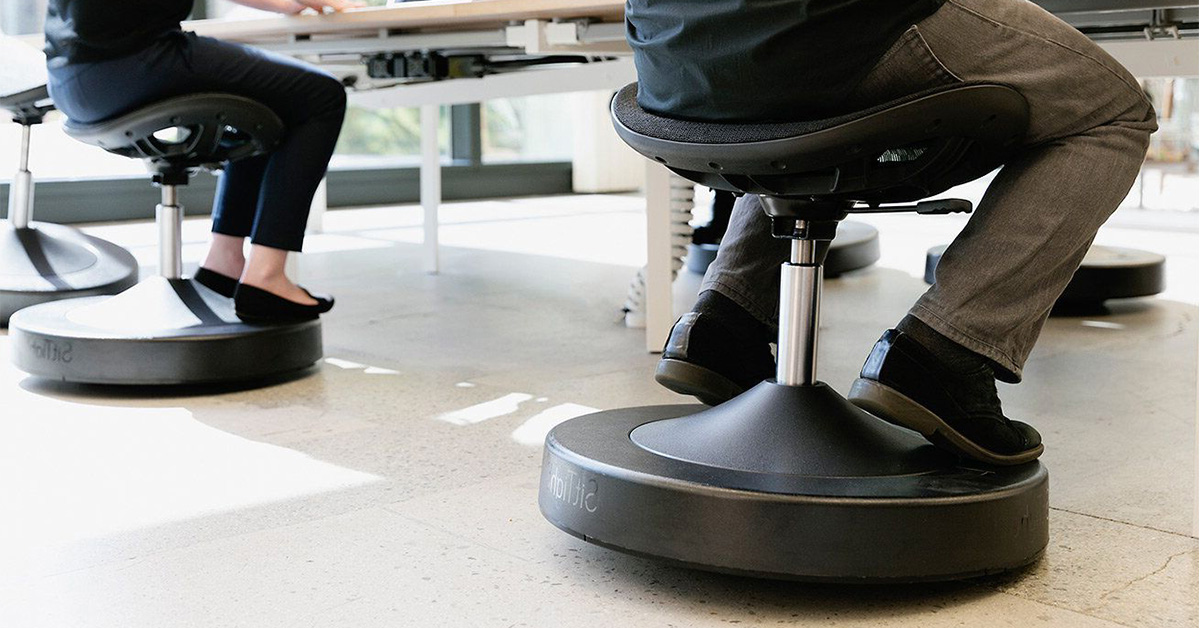
Scott Bahneman is the creator of the SitTight (use coupon code ‘OPTIMIZE’ for 10% OFF), an active sitting chair which has become my new #1 recommendation for anyone looking for “the best ergonomic desk chair” (a question I get ALL THE TIME). While a bit difficult to describe if you haven’t seen one, the SitTight basically looks like the coolest bar stool you’ve ever seen attached to a Bosu Ball. Trust me…it’s awesome.
If you haven’t heard about the SitTight yet, you are going to hear a lot about it in the coming weeks and months because I’m on a mission to get this product in front of as many creative professionals as possible who are tired of sitting all day and want a better solution. I’m so excited about this product, in fact, that I practically begged Scott to become a sponsor of this podcast so I could inspire as many people as possible to spread the word about this new way of “active sitting.”
In this episode Scott and I dive into what compelled him to transition from working in the credit card processing industry to designing this chair in his spare time out of his garage. And then we dive much deeper into how using this chair can drastically increase your heart rate, help you burn more calories, strengthen your core and spinal muscles, and even help you focus more (and longer) on complex creative tasks. Never did I anticipate having a show where I would get emotional about a desk chair, but just listen to the story of how a child with autism reacted to using this chair for the first time, and you’ll know what I’m talking about.
Episode Highlights
- How Scott transitioned from working in the credit card industry to revolutionizing the desk chair
- The innovative origins of the SitTight chair
- The correlation between sedentary lifestyles and morbidity rates
- How the SitTight uses the body’s natural sense of balance to improve your posture and tighten your core
- What separates the SitTight chair from other “ergonomic” posture-straightening chairs
- Why even the most supportive of chairs will contribute to misalignment and weakness in your spine
- Learning to take balance and maintaining health slowly, rather than demanding perfection
- Where the sedentary work lifestyle originated, and the dangers of standing all day
- The importance of balance therapy in providing focus for those with Attention Deficit Disorder, Autism, or Alzheimers
Useful Links
About Guest
Scott has spent over 30 years in the acquiring side of the credit card industry working with businesses that accept credit card payments. He also spent several years in the digital media space, founding and running a company that delivered high definition music and movie downloads. Scott Bahneman is the inventor of the SitTight and founder of the company by the same name.
Transcript
Zack Arnold: I’m here today with Scott Bahneman, who’s the inventor of the sit tight, and he’s also the founder of the company by the same name. And Scott, I cannot tell you how excited I am to talk to a guy that manufactures furniture that used to deal with credit card processing.
Scott Bahneman: Yeah, it’s a little bit probably out of a pivot there, but there’s actually a story that goes with that.
Zack Arnold: Yes, and there’s there’s going to be a lot of understanding by the end of the episode of why specifically I’m having you on the show, because I never ever take my interviews lightly, and I don’t think, well, I got to fill another week, so let me go find somebody that I can talk to, like, for me it’s really important that whomever I speak with really understands and aligns with my greater mission of bringing better health and sanity and well-being into creative spaces, into the workplace, where we just feel like we’re machines and we just need to pound through, and the project always comes first, and that’s where our loyalty is, and if I have the time to take care of my health and my well-being, well, I’ll get to that during hiatus, right?
Scott Bahneman: Exactly,
Zack Arnold: I’m a big believer that in order to excel at your job and be creative and be energetic and be present with clients, you need to take care of yourself first, and then all the other pieces come into place, and the one kind of piece of the puzzle that I’ve looked for for over a decade now that I’ve never been able to find, and it’s always been just this like stick in my craw, is I have not been able to find the perfect desk chair. Now, over 15 years ago, I was sitting on a big giant blue yoga ball, and people were looking at me like I was crazy, and I should be in a straight jack. They’re like, why in the world do you have a bouncy ball in front of your desk? It’s because I was already getting horrible lower back pain in my early 20s, and I was just experiencing all the mental symptoms that you get from being sedentary all day long, and I wanted to play around, do something different, and nowadays it’s not that uncommon to have a ball chair, or, you know, like a exercise ball on wheels and casters. There are now height adjustable workstations. Like this is a more common conversation. It was not 15 years ago, but I’ve never found until now the desk chair that I said this is the one. This is the holy grail of desk chairs that fit within my view and my, my dream work environment, where I can be dynamic and I can move around all day long and never feel lethargic. So, talk to me a little bit first about how you found me, because this is an interesting part of the story.
Scott Bahneman: Yeah, interestingly enough, I think I was doing a search specifically to going back to sittings, the new smoking – it’s certainly a phrase, and that many of us have heard, and I think the phrase was initially coined by Dr. Levine, who was at the Mayo Clinic at the time, and I was tooling around, doing a little bit of research on that, and I believe you probably quoted that somewhere on your website, and that’s how I discovered you.
Zack Arnold: Yes, and I did indeed quote, “Sitting is the new smoking. And one thing that I’ve talked about extensively, whether speaking about it on the podcast, giving presentations in person, or writing about it, is that I don’t believe that sitting is the new smoking so much as being sedentary is the new smoking, you know, and even Stan. All day long, leading to all of the same detriments and negative health consequences that come from sitting. So, it was really realizing that it’s not just about sitting, it’s about being sedentary, but at the same time, I don’t think you should stand all day long, because in addition to all the things that are negative about it, you also get more things, like you get lower leg pain and foot pain, lower back pain, and I actually found for several years that my pain and my discomfort was actually worse standing all day. It just migrated, it changed to different places in my body, but I didn’t feel any better. I’m like, but I’ve got a standing desk and doing what they say I’m supposed to do. Why is it not working? And I realized it was because I was still sedentary, so I like to change my position all day long. I’m like a squirrel in my office, and I probably am never in one position more than about 50 minutes at a time. And the missing piece was the chair, so I got an email, just a completely random email, saying, “Hey, found your site, I have this product, it’s called the Sit Tight, you should take a look at it. So, just for a frame of reference, for both you and people listening, I get these emails, probably I don’t know, five a day, where somebody sends me, “Hey, check out my new product, or “I love to write for your blog in exchange for backlinks, or “Hey, I have this great infographic that I think you love, and what I can tell is that these are template forms that they send to hundreds, if not 1000s, of other sites, just hoping that if they play the math game, somebody is eventually going to respond. But what I appreciated about your reaching out is that you very clearly understood me as a person specifically, and it didn’t feel like a template or a form letter. So I’m first saying that for anybody that’s interested in understanding how to play the networking game, be authentic and understand the person that you’re reaching out to, but the email was just enough that I said, “Hmm, that sounds kind of interesting. I’m still kind of looking for a desk chair, because I’m not super, super happy with the options that I have. So I clicked on it, and I know you don’t have it on your website, but I’m pretty sure when I clicked on the website, like, I started to hear angels sing in the distance. It was like, oh, and I’m like, oh my god, I think this might be the one. I think this is the chair I’ve been looking for. So I responded, and then you and I just started to riff and talk forever about what it is you’re doing, what your mission is, why you make this chair. So I really want to share the conversations that we’ve had with my audience, so let’s just kind of start from the beginning and explain based on your background how you ended up being a guy that’s selling this chair.
Scott Bahneman: You know, it really was kind of the old, you know, necessity is the mother of invention, right? It’s I worked in the credit card industry, as you mentioned earlier, been doing it for over 30 years, and for a number of years I was living in Lake Tahoe, living a pretty active lifestyle, and I actually took a desk job back in 22,009 2010 right in that zone, and with a friend of mine back in the credit card industry, and sitting at a desk every day, and within a year I’d put on about 15 pounds, and one day I literally crawled out of a swimming pool and sitting in a deck chair, looking at my stomach, thinking, “Oh dear God, what’s happened here? And it just really kind of hit me that hard and fast. I was surprised that I hadn’t really changed my diet, but what had really changed is I was chained to a desk every day, and whereas you know, living in the mountains, I just stayed very active, lot of, you know, between skiing and hiking, and everything else was burning so many calories, I just didn’t notice, and so that’s really kind of what made me start thinking about I’m going to have to figure out a way to burn some calories while I’m sitting at a desk, because more than likely I knew I’d be sitting in front of a computer screen for at least the next decade or so, and this was this was not going to end well. So I remember that I used a trainer years ago that really never would let me stand on solid ground and do anything. I always had to be standing on some form of a balanced apparatus just to burn additional calories, and I got a great workout, and stayed very lean doing that, and, and that’s when it kind of hit me. I got up out of my pool deck chair and made my way into the garage, like a lot of people do, and started cobbling things together and drawing up some plans for what I felt would be a chair that would, would not allow you to move, but more importantly, require you to move, and I knew balance was going to do that, and that that’s really where the whole thing started back in 2010
Zack Arnold: Well, I think it’s funny that you said, well, you know, I just went into the garage like most people do, and just started cobbling things together. That’s not what most people do. Most people go online, and they say, “All right, let me see what I can find that’s already available, that’s maybe going to make my life 10% easier. You didn’t do that. You said, “I’m just going to figure this out from the ground up, and that’s where so many of the great innovations in the world come from. Is not somebody saying, “I have a bright idea for something that’s going to make me a lot of money. Me, you just said I want to solve my own problem.
Scott Bahneman: Yeah, I literally was kind of putting this whole thing together with the idea of trying to peel off the 15 pounds I’d managed to pack onto my midsection. I just had no idea that this many years later this thing would have blown up to be what it is. It truly was just me selfishly wanting to fix my little problem, and then, or in this case, it was becoming a big problem, but yeah, over time I realized there are so many people struggling with the same thing, and it’s tied to the fact that between 80 and 85% of the American public, as adults, sit over eight hours a day at their job, and you know it’s if you think about, if you just sit back and contemplate that for a minute, it’s probably not a real stretch to figure out why we’re so unhealthy as a society.
Zack Arnold: Yeah, and there, I mean, we could go down a very, very deep rabbit hole for finding the many reasons that as a society collectively we are so unhealthy, and obesity rates have skyrocketed, and it goes far deeper than just lack of movement. So, I don’t want people to think that, oh my god, like Zack thinks that we’re going to solve the entire obesity health crisis just by getting a different desk chair. That’s not what that’s about, but there is a very, very clear correlation between being sedentary and having all the various diseases of modern life, like cancer and heart disease, and also morbidity rates go up for people that are sedentary all day long. So, that’s not just an idea. There’s plenty of science-backed research that proved this beyond the shadow of a doubt. So, anybody that’s thinking, “Well, I don’t think there’s anything wrong with really sitting all day long, there is, and I’m more than happy to share the science and share the articles that I’ve written, but it’s not this alone that’s causing the problem. One thing that I thought was was funny that I want to bring up, which is going to lead into the next part of this conversation, is you said I didn’t really think that this was going to blow up the way that it did, and I was just waiting to just like add hashtag sarcasm, because the way your chair is built, it literally does get blown up. So, the way that I described it, and I want you to go much more in depth about the chair itself and where the ideas came from. But when I looked at it, even before getting one and working with it physically, I looked at him like, “Jeez, it’s kind of like the bottom of an Aaron chair had a baby with an exercise ball mixed with the pivot chair, which is something that I’ve talked about for years, and you just laughed. So, talk to me a little bit about the actual design and how you came to the point to what we have as the current version.
Scott Bahneman: Sure, yeah, I mean, I think I mentioned that I had been on a lot of different balance apparatus, you know, with being in gyms and working out with a specific trainer who was really huge on that, and so you know, I felt like we wanted to at least start out working with something that was shaped like a third of a sphere. It appeared to me that that air was going to be the best way to accomplish that, was some kind of a pliable sphere-shaped, we call it an air bladder underneath the chair, just with the idea of being able to control it. There’s a lot of people that have really excellent core strength and balance, and it’s going to take obviously more for those people to get any kind of a workout and burn any calories. And then, you know, we’ve had, you know, people in their 80s get on it and use it. My parents are both in their early 80s and sit on a sit tight while they’re having coffee in the morning and throughout their day, and so I wanted it to be able to work for them and somebody who was a world class athlete, and the difference between the two has nothing to do with the chair, we literally have one skew, one model, that’s it, and the way you take it from one extreme to the other is just with air pressure, with an air pump that comes with the chair,
Zack Arnold: So because this is an audio podcast, in case somebody found this and they were clicking around in their car while they’re a stoplight, and of course not driving, but they’re going through, like, oh, this thing about a chair, all right, I’ll listen to this, let’s say that they haven’t looked at any images, let’s say that they haven’t gone to their website, and they’re listening, and they’re saying, “What the heck is this thing described to me as if I had never seen it before, just kind of the basic design, and what the sit type is?
Scott Bahneman: Well, I thought you did a pretty good job with your, the birth of it coming from a number of different well-known products, but it is a pretty sleek contemporary design, I would say, from the starting from the floor up, just just because that’s the business end of this thing, is what what allows you to turn sitting into an activity that improves your health instead of damaging it is us just using your body’s natural ability to balance, so you know, picture a third of a sphere, obviously, in this situation, if you’re going to balance, we’ve got to get your feet up off the floor, so there is a foot rest platform that runs over the top of that and allows you then to get your feet up on the chair itself, which really changes the sensation of what’s happening for. Them from one, where you’re again, you’re able to move around. There’s a number of active sitting chairs that do that, but this is a chair that requires your movement to stay on your center of gravity. So your feet are up off the floor on this foot rest platform, which works its way up into a pneumatic piston, which most people are used to seeing in most office chairs, and then the seat is fairly unique. The seat is shaped a lot like a leaf, and it’s symmetrical. There’s no back on it. It’s designed so that you can get on it just like you would when you got on a swing set as a kid. The first thing you have to do is shimmy back and forth a little bit, and find your center of gravity, just like you would do when you jump on a swing on a swing set, and so the seat then is is symmetrical, so it doesn’t matter which, which way you come at it. You could also sit on it, saddle style versus side saddle, or from either direction, so it gives it a real contemporary kind of unique look in that regard. But it’s very simple. I mean, the essence of this whole thing was simplicity, you know. We’re literally using air pressure and your ability to balance to improve your posture, tighten up your core, specifically your paraspinal muscles, which are incredibly important to your posture, and you know, be able to again turn sitting into something that’s healthy,
Zack Arnold: Yeah. And I think that that’s a great description, and I guess the only thing that I would want to add to simplify it even more is it kind of feels like I had said the bottom seat of an Aeron chair, but it doesn’t have that weird what I call anti-ergonomic design, like when I see the Aeron chair, I say, “Wow, that is a beautiful piece of furniture that belongs in every high-end agency, until people actually have to sit in it, because ergonomically it was designed by Satan. It is the most uncomfortable chair on the planet, and it has destroyed my back and so many other people’s backs. But you look at it, you’re like, wow, that’s a nice chair. So I was going to say to me, the level of design that you have put into this matches where it’s like, wow, that’s really nice, and that’s really well designed, but once you look at it, it’s just this very simple bottom seat, you have the little pneumatic arm, like any other chair, but it’s basically on top of a Bosu ball. I know it’s a little bit more complicated than that, but for those that even don’t know what a Bosu ball, is you see them at the gym, it’s kind of that, that like you said, a third sphere or half sphere, that’s just this blue ball that people will do squats on, or whatever, to be able to keep their balance, so you can’t just, there is no such thing, at least that I have found, to be able to passively sit on this chair, you have to be active, but it’s not like other chairs, where it just either feels like too much work, or for example, if you go on an exercise ball, which is something that people always come to me and say, “Oh, I don’t have a desk here, I have an exercise ball. It’s like, yeah, but you’re not really that active on it, because all you do after five minutes is start slouching forwards, and your posture is even worse on the ball than it is on a chair. So, talk to me a little bit more about why it’s nearly impossible to not be active on this, but still be very comfortable.
Scott Bahneman: Well, I think the first thing that to understand is that the chair is patented, it has utility patent that’s been issued in the US based upon the tip limiter that’s part of the chair, so while there is a third of a sphere up underneath that foot rest platform, you really don’t see much of it at all when you just walk up to the chair, and so that foot rest platform then rolls over the top of the air bladder, makes it esthetically look a little cleaner, and number two, and most importantly, protects you from tipping more than 15 degrees, so it can keep you right side up. We did want to make something that would be acceptable in the workplace, and today most major corporations won’t allow exercise balls to be used anymore, for the simple reason that there’s been too many workplace accidents. Folks literally going over backwards, right up and over the top, and hitting their head and falling over backwards on the ball, or there, the other situation that seems to be fairly frequent is someone gets up, reaches across their desk, maybe to grab something, a pen, or you know, stapler, and when they go to sit back down, the ball has rolled away, and of course they go right to the ground. So, you know, safety was a big issue from the get-go. We knew if it was going to work for a large number of people, you know, you weren’t going to have to be a, have to be a world-class athlete to get on this thing. So that was really important for us, and it also makes it so that you can comfortably get on and balance without the fear of tipping over too far, going over backwards, and that’s probably why you’re feeling the way you’re feeling on it, that you have this ability to move. If you want to take a break, put your feet on the floor. You can use it like an active sitting chair. You could also just lean over. Some people will lean forward into the tip limiter and just sit like that for a while. In fact, we do recommend when people. It started, they kind of start out at level one, feet on the floor, move up to level two, where their feet are up on the foot rest platform, but they’re still not really balancing much, they’re, you know, cheating using that that tip limiter, and then when they’re comfortable with that, moving up into actual balance, so we do tell people to go slow, you know, the danger with any of these ergonomic chairs that are out there with a really supportive backrest, specifically the lumbar support area, is that it’s almost too much support, right? So you spend decades sitting in what you think is a real healthy great chair with your body being completely supported by this exoskeleton, and what ends up happening is the muscles in your postural system atrophy, and so it’s no different than having your arm in a cast for six weeks, you, they pull the cast off and you look at your two arms, you go, well, what happened here, and so same problem, right, and so hence the reason there’s no backrest on the chair, and also that we tell people to go slow when they first step out, it will deliver a lot more exercise than you would expect, because I just don’t believe that in this country you’re going to sit on too many chairs that don’t have a back rest, from your car to your kitchen table to the rest of your day, is typically involves you leaning into some form of a backrest, right?
Zack Arnold: Yeah, and I mean we have gone out of our way as a society to make our lives as comfortable as possible, and eliminate any form of discomfort, and just make everything convenient, and that’s basically leading us to becoming the movie Wall-E, where we’re just transported everywhere, and we’re just blobs that have no muscle definition, that have no bone density, and I want to talk a little bit further about this idea of a cast, because I think this is so important, and this was one of the analogies that I heard about years ago. I had actually learned about this originally from Katie Bowman, who is the author of the book “Move Your DNA, and I can put a link to “Move Your DNA” in the show notes, and anybody listening, if you know Katie Bowman, she’s near the top of my list of people I would love to have on the show in the future, just as an aside, but she talks all about this idea of the world casting our bodies, so if you’re physically thinking about, I have a cast around my arm, obviously it’s getting weaker, you can’t use the muscles, and you’re allowing something to heal, but when you take the cast off, what’s the first thing you would do? Physical therapy to strengthen it and move it and get your mobility back and redevelop that that muscle definition, but for so many people it’s the exact opposite reaction, they sit all day long in the chair, and then because they don’t have the strength, they have the lower back pain, they have the aches, so what do they think? Oh man, I’m in so much pain, I really, I should just lie down and I should rest, and it’s the worst thing for you to just, for being sedentary and for being passive all day long, to add more passivity and being more sedentary because you’re in pain. So, what I have found extensively through years and years of either being sedentary or being very, very active is that the more I physically train and the more I exercise, all that pain dissipates, but you’re thinking to yourself, man, I’m in so much pain, my lower back hurts, I shouldn’t exercise on this, I might hurt myself even further, and that’s the worst thing you can do, and that’s what chairs are doing to us, is casting our bodies, so that’s why I think the active portion of this chair is so important.
Scott Bahneman: Absolutely, you know, I would have thought that the investment I made in a very expensive ergonomic chair that I did years ago, back when, you know, Aaron chairs were over $1,000 I thought I was doing the right thing for my body, for sure. And it would have been great if I could have just hired somebody to wheel me around in that chair, and I didn’t have to get up and actually use my body for anything. It would have been perfect, but I think that probably explains why so many of us spend a lot of time in chiropractors’ offices, having our vertebrae adjusted back into alignment, because those paraspinal muscles that run right up and down your spine and are really designed to hold everything in place, you just can’t expect much out of them if you’re never going to actually allow the muscles to remain strong, and in countries where there isn’t, you know, a chair every five feet, people squat, they stand, they lie, or they squat down, and they just have seem to have way less issues with lower back and just back pain in general, and I have to believe there’s a very direct connection between those two things.
Zack Arnold: Yeah, I have no doubt that there’s a connection between those as well. And I want to go even deeper into this idea of what you’re talking about with the different levels, because what I don’t want is for somebody that has been sitting for the majority of their careers that have the horrible lower back pain, and feel like they can barely stand up and get out of their chair. To think, oh man, like the last thing I want to do is deal with some chair that I have to be super active in all day long, and I can barely stay on it. But you described to me about the different levels, and how you talked about, like, your grandparents have one, but then you talked to me about how the toughest. Level, you had like a ballet dancer sit on it, so talk to me a little bit more about how the various levels work, so we know that anybody can try this and not feel overwhelmed, but at the same time somebody that’s also in very, very good shape can still look at this as an investment.
Scott Bahneman: Sure, you know, the air pressure, as I mentioned earlier on, is the key to making balancing tougher, but before you even get to balancing, we do recommend in our startup video that people begin their experience on level one, they put their feet on the floor, sit on the chair, tip to the side and forward and backward all the way to the point where they hit the tip limiter, so their brain really gets a chance to kind of register where the tipping is going to stop and the chair is going to catch them, right, so there’s not a fear of falling over. So we really start out with people that way, once they have comfort level that this thing is unlike a ball, not going to allow them to go right over backwards. Then we tell them, focus on their posture and make sure you’re sitting up really straight. The next step, level two, would be putting your feet up on the foot rest platform. Typically, people lean forward into that towards their keyboard or towards their screen and just sit up straight, work on their posture, and then move around a little bit. Take advantage of the fact that they can move their hips around and the tip limiter is going to hold them in position. There’s not a lot of heart rate increase in those areas. It’s really just a matter of finding that their body will hold them up and that their postural system is there to allow them to sit up straight in a chair without a backrest. And then once they get comfortable with that, that’s when we have them roll up right on their center of gravity on top of the air bladder, where the tip limiter is not touching in any one side, and they’re actually, if you will, more riding this than they are sitting in it, and it does deliver a sensation similar to riding a bicycle.
Zack Arnold: Well, what I can speak to specifically is, you talked to me before the chair had arrived about again with the levels, I’m like, “Oh, this sounds interesting. I mean, I’m I’m training for American Ninja Warrior and doing CrossFit and parkour, and like, I’m.. I feel like I’m pretty fit now. If you’d asked me a year ago what I felt like I had some work to do, but for being in quote unquote good shape, I feel like I’ve definitely reached that point in in my health and in my training, and I got it, and I’m like, well, of course I’m gonna try it on level three, so I blew it up as far as I could, and I sat on, I’m like, oh my god, is this hard, like I couldn’t hold it in the middle without putting both of my hands on my desk to help me balance, and since then I’ve kind of found a middle ground, which I’m guessing is about level two, and when I sit on this for an hour or an hour and a half, I’m like, man, my core hurts. Like, what’s going on? Oh, it’s the chair, right, right, right. But what I’ve also found is that even over the course of, I think I’ve probably had this for a week or two, that’s already translating to my training, where I’ve done a couple of training sessions, said, wait a second, I feel like I’m balancing better, like, what’s the difference? I’m like, oh, it could be the chair, so not only is it something that just stops you from being sedentary, it’s actually making me stronger and helping me balance better. I mean, is that true? Is that actually what’s happening?
Scott Bahneman: Yeah, you’re.. if you think about what it takes to do sports that require a lot of core strength, and some of the real obvious ones are skiing, snowboarding, ice skating, rollerblading, anything where your balance is seriously challenged. Gymnastics, they push a lot of kids towards gymnastics for that reason, because it’s just such a high level of fitness, and so it’s no surprise that over time, as those paraspinal muscles get stronger, that everything tightens up your movement from your reaction as you feel yourself tipping one direction or the other tends to tighten up as well, and so your reaction time tends to be a little bit better with balance, and you know from just living your life, if you’re walking down an uneven surface and you happen to trip typically when you stumble or trip, you find yourself coming to an extremely athletic position. You know, you just, you tend to be chest up, shoulders back, you know, because your body is obviously being challenged in balance, trying not to fall, and when you really catch yourself and look, if you were to look at yourself in a mirror, right there, you look like a linebacker waiting for the ball to be snapped, or you know, you look like a gymnast who’s stepping up on a balance beam, because that’s that’s where your body goes, your brain takes you to that subconsciously, whenever your, your, your balance is challenged, and so as you add air to the air bladder, you just five pumps of air in that little air pump that we provide with the chair, you’ll feel the difference. In fact, one of the biggest problems we have is people hit the chair, they won’t read the directions, they don’t, you know, won’t watch the video, and I’m not going to tell you which gender typically does that, but you can probably guess. And so they pump the ball up underneath it, like it’s a basketball, you could almost dribble the thing, you know, on the on your floor, and then they’re like, “Oh, this is hard, you’re like, “Well, yeah, of course it is. It’s you’re basically trying to sit on a basketball. So our big challenge in the beginning, oftentimes, is getting people to just go a little bit easy, don’t go crazy, don’t you know, over inflate the ball, don’t, don’t try to balance on it for eight hours a day, you’ll be so sore the next day, you won’t believe it. And if you were going to go train to run a marathon or a half marathon, the first few days you’d start out running around the block, and then you’d work up to it, right? You wouldn’t go run 26 miles, so jumping on this thing and balancing eight hours the first day, you’re gonna be pretty sore the next day, that will guarantee,
Zack Arnold: Right? And that’s what I love about the fact that you can over inflate or under inflate, because the last thing I wanted for somebody to think, well, I already sit eight to 12 hours a day, and if he’s saying that I shouldn’t start by running the marathon, like I shouldn’t get the chair, because I’m not in good, good enough shape yet, right? Like everybody always kind of has this, this mental image of perfectionism of saying, well, I can’t really get into shape until I’ve really gotten into shape, right? It’s kind of this this crazy idea of, well, if I’m going to hire a cleaning crew, I need to clean up for them first, right?
Scott Bahneman: Yeah,
Zack Arnold: It’s this very weird mentality, but I also get it, and I want to really emphasize for anybody listening that’s saying, well, I know that I can do this thing for eight to 12 hours on the easiest level. You absolutely can, but my personal recommendation, you would know a lot more than I would, is that you probably don’t want to ditch your regular chair right on day one. You might want to switch back and forth. So, do you know people that do like a hybrid approach?
Scott Bahneman: Yeah, you know, when we first started out, people would oftentimes go between sitting in a regular chair and sitting tight, and I’d have to say, in early days of prototyping this, you know, that was my experience, you know, we weren’t, I was trying different things, and I would move back and forth between a regular chair. What’s happened since then, and remember this is going all the way back to 2011 right? So, in 2011 filed for the first patent, and took three years to get that done, but it was quite a bit of time in between there, where I would do just exactly what you’re describing, I go back and forth between a chair and this as we were working through the process, you know, I even think actually was 2012 I guess, when we filed for the patent. 2011 was when I was first on some of the early prototypes, so just to get the numbers correct in my head there. But now what’s happened since then is the advent of standing desks have really changed the way people are operating, especially at work, and so in today’s world, we find that people tend to go between standing at a standing desk and sitting tight and just abandoning the chair altogether. So the other thing we learned right away is that we had customers popping the seat off of the foot rest platform because it’s modular, they just remove it and stand on the foot rest platform in front of their standing desk and balance all day as they work, you know. And so, in the beginning, people were doing kind of half and half, so we instead of people switching from a regular chair to this, we find that now people are switching from sitting tight to standing tight, if you will, they’re actually balancing on the foot rest platform, burning calories that way, keeping their heart rate up, which is a lot healthier than just standing statically at a desk anyway, because you don’t want the blood pooling in your lower extremities if you stand in one spot with your heart rate low, blood in those areas pools, it’s not healthy anyway. It’s there’s a big study that was just out recently about what happens if you have a job where you stand all day long and your heart rate’s low, it’s just leads to about a 200% increase in your chance having a stroke, because blood pooling in your lower extremities isn’t good, and when those, if the, if the clotting takes place and it makes its way to your brain, that’s where strokes come from. So we’re finding more and more, there’s there’s a good reason not to just stand there anyway. But so for now, yeah, I’d say folks are spending a portion of their day balancing as they sit and the other portion of day balancing as they stand.
Zack Arnold: Well, I’m glad that you brought that up. You kind of stole my thunder for my next question, and the big reveal, but that was really helping the audience understand that this has more than one use, and it really is as simple as you just kind of turn it, unclick it, and now you can take the actual seat, set it off to the side, and you basically have this really cool Bosu ball-like experience that you can use as a balance board, and to kind of add to the mix of this kind of menage etoire of all these different things becoming your chair, and now adds a fourth piece that kind of, you know, got into bed with everybody else, so to speak. I might have to lose my clean rating on my podcast, but it’s the fluid stance. So, the fluid stance is just, it kind of looks like a mini snow. Board, so to speak, but it’s this really cool ergonomic device that you can stand on, and it feels like being on a balance board. The problem is, is that in and of itself it is ridiculously expensive, and even I, who’s somebody that’s incredibly invested in this world of building a dynamic work environment, I won’t spend the money, it’s just too expensive for what it is. But this basically comes with it for free, so the fact that I can turn this into a balancing board and stand on it is awesome, and I’m glad that you talked about the detriments of standing a little bit further, because in my research, what I discovered is that if you look throughout history, or modern history, that the reason we all sit in cubicles and office chairs, or many of us do, is because in the early 1900s they were talking about the health detriments of standing all day long, standing in factories, or you talk to nurses or waitresses in Vegas, like they all have, like the varicose veins, and they have horrible health problems because they stand all day long, but nobody thought about historically the fact that, oh, we’re all going back to standing all day, it’s like, no, no, no. Again, it’s all about moving, so whether you’re sitting tight or standing tight, you’re always moving in some way, and keeping your body active, and keeping the blood and the lymphatic system flowing, which is so important.
Scott Bahneman: Yeah, absolutely. And I’d love to tell you, we were so smart, we figured that out on our own, but I can’t.. it was. it was one of our customers initially, who came back to us and said, you know, this is really cool, but look what I’m doing with it, and we also had some folks who were reviewing the chair, who were Pilates instructors and yoga instructors, and people that you know really understand what balance does to improve your health, and they were the ones who came back and said, “Why don’t you guys promote this on the site? Like, I guess, because we’re just not that smart, and so.. but we are good listeners, and we learned from that. And, like, a lot of products, you sometimes can’t see the forest for the trees, you know. We really thought we’re going to address this whole sitting disease issue, and we’re going to take active sitting one notch up to balance active sitting, which we’ve trademarked, and just use balance as a way to provide more exercise than all those other products put together. And again, it wasn’t until somebody kind of dealt with the obvious and said, “Here, watch this, that we actually went back and improved the product, we changed the molds now, so when you do remove the chair, the entire top of the foot rest platform is one big continuous surface of a rough out surface, so that it’s just a little safer to be on up underneath the seat portion. Before it was just an unfinished flat plastic, and people were still standing on them, but it just made sense, since people were going to use it this way anyway. We might as well improve the product, so we did, and since then they’ve kind of taken it the next level, and now a lot of personal trainers and other folks that are using our product are actually using in the gym, so we’re getting videos sent back now of people doing everything from, you know, squats on it to planks to push-ups, to you name it, split leg Bulgarian squats. I mean, some of the, some of the craziest stuff, and actually being able to to create an entire workout at your desk if somebody really wanted to take it that far, so it’s been kind of cool. And once again, we weren’t smart enough to figure that all out. It took our customers coming back to us and saying, “Hey, have you thought of this?
Zack Arnold: Well, and on that note, if this is something that you, you want to speak about, we can a little bit. But going back to this conversation of these marriages made in heaven, the number one product that I’ve recommended for years that has really blown up in my industry has been the Topo Matt. Anybody that ever comes into my office, the first thing they say is, “Hey, what’s that mat on the ground? Like, “Oh, it’s because I stand most.. they’re like, that looks kind of weird. It’s got like a little dimple in the middle, and like I just have, like, you know, the cushy mat, and that seems okay. And then they walk up to my desk and they walk around and about 30 seconds later this giant light bulb goes off in their head and they’re like oh my god this is amazing I have to get one of these Where do I find it and you and I have been talking about is there a world where we marry the topo mat with the base of the sit tight and I’m very very excited to start experimenting with all kinds of cool ways that I can get these two to work in synergy with each other.
Scott Bahneman: Oh, yeah, absolutely. I, the minute you brought it up, it just made perfect sense. And the modular nature of the way we’ve designed the chair, so that you could put different types of seat pedestals and seats on it, just lends itself perfectly to that kind of a marriage, and so we will continue to follow your lead once again under the theme that that everybody seems to be able to spot these things long before we do, but that’s good, you know, I mean, you never really know the best use of your product and the best the. That folks are going to actually maximize their benefit from their investment in it until you’ve had a lot of different people using it and looking at it, trying it, seeing, getting the feel for it, and then going, “Hey, what about this? You know, I mean, yeah, we probably wouldn’t have necessarily come up with that on our own, but it makes perfect sense, and we’re going to do everything we can to make that work
Zack Arnold: Well. The next area that I want to go, I actually think the importance of this far supersedes anything we’ve been talking about, which sounds crazy, because we’re talking about helping people live longer and be less sedentary, and eliminating or reducing cancer and heart disease, and all these things associated with being sedentary, but as you and I talked about offline a little bit, I would scream from the hills and say all these horrible things that are happening because people are sedentary, but they don’t happen immediately. Nobody sits on a chair and starts on fire because they’re sedentary. It’s a very slow, gradual process that happens over years and years and years, and because it’s such a slow burn, you can’t make the association between all of the health problems that you have and the fact that you’re sedentary. However, once I learned that once you could associate a specific product with an immediate boost in cognitive function and creativity and better attention and less anxiety, that’s when people started to listen, so I stopped talking about all of the horrible health detriments that you’re going to experience someday if you don’t change your lifestyle, and I started talking about the positive benefits that you get immediately, and that’s where I think the real money is with this chair, beyond any of the health benefits, beyond the fact that, oh, my core is getting tighter and I don’t have lower back pain, those to me are tiny, tiny second place winners compared to the giant first place winner of what happens in the brain when you are active and you are balancing and you are doing creative work. So, let’s talk a little bit deeper about the cognitive benefits of sitting on this chair.
Scott Bahneman: Yeah, you know, I guess when we first really discovered it, because we were spending so much time with heart rate monitors on and focusing on the physical, and you know, typically your heart rate when you’re balancing on a chair is going to go up 15 to 20% unless you’re literally like, you know, holding on to your desk and your keyboard at the same time. The, but we were so focused on the physical that I think the first time it really came up, one of my kids was home from college and doing homework, and he was sitting on a sit-type prototype, and later that night, he goes, ‘Look, I don’t know if this is important, but I just sat there for two or three times longer than I ever normally could have sat statically doing homework. I normally only last 15 or 20 minutes, I got to get up, I got to walk around, I need a break, I got to get a drink of water, soda, anything, just, and then sit back down and go at it, and I just sat there for, you know, two hours plus, and knocked through all my homework, and went, okay, well, that turns out that is pretty important, so we started digging into it, and sure enough, balanced therapy is has been discussed now in dealing with everything from attention deficit, really, all the way from all Alzheimer’s to autism as a therapy, and it’s because of its impact on your brain. We’ve since then gone out and actually done a brain map study, so that you could see what’s happening while you’re balancing, and sure enough, the parts of your brain that control every muscle in your body that allow you to balance happen to also be the same part of your brain that controls your cognitive abilities, so everything from your ability to memorize, your ability to pay attention, your mental processing speed, you know, all of that stuff ties back to your brain, and so it makes sense that as you’re balancing, you would be much more alert and focused if you think about the sports that require balance. Many of them are lifestyle sports that people get addicted to, like skiing and bicycling and snowboarding and wake boarding, and just anything that takes a lot of balance tends to be a very pleasant experience mentally as well, and there’s something about being very alert, very focused, probably along with the, you know, the dopamine that comes from working out and just physical exercise in general, but that combination is why I think we’re selling a lot of our product right now to software engineers and, you know, attorneys that write contracts for a living and have to sit and focus for two and three hours at a time, it’s turning out to be just as important to them that the mental impact of what that sit tight does for them is more important than you know how their midsection looks, so you’re dead on to what we discovered a little further along in the project.
Zack Arnold: Well, if I have anything to do with it, I’m going to make sure that the sit tight is also something that every film editor has, just as part of the standard kit, whether they’re in Hollywood or anywhere else in the world, because for me, like I said over and over, I’ve been looking for that one piece where. Have always gone to one job after another, and I had my topo mat, that was a no-brainer. I always had a height adjustable workstation, and if they didn’t provide one, I own an extra height adjustable workstation that I keep at home. That’s how important it is to me. So now I have the third component, so it’s now the sit-type, the topo mat, and the height adjustable workstation, which is just now going to basically become my standard kit, but the other thing that I want to talk about, and I want you to share the story with my audience as well, because this was really kind of digging into the much deeper meaning about why I think it’s so important to talk about a chair for an hour on a show. I want you to talk about the story where you were, and I don’t remember the exact context, so you can paint the picture more clearly than I can. But retell the story about what happened when you were meeting with a family and they had a child with autism that just happened to be playing on the chair.
Scott Bahneman: Yeah, it was kind of a random thing. I was at my condo, there were people staying nearby, and we had met somewhere along the path, and and caught up, and they came over to talk that night, because I had told them a little bit about sit time, we were talking, and I said, I’m working on this project, you know, it’s the typical what do you do, what do you do conversation, right? So I said, I’m really working on this exciting project, and they said we’d love to see it, so they came over, and Mom and Dad both sat on the chair, and they’re like, wow, this is really cool, and you know we love the balance aspect of it, and it’s really healthy, which I guess none of us were really paying attention to is a seven and a half year old daughter who I don’t know exactly where in the autism spectrum, but yeah, enough so that you’d notice, you know, wasn’t wasn’t extreme, but it was I’d say moderate, and as we were visiting in the kitchen, their daughter crawled up on the sit tight, and her legs really weren’t even long enough to reach the foot rest platform, so she had to kind of grab onto the base of the chair, the pedestal, and started balancing, and she’s like, “Hey, mom, look at me, and so as I’m visiting with the father, the mom’s over talking to her daughter, and all sudden I noticed that dad was getting really emotional, I couldn’t tell you, know what was wrong, and I turned around to see this girl’s mom just had, you know, tears running down her cheeks. So I turned to the father and said, “Oh my god, what’s wrong? You know, my first thought is something’s the matter here, and he goes, “Hey, nothing’s the matter, because that, but our daughter is seven and a half years old, and we’ve never been able to get her to look us in the eye for more than five seconds, and my wife just had a five minute conversation where they just were locked in and looking directly into one another’s eyes, and because it’s just, it’s just very emotional for us, so you know, again, these these anecdotal stories and evidence of the impact on your brain was happening fairly early along in what we were doing, didn’t really necessarily know why, but it was enough for us to want to really dig in, and so we are reaching out now to different organizations that deal with adults and children with attention issues, and just letting them do testing. We have a high school down in Texas that’s been testing kids for quite some time, on and off, over about a year period, and just have had remarkable results with the kids that really do struggle with ADHD, and so that’s been encouraging. And today we, we build a commercial grade chair that’s built for adults that will handle a 300 pound person, and so it’s not something that was necessarily designed for an elementary age child, but the good news is that our both our patent and our design will scale down to be able to work with folks that are much smaller and lighter, and obviously that’ll affect everything, from, you know, our ability to produce the product to price point, and everything else that matters, you know, and so we’re getting a lot of pull right now from education and educators in general that deal with kids that struggle, and so it’s really absolutely, you know, given us purpose if we didn’t already have it before, but that is something I struggled with as a kid. So, it’s really hard not to be emotionally invested in wanting to get down that path as soon as we can.
Zack Arnold: Well, yeah, and that’s why I’m spending an hour of my day talking to a guy that designs chairs for a living. Like, okay, so what? So, you, you’re a chair manufacturer, like, big deal. Oh, like this. This seems like it could be a marketable product. Like, that’s not what it’s about for me. It’s about the much deeper meaning and deeper purpose. And when I saw the product, I said that looks cool, but then when I had the conversation with you, I said, oh, this is a guy that gets it. It’s on the same wavelength that I am, where it’s much more about the mission and the deeper purpose and the effect that this can have on people’s lives, rather than here’s a slight variation on something that people have been designing for a long time, and we think this is the better version of the product, and we have a good marketing strategy and a brilliant business plan, and you’re driven by this mission, and I think that that’s so important, and when it comes to the educator side, just as a bit of a tangent, I can say that as soon as I put this together. My wife walked into my office, and my wife is a third-grade teacher, and she specializes in working with a mixed classroom, which is basically they put in the most troubled children, whether it’s deep in the autism spectrum or emotional issues or ADD, and she deals with the most highly gifted, and they, of course, have a lot of the same gifts, so to speak, that come with being gifted like add and emotional issues, and they kind of go part and parcel, and within five seconds she’s like, “Wait a second, what is that like with the.. it’s a new desk chair that I’m trying to.. it’s like, oh my god, do they make it for students? This would be amazing for all of my add kids and my autism kids, this would change their lives. 30 seconds,
Scott Bahneman: Yeah,
Zack Arnold: That’s all she had to do is look at, and she knew exactly the power of the chair.
Scott Bahneman: Yeah, it’s kind of amazing to me. I think that enough balance therapy and movement therapy has been successful for people in that arena, for them to understand, hey, this is anything that you can do that’s down this path, just makes perfect sense. Like I mentioned, you before met some folks at the Consumer Electronics Show this year here in Vegas, people from CBS, they have a show called Henry Ford’s Innovation Nation, and after meeting him at the show, they came out a week later and shot a segment on us. It’s only about five or six minutes, but you know, as nationwide, there’s probably a million viewers on any given Saturday morning that watch the show, and you know every time that has been on TV, it was out once originally, and then on a rerun more recently. Our phone just lights up, the website goes crazy, and a lot of it, frankly, are folks in education that are exactly like your wife. They just go, they take one look at it and go, all right, I know exactly the highest and best use of that product. I want you to call me. It’s amazing, you know. I mean, it. We literally had some folks that are involved in a nonprofit that’s a radio station where they do reading aloud, and it’s for sight-impaired folks. We’re now, you know, we have a chair over there, and they’re testing it out, because folks that run that organization, realize it’s really hard for sight-impaired people to get exercise, and so we’re like, well, who knew. So every time we seem to get exposed on a big level like that, somebody else comes back to us and says, hey, have you thought of this, and it’s been really, really exciting, like I said, this started out to be a, you know, just some little weekend project to figure out a way for me to, you know, peel off the spare tire that was growing around my midsection, and now we just realize we have a tiger by the tail, and it’s just been a really exciting project, and fun to see that, while it was not intended for that initially, that’s probably going to end up being the highest and best use of our product,
Zack Arnold: Yeah. And I just keep thinking about the initial conversation that we had, where you sent the email, and I’m like, “Oh, this could be interesting. And I looked at the website, and you got kind of excited, and thought, “Oh, yeah, it would be great to check one of these out. I had this conversation with you, which was very similar to the one that we recorded today, and I was thinking to myself, oh my god, this – I’m sold on this thing, and I haven’t even been on it yet. I haven’t physically touched it, I haven’t put it together, I haven’t spent half a day editing or writing on it. So, when this chair shows up, it better not suck, because I’m really excited to sit on this, and if it’s just a cheap, chintzy piece of crap, I’m going to be really, really upset. So, the bar was very, very high, you set very high expectations, and the physical chair itself, you take all the story away, the mission, the purpose, just the chair itself exceeded those expectations. So, coupling those two together, I cannot express enough how excited I am that you reached out, and that I found this, and I now have the platform, pun intended, of being able to share this with the people that are in my audience that ask me all day, every day, I get these messages saying I’m in the market for a new desk chair, what do you think the best investment is, and I always have to say there isn’t a desk chair that I recommend, my recommendation is that you focus on being more active throughout your workday, whatever that means, but I now have a chair that fits that model, so on that note, Where is it that I can send people to make sure that they can get this chair?
Scott Bahneman: Well, I think the easiest way for your listeners would simply be to come right off of the link on your website, which is at Optimize yourself.me forward slash sit tight, and that will bring them over to our website, where they’re welcome to use the coupon code optimize, just one word, optimize, which is not case sensitive, and that will save them 10% on the purchase of a sit type.
Zack Arnold: Well, I don’t think it gets much clearer or easier than that. So, Optimize yourself.me/sit tight coupon code optimized, and you instantly get 10% off, and years back on your life. So, Scott, I cannot thank you enough for you putting in the time, energy, and the attention into making this product, and being here with me today.
Scott Bahneman: Thank you so much for having me. And a pleasure is all ours.
Transcribed by https://otter.ai
Episode Credits
This episode was edited by Curtis Fritsch, and the show notes were prepared and published by Elyse Rintelman. The original music in the opening and closing of the show is courtesy of Joe Trapanese (who is quite possibly one of the most talented composers on the face of the planet).