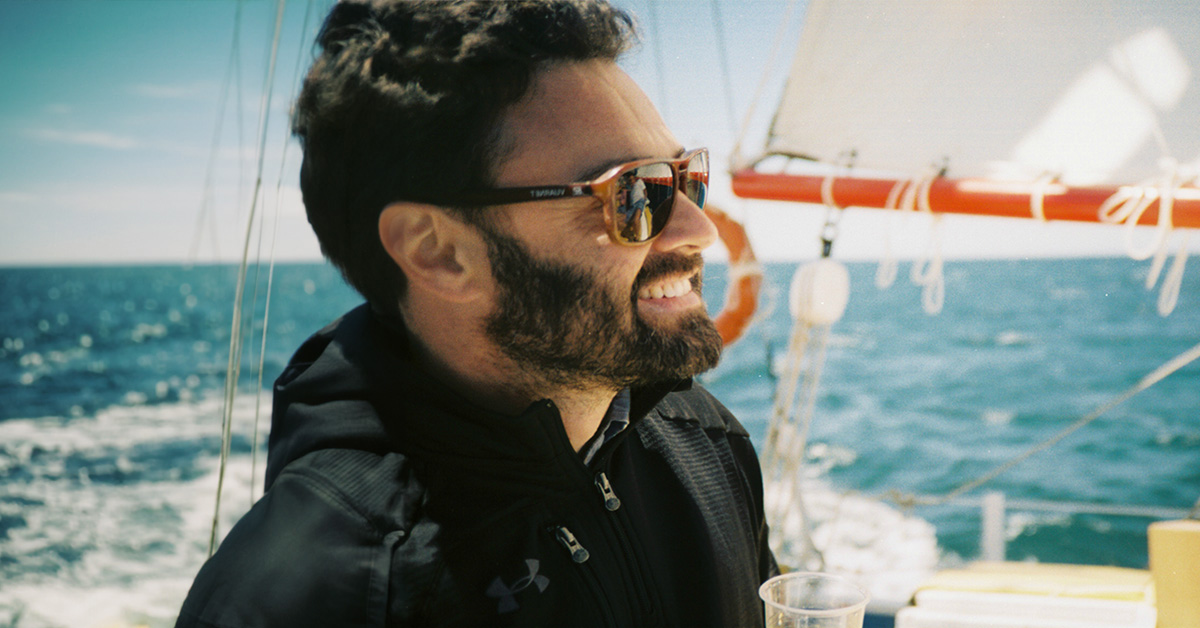
[CASE STUDY] Why People Don’t Respond to Your Cold Outreach (and How to Get a Response) | with Scott Davis


About Episode
Cold Outreach – Seriously… is there anything worse than that feeling when you’re about to send an unsolicited message to someone you admire or want to connect with to find work?
“I’m probably bothering them.”
“They’re too busy to pay attention to me.”
“I feel weird asking strangers for help.”
“I probably sound desperate.”
“Why even bother? Nobody ever responds anyway.”
There’s no question that if done wrong, outreach messages can be a surefire path to rejection, isolation, complete lack of confidence, and feeling like you have no way to connect to the right people that can potentially become your mentors, colleagues, or collaborators. But when done correctly,
A well-written outreach message can change your entire career.
In today’s interview I chat with Scott Davis who considers himself to be a “hopeless introvert.” As someone who recently made the major career transition from working in documentaries in New York City to working in scripted features in Los Angeles, Scott will be the first to tell you how overwhelming it can feel to have to rebuild your network from the ground up. But with the right mindset, the right strategies, and a little support, Scott’s new career in Los Angeles is not only surviving but thriving.
Episode Highlights
- Scott’s ‘origin story’ from New York to Hollywood with no connections and ‘no idea what to do’ (sound familiar?)
- The terrifying feeling of trying to get into this ‘fortress of opportunity’ in Hollywood where the only way in seems to be from people inside who are working & too busy to help you.
- The dilemma of just ‘finding the next gig to pay the bills’ vs. ‘playing the long game’ to pursue the career path you really want.
- The counter-intuitive shift in focus that makes that effectively eliminates that so-called ’dilemma’. (Listen for this key takeaway!)
- Why there’s no more important skill than networking in this industry and the step-by-step path to networking for introverts.
- Discover the ’secrets’ to “cold emailing” / “cold outreach” and how Scott boosted his response rate from 5% to 75%.
- The REAL goal of sending an outreach email. (HINT: It sounds so easy it couldn’t possibly work.)
- How to ‘crawl inside the brain’ of the person you send an outreach email to and see it from their perspective.
- How to get people to OPEN your approach email and why doing a few minutes of research goes a LONG way.
- Why the idea of “nobody wants to help me” is just wrong and right way to tap into people’s natural tendency to WANT share their wisdom & experience with you.
- Connecting the dots: Scott’s story of turning rejections into opportunities.
- What it really means to “lead with value” and the power of ‘validation’.
- The momentum that builds when you invest in building relationships over time.
About Guest
J. Scott Davis is an editor, assistant editor, outdoorsman, hopeless introvert and constant seeker of knowledge.
“I lived and worked in NYC for over 10 years working with some of the greatest documentarians on some really great films like: “Makers: The Women Who Make America”, “Cancer: The Emperor of All Maladies”, “Wagner’s Dream” and “Outside the Bubble”. In the fall of 2018 I headed west to Los Angeles to escape bad weather, lack of sunlight, and 5th floor walk ups. The lifestyle change is glorious but the true joy is I am now pursuing a long held dream of working in scripted features and series.”
Transcript
Zack Arnold: I’m here today with Scott Davis, and Scott is an editor, an assistant editor, an outdoorsman, and using your words and coining a new phrase that I’m going to be using ad nauseum forever. You call yourself a hopeless introvert as well as a constant seeker of knowledge. Scott, I cannot tell you how excited I am to finally record this conversation for people in our audience to listen to today. So, thank you for taking the time to be here.
Scott Davis: Thank you, Zack. I really am looking forward to this conversation.
Zack Arnold: Just to give everybody a little bit of background before we dive in too deeply, you have actually worked with me in my coaching and my mentorship program for several months. We finished a while ago, so it’s been a little while since you and I have worked together, but I want to make sure that we give that as context, so people understand where a lot of this conversation is coming from. So that having been said, where I really want to start is kind of the beginning, but not necessarily the beginning of your career, but more the beginning of your career in Los Angeles. So I want to get the origin story of where you were, what you were doing when you were in New York, and what brought you to LA, and when?
Scott Davis: Okay, about a little over a year ago, I was living in New York City, been there about 12 years, working on feature documentaries, some really high-profile feature docs, HBO, Netflix, whatnot, and I was beginning to get tired of both the city, New York City is very difficult to live in. Was also looking to move on to what I’d always wanted to pursue in the first place, which was working in scripted television or scripted features. And so we made the decision to move a year ago this past August to LA and come out here. I didn’t know anybody, I had no connections, no contacts, no network whatsoever, and no idea what to do, and so we moved out here, and that’s when I heard about your program, thought that it would be very useful and very helpful to have some sort of mentorship or some sort of help figuring out how the hell do I get going in this new environment.
Zack Arnold: So, walk me through a little bit more, and just also, so people have a timeline, because they may be listening this at any given time of year. Based on when we’re recording, right now, August is about a year and a half ago, or a little bit less, correct?
Scott Davis: Yeah,
Zack Arnold: So we’re talking that from now, you’ve been in LA for a little bit less than a year and a half,
Scott Davis: Yep, exactly.
Zack Arnold: So, walk me through, not necessarily logistically what’s going on with you or what’s going on with your job, but you’ve just landed in LA, you’re saying, “I really don’t know anybody, I have no connections whatsoever. Just walk me through emotionally what is going through your mind, because I’ve been in that place as well, and I have a feeling that a lot of people listening have either been there in the past or they are there right now. So, just walk me through emotionally what it feels like to come to Los Angeles thinking I’m starting over and I don’t know anybody.
Scott Davis: Oh my god, I was terrified. I was terrified. It felt like I was staring up at this 500 foot wall that I was wasn’t going to be able to get across, I really had no idea what to do, and it was just step by step, first place, you know, get it, get an apartment, get a car, and then I just started going on Facebook, I started looking around and Facebook, nothing, it was just crickets, and just really staring down this barrel of knowing nobody, and knowing having no tools whatsoever, or no mechanism by which I could find people to connect with. Yeah, it was just like this sense of just blankness or emptiness, or I don’t really know how to come up with a word for it. It’s just like it was very, very scary. Well,
Zack Arnold: I think a good analogy that I’ve heard people use in the past is they feel kind of like they’re standing outside this giant fortress and there are all these walls up and they can’t even figure out where the door is, and there’s all these gates. It’s like, how am I ever supposed to get to the other side of this wall? There’s so much security, and there’s a moat, and there’s a drawbridge, and they’re on the outside trying to look into something that they just have no access to. Is that fairly accurate?
Scott Davis: Oh, absolutely. I mean, it just felt like I didn’t even know what was on the other side of that wall. It just like all I could see was the wall.
Zack Arnold: Yeah, and the.. I think that the best analogy, or not even necessarily analogy, but I think the best connection I can make to this, and I was in a very different position as you, because you’re already very established in your area and in your niche, and you decided I wanted to move this niche to from New York to Los Angeles, and I want to make a major transition as far as the genre or the medium, meaning from documentary to TV when I made this. Move out to LA. I was like 20 years old, and I just came out here from, like, you know, Bumble, you know what, nowhere. Growing up on a farm of, you know, in a town of 400 people in northern Wisconsin, and all of a sudden I’m in LA. It’s like, oh my god, it’s like living on a different planet. So it was a completely different type of terror for me. But you’re, you know, an adult, and you’ve survived in New York City, so for you it seems like most of the fear and the terror just came from where do I start when it comes specifically to breaking into the industry.
Scott Davis: Yes, absolutely. And how do I land my next job so I can pay my rent and pay bills as well?
Zack Arnold: Yeah, and I remember one of the first things that we started to talk about right away was this idea of, do you just want to land the next gig, or do you actually want to start playing a game of chess, and you want to start building a path towards your career, and you’re kind of like, I don’t know, because I got bills to pay.
Scott Davis: Yeah, yeah.
Zack Arnold: So, I want to talk a little bit more about that idea of just being in that space of, should I pay the bills, should I move towards a more lasting career? Do I play a game of chess? Do I play a game of checkers? So, when you’re in that space of I’ve just moved to a different city and it’s an expensive city, and I may not have a ton of money just sitting here in a pile that I can throw under the fire for the next six months. So, what was what was the thought process that you went through when you were thinking either I’m desperate and I just need to find anything versus I’m ready to really put in the time and lay the groundwork to play the long game. What just, where was your mind at that point?
Scott Davis: Well, my general strategy was that I would a get out here to LA, get a place to live, try and land any kind of union job that I possibly could, because I knew everybody told me that getting into the guild was like absolutely essential to get going, and in the interim I was able to pick up some small short-term stuff within the dock world, which was allowed me to at least pay my bills until I landed that first scripted union gig.
Zack Arnold: So, what were some of the jobs that you were taking when you first moved to LA? Got the first few gigs, like you say, just to pay the bills. What were they, and how did you find them?
Scott Davis: I found most of them through either Staff Me Up or on Facebook, like I need an editor, or looking different type of assistant editor filmmaker type websites, and there’s a really great Slack group called Alliance of Documentary Editors. If you’re interested in documentary, and I would pick up things like I kind of have a niche of online documentaries. I’ve done it for years, and so I would pick up a lot of these two and three and four week gigs that were they’d finished, they’d lock the cut, and they just needed to online it and get it to color, and it paid fairly decent, it was short term, low commitment, and it was kind of like perfect, because I could still continue to look for what I really wanted, which was that first union job on a scripted feature,
Zack Arnold: So how long was it between you land in Los Angeles, it’s your first night here in your new apartment, between that and landing those first few gigs that you were doing online or doing assisting just to pay the bills, what was the timeline there?
Scott Davis: Ah, Jesus, it was probably close to eight nine weeks, couple months.
Zack Arnold: Okay, so you were here for two solid months without really finding any unemployment whatsoever.
Scott Davis: Yeah, nothing,
Zack Arnold: Which actually doing it in less than two months is not bad.
Scott Davis: I luckily I had enough savings that I could, I could scrape by.
Zack Arnold: Yeah, and that’s a key point here. And this is something that I know that you and I talked about more than once, is this idea that if you really want to play a game of chess, and you want to be strategic, you better financially be set up to have the confidence to say no to certain things that you’d rather not do. If you want to pursue other things,
Scott Davis: Absolutely,
Zack Arnold: You’d set yourself up to a certain extent, but you were also.. I don’t remember the exact timeline, so hopefully you remember, but roughly how long was it after you had gotten to LA, that you introduced yourself to me, and then we shortly after started working together.
Scott Davis: I think we started working together in October, and I think we reached out, or we had that short Skype chat in July-ish, right before we moved, and then we started working together in October.
Zack Arnold: Got it. So then, and that’s the October, right after you moved in August. So, I talked to you that July, you moved out here, and then you and I started working together shortly after you were here.
Scott Davis: Yep, yep.
Zack Arnold: So, when you and I first started working together, remind me, and I want to not necessarily remind me, but I want to really shed a light for the audience, what started to change for you, like, what were the some of the first things that made you realize this is a process that’s really going to be worth it, because it is an investment of both time and money. So, what were some of the triggers that made you say the way that I’m doing this right now isn’t working, and I need to find a different way to pursue a lasting career.
Scott Davis: Um, well, I mean, I done that. Working, or I could call it networking in New York, which was basically, you know, a job had ended a couple weeks after the job ended. I do this email blast to everybody I knew, you know, BCC everyone, and send the same email saying, “Hey, my job just ended, and if there’s any opportunities or you need help, please reach out, you know. And I never would get responses from that. I was not connecting with anybody, I was not making any kind of lasting relationships. It was all the only time I would reach out to anybody or do any kind of networking was when I was in kind of a desperate street and needed a job, needed a gig, and I knew it wasn’t working, and I knew it was a.. I needed some sort of systematic way of cracking into this industry in LA. I didn’t know what that was, but I knew I knew there had to be a way, and that’s one of the things I hope to get from our working together
Zack Arnold: Well, and I may or may not have said this either in our very first intro call or certainly in one of the first weeks, but I was pretty clear about the fact that I was not going to be useful if you were just looking to land at the next gig, so to speak.
Scott Davis: No, you absolutely, you absolutely said that right off the bat. It was like within the first few paragraphs,
Zack Arnold: Yeah, I mean, that’s basically that’s how I say hello to people, it’s like, hey, it’s nice to meet you, just want to let you know, not going to help you find your next gig, not going to happen, because I make it very clear to people that I play a completely different game, and boy, does it take some patience, and of course I was very conscious of the fact that you still needed to pay the bills, and there is no shame in that, because that I think that one of the stigmas that I hear about in this industry, and it’s not just our industry, but obviously I’m hearing about it in our industry, is the shame of having to take a job just for the paycheck. There’s no shame in that whatsoever. If you’ve got to work at Starbucks, or you’ve got to, you know, online a bunch of crap that you don’t believe in at all, but they give you a paycheck, and that allows you to live another day in this business. No shame whatsoever. But no, we all cross that threshold where we realize, all right, the paycheck is covered, but this is just not working for me, and it’s not moving me forward. That’s when it’s time to get away from it. But there’s no shame in taking those paycheck jobs, but I don’t see it as my role to help people land the paycheck jobs, I can certainly help here and there, but it really was about coming up with a much longer term strategy. So, what were the some of the first things that you and I talked through to start reshaping your mindset, just around resetting your goals or deciding that I’m going to change the way that I network? What are some of the things that stick out to you?
Scott Davis: Well, I think one of the most important things in me, particularly, was sitting down and literally defining what I wanted, what my end goal was, and writing it down, and then it gave me kind of a target of where I wanted to start looking. It wasn’t just this broad net I was casting out. I needed a job. It was like I want a job, you know, doing scripted features or scripted series, you know, character-driven type dramas. That’s what I want, and it really narrowed down my focus, which made it a lot easier and a lot less anxiety. to have, like a focus I could look at specifically and target.
Zack Arnold: So, what is it that you think helps reduce that anxiety so much? Because it’s, it’s one thing to just say, oh yeah, you should take the chess approach versus checkers and be more focused, but a lot of people are thinking, yeah, but it must be so much easier to land a job if I say I’ll do anything, I don’t care, I just want to work. So, what is it about really honing in and having focus and knowing what you want that reduces the anxiety versus increasing it because you’ve narrowed the field for what you’re looking for? Work,
Scott Davis: Yeah, I think what started developing me and what started growing in me is I almost became like two people. It’s like there was the one person was like, okay, I can take a job just to pay the bills, and I’m totally okay with that, but at the same time, concurrently I am searching for what I want, and somehow when I knew that AI had income coming in and I was also looking for what I wanted, I just felt calmer, I felt more relaxed, I felt more in control in a way, and I started developing a real, as we worked together, I started developing a real systematic, almost mechanical way of networking,
Zack Arnold: And that’s what I want to get into next, because this, this is definitely going to be the meat and potatoes of the conversation, so to speak, because, as you, you say, not my words, yours, you’re a hopeless introvert, and networking definitely was not one of your strong suits when we
Scott Davis: No I was horrible at it
Zack Arnold: And it’s not to say that you’re a networking expert now, but I don’t. Consider myself a networking expert. Either it’s a constant work in progress. I think that I’m gonna start using hopeless introvert to maybe steal it for either myself or add on to what I have, but a term that I’ve always used is I consider myself an extreme introvert. So I’m not just introverted, I am an extreme introvert. So it’s not just I’m not just a skier. Oh, I am an extreme skier, like it’s, it’s that it’s that crazy. And anybody that meets me, especially in an event like Edit Fest, or whatever, like there’s no way you’re an introvert. Oh, just ask my wife. Trust me, I am very introverted, but I’ve learned over the years that there’s no more important or valuable skill than being able to network, especially in this industry. The reason being that all of the opportunities that we really want in this world and in this specific niche that we have are going to be gotten through other people that are unreachable, because guess what, absolutely, just like you, they’re in dark rooms too all day long and practical, which is why it feels like there’s a giant wall, right.
Scott Davis: Absolutely, I started with that in mind, knowing that I’m like this hopeless introvert that I really.. a good friend of mine once described, they said everybody has a battery, and introverts, when they are around people, their battery gets drained. Extroverts, when they’re around people, their battery gets charged, and knowing that, knowing that when I go to, like, BCPC or specific networking events, that my battery is going to get discharged, I started to realize that I needed to, a, find a different way, because I was, I go to these events, and I quickly just get really stressed out, really just like almost panicky, and wanting to get out of there, and it was not successful. And I started going to things that were non-networking events, like the Guild would put on, you know, using Photoshop in the edit room, and I started seeing that everything was a networking opportunity, and these smaller events that were more like tech centric, or whatever, that were not specifically labeled networking, were much better for me, because I could chat with people during the breaks, or during lunch, or afterwards, and it wasn’t as intense as these super focused networking events, so that was one thing I did, but the main gist, or the main focus I started shifting to, was cold call email networking.
Zack Arnold: Yes, I’m very glad that you transitioned to this idea of cold emailing as a networking strategy, because there are few things that terrify introverts more, and I know this for a fact now, because I am told this every single day. People say there’s nothing more terrifying to me than sending a cold email to somebody that I don’t know, and I get it over and over and over. Even for the four people that are listening to this, by the time they hear this, we will have already done the panel for the editors guild, but as of recording, this is before the panel, but I sent out a survey to everybody that’s going to be at this panel this weekend that you’re going to be on that I’ll be hosting for the guild. I just sent them a little survey and asked them what are you struggling with with networking and what questions do you have, just to make sure that I can address as many people’s challenges as possible, and by far the biggest fear is, oh, I just.. I hate reaching out to people. I don’t want to bother them. Who am I to ask them for help? I’m just being needy, right? And I know that you went through all the same fears.
Scott Davis: Oh God, absolutely. I mean, I remember distinctly that first exercise we did, when we had to write our first email. I literally spent, I think, almost three days writing this first email. First draft was like pages long, and it was excruciatingly painful, because I felt like it was so important, and I had to express so many things, and I had to get so much of whatever that I wanted to express in this one email, and the pressure was so intense that I would almost lock up,
Zack Arnold: And this is a phenomenon that I see more and more and more. So, I’m curious, why did it feel so important, and why did you feel the need to share your life story, or spend paragraph after paragraph dissecting the this specific lighting or mise en scene or this editing philosophy, like what was driving all of that.
Scott Davis: I felt like it was my one shot, my one shot with this connecting with this person, and if I made it happen, if I made it work, then it would be my ticket, it’d be my ticket, my invitation into, you know, across the wall, I’d be in, and I felt like it was so, so important. This one specific email, it had to work,
Zack Arnold: And this is so common, and everybody says the same thing, and I believe that this is, if we’re, if we’re going to not talk about the specifics, and we’re going to talk about just the big picture, right now, I think the. A, the largest big picture mistake that people make when they’re doing outreach, and this is not only networking when they’re doing outreach via email, but it also happens in person at networking events and panels. They had this idea in their head that this is it, this is my one shot. If I do this right, my life changes, but if I can’t get this one email through, or I can’t pitch myself to this person after they’ve given a panel, that’s it. It’s just never going to happen for me. So, you build up this anxiety and this pressure that it’s got to be perfect. And the funny thing is, all of that is getting you as far from what you want as you can possibly be, and it’s a complete opposite approach that you and I took to start drafting outreach emails and networking in person, so I want to talk a little bit about what this process looked like. Let’s first talk about it with email, because I definitely remember your first email. I say it with all the love in the world, it was not good.
Scott Davis: No, it was horrible,
Zack Arnold: And I ripped it to shred. Did I not?
Scott Davis: You did. You did, and it was so funny, it’s like I realized what a ridiculous pretentious email it was.
Zack Arnold: Well, that I remember the other thing that I had said to you, and we talked about this right around the time that we first started. You would come to me and said I get like a 5% or less response rate, and I don’t know what’s going on, and I may or may not have said this this time, I don’t remember. I feel like I can be less gentle and more brutally honest now, but it was very clear why you were getting a 5% return.
Scott Davis: Yeah, I was like being this crazy stalker fanboy.
Zack Arnold: Yeah, like I remember there were like two or three paragraphs like dissecting, like not just I like this movie, like I remember you specifically were talking about the movie Sicario, and it was like a paragraph and a half. I’m like, dude, this is a great analysis, but you got to save it for your next film school paper.
Scott Davis: Yeah, I know it was so ridiculous, and it took me like three days to come up with that.
Zack Arnold: So, let’s talk about what that turn started to look like, because we got you to the point, and I don’t have the quote in front of me, but I remember at one point maybe a couple months after you and I were done, you had sent me a quick message in our Slack community saying my response rate is now like 75% You were getting like every three out of four emails people were responding to. So, let’s start talking about what are some of the fundamental shifts, the fundamental techniques, the mindsets that you started to change, so people actually paid attention to you and responded
Scott Davis: Well. I think the single most important thing I learned from you was that you have to lead with what you call value. You have to give the person you’re sending in the email to something of value, and that usually is a genuine compliment on their work, and so when I started writing these emails, where my response rates started skyrocketing, I would start out with this, a short two or three sentences, because I would reach out to people I genuinely admired their work and just say, hey, I didn’t dissect a scene, I didn’t dissect the entire film and go into this whole film school degree. I was just like, hey, that’s a really fantastic film, I really appreciate your work on that. Thank you. And that would be like my opening paragraph, it’d be like two sentences long, and then I would just give a quick two or three sentences of where I was and who I was, and that was it, and then I’d end with a sentence of saying, “Hey, would it be okay if I asked you a couple questions about your career or whatever I was particularly interested in with that person? And it was like six sentences long, eight sentences long, something like that, and send those off, and I started getting responses like crazy, it was insane.
Zack Arnold: So, then, what’s the goal of sending an outreach email? Because I thought it was, I need to change my entire life. So, what? What changed? What’s what’s the goal of sending an outreach email now?
Scott Davis: Well, that was the other big thing I learned was that it’s not about changing your life, it’s not about getting a job, it’s not about getting anything, it’s really just making that first initial connection of just saying hi and getting them to say hi back, and so when I started doing this, it almost became like this game, it’s like what can I do in my email to get them to just write back, not offering me a job, not offering me anything, but just to write back what can I do, and that’s what I would go into these emails thinking, not what I could get for myself, but just can I just get them to respond.
Zack Arnold: Yes, and that is the fundamental difference, and it almost sounds so easy, it couldn’t possibly work, because we want to put so much time and effort into selling ourselves, but not sounding needy, but we know that we really want something, but we try to write it like we don’t want something, but again, it’s our big shot, and when you realize that, oh, the only goal of my outreach email is to get a response. If you review, if you’re somebody that’s listening to this right now, and you’re thinking about an outreach email that you’ve drafted, or that you sent that didn’t get a response, read through the email and think to yourself, if I were going to rewrite this, knowing that my only goal was to get somebody to respond, as opposed to getting whatever it is that I want out of it, how would I change it? And it’s a fundamental shift in the way that you write it’s a fundamental shift in tone and the questions that you ask,
Scott Davis: And it takes so much pressure off yourself because you’re not having to change your life, you’re not having to land that job, you’re not having to prove how smart or insightful you are, you’re just trying to say hey and get them to say hey back.
Zack Arnold: So, when you send these outreach emails now, how come you’re not afraid. How come you don’t feel like you’re bothering people, or you’re asking for too much from a complete stranger? Like that’s really the deeper fear. It’s not so much, “Well, I don’t know how to write a good one, or “I’m not sure the questions. When you really dig deep, the reason is because people are afraid of either bothering people or asking for too much and sounding too needy or too desperate. So, why don’t you feel that way anymore?
Scott Davis: Because I don’t ask for that much. I don’t ask them generally. All I do is I ask them a couple simple questions, like, hey, how did you move up from assistant to editor, or what are a couple things you think are really important for your career that helped really help you in your career. I don’t think that’s that big of an ask. I’m not asking them to give me a job, I’m asking them to spread my resume around, I’m not asking them to really do much of anything, and it really took the pressure off.
Zack Arnold: Do you remember the questions that you were asking when you and I first started together?
Scott Davis: Not really, tell you the truth,
Zack Arnold: So as my memory serves, it was a combination of two things. In the first outreach email, it was either basically going for the throat immediately, which was, hey, do you, you know, are you free next Wednesday at 1pm to have lunch together, something along those lines, or it was, you know, what’s the best advice that you have for being successful, or you know, I remember another one as well that I think was very like film theory driven, like you know what was the inspiration for making this one thing happen, or here I don’t remember exactly, but I remember my response being in the question that I asked you was, if you received this email, how likely would you be to respond if you also had 100 other unread messages, most of which are asking you to do notes or deliver this or take care of that, how likely are you to respond to these big picture, long-winded questions?
Scott Davis: Almost, I wouldn’t. Period.
Zack Arnold: Yeah, so once you put the mirror up, most people, and I’ve seen this happen over and over now, where they send the first draft of a message, they feel pretty good about it, and then I say, all right, now I want you to read this like you’re the recipient. I don’t say anything else, none of the stuff that we’ve talked about. All I say to them is great, welcome, I want you to read this like you’re the recipient. You just see their face drop, and this embarrassing smile goes on their face. They’re like, oh my god, this is awful. I would never read it.
Scott Davis: Yeah, yeah, no, that’s a huge thing to do, is just to be able to do that. If I got this email, what would I do?
Zack Arnold: Yeah, so the name of this practice, I like to call it crawling into the brain of the recipient, where you really force yourself to think, all right, so I’m sitting at my desk, let’s say that we’re reaching out to a top A-list Oscar nominated or Oscar-winning editor, right. So we picture what does their life look like when they receive this email. They’re probably working 60 to 70 hours a week. They haven’t seen their kids for months. They either have a director behind them or a producer behind them, or they’re prepping for a studio screening, or they have 40 hours of dailies to get through, whatever it might be. Now let’s think about what their inbox looks like how many messages they have from studio heads and directors and notes and pdf files that need to be converted to jpegs that need to be imported to this and just so much crap you can’t even imagine it and then bing email from stranger okay what are the odds that first of all they’re even going to open your message so we spent an exorbitant amount of time just talking about how do we get them to open it, because what’s the point of writing the best outreach email on the world if your subject line sucks, right? So, as you had alluded to, it really is just about providing a simple enough amount of value just to get somebody to open the message, that’s it.
Scott Davis: Yeah,
Zack Arnold: Right.
Scott Davis: And I started learning that I needed to do, like, for every email I wrote, I would probably spend 234, hours researching that person as much as I could through IMDB, through Google, Facebook, and trying to find something I could put in that subject line that would get them to open the email.
Zack Arnold: Now, why is putting that amount of time into research so important? Because it just seems to me that if I were to write a template and I can send 100 messages, the chances have got to be higher than if I spent a day writing one outreach email. That seems absurd. So, why would you put all that time into research just for a subject line?
Scott Davis: Because it gets them to open it. It like, like, for example, there’s this one editor I really admired his work. He does some fantastic stuff on Fargo, and he works with Noah Hawley a lot, and I just so admired his career. And seeing his career, he started out as an assistant and working his way up, so I’m like, God, I really want to get in touch with this guy, but I was really reluctant to just write an email because I felt like this was the guy I really wanted to connect to, but I don’t know how to connect to him, and I just searched the web and searched the web, and I finally found this interview he did where he mentioned that he grew up in Fort Collins, Colorado, and I’m from Colorado, and I spent a fair amount of time in Fort Collins, and so I’m like, bang, that was it. And so on the subject line I wrote hello and Avogadro’s number, and Avogadro’s number is a sandwich shop in Fort Collins, and it’s been there forever. And so I wrote my email. I said, ‘Hey, Curtis, I think your work’s fantastic. I think it’s so awesome. This is my story. Couple sentences. And by the way, have you been to Avogadro’s number in Fort Collins? It’s been for years since I’ve been there, but I just made me think of it when I saw this interview you gave, and he responded like less than 24 hours later, immediately, and he’s like, “Oh my god, I remember Avogadro’s numbers. The first place I ever had tofu was fantastic. It was that one little thing that made it stand out, and it was so worth doing all that research to find that one thing.
Zack Arnold: So, what do you think the likelihood would have been that he would have responded to you had you spent four paragraphs selling yourself, your merits, your experience, and sending a link to your reel and attaching your resume for consideration.
Scott Davis: He would have hit delete immediately if he even opened it.
Zack Arnold: And if he had opened it, why do you think he would hit delete?
Scott Davis: Because he doesn’t have time to go through all that, you know,
Zack Arnold: He doesn’t have time, but I would say that the other area, and we’ve alluded to this a little bit, but this is the one of the core foundational principles that I think is so important for people to understand, especially introverts, and the reason that I like talking about outreach email so much is this is the secret weapon for introverts that don’t like to network, because you can do it from the comfort of your pajamas on your laptop, on your couch, you can essentially systematically and strategically build your entire network of all of the most important people that can open all the doors that you need opened from your laptop in your couch in your living room in your pajamas, and I know, because that’s what I’ve been doing for the last 20 years, because I hate going out and talking to people.
Scott Davis: Yeah, and you can pick the people you connect to as well, instead of just hoping they randomly show up at this event,
Zack Arnold: Exactly. So, the idea here, going back to the specific email, and why it probably doesn’t make sense to say, ‘Here are all of my merits, here’s my level of experience. Big fan of your work, and I’ve attached my resume and my reel for your reference, in hopes of consideration for any future opportunities. Number one, he probably gets messages like that a lot. They don’t stand out. Secondly, if we go back to this idea of crawling into the brain of the recipient, if you were in his place, would you recommend somebody for a high-profile union job working for studios if you had gotten one email from them? Like,
Scott Davis: No, I wouldn’t know them,
Zack Arnold: right? I wouldn’t know them, I wouldn’t be willing to vouch for them, and when you vouch for somebody and things don’t work out, that can hurt your reputation
Scott Davis: Absolutely.
Zack Arnold: But the other thing that I think so many people miss, and I hear this all the time, is people will say, oh, nobody ever responds to my messages, and nobody, nobody wants to help me, and my response to that is I think the vast majority of people in just about any industry, but even in ours, in Hollywood, which is supposed to be uber competitive, and you know, like it’s all about this vapid, like, me, me, me culture. I don’t believe that that’s true. I think the vast majority of people want to help you, they don’t know how to help you, and people aren’t specific enough about here’s who I am. Here’s where I am in my journey. I understand these things about you. Here’s what I’m looking for. If you can make it very clear how that person can help you, I firmly believe that they will.
Scott Davis: I totally agree with that. I couldn’t agree more. I’m stunned at how much people want to help.
Zack Arnold: So, speaking of people that want to help, the next kind of direction that I want to go here is jumping a little bit more into live networking, and then once we talk about this a little bit, I want to make sure even if we go a little bit over, we need to talk about the networking process that you did to land where you currently are, because that’s kind of the punchline of this entire conversation is where you started and where you are now, because I think that’s going to be hugely revelatory to anybody that’s in the position that you were a year and a half ago. But what I want to talk about now, maybe, is not necessarily a tangent, but going in a slightly different direction. I’m just going to say two words, and you’re probably going to know the story that I want you to tell. Joe Walker.
Scott Davis: Oh God,
Zack Arnold: I love it. Oh dear Lord, I want to talk about the trajectory of you trying to reach out to Joe Walker.
Scott Davis: Okay, so I, Joe Walker, I think I so admire his work. I so admire the way he thinks about editing everything. It’s just, you know, I totally, he’s my jam.
Zack Arnold: And just before we go any further, for any anybody listening to this that doesn’t know who Joe Walker is, just paint a 32nd picture, so people understand who he is.
Scott Davis: Oh, he’s done every one of Steve McQueen’s films, he’s done most of Dennis Finland news. I know I’m going to butcher his last name, this film he’s doing Dune right now, he’s done Arrival, he’s done all these amazing, incredible, artful, beautiful films, and he’s established this incredibly long collaborative working relationship with directors, which I so admire and went so much like in my own career.
Zack Arnold: So, needless to say, Joe Walker is a badass.
Scott Davis: Joe Walker’s a badass.
Zack Arnold: He’s edited some pretty damn good movies. Anybody wants to look him up, you can, but you know, like you said, Steve McQueen’s films, 12 Years a Slave. He’s also done Blade Runner, he did Walk the Line, like he’s done a lot of really, really good stuff. So, needless to say, he’s at the top of the game,
Scott Davis: He’s at the top of the game.
Zack Arnold: So, if we were on a fitness podcast, if this were a video podcast, this is the period of the call where I would hold up your before and after weight loss photos. So, I want to talk about the before picture with Joe Walker.
Scott Davis: The before picture, that was my initial email, where I went to full film school geek that we dissected and you destroyed was my email to Joe Walker, and so you knew I liked Joe Walker, and you were kind enough to get me an invitation to the AC screening of Widows, and Joe was going to be there, and so I went to the screening, and the whole time I don’t even know if I paid much attention to the movie, because I was so nervous trying to formulate the question I was going to pose to Joe Walker after the screening, and so screening ends, he gets a little discussion, and then he’s just kind of people are coming out and talking to him, so I go up to him and I wait in line, I get to talk to him, and we discussed this, we talked about that. I had a question in my mind that I knew I should ask, but somehow it just evaporated, and I just went into the full on, oh God, it was so embarrassing in hindsight, fanboy awfulness, and I could just see him, his eyes glaze over, and him start edging away from me, and wanting to get out of there, and it was just horrible. It was such a horrible, disheartening experience. And I went out, got my car, and, like, oh my god, that was my one shot, and I blew it. I absolutely blew it.
Zack Arnold: So, basically, you decided that your senior prom night, you were going to ask out the prom queen, yeah, and you had all the questions, you were mr. Suave, and then all of a sudden you saw her in person,
Scott Davis: And I choked, utterly choked, utterly choked,
Zack Arnold: Yeah, utterly choked. So I remember hearing the story and thinking, oh boy, we’ve got some work to do. Yeah, we talked through this, and what’s so great about this story is that there is an after picture. I was lucky enough. I mean, this – this is a memory that I will never forget. It was.. I compare this to anybody that has children. Imagine that you happen to catch that your toddler has finally figured out how to walk, and they’re just figuring it out, and they think they’re all by themselves, and you’re kind of creeping from the back wall behind them, like, oh my god, I can’t believe I’m seeing this, this is amazing. That’s exactly what it was like the second time that you approached Joe Walker at Edit Fest.
Scott Davis: Yeah,
Zack Arnold: But I was basically standing five feet away, watching the whole thing, and it was just miraculous. So, walk me through your perspective of the second time that you approached Joe Walker.
Scott Davis: So, Joe Walker was at Edit Fest, and afterwards he was standing out on the steps and graciously answering questions, and there was a ring of, I don’t know, a dozen people around him just bombarding him with questions, and I’m like trying to figure out when I can edge my way in and just chat with them and just have some sort of connection, and I was bound and determined not to do what I did the first time I had the question in my mind that I wanted to know, and I had it phrased, and it came to a point where I could insert myself, and I just asked him straight up, and I was, I was so shocked at how calmly I asked it, and how straightforward what might you know, I asked him, I was really interested in what his, his assistant, Mary, who’s worked with, like, film after film after film, I was. Like, really interested in what her qualities were that made him want to work with her so much, you know, time after time. And I asked him that, and I could see I had a total different reaction, instead of like eyes glazing over and backing away, his eyes opened up, and he like moved forward, and he was like a little shocked, in a good way, and he’s just told me, answer my question, and it was like a really fantastic interaction, and I just walked away from it feeling really, really good, like I’d made some sort of connection.
Zack Arnold: So, what was it? What was the difference? If we don’t even, we’re not even going to get into the question that you chose quite yet, but what I’m most interested in first is why is it after completely blowing your shot the first time that you felt more calm and more sure of yourself the second time, as opposed to, oh boy, here we go again.
Scott Davis: Well, I thought I had a second chance, and I think after the first time, after blowing it, I spent days thinking about it, perseverating on it, and it’s just like telling myself, okay, if I ever get the chance again, either with Joe Walker, which probably won’t happen, or somebody like that, I’m not going to do that again, I am not going to do that again, all I’m going to do is try and make some sort of connection, say hi, and get them to say hi back, much like the emails.
Zack Arnold: So, why did you choose the question that you did?
Scott Davis: I chose the question I did, A, because I really wanted to know what he would say, and B, I felt like it would be something kind of unique, and it wasn’t necessarily asking about him, it wasn’t inserting anything about me into it, and it was.. I just felt like it would be a question that would get him to think a little bit, or get him to step back a little bit, and not, not put up defenses,
Zack Arnold: And clearly based on the description that you gave of his body language and the look on his face and the way that he responded, he responded very favorably.
Scott Davis: Oh yeah, he seemed very pleased,
Zack Arnold: and I can attest to all that, because again, like I said, I was kind of creeping behind the wall, being like, oh my god, I can’t wait to see this. I was probably way more nervous than you were.
Scott Davis: Were you?
Zack Arnold: So, yeah, as you were approaching Joe Walker, and like, oh my god, oh my god, he’s gonna, he’s gonna ask, oh my god, he’s talking to Joe Walker, like it was ridiculous. I was just watching every moment of it, and I saw that that turn because I was in that same space that you were, and you talked about this idea that there were like 10, 1215, people around him, and I’ve, I’ve coined a term for this, I’ve actually had thought about this for years, because I would see this over and over and over, and I’ve now been on the receiving end of some of those, just because I’ve done some of these panels, and I see it from the other side. I call it the sycophant rush.
Scott Davis: Yeah,
Zack Arnold: Everybody’s just rushing and pushing, like, oh my god, your stuff is so good, and it was so amazing. I’m so inspired. Hey, here’s my business card, or here’s my demo reel. Like, I remember going to an event, it was, must have been a while ago now, maybe seven or eight years ago, and I walked away with an entire stack of stuff, like I needed to ask somebody, “Hey, do you mind if I have a small box so I can carry this to my car? That’s how much crap I was given. It was, and back then it was before, like people really use portfolio websites, DVDs, yes, and that old, but I had to get a box to carry all of it home, and for me to say, well, it’s been a really long day, I’ve, you know, been working for 10 hours, I do a panel at night, I know what I want to do after I get home after driving for another hour, I want to watch people’s demo reels,
Scott Davis: Yeah, or look to their resumes,
Zack Arnold: That’s because once again, going back to this mentality of this is my shop, I have to get in front of them, I have to sell myself, and I need to get this thing to them, because this is it, if I can’t get it in front of them, I’m never going to, and I think that the big transition for you is that you didn’t feel that way the second time, you’d already blown it, so what’s the worst that could happen, but secondly, you were asking a really good, unique, informed question that’s not going to make you feel like I need something out of this interaction, right?
Scott Davis: Yeah, and also I think by that time I’d been working my email outreach to the point where it’s getting pretty good returns, and I felt like, well, this one interaction is not my only chance. All these other people are responding back to me, so there’s other things out there. There’s other fish in the sea. This is not this one moment in time is not going to make or break me.
Zack Arnold: Yeah, I think the other important thing to take away here, too, if we’re going to dissect this specific question, and this is another mistake that I see happen all the time. It actually just happened. I was talking to somebody on one of my calls on Monday, and they had made this mistake, and took them about 30 seconds to have the giant sheepish grin on their face when I pointed it out. But the mistake that so many people make with their questions is one of two things: either my question really just needs to kind of be some way to get a backhand comment. Implement about myself, or more importantly, this question needs to make me sound smart, but you’re willing to ask yourself, if they were to give you a great answer to your question, is it even useful, right? And I think that yours was a really well thought out question, because you really, yes, it was the answer would have helped you, but it was more unique than I just wanted to tell you how amazing you were, and whatever it is, it’s I really thought about this, and I’ve done my research, so you prove to him that you know him, and you know his, not just his movies, but the choice that he made in his assistant editor, so you have to do some homework to know that, but you genuinely just want to understand why did he make the choices that he did, therefore number one, it’s a really good question. Most people probably don’t ask him that, if any, but most importantly, if he gives you a good answer, how helpful can that answer be to you?
Scott Davis: Oh my god, his answer was so phenomenally helpful,
Zack Arnold: And it was
Scott Davis: His answer was he could talk story with her. It wasn’t that she was really good at the AVID, or she was super technical, she could do clear correction, or this or that. Is that he could talk story with her, and that’s what was so valuable. And the really cool thing is, I’ve been.. I’d reached out to Mary before and had a few emails back and forth, but after this conversation, I went, and I wrote Mary again, and I said, “Hey, you know, I just spoke to Joe, and asked, I asked him about why he chose you, and he said it was because you’re so fantastic with story. And she wrote back, and it’s like, “Oh my god, that’s great. And she, she wrote this whole multi-paragraph email to me, explaining, you know, how she got so good with understanding story and character and structure, and sending me links to videos and books I should read, and it was, it was really fantastic.
Zack Arnold: So, how has that one answer changed your strategy for breaking down the doors and the walls that you want to get over and through?
Scott Davis: It’s not changing my strategy so much as it’s giving me confidence in my strategy.
Zack Arnold: Okay, that’s interesting. Because I remember you coming over to me right after talking to Joe, and you were just like, oh my god, like massive adrenaline rush. I just talked to Joe, and I asked him this question, and like you were talking about a mile a minute, but I remember this look on your face, and you’re like, he said that he, he works with Mary, because it’s all about story, and I remember you telling me, and having this realization that I focus so much on the tech, I really need to put more energy into getting better at the story side and the creative side. Oh, yeah, we want to get where you want to get.
Scott Davis: Yeah, my overall career strategy, I was thinking network strategy, absolutely. So, immediately I got those books, Mary suggested, amongst others, and I just started breaking down story structure, watching movies, and trying to understand that, and I spent decided I was just going to spend almost no time focusing on how to work with five one stereo and Avid, and how to do this, and After Effects, and it’s just like it really dawned on me that those are not that important. Those skills, sure, you got to be okay at your job, but you really have to be good at talking with people and connecting with people, and that’s what would get me where I wanted to get, not getting better at the Avid, not getting better at Photoshop,
Zack Arnold: And the key here is that it’s not a blanket statement. Those things are not that important. Those things are not that important for you, based on the very specific goal that you clarify to yourself, which is that I want to work on union scripted features or television, and you had a very specific idea of the kinds of shows, like you and I broke down, what all of your favorite shows are, and what’s the dream project that you would be able to edit, and your realization is that Joe Walker is essentially that’s my dream is to do what he does, so to be Joe Walker, the tech and the five one stereo and the after effects and all that, those aren’t that important, but then then there are other people where they would say, I don’t need to know anything about story to have my dream job, I do need to focus on setting up Avid for five one stereo and After Effects and doing all these crazy temp effects comps, so I think that what happens a lot is people make these blanket statements about what is or is not important to be successful in this industry, but they don’t think deeply enough about what exactly do I want to do, so it’s about your specific path, and those things really are meaningless to get where you want to get.
Scott Davis: Yeah, I should add it, not important for me.
Zack Arnold: The last thing then that I want to talk about is the going back to this idea where we started of realizing that as soon as you came out here, yes, you can get the next gig, but that’s really playing a game of checkers and not a game of chess. I want you to connect all the dots for us, all the chess moves that you made from the time that you made kind of the first general connection that got you to the job that you have now, because this. Is a great story, you send it to me all via Slack, and as soon as I read it, I’m like, dude, gotta be on the podcast.
Scott Davis: Is it the first union gig I got or the second?
Zack Arnold: Well, you tell me the whole story, because the fact that you’re saying is that the first or the second just tells me how well this whole process worked. So, walk me through all these pieces.
Scott Davis: The whole story is it’s sitting like June, July. I’m in New York, I’m working a job, it’s not that demanding, so I have a lot of time on my hands, and I was thinking, hey, maybe I could line up something in August, so when I get to LA, boom, I can hit the ground running and start working, so I’m looking through Facebook and different things, and on a Facebook page I see a posting for somebody looking for an assistant editor on a union scripted feature, and they need them to start now. It was kind of an emergency situation, and so I’m looking at that, and I’m like, okay, a, it’s perfect, it’s union, it’s scripted, it’s a feature. I looked up the guy who posted it, he’d done a lot of really cool stuff, it looked great. And so I just wrote, and I said, hey, hey, Jeff, this is me, you know, I’ve worked in documentary for 10 plus years, I’m moving out to LA, and in August, and I know you need somebody to start immediately, and I just thought I’d throw this out there, and if it works for you, great. If not, I totally get it. And he was wrote back, and it was totally kind, totally gracious. He’s like, “Oh man, I understand, I’m sorry, but I need somebody now. I need somebody to start immediately, and he said, but stay in touch, that’s how he ended his email, and so I took that literally, and as soon as I got to LA, I wrote him, said, “Hey, Jeff, I’m in LA, literally landed yesterday, looking for an apartment, looking for a car, and he wrote back, and he’s like, “Oh, great, that’s fantastic, let me know if there’s anything I could do to help, and I just kept every couple weeks, every three, four weeks, I would write them and just let them know my progress, you know, and say, hey, you know, got established, got an apartment, things are great, loving it. How you doing? And he said, well, the films went along, it’s great, and just stayed in touch with him, and about three months after I, after we got here, he called me, and he’s like, “Hey, dude, I got this job starting, do you want to come work with me? And it was a union scripted feature, and it all came about for me just literally staying in touch with them, sending them periodic emails every three or four weeks, and so I got in, I got on that job, I got, which got me into the union, got me started on my first feature scripted, and it was fantastic. And then that job ended, and it was a really great experience. Again, I was between jobs, and I was looking online, of course, and I saw a posting that for somebody looking for another assistant editor, and I wrote to them, and they responded back, and we had a phone interview. I thought it went really great, and I really, really wanted this job. It was a little bit bigger. The editor was fantastic. The post super sounded super cool. The production company sounded super cool. I really wanted it. And a couple days later, they wrote me back. They said, ‘Hey, we’re really sorry, you were fantastic, we really liked you, but we went with somebody else. And I was devastated, I was crushed, I was pissed. And then a couple days later, you know, after I got over being really, really upset, I was like, okay, How do I make that into an opportunity? I just had a really great connection with this, this post super and this editor who do really cool stuff, and I just kept, again, I just kept staying in touch, and every time I’d see something about the film or something about them on IMDB or one of the trade magazines, I’d write them and said, ‘Hey, Josh, I just saw that you know the movie’s doing really great, and you know it’s being released in a couple months, that’s fantastic, and just staying in touch. And about eight months after that whole thing went down, I got a call from the editor and said, ‘Hey, I got this job. Would you like to come and work with me? And again, it was just from staying in touch, just writing them emails, not asking him for work, not asking him for anything, just saying, ‘Hey, how you doing? How’s the film going? Heard it’s going really well. And it was just maintaining that relationship.
Zack Arnold: So, how many times in those emails were you trying to sell yourself or get, get somebody’s attention?
Scott Davis: The very first one, because they were specifically asking for a job,
Zack Arnold: of course. But beyond that, my point is that you weren’t sending a message once a month saying just a reminder that I’m still available, and you know, looking for work and interested, and you know,
Scott Davis: Oh God, no,
Zack Arnold: Right, it was never. None of that, correct.
Scott Davis: Never, never even broached that subject. I mean, it was essentially like I was writing to them as if they were a friend, and just asking them how things are going.
Zack Arnold: So, I think this is the perfect example of doing something that nobody would ever consider that you’re doing, which is you’re providing value to that person, and this is a term that everybody gets hung up on. I will explain to them my philosophy of networking. When I say my philosophy, I don’t mean I came up with it. This is how all the great networkers networking, they’ve been doing it for millennium, like this all started back in Stoicism, and even earlier. So, when I say mine, I just mean this is the philosophy that I use, not that I own it, but this idea that you always have to lead with value and provide value first, and people say, yeah, it sounds great, but what does that mean? Like, should I do, I have to do free work for them, or like, am I mowing their lawn on the weekends? And it’s so much simpler. People just, they overthink this so much, and it’s as simple as you’re reaching out and you’re showing interest in that other person’s life.
Scott Davis: Yeah, absolutely, because I remember when you first told me you have to provide value, I’m like, what the hell is he talking about? What? Yeah, it was exactly the value I kept thinking. Well, the value is that I can come and do a really good job for them, that’s the value I provide. And then it took me a really long time to understand that concept, and I think it slowly dawned on me that people just want to be recognized, or to know that you saw something they did, and it’s awesome, and you told them that, and that’s valuable. I mean, I would love to get a random email from somebody saying, “Hey, that film you worked on was really cool. Good job.
Zack Arnold: At the end of the day, what I tell people is there are a few better ways to provide value to somebody than validate their life choices. That’s really what it comes down to, because if I’ve chosen to dedicate my life to sitting inside a dark room with no windows by myself to create something in the hopes, just the hope. My God, I hope somebody watches this and they feel something. That’s really the essence of why people do what we do. That’s why creative people wake up every morning and feel the need to create something, because deep down we need to have an impact on another human being in a positive way. We may not see it that way consciously, but that’s really the engine that’s driving everything, so why in the world every once in a while wouldn’t you want some validation of that from somebody else that you right?
Scott Davis: I mean, I don’t know how many days I – the vast majority of my days I wake up and I’m like, oh my god, what am I doing? Why am I doing this? You know what’s the point, and if somebody just like you said gave me that validation, I would feel like ecstatic.
Zack Arnold: That’s all we’re looking for, just some level of recognition. I mean, yeah, that’s what the chase for the statues is for. It’s the grandest form of validation that what I’m doing is making an impact, and I’m good at it. But frankly, the life stories that I get from people that they send me or the actions they’ve taken or the changes they’ve made because they’ve heard some random piece of advice on the podcast, I’ll take those all day long over an Emmy or an Oscar all day because it validates that what I’m doing for 14 hours a day is making a positive impact, and if you’re sitting in a dark room cutting something thinking well I don’t really know if this is going to impact people, but I sure hope it is. I’m going to want to open that message, and there are some days when I desperately want that random email from a person I’ve never heard of, but I’m certainly never going to get any value from a subject line that says take you out to coffee to pick your brain. Question mark,
Scott Davis: Yeah,
Zack Arnold: I ain’t got time for that.
Scott Davis: Yeah, because you’re just giving to them, you’re not getting anything back,
Zack Arnold: Exactly. It’s like, oh, so you’d like me to give you years of my expertise for free,
Scott Davis: Yeah.
Zack Arnold: But if you can start with value and find a way to ask for something that, at a reciprocal level, is worth about the value that you’ve given, there’s no reason the vast majority of people are not going to give that to you in return, and luckily you have the statistics to prove that.
Scott Davis: Oh, yeah, I’ve been shocked at how giving people are. It’s really amazing.
Zack Arnold: Well, speaking of giving, you have now given me more than an hour of your time, and I like to be as good as possible about making sure that I don’t run over, but I always have a tendency to do so. But that’s always for the sake of great conversation, so I appreciate all that. So, I have one last question that I want to leave you with, and leave the audience with. So, if I had a time machine, and you could go back in time, and you could have lunch with Scott Davis, his first day in Los Angeles, what would you tell him?
Scott Davis: Oh God, I would have said you should have come out here a lot sooner, or it’s going to be all right. You can do this, you can make it. You know, it just, you got to work the system. You got to have a system, and then you got to work it, and things will happen.
Zack Arnold: And knowing what you do now about the choices that you’ve made, the things that you’ve done, or the things that you haven’t done, if you could shorten your learning curve by just one step, what would be the tip or. The hack that you would give yourself on that first day in LA,
Scott Davis: Start reaching out immediately. Start doing the email, reach out immediately, the correct email reach out.
Zack Arnold: You mean not the email blast with your resume attached to one on the BTC field? You’re saying don’t do that,
Scott Davis: No, start, start doing that, start reaching out to people, just start that process, because it takes a really long time. I mean, it really takes a year plus, or more, before you know your initial email to maybe something happening. It takes a lot of time, and you have to have patience.
Zack Arnold: But is it worth the investment?
Scott Davis: Oh, absolutely. I mean, the return on an investment is like phenomenal,
Zack Arnold: Right? It’s immense. It’s no different than saying, well, I’ve got 100 bucks in my pocket now, and I could go buy stuff, or I could put it in an IRA, but that’s boring. But then, in 30 years, all of a sudden you’ve got $10,000 and yeah, nothing except wait and be patient.
Scott Davis: Yeah, I mean, I know for a fact that it absolutely works, but it takes time, and you have to start now.
Zack Arnold: Yes,
Scott Davis: You have to start now.
Zack Arnold: The best time to plant a tree. Do you remember we talked about that? Absolutely, time to plant a tree
Scott Davis: Yesterday, and if not yesterday, now.
Zack Arnold: No, the best time to plant a tree was 20 freaking years ago.
Scott Davis: Oh yeah,
Zack Arnold: The second best time to plant a tree is today. So, for anybody that’s listening, thinking, “Oh, well, it’s too late, or “I should have done this a year ago, or five years ago, or whatever. Like, yeah, you probably should have. Guess what? You didn’t. So, the next best option is start doing it today. That’s it. Makes a huge difference, but you have to know it’s a game of chess, not a game of checkers, and it’s going to take time. But, boy, is the return on investment worth it if you stick with it.
Scott Davis: Yeah, that’s other, you know, learning patience. It takes immense amount of time.
Zack Arnold: So, would you say that you’re pleased with the work that you’re doing now, and this is what you’re hoping to get at least at this stage?
Scott Davis: Oh, absolutely, absolutely.
Zack Arnold: And how are you feeling about getting to the next step?
Scott Davis: The first, the first film I did was a tier zero. The second film I did was a tier one. They’re getting a little bit bigger. I’m meeting a little more people. It’s.. I feel forward momentum. I absolutely feel forward momentum.
Zack Arnold: Well, that’s the most important part, is that you’re progressing and taking it one step at a time, and like you said, you’re doing with the system and with the strategy, and I am so happy to see where you are now, based on the conversations that we had, even before you moved out to LA. Yeah, I’m usually pretty good at being able to tell who are the ones that are really going to be able to make the most out of the stuff, and who are the ones that are just going to spin their wheels. And as frazzled and anxious and terrified as you were about the process, I knew when you called me from New York, I’m like, oh, this guy’s going to figure it out.
Scott Davis: Yeah,
Zack Arnold: I’m now happy a year and a half later to have this conversation and validate that I’m not a complete moron, so
Scott Davis: Yeah,
Zack Arnold: Because I could definitely see it. I just don’t think you could see it at that time.
Scott Davis: No, and my work with you was absolutely invaluable. It really clarified a lot of things in my head.
Zack Arnold: Well, I very, very much appreciate you saying that, and just for the record, I didn’t ask him to say that, by the way, so just, just want to put that out there, but I do very, very much appreciate it. By the time people listen to this, we will have already done the panel, but since we haven’t yet, I just wanted to say that I really looking forward to being able to share some of the story on the panel and be able to help a lot more people with the process that you’ve gone through. So,
Scott Davis: Yeah, me too. Thank you for that. I’m looking forward
Zack Arnold: Thank you for your time this evening. If people wanted to learn more about you, they can probably go to IMDB. Do you have a website? Are you on social? Is there a way that they can get a hold of them? Want to connect?
Scott Davis: I have a website, jamesscottdavis.com email’s jsdavis2296@gmail. I don’t really do social media much
Zack Arnold: Right there with you, brother. Yeah, well, that’s great. Well, anybody that’s listening, if they’re inspired by your story and they want to connect and learn more, I’m assuming that they can send you an email. Is that the best way to do it?
Scott Davis: Oh, absolutely. Yeah, yeah. If you want to put the email in the show notes, I’d gladly talk to them.
Zack Arnold: Absolutely. Well, then we will do that. So, on that note, I will bid you do. I hope you have a wonderful evening. And thank you once again for sharing your time and your story with my audience today.
Scott Davis: You too, Zack. Thank you.
Transcribed by https://otter.ai
Episode Credits
This episode was edited by Curtis Fritsch, and the show notes were prepared and published by Glen McNiel. The original music in the opening and closing of the show is courtesy of Joe Trapanese (who is quite possibly one of the most talented composers on the face of the planet).