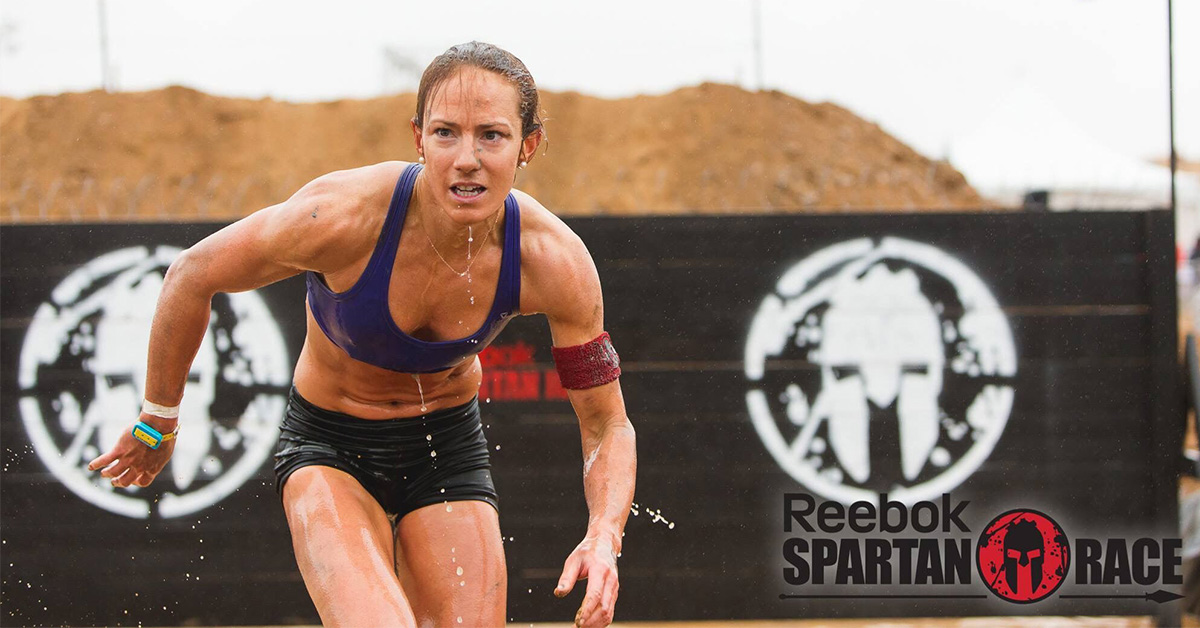
How to Go From Couch to the (Spartan) Course | with Rose Wetzel, ANW


About Episode
Rose Wetzel is a 2-time American Ninja Warrior finalist, a professional obstacle course racer, a personal trainer, and a new mom (as if she wasn’t running around enough already). She has spent her whole life pursuing athletic endeavors including trying out for the U.S. Olympic Track and Field Trials (coming just seconds short of making it), and she has literally run hundreds of Spartan races and other brands of obstacle course racing in her career. She is so good that she actually makes a living as a professional racer, something very few are able to accomplish.
Rose and I chat today not about what it’s like being a kick-ass elite-level obstacle course racer (even though she is indeed a badass), but instead she and I discuss what it takes for someone who wants to run their very first Spartan race. Beyond just the physical side of training (which we touch upon), we dive much deeper into the mindset you need to develop to get over the fears and apprehensions that so many people face when thinking about registering for an event they most likely aren’t capable of finishing…YET. We talk about how to set the right goals and create a “Diversified Portfolio of Motivations” so no matter how you perform at the race (or during any given day of training) you are set up for success instead of failure. And we talk about how to focus on small progressions every single day rather than much larger goals.
If you’ve ever been on the fence and thought to yourself, “Man it sure would be cool to run something like a Spartan Race, but I’m not ready yet. Maybe SOMEDAY…” then this is the conversation to inspire you to get off the couch and onto the course!
Episode Highlights
- How Rose became one of the top female obstacle course racers in the world
- Learning to enjoy pushing yourself out of your comfort zone
- Reminding yourself that everyone has improvements to make
- The importance of focus and a dedicated mindset in a sport like obstacle course racing
- Confronting your fear by breaking daunting tasks into bite-sized pieces
- Rose’s race injury and how she pushed through the pain to finish despite it
- Planning and preparing for your obstacles before they surprise you
- Setting performance goals, not weight goals
- Sign up for the race first, then let your fear drive you to prepare you for it
Useful Links
About Guest
Growing up in Seattle in a family of nine kids (could you imagine?!), Rose loved the feeling of running outside after tackling piles of dishes and laundry. Her love for running grew, and it landed her a track scholarship at Georgetown, where she met wonderful women she still calls her best friends, over a decade later. After college, Rose fulfilled a childhood dream of working at a summer camp before starting her own personal training business in order to encourage others to reach their health and fitness goals, while she tried to make the U.S. Olympic Track and Field Trials. After coming up a couple seconds short in the 800 meters (half mile), Rose took a friend’s advice and tried a totally new challenge – an obstacle course race!
A perfect match for her running background, strength skills, and love of adventure, Rose became a professional obstacle course racer (thanks to sponsors like Clif Bar), running up mountains in Spartan Races around the country and flying through obstacles on the hit show American Ninja Warrior.
A year and a half ago, Rose and Tim, her husband, welcomed Baby Taylor Joi into the world, and after moving from Seattle to Boulder for more mountains and Ninja gym training options a couple months later, Rose battled post-partum depression for many months, finally emerging from the condition mentally stronger than ever. Her physical fitness recently caught up as she started the Spartan season strong last month, finishing Top 3 at the first Spartan National Series race, just one minute behind the reigning Spartan World Champion. She looks to race hard all year and inspire the moms out there to continue to chase their dreams if they so desire, and remember to make self-care a priority, through her Stackit Mamas program for new moms.
Transcript
Zack Arnold: I’m here today with Rose Wetzel, who’s a two-time American Ninja Warrior finalist, and she’s also a professional obstacle course racer who runs her own personal training business as well, while juggling her new life as a mom to Taylor. So, Rose, I know that one of the biggest obstacles that we’ve both had in life is making this podcast actually happen, so I am super excited that we were able to overcome everything to get you on the microphone today. I’m really excited about this. Thank you so much.
Rose Wetzel: Oh, cool. Thank you so much for having me on and being patient with my, my crazy life schedule, which is awesome, and definitely something that is total juggling act every day.
Zack Arnold: Well, I mean, that’s one of the things that obstacle course racing prepares us for, and I’m sure that we can dig into the deeper minutia of the mindset behind obstacle course racing, and all that. My agenda today is most of my audience, as we spoke about briefly before we jumped on the calls, that much of my audience are people that are in the creative fields, a lot of them work in Hollywood, like I do. They’re either editing or writing or directing, and they spend long days in front of the computer, but I, by you know, some stroke of miracle, have inspired a few people here and there to jump into their first obstacle course race, and I’ve taken these groups from weekend workouts and hiking and running at the track to overcoming their challenges, running their first Spartan race, and you just see this look on their face after they cross this finish line, and there’s this transformation where they didn’t believe that they could do something like that, and then they finish it, and everything changes, and I have a lot of people that will come to me that say, yeah, no, I’m gonna do one of those someday, you know, I’ll get to it, and I’ll eventually, but you know, I don’t have this ready yet, and this isn’t ready yet. So, the reason you’re here is I wanted to inspire people first to understand that anybody can do this, because you certainly have more than enough challenges to say, well, you know, I’m too busy, or I’m a mom, or whatever it is, but secondly, I kind of want them to walk away with a basic idea of a training plan, when they say I do want to do this, but I kind of don’t know where to get started, so that’s kind of the idea behind the call today. But before we jump into all of the details, I want to make sure that people actually understand who you are, because you’re a very accomplished professional obstacle course athlete. So give me just a little bit of background about how you came up to be one of the top female racers in the world.
Rose Wetzel: All right, so well, a very cool of you to be inspiring people around you. I mean, that’s that’s just awesome, right? And thank you for having me on and being able to give a little nugget and help help some other people with that confidence that they need to just, you know, tackle, tackle this new challenge, so with me and my background, I grew up with eight siblings, there were nine kids in my family, so we, you know, we did, you know, bunch dishes and laundry and all that, and then we were done, we could finally run outside, so I just love this feeling of running outside, and I just always loved climbing trees, and just I just love being outside and moving and feeling the wind in my face, and all that, so you know, loving that turned into loving to, you know, do PE, which not everyone loves, but I happen to love that, um, but even if someone had a really bad experience of PE as a kid, like, it doesn’t mean you’re not an athlete, it just means you know that you maybe just had a bad PE experience, you know, so hopefully if anyone out there is like happy, they can, they can understand that yes, we are all athletes in some way, shape or form. We all have the ability to move and to, you know, push ourselves to whatever degree we may want, or just do it socially. But yeah, so I just really loved being outside, and that led to doing some, some sports like soccer and basketball and junior high and stuff, and then I ended up doing track and field, and in high school, and I was a state champion in like the half mile, and so I got a scholarship to Georgetown, and I ran there, and loved it, just just loved it, all right, I mean, it was hard work, don’t get me wrong, but I did get burnt out at the end, and then I ended up working to summer camp and gaining a bunch of weight, and not a crazy way, I shouldn’t say, but you know, good 20 pounds hanging out with my summer camp kids and stuff, not running a ton, but then I missed it and wanted to go back to doing running more, and so I tried to make the US Olympic trials and fell short, and then someone said, “You should try obstacle course racing, and I was like, “What even is that? Sure, so I do my first bar and race. I have no idea what I’m doing. It’s in the trails, which I’ve done cross country, so I knew something about trails, but.. but it was just like run amok, no. Track, no time wash, no anything, no who I was racing, and it was such an adventure. It was scary, but it was something that was out of my comfort zone, and I liked that, because I was on the track for so long, and that was my comfort zone. I feel like I could run on a track, you know, backwards with my eyes closed, but this, you know, partner race was cool and new, and so I went for it, and you know, some of the things I was, I was decent at, and some things I was terrible at, right. And that’s something that I really love about, about doing a Spartan race, is that you, you know, everyone’s challenged in some way, and everyone has something to improve upon, right. So, like, like Zack, what would you say is something that you in a Spartan race, that you’re like, even from the beginning, you were like, yeah, I’m good at this, and then something we’re like, oh boy, I need to work on that.
Zack Arnold: Well, I would have zero things in the first category when I first started, I was good at none of it. When I looked at the list of like, all right, well, they have this kind of obstacle, and this, and this, and the running, like, yeah, I suck at every single thing on this list, so I just kind of systematically went through one by one, and said, well, what do I want to work on first, and I feel like at this point I’m nowhere near as accomplished as you, but I think I’ve run like maybe 15 or 20 races, for the most part I do it with groups where I’m leading beginners, so if you looked at my times, my times are usually pretty awful, but that’s because everybody’s time is the same and the time is that of the person that’s their time is the longest, because I say we’re going to start at the finish line as a team, or going to finish as a team, so I don’t worry about what my times are, but when I first started, like, I mean, the I had a really hard time with anything that was grip strength oriented, I didn’t have a lot of upper body strength, my mobility was horrible. I hate endurance sports, so I hate, like, I hate running. Just like, why would I even do this, right? Like, how dumb am I? Let’s pick a sport where I suck at everything. But for me, the one thing that I’m really, really good at is getting myself in the right mindset and focusing on something that’s difficult to achieve, which is one of the reasons that I got into Ninja Warrior was the focus aspect of it, not because I have any real physical reason that I should be doing it, but I love focusing on something intensely and figuring out how can I build a plan to achieve this. That’s the part that I really enjoy, and with obstacle course racing, I saw that challenge where I would, in my mind, I’m thinking this is who I am in my brain, outside of myself, looking at me, you’d never guess, is what this is what I would enjoy, but I love the idea of like crawling under a barbed wire and getting sprayed in the face of the fire hose and going over the walls and everything else, and what I really loved about it was the fact that it was pushing me so far out of my comfort zone, but in a good way, and once I finished, and I actually didn’t do my very first OCR race with Spartan, it was a couple of Tough Mudders first, but it was like turning on this on switch in my brain where I lived my whole life, where the amygdala is the fear center of your brain, and for me, if you’d like done a brain scan, my amygdala would have been the whole brain, like just afraid of everything, right? But all of a sudden, I was like, “Wow, I did something that I really never would have believed I could have done. I never saw myself doing it, but now I do, and it changed so many things about the way that I approach my life and my relationships. But I don’t want to end up this being a podcast about me. This is a podcast about you. But that’s kind of where I came from was I couldn’t do anything, and now I’ve systematically gotten to the point where I ran a beast, I think, late last fall, and other than the spear throw, it was burpee free, so I’ve gotten to the point where I can pretty much knock out all the obstacles, but I still don’t like endurance running, so I prefer to do the shorter races,
Rose Wetzel: Right? Yeah, I do too, but, but again, the longer races, if that’s if you’re going for that really like challenge, like for some people those shorter races are a challenge, like a short flat race. My friend Raya, short flat races are more of a challenge to her, because she loves that longer just kind of takes her a while to warm up. She wants to just kind of get into her groove. She loves going up and down mountains and stuff. So, yeah, everyone, everyone kind of gets to choose what the, what the challenge is for them, but, but yeah, like it’s challenging, even as for myself, someone who’s done, I don’t even know how many races I’ve done, I could throw the, I’ve done, I’ve done hundreds of races, just, just, would you count track and field, road races, all that stuff, but yeah, with, with, with obstacle horse racing, there’s there’s always a challenge. I miss this. We’re in the last race, usually I don’t miss it, or maybe once, twice a year, but, but it’s good to remember not to take that for granted. But yeah, so I love, I love how you just thought as a challenge, and like understood that taking on that challenge, and that in the going outside of your comfort zone like that would permeate the rest of your life, and you know, make you more likely to do something in your career relationship, whatever. That was a little bit scary, that would, you know, that it’s like it’s like fears, like a muscle, it’s like you, you, you kind of exercise that muscle, you kind of like, you know, let’s say you’re. Like I’m afraid of everything. I’m so sick of being afraid. I’m too afraid to ask this person out on a date that I want to date. If you’re, you know, single, whatever. Too afraid to ask for a raise at work, too afraid for x, y, z. So many of us are hindered from our potential by our fears, you know. I say fears like a, like a muscle, like, you know, when it comes to ninja warrior type obstacles, like upper body stuff, especially when things are like really high in the air, it’s like really high, I’m jumping, and you know what, if I don’t, you know, let’s shade to this next bar. Well, you’ll land in water, you land on this big puffy thing, but it’s still, it’s scary, right? Oh, what if I hurt my shoulder, all this stuff, right? Fear, fear, fear, fear, fear comes in, but I find that if I, if I break things down into small increments, like, okay, I’m gonna jump from this to this, but instead of trying to grab onto the bar, I’m just gonna try to, like, tap the bar, you know, I’m gonna try to just, like, see if I can get my body over to that bar, and then, and then, yeah, I know for sure I’m gonna fall, because I’m not gonna grab onto the bar if I’m like jumping from something up high to another thing up high, lachez of sorts, but it’s like I’ll just tap it, and then I’ll, I’ll land and say, well, look, I just landed, you know, under this puppy thing, seven feet below, and it was fine. So now I’m going to try to jump again, jump a little further, instead of just tapping with my fingers, I’m gonna try to throw my hands around and actually grab the bar, you know, like you just, or don’t do it seven feet in the air, do it two feet from the from the ground, and then and then kind of work your confidence up, right? So for some people that means, you know, if you’re going to do a Spartan race, their goals do maybe a Spartan super that’s coming to their town, maybe they do a warrior dash first, because it’s, you know, shorter without quite a shiny obstacles, and then they do a Spartan sprint, and then they do that Spartan super, or whatever, you know, like it’s nice to be able to work up to it. For me, it’s just, you know, doing this, these obstacle course races, you know, they, they help me put it really well. I get, like, it helps obstacles do an obstacle course race, having things like, yeah, I’ve never had, like, water sprayed in my face, but just having some things where, like, oh, I wasn’t expecting that, or that you think on your feet and stuff, and adapt, you know, it does, it is such a metaphor for life, it does actually like help you with these skills, help you develop skills that can later help in life, like when my husband had cancer three years ago, it’s doing fine now, because it’s a weird, rare abdominal cancer, and you know it was just like that wasn’t part of the plan. Our plan was to challenge me to keep racing, and you know, you know, hopefully racing really well, and you know, I had some really, really great sponsors, like Queen of Sonic and Merit Rewards. I was doing a TV commercial here, and doing, you know, this other fun thing there, photo shoot, whatever it was, fun, and, oh, you know, kid or two at some point, and they’re just kind of like that was like the plan, and then, you know, cancer, excuse me, like my husband’s super Tim, he’s super, super healthy, healthy mind, body, spirit, like in every way, like, that’s not fair, that’s not right, that doesn’t make sense, you know, that’s also not how it works. So I had to adapt, and obviously he had to adapt and pivot, and you know, he sold his home that we were living in. We went to Nebraska for a couple months, that’s where the best surgeon was for his particular PMP abdominal type of cancer, basically. And then peritoneals, not necessarily abdominal, but anyways, not stomach cancer per se, but it’s just a really weird, like stomach lining, almost. But 12 hour surgery, put chemo in there, sloshed it around. He was tubes coming out of him for weeks, so we were in Omaha, because that’s where his parents are from, and where the best surgeon for this particular surgery was. So, there I am in Omaha, which is, you know, I mean, there’s a lovely place, lovely people, his family’s wonderful, but like spending a winter in Omaha trying to train, you know, before that, worried my husband, my husband’s gonna, you know, survive this, you know, fears can take over, right. And then, and then afterwards, how it was going to recover all the way, and just, it was just like, you know, whoa, wait a minute, this is not what I planned, but you know what, that happened at Killington, I did the Killington Spartan World Championship, I did that a couple years prior, and I sprained my ankle, not a roll, which can also stink, but like a straight up sprain, like black and blue in the first 20 minutes of a two three, which ended up being a more like four hour race for me, and people like, oh, now that the reigning world champion is injured, some people are saying that you’re up to be the favorite, you know, and I won a bunch of smaller races, but I was like looking up the mountain, I’m like, I’ve never done anything like this with salt, like, and then I barely make top 10, and which is fine, but it’s just like you have to adapt, right? You, I had, I was forced to learn how to adapt in that race. Oh, I wanted, I was running this to win, even though I still had the respect of, like, you know, I was gonna think, oh, I’m not gonna, for sure. Yeah, not at all, but like I’m gonna at least go for it. Um, even though it’s longer and harder and stupid than anything I’ve ever done, and then boom, spray ankle. Okay, adjust. Okay, now I’m gonna just do as well as I possibly can, whether that’s top five, top 10, top 100, you know, finishing, you know, that’s that’s something honorable to do if it’s like a really hard, hard, hard, you know, state that you’re in. So, anyways, did you feel like that experience, and the few experiences I’ve had with racing, helped prepare me mentally for the challenge of, you know, working through the when life threw a huge obstacle at me.
Zack Arnold: Well, yeah, and what you’re talking about is like you said, you can’t plan real life, but you can plan the way that you react to life, and you can train yourself. Like you said, fear is a skill that’s kind of like a muscle. And one of the best quotes that I’ve ever heard about this, I’m actually going to be stealing from Kevin Bull, when he and I talked about this, but he said that I like to choose obstacles before obstacles choose me, because if you can choose the M, that’s like, oh my god, dude, that’s brilliant, right? But that’s the perfect encapsulation of why I think Spartan races and obstacle races, and now for me, Ninja Warrior being the next level, is that if you train yourself to overcome these obstacles in a safe-ish, I should say, you know, not perfectly safe, but a safe-ish environment, then when life does kind of get thrown and thrust upon you, and you’re not planning for it, you at least learn how to react better, react calmer, and just kind of be like, all right, well, this is the obstacle in front of me now. How do I deal with it, as opposed to the whole like, oh, why me, and I can’t believe this happened, and this wasn’t in my plan, and this is so stupid, it’s like, nope, this is now the new reality. This is the wall that’s in front of me, either metaphorically or literally. How do I get around it, or go through it, as opposed to, oh, there’s a wall in front of me, this is just a bunch of bs, right? So that’s the whole idea behind all this, and I love this idea that you were talking about, as far as progression is concerned, because that’s the way that I looked at this, so when I decided in late 2017 I said, you know what, this Ninja Warrior thing, I’ve been sitting on the couch for two or three years watching with my kids, we’re obsessed with it, and I think in my head, you know what, I could do that, that seems pretty cool, and I’m like, all right, I’m actually gonna do it, like there’s a switch that happened in me, but then I looked at it, I’m like, all right, if I’m doing a real assessment of where I am, physically, mentally, I’m not even close. But I knew that if I set a performance goal, and this is where I want to go next, because I know this is one of your specialties. I didn’t just say, you know what, I’m feeling a little soft, I’m getting a little bit older, my mobility is bad, I guess I’ll try and lose 20 pounds. It was more, I have a performance goal of I want to be on American Ninja Warrior. So, how does that vision inform all of my daily actions, and how do I find the progressions to get there, which started with, hey, I can’t even get into a proper squat position because I’ve been in front of a computer for 20 years. So, how do I do that? And I’d run a Spartan race, and I could barely do one swing from the ring to the next on the multi rig, so I thought, all right, well, then I guess that’s grip strength, and it kind of becomes all these other things, but even to this day, like I was just at a workout yesterday with Tony Horton, Sunday Ninja Crew, and my goal is in how can I conquer this thing in front of me. An example would be the peg board, it’s all right, last week on the peg board I got it to this peg, this week I’m going to get there, plus one more peg, and if I do achieve that, that motivation fuels my entire next week of training. Just getting one peg further is enough motivation. So I want to start kind of from the beginning for people that are saying, well, why would I even train for it? If you know I have this goal of losing weight or whatever, and I know that you love talking about how the best and fastest way to get fitness results is actually setting performance goals. So, let’s talk a little bit more about that idea.
Rose Wetzel: Yeah, so I’ve been a personal trainer for over a decade and just worked with countless people with all types of goals, but usually people want to lose weight, that’s kind of a standard goal in this country, of just like, you know, you know, a lot of us, you’re working from the computer, or lead a little bit of a sedentary life, you know, in some way, shape, or form, just because that’s life, that’s our society, is mainly set up on the show, working on a farm, or something, and so naturally, as we get older, our metabolism, you know, isn’t as fast, and we naturally, you know, can gain weight, and all that, so a lot of people want to lose weight, and that’s the most motivating thing, whether it’s for looks, whether it’s for the doctor said they shared health, whatever, it doesn’t really matter, it’s whatever motivates you, right, whatever motivates you, and if weight loss is part of it, then that’s great, as long as it’s done in a healthy way, and so what I found is that when people say, I want to lose, you know, let’s say someone’s like, “I want to lose, you know, you know, 15 pounds, whether it’s for a wedding or for whatever. They could say, “I’ve tried losing this weight, I’ve had this extra weight ever since I turned, you know, 40, and I have tried this diet and that diet and this workout program and that workout program, whatever, and it hasn’t really. Be worked, and so what I would say is, like, if those haven’t worked, let’s try something different, and let’s work with your mind, right? So, if it isn’t just a matter of do push-ups this this way, or do you know this exercise this way, or eat this food before that food, I mean, that’s not working, let’s go to your mind and say, you know, what’s the why, what really motivates me, and if you’re like, I really want to lose weight, both for looks and for health, and that’s great. Okay, you have a good motivations there, cool. But you’ve wanted to lose, we’ve had those both those reasons for a few years now, and it hasn’t led to something different, like what can we do that’s different. You’ve been focused on the weight loss goal every morning you wake up, you weigh yourself, how you feel about yourself that day, maybe dictate what those scale says, might dictate how you feel about yourself that day, you know. Did I fail? Did I? Am I not feeling all that? And people can get so caught up in their mind with that stuff and self-esteem, but I would say, let’s, let’s take all that out, push that to the side for now, because that’s not serving us, that’s not working for us. That’s like getting us to our goal. And let’s focus on performance, not what can I get my body to lose, weight wise, or whatever, inches wise. What can my body do? What can my body do that’s never done before? What’s something that I will be proud of? And maybe you put on quote, “We’re an athlete back in the day, and it’s been a while, and you’re like, “I want to go back and see if I can still, you know, you know, whatever, do a slam dunk if you’re a basketball player, or maybe it’s something more along the lines of, “Maybe I can, I ran 5k back in there, like, run 5k right now, that’s your goal, right? Or maybe it’s a total new challenge, maybe you’re like, I never really was an athlete, or it was in this way, but I want to trade on this new challenge that can be really motivating, because it’s a little bit scary in a good way, like, but hopefully it’s nervous excitement, right? Like every I have a plan, and like I got some friends, like I’m gonna do this marathon, I have five friends I’m gonna do it with, and I’m a little bit scared, but like I already bought the ticket, so I’m committed, or will whatever. And in the process of training for that marathon, you find that okay, I go, I do my, my five miles with my friends, and I realized, like, man, like I want to eat healthy because my body’s like, “Hello, you just run five miles, give me healthy food, you know. And then, so it all kind of like works together, and so it just, it just, you and people end up losing weight more when they’re not focused on the weight loss, as opposed to focus on a performance goal instead that motivates them, that is so motivating and so outside of the comfort zone that it motivates them to train and to eat healthier, right? Because, oh, I already told my friends I’m doing this, so that basically, that’s I’m kind of using a lot of words here to say the main thing, which is that even if your goal is more weight loss, you don’t really care about being able to do a pull-up or being able to run a marathon, still do that anyway, have that performance goal, because in the process, it is empowering, you’re even if you’re like, I didn’t really care for you, but like, yeah, I just did a minute financially, you’re in a date thing, be like, what, really, wow, that’s awesome, you know, I just did a pull up yesterday, really, you weren’t even basically trying, you were just trying to have, you know, get this other goal, it’s just, it just, it works, it’s empowering, um, so that’s what I would say, like, that’s something like a Spartan race is great for that, because you can. It’s kind of scary, right? Like, I remember I was training for a triathlon, and then at this 200 mile bike ride after college. Yeah, I’d done some merit, couple marathons, I’d done all the running part, but this is like way out of my comfort zone, like biking for that long. I don’t like a bike for that long, swim in open water for half a mile, and that’s one lesson as a kid, like that kind of scary nervous excitement. That’s a good thing if you’re going on a down, like you’re talking about dating, but, but it is a way people get out of their comfort zone. If you’re going on a date, someone you want to have that nervous excitement, right? Like, you don’t want to just be like, so, like, oh, whatever. Like, if it’s your first day, you want to be like a little bit nervous if you really are like interested in them, but also excited, and that same feeling is what I get on the starting line of races, right? Like scary fun, even when I’ve done it a lot. So I just, I highly recommend people, even if your goal is weight loss, still find some performance goal, something to accomplish that you can focus on, so that if there’s a morning, and I don’t recommend waiting yourself every morning anyway, but if there’s a week or a morning where you’re like, oh man, like I didn’t really lose any weight this week because I was at my friend’s wedding, and I really kind of like eat and drink whatever, which I say is fun, you’re at a wedding, have fun, relax, but you might not have lost a pound that you wanted to lose that week or that month, but you got one step closer to, but you ran 10 miles, you never ran 10 miles in your life, or you got one step closer to getting that pull up, or that body weight bench press, or spot, whatever the goal may be. And that la shea that’s you know six feet as in a ninja course, whatever, and that’s really cool, big fan of that.
Zack Arnold: Yeah, I couldn’t agree more, and that’s exactly the way that my journey has gone, where if I were to look at, if I, and I do weigh myself almost every morning, but that’s just because I’m OCD about self quantification, but that’s a different, different story, different podcasts
Rose Wetzel: Are very data,
Zack Arnold: I’m data driven, but at the same time, if my motivation were tied to the scale, I would have given up a long time ago. But my motivation is tied to, oh, you know what, I went to my parkour class last night at Tempest, and I did my first eight foot lachene. It was awesome, but you know what? If I were two or three pounds lighter, it’d be even easier next time. Therefore, I want to make better dietary choices, not because I really care what the scale says, but because I want to perform better. Because this week I almost got to the top of the warped wall, and next week I know I’m going to touch the warped wall, and the week after I’m going to climb up it. Right, so for me that’s what keeps driving and motivating all the choices that I make until they become a habit. And now I’m at the point where even if I wasn’t training for a ninja warrior, I’d still do this stuff, because it’s just such a habit for me, and it’s obviously these are all positive habits, but it takes it’s taken a long time to really stack them one after another after another, but I think one of the biggest sticking points that I hear from so many people, and I know you’re going to recognize this kind of philosophy, because you obviously know Joe Desenna well, and as an aside, which we won’t get into, he was literally in your delivery room and recording a podcast while you’re delivering your baby, but we won’t go there. Yeah, he was in the video. Anybody that wants to see your delivery in podcast form, they can do a search online. But what I wanted to get into is this idea that everybody thinks of something like, you know, a marathon or 5k or Spartan race, like it’s going to be ready, aim, fire. Well, I know if I have to be in the Spartan race, that means I’m going to have to start running, and I’m probably gonna have to work on my grip strength, and I’m gonna have to do some CrossFit or some calisthenics. So I’m going to do all of that first and feel like I’m in really good shape, and then I’m going to register, and Joe DeSenna would be like, no, it’s fire aim ready, register first, which will terrify you enough to then get you to do the grip strength and do the running right, so like signing up for the race is step number one.
Rose Wetzel: Yes, it’s so true, and it’s not just the owner of a race series saying sign up for the race, give me money, like it really is to sign up, tell a friend, it’s about the whole idea of writing things, your New Year’s resolutions, writing them down, writing your goals down, having a timeline, and all that, because we have a goal kind of out there somewhere, like, oh, someday I’ll do that, but will you, you know, like, or if you, if you sign up, and you’re like, okay, I have committed some money, which is, which is, you know, money means you had to spend time earning it, and that’s valuable, right? Like, some of my life time has been put into making this money, and then I’m using it to sign up for a race, so I don’t want to waste this money, so I’m going to do this race, plus I told my friend, so that is another person to hold you accountable. Write it on social media. I have lots of people hold you accountable, you know, like make it so that you set yourself up for success, and you don’t have little little holes to sneak through, like, oh, well, I was gonna maybe do it, but then this showed up for that trip. Then I got a cold. I’ve had a cold for three weeks. I’m still doing the next race that I’m planning to do, it well, I mean, life’s plan will say how that all goes, but you know what I mean, like you, you gotta, you gotta, that commitment that sticking, that starting out with a commitment that that’s basically you telling yourself that you’re serious about it, whether you’re ready to be serious about it or not, right? Like doing that, you’re so spot on doing that. Signing up for that race means, okay, I’m putting some.. I got some skin in the game here, right? Like, I’m putting myself out there, and that’s just.. it’s so important. I can remember outside of pregnancy, I’ve always had races. I’ve probably raced a race every month of my life, if not multiple times a month, for two decades, at least. You know, it’s just.. it’s a.. it does. It becomes a habit, it becomes a lifestyle, it becomes part of socializing, and it is.. it’s really empowering, especially with Spartan racing. You get all these really cool photos, and I feel like there are people who are like, “Oh, I don’t know, I’m too X or Y or Z. Some people think they’re too old. It’s like actually people get better at races, Spartan racing, when they’re older, because of that whole adaptability. Like, you’ve been through life, life has thrown obstacles at you, like you get better at saying, well, I survived that, I can survive this, I survived labor for 37 hours, I can survive this race for five hours, or whatever, you know, like, yeah. So, but, yeah, but then people get these photos back, and they’re just, yeah, they get to see themselves, you know, muddy, and they don’t see, like, their muscles, they may be like, well, I don’t really have very much muscle, but then they look at themselves hanging from a monkey bars and, like, oh, wow. I do have bicep muscle, you know, like they get to see this version of themselves that they maybe don’t see in their mind when they look at themselves, or they think everyone else looks that particular way, but they don’t. And then it’s pretty empowering to get to get photos back and be like, oh cool, like maybe I can do that, or maybe I do look, you know, strong and capable in the way that other people might see me, but I don’t see myself. So, yeah, it’s really.. it’s a cool setup. It’s really cool that the photos, just.. they do a really good job, and I just.. yeah. And then the whole Spartan community.. it’s just people are just so supportive of each other, people show up and do races, and they don’t know anybody, and they’ll have like great mud buddies by the end, who are like helping each other up over walls, and it’s just like, yeah, it’s just, it’s so cool.
Zack Arnold: Yeah, there’s nothing that creates a very quick lasting friendship more than being dragged through the mud together, literally, and having to survive it together, so I agree with that, and then some, and what you’re talking about with the photos, I think it’s just it’s this idea of something you’ve talked about as having this diversified portfolio of motivations, which is this a great concept that I’m not going to steal from you, by the way, but like for example, I’m coaching somebody right now in my industry that said I want to, I want to raise Spartan races this year, and you know, obviously, there were, you know, there are some performance-based goals, and there’s he wants to lose some weight and do to get in better shape and enhance his mindset, but I always say there has to be something very concrete that inspires you, right? So, for him, he saw me during the coaching session one day say, “Hey, wait a second, is that a Spartan sweatshirt you’re wearing? I’m like, yeah, and it was a the trifecta one, because I’ve done a few trifectas. He’s like, that’s it, that’s my inspiration. I want to wear a sweatshirt with the trifecta metal on it, and it’s so small, and it’s so simple, and almost stupid, but if you can just say, my goal is to wear the sweatshirt, or my goal is to have the picture posted on social media of me going under the barbed wire, whatever it is that can drive you so much more than all this big picture, I will lose weight, or I will look better, or my clothes will fit better, like maybe that’s your inspiration, but for this person, that’s his inspiration. I want to wear that shirt, like one of my biggest reasons for training for Ninja Warrior, which is so dumb. I want the towel, I want the Ninja Warrior failure towel, I want that hanging in my bathroom, and somebody’s like, “Hey, where’d you get that? Well, you know what, that’s a good story. I was on this obstacle, and I fell in the water, and they gave me a towel. So, the towel is the whole reason I train for 10 plus hours a week, having two kids in a full-time job, is because I want a damn ninja warrior towel, right?
Rose Wetzel: And what’s cool about that is that you knew for sure, no matter far you got or did not get, you were gonna get that towel. Well, I mean, I guess, unless you hit the buzzer, which Kate, I think you’d be okay with not getting the towel.
Zack Arnold: Yeah, I’d be okay with not getting it then. Sure, yes,
Rose Wetzel: Yeah, yeah, you’d eventually get the towel, unless you finished all of Mamadou, and then if you’ve won the entire thing and you said I would like a towel, they give you towel, so basically you knew for sure you’re going to get a towel, whether you, whether you’re training and doing it, whether you got far or not far, whether you lost weight or didn’t lose weight, or so it’s always nice to have something that’s like a no matter what, I’ll get this, like no matter what, like yes, you still had to go and train for the races and do and finish the races, but maybe someone has three goals, like I want to lose weight, I want to finish in the top 100 in my age group, and while getting a trifecta, and I want the trifecta sweatshirt. Well, then there’s different tiers, right? There’s not just different tiers, I guess, there’s different sections, like lose weight is like that’s just gonna happen if you’re if you’re training hard and listening to your body, and like giving it the proper fuel that it wants, right? And not even like proper, proper, just like, trust me, if you’re like, I don’t know if I’m like going to eat healthy or not. Trust me, you’re going to eat healthier if you’re asking your body to like train hard. Your body’s going to be like, the French fries don’t even look good right now, like I want something that is healthy right now. Maybe tomorrow I’ll have those on my off day, but like not right now, so that just happens, like people just in my experience end up losing weight when they’re training hard and they’re listening to the body, right? So there’s that, but even if that didn’t happen for some reason, if you’re like, oh, I’m the one person that didn’t happen for whatever, you can still have, you know, in the, but you still want to get top 100 maybe, and maybe you won’t get, maybe someone like won’t get top 100 like, oh, I did the races, but I didn’t get top 100 but just by finishing the races, you’re gonna get the medals, you’re gonna get the sweatshirt, you know, so it’s like, okay, I didn’t get the say the Louis Loss or the top 100 in these three races, but I did get the sweatshirt, and I can wear that sweatshirt with pride, and that’s cool, so at least I got one of my three, you know, goals achieved right, and something to show for that, so like it’s like it’s kind of like that performance versus outcome goal, like hey, I’m going to run this race, my outcome goal is I want to win it, my performance goal is I want to stay more relaxed and the same, my mantra on the starting line, and I’m going to not go. Out too quickly, and I’m gonna, you know, keep the sense of calm confidence that I’ve been working on through meditation, or whatever the case may be. Well, you can’t control if you win necessarily, right? Because some could come in and they just play and train harder, and they just had a better day that day, and they went, and you’re like, but I had the best race of my life, I should have won. Well, that’s not how it works. It’s almost just better genetically, and or worked harder, and or whatever. You can’t stop somewhere else from beating you, right? But you can control the performance goal, so you can’t always control an outcome goal, but you can. You can control the performance goal, which is something that you put all in, all in your own control. I can control my mindset, like in control, you know, you know, running with good form, or, you know, whatever. Performance goal just means something I really focus on doing the sandbag faster than I ever have, or it’s something that has to do nothing with the outcome, time, place, anything like that, but just performance, and often, if you have your performance goals, if you, if you stick to your performance goals really well, don’t go out too quickly, don’t cut too slowly, or know whatever kind of mistakes you made in the past, you’re like, don’t, don’t do this, do that, there’s a good chance that will take you to a better to a good outcome goal, right, but instead of thinking all day long, I just want to win, I want to win, I want to win, and so, and then you think about all the day long, and you obsess with it. It doesn’t mean it’s necessarily going to happen. Maybe it will, maybe it won’t, but you can say this performance goal, I’m going to really stand up, you know, run nice and tall with good form, and not slouch the entire race, no matter how long it is. That’s a performance goal you could stick to, you, that’s in your control. You could get last place, but still say, ‘Hey, man, I had great running form out there, and that’s a big step in the direction for me to getting to be where I want to be, outcome wise, or just feeling wise, whatever, right? So I just, I love that idea of having there’s nothing wrong with an outcome goal, but just having a performance goal, and then along with that, like we’re talking about, like, this this diversified portfolio of reasons to do something, because there are some days where, so, a diversified portfolio of, like, goals on race day, you know, outcome, but also definitely performance is important. How to, how to get, you know, whatever outcome you may want, and some you can control, but then this diversified portfolio throughout all the time you’re training, which could be months and months and months of the why. Why am I doing this? Okay, someone might be like, “I want to lose weight. Well, what if you don’t lose weight for the first month? Might be like, “Well, forget this, I’m gonna not use training to lose weight, I’m gonna go back to this, you know, crazy diet, see if that works, whatever, right? But if you have lots of different reasons, well, I’d like to lose weight, but I also really, I want to do something with my daughter now that she’s, you know, 20. I feel a little disconnected. I want to be able to do something with her. She’s excited about this, so it’s a way to connect with my daughter, or something like that, or it’s a way to connect with my friend, or something like that. Let me be a social thing, and then it’s also a matter of, like, I’ve always wanted to do this thing, and I’m curious if I can do it. I don’t know if I can, or whatever. This is like, you have lots of different reasons, so if you wake up and it’s pouring down rain, then you’re supposed to go run, you know, six miles up and down a mountain. If your only reason is because you want to, like, try to look a little better in a pair of jeans, you might look outside the rain and be like, and I got that much, but if you’re like, okay, I signed, I already paid 100 bucks for this race, I’ve got four friends waiting for me, I don’t want to make fun of me for not showing enough, plus I really want to be able to do this with my friends, or with my, you know, daughter, or son, or, you know, grandpa, whatever, just having those extra reasons, you know, there might be a day where you, that reason won’t work for you, but this reason will, and we need that, so we can, we can set our goals, stick with our goals, and feel good about the, you know, kind of like, you know, better person we are for having gone out of our comfort zone and gone for a goal,
Zack Arnold: Yeah, I couldn’t have said it better myself, for sure. So, if we have somebody that’s listening, they’ve heard all of this, and they said, “You know what, I’m just going to go for it. I’m going to go online right now, spartan.com Oh, there’s a race in my area in four months, screw it, I’m going to buy it. They’ve just bought their ticket, and now they’re saying, “Whoa, I have no idea what I’m doing. Like, if somebody says I’m going to run my first 5k what do they do? That couch to 5k.com Oh, I run this much today, this much tomorrow, this much the next day, but then I know people will look at the Spartan race and say, yeah, but there’s so many things to do, I don’t know where to start, therefore I’m doing nothing. So, if we have somebody that doesn’t, they don’t have that foundation of fitness and of training, they could, they can very easily focus on all the wrong things. So, how would you help a newcomer just build a basic outline for how to train for their first Spartan race?
Rose Wetzel: It’s a really good question. So, everyone is so different, so. Many different factors to consider, but in general, if someone’s like, okay, I’m doing, let’s say, a super, that’s the middle, you know, distance, eight miles, you’re like, okay, eight miles, but plus obstacles, so it for a lot of people ends up being closer to like their half marathon time, so it’s like, okay, maybe you go online and you find a half marathon training plan and you choose the beginner, then the intermediate, or the beginner, beginner one, probably. If you’re a beginner, and you follow that running plan to get your running fitness better, and you might plan to walk, that’s okay. You could still, you could do a walking half marathon plan, and then on top of you, like, okay, well, I got my, I’m getting, I’m gonna get a little bit at running, so that’s cool. What about all those other obstacles? Well, there are two like types of obstacles, in a way, like some of them are absolute strength, like literally, like flipping a 200 pound tire, where you’re just like, I need to get stronger, I need to get, go to the gym, and do some squats and deadlifts, I don’t have a gym membership, that’s okay, do some lunges at home, add some weights, put a backpack on with some books inside, like get your legs stronger to be able to do stuff like that. It certainly doesn’t hurt to go online and look up like form for flipping tire, form for climbing rope, which leads me to the next type of obstacle, which is those upper body more like ninja type relative strength optical, so it’s relative to yourself, your own, you know, body weight, that’s that’s more of the upper body, upper body strength and grip strength. Honestly, you can do so much at a playground, like literally just doing the monkey bars at a playground, and if you’re like, oh my gosh, I can’t do the monkey bars at a playground, which, by the way, is actually hard to do when you’re not like 10 years old. Then you just hang with both hands from the monkey bars, while if you have kids, they’re playing around, or if you don’t have kids, that’s okay. I went to so many playgrounds before I had kids, and, like, you know, whatever. Half the time there’s no one there, and that time they’re just like, you know, ignoring me, paying attention to their own child, and it’s not, it’s not that big a deal, but yeah, hang from the bars at a playground, hang from one hand to the other hand, and then try going, really kind of use your momentum and swing to swing from bar to bar, and get your hands strong with the hangs, and then work your upper body, you know. Obviously, we can do a pull up. Well, that’s great, and you’re probably not a beginner, but if you can’t do a pull up, then welcome to most people. And you can just work on things like, like the rope climb. You don’t actually have to be able to do a pull up. If you can find out online, which is easy to do, if you just google it, you can lock your feet, and it’s more like you’re just standing up on the rope. If you do, you have to hold yourself. But I guess my point being, some is hard. It’s hard, no doubt. It’s a challenge for anyone new. It’s hard for me, my first time. It’s hard for me, my 50th time. But at the end of the day, really, you can’t do like something like a rope climb, which a lot of people cannot do in the beginning. What you really have to be able to do is just the 30 burpees, so you can run, walk, or hike, and you can do 30 burpees, and you know you might want to be able to do 30 burpees like five or six times, just in case you were to fail like everything possible, that’s a burpee obstacles. All the upper body ones are burpee obstacles. If you just do that half marathon training plan, and every, you know, 20 minutes you do 30 burpees, and maybe the first time you just do five burpees, and you work your way up, then even if you could do like none of the failable obstacles, you’d be prepared to do a Spartan race. It would just turn into like more of a burpees bar and race, and so, yeah, so I’d say look up like a half marathon training program just to like get the running portion down and upper body wise. Go to playground if you don’t have a gym membership, get a pull up bar, it’s great investment at home, so you can hang from it for your grip strength. Take a chair and do pull up like negatives, where you just jump up from a chair and then go slowly down to like a pull up starting position. If that makes any sense, look it up, pull up negatives and lunge. Get your legs strong. Obviously, there’s time you can do at a gym, but you don’t have to have this major massive CrossFit membership to be able to do a Spartan race, you just got to have an open mind and, like, a sense of fun too, and you know, bring, bring food and water, and have a mindset of, like, okay, I’m gonna take this one at a time, here we are, a wall, can I do it? Oh my gosh, I did it! Wow, oh boy, this is not happening. Excuse me. Do you mind helping me? Oh, of course. Okay, cool. I’ll have to do is just grab this person’s hand from the top of the wall who’s reaching down to help me out. This other person will let me step on their foot, and then, like, boom, I’m over the wall. That’s so cool, so. So just remember there are people there to help you out, there are ways to train at home and at playgrounds, and at the end of the day, just leave your pride aside and say I’m gonna go be a little kid for a few hours and just have fun rolling in the mud and challenging myself and doing what I can, and when I can’t, just doing my burpees, and trust me, you have a lot of people to do burpees with. Misery loves company. The burpee pits are always full. You just do one burpee at a time, and then you move right on with a smile, hopefully. And, and realize that, like, you know, hey, I’m, I’m, you know, even if I’m not the fittest person in the world, I’m healthy enough to be out here doing this. There are people who do it with, like, one leg and one arm, too, by the way. So, it’s not even like I have two legs and two arms. You even have to have two legs and two arms. That was seen helps, but on, yeah, just to be healthy and alive and able to go out and do it and challenge yourself. The group of like-minded people is, it’s pretty special,
Zack Arnold: Yeah. When it comes to the whole one leg, one arm thing, whenever somebody will say, “Oh, yeah, no, I was, I was gonna do Spartan race that weekend, and, but I had a cold. I’m like, “Really, do you have two legs? Because there are people running Spartan races with zero legs, literally. Just go online and look it up. Like, there are people that are doing it with cerebral palsy with their crutches, and I mean, so to me, there’s really no reason that you literally can’t do it, and your excuse is valid. It’s just a matter of whatever obstacle you’re putting in your mind, but I think that going back to something you said earlier, where you’re like, listen, you need food, and you need water, and you need all this other stuff, but my biggest belief is that the thing you need when you least go your first time, is you have to have a team, you have to have people with you, because I’ve done obstacle races by myself, and they were really hard, but I’d also done multiple races, so I felt comfortable with either feeling like I could overcome something on my own, or I knew the environment and the climate and the culture, and I could say, “Hey, man, I really need help, can you grab my hand or push me over, or whatever it is, but I can’t even imagine the terror of doing my first obstacle race by myself. So I think that finding a team of people, friends, people that you trust, people that have done it before, that can help you through it, that to me is absolutely key.
Rose Wetzel: That’s a really good point, that it also just makes it more fun and social, but yeah, even just one or two other people, and it’s easier to find people than you think, like co-workers. It’s like a lot of people, like some people think I have to be fit. There are people 200 pounds doing it. I mean, it’s there’s some woman who did in her early 80s. I mean, it’s not like, oh, who’s a fit friend who will do this with me? I mean, it’s really, you never know who you could ask, who would be like, you know, what, that’s such a good idea, that’s a perfect goal. When is it? Three months away. Awesome. Yes, I will do that with you. I love it. Let’s train together on our lunch break, or whatever. So, you know, don’t, don’t, or someone can say no. Oh, yeah, not my thing, and that’s fine too, but um, but I would say, you know, ask around, because there are more people than you might think who would be like, that’s so cool, I’ve heard about that, sure, why not.
Zack Arnold: Well, I can, I can say that one of the reasons that I brought that up is completely self-serving. It’s because one of the things that I’m working on this year is building larger Spartan teams of people in my industry, or anybody listening, so for those who are thinking, ‘Man, I kind of want to do this, but I don’t know anybody, just go in the show notes for this episode, and I’m going to have a link to all of the various events that I’ve registered for this year. I put together my Spartan calendar, and I believe I registered for at least four or five different races, and I’m going to be bringing teams with me, but it’s not teams of super strong, super fit Spartan racers that are going to crush it. It’s more, hey, if you’ve never done this before, come with a bunch of other people who have never done this before, so you can all figure out how to overcome this together. Because I have been at these races now over and over with people that were convinced they just couldn’t do it, but they got over the fear, they registered, they came to a couple of my hiking groups or track groups, or whatever it was, and then the look on their faces, they’re just this different person during the race, it’s tough, like that, they have a really hard time, and I’m not saying that they’re having a ton of fun the whole race, but the smile on their face at the end of it, like, my god, is that rewarding, and I know that you’re you’re flying with the elites all the time, but I’m guessing you’ve at least had an experience or two like that as well.
Rose Wetzel: Childbirth, yeah, this is really, really hard. I was not smiling the whole time during labor, believe me, it was 37 hours, but man, what an amazing, you know, prize, for lack of a better word, at the end, and, and, yeah, I mean, why is it set up that way. Why, why is it that you know the pain can equal something so great? But yeah, it’s when we’re challenging ourselves when you’re when you’re doing the race and you’re like, I don’t know if I can do this, and then you do do it, you’re like, I had to really dig deep, like physically and mentally, and then, and then I had people who were cheering me on, and my friend, right. I said it once, like she was trying to do this obstacle over and over and over at a different race, a non-Spartan race, where instead of doing burpees, you had to, you just had to keep doing it until you could do it, or you, or you, like, you know, give up your band, and you no longer get, you know, prize money obligation, but anyways, and she said that people were cheering her over and over, doing these like wet slippery monkey bars, and she said there was something about it where it’s like they like the more they cheered and the more the more I realized that they believed in me. It’s like I started to realize that like, like I started to believe in myself, like as they cheered and cheered, it was obvious that they believed I could do it, and as I kept trying over and over, I could hear their cheers and was like, they believe I can do it, and then, like, you start to believe it yourself, and then you do it, and you’re just.. it’s just.. you can’t bottle up the feeling of, you know, pride, for lack of a better word, when you accomplish something that you were scared about, that you trained for, and then.. and then when it happened, you’re just like, wow, and like, what else was I afraid of that I.. that I didn’t think I could do, that I could then go do, and it does, it, it just spreads throughout your life, and it makes for this richer life, where you start to break down the cages that we have, for whatever reason, from childhood generally, and we start to realize that, like, we can do so much more than we thought we could do, and just the world opens up to us, and in the life that maybe was already pretty good gets to be that much better, because we, we, we tear down these, these limitations and beliefs that we have surrounded ourselves with, and then we find other people who look at us differently and say, “Wow, you did what? Wow, cool. And then they ended up, and sometimes treating you differently, because they’re like, oh, wow, this person is someone who has confidence, who has fearlessness, and like, you get this, this, this respect from others too, which, you know, I’m not saying it’s the only reason to do it, but I mean, it’s, it’s a nice perk.
Zack Arnold: Oh, yeah, no, it certainly is, and all those things come with it, but going back to what you said about this idea of people cheering you on. I’ve seen this over and over. It is so infectious, but I think the the image that somebody gets in their mind, that’s a beginners, they’re thinking, oh my god, I can barely do a pull up, I can barely do push ups, man. Last time I did burpees, it was so embarrassing, like I’m going to be around all these people that are better than me, and I’m just going to kind of feel bad about myself. They’re going to feel on you’re holding us back, and they get all these images in their mind, and I know because they’ve told me. But what I found, which is such a cool experience, I to kind of give as a microcosm. When I was at the LA Dodger Stadium race, I think it was last year, they had on the big Jumbotron board, they had the people climbing the ropes, and you would see, like, you know, the super fit CrossFitters, they’d go up and down the rope, and people would kind of be watching, but then there’s this woman that was on the Jumbotron that was not in very good shape, she was a little heavy, but she was doing everything in her power to get to the top of that rope, and the entire stadium, and the race stopped, and people watched this woman climb to the top of her rope. It’s actually going to make me cry, because it was so inspired. Goosebumps, yeah, right. So, but I’m sure you’ve seen these moments where this woman might have said, “Oh, well, you know, I’m not in very good shape, and people are going to laugh at me. It’s like, no, it’s the opposite. We want to see somebody hitting that limit, but then overcoming it, because it’s the coolest experience ever, and everybody gets into it, because we can all relate to it. I might be able to climb the rope better or faster than everybody else in my group, because I’ve done it more, but that doesn’t mean that I don’t have other obstacles where I hit that same wall, but to see somebody hit a point where they say I don’t think I can do this, but then they do find a way to overcome it, like that’s the most, that’s the, the most amazing drug that I have ever experienced, is either feeling that or watching somebody else do it. So, for anybody that’s self-conscious, thinking, oh, well, you know, I’m just going to hold them back, or I can’t do this, like I enjoy the experience of watching somebody go through that struggle, but then overcome it. It is so amazing to see people do that,
Rose Wetzel: And that’s why I became a personal trainer. Like, I’ve helped people lose 85 pounds, 75 pounds, 55 pounds. Yeah, I help people lose two pounds or four pounds too, but that’s not exciting. It’s the people who are like, this will change my life to lose this amount of weight, and it’s not even necessarily the weight of the.. it’s the confidence that obviously health, but like the confidence that they have that shines through, like it is.. it’s so neat to see, to see that, and then it.. and then it inspires everyone around, so it’s yeah.. Is it fun to watch people who win the Boston Marathon, running insanely fast. Yeah, that’s very inspiring, but like the people at the end of the race who are like, you know, just be maybe it’s even a local, just like a, you know, half marathon or 10k or 5k but who are like struggling to finish, but man, they make it, and it’s like that is so cool from the. Back, you’re cool. Back the pack, you’re also really cool, because it doesn’t feel as good as the people that front of the pack. When I run, it feels good, and even when it’s hard, it still feels good. You don’t see me out there, you know, doing a three mile open water swim. That’s not pretty, right? Like, but when I have done, you know, half mile open water for triathlon, like it was hard. I zigzagged, I swallowed a bunch of water. It wasn’t pretty, but man, was I proud of myself when I was done, more so than the, you know, 5k the end of the triathlon, you know. So it’s just, it’s cool to do for ourselves, it’s cool for other people to see, and you’re spot on, like you’re not going to hold people back, you’re going to be enriching their lives really with your own, you know, sense of determination, and all that, and so, yeah, it’s just.. it’s that’s what I love about these races, there can be 10,000 people there from every background and every ability, and everyone’s a little nervous, everyone’s a little excited, and everyone’s, you know, finds value in in pushing themselves to reach new limit.
Zack Arnold: Yeah, well, on that note, I want to be very conscious of your time, but speaking of trying to overcome challenges and figure out how to sequence all of these things, I want to make sure you have the opportunity to plug your new online program, because this is clearly a specialty of yours. So, give me the 62nd pitch for the Stack It program that you’re putting together.
Rose Wetzel: Yeah, so I have this Stack It Mama’s program, I mean, also have Stack It Sisters, and part of me is like, maybe I’ll expand it beyond that for the guys out there who are like, hey, actually, this, this is cool, this concept works for me too, but it’s basically my experience having a baby, I moved, it was tough in ways I didn’t even know we’re gonna come at me, that’s also runs in my family, but I went through some poor farm depression, and I think that a lot of new moms are like, you’ll feel pressured to like get fit and all this stuff after every kid, but they’re so exhausted, and so I feel like it’s really important to have that self-care component, and really everyone can benefit from self care, too, especially those new moms who are just like, ah, trying to do everything and taking care of everyone else but not themselves. So, I have this foundation of like, first take care of self care, then we stack on the nutrition and the fitness, but doing it in a way that’s sustainable emotionally, physically, whatever, so we can have this great foundation moving forward to be the best person you know, partner, mom, friend, sister, whatever you can be, so that’s something that I’m really excited about. Now that I’ve gone through that experience, like, how can I make this, you know, easier and better and a better foundation for the moms out there, but then also when it comes to things like obstacles in the obstacle course racing world, I think that there’s a need for obstacle tutorials that not just say, ‘Hey, here’s a way to do monkey bars in three different ways, but also not, and also just not just how to train for them, which is also valuable, but how to simulate an obstacle, like at a playground or at a gym. So that’s also something that I’m working on that I’m really excited about. Will Shelby Dumbas soon, and then I have a 30 days of core program that I created, and I’m working on 30 days of speed and 30 days of glute work, which someone requested, so, so I have like this kind of like new mom program that I want to help out, but I also want to help the broader obstacle course racing world with, you know, core program and optical tutorials and all that, so yeah, people can follow me at Running Rosie on Instagram. All of that will be available there. I second, Mom is also on Instagram, and then yeah, just just really stay tuned for I got some good fun stuff that I want to share with people, because I love to race and race hard and race well, and I find that I race better when I’m also focused on helping other people.
Zack Arnold: Sounds like you need more to do.
Rose Wetzel: Yeah, real bored all day.
Zack Arnold: You and me have the same problem, just not enough things that we want to do in the day, too many hours that are empty, not motivated, like yeah, you and I have the same problem. So, well, I’m gonna make sure to put all that stuff in the show notes, so people can find the program, so they can find you on social media. But I can’t thank you enough. Like this, this call just inspired me, so I can’t imagine how it would inspire all the first time potential racers that I really, really hope, as soon as they get off this call, are going to spartan.com registering for the race, and we’ll join my team of first timers to get you guys over the wall and through the finish line. So,
Rose Wetzel: Yeah, awesome.
Zack Arnold: This has been awesome, Rose. I really, really appreciate it. And I really hope that we either cross paths on the Ninja course or Spartan course sometime soon, so we can meet in person.
Rose Wetzel: That would be awesome. Thank you so much for having me, Zack. Cheers,
Transcribed by https://otter.ai
Episode Credits
This episode was edited by Curtis Fritsch, and the show notes were prepared and published by Elyse Rintelman. The original music in the opening and closing of the show is courtesy of Joe Trapanese (who is quite possibly one of the most talented composers on the face of the planet).