


AI Isn’t Taking Your Job. But Your Boss Is. | with Brian Merchant
Brian Merchant explores AI’s real impact on jobs, using history to reveal why creatives must adapt strategically to protect their work and future.
Let's create things that matter. Together.
What if the idea of a stable, linear career path is the very thing holding you back?
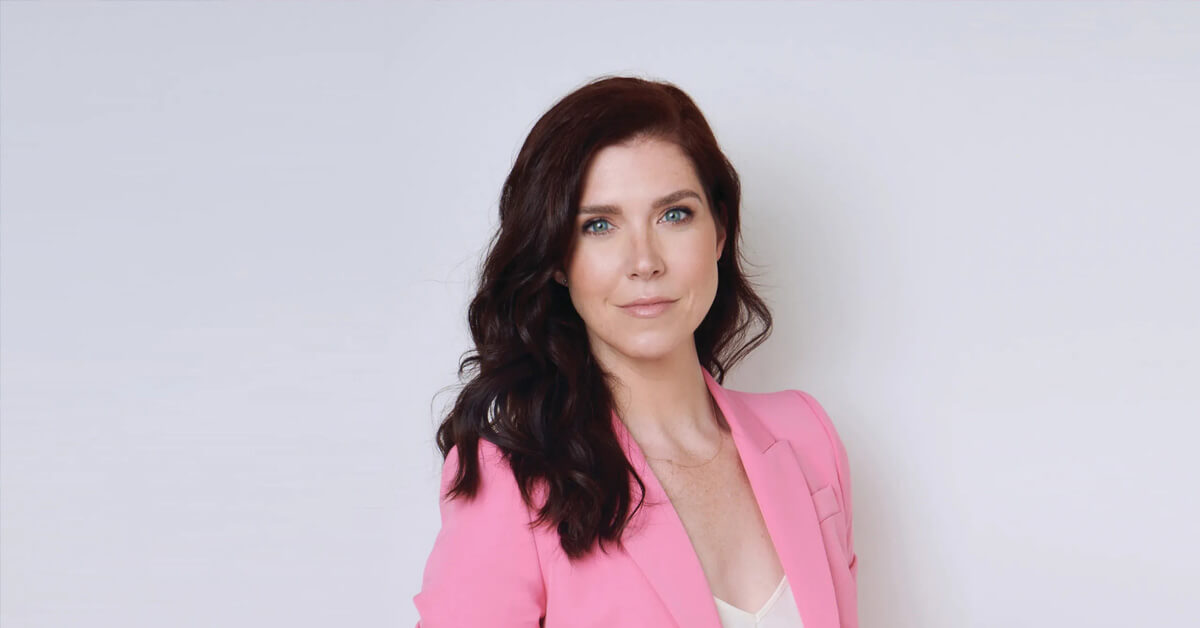
In this episode, I’m joined by returning guest Christina Wallace to explore what it really means to navigate the future of creative work. A longtime advocate of “The Portfolio Life,” Christina challenges the idea that we have to choose one path, and instead encourages us to integrate our diverse skills, passions, and experiences. We talk about why the “unprecedented” is now the norm, why waiting for things to go back isn’t a strategy, and how embracing your inner “human Venn diagram” is essential. If you’re ready to take ownership of your career and build a more intentional, flexible path, this conversation is for you.
A self-described “human Venn diagram”, Christina Wallace has crafted a career at the intersection of business, technology, and the arts. She is currently a Senior Lecturer at Harvard Business School, where she teaches entrepreneurship and leads HBS Startup Bootcamp. Her latest book is The Portfolio Life: How to Future-Proof Your Career, Avoid Burnout, and Build A Life Bigger Than Your Business Card (Hachette, 2023).
A serial entrepreneur, Christina has built businesses in ecommerce, edtech, and media. She also co-authored New To Big: How Companies Can Create Like Entrepreneurs, Invest Like VCs, and Install a Permanent Operating System for Growth (Penguin Random House, 2019) and was the co-host of The Limit Does Not Exist, an iHeart podcast with millions of downloads over 3 seasons and 125 episodes.
Christina’s Website
Zack Arnold: Christina, before we get started, this is something that you might not be aware of, but you are actually the most popular guest lecturer at my academy. When you and I did our first interview a little bit over two years ago, the number one reference that I’ve been sending people to is our conversation about how to build a portfolio life. Not only that, you and I have actually built an entire course together, and you probably didn’t know that as well. I designed an entire workshop that I called “Design Your Dream Career” that gets really nerdy with a bunch of Venn diagrams and three-dimensional funnels to figure out how we find who we are, what our asymmetric advantage is in this world, and how we build a portfolio career and a portfolio life that’s far bigger than our job title. So you didn’t even know it, but you and I designed a course together.
Christina Wallace: I’m so delighted. It means I’m working in my sleep. That’s lovely to hear.
Zack Arnold: I very much appreciated that interview. It’s probably the most referred-to and the most popular one that I’ve had in the last two-plus years. And that begs the question: why do this again? I could literally just send the link to people and say, “Just listen to this.” I’m going to tell you why I think we should be having this conversation again, and you can tell me if I’m wrong. You’ve been saying for just short of a decade, and it was literally one of the titles of one of your TED talks, that “the future belongs to the human Venn diagrams.” The reason I think we need to do this again is because that’s no longer true. The present belongs to the human Venn diagrams. My guess is you’ve got a pretty strong case of I-told-you-so-itis because you’ve been screaming this from the rooftops for years, and now we’re all seeing this come to fruition. So you tell me, is it worth it having this conversation a second time? Has anything changed in the last two or three years?
Christina Wallace: Only the speed at which everyone is realizing they have to figure this out. It is noticeable. I have a 15-year reunion of my business school classmates next week, and it is going to be very interesting to see just how many folks who thought they were going to have the straight, linear, traditional path are going to be scrambling for how to get up to speed with what this means for them. The unprecedented is now the norm, and I have to figure out how to be entrepreneurial as a matter of getting out of bed every day. I have to own my career, no matter what industry I’m in or what function I’m in or what level in the organization I’m in. I didn’t sign up for that, and yet that’s where I am.
That requires bringing all of my skills, all of the pieces of me, to bear, and I’m going to have to make and remake myself every shift, every few years. That is just an entirely different mindset than most of us were prepared for. I’ve been doing this my whole career, so it doesn’t feel all that scary for me, but I think for everyone else my age, your age, who were sold a different bill of goods, it is a whole different shift. For the folks younger than us, they’re like, “Okay, this is the world we’re living in.” For the folks older than us, freaking terrified. So I do think this is a good time to revisit this conversation because, man, the last few months have been a little bit of whiplash for a lot of people.
Zack Arnold: That’s an understatement. The only correction I would make, at least for my audience, is it hasn’t just been the last few months; it’s been the last two and a half to three years. When you and I last spoke, it was just at the beginning of 2023 when they had just begun the writers and actors strikes. Everybody was in the mindset of, “We just got to wait it out. We just got to get through this,” and then everybody’s going to go back to work. And I was like, “Hold on a second. What if it doesn’t come back? What if this is us defining what our new normal is?” I started to talk about the value of switching from specialization to generalization, and I still have the scars from the flaming arrows that were thrown at me. That was sacrilege. That is not what we do. We are highly specialized craftspeople. We’ve spent decades learning it. And I’m like, “Yeah, me too. That’s not the reality that we are entering.”
I was saying all these things before I had even heard of you, which is how I found your book, The Portfolio Life, and said, “Yes, somebody has put to words and brought a framework to all the things that I’ve been thinking, feeling, and saying.”
Christina Wallace: The “we just have to get through this, and then it will all go back to normal” feeling—I feel like, in some way or another, I’ve been saying a version of that in the same way that I’m like, “I’ll just have to get through this next two-week sprint, and then I’ll have some free time,” or “I just have to get through this next semester, and then things will calm down.” We know that’s not true. I am 41 years old, and things have never calmed down ever in the history of my calendar. A therapist of mine said, “What will it take for you to listen to reality?” And the same thing here is true. “We just have to get through the writers’ strike, and then we just have to get through the wildfires, and then we just have to get through the tariffs and the immigration…” You name the disruption. This is what it is.
A big part of this is understanding, as you said, how we might adapt, particularly in your line of work, going from this very artisan, specialized world to cross-training, to having more of a generalized skill set. In the corners of the world that I come from—in tech or in business and entrepreneurship—thinking about what are some of the ways where I can take my skillset and apply it across different industries and have a diversified customer base or multiple income streams. It’s never going to come back. What is “back”?
Zack Arnold: You and I are on the same page on so many things, just as we were last time—two overachiever kindred spirits. The first thing that I want to highlight that you brought up is this recurring conversation about the word “unprecedented.” What I’ve been saying forever is that, by and large, if you look at history, most of what we’re dealing with is not unprecedented. The transition of major technology, political shifts, geopolitical turmoil—all of these things individually are not unprecedented. What’s unprecedented is the convergence of all of it at the same time and the speed and intensity at which it’s all happening. We’ve never seen this kind of geopolitical turmoil? Of course, we have. It’s been so much worse throughout history. I just can’t pinpoint any moment where it’s been all of it at once.
Christina Wallace: We’ve had each of these issues, but to layer them on top of each other and to experience them years apart, months apart, and to have this global connectedness—I think that’s the other factor. We have a global economy, a global communication, and a global interconnectedness. That also means when part of the world is experiencing their piece of the disruption, it also affects other parts of the world. We’re getting shocks in ways that we might not have experienced 100 years ago. It reverberates, even if it’s not an economic or political shock, it is an emotional shock.
The visibility, the constant turmoil of the 24-hour news cycle, and just knowing about the uncertainty—our brains were not designed to know this much information and to constantly be bombarded with this level of “if it bleeds, it leads” bad news. I think that level of bad juju, it’s just too much. All of that combined is the piece that’s unprecedented and is overwhelming your nervous system to a place that makes you default to freeze. And freezing is the worst thing you could possibly do in these moments.
Zack Arnold: Going back to where you said the brain can’t process it, the nervous system also can’t process it, and our hearts and our emotions can’t process it. This is a conversation that I’ve had extensively with several other guests. There’s a high correlation between being highly creative and being highly sensitive. If you’re wondering, “Why can’t I find the inspiration?” Oh, I don’t know. How about tariffs? How about Ukraine? How about Palestine versus Israel? How about insert 100 other catastrophes? And you’re wondering, “Why can’t I just get my creative practice back in flow?” And, oh, by the way, “I don’t know if any of this work is going to be meaningful or relevant or generate any income.” And you’re wondering, “Why am I having such a hard time?” There you go.
Christina Wallace: It’s impossible to play, which is what creativity requires. It’s impossible to sort of let that childlike wonder allow you to play when you’ve got that surveillance state up and aware. I remember when I first had the idea to finally write The Portfolio Life, I was talking with my agent about this. It was right at the beginning of the pandemic, and she was like, “Now is the time.” I had just had a baby, and I technically had nothing to do. I was just sitting at home, and she was like, “This is it.” And I was like, “I literally can’t. I can’t think. All I am doing is existing right now.” I was in ground zero, New York. My husband was working on pandemic response for the city. I had a three-month-old who was more like a potato at that point. And I was like, “I don’t have anything to give right now.” So I needed to just take care of myself and refill the well, which basically looked like three months of walking through Prospect Park in long loops with the baby strapped on me until I felt human again, to the point that I could actually allow the creativity and the play some space to step in front of a page and start writing.
Zack Arnold: Finding that space right now is so impossible, but I keep telling people you have to make the space. One would argue, “Well, we have nothing but time,” because there are so many people that are either underemployed or unemployed. But it’s so easy to say, “Well, just be doing the outreach. Just be updating your resume.” But we’re just frozen in this emotional state of uncertainty.
Christina Wallace: Space on your calendar is not equivalent to the headspace to do the work. When you look at the combination of things in your portfolio, you think, “Are my financial needs being met? Are my community needs being met? Are my health needs being met?” You might find in this place of underemployment or unemployment, it’s so easy when you’ve got this big space on your calendar to sort of fall into these moments of freezing or hibernating. Your portfolio becomes this big empty circle where none of your needs are being met. You’re not moving your body, you’re not communing with people, you’re not inputting anything artistic and creative, and therefore it’s impossible for you to output anything.
Your portfolio becomes a black hole. So part of this is, what are the pieces that you can put into this to meet some of those needs to begin the momentum, so that you have the headspace and the energy to go and do the other work? Moving your body and finding the people and finding the creative practice—those things meet the needs and actually fill up some of that space on your calendar so it’s not just staring at you. It will create the magic that allows you to get going.
Zack Arnold: What I want to really focus on for the remainder of this conversation is where I believe you have such a unique expertise. I want to be very conscious of the fact that for a lot of people, “doing the work” is waking up, getting out of bed, and taking a shower. Awesome. But I think one of the areas where we really need to prioritize our attention is figuring out who we are as Venn diagrams. The future is not human Venn diagrams; it’s now the present. We don’t have this choice anymore of whether to stay on a specialized path or become more generalized. That choice has been removed for all but maybe 2% of our entire society.
I remember you saying something very specific in our previous interview when I had said, “All of this sounds great, but who has the time to do this?” And you said, “You don’t have time not to be doing this.” And boy, once again, you get a nice “I told you so” on that one. Those that have been doing that work for the last several years are now in a position where they’ve identified, “I see the storylines. I see where I can be valuable.” But I feel those that are in that “I’ve been waiting around for things to go back to normal” camp are just starting this process. So I want to give them some tools and frameworks because the biggest fear is the limiting belief, “I’m starting over.”
Christina Wallace: Oh my God, no. You’re not starting over. Everything you have done up to this point is fodder, is part of your skill set for whatever you’re going to do next. Everything is copy, as Nora Ephron would say. Whatever you do next, you come in with the expertise that you’ve already had. I am currently a professor of entrepreneurship at Harvard Business School, but I am the actor, director, classical pianist, cellist, singer, now Broadway producer, Professor of Entrepreneurship at Harvard Business School. You might think those things have nothing in common, and yet, it turns out, I have this incredible ability to be on a stage which makes me excellent at teaching. This means I have now become someone they ask to help coach a lot of the other new professors who have PhDs and have spent their entire careers staring at books and are uncomfortable looking at rooms of people who look back at them. All of a sudden, this becomes incredibly relevant and gives me a niche into this world.
As you think about the worlds that you come from, it’s not just the expertise or the training you’ve received. It’s the upbringing you had, the religion that you escaped or that you found later in life. It’s the fact that you’re the middle of seven siblings. It is the swimming lessons and the training that you had at four in the morning for ice skating. All of these pieces that you got to know intimately become part of the lore, the expertise, the perspective that you bring to the room. They’re not all relevant in every room, but you would be surprised how many things are relevant.
Part of this work is to excavate all of these interests, or to even allow yourself to realize that that love of The Great British Bake Off that has been a big part of your life for the last 10 years absolutely can be a thing in your Venn diagram. And then part of this is to allow the people around you to reflect back at you who you are, to go to them and say, “What do you come to me for? What is that moment when you think, ‘I need to go and see what Zack has to say about this’?” That will help you identify the things that you peek at over your peers and give you a better sense of what you have to offer.
Zack Arnold: This is where having Post-it notes and a whiteboard could literally change somebody’s life. One of the exercises that I designed is an exercise that I call “Connect the Dots.” I’ve watched people just start to collect what all these dots are—the hard skills, the soft skills, or as I prefer to call them, the human skills. Me, for example, I grew up in a blended household. I’m an excellent mediator. Ask me why. It led to me being both a very good film and television editor, but also a coach and a teacher and an educator. And I’ve seen it with my students. They just take a bunch of Post-its and start to overlap them. They’re like, “Oh my God, it never occurred to me that this could be a thing,” because our system didn’t give us permission to say that we can be all these things.
Christina Wallace: I love that example. Not only is that such a great insight into who you are, it’s also such a perfect little story that tells me who you are in 15 seconds. If you were coming into an interview and you’re trying to give me an example of why you’re going to be great for this role that requires being a great mediator, and maybe you don’t have a ton of that experience on your resume, but you’ve got a great story like that, boom.
I had a student who was trying to figure out how she was going to go in for interviews, and the resume in front of me looked completely boring. I was like, “I know you, you’re not a boring person. So help me figure out what makes you stand out.” It took three or four follow-up questions before it came out that she qualified for the Junior Olympics in ice skating. I was like, “Where is this on your resume?” She’s like, “Well, I don’t do it anymore.” I was like, “I don’t care. The level of discipline that that requires, the excellence—put that on here. That tells me something about you. If one person in this committee has a daughter who ice skates, boom, we have a connection.”
Zack Arnold: This is a process that I take my students through all the time. Tell me why it’s relevant and connect the dots. Once you say somebody that trained for the Junior Olympics, there are a whole lot of safe assumptions I can make about that person. It’s the difference between, on the bottom, “hobbies and interests: I enjoy playing baseball,” versus “I just finished a decade as the starting shortstop for the New York Yankees.”
It’s our job to connect the dots, but there’s so much relevant experience. Going back to my own Venn diagrams, I had a pretty unhealthy obsession with The Karate Kid films and with Mr. Miyagi growing up. Do you think it’s just happenstance that I ended up being the lead editor and associate producer of Cobra Kai on Netflix? Probably not. I knew so much, like all the little nuances. We would put together a scene, and there would be stuff that wasn’t in the script, and I’d be like, “Oh, but there’s this one random shot or this piece of music that was in the background.” Even the guys that wrote the show, they’re like, “We never noticed that.” But it was all of those interests in the intersection of the Venn diagrams that made me uniquely good at that and gave me what I call an asymmetric advantage.
Christina Wallace: They didn’t even know they needed to hire for that, and then you showed up, and they’re like, “Oh, we should be paying you more. We’re not going to, but we should be.”
Zack Arnold: So you have worked in Hollywood. You do understand how it works. The short version is, I saw season one on YouTube. I said, “I’m cutting this show.” Cold outreach, messages, connection of a connection, got a meeting with the showrunners. They said, “Tell me about yourself,” and I said, “The Karate Kid was my Star Wars.” And that was it. The rest is history. It was all my knowledge of 80s pop culture and music and hair bands, and my obsession with Rocky IV, all of those converged into this unique asymmetric advantage where I’m not the best editor on the planet, far from it.
Christina Wallace: You are the learned Karate Kid-obsessed editor in this room for this project.
Zack Arnold: Yes, guilty as charged. I really want to help people that are listening to this, that are so stuck, to get some practical tools to figure out what their story is so they know what their asymmetric advantage is, such that they can start to diversify. When we talked two or three years ago, this was going to be important. Now, this is required. Even if the urgency is “I need to pay the rent this month,” we all need to be doing this work. So let’s start with some simple, practical steps.
Christina Wallace: When they said, “Tell me about yourself,” you did not launch into a biography. They were saying, “Why the F are you sitting in front of us?” And you read the room correctly. You knew you had this much time to shoot your shot, and you got to the point with the line that mattered. You were able to tell them what they needed to hear to earn the right to the next sentence.
The second thing that I love is you said, “I might not be the best editor,” which is the thing that so many people get hung up on. “I’m not the best at blank, I can’t put my hand up for this.” I hear this from so many of my students, and certainly, I see this particularly from women and people of color. They say, “I’m not the best,” and they are limiting themselves. I hate that because, number one, research shows that white men, in particular, generally only have about 60% of the qualifications listed in a job when they apply for it, and that women tend to require that they have between 90 and 95% of the qualifications to apply for something. We are self-limiting out of opportunities.
The other thing is, you only have to be the best person in the room for this project. I took an op-ed workshop years ago that said you are the expert if you know more than most of the people in the room. If you are the best editor for this karate show, the intersection of those Venn diagrams, then you are the right person. The more these Venn diagrams intersect, the more we layer them on, the better chances you have of being this perfect fit.
Step number one: you figure out what’s all in these Venn diagrams. Step number two: you hustle like you did, and you find the opportunities. Step number three: you do not waste that first sentence. You get to the point, which is why you are in front of them. And step number four: you show up with the confidence of a straight white man and say, “This is why I’m here, because I am the best at being the editor of the Karate Kid genre.” And step number five is having the humility to shapeshift. I have never as an artist felt the need to stick to one lane, mostly because I never felt like I was good enough to only be in one lane. I never suffered from the “if you were serious about this, you wouldn’t have to take the side gigs” mentality. For whoever needs to hear this, the “if you were good enough, you wouldn’t have to take the other jobs” is propaganda. Be humble enough to take whatever version of you has an opportunity.
Zack Arnold: And knowing that those opportunities can help you learn new skills and build new networks. Maybe it’s not the path, but it’s part of the path. There isn’t even a path anymore.
Christina Wallace: It’s like a briar patch now. It’s not like the top of a mountain anymore. There’s no prize. We’re not winning here. Winning is, are you happy? Are you fulfilled? Do you have more good days than bad? Are you doing what you want to be doing with people you want to be doing it with? If so, then you’re winning.
Zack Arnold: Ultimately, this is my larger argument. This isn’t just about survival. I would argue, even if we were to travel back five or 50 years, the more fulfilling and meaningful life is the Venn diagram with the portfolio life. Ask anybody that went through the traditional system who said, “I’m going to start at the bottom of the ladder for 35 years, get my gold watch, and then start my life.” It didn’t work anyways.
Is it more challenging and stressful? Sure. But I wouldn’t have this any other way. I made this realization a decade ago that I don’t want to be one thing. This is limiting my ability to be present for my family. I’m also very ADHD in that I love novelty and challenge. Once I started to get pretty good at what I did, I needed a new challenge. I’ve been on this path for a decade. It is so much more fun and fulfilling. This is about leading towards fulfillment, not just paying the bills.
Christina Wallace: 100%. I saw my grandfather. He worked on the assembly line for General Motors for 41 years. He had the stability, the union job, the pension. He was able to send his kids to college without a college degree himself off of this quote, “stable job.” My mom had a stable job herself as a secretary. I see what it gave them, but I also see what it required of them—the limitations. The linear life came with a straitjacket, too. I’m really grateful for this portfolio life. I wish it weren’t quite so portfolio-y. It’s a little too portfolio-y for my taste as well. If a little bit more stability of democracy could undergird the portfolio, it would be really helpful.
But I’m really grateful. I feel so lucky to have been born at this time and not 20 years earlier. I would have failed at the corporate life. I’m an overachiever who would have flunked out at the ladder because I’m a lot like you. I like novelty, new challenges, and I’m really bad at following other people’s instructions.
Zack Arnold: Status quo is a four-letter word for both of us. Which brings me to what was the very beginning of your TED Talk, this idea that you’ve always been identified as different. Which brings me to addressing the elephant in the room. Not everybody’s different and wired the way that we are. Some people really like their lanes. They have their craft, their one passion. They want to do one thing. What do they do right now? Rather than people like us that say, “Finally,” what about those that say, “This is not the kind of life that I want to build”?
Christina Wallace: So even for those folks, I push back on the notion that there’s nothing else that they want in their life. Maybe they’re content with a linear career, but I am talking about a portfolio life, not just a career. They still need hobbies, they still need relationships, they still should be thinking about personal growth and community. It’s very easy for folks to make their career their life, and particularly as you get into your 40s and 50s, especially if you have a family, you can fall into this trap where your entire life is your children, your spouse, and your job. Then one or more of those things gets taken away from you, and you feel like you have lost your entire life.
This is also particularly a problem for men when they realize they don’t have any friends in middle age, when they realize their health has completely fallen out from under them. So even if you are that linear, normal person, you’re not a weirdo like me, I still very much exhort you to invest in the other pieces of this portfolio to make sure you are carving out time for your friends and your hobbies and your health and your personal growth. There will come a day where that thing that you have focused on your entire career either falls apart or is no longer interesting to you or asks you to cross an ethical line. You don’t want to feel backed into a corner, and if you have all these other things, you’ve got options.
Zack Arnold: To add on to all of that, for those that would argue, “I really don’t have other interests,” my argument would be, that’s because that’s how we’ve been conditioned to see ourselves. That’s not how we’re wired as humans. Go back to the Renaissance, you look at Leonardo da Vinci; that’s just kind of who we are as people. For anybody thinking, “I don’t really have any hobbies or other interests,” I would argue that’s how you’ve been conditioned by the system.
Christina Wallace: Look at any kid. I sort of go back to factory settings. Look at kids. I can’t find a single kid who doesn’t want to play in 12 different directions over the course of one day. They’re going to play with trucks, and then they’re going to play with Play-Doh, and then they’re going to go and draw, and then they’re going to put on costumes, and then they’re going to go run around on the monkey bars. At no point do they stop themselves and say, “No, no, I am not someone who uses their hands. I am only an intellectual.” So let’s go hang out with some seven-year-olds. Go back to your factory settings.
Zack Arnold: I love the idea of going back to factory settings. It reminds me of something you said, both in your book and in our previous conversation: if you’re stuck figuring out what are some of the components of this portfolio life, what did you love doing in fourth grade? That can be a great place to start.
I have one final place that I want to go, and I realize that I’m probably opening Pandora’s box. I’m going to do my best with you to try and cover this in seven minutes or less. We have not been given any of the skills to actually manage life in this way. We’ve been fed this bullshit concept of work-life balance. I have something similar that I call work-life integration. What are just a couple of practical ways that if we decide to start embracing this, we don’t get hit by the giant tidal wave of, “Oh my God, this is really hard. What goes on my calendar? What goes on my to-do list?” This is really overwhelming for a lot of people.
Christina Wallace: No, legit, it is hard. You’re right that work-life balance is bullshit. It’s not a concept that was observed in nature and then codified by organizational behavioral scientists. This is literal propaganda from the UK government in the 1980s because they needed women to come back to work for economic reasons. It literally does not exist.
The number one thing that has made my ability to handle my portfolio infinitely easier is to not think of nine-to-five. For the most part, I work Monday to Friday, but there are lots of weekends where I’ll go into my office and do a Sunday afternoon or pull a few hours on a Saturday. My husband is finishing up his novel right now, so I give him half days, usually both days of the weekend. We have a rule where only one of us gets to write a book at any given time. It’s his turn right now. That’s work. It’s not my day job, but it’s part of my work. So is my Broadway producing. I do that work in bed on Saturday afternoons or at my office on Tuesdays. There is no separation of church and state for me, and that absolutely makes it possible.
Number two, everything goes on the calendar. Everything. Kids’ stuff, husband’s stuff, gym workouts, doctor’s stuff, haircut, stuff. If it’s not on the calendar, it doesn’t exist. Because everything is on the calendar, I can see everything, and I color-code stuff, which means I can also visually get a representation of my portfolio. I can see when something is taking up too much of my week, and I can then decide, “Is this a week where it’s okay that I’m going to tilt over in this dimension?” This week was graduation week at Harvard, so I was really over-indexed on time with students this week and really under-indexed on basically everything else. But all the students are gone next week, and so all of this time gets redistributed.
My husband can see my calendar, and I see his. We have a visual, it’s called the Skylight calendar, literally on our wall at home, so the kids can see the calendar. Everyone can see what is going on. The third part is that we think about our portfolio as a family. I certainly have my own, my husband has his, but we also will make decisions together. Like I said, only one of us gets to write a book at a time because we know that the book mostly gets written evenings and weekends. You can’t write a book in 30-minute sprints; it requires big chunks of creative time. If we’re going to take evenings and weekends away from the children, one of us has to be present. So if one of us is getting a book contract, how does the other one get to meet their creative output so that they’re not just sitting twiddling their thumbs? We’re balancing all of these things. Operationally, I’m not going to say this is easy if you’re not someone who loves calendars and schedules, but I do think it’s worth producing your life with the same intentionality and effort that you do every other project you work on.
Zack Arnold: I can’t imagine a better place to leave it. As soon as you talked about the calendars and the colors and the time blocks, yep, that’s pretty much how I do it all as well. Work-life balance is a result that doesn’t exist; it’s a myth. But I really believe that work-life integration is a very, very learnable skill. It’s something that, if you don’t understand it, can very much be learned, and like you say, can ultimately lead to this portfolio life where you can look at your calendar and say, “My values are on my calendar, my goals are on my calendar,” not just some random to-do list items.
Having said that, I want to be very conscious of your very tight time. As much as I want to keep going, I want to be respectful of that. I just wanted to thank you one more time for coming back and doing this for a second round. I have a feeling we might end up opening Pandora’s box for a third at some point, but for now, I want to bid you adieu and thank you so much, Christina.
Christina Wallace: Happy to be here. Thanks so much, Zack.
Edited by: Curtis Fritsch
Produced by: Debby Germino
Published by: Vim Pangantihon
Music by: Thomas Cepeda
Brian Merchant explores AI’s real impact on jobs, using history to reveal why creatives must adapt strategically to protect their work and future.