Are Creative and Tech Workers the New ‘Blue Collar?’ | with Maxim Jago


About Episode
Up until maybe the last three to five years, when hearing the term “Blue Collar” one would immediately picture a coal miner, a steel worker, people working in factories, or other types of physically demanding manual labor jobs. But as our society has progressed so rapidly due to advances in technology, a common question that has begun to arise is, “Are tech workers becoming the new ‘Blue Collar’?”
While working in a coal mine or a steel factory might sound imminently more dangerous than sitting behind a computer, it actually isn’t.
“The typical seated office worker has more musculoskeletal injuries than any other industry sector worker, including construction, metal industry, and transportation workers. Today, the World Health Organization ranks physical inactivity—sitting too much—as the fourth biggest preventable killer globally, causing an estimated 3.2 million deaths annually. In just the last 20 years, the simple act of sitting has leapfrogged to the top of the health killer charts globally.”1
I dive deep into this concept of tech workers and creatives like us who spend endless hours chained to a computer becoming the next blue collar with my guest today, the brilliant Maxim Jago, an award-winning filmmaker, editor, teacher, and futurist. This episode was inspired by an article in Wired Magazine titled, “The Next Big Blue Collar Job Is Coding.”
Episode Highlights
- How having a sedentary job can be more unhealthy than working in a mine
- The game-ification of personal development
- Ways the mind influences physical healing
- The relationship between cognitive function and activity
- How expressive creativity affects physical and mental health
- The implications of a highly-automated future
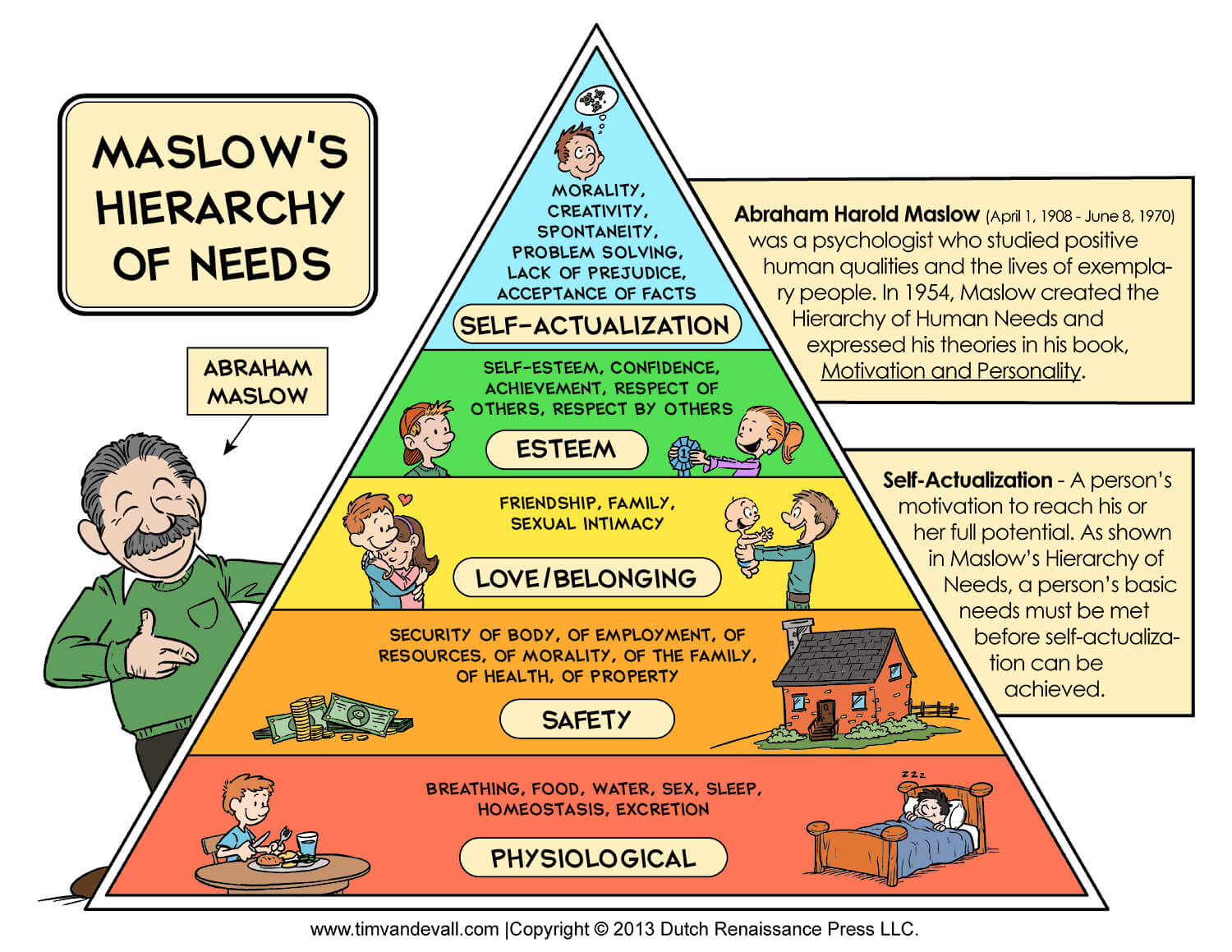
- Maslow’s hierarchy of needs
- How important is your emotional response to your work?
- Creation as necessity rather than commodity
- Changing your perspective of monotonous work from boring to meditative
- What will labor look like in twenty-five years?
- The importance of pursuing work that invigorates you
Useful Links
About Guest
Maxim Jago speaks on wide-ranging subjects exploring lessons learns from his work as a filmmaker, futurist, author, and media technology expert.
He proposes an optimistic-realist attitude to future technologies and opportunities for growth in society, and in ourselves. As an award winning filmmaker and screenwriter, Maxim is currently engaged in three feature film projects that include true VR storytelling elements.
As an Author, Maxim writes the official Adobe Premiere Pro Classroom in a Book – the standard text used by film schools all around the world.
Transcript
Zack Arnold: I’m here today with Maxim Jago, who is a filmmaker and futurist. So, Maxim, it is a pleasure to have you on the other end of my microphone today.
Maxim Jago: Hello, it’s a great pleasure to be here. I’ve been looking forward to this.
Zack Arnold: Now, for those that just joined, and you heard Maxim speaking. I just want to clarify that I am not interviewing James Bond, even though it may look and sound like it.
Maxim Jago: I like it when you say that. I have to buy you another drink.
Zack Arnold: Nice. So, you and I go not way back, but we go several years back, mainly in the filmmaking and editing community, because you’re literally the guy that wrote the book on some of the top pieces of software in my industry, and we’ve talked in the past about becoming a more efficient editor and kind of the psychology of editing, but today I want to go much broader than just talking specifically about filmmaking or film editing, and this conversation is going to be sparked by a recent article that came out in Wired magazine and on the Wired website, and by the time that this podcast will show up, it may not be super, super recent, but it came out the beginning of February, and it’s called The Next Big Blue Collar Job is Coding, and this hit me like a ton of bricks, because I realized I’ve been spending the last several years building up this program to help people that live in sedentary office environments learn how to go beyond just barely surviving and really learn how to thrive, but it never occurred to me that what we do really is very similar to a blue collar job, because it’s so highly specialized, but this is not a topic that I know. A ton about, and the first person I thought of is you, because of your experience thinking about how artificial intelligence is going to inform the way we work, and you know whether or not we become the next blue collar workers, and this is all very, very new to me. So, basically, I just want to pick your brain about the subject, and I would love to know, like, are we the next blue collar workers.
Maxim Jago: Well, I think that it’s, it’s a very broad issue indeed. Most jobs, and you know, let’s say more than 50% of jobs are likely to be performed either by AI or autonomous robots within the next 25 years. They’re estimating within 2425 years, 80% of unschooled labor will be performed by robots, and that’s why people like Elon Musk are recommending that we take very seriously programs like Universal Basic Income as a solution to, well, it’s either that or we enter into a dystopian nightmare. So we’re looking at that, and it turns out that it’s extremely positive for reasons that we perhaps should speak about on this podcast, that the control is absolutely critical to us as a species. Our brains are addicted to control much more than pleasure and pain, which a lot of people think it is. But if you look at years ago, there was a wonderful The Onion article where they were talking about people getting spending most of their days looking at glowing rectangles, and how most of our lives are spent looking at these glowing rectangles, whether they’re in our hands on a desk or a laptop that we’re sitting in front of, and increasingly our work is becoming intellectual, which is great in many ways, but we are biological beings, and we are made for moving. In fact, I remember reading years and years ago that the part of your brain that thinks and makes decisions and learns, and if you like, performs mental actions is connected to the part of your brain that deals with movement. So we think very well when we walk, for example, we remember very well. So if you know any actors who need to learn lines. My top recommendation is that you go for a walk in the park and learn your lines while you walk, because it stimulates that part of your mind somehow. We’re not quite sure how, so yes, I think that we are looking at a situation where you know the economy of scale isn’t really well suited to individuals performing tasks. It’s great for machines, it’s great for data transfer, accessing big data, managing big data, but when you’re an individual dealing with emails, it’s just ridiculous. You cannot keep up with the pace of things, so inevitably the individual starts working longer hours, cutting short breaks, and staring ever more intently at a glowing rectangle. And the question is, How do you embed in that kind of work where your contribution to society and the way that you’re valued as an individual is bound up in typing stuff on a small keyboard, while you stare at a glowing rectangle, how do you stay fully alive in that rather inhuman and unnatural working situation?
Zack Arnold: Well, as somebody who’s spent 15 years living behind two giant glowing rectangles that I’m actually staring at as we speak, you know, I’ve got the 27 inch iMac and I’ve got the secondary 24 inch monitor, like editors live behind three, four, even five screens. If you’re a colorist, and what people don’t realize, and I’m not saying this coming from the expert point of view, I’m just saying it from the novice that enjoys neuroscience and all these other things, is kind of a hobby and a passion that’s actually rewiring our brains like we’re becoming different people physically, emotionally, just because we’re in front of these artificial lights for 1216, 20 hours a day, and you can say, oh well, somebody that is in the mind working underground, like they’ve got black lung and minds collapse, but when you really look at the statistics, we’re spending billions of dollars in our healthcare industry dealing with sedentary lifestyles, because this, and I don’t even know where the term blue collar even comes from, maybe that’s something that you know more about than I do, but it’s interesting to really make that parallel about, wow, well, somebody that was in the mines or is building cars in a factory, or as a farmer, there are actually incidents of health-related issues and injuries that are far deeper and more severe long term when you’re behind a computer all day long.
Maxim Jago: Yeah, it’s interesting in terms of physical health, and of course we need to think about mental and emotional health as well, because increasingly research is showing that how you feel emotionally directly guides the physical health that you have. They found that when people feel happy and in control, they heal faster, you know. Famously, there was that movie. A beautiful film with Robin Williams, where he plays it. I’d forgotten the name of the doctor,
Zack Arnold: Patch Adams.
Maxim Jago: Patch Adams, that was it. Who, who realized that if children are happy, they heal faster. And I’ve spoken, I remember speaking years ago with a doctor of pain, it was a pain specialist who was saying that when they’re dealing with people with long-term pain that they can’t really diagnose, they can’t find the source of it. They have something like 10 or 12 well-designed placebo medicines that are really just chalk in a sugary container with a long complicated name that they can give the patient to say, ‘Look, here’s a new medicine that we’re trying out at the moment, and it’s supposed to help with conditions like yours, and they found that literally the pain will depart for two to three months until the patient gets used to it, and then the doctor will switch to another medicine, and so they go through about 10 or 12 of these before, after two or three years of going through these chalk tablets, they say, well, you know, you’ve maybe you’ve gotten over your adjustment to the first tablets. Let’s try those again, and they just keep on keeping on giving placebo medicine. So, so how you feel about the work that you’re doing is critical. Now, there was a lovely TED talk a while back about stress-related disorders and anxiety, and the lady that was giving the presentation, I’m terrible with names, I have to apologize, but she was saying that she’d spent something like 14 years encouraging people to avoid stress, and she’d, she’d found that anxiety and stress-related disorders were very serious, and sure, she helped people to avoid stressful scenarios, but then she discovered that the reason stress is bad for you is because you believe it is, which sounds extraordinary, but it turns out that the hardening of the arteries and the rigidity that builds up in your body when you feel stress is because the human body is really made up of multiple, often conflicting, if you like, forces or systems or mechanisms, for example, you probably know about there’s one bit of your brain that’s trying to keep you awake and another bit that’s trying to put you to sleep, and they kind of win and lose the war like a tide changing over the course of the day, and it turns out a lot of systems in the body are the same, so she found that when you feel stress, if you believe that the symptoms of stress are bad for you, and by the way, belief is not the same as an opinion, right? So you have to actually believe it. Then a conflicting process in the body begins to restrict the symptoms of stress, and this leads to all sorts of arterial problems and heart-related problems. And it turns out that if you believe that stress is good for you in the way that stage fright can be good for you. The conflicting process doesn’t kick in, and you don’t get many of the stress-related symptoms. So, we’re still learning about the impact of the mind now. To take this back into the context of the work that we’re talking about, you and I, I’m sure, have spent plenty of 20 hour days staring at glowing rectangles, trying to force our way through something very, very challenging, and of course our minds interpret emotional and intellectual challenges as if they were physical ones. So our bodies take that journey with us, and you’re hunched over a computer, your shoulders are stressed, your muscles are twitching because you feel that you should somehow be fighting this tiger more, and you end up physically exhausted, even though you haven’t really done that much physically. This combination of enormous emotional pressure and our attribution of self-worth based on our contribution in our work, our work-wise, is quite damaging, and so if you look at a lot of the systems to do with getting classically getting things done, you look at the world of productivity, a lot of it is about breaking down your tasks into more manageable ones. Just moved into a new apartment, and it gave me enormous satisfaction building some of the IKEA furniture, which is partly because I could actually see the thing that I’d done immediately, and if you look at workout routines in the gym, it’s about this many reps in this much time. Okay, now do another set of reps and another set of reps, you’re breaking it into small chunks, not just to make it achievable, but also to give you a sense of having achieved something.
Zack Arnold: Yeah, I think that there’s there’s no question that when you’re looking at something like productivity, yes, you can always achieve all these things and have this list, and I think that that’s one of the pitfalls you fall into is this idea of, oh, well, I’ve done 25 different things, but were they the right things, and that’s a whole different rabbit hole about, well, you can be effective or you can be efficient, and which one would you rather be, do you want to work harder? Do you want to work smarter? So I think that there’s no doubt about that, but I really want to go back and unpack some of the other things that you said about specifically getting things done in the context of your job and how that affects you emotionally, because that’s kind of where I wanted to go next with this idea of, you know, being a. Blue collar worker in front of your computer, is that one thing that I think separates, and again, I don’t have a deep history in kind of the way that our industrialized society became what it was, how we separated blue collar from white collar, but in my mind, just the vernacular is, well, if you’re a blue collar worker, you’re probably not very educated, you’re not very creative, and you just work with your hands, and you get dirty, and at the end of the day, you go to the bar, and you have a beer to unwind. Like, in my mind, that’s a blue-collar worker. It’s a guy working in Pittsburgh in a steel mill, and white collar is a guy that wears a suit and goes to work in an office and has air conditioning and works in front of a computer that to me is just kind of the colloquial blue collar versus white collar and I want to talk a little bit deeper about that and the idea of creativity because that’s something that they specifically talk about in this article is how you no longer have to be somebody that’s like the next Mark Zuckerberg that is a genius coder, you can just kind of be somebody that develops this as a basically a skill, but you’re not necessarily coding genius, and that’s kind of where we’re going, where everybody’s going to be doing technology work if they’re doing human work at all,
Maxim Jago: Right, and I think a big part of this is the limited range of activity, you know, years ago I paid my way through film school, working for Microsoft. I was doing tech support for them, and it was a great gig. I was a really nice job. About six months, nine months into the job, I discovered that we were just constantly getting new memos with new things that we had to know, and most of the things that we had to know were what an error message meant, and usually what an error message meant was that you had, you know, there was a file that had corrupted that needed to be deleted, and then a week later it would be a different error message and a different file that had corrupted and needed to be deleted, but you’re still searching for a file and deleting it, and so, although it felt different, it wasn’t that different. I’ve spoken to a lot of news editors, not journalists, but the actual hands-on editors, and they, there’s almost no creativity in what they are doing, they are simply following the plan, getting the thing in and out as fast as possible, and there’s very little joy in that. You will definitely be familiar with Maslow’s pyramid, this list of needs that we have as beings, and they’re in order of priority, so you’ve got air at the top, and then water, and then food, and then shelter, and so on. The really interesting part of Maslow’s pyramid is the stuff to do with a sense of self, with a sense of purpose, with an aspiration of some kind. I don’t know if it’s still true, but I remember reading years ago that suicide rates were highest amongst the wealthy, because they don’t really have anything to aspire to anymore. Life is less meaningful. One of the things that I believe is critical to us as a species is the need to create. In philosophical terms, it’s the need to be a causal agent, not someone reacting, but someone acting. And the creative industries are a perfect example of this, where unfortunately you often lose a lot of other controls, like being able to pay the rent, but you get a, you get this great control over change that you cause in the world, particularly if you’re working on something like the plastic arts, like sculpture or painting, but even today in the digital arts, you are in control of what you create often, but not always, but if you look at this blue collar attitude to working with these glowing rectangles that we’re talking about, you don’t have that freedom. You’re given a set of parameters to work within, you’re filing, you’re locating information, you’re dealing with the drudgery of data, and I’ve heard awful things about people working in ad agencies where they’re just desperate for any opinion about a product. I remember years ago working on a corporate video about a product for a, you know, a conference where the company had filmed at the conference and they’d recorded some video of this product on a stand at an exhibition, and they wanted the brief from the client was that they wanted it to be exciting and dynamic, they literally just had a gray box with one LED on it that didn’t even blink, and no movement in the camera at all. And the brief was, “Make this look exciting. This kind of work, it’s not going to inspire, and importantly, it’s not going to give the editor or the creator, the feeling of being in control, you’re really just on a treadmill, you’re, you’re in a factory, in a sense, and it’s that feeling of the loss of creative control that I think is so critical to people’s failing health, I remember years ago. Working with a charity who was helping street kids. These were kids who really had nothing to live for, or so they believed. And the people running the charity said that the critical problem for them was never to do with education or drugs or access to resources, because by the time they found a kid, they were kind of on the home stretch, you know, they were going to take care of them. The fundamental problem was convincing the child that they mattered, and if you look at some of the antisocial behaviors that we see in people that are stuck on the street, it’s actually the belief that they don’t matter that lies at the root of so many of the challenges that they face. In fact, they found that there was one study I read that was saying that they wondered why it was that people that were homeless struggled so much more with drug addiction than people that were not homeless, and they discovered that the issue was not actually whether or not they felt safe and secure in their homes. The real issue was that they felt connected to people. The people that are homeless didn’t feel safe with one another, and they didn’t feel safe trusting one another, because there’s a lot of people that are homeless with psychological disorders that should really be in clinical care. Once they gave people a home, they were able to build up a network of people around them that they did feel safe with, and gradually they began to feel like they mattered to other people, and they felt that other people mattered to them, and when that happened, many, many more of them were able to kick their drug habit, so it’s this feeling that you matter that I think is the big issue, I know it seems obtuse, maybe, but the big issue with this blue collar attitude to working with your mind in Sheffield, in the UK, when the steel mills closed down, they retrained people, and very many of them became creatives, they became artists, they started working in it, they were perfectly capable of doing the work, and they had a lot of mental focus, but what do we do with this? You know, how do we help people to feel that they matter? How do we help people to feel inspired, and how do we help people to care about being alive if there’s so much monotony in their day to day work, and I think a lot of this comes down to how we as beings, as individuals, prioritize and how we attribute meaning and value to what we do. If you’re working in a friend of mine, he’s a very wise man, John Paul is his name, is a French guy, somebody whose opinion I respect very deeply. He’s not a fast thinker, but he’s very wise, and he works in a water factory, bottling water, and he’s perfectly happy with the job, because for him, what he cares about most is the freedom to think. Some people like to go driving, some people like to go walking in the woods. For him, performing a monotonous activity like bottling water is ideal, because it gives him the freedom to think about things that he feels are important, so again, I think a lot of the solution is not so much about changing the work that we’re doing, but more about changing our perspective towards ourselves, towards our work, and towards those that we have relationships with,
Zack Arnold: So to kind of take this backwards for a second, for anybody that is not familiar with what you had mentioned as Maslow’s pyramid, it’s called Maslow’s hierarchy of needs, and I can actually put a link in the show notes to, like, an image, but you basically nailed it on the head, where you know, obviously, at the bottom you have things like food, water, and resting, and then it goes to safety and security, but the very top of it is like you said, it’s about self-actualization, which includes achieving your potential and also doing creative activities, and I want to go to this idea of creativity, because, like you said, anybody that’s done creative work knows that feeling and the difference between doing a job where you feel like you’re making a creative impact, and where you’re not, even though you’re doing the exact same job. So, for me, as a film editor of the last 15 years, I’ve worked 80 hours a week on projects where I felt like I was giving tremendous impact, my voice was heard, and I was a part of the creative process, and I was energized and invigorated, and then I’ve worked on projects for 40 hours a week, where it was drudgery, I was just pushing buttons, and I was exhausted at the end of the day, because as a creative, quote unquote, I have this need to constantly be making things, and I personally feel like at the end of the day, if something new doesn’t exist in the world that I had something to do with, I have failed as a human being, and that’s just the way that my brain works. And I think there are a lot of people listening that can probably identify with that, whether they’re a graphic designer or a coder or a programmer, because people would say, oh, well, coding isn’t. Creative, but I don’t know anything about coding, and I know how immensely creative it is, and the amount of energy that it takes to do that kind of work, and it’s.. I really want to hit that point home about how much you can emotionally connect yourself to this work, where I mean, I’m the perfect poster child for dealing with intense amounts of anxiety and depression because I didn’t feel a sense of worth based on the process that I was going through with my job, and I think that’s one of the things that’s really important to think about when you are, especially in this idea of we’re all becoming the next blue collar workers, where if you spend all day long attached to your creative work, and you’re not moving at all, ever. Then basically all of your systems begin to shut down, and that’s where you end up dealing with anxiety and depression and panic and attention issues, which in my mind can actually be more detrimental than just dealing with, you know, coal dust or whatever you’re dealing with,
Maxim Jago: I completely agree, and there’s so much to say about that, you know. I think part of what you’re saying comes down to our sense of self, right? We’re probably in this conversation getting going to get around to why am I here, because you know, but we’ll get to that, but the ultimately it comes down to whether you see yourself as your consciousness floating around inside your skull, experiencing things and making having opinions and making decisions about them, whether you see yourself as the total mind, the complete being holistically, which incorporates your body, and increasingly research is showing that it, it really is a complete thing. Your body and your mind are absolutely connected. Your neurons reach right the way around your body, and there’s some very interesting research into photon transmission in cells explaining the cohesion of movement in the body that is difficult to explain with our current model for the nervous system, we are one complete entity. Look at the research into body language, where we found that if you feel nervous and anxious in a group meeting and insecure, you’re very likely to cross your arms, but that actually reinforces the feeling of insecurity. You do it probably as a natural response to protect your inner organs, but if you force yourself to open up your body language and to move into the kind of position you would adopt if you felt confident, miraculously within 3040 45 seconds you will feel more confident because your body language is a two way street. This is something I think we’ve spoken about before, where they discovered that blind athletes celebrated non-verbally the same way as sighted athletes, and they couldn’t explain it, and it turns out there’s a, there’s a direct connection going on that’s somehow part of our genetic memory, it’s fascinating, so we are whole beings, and I’m reminded of, you know, I can solve for quite a lot of companies around the world, helping them as a futurist to look at where future technology is going, and for me the running thread of all these new technologies is that the human condition is not changing actually very fast at all, but as a species we’re extremely flexible, we’re able to respond to environmental changes, and mentally we change things in about 15 days. It’s like a two week transition period, usually for new paradigms and new workflows, if you like. As a species, our environment is changing, our needs are not. Now, of course, there’s this idea of a singularity where we merge with our technology and become something other, that’s a discussion for another day, but if you look at all of the different jobs, whether it’s a blue collar job or a white collar job, or whether you’re a nurse dealing with patients at different stages and and having to empathize professionally with people, or a teacher dealing with the development of new young people, whatever the role is that you have, your needs are simple. You need to be needed, you love to be loved, you want to be wanted, you need to feel that the change you cause is worthwhile, and I think that that need is rooted in a real, a very deep world view, and within that worldview, it’s there’s a reason why we think we’re here, and actually, once we establish for ourselves what our reason is for being, we tend to think that everyone has the same understanding, or either they understand it the same way, or they just haven’t thought it through yet, but if they thought it through enough, they would know that your point of view is the right one, so maybe you know, as you’re a guy, so maybe your, your reason for being is to be a good father and a good worker and do good work and have friends and get. Your death thinking that you, you worked well, or maybe you were raised as an artist, and you believe that that life is about understanding and creativity, and you’ll know that you’ve lived a good life when you have created enough, or when you’ve somehow made the ineffable effable, when you’ve helped people to understand their own human condition, or perhaps you believe that life is much more analytic, that really is about an intellectual analysis of the nature of being, and that one day you’ll have lived a good life if you’ve understood enough and written about it enough, and the reality is that in all likelihood each one of us has a unique and personal journey, and that unique and personal journey will be motivated by a combination of cluster of different priorities, many of which are given to us before we’re old enough to understand them, and so if you can begin to address your, your sense, your, your thoughts on why you exist in the first place, and knowing that you don’t know is a great place to start. Knowing that you’re not sure why you’re here is fine, but if you can begin to address that, many of those opinions are rooted in our childhood, where we weren’t that well equipped to do the analysis, so looking back again at these fundamentals can help us to either attribute value to the work that we’re doing and care about it and be passionate about it and engaged, or to reject what we’re doing because we realize that it’s not serving our sense of personal purpose. So, for example, you know, you and I’ve spoken many times in the past about editing and post production, that’s that’s how we met, and it might be that you’re working on documentary projects and you realize you just feel nothing for documentary, because for you it’s about storytelling and you should be working in fiction, or vice versa, or it could be that for you the excitement is about what’s happening in front of the camera, in which case, What are you doing in post production? You should be on set. And when I was a young kid, maybe 1314, I was reading, I kind of remember what it was now, a book about life and what you should do, as one of these, you know, self-help books, and it was saying it can be very difficult to know what you are about as a person, what matters to you and what life you should choose to live, and of course we don’t know how long you should plan ahead, but let’s say you plan five or 10 years. What you can be sure of is that there are certain activities that make you feel alive, they make you feel life full, and that might be reading books, it might be running, it could be the idea of flying airplanes, it could be painting, whatever it is, it’s going to be in a certain category of experience. It’s either going to be working with your hands or talking to people or digesting information, or there’s going to be a certain texture, a tone, a certain modality that for you makes you feel a like yourself, truly yourself and be full of life energy, and if you can find out what that is, just choose an occupation that’s like it, that gives you lots of opportunities, gives you lots of opportunities to have that experience, and you’ll probably find that you are healthier and happier and more engaged, but I don’t think any of this deals with more fundamental, quite basic problems to do with time management that at the moment we’re still getting this leftover attitude to value from the industrial age, where your value is based on the time that you commit, and I think that really we need to move towards a new era where we look at our lives as a complete picture, where we invest some of our time in work, some of our time in social connections, some in creativity, some in physical movement and engagement with our bodies, and so on and so on. So, it’s a goodness, it’s a big topic, isn’t it?
Zack Arnold: It is, and there’s certainly a lot to unpack in there, and there’s a couple of things that I wanted to hit specifically. First of all, it’s so funny because I’ve gone through a very similar journey like the one that you laid out, except mine was the reverse, where you know my whole life it was all about my passion for movies, and I grew up going to the movie theater and watching TV and saying I want to do that someday, and then I started doing it, and I loved the process that I was creating, and I’m sure you know that Rush is an editor, and if you’re not an editor listening to this, but you draw or you paint, or whatever it is, you get in this zone, and it’s like a drug, where, like, for me, I would cut a scene, I would add music, I would add sound effects, you hit the play button, you’re like, wow, you get that rush, but then all of a sudden I switched to documentary and directed and produced my documentary film, Go Far, and I was like, wait, not only am I able to produce this effect for myself and for viewers, but this is having an actual emotional impact on real people, and it’s causing change. In their lives, not just I was entertained, and I cried, but wow, I’m now looking inside myself and realizing I’m capable of more than I thought I was, just because of this 82 minute experience learning about this quadriplegic that became a licensed scuba diver. Right, so that’s that’s what my film was about, but I would, I would have people at the end of this film when I was screening in festivals. I’ve never met these people, I have no idea who they are. They walk out of the theater and they give me the biggest bear hug, and they’re in tears, and I’m like, Who are you? And they’re like, 82 minutes in the theater has changed the way that I look at my entire life, and I’m going to go home and do x, y, and z, and I was like, wow, like this really kind of helps me reassess what are the things that I need to do to feel fulfilled, like you said, to feel like you’re making a difference and to make you feel like you matter. And then I went back to editing television, and I’m like, wow, I’m not, I’m not quite feeling that thing that I felt anymore. I want to start making a difference, and that was the direction where I started getting into all of this with creating the different health programs and the Optimize Yourself program, but what it all comes back to in my mind is if you are somebody that feels that rush doing that creative job, because anybody that lives and breathes creativity is wired in a very specific way, and if you are that person, unfortunately, the environment that you are placed in to do that work is the worst possible environment on the planet for creativity. There could not be a worse place to put your brain and your body than a small dark room in front of a computer, but that’s the way that we’re designed, which brings me to the other point of yours that I really want to hit, and you’d kind of pushed it aside, like this is a topic for another conversation, but I really don’t think that it is, which is where you had briefly said we are becoming our technology, and that’s really what all this stems out of. I had a saying that I used as a joke. I even created a T-shirt of it a couple years ago, where it said, “Write in big, bold letters, I am not my workstation, because people, like, for example, in our industry, and I’m sure this is used in other industries, the term “keyboard monkey. Oh, well, I just tap on the keyboard all day, but when I saw this article about coders becoming the next blue collar, that’s the first thing I thought of, is if we’re going towards artificial intelligence and people in front of computers are the new blue collar workers, do we all just become computers and lose our sense of self and our sense of creativity, which is what I really wanted to get to the heart of.
Maxim Jago: Well, you know, the good news is I think no, I think actually what we’re going to find is that a lot of our time and attention is invested in detail work, so we’re not particularly well designed for detail work, right? We forget long numbers, we can’t handle large lists of information, and this is this is very often the kind of work that we’re doing with computers, it doesn’t matter whether it’s apparently creative, like graphic design or anything, or whether you’re a coder, but it turns out, of course, that computers are brilliant at that. Computers and AI will make this kind of work much easier. The huge tipping point for us in terms of allowing us to let go of dealing with the detail in technology is when we get truly natural language interaction with computers, and that’s probably now, probably two years away, maybe three years away. We’re starting to see some really positive developments from companies like Microsoft, you’ve got the Alexa from Amazon, you know, lots of companies, Apple with Siri, obviously lots of companies are working on natural language systems, but when we reach a point that we can very casually chat with our computers about doing things, and they have a semantic understanding, and they understand what we meant, even when we misphrased it, then we’re going to be able to sit back and focus genuinely on our creativity. I’ll give you one example, because we’ve been talking about editing. Let’s say you’re ingesting some media, so you’ve got some video clips, maybe you’ve got 100 video files that you want to work with that you’re going to edit, and you look at one of them and you realize you need to make a change to it, maybe you need to crop the image in some way, and so you adjust the image, and then you realize, oh my goodness, I’ve got 99 more of these that I have to adjust. Well, if you had an artificially intelligent assistant working with you, you could say to that assistant, “Hey, you see what I did to that file. Can you do the other 99 now? There are some enormous challenges in that sentence. For example, did you see what I did? Well, we need a system that can see it. Secondly, can you do the other 99 is an entirely context-specific statement that the AI needs to know that there are 99 more, and also. To recognize that there are 99 things like the first one, but we’re accelerating towards a time where this is just the norm, and it’ll be also for things like you want to order a pizza, you say to your AI assistant, can you order me a pizza, and it’ll say, do you want one the same as you had on Thursday, I can have it with you in 20 minutes. You say yes, and it’s already been ordered, and it arrives in 20 minutes, and it’s already been paid for, because you’ve given your AI your credit card details. These details in our day-to-day lives being removed frees us to focus on things like our creativity, and also what I see coming is an optimization of the self, which I suppose is the real beginning of this discussion, that we’re going to be free, and we’re going to have the biometrics, we’re going to have the feedback loop to be aware of our own personal development, we’re looking at pedagogical developments where people now are much better able to track and manage their own learning and to work their way through learning systems that have been created for many people that feel very, very personal. We’re going to have fitness programs, we’re going to have dietary programs, and we’re going to have the time and the information available to really develop ourselves. And I think that the working hour week, you know, we, it’s grown and grown and grown, but I think the working week will begin to shrink, and I think that we’ll move increasingly towards project-based rather than hourly based work. There’ll be some occupations where this can’t change, for example, again, nurses, you, it’s, it’s going to be a while before people are comfortable being tended to by a machine, and until that happens, we’re going to need people. So I would say that the the economy that remains is the economy of consciousness. Anytime where genuine originated thought needs to come from a person, you’re still going to have a job, but how much will you need to work at the moment we’re moving towards universal basic income we will move through universal basic income to a genuinely free economy where all of the basics needed for life will be free and the question is whether we’re ready for that lifestyle so I actually think that things are looking very positive. I think we’re going to move towards a time where, where we are free to do more healthy things, like be more creative, but the problem is just having the freedom doesn’t necessarily mean people will take it up. You’re probably familiar with the concept of learned helplessness, which was developed after some really creepy studies with animals many, many years ago, where they learned that there’s a certain state of mind where an animal that is unhappy and even an animal that’s being subjected to mild electric shocks will just look at the cage door when it’s opened instead of dashing out of the cage. This is learned helplessness, the belief that you can’t help yourself when actually you can, and I think that much of the work that we’re doing today, many of the systems that are in place, the form of governance that we have, the way that we relate to public servants, for example, feels very much like we’re still at school, we’re still being told what to do and where to go and how to live, and we do, I think, need to move culturally towards more of a sense of individual responsibility, cooperation, and participation, and away from this feeling of just making sure you conform, because that drive towards conformity is important for complex society to sustain itself, and that’s that’s worthwhile, but it does mean that when we have this new found freedom, I’m not sure that we’ll necessarily be able to benefit from it.
Zack Arnold: Well, and then, of course, the flip side of all this is Skynet becomes self-aware, and we’re just no longer necessary, so there’s that too.
Maxim Jago: Yeah, you know, I think that it’s interesting. I’m working on a couple of AI projects at the moment, and one of them is that I am not going to – I won’t share how it works, but I have a working model for generating a genuinely self-aware AI, a system that, when it says I am, it means I am, and I’m afraid to give it to anybody because I think it would work, and it’s too vulnerable, it’s too dangerous, and so you know we are going to get to this. Is why Google, you know, have been saying we have to make this stuff public and available to all. We have to make this open source, because otherwise it’s, it’s too vulnerable to abuse. But you know, we have this presumption that if we make an AI, it’s going to feel that it needs to compete with us. A lot of our competitive urges are rooted in fear of scarcity, fear of threats to the gene pool, if you like, as well. It’s always about being inside our bodies and seeing ourselves as an island separated from the rest of the world, but with no reason to suspect that an AI would feel the. Same way, in fact, an AI may not associate with a body at all. In fact, an AI may not have a single identity. There might be multiple AIs that act as a hive mind, and certainly I think as we move towards world government, which we probably will eventually do, it’ll be governed and run by hive mind AI intelligence, which is pretty scary, unless you see that they, they don’t particularly feel the need to destroy us, and they just want, actually, some sci-fi writers are saying that AI will think we’re cute, like, you know, wild animals that should be given a happy living environment,
Zack Arnold: We’re like pets, like we’re maybe cats,
Maxim Jago: Yeah, but the thing is that, you know, for the AI, allowing us total physical freedom to do anything we want may be the same as putting us in a zoo, because the AI won’t be bound to a body anyway. This is perhaps a discussion for another time. Yeah, you know what I would say, though. You know, I suppose to sum this up, is that I have a lot of different jobs, I have a lot of different hats. In fact, I was talking to my mother a couple of days ago, and she was saying, “Look, I have this problem, but when people ask me what you do for a living, I haven’t the faintest idea where to begin. And I said, “Look, I’m a teacher, I mostly pay the rent by teaching, just say that. But I think that if you see life itself as if it were a set of unlocks in a game, you begin to, it’s a very healthy form of objectification of life. I remember when I was a teenager, I read a book by a lady who was saying that she’d realized that people were much more devoted to beating games than they were to their own personal development, and you would think that life itself would be a higher priority, but I suppose you know they say familiarity breeds contempt, and everything seems samey, you know, there’s only so many beautiful sunsets you can see before you stop getting excited about beautiful sunsets, but she said, What would happen if we made life itself into a game. What would happen if we gamified personal development, so that we saw our own achievements as unlocks in a game? And she, she began some social studies into that to see about how we could engage with life itself that way. And then I suddenly realized, because I’ve been a gamer since Pong, you know, I’m developing film projects now, where, for example, we’re developing Orpheus Rising, we’ve spoken about before, is a feature film where the sequel is a game that we’re going to release the same day as the film, and that, you know, I’m very closely involved in games, although I rarely get time to play them, because I took this idea when I was a teenager and just went for it in every way, I tried to develop and grow and have experiences, and you know, I see that parallel. What if this is a game? You know, there’s an old.. I don’t know if you ever saw the British TV series Red Dwarf, where they discover in one of the episodes that their entire lives are actually just part of a game show, and they.. they got a terrible score as comedy, but they, what if life were here to be enjoyed and to be learned from, and what if we’re here to grow and change and to work with others growing and changing, what if life is a participation sport?
Zack Arnold: Yeah, and I mean it’s, it’s so eerie that you brought up this concept, because until the five minutes before you and I jumped on the microphone, I had an hour long phone conversation all about the gamification of personal development, and that’s exactly what Optimize Yourself is and is becoming, is like we’ve talked about using movement to generate creativity, so like you said, the parts of the brain that are interconnected between creative thought and movement, that was one of the first inspirations for me, was I’m so tired of just being in front of a computer, I can’t think straight, I can’t come up with ideas, and my entire livelihood is based on my ability to generate ideas and make decisions all day long, and then I discovered if I just move more, I can generate more thoughts and more ideas, but now, How do I make it fun? How do I gamify it? How do I make it competitive? So that’s what this program has become, and is becoming in all different areas of life. So it’s just eerie that I had an hour long conversation about that, and now you’re bringing that up, because that’s exactly what this is all about,
Maxim Jago: Right. Well, that’s fantastic. It sounds like you’re you, you and I are somehow connected to the zeitgeist.
Zack Arnold: I agree, and I think that the area where I kind of want to close this is, you know, this whole idea of like, well, you know, Skynet can become self-aware and suddenly humans become the new cat videos on YouTube, and we’re the entertainment, we’re the zoo. I certainly don’t want to close out on that note, but where, where I do want to kind of close out the conversation is if somebody does do a job that is technologically related and their livelihood relies on them being chained to a computer, and they’re thinking well. Well, I don’t know if I’m even going to have a job in five years because of the technology that they may be creating themselves, like in there, maybe they’re not terribly creative in the sense that they’re they are just kind of more, you know, an extension of their workstation, for lack of a better word, like where do you go next? Because I know a lot of people come to me, and they’re afraid that, like, hey, I just saw, you know, the IBM AI system was just edited a trailer, so what do I do? Like, I’ve spent my entire life building up to this moment, now I feel like I’m going to be obsolete, and the work that I do is killing my health anyway. So, I just, I don’t know what direction to take in life, so I kind of want to close it on, is there any sense of advice or perspective you can give to people that are just thinking, I don’t know what I’m going to become in five to 10 years because of technology.
Maxim Jago: Well, I think it’s, I think it’s actually, it’s straightforward. You know what you’re describing is a language trap, and they say that 90% of philosophy is linguistics, and if you look at philosophical texts, a lot of it is down to breaking down the meaning of a word rather than meaningfully finding new ideas. When people say creativity, we culturally mean painting pictures, making films, telling stories, or dancing, but actually to create is not necessarily those are categories within a category. The act of creating is to cause something to come into being, and it could be that your creativity is writing great code, which is an incredibly creative process. It could be that your creativity is making fantastic furniture. I know a guy who’s just amazing at making beautiful furniture. He just, he’s inspired. It could be that your creativity is being a great parent. It could be that your creativity is being a great friend, that you are that one person that friends turn to when they’re faced with a dilemma that you are the one that gives them the way forward that they act upon. I’m having a debate with a friend at the moment, he’s very smart guy, and we’re debating whether ideas have any intrinsic value, and if you, if you know Canaan Flowers, an extraordinary intelligent fellow, I have great respect for him, and I think I’m going to win the debate.
Zack Arnold: Well, I’m very curious about this, because he and I have had the same conversation many times. So, yes, I, I know him well, and he’s very aware of all the things that I’ve been doing, and I’m very curious to see where this is going to go.
Maxim Jago: Well, he’s a, he’s an extraordinary fellow, and Cayman’s argument, if I’m not unhelpfully paraphrasing, is that without execution, an idea has no value, and I would argue that without an idea, execution has no value, and so I appreciate that. You know, a cup of tea without hot water is not a cup of tea, but nonetheless, if you just have the hot water and none of the tea, it’s not a cup of tea. If I’m probably stretching an analogy there, I think that ideas do have intrinsic value, but that I, that value, the potential that that value represents, is made manifest in combination with action. So you know, thinking is a form of action. If you put time aside to think, well, it’s actually tiring, it’s work, it uses up an enormous amount of energy in your body, so what I would say is that this idea that that we’re somehow going to be replaced by machines and that our lives will cease to have value is nothing more than a language trap. If you believe that you are your work, you’re caught in a language trap. If you believe that the work you’re doing is all that you can do. Again, it’s a language trap. The reality is that all people are incredibly flexible. Ken Robinson used to be the Education Secretary, maybe he still is in Britain. He’s an extraordinary fellow. He looks to me like a British, well, and Austin Powers, you know, his great speaker, famous speaker on ted.com and he opened a famous speech by saying that we really need about 7 billion definitions for IQ, for intelligence, because it turns out that everybody has a unique cluster, a unique combination of qualities that makes them them, and which means that literally no other person in the world can bring exactly what they bring to the world. You are unique and irreplaceable. However, if you accidentally identify yourself with your work so completely that you see yourself as nothing other than your work, in that case, yeah, you’re totally replaceable, because you’re just another cog in the machine, so it’s a language trap. You are not your work, you are not your skill set, you are far, far more than that, and as long as we see people as having value because they represent potential. Potential, because if we attribute value based on the amount of potential that a person has, then it completely changes the landscape of the discussion. If you, for example, look at the steel mill workers in Sheffield, they’re working in factories making steel, stainless steel factories, and then the factories closed, the mills closed, and many of them became fine artists. Some of them became doctors, professors, some of them became philosophers, even they became all sorts of things, because the potential that they had was not yet realized. So it’s not that they were steel mill workers, and therefore, had no value. They were human beings that happened not to be expressing their potential fully. So, I think that self-awareness and a realization about what makes you tick. An old psychologist friend of mine used to say, if you’re a clock, you should find out how to tell the time. If you’re a runner, learn how to run races, but the first step is to find out if you are a clock. Find out what you are first. In fact, that’s the famously over the Gnostic Temple in ancient Greece, isn’t it? The phrase above the entrance to the temple was ‘Know thyself. So I think that the journey to knowing yourself requires you to cross the threshold of self acceptance. You have to accept that what you are is really what you are, and then you can think about changing and moving and enjoying what you are. So, in terms of work, if you discover, well, you know, I’m sitting at my desk and I’m working on this project that in five years’ time in AI will do in 20 minutes, and it’s taken us 20 months. But outside of your work, you are somebody that participates in a number of groups and number social clubs. You might be that person. You didn’t even realize that the conversation you had with a friend three weeks ago completely changed their life and helped them in ways that you couldn’t calculate, we need to see ourselves as whole beings, and that way we can see the potential that the future holds for us.
Zack Arnold: Yeah, I certainly couldn’t have said it better myself, which is why I had you on the show, because I wanted you to say it for me. So, yeah, I mean, that you couldn’t, couldn’t have been clear about that, and I think that I know that we, we need to close. I don’t want the show to go too long, and I want to be respectful of your time, but from my own personal experience, and I’m sure for many other people that do creative work already that are listening, I have become my work more than once. It’s an absolute obsession for me, where I just become so focused, and I get in this tunnel vision, where if whatever it is that I’m doing ends up failing, then it is a part of my identity that takes it very, very personally, and that’s kind of why I was looking at this whole idea of if we become the next blue collar, does that take that away from us when we lose this sense of identity and that sense of creativity? I think you brought a very positive spin to this, that makes me much more optimistic about where this is going, rather than pessimistic, because it’s very easy to look at this and say, well, we’re all going to become cogs in a machine, which is really the view that I feel like a lot of popular culture is taking, is that, you know, we just, we’re all like, even you watch Minority Report from what is, what, like 20 years ago now, everybody’s wearing the same clothes, and we’re all automatons, and I think that it’s that’s one direction that it could go, but we haven’t seen that yet. So I think that I think there’s a lot of good that comes from this, and for anybody that is concerned very short term about, hey, like all I do is transcoding. transcoding now, and that’s all going to be removed by AI in one to two years, or five years, whatever it is. It all comes down, like, I did a podcast a few months ago, specifically about this idea of a trailer being edited by AI, but it’s going to take so long for a computer to get to a point where it can make the very specific creative decisions that we make as human beings, that, like you said, I believe that just about every human being has that creative ability inside of them. You just need to be willing to be open to it and embrace it more. So that’s that’s my much less succinct way of saying what you said. Basically,
Maxim Jago: I know. I think I was more verbose than you. I think you said it, but you know, I think that the key question is, why isn’t it? You know, if you ask if you have an opinion about anything, and you ask yourself, why do I have this opinion, you’ll discover that it’s rooted in another opinion, and if you ask yourself why you have that opinion, you’ll discover that’s rooted in yet another, and if you keep asking why enough, eventually you arrive at I feel it, I feel it, and on that basis I’m going to do it, so I think that we should. Recognize that so much of our analysis that tends towards the negative because it’s a self-defense mechanism for us as a species to imagine the worst-case scenarios, but if you really ask why, why this, why this, why this, and eventually you end up realizing that you don’t know why you’re doing what you’re doing, and that’s okay.
Zack Arnold: Well, I’m glad to hear that, because very often I’m like, why the hell am I doing this right now? So, yes, I can.
Maxim Jago: What matters is that you feel alive. What matters is that it fits within your paradigm, it fits within your ethics, your morals, your principles, that the framework that you have for how the world works, this action is acceptable within that sense of right and wrong, and valid or apt or inapt action. If it fits within all of that, and you feel moved, you know, as my old psychologist friend, same guy used to say, it’s healthier to ask why not rather than why should I. And we spend too much time double guessing ourselves, second guessing ourselves. We should just get on with it.
Zack Arnold: Yeah, I couldn’t agree with that more. And I second the idea of really digging super deep underneath all the language, and what do you really feel when you’re doing something? Because I’ve been through that as well, even not even on a career basis, but on a project-specific basis. Does this feel right to me. Do I feel like myself? Not like, do I feel good? Do I feel bad? Do I feel energetic or not? Those are all symptoms. But what does your gut say when you’re in front of whatever that project is? Does this feel like me? Can I creatively express myself, or is there a wall between me and what it is that I’m producing? And if that doesn’t feel right, it’s paying the bills. Obviously, you need to support yourself, but you also need to start thinking, what is the exit strategy to get myself closer to the thing that really helps me realize that sense of self, and that’s a journey I’ve been through over and over and over, making crazy short-term decisions where people are like, why in the world would you do that, but I knew that if I was playing the long game, this was the decision that needed to be made to get to that point of, yep, when I get to this one type of project or this one thing, that’s when I’m going to feel like myself, and sometimes it takes years to get there, but I’ve been through that journey like three times now, and it always ends up being worth it, because you do feel that sense of creative satisfaction.
Maxim Jago: Absolutely.
Zack Arnold: So, on that note, I want to thank you for weathering the storm here with me, because we’ve definitely gone a little bit over, and I want to be respectful of your time. But this has been tremendously insightful for me. I feel like I even got my own like little psycho analysis session, so I may have to, you might have to bill me for that, but I hope that all of my audience has really gotten something out of this as well. So, as always, it has been a tremendous, tremendous pleasure to chat with you about this stuff.
Maxim Jago: Well, thank you so much, Zack. I really appreciate the invitation, and I’m looking forward to our next chat.
Transcribed by https://otter.ai
Episode Credits
This episode was edited by Curtis Fritsch, and the show notes were prepared and published by Jakin Rintelman. Special thanks to Krystle Penhall and Sarah Furie for helping to spread the love!
The original music in the opening and closing of the show is courtesy of Joe Trapanese (who is quite possibly one of the most talented composers on the face of the planet).