Fueling Your Brain For Optimal Creativity | with Mark Sisson


About Episode
I don’t know about you, but I’m really confused by the endless amounts of information available regarding nutrition. All you have to do is spend a couple hours reading the heated (and sometimes outright vicious) debates about the latest hot Netflix documentary to see nutritional science is an emotional topic. And I’m just plain tired of the “My science is better than your science” argument.
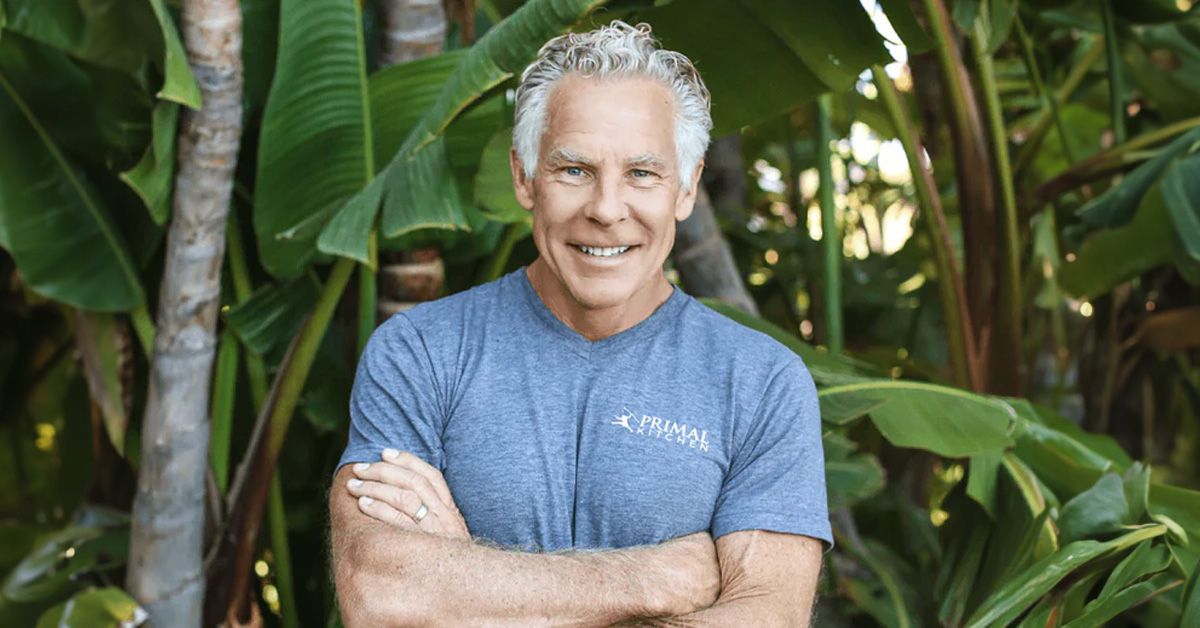
Luckily there are a few voices of reason, and one of them is Mark Sisson. Mark is the founder of the blog Mark’s Daily Apple which has hundreds of thousands of daily readers. He is also the founder of The Primal Blueprint, he’s developed an entire line of paleo-friendly foods via his Primal Kitchen brand, he’s a former world-class endurance athlete, and he’s one of the leading voices of the Evolutionary Health Movement. On top of all this he’s the author of numerous best-selling books with his latest being The Keto Reset Diet: Reboot Your Metabolism in 21 Days and Burn Fat Forever.
In this interview Mark and I discuss how food specifically affects your energy and cognitive function, how the standard American diet is killing our creativity, and most importantly how your food choices affect your ability to focus for sustained periods of time. We also chat about why fats get such a bad rap and some of the latest science about fat as it relates to his new keto diet protocol.
Episode Highlights
- The relationship between the food you eat and cognitive function
- Do we really need sugar (glucose) to function?
- Why you need to know about ketogenic diets
- How the standard american diet is affecting our health and creativity
- Recognizing and preventing the effects of brain fog
- How eating right can remove the need for coffee and energy drinks from your life
- Breaking the grip of continuous eating on your day
- The importance of turning your work space into a place of activity
- Debunking the myths surrounding fat
- Understanding the connection between fats and carbs
Useful Links
About Guest
Mark Sisson is the bestselling author of The Primal Blueprint, a former world-class endurance athlete, and one of the leading voices of the Evolutionary Health Movement. His blog, MarksDailyApple.com, has paved the way for Primal enthusiasts to challenge conventional wisdom’s diet and exercise principles and take personal responsibility for their health and well-being.
The Keto Reset Diet: Reboot Your Metabolism in 21 Days and Burn Fat Forever
Learn how to make perhaps the most profound health and weight loss boosting lifestyle change you will ever make—transforming your body from carbohydrate dependency to become a fat burning beast. In his new book, Mark Sisson, bestselling author of The Primal Blueprint and publisher of the popular health site and blog MarksDailyApple.com, reveals his proven effective ketogenic eating strategy for losing weight and improving health. When you go keto, you will reset your metabolism for effortless fat loss using a targeted ketogenic diet of high-fat, low-to-moderate protein, low-carb foods, and complementary lifestyle practices that help optimize metabolic and hormonal functions.
Unlike other ketogenic plans, Sisson first teaches readers the real secret to rapid and sustained weight loss, which is in becoming “fat-adapted” before entering full nutritional ketosis. This process allows your body to learn to burn fat more efficiently, resulting in increased and sustained weight loss over the long-term. It takes as little as 21-days to reprogram your metabolism to burn fat for fuel, by ditching processed grains, sugars, and refined vegetable oils in favor of nutrient-dense, high fat, primal/paleo foods–and you’ll see immediate results. Next, you’ll fine-tune with Intermittent Fasting and then foray into full ketogenic eating for a further weight loss boost and improved health. In this way, you will achieve the highest level of what Sisson calls metabolic flexibility—the key to health, weight control, and longevity.
With The Keto Reset Diet, you can eat to total satisfaction by enjoying rich, high-satiety foods, and even weather occasional slip-ups with high carb treats or undisciplined vacation binges and not go into a tailspin. Instead, you can quickly recalibrate back to fat-adaptation, and use keto as a lifelong tool to stay trim, healthy, energetic, and free from the disastrous health conditions caused by the high carb, high insulin producing modern diet. With step-by-step guidance, daily meal plans and a recipe section with over 100 delicious keto-friendly recipes, this is the definitive guide to help the keto-beginner or the experienced health enthusiast understand the what, why, and how to succeed with ketogenic eating.
Transcript
Zack Arnold: I’m here today with Mark Sisson, and for all of you that are long, long time listeners, you remember that I had Mark on the show a couple of years ago, which means that most likely I didn’t completely screw it up. So, Mark, I cannot thank you enough for being on the show with me again a second time today. Totally
Mark Sisson: My pleasure, Zack.
Zack Arnold: Awesome. Well, I’ve been a big follower of your work for years and years. You were one of the first people that I ever discovered when I kind of was in that dark cave trying to figure out how do I live this life in front of a computer where I’m not getting a ton of activity, I’m not eating very well, I’m getting fast food shoved in my face. There are bowls of M&Ms next to everybody’s keyboards. Just started doing a search and I just happened upon this site called Mark’s Daily Apple, and I found you, and I started to dig into some of your information, your research, all of your, your books, all these things, and I said, wow, there’s a totally different way of living, and I’ve had a very, very hard time figuring out what is this show going to be about, because when you’re able to get Marxist and behind a microphone, you can talk about anything, but I thought what’s really, really important to me today is helping my audience understand how much of an impact the food that you eat can have on your cognitive function, your creativity, and your focus, because I know that I don’t have a lot of people listening that are endurance athletes, and I know that on your show you have a lot of people listening that are marathon runners, triathletes. There may be a few of those on here, but this is vastly going to be a sedentary lifestyle type audience that does really intense, stressful, creative work in front of a computer. So, I want to talk just kind of about the basics of how different types of food are going to affect cognitive function, focus, creativity, and then we’re going to kind of move towards some of the latest projects in your latest book, because that really connects to all of this. But before we dive right down the rabbit hole, can you kind of give my audience just a super brief overview of who you are and kind of what you’re involved with if they’ve never heard of you before?
Mark Sisson: Sure, I was an endurance athlete back in the 70s and 80s. Actually, going back to before that, the 60s, I had started to be interested at a very early age in longevity and living a healthy life. I mean, he’s kind of a geeky 1213, year old reading these books on how to live longer and be healthy. Around that time the aerobics movement was taking shape, and Ken Cooper had written a book called Aerobics, and was positing that the more aerobic activity you did in a lifetime, the longer you’d live, the more your heart would strengthen, and it made sense, I guess, to me. So I started running, sort of coincidentally, at the same time there was a movement that was looking at taking in higher amounts of carbohydrates to be able to fuel this sort of activity. There was an assumption that, that if you wanted to run long distances or cycle long distances or swim, or whatever, that you needed to take in a lot of carbohydrate, because there was an assumption that the body worked well on glucose, which is what carbohydrates can. Or two, and I became a pretty good runner, and I became finished fifth in the US National Championship Marathon in 1980 I finished fourth a few years later at Iron Man Hawaii. So I had a nice run as an endurance athlete, but over the years, as I got faster, I got less healthy. I started to notice that my health was suffering tremendously, not just from over training, but from the diet, from the large amount of carbohydrate intake, admittedly not all of it was complex carbohydrates, some of it was just simple sugars, some of it was beer, some of it was pasta, and so on, but I developed osteoarthritis in my feet and arthritis in my hips, I had irritable bowel syndrome for most of my life. I had gastroesophageal reflux, you know, heartburn, upper respiratory tract infection several times a year. I was kind of a mess, and even though I was the picture of health on the outside, I looked really fit, was falling apart on the inside shortly after my major events fifth place in the US National Championship, and later on, the Iron Man. I just sort of got so injured and so discouraged from the training and what it was taking, all this struggling and suffering for a medal, really, or for a trophy, that I retired, and I just dedicated my life to seeing how strong and lean and fit and happy and healthy and productive I could be with the least amount of pain, suffering, sacrifice, discipline, calorie counting, portion control, and all of that stuff. So I spent really since the early 80s, I’ve been investigating ways in which we can harness the power of our genes to manifest a strong, lean, fit, happy, healthy person with lifestyle choices, and a lot of those lifestyle choices have to do with the foods we choose to eat, the types of exercise we choose to do, the amount of sleep we get, the amount of sun exposure we get, the amount of play, how we work, how we sit at work. It’s mind-boggling the number of different lifestyle behaviors that have an impact on gene expression, mind-boggling, and yet very empowering. So, I’ve really dedicated just the last 10 years of my life to exploring these hidden genetic switches that we all have, and doing the research, and then telling my readers on my blog, Mark’s Daily Apple, and through my books, you know how you might be able to manifest that healthier body or that that more creative mind or that happier mood through these lifestyle choices, so here we are today.
Zack Arnold: Yes, here we are today, and you’re a very, very humble person, and I don’t know if you’d be the one to say this, but for my audience, who largely works in the film industry, in the entertainment industry. They may not be terribly familiar with this world of like paleo and primal and all these other things, but just for my audience, basically I’ve got the Brad Pitt of paleo and health and all these other ancestral things that are going on. I basically have the guys, so if you’re wondering why I’m so excited, just want to make my audience very aware. That’s why I’m excited. So, I know that you’re a very humble, down-to-earth person, but I wanted to make it very clear that you’re the guy that people go to when it comes to this stuff.
Mark Sisson: Well, I appreciate that. I mean, I’ve been.. I so my investigation led me down this pathway, which was to use evolution as a source of clues as to how we might turn genes on or off, and I’d been a biology major in college, and I’d been very interested in evolution early on in the when I, when I got, when I was in college in the 70s, and it sort of became the lens through which I viewed a lot of things throughout my life, and How do we as humans get to this point today? How do we eat and run and play and sleep based on behaviors of our ancestors hundreds of 1000s of years ago, or millions of years ago, and the Paleo diet started to take really take root about 15 years ago, and it looked at ways in which we could, for lack of a better term, emulate a hunter-gatherer diet in today’s modern world, so the Paleo diet became a way of eliminating sugars and processed grains, and whole grains, for that matter, industrial seed oils, and get back to a natural food way of eating based on meat, fish, fowl, eggs, nuts, seeds, vegetables, a little bit of fruit, things like that. The Paleo moniker, which typically described a diet I kind of co-opted and took that and adapted it to my own lifestyle and allowed a few fringe foods to be included in my particular way of eating, and then I also wanted to include exercise and sun and sleep and play, so I created a lifestyle called the Primal Blueprint, and the Primal Blueprint again is kind of based on providing our genes what they expect of us to be strong and lean and fit and happy and healthy. So the Primal Blueprint is kind of my, my brand that I’ve been espousing for the last 12 years now, and it’s kind of cool because it. Works in athletics, it works in the business place, it works in relationships, it works in creative pursuits, because it’s optimizing how the body does what it needs to do. It optimizes muscle tone, it optimizes fat burning, it optimizes certainly cognition and ideation, and the things that those of us in the creative fields want to tap into, so it is in that regard a template that kind of fits a lot of different lifestyles.
Zack Arnold: Yeah, and as I had mentioned, cognition is definitely the road that I want to go down today, and what, what is very, very frustrating about this entire world of nutrition and exercise science, like, as soon as you dive down the rabbit hole, you just get bombarded with so much information from all sides, and kind of what I boil it down to is the argument is, well, my science is better than your science, and I just kind of want to pull my hair out, like an example would be, and I don’t want to go too deep into this, but just as an anecdote, recently the American Heart Association said, guess what, coconut oil is bad for everybody, and it always has been. And my first thought was, all right, I’m gonna wait for about a week, and in my inbox, Mark is gonna tell me exactly why this article is complete bs. And guess what? About seven days later, I got this giant article that was refuting all of it, and I just shared it with my entire program, everybody on my list, and I was like, all right, everybody just calm down, so you’re kind of the guy in the resource that I go to, both you and Ben Greenfield, who have also had on the show multiple times, where when all this political bs comes out about this science or that science, it’s like, let’s just everybody chill and talk about the basics, and that’s really where I want to go today. This isn’t going to be paleo versus vegan versus Mediterranean. What I want to talk about is kind of the bare bones information that people need to understand what choices should I make if I really want to be more creative, be more focused, and then, incidentally, probably lose some weight. And the place that I want to start is help me understand what the brain actually uses for fuel and how it’s a little bit different than some people might think from doing some basic reading.
Mark Sisson: Oh, so there you start with a complex question, right out of the blocks. Okay, great. Thanks, Zack.
Zack Arnold: Absolutely.
Mark Sisson: No, it’s basic. No, I mean, the brain typically, most people think the brain runs largely on glucose, and it does, but the brain also can burn ketones, and ketones are something we’re going to talk about a little later, but they’re basically the byproduct of fat metabolism in the body, and they’re much more efficient fuel than glucose. But most people think in terms of blood glucose, blood sugar, they sort of orchestrate their daily eating schedule around not having low blood sugar, so people pay heed to that age-old advice about breakfast being the most important meal of the day, and so a lot of people get up and they have orange juice and toast and cereal, and, or, you know, waffles and pancakes, or some high carbohydrate-based breakfast. They might even think they’re doing themselves a huge favor by having a very healthy breakfast that might be oatmeal with with fruit or something like that, but that’s largely glucose, and sure enough, the body can take those carbohydrates, convert them to glucose, and use that glucose to fuel the brain, but one of the things that happens over time is that by regularly introducing significant amounts of glucose in the form of carbohydrate into the body, the body responds by trying to take that glucose and either take it out of the bloodstream and put it in the muscle cells to store it for fuel as fuel for later or store it in the fat cells as fuel for later, so we encounter this if we’re, if we’re eating a lot of carbohydrates throughout the day, typically we’ll have these swings in blood sugar, where you eat a meal, your blood sugar goes up, the pancreas is called upon to secrete insulin to sequester that glucose and help get rid of it, and so the it a lot of times it overshoots the mark, and then blood glucose drops down rapidly, and we feel lightheaded or tired or woozy or just not focused, and then we’re looking at the clock, going okay, when is 10 o’clock break, or when is lunch, and we do it again, and we have a high carbohydrate lunch, or even a moderate carbohydrate lunch, same thing, we take in this bolus of carbohydrate, converts to glucose, the brain is happy, happy, happy for about an hour, and then then the roller coaster begins again, and now it feels like nap time at 230 in the afternoon, I mean, when I was a carbohydrate-based athlete, I took a nap just about every single day, even when I worked for somebody else in another company. Don’t tell them that. So, this dependency that we, that we’ve fostered among all of us, this dependency on carbohydrate-based meals that convert to glucose, with the understanding that the brain needs glucose to function, and without it, we’ll get woozy, lightheaded, weak, lack of focus or concentration. That’s been kind of the driving force in, you know, in our society for 100 years. Well, what we realized just in the last 10 or 15 years, really, that glucose isn’t. Necessarily, the preferred fuel of the human body. Yeah, it’s, you know, the brain does need some. There are some parts of the brain that only work on glucose, but you don’t need hundreds of grams a day of glucose to fuel your brain or to fuel your muscles, that you can get by on a lot less glucose, particularly if you, if you become really good at burning fat. So, what I do with a primal blueprint is I coach people to become what we call fat burning beasts. I coach people on becoming less dependent on carbohydrate and less dependent on regular intake of food every couple of hours and more reliant on their own stored body fat as a source of fuel. Now the brain doesn’t really burn fat, but when you can, when you can train the muscles to burn fat throughout the day, largely fat, and not be so dependent on glucose or carbohydrate, it kind of saves all that glucose for the brain, so the brain doesn’t, it doesn’t need that much glucose to get through the day, and particularly if the muscles have become great at burning fat, a couple of things happen. First of all, you can go long periods of time without eating, because once your body’s become good at burning fat, the body doesn’t care whether the fat comes off a plate of bacon and avocado, or off your thighs, or your belly – it’s all accessible fuel as far as the body’s concerned. So, all of us have this amazing amount of fuel stored on our body by design, by evolution, that we could, that we should have access to on a regular basis. If we become trained in the art of accessing and burning stored body fat, and in order to do that, we kind of have to go back a step and go, well, if we’re going to force our body to want to burn fat, then we have to deprive it a little bit of all of this excess glucose, and so we craft an eating strategy based on a lower carbohydrate plan. Now that doesn’t mean going down to zero carbs, it just means so many people exist on 350 to 500 grams of carbohydrates a day, and that is just unnecessary. Some people can get away with it, some people don’t gain weight, some people are able to function perfectly well, particularly if you’re an athlete. But even if you’re not an athlete, I know a number of programmers and people who work in tech, who live on pizza and Coca Cola, and, and you know, they seem to be doing okay, but there’s an insidious kind of thing happening over time, where there’s a, the body is becoming resistant to the insulin, there’s a build up of stored body fat over time, because there’s always a little bit too much carbohydrate getting converted into into fat, so if you can train your body, but by cutting back on the amount of carbohydrate and becoming really good at burning fat, a couple of things happen. Number one, when you become good at burning fat, you become what we call fat adapted. Then you start to make these ketone bodies, and ketones as a byproduct of fat metabolism are available for use by the brain. The brain actually prefers burning ketones over glucose, and there’s a whole body of evidence that shows that in some medical settings being dependent largely on ketones for fuel is a good thing, and we’ll, we’ll get into that a little bit further, but for right now, the issue that maybe most people face, who are in sedentary jobs, where they’re sitting around in front of an editing machine, or at an editing bay, or writing, or doing creative work, is not only are they not moving, because movement can have a lot, a lot of benefit in terms of circulation and accessing stored body fat and burning fat, as opposed to burning glucose. Not only are they having that sedentary aspect of their lives, but they’re caught up in this what we call sugar burning lifestyle, or sugar burning mentality, where they’re continuously reliant on a fresh supply of glucose to maintain focus and to get to keep the brain kind of attuned to whatever it is they’re doing. Am I going off too much on a tangent here, Zack, or are we good?
Zack Arnold: No, no, I love this. I mean, and what I let me kind of rein in just a tiny bit. It’s not a tangent at all. I have listened to you for hours and I could continue to do it, but at the same time, let me kind of bring it to the next area that I wanted to come to, and first, as a total aside, when it comes to moving in the office versus being sedentary, my audience knows this is something I’ve been intensely passionate about for the last two years, and I don’t know if you’re aware, but when you’d released your “just sit there” program with Katie Bowman, who I am a gigantic fan of as well, I basically took the Don’t Just Sit There program, I injected it with steroids, I threw gasoline on it, and I lit a match, and I created the Move Yourself program. All that was a good thing, by the way, not a bad thing, but it was basically taking this concept of trying to create a more dynamic work environment and really creating an entire curriculum around it, so you can build the right habits. The right lifestyles create all the different tools, and you know, the environment that you need. So, first, I just wanted to thank you for that, because that really was a huge catalyst for a lot of the work that I’ve done. Now, I’m sorry, go ahead.
Mark Sisson: No, no, I just didn’t agree with you. I’m, you know, I’m talking to you from my stand-up desk that I’ve had for 10 years, where I stand barefoot on a pebble mat, and you know, I can’t imagine doing any creative work sitting down anymore. I’m really fascinated by the whole workplace and people who sit at desks for long periods of time. I just.. I can’t fathom how one could do that all day long. So, everybody in my office has a stand-up desk, for instance. Everybody, all of my employees have – they not only have a stand-up desk, if they want one. I give them a treadmill to put under their desk as well.
Zack Arnold: Yeah, and I love that, and I’m the same way. And I haven’t owned a traditional desk chair for God, I don’t know, maybe eight or nine years. And I have different options. I don’t stand all day. I also have, like, a kneeling chair, I have a Mogo stool, I have a pivot stool, and all this stuff I can link to in the show notes. For, like, wait, what is all this stuff? I have to do these searches. Everything will be in the show notes. All of this is talked about extensively in my Move Yourself program, and I can link to that as well. So, I don’t want to go too far down that road, even though, like I said, I could talk – I could do a 10 part podcast each an hour a piece. Not going to do that to you today. So, I’ll reign it back into the diet conversation. Where I want to go next is, we’re talking about this idea that we don’t need as much glucose or carbohydrates, but there are really only three options. If you break down your food, it comes in macronutrients, so you have protein, carbohydrates, and fats, which means that if I’m lowering my intake of glucose and carbohydrates, either I’m eating a lot less and I’m depriving myself of calories, or I’m eating fats and protein, which for a lot of people starts to ring alarm bells. So, let’s talk a little bit about some of the myths around eating fat and eating protein, and how that actually can positively affect both your physiology and your cognitive function.
Mark Sisson: Sure, well, I guess the big myth around fat is that fat is the proximate cause of heart disease, and certainly, for the last four decades, the American Medical Association and a lot of the governmental agencies have espoused this diet that was as low as possible in fat, and well, anything that’s low in fat has to be of necessity higher in carbohydrate or protein, but there’s a point at which you can’t even get that much protein, because most, in many cases, protein is attached to fat. If it’s animal protein, there’s going to be some fat there too. So, the idea that protein, you know, as a building block for us, for humans, what is the daily protein requirement for most humans, it’s not that much, really. It’s maybe minimum of 4045 grams for sedentary small people, might get up into the 130 150 gram range for large people, but it’s a fairly narrow range of grams of protein, and if you were to take 150 grams, say, of protein, which is large amount of protein, that’s only 600 calories in a day, and if you applied that to a large person, 600 calories in somebody who is going to be consuming 3000 calories a day, that’s only 20% of that daily diet, and then if you said, well, and we’re going to cut the carbs back to, okay, 150 grams of carbs, that’s another 600 calories, that’s 1200 calories told you that leaves 1800 calories of fat, which seems like a lot of fat, but that’s 60% of the diet coming from fat, 60% of calories and diet coming from fat. I will tell you, that’s what my diet is. My diet is 60% calories from fat. Now I don’t just to go back about the heart disease thing. It’s been proven over the last couple of decades that it’s not fat consumption, not even saturated fat consumption, by the way, that causes heart disease. It’s inflammation and oxidation. There are a number of factors fat has been associated with heart disease, but, but there’s, it’s not the cause, and it’s there are so many other factors that if you get rid of those other mitigating factors, fat can be your friend, fat can be the building block for the cell membranes, for the sheathing around nerve cells, certainly a source of energy, you know, fat there can be precursor to certain hormones that you could not otherwise make, so there are lots of good reasons to have fat as part of your diet. I mean, the human brain is largely made up of fat, and when we take young infants and withhold fat from them, there may be some effect on brain growth as a result of the lack of fat. So, fat is fat has been proven not to be, not only not to be the bad guy, but, but the good guy in a lot of cases here. So I’m very certain that my diet, which is again 55 to 60% of the calories come from fat, and they’re healthy fats, by the way. Look, you can find unhealthy fats, certainly trans fats, not good, stay away from them. Some of the industrial seed oils, corn. Oil, soybean oil, canola oil. Stay away from them, they are.
Zack Arnold: But wait, hold on a second. Canola oil and soybean oil, aren’t those like the staple of the healthiest, lowest fat diet you can get?
Mark Sisson: I hope not. They are in what we call industrial seed oils, highly processed, typically partially hydrogenated. Certainly, when they’re included in processed foods, do whatever you can to stay away from soybean oil, and yet obviously a large amount of our agriculture has been allocated to growing soy and processing soybean oil. You know, I make a.. I have a food company, and one of the products I make is a mayonnaise that’s made with avocado oil, which is probably the healthiest of all the oils you can make, and people say, well, why don’t you like cut it in half and use some canola or some soy and some avocado oil, and you know, I don’t want to make those compromises, and yet the avocado oil costs 40 times as much as the soybean oil, so it’s there’s a reason for that, because it’s the way the oil is processed, and seems like all the good stuff is tends to be a little bit more expensive. I don’t know if you found that in your, in your life, but that’s that’s the way you,
Zack Arnold: You definitely have to allocate just a little bit more in your budget if you decide you really want to go down this road and eat right, but when it comes to, like, for example, the mayonnaise debate, if you had said I’m in a 5050 between canola oil and avocado oil, you lose a customer right here, because I cut out all mayonnaise, but your mayonnaise is just, it’s like crack cocaine. It is the best mayonnaise I have ever had. I make sure that I have at least three of them stocked up in the pantry. My kids absolutely love it, and it’s now a staple in my diet, even though it’s a little bit pricier than the others, but it’s the first time I’ve ever looked at the ingredients on a mayonnaise and said, oh my god, I can actually eat this, and that includes vegan mayonnaise, because vegan mayonnaise is nothing but processed oils, it’s horrible stuff,
Mark Sisson: Exactly, so again, another tangent there, but the idea that that fat was somehow was to be avoided at all costs isn’t accurate. There are some fats that I would suggest you want to include at almost at all costs. You want to get the healthiest, most nutrient-dense source of calories possible. So, if we say, okay, we’re going to limit our protein intake to anywhere from 45 or 50 up to 125 to 150 grams a day, and if we’re going to reduce our carbohydrate intake, does that mean we have to eat like a lot, a lot, a lot of fat? That the answer is no, not necessarily. One of the things that happens when you become good at burning fat, when you become adept at increasing your insulin sensitivity, you become so good at accessing calories, you become efficient at burning calories. You find you don’t need as many calories a day to have all the energy you want to maintain muscle mass, to never get sick, and most importantly, to not get hungry. I mean, if you get hungry, this whole thing falls apart. So one of the strategies and skills that we teach with the Primal Blueprint is ways in which to put together an eating plan that allows you to eat when you’re hungry, stop eating when you’re no longer hungry, not be so beholden to regular meal times, and kind of eat intuitively based on, you know, what you feel is an appropriate amount of calories to take in, and I got to tell you that since I’ve been doing this for the last 10 years, I eat probably 40% 40% fewer calories now than I did at the same weight 10 or 12 years ago. It’s just mind-boggling how efficient the body becomes at extracting energy from quality food now, Zack. You might go, well, wait a minute. Mark, don’t I want to have a fast metabolism? Don’t I want to be able to eat as much as I possibly can, as long as I don’t gain weight? And I go, well, no, not really. Why would you even? Why would you say that? And yet, that’s how most people look at life, it’s like, and I know you know people like this. It’s like, okay, what’s the, what’s the most amount of food I can eat and not gain weight, right? I mean, it’s like, what can I get away with? How much of that dessert can I eat and not gain weight, or not feel like crap later on? And it’s a bizarre way of living your life, I think. It’s, it’s, it’s a gluttonous way, and it’s based on I don’t know what it’s tapping into the hard wiring that human brains have, where for millions of years there was no food, and so whenever you came across a big stash of food, you ate as much as you could, knowing that you know your body would have access to store body fat, and you could go days without eating if you had to, but now we have every, every single meal, we have probably more food than we could ever consume. So, I looked at this a couple of years ago, and I thought, wait a minute, that’s just a bizarre way to look at life. In fact, I, you know, I have a lot of athlete friends who do triathlons and marathons and century rides on bikes, and I go, why do you train so much? Why? Are you doing that? No offense, you’re not very good at it. You’re not very fast. Why are you doing it? It’s not fun. And the answer is typically because I love to eat, and I’m like, wait a minute, you’d rather struggle and suffer and sweat and manage pain running 10 miles a day or riding 50 miles a day, just so you could have a few more bites of something you probably shouldn’t have in the first place. That’s why you’re doing all this. It’s just, you see, how bizarre that is. What a weird way that is to, to kind of live your life.
Zack Arnold: First of all, I completely agree with that, and that was kind of a way that I looked at things years and years ago, when I was really into doing, like, the PX series, which actually I believe is the first time I ever saw you, because you make an appearance for the very first P 90x series, and I’m actually gonna have Tony Horton on the show again. But anyway, that’s kind of what it was, is I just need to push for 90 minutes a day, but man, then I can have that performance shake afterwards, which has so much sugar and it tastes so good, and it gave me. I’m
Mark Sisson: Almost embarrassed about that performance.
Zack Arnold: Yeah, well, I wasn’t gonna ask you about that, but I remember you endorsing that, and I saw it years later.
Mark Sisson: I designed,
Zack Arnold: I remember, and I
Mark Sisson: Was an awesome shake. Let me tell you, but shake baked, it was based on the fact that you were gonna go hit it hard again tomorrow, so the idea behind that shake back before the primal blueprint technology and before all we knew everything that we know today about fat burning and all this it was it was based on that old assumption that will I if I work really really hard on my px I have to refill my glycogen stores immediately right after the workout so I can do it again tomorrow
Zack Arnold: Yeah exactly and like the way that I want to equate that to my audience is when you’re talking about endurance athletes, saying, well, you know, I love eating pizza, so I’m going to train for marathons, even though I hate running, like, okay, well, that’s kind of nuts, yeah, my industry people are saying, well, I just, I need that extra three or four hours because I got a deadline to meet, or I have all these ideas, and I just, you know, they told me I can go home at eight, but I just, I got to get this stuff out of my head. I’m going to take an extra two hours, so that means I just need one extra Red Bull, or, you know, an extra coffee. Like, I don’t think I’ve ever worked in an office where there isn’t somebody that knocks on my door at 4o’clock every day saying, ‘Hey, man, I’m going to do a Starbucks run for the office, what do you want me to put on the list for you? And I’ve never once jumped on the Starbucks run, but I can set my clock to it at every job that I go to, so it’s the same thing, where, well, I just needed to kind of to keep me alive and fuel that creativity, and that it’s the sugar, it’s the like, I can’t work without a can of Coke, it’s like you can, but it’s the dependency on it that’s actually not allowing you to access your true potential, as far as your cognition is concerned, which is why I wanted to talk specifically about the right foods that will do that,
Mark Sisson: So back to back to that, back to the right foods, you know, if you can cut back on sugar, because sugar has that immediate short-term effect of raising blood glucose, but then the immediate roller coaster effect of causing a surge in insulin, which then sucks all the glucose out of the bloodstream. If you can get rid of some of those industrial seed oils that are being incorporated into your cell membranes in a way that makes you resistant to insulin, they actually compromise the integrity of those cell membranes. If you can get rid of those grain products, not just the processed grains. Now I’m talking about, for the most part, the whole grains as well, because A, they convert into glucose pretty quickly in the, in the body. B, many of them, particularly the wheat-based products, can have a negative impact on how your gut absorbs nutrients, and in fact, how your gut might absorb large undigested molecules, because it’s what we call leaky. Some of these grain-based products have an effect on the lining of the intestine that allow for what we call a leaky gut, which can sometimes lead to autoimmune issues. So, if you can eliminate a lot of those foods and focus on vegetables and meats and chicken and fish and maybe a little bit of fruit now and then, then over time you develop this ability, as they say, to become better at accessing stored body fat, you start to repair some of the damage that might have happened in your gut over time, we could do a whole podcast on the gut biome and the 100 trillion or so organisms that live in your gut and dictate a lot of what happens in terms of your health based on their own health, whether they’re predominantly healthy bacteria or unhealthy bacteria living in your gut. A lot of that is determined by the choices of food that you eat, and again, it all goes back to what does my body expect. What do my genes expect based on my evolution, and they expect green leafy vegetables, a few starchy tubers here and there, clean sources of protein, healthy fats, the things that I think most of your listeners probably know they need to eat. But probably haven’t really developed an understanding of why that it’s so important to not only eat these types of foods, but eliminate the other types of foods. In fact, you know, eliminating the other types of food is probably the most important part of this whole concept. That’s why, when people compare a vegan diet and a vegetarian diet and a paleo diet and a low-carb diet, and a low-fat diet. The reason everybody was, wait a minute, my diet’s good, because this is what happens, and here’s the results I got, and everybody’s claiming they got great results in these diets. Well, the main reason they’re getting the results is from the stuff they’re not eating as a result of those diets, not so much from what they’re eating, but it’s what they’ve eliminated, and for the most part, in all these diets, most of them have eliminated a lot of the processed, nasty foods.
Zack Arnold: Yeah, I think that’s such a great way to classify that, and why I didn’t want to go down the diet road. And I never talk about specific diets, but I always let people know when they come to me, there are foods you just shouldn’t be eating. Now, I know that when you were kind of talking about, well, leaky gut and autoimmune issues, and all these things that can happen when you eat these foods. The me of five years ago would have been like, yeah, yeah, I’m gonna deal with all that when I’m older. Right now, I just need to get stuff done. The key for me, where the switch really went off, and I was like, I need to pay attention to this immediately, is that when you eat a lot of those foods, especially sugar, caffeinated beverages, all these other things. Yes, they have a lot of long-term effects, but the big word that I think is probably the number one word that changed my outlook on diet was inflammation, and inflammation is what was causing drowsiness, brain fog, inability to focus, inability to create creative thoughts, because I’ve been very open with my audience that I deal with attention issues, I’ve dealt with anxiety, I’ve dealt with major depression more than once, and the way that I kind of see it is I think of those as kind of like this pool of gasoline, which, when it’s just sitting somewhere by itself, it’s not doing any damage. As soon as I take these highly inflammatory foods, like sugar and all these other things we’ve talked about, it’s like throwing a match on that fire, and all of it is exacerbated, but not five years down the road, it’s like now, and it really affects my productivity that same day. That was the switch that made the huge difference for me.
Mark Sisson: Yeah, I mean, a lot of people go through their lives not really feeling uncomfortable or not really feeling pain, even though there’s a tremendous amount of inflammation going on inside them. I mean, the body has this protective mechanism that wants you to not feel pain so much if it’s going to be chronic. If it’s acute, if it’s acute pain, sure, let’s, you know, take our hand off the burner right away. You know, let’s start limping if we’ve twisted an ankle or something like that, that’s acute pain, and, and that has certainly some, some benefit, but once you’ve entered this realm of systemic inflammation, where you’re consuming foods that are literally turning on genes in your body to cause you to go into a state of inflammation because your body thinks that the signals provided by the foods are indicative of you requiring an inflamed state, so it’s kind of weird how this works, but genes respond to signals that we give them, and some genes in the body respond to signals by creating inflammation to save us from an infection, or to save us, or localized stuff. If again, if we turn an ankle, or something like that, the inflammation there causes swelling, so that the, the, the, the ankle is immobilized, and we can’t, we can’t walk on it if we try, and the whole process of white blood cells invading and starting to to clean up damage and and do the triage and get ready to repair it. All that stuff is great. All that stuff is hardwired into our genetics. That’s a great application of inflammation in an acute stage, but when you have chronic inflammation and systemic inflammation throughout the body, something you consumed now is in your bloodstream and causing your immune system in your bloodstream to take action and start to create this inflammatory response, which then manifests itself in a number of different ways. In my case, it manifested itself in arthritis in my fingers, so I’m in my.. I was in my early 40s, and I would cringe if somebody, some guy went to shake hands with me, and I was gonna, in my mind, I’m going, “Oh, shit, I hope he doesn’t squeeze my hand too hard, because I won’t be able to take the pain. I mean, I had our head arthritis to the touch in my hands, to the extent that I couldn’t even grip a golf club appropriately. That’s not the reason my golf game sucks, by the way, but, but that, but that was one of the excuses that I used when I got rid of grains, all that stuff went away. The arthritis that I thought was a normal part of being in my early 40s went away, by the way, the inner, the irritable bowel syndrome I had my whole life, that went away, the heartburn that went away. And I got sick less often. It was transformative, just giving up grains, because the grains were pro-inflammatory, were highly pro-inflammatory to me. I had leaky gut, I had this irritable bowel syndrome, I had this systemic inflammation that was again manifesting itself in an arthritis-like condition in my fingers and my feet, and that’s happening to 10s of millions of people around the country, and sometimes they don’t even know it. It might show up as a little bit of swelling or edema, like, okay, well, that’s I got this 15 pounds of water weight that I can’t seem to lose. Well, that’s because you have systemic inflammation, and if you get rid of the offending ingredients in your diet that will go away in days. I mean, I used to marvel at how horrendous The Biggest Loser was as a TV show, but one of the things that would happen early on in the first week or two, you know, you’d have these 300 pound, 350 pound people who would lose 29 pounds the first week, right? And you go well, wait a minute, we can’t lose 25 pounds of fat, that’s just physically impossible. No, because they would transform their diet and get rid of all the crap that they were eating that were causing that was causing systemic inflammation, they would lose 25 pounds of water the first week as the inflammation as that systemic inflammation went down and subsided. That’s how powerful this whole concept of inflammation is, and how many people are walking around with added weight as a result of that, with pain that they may or may not recognize to be, you know, an arthritis-like condition. And then we can talk about, you know, polycystic ovarian syndrome, and, and, and bronchitis, and a number of manifestations that people have, even things like certain allergies and asthma related to the foods they’re eating, not related to being dealt a bad hand genetically.
Zack Arnold: Well, and I think it’s also important to mention that it really contributes just to this feeling of chronic fatigue, having issues sleeping, like when people are working 16 hours a day in front of a computer, they have directors and producers that are pushing them and giving them all these directives, and, oh, we have to hit this deadline, like that takes a lot out of your brain, but if you’re constantly at low levels of inflammation, you’re just always feeling tired, and you just feel like, oh my god, this is such a long day, and I can barely keep my eyes open, and yeah, the Red Bull will get you going for an hour or two, but then at the end of the day, you can’t fall asleep, and your mind is spinning and racing, and you just, it’s so hard to just ride that wave all the time, and this one of the things I love about your program, and also the things I’ve been reading about the keto diet, is the sense that you know you have this sustained calm energy, and as soon as I saw that, I’m like, yes, I need to learn more about how to do that.
Mark Sisson: Yeah, so once you become good at burning fat, and once you’ve become accustomed to eating on a schedule that pays closer attention to whether or not you’re hungry, like I get up in the morning, and I’m not hungry. I’ll have a cup of coffee, but I, but I don’t eat till 1230 or 130 and I, in that period of time between when I wake up at 630 and I finally have lunch at 1230 or one or 130 I will do a hard workout. I will get a lot of work done, you know. I’m basically in a fasted state, but I’m so good at burning fat, and I’m so good at making ketones that my brain is perfectly fine without eating. And then when hunger finally ensues naturally, 1230 or one, they say sometimes later, I’ll have something to eat, and it won’t be much, it’ll be, you know, salad with some meat on it, or something like that. That’s sort of the level one skill that everyone who gets good at the primal blueprint is able to do, but where it gets really interesting is when you start to go, okay, let’s explore this whole ketogenic aspect of eating a little bit further, let’s see what if we can build a metabolic machinery in my muscles and in my brain to be able to use ketones so efficiently that I can go long periods, I can go 36 hours without eating, and actually have more energy as a result of forcing my body into a state where it’s taking my own stored body fat, converting some of that fat into energy, converting some other of that fat into ketones to fuel my brain, and giving me the type of energy that is palatable, that feels solid and steady state, that isn’t in a roller coaster situation, and that doesn’t require central nervous stimulation the way a Red Bull or a coffee or something like that would, and it’s amazing. It’s just, you know, I’ve been writing about it and researching the ketogenic diet for the last 15 years, and but I wasn’t interested in it because I like different types of food too much, right? And I didn’t want to go down to 20 or 30 grand. Times of carbs a day, but I’m writing this book, The Keto Reset Diet, and the whole purpose of the Keto Reset Diet is, How do I reset my metabolism, so I become more efficient at everything? How do I become more metabolically flexible? And so, within the Keto Reset Diet, we say we guide you very gently through a process of getting to where you’re no longer dependent on carbohydrates, and then once you’ve gone through a self test, a six week ketogenic foray, if you will, where you’re up regulating those enzyme systems that are involved in burning fat and burning ketones, you’re building the metabolic machinery, you’re increasing the number of mitochondria, we call it mitochondrial biogenesis, and all of these effects that take place, they ratchet up your metabolic efficiency a notch, so that even when you get out of ketosis and you go back to your regular low-carb way of eating, you’re more efficient, you’re better balanced, you have more energy. But I spent my first time, I spent three months in ketosis, and I thought, well, geez, Mark, you know, I work pretty hard for my muscle mass. If I cut back on my calories and cut back on my protein a little bit that much and cut back on the carbs, I don’t lose the muscle mass, dude. I gained a pound of muscle and I lost five pounds of fat. It was unbelievable, because one of the things that happens in ketosis is ketone bodies turn on certain genes that cause your body to not only spare protein and spare muscle tissue and spare protein, but they cause this whole recycling system of amino acids, where you don’t actually need to take in that much protein to build upon the muscle that you have. It’s, it’s crazy, and it’s again, it was like really eye-opening, and it’s something I ought to be doing for the rest of my life.
Zack Arnold: Well, and one of the things, in kind of the biggest catalyst for me, realizing that there was something to this whole idea that, oh, wow, eating fat actually isn’t the enemy, because I was living off the standard American diet for most of my life, and by the time I was in my mid to late 20s, I was, you know, my lipid panels were a mess, and I was dealing with depression and anxiety, and all this stuff. I’m like, what is going on? And I remember the first time that I heard about this idea that fat wasn’t so awful was on Dave Asprey’s podcast, that he’s the Bulletproof Guy. If anybody that isn’t familiar with Dave Asprey, and listening to what you’re saying, I might be thinking, like, the version of me from five years ago, might be thinking that all sounds great, but if it takes me three months to even notice any of this, there’s just no way it’s going to happen. What I discovered was I had tried his brain octane oil, which is an MCT oil, a medium chain triglyceride, which basically allows you to burn ketones directly. It’s almost like drinking ketones, if I understand correctly, and within about half an hour to an hour, it’s like the switch was turned on in my brain, and I said, “Oh my god, what is going on with my brain right now? I am so alert, I am so focused, and so creative. Those are the kinds of effects that you get when you start to get rid of the inflammation and you allow your brain to burn ketones. Is that kind of a, would that be a fairly good assessment?
Mark Sisson: Yeah, it’s a very good assessment. And MCT oil is kind of a shortcut to accessing those ketones. The thing that, that, and again, isn’t it’s not good or bad or right or wrong, but I would suggest that if you want to optimize your body composition, that you would get into ketosis more without using the supplements, I guess, would be the best. Not that MCT oil is necessarily a supplement, it’s people put it in their coffee, and it’s a great way to get, you know, to get the day started. But when you become good at making ketones yourself, you’re doing that by using your own stored body fat, and when you use your own stored body fat, you trend toward your ideal body composition, you actually lose body fat, you maintain muscle mass, and you have a lot of these, and then we haven’t even talked about the supposed purported anti-aging benefits of what happens when you’re in ketosis. One of the switches that gets turned on is this self-preservation switch, where the body is directed to look at knowing that it’s not going to be getting external sources of fuel from carbohydrate or from protein or from anything in particular. The body looks to recycle some of the damaged proteins and damaged fats within the cells, and it’s a very efficient way of cleaning house. So one of the things that happens as a result of being in ketosis is you go undergo this this house cleaning thing, where your cells start to repair damaged DNA, they start to consume it’s called autophagy, but they start to consume damaged proteins and damaged fats within the cell and clean house that way and use those for energy, so it’s a, it’s a, there’s a strong anti-aging component to this ketogenic diet.
Zack Arnold: Well, and you can correct me if I’m wrong about this part, because you’re definitely the expert, and I’m not. But my understanding is that there are numerous scientific studies that have come out, basically showing that the less general caloric intake you have over your lifetime, the longer your lifespan, and it. Really has nothing to do with what types of calories, just the more that you eat, the less that you’re going to live, is that correct?
Mark Sisson: So, yeah, loaded statement. Here’s why. In a lot of animal studies, that’s been proven to be highly demonstrated in animal studies, not so much in humans yet, but that’s just because we haven’t had, you know, with in a mouse study, you can, you know in a year and a half or two years or three years, you can get all the data you need, because if they, if they, if their lives extended 20 or 30% it’s just a couple of months in some cases, or in C. elegans, worms, and things like that. But when you start to look at the human study to say, okay, you’re going to eat 900 calories a day for 25 years, and then we’re going to see what happens, you’re not going to get a lot of compliance there, so the but the theory is certainly relevant, and the theory is what I’m basing all of what I do on, which is, yeah, if I can, if I can live my life, maintain muscle mass, look great naked, have all the energy I want, not get sick, and never be hungry on 40% fewer calories than I used to eat. I guarantee you, a lot’s going on in a positive way. I’m not reducing as much insulin. My thyroid hormones are probably better balanced. My metabolism is actually slower, and that’s a good thing. If you want to live longer, you want a slow metabolism. There’s a.. again, we get back to that. Well, wait a minute.. I thought I wanted a high metabolism because I want to rev, rev, rev, and I want to burn off calories. Well, that’s only because you claim you like to eat, and you want this throughput, and you want to be able to gorge yourself at every meal. But if you take a step back and go, well, what’s the most efficient way to live my life, it’s with the least amount of calories possible, but again, but not getting hungry, because with hunger all this stuff goes out the window, and that’s the again the major benefit, beauty of the ketogenic diet is like I have a friend who’s been ketogenic for four and a half years, five years, and he tells me he goes and he’s got, you know, he works out in the gym and he’s strong and he’s lean and he’s fit and he runs a very successful business and he eats once a day he eats dinner, and I go, Todd, I mean, that’s crazy, man. You eat once a day, and he says, yeah, and I have to be mindful of what I eat, and I go, well, sure, I can imagine you have to be mindful, so you don’t overeat, right? He goes, no, I have to be mindful to eat enough, because hunger doesn’t dictate my life anymore, and there are times when I could just go, you know, I probably should eat a little bit more. I’m not that, I’m not that hungry. The food is great, by the way. It’s, you know, he eats nothing but awesome food. That’s one of the, you know, if you look at ketogenic diet cookbooks, they are filled with fat bombs and, you know, meat dishes and all the stuff that you thought 30 years ago would kill you and give you, you know, heart disease, and now they’re almost the opposite. They’re going to, you know, make you the healthiest human possible. But it’s interesting to, because hunger is so mitigated when you become good at burning fat and you become good at using ketones, that it no longer runs your life, you no longer, you know, get up from lunch and go, “Hmm, I want to watch for dinner, right? I mean, and yet, how many friends do you have, people you know who, that’s kind of how they live their lives, a little bit from one meal to the next, right?
Zack Arnold: Oh, yeah, I mean, in my industry, I’ve actually been at a table, like, where we have four or five people, where they’re having lunch, and they’re already talking about where are we going to be ordering from tonight, and I’m thinking you guys are eating lunch right now, and you’re already talking about what you’re having for dinner, like there’s a disconnect there, and that’s a very, very common thing. I’ve seen it more than one job, so food is a huge conversation, and one of the things that I’ve done, and it kind of drives some of my producers and my superiors nuts is they will oftentimes offer free takeout every single day to the department, essentially because it keeps us in front of our desks. Everybody thinks it’s like this nice gesture, and I’m like, no, it’s just because they don’t want us to go anywhere or get outside, and they want us working all the time. But I will say, listen, I don’t want to eat, take out every day. However, because everybody on the list of our office list is getting all these meals, is getting comped. I would like to be able to get reimbursed for food that I bring in that’s healthier, and I almost always win that battle, but it’s always a battle, and I always have to be the outlier. But then everybody’s wondering why I’m going home earlier. Why I’m getting more done, getting it done faster. Why I don’t need the Starbucks run. It’s because I’ve made the food that I eat as a fuel, a creative fuel, a priority for me.
Mark Sisson: You know, your industry, I have to, I have to chuckle because I used to be on the talent side of it, craft services, right? I mean, it’s like, oh my god, you bring in donuts and coffee and cakes and bread and all of this, I mean, it’s getting better, but, but for the longest time, it was like, seriously, we’re gonna, we’re gonna do an 18 hour shoot based on on just refilling sugar every break, and yet that was the assumption for the longest time,
Zack Arnold: Yeah, and that’s the way that it works at every job that I go to, where they say, oh, hey, we’re gonna be doing a, you know, a crafty run, you want. Give me a list of stuff, and I’m like, yeah, I would, but you’re probably not going to know what most of it is anyway, so I’ll just take care of it. And then they come back with Oreos and Mocha Oreos and Red Velvet Oreos and mini Twix bars, and I’m like, How does anybody function? And let me be very clear with my audience, I am a sugar holic. I grew up having Fruity Pebbles for dinner, so I’m not like some virtuous guy standing on this pedestal saying you shouldn’t be eating bad. It took me years to get off this stuff, and it’s still a struggle that I have every day, but once I found the immediate cognitive effects that I got by avoiding these foods, I said I don’t have to have willpower to avoid the box of donuts every Friday morning, because I know I want to accomplish something, so I’m actually afraid of the box of donuts.
Mark Sisson: Yeah, and you should be
Zack Arnold: Exactly. So we could go on forever, but I want to be incredibly respectful of your time. So if you just want to take the last few minutes and really kind of give the formal pitch for the keto reset, how the program works, your new book coming out. I want to make sure you have the opportunity to be very clear about this latest project that you have.
Mark Sisson: Yeah, sure. So, the Keto Reset Diet is, it comes out october 3. You can pre-order it on Amazon and Books a Million and Barnes and Noble and all the standard places. It’s basically based on my understanding that ketogenic diets can be used as a tool in your arsenal to improve your lifestyle, to improve your energy levels, to improve your muscle mass, to ratchet your metabolism up to the point where you can become what we call more metabolically efficient. You don’t gain weight or gain body fat as easily, you become you are able to unburden yourself of having to eat every, you know, three meals a day, or plus snacks. There’s all these amazing benefits that come from spending a little bit of time in ketosis, and for anybody who’s interested in improving their, their mental ability, agility, capacity, and who are interested in improving their endurance capacity? If you’re an athlete, your ability to burn fat and access your stored body fat and burn ketones in the brain, it’s.. it’s transformative. And I think once you try it, you’ll love it. Now, whether or not you.. does that mean you have to spend the rest of your life in ketosis? No. Any amount of time you spend in ketosis, when done the right way creates an improvement in your body that will last months or years into the future, so you can, like, I’m, you know, I’m telling people, maybe six weeks, once a year, get into ketosis, do the house cleaning the same way people might undergo a, or undertake a, you know, a cleanse on a regular basis, there are all these cleanse programs out there and cleanse products, but this is this is sort of cutting-edge science, and there’s a lot of information out there about ketogenic diets that I’m not real thrilled about. I think they’re they’re harsh, they’re tough to get into. We literally hold your hand and guide you gently through the process. I think you’ll love it.
Zack Arnold: Yeah, I love the idea that it’s gently. I was reading through some of the information that you sent, and it really isn’t, you do this for 21 days, and if you miss day 12 in the afternoon, you failed. It’s more just
Mark Sisson: Like start over.
Zack Arnold: Yeah, just get this far. Did you reach your benchmark? Great. Did it take you a little bit longer? No problem. Now let’s move forward from this point. That’s exactly the way that I like to teach, where it’s not about checking off all the x’s on this calendar, and if you miss 1x you’re a bad person. It starts from zero. It’s just about long-term lifestyle change, making these tweaks, and I’m going to walk you through how to do it. So that’s why I’ve always gravitated to the work that you do, and I really, really appreciate that you do things that way. Well, that having been said, if there’s one link that I could send everybody to to learn about you, find more information about the book, about the kitchen, like I could send them to 47 different links, but if I gave people one link, where do I send them?
Mark Sisson: Send them to Primal blueprint.com that’s the, that’s the e-commerce site, they’ll, they’ll be able to get the book there, and some of the other programs, and see some of our, our product groupings, and things like that. Otherwise, you know, the blog is Mark’s Daily Apple, and that’s that’s a compendium of information, 4000 articles over the last 12 years.
Zack Arnold: Yeah, you’re, you’re, you’re quite the productive individual. So, if anybody has any doubts about what you look like, the, you know, the age in your mid 60s, just go to the homepage and be like, oh, this guy knows what he’s talking about. So, anyway, thank you so much for your time. I very, very much appreciate it.
Mark Sisson: My pleasure, Zack. Take care.
Transcribed by https://otter.ai
Episode Credits
This episode was edited by Curtis Fritsch, and the show notes were prepared and published by Jakin Rintelman. Special thanks to Krystle Penhall and Sarah Furie for helping to spread the love!
The original music in the opening and closing of the show is courtesy of Joe Trapanese (who is quite possibly one of the most talented composers on the face of the planet).