


Jay Clouse On the Intersection of Legacy Hollywood and Next-Gen Content Creators
In this conversation, Jay and I talk about what it means to create value, why your platform choice matters, and sharing the imperfect parts of the process.
Let's create things that matter. Together.
How do you stay relevant when the line between Hollywood and content creation keeps blurring?
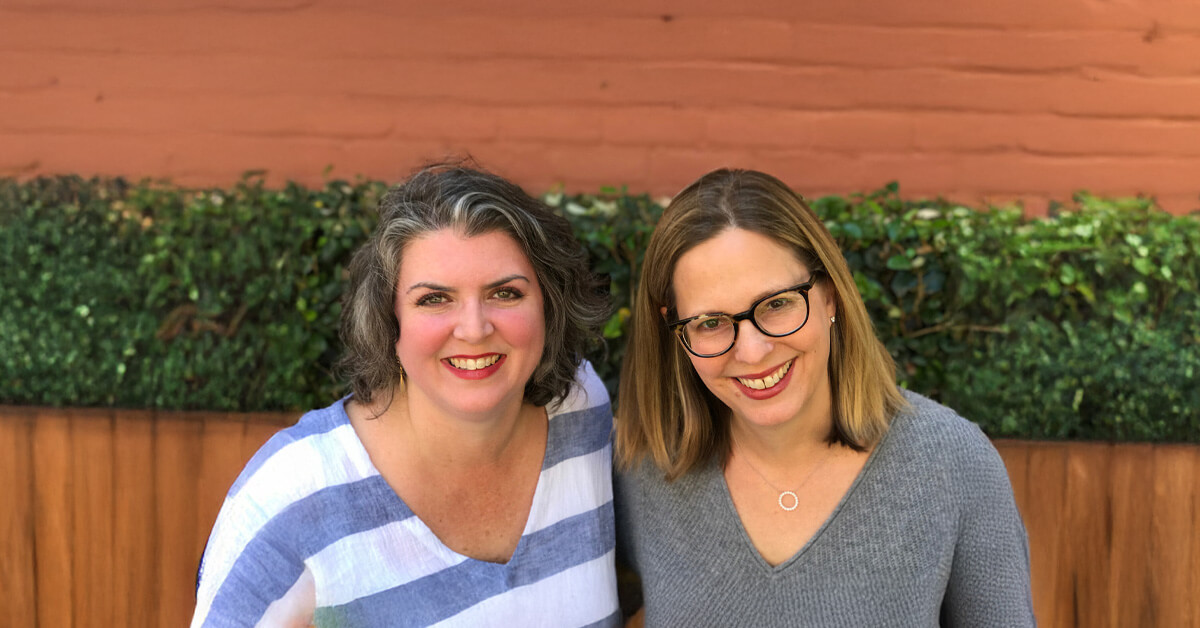
In this episode, I talk with Liz Craft and Sarah Fain, veteran TV writers, showrunners, and co-hosts of Happier in Hollywood, who are also thriving as modern content creators. We explore the chaos in the industry, why the old normal is gone, and what it means to find the sweet spot between legacy creatives and the next generation. Liz and Sarah share hard-earned insights on adapting, thinking strategically, and staying true to your identity while building new opportunities.
Liz Craft & Sarah Fain wrote their first piece together when they were fifteen — an article on Kansas City delis for their high school newspaper. Liz attended Columbia University in New York and went on to work as an editor of young adult books. Sarah attended Williams College then joined Teach For America, where she taught high school English and Creative Writing in rural North Carolina.
Liz and Sarah decided to move to L.A. together where they rented a tiny beach house and dove head first into their writing partnership. Since then they have Executive Produced, created, and written for numerous television shows including Angel, The 100, the Emmy and Peabody Award-winning show The Shield, Women’s Murder Club (which they created based on the James Patterson novels), The Vampire Diaries, and Lie To Me. Liz and Sarah created the ABC show The Fix with former Los Angeles prosecutor Marcia Clark. Most recently, they developed the re-make of the iconic show Fantasy Island which ran for two seasons on FOX. They’ve also co-written two Young Adult novels, Bass Ackwards & Belly Up and Footfree & Fancyloose.
Liz and Sarah co-host the hugely popular weekly podcast Happier in Hollywood, which is about how to survive the war of attrition that is life in Los Angeles. It was recognized in Apple’s New & Noteworthy and has over five million downloads. Liz also co-hosts the podcast Happier with Gretchen Rubin.
Happier in Hollywood
Zack Arnold: Alright, Liz Craft and Sarah Fain, I cannot express enough what an absolute pleasure and honor it is to have both of you here for the summit where we and everybody else in our industry, and anybody doing creative work and telling stories, is trying to figure out where things are going next. And I think few, if any, are going to be positioned to help us better answer some of these questions. So before I dive too deep into the details, because I’ve been really excited about this for a long time, I just wanted to say thank you to both of you for giving me your time and your attention and sharing all of your wisdom with all of us today.
Liz Craft: Well, we are so happy to be here, Zack. So thank you for having us. We’re excited to have this conversation.
Sarah Fain: Yes, thanks for asking us to join you.
Zack Arnold: Absolutely. I’ve been a follower of your podcast for a long time, but a follower of your work. I mean, frankly, I will argue and die on the hill that I think The Shield is probably the best television show of all time. I think I’ve watched it three times. I would give anything to have a time machine to go back to that point in my career and be at the level at which I could have worked on it. I was still kind of breaking in at the time, but yeah, the show The Shield might still be one of my favorite shows of all time. So just wanted to put that out there to get us started.
Liz Craft: We love it. We have to say we’re thrilled that Walton Goggins is having his moment, right?
Zack Arnold: Isn’t he? Yeah, that’s an understatement.
Sarah Fain: It is so fun to watch. It’s the greatest thing.
Zack Arnold: For those of you that are here attending that are saying, “Oh, I’m not familiar with Liz and Sarah,” you are both the hosts of the Happier in Hollywood podcast. And I love the way that you frame this. It’s a podcast about how to be happier, healthier, saner, more creative, more successful, and more productive in a backbiting, superficial, chaotic, unpredictable, fundamentally insane world, not to mention winning the war of attrition that is living in Los Angeles. First of all, I love the alliteration of all of that. You put what you do so perfectly. It’s very clear that you’re both writers.
So having framed the conversation this way, my goal is to dig a little bit deeper into better understanding where I believe there’s value and opportunity in all the chaos around us, which is in understanding the value that very high-level creatives and storytellers can bring to this new creator economy. And the two of you are kind of at the intersection of both of those. However, the first place that I want to start is, what the fuck? Like, what is happening right now? Care to comment?
Sarah Fain: It’s a mess. It’s really a mess. I don’t think anyone knows what’s happening right now. It’s like the networks and the streamers are all trying to figure out what they screwed up and what they can do to fix it. They’re sort of realizing, “Wait a minute, the broadcast model actually worked really well,” and having a schedule in the year wasn’t so terrible sometimes. And then trying to figure out what’s good from streaming. It’s just like a giant pit of chaos to me right now, but maybe we’re starting to come out of it.
Liz Craft: The thing is, the way people consume content is changing. Period. Has changed, is going to change, isn’t ever going to go back. So it’s not as if we can come out of it in a sense. Like, I think things can normalize and we can then work within that, but it’s not as if there’s some solution that’s going to take us back to 10 years ago. Which is where your question about the creator and the creatives comes in, because we all have to find a different way forward, just like print journalists have had to do in the past 15 years.
Zack Arnold: And that’s something that I’ve been trying to emphasize with my community as well. It feels like what we’re going through is unprecedented, but I always have an adverse reaction to that word because humans have gone through this process throughout time with these massive technological advancements. There’s a lot of new and different things that are happening, but I’ve always been saying that what it really comes down to is we just don’t know how to find the eyeballs anymore and get them all in the same place. And when you can’t get the eyeballs in the same place, you can’t monetize them. Things are now so dispersed that nobody knows how to make money anymore. So am I totally far off, given the perspective that you have from the development and the production side of television?
Liz Craft: No, that sounds accurate to me. I mean, the other thing I think—and I just have a feeling, and I think a lot of people have the same feeling—is that forever, Hollywood was proud of itself, proud of what we did. The studio heads wanted Hollywood to exist as a certain kind of place where American dreams were made. And I think really now, it’s just everything is so corporate that this idea of pride in that we make movies and make TV… yes, of course, it’s always been about making money, but now it really is only about making money. It’s the only thing that matters. So therefore, every single decision is driven by that and not by sort of people or material. I think that is why it feels very different.
Sarah Fain: It feels in a lot of ways, and this is not across the board, but it feels like we make widgets, and we’re just trying to figure out which widget will grab someone’s attention the most.
Liz Craft: Which is why those eyeballs that you’ve mentioned are the only thing that matters.
Zack Arnold: And I would say that there’s kind of been this endless argument of, “It’s show business.” “No, it’s show art.” Basically, since this industry began, it has been about some form of commerce. So I would argue, to a certain extent, it has always been about widgets, but now I feel like it’s only about being able to monetize the widgets, as opposed to there was a part where, “Well, we’ve got to make money, but there’s always space to make great things, too.” I feel like now the conversation about taking a risk and making great things, while we also have another assembly line that’s making the widgets to pay the bills, I feel like it’s down to one assembly line. Every single widget must be monetized. It must be predictable. It’s about quarterly reports and shareholder revenue, and I just feel like all of the heart has been taken out of everything.
Sarah Fain: I mean, I think great things get through, like Squid Games, but they seem more like accidents, like we kind of stumble upon them, than like we’re aiming for something really great.
Liz Craft: Well, and if it’s great and you think that can make money, great. I think if HBO thinks something that’s fantastic will earn them money, wonderful. But if they decide something terrible will make money, they would go with that instead.
Zack Arnold: So what does this look like from your perspective, literally in your writers’ rooms? What’s this major shift that you’ve been seeing on the creative side of it, rather than just talking about the numbers?
Liz Craft: So much of it is about lower budgets and not wanting to pay writers, not wanting to have enough writers, and not wanting to send writers to set because that costs an extra few thousand dollars. So a lot of the creative actually comes down to budget because budget very much impacts creative. I will say something interesting creatively that we’ve heard about—we haven’t personally experienced this—is that writers’ rooms are being told, “You need to sort of constantly explain what’s going on in the story because you have to assume that people are not just watching this; they are watching this and scrolling their phone.” So they’re not giving you the attention they need to follow the story. And I will say, I myself am very guilty of that, so despite the best of intentions, the scroll is a draw.
Sarah Fain: But I think at the same time, everything Liz said is true, and we have to do the job the exact same way. We have to think about it creatively the same way. We have to have the same high bar. We very much write to a budget now. It used to be you just write something, it was the coolest thing, and that we don’t do anymore. We’re always aware of budget, but you also have to have the same sort of creative ambitions that you had before you had to think about that.
Zack Arnold: From my perspective, it’s going to be a little bit different from yours. I was on Cobra Kai from 2018 all the way until it finished its run in mid-2024, and even throughout that process, I could start to see that transition where Cobra Kai was just these guys that said, “We’re going to make a remake of The Karate Kid, it’s going to be awesome.” It’s very low budget. But I really saw the transition from “we want to make something great” at the studio and network level to “we really need to fit this into a nice, neat little box on the spreadsheet.” And the common sense logic would be, “This is Netflix’s number one streaming show on the planet for two weeks when it comes out. Why wouldn’t you want us to make the best show possible?” But all they kept doing was crunching more and more. Rather than you becoming more and more successful and having more creative freedom, we were seeing less. I’m guessing you’ve experienced this yourselves.
Liz Craft: Yes, that happens on every show. We know from having meetings at Netflix, their thinking is by season three, everyone who’s subscribed to Netflix to watch this show has already done so. Therefore, we’re just keeping those people who are already invested; we’re not trying to get new people. So that, I think, explains that. The other thing is, as many people watching this know, certain actors, writers, certain people get paid more as the seasons progress. So of course, the studio is not going to put out more money, so they have to compensate by cutting the budget in other areas.
Zack Arnold: I’m curious now, from both of your perspectives, I’ve heard you say in your podcast recently that you feel like you’re kind of starting all over and you’re back to hustle mode all the time. Talk to me a little bit more about how it almost feels like here we are, it’s time for the grind, we’re paying our dues again. How have things changed for the both of you over the last few years?
Liz Craft: There was a long time where we never thought about getting a job. We just always had job opportunities, and it was just choosing what we wanted to do. And that is very different for us and everyone we know, basically. So rather than getting caught in the mire of that, we just decided, “Let’s take this as an opportunity to double down and to fire up and absolutely tackle this career the way we did when we moved here.” It’s funny because, as you mentioned at the start, we say, “how to win the war of attrition that is life in Los Angeles.” Well, when we wrote that line, we thought we had won the war of attrition. We were like, “We’ll give you so much advice because we’ve done it.” And now we’re like, “Oh no, the war of attrition is still happening.” We are fighting this war. In some ways, I think it’s good for the podcast because it really puts us right there in the trenches, fighting and sharing how we’re fighting. But I will say it was nice when we felt we were the victorious and we were just coasting.
Zack Arnold: Given all of that, what I find curious about the two of you is that you have a very successful podcast and you are, and I know this is going to be a very divisive term for the two of you, “content creators.” One would think, “Well, now just fully focus on that because that’s the area that’s absolutely exploding.” Why make the decision to fight the war of attrition again, even though it feels like starting over?
Sarah Fain: I think we think of being content creators in a bigger-picture way. We think of creating television shows as creating content. We think of creating novels as creating content. We just started a Substack newsletter that we think of as creating content. Obviously, we have the podcast. So I think we just sort of opened the umbrella of content creators to include the things we’ve already been doing, the things we’re doing now, and things that we’re going to do in the future.
Liz Craft: And I also think so much of what we share in our content creation is about Hollywood and especially television writing. If we were to just give it up, we would lose our knowledge of it. Especially in this changing world, we want to stay in it so we know what’s going on. We also talk a lot about wellness at work and staying sane. I feel like the fact that we’re actually doing the job and showrunning and developing makes all of that more of a challenge, and therefore makes what we have to say more relevant.
Zack Arnold: And that’s one of the things that I really respect about the work that you guys do. There are so many people that are putting a specific facade out there, but then you look behind the scenes and it’s all bullshit. And I really respect the fact that in order for you to have great content as podcasters, you still want to be Hollywood insiders because that’s what makes you better podcasters. What makes you better podcasters is working in Hollywood, and working in Hollywood makes you better podcasters. It’s that synergy of these two things that I think is so valuable.
My gut is telling me that there’s something about this intersection of really great storytellers—the world’s best storytellers are in this industry of Hollywood—but there’s this whole new world of content creators. And right now, if you’re looking at the numbers, YouTube is eating everybody’s lunch, including Netflix. They’re two very, very different worlds as far as quality and type of storytelling. I think there is a huge opportunity where you take the best storytellers in the world combined with the best entrepreneurs that understand how to build audiences but aren’t so good at telling stories. I think you bring them together, and you two are in a unique position where you’re kind of straddling these worlds already.
Liz Craft: Yeah, it’s funny you say that. This is something we’ve spent a lot of time talking about because we always say to each other, “We’re just doing this. We don’t know where it’s going, we don’t know how it’s going to pay off, but we just know that we should do it.” I always say I wish I’d gone to business school before becoming a TV writer because I think understanding that entrepreneurship is the key to the future. On a recent podcast, we actually had a friend of ours on to talk about strategic planning because, for the first time in our careers, we’re realizing we need to have a strategic plan to even understand what we’re trying to do.
Sarah Fain: And to your point about YouTube, we’re very aware that there are more things that we should be doing. We should be making more of an effort on YouTube. We should be actively involved in TikTok, neither of which we’ve ventured into, really at all. I think we maybe post our live Substack listener questions that we do every Saturday morning. We set it up to post on YouTube. I haven’t checked, is it actually posting? I don’t know. It’s just so vast now.
Zack Arnold: The two words that sent shivers down my spine in one sentence: synergy and TikTok.
Liz Craft: But here we are. Years ago, when I was debating whether or not to get on Twitter, back when it was Twitter, my sister Gretchen Rubin, who has a very successful podcast, said to me, “Do you want to be part of the next generation or the last generation? If you want to be part of the next generation, join Twitter.” And I did, and I got Sarah to join, and then many other people, including Shawn Ryan, the creator of The Shield, because we have to embrace these things. We can’t just say, “Oh my gosh, I hate that. It’s all about TikTok, and I don’t understand TikTok, nor do I want to.” Instead, we have to say, “Okay, when are we going to set aside time to learn TikTok? How are we learning AI?” All of these things, it’s on us to figure out.
Sarah Fain: Yeah, like BookTok is literally on our to-do list.
Zack Arnold: I’m assuming when you’re talking about having talked to a friend of yours on strategic planning, that was your episode with LaVerne McKinnon, right?
Liz Craft: This was in our one with Todd Herman, but I’m glad you mentioned her. So LaVerne McKinnon is a former CBS executive who is now a career coach, and she specializes in career grief, career pivoting, and career transitions. The reason why we have just fallen in love with her work is because it speaks to what so many people, not only in Hollywood but all over, are going through, which are these massive upheavals that are creating layoffs and people having to change careers at 40 years old, and how our identities are so tied up with our career. I mean, if you say, “Liz, who are you?” the first thing I’m going to say is, “I’m a TV writer.” It is not, “I mean, maybe it should be mother, wife, friend, sister,” but the first thing I’ll say is, “I’m a TV writer.” And so when that is threatened, it is extremely upsetting, and LaVerne addresses that.
Zack Arnold: Yeah, I’m going to make sure to promote all of the work that you’re doing. So in our show notes, LaVerne is your episode 408, and Todd is your episode 415. I think the conversation about identity transformation and which platform should I be on, I think these are the same conversation. I think in order for us to embrace that there’s going to be this new world, we can’t just say, “Alright, well, I’m going to stop doing the things that I’m doing and transition and be a TikTok influencer,” because there’s this immense grief and this feeling of almost death that comes about where you have to say, “This is not who I am, and it’s not what I do anymore.”
This is something that I too have experienced. I’m more on your side, Liz, than yours, Sarah, when I use the “content creator” title. There was a period of several years where I would ask, “Who do I think I am to now be doing podcasting and career coaching when I’m an editor? That’s what I’ve always done since nine years old. I’m going to be on the stage with the gold statues.” And there was a grief of letting that go when I said I want to make this transition. Nowadays, if an editing gig comes along, sure, I’ll take the call or the meeting, but I’ve removed that identity. For us to just say, “Let’s get on new platforms,” I feel like we have to have a sense of what our identity is so we can choose the right platforms that are authentic to that identity.
Liz Craft: Well, we’re not on there yet, so I guess if actions speak louder than words, that will be an answer. But I’m not convinced that we couldn’t be authentic on TikTok, that it couldn’t be for us. I’m not going to be there putting on my makeup and talking about something, but I think there probably are ways for us to be authentic on any platform, which we just haven’t spent the time to explore. Because again, something like Substack is so natural for us. It’s writing, it’s people who like writing, it’s conversation. I mean, it is a perfect platform for us.
But the other thing I will say is you have to fight for every single person. As I’m sure, Zack, you have experienced, when you’re starting out on Substack or doing a podcast, it’s not as if just millions of people suddenly find you. I mean, you have to go out and fight for every single person. So I do caution people about that when they want to transition; it’s not as if it’s an easy transition.
Sarah Fain: Right. And we actually talked to LaVerne in a recent episode about “sprouting” versus “blossoming.” Sprouting is where you’re just getting on Substack, and it’s so fun and new, and your people are coming in and subscribing. That’s different than blossoming, where you’re really growing the roots and taking the time to build your subscriber base and find your people. Also, I wanted to add to what Liz was saying about TikTok and YouTube. Our goal is to find the way to be on those platforms that does feel like us. We’re not going to go and be somebody else on TikTok, but it is a goal to find the way to be on those platforms that feels right for us, and then hopefully people respond. And if they don’t, then we fail. We fail at TikTok.
Liz Craft: Well, we are not good at not being ourselves. I mean, there are times when we try to act a certain way in a meeting or something, and we just aren’t good at it. So I don’t think we’d be able to do it any other way.
Sarah Fain: Also, we’d be giving each other weird looks and be like, “What are you doing?”
Zack Arnold: And I can tell you that one of the reasons that you’re here is that I don’t want to have any part in talking to people or promoting people that aren’t authentically being themselves. And that’s one of the things that I’ve gravitated to both of you for for years. It’s very clear you are yourselves, especially with these new Substack Saturday mornings.
I want to come back to this TikTok conversation again because I think the two of you could be successful at TikTok. I think it comes at a price. Once you’re on these platforms and once you start to game the algorithm, the algorithm starts to game you. And you think you’re putting on a face or a persona, and you’re saying, “Well, this one blew up and this one didn’t. So this thing that blew up was a little more incendiary. I’m going to do more of those.” But then what happens is that actually starts to seep into your personality and it changes who you are as a person. That’s the part that I’m afraid of. That’s the part that I don’t want to be a part of.
With Substack, I feel like I can totally be myself. The challenge is, yes, blossoming is really, really slow, and I am a very impatient person. And with how quickly things are moving, nobody wants to put in the time because they can’t afford to, because we’re trying to find that next gig or that next paycheck, and they’re just not there anymore. But my biggest fear is either the distraction of trying to do many things, but the bigger fear is that the algorithm is going to change who I am and the kind of content that I create.
Liz Craft: Yeah, and that is an insidious thing that I absolutely could see happening. In terms of the time thing that you mentioned, in saying that we’re starting our career over again, one thing that we have done is added back in doing work on weekends. For years, we had said we no longer work on weekends. If it isn’t done on Friday, it’s not happening until Monday, unless we were in a real crisis. And now we work really every weekend in order to have the time to do the Substack and to work on our podcast, because we are spending a lot of time doing the other stuff.
Zack Arnold: And that’s a great place to go next. It’s not as if you guys were in Hollywood, and now you’re very active as podcasters and on Substack. You’re doing both simultaneously. I know how hard that is. I will be in the middle of a season cutting, and at the same time, I have to wake up and do a career coaching call, and I have to make sure my newsletter goes out. It’s absolutely maddening, and it’s very challenging to be one of the voices talking about the value of work-life balance when you’re trying to balance both of these. How are you doing both at once, even with seven days a week?
Sarah Fain: It’s a lot. We took out a pitch last week. This week, we took out a pitch that we’re attached to. We’re writing a script. We’re developing multiple things. We’re doing the podcast. The podcast, we had already integrated successfully for many years, so that’s not new. We had already kind of built that in. But the Substack and trying to figure out how to be in other forums, that’s new, and it’s a lot.
Liz Craft: And yeah, we are struggling with how to do all of it, honestly. We’ll just sort of decide, “Okay, today we have to work on this pitch, and we just can’t deal with anything else.” Now, writing the Substack, for instance, takes a lot of time. What we write is short, but it takes a long time to write it. And that is one of those things where we’ll be working on it at 11:00 PM, whereas before, we would not have ever been working at 11:00 PM. So we’re kind of just saying we want to do this enough that we’re going to do it.
It’s kind of like you hear about people who have full-time jobs, but they really want to write their novel, and they wake up at 4:00 AM every day. I sort of feel like that’s what we’re like right now. We just have this thing that we want to do. We really want to figure out this creator thing, and so we are just doing whatever it takes. It’s nice with two people because we talk about everything. A lot of times, we can accomplish things faster than somebody would do it on their own. I do think efficiency is part of our team superpower.
Sarah Fain: Yeah, people ask us a lot, “How do you do this? Does one of you do editing and one of you does the other thing?” And really, we just kind of move as a unit, but we’re fast as a unit.
Zack Arnold: Well, I’m going to have to find either my Liz or my Sarah. It’s so interesting you bring up this idea of the person with the day job that wants to start a novel. That’s exactly been my approach to Substack. I looked at my calendar, and I said, “Alright, well, family is not something that I can take off of the calendar, sleep is not something that I can take off the calendar. If I want to be a Substacker and I want to write, guess what’s going to happen? I’m waking up at 5:00 AM.” So that’s exactly what I’ve been doing. Not a morning person at all.
But that’s been one of the hardest things, is accepting that if I want to do these two things at once, they are very different compartments of your brain. And I can only imagine how challenging it is where you have to write in TV form, but then write in Substack form. At least for me, when it was between editing a TV show or doing a podcast or career coaching, they were totally separate parts of the brain.
Sarah Fain: Yes, writing a pithy paragraph is very different than writing a scene in a script. Because on Substack, you want to say something meaningful, but in our newsletter, we also really want to keep it short. We don’t want to be draining the life out of people. We want them to go, “Oh, nice. I like that. Fun,” and move on.
Zack Arnold: The next thing that I’m really curious about is, I have found that in being very honest about my feelings about this industry, when I’ve published an article… I had an article a few years ago that kind of blew up, “We don’t want to go back to normal. Normal wasn’t working.” It ended up getting picked up by a few trades and inspired the IA Stories Instagram account. And boy, did I get my hand slapped by the studios. They were not happy with the fact that I was putting myself out there. I’m curious, if you find that kind of living in both of these spaces, do people say, “Wow, not only will you be our showrunners, but you have an audience that you can share it with,” versus “Hey guys, can you just focus on the show and play with your Substack and your podcast later”?
Liz Craft: I’ve been surprised how little pushback we’ve gotten. We have sort of wondered, “Are we going to get a call like, ‘We don’t want you talking about the show’?” And we’ve never gotten that. Now, whether that’s just because people in the industry are used to showrunners having multiple projects going, I think they’re understanding of that. And we’re careful in how we talk about things. We are honest, but we don’t call anyone out. There are a few people—James Patterson, we’ve called out—but we don’t sit there and trash people. We really talk about ourselves. So we haven’t encountered that. But I’m not surprised that you did because that was very public, and it was also at a time that was very tense.
Zack Arnold: Having said all that, given how much both of you are involved with, how do you keep it “happier in Hollywood” as opposed to “burned out in Hollywood”? Because I have called myself one of the world’s experts on burnout, not scholastically, but in experiencing it, it’s almost like I can set my watch to the burnout.
Sarah Fain: It’s funny because Liz and I just had a conversation yesterday where I said, “You know what, I went back on Wellbutrin.” I had gone off because I was feeling pretty good, and then I realized, “Oh, wait a minute, I just don’t feel like it.” So I actually am going to need to get some of that Wellbutrin assistance. We try to be very aware of when we’re struggling and when we’re not struggling and take action about it. And I do think being in a team really does help that.
Liz Craft: Yeah, I mean, I always say the great thing about us being a team and being such close friends is that we have fun. There was a moment when we were in the woods in Hungary in two feet of mud at 3:00 AM, and then having mulled wine with these weird hats that our assistant gave us. And it was fun. So even in all of it, whatever’s going on, we find our ways to have fun, and that really helps the burnout. Not that we don’t say to each other, “I’m so burnt, me too. I’m so drained, me too.” But we find our fun.
Sarah Fain: And we also take time when we need it. Like, if we take something out and it’s a pass, if they pass on it, we will feel like shit for several days. But at this point, we’ve been through so many bad experiences that we know we’ll recover, and our recovery time is a lot faster than it used to be. So we 100% still get knocked down hard, but we get up faster. I think our resilience muscles are stronger than they were when we started.
Liz Craft: I also think, and this is something you could speak to as well, Zack, that sort of counterintuitively, adding in more things that you’re doing can make you less burned out. So learning something new, experiencing Substack, starting a podcast—all of those things, I think, keep us from burning out because we’re learning new things, you know, living in that atmosphere of growth. I was saying to Sarah the other day, our life is a series of wanting to learn how to do something, being terrified about it, like learning and having a great time doing it, having learned, and then doing it for another ten years. We just are always finding those new things, and I think that keeps it fresh.
Zack Arnold: But ultimately, isn’t that really the whole point of life, is to have an endless series of challenges and problems that you want to solve? One of the topics that I talk about all the time is, and I’m going to put this out into the world when I do a TED Talk, the first line of that TED talk is going to be, “Work-life balance is bullshit.” Because work-life balance is a myth. I had this conversation extensively recently with the author Oliver Burkeman, who wrote Four Thousand Weeks. I would rather have some form of strategic imbalance, which is, “I love all the things that I’m doing,” and for a certain period, you guys are probably all in on the show, then you’re all in on the podcast, or you’re all in on learning Substack. But if we’re looking for that proverbial balance, it’s like eight hours working, eight hours with family, and eight hours sleeping. Especially for those that are highly creative, dear Lord, is that boring.
Liz Craft: Interesting. Well, it makes me think of when we interviewed Channing Dungey, who’s now super high up at Warner Brothers. We asked her about this question, and she said that she just tries to be 100% present in whatever she’s doing for however long it is. And you know, that’s not always easy to do, but it’s a goal.
Sarah Fain: And we also, there’s a really great director, Liz Friedlander, who said, “I can be a great director and I can be a great mom, but I can’t be both at the same time.” You can’t do all things all the time. I’m in a slightly more complicated situation because I’m an only parent. So a lot of my work-life balance is about, when we were shooting Fantasy Island, as soon as my daughter would go to bed in the hotel room, Liz and I would sit on the patio and work at night. So it’s less of a dividing line and more of a blend. It’s like I’m never fully 100% anything.
Zack Arnold: And multitasking is just beyond exhausting. So the thought of, “I have to be present as a screenwriter, a showrunner, and a parent at the exact same time,” the brain and the heart just cannot handle that. But I’m so much on the same page that you want to be present and focused on one thing at a time. The challenge is that requires something called a strategy, that requires a plan.
I wanted to come back a little bit to this conversation that you opened earlier about this strategic planning approach that you talked about with Todd Herman and this idea of having a “corporate vision board.” So think for a second that we’re talking to Sarah and Liz, but when you were earlier in your careers, and you’ve transported them to right now. So you don’t already have a successful podcast and you’re not successful showrunners. You have some ground, so you’re not starting from nowhere. How do we start to create a corporate vision board and strategically figure out where a career goes next when everything is out of control?
Liz Craft: It’s not easy. A few things I would put on that board: networking. I think networking is more than ever incredibly important. And then your craft. I mean, having the best material is always paramount, but even more so now.
Sarah Fain: I also think part of why we were successful is that we didn’t know how hard it was to be successful. We were fools when we came here. We were in our 20s, we were from Missouri, we didn’t go to USC. We just thought, “Oh, we’ll go and write TV,” because basically, Liz’s mom read an article about the Friends writers. We just learned as we went and met people. Liz always tells the story of how soon after we moved here, she found out that this guy, Bob Fisher, who was a showrunner, was at a party down the beach, and she hopped on her bike and she pedaled down there, and she met Bob Fisher, who is still one of our good friends to this day. You have to be willing to do that, and you have to pretend that it’s not as hard as it is.
Zack Arnold: So I could not emphasize more how much I believe in the power of networking. It’s why, in an earlier day of the summit, I had a networking expert that literally wrote the book on how to build rich relationships, especially for introverts. I built literally my entire career from cold outreach emails. I spend most of my days helping people workshop their cold outreach emails because that’s how people are building the relationships that they need to be parts of the conversation. There’s no such thing as a job listing in this industry. The only way you’re going to find out about opportunities is if somebody else knows that you exist, number one, and knows that you’re awesome at what you do. So you can be amazing at what you do, and nobody’s going to discover you. You can also be an amazing networker, but if your craft sucks, what’s the point?
Liz Craft: And the other thing which we are still wrapping our heads around is, in some sense, seeing yourself as a brand is sort of where we are right now. We never thought of ourselves as a brand for years and years, and now suddenly, this is partly because of the whole content creator thing, but also as TV writers, I think we need to craft some kind of brand for ourselves so that we can quickly articulate what we offer.
I remember when we were interviewing for The Shield, they asked what we would bring to the room, and we had no answer. I said, “We’re always on time.” I mean, that was literally all I could think of. And we got hired. Luckily, we had a script that Shawn Ryan really liked, but that was not a good answer. But one thing we are trying to do now is we want to write sort of a succinct, two-sentence description of what we do as television writers, which we’ve not felt the need for before.
Sarah Fain: Well, not just not felt the need for, I think we felt kind of the opposite. Our thing has always been, “Well, we can do everything. If you’re a good writer, you can do whatever.” Like, we don’t care if it’s a procedural, a dramedy, episodic, serialized. We can do all of the above. Now we’re like, “Okay, we need the two sentences so that people can get it very quickly.”
Zack Arnold: Yeah. So the value proposition, so to speak, which again, something that comes very much from the creator world. They are so good at this, being able to say in a sentence or even a phrase, it’s basically a logline. I mean, as writers, you guys have written loglines, but it’s a logline for yourself. And I think that is so paramount because they want to know, not necessarily what you do, because everybody that’s available can do the job at some level right now. It’s, “How are you different? What do you bring to the table that all of the other people that also have the tools and the experience and the skills?”
Liz Craft: Yeah, and it is a challenge.
Zack Arnold: So I want to be really, really respectful of your time. You’ve just opened Pandora’s box talking about networking and personal branding. But I want to close the loop that we started with. Where do you think the storytellers in Hollywood can be tremendously valuable to the creators? Because I think the creators and their knowledge of business and algorithms and personal branding, there’s a lot they can bring to the creative space.
Liz Craft: Boy, that’s a good question.
Sarah Fain: I know we’re looking at each other. That’s a big question.
Liz Craft: It’s a big question. I mean, I think that goes to what is the future of the industry? Are there going to be shows on TikTok, on YouTube, as there are on ABC, NBC, and Netflix? It’s interesting because I was thinking about this exact question the other day. I happened across on TikTok a scripted show that was three young women in an apartment. It was called “Group Text Chain,” and it was about the group text chain before meeting up for brunch. It was something that they were able to do, but it was all scripted, and I thought, “This is really fun to watch. It could be way better.” And that right there, I’m like, “Oh my God, is this the future? Are we going to get hired to write something like this?”
And then, of course, the monetizing all comes in. This also goes to, as writers, we do need to be more entrepreneurial. And again, it feels like a huge challenge to understand how to be entrepreneurial, but it’s partly cutting through the middleman and just putting creative people together.
Sarah Fain: Yeah. I mean, I feel like just that line is going to be erased over time. There’s just not going to be a line between the two. I came home yesterday, and my daughter was like, “Oh, I just watched a movie called Hurricane Bianca.” It’s on YouTube. It’s a YouTube movie with Rachel Dratch, and I can’t remember who else is in it, but people who I recognized. That was done specifically for YouTube. It has a sequel. That’s just where people are finding things now. Nobody is going, “I’m going to turn on NBC.” I wish they were, but they’re not. They’re going to YouTube.
Zack Arnold: Well, I’ve been saying for a couple of years now that I think we’re going to go back to the four networks that we remember from the 80s or 90s, but it’s not going to be Fox and ABC and NBC and CBS. It’s going to be YouTube, Netflix, Apple, and Amazon. We’re going to be back to these four networks. But I think the most important thing that you said, Sarah, is that there is going to be no line anymore. They’re going to blur together. If we continue to see ourselves as legacy Hollywood and there’s a moat around the work that we’re doing, we are the gatekeepers, that is a fast death, and we’re watching it happen right now. If we embrace and we see the opportunity and the overlap and figure out how we can be valuable to them and vice versa, I don’t know where that goes, but I think that’s the path.
Liz Craft: So that is the path. You’re absolutely right. And one other thing I just wanted to mention, we’re just wrapping our heads around how everything is just going to be international. If the next show we make, very likely it will not be made in the United States. We may be living in Australia for six months. We have a friend who’s been in London for a year and a half. And again, with the world of content creation, there are no lines, as you said, but there are also no lines in terms of the countries. So anything is possible, and it’s all global. And the bigger it gets, the more confusing it is, but also it’s exciting.
Zack Arnold: Yeah, I’ve been talking about that as well, this embracing of the globalization of the workforce because the pandemic showed us technologically, it can be done. I’ve seen several spreadsheets going around of all the shows that are being outsourced to other countries. That’s the reality that we have to face. Do I like it? No. But we also have to face reality and take responsibility for the fact that we need to find our way through this.
So I’m very glad that you brought that up. I feel like we’ve just gotten started. I’m so glad that I had both of you on the conversation today so we can talk more about this and brainstorm together. Is there anything that we have not talked about yet that you want to leave people with today?
Sarah Fain: We end every podcast with, “It’s a fun job and we enjoy it.” It’s something that Liz said organically many years ago.
Liz Craft: It’s on my sweater for anyone who’s watching.
Sarah Fain: And just go back to that. It’s a fun job and we enjoy it.
Zack Arnold: Well, I’ll leave everybody here to make sure that they have the show notes to go visit you, go see Happier in Hollywood the podcast, find you on Substack. Highly, highly recommend that they like, follow, subscribe, and smash all those buttons, as they say in the YouTube world. But again, tons of gratitude to both you and Liz, Sarah, for sharing your expertise today and giving us all just a little bit of hope and a little bit of direction for this uncertain future. So thank you so much for being here today.
Liz Craft: Love talking to you. Yeah, thank you.
Edited by: Curtis Fritsch
Produced by: Debby Germino
Published by: Vim Pangantihon
Music by: Thomas Cepeda
In this conversation, Jay and I talk about what it means to create value, why your platform choice matters, and sharing the imperfect parts of the process.