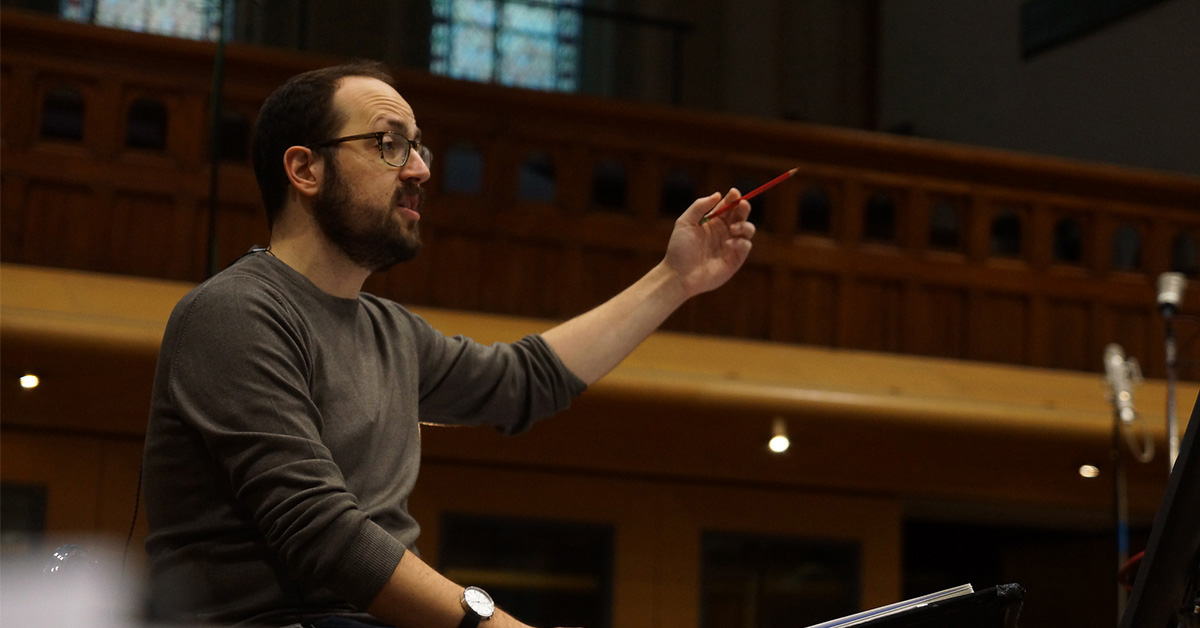
The Craft of Film Composing (And Working with Composers) | with Joseph Trapanese


About Episode
Joe Trapanese is a friend, colleague, and film composer who has worked on some of the coolest project and film scores of the last 5-10 years including The Greatest Showman, Jean Claude Van Johnson, Straight Outta Compton, Tron: Legacy, Oblivion, Only the Brave, Unsolved: The Murders of Tupac and the Notorious B.I.G., and The Raid series (which is my #1 secret weapon as a film editor). Rarely is there an episode of TV where I don’t use a track from The Raid if I’m working with a fight scene or a suspense sequence. It’s MONEY.
In this interview Joe and I break down his path from a kid in New Jersey to moving out to Los Angeles and how he climbed from nowhere to the top of his profession in record time. In addition, Joe and I also do a deep dive into the creative process of collaborating with composers.
If you have ever wondered how composers approach their work, or more importantly if you’re an editor like me and you want to know some cool tips for working with composers, this is an incredibly useful and insightful interview.
Episode Highlights
- Focusing on what is in your control
- It’s about who you know, so start meeting people
- Establishing relationships rather than networking for jobs
- “You won’t get hired until you are the solution to someone’s problem.”
- Confidence vs. arrogance
- Keeping your cool in the reputation-driven world of professional composing
- How to searching for the best solutions in collaboration, rather than just inserting your own
- Dedicating yourself to a specific career ladder
- How to know when you’re not getting enough in return for your work
- “Talking about music is like dancing about architecture”
Useful Links
About Guest
Joseph Trapanese is best known for his sleek score work for blockbuster films like “Tron: Legacy,” “Straight Outta Compton,” “Oblivion,” and the “Raid” series. As a composer, arranger, and producer for movie, television, theater, and video game music, he has collaborated with a number of mainstream musical acts. His first major break came in 2010 when he worked with Daft Punk on the sweeping digital soundtrack to Disney’s “Tron” reboot/sequel. Trapanese followed that success by creating a score with Mike Shinoda of Linkin Park for the American release of the 2011 Indonesian martial arts film “The Raid: Redemption” (he would continue without Shinoda in 2014 with “The Raid 2”). That same year, he helped with arrangements on a handful of tracks for M83’s breakthrough hit “Hurry Up, We’re Dreaming,” which led to the pair’s collaboration on the 2013 Tom Cruise scifi epic “Oblivion”. For 2017’s “The Greatest Showman,” Trapanese worked alongside Pasek & Paul and John Debney, producing songs and co composing the score.
Notable solo scores include “Only The Brave” (2017), the landmark rap biopic “Straight Outta Compton” (2015), the second and third installments of the “Divergent” series, “Insurgent” (2015) and “Allegiant” (2016); “Earth to Echo” (2014); USA’s “Unsolved” (2018); Amazon’s “JeanClaude Van Johnson” (2017); ABC’s “Quantico” (201617) Freeform’s “Dead of Summer” (2016); EA’s video game “Need for Speed Payback” (2017); and Ubisoft’s video game “The Crew” (2014).
In the studio and in concert, in addition to Daft Punk, M83, and Mike Shinoda, he has worked with Dr. Dre, Dierks Bentley, Zedd, Kelly Clarkson, Mike Shinoda, Kendrick Lamar, Moby, Aloe Blacc, Alessia Cara, Haim, The Glitch Mob, Active Child, Halsey, Sohn, John Newman, Dia Frampton, 3OH!3, Steven Price, and James Newton Howard. Born in New Jersey, Trapanese earned his B.A. in classical composition from the Manhattan School of Music. He went on to study at UCLA for his M.A. in music for visual media and taught electronic music composition at the school from 20082011. In 2016, he became a member of the Academy of Motion Picture Arts and Sciences. He is a founding member of The Echo Society.
Transcript
Zack Arnold: I’m here today with Joe Trapanese, who is an amazingly brilliant and wonderful composer to work with and collaborate with, and it must be some form of miracle, because you and I, after eight months of trying to do this, are finally on other ends of the microphone talking to each other. So, Joe, it is a pleasure to finally be doing this today,
Joe Trapanese: And the pleasure is all mine. I’ve been willing to do this with you for so long, Zack. Thank you so much for having me on.
Zack Arnold: Yeah, absolutely. And I’m really, really excited about this conversation, because I’ve had a lot of editors on the show in the past. I’ve talked about the creative process for editors, I’ve talked a lot about the process of becoming an editor. What does the career path look like? What are the various steps that you can take, but I’ve never done it with a composer, and as you know, you and I have known each other for over a decade now, and we can certainly talk a little bit about how you and I started collaborating and got to know each other on our very first project way back in the day, but you and I have worked together for a long time, and I’ve learned a lot about the composing process, and I’m fascinated by the process, just the creative process alone, but also the workflow process, and you and I always have had this kind of dream collaboration together, where I basically fight tooth and nail to try and get you on whatever project I’m doing, because you make the process so easy for me, so I want to talk some about that with the audience today, but I also want to talk about your journey, because just like I do with other editors, where I kind of break down their career journey into some basic fundamental steps that anybody can take, I want to talk about your journey and make sure that my audience gets to know you specifically, because you have a pretty amazing rise to stardom when you look at your resume from where you started and the kind of things that you’re working on now. So, where I want to start is I just want the audience to get to know Joe, the composer, a little bit better. So, let’s start with your origin story.
Joe Trapanese: Absolutely, you know, I jokingly say that, you know, my origin story, when it comes to LA, is so routine and basic, that it’s kind of boring, you know. I’ll get to that in a second, you know. I grew up in Jersey City, you know. I was really lucky that the public school system had a pretty good music program, not really necessarily enough to like get me trained to do this, but just kind of a really great basic music program for what public schools are known to have right now, you know, which is one reason why I’m such a big supporter of music in public schools, but, but you know, I had a, I had a great childhood, you know, with some great music teachers, I was really lucky to have them, maybe I wasn’t aware of how lucky I was to have them at the time, who really encouraged me to learn as much as I could, and then I did some time at Interlochen in high school during the summer, which was really helpful. It’s a music camp up in Michigan, and that’s where things got really serious, because that’s where I, the first time I had access to kind of conservatory level training, and that helped me get into the following year. I got into college, I got to Manhattan School Music Conservatory in New York, very well respected school, and, and I think the best thing about that, and other places in my career, which we’ll get to in a second, is how in over my head I was. I was again just this kid from the inner city public schools, you know, I everyone else at the conservatory, you know, it felt like at least, you know, they were trained so much better than I was, they were, you know, virtuosos from a young age, and just kind of running circles around me, and what’s great about that is it forced me to work my tail off, you know, to really just, just in order to keep up, and so that by the time I got to the end of four years of conservatory training, I could hold my own against, you know, these people who I was perceiving were more talented and more, more blessed, and more, you know, more set up to succeed than I was, you know, I had to fight tooth and nail to get to that place, so it felt really good, and at the end of my time in New York, I was, I was ready for a change, I love. Up living in New York City, but I wanted something different, and really the thing that got the whole journey started, that got me really into music way back when I was 1213, years old, was Star Wars film music, and and that helped me fall in love with the orchestra, and which launched me into that career path of training and conservatory, at least that educational path. So, as I was wrapping school, I said, you know, that was my first love. What if I dived back into it? And so I took some time to visit LA. I spent a week here, I read some books on film scoring, just really basic stuff on how it works, and interviews, and I said, you know, I think I can make this work. And, of course, after visiting LA, you know, 70 degrees, palm trees, you know, you can’t help but just love this place, so you know, I came out here under the guise of doing some grad work at UCLA, I got into UCLA straight up composition program, you know, something I talk about sometimes is I got into the USC film scoring program, for those of you who know what that is, but it was just so expensive, and for your humble city kid over here, it was so much money to spend. I really didn’t want to spend that much and go into debt and already put myself in a hole when I could pay rent and with the money I had saved instead, and go to UCLA on a really great financial deal that they gave me, so I came out here, and you know, to be honest with you, as much as I enjoyed my time in UCLA, and I had a great time, especially taking some film classes there, I almost dropped out because I was starting to get work out here, I was interning, I was doing all sorts of stuff with, you know, with other composers as an assistant, freelance, that sort of thing, and that’s why I came out here. So I almost left school to focus on that full time. I took a couple of quarters off, but it was really important to me that I finished up my grad work, so I got my master’s, went back, finished that all the while working my tail off. So you know, that’s where it becomes a very traditional story, of you know, I got an internship that led to another internship that led to an assistantship that led to, you know, to this, that, and the other thing snowballing up until the point where we are at now, you know, I could trace every single project I’ve ever done on a, on a tree, so to speak, if I was to do that, I can trace it all the way back to those initial internships I had in LA, you know. And I’m sure we’ll talk about in a second, but I get asked all the time about how I met Daft Punk. How did I get on Tron? And that was because I had assisted a composer whose brother is the artist Chile Gonzalez, and Chile lives in Europe, and has worked with Daft Punk, and so Daft Punk wanted to meet Chile’s brother, the film composer, and when they met this film composer, and he realized what they were trying to do, he said, Oh, you should meet Joe, and I was working with that film composer because I had done an internship with a different film composer who used to have the same assistant this other, anyway. The point being, you know, that you know there really is no one specific point of arrival or breakout. It’s like one gigantic journey I’ve had to get here, and that continues to this day, where even on, you know, the 100 million dollar movie, I just did. That’s all through connections I’ve built over many years. It’s not like you get to a point and people see your name and say, “We got to have that guy, and start calling. Yes, that does happen, of course. But for me, right now, that’s not how it works. It still works the old-fashioned way, and I think most people in Hollywood will tell you that’s how it works, is that old-fashioned way of yes, it is who you know, but I, you try to use that to your advantage, and yes, it’s who you know, so go get to know a lot of people, so in a nutshell, a very big, gigantic nutshell, that’s it.
Zack Arnold: Well, I love that you basically stole one of my taglines, which is that it is all about who you know, so start getting to know people and make sure that they know you, right? That’s that’s a really, really big component of all this. And just to clarify, the 100 million dollar movie you just worked on, that was Robin Hood, correct?
Joe Trapanese: Yes, yes, it was. And I didn’t mean to steer the conversation there, I just want to, you know, just to illustrate for the audience, you know, like, you know, that 100 million dollar movie is connected to the work that I was doing for free, you know, and I think, you know, it’s funny, the work I was doing for free as an intern was still an incredible deal, because I felt like I was learning more in that one week in a studio than I did in one semester at college, and we all know how much that costs, you know. So, for me, interning was a free education, and getting to know people, and musicians, and again, like, yeah, exactly like you said, getting to know people, you know, making friends, you know. I hate the word networking, not man. I think this very personal thing, networking is very valid term. But I think, for me personally, it, you know, I’d rather say let’s make some friends, you know, because that feels genuine to me, and I think people want to work with people who are, they are genuinely connected to, not just who, you know, Zack, you and I, like I, we could go and have dinner and be friends and be genuinely connected, just because you and I have that connection, and I think you know that’s one reason why we love working together, because we have a real personal connection. It’s not just some, some professional thing, you know, and of course it’s a professional thing, but it’s not just networking, it’s that we’re genuine friends, you know. And then that makes such a huge difference.
Zack Arnold: Oh yeah, and it makes all the difference in the world with building relationships versus just networking to get jobs, that’s something that I talk about all the time. Whether I’m doing private coaching, whether I’m writing a blog post, whether I’m talking on a podcast, that when you’re meeting people, when you’re going to these events, or when you’re working with people, your goal is not to try and advance your own career. Your goal is to provide value to others, and one way to provide value to others is just be a genuine person and be friendly and build a relationship with them, because we’re all looking for personal connections, especially in Hollywood, where it just seems like everybody has this facade and everybody’s out to just get whatever it is that they want personally, so if you can really be genuine and feel like you want to provide value to somebody else’s life. Those are the keys to the networking kingdom, right there. I mean, that basically is everything that I teach in a nutshell, with all the people that I coach, and all the stuff that I write about. And one of the foundational things that I talk about over and over and over, when I break down somebody’s journey, I’ve actually broken this down, like, into a 50 page ultimate guide, and it’s that there are three basic steps if you want to succeed in essentially any career, but I like to apply to a creative career specifically. And the first one is that you have to understand which ladder it is that you want to climb, and it sounds like at a very early age you know that music was your ladder, but then it wasn’t just music or composing, it was well, I really love John Williams, and I really love Star Wars, and I want to take it into the film industry. And now you’ve carved out a very, very specific niche and a very specific sound, so you’ve climbed a very specific ladder. The next step is that you have to become awesome at your craft, which you’ve obviously spent a good part of your life doing, and what I love about the story specifically, when you were talking about being in the conservatory, is that you were surrounded by people that had way more talent than you did, but that just inspired you, that didn’t deflate you to say, “Oh, well, I just.. I don’t have the natural talent that they do, so I guess they’re just better than me. You said, “Nope, I’m just going to work my ass off, and I’m going to beat all of you, because you’re all writing on your laurels of talent, but I can outwork any of you. So, to me, I always try to tell people that it really has very little to do with talent, and yes, you need some talent, but there are so many people that have amazing amounts of talent that are unemployed or working at Starbucks because they’re not willing to put in the work, and then the final step, which we’ve talked about, and we can go into all three of these steps further, or go wherever we go, but the third step, which I think is the most important, after being awesome at your craft, you have to make sure that people know that you are awesome at your craft. You do those three things no matter what you’re going after. In my opinion, that’s the path, and you already nailed all three of these to a T.
Joe Trapanese: Oh, wow. Thank you. You know, and everything you just said, I mean, I couldn’t agree with more. I think you know the important thing is that you know you are prepared for the opportunities that whatever field you are working in, and whatever, whether it’s LA, London, or a tiny town in Iowa, you know, it’s just all that matters is that you are ready for those opportunities, and you know, I get really upset and tired when I hear people talk about, you know, oh, you know, I need an agent or I need a manager, oh, if only I got offered this opportunity, you know, it’s like you know, like that’s part of the equation that you cannot control, that’s the variable, you know, the variable is, you know, where the luck comes from, how the luck comes to you, you know, the people you meet, obviously you could try to guide your luck that you did, obviously, there’s, there’s, there’s, you know, that’s a certain extent you can control, but in the grand scheme of things, in this industry, there’s so much out of your control that you need to take what’s in your control and focus on it so hard and master it as best you can, because there will be an opportunity to get that luck, you know, to get that opportunity to get that chance to help someone out, you know, and one that I can think of right now, off the bat, is where we met Zack, you know, on the Bannon Way, you know, I had never.. I think that was the second feature I had ever worked on, I worked on one feature before as a composer, you know, and that was the second one, and then that was also the. First time I’d ever worked with a studio, you know, that was a Sony Pictures television project, that was a feature film slash web series, and you know that was part of the challenge we had was figuring out how this could exist as both both things, but you know that was something that I walked into that meeting, and our meetings, even just you and me, Zack, I walked in those meetings confident that I could help, that I knew what I was doing, because I had worked so hard to get to that position. So, you know, whether it’s that for Sony Pictures Television, Marvel movie, or a YouTube video, or a short video that you know, no one will ever see. You know, the fact is, you know, you have to walk into these situations with a certain amount of confidence. I’m not saying you should have bravado or any sort of anything other than humility. I’m very humble when I walk into these things. Maybe I’m guilty of being too humble sometimes, but just the sense of control, the sense of knowing that you can be helpful, like you said, Zack. I think what’s really great about what you said, about, you know, it’s all about what you could bring to others. You know, you’re not going to get hired until you’re a solution to a problem. Another great example is straight out of Compton. You know, they needed, they had spent so much money on the Music budget that they needed a composer they could fork. You know, so I’m relatively young compared to other composers in Hollywood, so I’m relatively affordable, you know, I don’t have as much experience, you know, I’ve worked on maybe 20 features, not 100 you know, so, so there you go, so that’s one, you know, another one is they needed someone who could interface with these artists, Trey and Cube, and you know, I’m lucky to be in the position. I’ve worked with a number of artists. They said, “Okay, great, Joe, we know we can put him in a room with these artists. And three, they needed someone who understood the role that that the film score would play in the myths of myths of all this other music and had an ability to craft a score with with a very hybrid sound, and so I was the solution to those problems. I could check off all those boxes, and I could help make that movie. And you know, every movie, every project I’ve come on to, I don’t know, maybe there’ll be a point, you know, 50 years from now or 30 years from now, when I’m, you know, an old hat at this, and I’ve done 100 movies where you know I’ll get a call just because of my name or something, and you know, but honestly, that sounds boring in comparison to, you know, the fact that you know every project I get, I’m a solution to a problem, you know, I can provide, you know, they need a score, they need a composer, they need a music producer, they need someone who can do this, who understands the story they’re trying to tell, and I can help them tell their story. And I think, I think I’d wager to say it works like that for you, Zack, you know, for everyone in this industry, that that you get hired because you offer the solution to a problem, you know, and that’s a great way to look at it. I think,
Zack Arnold: Oh yeah, I mean, that’s basically what editors get paid to do for a living, is solve other people’s problems, and the roles downhill in Hollywood, and we’re standing up. So that’s why I always make the joke that post production is the janitorial department of Hollywood, because we’re cleaning up everybody else’s. But anyway,
Joe Trapanese: that is true. Yeah,
Zack Arnold: One of the things that I wanted to pull out of what you said, which I think is really, really important for people to understand, and I want to go even further, is this concept of confidence, because I think that in Hollywood there’s this very fine line, and most people tip to the wrong end of it, but there’s a difference between confidence and arrogance, and in Hollywood, arrogance is basically a virtue. It’s a value that everybody feels that they must possess at some level, but confidence is the value that I believe you should possess. And you should walk into a room being very confident in your talent, being confident in your abilities to solve the problems, and I love that you’re saying that you don’t get hired unless you were the solution to somebody else’s problem. I mean, like that is a bumper sticker, right there. But I think it’s important for people to understand that it’s okay to be confident in your abilities, but you have to make sure that you’re not one of the people in the industry that just confuses that with arrogance, because the arrogance is often used to hide a lack of confidence, even though people see them as kind of one in the same, so that’s really a fine line that I’ve learned how to walk over the years, is how I can walk into a meeting with somebody and be very humble, like you said, but at the same time really project the confidence that yes, I am here to solve your problems, and I am the best fit to solve those problems. So far, that’s worked out fairly well for me, and it seems that it’s working out fairly well for you as well.
Joe Trapanese: Well, you know, I love talking about this, because I think, you know, composers, especially, we have.. it’s interesting when we do these interviews, auditions, or whatever. You know, I sometimes debate, like, should I be more confident than I feel comfortable with being. You know, and the answer that is always no for me, and sometimes I debate, well, would I have gotten that job, because some people, you know, the agents like to say that some, some of the professors I work with like to say, you know, just say you could do anything, and you’ll do anything it takes, and what you know, and walk in there, and you know, to me that’s the most uninspiring, unconfident thing you could do, I think, you know Hemingway said the best way said every great writer is built in bullet detector, you know. I think you know the amount of bull in this town, as you know, Zack is, you know, it’s off the charts. So you know, like you said, I think the key, the key thought there is you don’t want to confuse confidence and arrogance, and to me, you know, I think what makes a difference for me is I have the confidence to say I don’t know, you know, I have the confidence to say, you know, I don’t know what the solution to that is, but I’m excited to find it with you, and here are some examples, you know, I’ll say, oh, you know what worked on this other project, or this, you know, this is what we did, you know, so it’s interesting, I sometimes have my own internal debate about this, because I know that there are composers out there who walk in and, you know, are you to have a lot more bravado than I do, and arrogance than I do, and I think that might just come with, you know, their experience, and, you know, I guess I’m more willing to admit that, hey, I’m, you know, I’m in my 30s, I’ve only, you know, if you look at my IMDB, yeah, there’s a lot of stuff on there, but the amount of, you know, studio pictures, quote unquote, I’ve scored on my own is, you know, only up to, you know, is in the teens, in the 20s, you know, so, so it’s not, you know, I’m not walking in there like some arrogant jerk, at the same time, I think, you know, I walk into a meeting and I walk into a recording session and I walk into a spotting session with the confidence of just, you know, I know how to tell a story with me, and I love my job. I think that’s, you know, to me, that’s, I think that’s what it comes down to for me. The way I define confidence is, I love what I do, and I’m good at it, you know. So I have no problem sitting down in a meeting and telling someone what I think, in obviously a very, you know, very team, you know, collaborative sense of the word, you know, I, I think, you know, one reason you’re hired, and I’m sure you’ll agree with this, another reason you’re hired is, you know, you have a viewpoint, you have a standpoint, you have an artistry, and you’ve been asked to bring that artistry onto a project with you to help get it across the finish line, and I think that’s part of the confidence we’re talking about, is that you have the confidence to give that viewpoint and contribute, and I think you know that’s one of, I think the worst things in this business is, you know, when people say, oh, just tell them you can do anything, and you can do whatever they want, and you’ll, you’ll get it done, and obviously, yes, you know, we’re the, I love it, we’re the post production, we’re the janitorial services, we have to clean up, you have to get it done, there’s no tomorrow, you know, there, you know, there obviously is a sense of that, but at the same time, Who are we if we aren’t, you know, people with a viewpoint, and people with something to add, and something to give, and something to make something better, and I think that’s to me, that’s where my confidence comes from, is that I’ve been there before, I know what I’m doing, and even more than that, I have a really interesting take to share with you, and I have an interesting way of thinking about this, and, and that doesn’t mean I’m not open to other ways of thinking about it. It’s that every, every one of those viewpoints, when I make a suggestion and the director says no, all that means is that we’re closer to finding the right thing, you know. And if the director says something and I say, you know, I’m not sure, you know, let’s talk about this, you know, there’s nothing wrong with healthy discussion and debating. It means we’re getting closer to that solution, closer to that answer. And I think you know, for me, maybe that’s where the confidence comes from. The confidence to know that I can be a valuable member of this production and make it better. You know, if nothing else, you know this movie is going to be better because you hired me, and so my confidence comes from that place. I think there are some people whose confidence comes from, you know, I know exactly what to do, and I’m going to do that, and you know, to me that’s a lot of bullets, and I think a lot of, unfortunately, like a lot of people are lured into that, to me, you know, I try to have the confidence of saying I have no idea what to do, but that’s because I just came on to this film. Let’s talk about how we can get there together. Let’s talk about the solutions together, and you know, maybe that doesn’t work in some instances, but for me, that’s that’s the reason I do this, you know, is to explore and to discover things, and to, and to make cool, cool stuff together, you know. And that’s why I love what we do.
Zack Arnold: So, going one further layer deeper for confidence. One thing that I want to kind of tie into this idea of confidence that I think you’re doing, and you might not even realize you’re doing, but when you talk about this idea of I will do. Anything I’ll work on, whatever I have to, I’ll build my resume, just get work after work after work. That’s a huge mistake that so many people make, where they’re not realizing that they might be climbing the wrong ladder that doesn’t fit with their unique skill set. And part of the reason I think you can walk into a meeting and feel so confident without the arrogance, and the reason that I can do it as well is that I’m going to meetings where I’m confident already that I’m the right person for the job, as opposed to, man, I don’t really know anything about these people, and I’m not really used to the genre, but I need the work, and I’ll do anything, so I’m just going to go in there, and I’m going to pretend to be confident, and that’s when the confidence becomes arrogance, and one example that I’ll use from my life recently is that I’m now working on the show Cobra Kai, which I’m very excited about, because basically the Karate Kid series is my Star Wars, so very excited about that, but the reason that I’m bringing it up is because when I saw season one of the show I said, oh my god, I would love to work on this, but not only would I love to work on this show. I think I’m a really good creative fit for it, because this is a series that I know backwards and forwards already, and stylistically this show does a lot of stuff that I already do. It has my taste in music. I’m a child of the 80s, so I love all the 80s hair metal bands, all this stuff. So, when I went into my meeting, I was confident that I was the right solution to their problem, their problem being that they needed new editors for the show, and it’s a show with a fairly drastic learning curve, where you really have to understand the show specifically, and I didn’t go in there thinking I really want this job and I need to convince them I’m good at what I do, I went in there confidently thinking if I get hired, I’m doing them a favor, and I’m providing value to them, because I know their show really well, and I’m excited about it, and I like it. And I think you put yourself in positions like that as well, where it makes it so much easier to do a great job when you legitimately know that you are the right fit for the project.
Joe Trapanese: It’s hard. It’s hard to say this, because I, you know, I don’t think there’s anything you need to actively think about to project this, but you want them to feel like you know they’re going to be lucky to have you, and, and you know, I guess that’s easy for me to say, easy for you to say, because I think, you know, luckily the projects that we go up for, they would be lucky to have us, you know, and I think you know that’s harder for someone who’s starting out, at the same time, for someone who’s starting out, I think you bring up something so tremendously important. You know, people can smell desperation, and, and, and, and grasping, you know, from a mile away. You know, so I think that’s what makes it even more important to go up for things, and interview for things, and submit on things if you can, you know, to things on that, that first rung of your ladder, you know, and really on each rung of your ladder, as you climb up it, as you’re saying, you know, to guide your career forward using those types of principles of, you know, this is what I want to be doing, so therefore I’m going to get in this room, or I’m going to do my best to get in this room, and once you get in the room, you know you should be there, and I guess that’s really key, right? Once you get in the room, you feel confident that I should be in there, and I think you know, I think I could safely say, for both of us, Zack, you know, the reason we can say this is because we’ve both been in the wrong room before, you know, we’ve both, you know, mistakenly gone, you know, gone to the wrong ladder, or gone to the wrong, you know, trunk of the branch, you know, and, and had that meeting, and, and you know, you come out of it going, oh, you know, this is wasn’t what I was supposed to do, or you, or you didn’t get that job, and you realize you didn’t get that job because you weren’t ready for it, you know, that’s another thing. You know, sometimes you know you could kick yourself thinking about that, but at the same time, you know, the way I think about this is I’m in it for the long game. You know, I’m here to make a career, Zack. I hope that in 40 years that you and I can sit down and work on something together. You know, because that’s how much I love working with you, and I know you love working with me, and I just, you know, I feel like, you know, the reason that we have this connection is because we feel like we feel that way. We’re here to build the long game. I think that’s, you know, honestly, that’s also part of the confidence in that you go in a room with people knowing you’re not just looking to get the next gig or to be famous, or to get your name known, or you know you are here because you’re a contributing member of this community, you know that you are here to make something great and help them, and then you know, I don’t know, you know, I think that’s a.. I’ve never thought of it like that, I think it’s kind of a cool side effect of this podcast, Zack, as you’re helping me discover things too, but just, you know, people want to feel like you are giving them something that, that they’re lucky to have you, that they’re, that they’re part of your journey, and you’re now going to be a part of their journey, and you’re now intertwined. I think, you know, one way I used to speak about that is you. Know, as an assistant, from an assistant point of view, for instance, and I don’t mean to go off on any tangents here, but I think this is somewhat relevant. You know, I, I would talk about with students back when I used to teach, and I still talk about to interns now, when, when we have interns, you know, social skills are so important, you know, because I see there are weeks and months that go by where I see my interns and my assistants and my team more than I see my family, more than I see my significant other, you know. So, I think you know, you like Zack, when you and I work together, times where you see me more than your family, and I’m going to see you more than my family, you know. And so, that’s so much more important for us to get to get along and feel confident with each other and and be in that room together and know that we are working towards that same goal, so I think you know that’s part of it too, that when you walk into the room, people need to immediately feel like they’re at home with you, and that, and that, because when you get involved in these projects, it’s a long haul, and it’s a team effort, and it’s, it’s, it can be super stressful, so I guess that plays in the confidence, that confidence aspect to walking in, knowing that you’re here to help, and that you know you’re going to become a genuine member of their team.
Zack Arnold: Yeah, I mean, I agree with all that, and I’ve talked extensively about attitude in the past, and how really just walking into the room, having the right attitude is paramount, and I agree with everything else that you said, except one thing. I have one thing I adamantly disagree with, and I’m sure.
Joe Trapanese: Let’s talk about it, please.
Zack Arnold: Once I break it down, I think it’ll make more sense why I disagree, and I’m obviously having no interest in, you know, like setting up a debate here, but in talking about this idea of really believing that you’re the right fit for the project, and walking in that confidence, being, listen, I am the best fit, and you’re like, you said, lucky to have me, so to speak. You said I realized that it’s probably much harder to do that earlier in your career, and I disagree with that, and the reason I say that is because if I were just out of school, and I were to walk into a meeting to edit Cobra Kai, and I walked in playing this air of confidence – that’s not confidence, that arrogance. They can see right through it. They can be like, “You have no business being in this room, and you don’t have this level of experience, so why are we even meeting with you? Right? So you can project that, but it doesn’t really mean anything without the experience to back it up. However, I’ve gone into meetings with this exact same attitude and feeling of confidence. 15 years ago, it was for much, much smaller projects, but if they were looking for somebody that was willing to work for $500 a week to edit a feature film for 80 hours a week for a year straight, I would walk in and say, Listen, I don’t have a ton of experience, but here’s what I can bring to it, and I’m more than willing to adhere to what you’re willing to pay into the hours and everything else. And, as a side caveat, putting myself in that position was not good for my health, so I don’t recommend it for anybody. But I was also 24 years old, but I guess the point that I’m making is that I want people to feel like, well, I can’t really walk into a room with confidence until I have a lot of experience. If you’re walking into an interview to be a PA on a show, the value that you can provide is like you said, your great attitude, or it could be that, listen, I know the city streets better than anybody, I’m super efficient getting lunch, whatever it is. If you know that the problem is they need somebody that knows the city well, that can get lunches quickly, that has a great attitude, and is willing to put up with long hours. Guess what, you become the solution to their problem when you know that going into a meeting, that’s where the confidence comes from, instead of the arrogance. So, I guess that was
Joe Trapanese: That’s fantastic. No, no, I, you know, and I completely agree with that. You know, I think I, you know, the reason I probably said what I did was because, you know, I remember years ago I was in a, you know, in with a bunch of student composers, and we’re hearing a composer talk, and he was saying, you know, you need to be really careful about which movie you choose to do, and this, and the other thing, and it came off to us as, you know, it’s like, hey, we’re kids here, we’re trying to get whatever job we can, you know. So I want to make sure I don’t come off like that, but Zack, you are 100% correct, because, and I’m confident in saying that, you know, and maybe that’s the way to talk about. I’ve never figured out a way to talk to this. I think, you know, I, I’m so lucky that each year I usually do one or two things, like, for instance, this summer I was in Cologne, Germany, working with students out there. I was judging a student film user competition, and I was doing a lecture. It was fantastic. I love doing stuff like that. And all the time I meet people who say, “Hey, should I move to LA? Should I do this? What can I do? And you know, I get nervous sometimes because I want to tell people, like, yes, come out here, and I really am a firm believer that if you have the guts to do this, to come out here and do this, that there is space for you, and I think you put it best right there, Zack, and that you said, you know, even on those early, early shows, those first gigs, you could walk in with kind. Confidence, because you say, hey, I have nothing else to do. I, well, you probably don’t want to say that, but hey, I just got to town. I may not have the experience that, that you know, that these big name people have, but I’ll do your movie for $500 and I’ll work 80 hours a week for the next two months, you know, getting it done. You know, what do you? I’ll do 100 minutes. I mean, he’s like, no problem, you know, I think you know there is something to be said about walking in, that’s a great way of saying it, you know, you, you know, for me or you, right now, Zack, that thought right now, like $500 a week, 80 hours a week, like, yeah, I just can’t make that work, I’m gonna lose my health, but for someone who’s 2224 you know, that’s exact, someone who just moved out here? I remember doing that because that was me. I went into those meetings, you know, saying, yeah, I’ll do. I remember the first movie I scored. Let me think. Okay, it wasn’t $500 it was a the first feature ever did. I got paid $2,000 and that was the first feature I got paid $0 to work on movies before, but I got paid $2,000 because they needed it in, I think it was six weeks. I did 8590 minutes of music, and gosh, it wasn’t even six weeks, I think it was more like four weeks, and it was, you know, a terrible movie, but I was really happy to work with that filmmaker, and you’re right, I was a solution to that problem. They needed someone who could write a lot of music really fast and have it be good. So I was the inexperienced guy who walked in and said, yeah, I don’t have a lot of experience, but I could write good music, and I could write it really fast. I could write it really cheap. So I got that project that I did it, and it was a great experience. So, Zack, you’re, yeah, you’re completely right about that situation, I think you know it’s all you know, I love that ladder analogy. It’s just climbing rung by rung, step by step, and you know, honestly, it’s funny. You know, sometimes you have to move down the ladder a little bit, you know, you’re it’s not one continuous journey forward, you know. I, you know, you’ll work so hard to, okay, I did my first move for $2,000 you know, you’ll hopefully get, you know, $5,000 for your next one, but your next one you might only get 1500 you know, and that’s okay. And I also have to make very clear, you know, these first movies I did, that $2,000 movie, you know, the Ben and Way, that we did together, other early movies I’ve done, I spent all of that money on making the score, you know, good, you know, like I think you know, I think I may even have spent money, you know, and you know it’s, it’s hard. I think that’s a good point of, you know, saying when you, when you come out here, you know, you kind of have to, you know, hopefully have a plan and have saved up cash. That’s one reason why I didn’t go to that USC program, because it involves spending a lot of the money I’d saved up to make the journey out here, or actually would have been involved spending all of it, and then, and then some, but just the idea of, you know, of having a plan, you know, and we don’t need to go there, then it’s maybe too much of a tangent, but you know, having that financial plan of saying that first year or two I’m not going to make any money, you know, and that will allow you to walk in those meetings with that confidence of saying, cool, I’m not going to make any money on this, that’s okay, because I’m confident that I’m going to nail it. So, I don’t know, you know, I don’t know if that is relative to your experience, that I guess editing, did you have to have like an avid system of your own on those first projects, or did they, were they always providing systems? You know,
Zack Arnold: No, I spent the first, I think, eight years of my feature editing career doing everything from home on my own equipment, so, and I also had multiple projects where I walked away in the red, having spent more money than they paid me, just so I could deliver at the level that they wanted, but I put myself in a financial position where I had the freedom to say, you know, what, I can live for six months because I’ve been saving all this money from editing trailers, so I was a trailer editor for several years, and then I was doing like behind the scenes documentaries, and you know, HBO first look specials, and that stuff paid really, really well, and I would just stick all of it in the bank, and I lived on very, very low monthly expenses, so I could have more creative freedom to say, you know, what, this is what I want to work on. It doesn’t pay much, but I know that this is what’s going to help me climb the right ladder very, very slowly. But yes, I would like, even with the band and way, I lost money on the band and way, a considerable amount of money on it, but it’s because I knew that it was going to be a calling card, and I knew that that was going to be something that really allowed me to climb up the right ladder. I said this is totally worth it. So, even though I did get paid for it, it ended up costing me more than the cash that I got. But then, when I look at the trajectory of my career, because of the Bannon way, I mean, it paid off times 1000 but at the time it was a risk. I’m like, is this crazy? Like, should I even be doing this, or is this going to pay off?
Joe Trapanese: And that’s great. The true, the true cost, the true payment, you know, the true payment of that project was not the money, you know, the true payment of that was that that was our first project together. So we got to know each other, you got to know Sony, we got to know a great team of post-production people. That I’m sure has led you to more projects, that’s led me to more projects. So, you know, you go, “Oh, crap, I didn’t make any money. In fact, I lost money. I lost money too. I’m abandoned, you know. But, but you go, “Wait, no, I didn’t. You know, you look at it in the longer, you’re like, “I made tenfold. You know, 100 You at the end of the day, you might have made 100 fold of what you would have originally made, because you know the connections and the type of people you met and the type of work that came out of it, so you know, I think it’s that’s a great piece of advice, of you know, of looking at the true cost of something. Okay, the true or the true value of something is not necessarily the financial,
Zack Arnold: Yeah, it’s so much more about the investment that you’re putting in long term than just short term, for sure. I didn’t realize it was going to take us this long just to talk about all this good stuff, but we went, we went so many good places that I didn’t want to kill the momentum, but I want to make sure before I lose you, because I want to be very conscious of your time, I want to talk a little bit about the workflow and the collaborative process between the editor and the composer, because this is an area where I see so much tension and so much conflict, and it can be so frustrating if you don’t really understand what the needs are of the other person, and then I work with you, and I’m like, why can’t it always be this evening? Oh my god, I mean, the one of the things that I’ll put out there that I’m probably going to make every composer so pissed off, because when I say that this is even possible for editors, all the editors are going to email a composer today and say, ‘Hey, can you do this? But the, my favorite thing, and there are many, many things, but my favorite thing about working with you specifically, and I’m sure you already know what I’m going to say, but it’s that you provide me with split tracks of all of your music, and what that means is that instead of just having the cue, you break it down into the most common groups of instruments or sounds, so to speak. So, what that allows me to do, which requires a tremendous amount of confidence on your part, is it allows me to kind of reshape your music and score a scene before you ever have a chance at it, so I can get the best version of your music possible in front of the showrunners and the producers, so they already feel like it’s working, and then you just go ahead and you run with it and make it better, but that requires you giving up some level of control, which most people aren’t willing to do.
Joe Trapanese: You know, Zack, you and I have this special relationship because I trust your taste, I trust your judgment, and I think you know I unfortunately don’t have that relationship with every editor I work with. I would love if every editor had.. I think to me again it comes down to two things: taste, I trust your taste and your musicality. And then on the flip side, and this goes across the board, I think, for everyone, for all composers to know, is that, you know, generally speaking, the editor is working with the filmmaker every day, and the showrunners, and the producers, and the whole team, so the editor can provide a viewpoint that that simply you don’t have, you know, because composers, we generally will work from our own studio, you know. The editor can be your ally, you know. So, trusting the editor to provide you with information, and you know, I wish it was like this with every editor, but I think, you know, at the end of the day, Zack, you and I have that special relationship where I trust your musicality, but then the end of the day, hopefully every editor is understanding the film or the show or the whatever, or the trailer, or anything that they’re working on at a certain level that can really help the composer. So I’ve learned to trust the editor to a certain point, and then you know, I think the other thing we do, Zack, you know, is I like to start as early as I can, and I remember us getting pushback on the last show we did together, and I, the one of the current projects right now, I’m getting pushed back on it, is I’ll ask for picture early, and they’ll go, they’ll go, oh no, it’s not ready yet, you know, and it’s like it’s like I don’t care, like you know, like we, we have to conform from day one to day 100 or whenever we’re ending, you know, so someone going, ‘Oh, well, the picture is changing, you know, to me that doesn’t really matter. What matters is that I start to wrap my head around something ASAP, and there are two ways I look at that. One is, you know, getting picture as soon as possible, even if it’s a rough cut, but at the end of the day, you know, I hopefully will start providing music as soon as I come on board, you know. So, I think I did this on on Unsolved, the last show we worked on back, I did this on on the movie I’m working on right now, where before I even see a frame of picture, before we even dive into scoring picture, I’m providing music, and then I provide that music with stems, like you said, with split audio tracks, so that whether it’s you or my music editor, or even me, sometimes, if I’m in a pinch, and I want to just experiment with some ideas, you know, this music is somewhat malleable, and I think, obviously, you know, composers, we get scared sometimes. And to provide stems and I’ve definitely, in the past, you know, held back on providing stems if I feel that, you know, part of the team in place might not have the right sensibility or judgment or taste in mind to to edit with them, but it’s such a useful thing, you know, to have both at the beginning and at the end of a project, but you know I’m so happy we’re talking about this, because the relationship between an editor and composer, you know, to me almost is, you know, can define the whole project. If the editor and the composer can have a positive relationship based on, you know, telling a story, you know, based on on that, the times I’ve had trouble with editors is when arrogance creeps in when the editor feels that they know better than I do musically, and I think, and by the way, I should clarify, there are many times where the editor knows way better, you know, what the story needs dramatically at a position than then I know, but that’s mainly because they’ve been on the film for 200 days already, and I’ve maybe come on late, or I haven’t been at editorial all the time, so you always have to be open to that, but I’m talking about the arrogance of, you know, dealing with an editor who says, oh, you know what you’re doing is okay, but I really like the music of this composer, so you know, you should write like that, you know, and I unfortunately had to deal with those types of editors, which I think is, you know, is so dramatically unhelpful. You know, I think Zack, you know, you would never do that. You know, it’s like you go into a situation saying, how can I be a positive agent of constructing and making something better, and that’s certainly not a positive way of doing something, saying, oh, I wish you were a different person. So that’s not a very positive way of doing it, but, but I think that’s what’s so great about our relationship and the progress we’ve done together, is every time we enter the room, every time we enter working on a scene together, it’s a positive challenge, and we’re looking for a way to make something better, and that’s why I’m so proud of the work we’ve done together.
Zack Arnold: The important takeaway from there, I think, is that you’re serving the project, you’re trying to get the project the best that it possibly can be, and you’re contributing music to help that happen. I think that the mistake that a lot of composers make, and I’m looking at it for from the editor perspective, looking at the how the composer will relate to me, is that a composer almost never says please send me something early, you always hear the same thing over and over and over. Is picture locked? Well, not yet. We’re still working at stop right there. I’m not looking at anything until picture is locked, because I’m not going to go through conforms and fixing this and fixing that. But then by the time picture is locked, I’ve gone through and made so many choices as far as the temp music, where that temp music is going to go. I’ve done multiple screenings, everything has been approved by people, so then the composer will feel like, well, I’m not even really bringing my voice, all I’m doing is I’m just, you know, I’m a monkey, and I’m just aping the temp, right? Like, I’ve heard that many, many times, it’s like, oh, you just want me to remake the temp music, and my response is, but you didn’t want to be a part of the creative process. You wanted the job to be as easy as possible for you, meaning you didn’t want to score a single note until picture was locked. And I’ve been told that verbatim. I’ve been told by a composer that says I’m not scoring a single note until picture is locked, and I’m thinking, well, then you’re going to kind of be stuck in a box, basically, just going to be remaking the temp music, because everybody’s going to have, as I’m sure you’ve heard many times before, temp love. So the best way to get your voice in there is to be part of the creative process.
Joe Trapanese: And to me, hearing stuff like that, that’s like saying, let’s go shoot a movie, and you know, at the end of shooting, say, “Oh, should we hire a cinematographer? You know, I mean, it just makes no sense, you know, and I think you know, maybe the film, and the way the film has been built, is so tumultuous that maybe the composer might have a point saying I’m not going to score until the picture is locked or the picture’s in this position, but why isn’t the composer writing music and writing ideas away from picture, and that was one of the most fun things about the band and way was right as you were filming, as as the film was being shot, I was creating music, I was having conversations with the with the filmmakers, with producers, with the director, would use that. From what I can recall, we were just talking about what is the music going to be in this, what is it going to be like, so that when it came to the edit, there was already, you know, 40 minutes of ideas, and you know, I think that’s part of where the confidence, and maybe, maybe bravery is an even better word, you know, I think probably at least half of that music never got used, and I think composers get the idea of, you know, every note I write is precious, and you know, I don’t want to waste a note, and to me, you know, no note is wasted. Those wrong notes or those pieces that didn’t get used are what helped me and helped inform me and inform the project what it was going to be, that oh, there’s a reason that piece wasn’t used, and this is why, and that is educational, that helped me understand what. What the project is, and if you could do that, if you can be part of a project from day one, even if they’re using temp music, that’s not yours, which is, you know, to completely fine, and you have to be okay dealing with to be part of the conversation of saying, oh, you know, here’s the temp music that I like, also I’m creating music in this vein, here it is, try it in a scene, you know, just the idea of being, I think, at the end of the day, the bottom line is, as a composer, you want to be a team player, and I feel like it’s so unique in our industry, for some godforsaken reason, that it’s unique when you have a composer who says, I want to be a team player, I want to be in production meetings early on, can I visit set, can I be a part of the filmmaking process in general. Most composers, it seems, at a certain level, say, yeah, just call me when the picture is locked, I come in and do my thing, and I’ll see you at the premiere, which I think is just complete garbage. And I think, you know, I think maybe I’ve just been really lucky, you know, one thing, you know, I think you know I’ve been really lucky in the sense that you know, on Tron, with that funky, to we sent them off to filming with 45 minutes of visa, like before a frame of footage was shot, you know, there was already 45 minutes of ideas. I think Ban and Way was similar when we came on and did that, and you know, look, I’m, you have to also have the skill set to come in last second as a composer, which I’ve done numerous times, get a call, say, ‘Hey, we’re in the 11th hour, we need a composer, and I say, ‘Hey, it’s going to be a cool challenge, and I like this movie, I like this subject, I’m going to come in and do it, but that is, you know, less than ideal, and what’s more ideal is being a part of that project from the beginning, and how awesome an opportunity is that to have the music be a voice from the beginning, I don’t understand why more productions don’t do that, but man, it’s so refreshing when that happens, and Zack, you know, when we have a chance to do that, it’s just so much more creatively rewarding, and you know, on a personal level, being able to walk away and say, “Hey, we sculpted something together, I didn’t just come in and slap Musick again, I hope is better than the temp, and then I hopefully more rewarding for the show, that you know. Hey, this show, the Music’s pretty good. The, and maybe they’re not, maybe the audience is even saying the Music is pretty good. They just have a better show, it’s a better emotional impact because the Music was designed from the ground up for that show, and not just to replace At Hemp.
Zack Arnold: Yeah, well, and I one thing that I want to say as well, that I think is important to add on to here, is that if there are composers that are coming on to projects late, a lot of times it’s just because nobody wants to pay them whatever extra money would be required to bring them on early, which is fine, but for anybody that is a composer that’s saying I don’t want to work on it until picture lock, I don’t have a problem with that, as long as they also don’t have the expectation that they get to reshape everything from scratch. I guess that would be the clarification, would be that,
Joe Trapanese: Yeah,
Zack Arnold: You can’t have your cake and eat it too, if that’s a position that you’re putting yourself in. If the production is putting you there, as I’m sure you’ve probably been put there at least once or twice, where it’s like, wait, you guys are locking picture in a week, and you’re just meeting with me now, like really,
Joe Trapanese: Yeah, exactly. No, sometimes you can’t control that situation. I think that you make such an important point, you know. Sometimes you can’t control that situation, or you know, but then you can’t complain about it later. You can’t say they only gave me six weeks. It’s like, well, you know, I have six weeks, because that’s the situation, and whether you put yourself there, or the film put you there, that’s the situation, and you’re going to be a professional and deal with it, but that’s exactly right, you know. I think you know all of us as composers, we are aware of temp love and the dangers of it, and so you know that’s one of the reasons why I advocate, you know, getting involved early is to prevent that temp love, you know, and I think, luckily with you, Zack, though. I mean, I think I have to say, you know, I think you know, I forget who said this. It’s definitely not my own thing, but someone said, you know, temp, you know, it’s a great tool, you know, and like, you know, like a great tool, like a hammer, it could either be, you know, very useful way of understanding something, you know, sometimes, you know, seeing might not, we might not be able to understand a scene. I might, I’m not getting it. You know, you know, talking about music is like dancing about architecture, as Steven Steve Martin said. You know, it makes no sense, but you know, the temp love can be also like a hammer, and since it’s a deadly weapon, you know, you’ve got to, you do, if it isn’t thought out properly and not being used properly, it can flood at things, and really, you know, kind of ruin a moment. So, I think, you know, that’s the danger of temp, and so much of it has to do with the taste and the experience and the intelligence of the people using it, you know, the editor and the filmmaker, and if it’s done well, you can have a great temp score, and if it’s done terribly. Oh man, you’re in trouble.
Zack Arnold: Oh yeah, exactly. And the one area that I want to go off of this, just for the last final bit of discussion, because I want to be very respectful of your time, but I think that to wrap this up, one thing that I want to bring up, and this is kind of a something you can maybe help future editors with. And that’s learning how to communicate your needs to the composer, because I’ve seen this done the right way and the wrong way, especially let’s say that we’re talking about temp love specifically, or and we’re talking about a note that needs to be addressed. I think the tendency is always, well, I’m going to tell the composer what we need, so what I want you to do is make it sound like the temp, but here you know, maybe you can have it go up, you know, a few notes, and maybe here you can add the strings, or we could use some drums here, and that’s like somebody telling me every single place that I should put an edit, or I should put a dissolve here, and I’m like, no, no, no, no, stop solving the problems for me, just tell me what the problem is, and tell me what your intent is, and then I will find the tools to solve it. So, I think that when it comes to temp, and you can, when you communicate with a composer, it’s not, I want it to sound like this, it’s here’s how I want the scene to feel, here are the beats that we want to hit, and then let the composer do their work and bring their own sound to it.
Joe Trapanese: I honestly couldn’t have said that bear myself, that’s exactly right. I think you know, I think I said a minute ago, that’s great. Steve Martin quote, you know, talking about me, like dancing about architecture, it makes absolutely no sense. So, you know, at a certain level, that’s where temp can help you, but I think stuff starts to go wrong, like you said, when you know the editor or the filmmaker says, oh, put the drums here, I want the strings. Here I want this. Here I want add the clarinet. Okay, now when it goes here, I want the sinks to go up. You know, hey, look, I’m a composer. I can, you know, let me deal with the heavy lifting. To me, like that’s like that’s overwrought. Like, why are you thinking that hard? Let’s think at the most basic storytelling level. You know, where do you want the audience to understand that the main character is in trouble? Okay, that maybe that’s where the music comes in. Where do you want the audience to realize, you know, the character is in even more trouble than they realize? Okay, that’s something I’m gonna either put a either raise the music there or make a musical change, maybe even take the music out, you know, but the idea of, you know, telling the composer exactly what to do musically on every beat, you know, is is too much work, too stressful. Why are you thinking that hard? You know, really, what we need to understand is what the story that you’re trying to tell is, and from what viewpoint. I think that is crucial. Viewpoint, do we want the score to be with the audience, meaning that the score knows more than the characters? Maybe, like, if we know on the other side of the door there’s someone waiting to kill, kill the main character, you know? Does the music know that? You know, so that’s what I’m talking about. Viewpoint, or is it subjective, meaning are we with the character? So maybe we’re behind that, you know, the audience. Maybe we, maybe the audience doesn’t know there’s someone behind that door. And here’s, here’s the real kicker: maybe the audience doesn’t know there’s someone behind the door, but should the music tell them? You know, so I think you know those are the gradations that I think that that’s a healthy conversation, you know, to have between a composer and a filmmaker. The unhealthy conversation would be to say, okay, when the character enters this room, I want the drum to hit here, and then I want the tension pad to come in here, and then when he, the character’s up against the door trying to see if someone’s behind it. Then I want the strings to happen, like you said, Zack. It’s like, hey, you know, like, let the composer solve the problems. Tell the composers what the problems are. Hey, you know, in this scene the audience know there’s knows there’s someone behind the door, but the main character doesn’t, so I don’t want the music to be over tense before the character knows there’s someone there, so okay, great. So I’m not going to bring the music in too soon, or okay, hey, the character just went in the room, there’s someone on the other side of the door ready to kill them, but the audience doesn’t know that yet. But I want them to feel that, I want them to feel that the character knows something wrong. Boom. Okay, great. Now I know what to do as a composer. I’m going to bring in the music. I’m going to make the make the audience feel uneasy, like there is someone at the other side of the door. And you know what’s great about that is maybe there’s no one on the other side of the door, and so now you’ve used the score to tell the story. And really, at the end of the day, that’s the thing we’re doing, man. We’re not, you know, and I think that’s where composers can go wrong and overthinking for themselves, you know, like, oh, my music, and this, and you know, the director had me take out that drum I was really in love with. He’s like, well, was that drum helping tell the story, or did you just like that drum, you know? And I realized that most of the time when I get overworked, saying, oh, why? Why does the filmmaker having me change this? I’m so pissed off. I then realize I do it, and I go, oh, I didn’t need that because the story didn’t need that. I was just basically attached to that, and now it’s a stronger film, you know? And I think that’s that’s really key for everything in this process, right? Is are we making. Film better, are we making the show better? Are we making the story better? And you know, maybe there are times where the director can offer specific suggestion, like, I would really want to hear strings here, you know, like that sort of thing. There’s nothing wrong with that. Don’t get me, don’t mistake me in saying that. You know, directors and filmmakers and editors have physical taste and might want to hear something. There’s nothing wrong with that, but the idea of I love what you said, Zack, of letting the composer help you solve the problem, but you know, illustrating that problem for them, that’s what you can do. This is the problem, help me fix it,
Zack Arnold: Or you can just rip off the temp, but make it just different enough that we don’t get sued. How about that for you to understand,
Joe Trapanese: You know, man, you know, we’ve all been in that situation before, and I think you know, generally on every project we get into a situation where they go, hey, man, look, I don’t know what to tell you, we love this temp, you know, do what you can, and I think you know generally the times where I get into that problem is when I on the project, too, like you know, that’s exactly right. You know, where I haven’t had the opportunity to craft something, and you know it’s a bummer. You know, it really is a bummer to be sitting in the premiere or watching the episode on TV, or whatever, and just knowing, hey, you know, I could have, I think I could have done something better, but I just had to rip off the camp and say, hey, that’s no one’s fault, you know, other than I wasn’t involved soon enough. And whose fault is that? Maybe not yours, maybe not the production, maybe not anyone’s. You know, the most rewarding, and conversely, the most, some of the most rewarding cinematic events I’ve had. You know, for instance, there’s a movie I did last year called Only the Brave, where, you know, I was on set, I was, I was bringing music early, I was creating, I wrote the theme for that movie, like, you know, six months before they shot, or something, you know, and it was just a continual journey of, you know, there was maybe one piece of tab, that whole movie, in the first cut of picture, my themes and my music was already in there, in the penultimate scene of the movie, you know, there there’s this piece of music that that that I created that I was like, I don’t know what, what, how this is, what this piece is going to be like, but to me this piece means something, is an emotion, is emotional, is really powerful, and lo and behold, they put it at the permanent scene of the movie, like one of the most emotional, heart-wrenching scenes, and that’s what it was from day one, and that’s what it was in theaters, and so to have that experience where I was involved early creating something from day one, you know, that is just so frickin cool. I mean, how cool is that story?
Zack Arnold: Well, one final pro tip that I have for any editors that are listening, if you’re doing anything that has drama, emotion, or action, and you want to look really good, just temp with Joe Trapanasi. Trust me, it has served me very well in my career for the last 10 years, and I carry your library with me everywhere.
Joe Trapanese: Oh my goodness,
Zack Arnold: Cobra Kai, I’m on the first show in a long time where I’m like, oh, I can’t really use Joe’s stuff to temp anything, because it doesn’t really.. it’s not the right sound, but anyway, that the guys that are on Cobra Kai, they’re great composers, and I’ve got their whole library, so it’s been easier, but it’s the first show I’ve been on in a long time where you’re not really a good fit, and it kind of bumps me out, because I’d like, I mean, I think I’ve probably put the raid in everything I’ve worked on for seven years, and now everybody that I’ve worked with has stolen my raid score that I have in my Avid, and now they’re using it on their shows.
Joe Trapanese: That’s funny.
Zack Arnold: Yeah, of course. And I could, would love to go down the rabbit hole for another hour, hour and a half of just how your brain works to create these themes and these sounds, because that’s something that, if I wish I had one unique talent, it would be to be able to create music from nothing, and I just don’t have it, so I don’t know how your brain is wired to do that, but we certainly don’t have the time to have that conversation today, but the idea is I’m opening a door for maybe a part two, so
Joe Trapanese: That’s what I was about to say, let’s make this part one, part two coming in 2019 let’s let’s continue this, because Zack, man, you know, I feel the same, we could talk for hours about this, and that’s probably bad for our deadlines that we’re working on right now, but yes, but honestly, man, this is such a, this is such a fun morning talking with you, and yes, let’s make this part one of, of many, you know, I’d love to continue this conversation, yeah, let’s make part two talking about that, that creative journey, you know, and how we know how we work together. That’s great.
Zack Arnold: We will do that. And for anybody that’s listening, saying, ‘Oh, I’ve never heard of this guy before, but I want to check out his music. Where can they find your stuff?
Joe Trapanese: Well, you know, I gosh, I’m so fortunate. You know, if you just put my name into Spotify, I pop up. And if that’s even too hard, you know, just go to my website, Joe composer.com J O E, and then the word composer.com and I’ve links to iTunes, Spotify, where you can hear my stuff, and you know, I’ve just been so lucky to be on some cool projects. Robin Hood’s coming out soon, you’ll hear my music in that. There’s a, there’s a documentary I scored called Awaken, that’s premiering in Estonia in a few weeks. I’ll be conducting an orchestra at the premiere. So my stuff is out there, more stuff coming, and you know, as always, like you, Zack, more stuff is always love, and being cooking and getting ready to release into the world. So excited to share more with you soon.
Zack Arnold: Awesome. Well, this has been a pleasure, and I’m glad we were finally able to make this happen after eight months of email tag. So I’m super, super happy that we made this happen, and I really appreciate you taking the time. Thanks so much.
Joe Trapanese: Me too, Zack. Thank you for having me on the show.
Transcribed by https://otter.ai
Episode Credits
This episode was edited by Curtis Fritsch, and the show notes were prepared and published by Elyse Rintelman. The original music in the opening and closing of the show is courtesy of Joe Trapanese (who is quite possibly one of the most talented composers on the face of the planet).