Using Fitness to Overcome Parkinson’s and Become a Ninja | With Jimmy Choi, ANW


About Episode
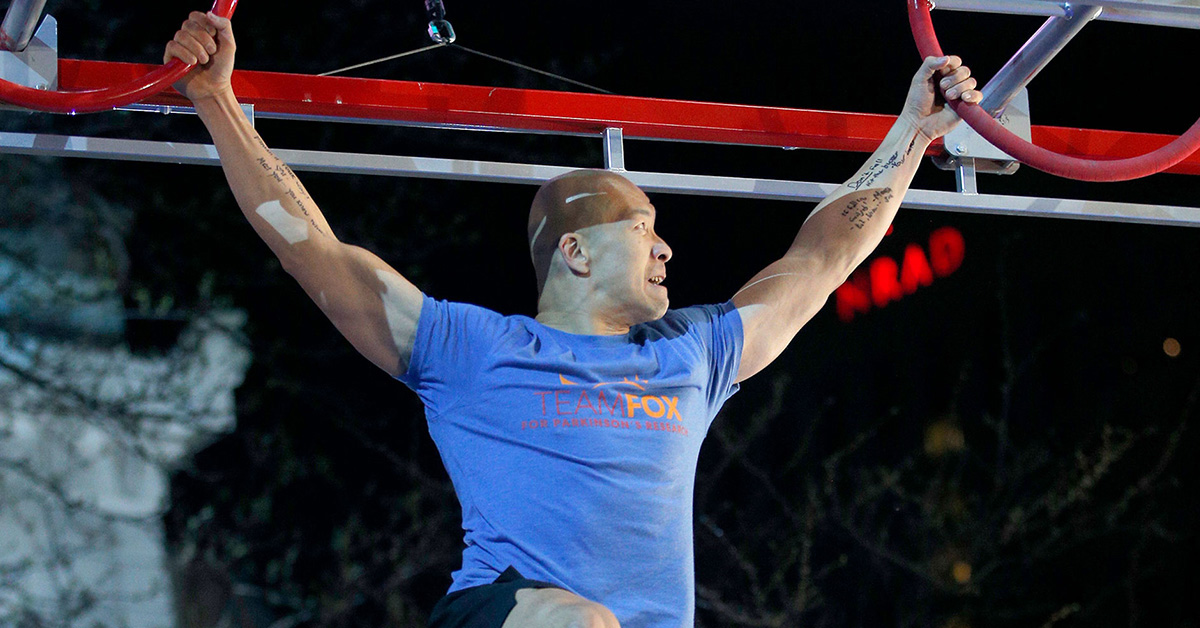
Jimmy Choi is a motivational speaker, an advocate for Parkinson’s research, an ultra-endurance athlete, a Parkinson’s patient, and a 2-time American Ninja Warrior. But most importantly he’s a father of two, a devoted husband, and a friend to many.
Jimmy was diagnosed with young onset Parkinson’s at the age of 27 (in 2003), and for the first 8 months he lived in complete denial. So much so, in fact, that he didn’t even tell his wife for months. He spent the next several years of his life ignoring the problem hoping a single pill would make his disease go away, and at one point he gained over 70 pounds, topping out at a whopping 240 pounds.
Then one day a single event changed Jimmy’s life forever, and ultimately the lives of thousands of people along with it. On that day when Jimmy literally hit rock bottom, he decided something needed to change. And since that moment he has transformed from an obese person with Parkinson’s disease who could barely walk (even with a cane) without repeatedly falling over to a decorated ultra-endurance athlete, obstacle racer, and ninja warrior.
Jimmy’s secret is incredibly simple: His only goal is to be ‘Better than yesterday.’ And in this episode you’re going to learn the mindsets and tools that Jimmy uses every single day to make incredible progress despite what should be a debilitating disease.
Parkinson’s Disease or not…this is friggin’ HARD
Episode Highlights
- Processing a Parkinson’s diagnosis
- Misconceptions about Parkinson’s disease
- Learning that everything you do should have a purpose
- The moment when Jimmy learned that he needed to take control of his life
- Setting goals that are not overwhelming but still inspiring
- Taking pride in even the smallest progress
- Re-evaluating our excuses for the things we can’t do
- Find a way to tell your story
Useful Links
About Guest
Jimmy Choi, a member of The Michael J. Fox Foundation (MJFF) Patient Council, was diagnosed with young onset Parkinson’s Disease at the age of 27 in 2003. With symptoms rapidly affecting his daily life, he “did nothing” for the next 7-8 years and just went through the motions. One day while carrying his infant son, they both fell a full flight of stairs which triggered fear of the future and fear for his family. He vowed to himself that he would do what it takes to take back control of what Parkinson’s has taken from him physically, mentally, and emotionally.
Jimmy transformed into a new person with an action-minded positive mindset using exercise to manage Parkinson’s Disease.
In 2012, joining Team Fox, the grassroots fundraising arm of the Michael J. Fox Foundation for Parkinson’s research and completed his first marathon – and he hasn’t stopped! a 2-time competitor on American Ninja Warrior, showing all that Parkinson’s does not define him. He continues to share his story to spread awareness and
fundraise towards high impact research that will lead to a cure in his lifetime.
Transcript
Zack Arnold: I’m here today with Jimmy Choi, who is a motivational speaker and advocate for Parkinson’s research. He’s an ultra endurance athlete, he’s a Parkinson’s patient, which we’re going to get into a lot more in this episode, but more important than most, he’s a father of two, he’s a husband, and he’s a friend, and he’s also going to be, I’m sure, one of my favorite guests in the history of this show. So, Jimmy, I cannot express enough how excited I am that we were finally able to make this happen.
Jimmy Choi: Yes, I’m excited as well. And thank you for having me on. It really is an honor to be, to be, to take part in your show, and I’m looking forward to this conversation.
Zack Arnold: Well, I really appreciate that, and there’s so many things that I could dive into right away, as far as the things that you’ve done to inspire me and to inspire, frankly, literally millions of people around the country in the world with the things that you’ve done. But where I actually want to start today is I want to talk about who Jimmy Choi was until age 27 because as everybody’s going to learn from your story, age 27 is where everything changed. But talk to me just a little bit, so I understand who you were before everything turned.
Jimmy Choi: Yeah, so I don’t know how far back you want to go, but I always like to go back to way back to the beginning, because I think it’s funny, everything you know, especially people my age would really get this. Some of your younger listeners may not get this, but you know, just like everything in the 70s, I was made in Taiwan. So I grew up in Taiwan, and we came here to the United States when I was about 10 years old. I’ve always been an athletic person in my younger years, I’ve always been driven to do the best that I could in anything that I tried, but then again, my parents will tell you, maybe not so much in school, because who wants to read books when you can be outside playing and jumping and playing baseball and all this other stuff, but you know that’s essentially me, it’s always been active growing up. Played high school three sports in high school. I was a baseball player, as a wrestler. I played football as captain of the football team. I went on to college and did athletics there. At one point, I was a golfer to the point where I was a couple of strokes away to qualifying for a PGA event, so you know that brings us pretty much to age, you know, in my, in my mid 20s, I graduated with with a computer programming technology degree, with a, with a finance degree, so I had a double degree, and I was working in the middle of the.com boom back in the early 2000s and 2003
Zack Arnold: One thing that that was important to me that I actually found very difficult to find in most of the other interviews and things that you’ve done that are in the media was everybody was all about Jimmy Choi, the guy with Parkinson’s, it’s overcome obstacles, and I thought to myself, I actually don’t really know what you do for a living per se, or what you did for a living, or who you were before all this happened, because everybody’s always focusing on what seems to be the most important part of your identity, which is I have Parkinson’s, but there’s so much more to people than that, and I’m a little bit more interested to learn just when you’re not Jimmy Choi with Parkinson’s, which obviously is going to be the vast majority of this interview and things that you’ve overcome, but just on a daily basis, what do you do for a living, what interests you? So it sounds like it’s something in the finance, financial or computer sector, but I want to just get a sense of who you were as a person and who you still are when we’re not talking about the disabilities that you overcome.
Jimmy Choi: Yeah, you know, as I always like to say, that I’m a father and a husband. Number one priority is always a father and a husband. I try to teach my kids the things that I like, you know, that I believe in, right? And especially recently, of course, the overcoming obstacles and doing good for others, right, paying it forward, especially with fundraising for a cause, and it doesn’t necessarily have to be for Parkinson’s research, any cause that they believe in. So that’s number one and foremost, but professionally, I am an executive in a technology sector for many years, ever since college, I was a programmer, and then I went into consulting. From consulting, I went into business with my family for a little bit, and then I’m, and then I went back to the consulting world, but now my profession is executive for a company called RWS Moravia, which we’re based in London and based also based in the Czech Republic. What’s great about what I do and my entire schedule that allows me to do the things that I do in terms of caring for myself and my family is that I. Work European hours, and that’s great, because that makes me busy from the early morning hours, say, you know, roughly 430 to 5am all the way through, you know, around noon time. That gives me the afternoon when the kids get back to school and hang out with them. That gives me time to train, gives me time to do a lot of the things that you know, when other people are working, that allows me to do all those things.
Zack Arnold: Got it. So, you’re basically Clark Kent before lunch and Superman after lunch,
Jimmy Choi: You know. My daughter thinks that way, and I’m glad she does, but yes, that I think I have two different identities. It’s Jimmy Choi, the professional, and then Jimmy Choi, the crazy nut that everybody else has come to know.
Zack Arnold: Got it. Well, I love it, because it was very difficult for me to really find anything just about you and what the regular day looks like, and the reason that that’s important to me is because it’s really difficult to see some of the things that you’ve accomplished and done, and we’re going to talk about all those later in the show, but to look at that and be like, oh, you know what, I could do that too, and I know that that’s one of your unique talents, is being able to share your story, but not say, look at how amazing I am at everything I’ve accomplished, let’s look at the little things that I’ve done, so you can understand that you can make these changes in your life too, so that’s that’s a big thing that I definitely want to talk about later, but where I want to go to now, now that we have this kind of, you know, a fairly good picture of who you were and what you were pursuing when you were younger, let’s talk about what happened in the doctor’s office when you were 27 years old.
Jimmy Choi: So I’m going to take you back, probably, you know, a year before, so when I’m 26 I’m going to take you back to when I’m 26 before we get to 27 you know. Nothing, my daily life has suggested that I should even be thinking about, you know, Parkinson’s. Yes, I was already feeling some of the, some of these symptoms, but they were so early on that I never can, I can never connect the two because they felt like everyday things or everyday things can be used to explain what I was feeling. For example, minor twitches here and there. I mean, people get stressed out of work, they get, you know, twitches under the eye, they’re, you know, they get these, you know, weird sensations just from stress, right? I can use that to explain away rigidity, or the slowness and movement, and being sore, or just being slow in general. I was playing a lot of golf at the time, and you know, walking 18 holes four to five times a week, carrying 40 pounds of golf clothes on your back, you’re going to be sore, you’re going to be, you’re going to wake up with aches and pains, and you’re going to have these slowness in the morning until your body warms up. So, everything that I was feeling, that was what I know now, is, you know, early on Parkinson’s symptoms can be explained away with everyday things. So, I didn’t think anything about it until I bought life insurance, and the nurse that came and did my insurance worked in a neurologist office and did insurance on the side, insurance physicals on the side, and our conversations that they really opened my eye. She noticed things about me because she sees it day in and day out. She noticed things about the way that I moved as she piqued my interest, and then had me talk to my general practitioner, and then that began the journey down since towards the end of 2012 into early 2013 when I was 26 and 27 that I ultimately found myself sitting in my neurologist office when they told me, hey Jimmy, we think you have Parkinson’s, and that moment was just so unreal to me, that number one, I had never even connected that Parkinson’s is even possible at that age, because all I knew is that it was a disease for old people, and I knew nothing else about it, so when they gave me the news, I’m like, you guys, you know, from my recollection, I swore a little bit, but you know, it’s basically, you’re effing kidding me, there’s no way that could be right, but ultimately I went to two and three opinions later, and all the specialists were saying the same thing, then I had to come to grips with what I was ultimately dealing with at such a young age.
Zack Arnold: Well, and when you say come to grips, that was a very slow process for you, from my understanding of what you’ve been through, so much so that you didn’t even tell your wife about it for several months. Is that correct?
Jimmy Choi: Yes, it took me three months before I even told my wife that I had been diagnosed with Parkinson’s, and it was only.. I would have kept it longer, to be honest, if I didn’t.. if I didn’t decide that I wanted to take some medicine to take the medication, I would have waited even longer. Obviously, if I’m starting to take meds, she’s gonna wonder what the hell you taking these things for. So I had to tell her,
Zack Arnold: And also you were. Were at the point in your life where you had just had your first child, was it?
Jimmy Choi: So, in 2003 we hadn’t, no, we had just gotten married,
Zack Arnold: Just gotten married, that’s right,
Jimmy Choi: Yeah. And we didn’t have our first child, Karina, my daughter, until 2007 So, four years later is when, when, when we had our first kid.
Zack Arnold: All right, so let’s talk about that period, then, because I know that this obviously was not the best period of your life that I think you love to talk about the most, but I think it’s necessary to understand this part of the journey, so we can then understand the later parts of the journey. So, what were these first few years like, and how long did it really take you to hit that point of acceptance?
Jimmy Choi: So, the first few years was just, you know, what if I’m still young and I can power through this. That was basically the mentality, you know. I was given information, pamphlet, a booklet, when I was diagnosed. I didn’t even bother opening it, you know. I talked to the doctors and they’re like, you know, you can try taking medicine and all these little aches and pains and all these little symptoms that you’re feeling, it could go away, or you just don’t know until you try. So, I figure, you know what, that’s exactly what I’m going to do. I’m going to take this pill, and then everything is going to get masked, and everything is just going to go away, out of mind, out of sight. So, that’s essentially what I did for the next eight years. Now, what’s worse on top of that is that over eight years, obviously progression of a chronic disease will happen. I took the same pill, I didn’t go back to my neurologist, other than to get prescription refills, and I usually, and often did that over the phone, and I didn’t go back to my movement disorder specialist or my neurologist at the time to talk about things that are changing in the way that I was moving, things that I was changing in my daily life, and I just took the same dose and the same pill, and this, and did essentially the same initially to prescribe the treatment that I was given for the next eight years, that’s how much denial I was. Is that this little pill, this little magic of a pill, is going to prevent me from progressing, and it’s going to allow me to live my life, and allow me to continue my aspirations, raising a family, you know, getting ahead and professionally, you know, building my life and my family the way I envisioned I would back when I first got married.
Zack Arnold: Well, one thing that I want people to understand a little bit better, because when we’re talking about a disease, and Parkinson’s is the disease in this case, and it’s a matter of, well, you know what, it’s not curable, but I’m taking this pill, I realize now that there might be some people that don’t really understand that much about Parkinson’s, and I think because of people like Michael J. Fox and, unfortunately, Muhammad Ali, and a few very high-profile people, we have a basic understanding in our general culture of what Parkinson’s is. It’s like, oh, well, somebody’s having a little bit trouble, you know, they’re shaking or they have tremors, but as you dig deeper, there’s a lot more to it. So, can you just give us, like, just a very broad, you know, couple minute overview, just so we understand some of the basic symptoms and how they manifest beyond what we might have seen on television.
Jimmy Choi: Yeah, and you know, and you’re, you hit it right in the nose. One of the things that people immediately goes to when they hear the word Parkinson’s is tremors, right? But most people don’t know that about 30% of people with Parkinson’s will never have the tremors, right, and yet they still have Parkinson’s. So the way that I best like to describe it to people is, is this way. Think of it this way: there’s a, there’s a part of your brain that is dying, okay? And that part of the brain is our neurons that produce dopamine, which helps you control your movement. That part of the brain is slowly dying off, and over time you’re going to produce less and less dopamine, and with less and less dopamine, you’re going to lose your ability to move and to control your muscles, and this comes onset in people in various different forms. Some people will have the tremors, some people can completely freeze. It’s just how your body reacts to that lack of dopamine, and it is progressive, means that it’s the cells continue to die off. Okay, and along with that, it doesn’t just affect what your movement is. Let’s think about it, parts of your brain is dying off, you’re gonna. there’s other areas, and mentally, that’s going to be affected as well. Depression is one. Dopamine helps drive movement, which helps drive adrenaline and endorphins, which, which are all the happy receptors in your brain, right? Without that, you, you’re likely to go into depression. So, these are things that we deal with loss of executive functions. Sometimes we just can’t get words out of our out of our mouths, even though they’re right there, and we know what we want to say, and that’s another thing. Other things that happen that aren’t visible to people are, if you think about it, things. Inside your body that your brain controls can also be affected, right? Constipation, and I always use this as an example, because you know bowel movements is mostly controlled with Parkinson’s. It’s when you have trouble, you’re not going to move, you’re not going to move things through your system as efficiently as everybody else. So you have to deal with constipation, and it can become painful after, you know, after a few days without going, as you can imagine, and other things too. Anything that’s a heart, that is a, that is a muscle, can be affected. Your heart is a muscle. Okay, a lot of people with Parkinson’s deal with hypertension issues, like standing up too fast, and your heart just not able to keep up with the blood pressure, and they have a tendency to be lightheaded, and sometimes even faint. And the last thing, last example I’ll give that most people don’t see is that I can actually not hear out of my right ear because of the little muscles that control the your eardrums that flap and that extend and loosen your eardrums to help you hear is constantly moving in my ear, and all I hear out of my right ear is this constant flapping. So, if you take your hand and just slap your ear on the right side, you know, over and over again, that’s what I hear out of one side. And you can imagine how this, you know, how disruptive that can be on a daily basis. These are things that people don’t see, and these are things that that people don’t associate with Parkinson’s. And you know, I’m glad you asked this question, because now it hopefully your listeners can get a better appreciation of, of exactly how depicting this, this, this disease is outside of the tremors that they see.
Zack Arnold: And full disclaimer to my audience, don’t slap your right ear repeatedly over and over and over to experience this. I would really appreciate not getting a lawsuit, because you’re dead. So, just want to put that out there, just to be safe. One other symptom that I’d like you to talk a little bit more about, and it’s going to relate a lot later, once we start talking about all the athletics that you are involved with, is this idea of dystonia, and you describing basically having a 24 hour cramp,
Jimmy Choi: Yep, and that’s exactly what it is. So, dystonia comes in the onset at any, any time, and it goes away when it wants to go away. So, imagine getting a cramp, Charlie, horse, Martin, anything like that, and parts of your body, and and it just stays there for hours at a time, or even 24 hours, just nonstop. There’s absolutely zero relief from it on a daily basis. For some, it’s the onset of that is different for everybody. I get it mostly in my neck and shoulders, and also on my foot. Other people can get it at any part of their body that’s a, that’s a muscle in their fingers, in, in their lower back, and in their pectorals, anywhere, and it’s when that, when that happens, it’s really painful, and again, when you’re trying to concentrate on doing your work, or you concentrate on taking care of your child, you’re concentrating on something as simple as taking a phone call. It becomes really tough when you’re constantly experiencing that pain.
Zack Arnold: Well, you’ve definitely painted enough of a picture that I’m not thinking, oh, Parkinson’s, that must be annoying because your hands shake, right? So we know a much better idea that that’s not the case, and we have an understanding of some of the progression that got you through or that you experienced for those first eight ish years or so, so I want you to just talk a little bit more about when you hit that moment of rock bottom, which you literally hit rock bottom, and also kind of where you were at that time, because I remember you were what, about 70 or 80 pounds heavier than you are now,
Jimmy Choi: Yeah, because of when, as Parkinson’s progressed, I became less and less active. I stopped playing golf, I stopped playing basketball and baseball, and stopped being active in general. And along with that, the comes I wasn’t taking care of myself with nutrition, so then came weight gain. I was up to 240 pounds in 2010 around that time, and my rock bottom moment came in 2010 Not only was I heavier version of me, 240 pounds at five eight, so I was a big guy. I was walking with a cane because I couldn’t keep balance, and I kept falling over. I was angry, I was depressed, I was yelling at, screaming at my kids. I mean, two year old, my daughter, two year old Karina, screaming at her. Just imagine, you know, a full grown person leaning over a two year old child and screaming at her for no good reason, because she spilled some milk or some apple juice. I don’t remember what it was, but as if that moment wasn’t bad enough. It was around October of 2010 I was walking then my nine month old son down the stairs, and we both fell, and we. Out down a full flight of stairs, and that was my rock bottom moment, because literally, when I hit the bottom, and thank goodness I was able to keep Mason above my body the best that I can. Ultimately, that moment made me take a good hard look at myself and decide, okay, this is this is this is the time you need to decide, Jimmy, are you going to continue to put your kids and your family in danger just by just by picking them up, just by playing with them, or trying to play with them, or are you going to do something to make yourself better, so that you, because you can contribute to helping Cheryl raise, Cheryl’s my wife, by the way, help her raise our family the way that the best that we can, despite living with the disease. So, it was at that moment that I had to make a decision for myself, you know. It could have gone either way. I’ll be honest with you, but I decided that I owe it to my wife, I owe it to my kids to try to make a change.
Zack Arnold: Well, and this is now the point in most people’s stories that can be the most terrifying, because they know that something needs to be done, but oftentimes the very first step is the hardest one, and the way that you approached it, I think, is the right way that most people need to approach that first step, and the step after, and the step after. So, what happened right here, and what was the very first practical action step that got you moving forward?
Jimmy Choi: Well, you know, I think there was the first step was, was, was panic. It was that, that oh crap moment. That okay, now what do I do? I don’t know, really. The first thing I needed to do was educate myself on actually what Parkinson’s is, because remember, up to this point, eight years later, I haven’t opened the pamphlet that I was given when I was first diagnosed, so of course we get online, we start searching things online, and this is 2010 Google is still pretty new, so I was asking Jeeves, I was Yahoo searching, I was Lycos, whatever, whatever it took, and I was looking for information, and really educating myself, and for the first time I learned about the disease. Yes, it can affect people that are younger, like myself, and this is what people are doing to live the best that they can with the disease. And then for the first time I went to my doctors and really had questions to ask. Okay, what do I need to do? This is where I am right now. How can you help me get better? How? So, so we adjusted my medication, and then also at the same time looking up information, I found my, my first true calling, which was clinical trials. I noticed that there were a lot out there and not enough participants, and that’s what I was going to do. I was going to be, I was going to give up my body for science, and hopefully help contribute to finding the cure, because certainly not smart enough to find a cure myself, and I certainly didn’t have the means to fund it, so I was going to be a part of the community by participating in clinical trials, so I signed up for as many as I possibly could, and whoever I qualify for, whoever called me and wanted me to take part, I obliged, and I went through all of the requirements of the trial, and that provided me with a lot of information and a lot of education, and that’s kind of how I took the next turn in my, in my journey. Is that with all of these clinical trials, I noticed one thing that was uncommon, and that is physical activity. So every single trial that I took part in, whether it’s taking a pill, whether it’s getting an injection, whether it’s just some questionnaires, there’s always a part of that trial that comes back and focuses on how much exercise are you doing, how much it, you know, what types of exercises you’re doing. So it got me intrigued, and one of the trials that I participate in was one that’s around forced physical movement, where I worked with a physical therapist, and, and she forced movements on me, whether or not it’s on a, on a stationary bike, or she was physically moving my, my, my legs and my arms for me. I noticed that the more I did, the better I felt. So there was, there was a light bulb moment there. Then I’d, you know, what, maybe actually just do more of this on my own at home instead of when I’m at the clinics. So I started to incorporate more movement around the house. I started walking around the block with my family, and as you can see, that’s bringing also bringing me closer to my family. It’s also giving me, allowing me to spend more time with them. And then, when I got comfortable, I left my cane at home, and I started walking around the block with my cane, and it really is that first step, really was the hardest step. You got to want to do it. Okay, and then once you do it, you. You gotta want it to continue taking subsequent steps, and then build on your successes one step at a time. You gotta break down this, this giant goal of me living. The goal, obviously, is to live without symptoms, but in order for me to get there, and I’m not there yet, even to this day, but in order for me to get that, I’ve got to break down my goals to these little steps, and that’s how I approached it.
Zack Arnold: And I’m assuming when you were walking around the block for the first time, first with your cane, then you eliminate the cane, then there’s, you know, you walk further, or whatever it is, I’m guessing at that point you weren’t thinking the goal for me is I’m going to run over 100 half marathons and a bunch of full marathons, and I’m going to be an obstacle course racer and run ultimate endurance events, and I’m going to be an American Ninja Warrior. Like, I’m guessing none of that was probably there at the time, right?
Jimmy Choi: None of that was there at all. It was really literally just, how far can I get today? And then tomorrow I come back, how far can I get today? That was better than yesterday, more today than yesterday. That was constantly the thought, and I share that with my family and my wife, who is my biggest cheerleader. She’s always there at events, at races, and things like that, and she’s always at the finish line. She’s always pushing me. Okay, let’s take it a little longer today. Let’s, let’s move more today to have that support is absolutely key to success.
Zack Arnold: Well, and to me, the if I were to break down everything that you’ve accomplished, everything that you’ve done, you’ve been through it, really does come down to this mantra that you have, which is that I have to be better than yesterday. I feel like this is the key that so many people miss when they decide that they want to go after a goal, is they either set their goal way too small, so they’re not inspired by it, or they set it way too big, and they’re overwhelmed, and they’re terrified of it, because they think, well, if my goal is to run a marathon, and I can barely get around the block, well, this marathon program online that I just signed up for says that I need to run four miles today. All right, I’ll go run four miles, and oh my god, was that an awful experience. I’m so sorry, I’m never doing that again. This is so stupid, right?
Jimmy Choi: Absolutely.
Zack Arnold: But if you break it down to better than yesterday, you’re pushing yourself outside your comfort zone to say, you know what, I maxed out at three burpees today. I just, my God, that third one, I thought I was going to throw up, but I know I can do three burpees. I know I’m capable of it, so that means I need to find out if I can do four of them tomorrow, right?
Jimmy Choi: Yep, absolutely, exactly. And that’s, and that’s how I approach things, and it’s not just that, right? It’s the other thing, and we can, we can talk for hours and hours about this, the things that I’ve learned in the last seven and a half years after that fall, the things that I learned about myself, and how to live with, with, you know, let’s not even talk about Parkinson’s, how to live with adversity, is that when you’re training, and it doesn’t apply physically, with, I mean, it’s basically everything that you do in life, anything that you do, okay, should have a purpose, and that purpose is to help you in your, in your ultimate goals. So, you know, one example is, and since you brought up the burpees, and I love using this analogy, is one of the problems that I had, and I had to use the cane, is because I was falling a lot, and when I was running a lot, I was still falling. That never really went away. It just happened less frequently, but then I realized, you know, what? In order for me to fall, I have to learn how to control my fall, and I have to learn how to get myself back up safely, right? And what movement, when it comes to training, mimics all that, and that’s a burpee. I’m forcing myself to get down on the ground, and I’m forcing myself to brace the initial contact to the ground, and I’m forcing myself to get back up by building strength to get back up right, so everything that I do in training has to apply to how I want to live every day, in this case with the disease, and how it’s going to help me, so that I’m building that muscle memory, so that I can better my daily existence with the disease. When people look at these training, look at my training schedule, and they’re like, that’s that’s crazy. You know what, you know you’re doing this, is this just to get better at running? As a skip, better at Ninja Warrior. Yes, yes, and yes, but it also helps me live better on a daily basis.
Zack Arnold: Well, and that one of the reasons that I love really breaking down the mindset of somebody that’s dealt with extreme adversity is that, yes, like you said, you have Parkinson’s, but it’s no longer about you having Parkinson’s or having a disease, it’s about you dealing with adversity and overcoming obstacles, and guess what, everybody has their own form of that, and for you it was literally learning how to fall gracefully and get back up, because your adversity has to do with falling and lack of balance, but for other people there are other obstacles that they need to overcome, and this becomes a fantastic metaphor, but for you it wasn’t a metaphor, it was literal, so you know, and that’s why I enjoy breaking. All this down, and what I’d love to help the audience understand now is now that we have a clear understanding of the mindset of being better than yesterday, going one small step further, and doing something uncomfortable when not overwhelming. How did you progress from the guy getting rid of the cane, walking around the block, to jogging around the block, to all of a sudden getting into running and marathons and ultra marathons and Spartan,
Jimmy Choi: Yeah, you know, I think my progression in terms of my, my activity, you know, followed sort of it all led from one thing to another, right. And when I first started just walking around the block, I’m like, hey, you know what, maybe I can start jogging a little bit, so it’s all about building that, that going back to that better than yesterday mentality, you know, like today I walked around the block four times without my cane, right? Maybe tomorrow I can walk three times around the block and jog once around the block, right? Let’s see how far I can get, and that jogging became running, and to be honest, even at that, even at the time when I’m starting to run around the blocks couple of times, I never even had the word marathon or the word half marathon in my head. It wasn’t until things have to fall in line, has to fall in order. My brother-in-law was doing a lot of running at the time, and he just looked like he was having a lot of fun doing just five ks, and then I got on the plane on a business trip, and I saw that Runners World magazine that was sitting in my seat, front back pocket. Then it’s not something that that’s not a magazine that’s always there, right? Someone left it there, and then I picked it up, and I opened it, and there was an article in there about a gentleman with Parkinson’s running a marathon, and that was to me, that’s a signal, right, and it wasn’t even to run a marathon, it was a signal for me to start running maybe a 5k so I told my wife that night, hey, I’m gonna do a 5k I’m gonna start training, and I’m gonna run a 5k and I did that, so that was gonna, that was my next goal, and so, so then I pushed my, my running, you know, a couple times around a block to a mile, and then that mile became a mile and a half, that mile and a half became two, etc. And one finally I completed that first 5k and when I did, I’m like, well, how far, how much further can I go? That was in April 2012 By May I was doing a five miler by June, I was doing a 10k and by September of that year I did my first half marathon, and as soon as I crossed that finish line of the half marathon, I knew right away that there’s no other way for me to go except to a marathon, so I just kept pushing, and this is how I went from 5k to half marathon to marathon, and when I finished that first marathon, I just wanted to keep going, and I started doing.. I realized that running has become my medicine, it has become part of my treatment, and I just went from there, and I got hooked and I started running, the weight was coming off, and that felt wonderful. I was becoming more fit, I was able to move better, I was playing with my kids, I could see my daughter and I could see my wife and I could see my son cheering for me at the finish line, and that made me feel really good, and then ultimately, you know, what, what, what else can I do? What else can I do? Because if you stay with something long enough, it becomes routine, and if it becomes routine, it’s no longer challenging. If you’re not challenging your body, you’re not moving forward. At least that’s the way I thought. So then I started cycling, and then I started swimming, so I added triathlons to the to the mix. You know, I was fortunate enough to be the first person with Parkinson’s on record to complete 100 mile bike ride in under five hours, that’s a sub five challenge, they call it, and essentially just imagine holding a 20 more than a 20 mile per hour average on your bike for five hours, where in my case it’s four hours and 56 minutes,
Zack Arnold: That’s not hard for somebody with Parkinson’s. That’s just hard for anybody. We’re not just.. we’re not even talking about, oh, you’ve done well for somebody with Parkinson’s. You’re now kind of getting to that point where you’re surpassing what the vast majority of, as you would say, fully abled body people are can accomplish. And we’re going to go way deeper into that rabbit hole, but I just.. I want to.. I feel like we’ve now surpassed the point of your journey where it’s no longer about good job, guy with Parkinson’s, like we passed that point,
Jimmy Choi: And that’s one of my goals, right. We talked about all these smaller goals building up to all the bigger goals. One of the, one of my goals is, is, is not to be seen as the guy with Parkinson’s first. I want to be, I want to be looked at as Jimmy’s the is the athlete first, he’s athlete that happens to have Parkinson’s, not the Parkinson’s patient who happens to run or who happens to x, y, and z. So that was one of my goals, and and hopefully I. I, you know, I’m able to achieve that because my peers in the sports that I am, whatever that I’m doing, whether it’s running or cross fitting or or obstacle course racing, I believe that’s how they see me, and that’s that’s one of the things I’m really proud of.
Zack Arnold: Now, what I’m wondering now is what was the, I mean, the, we hear about the marathons, you’re not doing the triathlons, and I would assume it’s a similar progression to obstacle course racing, but to go from all this to being on American Ninja Warrior, like that’s really the gasoline that was thrown on the fire, and just everything started to explode. So, what was the genesis specifically of American Ninja Warrior?
Jimmy Choi: So, my, my daughter, it all goes back to my daughter. I mentioned that to, in her eyes, I’m Superman, right? And she never thought that there was any limitation to what I could do, because she never grew up knowing me without Parkinson’s. And she, from the time that she can remember, I’ve already started running and started my transformation, so all she can remember is Daddy doing running, you know, 26 miles, Daddy running, you know, 50k’s Daddy cycling 100 miles, that’s all she knows. So to her, there’s nothing I couldn’t achieve. And she loved the show, American Ninja Warrior. She, she goes to a local, I take her to a local gym, where she can, where she can do some of the obstacles, and she became really good at it. She became hooked on the show, and every year it came on – season five, season six, season seven, season eight. Every year it came on, she’s like, “Daddy, you got to get on the show, Daddy, you got to get on the show. And I always had an excuse for her, I don’t have the upper body, I’m a runner, I don’t have the upper body strength, I’m, I have Parkinson’s, my balance is terrible, I’m gonna go out on the balance obstacles every single time, but she kept persisting and kept pushing me, many people don’t know this, but I’m actually not the first person with Parkinson’s to compete on American Ninja Warrior in 2000 1016 there was a, there was a woman who competed with Parkinson’s, and she even before her story was finished, my daughter turned to me and say, What’s your excuse again? And that was that was the gasoline that she threw into the fire, and it was at that moment that I’m like, you know, I’m completely out of excuses, and I’ve become that guy who, who has become complacent, so to speak. Right, there’s a challenge that was issued to me, my daughter, by my daughter for years, and I didn’t take on that challenge, but now is the time to do it. So that’s when I, when I submit an application for American Ninja Warrior. To be honest with you, they’ve done this story. It’s reality television. I didn’t think they would do it again, and I thought I was off the hook with my daughter, but when they called me in 2017 five weeks before I was to compete, there was just an onslaught of panic that happened after I received that phone call, because you know, yeah, I did a few Spartan races, a few mud runs, but the obstacles are nothing like what we see on the show, and I have to literally go through a crash course of training to get to do us as best as I can on my first in my first time out there.
Zack Arnold: Well, one of the things that I’m gonna link to, because, and it’s a really, really small thing, but it’s also a really big thing. You’d post it on Instagram, I don’t know, maybe it was a few days, few weeks ago, whatever it is, I’ll make sure to link to it, so people can see it. But this is the perfect microcosm of you’re not a guy with Parkinson’s that went on American Ninja Warrior, that’s super fit for somebody with Parkinson’s. You’re just a guy that’s really fit, that’s really strong, that was on American Ninja Warrior, that happens to also have this disease. And what I want to specifically post, because it just blew my mind, and it was kind of my what’s my excuse moment, was people ask you the question. Well, how do you balance your nutrition with exercise? And I love your sense of humor, because you’re like, I’m going to show you how I balance the two. And you got on a bar stool and you did pistol squats while you were cracking and cooking an egg. And for anybody that doesn’t know what a pistol squat is, there it’s like it’s to me, it’s my holy grail. If I could just do a pistol squat someday, then I will be so elated with myself that you’re basically doing a one-legged squat until your butt touches your heel, and you’re doing it on a bar stool in your kitchen while you’re cracking eggs, and I was like, “Come on, right, like you’re so full of it, you don’t have Parkinson’s, like normal people can’t do this stuff.
Jimmy Choi: But you know what, I’m glad you said that, because this is the first time I’m telling the story, you know what was the the inspiration for that video is I belong on another on a on a Parkinson’s Facebook group and the people in this group are all about exercise and using. Exercise to live better, and another gentleman on in that group, they were doing these challenges where they’re doing pistol squats. They’re there. I don’t know if you’ve ever seen the challenge where you, you have to squat down on one leg and pick up a piece of paper, fold a piece of paper from the ground. These are people with Parkinson’s doing this right, and I’m supposed to be this anomaly where I’m not. I just happen to have a camera in front of me. There are guys out there, guys and gals out there with Parkinson’s doing crazy stuff, right? And they were the inspirations for that video, because I saw someone else do a different version of that. Now they weren’t cooking an egg, and they weren’t on a bar stool, but they were doing pistol squats. A person with Parkinson’s doing pistol squats, pistol squats, and they were picking up pieces of paper on the ground, and the challenge goes on, because we were ultimately, we were doing handstand push-ups, picking up pens from the ground, you know, upside down. So, the inspiration for that came from other people with Parkinson’s. And I think this is important for your listeners to know, that you know, people see me on TV, and they see, they read articles about me, and they think that I am, I am this, this anomaly in the Parkinson’s world. It’s, I’m not. I just happen to have a platform that to share this with the world, but I am constantly inspired by people that walked across America in 67 days, breaking the world record with Parkinson’s. He did 43 miles a day for 67 straight days walking across America. Another gentleman ran seven marathons in seven days on seven continents. Another gentleman can can deadlift, what is it, 680 pounds 860 pounds? I don’t remember, but either way, both of those numbers are crazy. These are people with Parkinson’s doing these crazy things, and they just don’t have the platform that I have, but I want that your listeners to know that if you again forget Parkinson’s, if you just break down your goals to that, to that better than yesterday, or that, or taking that next step, anything is achievable, so for these guys to do this, and they’re the ones that inspire me to continue to push myself. It’s a two-way street for me. I people tell me that I’m an inspiration to them, but they don’t know that they are an inspiration to me. So, it is a two-way street,
Zack Arnold: And I’m so glad you brought up this concept of, well, it’s you know, I’m the guy that has this platform, and everybody’s looking at me as the American Ninja Warrior with Parkinson’s, but you’re saying I’m not really special, right? It’s I’m just a guy that figured out how to break down goals and do all these things, and that was one of the reasons that I really gravitated to you specifically in the first place, is that’s a very similar platform that I have, and obviously I don’t have as pronounced of a physical disability or the platform that you do, but I’m a big believer that everybody has a disability, which is an idea that came from originally a man named Christopher Rush, who I did a documentary film about, who was the first quadriplegic to become a scuba diver, he would always say that everyone has a disability, and what you need to do is focus on what you can do and what your abilities are, and I will always tell people the same thing, that will look at me in my industry, where I’m at a pretty high level of my industry at this point, and I’ll say, “Listen, I’m not special, I’m not a unique snowflake, and I don’t have all these amazing gifts, I just work really, really hard, but what’s more important than just working hard is working hard on the right things, and for me the sweet spot that we’ve already been talking about, but just to make sure that everybody understands that all of us can apply this, is I’m just finding something that’s outside my comfort zone, but that I can still do, so it’s not something that’s so overwhelming that I wouldn’t be able to do, and I would fail, it’s something that I can do, but it’s really, really hard to do, and when I come up against something that I can’t do, what I’ve learned to say, and this is something that comes a lot from spending a lot of time with Tony Horton, is it’s not that I can’t do it, it’s that I currently struggle with, or what I always tell my son is when my son or my daughter say can’t, I’m like, you’re missing one word from your sentence, that word is yet right. You just need to find that sweet spot. And trust me, the thing for me, like just starting my American Ninja Warrior journey a little bit over a year ago, part of it was, well, I really want to get down to the science and the art of breaking down really difficult goals. I can’t do that by reading, I need to throw myself into the fire if I’m going to research heat, right.
Jimmy Choi: Absolutely,
Zack Arnold: And what I discovered were I had so many weaknesses in so many different areas, because I spent two decades in front of a computer doing film and television editing, and yeah, I’d done a few Spartan races, and I’d done P90X once before, and I was in shape, per se, for somebody my age and. My industry, but I didn’t realize how out of shape I really was, and how far I was from even being able to think that I was an athlete. But I said, all right, if the goal is Ninja Warrior, let’s see where I am now. Well, when I grab a ring and I try to swing from one ring to the next one, I don’t even have the grip strength to do that yet. So that happened to me about two years ago at a Spartan race in the multi rig, I said, “Wow, this is pretty pathetic. And if I can’t grab a ring and swing to the second one, I’m certainly not going to be a ninja warrior. So, guess what? I have to focus on grip strength and forearm strength and pinch strength. Oh, guess what? My first CrossFit class, I blew my back out because I couldn’t get into the squat position, wasn’t even heavy weights, it was just the bar, but when I get into the position, I heard a pop, was like, oh my god, I’m a lot older than I thought, right, but it wasn’t about, wow, I can’t get into the squat position, it was, I can’t do it yet, so what little thing can I do that I can focus on, so I developed a very intimate relationship with a lacrosse ball for a long time to learn how to roll out all the very specific muscles, so my one thing for over a month that I focused on was not getting on American Ninja Warrior, it was opening up my glute med and my hip flexors, something that I can do that was very uncomfortable, but it was just that mindset over and over and over, and then going to Tony Horton’s house and not being able to get up a pegboard or not being able to go across whatever the ring obstacle was, and it was like, you know, what next week I need to get to the next peg, or I need to get one level higher on the peg board, or whatever it is. And now the progression that I’ve seen over the course of a year or so, I’m not even the same person, I don’t even recognize who I am, but it was just these one little tiny steps every single day,
Jimmy Choi: You’re breaking down your goals, that’s exactly what you’re doing, and have making it achievable, and then once you achieve it, you’re pushing it out, that’s absolutely, you know, one of the things that you said, rank, rang a bell with me, and, and you know, you talked about, you know, being being fit and doing these things, and then you go and try something new, and you realize you’re not good at it just because you’re fit, right? I have this saying that I tell people all the time, is that, and I say this to myself, and I say this to them, is that you are not as fit as you think you are. Okay, and I say that to myself all the time. And let me tell you, let me tell you, the realization for this is that after I ran my, I forget it was that my either my third or fourth marathon, and it was, and it was all in the same year, and it was like three marathons in a year, 2014 and 2015 and around that time I’m like, there’s nothing that I can’t do, because I can run for hours at a time, right, I’m fit, but there’s nothing that I can’t do, and then there I was in a hotel, and the elevators broke, so I decided I can run a marathon. I’m going to just go up eight flights to my room, and I went up those stairs, and I realized how out of breath I am because of the different movement that you’re doing, and the different muscle groups that you’re doing, and your body is reacting differently to it. I just realized how out of shape I am when it came to climbing stairs versus just running in a straight line, and then that same thing happened when I got on a bike for the first time, that motion, you think motion of cycling and running are similar, they’re not, and I couldn’t do as much as I thought that I could, same thing with obstacle course and American Ninja Warrior, you know, come on, I’m strong, I could do this, but you get up there and it just, you are never as fit as you think you are, so that’s why there’s always something to work towards.
Zack Arnold: Yeah, and that’s funny you bring that up, because that’s one of my favorite things about doing these Sunday ninja workouts with Tony Horton and this crew of people that he does it with, is every week there’s usually at least one or two guys that have never been there before that a friend asked over, and usually they’re pretty buff, they’re pretty fit, they come in like, hey, what’s up guys, like kind of doing the alpha thing, but there are so many different varied types of exercises, some of them are pull, some of them are ninja hanging and swinging, some of them are push obstacles, but there’s a lot of gymnastics types, obstacles like on parallel bars and handstand push-ups, and stuff like that. Everybody at these workouts is horrible at at least one of the 16 exercises that we do over the course of four hours. Everybody, including Tony Horton, even he sucks at one of them so badly that he named the exercise the not Tony, because he can’t do it well, and he’s never been able to do it well. This is Tony frickin’ Horton, right? But it’s so humbling to see that no matter who comes through there, they’re always really good at one or two things, and they always suck at at least one or two things, and it always makes you think, wow, I can always get better at something. I’m thinking, like you said, I’m a marathon runner, eight flights of steps, that’s nothing. And then the flights kick your ass, right?
Jimmy Choi: Yeah,
Zack Arnold: It’s really important to realize that whatever it is that you’re going after, and this metaphor extends far beyond just training for ninja or physical stuff, but there’s always something you can learn more about, even if you’re in some specific, you know, expert niche, there’s always. Something you can learn more about and get better at.
Jimmy Choi: Yeah, absolutely. And you’re absolutely right, it applies to just everything in life.
Zack Arnold: So, the last question that I want to ask you, which I think is an important one for perspective, and I know that you’ve mentioned that people have asked you this before, but what is your response when somebody says to you, “Look at everything that you’re doing? Can you imagine how much better you’d be at all this if you didn’t have Parkinson’s.
Jimmy Choi: Yeah, you know, and people say that to me all the time, right? About marathon running, can you imagine how much faster you’d be? I mean, I did it. My fastest marathon was three 340 My fastest half marathon was an hour and an hour, and I think under our and 39 minutes or something like that, and that’s top 10% in any of those races, but you know what, to be honest, if I was never diagnosed with Parkinson’s, I don’t think I would be doing any of this. I would just live, I just went on to whatever my plans for what I thought my 23 year old self thought my plans for life was going to be, and that’s exactly what it was going to be. There was, you know, without being diagnosed with Parkinson’s, there wouldn’t, there wouldn’t be any running in my life. There wouldn’t be American Ninja Warrior in my life. There wouldn’t be obstacle course racing. There wouldn’t be the bond that I have with my kids doing all this stuff together with them, because they’re able to travel with me as much as the disease takes away, as much as it takes away, there really is so much that has given me in return, and you know, Parkinson sucks, and I would never ever wish that on anybody, even you know, not even the worst of my enemies, but at the same time it has had to look at it from a positive angle, and that Parkinson’s has given me these opportunities, these opportunities to live a the best life that I can with the disease, and the opportunities to help others by showing them by example of exactly how it is that they too can live better despite whatever it is they’re faced with, forget Parkinson’s, whatever adversity they have, it’s breaking things down and moving it forward, and hopefully inspiring them to get up and move, and if I can get one person out of the chair, it’s a win for me.
Zack Arnold: Yeah, and the reason that I bring that question up specifically is because it all comes down to one thing, which I think is so important, which is perspective. That when you were 27 years old and being told that you have young onset Parkinson’s, I would imagine the thought that anybody would have in their mind is why me, this is the worst thing that could ever happen to me, but that thing has become one of the defining factors of where your life is now, and you’ve turned an obstacle into an opportunity, and I bring that up because so many people face obstacles and adversity every single day. When it’s there and you’re in front of it, it’s like, oh my god, does this suck? Why did this happen? Why do I have to deal with it, but it’s all about perspective, and just that one little perspective shift that you had at the bottom of that staircase that one day changed the trajectory of your entire life from that point.
Jimmy Choi: Absolutely, and one of the last things that I wanted, that I wanted to make sure that your listeners hear is that you know the, it’s it’s hard, okay. Where I’ve gotten myself to to this day is is seven and a half years of of of that better every day building it. It didn’t come overnight. I’ve had people come up to me and say I was so inspired by your post, or I was so inspired by what you were doing, that I went out and I ran 10 miles, and the next day I got hurt. Well, that’s not taken, that’s not taking the small steps. So I want people to understand that it, none of this comes overnight, if they truly, they truly want to achieve a change or achieve a certain goal, it is about commitment. It is a lifestyle change. It is the consistency and the commitment that you have to put into that change. It’s not.. it’s there’s no magic pill, there’s no magic sauce except commitment.
Zack Arnold: Yeah, I couldn’t agree with that more. To me, when anybody ever asked me, what’s the secret sauce, what’s the magic bullet, like, you know, if you could share one thing with me, it’s like it’s consistency, that’s it. It’s really simple, just keep doing it every single day. And one of the reasons, the other reason that I had asked this question, and it’s the first time that I’ll be mentioning this to my audience publicly, but they’ve been so supportive, everybody listening to this has been sending me emails and social media messages, and everybody has been so excited about my journey to get on American Ninja Warrior, and I found out just this week that I did not get the call, and even though I feel in my heart that I’m ready for American Ninja Warrior, American Ninja Warrior. Not ready for me yet, and the way that I have faced this is I basically gave myself 24 hours to be really annoyed and pout and pissed off and eat my ice cream and be like, oh, this sucks, I’ve worked so hard for this goal, why didn’t I get it right? So I said, I’m giving myself 24 hours, I can be as pissed as I want, I can be as pouty as I want, I can eat crap, I can be sad. And then I woke up the next morning, and I said, all right, How do I use this? How does this not become my obstacle? How does this become my motivation? Right. So then I think to myself, all right, it happened, this is now part of the journey. How do I write this into my story? And now I’m moving forwards, and that’s exactly what you did as well, and that’s really what I want to leave people with, is if there is a playbook for overcoming obstacles and adversity, it’s how do you accept it, take responsibility for it, and move forwards, knowing that this is the way that things are, right? And I think you are the perfect example of all of that, which is why I’m so appreciative that we had the opportunity to get this conversation on the record, and I could share it with my audience. So, unless you have any further parting words of wisdom, I cannot tell you how appreciative I am that we were able to chat today.
Jimmy Choi: And you know what, I’m so glad for the opportunity, and glad that we had this opportunity. My last words of quote unquote wisdom, and you hit it right there, actually. And this is one part that we didn’t talk about, my story is tell your story. Okay, doesn’t matter who’s listening, doesn’t matter how small your audience is, doesn’t matter how big it is. Tell your story, you never know who’s listening, and you never know who you’re inspired, and never know who’s going to move who you’re going to move. For me, telling my story and opening up my diagnosis to the world is definitely one of the biggest drivers to know that people are behind me, to know that people out there are listening, and that I’m not alone, I am not by myself in this journey, and that I have a support system out there, and it all started with me just telling the story.
Zack Arnold: Yeah, I couldn’t agree with that more, which is why I started a podcast and a blog and everything else. I started with my own day one years ago with my own disabilities and said, you know what, it can’t just be me, so I’m gonna start talking about it, and that’s how I ended up here today. So I wholeheartedly concur, and think anybody that’s out there, you know, you can find a way to tell your story and share it with others, because I guarantee, whatever you’re going through, there’s one of the 8 billion people on this planet are going through those things as well, so it’s virtually impossible to be alone in whatever you’re dealing with, so
Jimmy Choi: Absolutely,
Zack Arnold: So if people wanted to dig deep, learn even more, find out what you’re doing, what events you’re at, what your social media is. What’s the best place to find you?
Jimmy Choi: So they can find me on my website, the Fox ninja.com t h e fox ninja.com and there’s links to my social media, but essentially on Facebook, Instagram, it’s just at JC Fox Ninja, and they can find me there.
Zack Arnold: Awesome. Well, I cannot thank you enough once again for taking time out of your day to share your story with me and with my audience.
Jimmy Choi: Absolute pleasure. Thank you very much.
Transcribed by https://otter.ai
Episode Credits
This episode was edited by Curtis Fritsch, and the show notes were prepared and published by Elyse Rintelman. The original music in the opening and closing of the show is courtesy of Joe Trapanese (who is quite possibly one of the most talented composers on the face of the planet).