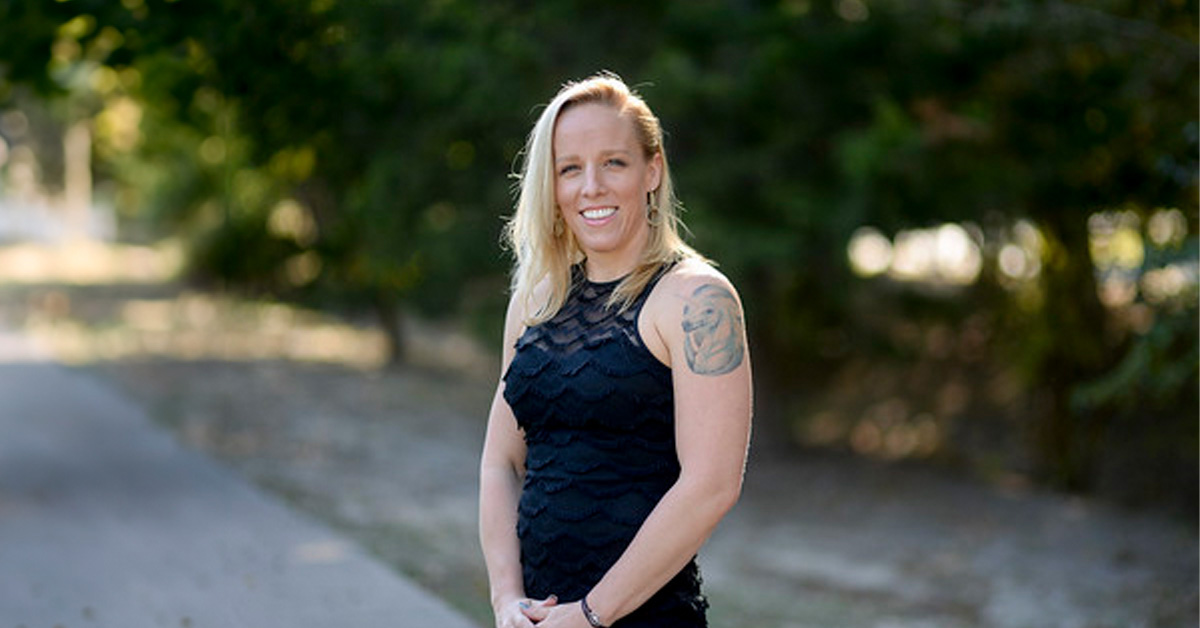
Why People Fail And How To Properly Set Your Goals | with Jeanette Goodrich


About Episode
Around this time every year a common word begins to resurface: “Resolutions.” And while we all have the best intentions of beginning the new year with all the energy and motivation to make positive changes in our lives, inevitably 92% of resolutions fail. It’s easy to make excuses and say that “Life got in the way,” but if you truly intend to achieve your goals in 2018 and make positive progress towards the life you truly desire, I promise you it’s gonna take a lot more than willpower and motivation. It will most likely require specificity, intentional action, and if you’re really serious – you’re gonna need a coach.
In this episode I speak with Jeanette Goodrich, a former air force pilot and now one of the top high performance coaches on the planet who was trained by and works directly with Brendon Burchard, the world’s #1 most-watched personal development trainer and one of the top 100 most followed figures online, in addition to being the #3 highest earning high performance coach on the planet.
Jeanette and I break down the simple but powerful steps anyone can take to reframe their goals in a more realistic manner, recognize and overcome the obstacles that have been stopping them in the past, focus on what truly matters, and take real action that get results. Most importantly, we talk about the number one factor that most people ignore when setting goals: Their deeper “Why.”
Episode Highlights
- Success is different for everybody — where do you want to go??
- Define your success with baby steps and build on that
- Find your why and the purpose behind your goal
- Jeanette’s story and her big why
- You can be successful every day
- What are “why stacks” and “benefit extensions”?
- Make sure your “why” goes deep enough
- The number one component to success is accountability to others
- The different types of fear and why they’re holding us back — what are you really going to lose?
- The paradox of wasting time
- The only way you know if something will work is to TAKE ACTION
- How to focus on key areas of your goal
- Finding problems and learning to solve and move past them
- What you can evaluate each day
- It’s not about working 16 hours a day, it’s about being able to focus on what’s important
- How do you even know what goals to set?
- There is no one right answer for everybody!
- Try starting with improving your sleep — it can make a real difference
- “Work smarter, not harder”
- How to review and stick with your goals
- How journaling and calendars can set you free
About Guest
As a Certified High Performance Coach, Jeanette Goodrich helps high achievers and high potentials get in alignment with who they are and what they want and achieve their goals 5-10 times faster WITHOUT sacrificing their health, their family, or their relationships. The most common results are deepened clarity, boosted confidence, more harmonious relationships, new levels of influence, and higher levels of efficiency and productivity.
She trained and consulted for one of the fastest growing and prolifically successful teams in Beachbody. In that role, she developed top notch training programs to aid in the success of new network marketing entrepreneurs.
Her military experience was probably the most life shifting 4 year time of her life. There, she developed leadership skills, problems solving abilities, resiliency, adaptability and quick thinking skills that are difficult to get anywhere else. She led and supervised high performing flight crews and office staff to ensure flawless execution of missions and objectives. She was the top in my class is a very competitive flight school and had a track record of excellence in all she did!
Transcript
Zack Arnold: I’m here today with Jeanette Goodrich. Jeanette Goodrich is frankly an all-around badass. She is a former officer of the Air Force. She is a kick-ass mom, and she is one of the top high-performance coaches in the world. And full disclaimer: she’s also my coach. So, Jeanette, I cannot express enough how excited I am to have you on my show today.
Jeanette Goodrich: Awesome! It’s awesome to be here, Zack. Thank you.
Zack Arnold: So, a question that I will get not often, but every once in a while from people is, where do you learn all this stuff? Like, how how do you get your life so organized and have all this energy? And how do how do you just? It seems like you’ve got it figured out. And first of all, I don’t have it figured out. I’m still figuring it out. Nobody ever finds the answer. You just on the journey, but it’s so important to have somebody that’s there for you, coaching you along the way, able to answer your questions and allowing you to find that next level of performance. So for those of you that are thinking, “Well, I just really have to do this all on my own, you shouldn’t. The top CEOs in the world, presidents, like the biggest names on the planet, have coaches, and one of the most prolific and successful high-performance coaches on the planet is a man named Brendan Burchard, and I am talking today with one of Brendan Burchard’s top coaches on the planet. So that that’s kind of a little bit of background about how you and I know each other.
Jeanette Goodrich: Yeah, exactly. Well said. I’m humbled, honestly, by the introduction, Zack. That’s that’s amazing, and I appreciate it. That’s going, and I really appreciate your your comments.
Zack Arnold: Absolutely. And since finding this coaching program, I’ve found so much momentum and clarity towards the things that are really important to me, finding balance in my life, figuring out not just well how do I make a bunch of money and be successful, but how do I find success and define it in my own way, and that’s why I think coaching is so important. And the first thing that I want to say is a lot of life coaching is complete and utter crap. It’s you talk to somebody and they say, “So, how’s your week going? That’s terrific. Do you have any goals? Okay, cool. What what’s on your to do list? That’s great. Yeah, all right. Well, hey, let’s talk next week, and you let me know how things are going.
Jeanette Goodrich: Exactly.
Zack Arnold: That to me is a lot of life coaching. What you do is kick the crap out of people. Like you will beat them down in the best way possible, of course. But you really drill into what they think they want, dissecting the psychology of what’s behind their motivations, finding their whys, defining their goals, and that’s really what I want to get into today: is helping people that say, “All right, I’ve kind of had that moment of awakening. I know that I want or need to make a change in my life. I don’t even know where to get started, so that’s where we’re going to start. Square one. I am somebody that has come to you first session and said, “All right, either my doctor has said I need to make a change in my life, or I’ve decided that I want more out of my life. I want to perform at a higher level. What do I do?
Jeanette Goodrich: Well, Zack, boy, that’s a that’s a really big question. Honestly, it’s it’s honestly so hard to give a a short and succinct answer as to as to where to start. I usually I ask people on on our first phone call like, what’s most important to you in life? Like, what do you really want to feel in life? What do you want to get out of life? Who do you want to become? Those are the big questions that you really need to answer before you can figure out how to get there or or where to go. Is is what’s most important to you and and and digging down from there.
Zack Arnold: Well, and I know that one of the the key things that really helped me was figuring out how do I define success because it’s so easy to define success with a monetary value or with possessions, and I remember thinking to myself, “Oh, I know what success is. And then you forced me to go through that exercise, and I said, “Wow, I really need to spend more time on this. So, can you talk a little bit about how you can actually start to define what success means or what happiness means? Because it’s very very individual.
Jeanette Goodrich: Absolutely, absolutely, and and success truly is different different for everybody. And I think a lot of time, what what keeps us away from working on that ultimate goal and achieving that ultimate success is is just looking at this giant mountaintop of where we ultimately want to go. That seven figure income, this big spotlight, being this world-renowned speaker, you know, this awesome athlete, or or whatever it is, and and that scares a lot of people from oh my goodness, like how do I get there? They they won’t even start taking the steps because the mountain is actually just so big. And so when you’re starting, like you prefaced that that this would be your first session, and you just decided you want a life change, defining success really comes a matter of defining success in terms of those baby steps and what does that look like to go forward? What’s what’s that next level of success? What’s the first level of success? What would be a positive movement in the right direction? People, for example, that want to lose weight because that’s a. A one that everybody can relate to. A lot of times they fall off the track because they’re thinking about taking the whole thing on at once, or thinking, “Okay, I’ve got to either go be all or nothing. Either I got to eat perfect seven days a week and work out seven days a week, or I can’t do any of it. If I eat a cookie or a piece of cake, I’m a failure. And that’s not really true success. And if you if you define success that way. You’re going to fall off the track, and you’re not going to succeed over the long haul. So sometimes success in that first step might be: Look, today only. You know, I’m going to start with today, and I’m not going to eat sugar. This week, I’m going to start out by working out one or two days a week. I’m going to define my my success in baby steps, in actions that you take, and reward yourself for those baby steps, and gradually build on those, so that you can keep building on that success over the course of time. Success to you might be different, other than just activities. It might be successes in how I feel or what I do. Well, tomorrow I want to feel awesome, so I’m going to take all those actions that it takes to create my success towards feeling awesome. So instead of thinking as success is like this, as this destination of where you’re heading to, think of success as the activities that you have to take along the way in order to get to that destination. Even though I really don’t believe in the concept of a destination, I believe that you you know you live it you live your success every single day, and the joy is really in the journey of getting there, not necessarily in finding the destination.
Zack Arnold: Yeah, I could not agree with any of that more. I mean, that’s exactly my philosophy as well. And it took me a while to get there because for years it was all about the destination. It was I want to be a super successful film editor, and I’m going to win Oscars someday, and all of these things. But then, as I started to really get deeper and deeper into my business and start to climb the ladder, I realized that what was way more important to me was the quality of my day than thinking, well, if I just kill myself for the next 15 years, I can get on a stage and hold an award. And I started to realize. Well, that’s absurd. Like, why would I do that? Why would I take time away from my wife and my children to be working on films that are going to drag me through the mud with the hopes of maybe off chance someday I hold a gold statue? And that was a realization that was difficult for me. And this is a process that you and I went through where I really had to learn how do I release something like that so I can find more balance in my life day to day and not always be focused on that destination and I can kind of very briefly go through what I now define as success as opposed to the destination and more the journey for me success is really defined as what my day would look like if I wake up fairly early in the morning and I have plenty of energy for the day. I take some time for myself. I’m able to make breakfast for my kids before they go to school. I’m able to either go to a job that isn’t too far away, and it’s a job that I enjoy working on with people that I enjoy and respect. I have the time to put my children to bed at night. I’m able to sleep seven to eight hours a night. That’s now my way of defining success, as opposed to I want to make a ton of money and I want to win awards someday. And that that was a paradigm shift. So let’s let’s walk through some of the just the ideas and exercises that you go through with people, or that you went through with me, like for example, figuring out how to define your why, because that to me is one of the first steps that really led me down this path.
Jeanette Goodrich: Yeah, yeah, defining your why is such a huge part of defining your success, because I couldn’t agree more with what you just said in terms of your why for your family and wanting to be there, and and that being your definition of of success and happiness, the people that focus too much on the destination wind up looking back over the course of years and saying, “Oh my God, like where did the time go? Like why is my relationship miserable? Because you haven’t been paying attention to it. Where? How come my kids got so big? Because you know you were so focused on the on the destination and not on the purpose for even achieving that destination, and so one of those things that I always walk my clients through is that whole concept of of what’s what’s your why? What’s most important to you? Why are you trying to accomplish this thing in the first place? If you you know do achieve these things, what’s it ultimately going to get you? What what is the what’s the purpose behind it? And helping people think about that helps them think about the things that they ought to be paying attention to right now. It’s not when I achieve success then I’ll have time with my family. It’s not when I achieve success then I’ll make time for my health and my well being and other things that are important to me, it’s you have that choice right now, and realizing what’s important to you right now, and and figuring out that that why, what what drives you, what’s your motivation, what’s your desire, that’s a huge part of it. Part of my story was when I was at the rock bottom of my life, and it was just like five and a. Half short years ago, and in 2011, I was at the rock bottom of my life, and I hit that point where I knew that I needed to change. And for me, my big why was my daughter. I knew that I wanted to change for her. She was about three years old at that point, and I just knew that I wanted to be a better role model for a better mom for. I wanted to take care of her, and she inspired me to make the changes that I ultimately needed to make. She inspired me to figure out a way for myself that enabled me not to go back to work and to take care of myself the way I needed to. I wanted to be a role model for it. I want to be there for, and so every step of the way, I just reminded myself why I’m doing this. If if I ever got locked into busyness or trying to work all day, or if she wanted my attention, I remind myself what are you what are you doing this for? Why are why are you on this journey? Why are you staying home and not going to a 40 hour job like everybody else does? Why are you taking this way? And it was her, and so it was a good reminder to me that I’m being successful by spending time with her and being a mom to her, even when I’m not going to work. Even if I’m not at the pinnacle of my success, I’m still successful because I’m there for her, and she’s my why. And I’m showing her what can be done in life. I’m being that role model that I want to be. I’m showing her that she doesn’t have to live in these societal norms of go to work 40 hours a week and live in these certain confines and do life this way. I’m doing those things that I that I want to do, even though I’m not necessarily there at my destination. And to be honest with you, Zack, I still don’t consider myself there. Right? I don’t. I don’t know if I’m ever gonna get to a point where I’ll feel like yeah, I’m I’m totally there. I don’t need to do anything else.
Jeanette Goodrich: I I think that life would get boring if I ever felt that way, but you know, and it’s been five and a half years. I’m into my journey. Life is great and fantastic, and and I love it. But defining my success by day to day and what gives me this motivation to succeed, that’s what makes me happy every day, not the destination. Because if it was the destination that was going to make me happy, I would still be miserable.
Zack Arnold: Based on your kind of perspective on how you’re, you’re not always going to be there, but you just you’re you’re in it every single day. I think that you and I belong to that same class of people where people will walk up to them and say, “Why do you have so much energy? Like seriously, what do you what are you so happy about? And it’s kind of like, well, because I choose to be, like, because it’s more fun,
Jeanette Goodrich: Exactly.
Zack Arnold: You know, and I know that you’re that same way, where you will, you’ll tell me that people are just like, why? Why do you have so much energy? Or where do you find it? And you’re like, I don’t know, because I I choose to be energetic,
Jeanette Goodrich: Right?
Zack Arnold: You know. Um. So so going back to what you were saying a little bit about this idea of success and being there for your daughter, like I said, that’s where I was as well. And a really good example. This is a very recent example. I think this might have been in the last week or so that I thought about this. But I’ve been working like a madman for almost the last year now, building this online course to help people learn how to move more at work, learn how to focus more, be more active, and it is a ton of work building an online course, I had no idea what I was getting into, and my assistant is probably laughing right now. Yeah, you say that about everything you do, but I remember thinking I was in bed with my kids. We we spend like 15 or 20 minutes a night where everybody in the family, me and my wife and my two kids, will read stories together. And I remember thinking to myself, man, I’ve got so many emails to write, and I have this website problem, and blah blah blah blah blah. I really should, you know, just get through this this story really quick so I can get back to work. But then I stopped myself and I said, “All right, what is my why? My why is to have this online business so I can use it to find more time with my kids. But I’m sitting in bed with my kids right now, so it’s not about I need to do all of these things and be a workaholic. So someday I have time with my kids. I’m in bed right now with my kids reading stories. This is the priority, not the business, and that’s an example of the mindset shift that I’ve gone through over the last several years. A lot of it attributed to the coaching work we did, where it’s not about do X, Y, and Z, and I’m going to teach you how to be a productivity ninja. Which, by the way, is one of the benefits of all this. But it was really how do you reframe your psychology so you can have thoughts like that and realize I don’t need to run back to write all these emails. I’m already reading stories to my kids.
Jeanette Goodrich: Exactly.
Zack Arnold: So one of the the exercises that really helped me get there, and I want you to walk the the audience through this is the idea of why stacks and benefit extension because this really to me was the key of like oh my god this makes so much sense so can you walk through that exercise a little bit
Jeanette Goodrich: Sure I think the key with developing a really powerful why is trying to drill into your why like between three and five levels most people when you ask them, well, why do you want to do it? It’s just some superficial answer. It’s like one of the most important things that people miss when they’re developing their why is not going deep enough with it. They, when you ask people why they want to do something, they always start out with a superficial answer. So the most important part of developing a why. Is going what I call three to five levels deep, or developing that why stack. So why do you want to lose weight? Your first initial answer is just, well, I want to look better, I want to feel better. But that’s not really it. That’s just a superficial answer. Like why do you want to look and feel better? And to keep digging into that, it’s like, well, maybe I want to be attractive to my spouse again? Maybe I want to rekindle that spark in our relationship. Okay, what difference does that make? You know, why do you want to be attractive to your spouse again? What is that going to do for you? You know, is that going to make life more exciting? What benefit is that going to serve? Is it going to you know have an emotional connection to you when you start to finally get down? When you ask yourself why is that important? Why is that important? Why is that important? And you keep asking yourself that at every level. When you finally get down to that level where you have this emotional connection, this thing that’s like, yeah, that’s what matters. That’s when you’ve struck gold. You know, doing something like I want to lose weight because I want to feel better. That’s not gold. Nobody’s emotionally attached to that. It’s the same thing. I have people. If if anything involves like a number, it’s never ever deep enough. I have a client that I’m working with now that wants to have $10 million in the bank in 10 years, and that’s great. You know, 10 million in the bank in 10 years. That’s a that’s a great goal. But why? And well, you know, her initial why was, I just don’t want to have to struggle for money anymore. I don’t want to ever have to, you know, potentially consider mortgaging my house again because I because I lose my job. And and as we started dig deeper and deeper and deeper, then we started to get to the emotional chords of you know I you know here’s the freedom I want. Here’s what my life would look like. Here’s what I want to do for my kids. Here’s what I want to do for the community. Here’s what I want to do for my family and other people that I touch, and that not only goes into the to the why stacks of drilling down why this why is this important, but that goes into benefit extension, and what benefit extension is, is going outside of you. It’s not just why does it matter to you? It’s how does it impact those that you touch, those that you reach? How does it extend out into the world? How does your change impact your family? How does it influence your brother or your sister or your spouse or your mom and your dad? How does it influence the people that you work with, your coworkers, your bosses, your subordinates, your peers, whatever it is, how does it impact the community? Can you paint that picture, that vivid picture, of life bigger than you? Because the more attached you can get to how your changes impact the world, and how the change that you want to see in the world, the more likely you are to get connected to actually doing it. And I always tell people that you’re a lot more likely to let you down than you are to let others around you down. So if you can get that connection to how you’re serving others and how you’re helping others, get accountability, get support, get as many reasons as you can to stack on top of your big why, your motivation. The more likely you are to really succeed and to really take action and to really do it.
Zack Arnold: Yeah, I cannot overemphasize enough how important the benefit extension part of this is. It’s better than any drug on the planet, because you can have all of these goals, all these aspirations, but if you’re only letting yourself down, you’re most likely not going to achieve them. And research has really proven definitively that the number one component to being successful and achieving your goals is accountability to others, and it doesn’t have to be sending an email to everybody in your address book saying, “I’m going to do X, Y, and Z tomorrow. It can even be accountability to others in your own mind. An example that I use in the course, and this all the things that we’re talking about fit into this idea of setting goals. And I use the Go Far framework, which is from the documentary film that I directed and produced called Go Far: The Christopher Rush Story. And for those that aren’t aware of it, I’ll put a link to the trailer in the show notes. This is all would all be fit in within the goal section, and it’s all about figuring out how to define that overall goal and look at the benefit extension. And one example I say is, all right, you have a donut that’s sitting on the break counter at 3p.m on a Friday. That’s the point where there’s no willpower left in your life. You’re just like, I’m done for the week. I’m exhausted. Here’s that donut, and if your goal is I want to lose 20 pounds, you’re going to eat the donut because you don’t care. But if but if you’ve reframed your psychology to say if I eat that donut, I know that I will have less energy, I will become more irritable, and when I show up to my house at night and my kids run in to give me a hug, I’m going to be crabby. Then all of a sudden, the switch goes on. You’re like, oh, you know what? Maybe I don’t want the donut. That’s the power of benefit extension. The way that I use it in my life.
Jeanette Goodrich: Yeah, it’s powerful right there. A good example. Very good example.
Zack Arnold: Yeah, and it’s so it’s it really really works better than any any other form of accountability system. Just saying, like you said, for superficial reasons, I want to lose weight because I want to feel better and look good. Yeah, well, good luck with that. I mean, statistics show that I think it’s like 90-2% of New Year’s resolutions fail for that reason because they just don’t go deep enough. So the next step that I want to go into now that we’ve kind of gotten a basic idea of how we can define our why, how we can go deeper. Now I want to talk about the main thing that’s holding most people back. Talking about the obstacles in their way, and that’s something called fear. Fear is really the driving force behind just about everything that we choose not to do. So let’s dive a little bit deeper into fear and the different types of fear and why they’re holding us back.
Jeanette Goodrich: Absolutely, absolutely. And some people. I also want to add this caveat as well. Some people like to hide their fear and describe it instead as perfectionism. I love that word. I have a lot of clients that use that that word and that excuse with me. Oh, I’m so stuck in perfectionism. I can’t present it until it’s perfect. I must know that it’s going to be the best thing out there, and perfectionism is all based in fear. It’s based in fear, fear of being judged, fear of putting yourself out there, fear of screwing up. It’s it’s based in fear, and so I want you. If there’s anybody listening that is thinking, “Oh, I’m not, I’m not afraid. I’m just I just say it has to be perfect. Well, you’re also afraid, and fear comes from three big things that you’ll know them right away as soon as you hear them. We say, “Oh yeah, that makes sense. Oh yeah, that makes sense. But we don’t necessarily know that these three things are what’s in the back of our mind eating at us. The first thing that causes fear is the fear of loss. Is that it’s loss, pain, or fear of loss? What are you going to lose? Are you going to lose time? Are you going to lose money, friends, your sanity? What kind of things are you going to lose? Maybe respect if you screw up. Some people are are afraid of hitting that next level of success because what if my life changes and and I you know, I don’t like what I lose in the process. You know, my my house, my friends, my world, the things that I know. They’re afraid of the things that they might lose. The second source of fear and pain is the process or the hardships that comes about when you do things. Is is it going to be worth all the effort, all that time and attention that you’re going to have to give it, do I know that the things that I’m putting in are going to get me the result that I want? You know, when I look back in one year and I’ve just sacrificed, you know, two hours of my day every single day to achieve a goal, is it is it worth it? You know, am I willing to go through that that process, pain the hardships. If I’m going to achieve a big goal, I might have to sacrifice this in my life. I might have to sacrifice some of my free time, my vacations, or or time off, or whatever it is. And are you willing to give that up? So that’s fear that comes along with process or hardships that you’re going to endure during the time that you’re working on your goals, and the third type of pain that causes lots of lots of fear and anxiety over moving forward is that fear of the outcome, that fear of is the grass going to actually be greener, that outcome pain of when I get there, am I actually going to like the result? You know, when when I make a million dollars, is my life actually going to be better? Am I going to be happier with where I am? Is the grass going to be greener at that point in time? And so we fear that if we put in all this effort, that we might not like it. And then there’s that fear of my goodness, what if I what if it doesn’t end up like that? And I wasted all that time. We all have this, like, this sense in the back of our mind. Time is finite. There, there is, there is no more precious thing that we have in the world than time, and we all have a fear of what if, what if I waste it. But the truth is that we spend so much time worrying about wasting it that we spend more time worrying, wasting time via worrying than we do by taking action. And to get over those humps, I always tell people: Look, one decision doesn’t have to be a death sentence to you. Just because you decide to go down a path or to do a certain thing doesn’t mean that’s the only thing that you’re going to do for the rest of your life.
Jeanette Goodrich: You know, make a decision, take action towards it, evaluate it, and along the way, and see is this still in alignment with my needs, wants, goals, and my passions, in who I want to be, in what I want to put out there in the world. So, if you’re having a hard time stepping forward or making a decision on what you want to do, I say pick a path, and then give yourself a finite deadline, such as 30 days, or 60 days, or 90 days, or six months. Whatever feels good to you, not too much wasted time. Whatever feels good to you, work on that goal with discipline during the course of that time. Discipline and. Focus and attention, and do lots of research, and and do what you can, and and put stuff out there. Try to step towards making it happen, and then give yourself that evaluative point where you you stop and you look and you say, is this in alignment with me and where I want to go? Is this still the path that I want to follow? And it’s always in that taking action, that you’re going to get questions like that answered. You could sit there and try to contemplate all day long: Is this the right path? Is this going to be the right path? You can try to account for all the obstacles you’ll encounter or all the things that you’ll need to know, but I don’t believe you can ever lay out that perfect path. You have to take action in order to even know the answers of these things, what are you passionate about? How do you want to serve? How can you serve? And by by just taking those steps, you never know what you’re going to learn along the way. You never know who you’re going to meet, what opportunities are going to open up, or whatever for you. And you just have to be willing to do that. And in terms of the outcome pain, one of the most powerful things I ever heard about outcome was actually from my mentor Brendon Burchard, and he said, “You don’t have the ability to decide on whether or not an outcome is good or bad in advance. Like you, you can’t possibly know that. You can’t possibly know what the outcome is going to be ahead of time, and and whether or not that’s going to be good, because really I believe in higher power, and and I believe that everything everything happens for a reason. Now, Zack, I could go on for a while about my life story and all the crappy things that happened, and I could blame and and think, man, I’ve been a failure, and I’ve sucked a lot. But you know what? I believe that everything in my life happened for a reason, and that it brought me to this point. So I don’t, I don’t look back on any particular outcome as good or bad. I, I feel like I learned something from everything. I grew into something, something better as a result of all of my experiences, and it takes me to, took me to where I needed to be. So, if I try to avoid all those outcomes, who would I be now, right? And so, just allow yourself that grace and process of taking action, and you know, and realize that it’s not permanent. You can always change courses, and you just never know until you just start to say, you know what? It’s worth it to find out what happens.
Zack Arnold: There is so much to unpack in everything you said. I frankly, I could go on for five hours just with that fantastic stuff that is so so helpful that has made an immense difference in my life. And there are four points that I really want to hit. The first one is that you used keywords in there that we’re going to go into, which are focus, action, and you said evaluate, and the the word that I would use for that is review, which are the other frameworks, the other parts of the GoFar framework. Going back to something you said about time, time is a universal resource that everybody has the same amount of, and a lot of people don’t believe this is the case, but I have the same amount of hours in the day as Elon Musk, as Bill Gates, as Oprah, as President Obama. We have the same amount of time in our day. So a lot of times when people will come to me and say, “Well, I want to make a change and I want to do X, Y, or Z, but to be honest, I really don’t have the time. And sometimes I’ll be a little rude, and I’ll be rude in the best way possible. But I’ll say, well, here’s the thing: it’s not that you don’t have time; it’s that you don’t properly have your priorities set. And it’s really important to understand how to prioritize your time, and that’s where I want to go to next. Not just about time, but just more in general about how to focus on key areas that are going to help you reach your goal because you’ve you set a goal, you’ve gone through your wide stacks, you’ve developed some outside benefit, and now you’ve said, here are all these obstacles. What types of obstacles are they? Now we’re thinking here are the things that I really need to focus on improving. So, what are some key areas that you would recommend that somebody focus on? Because you can’t just say, I want to feel better. It’s like, well, great. What does that actually mean? Like you need a baseline in certain areas, and you need to know where you are and where you want to go. So, what are some things people should focus on before they actually start taking action?
Jeanette Goodrich: Well, I always recommend that that people really sit down and and just brain dump. Allow yourself that brainstorming process of just write down everything that you think you don’t know. And sometimes we start out at that beginning phase, and that’s your unconscious incompetence, right? You don’t even know what you don’t know, and so sometimes that research phase and that brainstorming phase involves figuring out what the heck is it that you don’t know. You know, I always say make Google your best friend, and and really just find out, like, if you want to lose weight, you know, top weight loss programs or secrets of of weight. Like, type things into Google and find out different things that maybe you want to know more about, whether it’s nutrition or great diets or great exercise programs or role models in fitness or people that have lost 100 pounds. You know how do they do it? You know sometimes you just don’t know what you don’t know, and so I always tell people one of the best places to start is just brainstorming. I remember going back to my my very short time in corporate America. It was probably like 15 years ago, when we’d have those corporate meetings with with the board of directors and VPs and CEOs, and whenever we had a new project, it was always like, okay, here’s brainstorming time. Throw some ideas out there, and it wasn’t a matter of throwing good ideas out there. It was just throwing things out there to see where it takes you, and that’s a really, really powerful process because sometimes you write something down and that spurs another thought, and that spurs another thought, and eventually you’ll have this like piece of paper filled with potential ideas and avenues and places to go, and and then from there, it’s sometimes you just got to start with okay, like what’s my what’s my number one thing that I need to either accomplish or know or become, and back when I when I was starting on my journey five and a half years ago, I remember asking myself if I’m going to be successful on this journey. One of the first questions that I asked myself, what kind of person do I need to become in order to achieve this success? And that was like that was thing number one for me. Is I knew it had to start with me. It wasn’t even about all the stuff that I knew, but I knew I had to be persistent and patient and consistent and disciplined and knowledgeable and resilient. And you know what was it going to take for me to to be all these things? What was going to take for me to push through? So start out by brainstorming skills that you need, things that you need to learn, things that you need to know, the kind of person that you really need to be and and become. I always one of the exercises I walk through with people is in developing behavioral driven clarity, behavioral driven clarity, and I think that’s just one huge huge thing! And back before I even knew what behavioral driven clarity was, I actually did that for myself exactly in asking that question: What kind of person do I need to become in order to get there? And and by knowing that I have to be persistent and resilient as examples, I know that when things hit me, like I just I got to keep going. Okay, all right. That’s you know problem, obstacle. I learn learning lesson, whatever it is. I move past it, and I keep going. And like I have to be a learner, and I have to be a researcher. And so I just prioritize those things into my day. Well, what does that look like to learn? What does that look like to research? What does that look like to to be these things and do these things, and so that’s the that’s the place to start. Like if you’re starting from zero, you just have to say who is it that I need to become, and what are the things that I think I might need to know.
Jeanette Goodrich: And by allowing yourself that research phase, you’re going to be able to hone down to your real priorities that matter afterwards, and then get down to focusing. Okay, I want to lose weight. I want to start with the focus on on nutrition. I want to know this stuff. Then you’ll be able to hammer out your priorities after you allow yourself that process. So that’s where I would start for people that are brand new. Zack, does that make sense?
Zack Arnold: Absolutely. I love all that, and I think that the brain dumping process is essential. It’s one of the the key components of something called the GTD philosophy or getting things done, just as far as being more productive, but it works on a much larger meta level when you’re just trying to organize the thoughts in your life as well. So once we’ve gone through and we’ve really just done the brain dump and done a bunch of random research, now I want people to start establishing a baseline for where they are now, in very key simple areas. So, if if I were going to do like a one to 10 assessment of where am I right now in X, Y, or Z, like an example would be, what is my energy like right now, or what is my focus like right now? What are some key areas that people really need to look at if they say, all right, I want to go forward towards this goal, but on a day to day basis, here are things that I should improve.
Jeanette Goodrich: And in terms of your physical ratings, like how much energy do I have and how much focus do I have, those are things that you can evaluate. But you can also evaluate different parts of your life, like those those key areas of your life, like where am I in terms of my mission in career, the the thing that I I want to do in the world. Where am I in terms of my health? Where am I in terms of my friends and family relationships? My spirituality, my connection with things outside of of myself, the universe. How about your hobbies? And looking at those different components of your life where you can start and and give yourself a baseline there. Sometimes that also helps. I mentioned those because that also helps to come up with your priorities. If you rate yourself really low on health and energy and you want to achieve this goal of of making $10 million well, I know a lot of times we tend to think, okay, how do I make that 10? Million dollars, like what are the activities I need to do to make that? But sometimes you got to start with with that health and energy piece, so that you have that to help you push towards those goals. So things that you want to pay attention to for yourself are: How are you feeling on a day to day basis? Like, are you waking up like ready to kick butt in the world today? Are you feeling it? Do you have a clear mind? Do you have energy going through your body? Do you have a clear agenda of what you want to accomplish and where you want to where you want to go and the things that are going to take you there? I always have people paint a picture of of that target, you know, that clarity, that thing to move towards before they start taking action, you know you can exhaust yourself working 16 hours a day and push, push, push, push, push, and that’s what people always feel like they need to do in order to achieve success. But it’s not about working 16 hours a day. It’s about focusing on the right things and having that that clarity of mind and that discipline in your day and and the focus to be able to block out the distractions around you, and in today’s day and age, like we all have distractions everywhere. You know the Facebook notifications, the texts, the cell phones, the emails, all that stuff, and we have to like learn to manage that, and you know so to look around at those things. What is sucking your time? What is sucking your attention? What do you wish wasn’t there? What do you not want to do? And like, start by you know evaluating those things and get them off your plate so that you can focus on what’s what’s really important and and key in on your real priorities.
Zack Arnold: Yeah, I could not agree with all that more. I think it’s so important to really drill down into these specific areas because, for example, going to your client that you talked about, they say, “Well, I want to have $10 million in the bank in 10 years. And let’s say that they’ve established their whys, they’ve clearly identified their obstacles. All right, well, that’s great. I want to do that in 10 years. Well, what do I do today? Well, I’m low in energy. Well, great. Today, your action to make $10 million in 10 years is to eat better. Now you have something you can act on today, as opposed to this, like you said, climbing this mountain. Sorry, well, what’s my first step? And to me, this is so powerful because you’re no longer saying, “I want to get healthier. I want to lose weight. All right. Well, you go through all these processes we’ve talked about, and then you say, “Well, I want to focus on these areas, and one of the the most profound things that I learned from both you and Brendan, and I think this is a great thing for anybody listening that’s still saying, “Well, I don’t really even know where to start with a goal. I don’t know what I want. If you just sit down and assess yourself in some of these key areas, like your energy, your productivity, your relationships, the things that you mentioned, and you go from one to 10, and you’re like a five in one of them. Don’t think I want to make $10 million in 10 years. Just say what can I do to raise this one number. That’s my goal for now, and that’s kind of where I started several years ago, where I was working a job and absolutely exhausted. Had just had my second daughter, was falling asleep on the way to work, and granted, I was caught in traffic and I was stopped, so I would never drive more than 10 miles an hour asleep. But I just was at the end of my rope and didn’t even know how to function. And I said, I just need to figure out how do I get a little bit more energy and feel a little bit better. And that was my first thing. It wasn’t I have all these grandiose goals. It was I just need to level up one number so I feel a little bit better, and then that led me to a few podcasts, which led me to learning this thing and that thing, and then the snowball just started to roll down the hill. And two years later, here I am doing you know the podcast and the websites and building online courses, all because I decided to level up one number in my energy.
Jeanette Goodrich: Exactly, and I think another key point to to mention on priorities is to not focus on too many things at once. I think that’s the big thing. That’s where all the overwhelm comes from. You know, you think about becoming a success or making $10 million or whatever you want to do, and and there’s a million things that you could potentially do to accomplish it. You know, there’s okay, I’m going to do Facebook advertising. I’m gonna be on Instagram. I’m gonna be a YouTube sensation. I’m gonna you know be awesome on Pinterest. I’m gonna write a world class blog. I’m gonna you know there’s a million different things that you can do, and a lot of times what what people do is just spread themselves too thin, and rather than focus on too many things and doing all those things mediocre, like focus on one thing and do it awesome. Do it awesome, and that’s and that’s a big thing to mention in terms of priorities as well.
Zack Arnold: Yes, and you were speaking to the quintessential master of trying to do too many things at once. This is where I started a little over two years ago when I decided I wanted to create this program, and I wanted to do everything. I’m going to learn WordPress and I’m going to build a website and ooh, Facebook advertising. This looks good. All right, I need to get on Twitter. Twitter’s gonna. Oh wait, no wait. I have to set up a Pinterest account because I want people to have all these great resources. Oh, you know what? I’m gonna do challenge groups because I want to work specifically with people and coach them and get them doing other. Oh wait, no, but I need to focus on nutrition. I think I’m gonna get a degree from the Institute of Integrative Nutrition. Oh, but hold on a second. There are productivity tips from Asian Efficiency. My head just about exploded, and I did all of these things, and I sucked at all of them. And then I had my massive burnout a little bit less than a year ago, and I’ve written a blog post about this that went viral in my industry, and I can link to it again. And I just stopped everything. I shut the world out for like a month. I was between seasons of Empire, so I didn’t have work, and I said I need to start from square one. I need to stop this because this does not work. I wasn’t giving anything to my family. I wasn’t giving anything to my job, to my business. I was a pile of dirty laundry that was talking out of my mouth. That’s what I was, and I said, “All right, I’m just going to start with one thing. I just want one thing to focus on. Once I figure that out, then I’m going to find the next thing. And the change that that has made in my life over the last year has been nothing short of astonishing. Now I just say, all right, what am I doing now? What is this week about? Not here are the 50 things on my to-do list. And a lot of times there are 50 things on my to-do list, but they’re all going towards one thing. So it’s not well on my to-do list is I need to update Facebook and I need to update Twitter and I need to do this and that and the other thing. It’s all these are small tasks or small micro goals that are leading toward the macro goal for the week, which is X. Exactly,
Jeanette Goodrich: Exactly. And I think an important thing to mention there as well. It’s like, well, when there’s so much to do, the question always comes up: Where do I start? And the answer is that there is no right place to start. So stop trying to figure it out. There is no one right answer for everybody. I wish that you know I could just tell my clients, oh well, the place to start is your website and writing a blog, you know, or the place to start is YouTube, or because Facebook’s so big, yeah, just go start there. And the answer is that that there’s no right place to start. It’s just a matter of starting, and you’ll figure out as you move along. Again, it goes back to that taking action and allowing yourself that that learning process. And in terms of whatever it is that you’re trying to achieve, just pick one thing and and go at it for a while and see like are you making a dent there can you are you moving towards your goals is posting videos on YouTube every day or every week is it is it getting you the leads that you want you know evaluate it and then decide as you move along is this where I want to stay is this where I want to keep putting my attention is this generating the return that I want, and you know, stop trying to always have that perfect answer of this must be you know the one right answer of of where to start. You know, my mentor always told me he’s like he’s like there is no right answer. Just start with what you love to do because what you love to do is what you are going to stick with for a while. If you don’t don’t stick with it, you won’t see success no matter what. So it could be the perfect place to start. If I did give you the one perfect place to start, and and you don’t love it, it doesn’t matter because you’re not going to do it anyway. That’s totally how I feel about like Instagram. Like you couldn’t pay me to do Instagram. I don’t know why, but I just
Zack Arnold: Me too.
Jeanette Goodrich: I just won’t do it. I don’t care if you told me there was like $5 million sitting out there. If I post every day for a year, I’m like, I’m not doing it.
Zack Arnold: I agree with everything you said. However, I do have one caveat. And whenever people say to me, “Just tell me what to do first, the one thing that I will advise people is if, and this is where I started a year ago when I said, “All right, I’ve learned so many things in the last 10 years about how to get healthier, how to eat better, how to be more productive. I need to just pick the one thing, and I need to focus on that first. And for me, it was sleep. It wasn’t social media. It wasn’t what building a website. It wasn’t getting leads. It wasn’t building more contacts. It was I need to learn how to sleep and do it consistently every single night. And that is the number one game changer in my entire life, above and beyond anything else that I’ve done, learning how to sleep and get seven hours a night, no matter what the circumstances, has changed my life. So yes, there’s no one place to start, but if you really want one that’s going to be the giant force multiplier that will propel everything else forwards, start with sleep because I almost guarantee if you’re listening to this, your sleep isn’t great because the vast majority of people in this country have horrible sleep habits, and we’re all chronically deprived of sleep.
Jeanette Goodrich: Yeah. Oh my goodness. Amen. Amen. Most most people are terrible with their sleep habits, their sleep routines. We all think that we have to push so hard, and the first thing that we take away is is our sleep. And I always tell people that is the most counterproductive thing you can possibly do is to not sleep, even if you feel like you can run on four or five hours a day. And some some people like to brag about that. Don’t do it. You are doing your body and your brain such a disservice over the long term. I’d be willing to bet, and I tell my clients this a lot. I said for every extra hour, you know, you take out of your sleep. For every hour you sleep less than seven, some people some people do need eight. I know seven is your sweet spot, Zack. Some of my clients they notice a difference between seven and eight. So find that sweet spot for you, and whenever you diminish those hours, for every hour less that you sleep under what you should. You probably take away, to be honest with you, about twice that much in productivity. One of my clients that was sleeping six hours instead of her seven that she should, she was losing a good two to three hours productivity the next day because she’s a mess, a hot mess. She like can’t focus, can’t think, low energy, you know. And it’s like, well, why did you push yourself? Oh, because I needed to get something done. I’m like, was it worth it? No, it wasn’t. And sometimes we don’t even think about the impact that not taking care of ourselves has on accomplishing our goals and on our productivity. And sleep is so important, so important. It’s one, you know, from being my client, it’s one of those big things. And I’m like, look, you better not sacrifice your sleep for anything, like not less than seven hours if you’re coaching with me, absolutely not.
Zack Arnold: And when you said, “Well, you can drop down to as much as six hours, I bet that over half the people listening to this right now are saying, “Oh my God, I would kill for six hours of sleep, kill for it. And I think that to go even one level further, one of the most profound things that I learned from Brendan, and I’ve also learned from numerous other studies and learning about sleep, is that not only is it just oh you know I don’t feel as good and I’m lower energy. If you go from seven hours to six or six down to five, if they do cognitive testing and you actually get your cognitive function tested, you have the equivalent of a blood alcohol level of point one. So you’re functioning essentially drunk.
Jeanette Goodrich: Yes. Yeah.
Zack Arnold: That’s terrifying. That’s what. That’s when I realized. All right. This this stuff is for real. This isn’t just oh, I need to power through. And especially in my industry, everybody wears this badge of honor. Yeah, man. I did a 20-hour day yesterday, and I’m here again. It’s like stop doing that for the love of God, please stop doing that. It’s not helping anybody, and it’s literally shortening your lifespan.
Jeanette Goodrich: Yeah, and that’s not success. That goes back to the very beginning of the conversation. It’s what is success? Is success wearing yourself out working 20 hours a day, pushing to yourself to your extremes? Like, is that what it looks like? Because that is not how I paint the picture of success, and I don’t want any of my clients to have their life looking like that. You know, people come to me and they and they want the productivity tools and the productivity tips and how do I get more done and you know and all these things and and I always one of the things I usually say at the productivity conversation is productivity is not about pushing yourself 1618 20 hours a day. It’s about doing the right things in the time that you have and enjoying life the rest of the time.
Zack Arnold: Yeah, the the key phrase that I will always tell people is you need to work smarter, not harder. And there’s another concept that I learned recently. Discovered the book Essentialism from Greg McEwan, and I’m desperately trying to get him on the podcast. I would love to have him on. But he talks about the idea of doing less but better. So actually prioritizing your life, like we’ve already talked about, removing all the extraneous noise and choosing to do less things but doing them better, which goes along with this idea of working smarter and not harder. And I used to work 20 hours a day. There’s no question that I went down that road for years, but now that I have learned how to work smarter and not harder and prioritize sleep first, I get so much more done. I can’t believe how much more I get done, and I wake up in the morning and I feel great, and I’m working less and I’m sleeping more, getting more done than I used to. So the formula actually works. It’s not just some unicorn that oh maybe it works for other people, but it doesn’t work for me. It can work for anybody.
Jeanette Goodrich: Exactly.
Zack Arnold: So now that we’ve gone through and talked about all these different areas that we could focus on, and then where we can start taking our action, the final step that I want to talk about within the GoFar framework is the review process, or like you said, the the evaluation process. Because for me, the key to making all this stick is everything we’ve talked about is great, but you can do all these once, go through the process, and then you just let it go, and you go back to all your old habits and your old ways. So, how can people actually create this review process and make sure they’re sticking with their goals and building momentum and consistently moving forwards?
Jeanette Goodrich: Great question, and there’s really there’s lots of things you can do. Personally, I have several levels of review process, and I recommend the same thing to my client. You can decide what’s ultimately right for you, but I recommend starting out with at a bare minimum a weekly review. At a bare minimum, when you’re just starting out, I encourage you to really like get serious about a daily review, because if you have your priorities set for the week and you know what you want to accomplish that week, and you know how much time you want to block out during that day, every single day you can ask yourself, how did I do today? How was my focus during that time? During that priority time where I was working on something, so you can literally go every day and evaluate: Were you good that day? So I I do that via daily journaling process personally. I still ask myself at the end of every day, how did I show up today? Was I my best self? Did I accomplish my priorities? Did I. Focus on the right things, and was I the best mom and friend and person that I could be for everybody that I showed up for today? So I literally just make this a part of my daily journaling process, and I always ask myself if I wouldn’t rate myself at a 10 in these areas, what can I do better tomorrow? And so that builds a day-to-day process. Weekly, it’s a very similar process, basically the same thing. Just how did I? How would I rate this overall week? Did I move towards my big goals in a week? You should be able to accomplish something. You should be able to move life forward, work on your priorities, feel a sense of accomplishment or completion over the course of a week, even if it’s only on one thing, maybe that sense of accomplishment for you was just like writing a blog post or getting a chapter done in a book or working out five days a week or whatever it is for you. But look back on the course of your week and ask yourself, did I move towards my priorities and what’s next in that weekly review? I not only look back on my last week, but I look forward on my next. Okay, considering that this is what I accomplished during this past week, what do I need to work on over the next week? What’s the next most important thing to me? What do I need to wrap up? What do I need to start? Whatever it is, so I set my priorities for the next week in that same session, and so that happens on a daily and weekly basis right there. Monthly, I’d like to look at my month. This is more the longer you go in terms of reviews, it starts to get a little bit higher level for people because some people have a hard time planning out in advance. But one of the things that I like to walk my clients through, and I know that you are familiar with this, Zack, is calendaring, like having an idea of what your focus is month to month and quarter to quarter and hopefully like even year to year. Like I do believe that you can plan out your year in advance and know what’s most important every single month. So month to month, even if you don’t necessarily have it all calendared out, you can still look back and say, okay, how was that month? Like, do I feel good about that month, because honestly, time flies by, and before you know it, you can look back and go, “Oh my goodness! Like I am looking right now. It’s almost the end of March. A quarter is gone, Zack. Like dang, where did this quarter go? And if you don’t have that monthly review built in, that happens more often than not. So I build in a monthly review. How did I feel about that month? What’s the next month? What’s the big focus next month? And that big focus for next month allows me to drill down to my weeks and then down to my days. And then same thing on a quarterly, semiannual, yearly basis, however long you want to take it out. But that’s basically what I do: is I just have a fancy journaling process, and I literally I put this in my calendar, so that I don’t have the ability to ignore it. Every single day at 9 p.m. my reminder comes up and it says evening routine. And if you were to click on that thing in my calendar, it tells you my evening routine. One of which is my daily review. Weekly Sunday night at 9 p.m. It says weekly routine, and one of the things that it cues me for is having this weekly review, and on the first of every month, it’s that monthly review. So I literally I put these things into my calendar so that I can’t forget to do them and I can’t skip on them. So that’s my personal process of review.
Zack Arnold: Yeah, it’s very similar to mine as well, and it takes a while to develop this. So this is the kind of thing that listening people say. Well, wait, journaling. Like the first time I heard the the idea of a journaling process, I’m like, well, do I need to like buy a purple diary with a heart-shaped lock and key? Like, what what do you mean a journaling process? Like, what does this mean exactly? But then, as I started to learn about and realize it was very pragmatic, I really got into it. But you can’t just say, all right, tomorrow I’m going to set up a daily, weekly, monthly, quarterly, yearly review process. This takes time, but it’s immensely powerful. And where it is powerful, and the antithesis to this idea is people saying, “Well, my God, like your life is so structured. That sounds so boring. I just kind of want to live free and be in the moment. And one of the most powerful things that I ever learned from both you and Brendan is the idea that having a calendar is what sets you free?
Jeanette Goodrich: Exactly. I told exactly one of my clients that just yesterday. Zack, she is a very high-level creative. She loves writing, loves creating. She is terrible at organizing. Just can’t keep like can’t keep any structure. It scares her. We had this conversation yesterday. It scares her to set even like a time that she must start in the day. Like I told her, I said, “Let’s establish some rules and routines for you to relieve. She has problem with indecision making decisions, and I said, “Let’s set some rules for you to help alleviate that indecision. And she was like, “Oh my goodness, setting rules like scares me. But one of the things that she told me on on the first week of our conversations was she is not feeling as creative as she normally does. And so I told her yesterday, part of our conversation was allowing yourself to actually establish these rules and structure is. It’s going to help you lift a lot of that mental fog. It’s going to allow your brain that peace of mind that it needs to get back to its creative state. So, if being creative is what’s important for you, you need these things that help you be in that creative state.
Zack Arnold: Yeah, and to give a real-world practical example of how you can connect the review process all the way back to your why. When I started going through this process and really organizing my thoughts, organizing my day, what I got out of that when it comes to the idea of the calendar and your schedule can set you free, I started putting my kids to bed almost every single night. I worked on a good day an hour away from my job at Empire. On a bad day, it was a two-hour drive, and working on Empire was not an easy job. Very demanding, very long hours. But once I started really prioritizing my day into blocks and understanding what needed to be done at what time, I probably put my kids to bed, and this would have been at 730 or 8o’clock at night, 80% of the entire TV season, and in past seasons, working the same amount of hours or more, or having the same workload, I put my kids to bed maybe 20% of the time, and that’s the power of combining a calendar with your Y stacks and your benefit extension to kind of bring it all back together into one package.
Jeanette Goodrich: Yeah, exactly. That’s awesome.
Zack Arnold: Well, that having been said, I hope that this framework really gives people just an idea of how you can organize your thoughts, your life, your goal, so it doesn’t feel so overwhelming, and you just have this giant goal off in the distance that you’re gonna get to someday. If somebody wanted to go further and say this sounds awesome. I want to do it, but I feel overwhelmed. And they want to work with one of the best high-performance coaches on the planet. How do they do that?
Jeanette Goodrich: Wow, that’s that’s awesome, Zack. I appreciate that. That’s that’s really glowing words. And if you want to find find me and more about me, you can visit my website, which is jennettegoodrich.com, and it is J E A N E T T E, and the last name is just like the tire company B F Goodrich, G O O D R I C H, like the tire tire company. But I’m not an heir to the fortune, so I will do my best to help you out on my website. You’ll be able to get some cool free stuff as well if you just want to opt in and learn some more, and maybe go through a little process with me before you decide to chat with me further. So I’m continually adding stuff there every day to help you achieve your goals, and I definitely hope this conversation helped you you do that. And love to help more people create greatness in the world. That’s definitely my mission.
Zack Arnold: Well, after every single call with you, I feel motivated to do more with my life, and this is no exception. I just am ready to jump off this call and just go like crazy towards my goals. So this has been an amazing call, and I cannot thank you enough for taking the time to to be on and inspire people.
Jeanette Goodrich: Thank you so much for having me, Zack. It’s been an honor and a pleasure.
Episode Credits
This episode was edited by Curtis Fritsch, and the show notes were prepared and published by Jakin Rintelman. Special thanks to Krystle Penhall and Sarah Furie for helping to spread the love!
The original music in the opening and closing of the show is courtesy of Joe Trapanese (who is quite possibly one of the most talented composers on the face of the planet).