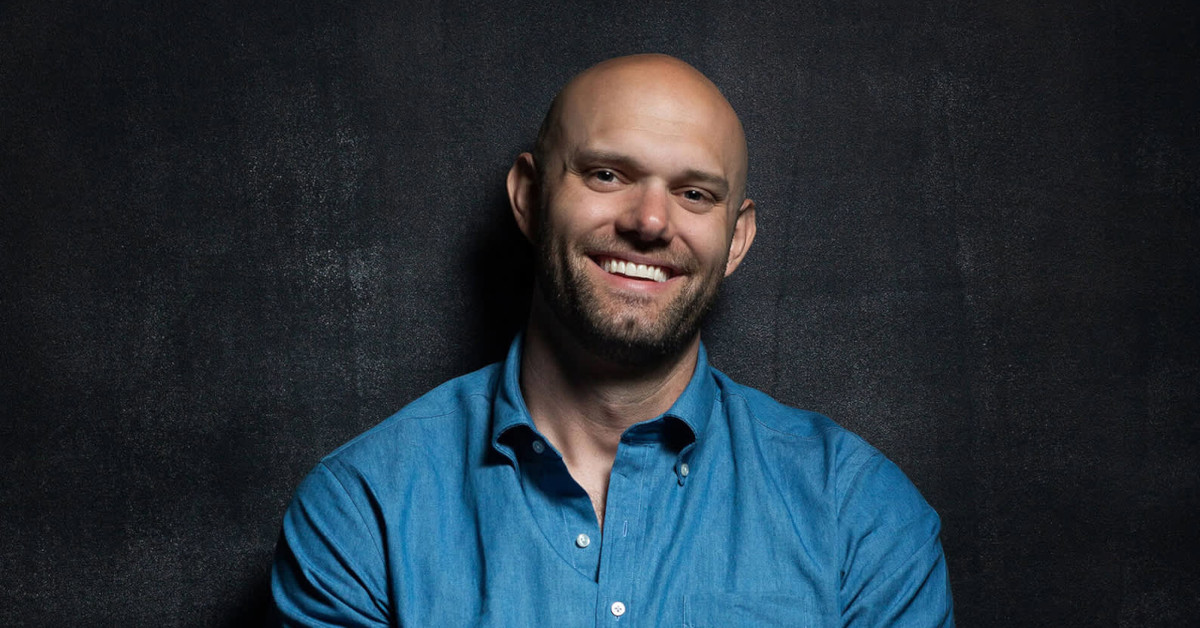
How Tiny Changes Can Create Remarkable Results | with James Clear


About Episode
My guest today is James Clear, an author and speaker who specializes in habits, decision making, and continuous improvement. His work has appeared in the New York Times, Entrepreneur, Time, and on CBS This Morning, just to name a few. In addition, his website receives millions of visitors each month, and he has hundreds of thousands of subscribers to his popular email newsletter which you can find at JamesClear.com. On top of all of his writing, James is also an accomplished speaker having spoken regularly for Fortune 500 companies, and much of his work is used by teams in the NFL, NBA, and MLB.
In short…James is one of the world’s foremost experts on habits and the impact of small behaviors on your health & well-being.
In today’s interview we do a deep dive into James’ brand new bestselling book Atomic Habits. We talk about how good and bad habits form in the first place, and how to break down seemingly impossible goals (losing weight, breaking bad habits, moving forwards in your career, etc) so you can make small but continuous improvements every single day.
If you’re ever wanted to make any kind of positive change in your life but you weren’t sure where to start, or even worse you just can’t make yourself give up bad habits, James is THE guy to get you where you want to be.
Episode Highlights
- How to get 1% better each day
- Retouching a painting, upgrading a portion of yourself (through behavior)
- Creating goals that actually have actionable steps
- Rapid transformation is not achievable for most people
- How to deny to intrusive desire to slack off 1% every day
- Breaking down the phrase “atomic habits”
- Conquering habit formation by preparing for the “plateau of latent potential”
- Observing how your expectations influence your behavior
- How to build a habit based on identity rather than just outcomes
- Ways in which your descriptions of your habits can make them impossible to change
Useful Links
About Guest
James Clear is an author and speaker focused on habits, decision-making, and continuous improvement. His work has appeared in the New York Times, Entrepreneur, Time, and on CBS This Morning. His website receives millions of visitors each month and hundreds of thousands subscribe to his popular email newsletter at JamesClear.com. He is a regular speaker at Fortune 500 companies and his work is used by teams in the NFL, NBA, and MLB.
Through his online course, The Habits Academy, Clear has taught more than 10,000 leaders, managers, coaches, and teachers. The Habits Academy is the premier training platform for individuals and organizations that are interested in building better habits in life and work. You can learn more at habitsacademy.com
Transcript
Zack Arnold: I’m here today with James Clear, who is an author and entrepreneur who focuses on habits and decision making. And dare I add to this, he is one of the world’s foremost experts on habits. His work has appeared in The New York Times, Entrepreneur Time. He’s been on CBS This Morning. He has hundreds of 1000s of people that subscribe to his email newsletter, which you can find at James clear.com He’s regularly spoken for Fortune 500 companies, and his work on habit formation is also used by teams in the NFL, the NBA, and MLB, just for a short list of some of the things that you have done. So, that having been said, I cannot express enough what a pleasure it is to have you on my show today.
James Clear: Oh, thank you so much. I’m excited to be here.
Zack Arnold: Just to let my audience know, they may know this already, but I’m a huge geek and nerd when it comes to habit formation and human behavior. So, I swear to God, if I had Lebron James on my podcast right now, I’d be less excited than I am to have James clear my podcast, and that is not hyperbole. Like, I literally feel like I’m talking to Lebron James right now, so I’m super, super excited.
James Clear: Well, thank you. I will do my best to live up to the building.
Zack Arnold: Hey, man, as long as you can nerd out on habits and human behavior the way that I love to, then I’m gonna be happy, that’s all I care about.
James Clear: All right, cool.
Zack Arnold: So the reason that I’m so interested in your work specifically, and I’ve read things by Charles Duhigg, who’s kind of one of the godfathers of this modern habit formation movement and understanding habits and human behavior. I love Gretchen Rubin as well, but one of the things that I love about you, and you mentioned this very, very distinctly in the very beginning of your new book, Atomic Habits, which we’re going to talk all about. I love the difference between knowledge and wisdom. A lot of people are providing knowledge, you provide wisdom, and the difference is that what you are doing is based on your own personal experiences, and you say flat out at the very beginning of the book that this book is not an academic research paper, it’s an operating manual, and I love things that provide action steps. So, can you help my audience get to know you just a little bit to understand how you got into habit formation in the first place,
James Clear: Sure. So I’ve been writing about habits, behavior change, and decision making at James clear.com for the last five or six years now. For the first three years, I wrote a new article every Monday and Thursday. I have a science background, so although it is true what you just say, that the book is rooted in my own experiences, and I talk a little bit about my own story in the introduction of the book, pretty much all the ideas that I share are rooted in science and evidence-based ideas, at least to some degree, and I view it as my job to sort of be a bridge between the academic research and the scientific community and the rest of the world, and how we implement some of those ideas, so I’m mostly interested in scientific discoveries as far as they are practical and useful, and have some kind of actionable quality to them. I do that through my weekly articles, but then the book, of course, is kind of like the ultimate version of that, where I’ve been able to collect five plus years of research and writing and experience on the topic. It was the first time that I was really able to distill those ideas into a single cohesive framework, you know. Before, I sort of had 30 or 40 ideas that were all related to building better habits, but they didn’t fall underneath the same umbrella. They weren’t, they weren’t connected in some kind of cohesive fashion, and so the part of one of the tasks of Atomic Habits was to do that in an effective way, and yeah, I think that’s a good summary, and a little bit of a background of my writing and my approach. And then, if you’d like, we can talk more about my personal story as well.
Zack Arnold: Yes, I mean, the when you say words like systems and frameworks, I get very, very excited and giddy. Anybody that knows me knows I love me some frameworks and systems. Items, but before we start to dive into the rabbit hole, I would like to understand just a little bit more of your origin story, because yes, you have been writing about habits for years, and you have the habit of writing about habits, which is fantastic, but there was an inciting incident that kind of got you to the place where you’re like, huh, all these things have happened in my life, I feel like I need to write about habits. How did all that come about?
James Clear: Well, so I didn’t have language for it at the time. I suffered a very serious injury when I was in high school. I was sitting in the face of the baseball bat. I ended up breaking multiple bones. My face had to be air carried to the hospital and helicopter. Couldn’t breathe on my own. I was placed into a coma overnight, had multiple seizures. The fallout from this was significant and long. It took eight or nine months of rehab and just a while before I could get back to speed, and so throughout this process I learned quite a few things, but also my hand was forced, and what I mean is that having some kind of radical transformation or a big epiphany, or some type of overnight success wasn’t really possible for me at that point in my life. The only changes that I could manage were small ones, and again, I didn’t have language for this at the time, but you know, I was just trying to find a way to get 1% better each day, or a way to build a small habit that, you know, made me feel like I had a little bit more control over my life, and so I did that in a variety of little ways. I, you know, focused on having my room clean, I was prepared for class, or prepared for practice. When I finally got back on the baseball field, baseball was a big part of my life at that time, and I, you know, obviously had to take some time away from the sport, but then when I came back, you know, I was still focused on trying to have a good career, on being a good player, and my dad had played professionally in the minor leagues with St. Louis Cardinals, and so I kind of had this dream of trying to play as well, and again, rapid transformation was not a possibility, so you know, I started just building better habits, I started going to the gym three days a week, or I started making sure that I was prepared for each test, or you know, as I said, keeping my room clean, things like this that weren’t significant in any major way. And this is, as a, in a sense, this is kind of a larger meta lesson about habits in general, which is that they’re very easy to dismiss on any given day, whether they’re slightly positive or slightly negative, you know, like if you eat a slightly healthier meal for lunch, or if you have a burger and fries, you don’t really feel the impact of that, whether it’s slightly better or slightly worse. Your body looks basically the same in the mirror, the scale doesn’t really change tonight. It’s only once your habits have accumulated for two or five or 10 years that the full impact of those choices becomes obvious and apparent, and so in that way habits are sort of like a double-edged sword, and you need to be careful about making sure you’re making 1% improvements rather than 1% declines, so that you can avoid the dangerous half of the blade, and this period in my life when I was dealing with this injury and trying to come back from that was really the first time that I started to do that, that I started to accumulate these small improvements. And anyway, the moral of the story is that I did not play professionally, but I did end up being an Academical American my senior year, and I feel like I did something just as important, which is I fulfilled my potential, and that was the personal experience that kind of led me on this path of investigating the science of how habits work and how peak performance work and how continuous improvement happens, and because I had a background as someone who was studying science and, who, you know, I ended up going to graduate school and was interested in the research portion of it, eventually those two worlds kind of came together, and so I had this, this personal experience of small improvements mattering, and then this academic experience of being interested in science, and that way of looking at the world, that lens of looking at the world. And now, for the last five or six years, they have come together, and I’ve been writing about those topics each week.
Zack Arnold: Well, and I think that’s one of the reasons that I gravitate to your work so much is because wisdom is just knowledge applied, and you are gathering all the knowledge and the scientific information, and you’re definitely a scholar, and you’re into the science, but you’re always applying it to practical everyday things, and that’s something that I appreciate so much, and the fact that you do specifically athletic training, I think, is also another reason why I gravitated to you is because I first and foremost am definitely a nerd when it comes to this stuff, but one of my biggest goals for this year is training for the television show American Ninja Warrior, and I’ve had to use everything that I’ve learned about habits over the last several years and really take that knowledge to the next level to get through this, because physically this is by far the hardest thing that I’ve ever tried to take on in my entire life, and I chose to do it just shy of 40 with two kids and a full-time job working in Hollywood, so I’ve got plenty of obstacles to get in my way, but once I really learned the power of combining all of these small habits into these systems, that’s when I realized, oh, this is actually something. I can take on, I just kind of need to be patient and really learn how to do it one habit at a time. So, the takeaway that I have for my audience that I want them to walk away with is twofold. The first is really understanding the immense power of very, very small habits, and then number two, actually being able to apply that knowledge to their own lives, so where I’d like to go next is just explain what you mean by atomic habits, because when I first saw the title, it’s not what I expected based on all of the work that you’ve written in the past, so I think that’ll be a good starting point to help people understand the power of these tiny little habits.
James Clear: Sure, well, I mean, so that your training goal is a very cool example of that, and a great, a great goal, and I’d love to hear how that pans out for you. I chose the phrase atomic habits for multiple reasons. So the phrase atomic, it can mean small and tiny, like an atom, and of course that’s a central part of my philosophy. Changes should be small, easy to do, you know. I’ve already used this phrase, get, how can I get 1% better every day? That idea of making a very small adjustment, but the phrase atomic also means an atom is the smallest fundamental unit of a larger system. So, for example, atoms built into molecules, molecules built into compounds, and so on. And in the same way, to a certain degree, we could say habits are sort of like the atoms of our lives, they’re the patterns and rituals and routines that are the fundamental units that make up what we do each day, and if you can build a small habit that is part of that system of your daily life and make a small improvement to it, then suddenly over time those compounded very remarkable results, and that gets us to the third meaning of atomic, which is the source of immense energy or power, and so putting this all together, if we make small changes that are part of a larger system and they accumulate over time, then we get an immense output or a remarkable result, and that’s kind of where the three headed meaning of Atomic came from, and why I chose it as the, as the title for the book.
Zack Arnold: Yeah, and I love the title, and like I said, once I read the first couple of pages, and like, oh, I totally get this whole book already, just based on the title, and just based on this description, it got me super, super excited about it. One of the, my favorite quotes from the book, in relation to this conversation, is where you say that habits are the compound interest of self-improvement. As soon as I heard the concept compound interest, I was like, oh, okay, now I get it, because everybody knows, like, you put money in the bank and it doesn’t grow that much, and doesn’t grow that much, and then all of a sudden, bam, you see this curve, and you have this concept when it comes to habit formation that’s called the plateau of latent potential, and I think this is such an important fundamental concept, because when people decide they want to make a change in their life, it’s all or nothing. It’s I’m going to start px and I’m going to clean out the pantry, and I’m going to get all these healthy foods, and I’m going to live off of kale and walnut salads, and I’m going to get eight hours of sleep every night, and I’m going to start yoga, and I’m going to meditate, I’m going to take a walk every day, and then it all falls apart. So, talk to me about the opposite of this, which is this idea of the plateau of latent potential,
James Clear: Right? So, the story I like to give, or the example I like to use for this, is imagine that you have an ice cube, and so you’re in a room, it’s cold, you can see your breath, the ice cube sitting on the table, say it’s like 25 degrees, and you heat the room up from 25 to 26 degrees, 27 degrees, 2829 30. Nothing’s happened. The ice cubes still sitting there. 3031 and then all of a sudden you heat from 31 to 32 degrees, and you get this phase transition. The ice cube begins to melt, and it was a one degree shift, no different than all the other one degree shifts that came before it. But suddenly now you have some results, and I think that in many ways the process of change, whether it’s getting in shape or making more money or building a creative project or learning how to meditate, whatever the habit is that you’re looking to build, it often feels like that process of heating up an ice cube, you’re you’re putting in work for weeks or months and nothing has changed, you’re still looking at this cube on the table, but one of the takeaways here, and this, that period there, where you’re kind of at the bottom of the curve, you know, like you said, if you imagine that compound interest curve, it’s real low and nothing’s changing for a while, I call that that flat line there, the plateau of latent potential, you expect for progress to be linear, you expect to put some work in for a week or a month or three months, and for there to be something coming out for you to be able to see a change in your body or see a change in your bank account, or to have people engaging with your creative work, or whatever it is, but in fact, complaining about working for a few weeks or a few months and not getting results is sort of like complaining about heating an ice cube from 25 to 31 degrees, and it’s not melting. The work was not wasted, it’s just being stored, and so the process of getting through the plateau of latent potential of reaching that stage where there’s a phase transition of maintaining consistency when you aren’t seeing the results in the beginning, so you can get through that like valley of death. Disappointment that’s happening early on, and get beyond the plateau of latent potential, that is one of the central challenges of building better habits, and one of the reasons why I wrote the book, because I think we’ve all experienced that feeling in some way.
Zack Arnold: Well, and you also mentioned much later in the book as well, when you were talking to a trainer, and you had said, listen, if there’s a difference between the people that truly succeed and those that aren’t as successful. What’s the difference? And the quote that I pulled from the book is, he said that at some point it just comes down to who can handle the boredom of training every day, doing the same lifts over and over and over, and that’s all part of the process. It’s just embracing the process, not always waiting for that spark of motivation, or the highest levels of, you know, that motivation, or the discipline to do it, or the willpower, like highest levels of willpower, it’s just, it really is about embracing that behavior day after day after day, and, of course, the important thing is actually doing it, and establishing and building the habit. So, where I would love to go now is, if you could just kind of give us the here’s habit formation 101 because this is something I’ve talked about in the past in my past courses, all about the Charles Duhigg model, which is the trigger, the routine, and the reward, and you have almost the same thing, but yours is just slightly tweaked and a little bit different. So, can you talk about your model of habit formation, and if you don’t mind, I’d love to know why it’s just slightly different than the one that he proposed.
James Clear: Sure, so do hit wrote a great book, Power of Habit, many people are familiar with it. Q routine rewards, kind of the three steps that you know that habits go through, and this model originally came from BF Skinner and his work in the 1930s on, you know, a variety of psychology experiments that he ran, and very well known, he proposes stimulus, response, reward, but basically talking about the same thing. There’s some type of stimulus or cue or trigger or prompt that gets your attention. Then there’s the routine, the habit that you perform, and then there’s an outcome, a benefit, a reward from doing that, doing that routine. The challenge that I had with, and I don’t, I don’t think that the model is inaccurate. I just think that it’s incomplete, and so the reason is I had a few questions that the model doesn’t help answer. So one question is, How come two people can look at the same cue and have a different routine? So, for example, for one person, they see the pack of cigarettes on the table, and they’re not a smoker, so it doesn’t really mean anything. They’re just like, yeah, whatever, and they move on. For another person who is a smoker, they see a pack of cigarettes, and they fall into the routine of smoking. Under that model, that’s the cigarettes are a cue either way. So, why doesn’t the routine always follow? Then the second question was, what about the same person responding to a cue in a different way, so for example, you can imagine if you walk into a kitchen and see a plate of cookies, then that’s a cue, visual cue, and then you eat the cookie, so there’s your habit or your routine cue, routine, and then cookie tastes good, so that’s a reward, but you could just as easily imagine that you were in the other room and you ate dinner, and you just got done eating, like, you know, four cookies or something, and you walk in and you see a plate of cookies in the kitchen, so same cue, but now you’re thinking, “Oh man, I’m full, like I don’t want to eat anything, I’m stuffed, and so suddenly you don’t take the same response, so the model doesn’t really explain that, it’s supposed to be, you see, the cue, the routine follows automatically. So, what I realized was that there’s something happening between the cue and the routine. There’s something going on there that needs to explain why people behave differently, or why they don’t, why the same people, why the same person doesn’t fall into the same habit every time they see a cue, and why different people respond differently to the same cue, and so my model is four stages. First, there is a cue, there’s something that triggers the behavior, then there’s what I call a craving, which I would define as a prediction about what is going to come next. It’s the expectation that your brain makes. So, to use that cookie example, if you walk in, your stomach is empty, then you see the cue, and your prediction is, oh, that’s going to taste really good, I should eat a cookie. And when the prediction is positive or motivating, when it leads to a sense of desire like that, desire is the engine that drives behavior, and you can actually, scientists have actually been able to map this, so you, if you were to map out the dopamine levels in the brain as you’re experiencing all this, you see the cue, then dopamine spikes during the second stage, during this craving, this prediction, where you say, “Oh, that’s going to be tasty, and when dopamine is high, it’s more likely that we’re going to be taking an action, this rise in dopamine helps drive behavior, then you pick up the cookie and eat it, so that’s the response, which is the third stage for me. And then there’s finally the payoff, which is the reward, and so the cookie tastes good, and it satisfies you. Now the reward serves two purposes, so again, just to summarize, cue craving response reward, the. Purpose of the reward is one to satisfy the craving that came before the action, and this is another reason that I think it’s important to have that second stage. It helps explain why we do things and why things are rewarding, and many, and this is, you know, oftentimes people will talk about this when it comes to changing habits. Oh, you need to substitute a new behavior to get the same reward, but if you don’t understand what the craving is, what that expectation was that you had before, before you took action, then it’s hard to figure out what different, what different behavior would also be rewarding. So the reward satisfies the craving, and the second thing it does is it teaches you what to do next, so it acts as like a positive emotional signal that hey, you ate this cookie and it tasted good, so next time you should do the skin, and so together these four stages form a feedback loop: cue, craving, response, reward, and as you go through it over and over again, the loop gets tightened, the behaviors become more automatic, your response to the cue that craving rises non consciously, you take action without thinking about it, and pretty soon it’s just an automatic habit. So those are the primary reasons why I decided to come up with a four stage model rather than a three stage model, and the gaps that I feel that that model fills when it comes to explaining human behavior and habits.
Zack Arnold: Yeah, and I think that that helps a lot. The only flaw in your model is that there is no model of habit formation where there’s a cookie involved, and there’s no craving, at least as far as I’m concerned. I don’t care how many cookies I’ve eaten and how full I am. Oh, cookie, that equals I must eat it. So maybe that’s not a flaw in the system as much as it is a flaw in me. I’m gonna have to
James Clear: Take a different example.
Zack Arnold: So, yeah, I think that that’s super, super helpful, and the really interesting thing that jumps out at me, as somebody who spent years learning about habit formation and coaching people on lifestyle design and helping them overcome some of these bad choices, is when I learned that the dopamine hit happens with the craving and not the reward, because you would always think, oh well, you eat the cookie, the reward happens, you feel better, the dopamine spikes, that’s where the craving begins, and you add that as the fourth stage, but as soon as you move to the second stage, I was like, oh, this makes so much more sense for a lot of the problems that I’m helping my clients deal with.
James Clear: Well, you need something to motivate you, something to, you need a reason to take action, if you, the way that I would define, so I like breaking those four stages into two sections, so the cue and the craving is what I call the problem phase, so it’s when your brain realizes that there’s a problem, and I don’t mean problem always in a negative sense, but in the sense that there’s something that you want to change, you want to change your current state, so you, you realize that you are in a particular state that there’s an opportunity around you, whether it’s a cookie on the counter or something that you want to change, like I’m feeling stressed, and I want to feel calm or relaxed, but you realize that there’s some type of change in state that you want, and it’s that change in state that you’re craving. In a sense, you don’t really want a cigarette, what you want is to feel relaxed, and the cigar is just the avenue for that. The second set of response and reward, that’s the solution phase, and so it’s when you resolve that craving or devise or achieve a solution to the problem that your brain just realized, and this also gives us a little bit of insight into how habits form, and how we, you know, certain people fall into different habits for the same problem, like for example, if you come home from work and you feel exhausted, well, there are a variety of ways to solve that problem, so to speak. So you walk in the door and you’re, you know, the cue is the context of coming home from work, and then there is this craving, or this feeling of, oh, I’m exhausted or I’m stressed. I want to change my state. And one person might play video games for an hour, and they learn that that’s an effective way to resolve that craving. Another person might bite their nails. A third person might go for a run for 15 minutes, and all of those are reasonable ways to deal with that craving or that desire for a change in state, but as you settle into one of those, you know, most people – I think I pretty much say all people – we don’t try every option available for dealing with a craving, we just try one or two, and then whatever we find that’s successful, we kind of use that because it satisfies us, and so the original habit that you learned is not necessarily the optimal habit for dealing with that situation. Once you realize that, it becomes your responsibility to design a new, a new option, a new, you know, alternative. If you don’t like the fact that you’re playing video games for an hour every night after work, then it’s your choice to, you know, insert a meditation routine or go for a run, or whatever it is, but your original habit is not the optimal habit, and part of the process of designing better habits is realizing what that craving is, and how you can adjust your routines to satisfy a healthier or more effective long-term way.
Zack Arnold: Yeah, and one area where this helped me specifically, especially with the. Of the training that I’m doing this year is that I have to be really, really clear about my dietary choices and what I eat, and as a child of the 80s, I basically grew up eating Froot Loops for dinner well into my college years and did not develop the best dietary habits, and I spent years reshaping them, but then I realized that even as I started to clean up my diet, there were these specific cravings that I would get every once in a while, and I thought, oh, it’s just the food industry, it’s just the chemicals that they add, but as I started to dig into the deeper craving, I realized that for me, because I’m so high energy, very high intensity training, doing the podcast, doing online courses, coaching, I’ve got a lot of things going on, and I’m always very focused and intense, I realized that at the end of the day I had such a hard time unwinding, and the only thing that kind of made me really decompress was just eating crap, because I’d have the blood sugar crash, and in my brain that equaled relaxation, and I realized, oh, well, that’s not very productive, and that’s not very much aligned with my identity as somebody who’s training for American Ninja Warrior. So, where I want to go to next, and I definitely want to delve into the nuts and bolts of how do you build a good habit, and the four stages, but the one other area I think is super important for people to understand is how to build a habit based on identity rather than just a process or an outcome, which is an idea that I first learned from you that blew my mind.
James Clear: So, the way that I define this as the difference between outcome-based habits and identity-based habits, and I would say that an outcome-based habit is the typical approach that we take to changing our behavior or to achieving a result. So, for example, you know, you could, you can pick pretty much any goal that people usually say, but, like, I want to lose 40 pounds in the next six months, or something like that, a weight loss goal. So, the outcome is that then the next step is they come up with a process for achieving that. So, okay, if I want to lose 40 pounds, then the way that I’m going to do that is by going on this diet, or by going to the gym four days a week, or whatever. And typically the conversation stops there. It’s like, okay, I want to be skinny, and if I follow this diet, then I’ll be skinny, or you know, something along those lines, but I would argue that there is a deeper level of behavior change, which is your identity and the set of beliefs that you have about yourself, your self-image, the principles and values that you implicitly follow, and oftentimes people try to come up with a new goal and a new plan for change, but they don’t shift the beliefs behind their actions, and they end up self-sabotaging. They end up falling back into the same patterns they did before. And one of the examples that I give in the book about this is that, you know, imagine two people that are trying to quit smoking, and you ask one person, “Would you like a cigarette? and they say, “Oh, no, thanks. I’m trying to quit. And then you ask the second person, would you like a cigarette? And they say, oh no, thanks, I’m not a smoker. Now, basically the same thing, but that language that’s used, I’m trying to quit, makes it sound like I still see myself as a smoker, and I’m trying to resist this, versus the other person who’s saying I’m not a smoker signals a shift in identity. They don’t, they no longer identify as someone who smokes, so it’s less of a sacrifice to stick with that behavior. And a similar type of thing is going on behind all of the habits that people are trying to build. If it feels like it rubs against your identity, like it conflicts with the type of person that you believe that you are, you know. Oh no, thanks, I’m trying to quit. Then it’s much harder to stick with that behavior in the long run, so the question that I had was, all right, well, How can we go about shifting our identity to becoming that person who says, oh no, thanks, I’m not a smoker, or the type of person who doesn’t miss workouts, or the type of person who writes every day, whatever that identity is that you’re looking to build, and the conclusion that I came to is that it’s sort of a two-way street, so identity once the you come into the world, you don’t have any beliefs about society or culture or whatever, you just kind of learn them over time as you grow up, but as those beliefs get formed, you start using them as reinforcement for acting in a particular way, so for example, if you have an identity where you believe things like I’m bad at math, then that is a reason to not try on math problems, or if I’m not good with directions, that’s a reason to tell your spouse to be the one to look up the directions instead. And so, as you adopt these identities and beliefs, you start to reinforce them, but the question that I had was, well, how did those get formed in the first place, and I believe that identity and beliefs get formed as evidence accumulates throughout our life. So, for example, if you study Chinese every Tuesday night for 30 minutes, then you believe that you are studious. If you go to the gym, even when it’s snowing, then you believe that you’re committed to fitness. If you go to church every Sunday for 15 years, you believe that you’re religious, and it’s like each action that you take is a vote for the type of person that you believe that you are, and there’s no reason that habits matter more than other behaviors in life, but because habits get repeated day in and day out. They accumulate the bulk of the evidence, and so it’s like, as you keep casting votes for being a type of person, and that evidence accumulates, eventually one type or one portion of your identity tips the scales, and you start to believe that about yourself. And so the way to reshape your identity, or I would even say it’s more like retouching a painting, you’re not looking to, you’re not looking to tear your identity in half and be a totally different person. You’re just looking to upgrade and expand a certain portion of yourself related to a particular habit, and the way to do that is through behavior. So, habit is like the, it’s the driver of the votes. Every time you sit down to write, you are being a writer. Every time you go to the gym, you’re being an athlete, and each time you cast that vote, you start to accumulate a little more evidence for being that type of person, and eventually, if you stick with the habits long enough, then your beliefs start to shift as well. So this, I think, is one of the core reasons to build small habits and make tiny changes, which is that even if a habit is too small to get the result that you want right away, it is still casting a vote for the type of identity and being that type of person, and so the punchline to this whole little conversation here is that most people focus on outcomes and come up with a plan from there. I think you should focus on identity and come up with a plan for that, so rather than saying I want to lose 40 pounds in the next six months, and here’s the diet plan I should follow, you should say something like, Who is the type of person that could lose weight? Well, maybe it’s the type of person who doesn’t miss workouts, and so then your focus becomes just on not missing workouts, just on casting votes for that type of identity, and once you adopt that and become that type of person, then you can shift your focus a little more to what kind of results am I getting, what kind of program should I follow, and so on, but it’s more about establishing the identity at first and becoming that person than about worrying about getting a particular type of result,
Zack Arnold: And I think that a way to dovetail perfectly into the next question about this idea of outcome versus identity in the process is also talking about the difference between goals and systems. This is just a fundamental thing that I teach to all of my students as well, where I know that Scott Adams, the famous creator of Dilbert, said that, you know, losers set goals and winners use systems, and I don’t disagree with this, but at the same time, I feel that setting goals is something that makes life exciting and worthwhile, and just having systems seems boring, but what you have to do is build the systems that lead to your goals. So, can you talk just a little bit more about how you see the difference between goals and systems?
James Clear: Yeah, I don’t know Scott personally, he seems very negative on goals. I think goals can still serve a purpose, so for.. and I say this in the book, you know, goals are not useless. They help us set a set of sense of direction. They help you figure out where to focus your attention. But after you’ve done that, and this is coming from someone who I was very goal-oriented for a long time, I would set goals for the type of weights I wanted to lift in the gym, the grades I wanted to get in school, the results I wanted in my business, and sometimes I would achieve them, but a lot of the time I would fail, and what I realized was that whether or not I set a goal had very little to do with whether I achieved an outcome, and if you think about this, winners and losers often have the same goals, you know, like every candidate who applies for a job wants to has the goal of getting the job, every athlete who’s in the Olympics has the goal of winning the gold medal, and so it can’t be the goal that separates them. They all have the same goal. So, what is it that actually makes a difference? And I think that it’s the system behind the goal, it’s the process that you follow. And so, as soon as the goal is set, as soon as you know what direction you’re moving in, it really serves you to put the goal on the shelf and focus instead on the process that you’re following. The other thing that’s crucial to realize about this is that achieving a goal, no matter what it is, even if it’s your dream of winning the Super Bowl or building a million dollar business or writing a best-selling book, achieving a goal only changes your life for the moment. So, for example, let’s say you have a goal of cleaning your dirty room. Well, if you get a burst of motivation, you can clean the room, and you’ll have a clean room. But in three weeks, if you haven’t changed the sloppy habits that led to a messy room in the first place, then you end up with a messy room again. And so this is something that you know we often think we need to change our results, but really the results are not what need to change, it’s the process or the system behind the results, and so in many ways people try to treat symptoms without treating their cause, and I would argue that habits, and this is how they overlap with this systems analogy here, the systems discussion habits are the unit, again coming back to that atomic phrase, or meaning the fundamental unit of your systems, whatever results that you have right now, your current life is perfectly designed to produce your current results. Your current system is perfectly organized to deliver your current outcomes, and so if you want a different outcome, if you want a different result, you need to. Design a different system, and the way to do that is by building better habits, or by accumulating new habits, and so in that way habits are sort of the gears that make the system run. They’re the fundamental components, the unit of the machine, and that’s one reason why I think they’re so essential, and how paradoxically they can often deliver the results you’re looking for by not focusing on the result and actually focusing on the habit.
Zack Arnold: Well, speaking of building better habits, now I want to jump into the rabbit hole, and I want you to start talking about your framework for building a habit in four simple steps. And we obviously don’t have the time to go into all of it as much as I would love to, but just first give me the very, very brief overall framework of the four steps, and then there are a few key areas where I do want to dive deeper, because I think they’re super, super important to help understand this overall picture of the importance of small habits.
James Clear: Sure, so we’ve already covered the four stages of the habit: cue, craving, response, reward, and associated with each of those four stages, I’ve come up with what I call one of the laws of behavior change. So, there are four laws of behavior change. So, for example, for the cue, the law is to make it obvious, for the craving, make it attractive, for the response, make it easy, for the reward, make it satisfying. So, make it obvious, make it attractive, make it easy, make it satisfying. Those are sort of the four laws of behavior change, and you can imagine each of those four laws kind of like a lever, and when the levers are in the right places, building good habits is very easy and almost effortless. Sometimes when the levers are in the wrong places, building good habits is almost impossible, and the real power of the system is that you can invert these laws to make it more likely that you’ll break a bad habit. So, for example, you want to make your bad habits make it invisible, instead of make it obvious, make it unattractive, make it difficult, make it unsatisfying, and so those are the four laws of behavior change, and they sort of form the backbone of the book as I walk through different examples of how to put those into practice and strategies for accomplishing those four things,
Zack Arnold: Where I specialize in working with my audience with the people that I write to, that I coach. I love working with beginners that just kind of want a foundation of getting started with whatever it is, whether it’s I’m just trying to, you know, move into a new career or transition to a different part of my career, or I’ve never lost weight before, I’ve never eaten healthy, and there’s so much information, and I just don’t know where to start. I’m really, really good at parsing down extremely difficult packets and amounts of information into something very succinct, which is why, for a living, I’m a Hollywood film and television editor, because I’ll take 90 hours and turn it into 40 minutes, and knowing that where I really want to start is step one with I just want to start a new healthy habit. I understand all this stuff about goals and systems and atomic habits. Sure, that sounds great, but where do I start? I get to make it obvious, but what does that mean?
James Clear: Sure, so there are a variety of ways to look at this problem. So, the first way is to say the process of behavior change always starts with awareness. You, if you are not aware of your current habits, then you don’t really have much hope of designing them in any reasonable fashion, so one of the exercises that I recommend in the book is what I call the habit scorecard, which is essentially just analyzing all of your habits, you write down from the time you wake up, you know what habits do you perform, so turn off my alarm, I check my phone, I get out of bed, I go to the bathroom, I take a shower, I brush my teeth, I get dressed, and as much detail as you want is fine. More detail, especially the first time you do it, is typically useful. And the process of doing this, the purpose is not to judge yourself for your habits being good or bad, or to feel guilty about it, but you just want to have a sort of an overview of what your habits are on a daily basis, and then you can go through and start to grade them. Is this a good habit? Is this a neutral habit? Is this a negative habit? And again, you’re not trying to feel guilty about it. You just want to see, like, oh, okay, I’m eating more than I would like, or I’m checking my phone more often than I should, almost like you’re observing someone else doing it rather than yourself. And so once you have that as a baseline, well, now you’re aware, and so you have the chance to change it, and to make some positive improvements.
Zack Arnold: The other thing that I want to mention, as well, especially with either starting a new habit or trying to break a really bad one, is everybody’s thinking they just have to get motivated, I just need to be more disciplined, I need more willpower. I just have to power through, and one of the most profound things that I think you say in the book, which is perfectly aligned with the work that I’m doing as well, is you say that many people think they lack motivation, all they’re really lacking is clarity. So, can you go a little bit deeper into that idea?
James Clear: Motivation and willpower are talked about a lot, and I’m not saying that, well, first of all, they’re two different concepts, so willpower. This idea that you, I don’t know, can resist, that you have self control, that you’re able to push through when you need to. I talk about more in chapter seven, but it’s, it’s an important quality, but it’s very heavily influenced by the environment. We ascribe it as a personal characteristic, but often it’s more environmental, and so one of the most effective ways to increase. Your willpower is by redesigning your environment, but the second thing, motivation. Now, motivation is important, because you know I mentioned as the second stage, right? Craving is some type of motivation that drives us to take action, but the motivation that people think they need, it will often arise if you’re more specific. So, for example, there’s a large body of research on implementation intentions, which is effectively a strategy that, where you state when and where you are going to implement a specific behavior, and there have been a bunch of interesting studies done at companies where they find, like, you know, if they’re trying to get employees to take their annual flu shot, that if they send out a mailing that just says take your flu shot, only a certain percentage of people will sign up, and many people will forget, but if they send out a mailing that says you’ve been signed up to get your annual flu shot on november 12 at 1pm click here if you need to change the time and date, then so many more people will follow through, it’s like they’re the clarity of it has already been decided for them, and so they have the motivation, if we want to use that phrase, to get their flu shot. It just wasn’t clear enough, and they didn’t want to make the decision about it early on. And this happens all day long when it comes to habits that we want to build. So many people don’t go to the gym because they’re waiting to see if they feel motivated to do it, or they don’t sit down to write that book, because they’re wondering, will I feel motivated to write today? And instead, if you can come up with a very specific time and location for when you’re going to perform a behavior, it’s much more likely the motivation will arise. So, you know, I will write for five minutes at 9am before I leave to go to work, or something like that, but the more specific the intention is to implement the behavior, the more likely it is that motivation will arise.
Zack Arnold: Yeah, and that reminds me of one of my favorite quotes of all time, which is that I only write when inspiration strikes. It just happens to strike at 8am every single morning.
James Clear: So I had a moment like that early on in my writing career. I was talking to a friend of mine, and he had written a couple of books already, I hadn’t written much, I just started writing at James clear.com I told him, “Hey, you know, I feel like I only write when I get this burst of inspiration, or like the creative muse strikes me, but I also feel like that’s when I do some of my best work, like, you know, it feels good, then, like, what do you think of that? And he essentially said that Faulkner quote back to me, where he was like, well, that makes sense. Like, I only write when I feel motivated to. It just happens to be every day at 8am And I was like, oh, this is the difference between professionals and amateurs, right? Like, amateurs do things when it’s easy, when they feel motivated, when they’re inspired, and professionals do things on a schedule. And if you.. I don’t think that is necessary in every area of life, but if you do have two or three areas that feel important to you that you want to make progress on, then you need to treat it like a pro, and a big part of that is knowing when and where you’re going to show up to do the work.
Zack Arnold: Yeah, I mean, I’m only motivated and excited to train for Ninja Warrior at 730 on Tuesday, seven to 9pm on Wednesday, eight 8pm to 9pm on Thursday, and seven 8am on Friday, and 9am to 1pm on Sunday. Those are the only times I’m really motivated to really, you know, achieve this goal. So, yeah,
James Clear: But the more you establish it, the more likely it becomes
Zack Arnold: Exactly
James Clear: The motivation does arise.
Zack Arnold: Yeah, and what I found is that I’ve hit these plateaus that they talk about, and you know, the physical training world, where I’ll just go a month, where it’s like, oh, I just, I don’t have the energy, and this is just not that fun, and I’m not losing any weight, and I don’t feel like I’m getting any stronger, but it doesn’t matter, because I have a colored block on my calendar that says I need to show up, so my seat, my, my superpower is that I show up, you know, like I right now I’m training with Tony Horton on his back backyard ninja gym every Sunday morning, and I just keep showing up. They’re like, “Man, you’re really making a lot of progress, and you’re really moving forward. And we’ve been really impressed, and like, that’s because the one thing that I do really, really well is I just show up. After that, I make no guarantees, but I will always be there at the same time on time, and whatever I’ve got, I’ve got, and I’m going to give it, but that to me is the reason that I’ve gotten so far in both my career and any endeavor and any goal is I build the system, and then I say, you know what, I’m just going to keep showing up, whether or not I want to or not. So that has made a huge, huge difference.
James Clear: Yeah, that’s a this is something I cover when I talk about the third law, make it easy, but optimizing for the starting line rather than the finish line is a really important thing, and so you know to use your language like you’re mastering the art of showing up. I’ve had a variety of readers who’ve used this in different ways. One of them, this guy, he ended up losing over 100 pounds, and the thing that he did in the beginning was he would go to the gym every day, but he wasn’t allowed to stay for longer than five minutes, and so this sounds so backwards to someone who’s trying to get in shape, but what he was doing was he was mastering the art of showing up. He was building the habit of going to the gym every day, and there are all these – whenever we go to build a new habit, there are all these logistical concerns that we don’t really think about. At the outset, we’re just thinking about, I want to get in shape, I want to lose weight, I want to, you know, earn more money, whatever it is, like we’re just thinking about the outcome. But if he’s going to go to the gym and build a habit of this, and there are a bunch of questions that need to get answered, like, okay, which gym will you go to, what route will you take to get there? What time are you going to go? Will you go by yourself or with someone else? Do you need to get your gym clothes ready before work. Are you going to come home and then change? Do you need to have a water bottle or is there a water fountain at the gym, like, and 1000 other little things that you don’t think about. And so, if you just optimize for the first five minutes, or what I call the two minute rule, if you scale any habit down and just try to optimize for the first two minutes the behavior, well, then you can master the art of showing up, and a habit must be established before it can be improved, and so once he did this for like six weeks, he was like, “Well, I’m coming here all the time, I might as well start staying longer, and that’s the total opposite of how most people approach that process, where they, like, you know, join a CrossFit gym or take Insanity or PX or do some like really intense program, and they get all motivated for two weeks or month, and then they burn out, and then they don’t do anything for three months, and then they feel bad again, and then cycle repeats itself. But instead, if you can focus on optimizing for the starting line, then you make it easy to show up each day, and once you’re showing up, well, then you have a lot of options. Then you can optimize in all kinds of ways, but it really starts with building the habit first and making it as easy as possible to get going
Zack Arnold: Well, and once you do that, where that takes me next is the number one core fundamental concept or mindset that I really want people to take away from this interview is the Goldilocks rule. So I want you to go deeper into this, because to me this has been the entire key for all of my training, and I think it can make a huge difference for anybody that’s trying to achieve any goal, whether it’s diet related or weight related or American Ninja Warrior related or career related. Once you can really understand the Goldilocks concept, I feel like everything starts to fall into place.
James Clear: So, the Goldilocks rule is about maintaining consistency over time, and anyone who has built a new habit understands this process and what it’s like, where in the beginning it’s novel, it’s exciting, you’re feeling motivated, so that gets you going. Then maybe you know if you can manage to stick with it for a few months, then you start to have like these beginner gains where you’re making progress, things are starting to click, but then at some point every habit becomes routine, it becomes boring, it becomes automatic, you know what to expect, and when you know what to expect, it’s easy to start overlooking your mistakes and making some errors, and this actually, there’s some research that shows this, that after a habit has been established, there is often a slight decline in performance because you stop paying attention to these little errors, and then even more so, what’s more likely is you just get bored because you’re looking for something that feels fresh and exciting. I had a friend to a very strong guy, and we used to train together, and he was making a bunch of progress in this program. And then I didn’t see him for a few months, and he was, you know, off training a different gym and stuff. And then I ran across him, and I was like, “Hey, how are things going? He was like, oh, well, actually, like, I haven’t had that good of a training for, like, you know, a month and a half or so, and, like, my lists have gone down a little bit. I was like, oh, are you still doing that program that was working so well for you? He was like, no. I was like, well, why did you stop? And he was like, I don’t really know, I guess I just got bored. And I was like, this was a program that was working. It’s so, it’s so interesting that even if something is going well, we’ll still skip it, and there’s a great quote from Machiavelli where he says men desire novelty to such a degree that those who are doing well desire it just as much as those who are doing poorly, and I think that that’s true for many people’s experience of building better habits, is that at some point you feel like I’m just feeling bored, I just want to mix it up, but the way to actually get long-term results is to stick with it. So, the Goldilocks rules away from managing this problem, this conundrum of feeling bored, or of maintaining motivation over the long run. And what it says is that humans experience peak levels of motivation when they’re working on a task that is not too hard, not too easy, just right. When they’re working on a task of just manageable difficulty, and so the one way that I like to think about this is, imagine you’re playing a tennis match, and you know you’re playing against a professional like Roger Federer, Serena Williams. Well, you know, it might be cool for a second, because you get to play a pro, but if you’re trying to play a serious match, then it’s going to get boring pretty quickly, because you’re going to lose every point. Meanwhile, if you play against, like, a five year old, well, it might be cute for a second, but that’ll get boring too, because you’re going to win every point. But if you can play someone who’s your equal, who’s your peer, you win a few points, they win a few points, you have a chance to win, but only if you really try. Well, that’s like the peak experience for motivation and the goal for building habits and making long-term improvement for continuing to progress is to stay on that razor’s edge, where it’s just pushing you enough, and it’s crucial to stay here, that you, you need enough victories to feel satisfied, like you are making progress, here you are complete. It successfully a portion of the time, let’s call it 5050 but then the other half of the time you’re being challenged, you’re trying new things, but it’s not quite working out. Researchers have tried to quantify this. Sometimes it’s described as a, I think, a flow state is somewhat similar to what we’re talking about here. You’re fully engaged in the task, you have this this peak motivation. Researchers have found that a flow state exists around four to 5% beyond your current ability. Now, most of the time in daily life, it’s not possible to know, you know, am I am I doing 4% more on my meditation habit or on my writing habit, or whatever it is. It’s hard to quantify that, but as a just as a guiding principle, as a rule of thumb, I like that idea of, okay, we’re looking to just push a little bit here to just nudge some, so that it stays interesting, and I’m remaining challenged and motivated, while also still succeeding a portion of the time.
Zack Arnold: Yeah, and that makes complete sense to me, and I think a perfect analogy, just to give another visual example that applies to my own life, which I think is a combination of the Goldilocks rule, as well as the power of atomic habits. Is that for me it was first about, well, I need to build a system to just show up to the gym, and I need to do all these exercises that I’m horrible at. Like, for a film editor, I spent 20 years typing on a keyboard in front of a computer. That’s not the best place to develop grip and forearm strength that I need to be an American Ninja Warrior, and I ran a Spartan race late last year, and one of the obstacles that they have is called the multi rig, where they basically have rings that you swing on and you grab ropes, and then you climb across pipes. It’s my worst nightmare as far as where my weaknesses lie. And it was near the end of the race, and I went to grab the very first ring, and I was going to swing to the second one, and I fell. I’m like, oh, my hand must have slipped. Yeah, that’s what it was. So I went up, and I tried it again. I couldn’t hold my weight with one hand on the ring, and I said, all right, that’s my baseline. My baseline is I don’t have the grip strength and the forearm strength to hang from a ring and swing to another. So my goal is to get strong enough, so I can grab the second ring, but that was it. It wasn’t my goal, is to be on American Ninja Warrior. It was the goal is to get strong enough and do proper exercises to grab the second ring. And then, as I started to be able to do that, I could swing on multiple rings, and then I got a little bit stronger and a little bit stronger. And when I went to my next Spartan race, like four months later, I zoomed across the whole rig with no real strain whatsoever, and just the burst of motivation that I got from that alone probably bought me two extra months of gym time, and now something like that seems easy. So, if I kept training from one end of the rig to the other, swinging on rings, meh, kind of boring, but now I’m doing a whole new level of ninja training, where I’m like, you know, grabbing the little tiny cannon balls and the vertical nunchucks, and like doing all the crazier stuff, and now it’s really, really hard for me, but I’m just strong enough that I can do it, and say, well, last week I grabbed the two little cannon balls, and I got to the first nunchuck, this week I have to get to the next cannonball, and that to me is kind of like a summation of the power of both the small tiny habits and also applying the Goldilocks rule.
James Clear: Yeah, that’s a really good example, because it’s also an example of the importance of narrowing your focus to one area of the activity, and how once you’ve been training for a while, that can be a very engaging thing. So, if you feel like you’re losing motivation relative to, in this example, going to the gym, or training, or something like that, but you were able to narrow your focus just to the grip strength and focusing on being able to hang from a ring, and so on. Well, now, now you have an interesting skill to practice. Now you have something else to shift your attention to, in addition to the maybe boredom and monotony of showing up from the gym. Well, that starts to fade away a little bit as you have this different area to focus your attention, so it’s a really good example of being able to maintain focus over the long run by effectively scaling your attention down to a more minute detail, you like find the next area to master
Zack Arnold: Exactly, and I mean this is a rabbit hole that I could go down forever, and as it usually happens, I hit about the hour mark, and I’m like, man, I feel like I just got started, like I could, I could do this for hours, but what I want to make sure I don’t short change the audience on very, very quickly. I know that we’ve talked about how to make it obvious, and we’ve done a fairly deep dive in how to make it easy, just very quickly, because I want to be respectful of your time. Can you just cover how we can make it attractive and make it satisfying, just in a few words.
James Clear: Sure, so making it attractive. I’ll give you, there are many ways to do this, and I cover a lot of them in the book, but I’ll give you one that I don’t cover in the book, which is timing. So the time that you ask yourself to do a habit can have a big impact on whether or not it is attractive to you. For example, if you are looking to build a meditation habit, but you are trying to build it in the morning, and you have, like, two little kids, and they’re running around trying to get everybody dressed, well, like, that’s a bad time to do it. Similarly, if you’re trying to build a better habit, but it’s later in the day, so this is a very common thing, a lot of the time, if you, you know, assuming not having little kids running around. Is part of the equation, doing something early in the day is often a better time to do it, because you don’t, other people’s agendas don’t start creeping in and eating away your motivation and time, but if you, you know, if you ask yourself to do something complex or difficult later in the day, well, maybe you’re feeling exhausted at that point, and so a useful exercise can be to map out the habits that you want, but also map out what is your energy like at different hours of the day, so you can just do like one hour blocks, eight to nine, nine to 10, so on, all the way down and through the day, and then see how you feel. If you want, you can just do this little energy tracking for one week or something, and that’ll give you a little bit of data on what your patterns are normally like, and then take that habit you’re trying to build and make sure you’re asking yourself to do it at a time when you have the appropriate energy for that task, so for myself, I found that writing, I tend to write better either in the morning or late at night, and so that’s really when I ask myself to work on articles, otherwise I like during the middle of the afternoon, it’s not a good time for me, I have trouble concentrating on it. It’s much better to do interviews or focus on emails, or so on. So, whether or not a habit is attractive often has to do with the timing. Make it satisfying. So, the one key point that I’ll point out with this is that the immediacy of a reward makes a big difference on whether or not it is effective for building a new habit. So, in the book I lay out something that I call the cardinal rule of behavior change, which is behaviors that are immediately rewarded get repeated, behaviors that are immediately punished get avoided, and it’s very much about the speed of the of the punishment and or of the reward that determines whether you want to stick with something or not, and one way to think about this is that a reward is like an emotional signal to your brain that says, yes, this was good, you should repeat it in the future. And so, positive emotions cultivate habits, and negative emotions destroy them. And if you can find a way to feel positive right after you perform a new habit, well, then you have a really good reason, your brain has a good reason to repeat it again in the future, and so you need to find a way to make the experience enjoyable in the moment. This is one of the core challenges about building better habits, you know. So pretty much every behavior produces multiple outcomes across time. So, for example, if you eat a donut right now, it’s tasty, so the immediate outcome is favorable, but the ultimate outcome is maybe that you gain weight or you don’t have as good of health in two weeks or two months, or whatever. So, the ultimate outcome is unfavorable with good habits. It’s the reverse. Going to the gym right now requires effort and sweat and sacrifice, so the immediate outcome is sort of unfavorable, but the ultimate outcome that you’re in shape in two weeks or two months is favorable, and so much of the battle of building good habits and breaking bad ones is about figuring out ways to pull the long-term consequences of your bad habits into the present moment, so you feel a little bit of that pain right away, and the long-term benefits of your good habits into the present moment, so you feel a little bit of that pleasure right away, and in many ways there are a lot of research studies that show people who delay gratification get better results, or have higher test scores, earn more money in their jobs, have greater social skills, all this type of stuff, but part of me wonders if the people who appear to be good at delaying gratification, so for example, if you go to the gym three days a week, people are like, oh, they’re so good at delaying gratification, you know, they’ll be fit in a few months or whatever, but they still work out now. But it doesn’t actually feel like that for me when I go to the gym. There are a variety of reasons that I enjoy going, you know. We talked about identity, I’m casting a vote for being the type of person who doesn’t miss workouts. It feels like it aligns with my identity. Another reason is that I get to see friends and people that I know there, so that’s an immediate benefit. It helps me like reduce stress from the day, and so part of me wonders if people who appear to be good at delaying gratification from the outside are actually just good at finding alternative ways to be satisfied in the moment, which effectively solves this problem that I just laid out, which is that you have this mismatch between the immediate outcome and the ultimate outcome, and if you can find ways to be immediately satisfied, then you have a reason to kind of stick through that plateau of latent potential and that valley of death while you’re waiting for the long term rewards to arrive, and so following the fourth law, make it satisfying, is largely about finding ways to get a little bit of immediate enjoyment at the moment.
Zack Arnold: Well, I know that for me, one of the things that I hang on to specifically with the ninja training, just with exercise in general, and I’ve talked about my extensive history with my audience about burnout and depression and severe anxiety, and I found that there’s no better antidepressant on the planet than doing high intensity exercise on a regular basis, so yeah, it’s great to, you know, start to lose weight and get stronger and all that, but those are always things that are going to happen to my future self, but my present self, which I focus on way more, is I just went to the gym, and yeah, it was a hard workout, but man, I feel so much better the rest of the day, and that’s today. That’s my personal reward right now. The immediate gratification, yeah, like if I look in the mirror now, and I think about, man, I’ve come a long way in the last eight months, but that’s not what I’m thinking about when I go to the gym. I think if I don’t do this, it’s back to the antidepressants, and we know how that feels. So I’m going to the gym because I want to feel good about myself today.
James Clear: Yeah, as much as you can reframe the conversation to be about those immediate rewards or the immediate consequences, it becomes easier to perform the right behavior.
Zack Arnold: Well, speaking of rewards, this is probably been one of my favorite podcast interviews of all time. I don’t think a conversation has flowed this effortlessly ever, so I am just immensely grateful for the time that you’ve given me. I seriously could go for at least another two hours and make this a marathon, but unfortunately I have things to do, and I’m sure that you have things to do as well. So I’m going to cut it short here, but I want to make sure before I go that everybody listening knows where to find you, where to find your writings, and how to get your book.
James Clear: Sure, so you can just go to jamesclear.com if you’d like to see more of my work, or browse some of the articles. We have articles organized by categories and different topics, so feel free to poke around there and see what interests you. The book, which is Atomic Habits: An Easy and Proven Way to Build Good Habits and Break Bad Ones, is available@atomichabits.com And if you go to that site, then you’ll be able to see some additional resources. There are a couple bonus chapters that were cut from the book that you’ll be able to download, things like that, so Atomic habits.com
Zack Arnold: Awesome. Well, James, I cannot thank you enough for taking the time to be here with me today to not only educate my audience but just educate me and make me an even better, stronger, and consistent person. So, thank you so much.
James Clear: Yeah, thank you again, I really appreciate it, and very nice of you to say those things. So, I’ll do my best to keep good articles coming your way,
Transcribed by https://otter.ai
Episode Credits
This episode was edited by Curtis Fritsch, and the show notes were prepared and published by Elyse Rintelman. The original music in the opening and closing of the show is courtesy of Joe Trapanese (who is quite possibly one of the most talented composers on the face of the planet).