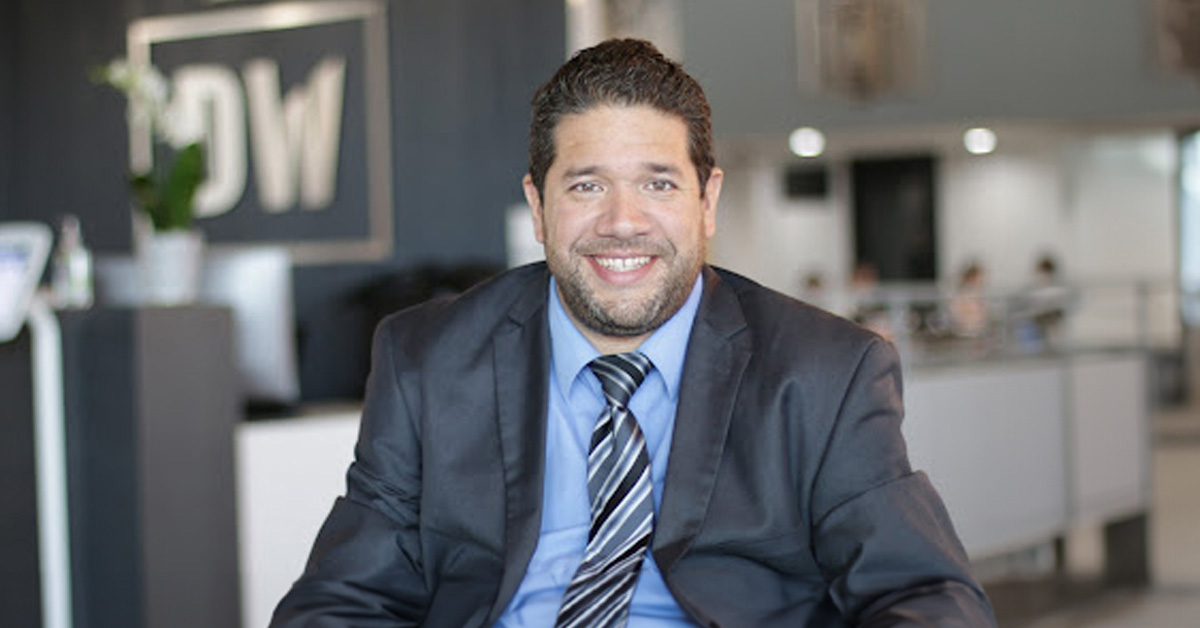
Being Grateful In the Face of Adversity | with Humberto Gurmilan


About Episode
The holidays are the time of year we’re all meant to slow down and recognize all the things in our lives that we are grateful for, but unfortunately with the crazy speed that life moves nowadays, the holiday season is most likely the most stressful time of the year. All most people (including myself) are often focused on is rushing to get projects done before the year ends, making travel plans, fighting the mad rush of holiday shoppers and traffic, and if there’s any spare time left in the day…maybe getting some sleep.
Where in the world is there any time to slow down and be grateful?
My guest today is Humberto Gurmilan, an Emmy award-winning producer, author, speaker, podcaster, and all-around inspiring guy. He is the founder of the Gurmilan Foundation which empowers individuals with disabilities in challenged communities, and until recently he was the sports anchor for Telemundo in San Diego where he also teaches communications at San Diego City College. But despite his many accomplishments, I didn’t invite Humberto on the show with me to discuss how he became successful.
In this interview Humberto and I talk about the tragedy he experienced as a teenager when due to a freak surfing accident he became paralyzed from the chest down. Rather than thinking about what was taken away from him, instead Humberto decided to rise to the challenge and instead develop gratitude in the face of adversity and use his experience to inspire others to do the same.
For those listening today who are frustrated with your present circumstances, I hope this interview allows you to reframe where you are in your life right now and take even a few minutes to be grateful for what you do have before embarking upon the madness of the holiday season.
Episode Highlights
- Humberto’s early life surfing in Tijuana
- Processing a traumatic injury and the changes that come with becoming paralyzed
- The healing love of family in the face of depression
- The power of seeing yourself within your own comeback story
- Transitioning your perspective from “Why me?” to “Why not me?”
- Taking responsibility for your attitude towards the world
- Humberto’s pursuit of sports broadcasting and discovering his gift for public speaking
- Taking stock of the strengths you have so you can categorize your obstacles
- Learning that you have way more talents than you think you do
- The Three A’s: Attitude, Accountability, Action
- Write down your goals. Once you do, you will be exponentially more likely to achieve that goal.
Useful Links
About Guest
Humberto (“Beto”) is an Emmy award winning Journalist and Producer with 13 years of experience in the media. He hosts the Overcome Podcast and Overcome TV series on Youtube. His life mission is to help others by sharing his experiences in overcoming adversity and living a fulfilling life.
He founded the Gurmilan Foundation to help young people with disabilities become empowered and reach their full potential. He teaches broadcasting at San Diego City College and often speaks in the community to promote disability awareness and spread a positive message of hope and positivism.
Transcript
Zack Arnold: I’m here today with Humberto Gurmilan, and hopefully I didn’t butcher his name too much. But regardless of my inability to possibly pronounce his name right, I am very, very excited that we were finally able to connect and record the show together. So thanks so much for being here.
Humberto Gurmilan: Thanks, Zack, and I think you’re probably one of the best name pronouncers that I’ve been in touch with over the last few months, so you got it right, man.
Zack Arnold: Oh, fantastic! Well, that’s a great way to start the shows by not butchering the guest name. I’m very excited about that. So, you and I were originally introduced through a mutual friend, Joaquin, who was somebody that I actually went to school with way back in the day. He had said, “Hey, listen, I’ve seen all the work that you’ve done with your documentary film, go far. I know that dealing with stories of disability and overcoming disability and like inspirational, motivational stuff. I know that’s totally your thing. You have to talk to my friend Humberto. You just have to talk to him. And was one of those things where, like, yeah, no, that sounds great. And then I just, you know, kind of put it off a little bit, put it off a little bit, just because there’s always so many people that are on your list that you want to talk to, and then I finally had a chance to look at your site, and we had a chance to talk on the phone. And I’m like, this is a guy that I have to get in front of my audience. So this is this. I’m very excited about this conversation, talking about your journey and just you know the the whole you know program that you’ve put together.
Humberto Gurmilan: Right. Yeah. Thank you so much, Zack, and I appreciate you having me on. I followed fitness and post, even though I’m not. I was never. I’m not an editor or anything like that. But I can totally relate. And now that you’re going to Optimize Yourself, it’s. It’s. I think it’s opening up. There’s going to be great things for you, and I’m totally stoked about where you’re going and everything’s going.
Zack Arnold: Even though you’re not in film editing specifically, one of the really cool things about this interview is that I get to blend two totally different passions that I have. One of which is for the inspirational, motivational world and helping those with disabilities. But then the other world is working in film production, TV, broadcasting, storytelling. So we get to blend both of those together today, which is really, really cool. But where I want to start is the beginning of your story. So let’s just go ahead and kind of let the audience know a little bit more about you, your origin story, starting from the very beginning.
Humberto Gurmilan: Yeah, definitely. I have a it’s a super long story and with a lot of ups and downs, but I’ll try to put it you know and simplify it because for the sake of time. But grew up in Chula Vista. Was born in Chula Vista, California, which is a suburb of San Diego, very, very close to the border. My parents are from Mexico. They moved to the border town Tijuana. I think everybody knows Tijuana, the border town, the party town. And but back then it was a lot more relaxed and tame than what it is right now in terms of violence. In terms of even the partying was a whole different thing in the 80s, but we my parents moved there in the 80s, and obviously I was born here in Chula Vista, but grew up in Tijuana because my dad was a is a dentist and he doesn’t practice anymore, but he was back then, and we grew up there. And I would say we, my family, because they were very very young as well, and and my brother and my sister. I have a younger sister and a younger brother, and we grew up in the in downtown Tijuana, very humble home, wooden house with a bunch of holes everywhere. I remember we used to. My dad used to turn on the the oven in the winter to try to keep us warm. But obviously, and fortunately, his career took a little bit off after a few years of working in the dental industry, and we were able to move to to a place near the beach, same town, Tijuana, and it was an awesome, awesome experience living there. As soon as I got there, Zack, I was in love. I was always in love with with action sports. I skateboarded. I you know rode my bike. I played baseball and all the traditional sports. But I was so in love with the more exciting sports like skateboarding and that sort of stuff. And obviously, you know, riding my bike. And then when I get there, obviously I lived a few blocks away from the ocean, so I fell in love with surfing, and that’s where my life changed completely. I start started surfing. I would surf every day in the morning, in the afternoon, especially in the summer. I was I was out surfing all day, but you know I was fortunate enough that you know the school system in Mexico has like a couple of schedules. Sometimes you have school in the morning, and some people have school in the afternoon. So I was one of those lucky ones in the afternoon. As weird as that sounds, I would go to school at 1 p.m. something like that, and get off at seven in high school. And so the morning was free, and the morning was, you know, I would say that I would do homework, but I’d be lying. I was mostly surfing in the morning, so that’s that’s how I picked up surfing. It became my love, my passion, and then obviously one day I went out surfing with my friends. I was the last one out of the water, literally, and and they had to pull me out of the water because I suffered an accident. I dove off my board and hit the bottom of the ocean. The wave wasn’t too big or anything, but you know that’s kind of what happened. I don’t remember, but it’s just just putting pieces together. That’s probably what happened. I broke my neck, and obviously that completely changed my life, and everything, everything stopped for a little while, or for a long while. Even my family’s lives, you know, changed. So that was a huge moment in my life where I was fortunate enough that I was there with my friend Pablo, and he pulled me out of the water, and and my journey started right there.
Zack Arnold: So how old exactly were you when that happened?
Humberto Gurmilan: I was about to turn 16. I was 15 years old. I was in, I think, it was junior year, starting junior year in high school over there, and I already had plans of graduating from high school in Mexico in Tijuana, and then coming to to college over here in San Diego, and everything just happened a little bit faster than than what I expected, obviously because of the injury, they pulled me out of the water. The ambulance took me to the Red Cross in Mexico, and they told my parents, you know, if he’s an American citizen, if you want him to to make it, and you know, when I say make it, if you want him to not die, just take him to the United States. So they arranged everything. They took me in an ambulance to the border. Life Flight, which is a helicopter, picked me up at the border and flew me to Mercy Hospital in San Diego. Back then, it was called Mercy Hospital near downtown, and that’s where I started my rehabilitation. I was about to turn 16, so I was pretty young. I was still, you know, growing, still learning a whole bunch of stuff in high school, as you can probably remember and imagine everybody out there that that you know you remember your high school days and everything’s so complicated. Even though it’s it’s a lot more simpler than grown-up life, but you know I was going through a lot of stuff and now throw you know that big injury and so everything you know I always say when I talk to young kids or when I go out in the community and talk about it, I say it’s like a nuclear bomb exploded in my family. Everything just was was in shambles.
Zack Arnold: Well, when you hear a story like this, and unfortunately, stories like this are not terribly uncommon of somebody dealing with some physical tragedy. Especially when you’re talking about army veterans or people in the services where they lose a limb or they become paralyzed. Like any time a major life shift like this happens, it just seems like how could anybody deal with that? But you couple that with just about turning 16, and you’re a kid in high school, and the world is already a complete and total mess. Even when you are completely healthy, the world is a disaster when you’re 16 years old. How in the world did you deal with this type of tragedy?
Humberto Gurmilan: It was it was extremely difficult, but I think in in a way I was so young that I didn’t know better. The only thing I knew was I better get better to get out of the hospital and get back to surfing. I better you know do whatever the therapist tells me and the doctor tells me so I can get out of the hospital and go surfing with my friends or go you know out with my friends or whatever, so I was I was fairly fairly young. After a few months or after actually a few weeks, I started realizing that you know it wasn’t going to be that easy. So fortunately, I had a lot of support, and I think this is something that’s huge not only for people that suffer injuries, like you said, but just if you’re going through anything anything in life, whether it’s difficulties at work, difficulties with your health or difficulties, and wherever you are, you know support is super super important. And I was fortunate enough that I had a great support group around in terms of my family, but also my friends. You know, I had a ton of friends that would travel from Tijuana to the hospital. And this, I say travel because it’s only about I don’t know, like like 30 miles. But if you factor in, you know an hour and a half of crossing the border and then taking the train and all that stuff. It was like a three-hour trip. So a bunch of my friends would show up during visiting hours, and you know I would I would cheer up. It would you know pick me up. So that was that was huge for me. And and just having a strong family and faith was important for me.
Zack Arnold: Well, from reading through some of your story on your website. There was also a period, if you’re willing to chat about it, where things were pretty dark and not so fun. And whether or not somebody has dealt with a tragedy at this level, or it’s just a matter of dealing with depression or anxiety or whatever it is, when you’re in that dark place, it just kind of seems like it’s never going to change. The clouds are never going to part. It’s never going to get better. So, do you mind talking just a little bit about that period of time where things were looking pretty bleak to you?
Humberto Gurmilan: Yeah, definitely. It’s and and you know it’s I when I you know remember and when I look back, it just feels like so vivid. You know, just a few years ago, as if it was a few years ago. It’s been about it’s going to be about 23 years ago, in September. But yeah, definitely after a couple of weeks, two or three weeks, when I started to realize what was going on and when I started to understand that I was in real trouble because my body changed completely. I was I was pretty much immobilized, paralyzed from my chest down, and at that point I couldn’t even move my arms or anything like that, so I was barely able to communicate with you know blinking my eyes or you know moving my mouth or something like that, and so I mentioned a little bit a few minutes ago that I had a lot of support, so it was great. It was awesome during the day. I had family there, I had people visiting all the time, and and that kept me you know upbeat. But once visiting hours were over, and I remember this this completely you know so vivid in my mind that once visiting time was over, everybody left, and and I knew that 8o’clock was coming around seven, and I knew that I was going to feel so alone in that hospital. And once everybody left, once everybody was out out of there, and you know. I was there maybe for the first hour I was okay because the nurse and everybody’s still around and they’re checking you out and everything. But once the nurse would retrieve into their den or whatever they go, you know, out of the out of the room, then everybody everything became so so dark. You know, it was I try to sleep, I would try to go to sleep and of course I couldn’t. I immediately would start you know, thinking about everything, and then I would just break down, and and it’s weird because, you know, it was like I was completely frozen, but my emotions were were running wild, and obviously it was it was very difficult. I would cry most of the night, then I would cry myself to sleep, then I would wake up around three or four a.m. and I’d start crying again. It was just terrible. It’s one of the most, you know, dark moments, like you mentioned, in in my life, and I was really struggling and asking God why. And at that moment, I was asking, you know, blaming everything, everybody for for what was going on, and asking why me, why why this, you know, why that. I was I was never a bad kid. I was never, you know, stealing. I would never hurt people. I never got in fights. Yeah, I did you know the regular things that a 16-year-old you know kid does, but nothing really bad. So I was always you know I was asking why you know why did I deserve this and all that stuff. And obviously it’s something that you know we all go through as as we we face challenges. But yeah, that was a very very difficult moment in my life. And and then once I would you know start realizing that morning was coming, I would change gears. I don’t know how I would do it, but I knew that family was going to be there maybe at nine or eight a.m. And then I would, you know, completely change my my attitude. I would pretty much put on a face so that people didn’t realize how depressed and how how dark the moment was where I was at that time, and because I didn’t want to cause any more pain for my family, you know that was my deal. That’s what would make me, you know, snap out of it. So when people got there, I was smiling, you know, you know, I was I would act like I was all great. But when night came, it was just a super dark moment.
Zack Arnold: Well, and I think that that’s something that’s really key. And there’s a couple other areas in here that I want to go into further. But when it comes to dealing with any type of depression, and that’s something that I definitely want to talk more about on this program, just in this, you know, the Optimize Yourself program itself, because it’s something that I’ve dealt with a lot in my life. So whether or not we’re talking about somebody that’s just had a debilitating injury, or you’re just dealing with a depression, whether it is biochemical, whether it’s driven by something that happened in your life, you had those really really dark moments. But I think a point that you said that’s so important: you don’t want to feel like you’re more of a burden to people. You already feel like you’re such a burden. You’re putting so much pressure on them. You assume nobody wants to be with me. Nobody wants to deal with this. So I’m just going to kind of fake it, right? I want to make it seem like I’m okay, and that can be a really, really slippery slope sometimes. And one of the things you’d mentioned on your website that really made me think was that you had said I was at a place where I realized I wasn’t even capable of killing myself.
Humberto Gurmilan: Exactly. Yeah, definitely. I mean, that that’s how powerless I was, and that’s how powerless sometimes. And I’m I’m sure, and and hopefully nobody’s feeling like this out there, you know, listening to this show. But if you are, you know, feeling like that, you know, is it’s part of it. It’s part of touching, you know, the bottom, like they say, and and and really understanding that wow, there’s nothing I can do to, you know, take my life. And that that was for me in that moment, obviously, because I was paralyzed. But yeah, that was it was so frustrating even for that because you know then I would just say you know what what can I do you know so I would just you know fall asleep and and then wake up and feel the same way but that’s how powerless I was and and now now now that you mention it makes me feel like wow man that that was one tough moment right there
Zack Arnold: And as I was reading through your story a little bit further. There was this turning point that happened, and I’m not going to give it away. I want you to tell the story. But as I was reading, I was just kind of skimming, reading about your story. Okay, like getting ready for the interview, and then I hit this spot, and I just had to stop. It was like, whoa, this was a massive turning point for you. But just hearing this story was a huge turning point for me and shifted my perspective. So tell me about the conversation that you had where you were sitting with your father and you said, “Why me?
Humberto Gurmilan: Yeah, definitely, Zack. I think it’s you. You totally hit it on the on the head. That was one of the probably the most defining moment in my life where you know I say you know everybody in sports and I did sports television for a long time as a producer and reporter. Now recently I resigned from that. But one of the the things that I like about sports is the comeback, and I think everybody has a comeback. For me, that was the comeback, and and just going back to that hospital room to take you guys there, I was you know still going through that very very depressive, very tough time where I would wake up and and finally was there and yeah I would smile but I would still I was still hurting inside terribly, I was away from my family I was away from my friends I was away from school just I got ripped off you know off of my life and put like in a cell that’s how I felt put in a cell or in a hospital room and now they took away my. My liberty, my everything I had going for myself, so I was pretty pretty depressed. And and one day I was laying there in bed, obviously still not moving a lot, but I was able to communicate with my dad. This was a few weeks after my accident, about three or four weeks when I started being able to communicate, you know, locally, and we were just chatting there, you know. And at this point, I was at at peace because my dad was there and family was there, and I was asking him and telling him, you know what, Dad, I I just don’t understand. You know what did I do wrong? You know what what happened that you know I deserve this. Why me? Why, you know, am I the one that needs to go through this? And so I I asked him that very difficult question. If you think about it. My dad was a thing. Dad was in those yeah mid 30s, and I asked him why me, and that was that was just at that moment. That’s just what I asked. But when I go back, I feel bad because how can you ask your dad you know that type of question in that type of situation? But I was looking for answers, and he paused. He was right there, right next to the bed, you know, standing, and we were chatting, and he paused when I asked that. He took a few seconds, and then he said, “Why not? Why not? Why not you? And he started explaining. You know, you know, there’s sometimes things just happen. You know, there’s there’s you didn’t do anything wrong. You know, it’s just an accident, and and you know why not, you know who are you to not be injured, to not be disabled, or to not be going through this? Everybody goes through challenges, and then he stopped and you know sat down and I stood, I sat you know or laid quietly there and started you know processing that information. That totally changed my life right there, you know, and it was whether he intended it to change it. If my dad was intending to change my life or not, I don’t know. But his words were just so gave me so much peace at that moment, and I realized that you know what, it’s true. You know why not? You know this is this is what happened to me, so I better accept it, take on the challenge and move forward, or I’m going to lay here in bed for the next, you know, 20, 30 years and pretty much shrivel up and die. So, I don’t know if at the moment I had the conscious or I was aware enough about what that meant and how that changed me, but now that I look back at that moment, I think it’s when you know everything changed, and I started the next day. I woke up, and I when I would feel bad, I said, you know what, you know, I really can’t, you know, be here crying more. I would still cry and feel sad, but I would, you know, snap out of it and say, okay, I’m ready for therapy.
Humberto Gurmilan: I’m ready to even try to move my arms, and and so I started working on those little things, and it started with a little, you know, bicep curl that I would do just to move around in bed, and eventually, you know, that took me far. And in a couple of weeks, I was sitting up and eating solid food and just doing a lot more stuff that you would say, well, that’s not a lot. But at that moment, when you’re paralyzed from your chest down, not moving your arms, all those little things became huge things, and then everybody would come in, and the doctors and the therapists would be so happy and be like, “Wow, you’re doing amazing! And they were genuinely impressed by my progress over the next few weeks, and and that completely fueled my fire. And then from that, I took off, man. It was like my jet engines got started, and then you know I started rehabbing like like a maniac, and then once I got to to the true rehab, it was all history from there. You know, I was just so focused on getting ready and getting better and getting out of there and getting back to my life that you know I recovered. It took about six months, but I was back at school in high school in about six and a half months.
Zack Arnold: Well, going back to that moment when you were talking to your dad and you’re saying, well, I don’t know if he was trying to change my life in that moment or not. I can’t speak for him, but speaking as a father myself, being in my mid, well, technically my late 30s now, but I’ll pretend I’m in my mid 30s. Being in my mid 30s, having a son that’s seven years old, and let’s pretend that he were 15. I can’t even imagine being in a situation like this, or imagine the thought of my son asking me that question, but I know that I wouldn’t be in the mindset of all right. I need to think of something really profound to change my son’s life at this moment. It’d be more like, oh my God, I have no idea what to say, and this is such a transformational moment and a difficult moment for me that I’m. Maybe you’ve talked to your father, and you know he’s answered that question. But I know in that situation, I would just be like, I just I gotta say something, I gotta say something, I gotta say something, and he just happened to find something that completely transformed the trajectory of your whole life after that.
Humberto Gurmilan: Definitely, I think it’s a little bit of both. My dad has always been a man of faith, and I think he was already going through his reinforcing his faith because he he talks about how difficult it was for him and for his, you know, for the family. And when I got hurt, obviously he he pretty much kneeled down. And you know, I admire him for how strong of a of a faith he has. And so I think it was a little bit of both. And and somehow he just came up with the the perfect answer, whether he wanted or not. I tend to think it was a little bit of both. But you know, he changed my life, and that. Just completely snowballed into into something big because now after that, every little change or every little thing that I noticed that I could do, it would motivate me and and it really changed my life. But just going back, like you’re saying, I’m not a I’m not a father, but I can put myself in his shoes and things and just going through that, like you’re saying, was probably like huge weight on his shoulders, you know, being the strong, the pillar of the family, and carrying everybody’s weight, and now you know, having to answer, you know, really deep questions about life and about something like that was was just amazing.
Zack Arnold: And I want to go forwards very shortly, start talking about all the things that you’ve done since then, and go much deeper into the work you’ve done with your foundation and everything, but the one area that I want to hit that I think is going to help us transition to some of your work was in you could I don’t want to speak for you but having been through very deep severe depression myself more than once and even fairly recently I’ve learned a lot about the process learned a lot about the biochemical reactions that are happening in your brain, but regardless of the knowledge that you have, really what’s happening with depression and the the most profound thing I’ve ever heard about it is that it’s anger turned inwards, and you just blame yourself, you blame the world. Why is this happening to me? What did I do wrong? And in that transition from the why me to why not me? It seems like what happened was whether you knew it or not at that moment, you were starting to become accountable for the situation that you had been put in, and accountability is what I want to use to kind of transition to what you call the three A’s. So let’s talk a little bit about this idea of accountability and where it started that day?
Humberto Gurmilan: Yeah, I think I think accountability started that you know same moment where my dad you know told me why not you know because immediately maybe just a few seconds later I started thinking about well yeah that you know that’s true why not and I stopped blaming God I stopped blaming the environment I stopped blaming the ocean I never did really did blame the ocean but you know, if if that crossed my mind, I stopped blaming everything on everybody. I realized that you know what I got myself into this situation, whether it was intentionally or not, or an accident, or just a fluke of of the universe. Me, you know, being being here, it’s me. You know, it’s it’s me that it’s the person. I am the person that has to take charge of the situation, and I know it’s ironic because I had really no control, and I couldn’t even you know take my own life at that moment, if even if I wanted to. So it’s ironic to say that I took control of my life, but I did, and it was all mental. I said, you know what? I’m going to take control. I’m going to start rehabbing it. I’m going to start you know going forward, and you know, accountability for me, even now at this point, is one of those things where I I live by it. If something’s going wrong, if something’s bad, if something you know I’m doing something, I hold myself accountable because once you start blaming other people, once you start blaming the environment, the president, the government, the economy, your spouse, your husband, or your kids, or whatever-you become powerless. You relinquish your power, you give it away, and then you have no chance of really moving forward or getting out of that you know dark place where you are. Or even if it’s just you know a flat tire, you know something like that could bring you down, and accountability to me is probably the most important principle I live by. You know, I find I hold myself accountable all the time, and maybe sometimes too much, but yeah, I think it started there, and that was my first lesson in accountability.
Zack Arnold: Well, once you became accountable for your circumstances and said, you know what, this is just it. Like I didn’t create this, I’m not to blame for, but this is it. I have to take responsibility for the situation and move forwards. I would love to know a little bit more about how you went from being in that position to becoming a sports broadcaster, because that’s not an easy position to get for anybody. And so many people come to this show and to me personally, saying I don’t really understand how to get a job in the entertainment industry, and you did it despite all the obstacles that were given to you. So talk a little bit about that.
Humberto Gurmilan: Yeah, and I’ll take you back even to before my accident. I would sit down in front of the TV and turn on the volume and watch the Padres games, the baseball Padre games, with my friend, we turned on the volume and start, you know, doing play-by-play. And here comes the pitch, and it was terrible. Obviously, it was terrible, and we do a really bad job. We were, you know, 1314, at the time. But even back then, I knew that I wanted to be in sports broadcasting. Obviously, the the accident and everything that I was going through derailed completely my hopes and dreams-they were pretty much put in the back burner. I never really, you know, dropped my dreams and said, you know, I need to do something else. But because of all that that was happening, obviously I wasn’t even focusing on that. But once I got back to high school, once I got back to a semi-normal life, which really there is no normal life. They’re just, you know, it’s just like. Like you know that cliche, and it is. I started realizing that yeah, you know what, you know yeah, I use a wheelchair to get around, and I have all these challenges. But you know what? I can hold the mic, I can communicate. I realized that I was good at you know speaking in public when I was asked to go to other classrooms and and share my story. And I said, you know, I can type. You know, yeah, I can type with one key at the time, but I can you know do it pretty fast now. So I started thinking, huh, maybe I can you know pursue that goal. And once I decided to continue in pursuing that dream of becoming a journalist, a sports journalist, I you know went ahead. And again, it was one of those things where you know what, I’m taking no prisoners, man. I’m just going for it. And I started, you know, taking courses for that. And once I got to college, you know, I got in a speech team and did all these things because I was hopeful that I could do it, and I knew I could do it, and I had confidence, and I had the support from everybody. So I figured, you know what, I’m not going to be doing construction work. Obviously, I’m definitely not going to be a neurosurgeon with these hands and you know lack of hand dexterity, or a fireman. But you know, I say you know I can hold a mic and I can be in front of the camera and do that sort of stuff. So it was just really that mentality, and it was it was it wasn’t easy. It took a while, and and obviously all the challenges that I have and all the insecurities, man. Because you know being in a wheelchair and trying to be a journalist is is one of those things where, you know, am I going to be able to get the story when something breaks, or running around, or running behind maybe an athlete, you know, in the sidelines, or are people going to look at me funny being in the sidelines as a reporter, and you know, all those things were in my head, and I was still young, you know, going through high school and college, but I kept going, man. I kept, you know, just pursuing it, pursuing it, and one thing led to another, and I ended up doing an internship at a local news station here at Univision, and eventually the guy that was there left in sports department in Telemundo, which was next door, the other Spanish channel, and I swooped in, kind of like you know Moisture. I say I wouldn’t like moisture. You know, nobody knew and nobody saw me, and eventually I got the job. But it was all preparation and hard work and overcoming. You know, the obviously the challenges I had. And I, some people say, you know, said they would tell me, “Oh, you’re super lucky to get that job.
Humberto Gurmilan: Yeah, there was a little bit of fortune, but I think it was about 20% fortune, 20% luck, and the rest was just you know hard work and determination and trying to get that. And obviously, you know you got to have some talent a little bit and work hard at it. But it was a really really awesome journey. Which and I don’t want to jump too forward, but just recently finished my career in the media now with 14 years of experience. I plan to to still be connected with sports journalism, but for now, I’m stepping away for a little bit.
Zack Arnold: One of the things that I want to break down a little bit further is this moment. You you said it kind of in passing, but I think it’s a really important piece for people to realize. They’re like, well, you know, I knew that I couldn’t be a firefighter, and I knew that I couldn’t, you know, be a neurosurgeon, but I knew that I could do this, and that’s a really important step that people have to go through when they’re trying to achieve a goal. And this is something that I learned from Christopher Rush when I was doing the documentary about his life. And this was the O step and go far, which was obstacles. And what I writ it was this profound moment where I was reading through some of the documentation he had written about this. And it was when it comes to obstacles, you have to separate them into two categories. There are the ones that you can overcome, and then there are the ones that you can’t. And you just have to accept those. And you weren’t saying, no matter what, I gotta be a fireman just because I gotta prove people wrong. You, it was more an acceptance of, well, I’m not gonna be a fireman, so what can I do? What am I capable of? And I think that’s super important.
Humberto Gurmilan: Yeah, definitely. I think, and I think there’s a misconception. I think a lot of people are also led the wrong way, where they say, “Yeah, you can accomplish everything in life if you just put your mind to it. Yeah, you can. But you know, I’m not going to be a basketball player like you. You know, an NBA basketball player. I’m not going to be a professional surfer now, even though I was, you know, in love with surfing. I still love it. I still do it, but obviously that’s not going to happen. There’s a lot of things we can’t do, and we have to accept those. And that’s just reality. It’s part of maybe I wasn’t born to be a basketball player or anything like that. And as long as you accept, you know, those things that you can’t do, because there’s things that physically you can’t do. I mean, let’s let’s be clear. Even people will say you can’t do anything, but come on, you know there’s a lot of things we can’t do as human beings. You know we can’t live under the water or stuff like that. I’m just going to be silly about it because just want to be clear. But like you said, you know as long as you accept those things that you physically can’t do, you can focus on the things that you can, and I think that’s a huge thing for anybody, and not only with a disability, but anybody with just, you know, what type of talents do you have? You know, coming out of high school, coming out of college, or even right now, if you’re shifting in your career, what type of skills do you have that you are not putting to use in your current job? And if you’re not comfortable with your job and you want to go somewhere else and use those skills that you have and that you can, you know, take advantage of and be happy about. And using them to impact people’s lives and stuff like that, then you know, go for it and do that. But definitely accepting those things that I that I couldn’t do was was important, and and that’s why I focused so much on things that I could do. And I think you’d be surprised, Zack, and I’m not telling you, but you know, anybody out there, you’d be surprised as to how much you can do, how many talents you have as a person, as a human? How many abilities you have? Some of them are intangible. Some of them are tangible. But you’d be surprised how many things you can do once once you break from that pattern and routine of everyday life and start looking at yourself and saying, “What am I good at? What what gives me butterflies when when I do it? What gives me that excitement? And you’re going to find out that you have so many talents that you can use, and those are the ones that you should be using and pursuing.
Zack Arnold: Yeah, I mean, I couldn’t couldn’t emphasize that more. And just to follow that up, I want to add kind of a couple of couple of major life moments for me where I kind of had those realizations. The first of which is one probably the one sentence that drives my life more than just about any other, which once again I learned through Christopher doing the documentary about him. But he said that everybody has a disability. He had spinal muscular atrophy. He had never walked. Had never experienced anything physical his whole life. You of course got to experience 15 years of walking and being physical and running around, and then that was you know that changed. But people think of disability as oh, it’s somebody in a wheelchair or it’s somebody that has mental disabilities. But everybody has a disability. But the flip side of that, which is also incredibly profound, is that everybody also has abilities. And the second most profound thing I’ve ever heard. In addition to the idea that everyone has a disability, and I wish I could remember where I had heard this other saying because I heard it much earlier in my life, and I can’t attribute it to anybody. But it was somebody had said to me, “Everyone is better than you at something.
Humberto Gurmilan: Yep.
Zack Arnold: And I thought about that, and like you know, when you’re a kid in middle school, high school, like at least me, and maybe this is gonna make me sound like a horrible person, but I’m just being completely honest. Like I picked on kids, and kids picked on me, and like that’s just the way that it is growing up. And the kids that were slower, that were having more trouble, that had physical issues, like there was a kid with a cleft palate. Like these kids got picked on, but then one day somebody said that to me, and like, oh my God! Like the kid that’s in special ed that has a cleft palate that limps all day long, I guarantee he’s better than me at something. He has a skill that I don’t have, and I don’t realize that right now. But that completely changed the way that I looked at human beings and the level of respect that I treated them with. But it’s one thing to look at others and think that way. It’s the second thing to look at yourself and think, “Oh wait, I have an ability that other people don’t have, and I just need to figure out a way to find it, and that’s how I can, you know, more realize the things that I can do in life.
Humberto Gurmilan: Yeah, definitely. I think, and I think we’ve all gone through that. You know, the just looking at everybody differently, but you know, we all have a talent. We all have talents, and that’s one of the things that I that I tell people is search for your talent, man. Search for whatever makes you happy and whatever you do very well, and it’s not just going to be one thing. It’s going to be a combination of things. Some people are meant to be leaders. Some people are meant to do great, you know, in other job capacities. But some of you are really awesome at being a parent, you just haven’t found out, you know. So you know that there’s always something that you’re going to be better at than other people. You just have to find it, but you have to, you know, be conscious about it. You have to want to find it. You have you have to want to understand or find out about yourself. What is it that makes you unique, and what is it that makes you? And it’s not a competition, you know, definitely to be better than anybody else, but just find out what your talent is and what your thing is. I call it the thing. What is it? The thing that you do that you know you’re better at and you’re excited about.
Zack Arnold: Yeah, and I think that this is going to help us transition very well to the second A. And if I hadn’t mentioned this already, and maybe you did, but you’ve created a sort of framework very similar to the GoFar framework, and anybody that’s listened to me for a long time knows that I love frameworks and acronyms and action steps. Like I just I love bringing structure to things that are hard to understand, and you’ve done that with the three A’s of success. We talked about accountability, but now I want to talk more deeply about the second A, and you can talk a little bit more about that second A.
Humberto Gurmilan: Yeah, I talk about accountability. The other one is action, and the other one is attitude. And and just I think there’s no one that’s more important to me than than those three. But attitude is just I think it’s just one of those intangibles, one of those things that if when you wake up in the morning, it’s going to make your life a lot easier. Whether you’re going through something difficult or something easy, attitudes just you know it’s paramount in in the success that you have in whatever you do. Because if you don’t wake up and make a conscious effort to be positive about where you’re going and what you’re doing, definitely things are going to start. You know, I’m not going to say crumbling. Around you, but they’re definitely going to become easier. I think of attitude as the lubricant, you know, in the engine. I think of myself as an engine, you know. My brain is an engine. Maybe that’s just that’s a silly analogy, but I think of it that way. And attitude is going to make everything work a lot better. One of the examples that I I try to simplify because I go sometimes I speak in in high school. Sometimes I speak in junior highs, and sometimes colleges, and sometimes you know companies, and and wherever they ask me to to go, I I’m down to to talk about this stuff. And for me, you know, explaining attitude is like that, the lubricant. But if you’ve ever woken up in the morning, you know, gotten up in the morning and just felt like everything was crappy, you know, you hit your toe on the side of the bed, and then if you’re shaving, if your guy’s shaving you, you cut yourself or stuff like that. You know, you start thinking, “Oh man, this is a bad day. This is a bad day. I should just stay in bed. The reality is that you know it’s just a regular day. Only those you know things happened, and if you have a bad attitude, definitely it’s going to compound the situation, and it’s going to impede you and close you from, you know, making better choices. And and it’s kind of like a cloud, and it blinds you. And for me, once and going back to that hospital, those hospital moments, you you know, just having a better attitude just completely changed everything in my life. So once I I was accountable for you know my situation, and that really transformed the way I was feeling about things, and it made me feel you know a lot better. And attitude was you know added to the mix, and and things started going and flowing. Like I mentioned, they did. So even today, I struggle sometimes with attitude. I’m sure everybody out there has their moments, and we struggle with attitude because it’s difficult sometimes. You know, there’s so much crap out there. Television will sometimes even make you feel you know negative. Stuff that you go through, it always seems like you’re going through a really good you know moment in your life, and everything’s flowing. And then bam, something huge comes in, like huge bill or a huge cost of something that you have to pay, or or something at work just pops up that’s going to make your life a little bit more difficult, and and always seems that there’s always something that wants to bring you down. That’s just life. If you think about it, you know, if you put yourself in the shoes of somebody else, there’s people that are going through more and more difficult things than we are right at this moment right now, or wherever you are listening to this podcast. You know, there’s somebody that’s going through a very difficult moment. So, if you think about it, just got to put everything into context and have that attitude and say, you know what? Yeah, it could be worse, but you know, I’m just going to look forward and keep my head up high and and try to be positive. But it has to be something that’s conscious; otherwise, it doesn’t really work.
Zack Arnold: Yeah, and I I know that you you keep kind of saying, oh, you know, it’s the silly analogy, but I don’t think it’s silly at all, and I had never thought about it that way. But when I saw, you know, like you have these nice little meme cards that have like these great images, and it said, you know, attitude is the lubricant that takes you towards your goals. I’m like, oh my god, that makes so much sense because you can be going towards a specific goal, somebody else could be going towards that exact same goal, but your attitude is going to eliminate so much of the friction that you encounter when you’re trying to achieve it, because your everybody thinks that the the path to success is supposed to be a straight line from point A to point B, and it’s this giant squiggly line with steps backwards and bumps and valleys, and it’s all over the place. But it’s not so much about avoiding those things. Everybody thinks I need to avoid all of these obstacles, and if I’m hitting them, that means I’m doing something wrong. It’s like no, it’s not about avoiding them. It’s about how do you challenge yourself to overcome them and accept the fact that they’re part of the journey. And I go through that as well. But one kind of thing that I’ve thought about, and this is something I picked up from studying the Navy SEALs and the mindset of how a Navy SEAL becomes a SEAL, how they get through Hell Week, and one of the things that they’ve learned to do internally is when they come upon something that’s really, really difficult or miserable or downright torture. It’s not so much about oh my God, this is awful. It’s how is this thing that I’m going through making me stronger. What can I learn from this experience, and how can I use this experience to help others in the future? Learning those ideals has completely changed the way that I face adversity when it comes into my life.
Humberto Gurmilan: Yeah, definitely. I think everybody needs to find their own way, and this is the way that I’ve I’ve looked back and I’ve I figured out that accountability works for me, and having a good attitude also works for me. And also, you know, taking action and just not looking back works for me, and it has worked for me. And I’m sure there’s more principles and steps that I’ve, you know, gone through or that I use to be able to accomplish whatever I want to accomplish, or to go over obstacles like you’re saying. And and everybody’s going to have to find their own formula. But to me, accountability first, then taking having a good attitude has been a good part of the key. But like you’re saying, you have to find there’s there’s a way for everybody, and everybody like we’ve we’ve been talking for the last few minutes, we all have certain talents and certain abilities, and for some, it’s easier to overcome adversity than others, and somebody might have to work harder. To overcome adversity than somebody else, and depending what what it is, it might be different. But definitely find how or what works for you the best.
Zack Arnold: Now I want to transition into what I believe is the most important step, and this would be your third A, which you already alluded to briefly, which is action. You can do the first two steps in spades. You can become accountable for your situation. You can have a great attitude, but if you just sit there dreaming about what you might do or talking about it, but you don’t take action, you never create any momentum. So let’s leave the audience with some very concrete action steps about how they can actually get towards the things they want to achieve. So let’s talk about this A right here.
Humberto Gurmilan: Definitely, it’s action is is probably I think of it as the spark because you can have all the ingredients you can have you know accountability you can have the attitude you can have so many other positive qualities and traits and and things going for yourself but if you don’t take that first step nothing and you know the zack nothing’s gonna happen nothing will happen if you don’t take that first step. Nothing will happen if you don’t take that leap. And I mean it in every you know sense of the way in in leap. Whether you’re trying to you know go skydiving, or whether you’re trying to start your business, or whether you just want to you know lose five pounds, whatever it is, whether you want to get healthier or whatever it is, we love passive action. You know, we all like talking about what we’re going to do. We all enjoy having conversations with friends about that business, about that idea I have, about what I want to do with my life, or whatever. And we enjoy that so much. And I think it gives us a sense of yeah, we’re we’re we’re doing it. You know, we’re doing it. We’re doing something about the way we feel or where we’re going. But it’s not until you take that first step, whether it’s something physical or emotional or relationship or financial, when you take that first step and actually do something about it, where the the ball is going to start rolling. And for me, that moment, that lesson came when I was in the hospital again, and and I was very young again, and and all this have I’ve looked back and and really put it together as experience, and what happened to me is I was there in bed, and this was already after my you know my talk with my dad, and I was in the hospital for a long while still, but I was there and I was having this itch in my nose, and this terrible itch would kept you know popping up in my nose, and usually the the nurse would come in with a washcloth and scratch my nose because I would call her, you know, I’d be like, I would say, and try to get her to come, and then she knew I would wiggle my nose because I could do that, and she would be like, “You got an itch, so she would grab a washcloth and scratch me. Well, one day this itch got super crazy, man. It got so insane that I was going crazy, and obviously I couldn’t move. So, as you might imagine, this itch was just driving me nuts, and it went on for a few minutes until you know, I don’t know what happened. I have no idea, and I can’t tell you what happened. But all of a sudden, my arm just jerked from the side of my hip because I had my arms on the side of my hips and my waist in bed, laying you know completely horizontal, and then my arm just completely jerked and it landed on my nose, and bang! I heard, you know, I I I saw that flash. You know how when you hit yourself in the face, you hear you see that flash, and you feel it. And obviously, I was in pain, and the pain took away the itch, and all of a sudden, I started laughing. I started just cracking up, man. I was just wailing and like going like obviously inside, I couldn’t make much noise, but I almost started crying. That’s so hard I was laughing because I had you know scratched my nose. The itch was gone. Obviously there was pain in my face, but that itch was gone, and that completely taught me about action. I immediately said, “Hey, you know I can do things, and if I want to, I can do things. It just you know it’s going to take some work, and it’s going to take some effort, and wanting to do it. But I started realizing that you know what? Once I try to do things, things are going to happen. And and I’ve really, really always remember that moment whenever I want to do something new in my life, or create something, or make a change, or something like that.
Humberto Gurmilan: I go back to that moment and say, you know what? I was able to scratch myself when I thought I couldn’t. I’m sure I can do this, so I better take that first step. So, all my life, and I can. I I promise you this that I’ve always thought about that moment. And whenever I have something that I need to do, I just go ahead and do it. Because even just small tasks, man. Have you ever? I mean, anybody out there that has had a list of errands to do, you just keep it there, and it’s right there waiting, and just look at it. Say, “I’ll do it, you know, “I’ll do it. I’ll get to it. I’ll get to it. And it’s not until you do the first thing where just you just go through it quickly and get it done. It just feels so good to to do things. And so taking action for me is is huge. It’s like the spark. You know, once you get all the ingredients in there, you throw in action, and then it’s just the formula for maybe not success, but you know to move forward.
Zack Arnold: Well, it’s the first ingredient to success, right? It’s like saying you know there’s a lot of ingredients that go into baking a cake, but you don’t throw the eggs in there, and it’s going to be pretty lousy. So you got to take that that first step, and I think that it’s it’s really it’s a very important realization, but at the same time. You can say to somebody, “Oh, just take that first step, and they’re like, “Yeah, I’ve got this list of 20 things that I’ve wanted to do forever, and you know, I just, I, I just, I can’t get started. You know, I know I need to take the first step. Okay, great. How? How can they take that first step? You have a couple of really, really good, simple suggestions, but what’s a very concrete first thing they could do to build that momentum?
Humberto Gurmilan: I think depending on what you’re wanting to do, there’s always you know a little bit of planning that you have to you have to visualize where you want to go. I think that’s that’s a huge thing that I’ve always done is you want to visualize and and really think about where you want to go and what you want to do because if you don’t have a clear plan or a little bit of a visual where you want to go, then definitely you you might not you you might take action you might move but it’s not probably going to be forward and whether or not you get to your destination that’s you know beside the point but you definitely want to have a little bit of a plan as to where you’re going and what you want to do and and so that’s probably the first thing that I would tell people in taking action, is that you know, even just a simple thing is writing down what you want to do. What is it that you want to do? You know, shed a few pounds, or what is it that you want to do in terms of a business or something like that? You do want to take that first step and write things down is huge for me. It’s it’s kind of like making a commitment to yourself and maybe almost even like a contract with yourself, and setting setting the goal or the goals that you want to accomplish. And sometimes it’s setting small goals, small goals first, and then you know have a big goal. But definitely write things down and put yourself you know in in work mode, as if it was something that you were doing at work. But really sit down and make that commitment.
Zack Arnold: Yeah, I think that commitment is so super important, and I don’t have the statistics in front of me, so I’m going to just rattle it off off the top of my head. I know there’s scientific backing. I just the the numbers are eluding me, but if you write down your goal versus just saying I’m going to do this statistically, you are exponentially more likely to achieve that goal if you write it down concretely first. Just write it on a piece of paper. That’s it. Just that action alone has been scientifically proven to make you more likely to achieve that goal because it starts the momentum. And even like, let’s go back to your super simple analogy. I like that. Of just you’ve got 10 errands to run, right? And you’re sitting in front of the television watching Netflix with a bag of Doritos, and you’re thinking, “Oh, I have these 10 things that I need to do. I don’t want to do them because you’re thinking 10 things is a lot. But you can hack your brain, and what you can do is say, “I’m just going to do the first one. That’s it. And there’s this concept that’s called the Zygarnik effect, and they’ve actually proven that the way the brain works is it desires completion. It’s why you can’t stop watching a really bad movie because you need it to finish. You’re reading a horrible book. You’re probably going to finish it. You’re like, well, I got to get to the end. That’s your brain requiring completion. So if you have a list of 10 things, don’t say, oh my god, I just I don’t want to do these 10 things. Say, you know what? I’m just going to do the first one, and that’s it. But like you said, when you do just that one thing, all of a sudden the snowball slowly starts to roll downhill. You pick up momentum, and then you’re like, “Oh, I don’t really want to do anything else until I finish the rest of these things. You write it down. You just take that first action, and now you’ve built momentum. And I think, in in my estimation, that’s one of the best ways to start taking real action.
Humberto Gurmilan: Yeah, I think momentum is like you said. I think it’s even addicting. You know, I think we as humans, once we have certain you know amount of momentum or going somewhere or doing something, we want to keep at it. It’s kind of like getting your second wind when you’re running. And I remember this when I used to run. But even any type of exercise, once you start and you start doing it, and I guess it gets the endorphins going or something. There’s something about accomplishing things that you know makes us feel good and want to keep going. It’s kind of like, and I know I don’t recommend binge watching Netflix shows, but that’s you know I’ve had shows. I used to watch a lot more Netflix. I don’t anymore because of the time. Maybe I’ll start watching a little bit more now that I have more time. But you know, just getting to a show and I knew there was like six episodes to go to catch up. I was like, “Oh man, I don’t even want to sit down and start. But once you start, you then you just keep going. It’s kind of like that. I know it’s very difficult because you’re more productive doing something other than Netflix. But when you once you start, once you put that foot forward, the next next one is going to follow, and then you just keep going and following it with one step after the other, and it’s just going to you know give you that momentum that you’re speaking of, and it just makes you feel good when you’re productive. I I don’t know about everybody else, but I for some reason find productivity so so great, and and working smart, not working that hard, but working smart and accomplishing things is is is just such a motivator for me, and it should be for everybody else.
Zack Arnold: Yeah, it’s it’s a lot of fun, but it’s also very very difficult until you have felt that momentum and you’ve gotten over that hump. And for a lot of people, like the hump just looks too big, and I could do that, but this other stuff sitting around doing this or that is just so much easier. But the the payoff when you just take those first couple of steps really is. Tremendous. So I want to be very respectful of your time, and we’ve just about reached the the end of the the show. But I want to make sure before we go, you have the opportunity to talk about your latest endeavor, send people to your website, and basically just promote yourself.
Humberto Gurmilan: Yeah, definitely appreciate it. I appreciate the time. I’ve enjoyed our chat, Zack, and and definitely was looking forward to this for a long time. I’ve listened to a lot of your episodes, so I really, really appreciate you having me on. Definitely, people can go and check out you know my website zHumberto gurmilan.com and you know I have a whole bunch of stuff there. Myself, you know, I do a podcast. It’s called Overcome. It’s been in hiatus for a couple of months, and I’ll explain that for in a minute. But it’s it’s coming back soon, and I I talk to people that have overcome incredible odds and uh and are now living a fulfilling life, and I’ve you know talked to Paralympic athletes, international Paralympic athletes, and and just even people from the community you know here in Southern California that have overcome adversity, and that’s one of my passions as well. But yeah, I did a lot of television. I resigned a couple of weeks ago, so I’m not focusing 100% on a little bit of teaching at the college level, and definitely the podcast, and definitely my the foundation, the Grumilan Foundation. We started about a couple of years ago, and we are raising funds to provide opportunities for people with disabilities in both sides of the border. There’s a huge need and a huge gap, which which I experience. You know, everything’s so expensive in adaptive equipment and and all that stuff. So we’re raising funds to train people in that you know use a wheelchair or have disabilities so that they can drive and be independent. We’re raising funds for scholarships so that they can go to college, and also we’re raising funds to maybe have you know quality of life events like bowling events for people with disabilities, and also adaptive equipment like hand controls and technology for you know for school so that they can you know do their studies, go through school without so many obstacles. So, got a lot of stuff going. But if anybody wants to check it out, you know, happy to also connect you know, on social media and definitely through the website, you know, Humbertogumilón.com. Be happy to hook up and chat.
Zack Arnold: Awesome. Well, I’ll make sure to put all of the links to your site, any social media, in the show notes for this episode, so people can find it super easy and they can connect with you. But on that note, I just want to thank you so much for your time, for sharing your story for being so candid, and for what I hope is inspiring the people that are listening today. So thank you so much for being on.
Humberto Gurmilan: Thanks, Zack, and I’ll add one more thing. And definitely, your journey and your podcast and your blog and everything that you’re doing inspired me to make a change in my life because I was working from 8 a.m. to 10 p.m. a couple of jobs, and I saw it reflected in my health and my body. And now it’s like I took action. You know, I changed. You know, my career, and now I’m doing other things and definitely focusing on what I want to do. But definitely taking also being accountable for my health. So starting therapy and starting exercise a lot more recently. So I appreciate that, and wish you a lot of success, and hope everybody also you know gets inspired by that. But thank you so much, man. I appreciate the time.
Zack Arnold: Yeah, that’s that’s awesome. I just made my day saying that, and it you know makes all the the struggle and everything you have to go through to continually put out shows and podcasts and websites like you you know how much fun that can be. So it you know it makes all the the little crap that you have to deal with, totally worth it. So I appreciate you sharing that.
Humberto Gurmilan: A pleasure.
Zack Arnold: All right, you have a good One.
Humberto Gurmilan: You too, man. It’s too late.
Episode Credits
This episode was edited by Curtis Fritsch, and the show notes were prepared and published by Jakin Rintelman. Special thanks to Krystle Penhall and Sarah Furie for helping to spread the love!
The original music in the opening and closing of the show is courtesy of Joe Trapanese (who is quite possibly one of the most talented composers on the face of the planet).