[CASE STUDY] How to Identify Your “One Thing” and Accomplish It Every Day | Mastermind Q&A


About Episode
Whether or not it’s by choice…now that many of us are settling into our ‘new normal’ working from home for the foreseeable future, we’re realizing it’s a lot harder to manage a seemingly unlimited amount of “free time.” Remember all that time you’ve been begging to have to get all the stuff done on your ‘Someday’ list?
Be careful what you wish for, right?
First of all, I want to make it abundantly clear that everyone is working through their own emotional journey right now, and it’s okay if you’re not ready to be productive.
However, if you are at the point where you really want to accomplish something meaningful with the time you’ve been given but you can’t figure out where to start…or how to organize your day…or how to set a goal…then today’s call will answer all of those questions for you.
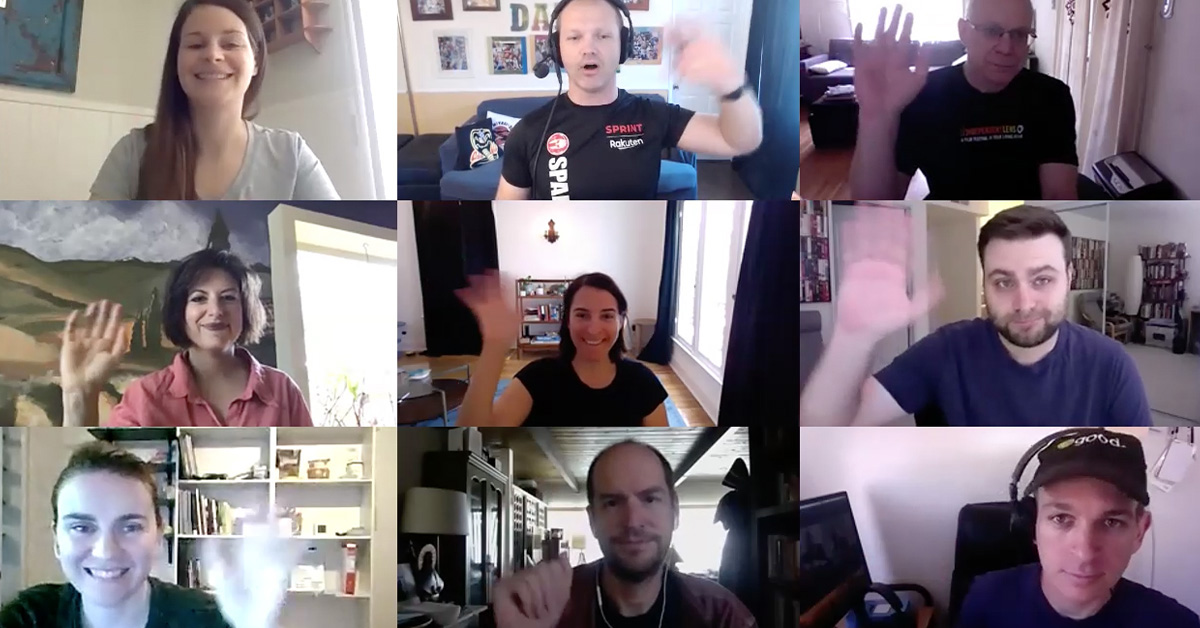
Today’s episode is a Community Q&A call with my ‘Optimizer’ coaching & mentorship community where I break down the process of identifying one member’s “One Thing” so she can build the habit of writing on a consistent basis during this pandemic. Whether or not you’re interested in using your time to write, learn a new skill, get organized, spend more quality time with your family (as opposed to staring at screens all day long), or whatever, this session should help you design a clear plan of attack and get at least that “One Thing” accomplished each day before you spend the rest of it simply surviving.
Transcript
Zack Arnold: Hello everybody, and welcome to the latest episode of the Stars series Counterpart. Now, for those of you that have been joining our community Q and A lives, you know that I’ve been referencing things like The Matrix and Twilight Zone and Black Mirror. If you’re not familiar with Counterpart, oh my god, is that series good? And by the way, it’s very, very timely with our current circumstances. If you have the time and you have the subscription, I would say jump on stars and watch season one of Counterpart. It is fantastic either way, just killing some time while I’m waiting to make sure the Facebook goes live. I’m assuming at this point it is. My name is Zack Arnold. I am the creator. Year of the Optimize Yourself program and podcast, and once again I’m doing my community Q and A session with my coaching and mentorship members. So I’m going to put you guys on grid view, so everybody can see you, so say hello, so they know there are other real people all over the country and the world that are stuck in their same little tiny boxes. By now, I’m sure everybody recognizes a Zoom call, because everybody is freaking on Zoom all the time. Oh my god, anybody that has kids knows the struggle. Dear Lord, everybody right now is on Zoom. Like, if I were to show you my family’s calendar, almost all of it is just blocks that say Zoom for gymnastics, Zoom for martial arts, Zoom for PE, Zoom with batch teacher. It’s just, it’s insanity. So, on that note, what we are actually going to be talking about in today’s call is time management at home. That’s why I brought up calendars. So, on last week’s call, we talked a lot about finances, getting things in order, figuring out how do we weather the storm, what money am I bringing in, if any? What money am I spending? How can I reduce it? So, for anybody that’s interested in going back to our previous Q and A that we did last Friday, just go to optimizeyourself.me/podcast and I’ve now released that as a podcast, and more importantly, I just released a first of three-part article series about organizing your finances, and that includes a Google sheet template, and I know Melanie was like, “Ooh, a template, a template.” Melanie’s in my coaching program, and she and I are spreadsheet geeks. If you want a copy of that spreadsheet template, and you also want to learn more about how to get your finances organized, understand a clear picture of how you can weather the storm. Just go to optimizeyourself.me/budgeting So, on that note, I want to open it up to the group here, and I just want to find out, first of all, How are you guys? And then I want to talk a little bit about time management and what you’re struggling with, trying to figure out what to do with your new found time at home. So, who wants to start wants to introduce themselves and chat a little bit about what’s going on in their life right now. Melanie,
Melanie Annan: I think during the first week I was like, this is great, I’m going to wake up every morning, I’m doing my morning routine, I’m doing my night routine, everything’s going really well, but then whenever came into the second week, all the days just blended into one, and I was up late every night, and yeah, sort of hit, hit the skids after two weeks, yeah. So I’m going to try to get back into it, and luckily I’m working from home in a short film right now, so that’s good to give some structure to the day.
Zack Arnold: I can assure you that you are definitely not alone in having this, this mindset of, oh my god, I have all this time, and I’m home, so let me get stuff done. Oh God, but I don’t feel like getting anything done. What the hell is going on around me? What is.. what’s.. I’m done. Okay, just gonna watch TV, that’s it. Can’t figure it out right. So I’m gonna.. because even I went through the same thing, where I’m mr. Productivity and mr. Time Management, and I was like, yeah, I don’t feel like being productive right now. There’s a lot going on, and I’m not sure this is the top priority for me, and I just kind of need to process the insanity that’s going on around me. So, I’m curious, when I bring it back to the group, how many of you are more in the state of mind of, you know, what I’m just going to use this time to its fullest, and I’m getting something out of it? Okay, we’ve got a couple, we’ve got some kind of, and how many of you in the mindset of I really want to be productive, and I just can’t, I’m just stuck, I’m frozen, I feel paralyzed. How many are kind of in that mindset, and how many didn’t answer either? Whoever didn’t answer either, I’m going to call on you, and you’re going to tell me where you are. So, Itai, your hand went up. What’s going on with you?
Itai Levin: I think the fan with me is I spend it’s not that I, not I’m not doing stuff with my day, but I don’t necessarily spend, I spend too much time on fans that I don’t want to spend most of the day on and not enough time on the fans that I actually want to prioritize, and so, yeah, so there’s that.
Zack Arnold: So, what is it that’s holding you back and stopping you from saying, I know I should be doing these things, I should be doing those things, I like to be accomplishing something, but then at the end of the day, you’re like, why, why am I here, why wasn’t I able to get through this stuff? So, talk me through the mindset of what’s holding you back, and again, for anybody that’s not familiar with these coaching calls, I never come at this with judgment, like Etai, why are you not getting more done during this global pandemic? What is your problem, right? It’s just more about understanding and asking ourselves the honest question, what is it that’s stopping me, so I can find a way to overcome it. So, what’s going on in your mind right now,
Itai Levin: I mean, it’s not necessarily that I am disappointed how I spend my time, or that I, you know, I feel like I wasted it. It’s like, for example, like yesterday I listened to your podcast about Prophet Foss, and I’ve been. Spending the time since then, including all this morning, just figuring out, you know, how to make my just my unemployment, not even touching savings, just with unemployment, make that work, and then that went into a rabbit hole of just looking at how much I spend on glossily in different cards over the last month, and how much overall budget that is, without even, you know, getting that I would never spend that much time doing, and I realized that, you know, once you have the system in place, then it’s not going to take that much time, the same time, it’s like I was planning on spending like a few hours on, you know, tutorials, you know, yesterday, today, and maybe an hour less than that, even so, kind of like that balance of like spending a lot more on stuff that I, I feel is important, but I, I’m not necessarily in a place where I feel like, well, if I waited with that, you know, two three days, and I focus on the toes right now, it’s gonna break me financially. I’m not at that place. I couldn’t just, like, well, you know what, we’ll schedule that to the end of the day. Let’s focus now on getting some more details done, just so I feel like I’m being focused on whatever I was planning on studying, kind of showing this this pandemic, not that I think I’m gonna run out of time this month, but still I end up spending more time on stuff that are important, but I could prioritize them differently, I could put them later, I could spend less time on them,
Zack Arnold: But it sounds like for you, and I think this is very common for a lot of people. I’ve heard this. I’ve had many, many of these conversations with my coaching group. I’ve had private conversations with people where I think the hesitation is, I know that I want to use the time to learn tutorials or watch courses or do research or whatever it is, but the fear that most people have is, can I even afford to be using my time that way right now, because they don’t really understand how much runway do I have, so to speak. So I’m curious, how many people here in this group, either before last week’s call or after last week’s call, have been able to alleviate at least a little bit of the financial anxiety and realize all right now I have a clear picture of my financial situation, and therefore I have more space, either on my calendar or space in my brain, to now hunker down, know this is my reality, and just learn stuff. Has anybody actually gotten to that point, or are you all still kind of working through that point? Julie, your hand shot up. Do you want, you want to jump in here for a second.
Julie: Yeah, what specifically do you want me to address?
Zack Arnold: I just wanted to know where you are in kind of this mindset of hunkering down, learning new stuff, kind of being able to shut the world out, because one of the most difficult things about managing your time is actually being in the mindset and the head space to do those things. Everybody thinks that it’s just about the latest productivity apps or how to use a calendar. Oh my god, Trello is going to change my life. Well, it’s not if you’re not on the right mindset. So, where are you right now? Having said what you just did, about, well, yeah, I feel like I’m at the point where I’ve got that stuff out of the way.
Julie: I think what’s helped me the most is staying consistent and remembering that I’m not alone. It’s really easy to panic and start thinking about, really, you know, just your personal life and circumstance, but remembering there’s just millions of people in this has really relaxed me and kind of allowed me more time and space mentally, especially to look at everything, look at the numbers, see where we’re at. Know that there’s really nothing you can actually do to some degree, so stressing for me just it’s just not worth it.
Zack Arnold: So, as somebody who’s a bit of a mindset geek, like I am, as well, what are perhaps one or two of the things that you’ve done since all of this started to get yourself in the place where you can even say can’t control it. Why stress about it? Logically, that seems smart. Like, why should I stress out about something like a global pandemic when the only way I can control it is sitting at home? Easy enough, I’ll sit at home, I’ll be productive for most people. That’s very, very difficult right now. So, what? What have you done to get yourself to that place, so you can better manage your time and focus on getting things done?
Julie: I just really look at it from an above angle self perspective. I think, yes, the circumstance is pretty negative. What’s going on? But at the same time, when are we ever going to get this much free time? Hopefully not again. So, looking at it from that angle, it’s like that’s kind of a gift, like we have an opportunity to actually have all the free time with even more than we want. So, to me, it just changing that perspective of what am I going to do. There’s nothing to do to own. My god, I can do anything I’ve ever wanted to do. I can’t go outside, so we can stay inside and grow and learn, and that helped me the most. Just the perspective.
Zack Arnold: All right. Well, that’s great. And I think that that’s really the place to start for a lot of people. And from what I have learned, it really is all about overcoming this barrier of fear and anxiety and paralysis. Before it is I want to learn more about calendars and Trello, and that will help me get more productive, even for the groups that I’m working with right now, of Howard being one of them. We’re in the process right now of the Focus Yourself curriculum, where we are learning Trello and calendar management and time management, and it’s kind of bizarre. It’s like living in this bizarro alternate reality where we’re talking about being more productive, and we can focus during our 90 minute calls, but then it’s like, yeah, but the world’s kind of falling apart all around me. So, Howard, I’m going to bring it back to you for a second, because you’ve been so helpful the last couple of weeks, providing some feedback to me and being supportive in the community. You’ve been doing crazy super deep dive into Trello, so I would like to talk to you about since you’re just now being introduced to this idea of better time management and more productivity. Are you still getting stuck in the psychological anxiety in everything that’s going on in the world, or are you able to just kind of shout it out and say I’m gonna learn productivity today?
Howard Leder-Morrow: I’ve been, I’ve been kind of 5050 I think. I mean, I think I did take the first week of quarantine to learn Trello, and to really sort of, you know, pick it apart and figure out what it could do for me, and get my, get my lists in there, and adapt to how that works, and that’s actually helped me quite a bit, you know. I think the temptation, the other 50 part is the temptation is, you know, like, like when, when quarantine first started, I was like, great, because these books aren’t going to read themselves, you know, and, and like, I was, I was like, I was like, oh, there’s so much free time, but my natural inclination is with free time is to just sort of fritter that away like a box of jujubes, and not really use it for anything important, so it’s really the Trello list, and the work that we’ve been doing has helped me definitely kind of set tasks for myself. I think it’s also helped that I’m here with somebody else who is still working, you know. He wakes up and goes from nine to five, and that kind of helps him blocking his time. Also helps me a little bit, kind of go, okay, what am I going to do for the next hour, so that like four or five hours just doesn’t disappear. I think that’s for me, that’s been the key, is looking at fragmenting time a little bit instead of thinking of like, oh boy, I have all day to just.. and then it’s 5o’clock and it’s gone, which has happened once or twice, but
Zack Arnold: I’m gonna throw it back to the group. I’m going to see if anybody can relate to that at all. Anybody feeling that? Yes, so I can understand that as well. I personally, and this is completely my own doing, and I can’t blame anyone, but I’ve been busier than I have been in years, so this whole gee, what do I do with all this free time? Like, I don’t know what you guys are talking about, because I’ve been spinning my wheels like 16 hours a day, trying to do what I can to, you know, just find ways to keep people afloat and give them whatever strategies are necessary. So my calendar is kind of all over the place, and both Debbie and Julie, who are now kind of becoming members of my team, they can attest to the fact that I’m kind of a chicken running around with my head cut off right now. So I know that that’s the where the minority of people are, and the majority of them are still in a position where all of a sudden they have all this newfound free time, but they’re not really sure what to do with it. So, are there any specific challenges where we can really dive into the weeds, and we can workshop somebody’s obstacle or roadblock right now, where they say, I really want to be able to do this, I know I should be able to do it, but I just can’t. Is there anybody that kind of fits into that category, or is it just more, there’s a lot going on in the world, and I’m not really sure what to do, or is it like I know I want to do this one thing and I can’t. We’re going to bring you in here, Aaron. What’s what’s going on with you?
Aaron: So my situation is a little different, because I can still work, but I’m also trying to fit, but it’s not the work I want to do. So I’m trying to figure out how to put time together to do the career work and the stuff that I do want to do in terms of getting to where I really want to be, and you know, so it’s hard, but some of this stuff happens on, like, oh, this is a good thing, go out and take it, and so it’s sort of more like you have to, I think I have to sort of split, I can’t say I can do this from 10 to one or something, I can say that I can do this when I’m not doing making money, basically.
Zack Arnold: So then you’re, you’re in a position where you can still potentially generate income, and you can work from home for what you do, specifically.
Aaron: Yeah, I mean, I’m not making, you know, I’m not making a ton, but yes, I can make a half. To make at least some money right now, because I haven’t figured out the unemployment for me. I don’t know if anyone.. I’m wondering, actually, if anyone has figured out the freelance unemployment situation, because when I go and look at it, I can’t find it. Anyway, that’s another thing, but I am curious about that. If anyone’s gone through that, so yeah, so my challenge is really, I have a lot of ideas right now, like to put out those letters, notes, like emails, just saying, hey, hope you’re doing well, blah blah blah, I’ve done a lot of remote work, if you need something like that, I’m here, if, if you need, you know, and basically put off a real sort of soft, you know, email like that, because you know some people have not done a lot of remote management work, and I actually have done a lot, so I think that would be an advantage at this point, but I haven’t tested the waters, and you know, just trying to concentrate, and just my other time is, you know, watching whatever new movie, new new TV show, and I’m still learning the piano, so that’s cool.
Zack Arnold: Well, there you go. That’s an excellent use of quarantine time, right? You’re going to come out of this thing Liberace. There’s that positive, so that’s good. So, to dovetail off of your comment or question about if anybody is going through some of this unemployment stuff, or the stimulus packages for freelancers and self-employed, and whatnot, that’s been my entire life for the last five days, just going through article after article after article, digging into all of the incentives. I’m actually having been contacted by several larger publications in our industry that want me to contribute specifically to help people understand how to manage the financial ramifications and organize it all into like a simple step by step look at this first, look at this first, look at this first. So, if you can be patient, you’re probably going to see something that hopefully answers all those questions for you by the middle of next week at the latest,
Aaron: But even the steps of just are those going to include the steps of just how to actually, like, I don’t like, I haven’t worked much this year in that world, so how do I qualify if I don’t have any income until, you know, except for the income that I have otherwise, which shows I can actually work. Just trying to figure out around it, where I don’t work, and I make, you know, and I get the stimulus out of it, because I don’t enjoy doing what I’m doing. It’s, you know, it is dangerous to a point at this point in time. So,
Zack Arnold: Meaning you’re still going out and working. Yeah. Well, so I see. I was under the impression you said you were picking up work remotely, you’re actually going to facilities. Oh, okay. Yeah, so then in that case, we want to try and avoid that, if possible, for sure,
Aaron: So
Zack Arnold: yeah, so I’m not going to say that I have all the answers, because frankly, nobody does right now, and it’s, you know, kind of a cluster, you know what, as far as all the stimulus and the government programs are concerned, but as far as breaking it down into at least making it easier to find all the information, and step by step, know what you can or cannot qualify for, or where to look up more information, that’s what I’m putting together, is kind of like, here’s all the resources you need to care about, here’s the order that you should go through them in. Cool, because
Aaron: EDD site, and I can’t even figure out how to apply.
Zack Arnold: Well, yeah, that’s that’s because their website’s just a disaster. There are other options as well, depending on if you have a corporate entity or DBA, like, there are a lot of different, various options, different stimulus packages, so yeah, there’s, there’s a lot going on there, and it’s, it’s kind of a mess, kind of a total disaster, as Howard is letting me know in the chat right now. I think it’s going to slowly, you know, it’s going to find itself, but what I was writing in one of the guest articles that I’m doing with another publication right now, they actually asked the question, Do you think that any of this will ever actually come through? Do you think that these payroll checks are going to come through, the stimuluses, the grants, whatever it is? And yes, I absolutely think they’re going to come through, but for the people that are thinking, oh my god, I have to pay my rent or my bills in two weeks, I need this check now, not going to happen. You’re going to have to plan accordingly, knowing this is going to take them a while to figure this out, because they went from having no system to needing to distribute trillions of dollars to hundreds of millions of people. These are the same people that run our post office system. Just going to put that out there. This is going to take a while.
Aaron: There’s an article basically saying that now people who thought they were getting their checks in April might get them in August.
Zack Arnold: Yeah, so anybody that thinks they’re going to get it soon, they’re going to have to find another plan. However, I do think eventually it is all going to get figured out, and people are going to get, for the most part, what they’re due. But I think this false expectation that, yeah, check is going to be wired to my bank account, and I have it in a week. Yeah, right. Not going to happen. So, yes. Do I think we can count on it long term? I do. Do I think we can count on anything short term? No. I think that we need to bat down the hatches, and we need to slim down as much as humanly possible, and we need to find other ways to weather the storm until that safety net does. Us arrive, so I guess we could go more into the topic of finances, and I know that you guys had all had said in our private Slack channel that we wanted to talk more about productivity strategies. So you guys tell me, what would be the best use of our time to provide value first to everybody on this call? Where would be the best place for us to go next? Is it going to be time management, or is it going to be talking more about all this nerdy financial stuff? Itai, you’ve got your hand up.
Itai Levin: Okay, as far as financial, since we did talk about financial last time, what are we continuing from last time, and to what degree of detail? I think also, I mean, since a lot of people did prioritize time management, I still feel like that should be a big chunk of the conversation, if even if we are still making some time for financial questions.
Zack Arnold: Sure. Okay. Well, let me, let me bring this question out to the group. How many of you here? I believe almost everybody here has gone through at least a portion of the time management section, actually, now that I look at it, so maybe a little bit more than half of you have gotten to the point where we’ve gone through the time management section, deep dives in calendars, Trello, all that good stuff. How many of you are actually using some of those strategies right now to help you block out your day and get focused on what you actually want to be doing, so we’ve got a hand from Zora, we’ve got a hand from Patrick, we’ve got a pen hand from Howard, we’ve got a hand from Melanie, and Debby’s got her hand up, and she hasn’t even gone through that section, and focus yourself, so that’s great. So let’s say hi to Debby. Debby, what’s what’s up in your world?
Debby: Yeah, I haven’t gone through your program, but I know it has a lot to do with Trello, and I use Trello to sort my days and try to prioritize the things that I need to get done each day. One thing I am having trouble with is like I keep wanting, I keep wanting to get more writing done, and that keeps falling to the bottom of my list, or it somehow gets like I sit down to write, and suddenly my mind is like, oh, I still have to call the bank, and I still have to like, like all these other things, I still have to email this person and check on this, and like all these other things keep getting in my way, and then I get to, and then I’ll get a phone call from my sister or someone, and I’ll end up talking, and you know it’s great that now we have all this time that we can talk to friends and talk to family that we don’t usually have time to talk to, so I’m so I don’t tell them, like, oh, I really need to do this, like I actually spend the time and talk with them, because all of this is important, but it seems like at the end of the day I haven’t got like the one thing that I really wanted to get done.
Zack Arnold: So, how many here? I want to address all that, but I do want to throw a question back to the group. How many of you feel this crazy, weird sense of overwhelm and obligation to all of a sudden connect to everybody and do phone calls and Zoom calls, and you’re like, “Where did my day go? I’ve been on the phone all day long, right? That’s definitely me. I have been on the phone, mostly Zoom, some literally the phone, but I’ve been connected, having conversations with people like eight hours a day, and there is a certain point where you think to yourself, I really want to talk to people. I want to find out what they’re up to, but I also got to call the bank, and I got to call the credit card company, and I’m going to be on the phone for hours with these people, right? So I want to go back to you specifically, Debbie. And what I’m curious about is, how are you managing your day in your week now? So, like you said, you’ve identified this thing called the one thing. We talk about this a lot, specifically in module five of the program. We talk about this idea of identifying your one thing, and you have identified that your one thing is that you want to write, and I’m assuming that means writing articles, blog posts, and whatnot for your blog, correct? So, what is your process in advance to make sure that you can prioritize your time accordingly, and hopefully get that taken care of,
Debby: Like I said. I put it all in Trello, and I kind of manage things, like, okay, these are things I want to get done, and I try to block out a specific time during the day that I’m going to write, but, like I said, when I sit down to write, there’s just all sorts of distractions, or my mind goes to like other things, and then you know, before I know it, the next time on my fellow block comes, and like now there’s a Zoom call, or there’s you know, there’s something else that I, that I had already scheduled, and so then that writing time kind of seemed to disappear very quickly.
Zack Arnold: Got it. Okay, so how many people can relate to this idea of I have something that I really know I should be doing? Maybe it’s not even something the outside world expects, because I think that we’ve all lost a lot of the obligations of things that need to get done. So now it’s like, oh crap, I’m the only one that has. Expectations and their inner expectations, and I don’t know how to meet my own inner expectations, which is very, very common for a lot of people, and we go deep into the psychology of this in the program. So, most of you are like, yeah, we know about the whole expectation thing. What I’m curious about is how many of you have been intentional and said, I want to be able to at least get this thing done, my one thing done, and then at the end of the day, and you’re like, so that didn’t happen. Is that happening to other people? Is this a kind of a fairly common occurrence? All right, so what I want to do, if this is going to be useful for you guys, so I want to, I want to workshop this a little bit with with Debbie. Would everybody here be okay if we did a little bit deeper dive into Debbie’s calendar and figured out how to get her to stick with her one thing for the day. All right, how about all the nebulous people that are inside my camera that when the cord goes out, somebody magically hears this conversation? How many of you would be interested in learning more about how to get your one thing done, even if the rest of your day completely goes to crap. You’ve gone to bed knowing that your one thing is completed. Let me know in the comments, and we’re going to start diving into this. So, my goal by the end of this call, Debbie, is for you to have a more regular practice of getting your writing done every day, multiple times a week, whatever it is that your goal is. So, we’re going to start there. So, what is your goal as far as writing is concerned? We’re gonna build the habit of making sure this one thing gets done on a regular basis.
Debby: I probably have a couple goals, so like one goal is that I’d like to just build a habit of writing every day, because I know once I do it every day, it comes a lot easier, but on top of that I also, I also liked to publish articles, only one every other week, and so when all this happened, I thought, okay, well, now I should be able to manage once a week being able to publish, and that hasn’t happened, so, so I guess there’s kind of multiple goals, and now that I’m thinking about it, I’m rethinking, like, you know, what, like this whole thing, like I feel like I just need to lower the bar, and that adding on to what I was already doing maybe isn’t productive right now, or maybe is just asking a little bit too much, I guess. Pairing back would be just being able to write a little bit every day. It doesn’t even have to be like just for me, it would just be a writing habit of like 20 minutes every day, and that could be whatever writing I have. And then I’d like to keep up with the every other week blog post.
Zack Arnold: Got it? Okay. So, where I want to start is actually, you’ve alluded to it a little bit. I think this is incredibly useful. This is much more important than all right. Well, let me show you how to make a time block in Busy Cal and put it on the calendar every day. I can show you how to do that in two minutes. The odds of you sticking with it regularly are a whole different ball of wax, and we’ve got to dig a lot deeper into psychology to make that happen, but if anybody wants to know how to make a time block, that’s pretty simple. You go to your calendar, you say add new event, you name the time block, and you add the date and time. Done. There, you know how to time block. Thank you very much. I’ll be here all week. So, the first thing I want to talk about, which I think is imperative for following through with your one thing, is that you need to set proper expectations. It is my belief that one of the core fundamental reasons that people burn out is they do not set proper expectations, especially given everything that’s going on. We have to reset our expectations, so if we go back to pre, before the world completely went down the toilet, were you able to regularly write every single day, and were you able to publish at a minimum one article every other week, which was your original goal?
Debby: Yes, I was. I was able to publish every other week, but I did not necessarily write every day, every day. No.
Zack Arnold: So now, given the new set of circumstances, and giving any additional anxiety, fear, paralysis, or all of the other things you need to attend to that are much more pressing, that are much more about survival, organizing finances, getting mortgage payments reduced or deferred, or whatever it is, knowing that those things really take precedent. Do you think that it’s fair to have a similar expectation of, well, now I’m going to set up this habit right every day, and I’m going to not only publish every other week, I’m going to publish every week. Does that seem like it’s setting a realistic expectation?
Debby: Barely judging by the past couple weeks, no,
Zack Arnold: Probably not, right. So I’ve had to do the same thing, where I set very high expectations for myself, and I’ve had to reset them. I had a whole slew of goals that I wanted to accomplish this year, 95% of which had to do with in-person networking. All that got deleted very, very quickly off of my calendar. But then I said to myself, What is the new reality that I’m in? I can’t do anything about this, like we talked about earlier. The first mindset is just kind of releasing control, saying I can’t really. Control what’s going on. I can’t control my behavior. I can control the fact that I’m going to take responsibility and not go to the beach, and you know, not go to church, and don’t even get me started on all of that madness. So, once I take responsibility for myself and the people around me, and I realize I really can’t control the situation well, now I need to reset my expectations based on the mindset that I have right now, based on the amount of energy that I have, and the amount of attention that I can give, especially given that so many people want to connect and be on Zoom, and I think one of the challenges, and maybe other people on this call are feeling this as well, the immediate assumption that everybody has is, well, you’re not doing anything right now, right, so let’s chat, and I think that’s what gets us into this trap of now everybody wants to connect, as we just assume we have this picture in our minds. Well, if I’m sitting at home doing nothing, everybody else must be sitting at home doing nothing, so I just want to connect with them. So we know that the first step for you is resetting expectations and resetting your goal, so understanding after the last two to three weeks, what your new reality looks like for the foreseeable future. Let’s reset a goal for you. What do you think is a feasible goal, as far as writing?
Debby: I mean, I guess writing, writing a few times a week, maybe.
Zack Arnold: Right now we’re talking about process. I want you to set a goal. Is the goal that I want to be able to publish every other week? Still, I want to publish once a month. So, let’s look at the result. What’s the result that you would like to set?
Debby: Okay, I definitely still want to keep up with the every other week.
Zack Arnold: Okay, so I think that that’s probably realistic, given that you were able to do it in the past, and yeah, there’s a little bit of a roadblock and some speed bumps with everything that’s happened, but it seems like once you settle in, get some of the financial stuff out of the way, and you realize I’ve got all this time available to me, it’s so you’re saying it seems realistic, I can probably still publish every other week.
Debby: Yes,
Zack Arnold: As long as you don’t have a brand new editor that’s rewriting all your stuff and tearing it to pieces, right? So, for if anybody doesn’t know, Debbie is now a new contributor to the site, and a fantastic writer, so I want to make sure that you check out her site, Happiness and Training. Check out the article that she’s written for the site already, and she’s going to have a new one that we’re going to workshop soon. So, hopefully, this will be one of the next two that you publish. But going back to this idea of looking at the system, we know that the result, the outcome that we want, is to continue publishing every other week. So, now let’s talk about what are some of the obstacles that are going to stop you from publishing every other week.
Debby: I guess, well, one is just my own mind, because I don’t know a lot. There’s there’s just a lot of distractions that are that are keeping me from being able to like write coherently right now, and then also I guess I don’t know, maybe I’m over scheduling my days, maybe I’m, you know, trying to fit in too much, because there are like different, you know, Zoom calls and classes that I’m now taking, and things that weren’t available before that I’m now kind of signed up for, so, so maybe that’s kind of one of the obstacles, is and again, like I said, like, like random phone calls, like people you know trying to connect, and you know, wanting to do that, but not being able to block off that time to write,
Zack Arnold: Got it all right. So we’re talking about sounds like the most common obstacles are going to be either distractions or interruptions. Do you know the difference between the two?
Debby: Distraction could be internal, interruption would be something external.
Zack Arnold: Yes, so a distraction is I really want to write, I really want to write, I don’t know what I want to write about, so Facebook, Instagram, right? That’s a distraction. You sought that yourself, right? People think that if they get a ding or a chime, well, somebody just interrupted me. No, they didn’t. You allowed them to distract you. There’s a big difference. So, if you’re living in the same space with people like I’m living with my wife, third-grade teacher, and I’ve got two kids, and like everybody else on the planet, they’re home all the time. That’s an interruption every 15 minutes. Daddy, can you make me some lunch? Daddy, can you get this plate off the top shelf, this or that, or the other thing? Those are interruptions. I can work to minimize those, but I can’t just get rid of them, but distractions are things that I can control. So, if we’re talking about these incoming calls that you have, is there any reason that you couldn’t put your phone in airplane mode for a certain period of time and just defer those distractions until later?
Debby: No, and that’s really interesting, because I always do that to me. didn’t even occur to me, especially when I’m actually working. When I was working, I always have my phone on airplane mode, so
Zack Arnold: I have a suspicion why it’s not in airplane mode right now, but I’m curious why you think it’s not.
Debby: Probably because I want to be available for for the. Things
Zack Arnold: Exactly, I think that right now, what a lot of people are experiencing is a lack of connection, so we want to create this feeling of hyper connection, and I think before, when we knew the world was just available to us outside the window and outside the door, airplane mode wasn’t that bad, but is there a level where going into airplane mode is actually kind of scary right now?
Debby: I don’t know, maybe, yeah, it’s really weird that I had, I hadn’t thought of that, because it used to be on all the time, so yeah, maybe, maybe there’s something scary about it.
Zack Arnold: All right, so now we’re talking about distractions, interruptions, these being the biggest things that are stopping you. I don’t think we’re going to be able to manage and mitigate these for 1416, 18 hours a day, but if we’re talking about just for developing the habit of writing every single day, so you can publish every two weeks, is it feasible? Do you can all but eliminate both distractions and interruptions for the period during the day when you want to be a writer?
Debby: Yeah,
Zack Arnold: Okay, so that, so that seems manageable, right? Sound like you’re telling people I’m no longer available, I’m going to have a one hour block one day a week where I’m going to be available for phone calls. You’re still going to be available to people, but you’re just making sure there’s a little bit less availability. I think right now one of the things that the trap that people are falling into, people fall into this trap anyway, but especially now is feeling like we should be saying yes to everything. I’m going to put this back to the group a second, and then we’ll continue. Are there people here that feel like it’s really hard to say no to just about any request right now, whether it’s a quick phone checkup or this or that or the other thing, where it’s just kind of like we’re on yes overload, so it’s little, little more than 5050 I am the king of saying no, like I’m very clear that I have spent years and years saying no to people and turning down opportunities and turning down obligations and being focused on what I want. Even I have been very much stuck in the cycle of feeling like I want to say yes to everybody just out of a feeling of empathy, right? I don’t want to turn somebody down knowing that we’re all kind of in this head space if we all need something, and I don’t want to say no, but sometimes we have to if we want to at least get our one thing done for the day. So you’re not saying no to the world, you’re just saying no to the world for 30 minutes to an hour a morning, so you can write, or whenever it is right. Does that make sense?
Debby: Yeah.
Zack Arnold: So, assuming we manage distractions and interruptions, what else is going to be an obstacle that will stop you from writing?
Debby: The thoughts that come into my head that tell me what I’m writing is stupid, or whatever it might be for that moment.
Zack Arnold: So, anybody in the group that’s been through the program, want to tell me, what is that that she’s having? What are those called? Anyone want to raise your hand? And all right, so Patrick, was that you with your hand up? So, Patrick, what is Debbie talking about? My favorite word, limiting beliefs. I believe that’s a limiting belief that you have, Debbie. So, how can we help you overcome this limiting belief, knowing, and again, I’m going to take everybody through the whole system. We’ve set the goal. The goal is I want to publish two articles a month, every other week, and one of my obstacles is that I need to eliminate or minimize distractions. Another obstacle is minimizing or eliminating interruptions, but now we’ve gone to something that’s a lot deeper, which is a limiting belief. So, let’s talk a little bit about this limiting belief of why am I even writing? I suck at this. Nobody wants to read it. Why am I wasting my time? Where is all this coming from? Boy, have I put you on the spot right now. Hot seat, baby!
Debby: Wow, I didn’t know we were going here today,
Zack Arnold: I didn’t either. So, it’s jazz, baby, it’s jazz.
Debby: I don’t know. Don’t all writers do that?
Zack Arnold: You said you wanted to write every day. This is what it’s going to take.
Debby: I know, I know. No, I mean, what.. what I need to do is.. I mean, what has been helpful in the past with that is when I, when I actually sit and, like, meditate before I write, and then usually that helps to kind of clear away some of that negative thoughts, that critical mind that comes up every time I write, so that can help, but where it’s coming from, I don’t know. I mean, where do any thoughts come from?
Zack Arnold: Well, that I find that they usually have some source. So, a question that I’ve been asked before that really kind of surprised me, and I didn’t – I’m not necessarily expecting you to have an answer right now, and maybe you’ll recognize this because you and I have worked with similar people in the space, so maybe you’ve been asked this before, but does the voice that’s telling you that you suck at writing have a name?
Debby: No, I don’t know. I kind of call it my shadow sometimes,
Zack Arnold: Because it’s funny, I’m not going to go into the. Deals with this, but when I was talking about a very specific limiting belief that I was dealing with, the name came up immediately, and then the person came up immediately, and it was a very real person in my life that was speaking all this into one ear, telling me I couldn’t do all of these things, so I knew where it was coming from, and once I realized that, it was a big realization of, oh, okay, now I understand why I’m not doing this, so I’m not saying, like, again, you need to have the answer, but it’s, it’s something to think about a little bit deeper. I know how nice it would be to just use Trello to figure out how to write every single day, but this is so much more fun. So now that we’ve at least recognized that you have this limiting belief that is holding you back from writing, you’ve identified one potential action plan that you know works for you, which is just doing some form of meditation, quieting your mind, so you can get in front of the computer, and you can start writing. What’s the next thing that’s going to hold you back from just pounding away and banging out 2000 words a day?
Debby: I mean, I think it’s a lot to do with just the circumstances right now. You know, like I’m, I’m not used to all these some all the weirdness that’s going on, and the, you know, just the whole state of everything, and trying to figure out where we’re all at in it, and you know, trying to write about it at the same time, it brings up a lot of judgments, I guess. I just have a lot of judgment around it, and around how I’m feeling, and if other people can relate, and if it sounds stupid, or, you know, people are gonna.. I don’t know, just.. it’s.. it’s just a lot to process, I guess. So, which is kind of counter.. like writing is kind of one of the ways that I process these things, so writing on my writing on my own, like not for not for publishing, has been a lot easier, and I can, you know, I can do that, and just sort of write, you know, write free form in that way, which is another thing that I could do before I sit down to actually write like an article that actually really helps too, because it just sort of gets all those things out, and then I can have a clearer head to write an actual article.
Zack Arnold: Yes, that’s great. You nailed two areas that I wanted to get into, one of which is reframing the goal based on some of these limiting beliefs and these fears. I was, you brought it up already, and I was going to go down this road anyway, of the writing process being therapeutic for you. So, what if instead your goal is not to publish every two weeks, it’s to complete an article every two weeks, and publishing is optional. Would that help alleviate some of the judgment and the fear of why would anybody read this, and I’m not a good writer, and what if it becomes therapy, and you’re still going through and revising and structuring it so it’s readable, but you’re not putting the pressure on yourself that it must be published? How would restructuring the goal change your mindset going into the blank page.
Debby: Yeah, I think that I think that would help, although I don’t know if it’s just sort of like a mind trick of like, oh, I don’t know, it might help. Yeah,
Zack Arnold: Well, if it’s any consolation, I have multiple unpublished blog posts. I’ve liked this huge long post that I did about all the theories in the Karate Kid, and like all the like the deeper lessons behind it, which, by the way, I wrote like four years ago before I even knew Cobra Kai existed, and I worked on it, but I had, I was like connecting Karate Kid to time management and bullies and the industry, it was just this whole thing, to this day it’s still sitting there, and I was like, someday I’ll use this, but I just, I needed to get it out of my head, but I didn’t have the judgment or the word that I had to publish it at any given time. So, let’s alleviate some of that pressure, and yes, maybe it is a Jedi mind trick, and you know in your mind you’re probably going to want to publish it anyway, but let’s alleviate the fear that it has to be published, and you’re just going to write it for the process of writing. I think the next big thing that you’re talking about, when it comes to actually sitting down and writing, you said, ‘Well, but maybe if I had collected my thoughts beforehand and I had gotten a little bit more organized or expressed those thoughts. Is there a world where, in addition to the blocks that we’re going to create for you to write every day, we can also prioritize blocks for you to organize and you’ll get your thoughts prepared for when you’re going to do that writing.
Debby: Yeah, do you mean like writing an outline?
Zack Arnold: Yes. So one of the things that I’ve done, and I do this both as a writer and also as an editor, I do plenty of prep work, so I never have to fear looking at the empty timeline, looking at the the empty canvas or looking at the empty page, I make sure that I’ve done enough groundwork, so the momentum is already there, so by the time I actually start to create a process, I’ve worked through a lot of it in my head, and through outlines, and through notes, or whatever. So, do you have a process similar to that?
Debby: I do. I do. Those are, so I think that’s kind of part of my struggle right now, is because, like, I had an initial thought, an initial idea of of what I was going to write about, and I did make notes, and, like, kind of, it wasn’t, it wasn’t as structured as an outline, but it was kind of like a general, okay, these are the, these are the points I want to make, and then I started writing, and it went a little different, and I started suddenly, you know, the things that I was writing wasn’t exactly what I was initially going for, because that initial idea didn’t seem I wasn’t feeling that idea anymore, I guess. So that’s where I started struggling, because now I’m writing a new, a new idea, which I was more excited about, but then the whole.. but then I didn’t actually have a plan for it, so.. so I kind of lost.. so then I felt like.. so then I was judging it, because I was like, “Oh, wait, am I.. am I just, you know, am I just talking out of nowhere and not really getting to a point? So the point, the struggle now is that I don’t have that sort of structure of the outline that I normally have, so that’s when a lot more judgment comes in, and a lot more kind of negative thoughts, like, oh, you don’t know where you’re going with this,
Zack Arnold: Got it. So, putting this back to the group, which is largely comprised, I think everybody here is a creative professional in one way or another. How many of you can say confidently that the finished product that the world sees is exactly like you pictured it in your mind when you started. Anyone? Anyone? Howard, just the best look ever. He’s just like, ‘What? No, right? We have a path that we want to go down, we think it makes sense, and then it just completely falls apart, right? What I should do, just for you, Debbie, is I should show you some of my really intricate, detailed outlines that I have for my blog posts. Show you the blog post first, show you the outline. You’d be like, is this even for the same article? Like, these two don’t align at all. So, anybody that has done any screen sharing with me and seen my mind maps, you know that I go a little crazy with my mind mapping software. However, within about 150 words, all of it goes to crap. The important thing is not that I’m sticking to my structure or sticking to my outline. The important thing is that I’m writing, and I have some theme or some takeaway that is buried deep inside my outline, and I have that as a reference to get me back on track if I need it, but I don’t feel the fear of going off track if I feel the direction that I’m going makes more sense. Even with the article that you and I were working on together, we had an idea of what it would be, and then it turned into something completely different. Do you think that our original vision for the piece that you and I workshopped was better than what our final outcome was?
Debby: No, no, not at all. No, I think I think we landed in a, in a good place.
Zack Arnold: All right. So, then I think what, and again, I’m trying to put together an action plan to get this weekly writing habit in place. We have the goal, which we’ve now revised, to I’m going to write and complete an article every other week, publishing optional. Most likely will publish, but it’s not 100% necessary to alleviate some of that, those inner limiting beliefs. We’re going to eliminate and minimize distractions and interruptions as much as possible. We’re going to set aside an additional time block, either the night before, an hour before, whatever it is that makes sense, to make sure that you have some semblance of an outline. But what if we were to release the outcome of I’m going to stick with my outline, and instead we judge success or failure by whether or not you’re just writing,
Debby: Yeah,
Zack Arnold: I’m sensitive, sensing some, some positivity in there, right? So, is this starting to alleviate a little bit of the weight?
Debby: Yes.
Zack Arnold: Okay, so we’ve, we’ve talked about some of the practical things that we can do now. Let’s actually get this thing on the calendar. The next question that we want to ask is, realistically, again, setting proper expectations for our current reality, or lack thereof. What realistically do you think makes the most sense for you as a writing habit on a daily or weekly basis to reach the outcome of completing an article every two weeks,
Debby: Like, how often do I need to do it?
Zack Arnold: Yes, because there are a lot of criteria here that many may not be aware of. So, if you said that I want to write a novel, well, how many words are in a novel? Let’s say 50,000 You need to say, I want to have the novel done by this time or the first draft, therefore I have to write x number of words per day, so based on the amount of time and the amount of output that you want to create two articles a month, give or take, how many words is an article? So let’s just talk about one article right now.
Debby: They end up being usually between, I don’t know, like 12 102,000 words.
Zack Arnold: Okay, so let’s use 2000 That’s easy math. Let’s say 2000 words, or you know, when you get stuck working with me, the 2000 ends up being 5700 because I have that effect, which is ironic being an editor. But let’s say that the number is 2000 even. So the goal is that I want to write 2000 words. It’s easy to say, well, that math is simple. That means that I need to write 1000 words a week, because I want to write a 2000 word article every two weeks, which means I need to write 200 words a day. Tell me, why that doesn’t work.
Debby: Why that doesn’t work, because I don’t know, because some days you know I’ll write 600 words and some days I’ll write zero words.
Zack Arnold: Well, how about, and I would agree with Apple. What I’m more looking at is specifically, if you were to write 200 words a day and you did it consistently, then that means that you have written a 2000 word draft on the day that you need to publish it
Debby: Right?
Zack Arnold: Right? Does that make sense?
Debby: Yeah, yeah,
Zack Arnold: But are you as soon as you write your 2,000th word, are you in a position where you’re like, all right, I hit the publish button, I’m done.
Debby: No, absolutely
Zack Arnold: No. So, what do we need to build time for?
Debby: Editing and rereading and revising and restructuring, and yeah, all the fun stuff.
Zack Arnold: So, how long does that take you? If we’re talking about percentage wise, if 0% is I don’t have an idea and 100% is to I click the publish button, what percentage of time do you use rewriting after you’ve written 2000 words?
Debby: Well, that all depends, you know, I mean, normally it is kind of the night before, so it’s like I don’t know, 25% of the time, or maybe, maybe up to like 35% of the time.
Zack Arnold: Okay, so let’s use 35% a third, so that’s easy enough. So that means that if my math is good and went to public school, so my math might not be so good, but we’re talking give or take, you know, 35% of your time, which means that it’s going to take you, you know, two thirds of those 10 days. It’s going to take you six or seven days to get your 2000 words and allow, and I’m not saying full days, I’m talking about days that you have those time blocks, right? So, let’s say six to seven of those days are for first draft, the last three days are for revisions. If we’re going to break it up evenly, which I know usually doesn’t get broken up. So now, how much of this percentage of time is going to be preparing to write before you’ve written a word?
Debby: Probably like another 25%
Zack Arnold: All right, so now the math is starting to get fairly clear. We’re talking about 50% or less of your time is actually going to be writing words or writing your original draft of words, which is the most important part. Correct,
Debby: Correct.
Zack Arnold: So, if we’re going to say 10 days again, just simple math, I know that life doesn’t work out this way, but in a perfect world, we’re setting aside 10 days of equal time blocks to write an article. We now know that only five or so of them are going to actually be writing. The rest of it is either going to be preparing and outlining, or it’s going to be revising, polishing, and publishing. Does that sound fairly accurate?
Debby: Yeah, it sounds right.
Zack Arnold: So, if we have five days and we have 2000 words that need to be written, what’s the math workout to per day?
Debby: You’re asking me to do math right now.
Zack Arnold: I am sorry.
Debby: 400
Zack Arnold: Yes. So that on average, and never ask people to do do math on live calls. It’s a rule of live streaming, don’t ask people to do math on the fly. So, yes, you would want to do about 400 words per day. So, give or take, I’m not saying you can’t write 399 words, you can’t write 401 like some days can be 800 some days can be zero, but in general, is 400 words in a day sound like a pace that’s unsustainable for you?
Debby: No.
Zack Arnold: Okay, so how long in general do you think that it would take you to write about 400 words?
Debby: Give or take 20 minutes, maybe.
Zack Arnold: Wow. Okay. Well, you’re a faster writer than I am. I wouldn’t be able to bang out 400 words in 20 minutes. So, let’s.. if we said half an hour, would that seem reasonable?
Debby: Yeah.
Zack Arnold: All right. So now we know that we’re going to need five half hour blocks just to write the first 2000 words, which means that we have five blocks available that are left. Do we think that we can use the first two to three blocks just for the outline? Is that enough time?
Debby: So, half hour for two or three blocks. I don’t know. I don’t know that that that can be tough, because that’s that’s really where the time goes, is like really trying to figure out what what it’s about and where I want to go and what I’m talking about, so yeah, that that probably needs more time.
Zack Arnold: All right, so now let’s look at the tail end of. It, if we know that we have two to three half hour blocks left over, once you’ve written your first draft, is that enough to do your revisions?
Debby: Two to three half hour blocks
Zack Arnold: Publishing, if you choose to do so. And again, based on this goal, but most likely there might be some publishing duties involved,
Debby: Right? So, no, I probably need maybe twice that.
Zack Arnold: So, what have we learned so far walking through this whole process from top to bottom?
Debby: That I need a lot more time.
Zack Arnold: You need more time. So, I’m going to throw this back to the group again and throw this to people out in Facebook land, as well as creatives, when we have a project that we need to do, whether it’s editing a scene or writing a scene or painting a picture, or whatever it is, how many people find themselves drastically underestimating the amount of time they need to complete something. Welcome to one of the main fundamental sources of burnout. I am the poster child for this. I always underestimate how long I think something is going to take me, but I stick to the deadline because I’m a committed guy, and I don’t want to let people down. And I said yes, I was going to do it, so I burn myself out working long hours, late nights, weekends. Don’t tell anybody about it, don’t ask for overtime, because I set the wrong expectations, and one of the reasons that I think psychologically you’re having a hard time sitting down and writing is there’s a part of you that knows I probably haven’t given myself enough time to do this right. So, what is the point of doing it at all? Does that sound like a completely crazy foreign idea?
Debby: No. no, no, not at all.
Zack Arnold: Alright, so now that we’ve recognized this, let’s double it. Do you think that if you were to give yourself 10 hours, split it up, or you know, give or take five hours to write 2000 words, and you give yourself 234, hours to outline in an extra two or three hours, just for revisions in 10 hours. Do you think that you can write and potentially publish an article?
Debby: Yeah, that seems seems more doable, I think. Yeah,
Zack Arnold: So now we have a number that I think is more realistic. So now that our goal is to build the habit of writing for an hour a day and not doing six hours on a Friday and four hours on Monday, because we didn’t do it the rest of the time, and now we’re scrambling. In a perfect world, we want to do an hour a day, five days a week, and every two weeks we want to be able to publish new content, knowing that that’s now going to be the habit or the system that we want to work around. Let’s talk a little bit about where it makes the most sense to do that for you. If I were anybody in the productivity space, the happiness space, the blogosphere, well, you have to eat your frog first thing. Got to do the most important task when you wake up, you got to do your yoga, you got to do your meditation, you got to have your green juice, then you eat your frog, you do your most important thing, then you can give the rest of the world what they want, that’s the way you’re supposed to do it. That doesn’t work for everybody. What I want to know is if that works for you by talking a little bit about something called chronobiology. So, do you know what an ultradian rhythm is
Debby: No.
Zack Arnold: Do you know what a circadian rhythm is?
Debby: Yes.
Zack Arnold: So, circadian rhythm is just the rhythm that we have with sunlight and darkness, and everybody knows what jet lag is, because your circadian rhythm is thrown off because you fly somewhere, and daytime and nighttime are different than your body, so your circadian rhythm is off. That makes sense. Everybody here, if I bring it to the group, haven’t lost anybody. We all know what circadian rhythm is, correct? So, I know that for those that have been through the program, you know what ultradian rhythm is, but for you, Debbie, ultradian rhythm is the rhythm that you have in and out of any given individual day. So, this means that for some people, like my wife, for example, up at 530 hello, feels great, all kinds of energy, able to get things done, and then at 7pm nothing. She’s an early bird, she is a very, very early morning person. Me before about 10am useless. How I get through my 730 in the morning coaching calls is beyond me, like I must really like you guys, because, oh my god, I hate mornings, but at night, if I just leave myself to my own devices, I get all of my best work done after, like, 9pm and I’ve had to reverse my ultradian and circadian rhythms, so I could manage being with my family and being present for them, and not using that, that really valuable evening time, just for myself, but I know that my default setting is that I’m a night owl. So, for you, where would you put yourself as far as your ultradian rhythms? When do you think you get your best creative work done?
Debby: I probably get my best creative work done before lunch. And then sometimes a little bit after lunch, and I used to, I mean, when I was working, I used to be able to write a little bit after work, as long as it wasn’t too late, like if I could get out, if I could get out at a decent hour, and be able to write like right after dinner for like an hour, I could, I could get some stuff done, then too.
Zack Arnold: So, if you had to choose one, instead of saying, “Well, maybe I’ll throw this hour here and this hour there, and this kind of whenever I feel like it. If we had to choose a point in the day where it makes the most sense to dedicate one hour specifically to writing and making sure we publish something every two weeks, or at the minimum, writing it for yourself, and optionally publishing. What’s the best time of day off the top of your head?
Debby: I’d say sometimes I’d say probably between 10 and noon, or 10 and one?
Zack Arnold: Got it? Okay, so let’s use 10am for now.
Debby: Okay,
Zack Arnold: Could be somewhere in there. I’m not saying that you have to stick to this, but we’re narrowing it down from well, I’ll get it done today to I’m going to try 10am So, what are all of the things that are going to get in the way of stopping you from being able to write every day at 10am that maybe don’t fit into the categories that we’ve already talked about? Is there anything new based on that time of day,
Debby: Yeah, just to, just the general stuff of being home right now, and like, like now I’m cleaning my house a lot more, and just like household stuff, I guess it’s like a lot of like the chores and that stuff that, like, I look around, and I’m, and I just, I get distracted by that, and end up doing that
Zack Arnold: All right. Now, now, now, I’ve got some ideas for you. Has there ever been a point at which you’ve been doing dishes, or sweeping the floor, or dusting a bookcase, whatever it might be, where all of a sudden you had an epiphany,
Debby: Epiphany of what,
Zack Arnold: Of anything, like you’re just washing dishes, and you’re like, oh my god, this, I totally should write about this, or, oh, I just, yeah, happens to you all the time, I bet, right,
Debby: Yeah, yeah,
Zack Arnold: So what if we restructured your mornings just slightly, so instead of feeling like that cleaning is waiting for you, you deliberately intentionally cleaned before your writing block.
Debby: Okay,
Zack Arnold: What if you said, and again, there’s flexibility here, but I want to use this as an example. You said 10am every morning I’m going to be sitting at my workstation ready to do whatever is necessary to write and potentially publish this post. Doesn’t mean I’m writing 1000 words a day or 500 words a day. It might mean you’re just outlining or researching or reading articles or whatever it is, but you’re doing the actions from 10am to 11am every single day that lead towards publishing every two weeks, but from 930 to 10 you’re doing housework.
Debby: Yeah,
Zack Arnold: And what you can do is something called productive meditation that you may already know a lot about, because you know way more about meditation than I do, but there’s an idea of productive meditation is doing something that you’re physically doing and moving to spark your creativity, but you have an intention behind it, so what I will do all the time, before I’m going to write or before I’m going to edit. If I’m at home, it’s a little bit different if I’m at the office, but if I’m working from home, I will find something to do. Sometimes it’s just the dishes. This is one of the things that I do to meet multiple expectations at once. Before everybody was living at home, of course, I always wanted to make sure that the kitchen was clean when my wife got home after school, I hate cleaning. I hate doing dishes. I couldn’t find a way to just bring myself to do it until I realized this was my productive meditation time. So I would clean the kitchen with the intention of I’m getting ready to write, let me start outlining or drafting my thoughts, and I would have my phone next to me and I would record my thoughts out loud, and I got to the point where I’d almost drafted whatever I was working on, while I was doing dishes, or emptying the dishwasher, or cleaning off counters, and I didn’t have to worry about getting in front of the empty page and seeing the blinking cursor, because I was already writing, I just had to get it on the page because of the productive meditation.
Debby: Yeah, that’s great. I use – I often use exercise in that way, bike, like I go on bike rides or runs a lot of times. I’ll get, I’ll, I’ll have that same kind of process that comes through, where I have the idea, and I started, you know, the outline comes up in my head. So, yeah,
Zack Arnold: Cool. All right, so I feel pretty good that at this point if you were to create a bunch of time blocks on your calendar and from 10 to 11 it said writing and from 930 to 10 it said housework, I think that in two weeks you can have a blog post that’s ready to go. What do you think?
Debby: Yeah, I think I think it’s a plan.
Zack Arnold: Do you feel more. Helpful than you did before we started talking.
Debby: I do, I do. Yes, thank you.
Zack Arnold: If I throw this to the group, how many of you feel pretty good about Debbie having a blog post ready in two weeks? Seems pretty doable, right? So now I want to throw it back to everybody here. Were there any insights, ideas, or things that were confusing, or you can’t figure out how to apply to your own situation, to be able to take that conversation and say, “Oh, well, I could do something similar to achieve this goal, or get myself more productive at home trying to do this. Are there any other examples, or any insights that have come out of this kind of tear down? For anyone, raise your hand if you want to chime in. All of a sudden, three hands went up immediately. I’ve already talked to Itai, and I’ve talked to Julie. So, Anne, since you’re here late, I’m going to call on you, and I’m going to put you on the hot seat.
Ann Trulove: Oh, okay. I’ve been trying to write too, but mostly I record, because I have, you know, a little voice recorder. Primarily, I just, you know, I just talk about treatments, but Debbie, are you an editor?
Debby: Yes, I’m an editor.
Ann Trulove: Okay, well, you know, when you edit, you’re telling a story, right? So the thing about it is, is that writing is just, is just words without the picture in the sound, so you know, maybe utilize how you construct a story, and you know, as a writer, the same way you construct a story as an editor. I don’t know whether that makes any sense, but you know, you’ve been telling stories as an editor for a long time, so it’s just another way of telling a story, you just aren’t working on an avid,
Zack Arnold: What are your thoughts about that day? Because I’ve got a couple, I think that’s a really interesting insight. I’m curious, what your, your thoughts are on that. And then I may, I may play the devil’s advocate for a moment.
Debby: Yeah, no, I’ve thought about that a lot, and you’re right, it is. It is just, you know, a way of telling stories for me. I think it’s most helpful after I’ve done the first draft, and after I’ve got the story out, and then.. and then I feel like I step into my editor’s shoes and think, okay, is this clear? You know, can I, can I restructure this? Does this need to be restructured? And that’s where I feel like the editing component. So, so the blank page is a little bit that to me is not so much the editing part of it.
Ann Trulove: Okay, I understand. I understand.
Zack Arnold: I think that the difference for me, and again, this is not me disagreeing with you, Anne, at all. I think your insight is really, really strong. I just come at it from a different perspective, having been an editor for the majority of my career, but also now being a writer, and having directed several things too, I find it so much easier to tell somebody else’s story than it is to tell my own. And as soon as all the responsibility is on my shoulder, and the buck stops at me, and if somebody judges the work well, I can’t blame anybody, because this is my idea out of my own head. There are a lot more limiting beliefs and fears that come out versus well, it’s my job to take all this crap that you gave me and make it look like something, right? I’m just here to polish your turd, so I’m going to do my best, but at the end of the day, I can go home, but it’s still going to be your turf, so there’s, there’s a lot less responsibility, and obviously I want to do a great job, and I want to be a fantastic collaborator, and I want to help somebody express their vision, but there are so far, there are men, there are a lot less fears when it’s somebody else’s work. People can judge the editing, but ultimately, when they judge the story or judge the project, they’re not judging me, they’re judging where the idea came from. But when I’m writing something that’s my own idea, or comes from deep inside my own beliefs, or I’m directing and sharing my own story. There’s so much more fear, so I find that separating those two can sometimes be very, very difficult. And we have a fellow editor slash director in the room. I know this is going a little bit off topic, but I’m kind of fascinated by this, and Patrick all of a sudden perked up because he knows I’m talking about him. So, as an editor slash director, as well, which is similar to editor slash writer. Do you see differences in these that could maybe help anybody overcome some of the limiting beliefs that are stopping them from taking action and doing their one thing?
Patrick: Differences in, oh, these two approaches,
Zack Arnold: The mindsets of being a director versus being an editor of somebody else’s material.
Patrick: The mindset shift, it’s funny because you laid it out so perfectly, just then, like I related so well to that, like I’m here to polish your turd mentality, but more than that, just the responsibility of having to tell your own story, and before that, that example, it was like, yeah, you know, I was thinking back to just when we were working on our. Of like about pages for our websites, you know, if I had to write someone else’s about page, easy, I could do that all day long. When it comes to buying that responsibility, it’s like, oh my god, like those perfectionist tendencies kick in, and then you become a little insecure because you’re wondering about how you’re presenting yourself and how you want to be perceived, and there is definitely much more responsibility, I think, when you’re telling your own story, and you have, when all of it comes out of you, I mean, I relate to the same thing in the production of my own films. It’s like, you know, I think so often as an editor, you can always point the finger to someone else and be like, well, look, man, this is the best I can make with what you gave me, but when I’m directing it and funding it and helping shoot it, it’s like, this is all on me. This is the best that I can make of what I brought to the table. So I just feel like a lot more responsibility in that regard, but you know, at the end of the day, no matter, no matter what perspective you’re coming to it from, there’s always just an element of we’re just going to roll up our sleeves and make it work either way. And it doesn’t always have to be a painless process, like sometimes you just have to beat the crap out of it and force your way through the process, you know, and like sometimes for me it’s just a matter of you just have to start, just you know, like just get it out, because like anything else, writing is rewriting, editing is re-editing, like you know, it’s you can’t be afraid to touch it, you just have to make it suck, and then make it suck less, and then make it better, and then make it awesome, like there’s a progression, and I think that you know when it’s when all the responsibilities on you, you feel like you’re going to be different from all the other projects you’ve edited, just because it’s you doing it, you’re going to come out and like your editor’s cut is going to be like the lock picture cut, it’s going to be amazing, and that’s never the case, it’s the same trial and error, slog, challenging obstacle course of a creative endeavor that it always is, and I think we just need to let ourselves know that it’s okay, like you can even pretend that you’re the producer and you can yell, it’s like there’s a.. I also thought of when Ron Howard, like when he’s in an editing room, he’ll just kind of like break the ice with those editors and go, like, who shot this crap, who directed this crap? It’s a way of just kind of like, okay, now I can put my editor hat on, and I find that when I put my editor hat on and I take my director hat off, even on my own projects, it’s a little freeing, you know, it’s like it’s, you don’t have to wear all the same hats all at once, you know, like when you take that one hat off, that to me it just, it’s a weight off my shoulders, I’m like, all right, now I’m editor Patrick, Director Patrick, and I can work on my own stuff, and it’s going to be great. And you know that to me, that just helps get the ball rolling.
Zack Arnold: Yes, I would. I would agree with all that. The thing that I want to extract from here to kind of tie all this together and wrap it up, I’m going to throw this back to Debbie, but it’s this idea of progression, right? It’s this idea of you saying, like, well, first it’s going to suck, then it needs to suck less, and then it needs to suck less, right? So, my, my philosophy, the I would say one of the core reasons that no matter what it is that I go after, I’m able to get what it is that I want to get and achieve what I want to achieve, is that I just fail faster than everybody else, I just fail over and over and over, and I do it as fast as humanly possible. Debbie, you’ve watched this firsthand. You and I have run a mud race together. You can see that I don’t think to myself, “Well, gonna be jumping into this pit, and you know it’s mud up to my chest, and I might slip around, just woo, like we’ll see what happens if I fail and I fall flat on my face. Well, great. Well, then I learned what not to do the next time. So, what I want you to do on our call today is, can you commit to failing as fast as humanly possible at setting up these time blocks and not following through with things and distractions getting in the way, so you can iterate faster and faster and faster. And do you think by this time in two weeks you can have an article that’s ready to be published?
Debby: Yes, yes, I can do that.
Zack Arnold: Excellent. All right. Well, I may or may not have a topic for us to discuss afterwards when we go offline. But do you feel better now about how to kind of reframe this process of everything is going on in the world? No idea what hell is going on. I want to get this one thing done, but I don’t really know how to approach it. I don’t know why I’m not following through. Do you have some clarity on some of the practical steps you can take to turn this into more of a regular habit,
Debby: Yeah, yeah, definitely. Because I wasn’t necessarily doing it every single day, and I was sort of, I was definitely being a lot more lax with, like, okay, well, I finished that one, now I have some time to breathe, and really, if I, you know, like I said in the beginning, I wanted to have a writing practice every day, so, so that’s what I need to do, is schedule it every day, and I think having a, you know, an hour block is a totally manageable time, I can totally put my phone in airplane mode, and you know, just have that block, and I think building that structure in five days a week will really help just sort of get the ball rolling and make it be a process.
Zack Arnold: Awesome. Well, I am very, very glad to hear that. Before we wrap up for the day, is there anybody else on today’s call in our group that wants to commit to. To starting some new habit and wants to throw it into the world with some external accountability, something they want to accomplish between now and our next call. Melanie’s shaking her head, and then we’ve got Anne next. So, Melanie, what are you just ready to sneeze, and you have no goals whatsoever?
Melanie Annan: No, I know I’ve got the same goal as Deborah. I want to write for an hour a day, you know that from the course we did, and then we sort of went on to other things for a few months, but I’m going to get back to that, and after listening to this, I, yeah, I’m going to do, do an hour a day.
Zack Arnold: Excellent. Is there anybody else that wants to commit to accomplishing whatever their one thing might be between now and our next call, Howard wants to put himself out there. What do you got for us?
Howard Leder-Morrow: I’m going to make mine a softer goal, because I’m doing okay on the hard goals, but I would like to do a half hour of reading every day that’s not related to my projects, you know, just just reading for pleasure, I guess you’d call it.
Zack Arnold: Okay, that was going to say that’s a perfect way to put it. You’re gonna spend 30 minutes a day reading, but for pleasure,
Howard Leder-Morrow: Right?
Zack Arnold: And one additional caveat I’ll add is that the words corona or virus cannot appear in any of it.
Howard Leder-Morrow: It can’t be the news,
Zack Arnold: No news, of course. That would denote it’s would not belong in the pleasure category,
Howard Leder-Morrow: Unless you’re specifically very dystopian. But I’ve gotten better about reading since this started, we started a digital sunset. This concept of a digital sunset at 10pm which has helped both of us read quite a bit more. I think phones go away, watches go away, and computers go away at 10pm
Zack Arnold: Got it? Oh, awesome. All right, we’ve got that commitment. Any other commitments that we want to make before we drop off the call? And Aaron is enthusiastically raising his hands. Aaron, what have you got for us?
Aaron: So I want to commit to an hour a day to putting together a GTD for the next four to six weeks or something, put a plan together and really start going after this stuff again.
Zack Arnold: Awesome. So how do you feel about the GTD process,
Aaron: You know, being on this call, like, reminds me. Oh, I went through all this. Oh, I know all this. Maybe I should one go through the course again. That might do well.
Zack Arnold: That’s what I was going to say. Instead of saying I’m going to commit to the GTD process, what if you said, between now and next Friday, I’m just going to revisit module five, and I’m going to revisit and relearn all the steps in the structure that I need to go through, and then next Friday you can say, I feel good about this. Here’s what I want to use it to accomplish.
Aaron: Yeah,
Zack Arnold: That is that enough to commit to.
Aaron: Absolutely
Zack Arnold: Awesome. Anybody else want to commit to something that they want to get done at home to be more productive between now and next Friday? Itai, and then Anne, after
Itai Levin: All, just committing to fellows of, you know, editing tutorials today.
Zack Arnold: All right, that sounds good. And then Anne, let me switch it over. What would you like to commit to between Friday?
Ann Trulove: We have a ton of paperwork that has to be gone through for taxes, and also looking through financial aid, and it’s sort of like we’re buried underneath it all, and I have to organize it, put it in its proper order, and that’s a tall order right now. And then the other thing is to exercise every single day.
Zack Arnold: Oh, there’s a good one, that one, that’s good. All right. Well, I don’t want to spend too much more, more time here. I know that I promised at the most 90 minutes, and I’m already at 91 You guys know how I am about time management. Does anybody here have any other final thoughts or things they want to share before we sign off?
Aaron: I would just say one thing about success and failure. Yes, sir. Michael Jordan was one of the greatest basketball, or is the greatest basketball player ever. He failed more than he succeeded to get there. So take that and take that to your next level.
Zack Arnold: I love it. That’s fantastic. One final question that I want to address that I actually got from the Facebook community more than once. I’m not going to go into this too much in detail, but somebody was saying, How can I actually get on the Zoom call? Well, that’s what being a part of the Optimizer Coaching and Mentorship Community is all about. You guys have been working with me for months and months and months, some of you newer to the program, some of you have been around forever. How you still show up to these calls, I don’t know. More power to you, why you still want to listen to my voice drone on and on is beyond me. The point being that anybody that is watching right now, thinking you want to become a part of this, this community, if you want to be an optimizer, just go to Optimize yourself.me/optimizer it’s that simple. You will learn more, and we’ll go from there. So, on that note, I wanted to thank everybody that I have here in my Zoom community today. You guys are literally the reason that I keep going every single day amidst this this pandemic. If I didn’t have you guys in my Optimize Slack community, and I didn’t know that you were there, and all of our little boxes everywhere else, I would probably just sit and stare at the wall for 12 hours a day and pet my cat. So I appreciate immensely that you guys are here, that you guys keep me going, you give me a reason and a motivation to keep creating this con. 10, and I appreciate everybody that is out there in the world of Facebook Live. Just wanted to thank all of you once again. I want everybody here to be safe, be healthy, be sane, and be well.
Aaron: Ditto to you, dude.
Ann Trulove: Yeah, take care.
Transcribed by https://otter.ai
Episode Credits
This episode was edited by Curtis Fritsch, and the show notes were prepared and published by Glen McNiel.
The original music in the opening and closing of the show is courtesy of Joe Trapanese (who is quite possibly one of the most talented composers on the face of the planet).