Pursuing Your Passion With Authenticity (And No Apologies) | with Dr Noah Arnold


About Episode
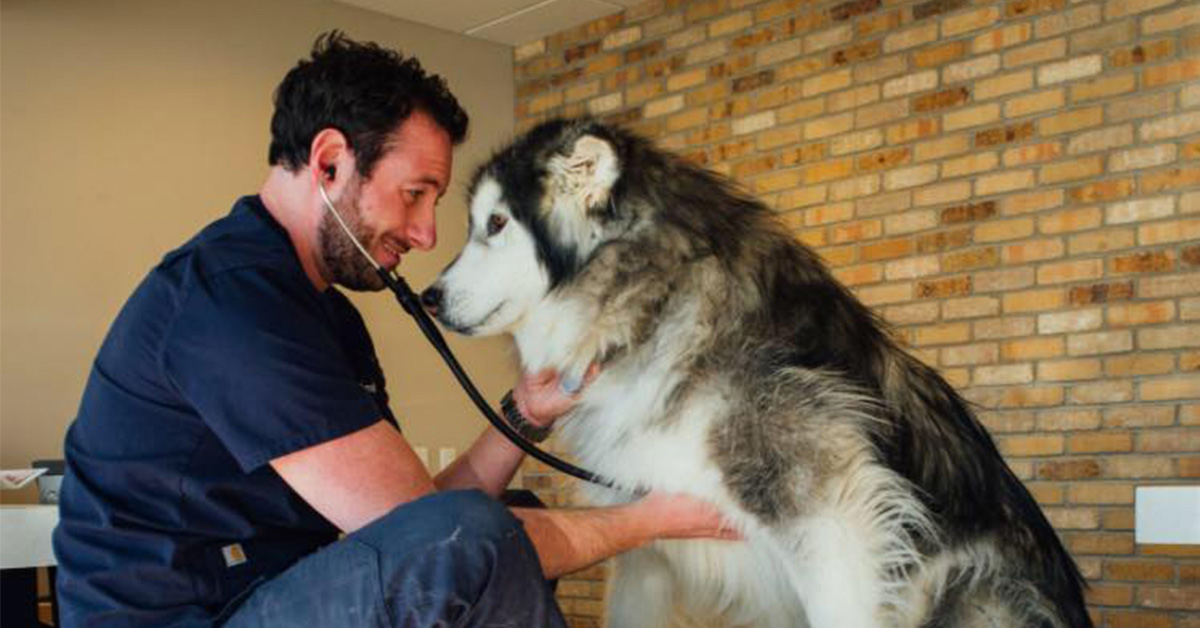
My guest today is Noah Arnold, a veterinarian and business owner who runs his own veterinary clinic in Shorewood, Wisconsin in a very unique way, to say the least. Before going any further, if you’re wondering why in the world I would interview a veterinarian on a podcast that’s all about reaching your full creative potential, trust me. This is one of the best and most inspiring stories you will ever hear, especially if you’re a freelancer or small business owner struggling to build your own niche.
Noah did all the right things, took all the right classes, got the right degrees, and landed the right jobs. He had 2.4 kids (well actually 3), a car payment, and a mortgage. He was doing everything he was told to do in order to be happy…except he was miserable. Needless to say, living the life that he was “supposed to” live was slowly killing Noah. In order to get to the point where he had the freedom to build a business his way so he could pursue his passion and fulfill what he believes is his true purpose in life (serving animals and serving people who love animals), he had to summon the courage to escape his old life of desperately trying to conform and fit into the corporate world of animal medicine. In our discussion today Noah gives us an incredibly candid look into his journey and what inspired him to give up a life of comfort and security to take a huge risk, bet it all, and pursue his dream.
If you’ve ever felt stuck, lost, or asked yourself, “Is this all there is?” then you don’t want to miss this interview. I’ve released over 180 podcasts, and I can honestly say this is the first interview that ever brought me to tears. I challenge you to make it through without choking up at least once.
Finally as a full disclaimer, similar to my previous interview with world-renowned Instagram street photographer Daniel Arnold (which is episode 54 if you’re interested), Noah also happens to be my cousin…and he’s Daniel’s younger brother. Needless to say, I am extremely blessed to have such passionate, creative, and wonderful people in my family.
Episode Highlights
- How rejection can fuel perseverance
- Letting go of the necessity of comfort
- “The trick to success is not focusing on the success but being authentic”
- Creating a clinic that feels as safe as your living room
- Facing your own desperation to be a person you’re not
- “There’s no reason you should be waking up every day unhappy”
- Being terrified to take the leap to independence
Useful Links
Transcript
Zack Arnold: I’m here today with Dr. Noah Arnold, and Arnold – that’s an unfamiliar last name to me, I’m pronouncing that correctly, am I not?
Noah Arnold: You got it, man,
Zack Arnold: Got it. Okay, so Dr. Noah Arnold, who is the proprietor and the creator of Dr. Noah’s Ark, and you also just happen to be my cousin, and I’m super excited to have you on this podcast interview with me today. So, thanks so much for taking the time to do it.
Noah Arnold: Yeah, of course, I’m excited to be here.
Zack Arnold: So, the impetus for doing this interview is I basically, well, I just kind of ran out of people to interview, and nobody would respond to my emails, and I said, “You know what, I’m just going to start interviewing my family, because I’ve got to fill up air time, so you know I’m going to reach out to my cousins, and you were the first one on the list, so
Noah Arnold: All right, I’ll take it.
Zack Arnold: So, no, no, the reason that we’re here really has very little or nothing to do with the fact that we’re related, and we’ve basically known each other since birth. The reason that we’re here is because I love talking to people that do things their own way and are unapologetic about being authentic, and that really is what this show is going to be about, because you’ve chosen a very unique path in your career as a veterinarian, and I will, I really want to go into much more depth into your practice and how you’ve done it, and all that, but first I just kind of want to understand the origin story of how we get to the meat of the story, so really to start, just kind of tell my audience a little bit about you, because most likely, unless they’re in Shorewood, Wisconsin, they probably never heard of you or your practice,
Noah Arnold: You know. I guess the best place to start is the start. I grew up in Milwaukee, Wisconsin, the second oldest of six kids. I was always trying to make people laugh, you know. I was always the clown, was actually voted class clown in my high school, of you know, there were 400 kids in my class, and that was like a great accomplishment for me, and you know, it was ever since I was a little kid, I was always in trouble, you know, I was always trying to make a spectacle of myself, and in the context of a classroom or a workplace, it wasn’t very well received, and it’ll be because of that quality in a classroom setting, I didn’t pay very much attention, I didn’t get very good grades, I got sent to detention a lot, and there wasn’t much hope for a great success story. You know, my parents used to say, if we can keep you alive through high school, we’ve done our job, and when I was. At 15 or 16, I met a girl who was, I think, the first person that really had confidence in my intelligence and in my capabilities, and I remember being that age, 1617, 18, and having this sense that I could do absolutely anything that I wanted to do, and I always wanted to be a vet. I mean, from when I was a little kid, I loved animals and wildlife, especially, and it was my great dream, and it was an impossible dream, you know. It was like that school was totally out of reach for somebody with a 1.9 GPA in high school, and I may.. I remember reading the book Into the Wild and being so taken by the main character, Chris McCandless, his ambition to just follow exactly what he perceived to be the right path in the world, and that inspired me to just unapologetically pursue what I wanted to do, and it took a long time and I worked my butt off and I made it through vet school and it was my dream to be a wildlife vet and I ended up in Sitka, Alaska, working at the Alaska Raptor Center, living off the coast of Sitka in a lighthouse that the vet I worked for had built back in the 70s, and it was incredible. I mean, it was totally incredible, but it was lonely, you know. I always had this sense that if I got to the right place geographically, that everything else would kind of fall into place, and what I realized is, you know, it’s a cliche, and I think the name of a book, but you know, wherever you go, there you are, and you know, the things that I had maybe run from in my home in Milwaukee, I found waiting for me in Alaska, but in the absence of my friends and my family, and I recognized that wildlife really wanted to kill me more than be helped by me, and I made the decision that I wanted to change gears and become a small animal vet, so that you know I want to leave room for some more pointed questions, but that is kind of the origin story.
Zack Arnold: Well, I definitely want to dig in deeper, because anytime you ask somebody about their path, I always inevitably find that they choose what I believe to be one of the most monumental turning points or shifts or journeys that they went through, and they go through it, and you know, half a sentence to a sentence at most. It’s like, oh my god, no, I want to hear about that. So, there’s definitely stuff that I want to unpack more. First one, and I’m coming at this having, you know, just a little bit of secondhand knowledge, given that we have some family members in common. If you’re willing to talk about it, having said that, you obviously came out of high school with less than ideal grades and less than ideal portfolio for somebody to say, oh yeah, no, of course we should have him in this prestige program. Can you talk through, like, because you say I worked really hard, I did whatever it took, but I really want to define that, and I want to break that down. So explain to me the process of actually getting into this program and then getting through it, because I’ve heard that it was not the easiest process for you.
Noah Arnold: Yeah, no question. So, you know, when I graduated from high school, I wasn’t able to get into the university that I wanted to, which was Stevens Point, which had a really good wildlife program. I remember being, you know, 17 or 18 and getting the rejection letter, and tears streaming down my chubby little boy cheeks, and I ended up at the University of Milwaukee, Wisconsin, UWM, which was the only place I could get in, just based on test scores, and you know, for better or for worse, I’ve always had at least an aptitude for, for learning, whether I perceived it at the time or not, and I also had this incredible sense of willpower and dedication, where instant gratification was was not something I sought, you know, I kind of looked 10 steps ahead, and you know, I remember watching the movie Rudy, where you know he can’t get into Notre Dame, and he goes to the community college, and finally gets in, and it was that idea, you know, that I, that a year into. College, if I just got perfect grades, I could do whatever the hell I wanted, and high school would be erased, and it was true. I mean, I set up a schedule of really difficult courses, calculus and chemistry, and all that, and I worked my ass off. I mean, I remember being in the library on Saturday nights, when all my friends were out partying and being motivated by it, knowing that I was pursuing a long-term goal rather than just trying to have fun, and I got straight A’s for a few years in a row, and my friends were generally the people that weren’t able to get into out-of-state schools and weren’t very ambitious and were making bad choices and weren’t in college and it wasn’t an environment that that fostered my my ambitions and so I transferred to the University of Minnesota with my, my girlfriend at the time, who’s now my wife, and we moved to Minneapolis, and it was a much more rigorous and more difficult program, and I found that a lot of the courses that I had taken didn’t transfer, I hadn’t looked into that prior to transferring, which is one of my qualities that I just kind of let the river take me where I want to go without real thought about the difficulties that I might encounter, and that was one of those difficulties was that I had to be in school for an extra couple of years relative to if I had stayed home, but I, you know, again, just, you know, suffered through academia. I mean, I remember sitting in a physics class and just making like frown faces on my notebook because I was so miserable, and, and feeling like I was in a after-school special, you know, going home, and, and I mean, I’m not much of a drinker, but I remember after one organic chemistry test, where I just went home and, like, straight out of a movie, opened up a bottle of Jack Daniels, and didn’t, didn’t get too very drunk, but it was just this, you know, I was pretty miserable, and because of my continued sort of class clown persona, I remember classmates of mine in college just totally writing me off as a goof and a not very serious student, but in the face of that, I ended up getting better grades than them, because even though the the outward facade was one of kind of indifference, you know, within me was this real desire to succeed, and and I did, and I got into into vet school in Madison after one rejection, you know, I was rejected and spent a year working at a vet clinic, increase my, you know, to improve my resume, and and ended up getting in, and it was, you know, I remember having the feeling when I got into vet school, you know, I had this sense that I had entered a marathon race without having trained, even though I’d worked my butt off in undergrad, the level of difficulty and intensity was incredible. I mean, it was like nothing I’d ever experienced, and I just gave myself over to it. I mean, I would stay at the vet school and study until midnight and go home and sleep and come back and start again at 7o’clock in the morning, and I did it every single day for four years, and it was the most difficult thing I’ve ever done. I mean, it was without much gratification, you know, the the grades would come in and they would be fine, you know, A’s and B’s, if you dropped below a B average, you’d be on academic probation. If you didn’t get above that, you know, 2.9 within the next semester, you could be kicked out of school. And it, it motivated me to just really power through it, and I remember having this sense with a lot of the courses I was taking and with the experience overall that things that initially seem impossible and things that you think you may never be able to do within even just a few weeks all. The sudden you find yourself able to do them, and that’s a theme that I’ve kind of called upon throughout my life, where initially I was met with rejection or difficulty, but through perseverance was able to not just get the hang of it, but to excel
Zack Arnold: Well, I can. I can definitely tell you that you are amongst good company when you say that. And anybody that listens to this on a regular basis, they’re like, “Oh, okay, now I see why he’s on the podcast. It’s not just a family thing. All right, this makes sense, because what’s really bizarre, and I want to make sure that people understand this. Just as a little bit of background, you and I really didn’t grow up together. We knew each other as very young cousins, but by the time I was 10 and you were about seven, I had moved much farther north than Wisconsin. And then we saw each other like maybe I don’t know, twice, maybe three times total. So, for anybody thinking, oh, this all makes sense, you and I really had completely different upbringings. You’re in a very, not, I don’t want to say urban environment, like you weren’t in downtown Milwaukee, but you lived in a city I grew up on, you know, a farm 13 miles away from a town of 400 people. And what’s interesting is that I’m living in Los Angeles, working in Hollywood, and you’re working with animals, and you’re a vet, so the irony of that isn’t lost on me, but I want to make sure that my audience really kind of gets that, even though we had very divergent paths, our stories are really similar, and the couple of things that I want to pull out of that, that I think are so key, are first of all, you sang Rudy, I was just like cheering and yelling with my microphone, I’ll be like, yes, like that’s one of my favorite inspirational stories, but I think the other key, where I’m sure a lot of my regular listeners just perked up immediately was when you said I wasn’t really interested in immediate gratification, I was looking 10 moves ahead, which is basically the foundation of everything I teach, is that life is a game of chess, it’s not a game of checkers, but when you’re that age, most people don’t think that way, and I was the same way. Where on Saturday nights, I’d be in the edit suite editing student films and people’s wedding videos and all kinds of crap, while my friends were out doing stuff. So, I’m at least glad to know I’m not the only Arnold nerd in the family. That’s very
Noah Arnold: No question.
Zack Arnold: And you also use the word marathon, and that’s also the way that I will look at trying to overcome any type of obstacle or trying to achieve what seems to be an impossible goal, is that it really is a marathon, and so many people want to sprint, and it would be very easy to go online and do a quick search for Dr. Noah Arnold or Noah’s Ark, and see videos of you on Inside Edition or NBC, or wherever. Be like, oh, how cool, this young vet, he’s like an overnight success. Good for him. You’re like, there’s nothing overnight about this. So, what I want to talk about next, now that we’ve gone through the more in detail about some of the struggles that you had both getting into a good school, and then what you did to get into vet school, which in and of itself it doesn’t matter whether or not you have great grades or not, just getting into a vet school as good as University Madison, that’s no easy feat for anybody, especially somebody with a 1.9 GPA that was officially voted the class clown. Kudos to you, by the way, for that.
Noah Arnold: Yeah, thank you.
Zack Arnold: So, what I want to talk about now, which I think is to me one of the most interesting parts of the story, is where things progressed after you graduated from vet school.
Noah Arnold: Yeah, yeah, no question. And you know, I think to take one step back to my fourth year of vet school, one of the kind of defining moments for me was that I initially, in the first part of my clinical year, where you spend a lot of your time in the teaching hospital, there were opportunities for externship, and a lot of my classmates want, you know, ended up going two miles down the road to a small animal practice, and I wanted to be in Alaska, and that’s where I went, you know. I did. I spent two months in Alaska during that externship process, where it was very casual, where they treated me as if I was a doctor, where I was on a first name basis with the other doctors, and I came back to vet school with this sort of nonchalance, and I have this quality about me, kind of the more nervous I get about something, the more calm and collected I make my appearance, and so you know, vet school in your fourth year is really pretty stringent, and it’s almost like a hazing process, where they keep you up all night, and they make you work your butt off, and they put you in front of a room full of doctors, and have you give presentations, and it terrified me. I was not used to being in that sort of arena. And I muddled through by giving this appearance of being totally calm, and I think it incited my instructors to be harder on me, and one particular story is that I was in a cardiology internship within the veterinary hospital, and there was a woman who had more, I mean, she had like a full alphabet after her name, had multiple PhDs, and and her name was Dr. Stepan, and I remember going in the first day and saying, you know, hi Rebecca, and she said, “What did you just call me? I said, “Rebecca. And she said, “My name is Dr. Stepan. And that set the tone. I mean, she was on me for the entire two week internship, and at the end of it told me that I didn’t have enough of a professional demeanor, and that I needed to be humbled, and so she was going to make me repeat the rotation. You only get one chance to repeat a rotation, and not just that particular one, but any of them within the fourth year, which is a full 365 days without a break, and I was right at the start of it, and I had already, I had already used up my one, my one strike, and it terrified me so much that I was going to be kicked out of school, you know, $100,000 in, and having worked my butt off for the past decade purely based on my personality, and the reason I bring up that story is that is exactly what happened when I became a vet, you know, went out into the working world as this very gregarious, goofy personality, and when you’re a new doctor working under somebody else who’s trying to maintain this environment that’s very professional, is frowned upon, and I remember, you know, I do all my exams sitting on the floor, and I remember a doctor that I worked with taking me aside and said, “Hey, you can’t sit on the floor, and I remember telling my, my clients to call me Dr. Noah, and being told, “No, you’re Dr. Arnold, and really being pushed into this sort of classic representation of what a doctor is supposed to be and supposed to act like, so I worked at that particular clinic for a few years and was in Madison at the time, and we had a baby, and my wife was pregnant with our second baby, and we were spending so much time going back and forth to Milwaukee, which is like a two hour drive, that we decided to move, which was a huge undertaking, we had purchased a house. I was established at a practice. It had taken me years to finally develop enough of a clientele such that I could, you know, have appointments on the books every day. And we basically started over, and I remember the experience of I had two months between deciding I was going to leave to sell my house to find a new job, and to make it all work, and it was a really anxiety-provoking time. Two weeks into starting the new job with the new house, and having sold the old one, it was like, you know, everything had settled, and I was comfortable, and I had this feeling that this sense of security that we so often neglect our true ambition for is really not so necessary as we perceive it to be, and the leaps that we want to take in life are really not so huge as we perceive them to be, and to be stifled, and to not go after what you really want based on being afraid of making that leap, man. If I, if I had given into that fear, I would still be at a practice where I was not appreciated and forced to be a person I wasn’t, and so I was at this new practice in, in Milwaukee, and it was the same thing, you know, I basically, a year in, was told, you know, we don’t want you going up in the front because when you’re juggling and kissing babies, you know it reflects poorly on the rest of us. For three years, I worked at this clinic in Milwaukee, and was met with that same criticism from my colleagues that I wasn’t professional enough and. And I’m not professional in the way I interact with people in the classical sense, but I connect with them on a human level, rather than, you know, me being the doctor and them the client or the patient, I connected with them in a way where we were both people, you know, in this world trying to accomplish the same things, trying to, you know, have a good life free of discomfort, and and make a good life for our children, etc. And so I left that practice with $100,000 of student loans with no savings, and with the knowledge that I had worked way too hard and too long to have to edit myself to have to restrict how I actually was, and I started Dr. Noah’s Ark Veterinary Clinic, kind of predicated on this idea that I was just going to unapologetically be exactly how I was, that I was going to create a clinic where it was like going into somebody’s living room, and I, and then that’s what I created, you know, I created this very laid-back environment with, you know, it’s such a cliche, because every coffee shop in the damn world looks this way, but, but vet clinics don’t, so you know, with reclaimed barn wood and Edison lights and rugs and lamps, and I’m a singer and a songwriter, and I hung a guitar in each of the exam rooms, and it was just this total embracing of who I was, and it was incredible, how well it was received, you know, I started in February of last year with no clients, and have been sitting on this floor playing songs and, and doing magic tricks for kids, and juggling, and you know, doing somersaults and handstands, and, and acting like a crazy person, and you know, fast forward to right now, I mean, there are over 2000 clients, nearly 3000 patients, and the schedule is booked out for weeks, and each day is, you know, the schedule starts full, and then I have 10 or 15 fit-in appointments, and it is, you know, you look at the typical progress of a veterinary clinic, and they, you know, you look at the statistics, and it takes five or six years to get to this point, if you ever get here, and I was there, you know, six months in, so it, I mean, it’s been a really unexpected and really validating success.
Zack Arnold: One of the things that I think is so important to point out, and you kind of, you know, you gave away the big reveal, but that’s okay, no problem.
Noah Arnold: Yeah,
Zack Arnold: Is that it’s one thing to walk away from security and comfort, like you talked about, because I think that one of the worst things for people today is security and comfort, and I think that we have spent so many years in our modern society spending billions of dollars making ourselves as comfortable as possible, and making our lives convenient, and it’s making all of us weaker as human beings, and that’s I could go on a much larger soap box and a longer die tribe, all about that, but the fact that you decided, you know what, I spent all this time and all this money, and I’ve made it, and this sucks, and this is not who I am, and it’s not what I want at all. Terrifying. Yeah, that is a terrifying feeling that I have gone through myself, and not something I went through years and years ago, something that I went through about four or five years ago, which coincidentally is when I think I began my blog and podcast. I’m guessing there was a connection there, but you just realize that you have this image in your head, you’re going to college, you’re killing yourself, you’re Rudy, you’re getting your good grades, even though everybody’s telling you you’re not going to do it, kid, you just give it up, right? Right, you have this in your mind, you go to vet school, you’re thinking, oh my god, I’m going to flunk out of this because this teacher says I’m not professional and I got to change my personality and get through this, and then you finally make it. You reach, quote unquote, the dream, and you say, this is not what I want. I’ve spent so much of my life getting to this point, I have it, and it’s not what I thought it would be. And for most people, that’s kind of where they just resigned to saying, well, this is my life, and. And what I want you to just go into a little bit deeper, because I too am all about the human connection, rather than talking about the details or the story, we’ve already kind of gone over all this information. Yeah, what I want to talk about is that moment, because it’s a very important, pivotal, transformational moment for some people, and for others it just becomes this weight, and what I want you to actually talk about is how it felt. I don’t want to talk so much about the superficial details, but just think back to when you had just sold your house, bought the new one, you’re at another clinic, and you’re like, holy, this is it, and it’s not going to get any better. What did that feel like?
Noah Arnold: You know, it felt disappointing. I mean, it felt like I, for so long, had held on to this notion of what I could be if I just kept plugging away, and what I realized was that I was still under somebody else’s thumb, that I was still being pushed into a personality that I wasn’t comfortable with, and it felt, I you know, I pictured that I’d hit this plateau where I wasn’t ever going to get out of it, you know, I, it was as good as it was going to get, and it wasn’t that good, and it was disheartening.
Zack Arnold: Well, the way that I can explain it, for me, having gone through a similar process, the way that it felt to me was like somebody had handed me 100 pound weight vest, and I was wearing it 24 hours a day. It just, it was just like this dead weight on me that I’m like, I don’t know how to get this weight off of me, I feel like I can’t breathe, I can’t concentrate. Everything is harder. It would cause a lot of stress. And if this is something you’re willing to talk about, I’ve been very, very open about my past history with dealing with depression and anxiety and other attention issues, and I don’t know that much about your specific background, but I know that I’m not the only Arnold that has been blessed with these genetic superpowers.
Noah Arnold: No, no question. Yeah, I mean, I have really struggled with anxiety and with depression, and I, and a big source of that was that what was within me belied my outer self, that I was trying so desperately to be a person that I wasn’t. I remember that I would just turn bright red at, you know, the drop of a hat if another doctor approached me to talk about a case, if I was in an exam room with a person that I perceived to be very upstanding, stately, responsible, that you know, I felt that I was trying to fit into this mold that really wasn’t me, and yeah, I mean, the, the anxiety, it was interesting, because I would be so anxious at work, you know, so afraid that somebody was going to talk to me, and I was going to go beat red, and you know, get tachycardic, where my heart was beating out of my chest, and not be able to to express myself in a way that I knew that I could, and then it gave way to really crushing depression as I left for the day, you know. I’d go home, and I would lament my inability to access kind of my essence, and it went on like that for years, and truthfully it could have gone on forever, you know. It was in that state of constant anxiety giving way to depression. I was able to make a good living. I was able to be a husband and a father, you know, from the outside, from a, from an outside perspective, looking in, I had it all. It arrived, and if I were using that metric, I would have stayed there. But a far more important metric for me was to be true to myself, which is such a cliche, but, but it’s this idea that there is more than one way to do this thing, not just being a vet, but being an adult and being a person, and to try to conform to this idea of, of what other people think it should be, and what many people are, in spite of the fact that that wasn’t actually me, that that was not the life I wanted.
Zack Arnold: Well, and I think that the key word here, as you’ve already been saying, is authenticity. It’s all about being authentic to other people, but more importantly, yourself, and the reason that I wanted. To go even deeper into kind of that guttural feeling, and the result of feeling this lack of authenticity, it manifested itself in you as depression and anxiety, and I’ve experienced a lot of that as well. And the reason to bring it up is that you are an incredibly highly, like, if there is a spectrum, you’re on the farthest end of the spectrum as far as creativity is concerned, I would, I would suspect, anyway, just based on our conversations, and knowing you clearly, creativity is a guiding force in your life, is a huge part of who you are, and to think of yourself as a highly creative, emotional, sensitive person, and being a veterinarian, those 234, things don’t all really go together very well. We all have this image of what a vet is, right? If I said veterinarian to anybody, close your eyes and picture it, everybody’s going to have a very, very similar picture. You don’t fit that picture, you don’t fit that mold. And why I think it’s so important to acknowledge that is most of the people, if not all of the people that listen to the show also work in creative fields, and a big theme is anxiety and depression and attention issues, and of course I like to talk about getting down to brass tacks, and you know it’s important to get more sleep and to, you know, eat a less inflammatory diet, making sure that you’re moving and exercising, because all of these things are good for depression and anxiety, and from a biological perspective, all that’s true, but on a much deeper emotional level, it’s you can do all of those things and none of it goes away, because you’re not realizing that this depression or this anxiety is just driven by living an inauthentic version of my life that I just don’t feel like I fit within, and probably the most profound thing I ever learned, that was just this giant light bulb moment, is that depression is just anger turned inwards, and there’s a level of me being angry at myself for either things I had done or the position I put myself in. So, does any of that make sense to you, or am I just totally rambling?
Noah Arnold: No, I mean, it definitely makes sense. I mean, I was, and it goes back to what I said previously about kind of from an outsider’s perspective living this perfect life, where, and I was, you know, I was eating well, I was riding my bike to work every day, I was, you know, I was doing things that from the perspective of what you’re supposed to do to find comfort and happiness in this world, and I was doing all of them, and it really was that sacrifice of my authentic self that underlied all of the anxiety and depression that I felt, and I, and I think it’s a really good point about anger turned inwards because there was so much anger at myself for knowing that I had this potential that I had this ability to relate to people on this very personal level and to explain seemingly difficult concepts in a very accessible way that I wasn’t, I wasn’t able to tap into that in the scene that I found myself, and it was, I felt like I was wasting it, you know, that I had this electrical charge in me that was not hooked up, you know, that it was, it was this well of energy and love that I just hadn’t tapped into. I’m sure that the natural sequitur is that I found a way to tap into that, and the anxiety and the depression, although they still exist, they exist more as motivation to continue on this path, and to not be led astray, to not be driven by financial gain to not be pushed by, you know, all the voices, the chorus of voices around me telling me what way to go, and I think it’s that, that restlessness, that where I’m not comfortable in my security, that keeps pushing me to just unapologetically go after who I want to be and what I want to accomplish,
Zack Arnold: And again, I’ve already kind of hit this point, but I really want to hit it again. Is that when you’re at this point where you’re leaving the practice that you were working at before you started your own, I can see somebody, and I don’t know, maybe this actually happened, but I’m imagining this moment where you’ve made this decision. I’m $100,000 in debt, I’ve got a home, I’ve got these young kids, but I don’t care. I’m going to do something that’s authentic, and one of your fellow colleagues that really is compassionate is a friend of yours, saying, you know what. You do what you need to do, and best of luck. And you know what’s more important is you need to build something that you love, making it a successful business. Don’t worry about that. It’s okay if you don’t get clients. Just be authentic, be creative, be yourself. And you know that that’s really all that you can ask for. I can kind of picture a conversation like that in my mind, and then you coming back a year and a half later and saying, so got myself 2000 clients. How you doing?
Noah Arnold: Right, yeah,
Zack Arnold: Right,
Noah Arnold: Yeah. You know, it was.. it’s interesting because the opposite conversation happened over and over again, where people told me, you know, the likelihood of success in a saturated veterinary market in a city that has established veterinary clinics that have been around for 60 years and have a devoted clientele to try to insert yourself into that, there’s no way you know, there’s no way that you’re going to be successful in the short term in a way that you’re going to be able to support your family, and there was one voice that contradicted that, and that came from a veterinarian that I worked for in Alaska, named Burgess Bodder, who had left Texas, where he grew up in the 1960s and went to Sitka, Alaska, and started a vet clinic. Didn’t charge for veterinary service. He would open for two to three hours a day, and he would, he worked on a barter system where the people in the town would bring him fish that they’d caught, or, you know, King crabs that they had harvested, he had a very modest lifestyle, and he had built these lighthouses on the islands that surrounded the coast, would have like a weekend bed and breakfast, where he would shuttle people out, you know, he had these ways to make a living while still doing exactly what he wanted to do, and he and I spoke before I started the clinic, and I let him know my dissatisfaction with the field, which he had warned me about. He had told me this is there’s a lot of ego and there’s a lot of pressure to be a certain type of person, and when I talked with him about the struggles that I’d had over six years as a veterinarian, he said, you know, get out of there, he said, you there’s no reason with all that you’ve done, and with the fact that you’ve gotten to the point where you are a veterinarian, there’s no reason you should be waking up every day unhappy to go to work to talk with somebody that had given up his comfort and his security and was living a really modest lifestyle, being from the perspective of our society, you know, low income, and without, you know, the new iPhone, without any phone, for that matter, that to have him express to me his satisfaction with his life relative to mine, where I had all these things, you know, where I was able to, you know, get the new iPhone, and I was able to have what society would perceive to be an accomplishment, the contrast in our levels of satisfaction spoke to me, and it helped me understand that even if I don’t succeed, even if I end up penniless, that there will be more satisfaction in having pursued who I wanted to be than there would be if I had great success doing something that I didn’t perceive to be my own,
Zack Arnold: So I think a really, really important theme to pull out of this that I’ve talked about some in past episodes is this idea of success and defining it, because the world is very good at defining what the word success means, but what’s more important for people is they need to define success for themselves. So, the world was looking at you, saying Dr. Noel Arnold is a veterinarian, and he’s very successful, and he’s working at this very prestigious clinic, and he has a very nice house in this neighborhood, and he has 2.3 children, and well done, congratulations. But that doesn’t matter, because it’s not your definition of success, and your definition of success is so much more important, because if you don’t have that vision, it’s hard to figure out day to day what do I actually do, like how do I move forwards, what are the actions that I take, and I think that the. Other thing that’s really, really important that I think you, even if you aren’t, haven’t thought about it this way, that you’ve done in spades, and this is the, I feel like the step that most people miss is, you know, why you are doing what you are doing. Most people are very clear on, well, this is what I do, right? I’m a veterinarian, like anybody would say, what do you do? I’m a veterinarian. Sure. Okay. So, how do you.. you know, how do you do what you do? Well, you know, I do it with dignity and with respect, and I treat blah blah blah right, like all the stuff that you can put on a resume.
Noah Arnold: Sure,
Zack Arnold: But in order to really endure the things that you have endured, and the moment that I want to picture now is you’ve left that practice, you’re literally sitting on the floor of this new clinic the night before it opens, you’re thinking about, I can’t even imagine the mountains of death that you probably had to be in to open up a vet clinic with all the equipment and the rent, and I’m sure that number is a lot higher than $100,000 and you’re looking at all this, all this pressure, but you knew why you were doing what you were doing, which makes all of the details endurable, because that why is so much more powerful than all those other things. So, why is it that you do what you do?
Noah Arnold: You know, I do what I do because I have been where I’ve been. I have felt what it feels like to not be listened to. I felt what it feels like to not feel safe, and to be belittled, and I wanted to create a space where people felt loved and listened to and comfortable, and I was finally in a position where I could do it, where I could, you know, this, this wasn’t about me as much as it was having compassion for not just the animals of the world, and even less so, which is surprising coming from a vet that it’s not so much about the animals as it is about these people and the amount of guilt that people experience in relation to their pets, this sense of I let this illness go on too long, I didn’t notice the warning signs, I’m not feeding the right food on and on and on, and to have that fear as you’re walking into a vet clinic to be judged by this pinnacle of animal care. You know, people are terrified by it, they’re terrified by disease, and they’re terrified by the way they’re going to feel is they’re belittled and I wanted to create something where people, rather than feeling worse about themselves as they left the clinic, that they would feel that they were good enough, and that is such a focus of what I do, you know, the first thing I do when I go into an exam room is I sit on the floor and I say, How are you? And very often people go in to the condition of their pets and I stop them and I say, No, how are you, and it often catches them by surprise, and I can’t tell you the amount people open up to me, and the number of tears that are shed in that office that have nothing to do with animals, the stories about people’s ailing parents, the stories about their own struggles with mental illness, and to be able to give them reassurance and validation, that’s why I do what I do,
Zack Arnold: Man. You got me in tears over here, you’re killing me. I mean, that’s just, that’s so, so profound, and that’s that’s really what I’m trying to tap into. I’m usually trying to get my guests to cry, but, man, you got me, but that’s really what I think is so important, is that that vision in your mind, and maybe you weren’t literally thinking this, but like, again, going back to this analogy of your, you know, sitting in your clinic the day before you turn the lights on, you have 0.0 clients and mountains of debt, but in your mind you’re not thinking, man, I hope this goes well, so I can pay off my loans, or I can prove everybody wrong to you. All I want to do is create a safe space of compassion for my clients and for my patients, and having that vision makes all the invoices that need to be filled out, and the bills that need to be paid in the long hours, like all the stuff that gets in your way, all the obstacles and challenges, those don’t look so hard when you think about what you’re working towards.
Noah Arnold: No question, no question. And it has been my business plan from the beginning to not have a business plan, to just
Zack Arnold: Glad I’m not the only one
Noah Arnold: That the money will come. And maybe it won’t, but ultimately this is about the impact that I want to have on this world, you know, this this world that is so often cruel and unfeeling that there is a ripple effect, and that by treating people in a certain way it dictates the way they treat somebody else, and to have this, this beacon of of energy that can just ripple, you know, not just through the community but through my online presence through the world, that’s what it’s about.
Zack Arnold: Well, and speaking of your online presence, I’m going to make sure that anybody that’s listening to this, if they go to the show notes, that they can see all of the different pieces that haven’t done about your work, because even though you’re in Shorewood, Wisconsin, I’m not even 100% sure what that is. I’m guessing you’re still southeast Wisconsin, right.
Noah Arnold: Yep, yeah, it’s just a couple miles north. I mean, it borders the city of Milwaukee, so it is just a northern suburb of Milwaukee.
Zack Arnold: Sure, so, and for most people listening, or at least a lot of the people, even that I meet in LA, they’re like, “Wisconsin, oh, that’s a state, right? Is that in the Midwest? Like, so, where it is in Wisconsin is immaterial, because they’re not even 100% sure they know what or where Wisconsin is, but the point is that the work you’ve done has gotten the attention of so many different people that you have news stories where you’re sitting on the floor in your clinic playing a guitar for dogs and for cats and for all these people, like you said, to give them a feeling of comfort and being compassionate and giving them the space where they just feel safe, and that is going to reach to so many more people than just the physical clients that come into your office. So, to me, that’s part of the reason, if not one of the biggest reasons, that I really wanted you on the show, is that even if somebody has a dog or a cat in Los Angeles, and they say, “Act, I’m never going to be able to go to that clinic. It sure sounds cool, but just imagine there’s a veterinarian that sees that news story or listens to this in Los Angeles, and they’re like, “Oh my god, that’s me. Yeah, like I’ve been trapped in this clinic, and I just.. I’ve always wanted to sing to animals, and I never felt like I had the permission to do it. Yeah, Noah, for giving me the permission to do that.
Noah Arnold: Yeah, no question.
Zack Arnold: Well, on that note, I’m not sure I can handle another round of this, because you’ve just emotionally exhausted me. But I just cannot thank you enough for being so open and so honest about your journey, because I really think whether or not somebody’s building a business, whether or not they’re working in a creative industry where they just don’t feel like they fit and they can’t be themselves. I really, really hope that you’ve inspired people to just take another look at how they’re living their lives and whether or not they’re truly being authentic and being the person that they want to be. So, I cannot thank you enough for sharing your story, your struggles, your challenges, and now your triumphs before we go, if somebody wanted to learn more, whether they physically wanted to go to your office or they just want to learn more in general, where can I send them?
Noah Arnold: Yeah, so I have a clinic website, Dr. Noah’s Ark, D R N O A H S A R K.com and if you just Google, or if you go to Facebook and type in Dr. Noah’s Ark, you’ll be able to see these daily blogs that I do.
Zack Arnold: Yeah, and there’s no question that if somebody wants to get to know you better, Facebook is the place to do it, because your entire life and the deepest depths of your heart and your being are in individual Facebook posts, and that is not an understatement.
Noah Arnold: No question, and you know to that point, just one more thing quickly. I want to say that when I sit down with a client, when I sit down to write a Facebook post, when I sit down to write a song, I have no idea what I’m going to say, I have no idea what I’m going to write. These things come out of the air, and they, they come from, you know, we’ve talked so much about being authentic, they come from just embracing what is inside of me, and I so often surprise myself by the things that come out of my mouth or out of my, my pen, and I wouldn’t be able to find those things, I wouldn’t be able to create these things that I’ve created without letting myself, just letting myself go, and I think that is the trick to the success that that people are looking for is to not focus on the success, to focus on authentically being yourself, and that that’s what the world is searching for, that’s what that’s what each of us are searching for, is to to be comfortable in our skin and. By projecting that, by being that the world turns and takes notice.
Zack Arnold: I couldn’t have written it better myself if I spent a year scripting this interview. That is like the best way to close it whatsoever. So, on that note, I want to thank you once again for taking the time out of your day, especially away from your patients, your clients, and of course, your family and your kids. So, thank you so much for being with me today.
Noah Arnold: All right, thanks, Zack. Nice talking to you.
Transcribed by https://otter.ai
Episode Credits
This episode was edited by Curtis Fritsch, and the show notes were prepared and published by Elyse Rintelman. The original music in the opening and closing of the show is courtesy of Joe Trapanese (who is quite possibly one of the most talented composers on the face of the planet).