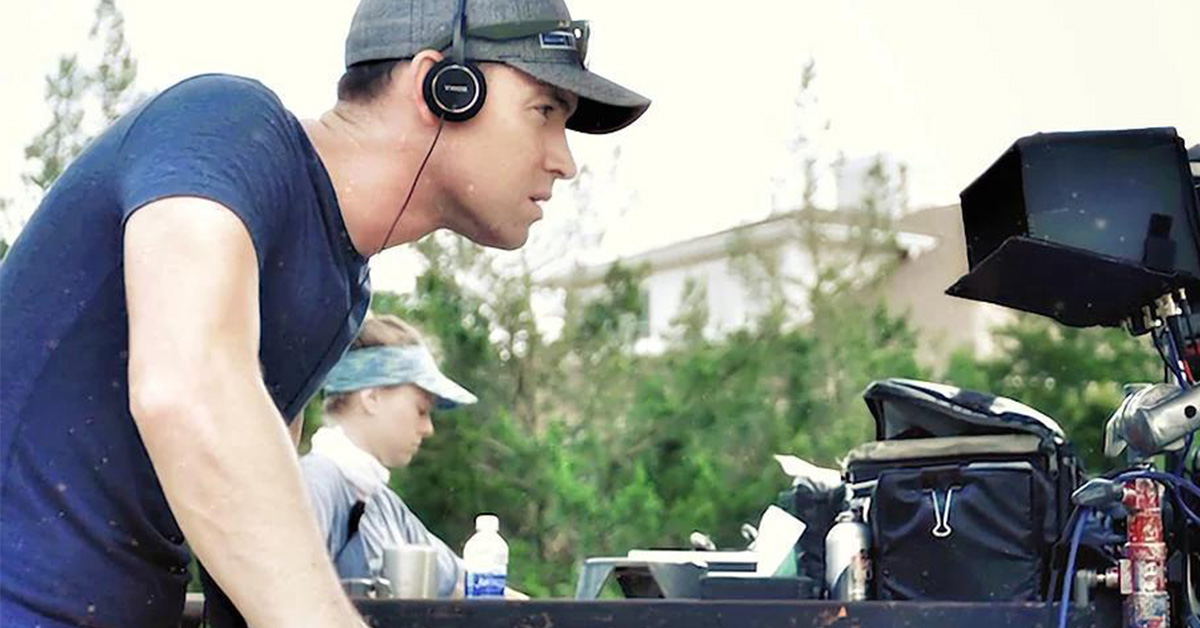
How to Avoid Getting Pigeonholed, The ‘Concentric Circles of Networking’ & More | with Doc Crotzer, ACE


About Episode
Here’s a hard truth few are willing to admit: Pigeonholing is not an accident. As frustrating as it might be to believe, “I keep getting pigeonholed,” the more accurate viewpoint is that you allow yourself to become pigeonholed. The process happens slowly over a period of years (or even decades) similar to the frog that doesn’t realize the water is slowly reaching a boiling point. But often by the time you realize the water is boiling…it’s too late. And the number one reason you ended up there is because you used the word ‘Yes’ way too often. Luckily pigeonholing can be avoided…if you know how to play the networking game.
My guest today, Doc Crotzer, has avoided being pigeonholed his entire career. He’s edited such shows as Glee, American Horror Story, Sons of Anarchy, Impulse, and he recently transitioned from editing to directing on the show Good Behavior. Of all the people I know in Hollywood, nobody’s name comes up more than Doc Crotzer. I have met so many people that know Doc, I’ve begun teaching people the ‘Six Degrees of Doc Crotzer’ networking game, because everyone knows this guy.
And here’s the thing…the fact that everyone knows Doc? That’s not an accident.
In this conversation Doc and I talk about his rapid rise to stardom from a Midwestern college journalism major who landed an interview with Robert Zemeckis for his “student” documentary project about Back to the Future all the way until today. And more importantly, Doc and I break down what he calls the ‘Concentric Circle of Networking’ so you can connect with and build relationships with the right people on projects you’re passionate about…so you can ultimately avoid being pigeonholed as someone who can “only do one thing.”
Episode Highlights
- Building the right relationships and finding the right projects
- How to network without feeling lost in the process
- Doc’s early days cutting videos on tape decks
- How Doc got interviews with Christopher Lloyd, Robert Zemeckis, and the boom operator on Back to the Future before he had even entered the film industry
- Learning how to take advantage of people’s desire to help you
- Figuring out if going to film school will help your craft or hinder it
- How to make lasting connections with the people you just cross paths with in Hollywood
- Perfecting your craft so you can take the advantage of career opportunities and connections when they knock on your door
About Guest
Doc Crotzer, ACE, is an editor, producer, and director. He started editing in the late ’80s when he hooked two VCRs together to duplicate a copy of Back to the Future he had first recorded off of a TV Broadcast. He honed his craft a few years later using the same VCRs to make one seamless version of all 3 Back to the Future movies as a 6-hour epic and has been editing ever since.
His work includes Glee, Sons of Anarchy, the upcoming Apple show Truth Be Told and the upcoming film Chaos Walking.
He doesn’t still use VCRs to edit.
Transcript
Zack Arnold: I’m here today with Doc Crotzer, who is a filmmaker that works in features and television as not only an editor but also a producer and a director, and by the way, Doc would like you to know that he struggles to write two sentence introductions for podcast interviews. So, Doc, it is wonderful. I’m so excited to finally have you on the microphone today. Thank you so much for being here.
Doc Crotzer: Thank you for having me. It’s exciting.
Zack Arnold: So, we were talking a little bit beforehand offline before we started this conversation. I was kind of telling you about my coaching program, where I’m doing career coaching and mentorship with people in this industry, helping them make transitions, helping them network, really learn the psychology of networking, and in my coaching program, where I work with people, even outside of the coaching program, just in general, the name that comes up more than any other is, hey, do you know Doc Crotzer? So, basically, yes. Oh, all the time, your name comes up more than anybody else I’ve ever met in this industry, ever.
Doc Crotzer: That is crazy.
Zack Arnold: Always comes up, which is, I assume, that maybe you weren’t even aware of that. And I hear it all the time, so much so that I’ve created a game in my networking group that’s called the six degrees of Doc Crotzer.
Doc Crotzer: Oh my gosh,
Zack Arnold: So that’s one of the biggest reasons that I have you on here today is to understand how the hell does that happen. You must be doing something right, because you have an amazing body of work that’s not pigeon-holed into one specific area. You’ve worked for different streaming services and networks, and you’ve worked on various different genres, and now you have different positions. You’re an editor, you’re a director, you’re a producer, so I kind of want to unpack all of that and really understand how all this happens, so I can then extract some of the takeaways and help other people follow a similar journey if that interests them. But where we have to start is the Doc Crotzer origin story, because you basically, I don’t know if you’re aware of it, but I’m pretty sure that you plagiarized my website about page, so I’m pretty upset about that, because you and I have the exact same origin story. So, let’s just start with, where did all of this start?
Doc Crotzer: That’s crazy about the my name coming up the most. I mean, I think it’s probably more a function of it being a unique and memorable name than anything I’m doing, but I guess we can talk more, and you can decide for yourself. My initials are DOC, so that’s where Doc comes from, but my origin story, I guess, is probably not dissimilar to hundreds of 1000s of others. As far as you know, a kid growing up with a video camera making movies, at some point when I was 13 or 14, I had a great film teacher in high school, there were three film classes that my school offered. Some point in that class, it was like a big light bulb went on, and you know, with his help, it was like, oh, these are actual jobs that that you can have, and you know, you probably have to move somewhere other than St. Louis, Missouri, to do them, but these are real jobs, and they’re not just these kind of magical things that you, you go and watch on Friday and Saturday nights, really big. So, from that point on, that was what I, what I wanted to do, and, of course, like many other people, and it’s like, what do you want to do in the business? Well, I want to be a director, and actually, that has turned out to still be the case, although as I’ve kind of gone through this process, it’s been really interesting to see, because when I got to the point where I was going to direct my first episode of TV, and having I directed other things to that point, but nothing of that scale or magnitude, there was a part of me going into it where I sort of zoomed out for myself, and I was like, you know, it’s been so long since I’ve, since I’ve really thought about why I want to be a director. It’ll be really interesting to come out the other side of this and see if that is still something that really appeals to me, or if that’s something that I’m like, I’m really happy I tried it, but it’s not something for me, because, you know, we’re all constantly growing and changing, and I think about myself professionally as an editor, and how much I’ve grown and changed with stuff. So, the fact that you know, a 13 year old version of myself wanted to do something, and you know, he knew the word, but really didn’t have much of an idea of what it is, and the fact that I’m now still wanting to do that, I’m. It’s, it’s pretty crazy.
Zack Arnold: Well, we’re definitely going to dive into all that deeper. However, I want to preface this by saying that you started your origin story in the middle of chapter two. I want to go to the prolog in chapter one, and I want to talk about the origin of the origin story, because you started at about the exact same age with the same technology that I did, and the reason that I want to talk about this is how it connects later to one of your first big breakthrough projects. Sure, let’s talk about when you first decided. This seems really cool to take these things and put them together.
Doc Crotzer: Yeah, I mean, I at some point I was talking with someone and they said, “When did you, when did you start editing, and when did you want to be an editor? And it dawned on me that I think the first editing I ever did was recording Back to the Future off of broadcast TV on a VCR, and trying to, you know, hit pause while it was recording to get rid of the commercials, and then a few years later, when the sequels were out, I remember recording them off TV, hooking up two VCRs to each other, and trying to make one long play version of the movie. I don’t know how well you remember the movies. I imagine you do pretty well, but
Zack Arnold: Word for word, but other than that, not very well.
Doc Crotzer: Yeah, right. So, very quotable, but also one of the interesting things about him is the fact that the end of the first movie is the beginning of the second movie, as far as,
Zack Arnold: Except they reshot it, which still to this day pisses me off, by the way. But, whatever, I understood for casting decisions, they had to, so go on
Doc Crotzer: Right, but the attention to detail with that reshoot, it’s amazing, yeah, no, it really, it really is amazing, how I think, how close they got it, but of course, yeah, me too, I was like, why do we need two versions of this, so, so I would lop off the, the reshoot version for the second movie as a bridge back to the future one to Back to the Future Two, and then, and then the ending, it’s a montage sequence at the end of two, so that was just picture for picture, and I think that was the first editing I did, but that was really fun, and then it was sort of like once I had these two VCRs hooked up, and I saw kind of the power of that, you know, I started experimenting with, with other things, and putting stuff together, and, of course, every time I did it, my dad was annoyed with me, because, you know, we had two VCRs in the house, and I was unhooking them to do these things, and then he’d go to watch something, he’d be like, ‘Where’s the VCR? you know, but that was the start of the editing, I think, exploration for me, you know, and then as I was shooting my own stuff, and then again hooking up to VCRs and cutting, cutting stuff together that way, I think was when the journey, so to speak, sort of started.
Zack Arnold: Well, I’ll make sure for all of my younger listeners to put links to Wikipedia, so you know whether the VCR is, and also what commercials are, and why you would need to hit the pause button to take out commercials of a TV show that’s on something called broadcast television, so I’m gonna have lots of Wikipedia links for everybody listening. It’s like, what did he just say for the last three minutes? What is he talking about? Why wouldn’t you just get them off of YouTube language?
Doc Crotzer: Oh my gosh,
Zack Arnold: Right. So, you, you and I grew up in a very different era.
Doc Crotzer: Yeah,
Zack Arnold: And I did the exact same thing for me. I went a step further, and my whole.. and I’ve talked about this before, so I don’t want to go too much in detail for my regular listeners, but this all started about the same age. I was eight or nine years old, and my brother, who was significantly older than me, came home with a camcorder, which, when I say camcorder, I’m talking about the giant thing that you have over your shoulder with VHS tape. Ran around all day long, shooting this video sequentially, doing the editing in camera. I hated every second of it. All I did was complain. It was hot, I was sweaty. He shows me the six or seven minute thing at the end of the day, and I’m like, are you kidding me? That’s all we did. Oh my god, this is the dumbest thing ever. But then two weeks later, he had dug the score of the good, the bad, and the ugly under that existing picture, and it was like seeing porn for the first time. It was the coolest thing I’d ever seen. Said, “Oh my god, how did you do that? And he showed me how he would like wire one VCR to the other VCR, but then the audio was coming from his cassette deck recorder. And again, I will put a link to Wikipedia for what a cassette deck is, and all of a sudden it was hitting record, play, play, and having these three things, so I was dubbing different video versus audio, and then I would start shooting my own movies, but I specifically shot them out of order because it forced me to edit them tape to tape with my two VCRs, which again I was basically hijacking the whole house in the same thing that you were, so I’ve been through a very similar process,
Doc Crotzer: I feel like you explaining this screams for a link for for people to watch those things too, if you can dig them up.
Zack Arnold: Yes, I do. Actually, I created when I was, I think, either when I was in college or when I first moved out to LA as a present for my brother, I put together a DVD criterion collection of all of the home movies that we did, with like special features and like when DVDs were in their heyday, and I still have that somewhere, so the day may come when I actually post this, and people can see me running around the house at nine years old with a duck hunt Nintendo gun, shooting at my brother. So, yes, that I know. I knew someday that was going to come in handy, and that would be valuable. But, and I bring all this up, number one, because it is a fun little anecdote. But more importantly, I bring it up because this is really informing and foreshadowing one of your first projects that you put together that really kind of, you know, catapulted you into the world that you wanted to be in. So, tell me, how this connects to one of the first big projects that you put together.
Doc Crotzer: Sure, so I went to journalism school, I studied broadcast journalism at the University of Missouri in Columbia, Missouri. I’m from St. Louis, and my plan had never been to be a journalist. My plan had been to go there for undergrad. They had this great journalism school, and then moved to Los Angeles after grad school to attend film school. So that was how I was operating. And at some point, I think early in my freshman year of college, I realized, you know, I’m going to need some stuff to get into film school, you know, it’s not just going to be an essay, I need to make some movies that are good enough and interesting enough that would potentially set me apart from, you know, the throngs of candidates, so I sort of started thinking about, you know, what is something that is makeable with what I’m doing, what’s something that crosses over with the education I’m currently getting, and that just pretty quickly to me I was like, okay, I need to make a documentary, and then the thought kind of switched to, well, what’s what’s a subject matter that I’m going to be interested enough in over the next couple of years to really see this thing through the right way and make something great, and you know, so then I thought, well, should be about movies. What’s my favorite movie? Back to the Future. So I’m going to make it about Back to the Future. I mean, that’s the, that’s the short version of of the story, but that was, that was kind of the idea, you know. I don’t know, that like, there it was before sort of these like fan documentaries became more common and before there were really places to put them as far as iTunes or Netflix and stuff, so it also came at a time where the internet was new enough where you could, you could basically Google a person’s name and you know you’re gonna have to put another link for this for the kids, but there was a thing called the White Pages in every city with phone numbers, and the early beginnings of the internet being in households, you could just look up the White Pages for any city, and to start to contact these people for my documentary, I just made a list of who I wanted to talk to, and sort of made these concentric circles, and I thought, I’ll start at the outside, you know, people who probably haven’t been asked a million times to talk about these movies, because, you know, what am I going to do? Call Michael J. Fox and say, “Hey, I’m, you know, I live in the middle of the country, and I want to interview you for my Back to the Future documentary. Like, I didn’t think that would work, so I thought, you know, be interesting. Like, maybe I can find the boom operator, maybe I can find the locations manager. And at the time, I didn’t really know what any of these people did anyway on film sets. I mean, you know, I had a general idea of what a boom operator does. He holds a microphone, but there’s a lot more to it than that, you know. Same with location manager, all these different roles. So it was sort of an education for me too to talk to all of these individual people about their crafts, and I think when I was able to get in touch with them, I sort of explained it that way. And you know, looking back on it, I would imagine for a lot of them it was refreshing, because you know, people probably didn’t ask them that much about what they did, at least for, like, you know, documentaries or things, and also it was probably refreshing because they probably saw me as an outsider, you know, I was just a kid who really loved this movie and was really passionate about it, and fortunately for me, people were really generous with their time, and then every time I would get, like, I wouldn’t, I don’t know, four or five people from that concentric circle to agree to do an interview, and I was coming out to LA, like, twice a year, just, you know, self-funding myself to come out for, like, a week at a time, just packing interviews in, and every time I would get four or five, six people from one circle, then I’d move inside to the next circle, and then I’d be able to say, hey, I talked to this person and that person, and they’ve all agreed to do an interview, and I’d love it if you would do it, and it was a very slow, methodical process, but it worked. I mean, I got got to talk to pretty much everyone I wanted to talk to, and they were all super generous with their time, and ultimately that was a documentary I worked on for three or four years, probably three years, while I was in school.
Zack Arnold: I love that you put it as I got to talk to everybody that I wanted to talk to. You’re kind of burying the lead here, my friend. Let’s throw out some of the names of the people you ended up getting to speak in your documentary.
Doc Crotzer: Okay, so the biggest get, I think, for me was that it was the first long-form interview Christopher Lloyd had ever done about the movies. He’s, he’s, in spite of what he plays on screen, he’s much more shy in person, and at the time really hadn’t done a lot of interviews. Yes, and that was that was the most exciting one for me. We didn’t do a new interview with Michael J. Fox, because if he has a foundation that he’s raising lots of money for, for Parkinson’s, and part of the way that it was explained to me when I was trying to get an interview was, you know, he’d love to do it, he’s very encouraged about the project, but at the moment, for him to, you know, take the time to sit down with people, it has to be fundraising, and that totally made sense to me. So, ultimately, we wound up using some archival Michael J. Fox stuff, which we can get to in a bit, but the other, the other really exciting ones for me, I mean, my, my heroes, as a kid, as far as filmmakers were Bob Zemeckis and Bob Gale, and Bob Zemeckis, who directed the movies and co-wrote the first one with Bob Gale, and then Bob Gale, who produced all the movies and wrote all three of them, they were the two that were also incredibly generous with their time, and and once they agreed to be involved, then it, you know, a lot of other people took the project a little more seriously, I think, and and were willing to also sit down with me.
Zack Arnold: Well, I’m already beginning to deconstruct the six degrees of Doc Crots, or, and understand the origin of all this, because first of all, the humility of, yeah, I got all these people, and I ended up getting a Bob Zemeckis to do it. It’s like, oh my god, it’s Robert Zemeckis, come on, right. So, to me, that’s awesome. First of all, just to look at it that way. But what I really want to emphasize for people, and maybe this isn’t even something you’re realizing is that unusual, but this concentric circle approach to networking is so important, and I think the other takeaway that’s so important is the fact that you weren’t really looking to get a job, or you know, you weren’t asking something from these people per se, other than a little bit of their time, but in a way you were actually providing value to these people, because most of them are never recognized for their work, and people love talking about what they do for a living, and you were providing that opportunity for them, which is why on the outside of the concentric circle, when you start there, it’s easier for somebody to say, well, yeah, of course, I would love to give you an hour of my time, because nobody ever cares about my point of view on a movie like Back to the Future, who, like, seriously, who interviews the boom operator of Back to the Future, so that’s a pretty amazing opportunity for them to talk about themselves and share their contribution, but I think that your approach to starting from the outside and working inside is one of the biggest mistakes that people make when they network. They say, well, I want to meet really big name editors or directors or producers, and I want to start creating my network, because everybody says, well, it’s all about who you know, but you know, I just.. I can’t get a hold of Steven Spielberg, or I can’t get a hold of Walter Murch, or whoever it is, and one of the strategies that I always tell people is you need to start below them, so you don’t go after Walter Murch, maybe you find out who’s Walter Murch’s current assistant editor and show interest in them and get to know them first, and open other doors that you might not be able to open if you’re going after people that are too high on the list, but secondarily, you can make a list of people saying, well, I know that I would love to talk to Walter Murch and Michael Kahn and Billy Goldenberg and all these Oscar winners, but other people that are just maybe a couple steps ahead of where I am right now that can give me more insight into where I want to be in five years, as opposed to 30 years, so I’m already starting to see this picture of why your name comes up more than anybody else’s, because you may or may not know it, but you’re already using really good networking strategies. So,
Doc Crotzer: I don’t think I had any idea at the time that I was doing that. I think, in hindsight, sort of as we were wrapping up the documentary, and one of my best friends produced the documentary with me, and I think you know, we had an approach. I think it came more out of we don’t want people to say no, and we don’t, we don’t think they’ll say yes unless we give them more reasons to say yes. And in this case it was people’s names, but it absolutely worked. I don’t think that it would have worked with any other approach, really, because I didn’t know anybody, you know, I had no other connections, and after I did that first interview trip, where I had actually sat down with people, and you know, I was in journalism school, like I knew how to interview people, or I was at least learning how to interview people, so they went well enough, and then, you know, as you know, how the film industry is, people work together, people stay in touch, they drift apart, but you can call somebody you worked with five years ago, and it’s you can pick up where you left off, and I think once I had those, those first interviewees as references, you know, then people were actually like, oh yeah, I sat down with them, that’s great, you know, you’ll, you’ll have a good time, or whatever they, they would say about it, but then that really allowed it to take off, it was a really fun time for me, I mean, I remember I was working on a story in the, we had an Avid lab at Mizzou, that was actually where I learned Avid, and I was cutting a long, long piece for a news story, like a 10 minute piece or something, you know, long form news, and it was the week of week right before Thanksgiving, and my. Phone rang, and it was unknown California number, which was always exciting, and I answered it, and it was Zemeckis’ office, and I had not heard from them at all. I’ve gotten to the point where I had been in touch with an assistant and submitted, you know, a write-up of what I was doing and everything, but I hadn’t heard anything. They called, and they said, “Bob is going to be in town next week. Is there any chance you can be here to do an interview on Tuesday? I didn’t go out of my way to tell people I wasn’t out of town. I mean, the approach was always these are the weeks I can do the interviews, you know what works for you. So, when that happened, of course, then I just go school, which became a trend whenever interviews would come up, and and I flew out to LA, and then, while I was out in LA doing Zemeckis, my phone rang, and it was Christopher Lloyd calling me directly, and I almost pulled off the road, you know, recognizing the voice immediately, and he said, “Hey, I heard about your movie, I’m in town, any chance, any chance we could sit down this week? Wow, yes, yes, yes. There’s a good chance, you know. Let me check my schedule. Yep, I’m free. It was, it was just a lot of fun going, going through the process. And this is obviously a very condensed version. I mean, this all took about two and a half years, I guess, to get to the point where, like, those guys were, you know, on board to do stuff, but I think, you know, I think that sort of fits in with a lot of the things that you talk about on your podcast, and with networking and everything. You know, people like people want to help you, people want to do things that help you grow, but they also got to know that you’re for real. You know, and I think that the difference between a kid out of nowhere calling versus a kid who called two years ago out of nowhere, and has followed up every few months, and has sent me a five minute teaser cut of his documentary. Who’s still doing this? It’s a very different thing, and I think you know, showing people that you’re in it for the long game, you know, at least with that project, paid dividends, and I think you know it’s kind of applicable for anything.
Zack Arnold: Yeah, exactly. And I think that the real key here is demonstrating that you are somebody that has done your homework and demonstrating that you are continually and consistently moving this thing forwards, because yes, if you’d go on the opposite approach and said, man, I would love to do this documentary film, but I just, I don’t think that it’s going to work without Zemeckis, so I better start with Zemeckis, because if I don’t get him, I don’t have a movie, then you reach out to him. It’s like, yeah, like some kid doing his dude. I don’t have time for this stuff, right? But then all of a sudden it’s, oh wait, I see this work. I know that he’s now reached out to 15 people, and he has their interviews in the can. And even with somebody as high as Bob Zemeckis, you can trigger FOMO, where he’s like, well, I kind of don’t want to miss out on this. If everybody else is in it, I should probably be in it too, right? So, yeah, I’m gonna, I’m gonna make that happen, and I’m gonna schedule it, I’m gonna prioritize it. But again, it’s like you said, it’s because you made it real, you know? You did your homework. This wasn’t just, you know, some opportunistic reaching out, it was for a very, very specific purpose. And I think that’s so important for people to understand that most people want to help you. The issue is that when somebody reaches out, like they say, like, oh, I sent 50 outreach emails and I didn’t get any responses, and I hear this all the time in my program, and I will ask them, well, can you can you show me the email that you sent, and it’s basically, you know, hey, my name is, and you know, I’m currently doing this job, and I’ve attached my resume and a link to my reel for your consideration, and thinking, well, why would somebody want to help you if you haven’t really demonstrated that you’ve reached out to them personally? But even if they’ve demonstrated they’ve reached out to them personally, what I found is that it’s not that people don’t want to help you, it’s that you haven’t been clear enough, so they understand how they can help you. So you need to be clear enough when you’re networking, so people can say, I understand you, I see your journey, and I’m actually somebody that can help. And 95% of people are probably going to step out of their way and say, oh, I have the ability to help this person, so I will. But people don’t make it clear enough, because that takes work, that takes consistency, right?
Doc Crotzer: Yeah, for sure. And I think it also sometimes, you know you just have to sort of suck it up and just be clear about what it is you’re you’re wanting to do or where you want to go, what do you want to get to, you know, because people can’t read your mind and I think there’s always a, you know, a thoughtful, respectful way to convey that information, but I think it’s really important, whether you’re talking about you know, people who could potentially help you, that, that you just kind of peripherally know, or just met, or whether you’re talking about your bosses, you know, it’s that like honest open communication, I think kind of serves you very well. I mean, related to this, but a little different than what we just talked about, but when I was getting towards the end of the Back to the Future documentary. My last round of interviews in LA, I sat down with a guy named Todd Hollowell, who was the art director on Back to the Future. He didn’t really go on to have much of a career as an art director, but somehow, through the circuitous route of film, he wound up being Ron Howard’s executive producer on tons of Ron Howard movies. 90s and Back to the Future always had a soft spot for him, because he was an art director. He was very young to get the job at the time, and I remember him telling me stories about going to work, and just how magical it was walking around before work on the universal back lot, and how he felt like a kid, and you know, all these things that I could relate to. And we sat down and had a great interview, and as, as after we had finished the interview, and I was packing up the gear, and we were just sort of chit chatting, and he said, “So, what’s what’s up for you, like, what’s, you know, what’s next? I said, “Well, I’ve got, you know, the semester of school left, and then I’m going to move to LA and go to film school, and we talked about that a little bit, and he’s like, “But is this like documentary interviewing stuff, is this is this something you’re interested in? And I said, yeah, I’m interested in it. You know, it’s, it’s really fun. Ultimately, I want to get into, you know, scripted narrative stuff, but I enjoy this very much. He said, well, I want to put you in touch with a friend of mine, and that was it. It was just, he gave me an email address or a phone number, you know, and and then I called the guy, I, you know, maybe a week later or something, and they said Todd told me to give you a call, and he said, yeah, he emailed me, and I have this company, and I make DVD special features, which at the time were a really big deal in big business, and that was basically what I was trying to do, I was trying to make a DVD special feature independently, but it was very similar to what I was doing with the Back to the Future documentary, and he said, “How about this? When you get a cut of your movie, send it to me, I’d love to see it. You know, maybe you can come intern for me or something the summer before you start school, blah blah blah. So, okay, great. So, I had a DVD at some point, I sent it to him, and then he called, and he said, “Hey, I watched it. Why don’t you come work for me? I know you want to go to film school, but come to LA, spend a year working for me, get your feet wet, and then decide if you want to go to film school still or keep working for me. But I’d love to have you here. There’s where you know the company at that point was expanding, I think, and I thought about it. It really surprised me, but, but I did it. I took it, and
Zack Arnold: Which company was this, by the way?
Doc Crotzer: It’s called Blue Collar Productions. Okay, they’re still around, they still do lots of stuff, they just don’t do as many, you know, DVD and Blu-ray features, because no one does that, that stuff anymore, really. But you know that guy who runs the company, Mark Rowan, it’s his company, and he took a chance on me, invited me to come work for him. I think that at the time I realized also a lot of people going to grad school for film were not going straight from undergrad, and I was going to be doing that. I thought maybe it wouldn’t be a bad year. I’m moving to LA, I really don’t know anybody, and this guy has a job for me, you know, what’s the harm in deferring for a year, taking a job, getting settled in LA, and then moving forward with stuff. So, ultimately, that was what I did, and, and then never went to home school. Still wish I had, but I would argue right or wrong path.
Zack Arnold: I’m arguing the point that you went, you’ve gone to film school since then. The only difference is you’ve gotten paid to attend every single day.
Doc Crotzer: That’s yes, for sure.
Zack Arnold: That’s the way that I look at it, because I went through the same thing, and my, my story is slightly different, but it’s kind of eerie how similar these trajectories are. Where I was obsessed with movie trailers, and I was like the eight or nine minute like home movies that I was making with my brother, I cut a trailer, a 92nd trailer for a nine minute movie, that’s how obsessed I was with this stuff, and I was cutting trailers and highlight reels and all the short form sit what I, what were sizzle reels, I don’t even know what hell a sizzle reel was at the time, but I was doing it all the time, and because I had that experience when I sent my very first resume to a trailer company in Los Angeles the week before my college graduation, they called me the Friday evening before my graduation ceremony, right as I was walking out to dinner with my whole family, and said, “Hey, can you come in for an interview on Monday? I’m like, “Sure. They didn’t know I was in Michigan, because I used a friend of mine’s local address in Hollywood, so I got off the phone, and I’m like, “Mom, Dad, I have to go to Los Angeles this weekend. So I went to my graduation ceremony, had, you know, lunch celebration with the family, and then got on a plane the next morning, and then when I got out to LA, and I had an assistant editor job at this trailer company after getting this job, I thought to myself, hmm, I’m an assistant editor, but should I go to film school, because everybody seems to be getting, you know, degrees at AFI or USC or UCLA, and I looked into all this, and I was like, first of all, this is ridiculously expensive, and my family is not wealthy, and I’m not wealthy, so I’m going to come out with six figures worth of debt, and I already had debt, or I could just look at all the jobs I would be taking as my film school, except I’d be getting paid for it, and I look back on that choice now, and I’m not saying anything against film school whatsoever. If you have the means, it’s fantastic, it’s great for networking, it’s great for perfecting your craft, but if you don’t have the means, it’s my belief that the world can. Come to your film school, and you can choose your courses and your education based on the jobs that you pursue. So, basically, the next five years of my career was learning trailers, learning behind the scenes special features. I did all that stuff almost concurrently with the time that you’re doing it. So, this is kind of getting downright creepy.
Doc Crotzer: It really is. No, I love that approach, and I think you’re spot on. Like, there, there’s so many great things about film school, but I also have seen that there are a lot of great other ways to go about, you know, learning your craft, and even before learning your craft, figuring out what, what that craft actually is, you know, because I think that for most people who move to Los Angeles or move to New York or want to be, you know, directors, unless you’re independently wealthy, you have to pay the bills, and, and, and you also have to kind of find a path to directing. Nobody just hands you, you know, something that they’re paying for for you to direct. So often I think that means finding a craft, and for me that was editing, and once I sort of realized that that was the part of this that was the most interesting to me. It helped, sort of, because then I could see, okay, there are steps and there’s a process and there’s a, there’s a ladder, you know, and it’s like no two persons routes are the same, but at least there it became a little more tangible to me, as far as how to, you know, go about trying to start and build a career,
Zack Arnold: Yeah, and that’s that’s kind of the the entire foundation of everything I talk about is where everybody has their own circuitous individual path, but when you break it down, it’s kind of the same three steps, you decide I’m going to climb this specific ladder, and then to climb that specific ladder you have to be awesome at your craft, but you also have to make sure that people know that you are awesome at your craft, all of which you are doing, and where I want this to lead us next is where you and I connected for the first time, and I say connected and not met, because the really interesting thing that I barely realized, and you may not even realize, is that I feel like I know you really well. I think we’ve only met in person twice. Correct me if I’m wrong, but I really don’t think we’ve met in person at any length of time, but the reason that you and I connected was because I filled in for you on Glee when you were getting married, that was kind of the first time that you and I crossed paths, but other than like a cursory handshake, you left before I started, so I essentially just inhabited your room for five or six weeks,
Doc Crotzer: It just feels like we have spent more time together because we read each other’s websites all the time.
Zack Arnold: I know it’s insane, right? I feel like you and I are really good friends, and if we just met, we could just get into deep conversation, but we’ve never physically been in the same space for maybe more than five minutes cumulatively.
Doc Crotzer: That’s so funny, isn’t that ridiculous? I hadn’t really thought about it like that, but now that you say it, yeah, because that was you came into Glee. I was trying to remember when, when we sort of overlapped at Glee, and that was when, when I left, because I took an episode off out of the rotation, so I could go have a proper wedding and honeymoon, and it just sort of made more sense to do it all and skip one spot in the rotation, and and that was that was when you came in, and yeah, that’s crazy.
Zack Arnold: So, how did you get to Glee? Because if we’re talking about doing special features right out of college and having journalism background and having done your own personal documentary, none of that says to me you were on the right ladder to end up on Glee.
Doc Crotzer: Yeah, you know, I guess it does sort of come back again to networking, but not in like a calculated way for me, but more in just, you know, you work with people, you do good work together, and then you know sometimes they call you, sometimes you call them when there’s other work. What had happened when shortly after I moved to LA, I had some friends who were in a band that my band in college had played with some, and they had been signed to a big label, and they were flying them out to LA for a few months to record an album, and they had said, “Would you come sort of embed with us as we’re recording and rehearsing and shoot stuff for our website? And and they had said the same thing to another friend of theirs, who you also know, Joe Leonard. Joe also happens to be from St. Louis, so he and I met through these friends, but we didn’t know each other ahead of time, had a lot in common, and we worked together on on the these like web series things for this band called Ludo, and became friends that way, and then we finished that, went off doing our own things, I was at a company, a smaller boutique behind the scenes feature at Company. At this point, I had moved from the first company to a different company, where I was getting to be more creative and do more stuff, and sort of taking on more of a producer role on some of the projects, and we got more work than we could handle, and the guy who ran the company came to me one day and said, hey, we need to bring somebody else in, you know, we want, we want somebody like you, who would you bring in? I said, oh, well, we should call Joe. So then Joe came in and worked there for a bit, and then again we went our separate ways, and you know, remained friendly. We weren’t great friends at that point, but we were friends. I don’t know how much time elapsed in. Between each of these things, but a few years went by again, and and then Joe had been working on the Glee pilot, and I, he could correct me, but I believe his story kind of goes the same. They came into his room once Glee was, we knew, or they knew at the time that it was going to get at least the first 12 episodes, or maybe it was 11 plus the pilot that had already been shot, and they were starting to crew up for that, and they said to Joe, you know, we need some people like you, and Joe said, well, let’s talk to Doc, and the other, the other way that Glee kind of just happened, right place, right time for me was that it was a Final Cut show, it wasn’t Avid, and especially at that time, I think, around town in Hollywood, there were very different hiring pools for both editors and assistant editors, and Avid was, you know, much more commonly used in television. It was almost unheard of, I think, to use Final Cut. I think the only other show at the time was Scrubs that I knew of that was using Final Cut, but that was that was sort of my asset, because I had been, I had been editing documentary, all the featurette stuff, I had been assisting myself, I had assistance for some of the projects as well, but I knew Final Cut seven inside and out, and I think that that really was that, plus the personal reference from Joe, and sitting down with Brad, who was the lead editor on Glee, and cut the pilot, I think the interview was more like, okay, we see in this person, you know, he has the technical skills, he has the desire to learn the scripted skills that he doesn’t have, and he seems like someone we wouldn’t mind spending 16 or 18 hours a day, with you know, which are these are all valuable considerations when you’re talking about hiring an assistant editor. So that was sort of how I got the glee job, you know. I think it was, I was very lucky, but I also think that, you know, I developed a certain skill set that was enough to get me that job after you get past the luck part of, you know, happening to be friends with the guy who was assisting on it, you know, and then you sort of sink or swim as you do with a new job.
Zack Arnold: Well, anybody that listens to the show on a regular basis knows how much I hate the L word. I don’t believe in luck when it comes to opportunities like this. I do believe in bad luck, so if you just happen to be walking down the street and you get hit by a car, well, that’s just shitty luck. But when it comes to a situation like this, you are in the right place at the right time. So, yes, that circumstance did happen, but it’s because you already had a good relationship with Joe, and had you not gone out of your way to recommend a job for him and provide him value, he wouldn’t have reciprocated in return, and I think the other two really valuable points that you bring up, as it wasn’t just a matter of, oh, it was about who I know, and it just happened when I got lucky. Well, no, there were certain criteria. One of them was, does this person have the technical skills, which you’d been working on for years, and by the way, everybody that’s listening saying, wait, they do TV on Final Cut, this is the old version of Final Cut. This was basically what Adobe Premiere has become now, which, in my opinion, Final Cut Seven is still the best NLE ever made. And I’m sure I’m going to get hate mail. I don’t care. I really miss my Final Cut Seven. Best NLE ever. Final Cut acts. I’ve touched it once, not for me at all. I don’t have anything against it. It’s just not made for me. But the point is, you had the right skills, and it’s not like those skills were handed to you, you earned them by doing your own projects and being a self starter. But the other piece is, can this guy be in a room with us for 16 hours a day? And, as an aside note, 16 hours a day was the norm in the Ryan Murphy camp, and it would usually be more when things got busy.
Doc Crotzer: I know. When I said that number, I thought to myself, like, am I being, you know, has the distance made me forget how many hours we actually worked on that show a lot?
Zack Arnold: It was, it was pretty ridiculous.
Doc Crotzer: Yeah,
Zack Arnold: But those are the pieces that so many people miss, because they’ll hear your story and they’ll say, oh, that’s awesome, but that’s never going to happen to me. But if you break it down, it really was about you, really perfected the craft of knowing Final Cut Seven, doing your own assistant work, which is kind of how I rose as well, because my first three features, either three or four, I can’t remember, I was my own assistant because they were so low budget, so I was cutting them, but I was also syncing my own dailies, I was digitizing my own dat tapes, and again, the millennials are like, what the hell is a dad take, but I was digitizing my own dialog, syncing it, and then cutting it all at once on a regular editorial schedule, so that built up those skills that most people wouldn’t be willing to do, but for me it was part of that process of I want to send myself to film school and learn all the various areas of the craft, but you also made sure that your friends that you were providing value to knew that you had enough of those craft skills to then recommend you when the opportunity came up. So, I don’t really believe that you were lucky. You have no control over when the opportunity presents itself, but luck is just when that hard work meets the opportunity.
Doc Crotzer: Fair enough. I don’t disagree with you on that, because I. Also, think that you know, even if the right place, right time thing happens, if you don’t have the skills to back it up, then nothing great long term comes from it.
Zack Arnold: Well, where I want to go next is we have this picture of how you’ve gone from having this project where you were a self starter as a student to then became a very real project with real people involved, you get the recommendation to be at this DVD special features company, which, through this thing to another thing to another thing, leads you to glee. But now, what I’m interested in learning more about is how is it that you’ve constructed such a wide breadth of work in television, because you’ve not just worked on musical comedies on Fox, you’ve done such a wide variety of not only genres but mediums between Fox and YouTube and Apple and TNT and all these other areas. So, how was it that all of that happened from Glee moving forwards?
Doc Crotzer: Good question. I don’t have, like, a really specific answer. I mean, I do know that when I was working on Glee, and I was starting to look at, okay, what do I do next, you know, at the time I, because I got my big break editing on Glee, you know, I had, I think, when I finished, I had cut like 26 episodes or 24 episodes or something like that, so I had all these Glee credits and no other scripted credits, as I was trying to take meetings and trying to find the next thing it became really clear, really quickly to me that whether I wanted people to or not, I was going to be pigeonholed in a way that I wasn’t comfortable with, and I wasn’t, I wasn’t into that, you know, and people thought that, oh, he’s the Glee guy, so you know, we have a musical component, so let’s, that guy worked on Glee, he can do that, you know, or whatever it was like. And for me, I think I was just like, well, I don’t only do that, you know. I love spaghetti, but I like lots of other food too, and, and so I like, I think in my mind I was really pushing against trying to get pigeonholed to the point where I think I, you know, I think there were some jobs that I didn’t get because I was in the room, I was just saying, like, what I don’t want is to Duke Lee again, like I did that, and that was awesome, and I’m really proud of that work, but I want to be challenged in a different way, you know, I want to use different parts of my brain muscles for different types of story and stuff like that, and ultimately the way that I got my next gig was through one of the directors who I had worked with a bunch on Glee, Paris Barkley, he was a producing director on Sons of Anarchy, and they were getting ready for their sixth season, and we were in between Glee seasons, and by that point I had already decided I didn’t want to come back to Glee. I felt like I really, you know, needed to spread my wings and sort of, you know, graciously let everyone know who had been so great to me there, that, you know, I was going to try and find something else. And my phone randomly rang, and it was Paris, and he said, “Hey, we have an opening for season six of Sons of Anarchy. Would you like to come in and interview for it? And I said, yeah, absolutely, I’d like to come in. He goes, you know the show, right? And I said, yeah, I know the show, I love the show, and I did love the show, but I had only watched like two seasons of it at that point. So he said, great, come in tomorrow and they’ll call and set it up, figure out a time, okay. So then I spent the rest of the day watching Sons of Anarchy, and the next day I went in and met with Kurt Sutter, the showrunner, and Craig Yahata, who is the post producer. And from there, that was that was my next gig, and then I think having come off of Glee into Sons of Anarchy, you know, it was about as extreme as I could have ever hoped for to push against the grain, as far as being pigeonholed as only editing or working on one type of show, to the point where that was like the first question in every meeting that I had since then, for probably five or six years, and even still, sometimes people ask, because they’re, they’re both still on my resume, and they go, “How do you, how did you go from Glee to Sons of Anarchy? But you know, I think ultimately it was, I had done good work for a director who understood enough about editing to know that you’re not one type of editor, you can do other things, and he saw something in that work, and he thought, “This might be a fit, you know, let’s give him a shot, so he gave me that shot, and then the showrunner said, “Yeah, sure, we’ll give him a shot, and, and then I got to do the final two seasons of Sons of Anarchy, and after that, it was much more like people were willing to, you know, you still push against it, it still happens no matter what, but I think that was a really good foundation for for me, as far as he’s not one type of editor or storyteller, or whatever.
Zack Arnold: Well, oh shucks, it sure sounds like you got lucky getting that opportunity. That’s all about luck, right there. Right, that had nothing to do with you being fantastic at your work on Glee, building a relationship with this director. Director, who ended up being a director, producer on another show, and then being willing to say to multiple other opportunities, I’m sorry, but this isn’t what I want. That’s the opposite of luck, right there. That’s very, very clear. That’s being very, very clear about what you want and what you don’t want. And the reason that I believe most people get pigeonholed is they’re too scared to say the word no.
Doc Crotzer: Absolutely, and it’s hard to say no. I mean, it’s, it’s, it’s really hard, you know. I didn’t, I don’t think during that period of time, I never turned down an actual job offer, but I sort of was honest enough in the meetings that I think I probably didn’t get a couple offers because of my honesty. But saying no is a really hard thing, it’s a scary thing to do, especially if you’re, if you’re in a period where you’re not working, or you’re approaching a period where you aren’t going to be working, and there’s something there, you know, to say no to that is tough, but and sometimes you’re in a position where you can say no, sometimes you’re in a position where you can’t, but if you are in a position to say no, and something doesn’t fit with your goals or your individual criteria for how you evaluate a job, which I think we probably all have our own, our own criteria, you know. Then you should say no, because yo u’re not going to be happy doing it.
Zack Arnold: And yeah, I agree with that completely. The only thing I want to modify, and this is, I think, another one of the mistakes that people make, is when you say, well, they either are in a position or they aren’t in a position to say no, and my revision to that is you’ve either put yourself in a position or not put yourself in the position to say no, and I think one of the things that leads to pigeonholing of being stuck doing the same thing year after year after year after year is not doing the financial planning necessary to know when you’re able to say yes or no, and there’s no shame in realizing, oh, wow, I really need to make some money right now, and if that means I have to edit some reality TV or do some low-budget international sales trailers, like, whatever that is, that’s fine, but ultimately you have to put yourself in the position where you know what’s my sleep easy number, I can go to bed tonight saying no to this project, but understanding I can still pay my bills. That’s what keeps you from being pigeonholed, because ultimately everybody wants to pigeonhole you, and it has nothing to do with you. It’s all about them, because they just want to cover their ass. Because if things go wrong, they can say, well, listen, it’s not my fault. This guy has done four other music shows, he should have been able to do this one, as opposed to if things hadn’t gone well on Sons of Anarchy, then they would have been like, well, we could have told you that was going to happen. He’s only done Glee. I, you should have seen this coming, right? So it’s all about covering your own ass, that’s all that it is. Yeah, you’re right. Absolutely true. Well, now what I want to understand, and this is what I think is really, really important, and is kind of the next phase of your journey, and I realized that you’re still kind of in this transitional phase, but you started with directing your documentary projects, then going into special features, then having this wide breadth of projects that you’ve done in network television on YouTube, now you’re working on an Apple show, if I’m correct, but you’ve also done some directing, so how have you navigated this transition from just being the glee guy to just being the scripted drama guy to being able to do kind of any medium, but also being considered as a director,
Doc Crotzer: It’s tricky, you know, the director thing is really tough to sort of navigate, because I think the key, if you are a crafts person, you know, and in this case an editor, for me the way to get an episode seemed pretty clear to me, which is, is to just be the best fucking editor I can be, and one of my mentors on Glee, Brad Beaker, who was a supervising editor, he cut the Glee pilot by season two, he was directing, I think he did three or four episodes, season two maybe more than that, but ultimately I think he wound up directing more episodes of Glee than anybody. The reason he got that opportunity, and I, because I was working on Glee at the time, I saw it all play out in real time, it was because he was the best fucking editor on the planet, and the showrunner saw that, and he made it clear to the showrunner that this was something he wanted to do, and there’s, you know, there’s so much crossover between editing and directing that if someone is really good at editing, there are aspects of directing they are probably also going to be really good at. There are also parts of it that don’t cross over at all that you really have to work, you know, to be good at, because it’s a different toolkit, you know. But they, they gave him that opportunity, so I had seen that play out, and that was sort of my model, I think, for, you know, working towards an episode. It was kind of slow and steady wins the race, like I’m going to be really, really good at this editing thing, I’m going to make myself, through my work, an indispensable puzzle piece for all the people I’m working for on their shows, and I’m going to make it clear to them in the right moments and in the right way that there’s more to me than just editing, and my hope is that if I do this consistently with people, eventually it will get to a point where someone. Gives me that chance to direct, so, so that was sort of the approach for me, so the show that I, I did direct my first episode of TV on a show called Good Behavior, which was a TNT hour-long drama, and, and specifically with that show, kind of the progression of it was, and this is, I should jump around for a second, but one of the things when I’m looking at jobs and evaluating jobs is I really like working with people multiple times, like if I’ve worked with someone before and we had a good experience that almost always pushes them to the top of, you know, what I’m trying to do next, because I love the way that you can grow creative relationships with people, and you know, a season of TV or a feature film, it’s a long time, but two or three seasons of two or three different shows is a really long time, and you can really make strides with people creatively. So I had worked on a show called Wayward Pines on Fox, and the showrunner from that was a guy named Chad Hodge, who’s a great writer, and he had created this pilot called Good Behavior for TNT, and TNT was trying to do the we’re serious about hour long drama thing, which was a little bit of a departure from their other content, so they were giving him a lot of creative latitude to really go make this show that you would probably more likely see on AMC or HBO or something. So, okay, so this is a luck thing. I can, I use the word once, or at least
Zack Arnold: You’re gonna have to prove me wrong. Let’s put it that way. So, let’s see if you can, you can convince me.
Doc Crotzer: So, I was working, so I mentioned the showrunner, Chad, we had worked together, he was prepping the pilot for good behavior, and the director for the pilot, lovely lady, she had her own editor that she had worked with a bunch. She’s Danish, and I believe the editor was Danish as well, and they were all set to do that. I was working on a different show called Quarry, which was an HBO Cinemax drama, and I came out to the parking lot one day because I was walking my dog, who I bring with me to work whenever I can. It’s probably the healthiest thing that I augment my work with to keep me sane, but I’m taking her out for a walk at lunchtime, and I see on a parking space spot reserved for C Hodge, I thought, huh, that’s got to be Chad. So I sent him a text message, said, “Hey, I just saw this. Are you working out of this building? And he texted me back. He’s like, “Yeah, we just moved in today, come over. So I go over to his office. We reconnected, and at that point we weren’t, you know, we had a great time working together, but we weren’t friendly or, you know, social or anything like that, but it was great to reconnect, and, and he said, yeah, we’re doing this thing, and if it gets picked up, you know, I’d love to bring you on, because it’s such a good time working together, and blah blah blah, you know, that that sort of thing is great, so I left, and, and, oh, and he said that was when he said to me, you know, Charlotte has her own editor, otherwise, you know, we would have called you, blah blah, and then, like, a week later, he calls, and he says, “Hey, they’re not going to.. I think it was TNT wasn’t going to pay for her editor to, you know, come over and work on the show or something, it was something like that, or the editor wasn’t available, or whatever. And he said, “Can you come meet Charlotte, the director? So I did, and that was how I got good behavior, and I think that was lucky.
Zack Arnold: The only thing that was lucky was you happened to be walking your dog, and you notice his name on a parking space.
Doc Crotzer: That’s, I’ll give you the luck part. I mean, that you earned every bit of it, but seen the parking spot. All right, you win. Sure. And it’s like, look, Chad’s made a lot of shows, and at that point it wasn’t like he and I had done so many things together where I was like his guy or anything like that, when he thought editor, but we had had one good experience, but I think me seeing his parking spot when that other editor fell out may have been the difference between whether I was the first phone call he made or the third, you know what I mean, and who knows if I had been the third, maybe he wouldn’t have even had to make three phone calls, I don’t know, but I think that there was a little right place, right time, but again, back to all of your points, you know that luck was there, but it wouldn’t have even been there had it not been for, you know, some level of good work before that point,
Zack Arnold: And here’s the other thing, too, that I think the luck is there, but it’s really, really minimal, and the reason I say that is because you took the initiative to reach out and say, “Hey, is this you? A lot of people may have felt like, “Well, we’ve worked together, but he’s a showrunner, and I’m just an editor, like the word ‘just’ is thrown around all the time. I don’t know if I should, right, but you did, and you put yourself out there, and I think that one of the huge takeaways here that most people don’t understand is where you said, “Well, I became his first phone call instead of his third or his fourth, and people always think to themselves, well, I’ve met this person once, I’ve given them my resume, I’ve given them a link to my portfolio website, and I know that I’m really good at what I do, so therefore I’m going to be the best candidate, but people don’t hire the best candidates, they all. Often hire the most recent one that they’re familiar with that they remember.
Doc Crotzer: Yep,
Zack Arnold: So I’ve been through this myself, and I’m sure this has happened to you too. Somebody will come to me and say, “Hey, I’m looking for an assistant editor super quick. Who do you recommend? I don’t go to my database that’s meticulously organized of every single assistant editor that I know that I have prioritized by level of skill and availability, I think, oh, you know, what I talked to this guy last week, you should talk to him, because that’s where my brain goes.
Doc Crotzer: Absolutely,
Zack Arnold: Familiar and recent not the most qualified.
Doc Crotzer: So that was that was how I got into good behavior. And then, so we did the pilot together, and that was a great experience. Obviously, I think that there’s a ton that editing can bring to any project, but, but I think, in particular, with the pilot of Good Behavior, we really sort of discovered, like, a language for the show, you know, in conjunction with how it was shot, but an editorial language and style that we sort of further honed in on the rest of season one, once it got picked up, but, but that was sort of the start of this, like, really cool creative partnership, and you know, with the show editorially with the showrunner, we wound up doing, we wound up picking up a couple new scenes, so, so the pilot got picked up by TNT, but they wanted to do some additional photography a few months after we had wrapped the pilot, and the conversations about, you know, kind of how we were going to shoot things, and what was going to be shot. Some of that was I was involved with, and I think that was sort of the start of the conversation, where you know, whether I don’t know if Chad, at the time, knew that I had other aspirations other than editing, but certainly we were having conversations about other aspects of filmmaking beyond just editing, you know, and looking back on it, it was that was at least the start of kind of he and I having larger creative conversations than simply things about specific cuts or episodes that I specifically edited, and then once the show got picked up for season one, he came to me and said, “You know, I really want you involved with every episode. How do we do that? And then I sort of, you know, we talked about it, and I referenced kind of the working model that I had seen and worked in on Glee with, you know, a supervising editor producer who was cutting some, but also was overseeing a lot of other episodes for sort of creative consistency and tone and style and stuff like that, and you know, and I sort of told him how that worked, and then we talked about aspects of that setup that we thought were good things we thought we wanted to try differently, things that we thought might need to be different based on this type of show, etc. etc. and sort of just developed a plan with that, and then, and then from that point, it was sort of took on, I was cutting every third episode, but also was giving him feedback on the other episodes as well, and then I’m assuming that that at some point led to the need for somebody that could step in, either maybe it was second unit or directing an episode, but kind of what was the catalyst that finally got you behind the camera to direct your first episode during season one? Again, at the end of season one, we picked up some stuff photographically, and I had sort of designed just with, honestly, it was just like text cards in the Avid, but there was a sequence in particular I remember that it was, it needed to be a lot more than what was shot, and it wasn’t, it wasn’t a reflection of the person who directed it, or anything like that. It was just one of those things where, after the fact, we all sort of realized, like, we need a lot more than we got, and this moment has to be a bigger deal for x, y, and z reasons. So, in the Abbott, I sort of slugged in descriptions of the shots and the action happening in the shots that I thought we needed, and you know, showed it to the showrunner, and I remember that day because he said to me, “Oh, you should just direct this, and that meant a lot to me, that he, you know, thought that, and also I knew, of course, that that wasn’t a reality, but that was a great, a great sort of mile marker, because then furthering the conversation, you know, when we were wrapping up that stuff, I just, you know, I said something to him, I’m sure, along the lines of, like, “Hey, remember when you said that? like that is really something I want to do, and I would love it if, if an opportunity presents itself, you know, on this show in the future, if you know, if we get another season, if you’d consider me, and not like putting pressure on it at all, but just putting it out there, and then we waited and waited to see if we were going to get a second season, and of course, you know, I was off doing other things, and and then he called, and he said, I have good news, we’re getting a second season, and I have better news, is I think you’re going to get to direct one of them, so he was a real mensch to me, and I’m, you know, I’m sure I don’t even know the half of it, kind of the fight that he probably had with some people who are like, oh, this guy’s too inexperienced, or this is only season two, and we only have 10 episodes, like, you know, this is not the time, I can imagine a lot of conversations happening that I. Wasn’t a part of, but, but he went to bat for me, and, of course, you know, I had to show some stuff to him and some other people, and then there was a couple meetings with studio executives, where I think those meetings were very clearly like, let’s make sure this guy is okay, you know, let’s make sure we’re okay with this, because they didn’t really know me, they knew my work, and they knew my name, and we had been on some conference notes calls and stuff, but that was it, you know. So, sort of a let’s make sure we’re comfortable giving this guy the keys to the car for the weekend type thing. But the real tricky part, I think, about this whole thing is when you make yourself, you know, when you try and do good enough work that you’re creatively indispensable in a role, and then you say, hey, I want this other role, I want to do this, this other different role that happens at the same time that you need me to be doing this role that I just proved to you I’m indispensable at it, creates a lot of scheduling challenges, and, and that was a big thing with good behavior, and other friends of mine who have kind of, you know done similar things, we’ve kind of shared stories about that, but it’s always tricky, then, because you make yourself such a big part of the cutting room in order to get the opportunity, and sometimes then it gets to the point where someone might say, and this had happened to me, where there was a conversation where before this with a different show was like, yeah, we’d really, we would love for you to get to do this opportunity, but we just, we can’t lose you in the cutting room right now. So it’s a really tricky thing, you have to sort of find that balance, and I think that with good behavior, once once that conversation started, I was super proactive about, like, okay, these are three different scenarios that I think we could do that, would all work, you know, and Chad, the showrunner, when we had the first conversation, had said to me, you know, in as much as saying, like, okay, so this is great, but now we have to make sure that this doesn’t screw up post, so how do we do that, and so you know, we came up with different scenarios where I was like, well, what’s it look like if I direct the third episode, what’s it look like if I direct the sixth episode, what’s it looks like if I direct the ninth episode, and the logistics of it all, you know, was a big thing for us to plan and figure out, and ultimately it wound up being doing the ninth episode of the season allowed for me to be around to do the main job that I had on that show, or the main jobs, and then sort of sneak out towards the end of the season to go shoot one, and then quickly come back, so that I was still there for cutting the finale, and you know, finishing the other episodes, so, so I directed the ninth one, and then cut the 10th one, and that was a very busy, busy couple of months. The other thing I should mention about the transition for me from editing to directing something that I did, sort of laying the groundwork for it, was I started asking whenever I could, directors I had worked with, if they would let me shadow them, you know, basically presenting it. Actually, it was again, maybe this falls back with like the concentric circle idea. I would sort of present a couple options, it would be like, hey, could I sit down with you for coffee, and talk about directing. That’s something I want to get into. Or could I take you to lunch, or could I shadow you? You know, and sort of, would any of these scenarios work for you? And you tell me when. And fortunately, many of the directors that I have worked with were really generous with their time with me, and I shadowed a bunch of them before I went to direct my episode, because that is a question also that I found comes up a lot, actually. As you say, I want to direct an episode, and often the first question from someone is, well, have you shadowed, and what you want to be able to answer, I think, is not yes, but you want to say, yeah, I’ve done it nine times, or you know, whatever it was, I think I think I maybe shadowed seven or eight directors for various lengths of time, like most often it was for a day or two, but in a couple instances they let me shadow them for the duration of a whole episode, and that’s so useful, especially when you’re coming from posts and not from a production standpoint, no matter how many shows you’ve worked on, no matter how much you’ve tried to learn, there’s so much that you don’t really know until you get in there, you know, on a production side and see someone else go through it. I think it was really useful for me to see other directors that I had good relationships with go through these parts of the process, and they were so open with me about, you know, me kind of having follow-up questions as we would, you know, we get out of a production meeting near the middle of prepping an episode, you know, and yet they’re still allowing me to be like, hey, you know, you said this, what were you thinking with that, you know, and so really wonderful people kind of going out of their way to to pave the way for me, that when I was then thrown into, you know, my prep for directing my episode, I had already spent a lot of time shadowing, including our producing director on that show for a whole episode, so it wasn’t this unknown thing. I knew exactly what I was getting into, and I felt ready.
Zack Arnold: Yeah, I think that that’s vitally important to point out, not just for directing, but for transitioning to any job that you. Want to do, and in post, the first thing that people always come to me and say, well, I want to be an editor, and I’m in reality right now, or I’m an assistant, or whatever it is, and I’m not sure what the path is, and like, well, the first step is you have to build relationships with the right people that are doing what you want to do, and then you start to shadow, so you actually get a picture of what does the lifestyle look like, what are the requirements, am I even learning the right skills? I’m taking an online course, but now that I’m shadowing, they don’t use any of this stuff, so maybe I’m wasting my time, and I need to learn other things. And as you go through that process, they start to learn you better, they understand your preferences, and what I see over and over and over is people that get their first opportunity in the assistant editor chair, and scripted were shadows for the person that recommended them, and I’m sure it’s the same thing in directing as well, and it really applies to just about any field. But if you’ve been in that environment and you know what are some of the fires that are going to come up, and how do I put those fires out, even if I don’t have real world experience, I have preparation that is such a huge key that makes it so much easier to understand the path once you’ve seen other people walking that path.
Doc Crotzer: Yep, and the other thing that’s great about it, and thinking about it as we’re talking, is like, you know, we already spoke about, well, how do you make it known that you want to do other things, but in a way that doesn’t seem like you’re unhappy with your current job, you know, and whether you’re talking about shadowing an editor when you’re an assistant editor, shadowing an assistant editor if you’re, if you’re not in scripted yet, if that’s what you want to do, or shadowing a director when you’re an editor. The word shadowing everyone on the set, everyone on the crew knows exactly why you’re doing that. They know that you’re shadowing the person who has a job that you would like to be doing, and it’s a great way to, it like puts it out there without you having to even say it out loud. Everyone understands it, and I think it’s a much smoother way out into the world. And it would never be misconstrued, I think, as, oh, he’s not happy in his current job, you know? If it’s like, oh well, Doc’s going to shadow so and so, it’s like, oh, that’s cool, he’s interested in that, and he would like to be doing that.
Zack Arnold: Yeah, I agree with all that. And by the way, the concentric circle approach – I am now going to be stealing that from you and trademarking it before you do, because it’s brilliant, and it applies perfectly to the work that I’m doing, both with networking, with moving your career forwards, like the way that you applied it to, well, how do I get all the people in the interview for Back to the Future, well, let me start on the outside of the circle, the easier to hit targets, and then go towards the bullseye, and I love how you’ve now applied that to, well, if I want to shadow with somebody, I don’t ask somebody their first morning of directing, “Hey, can I shadow? It’s, “Hey, let’s chat for a little bit, let me ask you a few questions about directing. Oh, hey, well, how about we go grab lunch? I love to go deeper. Then you go deeper, they get to know you better. You demonstrate that you’re an amazing editor. Now, perhaps you can ask the shadow that’s just the same concentric circle going from the easier to hit target to the bullseye. So I am stealing this from you, and I’m putting it on the record right now. So if anybody’s like, this is brilliant, Zack, how did you come up with it? I can say just listen to this podcast where I stole it from this guy. So it’s brilliant,
Doc Crotzer: But it’s on record now, so at least I have a record that it’s
Zack Arnold: on the record. So once this program blows up, you can sue me for all that I’m worth and say, “No, this was mine. But I think to really distill it down once again, you can look at it in hindsight, and it really kind of makes sense, because once again, looking at this framework, you knew the ladder that you wanted to climb, and that was the directing ladder you’d been aware of it in the back of your mind for a long time. You demonstrated you were awesome at your craft, but here that conversation takes on a bigger meaning, because number one, like you said, you knew the best way to climb the directing ladder was to be a really great fucking editor first, because some of the best directors were editors first, but then you also demonstrated I understand the directing craft by helping to solve a lot of the problems that they were having on the directing side, and you made sure that they knew it right, so you were being very vocal about it. So, had he gone into the season two renewal, putting together his director list, but you had been proactive enough to say, “Hey, listen, this is actually something I’m really interested in doing, this never would have happened, and that proactiveness for most people doesn’t end up happening because they’re afraid of saying, well, I really want to do this instead. And what I found is kind of the biggest hurdle, oftentimes, and I’m sure you see this too, for a lot of assistant editors that just feel like, oh, I’m stuck, I just can’t transition to the chair, it’s because they’re really, really good assistant editors, but they haven’t proactively solved the problem of why is it better for me to actually be an editor than an assistant, as opposed to, but somebody just moved me up already, I’m just waiting for my chance, why isn’t it happening?
Doc Crotzer: Yeah, and I think you know, waiting for your chance is sort of a very.. I mean, I’ve seen it with people, and you know, certainly some people wait for their chance, and then they get it, and that’s it. But you know, I think it’s got to be a much more proactive approach, and you got to really want it. You know, some people, it’s like you got to want it for the right reasons, as far as you know, if you want to make the jump from assisting to editing, because some people are really great assistant editors. Good friend of mine, actually, and he made the jump and. He, he was like, you know, what, this is not for me, and, and I think that he, he made the jump for certain reasons that he thought would be a certain way, and then, and then he realized, like, actually, there’s a lot more of the qualities of being an assistant editor that, that fit with what I want to do when I come to work every day, but, yeah, it’s, it’s certainly, and it’s a delicate thing, I think, to when you’re talking with bosses, you know, and decision makers, and sort of making it known, like, how do you, how do you make it known that you’re really, really happy in the job that you have, so much so that it gets you excited about potentially trying to do other things on the show, versus giving the appearance, like I’m just waiting for this other thing, and I’m begrudgingly doing this job.
Zack Arnold: Oh my god, do not get me started with this. This, I tell this to people all the time, where they say, well, I know that I’m really best suited as an editor, so I mean, I guess I’ll just kind of do the bare minimum as an assistant, but I would rather just cut scenes. What are the odds that I’m going to recommend you to be an editor if I don’t even think you’re a good assistant editor, first, like, the logic of that doesn’t make sense, but I’ve worked with assistants where I’ll ask them to do assistant duties, and they don’t have time, or they’re not interested, but then they’ll knock on my door an hour later and say, “Hey, do you have scenes for me to cut? I’m like, “No, not gonna let you cut scenes if you won’t even do your job first.
Doc Crotzer: Yeah, it’s really.. it’s like there’s a, you know, there’s different attitudes different people have about it, but I always find myself most aligned with people who are really happy in the job that they’re doing, and they also share with me a desire to continue to grow creatively, you know, and if that means them going from assistant editing to editing, if that means from editing to directing, like, whatever it is, like, I can relate to people on that level. I have a harder time relating to the, I want this other job, so I’m just gonna like sleepwalk my way through this one, and you know, it’s more of like a sense of entitlement that, you know, I think I’ve noticed it more lately. I think just because there’s more work, so the hiring pool has changed some, and, and also, because there are stories of people who you know, like, I’m not, I mean, I’m sort of one of them, like, I didn’t spend a really long time as an assistant editor, and I’ve had people explicitly say to me, like, oh, like, you didn’t really earn that, did you, you know, and so I get how it appears, and I think that with that sometimes comes an attitude that, like, you can just do it like I’m ready to be an editor, because I say I’m ready to be an editor. When, in fact, it’s sort of the other way around. You like, get yourself ready, and then you make it known to people that you’re ready, because you might get an opportunity, but if you’re not actually ready for it, you’re going to fall on your face. And then those same people that you worked to get that opportunity with are never going to give you that opportunity again, and you’re sort of back to square one if you haven’t sort of done the work ahead of time to, to be ready, you know, when it gets thrown at you.
Zack Arnold: I couldn’t agree more, and everybody uses the excuse, well, I put in my time, right? It’s all about my 10,000 hours, and I put in my 10,000 hours, so I’m ready. What were those a good 10,000 hours? I mean, think about the analogy that I like to use. Is just because you’ve been typing for 30 or 40 years of your life doesn’t mean that you are incrementally getting better and faster. And a year ago, you were typing 80 words a minute, and now you’re typing 120 words a minute. That takes intentionality and skill building, as opposed to, well, I’ve been editing for 30 years, yeah, but you’re still a crappy editor because you don’t care about your craft, you just show up in your chair, do the bare minimum, and go home, versus somebody that may have put all of their time, energy, and attention into I want to get better at the craft of storytelling. Like, for me, I was an assistant editor for five months out of college, and kind of going back to the previous conversation, I essentially walked into my boss’s office, and I sold them, and why I was a better asset as an editor than an assistant, and why it was going to be worth it to pay me like two or three times what I was getting paid, and they’re like, “Oh my god, you’re right, this does actually make more sense. And I got promoted, and I’ve been an editor ever since, but it was because they saw the value in it, and I was putting in my time preparing myself by getting better at the skill, rather than saying, well, just need to be in the assistant chair another two and a half years, and I put in my three, three to five years, and I should get the chair. It’s like, but if you haven’t been working on your storytelling ability or your ability to manage politics in the editing room, then those hours really aren’t valuable hours. So, why does that give you the right to think it’s time for you to transition,
Doc Crotzer: Yeah, for sure. And I think it also, it takes, you know, working for people who are willing to sort of be mentors, if they know that you want to grow into being an editor, that they’re willing to have conversations with you about storytelling and about the craft, not just conversations about, you know, the difference between DNX 36 and pro res or any sort of technical stuff, because there’s also I think a lot of times people don’t make the distinction between the technical side of what we do and the creative side of what we do, but in order to grow into being an editor, I think you have to really prioritize the creative side of it, and often it takes working for somebody who’s willing to let you do that on the job. You know, and for me, when I worked on Glee, I was an assistant. I came on at some point around the director’s cut, or right after the director’s cut of the pilot, where we were still making changes to it, and I assisted during the first 12, and then when it got picked up for a back nine, there was an open slot, and I was able to cut one of them, but during those first 12, I had a whole bunch of people that I worked for who were willing to let me cut, you know, and they had the right attitude about it. I think I had the right attitude about it, and was like, let’s see what he can do, because they can always cut it themselves. They would have had to do that anyway, you know, but they were willing to share in that with me, and we were so. we were constantly having conversations and reviewing cuts, and you know, and there was so much growth there. I think I learned a ton in a short amount of time, specifically about how to cut glee. That then, as I worked on that show for the next four years, it sort of, it was almost in like reverse order, like I specifically knew how to cut glee, but then I really was working on on learning how to just be able to cut kind of anything thrown at me, and the nature of that show sort of helped, because every episode was so different from the last, and there were some crazy things, and you know, so many different cameras, and big music numbers, and small dialog, emotional nuanced scenes, and everything in between, so, but I don’t know, now I’m rambling.
Zack Arnold: No, it’s.. I can completely relate, because having gone from burn notice on a Friday afternoon to glee on a Monday morning, it was just like getting smacked in the face with a two by four. It’s like, whoa, this is a very different world than I’m used to, and it was a learning curve for a while, and especially the notes process, I was like, oh, that’s what you’re going for. Okay, now I understand. But the first time you’re doing anything, you’re learning how to tell a new language, right? You’re learning how to speak it differently. There’s different pacing, different music. So it was a crash course for me. But the funny thing is that even though I only worked on one episode to this day, that’s one of the top three credits that people use when they introduce me at a panel or on an interview, they always pick out Glee because it’s so popular, and I’m like, yeah, but I’ve done tons of episodes of TV, and that was like four weeks of my life, but it stands out because it’s so different and unique, and I think that getting that one episode of Glee drastically changed the direction of my career, because, like, you, again, this is one of those crazy, crazy tangents, and I promise I’m wrapping this up, because this definitely went longer than I promised. But after doing four seasons of Burn Notice, which was my first TV series, I was the Burn Notice guy, and I couldn’t get work. I’m like, are you kidding me? This is a huge, crazy hit show on USA. Everybody loves it. It’s got all this style, like it’s an editor’s playground, and nobody would consider me, and it was through the connection of the music supervisor on Burn Notice to a personal friend of hers that was doing a medical drama for ABC that I talked myself into a job on a one and done show where the showrunner happened to be Eileen Chaikin, who loved working with me so much that she basically convinced Danny Strong and Lee Daniels to have me edit on Empire, so it was all about those personal relationships, but the reason that she was able to convince them that I could do Empire was because I did Glee.
Doc Crotzer: It’s amazing,
Zack Arnold: So it’s just this one little tiny thing that to this day still pops up in conversations. They’ll say, “Oh, I’ve worked on this and this and this. They’re like, “Yeah, but didn’t you work on Glee? I’m like, yeah, technically, I guess. I mean, I was there for like five weeks, but okay, sure. But you probably did like 12 weeks of work in five weeks. Oh, easily, yeah. I mean, that was, and what I learned very quickly is I was like, wow, this is an amazing process, and what a cool experience. And I’m good. Like, one episode was enough. I’m more than good. I got my taste, and I’m ready to move on. Was definitely not an environment conducive to my lifestyle requirements, meaning being able to sleep the regulated number of hours per night, putting my kids to bed. It was not an environment that was really messing well with all the things that I talk about, as far as work-life balance and better health and prioritization. So, but it was a great experience. It’s a really fun boot camp for five or six weeks, but I don’t think I could have survived the amount of seasons that you did. So, kudos to you. So, I find it ironic that we have two editors on this podcast, both of whom are basically building an entire career around their ability to be so good with timing, and we’ve run like half an hour over, so I think that every moment of this was totally worth it. So, I apologize if I kept you from anything else, but no, not at all. This is, this was just too good for me to jump in and say, yeah, we should cut it off, but at this point, I do want to thank you very, very much for your time. It means a lot to me, and this is something I wanted to do, probably for a couple of years, and it’s always kind of been on the someday list, and like, nope, it’s time to do this, and really get this in the camp, because I think there’s a lot of value that people in my audience can take from your story, especially because, like, I said, your name just keeps coming up in conversation after conversation, like, my god,
Doc Crotzer: So crazy bottom of this, I don’t think we got to the bottom of that, but we’re gonna figure it out,
Zack Arnold: No, we will figure it out, but I want. To I want to allow other people to contribute to the game of six degrees of Doc Krotzer, and in order to do that, they have to know how to find you. So, how can they do that?
Doc Crotzer: I am on Twitter at Doc Crotzer, I’m on Instagram at Doc Crotzer. I have a skeleton website that is apparently a lot like Zack’s at doccrotzer.com but I wouldn’t even go there, I would just look at Twitter, Instagram. I think I’m on Facebook still, but I haven’t been on it in a long time. So, those are the other places.
Zack Arnold: Got it all right. Well, that should be more than enough for people to start connecting with you. And I just want to say one more time that this really meant a lot to me. I love this conversation. I mean, I love all my interviews, but this one was really got to the heart of a lot of the things that I love talking about specifically in my career coaching and mentorship program, and like I said, you probably come up in almost every single session that I do. So I figured it was time that I could just say, ‘Hey, you want to learn more about Doc Cross, or go to this podcast interview. So here, how in the canon I can do that. So that’s awesome. Really, really appreciate it. Thank you so much.
Doc Crotzer: Thank you, Zack.
Transcribed by https://otter.ai
Episode Credits
This episode was edited by Curtis Fritsch, and the show notes were prepared and published by Elyse Rintelman. The original music in the opening and closing of the show is courtesy of Joe Trapanese (who is quite possibly one of the most talented composers on the face of the planet).