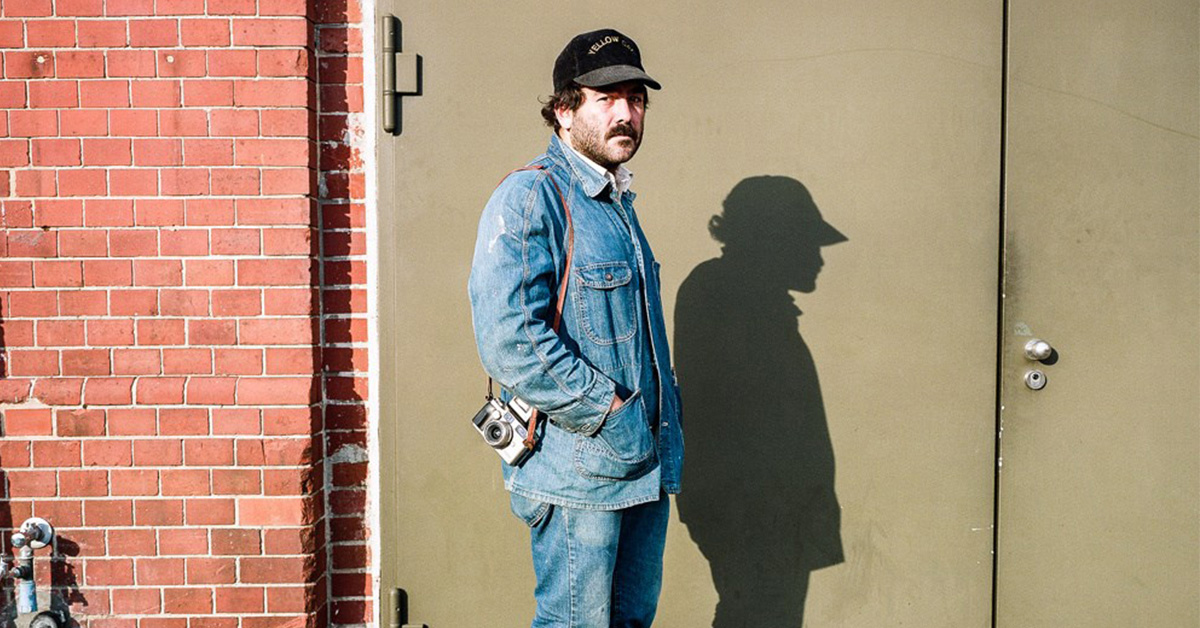
The Darker Side of Creativity | with Daniel Arnold


About Episode
Daniel Arnold, is a world-renowned NYC street photographer who has been hailed by Gawker as ‘The best photographer on Instagram,’ by Wired as ‘Instagram’s ultimate street photographer,’ the New Yorker turned over their Instagram feed to Daniel for a week to document activity on the NYC subways, and his work is regularly featured in Vogue as well as The New York Times, just to name a few of his accolades. And in the interest of full disclosure…Daniel also happens to be my cousin.
In this marathon conversation Daniel and I take a deep, candid, and unfiltered look at the creative process. We leave no stone unturned and share both of our very honest experiences with both the amazing (i.e. manic) sides of creativity…and we also aren’t afraid to talk about our numerous personal experiences with depression and burnout. I thought this article would be both helpful and timely given that October 7th is the beginning of Mental Illness Awareness Week.
If you are dealing with mental health issues, whether or not you work in a creative field like us, know that you are not alone.
If you’ve ever felt like your creativity is a calling, a part of your identity, or something you simply must get out of your system in order to feel alive or be considered a productive member of society, you don’t want to miss this conversation.
And as soon as you’re done listening (or even while you’re listening), do yourself a favor and look up Daniel’s Instagram page. His photos will literally blow your mind. And I’m not saying that because he’s my cousin….his 200 thousands followers definitely agree with me.
Episode Highlights
- The social safety net of holding a camera
- Creating art as a response to stress
- The performative nature of being human
- How photography lowers the unreachable pedestal of cultural fame
- The ways in which creativity is bred through confrontation
- Creativity as a positive relationship with the fear of inadequacy
- Legacy, wanting to be loved, and feeling like your contributions to the world give you internal value
- Processing expectations and moving past the disappointment of not meeting them
- Depression and it’s relationship with creating
- “Stop trying to be a good photographer…just make a mess”
Useful Links
About Guest
Daniel Arnold could be the William Eggleston of Instagram. Using his iPhone (along with a Contax G2 and Yashica T5), he captures the daily rhythms of New York street life in moments of both high drama and sublime banality. When he needed extra cash in March (“I had 40 bucks in my bank account and 10 grand of credit card debt,” he said), Mr. Arnold told his Instagram followers that he would sell 4-by-6 prints of his photographs for $150 each. By day’s end, he was $15,000 richer.
In 2012, the gossip website Gawker published an article about how Mr. Arnold had been censored: He had posted a cheeky but artfully composed photo of two topless sunbathers at Fort Tilden beach. Though he had only 1,500 followers at the time, Gawker called his Instagram feed a “stream of brilliantly voyeuristic snapshots of New York City streets.”
Transcript
Zack Arnold: I’m here today with Daniel Arnold, and for anybody that listens to the show, the last name probably sounds familiar, and it is familiar, in fact, because Daniel is my cousin. So, Daniel, it is a pleasure to have you on the show today.
Daniel Arnold: Yeah, it’s my pleasure.
Zack Arnold: So, in general, I really seek out and love talking to people that are highly creative, that really go out into the world and do their own thing, that are fearless, and unfortunately, none of those people return my email, so I just decided to go to my family rolodex instead. So I’m just gonna have to talk to my cousin for an hour today. I guess we’ll have to figure out how to fill up the time. Good luck. So I am obviously being very modest, and I think the biggest challenge I’m gonna have on this podcast is that you’re gonna be overly modest, because that’s your nature, and it’s my nature, but I think I would be remiss to not mention that you are probably one of the most world-renowned street photographers, you’re an Instagram phenomenon, and I don’t know your world that well, and you can help me clarify, and this is where your modesty is going to cause me problems, because I maybe, maybe don’t know enough to be able to truly talk about what you do, and you’re going to be too modest to do it, but you travel all over the world, taking what I guess would be called, for lack of a better description, just candid real-life street photography, and you do it for Vogue, and you’ve done it for the Oscars, and the New York Times, and all these publications, and you, if somebody puts in Daniel Arnott photographer, they’re going to just get blasted by stuff on Google and YouTube, so what you are doing, you’re known as one of the best in the world. Will that be a mischaracterization?
Daniel Arnold: You know, it’s funny, it’s one of these fields where it really depends who you ask. There’s a lot of people who would shake a fist and tell you that I’m a hack, and I would agree with them just as much as I would the ones who want to call me a genius. You know, I think that you probably have a similar experience, where you know there’s a lot of external validation, a lot of external discord, but for me it has really had no impact on the my personal experience of it. So, yeah, I mean, I’ve been incredibly lucky, and I have a really big audience, and a lot of opportunities, but yeah, I don’t know. I really don’t experience it that way. I’m, I’m just kind of like going through my life, trying to stay scared.
Zack Arnold: No, like I said, your modesty is going to get me in trouble, and it’s going to make this interview really, really hard. Well, well, let’s just leave it at the fact that you’re very, very well known, and for the most part very well respected for the work that you do, and I’m going to make sure to put links in the show notes to the types of work that you do, and we’re going to talk more about it, but it’s really, really hard to describe the work that you do, but it’s just mesmerizing, and I can’t even explain why, but when I look at your photos, just as I know hundreds of 1000s of people around the world do, they’re like, How did he get that? How is that even possible? And I think the best way to start this off, and I do want to dig much deeper into kind of your origin story and how you got to where you are, but just so people understand what you do now, I think the best way to characterize it is a quote that I heard of yours in an interview recently, which instantly just made. Jump out of my seat and say, this is one of the best quotes I’ve ever heard about anything. Instead, there’s nothing that ruins a photograph faster than a camera. Tell me what that means.
Daniel Arnold: If I remember right, I was responding. I get a lot of questions about asking permission and my process, because I think that a lot of what stops people from taking candid photos is fear of other people, and you know, so one of the things that I’ve always done is I don’t really use the viewfinder, which say what you will about it, maybe I should be using the viewfinder, but what I mean by that, aside from the fact that it’s a way to deal with being afraid is that once somebody sees a camera, once somebody knows that their picture is being taken and has to think about it, they leave their, the, you know, their true world and start putting on a show, which maybe they were doing to begin with, but there’s something about the self-consciousness that that a camera inspires that for me makes you know it immediately detracts from the picture.
Zack Arnold: Well, and it was funny, you, when you were talking in that interview, and you were describing this quote, you kind of put yourself in the position of the person that sees the camera, and they’re walking down the street, and all of a sudden they’re like, “Oh, wait, is that a camera? Wait, do I look fat today?
Daniel Arnold: Right? Yeah,
Zack Arnold: You know, it just completely changes your own perception of yourself, and that, as I’m sure you could describe in much further detail, that just changes the way somebody’s face looks and how they emote, and you know, the way that their eyes might be crinkled, or the way that their head is turned, or where their focus is, because now they’re conscious of themselves and their place in the world.
Daniel Arnold: Well, yeah, and for the sake of their little private universe, which is what I’m interested in, you know. I think it disappears the second that they start to think. Not only do I look fat, not only, you know, what am I wearing today, but who is this invader of my private experience that wants to take this picture, and why are they doing it? And should I be nervous, or should I.. you know, there’s just. it just interrupts the flow of somebody’s personal life, which I think is what’s interesting.
Zack Arnold: So, what is it that made you decide that I just want to walk around the streets of New York City all day? With, by the way, I want to make sure to mention to people, you still use a film camera if they’re thinking, well, you know, he’s just taking 1000s of digital pictures a day and picking the good ones, or, you know, what, he’s just videoing everything, and he goes frame by frame until he finds the good shots.
Daniel Arnold: I love that theory
Zack Arnold: Onto the film camera. So, what in the world ever compelled you to decide, I’m just going to walk around and not even use a view finder and just take pictures of people, because there’s a special type of creativity that’s compelled to do that.
Daniel Arnold: I think that a huge part of it is New York, I moved there from Milwaukee when I was 23 and it was just sort of my instinctive response to this total visual overload. It’s not a thing, it’s been a long process, it’s evolved slowly because it’s a hard thing to do, but my first response to looking at New York was like, oh, I have to somehow keep this, and also life suddenly was so fast-paced that I needed a way to just keep track of what was going on, and so there was that factor, and there’s also the factor that I was a kid, I was from a much smaller place, and I was scared to death, and without realizing what I was doing, I sort of built this force field around myself, not only a force field, but a passport to take me into places that I was, you know, I was a kid, I would stand outside of a bar at night and look in the window and think, like, yeah, someday, someday I’ll have the balls to go in this place, and it ended up being this reason to go into a place, and then also this perfect sort of tree stand to hide behind, and so that I think was the first seed of it, and then over years and years of being in New York, and you know, just the ups and downs of trying to figure out a career growing up, blah blah blah, I found that this sort of aimless wandering at the beginning or the end of the day was just really good medicine for my general dysfunction, and it wasn’t even a photographic thing to begin with. I would just, there were times I’d walk all day and just kind of keep my hands in my pocket and keep my mouth shut, and eventually the two just kind of made sense, you know. I started carrying a camera everywhere I went, and then these long walks became less indulgent feeling and more productive, and, and I don’t know, and then suddenly, and I’ve been working as a writer for 10 years, I don’t want to jump too far into the story here, but you know, I’ve been working as a writer for all these years, and I was pretty burned out, and suddenly this photo thing started getting attention with help from Instagram, and it became the exit from sort. This first movement of my life in New York, and so all these little things along the way, all these sort of like accidental benchmarks were huge motivators of this sort of odd practice. I don’t know, it’s just been so interesting that it just reveals more and more of its value as I go in ways that I never would have expected.
Zack Arnold: Well, the first thing that I want to pull out of that, there’s so much stuff that I could pull away from that, but the first one that really resonated with me perfectly. I love you saying that having a camera is kind of like having my own little personal tree stand, because number one, that shows, boy, are we Wisconsin boys, or what? Because there’s a lot of people in New York, or LA, or all over the world, saying, “What’s a tree to stand? What is he talking about? And I’m like, “Oh, I totally get what he means. So, the reason I find that funny is because one of the reasons that I got into video production is I feel exactly the same way. If I’m at an event, if I’m holding a camera, I have an excuse to not have to talk to people. Yeah, you know, for me, I’m not doing it candidly, and it’s usually a video camera, so somebody has asked me, like, “Hey, you’re good to the camera, can you, you know, film our wedding, or can you film this event? or “Hey, why don’t you take pictures, or “Why don’t you hold my phone and take the video? And part of me says, “Man, this is such a burden, and I just kind of want to be present for the event, but then there’s another part of me that’s like, “Yeah, but I don’t have to socialize if I’m holding it
Daniel Arnold: Right,
Zack Arnold: So I think that you and I definitely get along very well there, and I, the image of it being a tree stand, of course, will analogize to the idea of being on the hunt, and I love that too, because if somebody were to watch one of these videos that you know, like Vogue, would put out a video of you and your process, and I believe other people have as well, it was really the first time that I had seen the process of taking the pictures, because I’ve been following the pictures for years, and I actually have bought a couple of the spreads and put them up at my office, like I’m not really an art person, I’m not a photography person, but there’s something that’s always compelled me about candid real life in a similar way that it is to you, which is why I think I do what I do now, so candidly, and really digging deep into human behavior and people’s stories. It’s funny because we were talking about this before we recorded, where I’ve also recorded with your brother, my cousin Noah. He’s doing something completely different than you, and you two are doing something completely different than me. And at the end of the day, I think all of us are doing the exact same thing.
Daniel Arnold: Yeah,
Zack Arnold: You know
Daniel Arnold: That’s right. Well, especially the way that we have all sort of translated this first seed of creative success into this opportunity to be these sort of self-help guys.
Zack Arnold: Yeah, and the funny thing that I see about that, and you’re right, like Noah is doing it with being a vet, but not being your normal vet, like he’s doing it being Dr. Noah of Noah’s Ark. I’m not sure if I’m going to be releasing that before or after this one. So, for my listeners that are listening to this, once it’s published, I may have released it, I may have not, I just don’t know yet. I’m a creative person, I don’t really know what my schedule is, but if they have heard that one, they’ll know that he basically paved his own path and said this is something I really believe in, but I’m not going to do it the way that the man tells me I should be doing it.
Daniel Arnold: Yeah,
Zack Arnold: And that’s essentially the course that I’ve taken, where I think of the three of us, I’m the one that’s still spending the most number of months of the year still working for the man I haven’t quite gotten under out from under his thumb yet, but at the same time I’m doing something that’s very much in the space to be able to help people, just the way that Noah is doing with animals, but also with people, because that’s something he talked about, where he’s like, I don’t really do what I do for the animals, I do it for the people that bring in the animals, and he becomes their own personal therapist, that’s probably the conversation that ended up getting me in tears, but what I’d love to know is specifically talking about this idea of self-help. Where do you see yourself in that space?
Daniel Arnold: Well, it’s definitely not a calculated thing, it’s just kind of my natural reaction to a platform to an audience to reveal myself to, you know, especially when it’s an audience that wants to, wants to throw roses and tell me I’m a genius. I don’t want them to feel, I don’t want them to think that I feel like what I’m doing is most valuable if I can turn back to those people and say no, I’m you, we’re the same thing. I, you know, I opened up a space in my life to let this consume it. I’m spending a huge amount of time on it, but you know, there’s nothing so special about any of us, and I don’t know, I just think it’s, it’s a starting point for a conversation that ends up being sort of the same in spirit as the photos that feel most like mine, where it’s just this sort of like transparent human thing,
Zack Arnold: And I think that that’s probably what I gravitate. To in your photo, so much, and I love that you talk about the fact that we’re all the same, right? We have that was one of the things that you talked about in one of your interviews, is like what the internet has become today. At some level, it has kind of put all of us on the same playing field, whereas before the internet we had the celebrities and we had, you know, the athletes, and they were just these people that seemed like they were in another realm, and they’re, they have some crazy genetic gift, or whatever it is, and we’re just normal people, and we can never be them, but you know, especially working and living in Hollywood for my entire adult career, there are so many moments where, especially when I came in as a much younger person with literally stars in my eyes, thinking, “Oh my god, I’m blessed to be able to work in Hollywood and work with all these amazing people, and the deeper you get into it, you’re like everybody’s just assholes, they’re all just normal people, like there’s nothing special about anyone, and there’s something disheartening about that, but then there’s also something very encouraging, because you’re like, wait, well, that means I have the right to do this too. I can be just as successful as anybody else, and that’s what I think is so cool about the work that you do.
Daniel Arnold: Yeah, I mean, that is really my favorite part, at least, of the surface experience of success, is that you know, like you, I get my feet in a lot of doors that I never thought I’d even come close to. There’s a lot of rooms that I, you know, I never thought I’d be in, and I get in the room, and you know, everybody’s full of it, everybody’s faking, everybody’s doing their best, and that sort of helpful disillusionment, I don’t know, it’s I think it’s a maybe just a growing up thing where we are fed this idea of the world as being this sacred space that you need a password to get into, and I mean it’s just it’s a really privileged experience to get to find out that that’s all nonsense.
Zack Arnold: Yeah, and that’s one of my favorite things, and I think this is something that I’m sure you and I have in common, for sure, is that all I want to do now that I’m starting to creep over to the other side, is give away all the secrets, like they tell you it’s so hard, and you can’t do that, it’s really not like this is all you have to do, this is all you got to do, right?
Daniel Arnold: Yeah,
Zack Arnold: But there’s so few people that are actually willing to just pull open the curtain and say the Wizard of Oz is just this little tiny meek feeble man, like that’s really all that it is, right? So tell me in detail, like give me one specific example, because I know you’ve been behind the scenes at red carpet events and award shows. Just give me like a microcosm of whether it was the Oscars or the Emmys, or just something that kind of comes to mind, because I’ve seen the photos behind some of them, and when you see them from your point of view, you’re like, oh, this is just a bunch of people where they’re trying to fix their hair and their feet hurt and they’re awkward and like just like everybody else. So, can you give me a specific example that comes to your mind?
Daniel Arnold: Yeah, I think that the top instance of that in my, my career is that I go to the Met Gala every year, and the Met Gala is first of all a room that I didn’t even know existed. It’s this annual fundraiser celebration of the Metropolitan Museum of Art’s costume exhibition, and Vogue gathers together this a list of anybody you could imagine, I mean, basically they fill the museum with celebrities, and they’re all dressed up, and it functions basically as a red carpet photo shoot, but spread out throughout the whole museum, and you get all these overlaps of personalities and interactions, and it’s just like, first of all, a fascinating place to be a consumer of American culture, because you’ve got all the players there, their guard isn’t down, but they’re interacting in a way that you, you would never get to see, and also it’s just like their humanity is very much on display, like no matter how big of a big shot you are in that room, there’s somebody who you see, and you’re like, oh my god, and so that’s that’s one part of it, that’s a fascinating sort of like exciting celebrity part of it, but there’s also to be me in that room is to be completely invisible, you know, I don’t exist at all, I’m one of maybe five faces, aside from the, you know, maybe the catering staff that that not everybody recognizes, and you know, I’m not carrying around a big honking camera either, and so I can sort of slip around undetected and just surprise people with my flash and get this very honest human picture of this world that we have decided is on this unreachable pedestal, and I’m not in there as Robin Hood, you know, I’m not trying to, you know, ruin anybody’s secret of glamorousness, but it’s just a very interesting place to do my job, because as a storyteller. Where you’ve got all these faces that have such baggage, such connotations, and you know they’re, they’re sort of like left to their own devices, and it’s just like endlessly fascinating. And to be the invisible guy in that room with the camera is, it’s just the best job. It’s a two hour adrenaline rush.
Zack Arnold: What I want to talk about now is the road to that best job, because it’s one thing to talk about how fascinating your work is, and the fact that you now basically make a living strolling around the city and taking photos and doing it at awards shows, and it’s like, man, how I can’t believe people pay me to do this, right? I’m sure you’ll have that moment, at least you know, once a week, right? Like, I’m really, I’m really getting paid to do this for a living, like seriously.
Daniel Arnold: Yeah, like,
Zack Arnold: I hope somebody doesn’t figure this out, but, but the road to get there was anything but pretty, and I know there was a long time where, and you and I didn’t really know each other that well. I mean, we knew each other extremely well when we were young, so really, still the best memories that I have of you and Noah are basically playing hide and seek in the haymow at, you know, Grandpa Jess’s farm.
Daniel Arnold: Yep,
Zack Arnold: So you know that’s still those, those are the most memorable images that I have. And then all of a sudden, you know, I moved across the state and we really didn’t see each other that much after that. So we’ve never known each other that well as adults, but obviously, you know, our families are very interconnected in that we at least keep in touch. And then Facebook came about, so we knew what was going on, and it was always what’s going on with Daniel. Well, we don’t really know what he’s doing, like we’re not really sure what’s going on with that guy. So talk to me. You basically said, well, you know, I was writing for 10 years, but there’s a big story in those 10 years, and I think it’s really important to understand the struggle that you went through in order to get where you are today, because without that, I don’t feel that there’s nearly as much power in what we’ve talked about so far.
Daniel Arnold: Yeah, although you know it’s funny, I don’t think of it that way exactly. I don’t think of this as being some triumph. I really sincerely feel still in that struggle, but I’ll still tell you about it, and it’s really, it’s not so much the struggle of a young man’s career, which was part of it, but it’s really just the struggle of the absurdity of being a human being and being fed expectations and all this weird context and illusion, and trying to figure out that there’s some just normal one foot in front of the other path through it, and so yeah, I showed up in New York, I worked for my cousin for a summer in a different cousin, obviously in a job that wasn’t going to lead to any kind of career for me, I ran a judicial campaign, which was really just a way for me to get acclimated in New York, and from there it was just kind of like desperate scraping, you know. I ended up doing a few months’ work at a bookstore, and I used that time, part of which I was, I didn’t have an apartment for, I was like, you know, couch surfing, and, and just kind of figuring out my life day to day, but I would use that time to apply to, you know, 15 jobs before I left for work every day, and I’d go to work and suffer through it in this place where there’s like, you know, cockroaches and rats running around and piss dripping from a pipe in the ceiling, and you know, it was, it’s, it’s all very romantic now, but it was hard, and, and the truth is that from there everything has really worked pretty well for me. I got a job pretty quickly writing the music blog of this teeny bopper website that no longer exists, and kind of use that to make an excuse to get in touch with everybody who was working in the music business, because I was 23 and I thought that was like the most important thing in the world. Wanted to write about music, managed to make that happen. Strong, strung together a few free writing jobs, and then was writing a blog for myself, and translated that to doing magazine work once in a while, and just really through a series of flukes, like I did an interview when I was still at that website at Billboard magazine, got all the way to the top, but in the end I wasn’t what they wanted, left, forgot about it. Two years later, I was working at some rinky-dink little ad agency, randomly, like two months in marketing, even though I had no training and no experience, and quit that abruptly. And on the day that I quit, I got a note from the senior editor who had interviewed with a billboard, saying, “I just got this job at MTV, I need a writer. What’s your work situation? And that happened more than once. Like, the day that I quit, I get this random email, and so then I went and worked at MTV for a few years, and MTV is a place where the tide rises and falls pretty dramatically, and I got laid off at one point and worked as a ghost writer for creative director who had been laid off and had a job since he was 15 and didn’t. How to write an email, so I was being his ghost writer for a bit, and just as that was excruciating and unbearable, I get a note from the person who sat next to me at that teeny bopper job way back, who says, you know, I just got this big deal job at Nickelodeon, and I need a writer, what’s your work situation? So I’m like, I can start tomorrow, so I go work at Nickelodeon for a while, and, and through that experience I burned myself out pretty bad. It wasn’t the right place for me, I was with very good people, but it just wasn’t the right content, it wasn’t the right culture, and you know, in the background I’m doing this photo thing, this sort of photo therapy for my own sake, and just as Nickelodeon is becoming unbearable, that photo thing just kind of emerges, and suddenly is getting me all this attention, and people are writing about me, and people want to interview me, and at that point I’m, you know, I made the decision to just kind of turn my back on this, this career that I was proud of, that was not, not a career that you’re supposed to get to have, you know, making a living writing about music seemed impossible, and I just walked away from it, but I think what you’re getting at, aside from the logistics of, you know, the tracks of a career, is that I don’t know, I think my general experience of things is, you know, through a lens of insecurity and self-doubt, and just general, I don’t know, it’s.. I just don’t have an easy go of it. I’m not saying that I have a particularly bad, I think that I have a very level head about these things, and I like thinking through the realistic side of my experience, and not trying to, you know, bank on all these big glamorous moments that I’ve had, because ultimately those moments are exciting while they’re happening, if at all, and you go back to dull everyday life, right at the end of it, and I don’t know, that’s the part you got to deal with, and so I guess really, without identifying any particular star demon in my world, I think my whole creative evolution has been at least as much as a career ambition, it’s been this sort of therapeutic exploration of the world, and trying to make sense of it, and trying to feed the parts of me that enrich my experience, and just seeing what I get away with. I don’t know, I mean, and it has made me pretty bulletproof through all those times, like, yeah, I’ve obviously, I’m a human being, I’ve.. there are dark, dark times, I’ve been very depressed, I’ve behaved badly, but the, the creative work has always sort of been this persistent little light, not necessarily at the end of the tunnel, but like just through the darkness, through, you know, whatever I can grab onto and hold on to as I fly down this slide. Now I’m getting lost. I always do this when I get carried away on these,
Zack Arnold: Yeah. Well, people with, you know, tendency to be highly creative, they have that problem every once in a while. Trust me, I know where you’re coming from, but talking about the fact that this really started for you as therapy, it wasn’t like, hey, you know what, I think I can see a fairly steady revenue stream coming my way if I just go out and I start taking photos around the city of New York, and I put them on Instagram, and if I give myself three to six months doing that, I can start to make x number of dollars, and then when the day comes and I can barely pay my rent, and I decide I want to put a bunch of photos, and oh my god, I just made, you know, over $10,000 selling these on Instagram. Oh, I’ve, of course, planned all this with, you know, quarterly revenue cash flow projections, right?
Daniel Arnold: Yeah,
Zack Arnold: I mean, that’s not the way that the world works for you. This came from a need, not a want, and it was just this requirement in this therapy that you said to just help you make sense of the world. And I think that’s another area where you and I are so similar. That’s why I’m doing what I do right now. If most people were to look at cash flow projections or all that other crap you’re supposed to have when you run a business. I don’t have any of that. My job is to make sure that I’m bringing in enough with this site that I’m no longer taking money out of my personal bank account, but this is something that I feel compelled to do, not because I see some form of cash flow or career opportunity. What I. Love to turn this into a full-time career, absolutely, but like with your photography, there’s this just compulsion to learn as much as I can from other people about their experiences, but not only learn myself, but break down the lessons and share those with others. That’s my form of therapy, and so I can completely understand how you’re doing it with a camera is very similar to what I’m doing with a microphone or with writing with blogs or whatever it is, but where I kind of want to go next is exploring this link between these super crazy high levels of creativity, and not just I’m a creative person, but I’m compelled to be creative to the point where I almost don’t even know what to do with myself if I don’t have this avenue, so what scares me about the rest of this conversation is that I’m known for being incredibly honest and unfiltered and very vulnerable, and I think I’ve met my match, so this could become a very, very interesting conversation.
Daniel Arnold: Let’s get dark,
Zack Arnold: But I know that I’ve had a lot of my own history of burnout and depression, and there’s also luckily in my genetics, there’s a lot more of it, and there are other people in my family that have dealt with it, and I’ve talked a lot about my own experiences on the show, but I want to help anybody that’s listening that has this creative streak that might be thinking there’s something wrong with me, I’m broken, like I shouldn’t be like this, like what’s going on in my brain. Why can’t I make sense of what’s going on? I want them to understand that there are a lot of other people that go through these challenges. So, let’s just take the gloves off and let’s just get dirty and let’s just start talking about this.
Daniel Arnold: Yeah, well, I gotta say with that in mind that it’s crazier for me to imagine that there are people that don’t have this experience, I believe it, I guess, but I cannot imagine receiving the world in a way that does not include that feeling, and you know, I’m not putting a name on that feeling, but I just, it just boggles my mind that everybody doesn’t know what it is, and I guess that’s just the nature of one brain in a sea of people, but
Zack Arnold: So,
Daniel Arnold: Yeah,
Zack Arnold: So in a nutshell, and I honestly don’t know much of your own personal history. I certainly know my personal history, and you know, amongst all of our family members, it’s all like, yep, it’s just another Arnold male, like we’ve all got it, we just all know that it’s there, but you know there’s not a people are still a little wary to just kind of, you know, go in there and be like, “Oh yeah, so this is what’s going on, and this is the reality of all of it. So, just, I mean, obviously, I don’t want you to divulge anything that you’re not comfortable divulging. There are no, there’s with both of us, there’s really no such thing. Like, I can’t think of much of anything I haven’t shared at least once on this microphone, so with the high levels of creativity that you experience, there’s a dark side that comes with it. So just kind of give me the paint the picture for me. You’re a photographer, like paint the picture and let me know, and let the audience know, like, what is it? What kind of spaces do you go into, and what causes them, and like, let’s, let’s give people an idea of the fun side of all of this.
Daniel Arnold: Yeah, well, you know, let me come at it from the opposite side, actually, because there’s a very interesting thing that I’ve noticed lately, which people talk about with creative success, that there’s this, there’s this drop off at some point, because success is an end to that desperate feeling, to that that emptiness, emptiness, which I think is nonsense, but I do find that in the absence of, you know, total poverty, total aimlessness, purposelessness, that when I work now, finding fear is such a huge part of it, and it’s not always intentional, it’s not always conscious, but I always find a way, even at my most comfortable, to be afraid, to be afraid of failure, to be afraid of, you know, not measuring up socially, whatever. There’s just so many mistakes to be made, and there’s something about that fearful state of mind where I am confronting my inadequacy, my perceived inadequacy, that makes me a better artist, that, and I think it’s because it puts me in this sort of involuntary mindset, where you know, muscle memory kicks in, I use a camera every day, that’s sort of where the walking all the time thing has become handy at this point, where I can go to a place where I’m terrified, where I don’t know how to function, where I don’t know how to look people in the eye, and my hands remember what to do, and my brain just sort of like runs around like there’s a fire alarm going off. And does my best to keep track of that emotional experience, and so maybe that’s a control thing. I think control has a lot to do with it, just that the total lack of control in, in my life. I think no matter who I am, no matter what I do, you know, obviously, control is just a total fantasy. I think that, you know, assigning myself this purpose, for one thing, makes that lack of control more manageable, takes my mind off of it, gives me a set of things that I have to do, but also I think that there’s something about the making things, making things is just I don’t know if it’s part of the, it’s like the God story circling back, or if it’s just human nature, but there’s something about, you know, presenting something that didn’t exist before that makes my meaninglessness and total lack of control feel less gaping and less painful because I’ve been able to translate that feeling into something that can communicate my experience, that can, you know, theoretically connect me with people, whether I actually want to connect or not, but you know, it’s just, it’s rather than either pretending that everything’s great, or believing that everything’s great, or just floundering in the darkness, I am able to take that experience and use that time and space to craft these little message in a bottle paper airplane love letters that I can throw out into the world, and I don’t know, it turns that dark lack into this invitation to see me and to know me, and although I would not identify see me and know me as objectives in my conscious life, I think that that’s kind of what we’re all doing deep down, you know. Love me,
Zack Arnold: Yeah. Well, one of the things that you said that just absolutely terrified me, because it’s like you hardwired into my brain, it’s like, oh my god, these are my thoughts. It’s this need to create, right? And I’ve always, I’ve been thinking about this for years and years and years I’ve talked at length ad nauseum, I’ve written ad nauseum and been very, very clear with my audience, and declared that I am a workaholic. And from what I understand, you’re the same. I know that your father is the same. I know that my father is the same. I mean, this where we got it from. And then you think about, well, where does this come from? As you know, like behaviors, is it habits, is it, you know, imprinting, is it just this is what I saw growing up, so therefore I am, and the more that I thought about it, I realized that it really wasn’t, was because of this compulsion to create something, and you really put a thumbprint on it, which is, oh, it’s because of my feeling of complete lack of control. Why am I here on the earth at all, what is my point of even being alive, and oh, but if I can leave something that has my thumbprint on it that said from the time I woke up this morning to time I went to bed tonight, there’s something that exists that didn’t at the beginning of the day, and it exists because of me, right? So it makes you feel like you have a place in the world, but the flip side of that, and maybe this is something you experience too, but for me, if a day goes by where I haven’t contributed to the world or created something, even if I’ve been quote unquote really busy,
Daniel Arnold: Yeah,
Zack Arnold: I feel worthless.
Daniel Arnold: Oh my god, yeah,
Zack Arnold: You know, if I spent an entire day cleaning up the house and doing laundry and doing dishes and doing all these things that should be done that my wife very much appreciates. I feel like a worthless human being because I haven’t created something new. Does that resonate at all?
Daniel Arnold: Oh, yeah. I mean, if I go, if I go a few days without making something, without coming up with a photo or some little bit of productivity that I feel proud of, and proud is, is misleading. I mean, proud is a very fleeting, momentary thing, but if I don’t, if I don’t have something to point to, to be like, oh, look at that, that’s what I did today, I, it’s not even misery, it’s like I start to, my identity starts to slip away, like I, if I don’t have something that that adds to my story of myself almost daily, I start to forget what the story is, and I start to doubt that any of it’s real, and that I’m worthy of anything, and not in a way that I experienced so tragically, because I’m so used to it. It’s just part of the process, and there are times where you know it’ll come, it’ll sneak up on me, and I’ll be a few days into it, and I’ll be really, you know, headed toward the darkness, and I guess really usually I snap out of it when I, when I find. Find the antidote, where I am, you know, I make something, and I’m like, oh geez, was I feeling that bad all this time because of stupid photography? That’s insane. What’s wrong with me? How am I so vulnerable to that stupid pitfall? But it really does, it really gets me.
Zack Arnold: Well, I know that one of the areas that it gets me in trouble, and I’ve been through this fairly recently. I would say probably in the last couple of years, where.. and I’m sure this is also something you can relate to, where when you get into a project, and maybe it’s a little bit different for you, because you don’t have long-term projects, it’s just for you, it’s kind of.. you go out, you take a picture, you take more pictures, like they’re there.. it’s a collection of all these moments, but for me it may take four months straight, just total blinders. I shut the world out. I don’t talk to anybody, I don’t shave, I don’t shower. Maybe I do every once in a while, but you know what I’m talking about, right? Where you
Daniel Arnold: I do,
Zack Arnold: You just, you get in the space and the world disappears, and then all of a sudden you come out of it. But if you don’t get the output that you were expecting, like you said. Well, I know that I’m doing this, but it’s totally going to be worth it. And I have this vision of what this is going to become, and then you get out of it, and it doesn’t reach that vision, and you’re like, I just wasted four months of my life, and I just beyond hate myself, and I’ve let my family down, and I’ve let everybody else down, and that’s when you just go way deep into the dark, and boy, have I been there. But one of the most profound things that I ever learned about depression, and this was a long time ago, it’s taken me a lot longer to figure out how to make sense of it, but I was told that depression is just anger turned inwards, and I just felt like, because in my mind I was making these conscious choices to shut the world out, but because I had such grandiose visions, saying, but this is worth it, you don’t understand, you don’t know what this is going to be when it’s done, and then the grandiose vision isn’t there, you just, you want to kill yourself, and I mean that partially, literally,
Daniel Arnold: Yeah, yeah, that’s, you know, I, I mean, that gives me shock waves of empathy. I don’t. You’re right that I don’t really put myself in that position, and that position is available to me. And so far I haven’t thought about it in those terms, so I haven’t thought of being afraid of that prospect, but my brain just, just won’t do it, and I think it’s because I have found this really addictive, easy fix of just, I mean, for my job is very conducive to this addictive, you know, I mean, I guess addiction, where I don’t even need a project, I just have, like, given myself this purpose, and I have resigned myself to being a sort of almost passive conduit for, you know, other people’s experience, and I have opportunities to hunker down and spend four months or spend a year making a book or making a show or doing these things that traditionally are the things you do when you are a photographer, and so far I really can’t pull myself away from the daily, just the, I mean, I don’t even want to call it a grind, but it’s, it’s really just this daily fix, and I can’t, I really, that that four months thing sounds so hard,
Zack Arnold: And I’ve done it way beyond four months. That was the, the most recent project that really threw me into the hole was me launching a new product, and so basically I had turned down eight very high-profile, high-paying TV jobs over the course of a month. I spent 15 years getting to where I am, desperately clawing and scraping, and then I finally decide, you know what, I’m just going to take a six month sabbatical. I need a break from film editing, and I really want to see if this online thing has got legs, and if I can do this online teaching thing. And then, of course, it’s like you said, you know, you decide to quit a job or you leave a job, and the next day you get offers. It’s exactly what happened to me. I said to the world, it doesn’t matter what it is, I’ve just decided for six months I’m unavailable. Eight job offers in a month,
Daniel Arnold: Unbelievable,
Zack Arnold: Like stuff that I would have just given my left arm to do six months before that, I’m like, you’ve got to be kidding, but I stuck with it, and I just like I said, I went into that tunnel for months and months and months, and I came out, and it wasn’t nearly what I had projected. However, people that objectively looked at the work that I’d done, looked at all the numbers, it understood business and everything else, they’re like, man, this, this is really good, like, you’re really, you’ve got something you need to keep going. I’m like, but you don’t understand, that’s not the picture that was in my mind. And when you’re creative, that’s all that matters, is trying to manifest the image that you have in your brain and get it out, so other people can see what you see. And when you’re creative, that almost never happened.
Daniel Arnold: No. Well, and you know what, in my experience. Yes, and you know, you have helped me out and put it in, in picture terms, which brings a lot of personal stuff flooding in. I mean, that is, that is a daily heartbreak for me, which is, I spend, you know, there’s there’s two different brains at work for me, there’s the guy who walks around and takes the pictures, and there’s the guy who receives the scans and does the edit, and the first hour to 24 hours of every edit is just terrible heartbreak, because it never looks how I thought it was going to look. It’s never as good as I wanted it to be, and I can’t. All I can see for the first day is what’s wrong, and is what’s missing, and you know where it doesn’t live up to what I’ve done, but luckily, you know, I’m in such a concrete world with, with pictures in a way, they hang around until that part passes, and I can see them in a different way, and you know, I wondered that hearing your story about your, your six month failures, like it wasn’t a failure, was it?
Zack Arnold: No, to anybody else in the world, they’re like, man, that this is awesome, like you did great, and but to this day I still can’t reconcile the reality and the image that I had in my mind, and what this kind of brings up for me, and this is, I’ve never shared this before, but I, like I said, we’re just taking the gloves off, and if anybody’s still listening, well, decided I’m marking this one explicit, I don’t care, we’ll see if anybody goes as deep, but I know that one thing that can be common that comes along with these super high levels of creativity, and like you said, this compulsion to feel like I need to create and add to the world. What can come with that, part and parcel, is the God complex, and I have been told before that I have a God complex, and when they said it to me, it really hurt, and then I thought about it, I’m like, oh, they’re not wrong, oh yeah, okay, right, and again you can hold a lot of weight in that, and I think that you’ve alluded to, like, some form of seeing the world that way as well, from your perspective too.
Daniel Arnold: Yeah. Well, I think that is such strange, touchy territory, and I think it’s a shame, because what is wrong with having a god complex? I mean, you are the.. there’s no question that you are 100% the inventor of your universe. Your perception is the defining factor of what the world is. If you die, the world that you know ends. You are for the purpose of, you know, as a creative guy, as a person who is taking your experience and deciding which parts are the important ones in a way that is a god story, and I don’t, I don’t know, like that, that becomes equated with ego and with grandiosity, and I don’t think that that’s true, and I’m not saying like I’m God, but I’m saying that a God-like experience I think is totally reasonable and totally normal if you are the engine of your world,
Zack Arnold: And one of the reasons that I brought it up is because one of the really dangerous things about creativity, and I’ve done a lot of reading about this and research, and I love me some science and some numbers, and they’re always talking about, oh, like the mad scientist, right? Like, if somebody’s creative, well, they must have mental health issues, and what the science seems to be finding, and it’s not definitive yet, but people that are kind of creative, that are somewhat creative, maybe they like to scrapbook, or they enjoy knitting, or whatever it is, like they like creative endeavors, but you know they’re not on this like the crazy end of the spectrum of creativity, they actually experience significantly less mental health issues, but then when you get to the people that are on that extreme end of the spectrum that feel completely, you know, they’re compelled to create things because it’s part of their identity, and they do have, like, the mad scientist hair, and they’re in the dark room for months, and they’re making stuff, and they’re antisocial, and all these other things that you think about, they have much higher rates of mental health issues, and my theory, and I shouldn’t, I would, I should say, my hypothesis is that so much of it has to do that when you’re highly creative, if not almost all of it, all of your identity is tied up in your ability to create, and when you’re not able to create something, either at your level or that disappoints other people, where you’re thinking I’m putting this out into the world, this is me, and people say, well, that’s trash, like you’re not an artist, you’re a hack, that’s not just attacking the work, that’s attacking the core being of who you are.
Daniel Arnold: Yeah, well, and I, you know, there’s so, so much in that that I want to, I want to pick at. I mean, for one thing, obviously, there are there are mental health issues that go well, well beyond. On this, and I don’t mean to be insensitive to that whatsoever, but I think in that conversation a lot of what mental health issues means is just like having a, you know, not having the typical controlled, socialized, well-behaved experience of a life, and I think that that exploring the world ambitiously, that the delving into things deeply, and being sensitive, and letting it all in, and questioning it. I don’t know, to me, I feel like it leads to, I don’t know, I mean, it’s, it’s scary to say these things out loud, because higher consciousness sounds like I’m a raving lunatic, but I do think that there is a level of experience that I have now because I let myself be so open, because I dedicate so much time to letting the world pass through me, like I understand my place in the universe much better than I ever did before, and in a way that’s very helpful, in a way that doesn’t necessarily make me better at socializing or makes me fit in better, but it just makes me, it makes my job of existing a little bit easier, because I’ve just spent so much time examining it, and so I think that the mental health thing, I don’t know, I mean, obviously, if we get ourselves to a point where we want to jump off a bridge, you know, that’s that’s one thing, although I think questioning the responsibility of staying alive is a reasonable thing to do too, as long as you decide to stay alive,
Zack Arnold: One thing that I want, I don’t know if I’ve ever talked about this, so I’m really taken off the gloves here, but to kind of go a little bit further down the line chronologically from this kind of four month project that I was in the middle of, and the world came crashing down, and objectively everybody’s like, what’s your problem, man? This is great. It literally got me to the point where I was in the fetal position in bed for half a day, and the only thought going through my mind was my family would be better off without me, and that’s a really, really scary place to be, but I think what the interesting thing about this, and maybe I hope you can’t relate to any of this, something tells me you probably can, but because I’ve been through this enough, there was a moment, not even just a moment, like maybe I would say actually most of the experience, because I’ve been through it enough, and I’ve spent so many years learning about it and researching it, where I could step outside myself, like you said, a higher consciousness, I think, is a good way to explain it, where it’s like, dude, seriously, you’re fine. Like, what’s your problem? Like, I know you feel all this stuff right now, but it’s not you, it’s neurochemistry. Like, just chill out, this too shall pass. You’re gonna get through it, but you don’t really, really believe all this stuff. So, it was almost like the, the angel and the devil on the shoulder, so to speak.
Daniel Arnold: Yeah, you, you’re, you’re, you split. I was thinking about this in sort of corny metaphoric terms, recently I forget what even sparked such a corny thought, but I was thinking about the idea of being alive as dealing with a river, and that there are people who try to stand still and be in control, and you know, collect the water, whatever it is you do when you stand still in a river, and there are people who get washed away, there are people who choose to get washed away, and I was thinking about how there’s this third thing, where, which I think is a consequence of being washed away, which is that once you relinquish control and give up on the possibility of control and get thrown down the river, maybe once in a while you wash up on the shore and you’re out of it for a second, and you can set up your little, you know, your little mill and take the energy of that that river and use it to your advantage until the water gets too crazy, and you get washed away again, but that experience of, for the first time, getting thrown down and letting go of, I give up on this idea, but
Zack Arnold: I love the idea, like I think what you basically just described as life, you know, like you were brought up to believe, well, this is the way things are supposed to be. I’m sure that you know when you were going to high school and Nicolette, you weren’t saying to people, “Well, I really want to, you know, live the bohemian lifestyle and write for MTV and Nickelodeon, then I’m going to make photos someday. Everybody had an image of what Daniel Arnold was supposed to become, right? Like this is the path that you follow, and that’s this feeling of control. Like, well, I know that I’m on this path, and I just need to go to this school and get this degree, and do this internship, or do this residency, or whatever the path is that I’m supposed to be on. As long as I put in the work, well, I should reach the destination, but then as soon as the river comes and sweeps you. Way in whatever form life has for you, then all of a sudden that’s where everything just goes crazy, you’re like, but this isn’t the way that it was supposed to be. I thought I was in control of everything,
Daniel Arnold: Right. Well, and that’s why your six month form, you know, these these crushing failures strike such a note with me, which is because those have become for me the most valuable things that happen in my life, I’m so grateful for those disasters at this point, and of course they’re excruciating when they happen, but, but I know that they’re, that that’s just like turning up the soil so that the next round of things can grow out of it. I don’t know, I, I think that there is a way to go through the world where you never, you know, spend all of your time trying to avoid these, these messes, and I, I just think that’s such a shame, and I think that your story, I mean, my experience of your story, of like thinking I’m such a failure, and thinking that I’ve let everybody down, and thinking that I’ve made a joke of myself, is that it always, every time I just need a little bit of distance from it, and then I snap back into this understanding of like, like if I think of work that somebody else does, the stuff that I always like the most is the I don’t know that naive outsider thing, where you, you can’t do it on purpose. There’s no way you could do it on purpose. It’s just like this unstoppable manifestation of who you are, and that’s the kind of stuff that happens when you’re failing. And I just think it’s so much more interesting to see what comes of a failure than to see somebody perfectly execute their vision.
Zack Arnold: I couldn’t agree with any of that more. I mean, it’s, it’s funny, kind of going back to what you said a little, little further back, where you’re like, you know, some of the worst failures that I’ve been through, like I’m so grateful for them, and when I was going through this, and I don’t know if I had this kind of perspective, the first couple of times I went through this, when I was in my early and mid 20s, like then I just thought I am broken, like my head is messed up, and there’s something wrong with me, I had no understanding what was going on, but after dealing with it for over a decade, there was some sense of perspective, and like I said, there were these two voices, but one of the voices was, and it was a very, very distant voice, way at the end of the tunnel, but it was kind of, you know, shouting at the distance, saying, “You’re gonna be so glad this happened to you someday, this is gonna be such good experience. I’m like, “Shut up, shut up, this sucks, this is awful, I can’t get up off the couch, like I’m dying, like I don’t even want to be alive, but that voice was there, like you’ll be so glad this happened, and this is going to be an amazing learning experience. And if you just push a little bit further and you’re patient for a little bit longer, you’re going to look back and say, “Oh my god, this is one of the best things and the biggest turning points in my entire life. And now I look back on it, and I think, “God, how awful would it have been if I had succeeded way that I wanted to,
Daniel Arnold: Yeah,
Zack Arnold: I would learn anything,
Daniel Arnold: I know,
Zack Arnold: Right? But when I was in it, I certainly didn’t feel that,
Daniel Arnold: Yeah. Well, it’s funny, finally this comes around to a place where I can concretely connect to what I’ve been trying to say, or to, I think, what you wanted to know about my process, which is that I mean, you think about the work of spending hours and hours and hours of every day walking around and just looking at and taking pictures without looking through a viewfinder and working myself to utter exhaustion, where I can’t put together a sentence by the end of the day, or my feet are disfigured and bleeding. I mean, it’s not that every day, but, but there’s there is this abuse of the of the job, this self-abuse, and this sort of refusal to be calculated, or to have a vision, and, and that’s it’s really it is the accumulation of all those lessons and of all those ass kickings that you know I get asked constantly for photography advice, and my first advice forever, I stopped saying it because it’s like doesn’t get through to people, but it’s like, stop trying to take a good picture. Stop trying to be a good photographer. That is not, that’s not the way to do anything interesting. Don’t look through the viewfinder, make a mess, go through, walk through the world, and think about what resonates with you. Notice when something makes you feel something, think about why you feel that. I mean, not even why, just like, go through and be available for your emotions, and when something stirs in you, just push the button, push, putting the camera at it, and push the button, and don’t look at it, and don’t think, is this the perfect frame, and a lot of the time it’s gonna, it’s gonna be a heartbreak, a lot, it’s never gonna look how you want it to look. Is you don’t look through the viewfinder, but you are letting yourself be this conduit for emotional experience, and you are making a record of your like the one unique thing that you have, which is just like how you happen to intersect with the absurdity of the world with whatever random things are flying at you, and make a record of it, and it doesn’t matter if anybody thinks it’s art, and it doesn’t matter if it is art, because you’re being an artist because you are making your experience valuable, at least to you, and not trying to mold it into a thing that you have envisioned, but but honoring it for what it is.
Zack Arnold: Well, and I think that one of the biggest mistakes that so many people make, whether it’s in creative endeavors, but really you’re talking about a much bigger metaphor, just for life in general. It’s not just about being a better photographer, but everybody is pursuing perfect at the expense of good enough.
Daniel Arnold: Yeah,
Zack Arnold: And you know, you could hand somebody a camera and say, listen, I’m you have one exposure and I need you to spend a month thinking about the perfect picture. I want you to think about the right lighting, the right person, the right time of day, the right subject, right location, everything. And, oh, this other guy right here, you get a digital camera, you need to just shoot as many pictures as you want. I don’t care if they’re or not, you’re going to get graded by the quantity of your work, and the other person gets graded by the quality of that one picture. After semester, guess who the better photographer is going to be? You tell me. Well, I mean, I think you’ve proven it pretty, pretty clearly. Like, you don’t walk around thinking I have to find the perfect time of day to take this one.
Daniel Arnold: Yeah, I could never do that job. I mean, there are people who do that, I could never do that. That job scares the out of me. I don’t have that brain.
Zack Arnold: So, when you’re running around, then what is it that compels you to say now?
Daniel Arnold: I don’t know. It’s really.. it’s.. it’s a job of my stomach and not of my mind. I mean, there are definitely.. that’s look.. I also have to say, because I have to remind myself to say this every time I get a platform, is that I’m lying. I don’t know, I’m always doing my best to make sense of this. I’m sincere, but who the hell knows? I mean, certainly there are certain things that I look at and think, ooh, that’s a picture, and press the button, but I really try to make myself available for that sort of post thinking experience of it, where I am exhausted and I am just totally available for my emotional experience, and just let that lead the way,
Zack Arnold: And what’s so key about what you said, and like you said, where I was kind of helping you put all this stuff together, and it made sense. You just did the same thing for me, where you’re like, well, I don’t know, I just.. everybody thinks I do, and I’m fully.. I don’t know if I should be taking the photo or not, but it just.. it feels right. Right? You can’t really explain it, but your gut says, I think this might be it. And with what I do for a living, and anybody that works in my field, whether it’s film editing or even writing, or whatever it is, they’ll come to me. Like, just the other day, somebody sent me a Facebook message, and they asked the question, “What editing tips do you have for me? And my response was, “Well, first of all, can you be a little less vague? Like, I can’t really answer that question, but number two, people think that it’s often a cop-out when somebody asks about the process of editing, and I’m like, so much of it is about what feels right, and they’re like, yeah, but you can’t quantify that. How do you teach what feels right? But that’s it. Like, my experience of the world is why I make the music choices that I do. It’s why I say, you know what, I think this shot should go from a wide shot to a close-up at this exact frame, not because I’m right or I’m wrong, but because the accumulation of every single emotional experience I’ve had in my entire life has led up to the moment where I have to make the decision, is it this frame or is it that frame that has the emotional impact that my audience requires at this moment, and when somebody is hiring me, they’re looking at my resume and saying, oh, he’s done a lot of good shows, and I can see that he can work in the trenches, and always get really good recommendations, but ultimately, the reason that they’re hiring me isn’t something they can explain, it’s because they want my opinions and my emotional experiences to affect the work that I’m doing, and I think that’s an area where so many people get scared in my field, and many other creative fields, is in order to be able to do what we do really, really well, you have to open yourself up to feeling things, and that’s terrifying.
Daniel Arnold: Yeah, yeah, you have to be vulnerable, and you have to, I mean, you have to just work yourself into oblivion. I think, I think that, well, look, I think that I think about you, I mean, there have been times when you know, without prompt, usually it’s in the context of editing, but I think about, like, how we obviously have, you know, similar seeds that have led to us, and that there’s some something about that. The management of abstract language, and I think that language is such a, such.. it’s what it is. I think that with brains that are, you know, naturally inclined toward language, that when you spend that much time in a world, an abstract world, an emotional world, an experiential world, that you begin to have this sort of innate personal language, and you know how to hit a high note, you know how, you know when to yell, you know when to whisper, and it’s like, you know, it’s like anything, it’s like writing, it’s like speaking, and it just becomes a new language, a visual language, a musical language, whatever it may be. The more immersed you are in a medium, I think you, you get this sort of mastery of it that you could, you can’t explain, I don’t know that you could teach it. I think it’s just a matter of time and of beating it into your body.
Zack Arnold: Well, and I agree that it’s almost impossible to teach it. What I’ve been trying to do is figure out how can I teach the process of like, here’s the workflow, here’s how I get myself set up. But then the bigger question is, I can’t teach you what I feel, and how to mimic what I feel to make your decisions. However, what I can’t teach you are the habits and the process that I use to get into that deep emotional state of creative flow, because I feel like those, for the most part, can be taught, but I can’t teach you why I feel this frame is the right frame versus that one, or for you, let’s say you have 100 pictures that you’re looking at, you’re going to choose five of them that you think are the best. They might be completely different than what I think are the five best, but you’re looking at through a different lens. I mean, and I don’t mean that literally, I mean that figuratively, through your filter of the world, you have your own lens that you’re choosing those five. So I’m guessing you’ve probably taken more pictures than the world has seen,
Daniel Arnold: Oh yeah, yeah, I mean tons, tons and tons and tons, and I also think that if we were able to teach anybody this, you know, the secret language of our minds, they’d be lousier for it, because who, you know, if you’re, if you’re mimicking somebody else’s process, I mean, process for sure, process is fine. I think that that is what should be mimicked, but if you are really trying to like capture the language of a person who’s already doing it, why bother? Why waste your time? I think that that you’re right, that the teaching ritual is the best that you can do, and I think ritual is, you know our brains don’t want it, our brains want variety, our brains want entertainment, our brains want breaks, our brains want distraction. I really am going to keep coming to these points where I say it all comes down to a different thing, but I really think ritual is, is another word for it, and you think about these brains that have had all this time to develop and have found religion, and have found addiction, and have found romance, and all these different things that satisfy that same, that same ritualistic type of thinking that takes you beyond what’s right in front of you, that if you just keep taking the same set of parameters over and over and over again, and putting against a different backdrop, that somehow something is revealed to you, and that you learn you by accident, you learn this new power of communication,
Zack Arnold: But the important thing, which I want to reiterate from what you said, is that you can’t learn how somebody else communicates in this language and choose to do it the way that they did. That’s when you lose your authenticity. So, I can teach somebody well. Here’s how I lay out all of my bins, and here’s the first thing that I do when I’m editing a scene. Or you can say the same thing, like I walk on this part of the street and I have my camera in this hand, and you know, these are the kinds of things to catch my eye, and this is how I kind of make sure that not everybody punches me in the face when I put a camera in theirs. There are strategies, but for somebody to say, I want to take pictures like you, or I want to edit a scene just like you do, that’s doing a huge disservice to that person, because, like, we’ve been talking about, you have to be authentic to your own experiences and use another person’s process to dig into and find your own process and your own filter of the world and share that experience with others,
Daniel Arnold: Yeah, and really just not because of any actual value, I just think it’s it’s not worth the time and effort if you’re not having your own, if you’re not finding your own path, what’s the point?
Zack Arnold: Agreed. So let me ask you this question. Do you still have have some time? Because I feel like we’re really, really digging into good stuff. I know that you’re on the East Coast, so I know it’s a little bit later for you than me.
Daniel Arnold: No, I’m cool. I took a nap, and I’m in a hotel room in the middle of..
Zack Arnold: So I have an interesting question. This will be changing gears a little bit, not too much, but this is just general. Curiosity, just for me to you specifically, I would ask you this if it were three in the morning, or we were at a bar, and I didn’t have a microphone, but I know at this point because I’ve been through burnout enough and been through depression enough and have seen the dark side. What I’ve also learned to recognize is the grandiose side, the manic side, the oh my god, I can’t do any wrong, and I can work 24 hours a day for the next three months to get this thing done, and I know how to put myself in that place when I need to. I’ve learned how to manage it more, but there have been times where some request has been put upon me, or a project, or basically I have found that I excel the most when somebody comes to me and says nobody can figure this out. We don’t know what to do with it. We think that this is just a complete failure. Nobody can do this here. Figure it out. I’m like, oh, perfect, like this is my wheelhouse, and I knock it out of the park, but I know what that does to me. So, have you learned to recognize where you’re like in order to deliver what I need to deliver at the quality somebody wants or the deadline or whatever it is, I’ve got to go there and I know what it looks like afterwards. Have you learned to kind of become aware and recognize that whole process?
Daniel Arnold: Well, there’s something about the nature of the jobs that I get and the way that I came into the world that I occupy for the moment, where it’s not necessarily like there’s a level, there’s a steady level that could be considered grandiose by outside standards, just because what I’m generally getting hired for is to do my thing. People want me to go in and make my pictures out of their situation, so it’s not like we don’t know what to do, figure it out. It’s like we want what you do, and so I don’t. At this point I’m so comfortable in it, I’m so used to it that I don’t have to really hype myself up. I mean, I guess I have to remind myself once in a while, like there’s a reason you’re getting this job, you know what you’re doing, you do it every day, just relax, and also you’re just a photographer who cares, just go do your thing and don’t worry so much, but yeah, I don’t really, I don’t really. I used to, when I was a writer, I remember I had like a physical technique, if I had to write about a band that I didn’t care about, I would hyperventilate, I would listen to the band and I would hyperventilate, and it would be this sort of like secret little fast forward wormhole to those exclamation exclamation point feelings, and I experience it now. It sneaks up on me, like when I travel, I experience it a lot, and luckily I have such a deep well of hypersensitive shame that the second I start going beyond where I should be. I get, I’m like, oh my god, please, please shut up, please stop being like this. I mean, I can usually go the first night where I’m like really, really over the top, and it actually happens a lot in interviews when you have to kind of like meet somebody halfway and cram your experience into this digestible, enthusiastic, you know, sound clip, where it does require a certain level of sort of like religious fervor that I always regret, but I always go back, I’m like, God, it was so full, but yeah, I mean, I guess in a very roundabout, confusing way. What I’m saying is, yeah, I definitely know what you mean.
Zack Arnold: Well, and I think that the one of the areas where you and I are different is we are put in very different situations, where you know your jobs are much shorter term, where you know a project or a job is what, four hours, five hours, maybe a day or two, and the rest of it is just kind of you doing your thing. So I think in that sense I’m in a very different environment, where you know a movie studio comes to me and says this episode is a disaster and it airs in two weeks and we can’t air it, can you fix it? I’m like, oh, I can fix it, but I have to lock myself in a dark room and work until 1am for the next two weeks in order for it to happen. So you know they’re different environments, but what I really, really want to tap into is this idea of doing work that you don’t enjoy, this isn’t something that it occurred to me at all, but oh my god, did you just open up a giant black hole for me to do really, really difficult work, but something that I enjoy, I could do it for 90 hours a week and feel like a god, but if I’m asked to do work that I don’t believe in, that I don’t creatively or emotionally resonate with for 20 hours a week. There are times when I’ve broken out in panic attacks and tears because I couldn’t do five more minutes of work because I couldn’t understand what was the purpose of doing this.
Daniel Arnold: Yeah, I mean I know that, I know that very well, and luckily I I. I’m in a business where I mean, just the nature of photography, it’s this great trick where almost anything becomes valuable, and I can find, because I have this sort of like overarching long-term personal endless job of just like plot out your universe, find the things that belong in your world, you know, pretty much anything can be interesting to me, but there are jobs that I get now because I have a reputation and because I have a, you know, a name that certain that maybe a brand wants to buy into, where I get put in a situation where you know I’ve got 50 people on set, creative directors, brand people, and they all have an idea of how things are supposed to be, and my job is basically just to like appease them all, keep everybody comfortable, and press the button, and that, aside from getting to the point where I can’t do it for another five minutes, I am in total disoriented turmoil for months after those jobs, because they so scramble my understanding of what I am, because theoretically I’m, you know, you’re a photographer, you go into place and you take pictures, and that should be that should translate perfectly fine into these commercial settings, but there are times when it, it really just like it’s like a virus in my brain, and I get totally short-circuited by it, and I’m depressed for months afterwards.
Zack Arnold: Well, see, now you’re tapping into something where you and I have very much the same work environment in common, where, when you’re, you know Daniel Arnold, the street photographer that runs around the streets of New York and sees people in Statue of Liberty costumes and picking their nose and whatever, that’s you being you, and that’s you just seeing the world through your filter, and that’s therapy, but now all of a sudden you have brand managers and clients and producers and executives saying, well, we want you to do your thing, you just have to do it this way,
Daniel Arnold: Right?
Zack Arnold: And now it doesn’t align with who you are or the reason that you do what you do. And I have months on end where that’s my life.
Daniel Arnold: Yeah,
Zack Arnold: Every single day for 12 hours I’m working on a show that I’m thinking I would never watch this, and I don’t know why anybody watches this, but my entire life my identity is wrapped up in the fact that I have to deliver this in a way that I’m making executives and producers happy, whom I don’t really care if they’re happy; however, I need the paycheck because I have a family, and that’s again where that identity disconnect comes in, and one of the threads that I see recurring in so many Facebook groups, I’m in a bunch of different Facebook groups for editors, and there’s always this battle between should I take this job or this job. Job A, it’s comfortable, it has a good salary, I already know the software, I’ve done jobs like it before. Job B would really push me out of my comfort zone, but it’s a show that I would love to work on, whereas Job A, I hate the show, so we, when you live in this creative world, it’s not just about how can I support myself or how can I do something that other people look at and say, oh yes, well, that’s a real job, we have to seek out things that we’re passionate about, because if we’re not, it just destroys us inside, and I’ve gone into deep bouts of depression just because I’m on shows with really nice people with really short hours and a great lifestyle, but I just hate the show so much, I just.. I can’t look at myself in the mirror, because this is what I do all day long, really.
Daniel Arnold: Yeah. Well, and you know, to take that even way further back, I think we.. we, in our decades of comparing notes, I feel like we had different experiences of high school, college, maybe I’m wrong, but you’re so describing my experience of school, where in a time of my life where I only like my only litmus of my value was school, I came out of school thinking that I was a lazy person and a loser, and that I didn’t know how to work hard, and that I would never be able to accomplish anything, because that was what school was for me. It was, it was a job that I didn’t connect with, and it was boring, and I didn’t, it wasn’t inspired by it, I didn’t connect with it, and I just thought I was bad at everything, because that was how you knew if you were good or not, is how well you did in school, and I was totally, totally shocked by my, I mean, the fact that we now, you know, without hesitation, agree we’re workaholics, I never in a million years would believe you if you, I went back in time and told me when I was 17, you’re a workaholic. No way, I’m the laziest piece of alive. I’m a loser. And I think that, that, that was one of, like, the great, incredible, mind-blowing first discoveries. Is like, no, you just have to care about what you’re doing.
Zack Arnold: Yeah, that’s definitely. An area where I think that we lived on polar opposite ends of the earth, where for me the validation that I got through my entire academic career was you are an extremely organized, diligent, hardworking person that meets and exceeds all expectations. I was valedictorian of my high school class, yeah, top 5% at University of Michigan, like I was, I was mr. Studios, but I think that there were a lot of things that came out of that that miss-shaped my identity, thinking, well, that means that if I’m studious and I’m always getting these good grades, that means I always need to be successful.
Daniel Arnold: Yeah,
Zack Arnold: And when you’re in a creative industry, it’s impossible to be successful every single morning, and get graded as an A, and work 12 months a year. So that was one of the first real bouts of serious depression, where I was trying to find my way and figure out, well, do I want to work in movie trailers, and I did that successfully for three or four years, worked on some big films, and decided, well, I don’t really want to work in the trailer industry, so I’m gonna work in feature films, and immediately, right from going to trailers to features, my first feature that I edited got picked up by Fox Searchlight for $5 million Bill’s like, this is perfect, like this is going exactly like school did. Everything I do turns out well. Everybody loves my work. Like, if I were still getting graded, I would be getting straight A’s, and then all of a sudden I couldn’t find work, and I was like, but hold on a second, this isn’t no, I’m successful, I’m good at what I do. What do you mean there’s no jobs? And what do you mean people don’t want to hire me, and they’re not responding to my emails, and they’re not, you know, reading my resume? Like, do they not know that I’m a studious, very high level success, and that this is what I do, and that was when the first wave of just the worst depression I’ve ever experienced hit me, because my entire worth and identity was tied up in the fact that I am always successful.
Daniel Arnold: Yeah, yeah, that must have been really hard. So, wonder about your business, does it, does it cushion the blow at all, that at least to the layman outsider, that there are so many people to take the fall before you take the fall.
Zack Arnold: Are you talking, you’re talking about like, if a project fails, like if a movie fails or something?
Daniel Arnold: Yeah. No, I mean, I mean, obviously you only have yourself to deal with, really, but it’s.. I always wonder if it’s if it helps or hurts that somebody else’s name is at the top.
Zack Arnold: Yeah, I mean, if we’re talking about the work that I’m doing in Hollywood specifically, yes, if I’ve, if I’ve worked on a TV show that’s one and done and it’s canceled after a season, I don’t lose any sleep over it, because I can’t take the blame, because I didn’t write it, I didn’t direct it, I didn’t create it, so it’s not my name on it. So, in a sense, I can be, I can say, well, listen, I know that, as the editor, I had a lot of creative impact on this product, but I also have the blessing of being able to say, I’m just the editor, I got nothing to do with this, like, I can’t control any of this, so it’s not my fault, but that becomes a trap, and that was one of the traps that I didn’t see coming when I started doing my own work, where if I have a podcast that isn’t successful, or I launch a product and it’s not successful, or I put something out on social media and I get a bunch of trolls that hate what I’m doing, I can’t say, well, this isn’t mine, like this is the director’s fault, or it’s the producer’s fault, like this is me, and that was a really hard thing for me to accept when I started putting myself out there with all the work that I’m doing with the site is there is no fall guy, I’m it, and I think that that also happened when I was doing my documentary film too, where that was the first time that I was the guy, like it said, directed and produced by Zack Arnold, and I put together the funding, and like it was my baby, it was my idea, the spark, the first vision was all mine, and I was like, wait a second, this is a lot more pressure than just editing somebody’s TV show, so that also, whenever things didn’t go well, was so tied to my identity that that was just another trigger for, well, it’s time to go back into the dark hole for six months and figure this one out,
Daniel Arnold: Right? Yeah, it’s a crazy process.
Zack Arnold: Well, it is a crazy process, and I think that we’ve been, we’ve been digging for a while, and the analogy that’s coming to my mind right now is that the worst way to dig yourself out of a hole is using the shovel to keep digging, and feel like it’s at some point we have to say, all right, we’re good, we’ve dug far enough, I’ve definitely taken up a good amount of your time, and I hope that the audience is stuck with us for this long, because I generally only do about an hour, but I knew this was just going to be too good of an opportunity to just, you know, see the unfiltered, darker side of what it really means to be not only creative but also successful when you’re creative,
Daniel Arnold: Yeah,
Zack Arnold: You know, so I’m hoping that some of the candid stories that you and I shared and insights are they can inspire somebody that’s listening to this and thinking, well, you know, I thought something was wrong with me, or I was broken, or this isn’t the way the world was supposed to go, but you know what, maybe I’m okay, like maybe I’m through this, and you know it makes more sense, or I, that’s the whole reason that I share these stories, why I want to get the. Stuff out there is I want somebody else to hear it. When I wish that I would have heard this conversation 15 years ago, so
Daniel Arnold: Yep, yeah, you should feel lucky to feel broken,
Zack Arnold: Right?
Daniel Arnold: Broken is the thing to be,
Zack Arnold: And you certainly can’t learn how to fix something until it’s broken first, right?
Daniel Arnold: Yeah,
Zack Arnold: That’s that’s the process that I love, is just constantly tinkering and digging in, and like that’s why it’s called optimize yourself. Like, how do you can’t optimize something until you figure out how it’s broken, how to slowly make it better one little piece at a time, because you know if everybody were perfect, then God, life would be boring.
Daniel Arnold: So boring.
Zack Arnold: All right. Well, I cannot thank you enough for taking the time to have this crazy candid conversation for the last hour and a half.
Daniel Arnold: I really, I could go on, I, we could go for hours. It’s my pleasure.
Zack Arnold: Oh, I definitely know that we could go for hours, and I think that one of the, one of the few true regrets I have in life, and I really can’t take any blame for it personally. I just wish that I could turn back the clock, and I could, like, you know, just shake the 10 year old self and be like, dude, you got to keep up with your cousins, like, what the hell? I just feel like there’s such a gap in time where we just missed that opportunity, and it was his life. We were 10 years old, we were 12 years old, like, you know, it’s not like we ever would have thought twice about it. But I really think if there’s, if there’s one true regret I have, it’s, I just wish that the three of us, or all of us, had had the opportunity to get to know each other better, because this is well, I don’t think we’re definitely not out of time, for sure, but I think that there’s, there’s something magical about that period that’s different. Hey, we’re now adults, and we’re now settled in our lives, and let’s share our past experiences, as opposed to, you know, let’s wade through as we’re learning all about it, but I guess, you know, it’s never too late, so
Daniel Arnold: No, and it’s, and so nice to be able to know each other without having known each other, to like come to these similar places, and be like, oh, we really are made of the same stuff.
Zack Arnold: Yeah, isn’t that kind of crazy? It still, still kind of freaks me out, how the three really have done exactly the same thing. And from the outside, people would be like, you guys are so different, you’re doing completely different things, like no, not really kind of the same, kind of the exact same thing.
Daniel Arnold: Yeah,
Zack Arnold: So yeah, it’s kind of nuts, but yes, I know that you’re never going to move out to Los Angeles, because I’ve read what you think about Los Angeles, and frankly,
Daniel Arnold: I love Los Angeles,
Zack Arnold: Because you don’t live here.
Daniel Arnold: Yeah,
Zack Arnold: I believe I’m using your words,
Daniel Arnold: Yeah.
Zack Arnold: So, yeah, but it’s funny because I feel I’ve never been a huge fan of LA. I’ve been out here for, God, I think, what’s it been 16? Jesus, it’s been 16 years that I’ve been out here. That’s terrifying.
Daniel Arnold: Yeah,
Zack Arnold: And it still doesn’t feel like home. Like, I have a wonderful wife, I have two wonderful kids. Like, home is where they are, but Los Angeles just does not feel like my home, and, but I’ve been to New York, and I loved walking around, and it’s funny that my first instinct was, hey, I’ve got two days, I was gonna, you know, somebody invited me to speak on stage and, you know, present and stuff, so I really only had to be available for two hours, yeah, and all I thought was, I have to walk around as much as humanly possible, that’s it, all I wanted to do, I didn’t want to do touristy stuff. I just wanted to walk the streets and feel like I was in New York, and my was, this is awesome, but I could never live here. It’s just too chaotic and noisy, and it’s.. it’s.. I would go nuts.
Daniel Arnold: Yeah. Well, you’d be surprised. I mean, that the thrill of walking around has not worn off in 15 years of my living there, so
Zack Arnold: That’s a very good point.
Daniel Arnold: Never had to adjust to living there, because I’m still, I still got that day one feeling.
Zack Arnold: Sure, and it’s.. I was gonna say, if there’s one thing that’s really great about your lifestyle and the job you’ve chosen, and that it’s really hard to put on a bunch of weight, because you’re never sedentary, you’re moving around all day long. So,
Daniel Arnold: Yeah, you’re looking good, you’re making me feel like a fat cell.
Zack Arnold: Well, come on out here, man. We’ll do some American Ninja Warrior training together.
Daniel Arnold: I know you got to whip me into shape.
Zack Arnold: Yeah, well, hey, year and a half ago I couldn’t get out of bed, so it’s been a long journey, and we’ll see where it ends up going. I really have no idea where this is going to go, but I’ve learned to just embrace the process, and frankly, training for American Ninja Warrior has been the best antidepressant I’ve ever taken in my entire
Daniel Arnold: Bet. I bet
Zack Arnold: I don’t think I’m ever going to be able to give it up, because just the thought of having to go back someday to prescription medication to manage everything that I go through. Hell no, I’d much rather do four hours of pull-ups on a Sunday morning, like way back. Yeah, exactly. So, well, this has been fantastic. I cannot thank you enough for being on here, and
Daniel Arnold: I’m honored. I’m honored to be a little, a little part of this story. I appreciate you having me.
Transcribed by https://otter.ai
Episode Credits
This episode was edited by Curtis Fritsch, and the show notes were prepared and published by Elyse Rintelman. The original music in the opening and closing of the show is courtesy of Joe Trapanese (who is quite possibly one of the most talented composers on the face of the planet).