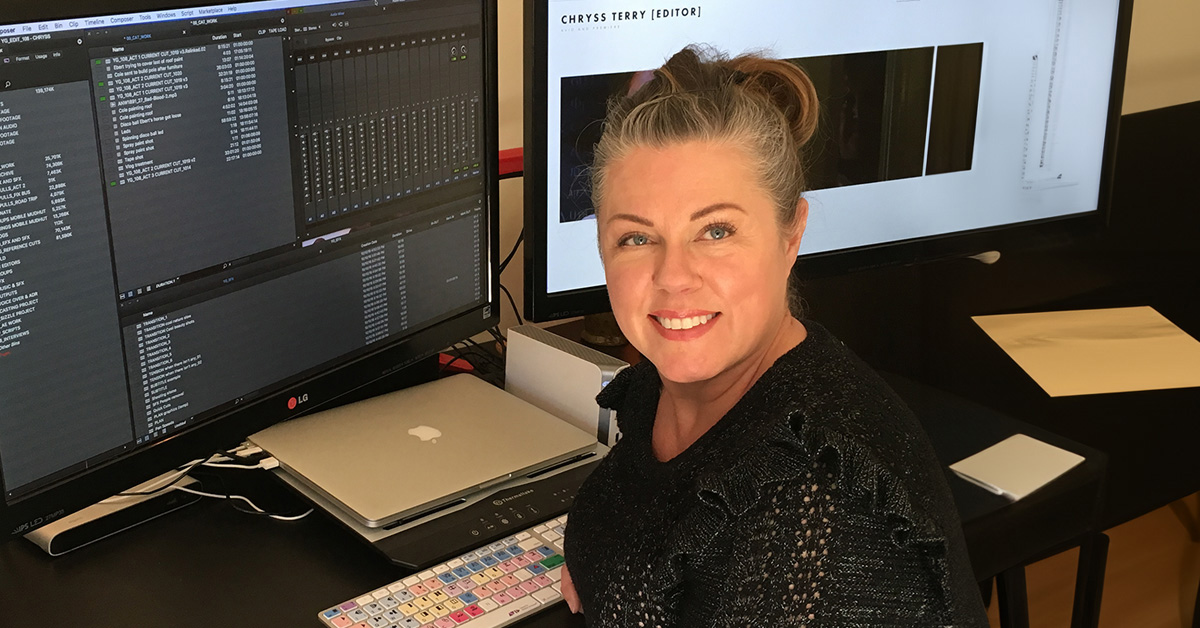
[CASE STUDY] Overcoming Burnout and Imposter Syndrome | with Chryss Terry


About Episode
Chryss Terry is an Emmy-nominated documentary and unscripted television editor who began her career editing independent feature films (that have played at the Toronto, Sundance and Berlin film festivals). But after recently discovering her true life’s purpose – to use her challenging upbringing to create scripted television that inspires women worldwide to lean into adversity – she has begun the transition into the role of narrative assistant editor.
Chryss is driven, ambitious, motivated, and a borderline workaholic (like me). And while all of these character traits have served her extremely well in her career, they haven’t exactly done wonders for her mental or physical health. A few years ago Chryss hit a giant wall in her career that had very little to do with her talent and lack of opportunities. Instead it was her mindset holding her back which included a vicious bout of imposter syndrome that led to fear, anxiety at work, and eventually burnout.
In this case study Chryss and I talk through the mindset shifts she made so she could approach her work, her goals, her health, and her career differently so she could stop always chasing after the next accomplishment and instead begin patiently playing ‘the long game.’ In short, you’ll learn how Chryss stopped playing checkers and started playing chess.
My purpose for sharing this case study is to help explain the process that Chryss and I worked through together in my one-on-one career coaching & mentorship program, ‘Optimize Yourself Elite.’ That way you can use some of these same ideas and techniques mentioned in our conversation to move yourself forwards this year, whether or not you’re interested in working with me one-on-one.
Episode Highlights
- Overcoming the fear of both success and failure
- Stopping yourself from setting overly ambitious goals that lead to burnout
- Handling anxiety rising due to imposter syndrome
- Time management leading to perfectionism leading to not meeting deadlines…
- Breaking down big goals into single action steps
- The power of ‘the 3 words’
About Guest
Chryss Terry is an Emmy-nominated documentary and unscripted television editor (Lost In Transition, Little People, Big World, Vanderpump Rules) who began her career editing independent feature films that have played at the Toronto, Sundance and Berlin film festivals.
After recently discovering her true life’s purpose—to use her challenging upbringing to create scripted television that inspires women worldwide to lean into adversity—she has begun the transition into the role of narrative assistant editor in order to work with some of her most admired writers, showrunners and editors; those who are changing people’s lives in this “New Golden Age” of television.
Chryss lives in Los Angeles with her boyfriend and two dogs, Amelia and Quigley. She continues to work on stress management and self-care while learning more about personal development; she shares everything she’s learned with friends, family and co-workers. You can learn more about Chryss at chryssterry.com.
Transcript
Zack Arnold: I’m here today with Chryss Terry, who is a feature and reality editor, and she is now working towards making the transition into scripted. She’s also one of the recent members of my Optimize Yourself Elite one on one coaching program, and she made some amazing breakthroughs, and I had just a fantastic time working with you through the fun weeks and through the hard weeks, so Chryss, it is an immense pleasure to have you on the podcast today, and I really, really appreciate you summoning up your courage to be on the other end of the microphone.
Chryss Terry: Thank you, Zack, you have a really great habit of challenging me in all ways, so it’s good to be here, and good to hear your voice.
Zack Arnold: Well, I just find life very boring when it’s easy. I don’t like doing things that are easy, they need to be challenging, and I’ve learned, and I’m still learning how to impart that into other people into the most advantageous way possible. I was going to say the most comfortable way, but that’s not really a good way of putting it, because I like making people feel uncomfortable, that’s something that I’ve just learned over the years, and I’m really good at doing, but with the best intentions possible, is that I feel the discomfort is where the most change and progress happens, and that’s why I spend several days a year in mud and under barbed wire and running obstacle courses and training for American Ninja Warrior, is that that puts me in a place of discomfort every single day, but I don’t want to talk too much about that, but I want people to understand going in that that was my mindset working with you as well, is that it wasn’t about, well, let’s just try and move your career forwards a little bit, and hey, how are things going with the networking, and you know, can we get you the next job, like what we did, it’s funny, and I’m going to let you talk a lot more about this once we dig into it, but really, you and I first started talking about, oh, well, we want to, you know, move the career forwards, but as we started to dig in much, much deeper through this whole process that we go through, the using the five step go far framework, we realized that there were a lot of choices that you were making, just by default, just by the way that you were writing the scripts in your head and realizing that basically every path that you were taking, no matter what it was, when it was inevitably leading you to a point of burnout. So that’s kind of the path that I want to go down today, is really helping people understand the choices that we make, especially if you’re ambitious, you work in a creative profession, how just the thought process and the habits and the daily actions can lead you down different paths, but before we go into the nitty gritty, I want to give people just a basic background about who you are, what you do, and what brought you to me in the first place.
Chryss Terry: Well, I am not one of those people that immediately knew they wanted to be in film and television. Actually, I grew up in a very rural area of Oregon, where I didn’t really have television. We didn’t even have a theater, so I came to film and television very slowly, and through a circuitous route. My first major is actually genetics, and I needed a job, and I was pretty good in art, and I saw an ad for an animation company needing animators, and I went and submitted a portfolio, and I took the pencil test, which I failed miserably, completely miserably, and I just really decided I wanted to work there, and I kept coming back every two weeks with the new portfolio, and I think by the third time they’re like, okay, okay, we’ll give you a job, just stop coming to us, and I ended up being put in the post production department, so that was my first job, and when that company closed, I went to San Francisco to San Francisco State, for, you know, film production, and I got an internship there, where I, you know, I was working with an independent film producer, and I saw the script that he was producing next, and I took it home, and I did all the work that a script supervisor would do, lining the script, sending up shots, and I brought it back to him, and I said I’m going to be your supervisor on this film, and he was shocked by that, and said okay, and it was a really great experience, I, you know, was on my first film set, and after that was done, I decided that I wanted to be. Assistant editor, so I took the Avid manual. Back then, it was.. I don’t know, remember those three huge books?
Zack Arnold: Oh, you could.. you could murder a human being with those things, they were so large, you just swing them and bam, like it’s.. they’re like bowling balls. Yes, I definitely remember the Avid manuals.
Chryss Terry: So I read it front to back, all three volumes, and went to him and said, I’m going to be your assistant editor, and he said yes. So, there I was. So, after working in San Francisco in the independent film scene for a while, I there weren’t.. there wasn’t a lot of work in San Francisco. Let me just say, so I moved to LA, and I decided I was going to work in narrative scripted television, I read about all the pilots that were coming out, I found out where their production offices were going, and I emailed or called every single one, and just didn’t have anything, you know, nothing moved forward, so at that time I became a reality editor, and I’ve been doing that for almost 20 years now. I would say, and the reason why I bring up the other stuff in my background, I just, you know, wanted people to know that I’m not a person who shrinks from going after what she wants. I’m very motivated, I’m very determined, but something happened at the time. I didn’t quite know what was going on, but I just started not feeling well, feeling exhausted all the time, finding it difficult to focus at work and in my personal life as well, and actually that’s what basically ended up bringing me to you. I just knew that something wasn’t quite working. It was affecting, you know, my performance at work, and I really wanted to do something about it.
Zack Arnold: Well, and that’s something that I want to go into a little bit deeper, if you’re willing to, because I think that this change that happened is something that so many people go through, and the more people that I talk to, I actually think that you came out pretty lucky, because you hit it later in life than I think most people hit it. It’s just kind of this giant wall that I know I’ve hit more than once in my career, and based on just the very basic story that you gave, it’s very clear that you are confident in yourself. You make the phone calls, you reach out, you walk in, and you say, this is what I’m doing, so there’s no trepidation with you. There’s no sense of, oh, I don’t know if I can do it, and maybe this isn’t for me. Like, you’re driven, you set ambitious goals, and as, as we learn, we’ll probably talk more about later. Sometimes you set overly ambitious goals, and we learned how to manage that, but we’ll get into that later. But I think what’s really important is understanding what it was that happened to you specifically at your job and what it did not just to your daily life but kind of to your psyche and your level of confidence, because when you came to me, your confidence level is pretty low.
Chryss Terry: Yes, absolutely. And again, I didn’t know why this was happening, I just felt like this is not the person I am. Why is this happening? And you know, at first I wanted to place some of the blame on, you know, the industry, and, and I was actually considering no longer being an editor at all, I was looking for ways to get out of the industry, but you know, I actually love editing it. In the beginning of my career, I just loved it so much. I would stay late, I would sleep on the floor, I worked weekends anytime they asked me. Actually, it turns out that that kind of way of being in the world led to this burnout. So, you know, through working with you, I learned that this stress that I’m feeling I actually bring that upon myself. So, you know, through the process, I learned that this was all a much deeper, deeper problem than just, you know, setting a calendar, putting some goals and action steps on there, and following through on those. We actually went really deep into, you know, why I believe the things I do and what I can do about it.
Zack Arnold: Well, in the process that I walk people through, and if they’ve listened to the other couple of case studies, then they may know the basics of this, but we have the five step go far framework, and that, of course, for anybody that’s listened at all, knows I did not design that, that came from Christopher Rush, who I did a documentary film about. You want to learn more, you can go to Go Far Movies. So, I don’t want to belabor that point anymore. But the first step of that five-step framework is goals, and when somebody joins this program with me, I am invested in them achieving their goals. However, what happens a lot of times is people start setting goals, and this is all by design. That being the first step, and as they start to go deeper into the framework, they’re like, “Oh, I don’t even know if these goals make sense, and why am I going after these goals, and why is this important, and have I even thought about all the things that are standing in my way, and the way that it’s designed? You’re supposed to spend a week on the goals framework, and then you do the obstacle section, and then you start to figure out your focus, and then you come up with your action steps, and then you create a review process to stay consistent, but with you there was a lot of, all right, I did my goals this week, and I’m going to do this thing, we’re going to put together all the action steps, and then the next week it was, well, I was thinking about it, and I redid the goals worksheet, and I had this, and this, and this, and this, and this instead, and what I kind of did was, I said, all right, we’re going to stop, and we’re going to hit the reset button, and rather than just redoing the goals every week and coming up, I mean, we probably had at least three or four giant goals that we set over the course of a month together, and I finally said, rather than figuring out the next goal, let’s figure out why you continue to set these really difficult goals that when you step away for a second and you think, hmm, is this really achievable? It’s like, oh, probably not. This is pretty ambitious. So, let’s talk a little bit about that process, that mental process that you went through, because I know this was pretty eye-opening, where you realized that it wasn’t so much about the goals, it was about the script you were writing in your head, telling you you had to achieve all of these things,
Chryss Terry: Right? I had, well, first of all, I wanted to say, when I filled out the goal section of, you know, the sheets that we work on together, I had so many goals in there that the text became so tiny that you could hardly read it, and you said that had never happened before, because I’m an expert on creating elaborate goals and action plans and to-do lists, and becoming overwhelmed by just so I couldn’t move forward on anything, because I was just, I couldn’t decide what to do next, where to go, and I had three major goals that I wanted to achieve, and one is moving to scripted as an editor, and I also had written a television pilot that had placed finished at the top 10 in a contest, and I was getting some traction, and so I was like, how can I be a writer, and the next goal was I needed to financially be able to make the bridge between either becoming a working writer or working as a narrative assistant editor.
Zack Arnold: Well, I want to keep going down the rabbit hole. Let’s not also forget the goal of, I believe, it was remodeling like half of your house in a month or something.
Chryss Terry: Oh,
Zack Arnold: You were gonna, I think, was remodel the whole kitchen or whatever it was, and I’m like, oh, well, you know, do you have a crew and all that? She’s like, no, I’m gonna do it myself. I’m like, oh, all right. So, there was that. There was the whole starting a brand new business, renting out a very high-class trailer on Airbnb, all of which are great ideas. So, it’s not like you were setting crappy goals, it’s that you were setting very, very ambitious goals. But, like you said, it was a matter of being able to really break it down into actionable steps, and then follow through, because what you continue to find was that it was just leading to this giant wall where you were just blocked and you couldn’t move forwards, is that fairly accurate?
Chryss Terry: Yeah, absolutely. When we were going through, I think we decided to build this new business that I had, and we were going through the obstacles section of the program, and and that’s where we got to our limiting beliefs in life, and I grew up in rural Oregon, extremely poor, you know, my family was on welfare sometimes, and the church would take care of us, and so that mindset of being poor is something I’ve been struggling with, but I didn’t realize it until we talked about it, that I feel guilty for having success in my life because my family felt wealthy people or people that were successful or somehow bad or not moral, so when I did become successful, I felt a little alienation from my family, but then I also learned that I, so I’m afraid of success because it removes me from the people that I love, but I also learned I’m afraid of failure, because I’ve had – I’m afraid of both success and failure. Success means I lose the people that I love, and failure means that, well, I grew up with a masochistic, you know, father that. That women couldn’t achieve the same as men can, and if I fail at doing these big goals I’ve set for myself, then that means he’s right. So, failure really has such an emotional connection to me, and so does success.
Zack Arnold: Well, and obviously that’s a, that’s a pretty tough place to be in, if you’re terrified of both success and failure, because you got to go one direction or the other, right? Like, I mean, I guess you can be in the middle and just kind of barely survive and live life and have a job that just covers the bills and whatnot. Maybe that will be between success and failure, but that’s a tough place to be. And another thing that we uncovered in digging into these limiting beliefs, which is all part of the obstacles process, and everybody universally that goes through this process says the same thing. I’m like, man, the obstacles week just sucks. Oh my god, it’s the worst thing ever. And then at the end of the program, they’re like, oh my god, I’m so glad that I did that, because that made all the difference in the world, because it cleans up so much of the garbage in your mind that you don’t realize it’s stopping you from doing the things that you want, and in conjunction with this fear of both success and failure simultaneously, we found that that was really affecting your work as an editor. So, if you, I mean, you don’t have to go into any details that are going to get you in trouble, or you know, speak poorly of other people. I don’t want you to do that, but if you don’t mind, I’d like to go a little bit deeper into this confluence of multiple events that happened simultaneously that basically shattered your creative confidence and got you to this place where you just felt stuck and you couldn’t move forwards,
Chryss Terry: Right? I, you know, as I mentioned before, I started just not feeling well and feeling exhausted, finding my focus not being where it used to be. You know, how, as an editor, you need that laser-sharp focus that you can be lost in hours for, you know, in what you’re looking at or what you’re, what you’re doing, and I hadn’t had that for a long time, so that ended up, you know, when I first started editing, people loved working with me. They, I kept.. I just would keep getting job after job. I never had to look for work. It came to me through referral because I was always optimistic. I always had a smile on my face, and I couldn’t wait to get to work, but that started changing, and what happened is people, you know, people started noticing that I wasn’t as happy as I was before, and I started slowing down, and the more I felt fatigued and unfocused and slow, the more my anxiety rose, and that led to even more dogged pursuit of perfectionism. I tried to, you know, reinvigorate my or invigorate my career by taking on the shows that I worked on, as if they were my own, I actually just would put myself in the mindset I want this to be as good as I can make it, and because this is my show that’s going on air, and what that meant was I just got slower and slower and slower until it came to a point where I wasn’t getting called back or I may be let go a week or two early and that terrified me even more and it was just a vicious cycle losing more and more confidence on each show becoming more and more of a perfectionist becoming more and more fatigued
Zack Arnold: Well and I know that one of the things that we drilled into a little bit deeper, and that this is going to be kind of two separate subjects, but I want to bring both of them up, because I think both are good things to talk about on a practical level. One thing we realized was that some of the lack of confidence was coming from your time management skills, because, like you said, you were trying to perfect everything, so you were just working on one or two scenes forever, and you were telling me, and you can clarify, or you can expound on this further if you’d like, but people were saying, “Hey, this one scene is fantastic, but we needed like five scenes, and you would get into this trap of doing fantastic work, but not enough of it to keep up with schedules, and unfortunately, for people like you and I that are perfectionists in the world of television, you just need to deliver like a B minus, and then people just want to move on with their lives, and I’m not good at delivering things at a B minus level, but that’s kind of the expectation in a lot of television shows, is that we just need to get it done and delivered and on the air, and that’s very hard for me, and I know it’s hard for you, so I want to talk both about time management, but I think that one of the other things we talked about, which is much, much deeper but still connected to that idea of time management and really trying to perfect something at the expense of delivering on time, was this growing feeling of imposter syndrome. So, can you kind of talk about both? Both of those,
Chryss Terry: Yeah, so as I became less and less confident, and not having the time management skills, I never developed them. I remember I was working with an editor at the beginning of my career, and he said, you need to cut the scene in one hour, and I said, I don’t understand, how could that be done in one hour, and he made it a point to practice every day to cut as fast as possible, and that’s not something that I ever put into place for myself for a long time, and so, as you mentioned, yes, producers would come to me and say, I can’t believe what you did to this scene. You turned, you know, Sal’s ear into a silk purse, and were amazed by what you can do. But I was working on that scene for longer than I want to admit, and working on it in my free time, which just leads to more and more burnout. So I just really started to question, am I a good editor? I thought I was, but I’m not sure. And I became more and more anxious that people would see that I wasn’t a good editor, and I thought, you know, after going through some very challenging shows, I just, at that point, I was like, I found out I’m not a good editor, and that’s when I started to think about getting out of the career entirely.
Zack Arnold: Well, one thing that I want to point out there is again this kind of the connection between the two things, because it’s one thing for you to come into this program, and we talk about time management, and it’s all right. Let’s talk about time blocking, and let me show you how I do the little time blocks on my calendar, and I manage my creativity throughout the day. So, for example, in the mornings I’m doing more creative work. In the afternoons, I try to do busy work, or email, or whatever it is. It’s one thing to do that, but I can’t teach you, or teach – when I say you, I mean collectively to people, not just to you specifically, but I can’t teach somebody time management, time blocking. If, when they’re going to sit down on their time block, they have this huge pit in their stomach of anxiety that’s saying I can’t do this right. So, there’s a lot of practical things that you can do throughout this program, but at the end of the day, we both realize that we’re just not going to move forwards in setting any goal until we really start to rebuild your confidence and understand what’s the process in your mind that’s leading you to this place of always setting these crazy ambitious goals, and I remember, I don’t remember what week it was, it was probably at least halfway through the process, so we’d been together for, I don’t know, a couple of months at that point, but all of a sudden it was just kind of this light bulb moment, and I believe I could dig into that, because I record all the conversations, I could probably find the moment at some point where I could actually hear the light bulb go on, because, like, oh, this is why I always end up completely exhausted and burned out, so maybe you don’t remember that, I certainly remember that moment, because it was a big one for me too, but kind of talk about what it was like realizing, and kind of all of a sudden stepping back and seeing the forest for the trees, and saying, oh, I kind of see what is going on here, and then talk to me about how ever since that moment you are starting to kind of arrange your goals and your day differently, and whether or not you feel like your confidence has started to come back.
Chryss Terry: I do remember that moment. I guess it was realizing that this procrastination, I guess you’d call it an imposter syndrome and time management problem, was the consequence of always pursuing perfect at the expense of good enough, so that really helped me realize that I don’t have to be perfect, I can be good enough, and that just really started moving me forward, because at that point I was able to actually time block my time into small enough goals, and it was okay if it wasn’t perfect in the beginning, do you know what I mean? I could always work on it more, so I would time block, and in the past I would time block, and I would just ignore what was in a time block. I just, I would be overwhelmed, it was too huge, and I would just push it down the line, push it down the line. So you taught me how to, you know, try to anticipate how long something was going to take, and make sure I blocked enough time into it, so that I was, you know, I think you said you thought you’re running a 5k and then you end up running a marathon, that’s going to be exhausting, so that really helps me.
Zack Arnold: Well, and yeah, it’s funny that you bring that up, because that’s something that I talk about with a lot of people, is that, and I see this all the time working in television, because in TV I’m not the only editor on a show, there’s always a team, the same as it is with you, and you guys actually have even more editors in reality than we do in scripted. It, but I’ll get in there, like the first few weeks or the first month, everybody’s just gunning for it, man. They’re just putting in late nights, and they’re like, “I’m going to prove myself, and I’m going to have this amazing editor’s cut, and, like, you guys are running the pace of, like, a 400 meter dash, and we have 26 miles to go, like, there’s no way you’re going to be able to make it to the end of the show, so I, it’s funny, because when I was growing up, I was, it was work ethic was burned into my brain. Grew up on a farm, and I know that you and I have talked a lot about kind of the rural upbringing that we both had, and the similarities between those, but it was always about you be the first in, the last out, you work harder than everybody else, and obviously that’s gotten me into a very deep, dark hole more than one time in my life, and it’s done the same to you, and I thought, well, instead of just pushing myself all the time, what if I pace myself? So now when I go into a new job or a big new project, I’m not thinking about how much energy and motivation I have now, I’m thinking about what’s the pace that I need to go at, so I can be going at the same pace 5678, months later, I’m experiencing that right now on Cobra Kai, where I basically have been last one in, first one out, and hopefully the showrunners don’t hear this, but I’ve met all of my deadlines and they’ve been happy with my work, so I’m not too self-conscious about it, but I’m now always last in, first out, I make sure that I get plenty of sleep every night, I don’t think I put in one day more than nine hours the entire year, except maybe two days ago, because we’re getting ready to deliver the season finale, so it’s been been kind of crunch time, but other than that, I haven’t worked longer than a nine hour day the whole show, and I haven’t worked a single weekend, and short term I might be getting a little bit less done, but long term I’m producing the same amount of creative work on the final week as I was the first week, because I’m pacing myself more, and that’s something that you and I worked on a lot. And one thing that I think is funny is when we were talking about time blocks, we would actually go into the calendar and start laying out, all right, let’s look at the next week and let’s practice this process, and we would lay it out, and then the next week you’d come back, and you say, well, I didn’t do any of my time blocks, but that’s because I have a whole new goal, and I went through the goals worksheet again, and now I’m going to sell my house in three months and do this or that, and I’m like, okay, let’s just slow down a little bit, so it took a little while to get there, but I felt like by the end you were starting to feel much more comfortable with this process.
Chryss Terry: Absolutely, and I’m using it now to plan out my attack to moving to scripted. I’ve learned to focus on one goal at a time, which was really hard for me, because I have so many things I want to get done in my life, and it was really hard to put things as in the closet as you described it, but I don’t, I don’t want to work harder than I have to any longer and burn myself out, like you said. You work hard, you’re first in and out, but you still get plenty of sleep, you’re energetic, and I realize now that that imposter syndrome just drove me to work and work and work until I worked myself into the ground, and I’m really happy that you helped me work through where that comes from.
Zack Arnold: Well, and it wasn’t just about the imposter syndrome working you into the ground. The other thing that I think is really important for people to take away from this, and hopefully they can use in their own journey as well, if it’s applicable. But there, I take notes when we do our sessions, and I don’t take super detailed notes, but when they’re really big moments, or you know, points that I really want to work on and improve, I’ll write stuff down, and I was going through our session notes, and I think that one of the biggest moments that I found that really relates to this conversation is that you, it’s, and I’m paraphrasing, because my notes are not verbatim, but there was one point when we were working through whether it was the goal of, you know, remodeling and selling your house, or whether it was trying to build this business where you were going to be renting out a really nice trailer that you have at Airbnb, and you realize that the reason you continue to try and set all of these various goals that had nothing to do with furthering your career in editing is because your fear of going back to editing was greater than your fear of failing with any of these other goals, and I think that is so important to understand, is when you realize that you are not setting the goals just out of practicality or saying this is what I really want to do, this is important to me, it was simply, well, I would rather fail at this than be terrified going back to my job as a reality editor, because you were physically feeling the anxiety and just the manifestations of that fear on a daily basis, and it was literally making you sick.
Chryss Terry: Yeah, absolutely, and that’s where we got into where that fear is coming from. If I fail, then I’m less than, or all women are less than. I was a stand-in for all female editors. I just could not fail.
Zack Arnold: And I know that even in the same week, the one of the things that I talk about at the end of each session is, I say, what’s the biggest takeaway that you had, because I one thing that. I’ve learned through the process of teaching and coaching, and doing the podcast for years, and interviewing people, is that you can give people all kinds of amazing information. You can just force feed them, like spray it with a fire hose, right? Like, the world is full of information nowadays. Information is free, right? We have access to every piece of information ever created in the history of modern mankind in our pockets, we didn’t have to press buttons anymore. We just say, “Hey, Siri, give me anything I’ve ever wanted in the history of mankind and give it to me now. Right? So, information to me has no value anymore. It’s being able to retain the information and apply it. So, one of the things that I always ask is, what was the biggest takeaway from this session, and it forces you to think back on all the information and package it in a way that it’s actually, oh, okay, I actually, this is what made the most sense to me, and here’s how I can apply it, and I know that one of your biggest takeaways overall were the positive results of learning how to break down these giant ideas into very single manageable steps, and that’s something that we talk about a lot, is breaking these big ideas, these big goals down into very single action steps, because I always say you can have an amazing goal that you want to achieve in 10 years, five years, or a year, but what are you doing this Wednesday at 2pm right? And most people like, oh, I don’t know, but that’s what it takes, it takes consistent daily action to achieve these large goals, and the one concept that we haven’t gotten into yet, that to me I think is the most important concept of this whole program, and of every book I’ve ever read, and every podcast I’ve ever done, if I had to pick the one thing that has made the most difference, it is the concept of the one thing, and I’ve heard that from everybody else, so talk to me a little bit about the this change that you’ve noticed from when we began working until even now, because it’s been a couple of months since we stopped, and we’re going to be working together again in the six month career networking group, which I’m very excited about, but talk to me a little bit more about this realization that you had, as I did, about the importance of the one thing, and how you’ve been applying it.
Chryss Terry: I think we had started with my one thing, actually time blocking in my calendar, but I was still struggling with it, still letting things pass by, because I could not quiet my whirlwind mind. So we started a new one thing, and that was to meditate every morning. I dabbled with meditation, and I just found I didn’t have time for that, but once I set a regular meditation practice in the morning, it was amazing how I could finally slow down enough to go fast to accomplish what I needed to accomplish, so it just changed my life.
Zack Arnold: And the thing about the one thing, the very brief description of first of all, I’m going to make sure to put in the show notes for this episode a link to my interview with the co-author of the book, The One Thing, Jay Papazan, because that to me is probably the most complimented episode that I have, not because of me, but because of him and the work that he’s done, and just the concept in general. But it’s this idea that when most people are trying to achieve a difficult goal, they’re looking for the most impactful thing that they need to do, and that’s the mistake. What you need to do instead is think, all right, I have all these dominoes that I need to knock over, and there are various sizes, right? Sending an email is a much smaller domino than I need to build a portfolio website, or whatever the task might be. So, the idea is you find the first domino, not the biggest one, not the most impactful, but the first domino that, when you knock it over, will start to with its momentum knock over larger dominoes and larger dominoes and larger dominoes, so what we did, which I’ve done with everybody else that has worked with me as well, is we figure out well we know what the most impactful thing is, but what’s the tiniest domino? So for you we found that it was meditation, we thought it was going to be time blocking, but then if you start to think about the sequence of events, it’s like, all right, well, time blocking is my one thing, but I’m having a really hard time with it, because sometimes you have to stop and actually think about planning your day rather than just doing things, and I know for a lot of people it’s all about doing, doing, doing, doing, doing, and if you don’t feel like you’re doing something, you feel like you’re wasting time or going backwards, but to me stopping everything and planning and thinking about what I’m going to do actually saves me hours and hours per week, maybe even a day per week, even though I stopped for two or three hours to plan. So, for me, that can be my one thing, but for you it was like, well, I just, I can’t really make any of this work, so then if the one thing is meditation, then the meditation helps to make the time blocking easier. So that doesn’t mean everybody’s one thing is meditation, but in another coaching client that I was working with, I won’t say his name, but he was totally career driven. It was all about career mentorship and networking and breaking into scripted t. V and features, and after working together for three weeks, he realized his one thing was he needed to learn how to get better sleep. He didn’t come to me at all for anything health related, but he realized that all of the things he wanted to do with his career he was not able to do, or he was really struggling with on a daily basis, because his sleep sucked, and he just couldn’t concentrate. So we just stopped everything career related for two or three weeks, and we hunkered down, and we figured out how can we get you to get higher quality sleep, and as soon as that domino was knocked over, then all of the networking stuff that he had to do to move his career forwards was infinitely easier, and that’s the same thing we found with you, with both meditation and time blocking,
Chryss Terry: Right, and I was hoping that we had time to talk about becoming the person you need to become to achieve what you want to achieve, because I realized that, you know, the three descriptors that you know we ended up deciding that should apply to me to achieve what I want actually were things that I once had, and that was optimism, fearlessness, and being present. So, once I went through the program with you and started becoming that person, it actually got me my first union job as a reality editor. So, I wanted to thank you for that.
Zack Arnold: Wow, that’s awesome. I didn’t even know that
Chryss Terry: You did it.
Zack Arnold: No, I knew that you had, you had landed another job shortly after that. You and I were working together, but I didn’t realize that it was a union gig, so that’s fantastic. Well, I do want to dig into that a little bit more. We have a little bit of time. I mean, the time is totally up to you, but I know that for just about everybody that I’ve worked with, but I think especially you more than anyone, this process of digging into these three words, right, and it’s a very simple exercise where you just write down a bunch of words where you’re thinking, if, if I think about the person that has achieved whatever goal I want to achieve, so in your, you know, your case, you had a lot of different goals, like in my case, if my goal is I want to be an American Ninja Warrior. What are the three words that would best describe that person that has gotten onto the American Ninja Warrior obstacle course and succeeded? Right, and we were going through them at first, you were coming up with words like efficient, somebody that doesn’t procrastinate, somebody that’s motivated, and what I wanted to do was go much deeper, and I really remember this session specifically, because as we started to dig into it, just you really got emotional about it, and then when we hit these three words, you’re like, there’s no better three words on the planet that I want to become than these, but like you said, the important thing is we’re not choosing words well, these are things that I already am, I just need to remind myself that I’m organized, well, no, that’s boring, right? But if you feel like you were once those things and you want to become them again, talk me through the actual process that you went through that you and I worked on together to remind yourself of these three words and who you want to become and how they’ve made a difference in your psyche.
Chryss Terry: Well, first I wanted to say that that is the most valuable part of this program, is that everything comes back to emotion and to a deeper level. This isn’t about setting a calendar or deciding what three words that describe you, you tie those three words to emotion. Everything in the program is tied to emotion and why you’re doing what you’re doing, so when we first started this section of program, I did say, you know, it was very boring, but it was because you had to draw me out emotionally to find the words that really meant something to me, and we decided the best time of day that would be the best time to get that, those three words to remind myself of those three words. So we set set up text throughout the day through Zapier, and so you can do it by location, so you’re pulling into your first union job, and you send yourself a text automatically that says you’re fearless, you’re optimistic, and you’re present, and it changed that show for me. I can’t tell you how much it changed the show for me, because once some pressure and anxiety came into my bay because this producer was feeling the pressure and anxiety from those above. I was present, and I remember those words I said, ‘I’m optimistic and I’m present, and I just let her dump on me her anxiety, and it did not affect me at all, and that’s the first time that’s ever happened. I didn’t take on the anxiety that she had, and the anxiety that was all up the line, so it was a life changer.
Zack Arnold: Wow, that’s awesome! I love that. Well, just to recap real quickly, we talked some about the Go Far framework. We haven’t gone into all five. Steps, but really to summarize, like, if somebody were to come and just ask me, like, I have really big goals that I want to achieve. What are the things that I need? And I really boil it down to three very, very simple concepts. I think that in order to achieve anything difficult in your life, you need clarity, you need confidence, you need consistency,
Chryss Terry: Right?
Zack Arnold: You need clarity, that you very clearly understand what is this goal, and why do I want to achieve it. You need confidence, and that confidence is not, I’m a confident person, that’s whatever your next action is. You need to be confident you’re actually taking the right action to move you forwards, otherwise you procrastinate. That’s why people spend time on Facebook and Twitter and Instagrams, because they’re thinking, “Oh, I should be doing this, but in the back of their mind, it’s, you know, but should I really be doing this? Is this really going to move me forwards? Am I this busy work? Do I want to do this? Do I enjoy it? And Facebook, right? So, you need confidence, because once you’re confident that whatever you’re doing is actually going to move you forwards, you want to do it. It’s easy. You don’t want to procrastinate because you’re confident you’re going to move forwards, but then you have to repeat that cycle consistently. So, do you feel that after working together that you had clarity, confidence, and consistency?
Chryss Terry: Absolutely. Yeah, and patience. That’s another thing that this program really helped me with, like realizing not everything has to happen immediately, and how to slow down and be clear about what I need to accomplish, or I want to accomplish at the time, and be consistent about it, because it’s the only thing I’m focusing on. So, it’s really helpful.
Zack Arnold: Awesome. Well, I’m very glad to hear that. The last thing I want to do before we finish up is, if somebody is listening right now and they’re thinking to themselves, you know what, I kind of feel like this would make a difference, I feel like this is really something that could be helpful, but either I don’t know if I want to spend money or I’m kind of afraid of doing this, or I don’t think that I can stick with it, or whatever it is. As somebody who had trepidations yourself, that has now been through the gauntlet, what advice would you have for them?
Chryss Terry: I would say, I mean, of course, I would say, do it. It’s not going to be easy. It’s going to be very challenging, and you’re going to learn a lot about yourself that maybe you didn’t quite realize. For me, financially, I just, I just had to take it, take the bull by the horns, and say I just knew that this was going to change my life and help me achieve what I really want, and who doesn’t want to achieve their dreams, and it’s worth it. It’s, it’s three months of, so if you think about how much it costs for on a daily basis. I mean, how much are your dreams worth? I just, I just knew I had to do it.
Zack Arnold: Well, that’s awesome. I’m very glad that you say that. I appreciate that. And we didn’t even mention that I throw on all the extra burpees for free,
Zack Arnold: Right? All those extra burpees you did, eating, you have to pay for those.
Chryss Terry: I’m gonna have to get into your Spartan group and do that as well.
Zack Arnold: Yeah, I’m for those that are wondering what that is. I don’t know what it is yet either. I don’t even have an answer, but I’m thinking of putting together like a group training program for people that are interested in doing their first Spartan race, but they’re terrified of doing it, just like I was when I first started years ago. So, if anybody’s listening, like, oh, that sounds like fun, you can go ahead and send me an email to contact at Optimize Yourself, that me, because I’m still brainstorming if it’s something I want to do, or if people are even interested, but that’s totally tangent. But anyway, I really, really appreciate you coming on to the show today, and I appreciate you being so honest with people, because I think that most people in any industry, but I see it every day in my industry, where we just try to put on this facade of, oh, I’m great, and I’m ready to jump in and do this thing, and whatever it is, but inside there’s so much fear, there’s so much of that imposter syndrome, or exhaustion, or whatever it is, but nobody’s willing to really talk about it, or admit it, and that’s what I’m trying to do, is open those doors and allow people to really talk about the truth of what it’s like to try and succeed in this industry, so the fact that we were willing to do that so candidly means a great deal to me, and I know that it does to my audience as well. So I really appreciate you being on the show today.
Chryss Terry: You’re welcome. Thanks for having me.
Transcribed by https://otter.ai
Episode Credits
This episode was edited by Curtis Fritsch, and the show notes were prepared and published by Elyse Rintelman. The original music in the opening and closing of the show is courtesy of Joe Trapanese (who is quite possibly one of the most talented composers on the face of the planet).