


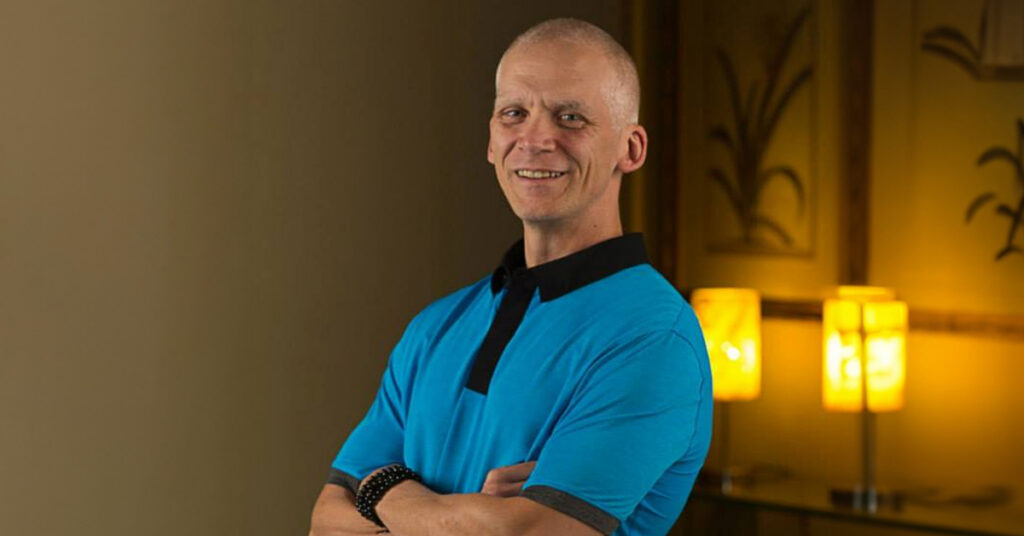
The ‘Limitless’ Drug Is Here…Introducing Qualia | with Dr. Daniel Stickler
If you're interested in truly optimizing the human experience and realizing your brain's fullest potential, Qualia is as close to being 'Limitless' as you'll get.
Let's create things that matter. Together.

It’s extremely common for people who are highly creative to also constantly battle with things like depression, anxiety, and attention issues. If you’ve listened to past episodes you know this is basically the story of my entire adult life, and I even delve into the link between depression and creativity in the very first episode of this show. For years I believed that I must just be a weak person, or maybe I was just doing the wrong things, or worst of all..maybe I was just “broken.”
When my journey of overcoming depression and anxiety began there was no definitive diagnostic test that proved what I was battling was real, so it was easy to think (or have other people believe) that I was just “making this stuff up.” Luckily with some amazing advances in genetic testing over the last several years, depression and anxiety can be tested no different than whether or not you might have diabetes.
More importantly, with the results of your genetic testing, you can make much more informed decisions about lifestyle changes that can significantly improve the quality of your life…possibly without the need for antidepressants (but please consult a medical professional before making any changes to your prescription medication, regardless of what you might learn in this interview).
I’m very excited today to have the opportunity to speak with quite possibly the foremost expert on the entire planet when it comes to genetic testing, and more importantly interpreting the results of genetic tests from companies such as 23andme. My guest is Dr. Ben Lynch, the founder of the company Strategene, and he’s also the author of the book Dirty Genes: A Breakthrough Program to Treat the Root Cause of Illness and Optimize Your Health. In this episode we talk all about the genetic mutations that are very common for those dealing with mental health issues, and more importantly the simple lifestyles changes you can make to better manage (and even overcome) your mental health issues.
Dr. Ben Lynch received his Cell and Moleular Biology, BS from the University of Washington and his ND from Bastyr University. His passion for identifying the cause of disease directed him towards nutrigenomics and methylation dysfunction. Currently, he researches, writes and presents worldwide on the topic of MTHFR and methylation defects. He is the author of Dirty Genes. You may learn more about Dr. Lynch and his work at www.drbenlynch.com. Dr Lynch is also the President & Founder of Seeking Health, a company oriented towards disease prevention and health promotion. He lives in Seattle, WA with his wife, Nadia, and three boys, Tasman, Mathew and Theodor.
Zack Arnold: I’m here today with Dr. Ben Lynch, who’s one of the world’s foremost experts on interpreting genes and gene expression, and I’m not even sure what any of that means, but it sounds really, really cool. And I’m super excited to have you on the show today, Dr. Lynch.
Dr Ben Lynch: Hey, pleasure to be here, Zack.
Zack Arnold: So, the reason that you were brought onto this show today, it’s kind of a long, windy road, and I’m going to keep it simple for my audience. But when I first started my journey towards better health, almost 15 years ago, and I know my longtime listeners have heard most of this already, but I dealt a lot with depression, anxiety, and a. Attention issues, and when I first went to the doctor, and just for your reference, Dr. Lynch, I didn’t go to just like a regular medical practitioner that said, ‘Oh, well, you need to take a pill. I’ve been going to an integrative medical specialist for the last 15 years or so, so I’ve been looking at it from the more holistic side, trying to find wellness rather than just trying to cure the symptom or cure illness, but what he had said to me, and this was almost 15 years ago, was, well, we can’t really measure depression, we can’t really measure neurotransmitters, there’s no way for us to like do a blood test and know what’s going on with you, it’s kind of a bit of experimentation, we’ll see if we give you an antidepressant or we’ll try and give you some supplementation nutrition, if it works, great, if not, we’re going to try something else. Fast forward to today, and we are so many light years ahead of that process of trial and error to what’s really become pretty much a science, and I don’t want my audience to get lost in the weeds today, because you and I are going to be using words like snip and homocysteine and single nucleotide polymorphism, and I don’t want you guys to get super lost in the weeds. What I want you to understand is that if you have been prone to things like depression, anxiety, attention issues your whole life, I no longer want you to label yourself as somebody that says, “Oh, I just can’t pay attention, oh, I’m just grumpy, my personality is I’m just in a bad mood, or I just can’t focus. What you and I, Dr. Lynch, are going to hone in on today is helping people understand why they might be experiencing the things they are at a genetic level, and more importantly, the really cool stuff that you can now test and now do to feel a heck of a lot better.
Dr Ben Lynch: I love that great intro, and I love the comment that your doctor made, was that you, you really can’t measure depression well. You can’t measure something that doesn’t exist. I mean, depression is a made-up word for feeling kind of blue and down and out. Your body doesn’t give you depression. It’s not like it’s, it’s built to say, ha, I’m gonna, I’m gonna make Zack depressed. It’s there’s something going on, there’s dysfunction, and that’s that’s the key, and that’s what we’ll be talking about today.
Zack Arnold: Yeah, and one of the things that I’ve always heard over and over and over for years going through this journey is people will say, well, you know, if you have diabetes, you get a blood test, somebody says, well, you’re diabetic and you take insulin for it, and nobody’s going to say to a diabetic, gee, I don’t know, insulin, huh, you really think you need that? I mean, you might just have to change your diet, or you might have to do, like, maybe you’re just grumpy. You know what? You just need some sleep, and you just need to cheer up. Like, you would never say something like that to somebody that has a blood test, and they say you’re type one diabetic. And when it comes to issues like depression and anxiety, or attention issues, it used to just be, well, that’s maybe just their personality, or it’s a weakness, but let’s start to dive into actually understanding these different facets of a person’s personality from a more genetic point of view, where you can actually start to think about, wait, these are parts of me, but it’s just, it’s not me written in stone on a concrete tablet, so let’s go into this idea of genetics and epigenetics, and just understanding how the body works, and how we can actually use some of that knowledge to start making improvements.
Dr Ben Lynch: Yeah, so you know, the whole idea of genetics is, you know, you go to the doctor and you check the boxes in the family history and take form, and it’s like, yeah, my dad’s got, you know, cardiovascular disease, high blood pressure, high homocysteine, and my, your grandma, yeah, she’s got cancer, and she was a smoker, and he, so you’re checking all these boxes and nastier symptoms, you’re like, well, yeah, I kind of, kind of have some similar things here, but not really yet, and so I feel kind of doomed, because my family’s get it, so I’m next, so we have this mindset that our genes write our destiny, and one day we’ll wake up with cancer. One day we’ll wake up with cardiovascular disease, like the rest of our family. Well, science is saying, “No, hold on, not so fast. Because what we need to first understand is our own genes are uniquely ours, they’re not anyone else’s, and we are in charge of them for the most part. I mean, yeah, we can’t, we can’t change our hair color, we can’t change our skin color or eye color, but those genes are set in stone, and that, that happens, you know, at conception and birth, and so on. But what we can change are the most of our genes, and those have to do with our moods, attention, our ability to handle chemicals in the environment or not, so these genes you can control, and that’s that’s what’s called gene expression, and that’s epigenetics, and epigenetics is basically how you personally influence your genes working, and that’s pretty powerful. So, when you, when you sit back and you think, wow, I can really impact my mood, well, absolutely, have you ever had the moment where you’re going on to the court to maybe play basketball or tennis, or you know, give a speech, and you pump yourself up, you’re like, I got this, I got this, and you actually kick butt. And then the flip side, he’s like, man, I’m really scared about doing this, I think I’m gonna suck, and. Your teammates go, dude, you suck, and then you actually suck, so you know you can talk yourself up to perform, or you can talk yourself down to not perform, and as a result, you’re telling your genes to say, okay, well, I’m not going to give you the cognitive abilities to perform, because that’s what you’re telling me, so that’s what happens, so your mindset is a huge one here.
Zack Arnold: Well, I want to start diving deeper into some of the science behind some of this and give people a general overview of some of the things that are going to help them understand their own genetics and maybe where some of their genetic dispositions might come from, but before doing that, I think it’s pretty important to kind of understand your origin story, and the part of it that I think is especially interesting is the two little mice that inspired years and years of your work.
Dr Ben Lynch: Yeah, so you know, here we are. You know, I, I was thinking that I was genetically predisposed to alcoholism and schizophrenia and cancer, like my mom told me, and so I was like, okay, well, that’s that’s not good. And so then I one day I was sitting at the computer years ago, and I’m watching this video called The Tale of Two Mice by Nova, and in this video the researcher took genetically identical mice, absolutely identical, and split them into two groups, and one group got standard rat chow with nutrients, and another group got standard rat chow, and these genetically identical mice were susceptible to diabetes, cancer, and cardiovascular disease. Same groups, same genes, and same three diseases risks. And so, what the researcher found was the rats who got the standard chow actually did indeed get cardiovascular disease, diabetes, or cancer. And then she looked at the other group and who got the standard chow with some additional nutrients, and they didn’t. They didn’t get any of them, but they’re genetically identical. And she’s thinking, well, that’s odd. How’s that possible? Well, what happened was these genes, which were quote unquote dirty or not working very well, and predisposing them to disease got additional nutrient or additional support, and they were able to fight off or fend off these conditions, and the mice were fine, which is pretty awesome.
Zack Arnold: Well, and the really cool thing about that is that it gives people hope. It’s like, well, wait, if they have identical genetic codes, they should both end up in the same place, no matter what, because that’s just the way that it is, and that’s just my fate, that’s just the way that it’s going to happen, because I’m genetically disposed to x, y, and z, and for you that was an inspiration, and for me that was a big inspiration as well, and where this started for me recently, because, like, I said, my journey really started 15 years ago, being told that, well, you just try different pills and different supplements, and we’ll see what works and what doesn’t. I found antidepressants that worked for a while, then they stopped working, then they started working, but I really wasn’t doing a much deeper dive into either my lifestyle, my very specific dietary choices, or more recently into my genetics, and my doctor had said there’s this new company that’s doing this genetic test, it’s called 23andme which has become very popularized, and ancestry.com does something similar, but basically you just spit in a tube, you send it in the mail, and you get 1000s of pages of what looks like binary code that explains your raw genetic data, and they have all the pretty charts and colors, where, oh, you’re partly Scandinavian or you’re partly British, or whatever, like that’s the more common part, but the data part is where it gets really, really interesting. So, when I got my genetic report, it was the first time in my entire life where I finally made sense, me as a person, I was going through the charts, and it was explaining all the predispositions, and I’m like, “Wait, you’re telling me that you have actually measured why I might be experiencing irritability, or why I might be experiencing depression, or more importantly, why I might be a workaholic, or crazy attentive and focused, or I can’t focus at all? And pointing to all these different genes, he was like, “yep, so there are these genes, there are these things called snips, and it all made sense all of a sudden. So, let’s walk people through how this process actually works.
Dr Ben Lynch: Well, genetic testing is amazing, and it opened Pandora’s box, in a sense, a whole.. it entered a whole new world, literally. And what’s really cool about genetic testing is you can, you see you on the inside, because all you do is you see yourself on the outside with your eyes and looking in the mirror, looking down around your body, and that’s kind of it. And then you kind of can have thoughts to yourself thinking, you know, who am I, and you know, have feedback from your friends and your family, but you don’t really know how you’re built or you’re programmed. And then, when genetic testing comes along, they tell you how you’re built, they tell you what type of vehicle you have and what engine you have, or you know, are you four wheel drive or you two wheel drive, and or your computer, what type of RAM or speed you have in memory. Me, so that’s your ability, and which is pretty cool, and so you, you figure out the hardware, and people can get excited about figuring out that there’s certain have certain hardware for certain advantages, but unfortunately, genetic testing doesn’t really shine a light on advantages. Genetic testing nowadays seems to just focus on the bad. Well, you actually have crappy tires, and your tires are going to get flats more often, and you have a PC, so you’re actually going to get more viruses. And then the Mac computer, you know, you weren’t born a Mac, so you’re going to get more viruses, and you’re going to get more clunky, and it’s harder to figure yourself out. So, you know, once you understand who you are at a genetic level can be useful, but the mindset around it, Zack, is the problem, because genetic testing people are looking for problems, they’re not looking for strengths, and I invite people to change their mindset and say, okay, if these are my genes, this is the vehicle that I am these are the parts that my body has in order to make tools and function throughout my entire life. Then what are the strengths of each one of my genes, and what are the weaknesses of them, and what do they do when they’re strong, and what do they do when they’re weak? And in fact, how do I even know what they do, and where do I start? So that’s that’s kind of the whole issue, because people react and they look for the trouble first,
Zack Arnold: Right? And it seems to me, I love the car analogy, by the way. My audience knows that I love analogies, so the car analogy is fantastic, and a really good way for me to help explain this to others when I talk about it. So, when it comes to genetic testing, if they were to just do the first half of the 23 in me test, and for anybody that’s already getting lost in all the different links, and whatever, I’m gonna put all this in the show notes, so don’t worry. But basically, they are saying, well, I want to know if I’m a Hummer or if I’m a Prius. Oh crap, I’m a Prius. All right, well, then I guess that’s all that I can be. And you’re saying that on a certain level, when it comes to, you know, maybe your height, your, you know, like you said, your hair color, your eye color, you might be a Prius, but at the same time you can say, yeah, but I can vastly improve the speed of my engine, I can get high-performance tires, I can get the best paint job in the world, I may never be a Hummer, but I can be the most optimized version of a Prius possible, rather than just saying, well, I’m a Prius with bad tires, that’s what my jeans say, so I guess that’s what I am,
Dr Ben Lynch: Exactly, exactly. And it’s, it’s exactly this mindset, you know? If I’m no sprinter, I mean, I’m not going to go and try to beat Hussein Bolt, you know, on the track, there’s no chance there, but I could probably beat him in a distance race. In fact, most of us probably can, and so there’s advantages to our genes, and there’s disadvantages, and once you understand the advantages and the disadvantages, if you want to call them that, that’s just your makeup, so I wouldn’t really call them disadvantages, I would just say, okay, that’s that’s how I’m built, and I’m going to make the most of it, being a Prius is not bad, you know, if you’re trying to be a four wheel drive and going through the forest and you’re a Prius, well, you’re going to have some issues. You know it’s not going to happen, but you stick to the highway and you get charged every now and then, you’ll be good. So the key is understanding what you have so you can support it, and that’s where my work has been focusing, Zack, is teaching people how they’re built, how they’re designed, and how to support their what someone, some people will call weaknesses, but I don’t call them that. I just say, you know, it’s just how you’re built. I don’t even like calling them bad or weak links or your decreased performance, because, hey, you know, these genes that we all have have been passed down from our ancestors for many, many 1000s of years, so they stuck in the population for various reasons, and I discussed this in the book, Dirty Genes, and with some of the advantages, and you know it’s time that that light is shown, and people get it.
Zack Arnold: Yeah, I couldn’t agree with that more. And where I want to go next is helping people understand this new word that I discovered a couple of years ago, thanks to my doctor, that beforehand I knew nothing about. It meant nothing to me, and then all of a sudden it is literally changed my life, the way that I feel, the way that I purchase supplements, and that word is methylation. So, let’s talk a little bit about what methylation is in general terms, so people can start to understand. All right, well, I’ve got this genetic code, and I’m being told that it’s not written in stone, and even if I have horrible attention issues, and I just can’t focus, maybe there are things in my genetic code that I can improve. So let’s talk a little bit about this idea of dirty genes and methylation.
Dr Ben Lynch: Okay, well, let’s start with dirty genes first, because that ties in to everything we’ve discussed, and it’s pretty easy. So, a dirty gene is simply a gene that’s not functioning at its best, that’s it. I mean, if you wake up in the morning and you open your eyes, or even open your eyes, you know right away, are you going to be you’re going to have a fantastic day or. Energized, or you’re just crawling out of bed, and you want that nice hot shower, and then you hope that coffee just comes magically to your bed. So, your genes are the same way. Your jeans either have the tools that they need, and they’re gearing and ready to go for you and support you, or they’re struggling. And if you’re struggling, your genes are struggling. It’s that simple. A dirty gene, if you have them, and we all do, you’re going to have symptoms hands down, 100% So, stop thinking of disease names like ADHD, or Alzheimer’s, or dementia, or Parkinson’s, or anxiety. Just start thinking of these as genes are not performing at their best, and they are stuck somehow, so you need to clean them up, and if you clean them up, they get unstuck, and they can perform. If they perform, you perform, your symptoms go away. It’s that simple. Now, in terms of what methylation is, methylation is a process, so you hear the word, break it apart, so you hear the word methyl, and then you hear Asian, Asian is an action, right, information, the spread of knowledge, and then you have, well, that’s weird, a term castration came in my head, who knows why that popped in there, you know, but that’s the action of, you know what, and so it’s, it’s an action, so methylation is an action of moving a methyl group around, and a methyl group is the simplest compound in the body. It’s a carbon and three hydrogens. Who cares? But when you’re moving this compound around your body, that action is very important, because when you’re moving things around like a methyl group, and it binds to something, it changes its function, and when you change a function, then things happen. So, for example, Zack, if you and I met and you’re standing in front of me, I extend my right hand and my thumb is up in the air and my pinkies down towards the floor, and then I grab your hand and I close down on it. Okay, that’s one function. And then if you say, ‘Okay, thank you, good to meet you. And then you hand me something. Now I turn my hand, so my thumb is pointing to the right, and my hand, my palm is open, and I receive something. Same hand, different function. So, when you take a methyl group, it’s altering the function of things. So, for example, homocysteine – a lot of people know, and if they don’t know it’s a, it’s a lab marker that you can ask your doctor for, and if your homocysteine levels are elevated on your lab, then you immediately know that your methylation is is reduced, because homocysteine needs methylation in order to be lower on your lab, and what happens, well, a methyl group through the act of methylation binds to homocysteine and turns it into methylated homocysteine, which is called methionine. It helps lower that, so when you see a lab test, you don’t ask, you don’t look at a lab test and say, “Oh, my homocysteine is high, that’s bad. Instead, think, “Oh, my homocysteine level is high. Why is that? Why is my homocysteine high? And how do I fix it? And what does it mean? Well, it means that your methylation cycle isn’t working, and you need to support it. So it’s pretty simple. So it’s just an action that your body uses from the day you were conceived to the day you die, and it’s very, very important.
Zack Arnold: Well, and the analogy that you used, I don’t remember if it was in the book or if it was in another interview that I listened to that really summed it up perfectly for me, because I love visual analogies. Was when you were talking about irrigation, and I think the part of this that maybe I should have brought up first is how all this relates specifically to neurotransmitters, because if there are people listening to this that are dealing with chronic depression, anxiety, or attention issues similar to what I have, you’ve gotten a good education in what neurotransmitters are and how they work, if you have a decent doctor, because that’s really the neurochemistry that drives your behavior. So explain to me, let’s say that I’m dealing with depression and we’re talking about serotonin, how methylation affects my moods and my depression, based on the analogy of irrigation that you talked about.
Dr Ben Lynch: Well, there’s a whole series of events, and so genes communicate with each other, you know. Genes don’t really act in isolation, they act in response to the environment and foods that you put in, and chemicals that you put in, and what other genes are telling them to do so. It’s a whole series of events. Think of it like an assembly line of building a car or a boat or something. There’s there’s multiple workers and they all talk to one another and they have different tools and different key assets. So genes are the same thing. So, in terms of irrigation, what happens is you know you, you have buckets and you you have different hoses and you need to be able to try to deliver water to all parts of the field, but you can only do it one part at a time, and every time you do that, then the process can continue, so, but you can’t water the whole thing at a time, you have just a bucket of water, so you start with. Filling the bucket, and as you fill the bucket, you can then walk over and water one plant, and then you, that bucket gets passed on to the next to another area to then get refilled, and the active methylation is all about just filling up a bucket and emptying it, and in terms of neurotransmitters, the formation of serotonin requires that your homocysteine levels are balanced and that you’re not stressed out, and in terms of methylation, you also need glutathione, and glutathione is needed to also make sure that your neurotransmitter formation is stable and working well as well. So, making neurotransmitters is a lot of different buckets, a lot of different steps, and they all have to be working in unison, or it won’t be produced. That’s why it’s not so simple to fix depression.
Zack Arnold: Well, and that’s what I’ve learned through my journey, is that if just taking an SSRI worked for everybody that had depression, we’d be done. That’d be easy. Oh, you’re depressed here, take an SSRI, which one doesn’t matter. It’s an SSRI. Everybody’s body is the same, so then why would somebody that has exactly the same symptoms as somebody else take a pill or supplement and say, I feel fantastic. Another one says my symptoms are worse, I feel awful. It all comes back to the genetic code that we’re talking about, and the big discovery for me now that we’ve kind of gone a little bit deeper into understanding just the basics of genetics and this idea of methylation. When my doctor said to me, “You don’t methylate properly, and I said, “I have no idea what that means, so how does that relate to my depression? But as I started to go through the reports that I was getting, and then more importantly, once I dug into your book, Dirty Genes, it was just the light bulb that came out of my head. It’s like all of this makes perfect sense, because based on my genetic report, I have a genetic disposition towards not being able to methylate certain compounds properly, and that’s where I want to go next, is this idea of SNPs, or single nucleotide polymorphisms, which is a very vernacular term that I’m sure everybody understands, but just in case somebody doesn’t know what a single nucleotide polymorphism is, let’s talk about that a little bit.
Dr Ben Lynch: Yeah, it’s basically just a slight difference in how your genes are made, so we are 99.9% the same, and that point 1% difference is very significant, and which is, you know, researchers say, like, point one to 1% you know, difference from all of us, which is pretty amazing, and the genetic variation occurs by SNPs, and they are selected for over time, basically by natural selection, and so in terms of a snip, what that is, is your genes are made up of 1000s of, I call them little proteins, you know, 1000s of amino acids, and each specific amino acid, if there is a slight change from one amino acid to another that can change the shape of the gene, and if you change the shape of a gene, you change its function, you change its ability to function, and that’s what a snip does. So, think of the word two, so if I say two, you don’t know what it’s one I’m talking about, you don’t know if I’m talking about the number two, or I want to go to the store, or I am hungry too. You have no idea, and so jeans, if you use that spelling, that’s incorrect. I went to the store, and I put to o in there instead of t o, you’d read the sentence, and you still be fine, right? But you say, I went to stores, then you’re kind of confused, you know, if it’s T W O, it’s like, did he go to two stores, or what do you mean, so that DNA-based change can confuse the body, but it’ll also change the shape and how it’s, you know, how it interprets information, and so basically, what a snip can do, it’s, it’ll do three things, typically it will reduce its ability to function. It will increase its ability to function, or it will do nothing. It’ll have no change at all. So, just because you have a snip in a particular gene doesn’t mean it’s a problem. In fact, Zack, we have over a million in each of one of us, but only a few of them are significant, and that’s that’s really important to understand when you order genetic testing, and you get all these snips, like 23andMe has, like, 780,000 snips, or something ridiculous like this, and so then you get these 7080 page genetic reports that show all these changes in your DNA, all these different snips, plus plus or plus minus, and what have you. You look at him like, oh God, that looks bad. I’m different. And basically, what a snip also means is it means you’re slightly different than the typical population. Okay, but that doesn’t mean it’s bad. Just because you’re slightly different doesn’t mean you’re bad, you know the. Zack, you look, looks like you have blonde hair, or what color hair do you have?
Zack Arnold: Well, I don’t have much anymore, but it’s like a light brown or a dirty blonde.
Dr Ben Lynch: Okay, so let’s say you’re a dirty blonde, and I’m, I’m brown hair, right? Well, that doesn’t matter, you know, it doesn’t matter what hair color you are, and so when people get their genetic testing back and they see that they have a slight variation in how their MTHFR gene or their other particular genes are they freak out and they go, “Oh, that’s bad. No, it’s not bad, you’re just different, and so your gene functions differently, and you’re a Prius, possibly, versus a Hummer, and you need to know that, so you can take action, but it’s not bad.
Zack Arnold: Well, what I want to do is continue walking people through this process from the very beginning to really coming up with a way to actually do something about it, so to kind of reiterate, for anybody that’s still getting lost in some of the details, step one is saying, hey, I want to get my genes tested, I want to spit into a tube and mail it to 23andme get this giant list in this report that means absolutely nothing, all this code is meaningless, but then the next step is something that you are obviously very passionate about. It’s interpreting those results and pulling out the most relevant data, which has to do with your company strategy. So, step one is I’ve got my genetic report, and step two is I’m sending it into a company through a health practitioner, and just to be very, very clear about this, you are not going through and treating patients directly, and you can correct me if I’m wrong, but my understanding is that you go to a medical practitioner and they use your service, and then they will do the diagnoses and the supplementation or the treatment protocol. You’re helping to interpret the report, is that correct?
Dr Ben Lynch: Yeah, so with strategy, and is strategy is you run 23andMe, and only andme works with strategy, not ancestry, because ancestry focuses mainly on just that. Ancestry, what we’re looking for are genes that increase susceptibility to certain things, certain traits, and we want to see if you know you’re more prone to anxiety or you’re more prone to type A personality. So those are the genes that we look for, and Ancestry doesn’t really do that, so 23andme is is the one that does that, so you do that, so you run 23andme and then you personally can go to strategy and order your test and run it, and you can go to the strategy and Facebook group and ask questions and engage with others, but yeah, Zack, and you know, long story short, strategy is a complicated tool that does require professional assistance if you really want to get down to it, and most doctors don’t even understand how to utilize strategy, and so you really need to find doctors that have been trained by me. But the good news is, you know, a number of them are actively engaged in the strategy and Facebook group to help out people, and then they, they offer their services as needed, but it’s not like, as big, you know, consult with me, consult with me. We don’t allow people to, you know, promote their services highly. It’s, it’s well managed in there, how that works. But I’m just saying, there’s professional assistance when you need it. But, yeah, strategy is can be run by the individual, and many of them do it, you know. But the best use is finding someone who gets it.
Zack Arnold: Well, just to walk through kind of the process, I will put my actual strategy and report as a PDF in the show notes, and when you look at it, you’re just going to kind of scratch your head and go, I have no idea what MTHFR and MTR are and C O M T, like what it’s just like alphabet soup gone nuts. There’s a bunch of pluses and minuses and colors. Like, there’s no doubt that this is a complicated report, and it should absolutely be interpreted by a professional. But at the same time, the information in here can be largely interpreted just by going through your book, which is what I’ve been doing. It’s almost kind of like doing a decoding puzzle, like you have a decoder, and it’s like, oh, this symbol equals this letter, and this equals this. Like, I’ve spent hours going through this report, referring back to your book, and saying, well, these are my symptoms, and, oh, it says C O M T, and it looks like I might have a fast C O M T, but I also am having issues methylating, and there’s something going on with my MTHFR gene, and let me look at the strategy, and like, oh, this is all making sense. So, if you’re into that kind of thing, and you aren’t the kind of person that’s just like, you know, what, I don’t want to know anything, just give me a pill, and I’ll try it. If you’re more experimental, and you really want to understand yourself, and do a little bit of the work, this is an amazing, amazing process. However, what I want to point out, and this is really what I want to dig into now, and why I think that you’re such an important resource, is it’s easy to look at this and say, oh, my COMT is fast, and the book says with COMT fast I have these symptoms, therefore I should take this supplement, awesome, I’m going to take this pill, and I’ve done, and I’m cured, right, so that’s how it works,
Dr Ben Lynch: Yeah, exactly, yeah, so I’m just gonna, yeah, right. So I was gonna make a joke, and then I was like, oh, maybe I shouldn’t, but I’ll go back to it. I’ll finish it. And basically, hey, you know, supplements are great, but if you’ve run 23andme and you’ve run your genetic report through these various tools and they tell you what supplements to take, how’s that working for you? It’s probably not working very well. All I’ve tried it, I’ve gone down that road. I made myself worse, I made my kids worse, I made many patients worse, and I’ve so on. So, if you’re getting good results with it, you’re lucky, your luck is going to run out, you know. So, the supplement is meant to add or enhance something, so if your lifestyle is not conducive towards health, neither is your sleep and your diet. Supplement isn’t going to fix that, so it’s more of an understanding of how your CMT gene works, how your MTFR gene works, how your other genes work. And so, while you’re reading Dirty Genes and you’re referring to the strategy report, that’s really cool, because as I have the written words down on the book, just like Zack is saying, you can look at the diagrams, the biochemical diagrams, it’s like, oh, that makes so much sense, you put it together, and when I say, well, you know, when you add more protein in your diet, and protein provides tyrosine, that helps provide your, your dopamine and your norepinephrine, and that then provides your ability to make, you know, more clear thoughts and less depression, more focus, because dopamine and norepine provide those things, you’re like, oh, that makes so much more sense, because you followed on the graph, and people get that, and Zack, you’re also right, that if, if you’re the type of person that just says, you know, what, I want my doctor to fix me, or just tell me what supplement intake, I’ll tell you right now, you’re not going to be a happy camper, because no doctor fixes you. Your doctor should be a guide, and you have to fix yourself. Your doctor gives you the information, but you ultimately have to make the changes in order to fix yourself. So, if you’re going doctor shopping and say, “Oh, my, all my doctors stink, I can’t get better, I’m not getting better. Well, you need to really sit down with yourself and say, “Okay, am I just not making changes in my life? I’m just trying to swallow pills. If that’s the case, you, you will be frustrated, and I’m sorry. No doctor will help you.
Zack Arnold: And I think that the really big thing I want to impress upon people, with both going through your book and having this genetic report. And first of all, I agree with you that everybody needs to be their own doctor, and that doesn’t mean you should be self-diagnosing and never getting things checked out, or if there’s an emergency, like, you know, I’m not saying doctors don’t have all kinds of value in our society, but, like you said, if you place too much value and too much faith, and you don’t do your own work to understand yourself. You’re not going to get anywhere, but with the combination of the book and this report and the analysis that I received from my doctor, I have never in my life felt so much more in control of my own health and my own destiny, because it used to be, well, the Lexapro seems to be working, but it’s kind of not working anymore. I guess we’ll try something else, but well, I got to get a prescription and see my doctor, and we’ll try it. Well, this doesn’t seem to be working so much anymore. So, what’s the next one on the list? But once I started going through this report and really thinking, wow, there’s so much in this that has to do with lifestyle changes and behavioral changes way before I have to worry about supplementation, that once I started to figure out the lifestyle components, and then I added in the supplementation, but at a very, very granular level, like, well, I maybe want to get it supplement that it’s just a little bit more b6 just to see how it changes this or that, that’s when things really, really change for me, but the key, and I know this is something you agree with as well, is lifestyle.
Dr Ben Lynch: Lifestyle is huge, and you know your lifestyle. I also equate it to, you know, Zack, if you walked over your shoes, you know, and say you’re going to go hiking, you know, so let’s, you’re going to go hike in the mountains, and you haven’t used your boots in a while, and you pull them out of storage, and you look at them, you look at your shoelaces, and you’re like, “Oh man, I forgot that my left shoelace is just holding on by a thread, and you don’t have time, you got to just deal with it. So, what you do is you pull all the strong part of your laces and you tighten them up as much as you can, and then you, you pull to tighten your laces, but you don’t pull too hard on that thin shoelace, right? Because you’re going to snap it off, and you’re done, so you’re being more careful, and so you make it through, and if you know which one of your genes are like that weaker shoelace, you don’t pull too hard on it, you don’t expect too much out of it, and you nurture it more, and you lean on other genes to help take over that other genes role, and so that’s what genetic testing offers, and your lifestyle is really important for that. So, if you find out, for example, that you have a gene which doesn’t really burn through your dopamine and norepinephrine very well, which is great for attention and focus, and for getting stuff done, but at the same time, if you have higher levels of dopa and nor epi in your brain, then you can be more stressed out, anxious, can’t fall asleep at night, and if you’re a woman, PMS can be horrible, and people make fun of you for it, and then you just can’t stand that, and he’s like, I don’t want to fly off the handle. Why do I, why do I keep doing this, and meanwhile my friends don’t, and they’re joking me about it. Well, this gene predisposes you to these issues, so there’s strengths, but at the same time there’s weaknesses. So, if you know that your gene is slower to move out dopamine or epinephrine, then you will alter your lifestyle in a way that you know I haven’t taken a vacation a while. I need to honor that, and I also need to honor that people, you know, they come to me as a go-to person at my work, but I need to start saying no more. And if they give me more and more projects, at some point I’m just going to say, you know what, I’ve got enough projects going for right now, and let’s hold off until I get these done, and then I’ll let’s revisit it. You’ve got to say no more in your life if you have this lower dopamine gene, and I’ve had folks act that found out that they have very, very slow COMT genes, so there there’s dopamine, nor epi is really high. They moved out of the city to the country, and their life completely changed once they found out that they could not hack it in a busy city, and they moved out to the country, their standard of living just skyrocketed, and they loved it. And so, sometimes the recommendation is to move towards environments that are more conducive to you.
Zack Arnold: Yeah, and I think that the lifestyle component is by far the most important. It’s where I put all of my time, energy, and attention for years, which is why I started this program, because I discovered that it was my lifestyle choices that were having such an impact on the way that I was feeling. So, again, to kind of walk through the systematic approach of how this works for somebody from an individual level, again to reiterate, we do the andme genetic test, we get the genetic report back, and let’s say that we find out we specifically have a C O M T gene. This will be one of the genes that are listed in what we call the SNPs on this report, and it says that my C O M T is fast. So, when I go into the dirty genes list and you call it your laundry list, and it says C O M T fast, these would be some of the symptoms I struggle with, attention and focus. I’m easily addicted to substances or activities: shopping, gaming, smoking, alcohol, social media, etc. I’m prone to feelings of depression. I often lack motivation. I feel an initial happy rush after eating lots of carbs or starchy foods, but feelings of depression return quite quickly. It’s pretty much like you stole this from my diary before I got better, like that just described me, and now I look at this report and it confirms this, so it’s not just that’s my personality, it’s not when it says, like, for example, I’m easily addicted to substances, my substance of choice is work, I am a workaholic, I’ve talked about being a workaholic for years, and the way that I used to describe myself, and I’m very careful to not do this anymore, but I would say I’ve got two speeds, 150 miles an hour or reverse, that’s how I function. I’m either balls to the wall, and I’m working 16 hours a day, I’m hyper crazy focused, like you couldn’t break my focus with a chainsaw, but then I just plummet and I crash to the ground, and I can’t accomplish anything. I can’t get my laundry done. I can’t do the dishes. Like that was the way that I function for over a decade until I started this journey, and up until then I thought, well, this is just the way that I am. It was this limiting script that I kept writing in my head. This is just who I am, until I realized this might be the blueprint that I was given in my genetic code, but there are so many different ways that I can alter the way that these genes express themselves, and lifestyle was how I change those expressions,
Dr Ben Lynch: Exactly, exactly. So, you know, there’s some genes that are very, very adaptable to lifestyle, and the genes that’s discussed in dirty genes are these specific genes, you know, again, your eyelash color and your eye color, those are done, you can’t think or change a lifestyle in a way that will do that, what you want with that, so you, but in terms of your neurotransmitters, you absolutely can, those are so amiable to change, and you can go from calm to stressed out by living a life that is not conducive towards your health, and you would know that yourself personally. So, if you don’t take vacations, or let’s say you go on vacation, you’re much better, right? You’re in a better environment, you’re more relaxed, there’s less pressures, and your genes are working better, but if you come back to an environment, if you come to a stuff, the office has no windows, no light, and you don’t like your work, and your computers are off gassing, and the floor just in your office is emitting chemicals, you know, new formaldehyde, because you know the office got remodeled and paints are off gassing, your brain is just dealing with all that, and it’s not processing the chemicals well, and your neurotransmitters are messed up, so you know it’s all about understanding your surroundings, and at the same time understanding the impact on your body, because if there’s an impact on your body, there’s an impact on your genes, and understanding how these genes work together and work on an. Visual basis, then you can clean them up, and there was a reader who come in, and it’s like, you know, I was taking the quiz and dirty genes, and there’s definitely some overlap in the quiz questions, and it doesn’t make sense. Why would there be overlap? I was like, well, there’s absolutely overlap, because the genes are communicating with each other, and there has to be overlap, because if there wasn’t, the human species would have been dead many, many years ago. There’s not a plus b equals c in the human body. There is all sorts of redundancies built in, and that’s in order to protect us, so we don’t die from something simple like a basic infection.
Zack Arnold: Yeah, so what I want to do is help people understand what changes they can actually make, and there are certain things that no matter your genetic code or your blood type or your neuro chemical recipe, whatever it is, there are certain things that are just bad for you, like if we’re talking about eating fried onion rings and McDonald’s French fries, there is no genetic code where you’re going to have better positive expressions eating foods like that, however, there’s no one protocol, so when people, like, for example, I have a supplement that I use that I love, that’s called Qualia, that’s for cognitive and neural enhancement. It helps me focus more, it helps me stay more relaxed, as opposed to getting anxious, and it works amazingly well for me. And I actually talked to one of the people that formulated it, and I’ll put a link in the show notes, but I’ve had a couple of other people that have said, “Listen, I have a lot of similar symptoms to you, I have a real hard time staying focused, and you know, I lose my attention a lot, and I’ve been dealing with depression, and I’ve taken SSRIs too, but I took the quality, and it just made me so much worse, so it just doesn’t work, like you were just wrong, and it’s just a bad supplement, and at first I was like, well, wait, maybe, maybe I shouldn’t have recommended it, maybe there is something about it, but then once I started to understand genetic expression better, it completely made sense, because it has very specific recipe of very potent vitamins and supplements and amino acids, and for some people that might speed up or slow down their genetic expression and make them feel better or worse, so what. When it comes to supplements, that’s another area that I could talk about forever, but what I want to talk about for the rest of this episode is specifically for somebody that’s listening that might be dealing with depression, anxiety, or specifically attention issues, which is the most common area that I deal with. I like to give people action steps to help them take back their time, to help them find their sanity, to better manage their time, their energy, and attention. And I deal a lot with productivity hacks and dealing with things like better sleep, but now I want to help people understand specifically what kind of action steps are out there that they can take that are going to help improve all the symptoms that they might be dealing with without having to resort to things like Adderall or Ritalin or whatever the medication might be.
Dr Ben Lynch: Yeah, there’s a whole slew of things, and there’s many, many things that you can do. And to say a very good resource for folks is a bonus chapter that I have that’s freely available at Dr. Ben lynch.com It’s the 26 steps to clean jeans, or the ABCs of clean jeans, as I think, as we call it, maybe even the ABCs of clean jeans, and every letter is a recommended intervention that people can do without supplementation, their lifestyle changes, and tricks and traps for people. So, a letter A stands for avoid, so avoid the chemicals, avoid the McDonald’s cheeseburgers. I mean, you know that they’re bad, and you know they are bad. I mean, the fact that you can leave a McDonald’s cheeseburger on the counter for eight years and not have it do anything in terms of getting old, that should be a warning sign that it’s not good for you. It’s dead food. And then B is breathe. Breathing is a huge, huge issue, and you know, before I go back, before we go to be a for avoid avoiding chemicals is very important. We breathe 11,000 liters of air a day, and if you are breathing toxic air, or you’re exercising where there’s cars and traffic, or in a polluted city, then you are bringing in a lot more chemicals for your genes to process. You might feel okay when you’re running, but you just sucked in a bunch of chemicals that your body’s, you know, doesn’t want, and so your genes are busily working on processing them. But at the same time, you also need those genes performing for you in other areas, but they can’t right now, because you just gave them a bunch of stuff to clean up, so you’re going to get a symptom, and who knows what it is. Maybe it’s high blood pressure, maybe it’s sleep issues, doesn’t matter. So you need to run or exercise in a more clean environment, and you need to breathe appropriately. So B is breathing. Make sure you’re breathing through your nose, not your mouth. Mike Mutt has a lot of interviews at his podcast channel, High Intensity Health, about mouth breathing and intermittent fasting. These are very, very important or time-restricted feeding. If you eat too much, you get tired, and your productivity goes down. I’m six foot five, I’m 200 pounds. I eat not like a bird, but. I don’t eat very much, and I’m still fit, I’m still toned, still strong, and I don’t even exercise that much, as much as I want to, and something, you know, I need to work on, but the point with food is, you know, there’s some people that feel that they can only burn carbohydrates if you are the hangry type, meaning that you have to eat frequently, or your blood sugar dies, then you’re not metabolically efficient, and your adrenals are not functioning very well. Your blood sugar has dysregulation, and you cannot access or burn fat as fuel, and that’s a big problem. So, you need to restore your health, and mainly, what’s going on most likely here is you’re inflamed and your ability to access your fat is is not working very well because of the inflammation or the too many toxins and low glutathione, and so on. So, being metabolically flexible is very, very important, and overeating will destroy your ability to be metabolically flexible, so the best way to do that, very simply, is to stop eating at 7o’clock in the evening and not eat it again, ideally until 7o’clock the next day. So that’s 12 hours of fasting that gives your body a very good time to repair and regenerate itself, instead of dealing with food, because every time you eat, your insulin levels go up. Every time your insulin levels go up, you get inflammation, and so you want to make sure that your insulin spiking isn’t going to happen very often throughout the day, and people who snack throughout the day, because of their hangarness, they are going to have their serum insulin levels up higher all day long, and as a result, their inflammation will be up all day long. So, trying to really reduce snacking is a big one, and starting your day with protein when you are actually hungry is important, and a bit of healthy fat and good complex carbs, not with caffeine and a pastry and a donut, because that will wreck your whole day and your whole eating pattern and your thinking pattern. So, making sure that you start your day with protein, and you know, maybe some fat, maybe some MCT oils, you know, good fiber as well. That’s what I do. I have a protein smoothie in the morning, I put a little bit of MCT oil, like a teaspoon, and then I have some frozen berries from fiber and some flavonoids, and those are really important. And then not using any electronics before bed. I’m sure people have heard this ad nauseum. Just, oh God, again, yeah, again. Light before bed is a huge disruptor for deep sleep. I’ve proven it by tracking with my Oura ring, and I would get three to 10 minutes of deep sleep only a night if I work before bed on my computer or use my phone before sleep, so electronics out before sleep, so you can get your deep sleep. Being in bed for eight hours doesn’t count. You need to track your deep sleep and your REM sleep.
Zack Arnold: One of the things that I want to bring up that I think is really important, these are all great protocols, and when I looked at my interpretation from my doctor about the results, I didn’t really understand any of the genes or expressions, I didn’t even know what snips were, so I kind of ignored all that, but then I looked at all the protocols and I said, these are all great, but this is all just kind of common sense stuff, like I know I should be eating more leafy greens, I know I shouldn’t look at my screens before bed, like I know that I’m probably not maximizing my focus if I start my day with a bowl of Special K Yoplait and orange juice, but all these kind of seem kind of normal, and like everybody should follow them, so I don’t get it. What does that have to do with my genes? But then once he started to really dive into the weeds on specific things, like for example, I’m the kind of person, and I have talked about this ad nauseam with my audience, where if I don’t get at least seven hours of high-quality sleep, I’m useless. I don’t mean like I’m just grumpy or I’m tired, I am absolutely useless, which means that any extra hour that I take away from my sleep, if I decide I want to work more, I’m mortgaging at least double, if not triple that amount the next day, and for the rest of the week, and I found out through this genetic test that that’s because I, and you can correct me if I’m wrong, if I’m using the wrong terminology, but I’m not creating enough glutathione, which means that during the night I’m not detoxifying all the crap that I’ve come in contact to during the day, meaning the air that I’m breathing when I’m stuck on the 101 for an hour in Los Angeles, or being stuck in a little tiny office with no windows, it’s all circulated air inside of a studio parking lot, like I literally work on the first floor of a parking structure, so all these things are coming into my body, even if I eat perfectly, I’m still being bombarded with toxins, especially being surrounded by three giant computer monitors, but I wasn’t able to detoxify those things because genetically it’s harder for me to methylate whatever I need to methylate, and you’re the doctor, so you can tell me what, but I wasn’t creating enough glutathione, so that’s why if I don’t get enough sleep, I can’t. Detoxify, so that was an example for me of, well, I know sleep is important, but I know that for me specifically, genetically sleep is even more important if I want my genes to be expressed properly. And then, when it came to diet, I have found through years of testing and becoming more aware of what I eat and not necessarily if I put on weight or not, or how many calories I’m eating, but I’ve connected food to behavior, I find that if I eat carb-heavy meals or sugar, it is just like lighting a fire for my depression, my irritability, and my anxiety, and once again, all that was confirmed by my genetic testing. So that’s where I think, and you can again correct me if I’m wrong, where it’s the difference between way I know this stuff is good for me versus I really know what’s good for me.
Dr Ben Lynch: Yeah, it’s pretty cool when you hear these things, because you oftentimes you hear about diets, you know, paleo or gaps, high protein, and so if you, if you follow high protein diets, some people feel great and more focused and attentive, other people who are high protein can get more anxious and insomnia, and actually feeling they’re more toxic, and they can’t handle it, and there’s many reasons for that, but one is again a slower CMT. So I start adapting how people should eat based upon their quiz scores in the book, so if you do a quiz score and you found that you are a slower CMT by you skipping dinner or skipping protein with your meal, you are actually making it easier for your CMT gene to clear out the dopa nor epi. Now, for you, in terms of the glutathione production, yeah, the evening is a time of, you know, sleep is a time of restoration, so if you are not sleeping, then your cortisol is up, your growth hormone is down, and your liver’s ability to clean and purge the garbage out of your brain and the rest of your body is hampered, and that’s that’s a big one for all of us too, no matter our genes, so the sleep is massively important. In fact, I forget the individual’s name, but in terms of Alzheimer’s, sleep is a time to defrag the head, and if you’re not sleeping right, then that defragmenting and cleaning the brain isn’t happening. And then there’s also other spot cleaning sections, so for example, if if you have a propensity towards not feeling very good, or reacting towards wine, or cheeses, or citrus foods, or certain probiotics, they all make you worse, or you get nosebleeds frequently, or you exercise, and you get red-faced, or you have exercise-induced asthma. There’s a gene that processes histamine, and it gets overwhelmed from your biome or foods or drinks that you’re eating or stressors, and so then you also, your lifestyle and your diet a bit, and you ease the burden off of it, and I give you other tricks and traps to identify how to further clean it up, so yeah, you, the soak and scrub cleaning section in the book is for everyone, it cleans everyone’s genes the same, and everyone needs to go through that. And then the real magic comes in the spot cleaning section, where you take a more involved quiz, and then you say, “Okay, well, yeah, these genes are really dirty on me. How do I really target them and support them? And so that’s where the supplementation comes in, and I not only give you supplements that support it, but also can hurt them, so if you’re guessing and you’re taking tyrosine to try to stimulate your brain, and actually, because that’s what you heard, somebody says, “Oh, tyrosine is great for my brain, I’m going to take that, and actually, you get more irritable and anxious, then I will tell you, it’s like, you will feel worse from this, you will do better with magnesium or lithium, and people are like, oh, that makes so much difference. So, I give you tools that can make you worse and tools that make you better, but I tell you which one, like real time. So, like Qualia, if I took Qualia Zack, I would be, I’d be a monster. I would not be good looking at that supplement. I know from others it could be great, but for me and the slow CMT folks, disaster,
Zack Arnold: Yeah, so that’s the perfect example, which, by the way, just makes me feel so much better about the fact that some people have not reacted well to it, because I take my responsibility very seriously about the fact that I’m on this microphone right now, sharing my story, sharing things that work really, really well for me and that work for others, and I’ve heard from several people that have said qualia literally has changed my life, and others that have said this stuff is total crap. I feel awful, right? But I didn’t really understand why, and now looking at all the different genetic expressions, it was like, oh, this completely makes sense. And what I’m hoping is that anybody listening to this today that’s thinking, well, I’m just broken, like I just have crappy attention. That’s just who I am. I just don’t get things done. I’m just grumpy. I’m irritable. That’s always the way that I’ve been. I’m always going to be this way. I hope that listening to this interview really inspires you to say, oh, maybe there are things that I can understand better about myself at a much more. Granular level, and I can start to figure this out, and one of the things, the analogy that I thought of is that if you think about baking a cake, and this is going to sound really ridiculous, but everybody knows that I love my ridiculous analogies. If you’re going to bake a cake, you know that you’re going to need flour and milk and eggs and sugar and baking soda and whatever else is required for a cake, so let’s say there are those five ingredients. If you just tell me what the ingredients are, and you don’t give me the specific measurements, I could completely destroy it. You give the same five ingredients to Wolfgang Puck, he’s going to make an amazing cake, because he understands all the exact ratios based on those ingredients. And for me, it used to be, well, either the pill works or it doesn’t, but now I’m so excited about the fact that I understand myself better, and I can go online and say, “Oh, well, this has this many micrograms of folate, and this has this many micrograms of this or that, and I’m just going to experiment. I know that these work for me, but maybe I can make myself feel just a little bit better already understanding my genetic makeup, and, like I said before, just to reiterate it again, that has given me such a sense of control over my own health, where I don’t have to feel beholden to one specific pill that’s either going to make me feel better or make me feel worse. So, for that, I want to very, very much thank you for the work that you’ve done, for opening my eyes, and I want to make sure before I let you go today, that people know exactly where to find you and your work, so they can do the same thing for themselves too.
Dr Ben Lynch: Yeah, I appreciate that, Zack. And I’m so happy too that you’re excited about this, because you know your whole mission of optimizing is so important, and you, you can optimize so much better when you understand it. The individual, you can’t, you can’t give the same optimized protocol to everyone. You know that it’s really cool when people understand that themselves, and you know they, they stop the frustration. And you know a lot of people guess what supplement they need, and a lot of people try to fix themselves with supplements. And with dirty jeans, you will find out that, you know, supplements aren’t really the answer. They definitely help you optimize, but they’re not the answer. Understanding how you work and how your genes work is, and that’s what’s really cool about the book, Dirty Genes. So, you can find me and my work at Dr Ben lynch.com very active on my Facebook page on Thursdays, 2pm Pacific Standard Time. I do a Facebook Live every week, and that’s a lot of fun. We have certain topics that we share, and I do Q and A as well. The book, Dirty Jeans, is available bookstores everywhere on Amazon and other online venues. And then Strategyne is available as well. And I highly recommend Strategyne only after you read, or while you read the book Dirty Jeans, and run through your 23andme test first, and use the cheaper 23andme you don’t need the expensive one, unless you want it by any means. If go for it, if you want it, I don’t think it’s necessary personally, but then you run that through strategy, and the two together is a very powerful tool to discover yourself, and it’s a lot of fun.
Zack Arnold: Yeah, and I will also reiterate to people what you just said read the book, or at least become familiar with the book first, because if you just get the strategy and report like I did, you’re going to look at it and go cross-eyed and say, I have no idea what any of this means, and this is really, really frustrating, but luckily I have access to people like Ben Greenfield, who was more than gracious enough to connect the two of us, and then all these random numbers and codes made complete sense, and all of a sudden I was like, oh, this is me, I get me now. So now I can optimize myself in a much better, much clearer, much more specific way. So I appreciate you for that, and I thank you so much for taking your time to be on the show with me, and for my audience as well.
Dr Ben Lynch: What a pleasure, Zack. Thank you.
Transcribed by https://otter.ai
This episode was edited by Curtis Fritsch, and the show notes were prepared and published by Jakin Rintelman. Special thanks to Krystle Penhall and Sarah Furie for helping to spread the love!
The original music in the opening and closing of the show is courtesy of Joe Trapanese (who is quite possibly one of the most talented composers on the face of the planet).
If you're interested in truly optimizing the human experience and realizing your brain's fullest potential, Qualia is as close to being 'Limitless' as you'll get.