



From Rehab to Running Ultra Marathons | with Wes Plate
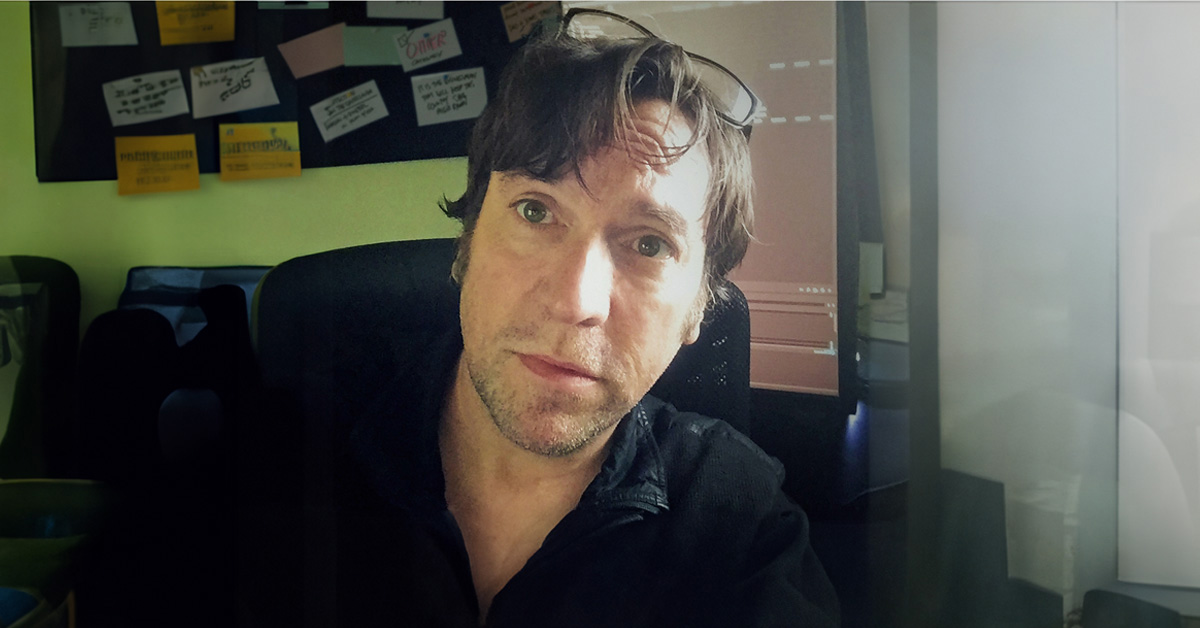
Wes Plate, co-founder of Automatic Duck, shares his story of overcoming alcohol abuse and becoming an ultra-marathon runner.
Let's create things that matter. Together.
For those who work in the filmmaking industry, ‘Below the Line’ is a pretty common term, but in case you’re not familiar with it, it originated as an accounting term to separate the fixed costs of a film’s budget (actors, director, writers, and producers, etc) from the variable hourly, daily, and weekly costs of those working in various crafts such as editing, costumes, or the art department, just to name a few examples. Unfortunately ‘Below the Line’ has become much more of a social status symbol rather than just a simple accounting term.
Today’s interview is one of my favorites from way back in the ‘Fitness In Post’ archives where I had an in-depth chat with editor Mike J. Nichols, otherwise known as the ‘Edit Doctor’ about an article he wrote titled “Is the Term Below the Line Hitting Below the Belt?” In this very candid conversation we talk about the rampant idea that creative workers, film editors like myself being the perfect example, have simply become an extension of our workstations and how this affects the way we are treated by others, as well as our emotional involvement in our work. We also talk about what we need to do collectively to start standing up for ourselves.
If you feel as if you’re being treated like a pair of hands chained to your desk and you want to know what you can do about it, this episode provides plenty of action steps.
Mike J. Nichols – “A rare combination of artistry and technology – A young Walter Murch” – actor/director Larry Holden.
As a teenager living in Ohio, Mike’s super-8 films garnered the attention of Frank Zappa’s son, Dweezil, who commissioned him for projects including work on a CBS network television series called, “Normal Life”. With the Zappa’s encouragement, Mike pursued film studies at Columbia College of Chicago winning two back to back short film first place awards which had never happened in the school’s student history.
In Los Angles, Mike edited the award winning indie film, My Father’s House (directed by Larry Holden) which featured Cameron Diaz and Josh Charles. Martin Scorsese praised, “My Father’s House”, as one of his favorite independent films of that year.
Alternately during this time, Mike’s anonymous editing work became famous in the Star Wars community with a video called, “Star Wars: The Phantom Edit”.
“Star Wars: The Phantom Edit” became a phenomenon featured in numerous magazines, newspapers, and television news programs around the world. Chicago Tribune film critic, Michael Wilmington, wrote a 2 page review of Mike’s work summed up in the articles final thesis statement, “…done by someone with a gift for editing”.
Chris Nolan’s film editor, Dody Dorn, was featured in a segment on NPR’s Studio 360 about the impact of Mike’s editing. J.J. Abrams gleamed about Mike’s edit to Entertainment Weekly and director Kevin Smith went on record in an interview calling it “Smart editing ”.
HBO penned the largest syndication deal in history for their hit series, “Sex and the City” but editing out 9 minutes of show content proved to be a difficult endeavor. After two trial run episodes, Mike’s editing and attention to story integrity became the missing piece they were seeking and HBO wrote a exclusive contract making him PREditor for the original syndicated versions of “Sex and the City” .
Musician Billy Joel and Exclusive Media/Spitfire Pictures were looking for a more narrative approach to their feature length documentary and Nichols was signed to be the Editor of “The Last Play At Shea” – written by Academy Award winning writer, Mark Monroe.
“Last Play At Shea” featured three different stories editorially woven into one complete narrative and it premiered at the prestigious Tribeca Film Festival. “The Last Play at Shea’s” world premiere was the largest documentary opening in film history taking place at New York’s Citi Field Stadium for an audience upwards of 60,000 before playing in theaters around the country.
In addition to hundreds of hours of broadcast film and television, Mike has also worked on the Emmy Award winning, “Vito: The Vito Russo Story”, AFI Audience Choice Award winner, “SpineTingler” and the editor on The Zappa Movie, a current film in production directed by Alex Winter.
Mike is known throughout the industry as “The Edit Doctor”. He is an influential speaker regarding post production techniques and the “art of editing”. He has invented a new post production processes and currently has two patents for advanced post production techniques.
Zack Arnold: I am here today with Mike Nichols, also known as the Edit Doctor, and he is a below the line editor. So, how are you below the line, Mike Nichols?
Mike Nichols: I’m very well, thank you for that below the line entry.
Zack Arnold: Yes, I hope you didn’t take any offense at the fact that I see you as below the line or being less than other people that would be, say, I don’t know, above the line. I hope that’s okay with you.
Mike Nichols: What I think is ironic about that is you do very below the line work, and I wanted to comment on your below the line work.
Zack Arnold: Yes, and I do. We all work below the line, so if anybody hasn’t noticed, this is going to be the theme for the evening, is the idea of below the line, and where this actually came from is a couple of different places. I want to make sure that Mike gets a chance to kind of give a little bit of background about who he is and where he’s coming from. If you’ve ever listened to that post show, that studio show, you know all about Mike Nichols, but in case anybody’s never heard of him, I want to make sure he gets a chance to kind of give a little bit of an intro. But where the show came from is a couple of weeks ago I got an email from an assistant editor that has chosen to remain anonymous, and I’m respecting that, but he or she sent me an email that I put on Facebook, and the general gist of it was, hey, I’ve been working really long hours, and I put some things up on my whiteboard in my office, like, you know, do squats, do push-ups, whatever, it’s just little exercises, and then my board got so busy that I had to erase it, and my producer came by and said, “Oh, you know, it’s really a good thing you took those things off the board, because you really shouldn’t be doing those things during work time, and you should be getting your work done. And I just about reached through my computer and punched this imaginary person in the face that I’ve never met, because this culture is just becoming so rampant and so common that we just need to be chained to our desks and we’re just machines and we’re really just a pair of hands, and you had sent me a Facebook message saying, “Hey, I’m writing this great post right now that’s about the concept of being below the line, and my immediate response was, “We have to do a podcast like now. Wow, so that’s why we’re here, is to talk about just the culture of our industry right now, which is that if you’re not working a minimum of 12 hours a day, you’re slacking off. You shouldn’t be going out to take breaks, unless, of course, you’re taking a smoke break, that is completely and totally acceptable to go smoke a cigarette and kill yourself, but you can’t go take a healthy break, and just the idea of us all being quote unquote below the line, what that means and what it’s really done to the culture of our industry. So, after all of that gigantic introduction, Mike, tell us a little bit about yourself, what your background is, and then we’re just going to go right into screaming at each other.
Mike Nichols: Well, you know what I was going to say is, when I moved here, what I was really fascinated, I’m from small town Illinois, where there’s cows and corn fields and places like that, so when I came here, I remember going into a store, and this guy reached over and grabbed a magazine, and the magazine was called Below the Line, and I was like, what is that, you know, what is what is Below the Line magazine, as though it was displayed very proudly, and he explained to me that it was a magazine that was meant for the crew, and I didn’t get it, kind of how this came to be is this isn’t so recent. This is more recent, actually. Where a producer came in, and I think the project had gone on for a few years, and the directors had left, and I was continuing on as the unofficial third person, taking care of everything to make a film be finished. And when there was going to be a premiere, I asked about tickets for me, and his response was, we don’t make allowances for below the line talent, and I remember, like, you know, the bell, the thing goes off in my head, and I was like, what the does that mean, you know, and I think that’s probably where it first started really burning me, that this concept of below the line, and to explain what that is, because I had to, of course, look that up. Below the line is an accounting term, and I’ll just reiterate how I had said this before, is that directors and writers, composers, actors are considered above the line, not because of creative impact on the film, it’s because their fee is just a constant fee, so if we’re putting a budget together, I know that this actor is going to do this so many days for this amount of money, the director is going to do it for this amount of money, but the costs and expenses that are negotiable underneath would be people like us, where we’re editing a movie, but then scenes would get cut from the script from the shooting that we don’t have to edit anymore, which means that’s two weeks out of our editing time that they could put somewhere else, so those are the flexible amount of things that can be done in a, in a budget for making a film or television show, and below the line, above the line were just simple accounting terms, but very quickly it turned into a very statusy sort of thing, and that the above the line people were the important people, and the below the line people were not important people, and not only not important people, but not creative contributors to a film, and it’s kind of one of those things where I watched an Academy Award presentation where Verna Fields won the Academy Award for Jaws, and I think it’s Elliot Gould. Gave a presentation. It was so heartwarming and charming about the way he was explaining what editing people who edit films do, and seemed like not only was he not reading it off a card, he was filled with knowledge about what that meant, and it seemed to be sort of an honor thing that since that point in time, it’s certainly gotten buried since then, and I think that we don’t have a face, we’re in a dark room, we’re tanless, we work all the time. I refer to it as we’re almost the nanny for someone else’s kids, and we spend so much time with them, and there’s an emotional attachment that you have to build if you really are working on something that’s creative, that it does start messing with you, that when people make changes to things, it does affect you personally, as though it is your child. Would you agree with that?
Zack Arnold: Yeah, I agree with this, and then some, and this is certainly something that I’d never – I hadn’t really put this together for a long time, and as an editor, you just kind of live in your own small little dark world, and I really – I never – this is something that never occurred to me, because I was just the guy that cut the footage, but I felt like most of the people I was collaborating with treated me like an equal, but then I started working on bigger and bigger projects, and I won’t name any of them. I’m assuming people will, you know, they can go on IMDB and see the things that I’ve worked on, but as I started to rise, I started to realize that this viewpoint became more and more apparent, especially when you start working with studios where you can be in a room with a producer or a director or showrunner, and they will treat you like an equal, and they will collaborate with you, and that’s all well and good, but when the end of the day comes, and you’re talking about how you’re getting paid, how your day is scheduled, any kind of perks you might be getting, whether it’s as simple as meals, or it’s as big as going to premieres, or getting paid when you know you take a two week. Hiatus during Christmas, things like that. That’s when you realize that essentially everybody that does what we do, we’re just widgets on a spreadsheet, and I really think that a lot of that just comes from what you’ve brought up, which is so eloquently put, which is that an accounting term has now become a status term, it’s become a social status, and I think the perfect example where this really started to click for me is I didn’t know that composers were above the line until like three years ago, and somebody said that, I’m like, well, that can’t be right, there’s no way, and they’re like, no, composers are above the line, and I’m like, what the hell, that doesn’t make any sense, and just to clarify, composers deserve to be above the line, I’m not saying they shouldn’t be, but it doesn’t make any sense that what we contribute and what they contribute, that they’re in a completely different position of status than an editor is, where we spend an exorbitant amount of time with the material, and they’re brought in much, much later in the process, and I’ve been having conversations with a few people about this recently, and the theory is, and I cannot, I literally just cannot wrap my head around this, but they’re creating intellectual property, they’re creating something that didn’t exist, which is a sound that comes out of their brain and is then transmutated into their fingers, which then becomes something that goes on the screen and goes to the picture, but it didn’t exist, whereas what we are is just digital carpenters, we’re taking somebody else’s lumber, and somebody else’s paint, and somebody else’s blueprints, and we’re just pressing the buttons, and we’re putting it all together, and we’re handing it to them, which is why we’re put in the same category as set builders.
Mike Nichols: Yeah, because what you said earlier is a really good point. I think I mentioned that on the article, is when you are working and collaborating with a director or producer, and they know what you’re capable of, there is a value to you, and they let you know that you know you feel it, but the instant you’re not working with that person anymore, or that group, you’re kind of tied to them to always for that respect and value and appreciation to that group of people, which you may not be working with next, and then you start all over again, where you’re like, oh my gosh, I’m back to being that below the line guy who now has to dance, dance, you know, do what I can, and it might be a chemistry that doesn’t work,
Zack Arnold: And I think that the other thing that we need to kind of think about too, and I can’t speak from a position of having worked on anything but features in television, when it comes to long form, I’ve done a lot of trailers and featurettes and promos, and that’s it’s a very different world, where especially if you’re a trailer editor, you’re kind of considered a rock star, because their trailer editing is a very, very specific skill set that’s very different from doing long form, and you will, you make more money, I mean, I still don’t make as much money now as I did 10 years ago when I was doing trailers and featurettes, but I’d never got that sense of below the line, above the line. It’s just the in the food chain of doing a trailer, you have the executives that are at the studio, or wherever, then you have your creative director, then you have the editors, but it was never looked at just like, you know, a set of hands, at least in my experience. But I definitely felt it once I got into television, I didn’t feel it so much in features, but I think that’s mostly because in features I was doing lower budget stuff, and everybody in the low budget film world is below the line, whether or not they’re above or below, like everybody’s getting paid crap and working horrible hours, and it’s just kind of guerrilla warfare, but I really started feeling it when I started working on high end studio TV, and I think that the way that I’m treated, as far as directors, producers, showrunners, kind of giving me that equal level of respect, I don’t think you see that nearly as much when you get into the reality world or the corporate world, I think there the concept of below the line is much, much more rampant than it is even for somebody in my position, and I feel like crazy. So, I think that I definitely want to make sure to acknowledge people that probably deal with this on a much, much larger level than even I do. And I feel it every single day.
Mike Nichols: Yeah, because we look, if we look at it at the top, you know, some of the top tier people, and they don’t feel that stigma, they don’t feel it in their environment, because they’ve been there a while and they’re treated well, but I’m saying that name just, it just keeps trickling down to every little job that involves, you know, non-union jobs, just what you were saying, a program or a show that’s on some small cable network where you’re treated below the line because that’s your status, not because of that accounting term, that it’s just something that you know a very prominent film editor had said, he thought I was being too sensitive about the whole thing, because he said, you know, the people that know what you do, they know what you do, and you really don’t have to impress anybody else, and I said, I can, I can agree with that statement, but I just think for me, when I started feeling it, is the moment that I wanted to start controlling show content and writing my own program, that if somebody was a producer of something that I worked on, and they might have been an executive producer, they might have just contributed money, not a creative aspect, but they could call a meeting and sit down with somebody and talk about their idea, the director. Could call a meeting and sit down and talk about their idea, but what I was getting was, dude, you’re just the editor of that, you know what contribution could you have, and I, to me, I just don’t understand it, because I know the pool of people that I know as editors, and if they had a show idea for me, like, it just rolls through my head, like, why, why wouldn’t it be good? So that was the stigma that I started feeling is when I tried to leave that environment and put my foot into something else, which is why I started going to off network kind of cable shows, where they were allowing me to be essentially the showrunner, the producer, and run the content through and talk to the network people and sort of understand how that whole machine starts working, and how I can deal with turning in cuts and getting things done, yet opposing the things that I disagreed with.
Zack Arnold: Yeah, and I think that one of the interesting things that you just said was, well, you’re being too sensitive about it, because the director or the producer, like, they understand the contribution that you make, and that’s all that’s important. I agree with that to a certain extent. Whereas editors, part of our job and our line of work, is we just accept the fact that we’re not going to go in the grocery store and people aren’t going to recognize and say, “Hey, you’re the guy that cut that thing, like it’s never going to happen, right? But at the same time, what I’ve experienced many times now, is that the people that give you that equal level of respect are not the same people that are actually negotiating your salary or your position or your hours or the quality of your life, and the people that are doing that are the ones that are sitting in front of Excel spreadsheets in some office in a bungalow in a studio, and they could give two craps about you, and they basically say, hey, this is what we got, take it or leave it, I can replace you with 100 people, right, and that’s really, really rampant, and I just kind of brings up my, my favorite line that you had in the whole article that you wrote, and again, I’ll make sure that I have a link in the show notes, so people see this, but when we say that, oh, well, nobody really knows who we are, you’re never going to see a card or a voice over in a trailer that says from the editor that brought you this title, right. It’s you’re never going to see it, because number one, people aren’t going to know the name. Number two, people are going to say, well, what’s the editor, right? People just completely take for granted what we actually do, because as everybody has heard 100 times, I’m not saying anything new, we cut out the bad parts, right? That’s what people ask me all the time, like, oh, you do the version that takes out all the mistakes and the bloopers, it’s like, yeah, that’s that’s what we do. So we take out the bloopers, it’s like that’s that’s it, right? So then along those lines, when you’re saying, you know, from the editor that brought you this, what we do see all the time, which, as soon as it started coming up in trailers, I wanted to just poke hot pokers through my eyeballs. It was, you know, from the studio that brought you Harry Potter, and I was just thinking, Who gives about the studio? It’s a bunch of suits sitting in an office that are making decisions, right? And your analogy of this, which literally made me laugh out loud, was it’s like saying we are the library that has books inside that you’ve liked before, it’s so absurd, right?
Mike Nichols: Yes,
Zack Arnold: But that’s the mindset that we have at this point, is people don’t understand the process that are outside the industry, so they say, “Oh, well, that studio made this, so that must mean they’re making another good movie, and I really think people are much smarter than that, and the studios have just dumbed down content so much that they just assume everybody’s stupid, and this is a trend that really needs to go away. But that’s exactly where that trend is going, and you would never ever see an editor put in that place, but the influence that an editor has on a piece of work, as opposed to the suits, the impact that they have, it’s night and day.
Mike Nichols: I know, and that’s why I said, even just psychologically, we both giggle at the whole idea of, from the editor of Harry Potter. Like, I’m thinking, is that really so much of a stretch? But because I have insight, now you have insight too. Is that really such a.. if you say, hey, man, it’s the editor of Name a Movie That You Like, and you’d be like, Hey, I’d consider seeing that, but if they said it’s from the studio you like, we both would be like, Okay, that’s ridiculous. But to the outside world, since it doesn’t ever happen, since we don’t ever get those kinds of above the line statuses, it is ridiculous when it says from the editor of Harry Potter, they’d be like, That’s just stupid. So the other thing is something that not only is more accepted, but it actually exists, and we could sit here and poke holes in it. How ridiculous it is.
Zack Arnold: So, I guess the question that I really wanted to talk about, and I know there’s not an answer yet, but I know that you and I are equally passionate about this. We know the problem, we know that there’s been this just clear status delineation, and I think that it’s a combination of just the subliminal thing that happened over time, where all of a sudden it was below the line, and we’re just these, you know, meek-ish, very introverted, socially inept people that sit in dark rooms and hit keyboards, and we’re key. Word monkeys, but then on the other side of it, we are bringing a tremendous amount of creative power. So, the question is, what do we actually do about this? Like, I know that you and I both have this grand vision that sometime within our lifetimes there is no more below the line, either for editors or anybody that’s in a creative position, but where do we start? Like, what? Well, I don’t even know where this conversation begins.
Mike Nichols: I know simply the whole idea, if those terms don’t really mean anything, you know, in the status terms that you and I are both now talking about. If it doesn’t mean anything, then let’s get rid of them. Like, that’s one we could just get rid of them. If they don’t matter, let’s get rid of them. That seems a little far-fetched, but that’s that’s one proposal, in a simple sense. I think it’s really easy for you to know what an actor does on a movie, because you see the movie and you see their face in it, and they, of course, get the most face value. If we were making a short film, there are people that I know that are actors, and they did make a short film, and when they were doing a screening for the cast and the crew and other people to come and see it. I told them that I said, “Remember, this is the night that you are sharing this with people. Everybody here knows you had something to do with it, because they just saw your faces in the film. This is the night to thank the DP, to thank the sound guy, to thank all those people. They’re here, their friends are here. This is the night to do that, because you’ll always be tied to this, you’ll always have credit tied to it. So, for just that little bit, make an extension to those people, because no one knows what they really do, and that’s the hard part. Is I can explain what an actor does. We kind of now have a romantic vision, especially from like the Steven Spielberg times, of what a director does, and that’s still managed to sort of hold its way on, even though I don’t know if I completely agree with it being that way anymore, but that’s there’s a romantic idea of what the director does and what the producer does, but when you say the editor this idea, just somebody the other day when I mentioned about doing this, they’re like, I think editors should just be called fat trimmers, like, just you need a name that’s much more accurate. I said, do you really think, like, I can’t even think of anything I’ve ever worked on where it was ever that simple? It would be some film from the 40s, you know, where they just shoot single takes, and you’d be like, oh, that’s the take I’m not using, and you just get rid of it, like that’s never happened. I doubt it’s ever happened to you. Mostly, what you’re doing is spending time trying to psychologically and sociologically. I was asked one time that I had one minute to explain what the art of editing is, and I was like, that’s a ridiculous feat, but I thought about it for a day, and I said, imagine that there’s 100 people in a room, and there’s a giant screen, and we project an image of a guy holding a baby. And then I asked the people in the audience, what does that mean to you? What would that mean to you, Zack?
Zack Arnold: It would mean that there’s a guy holding a baby.
Mike Nichols: Okay, and some people would say, oh, it’s a guy that loves its kids. Somebody would say, “Oh, I hope I didn’t get my girlfriend pregnant. Gee, did I do laundry? So, if I went around the room, some people might be on page with what they saw, but then they’re just off somewhere else. We’re not manipulating or controlling their attention to the image, but if I preface that by saying the guy who lost his child, it was kidnapped six months ago, was reunited with his kidnapped son at the LAX airport. Click, and I show you that picture. If I asked 100 people in that audience, what are you looking at? What do you think they’d say?
Zack Arnold: They’d all say, man, is he happy to have his kid back.
Mike Nichols: Yes, and the joke of it is, is that image could not even.. it could be a stock footage, it could be something else. So, when you ask what an editor does constantly, psychologically, sociologically, you’re taking and controlling what the audience is paying attention to, and let them react to what they’re seeing on the screen as part of the story, not what’s happening in their own lives or their own view on those kinds of things, but instead of, oh, I hope I didn’t get the girlfriend pregnant. They see the image on the screen, they can react to the character on the screen doing that.
Zack Arnold: Well, now what you’ve done, basically what has happened now, is you’ve opened up a giant can of worms, because this is the heart of everything that I’m so passionate about, is trying to help people understand what we do. I mean, I’ve taught at USC several semesters and helped to really teach young kids what it actually means to be an editor, and now we’re just gonna like, I’m gonna jump on my soapbox about film theory, which I really didn’t even expect to do on the show at all, but that’s what happens when you don’t have an agenda, so anybody that listens to my show, they know I have no agenda, and I just start blabbing, so that’s what’s gonna happen, so what you’re talking about is something that goes back deep into film theory, back into the first or second semester of film school. It’s called the Kuleshov effect, and I’ll have a link to this in the show notes, but the idea of the Kuleshov effect was an experiment that a Russian filmmaker did, where he took images and put them next to each other and asked people what they thought of those images, so there’s just a blank picture of a. Man’s face, and then what he did is he took picture of the man’s face and cut to a baby, picture of a man’s face, cut to a bowl of soup, picture of a man’s face, cut to a coffin, and he asked everybody, What emotion do you see on the man’s face when you see it with these images? Right, so they said, Oh, well, I see a father that’s happy about his child, or well, obviously the man’s hungry, or the man is very sad because somebody has just passed away, and what Kuleshov then revealed is that it was the exact same picture of the man, which means that it was the combination of the images that was creating an impression in the person’s mind. So, for those that are listening to this that aren’t editors for a living, the Kuleshov effect is the absolute core and foundation of everything that we do as editors on a daily basis. So, if somebody had come to me and said, you have to describe what you do as an editor in 60 seconds or less, I would say that my job is to make sure that whatever story, image, whatever the audience is watching, it is my job that at any given second, or even 1/24 of a second, I know exactly what the audience is feeling at that given time. I know exactly what the audience is looking at, what portion of the frame at any given time, and all of those things need to add up to an end, which is the emotional intention of the film, of the TV show, whatever the content is, I know exactly the way my audience is going to feel when they are done, and if I’m not achieving that, then I need to keep doing the work to get them there. So it is my job to manipulate the audience’s eyes and the audience’s emotion to get to a certain emotional end. That’s what we do as editors for a living, and that’s anything but knowing how to use Premiere or Abbott or Final Cut, or whatever your NLE of choice is. That’s a very highly creative thing, but the problem is we can’t call it intellectual property, and that’s what needs to change, because a composer making music is intellectual property, but I feel like my tone and my pacing, and my music choices, and my approach to how I manipulate an audience to feel something, that to me is intellectual property too, but because we’re below the line, nobody sees it that way.
Mike Nichols: Yeah, I absolutely agree with that, because even at the same time, and this isn’t something that I’m into, but the whole idea of the DJ culture, where you’re taking three different records and you’re applying together, and the art of this is, is how you make people feel by combining those things.
Zack Arnold: Yeah, and at the end of the day, I can buy a DJ app on my iPad for 99 cents, and I’m a DJ, right?
Mike Nichols: Right, yeah,
Zack Arnold: You know. And I think that, that, that really takes us into another portion of the discussion, which I think has really led us down this road, and I don’t think anybody saw it, but technology, I think, is the biggest driving factor for where we are right now, and that is because there’s no technology that can make somebody a better director. There’s no such thing, like you can’t buy the biggest, best directing app on the planet. It doesn’t matter what version of Final Draft or Scrivener or Microsoft Word you’re using, all people care about are the words on the page. Nobody’s ever said, “Wow, I love the way you’re doing your slug lines. Right? Nobody cares. All they care about is the story on the page. But when it comes to editing, if you have bells and whistles, and you have all these shiny new apps, and hey, well, my nephew has Final Cut Pro, all of a sudden we become tremendously devalued.
Mike Nichols: I also think you know what’s written on the page and what people eventually see in the end, although that was a guide to get you there. That execution, as you said, that intellectual property idea, that execution of those arrangement arrangements of all those ideas becomes an intellectual property, like you did create a way for people to feel and get involved in it, because if people did it badly, it wouldn’t work.
Zack Arnold: Yeah, exactly. And I think that when it comes to the writing process, I have the utmost respect for writers, and if they didn’t write great content, there’s not a whole lot that I can do with it. If you give me a really, really crappy story that’s poorly written, as an editor, I’m not going to take it from a D minus to an A, right? But if you give me a good script, I can take it from a B minus to an A, or a B minus to an A plus, just by rewriting the script, changing the structure. That’s the kind of power than the editor has. And for those that haven’t heard it, I know it’s a very common term, but the editor is the final writer, right? I think that, as you said, the editor puts the period on the sentence, and if you have a perfect sentence with a horrible ending, nobody’s going to want to read it, they’re going to say, well, that was a piece of crap, right, and for anybody, and I’m, I know that the vast majority of the people listening to this are editors and assistant editors and people in this industry, so I’m preaching to the choir, but if you really want to convince people what editors do, show them bad editing, and they’re like, “Oh my god, what is this?
Mike Nichols: You know what you’re saying? I said I want to make sure that’s clear, that neither of us, or especially me, are dissing the writing part of it. I think what it is is. In that medium, you have to write a certain way to get people to understand things, because it is written, and I’ll use, you know, like a Kulish example, is that if I’m reading from there, it tells me that Zack is mad about this, and he does this, and he does these things, like I have to read these things, but, or you say things in the script to let me know that you’re mad, but in the acting sense, once I see your face, I kind of don’t need some of those things anymore. And if you are watching that movie and it does become redundant, the audience is already on that page, so you don’t need to kind of shove it down there. But that’s the kind of stuff you’d be like, oh, I need to rewrite this for the movie, because the script part it covered the reading part of it, but it didn’t do the visual part of it
Zack Arnold: Well. The other area that we really haven’t talked about at all, which is another reason that I’m glad to have you specifically on the show, is if you’re talking about the power of an editor. So much so far we’ve pretty much talked about, like, my experience in scripted or in trailers or whatnot. Let’s talk about documentaries. Who writes a documentary film?
Mike Nichols: That’s something that’s very interesting that I’ve gone through a few things this year, which also kind of fuel this, and, and one of them was, and you just tell me when this feels weird, then I’ll ask you to respond, and that is, we have footage, some of it we inherited, some of it we have shot. What we need is an editor to go through all of it and find the story and tell us what the story is, so then we continue to shoot interviews or other supplemental things to supplement that story. What does that sound like to you?
Zack Arnold: Hmm, it starts with a WRI. Sounds kind of like writing to me.
Mike Nichols: It does, right. So, my first response is that sounds like writing, you know. And then I said, usually the idea would be, is if you’re the filmmakers and you’ve been doing this for a while, people are wanting your vision, right? Isn’t that what the whole point of being the director is? Like, they’re looking for your take, your vision on this, and for you to just ask me to go through and find the vision in this stuff, like one, I’m writing the movie for you, so I can make it easy for you, but then, in a sense, it’s starting to cross over to weird gray lines, and then I could start emotionally becoming involved in that, and having ideas that I think need to be supported in order to do, like, it just starts going down a weird rat hole, but I think it’s happening a lot, like it has been for years, especially in that documentary world.
Zack Arnold: Well, I think it’s an epidemic from the people that I’ve talked to, and this is something that I experienced probably about 10 years ago for the first time, and I was appalled at this, I was working for a company that does feature ads for big budget films, and I was doing like a 15 minute DVD piece, like a making of kind of piece, and I had worked for a producer where he would always go through, read all the transcripts that all the interviews that he had shot himself, had done the interviews, knew the story he was going after, and he gave me a script where all I had to do was a line cut, a radio edit, essentially, where I strung out 15 or 20 minutes worth of interviews, so the story was there, and my job was to add the music, add the B roll, do the transitions, and do all the things that editors do, but I was not the writer, he was the writer, right, very clearly he structured it, but then another producer came in and said, well, I just finished shooting the interviews, they’re in this bin here, I need the piece to be about 1012, minutes, and this is the feel we’re looking for. I’m like, great, so do you have a script? No, no, just, just do your thing, and I’m just like, I have hours and hours of raw interviews, I didn’t even have transcripts given to me, and I was supposed to cut a 15 minute making of piece, and I’m thinking, oh, so you pretty much want me to do your job and write it for you, but do you think that I got paid the producing or writing credit that he got? No, and I know that this is an epidemic right now in another area that we haven’t touched on at all, which I know is the vast majority of people that are out there right now is reality TV, right.
Mike Nichols: Yes,
Zack Arnold: So the analogy that I use for what I do for a living, I think that as a scripted editor I have it really, really easy, and I make that very clear, because I’ve been in a few very heated debates about people that work in reality versus scripted, and I’m always the first to say reality editors have so much more crap they have to deal with, and that’s such a specific skill set, and I have a tremendous amount of respect, because for me, I have people that go out, they cut all the lumber, they have the different pieces of lumber, they put it all in neat stacks, some of the lumber sucks and doesn’t work really well, but most of it works, and it’s the size they wanted, and then they hand me blueprints, and they say put the stuff together, if it doesn’t quite work, or it’s a little bit too big, make it a little bit smaller, right, but if you’re in reality or documentary, this is what happens. You have your foreman come into the room and say, “Oh my god, you’re not gonna believe what happened. We had all this lumber and half of it got destroyed, and then this other guy brought in the wrong stuff and the wrong pieces, and we have all this crap here, and so many on our blueprints, so we got nothing but find the story. Can you find the story for us? That would be great, if you could go ahead and do that. That’s what it’s like working in reality. So, in reality, you’re the writer too, but you think you’re getting story credit or writing credit? No, that’s what the producers get, because they’re above the line.
Mike Nichols: Yes, the other obstacle that you have in that scenario, too, is if I ask you to help me move, if you knew how many pieces of furniture and how far we were moving to, that’s something that you could have a goal, but like to come up with a great idea. You could spend a month coming up with an idea that you could edit in 15 minutes, but when you’re given all that and the idea of editing it together, it’s a series of jobs, and it’s, it’s kind of a no-win situation, and the fact that people do pull out of that and makes them is amazing to me, and I was like, they need a parade, like in the reality TV show, it’s all built in editing.
Zack Arnold: Well, I think that this kind of brings us full circle back to closer to the beginning, not so much the beginning of the conversation, but where we were in the middle, where I started asking the question, what do we do about it, and I don’t have an answer, but I do have theories, and I have visions for things that we can do, and where it can start, and my feeling is that the first place that it needs to start is with us. We, as editors, need to accept the fact and just understand that we are not below the line, and I know that sounds easy, and people are thinking individually, oh, well, of course not, right? But we treat ourselves like we are below the line, and therefore people accept that, and they treat us accordingly. And that is yet another epidemic in our industry, where we just kind of, you know, take what it is that’s given to us, and we come in, and we sulk in, and we’re like, all right, well, I’ll do this, and then we bitch to people. Oh, yeah. Well, they asked me to do all this, and they don’t understand everything that we do, but nothing’s happening, right? And it’s that prevailing attitude of, well, like for example, going back to the mention of that person’s email that they sent about putting the squat breaks on the whiteboard and being asked to put them down. There were other editors that responded to that thread, and I will dig up the thread, and I’ll put a link to it, so you can actually read all the responses. But there were people that were older editors, or older, whatever it is that they do, but there were older people in the industry saying, well, you shouldn’t be using company property to write your own personal exercises, you should really be doing that on your own time, you should be at your workstation doing what you’re told to do, right, because we’ve been so conditioned to believe that we are our workstation, right, there’s no difference, we are just an extension of the workstation, and that’s what we bring to it. And the first step to me is collectively starting to change that consciousness and pushing back against it.
Mike Nichols: Yes, talking about it, making this stuff be known and mentioned, I think that you know, in the 80s, the whole idea that visual effects were sort of like this dark art, and there were programs that showed you how to do stop motion, how to do this kind of stuff, and it was very empowering to people, because it was something that you didn’t know how to do, and then they began to understand it, and be able to put their hands on it, and then they could see, I want to be a visual effects guy, because I can see what they do, and that kind of goes back to what I was saying earlier, is there isn’t a whole lot of, I don’t know how to explain to you, and it seems like what we would do would be very boring, and somebody could just couldn’t watch it, so to have somebody feel for you, I guess, why not knowing what they do, it’s kind of like, you know, a disease that no one talks about.
Zack Arnold: So, one of the interesting points that you just brought up, that this is another rabbit hole that we don’t have time to go into, but is the visual effects artists right? You want to talk about a group of people getting devalued. These are people that hold a pen at their tablet and they do rotoscoping, and they can be replaced at the drop of a hat, and they’re getting paid nothing, and clearly this is all sarcasm, because I don’t feel that way at all, but that’s the perception, is that well, anybody can do this, I mean, my God, I can get After Effects for $29 a month, anybody can do compositing and visual effects, well, again, you want to see what visual effects artists do, go watch a movie with visual effects, right. There’s a lot of them, and that to me, especially the fact that movies are so heavily driven by visual effects. Those are a massive piece of the storytelling process. And I would much rather be an editor than a visual effects artist in today’s filmmaking culture, because they are just the lowest of, they’re just the gum on the bottom of people’s shoe. And I don’t even know where to start with that, or how to fix it. It’s not a world that I live in, but I see us going in the same direction, and that’s what needs to change. And the first step to that is awareness, and seeing that it’s there. And to me, the next step, after we’ve realized that this is a conversation that we start, we need to start having, and it’s starting to happen, and I’m seeing it on Facebook, but the second step is that you’re not going to have the confidence or the energy to stand up to a producer or a director and say, you know what, this is my fifth 15 hour day in a row, either get more people to do this or I’m done, because this is not human, like I’m not my workstation. And I’m a human being, and there are creative things that I can contribute to this process, but guess what, if I’m not sleeping and I can’t think straight, I can’t provide the service that you’re paying me for. The fact that I can hit the keyboard, that’s not the service that I provide. You need somebody that can hit the keyboard, go get a homeless guy off the street, give him classroom and a book, and let him start using Premiere Avid. Right, what I bring are my choices. There’s a great line that I heard that somebody said recently, is that you hire an editor for their opinions. If you don’t like their opinions, they’re not going to be good for your project, because all we’re doing is bringing our opinion of what’s best on a macro level and literally on a micro level down to the frame. Well, I think this cut is better than this cut, because I feel x, y, and z. That’s what you’re buying when you’re buying a specific editor over another editor, not their level of technical ability, right? But if you are so burned out and you are so drawn, just completely drawn into this world of living in the dark and not taking care of yourself, you’re never going to be able to stand up to yourself, and that’s the next step to the process, and that’s really where I’m trying to jump in, and that’s part of the reason that I wanted to have you on, and to spread the word about the post, is you’re very, very complimentary to me, so that’s really all this is about is me, but you actually, you mentioned me in this post about below the line, and I had no idea that you did that, actually was really looking forward to reading it, whether or not I was mentioned, but what I’m finding is that there’s starting to be a real consciousness about fitness and post, and it’s taken a while to get it there. It’s been a very long, arduous, difficult process to get this conversation started, but the momentum is building, and what I’m really trying to convey to people is that yes, fitness and post is, hey, here’s a way to adapt your workstation, so you can stand a little bit longer, or here’s a way that you can avoid having the snacks in the afternoon and try, you know, a protein shaker, you know, a multivitamin supplement, whatever it is, like little stuff, but I don’t care about any of that stuff in the big picture, the idea is that if you start looking at yourself differently and treating yourself like the high-performance machine, rather than like the piece of crap Ford Pinto that you have parked in the garage, you’re going to start having more respect for yourself, and therefore you’re going to command that respect from other people. So, for anybody that’s fairly new to what fitness and post is, that’s really what it’s about. I want to provide the tools down to the minute level of the micro vitamin, you know, the multivitamin supplement, or the exercise program, or here’s a way to eliminate stress, but at the end of the day, it’s about taking back our identities as creative professionals in this industry, because once you start respecting yourself, everybody else will start respecting you in return, and I can say that firsthand, because I spent years of being treated like I was below the line, but now I just don’t allow that to happen, other than when you have the negotiations from the studio, and it’s that’s a whole other conversation that you know needs to be had, but when it comes to sitting in a room with people, it’s very clear that I bring a lot to the project, and a lot of that is because of the way that I treat myself.
Mike Nichols: You also fitness in post, mental fitness.
Zack Arnold: Oh, absolutely, mental fitness is what it’s all about. I mean, if I were coming out and saying, “Hey, I have a new program to do 20 burpees for every render break, which, of course, is not a bad thing, but that’s not what it’s about. What I want is to make sure I’m providing the tools, so we can have more mental and creative energy to be better at what we do, because the best tool or the best operating system that I have is not my iMac, and it’s not my AJA Kona card or graphics card, all the fancy technology that’s out there now, none of those are useful to me if I don’t have the creative energy to make the right choices, so that to me is the difference maker, and one of the main reasons that I feel like I’ve gotten to where I have in my career is because I put so much value in my ability to make the right decisions, make them quickly, and make them consistently. I have not invested a lot of time in learning technology, when it comes to the latest NLES or After Effects, or anything else, I kind of don’t know that much, like I’m not very impressive when it comes to my ability to know how to use technology. It’s because I’ve invested so much money and so much time into making sure that I have the most creative ability, the most stamina, and the ability to just be calm in a room with people that are constantly frazzled and anxiety ridden, which is everybody in this industry.
Mike Nichols: Yeah,
Zack Arnold: So that’s that’s me getting on my soap box, like that. That’s, I didn’t really expect it to completely go there, but I just got so riled up that that’s really what this is all about. And I, for people that are listening, like if you are in this industry and people are, you know, putting, pushing you down, and like I’ve have colleagues that are working on other big shows that are working 80 hour weeks, and they’re working through being sick, and they’re miserable, and they can barely stand up. Like, this has got to stop. But one person standing up is not going to do anything. But everybody standing up and saying enough is enough. We are human beings, and we are not our workstations. Things are going to start to happen. It’s going to happen slowly. We’re not. Jerking the wheel on a car, we are turning the wheel on an aircraft carrier. It’s going to take a little while to watch the turn happen, but we need to start pulling the wheel, and it will start to turn.
Mike Nichols: I propose that idea of searching for the cause instead of the symptoms, and that’s something that we have to do all the time. You have a cut and it’s not working, and lots of people point at the symptoms, they’re aware that I don’t like the movie right here at this part, therefore you change it, but having insight, you realize that you feel that way, but you, you got knocked out, you know, 10 minutes before that. I need to find out what the cause of why you feel this at this point in time, and it’s just the same way with this, like I just started thinking, like why is it that we do feel there’s a little self-loathing in and not asking for those things, and taking some of these things, like, why, why do, why is that happening that way? And this is my, that’s what I’m saying, I’m determining the cause of this is to make one giant change, and I believe it would make a big change is if that thing went away, if people stopped looking at, I’m saying editors, because that’s that’s us, but if we stop looking at that whole idea as, as, as this below the line status, things would begin to change.
Zack Arnold: Absolutely, I mean, you talk a little bit about the, the end of your post, which I think was really, really kind of hit this on the head, was the idea of the self-fulfilling prophecy. So, let’s go there specifically.
Mike Nichols: Well, I said that because previous to that, the whole idea, like from the editor of this, you know, it seems giggly, like it seems a little funny, but, but when I sit and think about them, like, is it really that far-fetched? I mean, it makes more sense than what they really are doing, and that’s kind of the self-fulfilling prophecy, is you come into the room and if somebody expects that you are an idiot, that you are a thief. You will begin to exhibit and be seen and to perceive yourself as the person that they think you are. And just the fact that we think from the editor seems a little bit silly is enough to let me know that we have insight to know that’s not that silly, but yet we do do think it’s silly, so we are still fulfilling this prophecy that we are below the line people,
Zack Arnold: And I think that, like you said, you’re looking for the cause and you’re not looking for the symptoms, which is just so.. again, I keep saying this over and over, but it’s definitely a massive epidemic in this industry of being so reactive of, oh, that’s the problem right there, especially going into, like, testing. Testing is seriously, I’d rather have root canal than test something with an audience that doesn’t understand the process. But I think that saying the only cause is because we’re called below the line, that is a big factor. But I really think the responsibility and the cause is on us, because we’ve accepted that we are below the line. We’ve accepted that it’s okay to be below the line. We’ve accepted that it’s okay to be treated below the line. We’ve accepted that it’s okay to be paid below the line, and we are the ones that bear the responsibility for that. And we can’t just say, well, it’s just because of this. It’s like, but we’ve accepted it. And that’s where the self-fulfilling prophecy also comes in. It’s not just about how other people perceive us is how we perceive ourselves. Once you start to change that, that’s when people are going to start to perceive you in a different way as well. So, that is kind of a closing thought. I love the idea that we’re really looking at the root cause, but I think it’s unfair to say the cause is because we’re below the line. It’s because we’ve accepted it.
Mike Nichols: No, that I see what you’re saying, like you’re really making it specific to the idea that this is something that’s gone on for years, but the root of it is how we perceive ourselves in this scenario, or we have to perceive ourselves in this scenario to continue to work in this environment, because if we did just go, “Hey, you, I don’t want to do this, or what we’d lose employment, so there is there’s a cross breed of both those ideals.
Zack Arnold: Yeah, and it’s this is again, this is something that’s going to take a long time, and we can’t just all go to work tomorrow and say I want a 25% raise and I want to be above the line, or I’m going to quit. That’s not going to happen, but this is the kind of thing that if we start to collectively change our consciousness. This may start a conversation where things are massively different a decade from now, or two decades from now, right? But we have to be willing to see the long game and play the long game, and understand that if we just continue to complain about the situation, but do nothing about it, it’s only going to get infinitely worse over the next 10 to 20 years, because of the technology, and we’ve seen that happen with the visual effects industry. I mean, I’ve seen posts going around saying, is the editor extinct? I don’t even understand how that’s possible, but that’s the mentality that’s out there. Is it right? Of course it’s not, but the fact that the question has been asked says everything about where the direction is going, and that’s terrifying for all of us, and it can be changed, but we are the ones that need to make the change,
Mike Nichols: You know. Last year, an editor friend of mine, we had a nice heart to heart conversation about where you are in life, you know, setting up your goals, and he gave me a lot of advice, and, and this sounds so terrible, but he said the editor credit, the below the line credit, it. And I’m just gonna say it’s he said ultimately what you want is above the line credits and he explained to me in the sense of hey let’s just say that somebody contacts you and ask you to build a pitch and you create this pitch just they give you a box of tapes you make a pitch out of it for a show they take it off they’re like hey Zack when this goes we’re gonna hire you as the editor it’s like that seems like a great idea. Okay, great. But he goes, “What you’re not thinking about is what if you’re not available? What? What if they take it somewhere else? What if all these circumstances happened, they got the show out of this, but you don’t have any say in it, because you don’t have any above the line credits? And he says, “This is what you need to start thinking anytime that it goes out of somebody handing you a script where you’re putting things together like how you, you were saying that it was well produced and it was put to you, that rarely ever happens. He said, just need to start thinking that way and start asking for it. And I have been, and I will tell you, it is met with lots of opposition and anger when I bring it up, and I still keep doing it, but I will admit that it is, and that’s my continuing cause for the past year.
Zack Arnold: Yeah, and that there’s no question that it’s something that needs to continue to be done and be said, and it might take you saying it 20 or 30 times before all of a sudden it clicks and somebody accepts it, and it may take that one producer that gave you the opposition, if they hear it from 10 or 15 other editors with the same request, they’re going to think, “Oh, maybe this is something I should entertain, right?
Mike Nichols: Absolutely,
Zack Arnold: But as long as we continue to accept it, why wouldn’t they accept it? It’s easy, right? So that’s where it begins. So it begins with us placing the blame on a title or an external factor will get us nowhere, and we’ll make no change, but if you’re somebody that’s out there and you’re saying I live the same life and I’m tired of this and we’re getting put in this box and we spend all these hours doing this stuff for other people and when all of a sudden it explodes and it’s hugely successful and we get nothing in return. Well, guess what? We need to do something about it. It’s not going to change. There’s not going to be some director or producer that comes out and says, hey, we got to look out for these guys and make a change. It’s not going to happen. We are the ones that are going to make the change, and this is where it needs to start. And it’s going to take a long time, but I believe you’re right in that the place to start the conversation is stopping using the term below the line.
Mike Nichols: You know, those are very good thoughts. You should do a podcast.
Zack Arnold: I should start a podcast.
Mike Nichols: You should do this.
Zack Arnold: You know, it’s funny, because when I started, I just wanted to sell Shake Allergy. I’m kidding, by the way, but that’s what everybody thought. Like, what is this guy selling Beachbody products? Like, this is weird. I’m like, no, no, no, that’s not what this is at all. But you know, you got to start some more. I’m still trying to figure this thing out, but I’ve really now that I’m getting all these responses, and I’m getting emails every day now from people that are just fed up, they’re just so tired of this. I’m now really seeing what this is about. But at the end of the day, if you don’t have the energy and you don’t have the cognitive function and you don’t have the respect for yourself, you can’t protect yourself. The only person that’s going to protect you is you, and the way to do that is to make yourself stronger, and that’s what this is all about, is providing the tools to make sure that you can do that, and you know how to do it. So that’s really what all this is about, and this is where it’s going, and there’s so many things that I want to do, but because I work freaking 70 hours a week, I can’t do any of it.
Mike Nichols: I do want to add one extra thing, and this is something that I get out of what you’ve done, that is not the fitness side, it, but as the podcast sends, you’ve managed to get, especially Wes’s last Wes, Wes played the, yeah, Wes played, did the podcast be the last one I heard, and something that when you spend so much time alone, you have thoughts in your head, and you feel that maybe you’re alone, you know? You feel that way, and I think some of these interviews that you’ve been doing with people, where they’re kind of very openly sharing lots of things, and pitfalls, and feelings that they have, you’re like, “Well, I felt like that before too. It’s very uplifting to know that you’re not alone, because we don’t get to do this very often, and so I found that listening to many of your past ones, that that was a, that was the gift from them, is hearing other people talk about, hey, I had a hard time walking up the hill, I didn’t make it, you know, but I kept going like those kinds of things,
Zack Arnold: Yeah, and that’s really what this is all about, is because we work in such a sedentary, solitary nature, we will just be trapped in a room by ourselves with a crew of three people for six months to a year at a time, or more, that you really just start to be conditioned to feel that you’re the only one going through this, and you’re all by yourself, and that’s where the depression starts to creep in, and that’s where all the negative thoughts start to creep in, and by lending a voice to it, and knowing that I’ve been to hell and back, just like everybody else has, and I’ve now been very public about my experiences in hell, I’m starting to see people that are coming to me saying, oh my god, I’m going through all this too, I thought I was the only one,
Mike Nichols: Yeah,
Zack Arnold: And that’s where the power is to me, that’s the power. Power that we have is starting to, on a singular level, all collectively start to come together, because we all have these personal, individual stories where we thought, God, I was the only one that was working all these long hours, and I couldn’t even wake up the next day and do my own laundry, because my brain is just so burned out, and I can’t make decisions. It’s not uncommon, but with the nature of our jobs, we just don’t feel like we have people out there that we can talk to about it, and that’s what this is really all about, is making sure that we all understand we are all going through this together, and we can all start to fight back together.
Mike Nichols: Well, it’s working.
Transcribed by https://otter.ai
This episode was edited by Curtis Fritsch, and the show notes were prepared and published by Jakin Rintelman. Special thanks to Krystle Penhall and Sarah Furie for helping to spread the love!
The original music in the opening and closing of the show is courtesy of Joe Trapanese (who is quite possibly one of the most talented composers on the face of the planet).
Wes Plate, co-founder of Automatic Duck, shares his story of overcoming alcohol abuse and becoming an ultra-marathon runner.