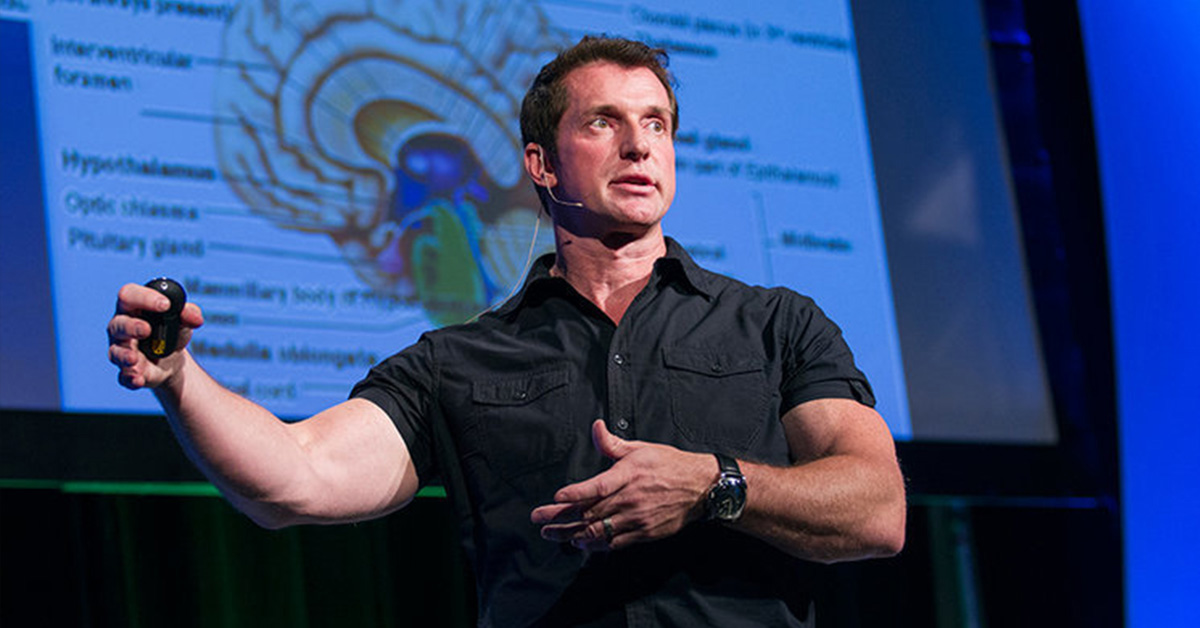
How to Boost Your Cognitive Performance with Sleep (according to a Navy Seal) | with Dr. Kirk Parsley


About Episode
Without question sleep is the most important physiological process we require as creative professionals (and humans) to function at an optimal level…yet it’s what our work culture prioritizes the least. Proper sleep slows the aging process, keeps us lean, restores our immune system, and it protects our memory. Much to the chagrin of ‘Type A’ over achievers, quality sleep is every bit as important as oxygen, food, and water.
So then why do we proudly wear our “Sleep Deprivation Badges of Honor” on our sleeves and work ourselves to death even though every bit of research that points to chronic sleep deprivation destroying our ability to cognitively function at a level higher than being chronically drunk at work.
Today’s guest is no stranger to the detriments of sleep deprivation. Dr. Kirk Parsley is a physician for the Navy Seals and a former Navy Seal himself. And there are quite possibly no two professions on the planet better known for chronic sleep deprivation than being a Seal or being a doctor. Having experienced firsthand the negative effects of chronic sleep deprivation, Kirk has now become and advocate for the health benefits of sleep and is now a world-renowned sleep expert who travels the world evangelizing sleep, wellness, and hormone optimization.
Before you considering sacrificing “just a couple hours” of sleep today or this week to get just a little more work done (or to watch just “one more episode”), I encourage you to listen to this interview to better understand not only what sleep deprivation is doing to your creative brain but also more importantly what you can do about it.
Episode Highlights
- Becoming aware of the negative aspects of the culture of sleep
- Sleep’s relationship with your hormones
- The problem with sleep studies
- Coming to terms with your sleep deprivation
- Fighting indifference towards your poor sleep habits
- The unprofitable nature of long-term health practices
- How to confront your accumulating sleep debt
- The casual deception of concepts like bio-hacking
Useful Links
About Guest
Dr. Kirk Parsley is a former Navy SEAL, a physician for the SEALs, a health & sleep optimization consultant, and performance enhancement coach for some of the most driven achievers on the planet.
Kirk is the creator of the Doc Parsley Sleep Remedy sleep supplement, a member of the American Academy of Sleep Medicine (since 2006), a worldwide expert speaker on sleep, wellness, and hormonal optimization, and the author of the internationally best-selling book, Sleep to Win.
Transcript
Zack Arnold: I’m here today with Dr. Kirk Parsley, who is a former Navy SEAL. He was also a physician for the Seals, and he is now the creator of Doc Parsley’s Sleep Remedy, and I cannot tell you how excited I am to geek out about sleep today. So, thank you so much for being on the show.
Kirk Parsley: You’re welcome. I love fellow sleep geeks. There aren’t that many of us around, so
Zack Arnold: There’s definitely aren’t that many of us around.
Kirk Parsley: You gotta like really grab it, you. Got to pull hard to get through gravity.
Zack Arnold: Yes, you do. And I can tell you that there are not very many of them in my industry either. And I’m seen very much as an outlier. I love talking to people that have really pushed themselves to their physical and mental limits. And anybody that’s kind of considered one of the toughest or most resilient people on the planet, bar none, they always have Navy Seal in their resume somewhere, so just that alone makes me super, super honored to have you on the show today. But the fact that you also love sleep and the science of sleep and sleep supplementation, so many of the culture of sleep, there’s so many different areas that we can dive into, and I think where I want to start is the culture of sleep. The reason being that in my industry, and I’m not gonna, I doubt I will have anybody listening to the show that’s training to be a Navy SEAL, that’s a crazy crossfitter, that’s super into biohacking. What I have are people that are highly creative that spend on average 12 to six hours a day in front of a blue screen computer having to access deepest layers of creativity and decision making, and everyone in my industry for decades has been wearing the sleep deprivation badge of honor, and I know that you talk a lot about the culture of sleep, and it’s no different in a lot of other cultures than mine, but you have been through two gauntlets where sleep is so devalued to the point of absurdity, both being a Navy Seal and being in medical school. So, talk to me a little bit more about your origin story in discovering sleep is your specialty.
Kirk Parsley: Yeah, well, I mean, honestly, sort of the sleep, whatever you call it, the sleep expertise wasn’t really intentional. What, what had happened is I was actually, I mean, I grew up in outside of Houston. I was actually, I was a terrible student. I started getting Ds and Fs in my third grade. By my fourth year of high school, I was a sophomore, so I dropped out of high school and joined the Navy, I heard about this Navy SEAL thing that wasn’t a celebrity status back in those days. It was supposed to be the toughest training in the world, and so I said, well, I’ll go do that, because I’m really good at really good doing physical things. I was a good athlete, I was strong, I was fast as athletic, I was big, so I’ll go do this, and then you know, fortunately, as you become an adult, you learn a little bit more about yourself and your aptitudes, and maybe you had a few handicaps here and there that you didn’t see. I started dating a gal who was in physical therapy school, getting her master’s in physical therapy, and started reading her textbooks just out of interest, and found them really easy to read and digest, and so she.. I thought I’d get out of the SEAL teams. I was.. I was a SEAL during the Clinton administration, so we were like Team America, you know? We’re like the police of the world. We.. we didn’t.. didn’t have any true engagements between the Gulf War, whatever that little thing was. And so I said, well, I’m going to go on and do some other stuff, and so I thought I had to go be a physical therapist, and then you have to volunteer about 2000 hours to be to get into physical therapy school, so I started working at a sports medicine center in San Diego, and long story longer, I decided not to not to become PT, but instead to become a doctor, and I was already married, already had kids, or had a kid, had a kid away, and a pre-date out date myself here, like this is before the internet was super useful, like it is now. Still had to go to the bookstores and look through, like, the Kaplan books for the schools you wanted to apply to, and see, like, what their GPA was, and what their MCAT were, and you know how competitive it was, and what schools you’re likely to get into, and not. And as I’m flipping through that book, I found out the military had their own medical school, and I was like, ‘Oh, crap, that’s fortuitous. And so that was a way for me to actually get paid enough to support my family while going through medical school, and come out of medical school with no debt, but it does require you to be a physician for the military for eight years after medical school, and so that’s sort of the trade off, and I figured I would get back to the SEAL teams, and I did, I got back to the SEAL teams, and SEALs are a lot like professional athletes, they don’t, you know they hate doctors, they hate the medical communities. Those are the guys that can put you on the bench, those are the guys that can take you out of your job. And so they try to hide everything from from the docs, and because I had been a SEAL, and guys trusted me, and I had a good reputation in the SEAL teams, and there were still plenty of seals that were around when I was a SEAL, that I’d been sealed with, or been been through training with. Those guys just came in and closed the door and started telling me all their problems, and I didn’t have the slightest damn idea what was going on with them. I was just like, like, I don’t know, I don’t even have a guess. They didn’t have any disease, they just weren’t performing the way. They wanted to perform, they weren’t performing the way they expected to be able to perform. Their performance was declining, and they couldn’t make any sense out of it. And I’d been to medical school, so I learned I knew how to recognize, diagnose, and treat disease. They didn’t have any disease, so I just started this huge lab panel of about 100 things that I could think to measure that might impact this litany of stuff, you know, everything from their mood to their sex drive to their motivation to their body composition to their memory concentration, endurance, like you name it. I just welcomed me up. Let me kind of just put everything in there I can think of, and I started doing these huge panels, and I would spend like two hours interviewing these guys about everything I could possibly think to ask them, and somewhere around like the 100th guy, a light bulb went off in my head when he said that he took Ambien every night, and if you know the SEAL community, it’s like most alpha male communities: one is good, two is better, three is great, four is fantastic, and chase out a few cocktails, and then they’d sleep like four hours, and say, odd, I didn’t get a good night’s sleep, but I’m just gonna get up, I’m gonna go to the gym, I’m gonna work out really hard, go straight to work, and then I’ll be really tired tonight, and then I’ll sleep better tonight. I’d say, well, How long you been trying that? You know, three years, I’d say, well tonight’s probably the night, so keep going, and so anyway, you know, once the once that that light bulb kind of went off, I thought, you know, it literally, I didn’t have a single class about sleep in medical school, not not one lecture, not a chapter, not a question on tests, like nothing. I knew nothing about sleep. I knew I knew nothing more than the lay audience, like just the general guy walking on the street, knows about sleep. And so I said, well, let me see if these sleep drugs do. And so I started reading about those, and I started reading about what happens when you sleep. And as I started researching what’s actually going on when you sleep, it was Occam’s Razor. It was the one thing that it was the unifying theory that could literally explain every single symptom. Now, I’m not saying that it did, I’m not saying that correct, and actually corrected 100% but I’m saying that every single symptom they had could be explained by poor sleep, and when you do sleep drugs, you don’t really sleep, you, you’re just unconscious. It’s a different, it’s a different physiological state. So they essentially just weren’t getting any sleep. And what I wanted to do, I saw these horrific hormonal panels, like they look like 65 year old men, they look like 65 year old men that were 50 pounds overweight, and in their labs, right? They, you know, when they’re sitting in my office, they look like 30 year old guys that are shredded and muscular, but their labs just looked awful. And so I wanted, from the doctor’s standpoint, like I wanted to put all their hormones back higher, but the military wouldn’t let me do that. I don’t know why. I mean, it’s like, like, I don’t think I don’t think Al Qaeda can like charge you with cheating at war if you’re in hormones, but whatever. You know, the military had their prejudice against it, and so I really started talking about sleep as the way to teach guys a way to improve their hormones, and so I started talking about what sleep drugs do, what alcohol does to sleep, and what supplements you could take that would actually improve your sleep, and that would actually improve your anabolic hormones and decrease your catabolic hormones, and that’s how it all got started. And the Navy did the SEAL teams did these retreats before, like before a team would deploy, they’d get the whole, they’d get the whole team together with their wives, you know, with their spouses and their kids. They go to this resort, and they do like a two or three day retreat, and they do a bunch of educational classes and workshops to kind of prepare the people for, you know, what they were gonna have to deal with for the next six months. And then they would do one on the way back for the sort of the reintegration, and they bring in guest speakers, and so I was one of the speakers they started bringing in, and Rob Wolf was one of the speakers they started bringing in, and Rob Wolf was this nutrition guy who spent about 30% of his lecture talking about sleep, and I was a sleep guy who spent about 30% of my lecture talking about nutrition, and so we had an instant bromance, and I went on his podcast, and that kind of started me down this guru path of the sleep expert, or whatever you want to call me. I don’t know the term. I’m a guy who focuses a lot on sleep, so like,
Zack Arnold: How about we use the term sleep enthusiast?
Kirk Parsley: How about that?
Zack Arnold: I don’t like the term expert, I don’t like the term guru, but I love sleep enthusiast, and what I love, I love the difference between knowledge and wisdom, because knowledge is the researcher and the scholar that’s read all of the texts and all of the literature about sleep, and they understand all the hormones and all the percentages. Wisdom is the Navy Seal that’s been through Hell Week and has learned how to solve the problem of other Navy Seals going through Hell Week that are destroying their bodies and minds because of chronic lack of sleep, so that’s why I love talking to guys like you, because you may not know every single little piece of knowledge and have read all the text, but boy, have you been through the gaunt like both yourself and now working with I would say the people on the planet, between medical professionals and Navy Seals, that probably go through the worst sleep deprivation known to man. I would guess correct.
Kirk Parsley: Well, and then my current client base is all entrepreneurs, and so they’re like, oh yeah, they crush themselves just as badly, you know?
Zack Arnold: Yeah, exactly. And then that’s a fair amount of the people that are listening to this are either creative professionals or entrepreneurs, which usually ends up being both, and I kind of straddle both of the industries, but in either industry you pretty much have to work for yourself and you work project to project and gig to gig, and there’s always this mentality of, oh, well, I have to say yes to this because it could be the last job I ever get, and then I have to say yes to the next one, so now I’m working two jobs, so I’m working seven days a week, and this is what goes away.
Kirk Parsley: Now this is shiny object over there that’ll make me better at my job, so I need to do that while I’m doing these other jobs, like I’m an entrepreneur myself, so I know that I know the game, and I know how bad it gets, and I know how tempting all that is, and it’s like, well, you know, I can just stay up a little bit later and get this one thing done, get up a little earlier to get that one thing done, and it just doesn’t work, man. But yeah, I mean, I would add to two definitions, which I really liked, and I’m gonna, I’m going to start using that,
Zack Arnold: Steal it. It’s yours, take it, feel it,
Kirk Parsley: I’m not gonna give you any credit whatsoever. Now I like to sleep enthusiast to me, like having been through academia, like having to, you know, compete at the highest levels of academia to get, you know, to get into medical school and get through medical school. I consider academia and most research, I mean the vast majority of research is, it’s all dogma, right? I mean, there’s preconceived biases before they start, as much as people try to push it aside. Every, we all, we’re all biased, like every person on this planet is biased. We all have kind of the outcome we want. Some people are more balanced than others, but at the end of the day, if you’re, if you’re going to say, well, I took this sample, I took this group of people that are representative of the general population, and now I know something. You’re a moron, I mean, say, you like, you just, so you’re so self-aggrandizing at that point. I don’t want to hear anything from you anymore. It’s like you should say, I took this selection of people that was as close to random as I could come up with, and I put them through this test that I thought was a pretty good representation of what people go through, and these are the results I got, and here’s what I think it means. Now you’re somebody I can talk to. Just not none of us know anything. I mean, the human body is so damn complex, and we’re just one thing, like we’re just, we’re just one organism in this whole, you know, on this whole planet in this whole universe, so it’s yeah, I don’t like the term expert either, and yeah, so we’re in line with that, and I forgot where I was going somewhere else with that, but I lost my trainer,
Zack Arnold: No worries, no worries, where I wanted to go next, and this is something you talk about in your TED talk, are these two problems that we have in our culture, as it refers specifically to sleep, but I think it’s so important. Specifically, the second one, the first one, I think everybody kind of knows at this point, but this is such an eye opener, and I think this is going to spark the rest of our conversation. So, just give me a brief overview of these two problems that we’re dealing with, as far as this conversation is concerned.
Kirk Parsley: You’re pulling me way back, that was 456 years ago, that Ted talk, yeah. So, yeah, and I love the intro. I love the suspense of that. I’ve worked, I crafted hard, hard on that, and I thought it was as impressed with myself, like I had a problem myself with that one’s like the, you know, the second problem is we don’t realize we had the first, and the first problem is that we’re all chronically slave debris, and we, and we think that message is getting out because it’s in the media a lot, right? Like it’s in newspapers and some magazines, you hear news stories on it, like it’s addressed and popular in the population, that doesn’t mean that anybody’s doing anything differently about it, right? That’s like the obesity crisis. It’s like, okay, everybody knows that people are fat, but does that mean people are changing their behavior? No. So we’re completely sleep-deprived as a country, and that sleep deprivation – well, the whole Western civilization is that, right, is sleep-deprived, and that population honestly believes that they are not sleep deprived, which is the second part, right? They don’t recognize that’s the second problem. The second problem is we don’t realize we’re sleep deprived as much as people keep telling us that we don’t really understand what that means. It’s akin to, like, you know, it’s akin to, like, trying to teach a six year old how to itemize tax deductions, right. Right, so they like they can’t get it at that’s like at that stage there needs to be some foundational knowledge, and and it needs to be laid out in front of them in a way that they can understand, and the average person isn’t going to read the five or 600 you know, sleep studies that I’ve read, like peer-reviewed, you know, peer-reviewed journal articles, like nobody’s going to do that. I mean, there’s there’s maybe 10 people on the planet who are stupid enough to read all the things that I’ve been reading about sleep for the past decade. So, how do I explain that to people in a way that makes sense to them? And really, when I started all of this, I thought I’ve got it. People who are chronically sleep deprived die 16 years earlier than the average person. That’ll do it right. People who are chronically sleep deprived have a 15 fold increased risk of diabetes. They’re 10 times more likely to be obese. They gain about 10.7 pounds of fat every single year, if they’re sleeping two hours less than they need, and you know, atherosclerosis, obesity, stroke, heart, like all the stuff I throw in there. Nobody cares, like
Zack Arnold: Nobody cares. I’m gonna, I’m gonna double emphasize that.
Zack Arnold: Nobody
Kirk Parsley: Way out there, they’re like that’s way in the future, man. Like, I’ll be retired by then. So, what I found is that the only thing anybody gives about is their personal performance, and so I say, all right, I have something that’s free, I can offer it to you right now. It’s free. It takes very little learning, if any learning whatsoever. You don’t need to buy any new special equipment. You can start doing it tonight. You’ll be an expert in a week, and it will increase your performance in any area of your life. I don’t care how you measure performance, it doesn’t matter. I don’t care how you measure it. How, if you’re measuring yourself by how, how good of a spouse you are, you’re measuring yourself by how good of a parent you are, how fast you can run, how much endurance you have, how much you can lift, how quickly you can solve problems. How many things can you keep in your head? How good is your executive functioning? How well can you predict the future outcome of your current considerations? All of that, 100% of that is affected by sleep, more than anything else you do. More than anything else, you do add up everything, man. Add up everything. I don’t care if you have saunas and ice baths, and every damn supplement under the and blue blocking glasses and specialized lighting and vibrating machine, and your vibra plate like butter in your coffee. Do everything you want to do. Nothing’s going to approach sleep, not even close. There’s a reason that we use sleep as an interrogation tool. Nothing breaks people faster than sleep deprivation. Nothing. The fastest way to break somebody down, that’s why we do hell week. That’s why the seals go weak without sleep. We’re going to see if you’re going to break, and we’re going to see if you’re going to have a psychotic break, because all psychiatric illness is preceded by insomnia, so when I work with my entrepreneurs in the, and the people, and keep in mind, I do not, I do not advertise, I do not, I do not go out and seek patients, people find me, it’s word of mouth, people find me, and they say, I want to work with you, I’m 55 years old. I’ve traded my health or wealth for 30 years. I’m 50 pounds overweight. I sold my company for two $50 million I can do anything I want now, and I want to be an NCAA athlete, Division One athlete next year. You know, of course, first thing I have to tell them is like, let’s set some more realistic expectations, but if they aren’t willing to sleep eight hours per night, I won’t work with them. No, I like, I don’t care. You could pay me $10 million I don’t care. Like, if you aren’t going to sleep eight hours a night, I have nothing to offer you. And I can honestly tell you that is the hardest thing. So I work with sleep, nutrition, exercise, and then stress mitigation, and then, of course, you know there’s a lot of physiological things we do, from hormones to peptides and different modalities, stem cells, like all that type of stuff, is on the table for regeneration, but as far as lifestyle, lifestyle is what makes you healthy, lifestyle is what improves your performance, lifestyle is what’s going to make you live longer, healthier, happier life? Not hacking. I hate, I hate the phrase biohacking. It is the most arrogant thing on the planet in my mind.
Zack Arnold: Yeah, I’m right there with you. I much prefer to look at the long-term lifestyle change, but you know what doesn’t make billions of dollars? Long-term sensible lifestyle.
Kirk Parsley: It’s like, hey, man, just live the way you evolved to be on the planet, and there’s no money in that. Let’s not say that. Let’s sell some products that allow people to approximate the way that you know. For me, let’s say I decided today I’m going to start calling myself a biohacker. I’m almost 50 years old, which would make me, which would put me on the older end of the bio. Accurate spectrum, right? How arrogant is it for me to go? Okay, well, this body that I’m currently living in really hasn’t evolved in at least 100,000 years, maybe 150,000 years, but I’ve been on this earth for 50 years, and I’ve done a lot of studying, so I think I got it from here, like I can figure it out, I can figure out how to, how to be on this planet better than 150,000 years of evolution has allowed me to be on this planet. It is the height of arrogance, it’s the epitome of arrogance, and also it doesn’t mean anything, you know, like I do. I do, you know, paleo effects every year, and they have me moderate panels sometimes, and I think it’s really just to start trouble. They, they always put me in charge of the biohacking panel to be the moderator. I hate the phrase, and so, like, I’m just picking people, I’m just needling people the whole time they’re on stage. I don’t, I’m not sure the guests enjoy it much, or the speakers enjoy it much, but this last panel I did, just whatever, this past April or May, whatever it was, they put me in the biohacker panel, and there’s like six guys up there, and so I said to the first ducks, I said to him, “Just give, give everybody in the audience your number one biohack, right? The first guy says, “Hydration. Oh, I’m like, like, how the hell is that a biohack? That’s evolution, that’s physiology, that’s basic science, you know. So, I think we went way too far off on that.
Zack Arnold: I’m completely on the same page with you.
Kirk Parsley: I fell off my soapbox while I was talking.
Zack Arnold: Yeah, no, it’s okay. I would have kept going, but I kept that soap box in my car, and it would take too long to bring that one back in, and we got to keep going, but I’m, I’m right there with you. I even say on my about page on my website, I am not a bio hacker, because I’m right there with you. Where I want to go now is, you’ve mentioned several times the eight hours, and that’s always the question. What’s the magic number? What do I need? How do I define what optimal sleep is? So, I’d like to go a little bit deeper into this idea of what optimal sleep actually looks like. Is it about quantity? Is it about quality? Can I be Dave Asprey and do four hours a night, because I’ve got all these crazy gear, and I can, you know, I’m better than everybody else, because I have all these tips and techniques. Like, there’s so much information out there, and it’s so hard to deduce. Well, what is the magic number in general? What is it for me? How do I figure it out? And then kind of, how does that lead to this idea of sleep debt?
Kirk Parsley: Right. Pull, pulled my string, and so feel free to interrupt me. This is the foundation of work here. So, first of all, I don’t believe anybody who says they sleep four hours a night, especially Dave Asprey, but I like, I don’t believe a single person who says that they may frequently sleep deprive themselves, and they may frequently sleep that much, but I don’t, I don’t honestly believe that. Well, statistically, I know that there’s about point 02 5% of the entire world that could possibly do that and not experience serious health consequences to the to the extent that it would make them incapacitated. Here’s what we know about sleep, which is very little, which is no different than any other aspect of medicine. We know very little, but what we do know about sleep is that there is something called sleep debt, as you alluded to, and we do know that there’s a usual, regular, normal, optimal, ideal amount of time to sleep for every single person, and we do know that it’s a very, very tight bell curve. Okay, and I’ll explain with them what I mean by that, so the grandfather of sleep medicine, the guy who, the guy who just, who first described rapid eye movement, right, William Dement, ended his career at Stanford, who’s a bunch of other schools before that, I don’t remember his whole bio, but like he’s, he was, he’s the front runner in sleep medicine America, and he did his study called the Bonker trials, and this study has been replicated at least 100 times across all, all over the world, different cultures, different age groups, different everything, you name it. And the way the study was designed, he was taking college students, because college students are the only one that you can get to take two or three months off of their lives, and, and the only ones you can afford to pay enough to do that when you’re a researcher. What they did is they literally took World War Two pill bunkers and they converted them into rooms, and so every little bunker, every little every little pill box was its own room, so there was no light in the room. It was cool. It was dark. They had a toilet, they had a bed, that was it. They shut them in that room for 14 hours a day. They let them out for 10 hours a day. They shut them back in for 14 hours a day. They did this for months at a time, and the idea was, let’s see how long people will sleep when they have no idea how. When you’re sleeping, they don’t have a clock, they don’t have a watch, they don’t know if it’s light outside or dark outside, they just know that they’re in this cool dark room, and they’re not getting out of this room for 14 hours. Now, the average person, when that study started, slept 12 and a half hours, and every time they’ve done the study, the same thing happens. It’s right around that number. It’s 11 or 12 hours every single time they’ve done this study, and all over the world, different cultures, different age brackets, does not matter. That’s how long people sleep. They’re paying back their sleep debt. What, and what happens is, if you put people in a room for 14 hours a day and you give them no stimuli and nothing to keep them awake over the course of four six, sometimes up to eight weeks. Every single person in that group will eventually be sleeping seven and a half hours, plus or minus half an hour. That’s where that number comes from. And the other thing that you can do that with that is we can say now that is your sleep adapted state, right? You have paid back your sleep debt, now you’ve paid back your sleep that you’re completely sleep adapted, which means that I can test you on anything right now, and sleep deficiency is not going to impact your performance, right. So what they would, what they started doing after sleep adapting, people’s like, well, let’s see how much further we can take this. Well, let’s, let’s teach people how to type with only their left hand, or to push this button when the green dot shows up, and push that button, like just things that you wouldn’t ordinarily like. Let’s, let’s teach people something, or a skill. Let’s teach them how to juggle. Let’s teach them how to play an instrument, doesn’t matter. And at the sleep adapted state that was your performance level and they would do two or three days like that and go okay this is about where this guy performs at this and sometimes it was stuff and they’ve done it with athletes to see like people that run say like there are 800 meter I think they still call that a sprint although there’s no way I could spend 800 meters, but say, like, you’re an 800 meter sprinter, and that’s what you’re, that’s what they would test you on right now. What they do is they sleep restrict you the next night, and sleep restriction almost always in sleep research means they take two hours of sleep away from you, so you roughly say you went from eight hours to six hours, and now they test you again the next day after you slept six hours, and you’ll do worse. It doesn’t matter what we test you on, doesn’t matter, like people want to argue with me, what about this doesn’t matter, everything we could possibly test you on, you’re worse and you’ll know you’re worse. The researchers will ask them after the test, how do you think you did? I did worse. I was tired today. And then day two, same thing. Day three, maybe, but by day four they go, “I’m completely adapted to this new sleep schedule. I felt fine. I think I did as well as I’ve ever done. And they would show them the data. Look, no, you’re actually doing worse. They’re like, “Oh, now you messed up the data. I know I did better, and that’s the problem we’re dealing with. That’s the sleep culture right there. It’s just like drinking alcohol, and that was the reason I put that metaphor in the TED talk. There’s been, again, hundreds of studies that correlate your performance than anything, driving problem solving, making rational decisions, math, the emotional intelligence, like all the like anything you can possibly think of. There’s been all these studies that try to correlate how do you perform with sleep deprivation relative to intoxication, and so they give people alcohol and they sleep deprived people, and they compare them, and most people are walking around performance-wise legally drunk, like that’s a weird term, but you know, above the legal limit for operating a motor vehicle, let’s put it that way, or a writer, right at that level. So that’s that’s the culture we’re dealing with. It’s just like if somebody, if somebody’s drinking alcohol, if they’ve had one or two drinks, and you’re, and they’re rational, and you’re like, “Hey, man, you may want to kick back for a couple hours before you drive home, because you know the slightest little mistake could end up in the like, “Yeah, I got you, but like, after six or eight or 10 drinks, they’re like, “Hell, I can drive home, I’m cool, man, like everything’s fine, right? That I mean, that’s why there are so many DUIs. It’s not that there’s so many dumb people on the planet who think they’re going to get away with it. It’s like we lose our self-awareness, we lose our introspection, and the exact same thing happens when you’re sleep-deprived, and for the exact same reason. Your prefrontal cortex is the most impacted by sleep deprivation, and your prefrontal cortex is what makes you the smartest animal on this planet, and allows you to predict the likely consequences of what you’re thinking about right now, like I have a decision tree, I have an algorithm running through, I could do this, I could do that, I could do that. What’s the most likely outcome to get me something that’s aligned with my goals in life? That’s the prefrontal cortex, that’s the area that gets shut down when you’re sleep deprived. If you sleep deprive somebody for if you sleep restrict somebody, right, which is two hours of sleep, two hours less than they need. If you do that for 14 nights in a row, that person is indistinguishable from somebody who’s drunk, and they’re indistinguishable from somebody with attention deficit disorder, which is one of the reasons I say that you should never diagnose anyone with add until you sleep, adapt them
Zack Arnold: Well. I can tell you for a fact that the analogy I’ve been using in my industry for years is all I remember I was working on a show a few years ago, won’t say the show, won’t say the person, but there was somebody that will kind of pride themselves on either having been there most of the night or actually just having slept on their couch and not left, and they were wearing that badge of honor, thinking they were the hardest working, they were also the one missing most of their deadlines, and they had the lowest quality work. And I said, “Let’s just imagine if you were coming into work in the morning and you reeked a vodka, would you be proud of that? And would people say, “Oh my god, you’re such an amazing hard worker and you’re so responsible? They say, “What the hell are you doing? But essentially, from a cognitive level, that’s what they’re doing,
Kirk Parsley: Right? That’s exactly what they’re doing, and that, that, when you said that, that reminded me of a story. Do you know who Peter Attia is? Sure. Okay, so Peter is a good buddy of mine, hands down, probably the smartest guy I’ve ever known in my life. Just, he’s an amazing guy, and he was, he was telling me this story when I first met him, probably within a few months of medium, when he was doing one of his three fellowships, whatever, Harvard or wherever he was, and he, and he ended up having to stay later to cover some other guy’s ship, and he was super sleepy, and he gets in his car, he’s gonna drive home, and he’s falling, he’s literally falling asleep. It’s like 5pm so the sun’s still up. It’s summer, so the sun still ups 5pm He’s in heavy traffic, he and he’s literally falling asleep while he’s stopping traffic, like, and he’s catching himself, like just dozing off as he, as he’s driving. And so this brilliant, resourceful, highly educated man decides I’m going to pull my car off to the side of the road, good so far, right. And then you would think recline the seat back and sleep in your car. Now he gets out of his car, keys in the ignition, shuts the car door, goes and lays down in the grass next to his car wakes up like six hours later with rat bites on him. He says he’s in one of the worst neighborhoods he could possibly be in. There’s like hypodermic needles all around him, whatever. And he just decided to take a six hour nap in the grass next to his car with the keys in the ignition. I mean, that is exactly something a drunk person would do, like, how is that any different? Like, if I told you he did, he was out on his bachelor party doing shots, and his buddies let him drive home, and that’s what he did, you’d go, “Yes, of course, but nobody thinks of that, like, nobody thinks of that being parallel to sleep deprivation, but it is. It’s freaking identical. The stupidity is amazing. I mean, going through hell week, everybody, like everybody breaks, like during hell, like at some point, like your your brain just shuts off and it’s completely incapacitated in your like everybody’s hallucinating and saying weird stupid stuff and behaving oddly, and the instructor’s job is really just like, like, after the fourth night of no sleep, like instructors, I was just really just to keep everybody from dying, you know, because everybody’s just doing the dumbest, you know, the dumbest things possible, and you’re completely incapacitated, and it would be no different than just having, you know, 60 drunk guys in front of you and trying to get them to do something in a coordinated fashion, yeah.
Zack Arnold: Well, it’s funny. I’m going back to the thought of you saying if you deprive yourself of sleep for two hours a night for 14 days straight, thinking about that math. I know everybody listening to this right now is saying 14 days. I’ve been doing that for the last three years straight, and what I hear over and over and over from people, and I do these conversations all the time with people in my industry, and talk about kind of what’s the, what’s the darkest moment you remember in your career, or the deepest, darkest thoughts, because I really like to bring the open, honest, authentic version of what it’s like to be successful, quote unquote, and what it takes to get there. And there’s a story that somebody told me that still remains anonymous to this day, but I want to make sure to share it in case somebody hasn’t heard it before. Where I was talking with somebody in my profession, working on, let’s just say, one of the top movies in the history of the industry, and they said that they were so tired that they were driving home one night from work at maybe one, two in the morning, and they thought to themselves, I just, I wonder what would happen if I yanked the steering wheel really hard and I went off the road. I don’t want to die, I’m not suicidal, but how awesome would it be to just break both of my legs and not have to go to work tomorrow? That’s sleep deprivation, that’s what it does to you, but like you said, it’s kind of like the proverbial frog in the boiling water, which, by the way, is a myth, but the image of it. Make sense, where you get to a point where, like, no man, I’m fine to drive home. It’s like, no, you’re not, but I see that with people in my industry every day. So, it’s just.. it’s this pervasive culture. But I think part of the problem is the one that you already mentioned, which is there’s really this lack of awareness, because the brain doesn’t allow you to be aware of it. But I think the other end of it is, it’s really hard to define, like we kind of know what the magic number is now, thanks to the study you just shared, but How do I actually break down what is sleep when I’m getting an A, right? Like, what is optimal sleep versus what I think I’m getting now? Are there some just like key indicators that tell me here’s the benchmark that I need to reach for, like for example, sleep latency, that could be a place to start.
Kirk Parsley: Yeah, so unfortunately, the sort of the best metric that you’re getting as much sleep as you should be getting is that you’re going to sleep, you know, any sleep aids, obviously, you’re on a, you’re on a regular schedule, and you’re going to sleep approximately the same time every night, and you’re waking up approximately the same time every morning, and you don’t need a clock to do that. That’s the best indicator that you’re not sleep deprived. Now, that’s not realistic for most people. So, all I can tell you is that the easiest thing, which I’ve done with a lot of first responders, as I’ve told them, you know, look, even if you don’t have a basement, like if you have a large enough closet to put a cot in, completely darken out some space when you come back from your shift work, put in earplugs, and you know, put in some good earbuds with guided meditation, whatever you need to do, white noise, but get in a cool, dark place where nobody’s going to interrupt you, and nothing’s going to wake you up, and sleep as, as long as you feel like sleeping, and if that sleep is like 910, 11 hours, you’re sleep-deprived, like that, that’s the biggest litmus test, like, and being an entrepreneur, I know that weekends don’t matter, you know, for the general population, you can say, you know, try this on a Saturday first, clear your schedule, and give yourself permission to sleep for 12 hours, and brag about it the next day if you did it, like, be happy, it’s like, wow, like I slept 12 hours. Now I can tell you this is the focus of the last 10 years of my, of my profession, and there are times I sleep deprive myself because I just have to. That’s the way life works, and I will sleep 12 hours, 14 hours sometimes, and I might do that for a couple of days before I kind of get back down to my a so sort of normal rate. The only other thing that I mean, there’s really no other thing you can do, like, so if you’ve never sleep adapted yourself, you don’t know what your baseline is, right? So it’s like saying, you know, how many calories should I eat if we had no, like, if we really had no way of measuring how well your body uses calories and how many calories you’re actually going to burn during the day, like, like, there, there’s no way of knowing this. There, there’s obvious signs of fatigue, which I think everybody knows. And if you’re, if you feel like you need stimulants all day to keep yourself working, you’re obviously sleep-pride. Some, I don’t tie that to morning coffee routines, because a lot of that is ritualization, and, and I’ve found that you can give people decaf and a lot of times they’ll feel just the same, and so I don’t necessarily attribute it to that, but if you find yourself like adding some just amazing cravings for things that aren’t aligned with who you are, and they can be anything, I mean, it’s it’s it’s laughable. The research has been done on this. Like, if you’re chronically sleep deprived, you’re 30% more likely to have an affair, right? You’re 30% more likely to get fired from your job, not because of performance, but because of personality conflict, because you say something awful to somebody you shouldn’t be saying things to. Your worst communicator, you don’t read other people as well, like every single thing in your life. If you, if you find yourself like catching yourself when you’re, when you, maybe when you’re well rested, or when you’re relaxed and going, wow, that’s that’s really not me, that’s not really like me to do that. And that’s happening a lot. I can almost guarantee that sleep is a major component of that, because the other thing that happens with sleep deprivation, so the entire purpose of sleep is to get you ready for tomorrow, right? That’s all sleep is for. It’s 100% of the reason you go to sleep. As we’re awake and we’re working, we’re using our bodies, we’re using our muscles, we’re burning up energy, our cells are producing waste, we’re using our brains, everything’s producing waste products. Things are growing in different directions. Some things are getting inflamed, some things are diminishing, some things are increasing. And sleep resets that, and it gets you ready for tomorrow. And the best way your body knows, and your body and your brain’s best intention for getting ready tomorrow. To do what you did today, like try to prepare you to do what you did today even better tomorrow, like that’s the whole reason you’re doing it now. If you don’t sleep, or if you don’t sleep enough, guess what, you still have to do tomorrow, like you did, like now you don’t have the resources to do it, because the resources were in the sleep and you shorted yourself with those resources. So, what are you going to do tomorrow? You’re going to take that from other places, and that’s where all the stress hormones start increasing, because that’s what the stress hormones do. The stress hormones allow you to use your body as a fuel system to compensate for your lack of sleep, and it eats your muscles, and it eats your bones, and it eats your neurological tissue, your brain, and everything else, like your body uses itself as a fuel source.
Zack Arnold: So, you don’t understand, though. I’m really busy, and if I have all the stuff I need to get done on deadline, and I need to be super productive, I just.. I got time for that. Like, are you getting extra? Where do I have two extra hours on my calendar, you come over here and you tell me that you can get eight hours of sleep on my schedule. Who do you think you are telling me I need more sleep?
Kirk Parsley: Absolutely, absolutely, you hit it spot on, man. Well, you don’t know my life, like, yeah, I do. I mean, I know my life, and then everybody else’s life that I’ve dealt with, and we’re all in the same boat. There’s only so many hours in the day. Time is one completely unrenewable resource. You don’t, you know, there’s nothing you can do to make it up. What I can tell you is that the research, unequivocally, like you can look at research on nutrition and exercise, and all these other health sort of pillars, and there’s controversy. It’s like, well, should I be a vegan? Should I be keto? Should I be an endurance athlete? Should I be a strength athlete? Should I do yoga? Like, there’s all.. there’s all this contour to like, what’s the best thing to do? And there’s a billion books on it, and I think there’s an entire industry that’s hell-bent on keeping everybody confused, so you can keep making money from it. But everybody actually believes their dog, man.. like, I don’t think it’s a grand conspiracy, like everybody believes their dogma, but the sleep research isn’t like that, like, there’s no sleep research that says, oh yeah, you can actually sleep four hours a night if you do this, or if you do that, or if you come to that, that doesn’t exist, and the one thing that’s completely clear in the sleep literature, all like every study you will ever read will say the same thing. If you deprive yourself of an hour of sleep, you will lose an hour and 15 minutes of efficiency during the day. You will do everything more slowly. You will walk more slowly. You will think more slowly. You will file papers more slowly. You will type more slowly. You will do everything in your day slowly, more slowly, and you will lose essentially. You’ll net a 15 minute loss for every hour you deprived yourself from sleep now? The psychology around getting people to settle down and realize, and this is a whole, is a whole different, whole different topic, but the psychology around sleep is one of the main players in this. The psychology around getting people to settle down and realize that they aren’t actually 100% in control of their business, even if they think they are, and that they’re not always doing the best thing, and that what they’re really motivated to do, and what they’re working really hard for, isn’t probably as important as they think it is in the moment. Like, that’s a whole, that’s a whole different psychology, but that’s a big, that’s a big component of it too. I mean, that, that’s kind of the flow state of it, where you just have to say, can I do everything? No. Can I do almost everything? No. Can I do 75% of everything? No. What do I actually have to do? Well, when you really pin people down on this, and I spend a lot of time with my clients around this, because there’s nothing more important than them getting their sleep, and secondly, there’s nothing more important than them being kind of calm, cool, relaxed, and on board with the program that we’re doing for the year to improve their health, because if they’re stressed about that all the time, they’re worried that I’m setting them up for failure, then this isn’t going to work. So you have to get people like in that mindset to believe that when you really whittle down their schedule, honestly, my business would collapse if I didn’t do these two things today, and that’s like two hours of your time, three hours of your time, and that’s optimistic. There are plenty of days you could stay in bed the whole day, not get out of bed, you’ll worry about all sorts of things you’re missing, but guess what, it’s not going to impact your business significantly over the long haul. It might actually turn out to your benefit, you know. So that again, that’s a whole mindset piece, but the efficiency is is the most important piece, I think. So I wrote an I wrote a blog one time called Why Your CEO Should Always Be Drunk, and it was basically, you know, a spin off of what we were talking about in the TED talks. Okay, if being chronically sleep-deprived leads to behaviors almost identical to being intoxicated, why would you deliberately make yourself intoxicated? That’s, that’s like saying, okay, we’re going to have. Of we’re going to have a big meeting with the whole team, and we’re going to like set out our quarterly goals, and we’re going to set out our budget. We’re going to plan, we’re going to plan the next 90 days. We’re going to go hard, we’re going to do this big promotion. Everybody wires it down, we get like, you know, six to eight hours of everybody focus whiteboards, everybody takes notes, and it’s bam, it’s straight on. We got it, we got it all right now. Let’s get drunk and reconsider it, right? Why would you? Who would do that? We would say, you know, now we’re gonna, now we’re gonna have some cocktails, everybody’s gonna get a little lit, and we’re gonna re, and we’re gonna rehash this, and see if we still want to do it the same way. That’s what you’re doing, you’re putting a CEO who you know is drunk, and most people, you know, they are the CEO. So, I’m talking to the CEO, like I’m talking to the owner of the company. You are deliberately running your company intoxicated, like, justify that for me. Just tell me, how that’s a good idea.
Zack Arnold: Yep, and the people that are listening to this, many of them are kind of solo entrepreneurs or solo freelance artists that work for other companies, so they are the CEO of their own business, even if they think of themselves as, oh, I’m just a freelancer going from job to job to job, you’re still the CEO of yourself and your own one-person company, and one of the keys that I want to pull out of this that I think is so vital for my specific audience to understand is this idea that you mentioned a little bit ago of creative flow, because that was my trap. My drug has been workaholism, and I, it’s both my superpower and my kryptonite that I have hyper focus, so I can write three to 4000 words in a couple of hours if I’m really zoned in, and it’s actually fairly good material, but that can also be to my detriment, specifically up until a few years ago, where I would think, well, I put the kids to bed, I’m feeling pretty good right now, yeah, I could wind down, but no, I just had an idea, bam, I’m going to go do it for three or four more hours, and that led to just endless depression and burnouts, and losing months of my life, because I, like you said, it’s this degradation, where, well, I want to put in a couple extra hours, but that’s going to cost me four hours tomorrow, and then it’s going to cost me eight hours this week, and then 15 hours next week, and now I’m down for three months because I can’t do anything, and what with all the clients that I coach, most of it is more career coaching, mentorship, moving to the next level, finding a new career path, but we always kind of dig into what are all the obstacles that are stopping you, and we always find that the number one detriment, no matter what, is lack of sleep. It’s like, why aren’t you sending them emails? Well, I can’t really focus. Why can’t you focus? Well, I feel like I’m procrastinating. Why are you procrastinating? Well, because I didn’t get very good sleep. Well, duh, there it is, right. But this idea of creative flow is so prevalent, where I know that for so many people, they say, I want to get more sleep, but I can’t go to sleep at night because I just have all of these thoughts racing and all these creative ideas. So, what does it become? It becomes Ambien. It becomes most likely alcohol. I know a lot of people that self-soothe and get themselves to sleep with alcohol, and they say, but you don’t get it. It just puts me out like a light, and I sleep like a rock. That’s not the case, is it?
Kirk Parsley: No. So, you’re not actually sleeping, and I’m very familiar with the solopreneur, and I did that. I did that gig for a couple of years myself. I mean, I’ve had three companies now, and two of them I ran completely by myself for a couple of years before I even hired like an executive assistant, like, so, like, I’ve done all of that route, I understand it, and I know what people think, and it’s, it’s a, it’s almost a little esoteric, and woo woo, but in today’s gig economy, when people like the hustle of the solopreneur is like, well, I have to get, I have to do a good job on this, so that I’ll get a, you know, I’ll get a good word of mouth wreck, and I’ll get my next client, and I’ll be able to do this, but what people are doing by sleep depriving themselves is they’re producing worse work, right? They’re saying yes to more opportunities, they’re producing worse work, which actually makes their value lower, and you know, like anybody who’s been an entrepreneur for more than a couple years knows that the key to becoming wealthy as an entrepreneur is not to get more gigs, it’s to get us to leverage more, and to be able to be able to get paid more for what you do for less of your time, that’s the only, that’s the only way to get better, right? If you’re a solopreneur, then that gets limited down to the only way that you’re going to get paid more is to be better at what you do, not to get more done, not to get more projects done, like you get better, and you raise your prices, and once you raise your prices, you’ll get better recommendations, and better recommendations, you’ll hone in on it. And something that I found out, which I would have never believed, I was actually trying, I was actually trying to kill my consulting business, because it was killing me, and I hated it. It was like way too much work for what I was charging, so I said I’m going to double it, double my price, and that’ll get rid of people. No, I like doubled the applicants, and I doubled it again, and what you’ll find is that you’re like you’re discounting yourself because you aren’t sure of yourself, because you’re running your own racket, because you’re sleep deprived, and when you’re sleep the. Five, you’re emotionally unstable, and you’re more likely to be depressed. You’re more likely to have negative thoughts, and you’re more likely to think negatively about yourself, and lack your and have less self-confidence in your ability. So, you’re not going to be willing to charge as much. You’re not going to be willing to go after the bigger deal that would make you more money for less of your time. And that’s the way you scale. That’s the way you become wealthy, the only way right is you’re getting more money for your day, because your day is always going to be 24 hours long. Always
Zack Arnold: Time is the great equalizer. It’s the one thing that I have as much of as Jeff Bezos or Bill Gates or Richard Branson or anybody else. They got what I got, I got 24 they got 24 It’s the great equalizer, and I had the same realization, maybe I don’t know, three, four years ago, and I was working on one of the top TV shows in the country. I was like, wow, I’m putting in 6070, hours a week. This is the number one rated show in the country right now, and it doesn’t matter how much harder I work or how much bigger the shows get, I’m gonna work the same amount of time for the same basic weekly rate for the next 35 years of my life, unless something fundamental changes, and that’s when this whole new direction started, where I realized that I want to be able to get out of something what I put into it, and with that, it was you just hit that glass ceiling and there’s nowhere to go, so that was kind of where this whole transition happened, as long we’re talking about entrepreneurial ventures, the one area where I want to wrap this up, because I do want to be very conscious of your time. I want to make it very clear to my audience that you are not coming on this podcast to sell a supplement, however, I am selling your supplement for you, because I’m a convert. So, I originally heard about your supplement on Mark Devine’s podcast. On Mark Devine is a fellow SEAL, and he does the Seal Fit program, and I’ve been a follower of his for a while, but I had heard about your, your Doc Parsley sleep remedy, and I’ve always been, I’ve been trying to search for years for the perfect stack for the nighttime, so of course, like you said, in an ideal world, I should not need any supplements to go to sleep, I will not use alcohol or Ambien or anything else, I won’t use a drug, but at the same time I’ve been experimenting with, well, maybe I should, you know, have a mixture of five htp and melatonin, and you know, GABA, or whatever it is, trying to find that perfect mixture, but it was always individual things, and like, what am I doing? Like, this is me trying to do my own brain surgery, this is stupid, and sometimes it works, sometimes it doesn’t, but then I heard about yours, and I looked at the ingredients, and, like, oh, this is kind of like what I’m doing, except a million times better and easier, so I tried it out. I mean, this stuff is fantastic. So, I like, I said, you’re not here to sell anything, but I’m here to sell it for you. So, can you just kind of give me the, the elevator pitch for Doc Parsley Sleep Remedy?
Kirk Parsley: Yeah, I mean, you said a couple of things in there that you know that I always say, so thanks for saying it for me. It’s like this is a supplement by definition. Supplement means supplemental, right? Like you use this to supplement your lifestyle. So the whole idea, of course, of what I try to teach people is when I’m doing, say, it doesn’t matter, from doing corporate wellness, talking to sports teams, lectures, consultation, the whole idea is lifestyle, right, lifestyle, lifestyle. Now, there is a reality, there is a limit to how, like, you know, we do not live the way we evolved to live, we don’t, we do have electricity, we do have cars, we do have deadlines, we, those, there’s all sorts that, you know has been thrust upon us. If you want to be a member of society, you have to play this game, and so you might need to do some supplemental things, just like you know, if you aren’t eating, if you aren’t eating a perfect diet, you might want to take some nutritional supplements that you tend to be deficient on when you don’t eat a great diet. This is really the same thing, so there’s no, the whole thing about any kind of pharma, so anything, whether it’s over the counter or pharmaceutical or using alcohol, it’s all a trick, right? It’s some way of altering your brain chemistry to essentially allow you to not be consciously aware of your environment anymore, and that’s all they do. That’s all they do, 100% of them, that’s all they do. They make you less aware of your environment, and alcohol also has, like, an anxiolymic effect, right? It decreases your anxiety and your stress a little bit for a short, short period of time, and then actually increases it once you start recovering from all that. So, when people take sleep, drugs, alcohol, and all that other stuff, they don’t go to sleep, they go unconscious. When we know this, because we put all these electrodes all over their brains, and we watch what their brain’s doing, and we know that that’s stage one sleep, that’s stage two sleep, that’s stage three, that’s stage four, it comes back up, that’s REM sleep, it goes back down, like we know what it’s supposed to look like, that sleep architecture, it’s very normal, it’s very well laid out, it’s consistent across every race and culture in the entire world, every human being has the same sleep architecture, when they’re sleeping, when you take sleep drugs, that all goes away. You may lose deep sleep, which restores your body. You may lose REM sleep, which is where your creativity and connecting new dots and learning comes from. So, all the sleep drugs interfere with that. All that my product does, you evolve to be on this planet to use the sun as your cues, when to. To sleep, and when to wake up, that like that’s it, like it’s that simple, right? That’s all sleep hygiene really is. Get the light out of your eyes and decrease the stimulation around your around yourself, how much you’re interacting your environment, and you’ll fall asleep. So that’s how hunter gatherers till to this day. There are people who have never been exposed to electricity, and they studied them, and they fall asleep three hours after the sun goes down, and they wake up right around the time the sun’s coming out every single day, 365 days a year, for 5060 78 years, however long they live, they all do it every time. We don’t do that because of all of these other things, because of electricity, because of deadlines, because of computers, because of cars, like all the technology we have that keeps us from doing that, so all I’m trying to do, say, are what happens in your brain in those three hours that gets your brain ready for sleep, and it’s really one of the major steps is the production of melatonin, and another one is the increase the neuro trend or the neuropeptide GABA, and so all my sleep supplement does is it pre it basically brings the lumber to the construction site. Your brain still has to do the work, but it’s like, all right, let’s concentrate all this stuff in the bloodstream that would have ordinarily been concentrated if you didn’t have, like, if, like, if you’re living like a hunter-gatherer, you didn’t have electricity. This is, this is what your brain would look like. These are the approximate amount of five HTP you would have, and you know, surface and five HTP, vitamin D, magnesium. How much melatonin? And melatonin is so small, so small. I mean, from the time the sun goes down until the time you wake up, you produce like half of a milligram of melatonin over the course of 12 hours or something, or 10 hours, so almost any, almost any amount of melatonin is too much, so there’s a very, very light dusting in my product of that, because all it’s really meant to do is say, all right, all the lumbers here, if your brain’s working right, we give you a dusting of melatonin, and we put some GABA in there, and it slows down your interaction with the brain, and you have a sleep ritual, you still have to be doing everything, as you might know, like you could take my, you could get up in the morning and take my sleep supplement and get in your car and drive to work, and you wouldn’t feel sleepy, probably, like there’s nothing in there that makes you go to sleep, it just puts the, it just puts the chemicals in your brain to be able to do that pathway, so you still have to have some reasonable amount of sleep hygiene around it, which is the primary reason I made it a drink, because I wanted to get, I wanted to say, well, you know, go boil some water and pour that, you know, make yourself a tea out of this 30 minutes before you go to bed, so now I know I’m at least getting 30 minutes of somewhat some kind of attention around sleep, and then people are more likely to pay attention to the other things that they’re doing to create some sort of reasonable sleep ritual, and a sleep ritual is nothing fancy. You don’t, you don’t need any kind of advanced degree to figure it out. If you’ve ever been a kid, if you’ve ever had a kid, you’ll remember kind of the protracted bedtime routine with the, you know, cooling your body out from the bathtub and powdering up and slowing down and decreasing activity, and getting in bed reading stories and dimming lights, and like we still need that to some extent. As adults, we still need some of that, and so that’s really what you’re trying to recreate, and it’s, it’s not rocket surgery, man. I mean, there’s, there’s, there’s just not.. there’s just nothing that complex and sexy about it, you know? Which is, I guess, why I’m not on television.
Zack Arnold: Well, I can tell you, it was a very awkward conversation when I asked my wife to read me Good Night Moon every night. That didn’t go so well, but.. but what I can tell you about the supplement, and this is coming from an N equals one experiment, meaning me, I, as we’ve talked about already, I’m not a bio hacker. I’ve tried a lot of the quantification devices, and I’ve gotten rid of most of them, just because they almost kind of become an addiction. Oh, I gotta know, go to the number of steps, I didn’t get my number of steps today, so it’s 1130 so I gotta run around the block. It’s like that’s stupid, right? But the one quantification device that I’ve absolutely fallen in love with is the Oura ring,
Kirk Parsley: Yeah.
Zack Arnold: Oura ring is so great with sleep, and I go on and off where I try different things all the time, and sleep is is my one thing. I always focus on it, but it doesn’t mean I’m always successful. And an example would be that I think I probably I was trying a few other like stacks of a couple of different things, and trying different rituals, and I’m in the process of changing my evening sleep routine, but I said to myself last night, you know what, I think it’s been at least a week or so since I’ve tried the Doc Parsley’s, and I’m going to have the guy on my podcast, maybe I should try it again, right, because it was pretty much a habit for a while, but like I said, I’m in this experimentation phase, and my deep sleep, according to the Oura ring, which is pretty damn accurate, more than doubled last night.
Kirk Parsley: Wow,
Zack Arnold: Deep sleep is a number that I’ve really been chasing, and I, in general, I’m getting about an hour and a little bit less, which is not great. And I got an hour and 42 minutes last night. The only change I made was the doc parsleys, and I woke up, I’m like, what? Oh, hold on a second. I just.. I feel clear. I’m like, oh yeah, I did the doc partially. So I’m a convert, and I would assume that I’m not the only success story that you’ve had, given that you’re now basically, quote unquote, prescribing this to your clients and to other Navy Seals.
Kirk Parsley: Yeah, I mean, so that.. I mean, I can match that almost verbatim with the story, so you know, within the first few years I knew Rob Wolf, he and I were kind of on the same lecture circuit. We ended up doing just a ton of gigs together. Anytime they were in, in San Diego or Southern California, he’d come stay with me, because I lived out there at the time, obviously, and and he comes over to my house, and I don’t know if it is the day before, or whatever, but you know we’re getting ready for bed, and he’s like, he’s like, “Hey, and this was actually just had me in the first year, because this was when it was still called the sleep cocktail, which is the worst marketing name ever, but I’m a doctor, not a marketer, so I don’t care.
Zack Arnold: Well, it’s funny after talking about alcohol and how that doesn’t help with sleep, and call it cocktail. I would agree,
Kirk Parsley: And everybody thought it was like alcoholic, and it got blocked by like all these firewalls from schools and DOJ and DOD, and anyway, that was a catastrophe. But anyway, it was called sleep cocktail at the time, and it was kind of like in the tea bag shape, and he’s like, he’s like, he goes, “Are you gonna do this? And I said, “Ironically, I’m actually out, you know, like I’m, I mean, I own the company, I’ve been to the thing, and I’m out of it. And he’s like, “He’s a guy, I have an extra one. I’m like, “That’s good, like I haven’t had it in like a month, like, what’s another night? He’s like, “Are you sure? And he’s like, waving in front of me, and I’m like, all right, I’ll take it. And then I wake up the next morning, I’m like, what the hell was I thinking? Like, why am I not taking this? I feel so much better today. I’m not somebody who’s ever had difficulty sleeping. I’ve just, you know, as we talked about, like, I’ve been in professions, and I’ve lived in cultures where just sleep wasn’t valued, and it was, it was a sign of weakness to need it, and I could just push through it, and, and perform, but you know, give me the opportunity to sleep. I’ve always been able to sleep on, you know, a bed of rocks, and, and no problem, but, man, I just noticed a difference. I mean, it’s just, it’s just a slightly different quality. It’s nothing magic, it’s you don’t wake up with the 20 more IQ points, but like you wake up and go, yeah, like I feel better than I usually feel when I wake up. I’m right there with you.
Zack Arnold: Yes. Well, what I want to make very clear to my audience, and you’ve already said it, I will say it again, I’ve said it on other sleep podcasts and other lifestyle podcasts in general, this is not the magic bullet. If you are, you know, sleeping four hours a night and pushing yourself to the limit, you’re not going to take this, and it’s not going to change your life. But as a supplement, this really pushes you closer to the goal line. If you’re already doing a lot of the right things, but you just kind of want that little extra push. This, to me, is by far both the best and the simplest way to improve the quality of your sleep, and it’s so stinking easy. It’s not like you have to go to the doctor and do this and that, or get all these different stacks. Like, it’s just a bunch of natural stuff that your body creates anyway. You’re just helping your body create it at the right time of day, when you might not be creating it enough, because there’s too much blue light, or whatever it is. So now, when basically, if somebody says, could you just help me with sleep? I just, I just need a little, little push to make it a little bit better, so I could wake up the next day, feel a little bit better, and it becomes a virtuous cycle instead of a vicious cycle. This is not what I’m recommending to people, so that’s why I wanted to have you on the show. And I mean, seriously, I’m having so much fun right now that I could do this for at least another hour or two, but I do want to be respectful of your time, but this has been awesome. So, I really appreciate you coming on the show today. How do people find you, and how do people find this product?
Kirk Parsley: docparsley.com so D O C, the last name Parsley, like the herb P A R S L E Y.com
Zack Arnold: But that, however, is not an ingredient, correct?
Kirk Parsley: Parsley is not an ingredient. No,
Zack Arnold: You could add it
Kirk Parsley: The parsley brain power that went into it, but another thing I didn’t really cover it, and just a super quick story, like the whole reason this exists is because the seals were having to do exactly what you’re doing, so when I did, when I determined that their sleep drugs was probably causing a lot of their problems, and I said, “Well, we need to get you out the sleep drugs. What are you gonna do? You can’t just like take their sleep drugs away and say suck it up, right? Like, just go, like you have to give them an alternative. And so I came up with all these individual ingredients over time, and the guys really kind of helped me figure out, like, what was the ideal mixture over the course of about a year, but they were having to go buy eight different products at three different stores, you know, and it was costing them like 150 bucks a month, and it was a pain in the ass, and they couldn’t travel with stuff, and they like try to make their little zip black bags and stuff, and they’re traveling, they’re like, ‘Doc, just make this a product, make it a product, and, and you know, arrogantly I was like, ‘Oh, yeah, I’ll just do that.’ Quick, like, I’ll just do that as a little side business, and you know how that goes. I mean,
Zack Arnold: That’s how it all starts,
Kirk Parsley: Yeah, that was supposed to be like a year of my life, that was five years.
Zack Arnold: Yeah, you’re preaching to the choir, because I had said to myself, you know what, I’ve been guests on other people’s podcasts, and they always want to talk about film editing and story, and that’s all great, but I want to go on somebody’s podcast and talk about health and standing desks and all this other stuff I’m passionate about, and they’re like, “No, we don’t want to talk about that. All right, fine, I’ll start my own podcast, and I’ll just get it out of my system, right? So I’ll do it for, you know, maybe a month or two, five and a half years later, till I haven’t gotten this out of my system, right? That’s so it’s when you’re that passionate about, and you see the difference that it makes for people, and now that I started working one on one with so many different clients, and I see the impact that it has on them, now I don’t want to stop, right? So I’m, I’m guessing you’ve kind of had that same drug of once you see the transformation in others, it just gets more and more fun with every person that you work with.
Kirk Parsley: Yeah, well, I mean, it’s, you know, it’s my dog, man, my bias, like everyone, like I said, everyone has their own biases, but you know the route that I’ve driven myself down the last decade has been heavily tilted to, like, well, how does, how does that affect sleep, and how does sleep affect that? Just about every question in my life comes up to that, and just the more you learn, just like, Jesus Christ, like, this is so much, this is so much bigger, and so much more important, and there’s so many nuances, and there’s so much more to this than I thought, like I’m at the point now where I’ve, I don’t feel like I know anything about sleep. It’s only when I get on podcasts and people start asking me questions, I go, “Well, okay, I guess I know some stuff, but, like, to me, I feel like, you know, there’s so much out there that I don’t know, and, but it’s, it’s, it’s fascinating, and, like, I said, I, you know, I honestly believe that there’s, there’s no single factor that is more important to your health, your longevity, and your performance, and happiness, and joy in life than sleep. Like, nothing trumps it. Sleep deprive anybody, they become depressed. Sleep deprive anybody, they become, you know, more emotional. Sleep deprive anybody, they become less effective communicators, their worst lovers, their worst spouses, their worst parents, their worst employees, their worst at every single thing they do. Why would you do that to yourself? Why, why, why? So, I always tell people, you know, there’s all these 30 day challenges, 60 day challenges. I limited one week, it’s like one week, but you can’t do the week until you’ve convinced yourself that you can actually make sleep your number one priority, not important, but your number one priority for a single week. Like, there’s nothing more important than me getting to bed on time and me getting out and me getting a good night’s sleep. There’s nothing more important, nothing. Getting my kids to school, doing my job like nothing. If you can, if you can convince yourself of that for a week and do that, you will be a convert for the rest of your life. You’ll go, yeah, that’s like that’s a better me, that’s a way better me than I’ve ever, than I remember experiencing.
Zack Arnold: Yeah, and that’s what I love about focusing on sleep. And I’ll close with this, is that if you’re gonna exercise, you can do everything right, and you’re probably not going to see any real transformation or changes for months, you know, 3060, even 90 days. Same thing with diet, you start to do sleep work within about 36 to 48 hours, you’re like, oh my god, I’m a different person. Like, you see the results almost immediately, so why wouldn’t you want to try it and improve it. It doesn’t have that long curve where you say, I go to the gym every single week and I’m not seeing results, like with sleep, you see it immediately. So, why wouldn’t you want to do it? It’s crazy,
Kirk Parsley: And you’ll see more results in your gym.
Zack Arnold: Yeah, you’ll see more results everywhere. So,
Kirk Parsley: All of a sudden, you’ll be like, ‘Shit, I wasn’t getting any faster at this for a month, and all I did was sleep a little bit more, and now I’m in better shape somehow, duh.
Zack Arnold: Well, I will remind everybody one more time, docparsley.com D O C, and parsley.com And once again, I cannot thank you enough for being here. This has been an absolute blast, and I really, really hope that this has a positive impact on my audience, and they start to make sleep not just important, but they’re one thing, so I appreciate this, Dr. Kirk Parsley. Thank you so much.
Kirk Parsley: All right, thank you.
Transcribed by https://otter.ai
Episode Credits
This episode was edited by Curtis Fritsch, and the show notes were prepared and published by Elyse Rintelman. The original music in the opening and closing of the show is courtesy of Joe Trapanese (who is quite possibly one of the most talented composers on the face of the planet).